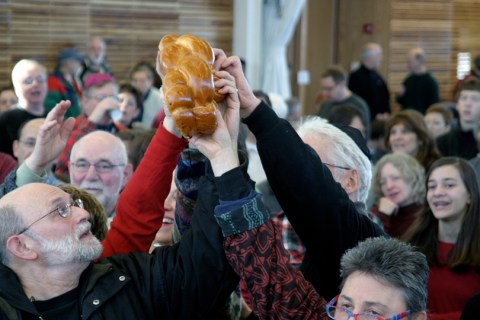
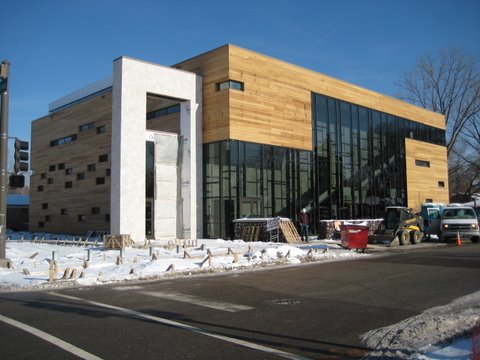
Yesterday was a day of celebration that JRC will never forget. On the coldest day of the winter, (6 degrees, wind chill of -21) several hundred JRC members generated abundant warmth together as we moved into our new synagogue home at 303 Dodge, Evanston. That’s us above, making our first motzi in our new building. But I’m getting ahead of myself…
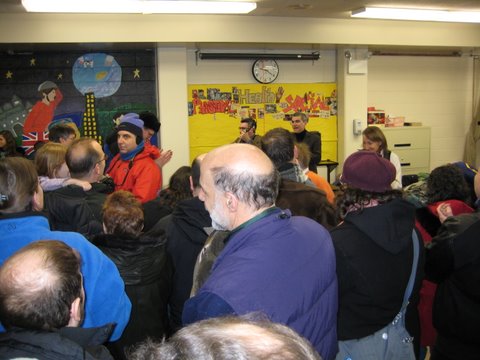
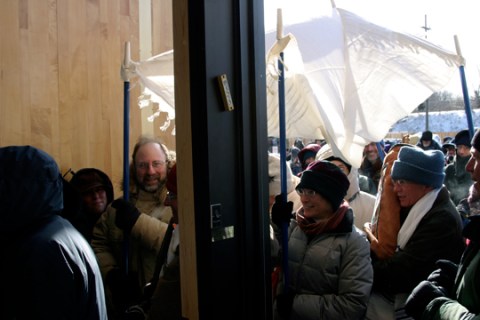
We first gathered in the cafeteria of Chute Middle School, (site of one of JRC’s earlier temporary locations in the 1970s) and took out our Torah scrolls with a brief service. Then, covered with many fleecy layers, carrying our four Torah scrolls under a huppah, we processed out into the frozen Evanston streets to walk some six blocks to 303 Dodge. (Earlier in the morning, several brave JRC souls actually carried two of the scrolls nearly four miles from our most recent temporary location, Sha’arei Tikvah!)
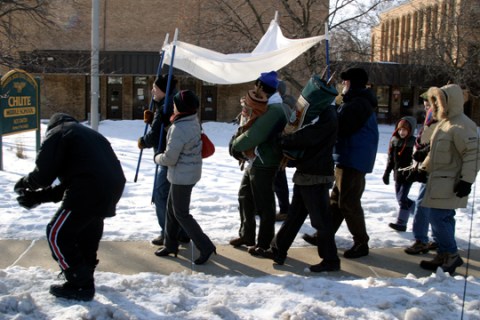
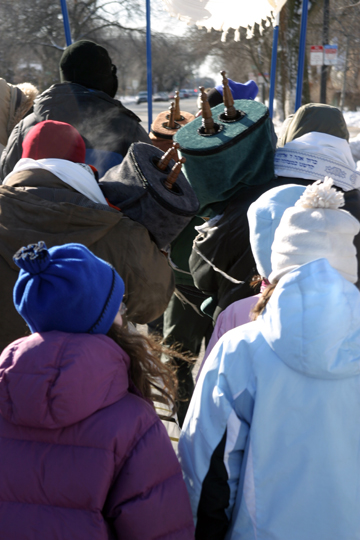
When we arrived at JRC, we found several hundred more JRCers waiting for us at the building. We stopped at the entrance, sang “Pitchu Li” (“Open for me the gates of righteousness…”), affixed our mezuzah with a blessing, and entered our new home for the first time.
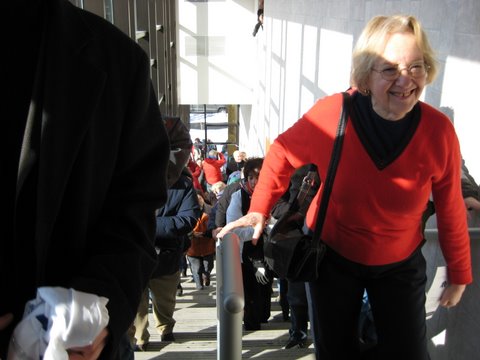
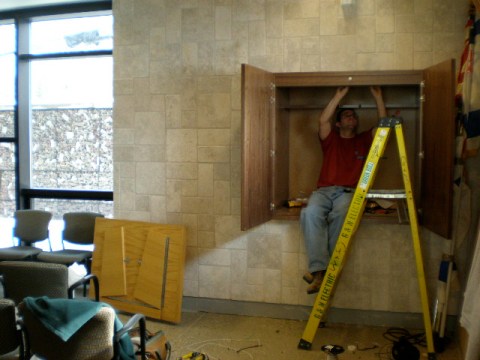
We ascended to the third floor, and sang and danced together for what seemed like an eternity to live music provided by JRC’s house klezmer band, Heavy Shtetl. We then placed the Torah scrolls in our new ark (see pix at the bottom – more on that in a bit.) After hearing heartfelt words from JRC president David Pinzur, I addressed the crowd, then we did our first communal kiddush and motzi together in our new home (after which the Cantor and I dropped the challah and spilled the wine on the bimah…) We then spent the rest of the afternoon, sharing food, going on self-guided tours of our new green facility, and just spending great quality time together.
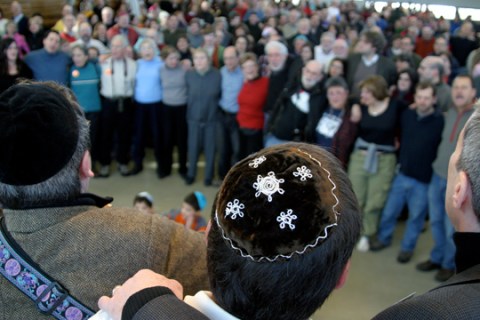
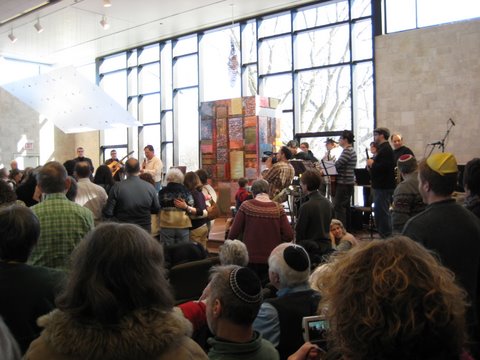
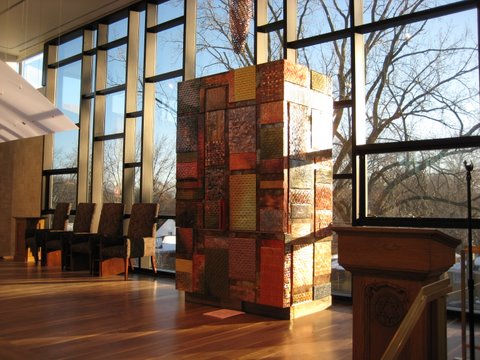
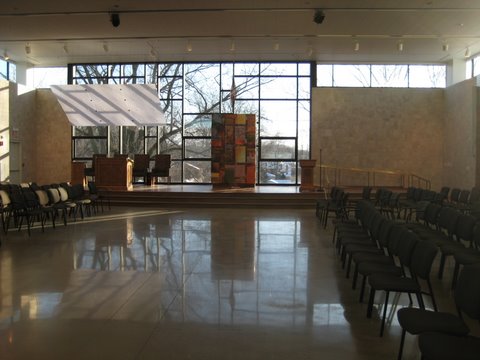
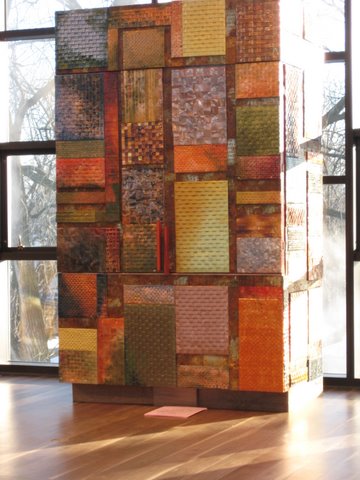
Below you’ll find some pix of our beautiful new ark which was installed in our sanctuary late Saturday evening, just in time for the celebration. It was designed and constructed by Maryland-based metalsmith/craftsman David Bacharach. We were delighted that David was able to join us for the festivities (as were architects Carol Ross-Barney and Michael Ross.)
Words cannot describe the level of joy our JRC family felt on this day. It was, without question, a once in a lifetime experience for us all. But the sweetest part is knowing what is yet to come. Up until now, this has only been a building – now that it has been filled with our bodies and souls it is truly sacred sacred space. We are all so humbled at what we have accomplished and so profoundly excited about the many sacred memories that will fill these four walls in the years ahead.
Thus ends my last official JRC Construction Diary post. Of course, it is really only just the beginning…
(For a nice Fox News Chicago report on JRC’s gala move-in day, click here.)
 Shalom Rav