Monthly Archives: September 2010

The Settlement Freeze: Painted Into a Corner?

The deadline on Israel’s “settlement freeze” has come and gone. On the West Bank, construction crews are gearing back up and the settler celebrations have begun. Abbas is mulling over his options with the Arab League.  Once again, the peace process seems to be hanging by a thread.

For their part, many analysts are now using a “painted into a corner” metaphor to dissect the impact of the settlement freeze. Israeli analyst Nahum Barnea, for instance, recently opined that,

Three politicians – Barack Obama, Benjamin Netanyahu and Mahmoud Abbas – painted themselves into a corner and didn’t know how to get out of it.

And none other than King Abdullah of Jordan said this on the Daily Show last week:

We all got painted into a corner on the issue of settlements, unfortunately, and where we should have concentrated was on territories and the borders of a future Israeli-Palestinian two-state solution.

It’s bewildering to me that the issue of settlements can somehow considered to be a pesky distraction to the peace process. How can talks on “territories and borders” proceed with anything resembling good faith if one side settles these disputed areas with impunity and the “honest broker” to the proceedings refuses to rein it in?  How can we be expected to take such a process seriously?

We already know that one of the main reasons for Oslo’s failure was the inability to deal with the settlement issue directly.  As a result, Israel took that as an opportunity to significantly expand its settlement regime during the course of the “peace process.” This has brought us to where we are today: in the wake of Oslo more than 500,000 settlers now live throughout the West Bank in settlements and small cities, with special Israeli-only highways that effectively cut Palestinian territories into individual cantons separated by military checkpoints.

Have we learned nothing from past experience? Here’s lesson #1: the settlements are not a side issue. The Israel’s settlement of the West Bank and East Jerusalem are – and have always been – a central obstacle to the peace process. Until it is made to cease and desist, I can’t see how the latest round of talks can be considered anything but a charade.
Jews, Power and Privilege: A Sermon for Yom Kippur 5771

From my Yom Kippur sermon yesterday:

For matter how painful the prospect, I don’t think we can afford to dodge this question. If we agree that the inequitable distribution of power and privilege is a critical problem for us and for our world, then there will inevitably be times in which we are faced with an intensely difficult question: does tribal loyalty trump solidarity with the oppressed?

Actually, I’m coming to believe that this is not the best way to frame the question. I don’t really think it’s all that helpful to view this issue as some kind of zero-sum game; to see it as a question of tribal allegiance; to insist that I either stand with my own people or I don’t. I prefer to say it this way: that it is in my self interest as a Jew to stand in solidarity with the oppressed because I believe that Jews cannot be fully human while they benefit from a system that denies others their own humanity. For those with power and privilege, the struggle against racism and oppression is fought knowing that our own liberation is also at stake.

Click below to read the entire sermon:

Continue reading

The Supreme Sacrifice: A Sermon for Erev Yom Kippur 5771

From my Erev Yom Kippur sermon last Friday:

And as I think about it, perhaps this is why we read a Martyrology on Yom Kippur. As we remember our martyrs, we search our own souls and ask ourselves honestly: what have we done in the past year to prove ourselves worthy of these profound sacrifices? What have we done to affirm that these people did not die in vain? Did we indeed honor their memories by transforming loss into justice and hope for our world?

Click below to read the entire sermon:

A JRC member recently asked why we never do the Martyrology service on Yom Kippur. I wrote back to the congregant – and I’ll confess to you now: I’ve never been a huge fan of this particular liturgy.

Continue reading

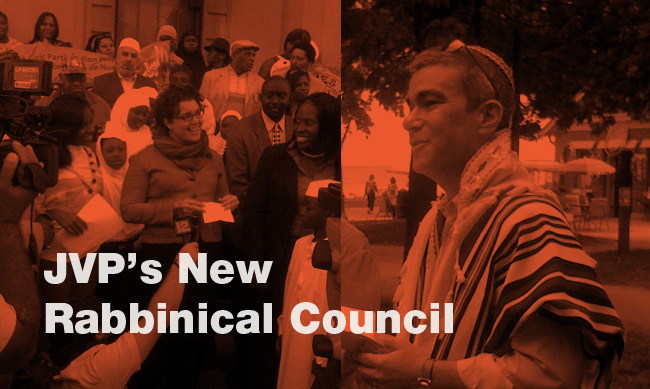
Jewish Voice for Peace Launches Rabbinical Council

I’ve just begun serving with my good friend and colleague Rabbi Alissa Wise as co-chair of Jewish Voice for Peace’s newly launched Rabbinical Council. As readers of this blog may have surmised by now, JVP has become an increasingly important and vital organizational address for me – and I’m honored to be working with Alissa to help organize Jewish spiritual leaders on its behalf.

If you’re a rabbi, rabbinical student or cantor, we invite you to sign on. You can contact us at rabbis@jvp.org.

Confronting Islamophobia: A Sermon for Rosh Hashanah 5771

From my Rosh Hashanah sermon last Thursday:

So what is the real issue here?  I don’t think it’s about sensitivity to individuals who may or may not be offended by this particular construction project. The real issue is really quite straightforward. The real issue, I believe, is the same as it ever was – and as Jews, it’s an issue we know all too well. Will America be a land of religious liberty for all or merely the few?

Click below to read the entire sermon:

Continue reading

Leaving Home: A Sermon for Erev Rosh Hashanah 5771

From my Rosh Hashanah Eve sermon last Wednesday night:

So here’s my question for this Rosh Hashanah: how will you leave the familiarity of your home in the coming year? In ways will you challenge your sense of comfort and complacency and find the strength to venture into unknown territory? To a place that holds out a promise, but no guarantees? For some of you, this coming year might be a time of a significant life transition: how might you mark this experience so that it offers you real potential for transformation and growth? For others, this year might be not all that different from the last. How will you challenge that comfortable sameness? What might you do to, in a sense to create a doorway that leads outward?

Click below to read the entire sermon:

Continue reading

Israeli Artists Say No to Performing in Ariel – and Support is Growing!

Very big and inspiring news:

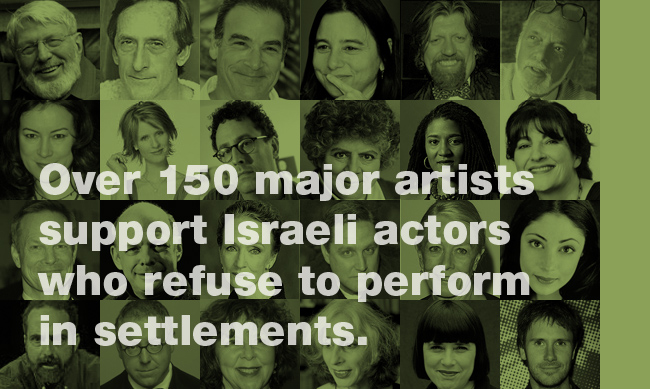
Last week, fifty Israeli actors, directors and producers publicly released a letter saying they would not perform in a new multi-million dollar theater center in the West Bank settlement of Ariel and that they would continue to do so until there was an Israeli-Palestinian peace agreement.

Their stand drew immediate outrage from the Israeli government. PM Netanyahu, Culture and Sports Minister Limor Livnat and Finance Minister Yuval Steinitz responded by threatening to deny government funding to any  cultural institutions that refuse to hold performances in the Occupied Territories. Netayahu released a statement accusing the Israeli artists of joining an “international delegitimization campaign” adding that “the last thing the state needs to do is fund bodies that are promoting boycotts from within.”

These events had a powerful and galvanizing effect within Israeli society. Almost as immediately, over 150 leading Israeli academics and writers (including authors Amos Oz and David Grossman) came to the defense of the artists. The boycott quickly became a central issue of discussion in the Israeli press – for its part, Ha’aretz’s staff editorial stated:

Theater actors are not marionettes, and cultural coercion of artists who fear for their livelihood does not befit a freedom-loving country. Cultural and academic institutions that receive budgetary support from the state do not owe it obedience in return. On the contrary, the government should be thankful for the existence of institutions that constitute such a vital interest for Israeli society.

Now it appears the struggle has moved to the United States. I’m so incredibly proud to see that Jewish Voice for Peace has now organized a support statement by over 150 American and European theater and film professionals – including Mandy Patinkin, Theodore Bikel, Eve Ensler, Tony Kushner, Cynthia Nixon, Ed Asner, among others.

Here’s the text of the statement:

On August 27th, dozens of Israeli actors, directors, and playwrights made the brave decision not to perform in Ariel, one of the largest of the West Bank settlements, which by all standards of international law are clearly illegal.  As American actors, directors, critics and playwrights, we salute our Israeli counterparts for their courageous decision.

Most of us are involved in daily compromises with wrongful acts. When a group of people suddenly have the clarity of mind to see that the next compromise looming up before them is an unbearable one  — and when they somehow find the strength to refuse to cross that line  —  we can’t help but be overjoyed and inspired and grateful.

It’s thrilling to think that these Israeli theatre artists have refused to allow their work to be used to normalize a cruel occupation which they know to be wrong, which violates international law and which is impeding the hope for a just and lasting peace for Israelis an Palestinians alike.  They’ve made a wonderful decision, and they deserve the respect of people everywhere who dream of justice. We stand with them.

This is big. Indeed, as the government’s apoplectic response clearly demonstrates, it represents much more than a mere symbolic stand. To stand up against performing in Ariel, which Netanyahu has described as the “Capital of Samaria,” means to stand up against the very heart of Israel’s settlement enterprise.

It is also the most significant internal cultural boycott to ever take place in Israel – and the support of the artistic community around the world shows that there is a growing constituency of prominent figures who are willing to publicly speak out against Israel’s impunity.

In other words, the artistic community is stepping up and going to the places to which our politicians seem unwilling to go. Bravo!

South Hebron Tragedy: Blogosphere Reactions

Two posts from today’s blogosphere offer spot-on responses to yesterday’s tragic killings in Hebron:

From Mitchell Plitnick’s “The Third Way:”

I very much appreciate President Obama condemning yesterday’s murders of four settlers in the South Hebron Hills.

But that condemnation would be an awful lot more meaningful, to myself and to many others I’m sure, if we saw similar outrage in Washington when Israel killed over 700 Palestinian non-combatants in Operation Cast Lead. Or when a border policeman killed Bassem Abu Rahmeh by firing a gas cannister directly and intentionally at him. Or for any of the 100 Palestinians killed since the end of Operation Cast Lead (many of whom were killed as combatants, to be sure, but 32 of whom were not taking part in hostilities nor were counted as “targeted assassinations”).

From Paul Woodward’s “War in Context:”

Whether or not Hamas had a role in yesterday’s attack it is too soon to tell. And even if some or all of the gunmen turn out to belong to the movement does not necessarily reveal a great deal about the level of command and control or political motives for the attack.

Whatever the motives, the outcome itself has opened political opportunities to each constituency that now portrays itself as a victim.

Given that the attack took place in an area controlled by the IDF, President Abbas could have taken the opportunity to point out that the attack underlines the fact that there can ultimately be no security solution to the political conflict. Instead, Palestinian security services have been quick to launch what is being described as one of the largest arrest waves of all time in the West Bank.

At the funerals of the four Israelis killed, settler leaders took the opportunity to push for settlement expansion, call for vengeance (a call which has already been acted upon), deny the existence of the Palestinian people and made a thinly-veiled appeal for ethnic cleansing…

When President Obama tries to press Benjamin Netanyahu to extend the so-called settlement freeze, the Israeli prime minister will no doubt tell him solemnly that in light of recent events, his hands are well and truly tied.

They shoot and we build has become the settlers’ slogan — one that is almost certainly to Netanyahu’s liking.