Monthly Archives: October 2011

Sorry Newt, but there is no Anti-Semitism at Occupy Wall St.

Accusations of anti-semitism in the Occupy Wall Street movement are flying fast and furious now. Newt Kingrich leveled the charge today on the CBS’s Early Show. David Brooks insinuated it in the NY Times not long ago. And Bill Kristol’s Emergency Committee on Israel has actually bought air time in New York and DC to run a laughably misleading ad that implores viewers to “Tell Obama and Leader Pelosi to stand up to the (anti-semitic, anti-Israel) mob.”

Watch the above clip for the real story.  Then read this thorough piece by commentator MJ Rosenberg. It would all be pretty hilarious if it wasn’t such a horribly cynical exploitation exploit the real pain and fear of anti-semitism to slow down a movement committed to justice and dignity for all – which is, in the end, what Judaism is all about.

We’re Leaving But Not Really Leaving Iraq

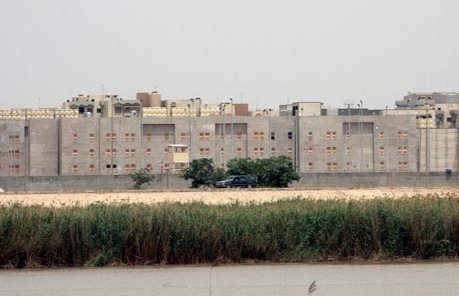
The new American embassy in Iraq is the largest in the world and is built on a tract of land roughly the size of the Vatican

In my recent Yom Kippur sermon, I linked to an article that explained why, even if Obama did honor the pledge to withdraw US troops at the end of 2011, this wouldn’t be the end of our militarized presence in that country by a long shot.

So now that Obama has formally announced the Iraq withdrawal, just pay close, close attention to the heavily militarized State Department presence that will remain.

From a recent WashPo article:

The list of responsibilities the State Department will pick up from the military is daunting. It will have to provide security for the roughly 1,750 traditional embassy personnel — diplomats, aid workers, Treasury employees and so on — in a country rocked by daily bombings and assassinations.

To do so, the department is contracting about 5,000 security personnel. They will protect the U.S. Embassy in Baghdad plus two consulates, a pair of support sites at Iraqi airports and three police-training facilities.

The department will also operate its own air service — the 46-aircraft Embassy Air Iraq — and its own hospitals, functions the U.S. military has been performing. About 4,600 contractors, mostly non-American, will provide cooking, cleaning, medical care and other services. Rounding out the civilian presence will be about 4,600 people scattered over 10 or 11 sites, where Iraqis will be instructed on how to use U.S. military equipment their country has purchased.

“This is not what State Department people train for, to run an operation of this size. Ever since 2003, they’ve been heavily reliant on U.S. military support,” said Max Boot, a national security expert at the Council on Foreign Relations.

Make no mistake: we’re all going to be paying for Bush’s Folly for a long, long time to come…

The Return of Gilad Shalit: Reactions

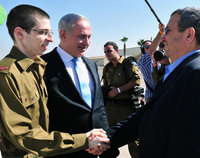
On the subject of the Gilad Shalit prisoner exchange, I can’t put it any better than blogger Emily Hauser, who has written a number of eloquent posts on this subject over the years. Click here and here to read her latest reactions.

Also highly recommended: this recent op-ed by journalist Rachel Shabi:

But meanwhile, the terms of the Israel-Hamas brokered prisoner swap – one Israeli, whose name the world knows, for 1027 faceless Palestinians – has generated some absurd comments on the value each side places on human life. In reports of how much Israelis care about the soldier Shalit – all true – there is somehow the inference that Palestinians don’t cherish their loved ones in the same way. But it is clearly more approachable a task to keep one soldier’s name in people’s hearts and in the headlines, than it is with countless thousands of Palestinian men. And the undertaking is smoothed by a media skew on the subject: taking part in a panel discussion on reporting the conflict last year, I heard a European journalist explain that Shalit was an easier pitch because he seemed innocent and blameless, while Palestinian prisoners didn’t generate the same assumptions. Meanwhile, the cold exchange rate of a thousand prisoners to one Israeli obviously doesn’t mean that Palestinians morally agree with this equation; it just points to the brutal asymmetry of forces and capacity in this struggle.

There is, however, one setting in which the two sides stand on level ground. When the prisoner deal was announced this week, there were jarringly rare images of both Israelis and Gaza strip Palestinians joyously celebrating the same news story. There it was, in that moment: an equality borne of shared humanity.

State-Sponsored Mosque Desecration: I Express My Outrage

Last week I received an email request from the New Israel Fund (NIF) to sign a rabbinical statement condemning the recent desecration of a mosque in the Bedouin village of Tuba-Zangariya in the north of Israel. Of course I signed without hesitation. It was a sick, racist act that deserved to be condemned from every quarter.

Thus my deep dismay when I did not receive any similar request when the Israeli army demolished a mosque this week in West Bank village of Kherbet Berza – for the third time. (An incident, btw, that was scarcely covered by the western media.)

As per usual, the administration claims additions to the mosque were built “without a permit.” Naturally no such permits are issued when the Israeli government is interested in creating facts on the ground – this case being the northern Jordan Valley. (The news item above was released last year following the first demolition.)

Of course it’s easy to condemn racist acts of individuals – apparently it’s more difficult (or “complicated”) when this kind of thing is carried out by a government. I have no such difficulty: terror is terror whether perpetrated by one person or by the state.

So for the record (and using the same language as the NIF statement) I’d like to take this opportunity to:

express my deep sadness and outrage at the destruction of a mosque in the West Bank village of Kherbet Berza. I condemn this act as an affront to God, the values of our Torah and the international standards of basic human rights.

I extend a hand in friendship and solidarity to the leaders and residents of this small village, a prayer for their safety and peace in the days to come, and a hope that the government that perpetrated this despicable act will be held to account.

And while we’re expressing concern for the welfare of Bedouins, this recent announcement offers some cause for deep dismay as well:

The Civil Administration (CA) is planning to expel the Bedouin communities living in Area C in the West Bank, transferring some 27,000 persons from their homes. In the first phase, planned as early as January 2012, some 20 communities, comprising 2,300 persons, will be forcibly transferred to a site near the Abu Dis refuse dump, east of Jerusalem.

More government terror. I express my deep sadness and outrage…

Locking Our Children Away: Sermon for Erev Yom Kippur 5772

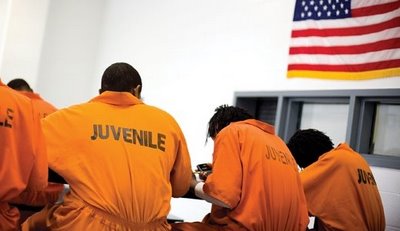
Cedric Cal was born to a single mother, in a family that lived below the poverty line on Chicago’s West Side. His father had left the family, married another woman and had very little to do with him. His mother Olivia worked constantly, doing her best to keep her family together. As the oldest of four, Cedric became the de facto father of the family and was entrusted with protecting his younger brother, who was legally blind.

Cedric’s family moved around a lot and he learned very early on how to make friends quickly. He liked sports, particularly baseball – and when his family lived on the West Side, he played sports in the local Park District. When they moved to the South Side, however, there were no Park District services available, so sports were not an option for him. Still, no matter where they moved, Olivia became very adept at finding ways of getting Cedric and and brothers into decent public schools. From 5th to 8th grade, he attended Alcott Elementary. Minding his younger brother, he took the public bus every day on a long trek from the West Side to Lincoln Park.

Cedric’s mother taught him how to fill out applications and interview for jobs, but there really weren’t any to be found. And those that were hiring certainly weren’t hiring African-American teenage boys. He was never really successful at finding a real job, but when he was 14 he learned that he could make money dealing drugs. He knew that his mother would be beyond furious if she ever found out, so he made sure to keep his drug dealing and his growing gang activity secret from her. Cedric never, ever, brought his earnings into their home – his mother had made it clear that drug money was not welcome anywhere near her house. Even when he bought a car, he parked it far away from their home.

I met and spoke with Cedric two weeks ago at the Stateville Correctional Center in Joliet. He explained to me that as he continued to sell drugs, as he continued the gang life, little by little, he became “desensitized to the things my mother had taught me.” It was quite poignant and sweet to listen to Cedric speak about his mother. “My mother,” he said, “has a lovely spirit,” adding: “I was scared to death of my mother.” He told me of one instance in which Olivia confronted drug dealers on a street corner with a two by four in her hand. Cedric laughed and said that even the toughest gang members in the neighborhood were scared of his mother.

Continue reading

War Without End: Sermon for Yom Kippur 5772

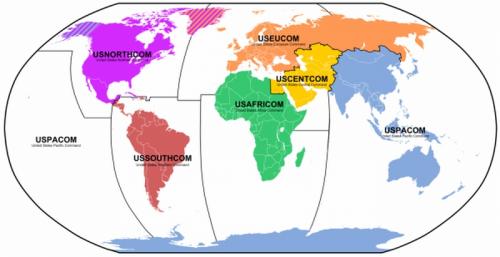
US Global Command and Control System

In 2006, I was approached by JRC’s Peace Dialogue task force and asked if I would consider adding something to our Shabbat prayer for peace. Could we, they asked, introduce the prayer by reading the names of three American soldiers, three Iraqi civilians and three Afghan civilians who had been killed in these two ongoing wars?

The reason, they explained, was to remind ourselves that peace is not just an abstract concept. If we’re going to say a prayer for peace, we should own up to the stakes – we should acknowledge that we are citizens of nation at war, that war comes with a very real human cost, and that as American citizens, we are complicit in all actions made by our country.

Continue reading