On Rosh Hashanah I addressed the powerful feeling of uncertainty that pervades our lives and our world at this unprecedented moment. I want to return to this theme for this Yom Kippur – to speak to a parallel level of uncertainty that I know has been weighing deeply on us all. More specifically, I’d like to address the current political moment in our country; one that is more fraught, dangerous – and frankly more terrifying – than any of us have ever seen in our lifetimes.
I know this isn’t a pleasant topic to talk about. Frankly, this was not a particularly pleasant sermon to write. I know that most of us feel beaten down by political events as they’ve unfolded over the past four years. I know it’s become something of a routine in our social gatherings to set a strict time limit on discussing the latest outrage committed by our President and his administration – or to even declare such talk off limits entirely. And I get this. I know how depleting the past four years have been on our own emotional and psychological well-being. I’m all too familiar with the ways we instinctively compartmentalize the news of the outside world for purposes of self-preservation.
But even so, painful though it may be, I believe we need to talk about it. Our avoidance, while understandable, has come with a cost. On a certain level, I think our denial and incredulity reflect an unwillingness to admit to ourselves that what is happening is really happening. In a very real way, I think this unwillingness has kept us from meeting the challenges of this unprecedented moment.
Jewish tradition teaches us that the ten days between Rosh Hashanah and Yom Kippur is an immensely critical period, spiritually and existentially speaking. It’s said that during the days between these two festivals the gates of heaven are at their widest; the time in which God is most open and receptive to our prayers. It is, if you will, “time out of time:” a liminal, marginal period during which we’re given the unique power to change the course of our lives and our world. There’s no other time on the Jewish calendar when it feels as if there is so much at stake.
I’d suggest that politically speaking, we’re in a very similar place. Indeed, there seems to be a kind of synchronicity between the ten days and the current political moment – as if the confluence of this High Holiday season and this particular election season is demanding us to take stock in a deeper and more fundamental way than ever before. And I believe we’d be remiss if we didn’t take this opportunity to step out of time and honestly face up to what is at stake in our country.
Now that the gates are open, there’s no time for denial. It’s time to say some painful things out loud. It’s time to name the hard fact that we are sliding steadily into an age of authoritarian rule in this country. It has become clearer and clearer with each passing day, even if it’s difficult for us to fully accept. And it’s even harder to contemplate what we must know in our hearts to be true: that if this president gets the opportunity to serve for another four years, authoritarian rule will take hold in our country in ways that will be truly frightening to behold.
From the moment our President first announced his candidacy, there actually were observers who warned us about precisely this. While most of them were dismissed as alarmists, their words now ring with chilling kind of prescience. Here’s one such warning, written by anthropologist and journalist Sarah Kenzidor just two weeks after the 2016 election:
It is increasingly clear, as Donald Trump appoints his cabinet of white supremacists and war mongers, as hate crimes rise, as the institutions that are supposed to protect us cower, as international norms are shattered, that his ascendancy to power is not normal.
This is an American authoritarian kleptocracy, backed by millionaire white nationalists both in the United States and abroad, meant to strip our country down for parts, often using ethnic violence to do so.
This is not a win for anyone except them. This is a moral loss and a dangerous threat for everyone in the United States, and by extension, everyone abroad.
I have been studying authoritarian states for over a decade, and I would never exaggerate the severity of this threat. Others who study or who live in authoritarian states have come to the same conclusion as me.
And the plight is beyond party politics: it is not a matter of having a president-elect whom many dislike, but having a president-elect whose explicit goal is to destroy the nation.
But for all of these warnings, I think the most compelling words came from the President himself. There are so many examples to choose from; I’ll quote a 2014 interview with Fox News, when he was asked how he would solve the problems with the US economy:
You know what solves it? When the economy crashes, when the country goes to total hell, and everything is a disaster, then you’ll have riots to go back to where we used to be, when we were great.
If we’re going to be completely honest, however, our current moment didn’t begin with the election of this particular President. It has been unfolding over a period of many years: the erosion of our voting rights, the creation of the surveillance state, the incarceration of human bodies for profit, the deporting of our immigrants, the rise of a kleptocratic billionaire class in our country. And it’s not incidental that this gutting of our democracy and civil rights has disproportionately harmed black and brown and poor people in our country. In truth, our descent into authoritarianism has actually been decades in the making. The election of this President has only accelerated the process much faster than any of us dared anticipate.
We should also note that this phenomenon isn’t unique to the United States – it is, in fact, a global reality. It’s no accident that our President routinely praises and curries favor with the strongmen leaders of countries like Russia, North Korea, China, Turkey, Saudi Arabia, and yes, Israel. As American Jews, we should have no illusions about this.
So here we are. Our President has been systematically dismantling and plundering the institutions of our government in broad daylight and now he’s openly committing election fraud before our very eyes. We know what is happening: his dismantling of the US Postal service, his baseless claims of voter fraud, his clear intention to sow as much chaos as he can to cast doubt on the election. Most recently, he’s been announcing unabashedly that he has no intention to concede this election, no matter what the outcome.
In American political life, the period between the election on November 3 and the Presidential inauguration on January 20 is called the “interregnum.” This term originally referred to the period between the reign of monarchs. Longer, more complicated interregna have invariably been accompanied by widespread unrest, civil wars and succession battles. Historically, failed states would often fail during an interregnum.
In the US, we’ve taken for granted that there will be an orderly transition of power from one to the other whenever we elect a new President – but I wonder if we’ve ever understood how technically fraught this in-between period really always been. We’re currently on the verge of an interregnum like none other we’ve ever experienced in our lifetimes – and I fear we’re waking up to this reality too late.
But I also believe there is much we can still do. That we must do.
The medieval Jewish philosopher Moses Maimonides famously interpreted the call of the shofar as a wake-up call. The blast of the shofar, he wrote, is meant to say to us “Sleepers, wake up from your slumber! Examine your ways, return, and remember your Creator!” This new year, I’d suggest that this wake-up call is resonating for us with profound urgency: to awaken from our incredulity, our denial, our comforting belief that “it could never happen here.”
And it’s also calling us to wake up on a deeper level: to face up to the very real possibility that this President could be staying in the White House for another four years. And while we might say that prospect is too frightening to contemplate, we must contemplate it. No matter how unthinkable, we must accept in our hearts and our guts that God forbid, it might well happen. It’s calling us to accept that if this does happen, it will not be the end. It will mean the onset of a new fight. And we will need to be prepared to fight it.
So now that I’ve said this out loud, let me say this: we are not there and we don’t have to be there. There is a little over a month until the election – and while we may have been late in our awakening, it is not too late. There is still much we can do, and I know so many of you are doing these things already: registering voters, preparing get out the vote campaigns, fighting against voter suppression on every level.
Yes, we need to vote. We need to vote because it’s clearly the most potent force we have at our disposal at this particular moment. But at the same time, we cannot view politicians as our saviors. We shouldn’t forget that our current situation was caused in no small part by politicians on both sides of the aisle. Too often we assume that politicians are the only change agents in the world – and that political change only happens on the electoral level. Too often we underestimate the historic role of social movements and the power of people to move politics and politicians. In the end, elections are but one tactic among many. More often than not, voting serves more as a form of harm reduction than a means for progressive change. We are most certainly in one of those moments right now.
Even if we fight like we’ve never fought before during this election, we can’t be sanguine about the morning after. We must be prepared for the chaos that is sure to follow. Fomenting chaos is one thing this President knows well and it’s clearly his primary strategy in this election. If there was ever any doubt consider this: last June an organization called the “Transition Integrity Project” convened a group of more than 100 bipartisan experts to simulate what might happen the day after Election Day — a kind of electoral “war game.” They simulated four different scenarios, and each one but one – a Democratic landslide victory – indicated significant levels of post-election chaos, with both sides contesting the election until inauguration day.
What will we do if this happens? In all likelihood, we’ll need to do what citizens of every other authoritarian nation have done when their elections are stolen from them. We’ll have to be prepared to take to the streets and stay in the streets. While this is certainly daunting to contemplate, we would do well to learn from the history of popular protest. We’d also do well to learn from the history that is unfolding as we speak. Indeed, if there’s anything the Black Lives Matter movement has taught us these past several months it’s that sustained popular protest has the very real power to make real change.
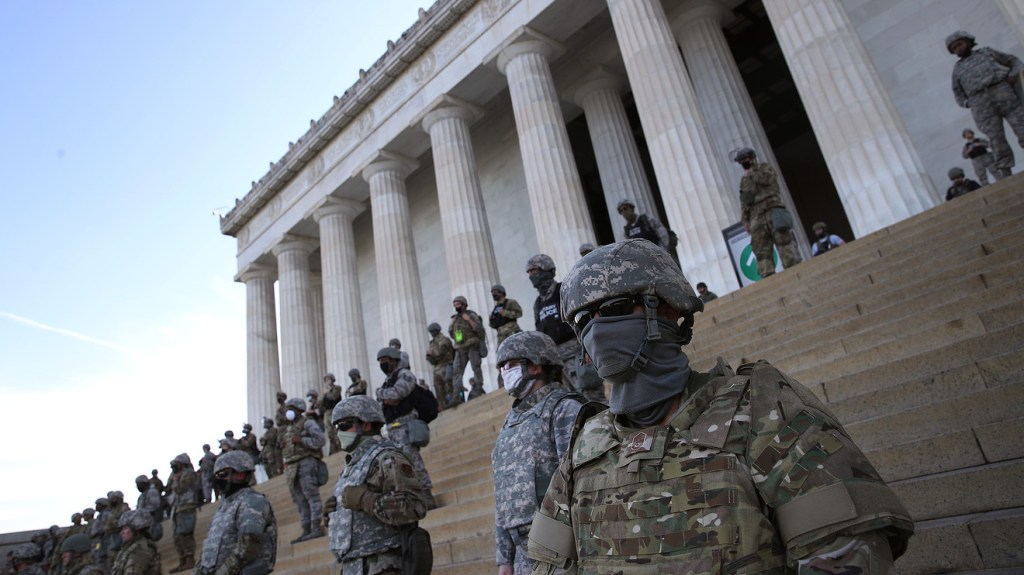
I know that given the pandemic, each of us will clearly need to make our own personal health decisions when we consider participating in any form of mass demonstration. And those who do must certainly be prepared for a violent response that will inevitably follow. Whether it comes from armed forces mobilized by the government, from white supremacist militias, or agent provocateurs, we know what will be coming. Even though the overwhelming majority of the recent racial justice protests have been non-violent, the backlash against them has been brutally violent. The unleashing of state violence against public protest is, of course, a hallmark of authoritarianism, and we’ve witnessed it ourselves throughout our country these past several months. We should have no illusions about this.
Beyond mass demonstrations, there are other forms of civil disobedience such as general strikes, boycotts and other acts of noncooperation large and small citizens have historically organized in moments such as this. We know that these kinds of tactics have the potential to succeed when carried out with unity, a clear strategy, and widespread participation. If campaigns of mass resistance are indeed mobilized, we’ll all need to be ready to help organize and participate in them, at whatever level is possible for us.
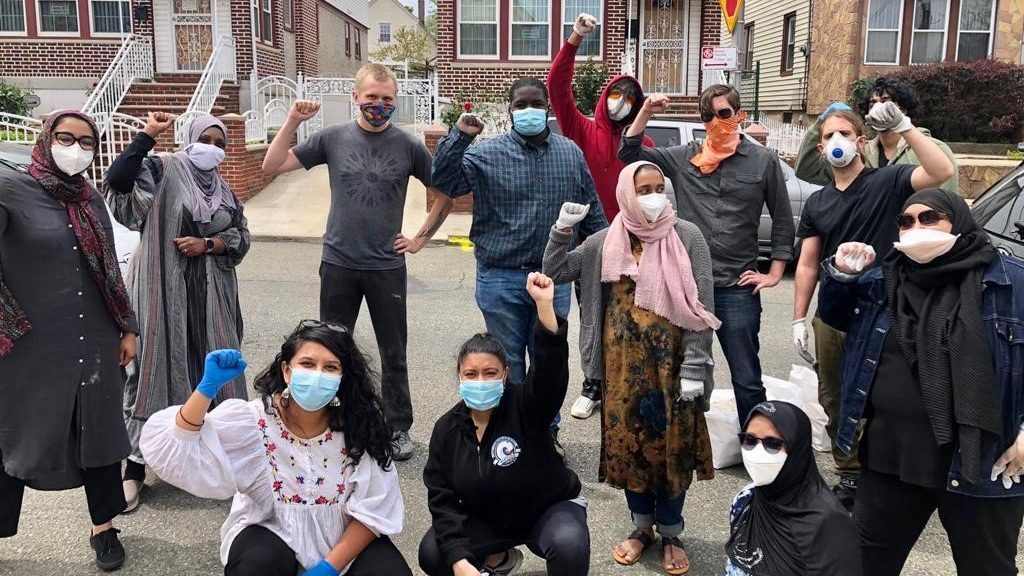
Whatever comes, the most basic form of resistance will be our readiness to show up for one another. To participate and support mutual aid initiatives in our communities. To learn about and support the areas of greatest need. To stand in particular with those who are most vulnerable, most at risk, those who have always been the first to be impacted by a government that views their lives as disposable. Such is as it’s always been in resistance movements throughout history: in ways large and small everyone has a part to play. There is still a great deal of love and freedom in our world and there is still a myriad of ways we can make a difference. And we must never forget this.
OK. If you haven’t turned off your computer by now, thank you for going to this place with me. I know, as I said earlier, that none of this is easy to hear out loud. This is an enormously frightening moment. Personally, I’m scared shitless. But when I went over the things I felt I should talk about this Yom Kippur, I frankly couldn’t imagine anything more critical to our current moment. And I wouldn’t have said any of this if I felt things were hopeless. As I said on Rosh Hashanah, true hope is in our readiness to act precisely when things feel hopeless. Not to passively hope for the best, but to find courage in each other to fight on, no matter what may happen.
At sundown tonight, they say, this sacred interregnum of the ten days will conclude – and soon enough, another will begin. But this time, it seems to me, we won’t passively ask to be saved. No, this time we’ll have to demand that the gates open and remain open. We’ll need to take responsibility for writing our own names and the names of our neighbors in the Book of Life. If we’re going to be sealed for life, it is we who must affix that seal.
And so, in that spirit I’d like to end now with a prayer I wrote a few years ago. We’ll be saying it at the end of Yom Kippur, at our Neilah service later tonight. But I’d like to offer it now as a prayer for our upcoming interregnum – with the hope it might awaken us all to the possibility of new life in the year to come:
when the final tekiah sounds
anyone still sleeping will have to
rise up and join the strategizers
and schemers the marchers and
rabble rousers to chant that
final neilah prayer ki fana yom
there’s no time left it’s time
to storm the gates.we’ll blow away the wasted years
the work undone the dreams denied
the lazy thinking and careless complicity
so that we may clearly see the road
leading to a world we always
knew was possible.yes finally we’ll break the insatiable
unquenchable appetites threatening
to consume everything we’ve ever known
our hunger will turn into desire
our hollow emptiness into wide open spaces
that roll on without end.when that final tekiah sounds
the barrier walls and security fences
will come crashing down
no one will be forced to wait in line
no one turned away at the border
no unseen hands opening and closing
the gates on a whim.so let every shofar
send forth one unbroken call
quick while the sun is setting
we’ll gather together and march forward
under cover of darkness
in the halls of the most high
we’ll make sure there’s
room for all.
 Shalom Rav