Monthly Archives: May 2023

On Shavuot, the Book of Ruth and Palestinian Exile

On the surface, the Book of Ruth, the Biblical story traditionally read on the Jewish festival of Shavuot (which began last evening), appears to be a simple parable about two women struggling to survive in the wake of a devastating famine. If we dig deeper, however, we’ll find that Ruth is actually a profound and radical story that explores themes of isolation and connection, dispossession and return, emptiness and plenitude, exile and redemption.

As a Jew who views solidarity with the Palestinian struggle for liberation to be a sacred obligation, I find that these themes to be particularly resonant. As we celebrate Shavuot this year, for instance, we are receiving tragic reports that the Israeli military has forcibly transferred the Palestinian residents of the Ein Samiya village, including 78 children (whose school was targeted for demolition). This latest act of political dispossession is only the latest in a larger Israeli program of ethnic cleansing that dates back to the establishment of the state in 1948.

Amidst this ongoing reality of Palestinian exile, I’d like to suggest four themes from the Book of Ruth that call out to me with special urgency this Shavuot:

One: the story of Ruth tells the story of Naomi, a childless Israelite widow and her Moabite daughter in law Ruth, who return to Naomi’s home in Bethlehem, in the hopes of finding safety and security. As unmarried women, they are radically marginalized, forced to use the power they have at their disposal to survive in a world that has symstemically disempowered them. Those of us who stand in solidarity with Palestinians – indeed, all who are oppressed – would do well to heed the moral imperative at the heart of this story.

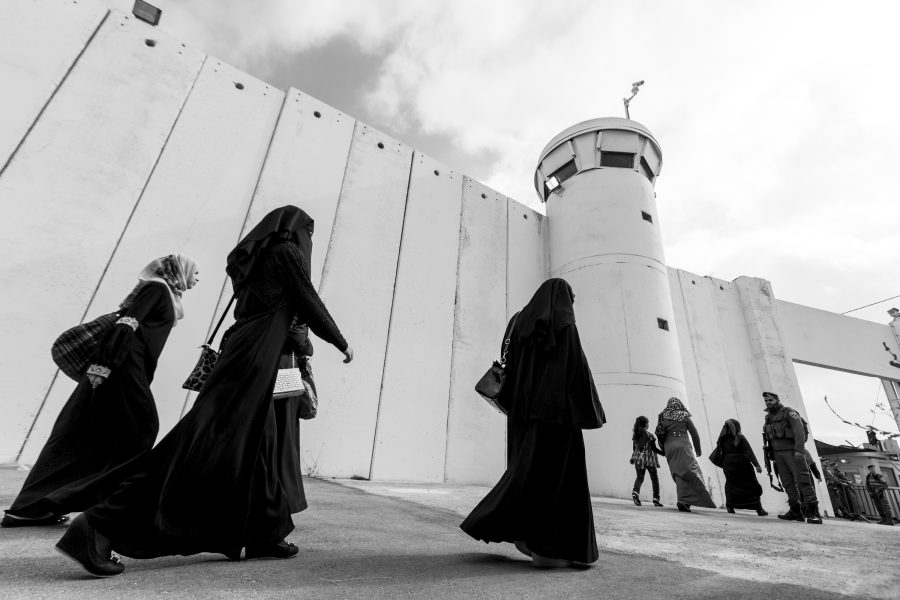
Two: as the story opens, Naomi migrates with her husband and two sons to the land of Moab. She later crosses back with her daughter-in-law when she receives word that the famine has lifted in her home country. In its way, the Book of Ruth portrays a world in which migration was a natural social phenomenon; when border-crossing was an accepted and necessary part of life. Today, this very land is strewn with militarized borders, checkpoints and refugee camps – and Palestinians are routinely denied the most basic right of human mobility. The Book of Ruth thus calls to us with a striking vision: a land and a world in which borders pose no barrier to those seeking a better future for themselves and their families.

Third: the driving center of the Book of Ruth is the deep and loyal relationship between an Israelite woman and her Moabite daughter-in-law. Those who are familiar with the Hebrew Bible will not help but note that the Moabite nation is typically portrayed as the arch enemy of the Israelite people. In this story, however, these national allegiances and historical enmities are nowhere to be found. Instead we are left with this simple, sacred message: the ultimate path to redemption is not to be found through power and violence – but rather through mutual love and solidarity.

And finally, the Book of Ruth opens in amidst a devastating famine in Bethlehem and ends with the reaping of a new harvest and the promise of an abundant future for Ruth, Naomi, their family and descendents. This vision of abundance: in which there is more than enough for all who dwell on the land, is indeed at the heart of the Palestinian struggle for liberation: one that envisions a future of equity, justice and peace for all who live between the river and the sea.
To Be a Jew on Nakba Day

photo credit: Al Jazeera

Back in 2009, when I was beginning to struggle openly with my relationship to Israel and Zionism, I wrote a blog post entitled “Why I Didn’t Celebrate Yom Ha’atzmaut.” Here’s how it began:

I’ve decided not to celebrate Yom Ha’atzmaut today. I don’t think I can celebrate this holiday any more.

That doesn’t mean I’m not acknowledging the anniversary of Israel’s independence – only that I can no longer view this milestone as a day for unabashed celebration. I’ve come to believe that for me, Yom Ha’atzmaut is more appropriately observed as an occasion for reckoning and honest soul searching.

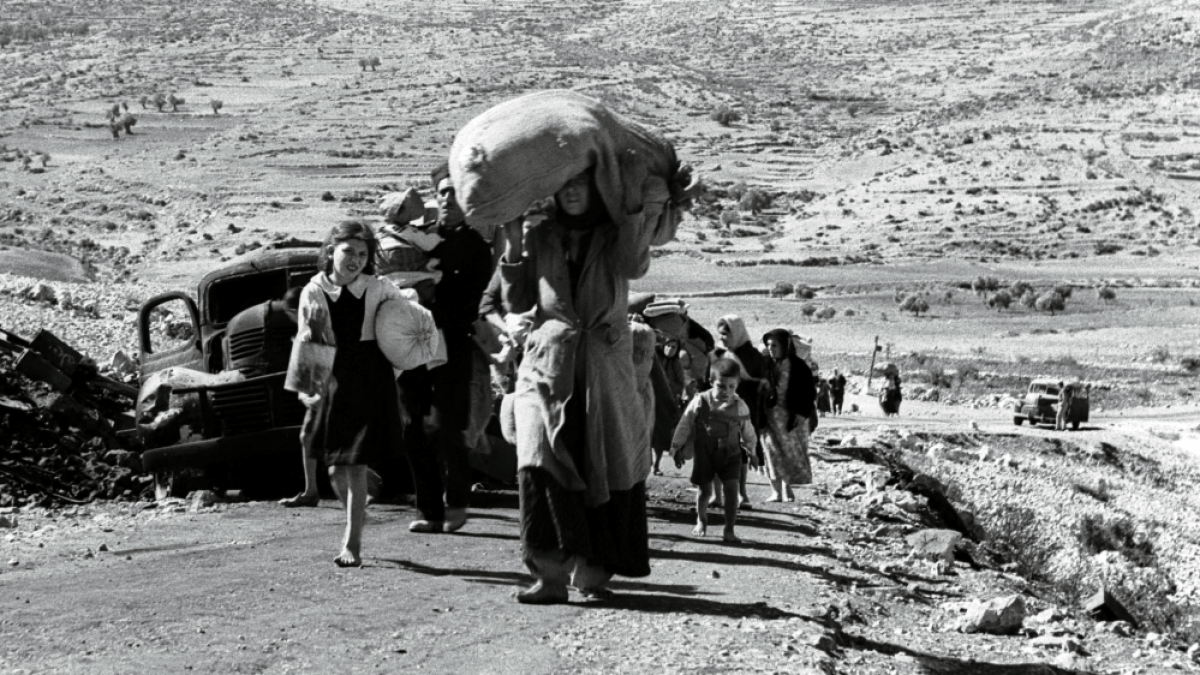
As a Jew, as someone who has identified with Israel for his entire life, it is profoundly painful to me to admit the honest truth of this day: that Israel’s founding is inextricably bound up with its dispossession of the indigenous inhabitants of the land. In the end, Yom Ha’atzmaut and what the Palestinian people refer to as the Nakba are two inseparable sides of the same coin. And I simply cannot separate these two realities any more.

In the fourteen years since writing these words, I haven’t wavered on this essential conviction. I still don’t consider the founding of a Jewish state on the backs of another people to be a day to celebrate.

A rabbi whose work I’ve often admired recently tweeted, “What if you knew your heart was big enough to hold the joy of Yom HaAtzmaut and the bitter anguish of the Nakba?” I must respectfully disagree. I reject the implication that those of us who refuse to celebrate Yom Ha’atzmaut with joy are somehow being “small hearted.” There are increasing numbers of Jews who refuse to celebrate Yom Ha’atzmaut out of genuine and deep seated moral conviction. We understand all too well that the the “national liberation” of Jewish statehood was accomplished through the ethnic cleansing of another people – a Nakba that is still very much ongoing. Intentionally or not, those who celebrate this selective form of liberation are, in a very real sense, normalizing dispossession. And it is not small hearted to affirm this.

As I see it, the question on whether or not to celebrate Yom Ha’atzmaut is not a question of holding complex, contrary emotions at the same time. Rather, it is a question of solidarity. As Marek Edelman, the anti-Zionist leader of the Warsaw ghetto uprising famously put it, “To be a Jew means always being with the oppressed and never the oppressors.“ Perhaps this is the real question: “What if you knew your heart was strong enough to stand down a celebration of dispossession – particularly when this dispossession is actually occurring in real time?”

As with the fourth of July in the US, these kinds of national holidays give us the opportunity to interrogate our histories and think honestly and seriously about their legacies. To this end, I’d like to suggest that the Jewish community find new ways to commemorate the occasion of Israel’s founding (see for instance, my 2018 prayer “A Jewish Prayer for Nakba Day.”) I am not suggesting for a moment that we should appropriate Nakba Day and “make it about ourselves.” It should go without saying that Nakba Day rightly belongs to the Palestinian people. But at the same time, I do think it provides the Jewish community with the opportunity to acknowledge the truth of the Nakba in a world where Nakba denial continues to run rampant.

My friend and colleague Rabbi Brian Walt wrote powerfully about this issue in a recent essay, “Nakba Denial and ‘Teshuvah’/Reparations:”

As a Jew, I believe that the Nakba…is the most important ethical and spiritual issue facing the Jewish people in our time. Our people will be judged, and we will judge ourselves, by whether we will treat others differently when we have power over them. Will we mistreat others in the same way we were mistreated, or will we follow the ethical imperative of our tradition to treat everyone as an individual created in the image of God deserving of equality, compassion and love? This is a moral question on which the future of Judaism and the Jewish people rests in our time.

…We must ask ourselves what is the cost that Palestinians should pay for our safety? We simply must create a different reality where both peoples thrive, not one at the cost of the other…The first step of teshuvah is hoda’a/acknowledgement. The very first step is to challenge the denial by acknowledging the truth of what was done, no matter how painful that acknowledgement may be.

As I wrote in 2009, just because I’m not celebrating on Yom Ha’atzmaut with joy, it doesn’t mean I’m not acknowledging the anniversary of Israel’s establishment. Rather, I’m taking this opportunity – as a Jew and a person of conscience – to stand in solidarity with the Palestinian people, to acknowledge the truth of their historic and ongoing dispossession, and to affirm a different reality: “where both peoples thrive – not one at the cost of another.”

May we all have the strength of heart to make it so.

Prayer as Resistance: A Shabbat Service in Liberated Dachau

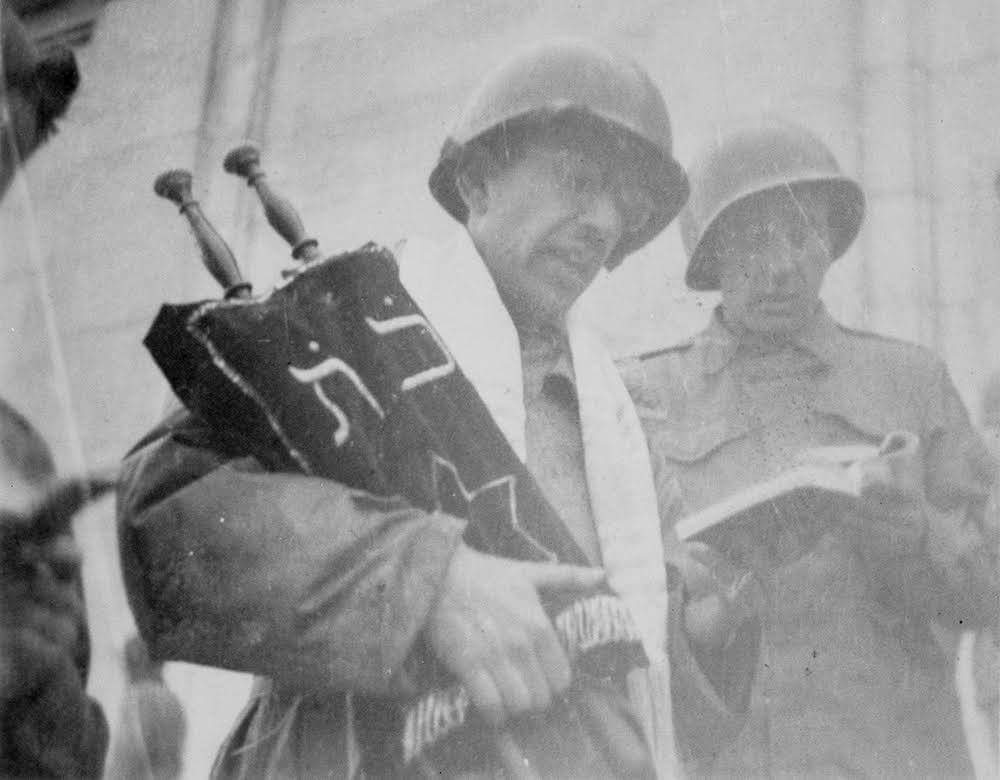
Today marks the seventy eighth anniversary of a public Shabbat service held in liberated Dachau. While it’s not a particularly well-known story, it deserves to be commemorated and widely retold, not least because it illuminates the powerful ways that prayer has historically served as a form of resistance.

The service was led by Rabbi David Max Eichhorn, a Jewish chaplain in the US Army’s XV Corps. Rabbi Eichhorn wrote extensively about this – and many other of his remarkable wartime experiences – in letters that were compiled in (the highly recommended) book, “The GI’s Rabbi.” While Eichhorn experienced a number of well-known historical events during the war, for me, the most indelible moments in the book come from his witness to the liberation of Dachau: from his description of the army’s numbing discovery of masses of naked, emaciated bodies, to the acts of revenge committed by ex-prisoners against their former captors, to his moving description of courageous non-Jews who “had saved Jewish lives at the risk of their own.”

Eichhorn’s most memorable recollections of the liberation of Dachau involve his role in the Shabbat service he led on May 5, 1945. One day before, on Friday afternoon, after leading a service in the women’s barracks, a lieutenant colonel approached him with tears in his eyes. It was the famed Hollywood film director George Stevens, who was in charge of the Signal Corps unit that had been taking official army footage of Dachau. (Stevens’ movie “D-Day to Berlin” is among the films made by five Hollywood directors who were embedded in Europe to document the war effort – a project powerfully recollected in the book and documentary “Five Came Back” – also highly recommended.)

Eichhorn and Stevens made arrangements for Stevens to film the camp-wide service that was scheduled to take place the next day in the main square of the Dachau compound. When Eichhorn arrived the next morning, however, he discovered that no preparations had been made. He was subsequently informed that Polish non-Jewish inmates had threatened to break up the service by force if was held in the main square. As a result, the service was moved to the camp laundry, which only accommodated a fraction of Jews who desired to attend. As Eichhorn recalls it:

While the service was in progress, in a jam-packed room with hundreds of others crowded around the open doors and windows, Colonel Stevens came in, elbowed his way to my side and demanded to know why the service was not being held in the square. His cameras and crews were ready for action and he wanted the event to go on as scheduled…After hearing the “inside story,” he exploded in anger. “I did not give up my good job in the movie business in Hollywood,” he bellowed, “to risk my life in combat for months and months, in order to free the world from the threat of Fascism and then stand idly by while the very victims of Fascism seek to perpetuate its evils.” …He took me to the Camp Commandant, and with a loudness of voice and much banging on the table, George Stevens repeated his anti-Fascistic sentiments.

…And so, thanks to the decent instincts of an American movie director, the camp-wide service was held in the main square. It was attended by every Jewish male and female whose health permitted. As promised, every nationality was represented by flag and delegation. There were an estimated two thousand Jews and non-Jews at the service. And ringing the outer rim of the service with faces turned away from the platform was the American military “guard of honor.” They were prepared to deal with a situation which did not develop. No untoward incident of any kind marred the service.

(from “The GI’s Rabbi: World War II Letters of David Max Eichhorn,” pp. 185-186.)

When I first watched it on YouTube, I found that the very familiar words of these prayers had a powerful new resonance. It was essentially an abbreviated Torah service, with other added prayers relevant to the occasion. It began with a prayer known as the Shehechianu – a blessing of gratitude for having been kept alive long enough to celebrate a sacred moment or season. He followed with Birkat Hagomel – a blessing traditionally recited by someone who has recovered from a serious illness or has otherwise survived a traumatic, potentially life-threatening episode. While I have been part of countless services that have included these blessings, it is indescribably moving to witness them recited by thousands of Jews recently liberated from a death camp. I had a similar response to the recitation of El Male Rachimim – the prayer for the dead – a prayer that has become a staple at Holocaust remembrance services.

In the end, however, it seems to me that the very act of holding the service was itself an act of resistance. I was most moved by the sight of the Torah scroll – the most indelible symbol of Jewish spiritual survival – being held aloft before the liberated of Dachau. It is, in its way, an iconic and redemptive image – one that speaks not only to this historical moment, but to our collective responsibility to a liberative future.

As Rabbi Eichhorn so aptly put it to his “congregation” that day:

What message of comfort and strength can I bring you from your fellow Jews? What can I say that will compare in depth or intensity to that which you have suffered and overcome? Full well do I know and humbly do I confess the emptiness of mere words in this hour of mingled sadness and joy. Words will not being the dead back to life nor right the wrongs of the past ten years. This is not a time for words, you will say, and rightfully so. This is a time for deeds, deeds of justice, deeds of love … Justice will be done.