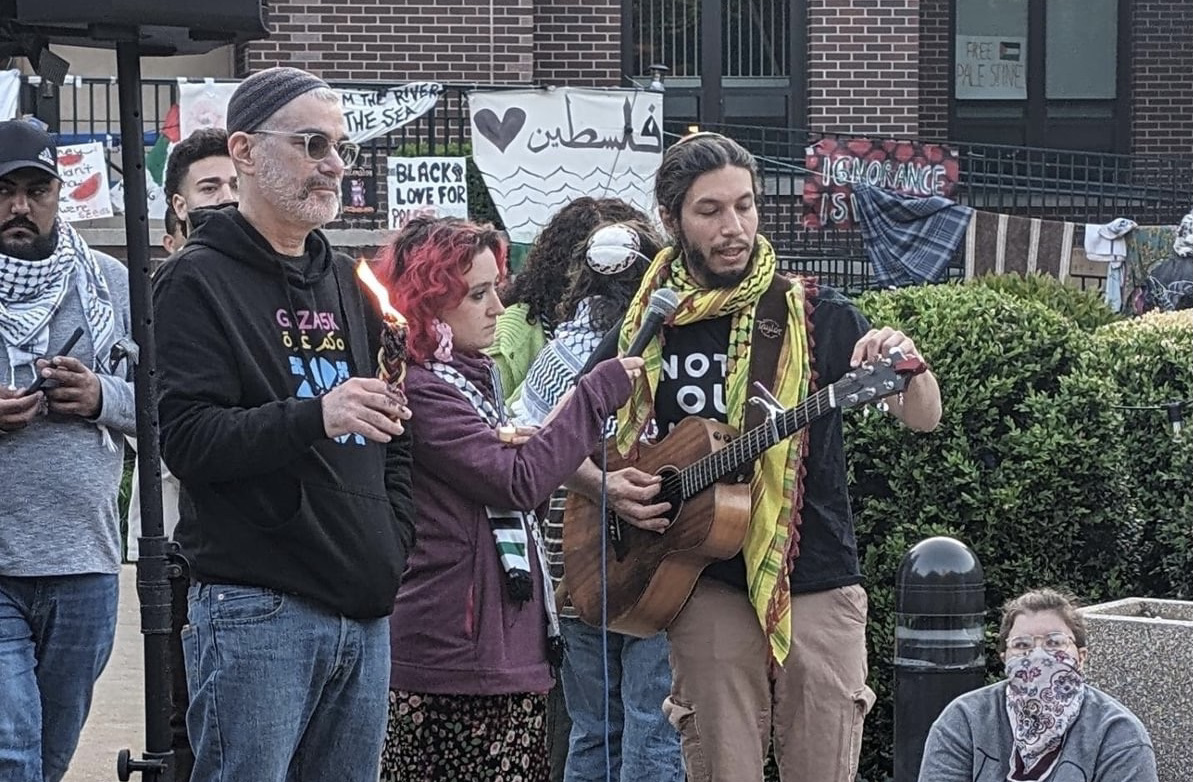
Early yesterday morning, the Chicago Police Department raided and destroyed the student encampment at DePaul University. The DePaul Liberation Zone was the last remaining student encampment in the Chicago area and had been ongoing for seventeen days. Here are my remarks from the student-called press conference at the DePaul student center that took place last night:
My name is Brant Rosen – I’m the rabbi of the congregation Tzedek Chicago and the co-founder of the Jewish Voice for Peace Rabbinical Council, and I’m here today representing the rapidly growing section of the Jewish community that is actively protesting Israel’s genocidal violence against the Palestinian people. As part of this protest, we stand with the student movement across the country – and around the world – that demand their schools divest from Israel’s war crimes in Gaza and throughout Palestine.
It has been my personal honor to visit the DePaul Liberation Zone numerous times over the past two weeks. Together with members of my congregation, we led two Havdalah services – the ceremonies that mark the end of the Jewish Sabbath. We were invited and scheduled to lead Shabbat services at the student encampment tomorrow evening – and are deeply saddened that this will now not be possible.
When I led Havdalah, I made the observation that Jewish tradition views Shabbat as a foretaste of Olam Haba – the World to Come. I added that this is exactly what the students were creating in their encampment. The students of DePaul created for themselves the World-As-It-Should-Be in real time.
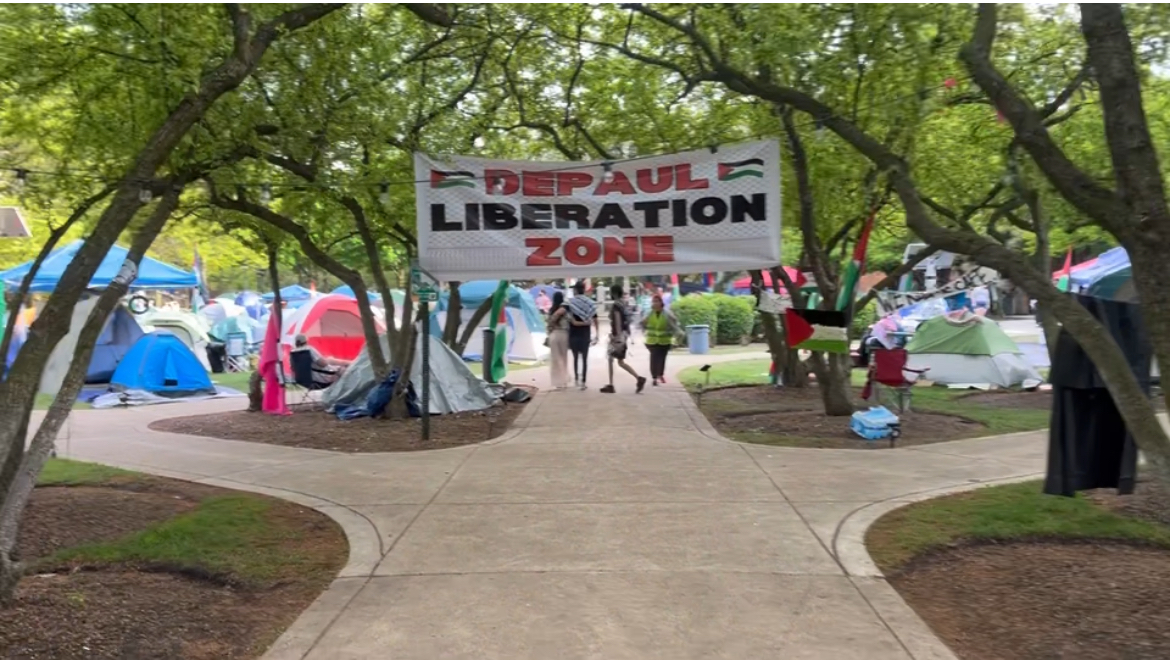

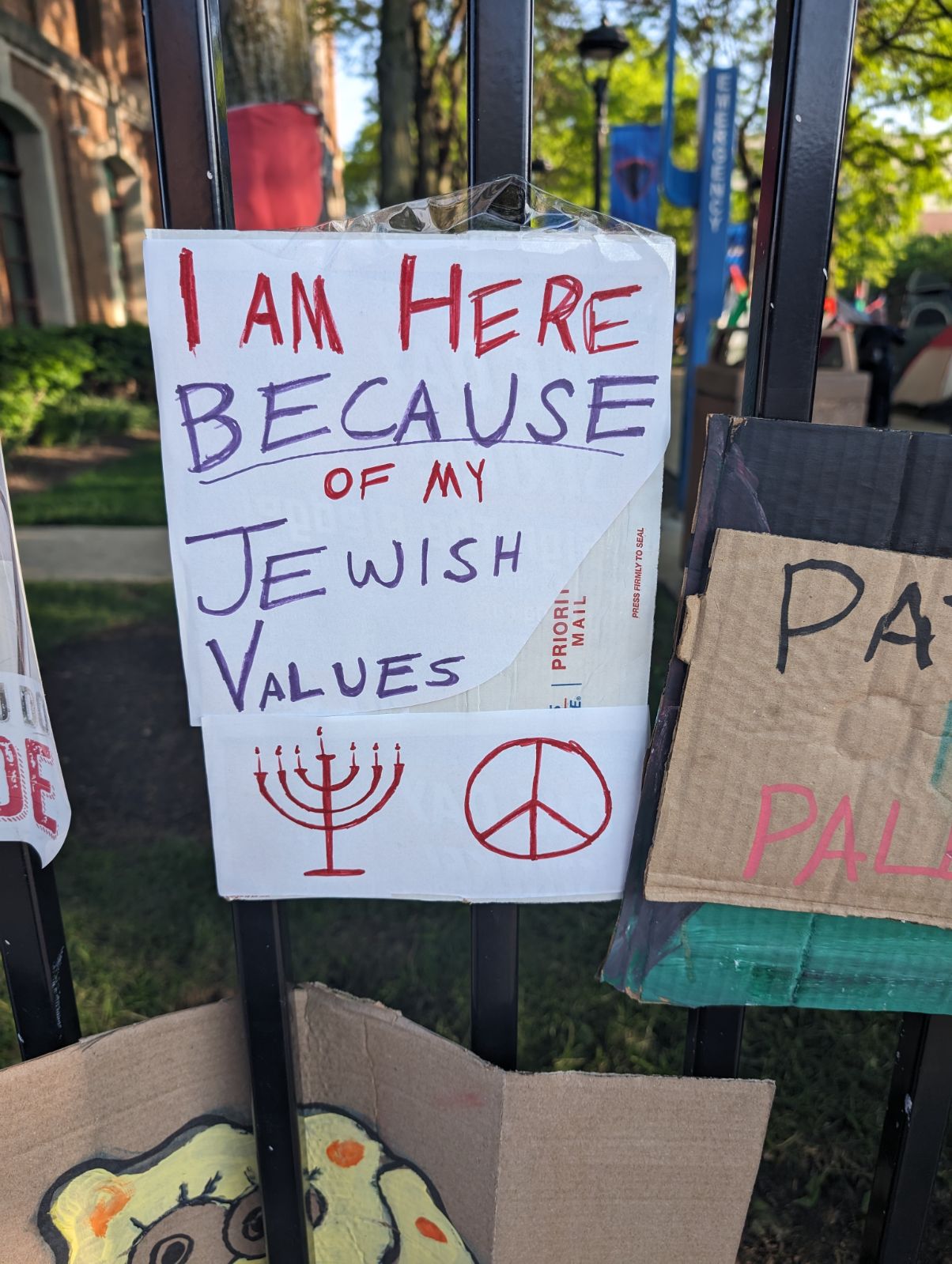
In truth, it was less a political protest encampment than a mindfully organized, genuine grassroots community. There was a planning committee to schedule ongoing events. There was a food tent and a first aid center. There were tutoring sites. There was training in nonviolent resistance and de-escalation. The students supported one another. They took care of one another. And they celebrated together as a truly multi-faith, multi-ethnic community. Last Saturday, our Jewish service was preceded by a Muslim call to prayer. Afterwards, a dance and music ceremony was performed by a local Aztec indigenous troupe.
I want it to be known, for the record, that Jewish students – many of them members of Jews 4 Justice at DePaul, were an integral part of the DePaul Liberation Zone community. And I want to say as clear as I possibly can that the cynical characterization of this encampment – and others like it across the country – as bastions of Jew hatred could not be farther from the truth. As a Jewish person, I was welcomed into this community as an honored guest.
Last week, after leading Havdalah, I was approached by scores of students – many of them Palestinian – who expressed their appreciation for our presence there. There were also many Jewish students who thanked us for giving them a spiritual Jewish context for their solidarity. To my mind, this was the safest possible place I could be as a Jew: at a place where security was a shared and mutual concern. If there was any threat to safety, it came from the state violence that was unleashed on this community by DePaul and the Chicago Police Department.
As a faith-based university, DePaul should have respected the deep moral conviction at the heart of the student community. They could have followed the example of Rev. Serene Jones, the President of Union Theological Seminary, who had this to say about the students at the Columbia University encampment:
I’ve had the chance to see the protests up close, where the simple message of the demonstrators can still be heard: Stop the war, now. And I’ve learned a lot about who these protesters really are…
First and foremost, these encampments are filled with students from different religious traditions — Jews, Muslims, Christians, Buddhists, unaffiliated as well as spiritual but not religious students. They are finding solace and courage among themselves.
These spontaneous, interreligious communities happened organically, with the strikingly easy flow of connection different from self-consciously manufactured “interfaith moments.” It is simply who these protesters are: a community bound by a greater common cause to stop the mass killing of besieged Palestinians.”
But shamefully, tragically, the DePaul administration chose a different course. It chose to negotiate in bad faith. They never seriously engaged with students’ deeply held, conscience-based convictions. They egregiously demanded that student leaders attend meetings during the Muslim and Jewish Sabbaths. Rather than responding honestly to the students’ counter proposals, they abruptly declared that the negotiations were at a stalemate, unlilaterally bringing the process to a halt. And then, early this morning, they brought in the CPD, clad in full riot gear, to violently overturn and destroy a peaceful student community.
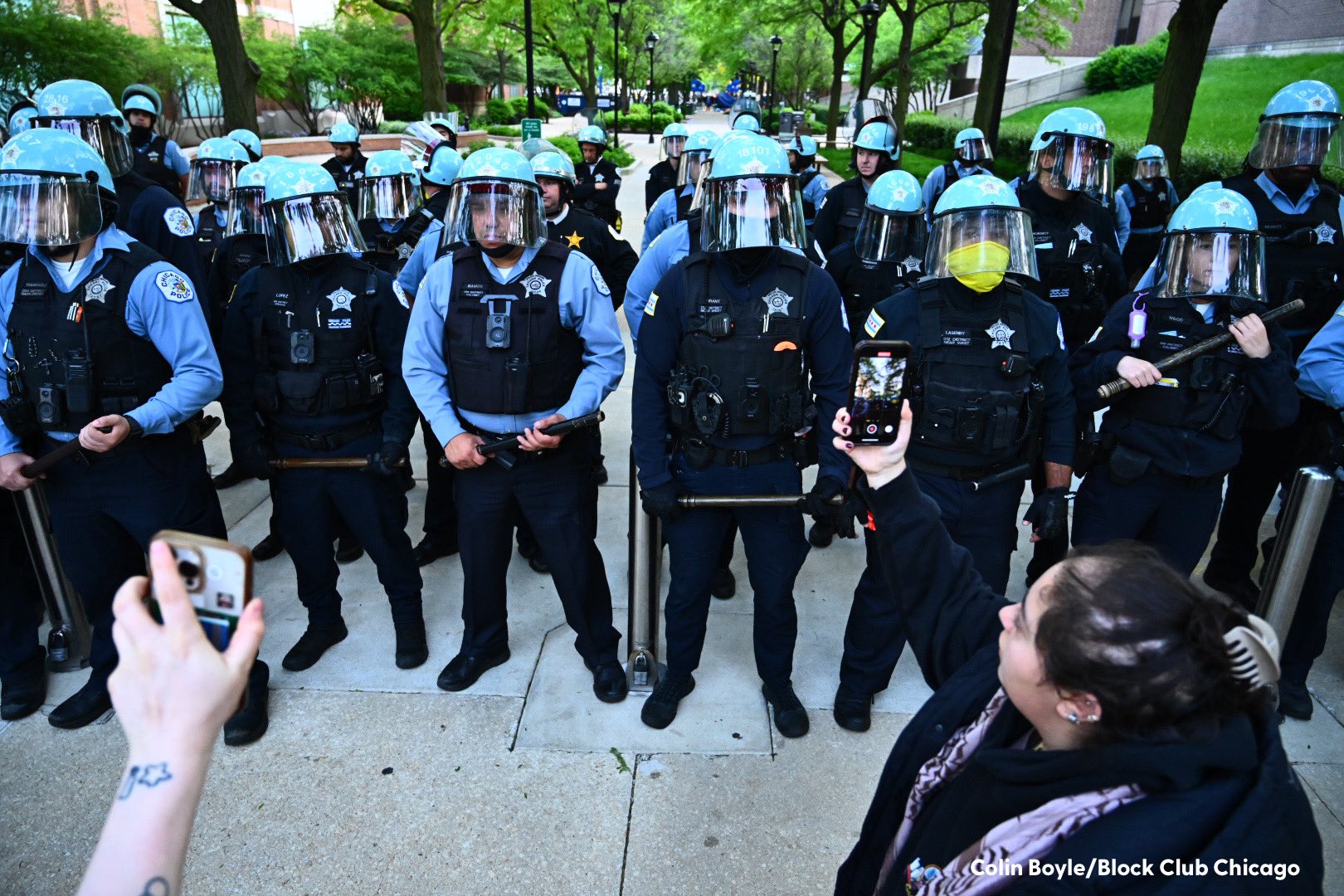
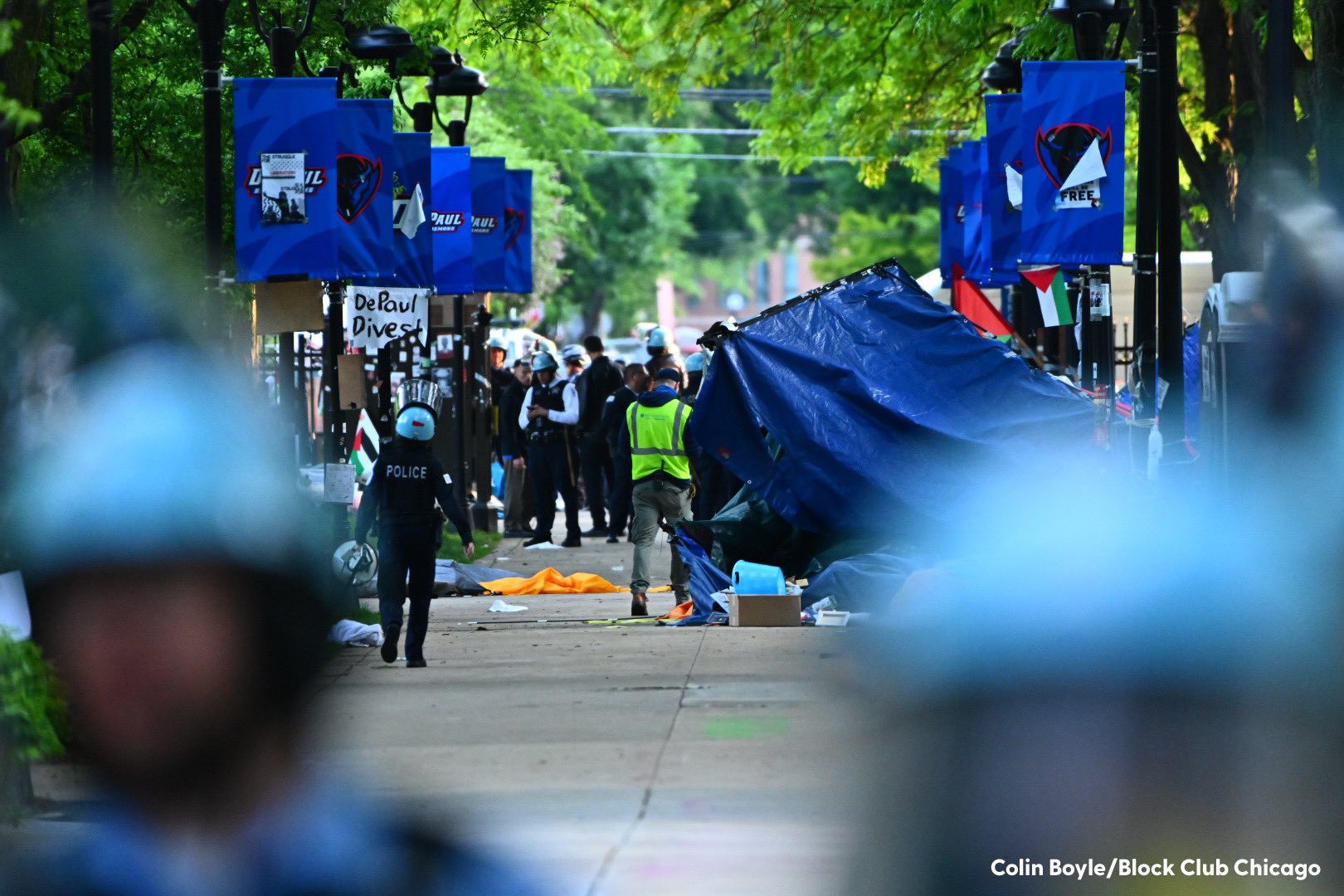
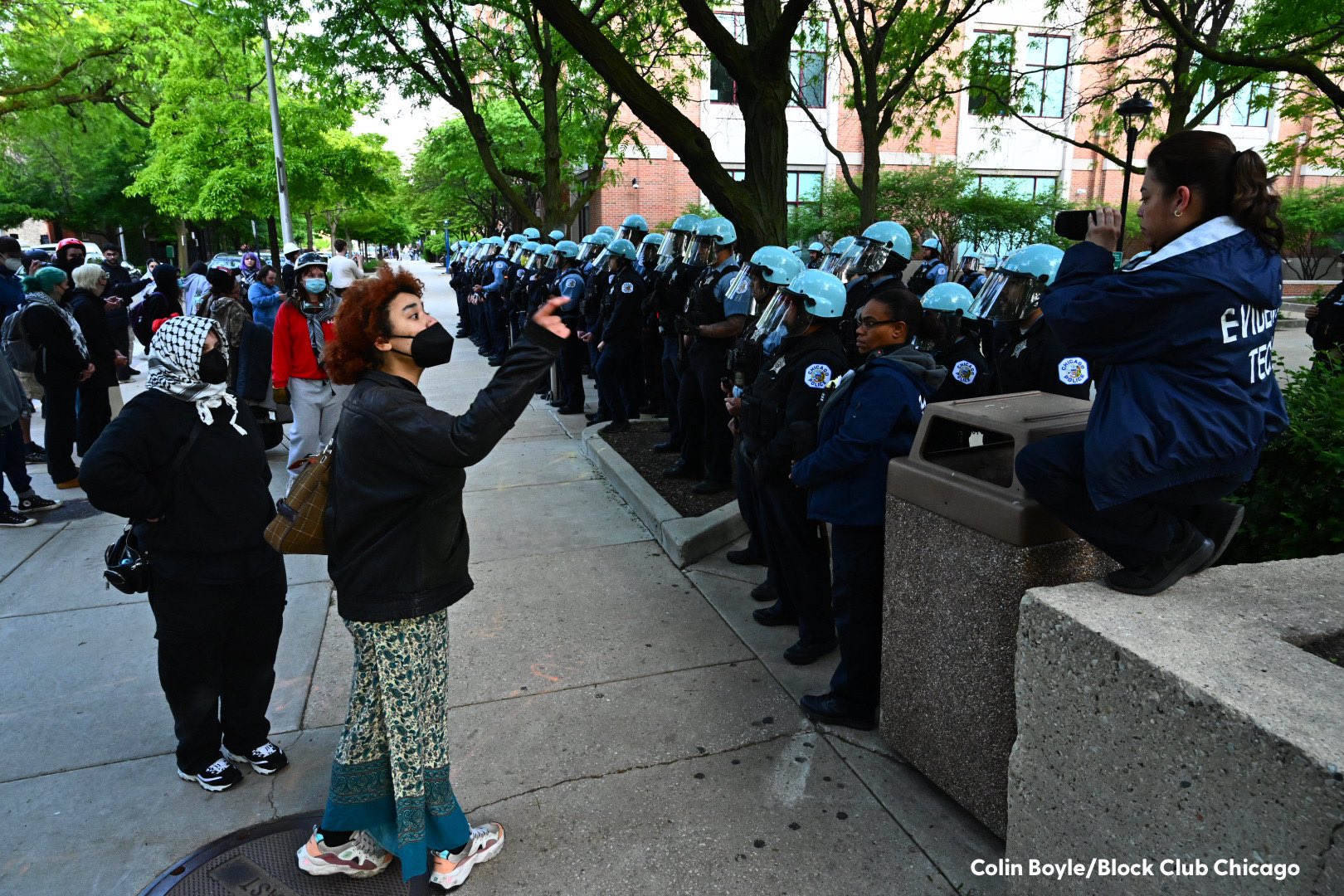
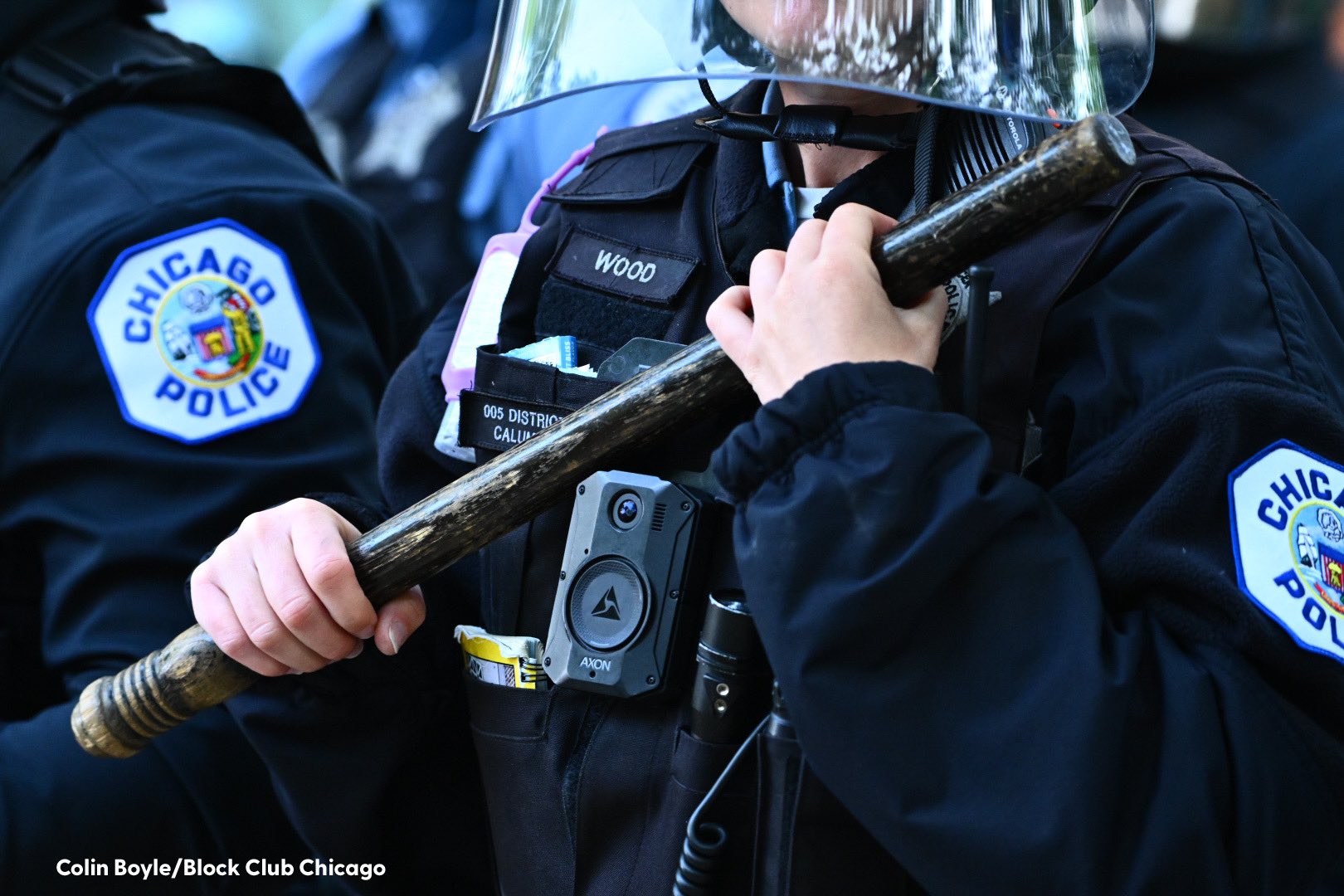
Let me be clear – what DePaul did to its students this morning was a shandeh: for shame. It represents a moral stain on a university that purports to uphold Vincentian religious values of peace and justice. It represents a failure of leadership and imagination by responding violently to a good faith, conscience-driven action of students who were challenging their school to behave morally and to divest from genocidal violence.
That their demand has occasioned such vicious state violence clearly demonstrates the truth of the students’ essential point for all the world to see. Their acts of solidarity and mutual support are a clear and direct threat to state power. There can be no better example of this truth than the travesty we witnessed at DePaul this morning.
But make no mistake, this violence will not break the will of these students, nor will it slow the progress of a solidarity movement that is breaking wide open across the country and around the world. We are all – as I speak to you now – living in a very real moment of truth. We are all being challenged to answer the question: where do I stand? Will I remain silent or will I speak out? Will I be complicit, or will I demand accountability? Will I enable the oppressive status quo, or will I call I find the courage to say out loud, “From the river to the sea, Palestine will be free!”
These students know the answers to these questions. We would do well to listen and learn from them. We would do well to follow their example. No matter how cynically they are characterized, no matter how violent the response to their moral challenge, they will not be deterred until liberation. And until that moment comes, it will be my honor – and the honor of so many others – to stand right alongside them.
 Shalom Rav