Are some places in the world more inherently sacred than others? Or is the entire world itself a sacred place? These questions are at the heart of this week’s Torah portion, Parsahat Vayetze.
As the portion opens, Jacob has fled his home to escape from the wrath of his brother, Esau. Alone in the wilderness, he arrives at a place (in Hebrew, makom) to spend the night, using a stone as his pillow. That night, he dreams of steps reaching from earth to heaven, upon which angels ascend and descend. God appears to Jacob and reaffirms the promise made to Isaac and Abraham, promising to protect Jacob on his journey until he returns home.
When Jacob awakens, he exclaims, “Mah norah ha’makom hazeh” – “How awesome is this place! God was present in it and I did not know! This is none other than the house of God and that is the gateway to heaven.” Jacob then sets up the stone he used as his pillow as a sacred pillar and names the place Beit El (“house of God”).
Centuries of commentators have inquired about the specific nature of this makom/place. Was it just a random spot where Jacob happened to spend the night or was it a sacred place toward which he was somehow guided by God? Our interrogation of this question begs an even deeper question: is the whole world in a sense, sacred space or are there some places in the world that are “more sacred” than others?
The answers to these questions are not, of course, are not mutually exclusive. Most spiritual traditions consider certain locations or sites to be uniquely invested with divinity. It is undeniable that Jewish tradition has traditionally ascribed sacred meaning to a specific land known as Eretz Yisrael. Some commentators say this land is uniquely holy because certain commandments can only be observed there and nowhere else. According to Jewish mystical tradition Eretz Yisrael – and the Temple Mount in particular – marks the very center of the universe.
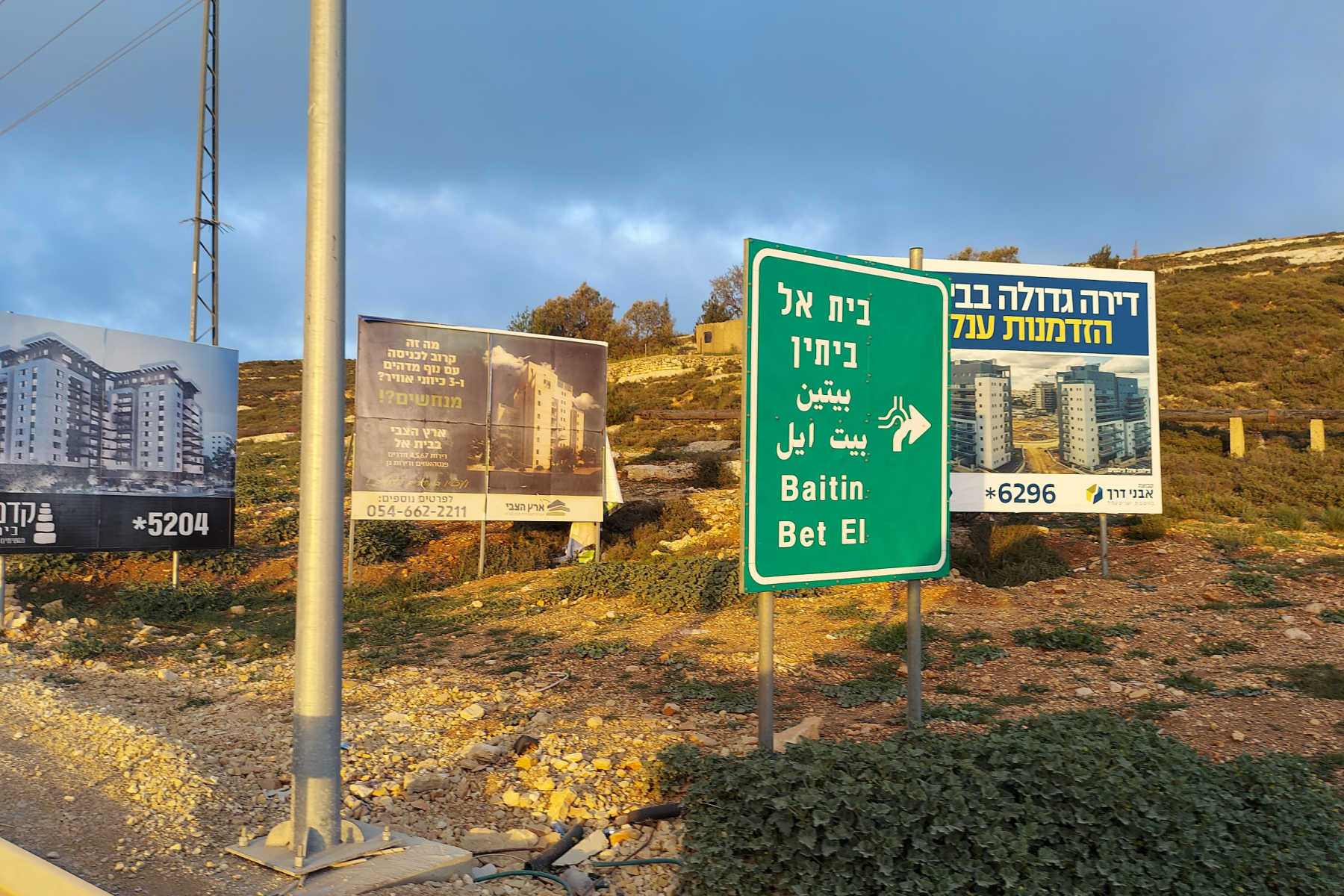
It does not follow, however, that these ideas ipso facto give the Jewish people entitlement to assert control or dominion over the land (or the people who dwell upon it). On the contrary, I would argue that this sense of entitlement actually betrays the sanctity of the land. Indeed, it is difficult to read this Torah portion in the age of Zionism and fail to note that Beit El is the name of a prominent West Bank settlement that was established in 1977 by the ultranationalist settler group Gush Emunim.
This sacrilegious hyperliteralism also ignores what the Torah teaches us from the very first chapter of Genesis: namely, that the entire earth is God’s divine creation. This ideal became more critical in Judaism after the destruction of the Temple in Jerusalem in 70 CE, when the Jewish people spread throughout the diaspora and created a spiritual system where God could be found anywhere in the world. Notably, the rabbis taught that the word makom is one of the names of God, referring specifically, the experience of the divine that is connected to place. (Or in the words of my favorite movie superhero, “wherever you go, there you are.”)
The Hebrew word for diaspora, galut, literally means exile, but as a famous rabbinic midrash teaches, “when the people of Israel went into exile, God went into exile with them.” Of course, the experience of exile is a universal one: as human beings, we understand that live in an imperfect world that has not yet experienced a complete and lasting justice. Nevertheless, as this midrash suggests, the imperfect exilic state in which we live is still infused with transcendent meaning and purpose wherever our steps may lead us.
As the great Yiddish writer S. Ansky powerfully wrote in his play “The Dybbuk,” “Every piece of ground on a person resides when they raise their eyes to heaven is a Holy of Holies.” That is to say, every place on earth has the potential to be a place of divine encounter. Every place has the potential to be a makom: holy space. Every home we create can be a Beit El – the sacred meeting place between heaven and earth.
I’m sure we all can think of these holy spaces in our own lives: places that are sacred because they were the sites of deep and significant meaning for us; places made holy because of the experiences we experience in them and the sacred memories we associate with them. At the same time, it is impossible to ignore that the entire earth abounds in sanctity – as we read in the book of Isaiah: “The whole world is filled with God’s glory.”
In other words, like Jacob, any place we lay down our heads has the potential to be a makom: a holy place with limitless potential for sacred, transformative experience.
 Shalom Rav