I’m sure there are many people who read what I write regularly (or scroll through my social media feeds) and think to themselves, “What a ‘one-note’ rabbi, just going on and on about Gaza. Why doesn’t he write or talk about other things for a change?”
If I could answer, these hypothetical folks, I’d say, yes there are surely many things in the world I could be writing or talking about. But when you live in a time of genocide – particularly one that is being funded by your government and carried out in your name as a Jew – it seems to me that being “one note” is a moral imperative.
All the more so as Israel’s genocide on Gaza is now in its fourteenth month and the rest of the world seems have moved on – treating Israel’s genocide in Gaza as mere background noise. In such a context, it seems to me, bearing witness – i.e., to remember when others have forgotten – is a profoundly sacred act.
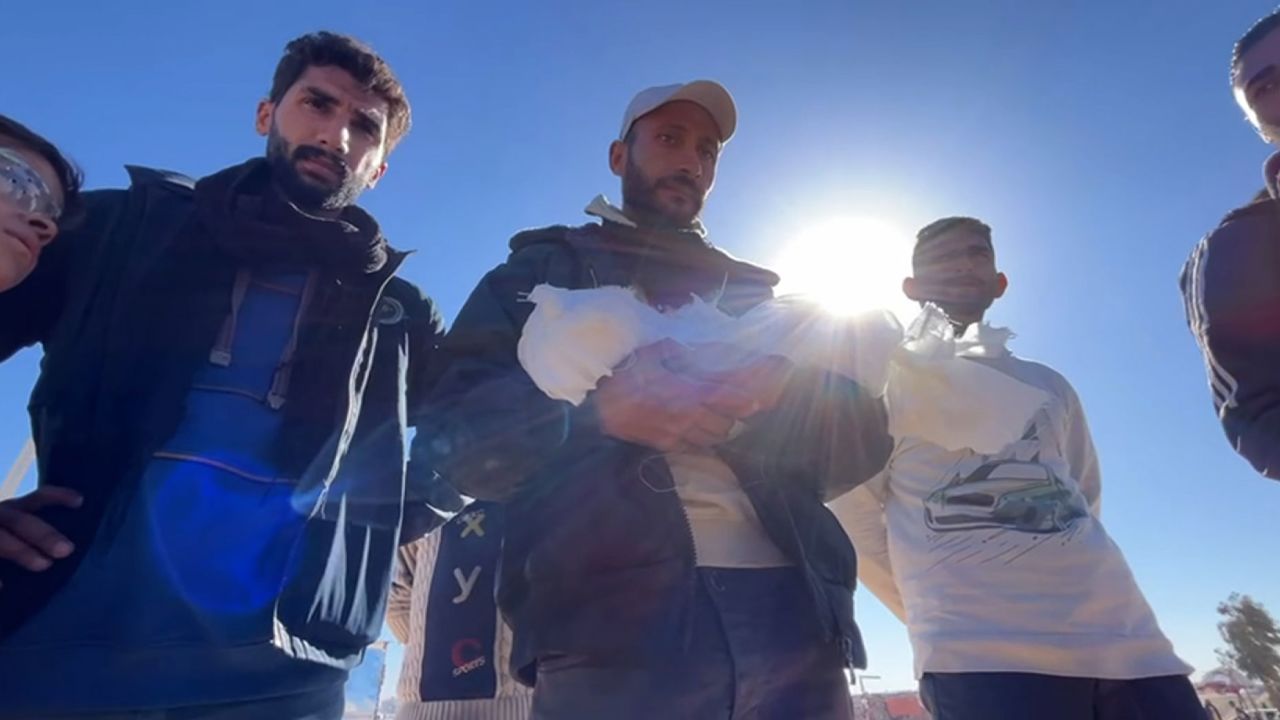
Though it is not being widely reported, Israel’s mass killing of Gazans has been increasing dramatically in recent weeks. Earlier this week, it was reported that Israel’s genocide claimed 77 lives in one day. Two days ago, Israel attacked five journalists in a clearly marked news van outside Al-Awda Hospital in Nuseirat. (One of the journalists, Ayman Al-Jidi, was waiting for his wife to give birth inside the hospital.) It is also being reported that Gazan babies are freezing to death inside their increasingly frigid tent encampments. Truly, in the face of such shameful and shameless genocidal violence, how can we not bear witness?
Remembering Gaza is at the heart of Tzedek Chicago’s new Hanukkah supplement, “Rededicating our Solidarity with Gaza” which highlights a different group of Gazans who have been subjected to grave and deadly harm during the course of the genocide (including journalists and children). Each group is represented here by individuals whose lives and deaths testify to the dignity and humanity of the Palestinian people. We encourage you to read them aloud each night after reciting the Hanukkah blessings bear witness to their stories and sanctify their memories.
Remembrance is also an important theme in this week’s Torah portion, Parashat Miketz. At the very end of last week’s Torah portion, while Joseph was languishing in Egyptian prison, he interpreted the dreams of his cell mates, the chief baker and the royal cupbearer. He told the cupbearer, “Think of me when all is well with you again, and do me the kindness of mentioning me to Pharaoh, so as to free me from this place.” But after the cupbearer is released from prison, we are told, “Yet the chief cupbearer did not think of Joseph; he forgot him.”
At the start of this week’s portion, the cupbearer learns of Pharaoh’s nightmares and tells him, “I must make mention today of my misdeeds.” He then tells Pharaoh about Joseph, the young man in prison who has the gift of dream divination. On the surface, this might be the self-effacing rhetoric of a royal courtier addressing his king. But on a deeper level, his statement could be understood as a kind of confession: admission that he has sinned by allowing the incarcerated to remain forgotten.
Of course, systems of incarceration themselves are inherently sinful inasmuch as they treat humanity as disposable – and too easily forgotten. Whether it is the massive for-profit prison systems, the cages on our border, or the people of Gaza, who have been incarcerated in an open-air prison for over a decade and are now being subjected to genocidal violence at the hands of their captors.
This Hanukkah, let us shine our lights to remind the world of what it would just as soon forget. Let us commit the kind of hope that is rooted in action: toward a world free of prison walls, a world where no one is disposable and the divine image in all is cherished and nurtured and liberated into its full and unfettered potential.
Shabbat Shalom and Chag Hanukkah Sameach.
 Shalom Rav