Here are my remarks from, “Gaza: Religion, Politics and Solidarity,” a program sponsored by Bright Stars of Bethlehem on May 5, held at the First Presbyterian Church in Evanston. It was my honor to speak in conversation with Palestinian liberation theologian Rev. Dr. Mitri Raheb (founder and President of Dar al-Kalima University College of Arts and Culture in Bethlehem), Dr, Rami Nashashibi, (founder and Executive Director of the Inner-City Muslim Action Network) and Dr. Iva E. Carruthers, (General Secretary of the Samuel DeWitt Proctor Conference).
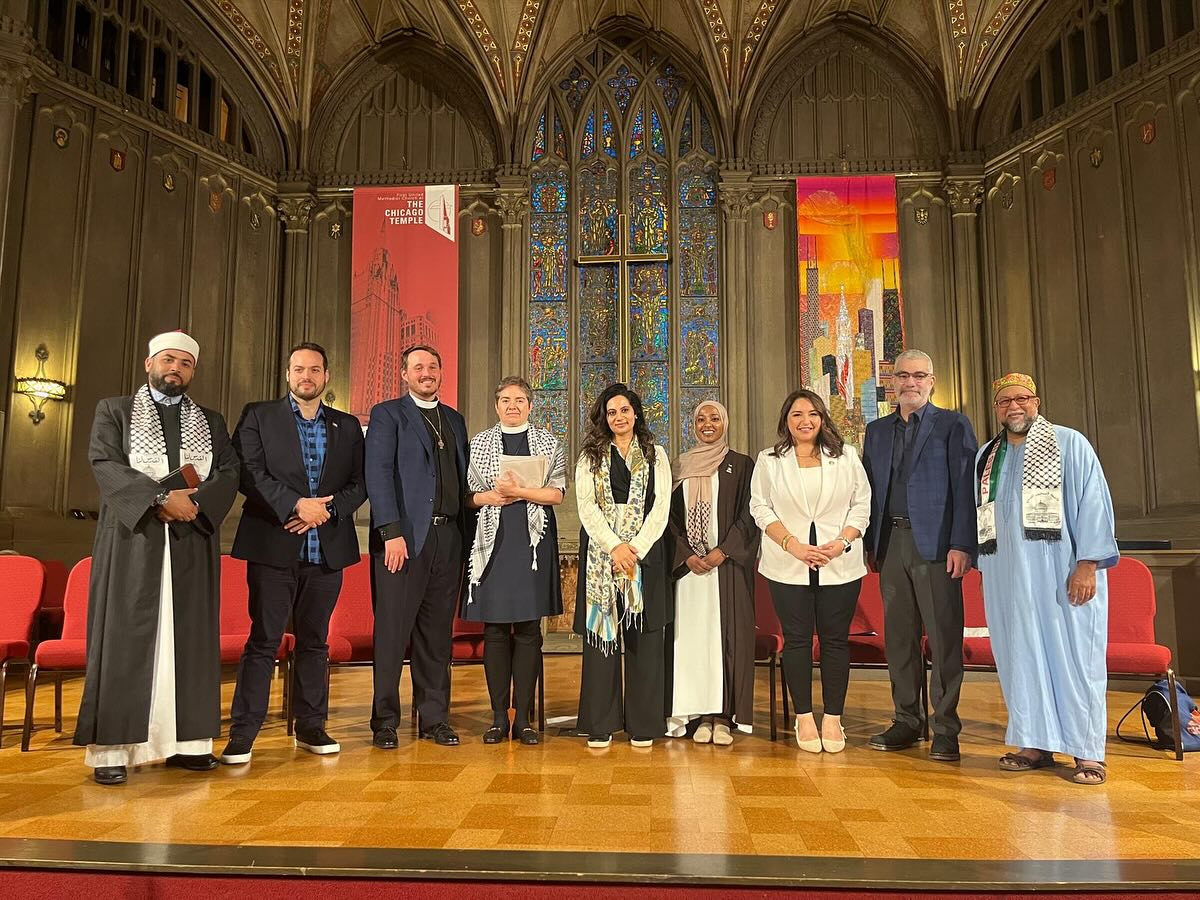
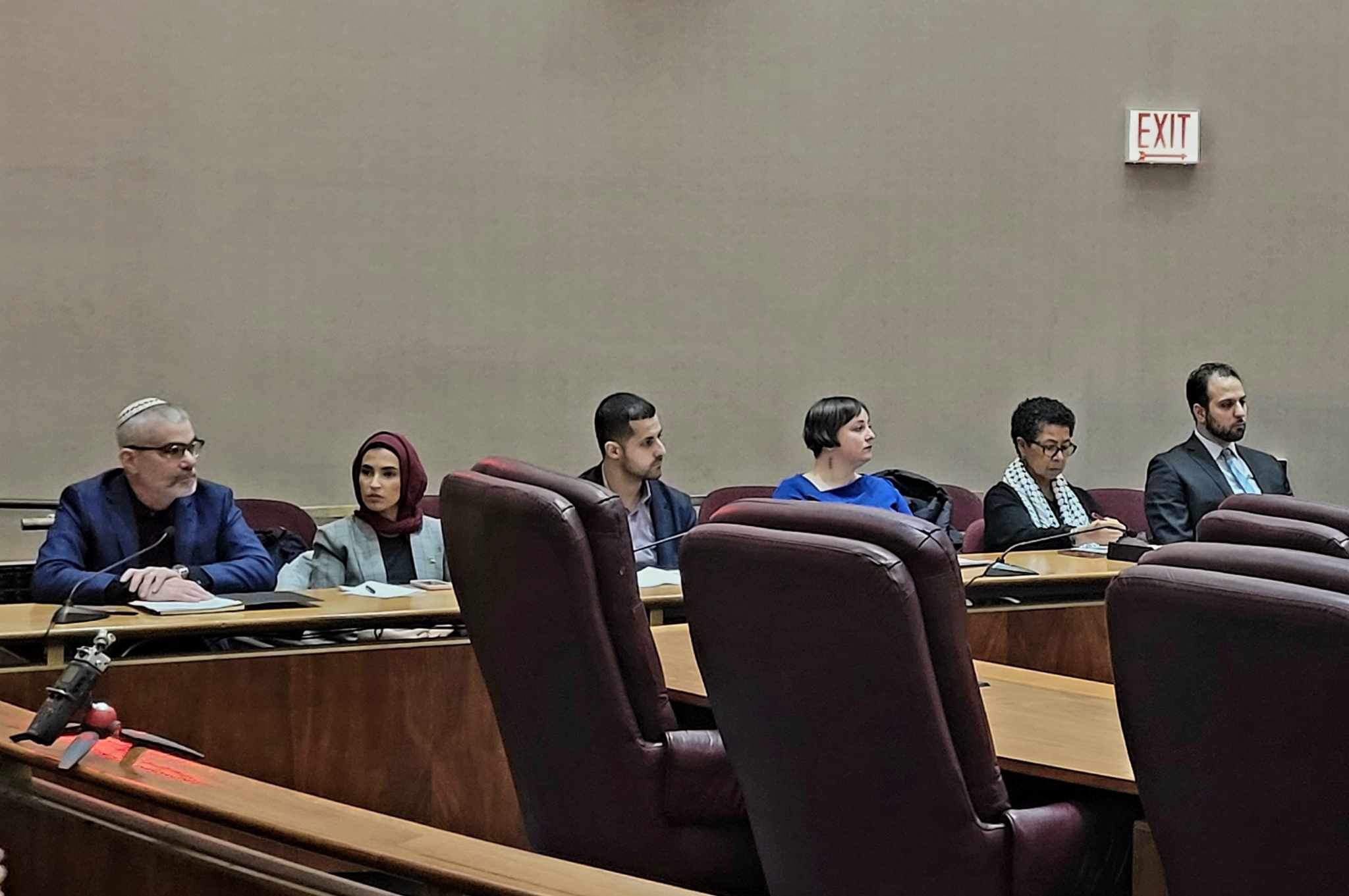
left to right: Sheikh Hassan Ali, Tarek Khalil, Rev. Michael Wolff, Rev. Anna Piela, Maaria Mozaffar, Deena Habbal, Rep. Delia Ramirez, Rabbi Brant Rosen, and Imam Hassan Aly.
My remarks from last Sunday, delivered at an interfaith memorial in Chicago for Wadee Alfayoumi, a six year old Palestinian-American boy from Plainfield, IL, who was murdered in a hate crime on. October 14. Our service also included words from IL Rep. Delia Ramirez, who is co-sponsoring a House resolution affirming that “the United States has zero tolerance for hate crimes, Islamophobia, anti-Semitism, and anti-Palestinian and anti-Arab discrimination.”
When precious lives are unjustly taken from the world, the most essential way we can honor their memory is to ensure that they have not died in vain. Wadee’s young life was cruelly taken from us through a heinous and unjust act. While it is true that his murderer has been caught and will be tried by our legal system, our work is by no means over. We must continue to demand justice for Wadee Alfayoumi.
While it is true that Wadee’s life was taken by one hateful, hate-filled individual, those who view this was a random, isolated incident are gravely mistaken. Wadee’s murder did not occur in a vacuum. It occurred in the toxic context of Islamophobia and anti-Palestinianism that has long been rising throughout this country and around the world. It was inspired by an ideology emanating from the state of Israel that has routinely and regularly dehumanized Palestinians for decades – a state that is, even as we speak, unleashing genocidal violence against a captive Palestinian population in Gaza.
How can we honor the life of Wadee Alfayoumi? How can we ensure his death will not be in vain? By speaking out as loudly and unabashedly as possible against anti-Muslim, anti-Arab and anti-Palestinian hatred – and the systems that support it. By demanding that the safety and security of some groups cannot be upheld at the expense of others. By affirming the most essential of moral truths: that all people – and peoples – are equally precious in the eyes of God, and equally worthy of human dignity and respect.
In a celebrated Talmudic debate, two rabbis, Rabbi Akiba and Rabbi Ben Azzai argued over what is the most central precept in Torah. Rabbi Akiba claims it is the famous verse from Leviticus: “Love your neighbor as yourself.” Ben Azzai disagrees, and cites the verse from Genesis: “When God created humankind, God created humankind in God’s image.” Why does Ben Azzai disagree? Some commentators suggest that while “love your neighbor as yourself” is a powerful moral imperative, it is somehow incomplete. It potentially limits our love to our immediate neighbors, to members of our community, religious or ethnic group. However when we lift up the Biblical precept that all humanity is created in the divine image, we assert our love and care for all who dwell on earth. Likewise, when we dehumanize or diminish the humanity of others, God’s presence is diminished in the world.
In other words, this divine precept is rooted in a vision of abundance. Human safety and security cannot be a zero-sum game: in the end, it must be all of us or none. There are many of us in the American Jewish community who are deeply, profoundly dismayed by the cynical accusations of antisemitism wielded by right wing political leaders who have made it abundantly clear they do not, to put it mildly, have my community’s well-being at heart. We know that the charge has less to do with Jewish safety than punishing those who stand in solidarity with Palestinians.
We would do well to ask: why does the ignorant conflation of anti-Zionism with antisemitism merit so many hearings on Capitol Hill? Why is antisemitism being politically exceptionalized over other forms of bigotry and hatred? Why has the murder of Wadee Alfayoumi – and the shooting of three Palestinian college students in Burlington, Vermont – met with nothing but abject silence from the representatives holding these hearings? In this time of growing hatred, we must stand down this privileging of one group of people over others for cynical political gain. We must demand that our politics be leveraged to protect the safety and security for all groups targeted by hate.
Unfortunately – tragically – we live in an age in which right-wing, white supremacists are strategically targeting their hate at Muslims, Jews, people of color, immigrants, gay, trans and disabled people, among others. Yes, as a Jewish person, I feel genuinely threatened by the rise of antisemitism in this country and around the world – but I also know full well that Christian nationalist hatred is equal opportunity in nature. I understand full well that my safety and security is inseparable from the safety and security of all.
As remember the precious life of Wadee Alfayoumi, whose was taken from the world so unjustly, let us demand justice. Let us, as affirm, as the House Resolution introduced by Rep. Delia Ramirez and her colleagues states so plainly, that it is “the duty of elected officials and media to tell the truth without dehumanizing rhetoric when informing the public of factual information.” And that “the United States has zero tolerance for hate crimes, Islamophobia, anti-Semitism, and anti-Palestinian and anti-Arab discrimination.”
In Jewish tradition, when we invoke the name of someone who has died, we traditionally follow with “may their life be for a blessing.” This is not only a statement of respect to the dead: it is also a moral imperative for the living. If their memories are to be a blessing, it is we that must make it so.
I’d like to end my remarks now with the traditional Jewish prayer for the dead, El Male Rachamim (“God Full of Compassion”). We offer it now in memory of Wadee Alfayoumi, whose precious life was unjustly taken from us. Let it’s resonance be a blessing to all whose lives have been ended by bigotry – and an inspiration to us all to dismantle the systems that enable hate and oppression once and for all:
Oh God filled with compassion, whose loving presence ever surrounds us, bring final rest to the soul of Wadee Alfayoumi, who has returned to his source. May the memory of his life shine forth like the brilliance of the skies above, as it brightens our own lives and even now. Source of mercy, please shelter him beneath the softness of you wings, that he may be protected in your presence for eternity, that he may rest in peace and power.
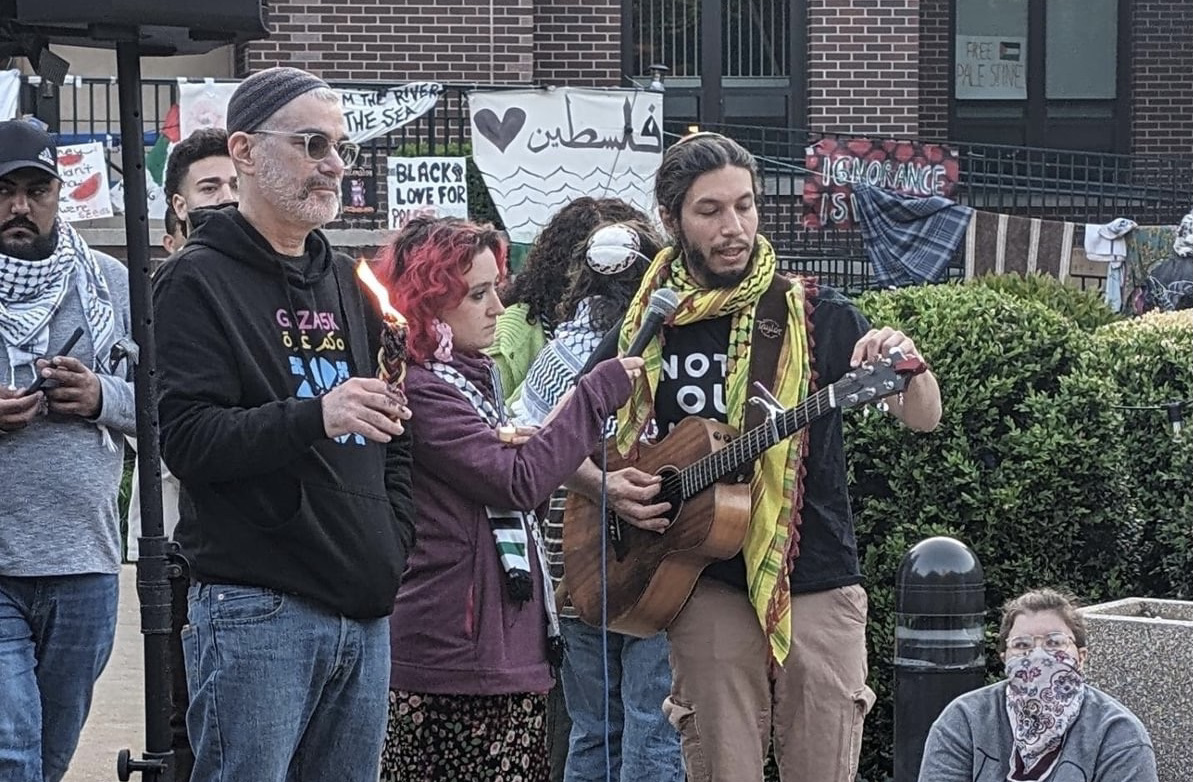
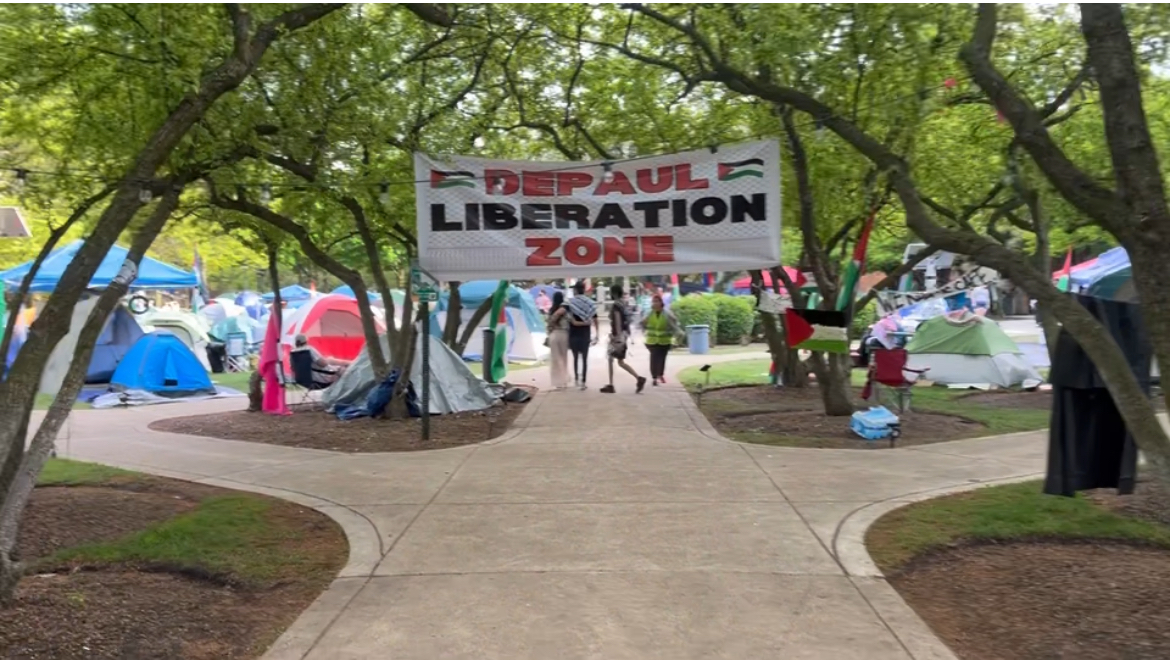
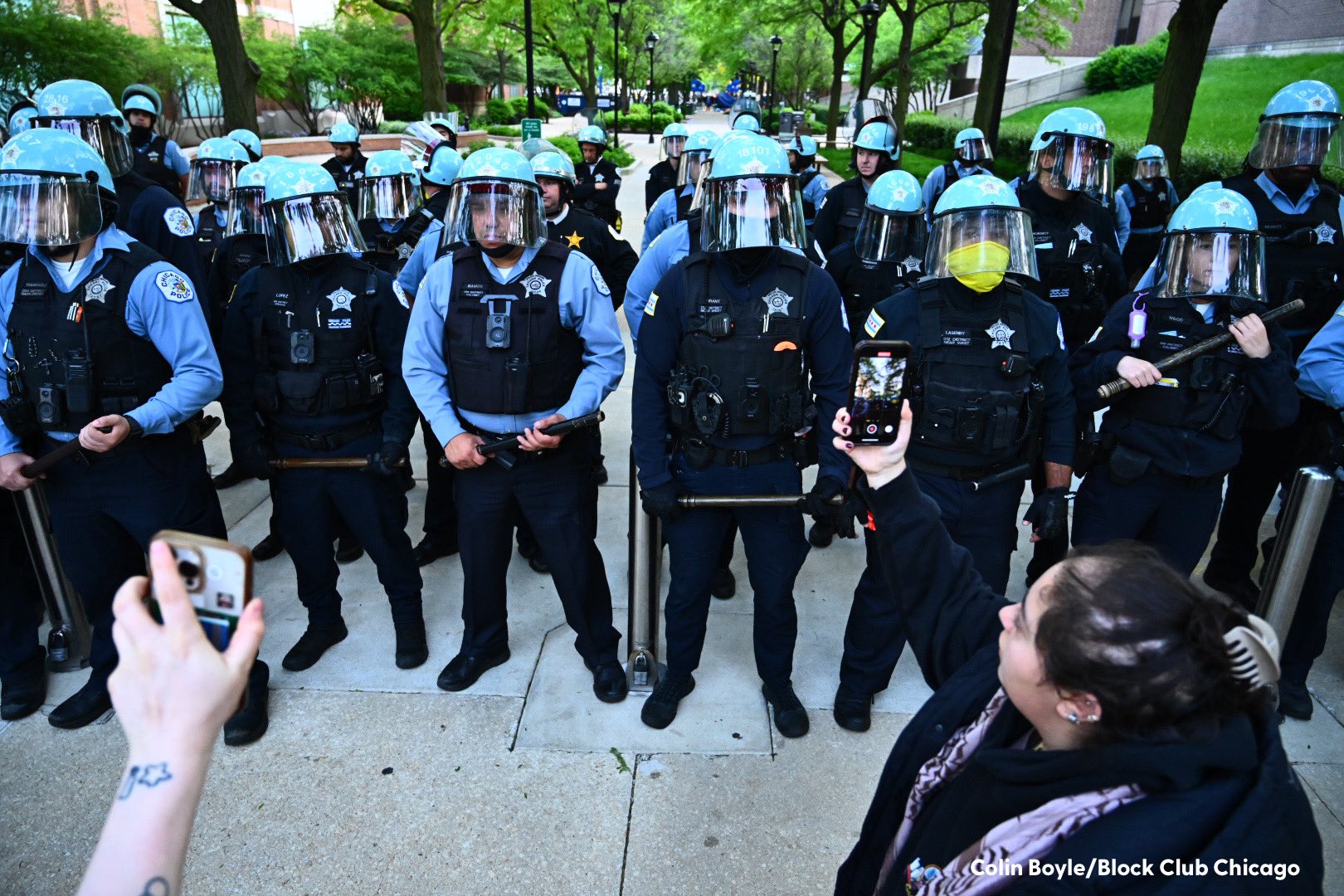
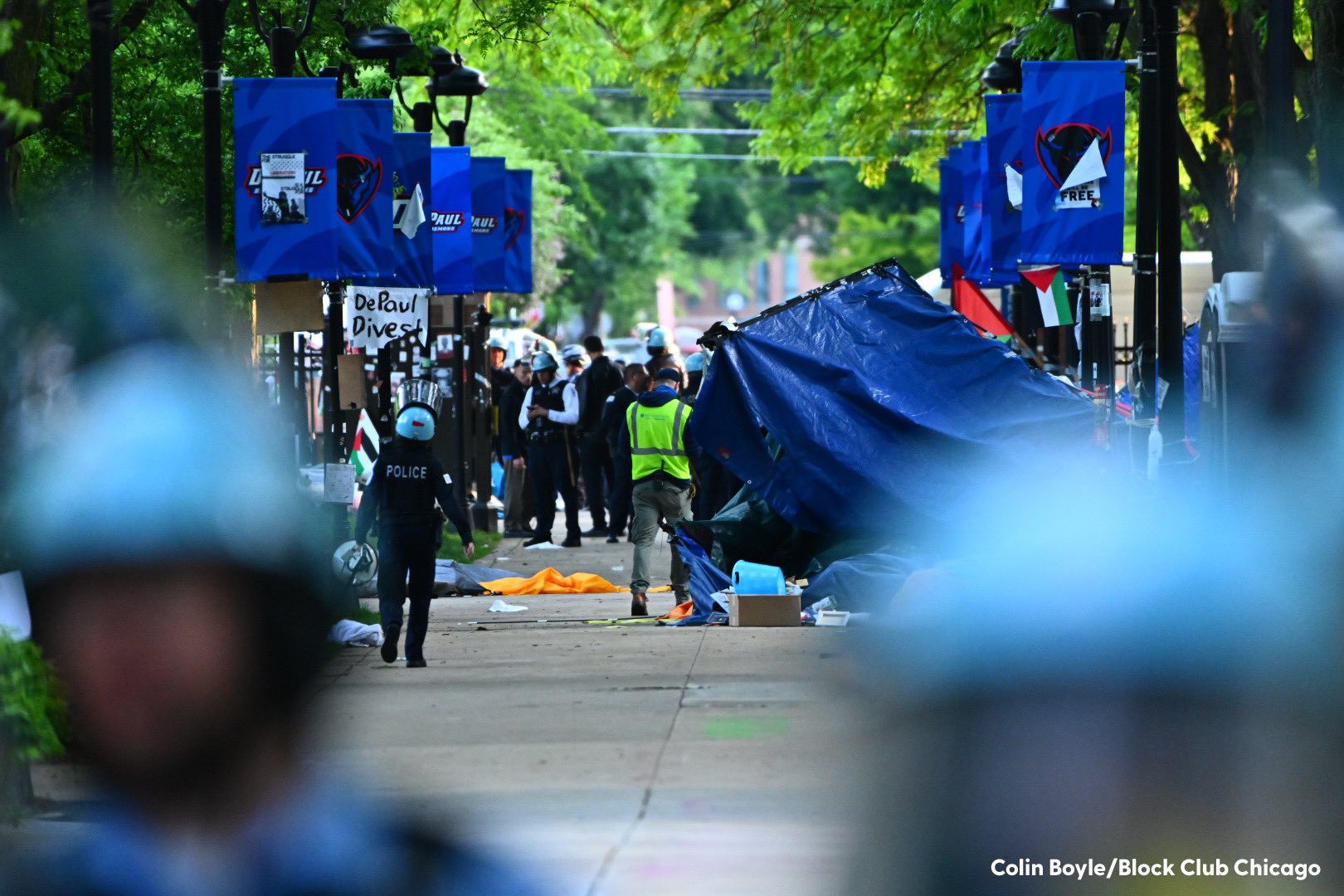
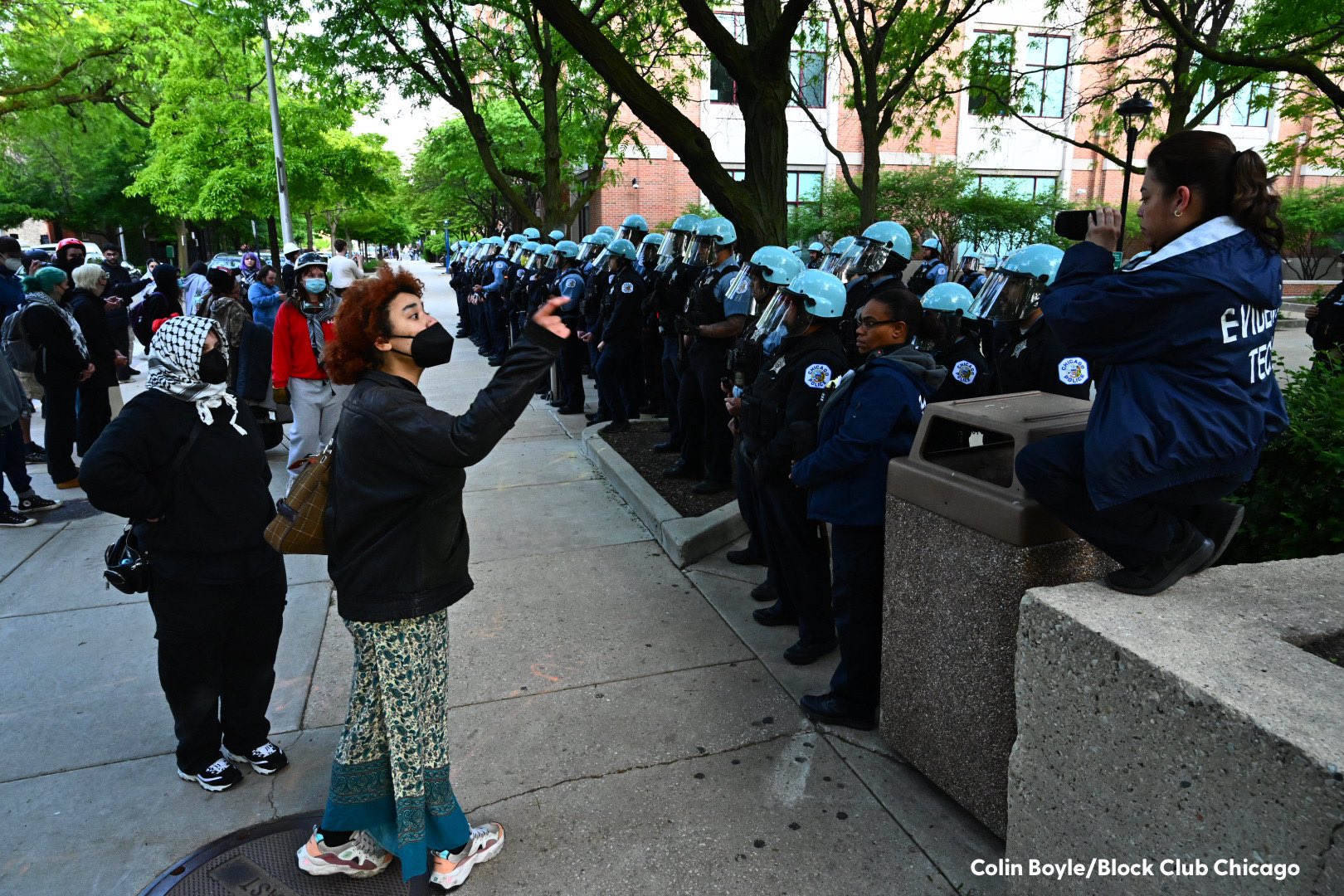
Early yesterday morning, the Chicago Police Department raided and destroyed the student encampment at DePaul University. The DePaul Liberation Zone was the last remaining student encampment in the Chicago area and had been ongoing for seventeen days. Here are my remarks from the student-called press conference at the DePaul student center that took place last night:
My name is Brant Rosen – I’m the rabbi of the congregation Tzedek Chicago and the co-founder of the Jewish Voice for Peace Rabbinical Council, and I’m here today representing the rapidly growing section of the Jewish community that is actively protesting Israel’s genocidal violence against the Palestinian people. As part of this protest, we stand with the student movement across the country – and around the world – that demand their schools divest from Israel’s war crimes in Gaza and throughout Palestine.
It has been my personal honor to visit the DePaul Liberation Zone numerous times over the past two weeks. Together with members of my congregation, we led two Havdalah services – the ceremonies that mark the end of the Jewish Sabbath. We were invited and scheduled to lead Shabbat services at the student encampment tomorrow evening – and are deeply saddened that this will now not be possible.
When I led Havdalah, I made the observation that Jewish tradition views Shabbat as a foretaste of Olam Haba – the World to Come. I added that this is exactly what the students were creating in their encampment. The students of DePaul created for themselves the World-As-It-Should-Be in real time.
In truth, it was less a political protest encampment than a mindfully organized, genuine grassroots community. There was a planning committee to schedule ongoing events. There was a food tent and a first aid center. There were tutoring sites. There was training in nonviolent resistance and de-escalation. The students supported one another. They took care of one another. And they celebrated together as a truly multi-faith, multi-ethnic community. Last Saturday, our Jewish service was preceded by a Muslim call to prayer. Afterwards, a dance and music ceremony was performed by a local Aztec indigenous troupe.
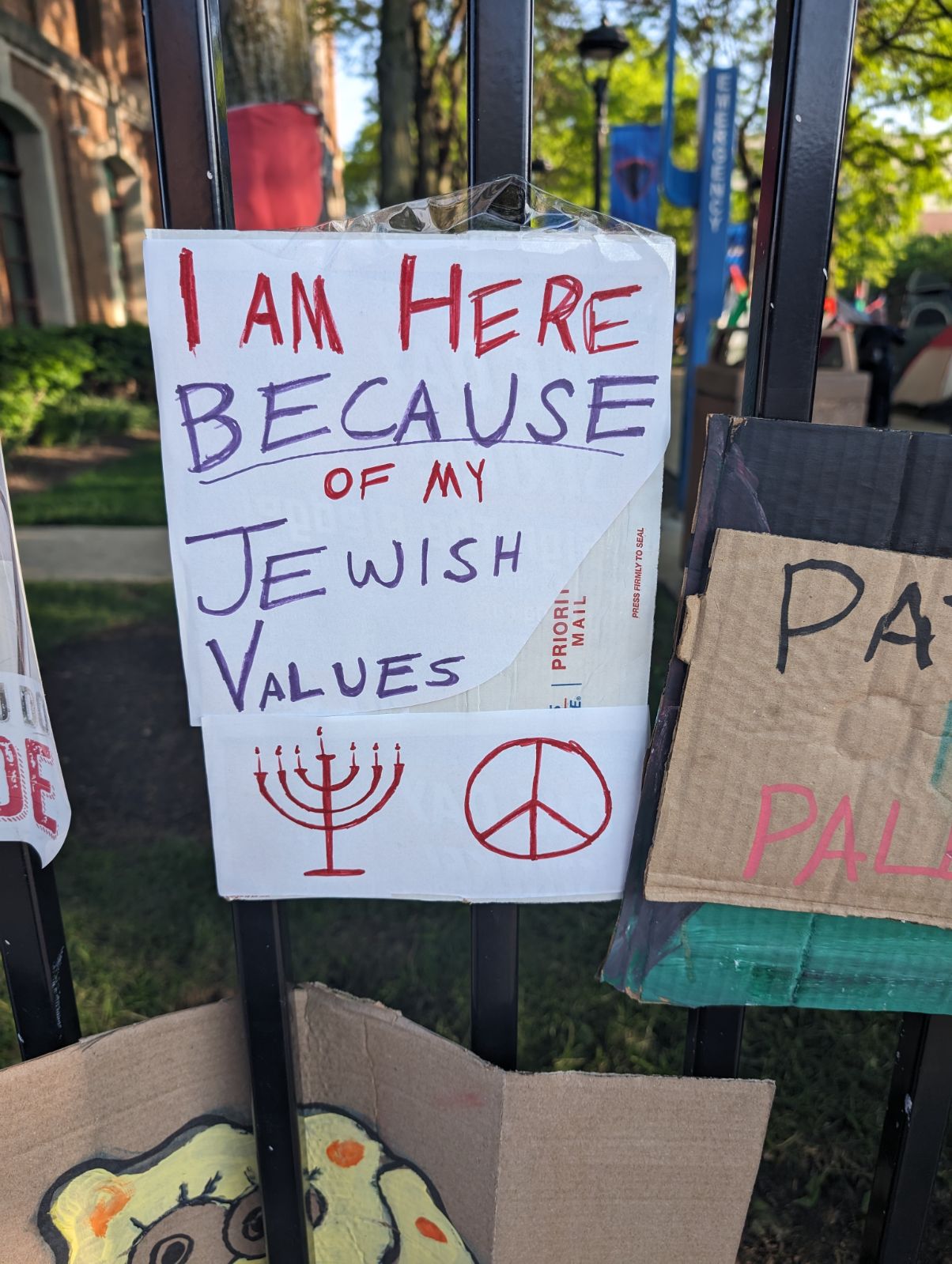
I want it to be known, for the record, that Jewish students – many of them members of Jews 4 Justice at DePaul, were an integral part of the DePaul Liberation Zone community. And I want to say as clear as I possibly can that the cynical characterization of this encampment – and others like it across the country – as bastions of Jew hatred could not be farther from the truth. As a Jewish person, I was welcomed into this community as an honored guest.
Last week, after leading Havdalah, I was approached by scores of students – many of them Palestinian – who expressed their appreciation for our presence there. There were also many Jewish students who thanked us for giving them a spiritual Jewish context for their solidarity. To my mind, this was the safest possible place I could be as a Jew: at a place where security was a shared and mutual concern. If there was any threat to safety, it came from the state violence that was unleashed on this community by DePaul and the Chicago Police Department.
As a faith-based university, DePaul should have respected the deep moral conviction at the heart of the student community. They could have followed the example of Rev. Serene Jones, the President of Union Theological Seminary, who had this to say about the students at the Columbia University encampment:
I’ve had the chance to see the protests up close, where the simple message of the demonstrators can still be heard: Stop the war, now. And I’ve learned a lot about who these protesters really are…
First and foremost, these encampments are filled with students from different religious traditions — Jews, Muslims, Christians, Buddhists, unaffiliated as well as spiritual but not religious students. They are finding solace and courage among themselves.
These spontaneous, interreligious communities happened organically, with the strikingly easy flow of connection different from self-consciously manufactured “interfaith moments.” It is simply who these protesters are: a community bound by a greater common cause to stop the mass killing of besieged Palestinians.”
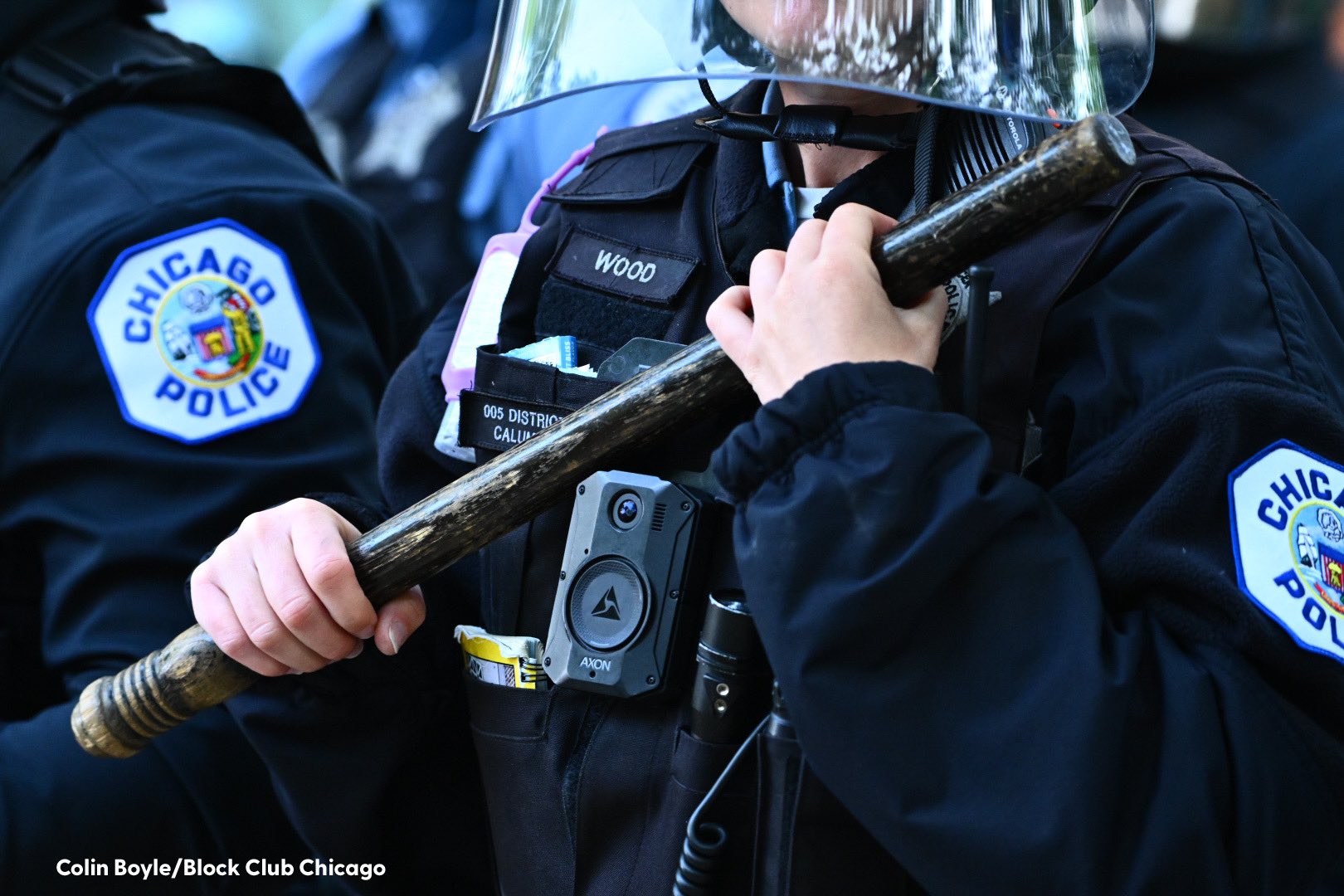
But shamefully, tragically, the DePaul administration chose a different course. It chose to negotiate in bad faith. They never seriously engaged with students’ deeply held, conscience-based convictions. They egregiously demanded that student leaders attend meetings during the Muslim and Jewish Sabbaths. Rather than responding honestly to the students’ counter proposals, they abruptly declared that the negotiations were at a stalemate, unlilaterally bringing the process to a halt. And then, early this morning, they brought in the CPD, clad in full riot gear, to violently overturn and destroy a peaceful student community.
Let me be clear – what DePaul did to its students this morning was a shandeh: for shame. It represents a moral stain on a university that purports to uphold Vincentian religious values of peace and justice. It represents a failure of leadership and imagination by responding violently to a good faith, conscience-driven action of students who were challenging their school to behave morally and to divest from genocidal violence.
That their demand has occasioned such vicious state violence clearly demonstrates the truth of the students’ essential point for all the world to see. Their acts of solidarity and mutual support are a clear and direct threat to state power. There can be no better example of this truth than the travesty we witnessed at DePaul this morning.
But make no mistake, this violence will not break the will of these students, nor will it slow the progress of a solidarity movement that is breaking wide open across the country and around the world. We are all – as I speak to you now – living in a very real moment of truth. We are all being challenged to answer the question: where do I stand? Will I remain silent or will I speak out? Will I be complicit, or will I demand accountability? Will I enable the oppressive status quo, or will I call I find the courage to say out loud, “From the river to the sea, Palestine will be free!”
These students know the answers to these questions. We would do well to listen and learn from them. We would do well to follow their example. No matter how cynically they are characterized, no matter how violent the response to their moral challenge, they will not be deterred until liberation. And until that moment comes, it will be my honor – and the honor of so many others – to stand right alongside them.
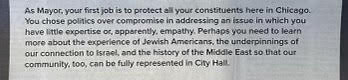
Last Sunday, this full-page ad appeared in the Chicago Tribune: a hate-filled diatribe against Mayor Brandon Johnson for his support of the recent city council ceasefire resolution. Here it is, in full, along with my commentary.
Criticizing one resolution for “doing nothing to substantively affect the outcomes in the Middle East” is a straw man argument. No one who supported this resolution has any illusions that it alone will change the terrible facts on the ground in Israel-Palestine. It does represent, however, a civic statement of conscience. To date, over 70 US cities have passed similar ceasefire resolutions. Taken together, they constitute a collective moral call for an end to the humanitarian nightmare that has been unfolding and escalating in Gaza for the past four months.
The letter makes the unsubstantiated claim that the City Council’s resolution proceedings “fanned the flames of antisemitism.” This is a serious accusation – and it is exceedingly irresponsible to level such a claim without any examples or proof. No, ceasefire resolutions do not cause antisemitism – and protesting Israel’s genocidal violence against Palestinians in Gaza is not antisemitic. It is a call for justice.
Chicago’s ceasefire resolution was based on a resolution passed by the UN last December, which emphasized that “the Palestinian and Israeli civilian populations must be protected in accordance with international humanitarian law.” It also called for “the immediate and unconditional release of all hostages, as well as ensuring humanitarian access.”
This is an exceedingly fair resolution. No, it did not absolve Hamas for the war and civilian deaths, but neither did it condemn Israel for its outrageous prosecution of a military assault that international experts and courts have have claimed fits the definition of genocide.
The letter then goes on to say that Hamas “misused humanitarian aid” – another unsubstantiated claim – and criticizes the resolution for failing to demand that Hamas disarm. Since this is an Israeli demand, to include this would be to inject an egregiously partisan statement into the resolution.
The January 30 high school walkouts were powerful demonstrations of collective student conscience that Mayor Johnson was right to support. The claim that “hundreds of CPS parents, students and teachers” were harassed during the protests is completely anecdotal and in fact, outrageous. If harassment on such a scale actually took place, there would surely be widespread press and investigations into these alleged actions. In fact, the press around the walkouts cited “worries from some CPS parents and Jewish groups that Jewish students could be targeted or made to feel uncomfortable.” There is, of course, a world of difference between “uncomfortable” and “unsafe.”
Palestinians have longpointedout that the call “from the river to the sea” is not a genocidal threat, but a demand for equality and justice for all. If that makes some Jews uncomfortable, they should interrogate their support for “the world’s only Jewish state” – an ethno-nation that does not afford equal rights to the Palestinians who happen to live between the river and the sea.
The “compromises” suggested in this letter are exceedingly more political than anything Mayor Johnson supported – and slamming him for having no expertise or empathy is hateful in its own right. What these signees really want is for him to submit to their own personal opinions about “the Jewish American experience, the underpinnings of our (sic) connection to Israel and the history and the history of the Middle East.”
For shame. These individuals speak for themselves – not for the growing numbers of American Jews who are actively protesting Israel’s genocidal violence in Gaza – and who fully support Mayor Johnson’s courageous moral leadership.
Here are the remarks, below, that I delivered at Chicago City Hall yesterday at a meeting of the Committee on Health and Human Relations as it considered an endorsement of UN Resolution 377, which calls for an immediate ceasefire in Gaza. I was among a panel of community members – which included historian Dr. Barbara Ransby and State Rep. Abdulnasser Rashid – who offered statements at the meeting. In the end, the committee voted unanimously to approve the resolution, which will now go before the entire city council in January.
As has been the case with many local legislative bodies around the county, the politics around the issue of ceasefire has been marked by deep cowardice and toxicity. In October, the city council passed a strongly worded resolution in support for Israel that only glancingly referred to Palestinians – or to Israel’s rapidly escalating military onslaught on Gaza. As it became clear that the very word “ceasefire” was a political non-starter, Alder Rossana Rodriguez-Sanchez of the 33rd Ward decided to build supportfor the UN resolution as chair of the Committee on Health and Human Services. Such is the politics of ceasefire in this horrid moment: it takes these kinds of torturous procedural efforts just to get a city council to call for an end to genocidal violence that has killed 20,000 people, almost half of whom are children.
Due to time constraints, I didn’t read my entire statement. Here are my remarks, in full:
I’m honored to be able to offer these remarks here today in support of this resolution. I agree with so much of the powerful testimony that was given during public comment and I want to thank the speakers for those remarks. I don’t want to go over much of what has been said other than to say I lift up the sentiment of outrage over the genocidal violence that Israel is committing in Gaza even as we speak.
But I would like to speak in particular, as a leader in the Jewish community, to many of the disingenuous and frankly false claims about Jews, about Judaism, about Zionism, about antisemitism that are being lifted up over the past two plus months during this terrible, tragic time. I hope it will at least provide a little bit of context as we start to consider the importance of calling for a ceasefire and our support of this resolution here in the city of Chicago.
We are living, at this very moment, through an extraordinary moment of reckoning. It’s not an understatement to say that the ongoing, unspeakable violence in Israel-Palestine is confronting us with the most critical moral challenge of our lifetimes. I can personally attest that this is most certainly the case in the Jewish community. Hamas’ violent attack on October 7 has deeply traumatized Israelis and many Jews throughout the world. This trauma, however, is not being manifest in one particular way. There are many Jews, myself included, who are deeply grieving these losses, who pray for the safe return of Israeli hostages – but who are also anguished and appalled at the massive violence and trauma Israel has been unleashing on the people of Gaza.
The Jewish community has never been monolithic – and it certainly has never been lockstep on the issue of Israel. And right now, the divisions within our community are becoming manifest in unprecedented ways. For the past two months, day after day, thousands of Jews have been organizing and taking to the streets throughout the country, engaging in relentless acts of civil disobedience to demand an immediate ceasefire in Gaza.
The events of the past two months reflect an important trend that has long been growing in the American Jewish community. The traditional legacy Jewish organizations, who have typically purported to speak for the Jewish community have become increasingly out of touch on the issue of Israel-Palestine. Over the past two decades, every Jewish communal survey has shown support for the state of Israel steadily eroding in the American Jewish community.
Moreover, the percentage of Jews – particularly young Jews – who identify as anti-Zionist is growing. We are pushing back strongly on the fallacy that Judaism = Zionism – and the deeply disingenuous accusation that anti-Zionism is antisemitism. We hear this claim being made repeatedly by the state of Israel and its advocates in the American Jewish establishment. Here’s but one example: Jonathan Greenblatt, the CEO of the Anti-Defamation League, who has been repeating this accusation over and over again in recently said this in an interview with the New Yorker:
Zionism, a desire to go back to Jerusalem, the longing for Zion, isn’t something that David Ben-Gurion came up with. It isn’t something that Theodor Herzl came up with. It has been embedded in the faith and the traditions of Judaism for thousands of years. You can’t open a Torah on a Saturday morning for your daily prayer, you can’t go through a holiday, without seeing these references.
I’d like to address this claim head on because it a deeply inaccurate statement – and in its way, even dangerous. Greenblatt is of course correct that there is an important connection in Judaism to the Land of Israel. And yes, this connection is quite clear throughout the Torah, liturgy and Jewish tradition in general. However – and this is a big however – the notion of creating a political Jewish nation state was never part of Jewish tradition until the rise of the Zionist movement in the 19th century.
Judaism is a centuries-old Jewish peoplehood. Zionism is a political movement of modernity that arose in Europe that sought to radically change Jewish identity and Jewish life. For most of Jewish history, the yearning to return to Zion was expressed as an idealized messianic vision. Some Jews made pilgrimage to the land. And a small minority of indigenous Jews consistently lived in historic Palestine throughout the centuries. But the rabbis fervently opposed the establishment of a 3rd Jewish commonwealth in historic Palestine. They actually considered it to be blasphemous – a “forcing of God’s hand” to create something that could and should only occur in the messianic age.
From the very beginning, there has always been principled Jewish opposition to Zionism. Many Jews have embraced anti-Zionism not as a matter of traditional messianic belief, but as a matter of Jewish moral and political conscience. We recognize that there is a fundamental injustice at the core of Zionism, namely, the creation of a Jewish majority state through the dispossession and oppression of another people.
It is important to note that political Zionism is a form of ethno-nationalism. In other words, the Jewish identity of the state of Israel is predicted on the maintenance of a majority of one particular group of people in the land. Up until 1948, Jews were a minority in Palestine – and this necessarily posed a problem for the Zionist movement. In the end, the state of Israel could only be created one way: through what Palestinians refer to as the Nakba. Today, even many Israeli historians agree: the state of Israel was founded through the ethnic cleansing of Palestinian Arabs from their homes and Israel’s refusal to let them return. This is what happened in 1948 – and this dispossession of Palestinians to make way for a Jewish state has been happening every day for the past 75 years.
In 2021, B’Tselem, a respected Israeli human rights organization released a 300-page report in which it concluded, “The Israeli regime, which controls all the territory between the Jordan River and the Mediterranean Sea, seeks to advance and cement Jewish supremacy throughout the entire are.” I want to make this clear: a prominent Israeli human rights organization has said that Israel has created a regime of Jewish supremacy between the river and the sea. This is not an antisemitic claim – it is a claim rooted international law and human rights. This is what it means when Palestinians and solidarity activists call for Palestine to be free “from the river to the sea” – they are expressing basic human rights that we all take for granted – or should. And it is not antisemitic to say so.
Are there some individual anti-Zionists who antisemitic? Undoubtedly. But it is disingenuous and wrong to claim that anti-Zionism is fundamentally antisemitic. As I said earlier, there are increasing numbers of Jews, myself included, whose are anti-Zionist as a deep expression of our Jewish values. Torah teaches that all human beings are created in the divine image, that we must seek justice and liberation for all. It teaches that love for Zion is not divine entitlement to a piece of land, but an expression of a Zion consciousness. That the land – like the entire earth itself – does not belong to us but to God, and we are but strangers upon it.
Another central precept of Judaism is the prophetic injunction, “Not by might and not by power, but by my spirit, says the Lord of Hosts.” This sacred imperative is what compels us to reject Israel’s militarism or to affirm in any way that Jewish state power will keep Jews safe. If there was ever any doubt, the events of the last two months should make this abundantly clear. It makes us all less safe – Jewish and Palestinians alike. And make no mistake: if this nightmarish war should spread through the region, it will endanger the safety and security of us all.
This why so many of us in the Jewish community are literally taking to the streets, calling for an immediate ceasefire and return of all hostages. This is why we welcome and support resolutions like UN Resolution 377. And this is why we are urging our political leaders, on every level, to join the call for ceasefire. This is moment of deep moral reckoning for us – and for the world. History will judge us by our action or our inaction in this critical moment. And that is why I urge us all to support the cause of justice and peace for all who live between the river and the sea – and for all who dwell and earth.
Again, I thank you for giving me the opportunity to speak to you today.
There have been, in recent years, increasingly vociferous calls from the Israeli government, Israel advocates and Jewish institutions to label anti-Zionism as antisemitism. While it’s a troubling phenomenon, it’s not too difficult to understand why this is happening. To put it simply: our numbers are growing. The patently oppressive nature of the Zionist project is becoming all too clear to growing numbers of people – particularly in the younger generation. Indeed, there’s a detect a distinct tone of desperation in the equation of anti-Zionism = antisemitism, and the attempt to literally “excommunicate” those who refuse to attach our Judaism to an entho-nationalist Jewish state.
Not surprisingly, since October 7, Israel and Israel’s supporters have doubled down on this equation – and on the centrality of Zionism in general. Even Joe Biden, during his visit to Israel in October, stated pointedly, “I don’t believe you have to be a Jew to be a Zionist, and I am a Zionist.” And now, the US House of Representatives have weighed in as well. This past Tuesday, the House, by an overwhelming majority, passed a bill asserting that “the Jewish people are native to the land of Israel” and that “denying Israel’s right to exist is a form of antisemitism.”
The insistence on Israel’s “right to exist” has long been a red herring in debates over Israel/Palestine. It is essentially a euphemism for the Zionist justification of a Jewish majority state in historic Palestine, which by definition views Palestinians as a demographic threat to the “existence” of the Jewish state. Not surprisingly, the resolution makes no mention of the Palestinian people, who themselves have a fairly compelling claim to being “native to the land.”
If ever there was a moment for Jewish anti-Zionists to proudly stand up and be counted, this is it. And if ever there was a more terrifying demonstration of the end game of Zionism, it is Israel’s military assault on Gaza. From the outset, the raison d’etre of Zionism was the creation of a Jewish state by acquiring the greatest amount of land with the least amount of Palestinians. Over the past few weeks, Israeli politicians have been terrifyingly open about their intentions in this regard, making it clear that their ultimate end goal is to ethnically cleanse Gaza of its residents, thereby eliminating up to 2.2 million Palestinians from the demographic equation. In the meantime, the Israeli military is systemically reducing that equation through its genocidal onslaught on Gaza’s population. As a recent New York Times article chillingly pointed out, “experts say that even a conservative reading of the casualty figures reported from Gaza shows that the pace of death during Israel’s campaign has few precedents in this century.”
With the internal logic of Zionism becoming so clear for all to see, it isn’t surprising to witness increasing numbers of Jews proudly and openly identifying as anti-Zionist. If we needed any evidence, the regular public protests of Jews calling for a ceasefire in Gaza – and who are willing to take arrest in the thousands – are a powerful testimony to this phenomenon. And I am proud to say that Tzedek Chicago is on the vanguard of this phenomenon as well: over the past two months, we have acquired close to 30 new member households, almost all of them attesting that they are actively seeking out an anti-Zionist Jewish congregation in this critical moment.
It’s not an overstatement to say that the Jewish community is currently facing a critical “which side are you on?” moment. While much of the Jewish establishment is doubling down on Zionism and Israel’s genocidal war effort, the so-called liberal quarters of the Jewish community are facing a reckoning as well. It’s now abundantly clear that the very term “liberal Zionism” is an oxymoronic contradiction in terms. There is simply nothing liberal about a nation state predicated exclusively on the demographic majority of one particular group of people.
Lately, we’ve been hearing news of Jewish congregations that promote an “open tent” approach when it comes to Zionism – i.e., congregations that openly make room for the views of non and anti-Zionists along with liberal Zionists in their communities. Though this might seem to be a welcome development, I have to ask myself, is this so-called open-tent ultimately tenable? Is it sustainable? Is it even ethical: to build congregational communities in which members have such fundamentally different moral approaches to being Jewish? In which some congregational members cherish and celebrate an ethno-nationalist Jewish project, while others rightly call it out as an apartheid, settler colonial state? However well meaning, I cannot view this as anything other than an untenable, unbridgeable divide.
In a recent episode of the Truthout podcast, “Movement Memos,” I commented sadly on this divide: From my vantage point as a Jewish American, I can attest that our community has now been deeply, profoundly broken, perhaps irrevocably. … I am staggered by the voices in the Jewish community that support Israel’s atrocities without reservation. Otherwise so-called progressive leaders who cannot get themselves to endorse a simple ceasefire. When the dust settles — and please may it settle soon — I don’t know if the brokenness of my community will ever, ever truly heal from this.
While I still grieve over the moral brokennness of the Jewish community, I am proud to be part of a congregation that openly places itself on the side of the divide that celebrates a Jewish tradition of solidarity and liberation for all. For all who live between the river and the sea – and for all who dwell on earth.
Today marks the seventy eighth anniversary of a public Shabbat service held in liberated Dachau. While it’s not a particularly well-known story, it deserves to be commemorated and widely retold, not least because it illuminates the powerful ways that prayer has historically served as a form of resistance.
The service was led by Rabbi David Max Eichhorn, a Jewish chaplain in the US Army’s XV Corps. Rabbi Eichhorn wrote extensively about this – and many other of his remarkable wartime experiences – in letters that were compiled in (the highly recommended) book, “The GI’s Rabbi.” While Eichhorn experienced a number of well-known historical events during the war, for me, the most indelible moments in the book come from his witness to the liberation of Dachau: from his description of the army’s numbing discovery of masses of naked, emaciated bodies, to the acts of revenge committed by ex-prisoners against their former captors, to his moving description of courageous non-Jews who “had saved Jewish lives at the risk of their own.”
Eichhorn’s most memorable recollections of the liberation of Dachau involve his role in the Shabbat service he led on May 5, 1945. One day before, on Friday afternoon, after leading a service in the women’s barracks, a lieutenant colonel approached him with tears in his eyes. It was the famed Hollywood film director George Stevens, who was in charge of the Signal Corps unit that had been taking official army footage of Dachau. (Stevens’ movie “D-Day to Berlin” is among the films made by five Hollywood directors who were embedded in Europe to document the war effort – a project powerfully recollected in the book and documentary “Five Came Back” – also highly recommended.)
Eichhorn and Stevens made arrangements for Stevens to film the camp-wide service that was scheduled to take place the next day in the main square of the Dachau compound. When Eichhorn arrived the next morning, however, he discovered that no preparations had been made. He was subsequently informed that Polish non-Jewish inmates had threatened to break up the service by force if was held in the main square. As a result, the service was moved to the camp laundry, which only accommodated a fraction of Jews who desired to attend. As Eichhorn recalls it:
While the service was in progress, in a jam-packed room with hundreds of others crowded around the open doors and windows, Colonel Stevens came in, elbowed his way to my side and demanded to know why the service was not being held in the square. His cameras and crews were ready for action and he wanted the event to go on as scheduled…After hearing the “inside story,” he exploded in anger. “I did not give up my good job in the movie business in Hollywood,” he bellowed, “to risk my life in combat for months and months, in order to free the world from the threat of Fascism and then stand idly by while the very victims of Fascism seek to perpetuate its evils.” …He took me to the Camp Commandant, and with a loudness of voice and much banging on the table, George Stevens repeated his anti-Fascistic sentiments.
…And so, thanks to the decent instincts of an American movie director, the camp-wide service was held in the main square. It was attended by every Jewish male and female whose health permitted. As promised, every nationality was represented by flag and delegation. There were an estimated two thousand Jews and non-Jews at the service. And ringing the outer rim of the service with faces turned away from the platform was the American military “guard of honor.” They were prepared to deal with a situation which did not develop. No untoward incident of any kind marred the service.
(from “The GI’s Rabbi: World War II Letters of David Max Eichhorn,” pp. 185-186.)
When I first watched it on YouTube, I found that the very familiar words of these prayers had a powerful new resonance. It was essentially an abbreviated Torah service, with other added prayers relevant to the occasion. It began with a prayer known as the Shehechianu – a blessing of gratitude for having been kept alive long enough to celebrate a sacred moment or season. He followed with Birkat Hagomel – a blessing traditionally recited by someone who has recovered from a serious illness or has otherwise survived a traumatic, potentially life-threatening episode. While I have been part of countless services that have included these blessings, it is indescribably moving to witness them recited by thousands of Jews recently liberated from a death camp. I had a similar response to the recitation of El Male Rachimim – the prayer for the dead – a prayer that has become a staple at Holocaust remembrance services.
In the end, however, it seems to me that the very act of holding the service was itself an act of resistance. I was most moved by the sight of the Torah scroll – the most indelible symbol of Jewish spiritual survival – being held aloft before the liberated of Dachau. It is, in its way, an iconic and redemptive image – one that speaks not only to this historical moment, but to our collective responsibility to a liberative future.
As Rabbi Eichhorn so aptly put it to his “congregation” that day:
What message of comfort and strength can I bring you from your fellow Jews? What can I say that will compare in depth or intensity to that which you have suffered and overcome? Full well do I know and humbly do I confess the emptiness of mere words in this hour of mingled sadness and joy. Words will not being the dead back to life nor right the wrongs of the past ten years. This is not a time for words, you will say, and rightfully so. This is a time for deeds, deeds of justice, deeds of love … Justice will be done.
Over the past week or so, there was rising alarm over reports that some neo-Nazi groups had called for a “Day of Hate” against the American Jewish community. While the day thankfully came and went with no reports of any incidents, it seems to me that there are several important takeaways from this frightening “non-event.”
The first, of course, is that we should never take the threat of anti-Jewish violence for granted. In the wake of the “Day of Hate” warning, there was increased security at synagogues and Jewish institutions in major cities throughout the US. This response was certainly understandable, particularly following the news of a recent shooting of two Jewish worshippers outside an LA synagogue.
At the same time, as I wrote last Friday to my congregation, I was particularly heartbroken to know that extra police presence at synagogues would surely cause many in our community – particularly Jews of color – to feel less safe in their own houses of worship. As Erika Gatson, a black-Jewish activist and writer recently wrote:
I very deeply understand the need for some sort of security at synagogue, but it does not make for a comforting expereince. As a Black Jew, if feels like I have to continue to worry about not being protected by those brought in to protect the community.
It should also be noted that authorities made a point of saying there was no evidence of any imminent threat to the Jewish community. The initial report of the threat came from a leaked internal memo by the New York Police Department’s Intelligence and Counterterrorism Bureau, originally stemming from a January 4 message left on the encrypted messaging app Telegram, by members of Crew 319, an Iowa-based white supremacist group whose most visible action to date had been a relatively minor flier campaign. Indeed, one ADL leader noted that “the activism of the day will most likely be limited to small demonstrations with banner drops or graffiti, rather than violent acts.”
It might well be said that under the circumstances, the strong Jewish community response was justified, However it can also be argued that it was overblown – that in the end, the attention given to this news was disproportionate to that threat and ultimately counterproductive. A report released yesterday by the Network Contagion Research Institute, in fact, came to this very conclusion:
The recent “National Day of Hate” event planned by an obscure Iowa-based white nationalist group received little attention (roughly 20 likes) within its own subcultural ecosystem on Telegram, yet received widespread amplification from mainstream media and organizations such as the ADL. There is little publicly available evidence to suggest larger white nationalist groups engaged with posts associated with the planned event or were planning to participate…
Sounding an undue alarm about low-signal extremist content can potentially elevate security risks and embolden bad actors, as they see the attention generated by their actions as a sign of success and validation, and may be motivated to carry out further extremist activities.
It is sobering to consider that the ADL and other similar organizations helped to drive up #DayofHate to over 100,000 tweets while a post on an underground site from a small and little-known hate group received 20 likes. It’s worth asking whether this kind of “undue alarm” may have boosted the profile of Crew 319 while simultaneously emboldening their followers. As Ben Lorber, an analyst at Public Research Associates tweeted in response, “Is this what keeping Jews safe looks like?”
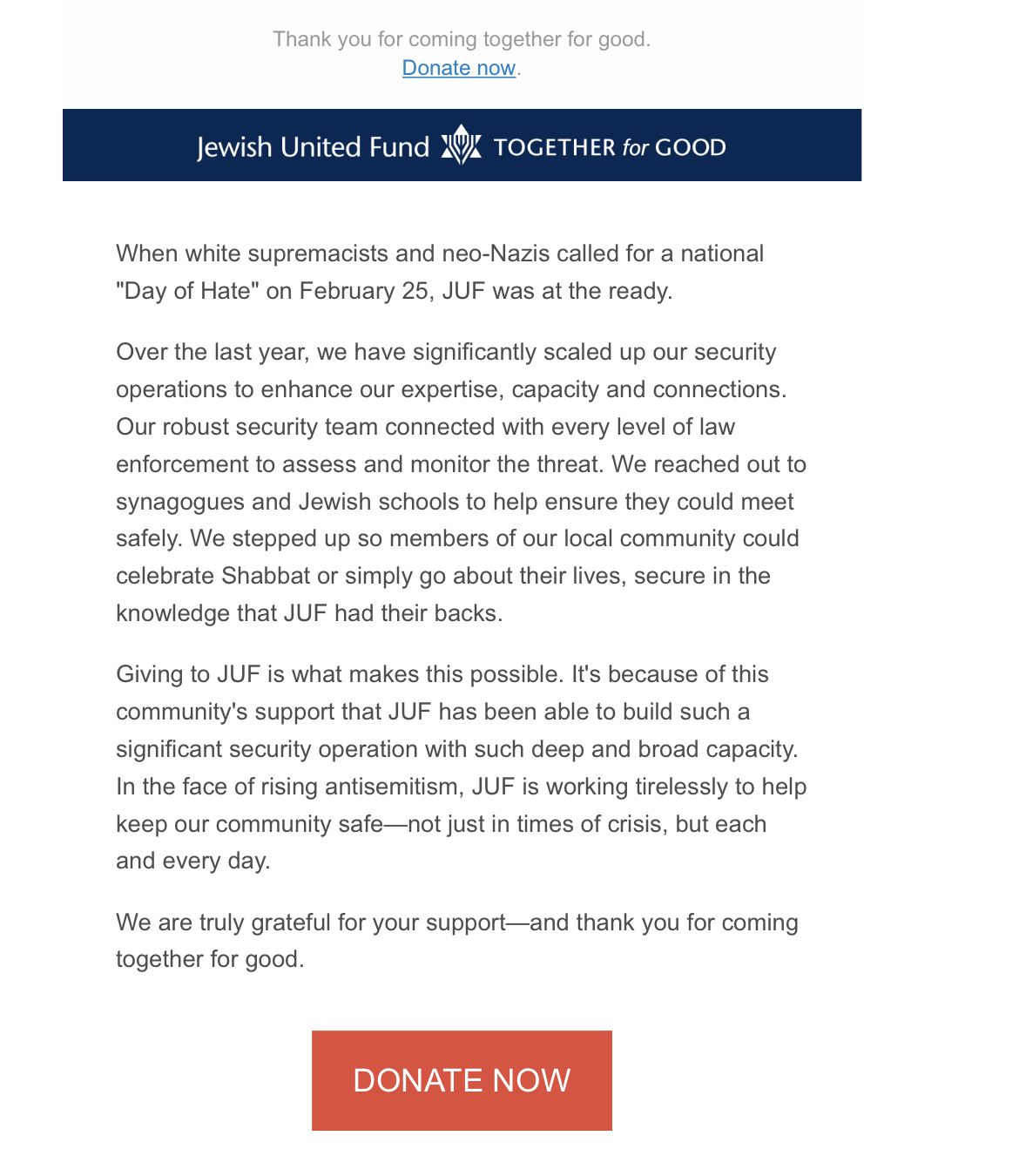
And while we’re on the subject of Jewish communal response to the threat of antisemitism, this disconcerting mass email from the Jewish United Fund of Greater Chicago landed in my inbox just this morning:
Whatever we might think about the wisdom and effectiveness of the Jewish communal reaction to the “Day of Hate,” I would say it’s generally a good rule of thumb to avoid cynically capitalizing on a non-existent antisemitic event in order to raise money for your organization.
In the end, if there were any positive takeaways from this horrid affair at all, I found it in the numerous messages of heartening solidarity from our friends and allies in the greater community, including several that I received personally. I was particularly heartened by a message to my congregation from my friend and colleague Rev. Tom Gaulke of Gethsemane Lutheran Church in Cicero, Illinois, who ended his remarks with these beautiful words: “As your family, we’ve got your back, come what may. Together, we’ve got a love that will conquer hate and a love that can only overcome.”
Last month, Michigan Representative Rashida Tlaib spoke at an organizing seminar for Palestine solidarity activists. It was an in-house event, and it likely would not have garnered much attention except for one part of her speech:
It has become clear that you cannot claim to hold progressive values, yet back Israel’s apartheid government. And we will continue to push back on and not accept this idea that you are “progressive except for Palestine.”
I’m opening with Rashida Tlaib’s words because I believe they’re deeply relevant to Yom Kippur. This is, after all, the day for facing up to hard truths, particularly the ones that affect our community. And I frankly cannot think of a more important, more critical moral challenge facing the Jewish community than the issue of Palestine-Israel.
As you might expect, after Rep. Tlaib made her remarks, the wrath of the titans rained down upon her. Jonathan Greenblatt, the CEO of the Anti-Defamation League, berated her on Twitter and accused her of being an antisemite. So did Rep. Debbie Wasserman Schultz. Scores of her Democratic colleagues condemned her for slandering the “Jewish and Democratic state of Israel.”
Tellingly, however, none of her critics actually responded to the essential claim of her comment – namely, that Israel is an apartheid state. None of them mentioned that Human Rights Watch, Amnesty International and B’tselem, the most prominent Israeli human rights organization, have all determined that Israel is an apartheid regime. B’tselem’s report concludes, in words that are powerfully appropriate for Yom Kippur:
As painful as it may be to look reality in the eye, it is more painful to live under a boot. The harsh reality described here may deteriorate further if new practices are introduced – with or without accompanying legislation. Nevertheless, people created this regime and people can make it worse – or work to replace it. That hope is the driving force behind this position paper. How can people fight injustice if it is unnamed? Apartheid is the organizing principle, yet recognizing this does not mean giving up. On the contrary: it is a call for change.
Fighting for a future based on human rights, liberty and justice is especially crucial now. There are various political paths to a just future here, between the Jordan River and the Mediterranean Sea, but all of us must first choose to say no to apartheid.
But you really don’t need to pore through human rights reports to grasp this reality. The bottom line is this: Zionism promotes a Jewish majority state in historic Palestine. In order to keep that majority, Israel must pursue policies that are patently undemocratic. It must create and enforce laws that fundamentally privilege Jews over non-Jews. It must dispossess and disenfranchise Palestinians. It must maintain what B’tselem calls “a regime of Jewish supremacy” from the river to the sea.
So yes, as Rashida Tlaib put it, you can’t be progressive and support apartheid. Unless you define the term “progressive” in a way that is devoid of any meaning whatsoever, you cannot support a Jewish supremacist state and claim to be a progressive. It’s interesting to note that virtually every one of Rep. Tlaib’s critics slammed her for creating a “litmus test” for progressives. But in truth, I don’t believe she was interested in creating a test for her colleagues. She was simply arguing for moral consistency.
When I read about this dustup, I was reminded of Rev. Martin Luther King’s 1963 “Letter from a Birmingham Jail.” Whenever I hear so-called progressives defending injustice in the name of progressive values, I invariably think of King’s letter. It was written to liberal white clergy in Birmingham who had signed a public statement telling King to stay away and not make trouble in their city. At one point they wrote, “We feel that inflammatory and rebellious statements can lead only to violence, discord, confusion and disgrace for our beloved state.”
Now fast forward to 2022. This was Debbie Wasserman Schultz’s angry response to Rep. Tlaib:
Proud progressives do support Israel’s right to exist as a Jewish and democratic state. Suggesting otherwise is shameful and dangerous. Divisive rhetoric does not lead to peace.
In the end, it’s really just a distraction to make this a debate about what is or isn’t “progressive.” It’s an issue of basic morality. For the Jewish community it’s a challenge that goes to the very core of our spiritual and ethical tradition. I don’t believe you can identify as a Jew in the age of Zionism and dither on this issue. Every single day, Israel’s actions present us with this basic question: will we support apartheid, dispossession and militarism in our name or will we not?
I’m sure all of you know that the Tzedek Chicago membership voted last March to change our core values to articulate that we were an anti-Zionist congregation. Our decision followed a unanimous board vote and a month’s long series of congregational meetings. As those who attended will attest, these conversations were inspiring in their depth and thoughtfulness. No matter what their position, members who participated in this process shared their opinions openly, honestly, and with deep respect for one another.
In the end, 72% of our membership quorum voted in favor of the change. Yes, there were those who voted against, but I’m heartened that as far as I know, no members have left our congregation as a result of our decision. In fact, we actually gained several new members, many of whom said that this was the first time they had joined a synagogue – that they had wanted to be part of a Jewish congregation, but the issue of Zionism had consistently kept them at bay.
I can’t understate what a powerful statement we’ve made. Yes, we are one small congregation, but the bottom line is that as a result of our decision there is now a new fact on the ground. There is now a progressive (yes, progressive) Jewish synagogue that is openly and unabashedly promoting a Judaism beyond Zionism. Tzedek Chicago has taken a public, principled stand on the most important, most critical moral challenge facing the Jewish community today.
And by the way we don’t stand alone. At this very moment, the Mending Miyan, an anti-Zionist congregation in New Haven, is celebrating its first High Holidays with its new student rabbi, May Ye, who many of you will remember was Tzedek Chicago’s rabbinical intern in 2018. Just a few days ago, I was contacted by a friend who told me that a group of Jewish anti-Zionists, inspired by what we have done here in Chicago, had held their first Rosh Hashanah service together in Denver. And I have no doubt there are others – that this is only the beginning.
Our decision is also important because we are currently witnessing a very real and very dangerous campaign that seeks to equate anti-Zionism with antisemitism. The Israeli government and the Jewish institutional establishment are clearly doubling down to stem the growing number of Jews in the US — particularly young Jews — who are openly identifying as non or anti-Zionist. This backlash has been fierce, and at times perverse, actually calling into question our very status as Jews. In a widely read essay last year, Natan Sharansky labeled anti-Zionist Jews as “un-Jews.” Last May, immediately following Israel’s military onslaught on Gaza, a Reform rabbi in the Chicago area gave a sermon in which she called anti-Zionist Jews “Jews in name only” who must be “kept out of the Jewish tent.”
Given the tenor of the current moment, I believe the need for public stances by principled Jewish anti-Zionists is more critical now than ever. Most importantly, Jewish anti-Zionists create cover for Palestinians, the ones who are most directly impacted by these accusations of antisemitism. Right now, public figures such as Rashida Tlaib, as well as scores of Palestinian activists on college campuses and communities across North America, are being subjected to withering attack. We know how devastating the accusation of antisemitism can be. It destroys careers and ruin lives. And right now, this accusation is being weaponized by Israel and its institutional supporters in profoundly harmful ways.
The most insidious thing about this accusation: when we equate anti-Zionism with anti-Semitism, we effectively brand just about every Palestinian in the world as an anti-Semite. How could it be otherwise? The direct product of Zionism was the Nakba – the forced expulsion of over 700,000 Palestinians from their homes in 1948, creating what is today the largest refugee population in the world. The creation of an exclusively Jewish nation state in historic Palestine has led to the ongoing dispossession and oppression of the Palestinian people that continues to this very day. How could we honestly expect Palestinians to be anything other than anti-Zionist? By this definition, Palestinians are guilty of being antisemites just for being Palestinian.
We can’t underestimate the power of this current backlash against anti-Zionism. After Tzedek Chicago made our announcement, we garnered, as you might expect, some “responses” from the Jewish institutional community. While we did get some positive and thoughtful press, there was the inevitable nastiness, particularly and inevitably on Twitter. I don’t have much to say about that, except for this: amidst all the horribleness and toxicity, I noticed an interesting common denominator. Over and over, our attackers made the claim that Zionism was essential to Judaism – and that our being anti-Zionist was tantamount to being anti-Jewish. This, I would like to address:
Of course, the claim that Eretz Yisrael is intrinsic to Jewish tradition is absolutely correct. It would be ignorant to claim otherwise. However – and this is a big however – the notion of creating a sovereign Jewish nation state was never part of the Jewish land tradition until the rise of political Zionism in 19th century Europe. And herein lies the central fallacy of the Zionism equals Judaism argument: for most of Jewish history, the yearning for Zion has been rooted in an idealized messianic vision. The very idea of a mass migration to the land in order to establish a 3rd Jewish commonwealth was commonly considered to be an anathema – a “forcing of God’s hand” – by traditional rabbinic authorities.
Those who say Zionism is central to Judaism consistently and conveniently neglect this point: political Zionism did not arise until relatively recently in Jewish history. Yes, Zionism is undeniably a Jewish movement, and a successful one at that. But it is also a quintessential movement of Jewish modernity that represented a conscious and radical break with traditional Judaism as it was understood and practiced until that time. While it has clearly been embraced by a majority of Jews in Israel and throughout the diaspora, the claim that Zionism is somehow intrinsic to Judaism is false and in fact, deeply disingenuous.
In the end, however, this struggle isn’t over what is or isn’t Judaism. Rather, it is over what kind of Judaism we want to affirm in the world. I don’t believe in essentializing Judaism – or any religion, for that matter. The fact that Zionism was “a modern movement that broke with traditional Judaism” is not in itself a bad thing. After all, modernity gave rise to a host of Jewish movements that broke with traditional Judaism. My own denomination, Reconstructionist Judaism is most certainly such a movement.
I often think of this when I hear liberal Christians respond to the hateful things said and done by white Christian nationalists by saying, “that is not Christianity.” No, in fact it is Christianity. The Christian church certainly has a great deal to live down from its history up until present day. But to the Christians who seek to promote humane Christianity, I would suggest that the answer is not to deny the more problematic or toxic manifestations of their tradition. The answer is to recognize that every religious tradition, every religious community has its good, its bad and yes, it’s ugly. And if we want the good to prevail, it seems to me, we must be ready to confront the all of our religious traditions.
The same goes for the Jewish community. Even if Zionists deny us our Jewishness, It’s not intellectually honest, nor is it particularly productive, to deny Zionists theirs’. The question before us is not who is the most “authentic” Jew? The real question is: what kind of Judaism do we want to lift up in the world, to live out, to bequeath to future generations?
This is why I feel so blessed to be a part of Jewish congregation that is ready to stand up and say we seek a Judaism beyond Zionism, beyond apartheid and settler colonialism. A Judaism that views the diaspora as the fertile ground for Jewish creativity, a Judaism that seeks the Divine wherever we may happen to live, that affirms the whole earth is filled with God’s glory. A Judaism that values spiritual power over physical power. A Judaism that makes its home in the margins, because that’s where our sacred sparks of creativity have always resided. A Judaism of solidarity, that knows our place is alongside all who are marginalized, demonized and oppressed for who they are.
So, this Yom Kippur and for every day forward, let this be our prayer:
May the dream of a world complete become reality soon, in our own day, that every land may be a Zion, every city a Jerusalem, every home a sanctuary offering welcome to all. May the world be rebuilt upon a foundation of compassion, equity and justice, as it is written, compassion and truth will meet; justice and peace will kiss. Baruch atah adonai, boneh ha’olam b’tzedek v’rachamim – Blessed are you, who rebuilds the world in justice and compassion.
Last week, I was saddened to read that Anna Rajagopal (they/her), a Jewish activist and senior at Rice University, had been fired by Avodah: Jewish Service Corps after having just been hired as a Social Media Assistant. Their action followed – and seemed to be a result of – a relentless online campaign by the astroturf organization, StopAntisemitism.org, who demonized Anna as a “rabid antisemite” and urged its followers to deluge Avodah with demands to fire them.
After firing Anna, Avodah understandably received strong criticism from progressive Jewish quarters. In response, the organization then released its own statement on Twitter, insisting that they “did not and do not make decisions in response to actions or demands of any external group and … did not and do not make personnel decisions based on an individual’s politics related to the Israeli-Palestinian conflict.” Their statement also purported to stand in solidarity with Anna in the face of the horrid online attacks against them:
We’re angry & disgusted to witness this individual be subjected to vile racism, misogyny & even questioning of their Judaism. We condemn the demonizing & disparaging of anyone-especially the targeting Jews of Color who experience this type of hate & questioning regularly. We take seriously our commitment to Jewish pluralism and continue to work to ensure a respectful community for all.
Avodah’s claim that they did not fire Anna because of their views was contradicted in a leaked email from Avodah CEO Cheryl Cook, who wrote to a supporter, “We don’t believe (Anna’s) publicly-shared values align with ours, and we are parting ways.” Factoring in the fact that Cook is currently running for political office in Brooklyn, it seems fairly clear that Avodah did indeed “make a decision based on an individual’s politics on Israel/Palestine” – and that they did indeed capitulate to “the demands of an outside group.”
The issue in question centered on Anna’s use of strong, often scathing rhetoric as they criticized Israel and Zionism on social media. In this regard, their firing was similar to an incident that occurred almost exactly a year ago, when a Hebrew school teacher was fired from a Reform synagogue in Westchester, NY for publicly criticizing Israel’s “settler colonial violence” and referring to themself as an anti-Zionist. This most recent instance was particularly troubling, however, because Avodah is an Jewish institution whose primary focus is social justice.
Even more egregiously, the organization has now handed a victory to a new, privately-funded movement that seeks to promote a distinctly Islamophobic, anti-Palestinian narrative on antisemitism. Indeed, while StopAntisemitism.com describes itself on its website as a “grassroots watchdog organization,” it does not have non-profit status or a board of directors – and the source of its funding is exceedingly opaque. We do know that StopAntisemitism.com is a front project for Liora Rez, a right-wing Jewish activist and former social media influencer. Though her website claims SA.com was born “in response to increasing antisemitic violence and sentiment across the United States” her “Antisemite of the Week” list actually contains very few neo-Nazis or white nationalists. It is filled almost exclusively with Muslims, Palestinians and Palestinian solidarity activists – as well as popular celebrities such as Dua Lipa and Trevor Noah and, naturally, Representatives Ilhan Omar and Alexandria Ocasio Cortez.
As with previous attacks on individuals, StopAntisemitism.com’s campaign against Anna was exceedingly vile, giving rise to a torrent of toxic Twitter attacks questioning their status as a Jew (they are a convert to Judaism) as well as racist comments targeting them as a Jew of color. (Many of these horrid slurs still remain on Avodah’s comment board and Twitter feed.) This entire ordeal has understandably taken a huge emotional toll on Anna, who tweeted last Friday, “This week has been the most unimaginable hell possible. Being 21 years old and the incessant target of both right-wing extremists as well as institutional, racist abuse at the hands of grown adults…”
Anna’s firing is particularly painful when you consider just a few days earlier, Avodah publicly celebrated them thus: “We’ve got a new member of #TeamAvodah… Join us in welcoming Anna as our social media assistant! They’re joining us from Houston & have a background in digital literacy and advocacy, perfect for their role’s focus on racial justice and our Jews of Color Bayit.” By subsequently capitulating to StopAntisemitism.com’s toxic campaign, however, Avodah has effectively validated the very worst prejudices in our community against Jews of color and Jews by choice.
In some ways this episode illuminates the razor thin tightrope that many liberal Jewish organizations are walking as they reach out to younger generations of Jews who don’t toe the Jewish communal party line on Israel/Palestine. It’s worth noting that even as Avodah seeks to position itself on the Jewish vanguard of social justice, it also receives funding from the Schusterman Family Philanthropies, which also funds die-hard Zionist projects such as Birthright Israel and the Israel on Campus Coalition.
Avodah’s precarious position was dramatically underscored last year when 274 program participants and alumni sent a letter to Avodah leadership, calling on the organization to endorse the Boycott, Divestment, and Sanctions movement, commit to Nakba education, support bills that would block or restrict military aid to Israel and end “official and unofficial gag rules that prevent corps members and staff from speaking freely about their support for BDS and Palestinian liberation.” To date, however, the organization has chosen not to take a public stand on the issue of Israel/Palestine.
In the end, Avodah’s action just further reinforces the line that there is no simply place for Jewish anti-Zionists like Anna Rajagopal in the Jewish institutional world. I’ve personally talked with several young people who have lost their jobs in the Jewish community in similar ways to Anna – and a number of others who feel they must stifle their moral/political convictions for fear of being fired. I truly believe these are among our brightest, critically thinking, and devoted members of our community – and that by excluding them, the Jewish communal establishment is only further hastening its irrelevance to the next generation of Jews.
As Rabbi Amy Bardack wrote in a powerful article for eJewishPhilanthropy.com earlier this year:
Our institutions have to wrestle with the reality that increasing numbers of passionate Jews do not support the State of Israel. Is it in our best long-term interest to be welcoming to everyone but them? I propose that we spend less time labeling all anti-Zionist Jews as antisemitic, and more time figuring out how to be truly inclusive.
I stand with Anna Rajgopal and all of the young anti-Zionist Jews who are, whether the Jewish establishment gatekeepers like it or not, the future of our community.






 Shalom Rav