Category Archives: BDS

Young Jews Raise the Roof at the Jewish Federation GA!


At the 1969 General Assembly of Jewish Federations in Boston, a group of graduate students stormed the plenum with pickets and placards and demanded a  reorganization of Federation priorities, lest it risk alienating Jewish young people.

Might history be repeating itself?

Jewish Voice for Peace has just released the following press release:

[November 8, 2010, New Orleans]  A group of young Jews with the Young Leadership Institute of Jewish Voice for Peace has traveled to the largest gathering of Jewish leaders in the US, the Jewish Federation General Assembly, to confront leaders on an approach to saving Israel’s reputation and building young Jewish identity they say actually turns young Jews away.

Five of the young adults, including 3 Israelis and Israeli–Americans, disrupted a speech this morning by Israeli Prime Minister Bibi Netanyahu with banners that said:

YoungJewishProud.org and and one of the below:

The Settlements Delegitimize Israel
The Occupation Delegitimizes Israel
The Siege of Gaza Delegitimizes Israel
The Loyalty Oath Delegitimizes Israel
Silencing Dissent Delegitimizes Israel

The young Jews’ website, www.YoungJewishProud.org,  presents the group’s Young Jewish Declaration, a compelling vision of collective identity, purpose and values written as an invitation and call to action for  peers who care about Israel and Palestine. It is also a strong challenge to elders.

These actions are in part a protest of the Jewish Federations of North America (JFNA) and Jewish Public Affairs Council (JCPA) newly announced $6 million dollar program to target campus, church, peace and human rights groups that are working to end Israel’s human rights violations through nonviolent Boycott, Divestment and Sanctions pressure campaigns. The Federations and JCPA are calling this initiative the “Israel Action Network.”  Critics say it is a “Shoot the Messenger” approach.

“We’re here to call out the elephant in the middle of the room. Israel continues to expropriate Palestinian land for Jewish-only communities, passes increasingly racist laws in the Knesset, the foreign minister wants to strip Palestinian citizens of their citizenship — these are the reasons Israel is becoming a pariah in the world, NOT the human rights groups that are using nonviolent economic pressure to hold Israel accountable. We would be dismissing the values we were raised on if we did not speak up.” (Eitan Issacson, Israeli-American, Seattle)

“The Jewish establishment thinks that all we want are free trips to Israel and feel-good service projects. That is in insult to our intelligence and to the Jewish values we were brought up on. What we want is for the American Jewish community to stand up and say that Israel’s ongoing violations of Palestinian human rights are wrong and that we will not continue to support it with our dollars, our political strength and our moral abilities. We are the next generation of American Jews, proud of our heritage, strongly committed to Jewish life. We live our Jewish values in opposing Israel’s human rights violations and we invite – no, implore –all Jews to join in this urgent struggle.
(Hanna King, Swarthmore College, Philadelphia)

“We were surprised by how many other young Jews were enthusiastic about the perspective that we brought to the General Assembly. It was scary to ask questions of sometimes hostile panelists, but in fact many people our age were supportive and even asked their own critical questions. We realized this is a terrific opportunity to organize.” (Antonia House, graduate student, NYU)

“Right now, the choice for those of us who care about the future of Israel and Palestine is between the status quo— which includes continued settlement expansion, the siege of Gaza, and the racist Israeli foreign Minister Avigdor Lieberman– or Boycotts, Divestment and Sanctions. Given that choice, Boycotts, Divestment and Sanctions will win every time.”
(Matan Cohen, Israeli, Hampshire College)

The students also announced the creation of a spoof Birthright Trip called Taglit-Lekulanu, Birthright for All, open to Palestinian and Jewish-Americans which they followed up with a spoof denial. The goal of the spoof was to highlight the one-sided narrative that Birthright presents, the ways it renders Palestinians invisible. The rebuttal laid bare the problematic assumptions underlying Birthright such as the emphasis on marrying Jews and procreating.

Participants in the institute include students from schools as diverse as UCLA, NYU, UC Berkeley, Hampshire, and Swarthmore.

A new Jewish Voice for Peace campus chapter was recently started at Brandeis University.

The ADL’s Celebration of Diversity

Imagine my surprise to read that the ADL has just released its list of “Top 10 anti-Israel groups in America,” listing such organizations as Jewish Voice for Peace (a group with which I proudly affiliate) as well as the Council on American-Islamic Relations, Friends of Sabeel, the International Solidarity Movement, If Americans Knew, and the US Campaign to Stop the Occupation.

There have already been some fine responses to the ADL’s silly blacklist – check out these articles in Salon, the Daily Beast and Mondoweiss. JVP itself has released a very eloquent response that I encourage you to read as well.

An excerpt:

We do not hold Zionism as a litmus test for membership. Some of our members are Zionists, some are anti-Zionists, and some are non-Zionists. We believe you can define yourself in any of these ways as long as you support an end to the Israeli occupation of the West Bank — including East Jerusalem — and Gaza, and you advocate for human rights, which naturally apply equally to Israelis and Palestinians.

We stand by Israelis that hold these views, such as Israeli conscientious objectors and Israeli actors refusing to play in illegal settlements in the West Bank.

We stand by Palestinians that hold these views, such as Palestinian activists protesting the Israeli confiscation of land in the West Bank town of Bil’in.

We stand by internationals that hold these views, such as students pressing for divestment from occupation and war crimes or activists trying to break the siege of Gaza.

What unites us is our belief in human rights and equality.

Right on.

I’ll cite one more response to the ADL’s intolerance: it comes, interestingly enough, from the ADL itself.

Among the many projects sponsored by the ADL is it’s “A World of Difference Institute,” an impressive provider of anti-bias education and diversity training programs and resources. According to its mission, the AWOD Institute ” seeks to help participants recognize bias and the harm it inflicts on individuals and society; explore the value of diversity; (and) improve intergroup relations.”

As it turns out, our younger son recently told us that AWOD is coming to his High School to conduct a student workshop they call “Names Can Really Hurt Us,” a program that “allows students open, honest and relevant exploration about diversity and bias in their school communities.”

I’m enormously glad to hear that the ADL cherishes diversity and encourages open, honest exploration.

I’d say it’s time it applied these values to the Jewish community as well.

“Why We Sailed to Gaza” – A Conversation with Mairead Maguire and Yonatan Shapira

Please mark your calendar for the next Ta’anit Tzedek fast day, Thursday, October 21, 12:00 pm (EST), which we will mark with a conference call, “Why We Sailed to Gaza” featuring Nobel Peace Prize laureate Mairead Corrigan Maguire and Israeli peace activist Yonatan Shapira.

Earlier this month, both Maguire and Shapira recently set sail on flotilla of boats attempting to break the siege of Gaza by bringing symbolic amounts of humanitarian aid to its citizens.

Maguire is a well-known Irish peace activist who co-founded the “Community for Peace People” during the period known as “The Troubles” in Northern Ireland. She  subsequently helped found the Nobel Womens Initiative, a group of six women Nobel Peace Laureates devoted to strengthening women’s rights and and advocating for justice and peace around the world.

More recently, Maguire has become involved in activism for peace and justice in Israel/Palestine. She has sailed on three boats to Gaza, in October 2008 (when they reached Gaza), on June 2009 and then on the MV Rachel Corrie in June 2010. In 2009 and 2010, the boats were intercepted by the Israeli Navy and she was arrested along with all the passengers. On her most recent attempt, Maguire remained in prison as she fought Israel’s efforts to deport her. The Israeli Supreme Court upheld the decision to deny her entry and she was deported from Israel earlier this month.

Shapira was an officer in the Israeli Air Force and flew hundreds of missions over the territories in a Blackhawk helicopter squadron during the course of his eleven year career. Following a targeted bomb assassination of a Hamas leader that killed fourteen civilians in Gaza, he became a prominent Israeli “refusenik,” authoring the Pilot’s Letter – a 2003 statement signed by 27 Israeli pilots who publicly refused to fly missions over the Occupied Territories. Since that time, Yonatan has gone on to co-found “Combatants for Peace” a prominent organization in the growing Israeli Refusenik movement.

Shapira has also become a public supporter of the internal Israeli movement for Boycott, Divestment and Sanctions (BDS) known as “Boycott from Within,” and regularly participates in Palestinian nonviolence campaign in East Jerusalem and the West Bank. According to witnesses aboard the “Jewish boat” to Gaza earlier this month, Shapira nonviolently resisted when the IDF boarded the ship and was tazered repeatedly in the heart by the senior commanding officer.

Here’s the call-in info:

Access Number: 1.800.920.7487

Participant Code: 92247763#

There will be a question and answer period during the call –  please join the conversation! (Big thanks to our co-sponsors, Jewish Voice for Peace, the Shalom Center, and Shomer Shalom Institute for Jewish Nonviolence.)

The Jewish Community Debates BDS

As the Boycott, Divestment and Sanctions movement gains momentum, I’ve been pleasantly surprised to see at least two internal Jewish community conversations in which this painful, volatile issue with was debated with intelligence and mutual respect.

Last month, the New York-based org Jews Say No sponsored a debate/discussion featuring Israeli activist Yonatan Shapira, Birthright Unplugged director Hannah Mermelstein, Forward editor JJ Goldberg and J Street board member Kathleen Peratis.  It takes thirteen YouTube clips to see the entire program, but I highly recommend watching it from beginning to end. I found it informative, intelligent, passionate – and ultimately inspiring for the way a Jewish gathering could discuss such a potentially divisive subject so gracefully. (Click above for the first clip, then surf to the Jews Say No website to watch the next twelve.)

For its part, Tikkun Magazine held its own Jewish roundtable on BDS featuring Tikkun editor Rabbi Michael Lerner, Jewish Voice for Peace director Rebecca Vilkomerson; Rabbi Lynn Gottlieb, founder of Shalom Shomer Network for Jewish Nonviolence, J Street president Jeremy Ben Ami; and Israeli Shministit (refuser) Maya Wind. The entire conversation can only be accessed by purchasing the July/August edition of Tikkun Magazine, but you can read key excerpts at the JVP website.

My Lunch with Yonatan Shapira

Had the pleasure of meeting Yonatan Shapira for lunch in Evanston yesterday.  If you’ve never heard of him, Yonatan was an officer in the Israeli Air Force and flew hundreds of missions over the territories in a Blackhawk helicopter squadron during the course of his eleven year career. Following a targeted bomb assassination of a Hamas leader that killed fourteen civilians in Gaza, he became a prominent Israeli “refusenik,” authoring the Pilot’s Letter – a 2003 statement signed by 27 Israeli pilots who publicly refused to fly missions over the Occupied Territories.

Since that time, Yonatan has gone on to co-found “Combatants for Peace” a prominent organization in the growing Israeli Refusenik movement. A few years ago he gained some more notoriety for writing and performing “Numu, Numu,” a powerful protest song written in the form of an ironic “Lullaby to Pilots.”   (More recently, he’s become the object of a pop love song that’s currently making the rounds on Israeli radio – Richard Silverstein has the story on that in Tikun Olam).

I had known of Yonatan’s refusenik activism, but during our lunch conversation I was surprised to learn that he is also very active in supporting non-violent Palestinian actions in Sheikh Jarrah, Bi’ilin and throughout the Occupied Territories. (He was, in fact, arrested last January at a demonstration in Sheikh Jarrah.) He told me that this work has been transformative for him, explaining that as an IDF officer and even as a leader in the Israeli peace movement he has always been socialized to step forward and lead the way. He said he’s come to realize that the most important way he can serve now is to “stand behind” Palestinians in their non-violent campaign for liberation.

He told me numerous stories about his experiences at demonstrations. He mentioned that the IDF is increasing their crackdown on protesters, that they hire infiltrators to throw stones at the army to given soldiers the a pretext to open fire. None of it succeeds, of course: quite the opposite. The Palestinian non-violence movement is growing steadily – a “White Intifada” that  Yonatan believes has already begun. As a IDF officer himself, he explained the Israeli military mentality – that army commanders truly believe they have the power to “outlaw” these protests through the sheer force of their military might.

Yonatan also mentioned that as part of his support of non-violent Palestinian activism, he has also signed on to the internal Israeli movement for Boycott, Divestment and Sanctions (BDS) known as “Boycott from Within.”   Now that is the new definition of bravery: a high ranking Israeli Air Force veteran who comes from a military family (his father was a fighter pilot during the Six Day War) has now firmly put himself on the front lines of a global non-violence campaign initiated by the very people he himself had once been trained to attack.

I assumed that Yonatan would be made a virtual pariah for his public stands. He replied that as a military man he understands how soldiers think and generally knows how to engage them in dialogue even when they strongly disagree with him.  He also mentioned that his family is supportive of his work – his father “is not quite there yet” but respects his activism and his mother is “the most active of them all.”

Click below for Yonatan’s “Lullaby for Pilots:”

Why I Support the Berkeley Student Divestment Resolution

I’m sure many of you have been following the huge communal dust up that has been swirling around a resolution recently passed by the Associated Students of UC Berkeley. Known as SB118, it calls for the ASUC to divest its holdings in General Electric and United Technologies because of “their military support of the occupation of the Palestinian territories.”

The bill further resolves:

(That) the ASUC will further examine its assets and UC assets for funds being invested in companies that a) provide military support for or weaponry to support the occupation of the Palestinian territories or b) facilitate the building or maintenance of the illegal wall or the demolition of Palestinian homes, or c) facilitate the building, maintenance, or economic development of illegal Israeli settlements on occupied Palestinian territories (and)

(That) if it is found that ASUC and/or the UC funds are being invested in any of the abovementioned ways, the ASUC will divest, and will advocate that the UC divests, all stocks, securities, or other obligations from such sources with the goal of maintaining the divestment, in the case of said companies, until they cease such practices. Moreover, the ASUC will not make further investments, and will advocate that the UC not make futher investments, in any companies materially supporting or profiting from Israel’s occupation in the above mentioned ways.

On March 18, after eight hours of dialogue and deliberation, the resolution passed by a vote of 16-4. After a barrage of criticism from Jewish community and Israel advocacy groups, the resolution was vetoed by the President of the ASUC on March 24. As things currently stand, the veto can be overridden by 14 votes. The final decision will be made on Wednesday April 14 at 7:00 pm (PST).

The most prominent Jewish statement of condemnation against the resolution came in the form of a letter co-signed by a wide consortium of Jewish organizations (including J Street, the ADL and The David Project) that called the bill “anti-Israel,” “dishonest” and “misleading.” Supporters of the resolution have mobilized as well: Jewish Voice for Peace recently responded to the consortium’s letter with a strong public statement and other prominent public figures, including Archbishop Desmond Tutu and Naomi Klein have voiced their support of the Berkeley resolution.

As I’ve written in the past, I do believe that the longer Israel’s intolerable occupation continues, the more we will inevitably hear an increase in calls for boycott, divestment and sanctions (BDS). I’m certainly mindful of what these kinds of calls mean to us in the Jewish community – and I know all too well how the issue of boycott pushes our deepest Jewish fear-buttons in so many ways. Despite these fears, however, I personally support the ASUC resolution.

While I understand the painful resonance that boycotts historically have had for the Jewish community, I truly believe this bill was composed and presented in good faith – and I am troubled that so many Jewish community organizations have responded in knee-jerk fashion, without even attempting to address to the actual content of the resolution.

It is also unfair and untrue to say that this resolution is “anti-Israel.” The bill makes it clear that it is condemning a crushing and illegal occupation – and not Israel as a nation. The wording of the resolution leaves no doubt that its purpose is to divest from specific companies that aid and abet the occupation – and not to “demonize” Israel itself. If a group of students oppose the occupation as unjust, then why should we be threatened if they ask their own organization to divest funds that directly support it? This is not demonization – this is simply ethically responsible investment policy.

Why, many critics ask, are the Berkeley students singling out Israel when there are so many other worse human rights abusers around the world? To answer this, I think we need to look at the origins of the BDS movement itself. This campaign was not hatched by the Berkeley students, or even by international human rights activists. It was founded in 2005 by a wide coalition of groups from Palestinian civil society who sought to resist the occupation through nonviolent direct action.

In other words, BDS is a liberation campaign waged by the Palestinian people themselves – one for which they are seeking international support. By submitting this divestment resolution, the Berkeley students were not seeking to single out Israel as the world’s worst human rights offender – they are responding to a call from Palestinians to support their struggle against very real oppression.

The JVP statement (see above) makes this point very powerfully:

Choosing to do something about Israel’s human rights violations does not require turning a blind eye to other injustices in the world as these groups suggest; but refusing to take action because of other examples would indeed turn a blind eye to this one. Now is the time to support Palestinian freedom and human rights. Berkeley students have done the right thing. Others should follow suit and divest from the occupation, as part of their general commitment to ethical investment policies.

I believe that the actions of these Berkeley students represent an important challenge to those of us who believe that Israel’s occupation equals oppression. Quite simply, we cannot stay silent forever. Sooner or later we will have to ask ourselves: when will we be willing to name this for what it really and truly is? When will we find the wherewithal to say out loud that this policy of home demolitions, checkpoints, evictions, increased Jewish settlements, and land expropriations is inhumane and indefensible? At the very least, will we be ready to put our money where our moral conscience is?

I know that this debate is enormously painful. And I respect that there are members of the Jewish community who disagree with this campaign. But I must say I am truly dismayed when I witness the organized Jewish community responding to initiatives such as these by simply crying “anti-Semitism.” For better or worse, we are going to have to find a better way to have these conversations. Because whatever happens with the ASUC resolution tomorrow, we haven’t heard the end of this movement by a longshot.

This summer, in fact, the Presbyterian Church General Assembly will be taking up a number of resolutions related to Israel/Palestine, including one that recommends divestment from Caterpillar because the company knowingly supplies Israel with bulldozers that are used for illegal (and deadly) home demolitions in the West Bank and Gaza. I’m sad to see that the organized Jewish community is already gearing up for another major confrontation…

If you would like to write a letter to the UC President and UC Berkeley Chancellor before the April 14 vote, click here.

Addendum (April 14): UC Berkeley Professor Judith Butler has written an incredibly eloquent defense of the resolution that she will reportedly read today to the ASUC Student Senate before their override vote. Click here to read it in full.

A BDS Wake Up Call?

A recent report from the Forward:

With anti-Israel boycott, divestment and sanctions efforts gaining visibility, the Jewish community’s main public-policy coordinating body is for the first time confronting the BDS movement as a specific and stated priority.

At its recent annual plenum, the Jewish Council for Public Affairs passed a resolution stating that BDS should now “be regarded with the utmost seriousness and urgency.”

“This is a very serious matter,” JCPA’s executive director, Rabbi Steve Gutow, told the Forward. “We need to wake up, whether we are on the right, left or center.”

The JCPA, an umbrella body representing Jewish community relations councils across the country and more than a dozen leading national Jewish groups, adopted the anti-BDS resolution at its plenum in Dallas on February 23. Gutow said that JCPA member groups are planning to create a permanent body that would respond to the activities of the BDS movement.

My two cents: creating a permanent body to combat the “negative branding” caused by BDS is a waste of Jewish communal resources.  I just don’t believe that the old counterattack tactics will work any more (if they ever did).  I’d suggest that if the Jewish community really wants to “wake up” to the challenge presented by BDS, then we need to honestly confront the fundamental reasons for its growth in the first place.

The BDS movement was founded in 2005 by a coalition of Palestinian groups who sought to fight for Israel’s human rights violations through nonviolent direct action. It arose out of their frustration over Israel’s continued refusal to comply with international law on any number of critical issues – and the oppressive manner in which it has occupied and ruled over Palestinians. I can’t help but think that by treating BDS simply as a PR threat to be fought, we’re utterly misunderstanding the essential of the point (and strength) of this movement.

By all accounts, this campaign is rapidly gaining support. It’s not a stretch to assume that the longer this oppressive status quo is allowed to continue, the longer Palestinians will resist – and the longer they will seek international support for their resistance.  One year ago, I predicted as much on this blog: BDS will grow as long as very real injustices remain unaddressed.

When will we wake up to this painful reality?

Rosenberg: BDS May Be Inevitable

MJ Rosenberg, a Mideast analyst I’ve respected for years, has just written a powerful blog post entitled, “Are Israeli-Palestinian Negotiations Finished?”  His words are particularly meaningful, I believe, coming from someone who is firmly ensconced in the mainstream liberal Zionist camp.

He opens with an all-too familiar concern: that Israel’s suicidal path of settlement expansion will soon make the possibility of a viable Palestinian state impossible (if it hasn’t already).

Then he takes this concern to its next logical conclusion, articulating what most two-staters are generally too frightened to say out loud:

What would happen is that the Palestinians would go to the United Nations, to the European Union, and even to the United States to seek ..consequences. And these would most likely come in the demand for sanctions. There is already a burgeoning BDS (Boycott, Divestment, Sanctions) movement that is seeking to bring down the occupation the way a similar movement brought down apartheid.

Is this what Israelis want? Do they really want those concerned about the occupation to be forced to turn to an option this extreme?

I know that the last thing I want is a successful international movement that would boycott and sanction Israel as if it was apartheid South Africa. But it’s probably inevitable unless Israelis come to their senses and begin the process of ending the occupation while the decision is still theirs to make.

In other words, sooner than later we’ll have to choose between a Jewish state and basic, fundamental human rights.  It’s not the first time we’ve heard sentiments such as this, but when they come from people like Rosenberg, it’s a sign that the lines on this issue are inexorably shifting.

Is BDS anti-Semitism?

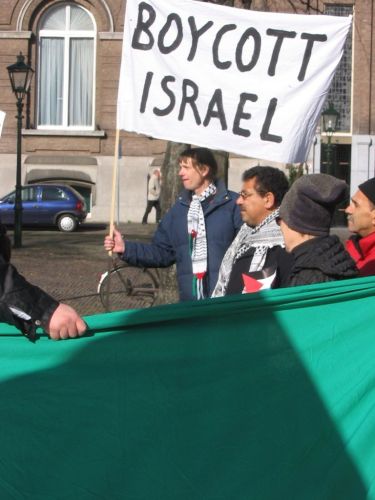
boycott1For many Jews, no three letters seem to conjure up rage and fury as effectively as “BDS.” Still, I have a strong suspicion that we’ll be hearing them bandied about increasingly in the coming months.

Since the Gaza war, the movement for global Boycott/ Divestment/ Sanctions against Israel seems to have gained new momentum. Among its prominent new supporters is economic journalist/activist Naomi Klein, who made a passionate call for BDS at the peak of the crisis:

Every day that Israel pounds Gaza brings more converts to the BDS cause, and talk of cease-fires is doing little to slow the momentum. Support is even emerging among Israeli Jews. In the midst of the assault roughly 500 Israelis, dozens of them well-known artists and scholars, sent a letter to foreign ambassadors stationed in Israel. It calls for “the adoption of immediate restrictive measures and sanctions” and draws a clear parallel with the anti-apartheid struggle. “The boycott on South Africa was effective, but Israel is handled with kid gloves.… This international backing must stop.”

Yet even in the face of these clear calls, many of us still can’t go there. The reasons are complex, emotional and understandable. And they simply aren’t good enough. Economic sanctions are the most effective tools in the nonviolent arsenal. Surrendering them verges on active complicity.

Count longtime peace activist Rabbi Arthur Waskow is one of those who “still can’t go there.” The current issue of “In These Times” contains a fascinating debate between Klein and Waskow on the merits of BDS. For his part, Waskow opposes it primarily for tactical reasons:

(The) BDS approach is not the way to bring about the change that is absolutely necessary.  The most important, and probably the only effective, change that can be brought about is a serious change in the behavior of the U.S. government. That means we need to engage in serious organizing within the United States…Boycotts and divestment are not going to do it. I understand that they express a kind of personal purity—”not with my money you don’t”— but they won’t change U.S. policy, which is exactly what needs to be changed.

Klein and Waskow’s conversation is edifying as far as it goes, but to my mind it doesn’t address the main concern over BDS articulated by so many American Jews: namely that given all of the odious regimes throughout the world, the unique singling out of Israel for sanction is an expression of flat-out anti-Semitism. This point of view was well summed up by Thomas Friedman in the NY Times back in 2002, at a time when student movements were increasingly pressuring universities to divest from Israel:

How is it that Egypt imprisons the leading democracy advocate in the Arab world, after a phony trial, and not a single student group in America calls for divestiture from Egypt? (I’m not calling for it, but the silence is telling.) How is it that Syria occupies Lebanon for 25 years, chokes the life out of its democracy, and not a single student group calls for divestiture from Syria? How is it that Saudi Arabia denies its women the most basic human rights, and bans any other religion from being practiced publicly on its soil, and not a single student group calls for divestiture from Saudi Arabia?

Criticizing Israel is not anti-Semitic, and saying so is vile. But singling out Israel for opprobrium and international sanction — out of all proportion to any other party in the Middle East — is anti-Semitic, and not saying so is dishonest.

For his part, Alan Dershowitz expressed a similar critique in response to recent reports (later retracted) that Hampshire College was divesting from six companies that profit from Israel’s occupation:

The divestment campaign applies to Israel and Israel alone. Hampshire will continue to deal with companies that supply Iran, Saudi Arabia, China, Cuba, North Korea, Zimbabwe, Libya, Syria, Sudan, Belarus and other brutal dictatorships around the world that routinely murder civilians, torture and imprison dissenters, deny educational opportunities to women, imprison gays and repress speech. Indeed many of those who support divestiture against Israel actively support these repressive regimes. This divestment campaign has absolutely nothing to do with human rights. It is motivated purely by hatred for the Jewish state.

Klein is absolutely right when she writes of BDS that “many of us can’t go there.” The reasons for this are complex and painful – and Friedman and Dershowitz do a compelling job of spelling out just how deeply painful and divisive they are. I must admit I have serious hesitation in taking on an issue that pushes so many of my own Jewish fear-buttons. (I’m not unmindful of the tragic historic spectres that boycotts against Jews and Jewish institutions conjure up for us.)  Still and all, I can’t help but wonder that by dismissing BDS as simple, abject hatred of Jews and Israel, we are misunderstanding the essential of the point of this movement. Even more fundamentally, I wonder if our rejection of BDS simply papers over our inability to face the more troubling aspects of the Jewish state.

I’ll start here: in a way, Dershowitz is correct when he writes that BDS has “nothing to do with human rights.” This particular movement did not in fact arise out of the international community’s concern over human rights in Israel/Palestine: it was founded in 2005 by a coalition of Palestinian groups who sought to fight for self-determination through nonviolent direct action. It arose out of their frustration over Israel’s continued refusal to comply with international law on any number of critical issues – and the oppressive manner in which Israel has occupied and ruled over Palestinians.  In other words, it is absolutely true that BDS is not an international human rights campaign. It is, rather, a liberation campaign waged by the Palestinian people – one for which they are seeking international support.

Yes, there are many oppressive nations around the world – and if a call came from indigenous, grassroots movements in these nations calling for international support of BDS, I’d say we most of us would seriously consider lending them our support. To use a partial list of nations mentioned by Friedman-Dershowitz, if any constituencies of the oppressed in Egypt, Syria, Saudia Arabia, Libya, Zimbabwe or Belarus called for nonviolent global boycott/divestment/sanction campaigns to force change in their countries’ policies, yes, I think we might well agree that they would be worthy of our backing. However, the absence of such movements does not necessarily negate the justice of the Palestinians’ current campaign. And it doesn’t seem to me that support of their call automatically constitutes hatred of Israel or Jews.

What I think Friedman-Dershowitz – and so many of us – fail to grasp is this: even as we recoil from nations that “choke the life out of their democracies” and “routinely murder civilians, torture and imprison dissenters, deny educational opportunities to women, imprison gays and repress speech,” the only way we can help truly address this kind of oppression is to support the ones who struggle for rights within these countries themselves – it is not for us Westerners to determine what is best for them. (And I particularly fear that when we frame this as a fight for “democracy,” as Friedman does,  this is really just a code for “imposing Western influence” – but perhaps that is a discussion for another day.)

The bottom line? While I believe there are undoubtedly those out there who will support BDS out of hatred pure and simple, I think it is just too easy to dismiss this movement as ipso facto anti-Semitism. Beyond the fears articulated by Friedman, Dershowitz and so many others like them, I think there’s an even deeper fear for many of us in the Jewish community: the prospect of facing the honest truth of Israel’s oppression of Palestinians.

For so many painful reasons, it is just so hard for us to see Israel as an oppressor – to admit that despite all of the vulnerability we feel as Jews, the power dynamic is dramatically, overwhelmingly weighted in Israel’s favor.  Though a movement like BDS might feel on a visceral level like just one more example of the world piling on the Jews and Israel, we need to be open to the possibility that it might more accurately be described as the product of a weaker, dispossessed, disempowered people doing what it must to resist oppression.

I have to say it feels like I’m going out on a serious limb by writing these words. I’m only raising these issues, as always, in the hope of starting a wider discussion in the Jewish community. Somehow, I feel that it is only by facing the stuff we prefer not to have to face that we might begin to find a way out of the this painful reality.

As always, I welcome your thoughts and reactions…