Category Archives: Current Events

The Tar Sands Sit-In: Something is Happening!

photo credit: Milan Ilnyckyj

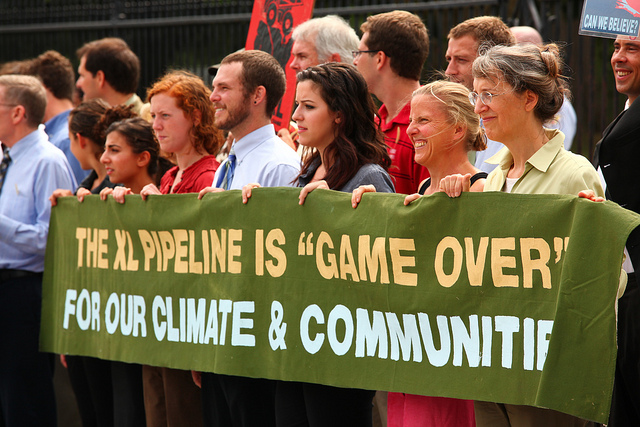
Have you been following the Tar Sands XL Pipeline Sit-In at the White House? This still-ongoing protest is being described as the biggest environmental civil disobedience action in a generation. It began on Saturday, Aug 21 and will continue until September 3. This action has already led to the arrest of almost 600 protesters to date, with crowds increasing every day.

Some background, courtesy of Friends of the Earth:

The Canadian oil and gas company TransCanada hopes to begin building a new oil pipeline that would trek close to 2,000 miles from Alberta, Canada to Texas. If constructed, the pipeline, known as the Keystone XL, will carry one of the world’s dirtiest fuels: tar sands oil. Along its route from Alberta to Texas, this pipeline could devastate ecosystems and pollute water sources, and would jeopardize public health.

Giant oil corporations invested in Canada’s tar sands are counting on the Keystone XL pipeline to make the expansion of oil extraction operations profitable: The pipeline would double imports of dirty tar sands oil into the United States.

Pollution from tar sands oil greatly eclipses that of conventional oil. During tar sands oil production alone, levels of carbon dioxide emissions are three times higher than those of conventional oil, due to more energy-intensive extraction and refining processes. The Keystone XL pipeline would carry 900,000 barrels of dirty tar sands oil into the United States daily, doubling our country’s reliance on it and resulting in climate-damaging emissions equal to adding more than six million new cars to U.S. roads.

Before TransCanada can begin construction, the company needs a presidential permit from the Obama administration (no Congressional approval is needed.) Alas, Secretary of State Clinton is already on record as being “inclined” to approve the project and Obama has been ominously silent on the issue. Hence, this incredible, inspiring mobilization in DC.
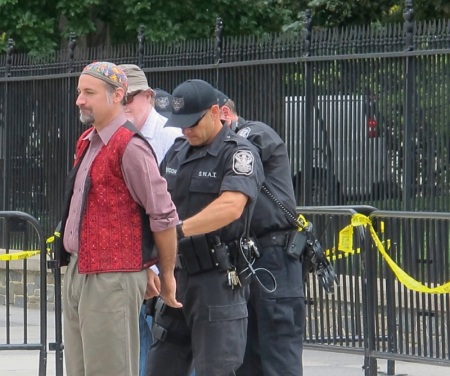
All honor to my friend and colleague, Rabbi Fred Scherlinder Dobb of Adat Shalom Reconstructionist Congregation in Bethesda – one of the leading rabbinical heroes of the environmental movement – who was among those arrested today (see above.) In a subsequent press release, he was quoted thus:

We must turn up the heat in a sustained effort against the scourge of climate change, which harms not just our land and water but people here and now, our human future and all earthly creation.

Please: if you aren’t able to join the action, please consider signing this petition or just contact the White House directly.
Israel Economic Protests: What Game is Being Changed?

This past April, the Forward reported:

(The Organization for Economic Cooperation and Development) has reported that poverty is almost twice as widespread in Israel, 19.9% of the population, compared to the OECD average, 10.9%. The gap between the overall standard of living in Israel and that of the lowest tenth of the population was three times higher than the OECD average. In its latest release of data, made public April 12, the OECD reported that 39% of Israelis find it “difficult” or “very difficult” to live on their current incomes, well above the OECD average of 24%.

Those stats might explain this more recent news out of Israel:

More than 150,000 protesters took to the streets in 12 Israeli cities, calling for a change in the division of wealth and the resignation of Prime Minister Benjamin Netanyahu.

In Tel Aviv, an estimated 100,000 protesters marched from Habima Square to the Tel Aviv Museum. “We are happy to see the people of Israel taking to the streets, each in their own city, each with their own troubles, but many troubles that are common to all of us,” said one of the organizers, Yonatan Levy.

This one is a game changer, no question, but the jury is still out on how much it might eventually change, or what the game even is. Indeed, as Dahlia Scheindlin and Joseph Dana have just reported in +972:

Every grievance is coming out: there are slogans against the huge concentration of the country’s wealth into the hands of a very few, slogans raging against enormous economic gaps between rich and poor in Israel, lists of demands for just resource distribution and for various elements of a welfare state, salary hikes and lower costs, better education conditions and health care; against the national housing committees law, against the government, for Tahrir. At 10pm on Friday night, when a song group spontaneously burst into chants of “The people! Want! Social Justice!” one young woman sang out beatifically, “The people! Want! All Sorts of Things!”

It’s also notable that one critical cause of this economic disparity is glaringly absent from the protesters’ concern, as Aziz Abu Sarah noted last week:

What amazes me is many Israelis’ inability to make the connection between the continuation of the occupation and the domestic problems Israel faces today; Israel is building constantly in the West Bank but it is failing to provide housing to its citizens within Israel proper. The current Israeli government’s focus on improving living standards in settlements while failing to do the same for the rest of the country is a moral failure.

According to a Peace Now report published on July 20, settlers in the West Bank receive 69 percent discount on the value of the land (so that buyers have to pay only 31 percent of the price of the land) and 50 percent funding of the development costs of the building project. In 2009 Israel investment of settlements public building (excluding East Jerusalem) was 431 million shekels, which was 15.36 percent of all public investment in construction for housing that year, despite the fact that they compose only 4 percent of the residents of Israel.

Scheindlin/Dana drive this critical point home in their article as well:

On Friday, some protesters hassled other Palestinian protesters, citizens suffering from housing crises. It came to scuffles. The diminutive Palestinian flags they hung were removed. Joseph recalls the struggles against apartheid in South Africa and Jim Crow south. Can we imagine the ruling classes there demanding “social justice” without addressing their gravest internal injustices? What does the term “social justice” mean if so many who don’t have it are left out? Sure, let’s protest exorbitant housing costs – but why call it “social justice” if the very crux of social justice, namely equality, is not addressed? Can Israelis have a social justice revolution without speaking about the rights of people they control and occupy?

The remarkable power of these grassroots protests is undeniable – but just how far it goes in shifting power still remains to be seen.

(While we wait, however, at least we can enjoy this great mix by Israeli viral video satirist Noy Alooshe – see above…)

Massacre in Norway: “The Answer to Violence is Even More Democracy”

So much to say about Friday’s tragic massacre in Norway. Chief among them: the death (I hope) of our misguided assumptions that terrorism must necessarily = Islamism.

Much has been written about the immediate media speculation – most notably by the New York Times – that this attack was carried out by an Islamist terror group. As journalist Ahmed Moor correctly points out, these assumption reveal just how deeply this meme is ingrained in the American consciousness – one that cuts across right-left political lines.

I’m also in full agreement with Moor when he says the real “Clash of Civilizations” is not between the West and Islam, but between “normal, sane people of the world and the right-wing zealots who see doom, destruction, hellfire and God’s Will at every turn:”

Anders Behring Breivik, Mohammed Atta and Baruch Goldstein are all cut from the same rotten cloth. Anwar Al-Awlaki and Glenn Beck – the peddlers of the faith – all share the same core afflictions.

These men are insecure, violently inclined, and illiberal. The outside world scares them. They hate homosexuals and strong women. For them, difference is a source of insecurity. Their values are militarism, conformism, chauvinism and jingoism. Worst of all they seek to pressure us into compliance while they work frantically to destroy themselves – and the rest of us with them.

All indications are that the hate-mongers – who are on the same side of this war, irrespective of religion – are winning in America. The unreflective, superficial, wan editors of the NYT are an indication of just how successful the right wing has been at eviscerating the left.

Terror expert Robert Lambert actually warns that ultra-nationalists pose an even greater threat than al-Qaeda, citing a disturbing litany of European plots that were foiled before they were able to be carried out. (Of course, as the example of Timothy McVeigh tragically reminds us, we Americans should not be so blase as to assume ultra-nationalist terror is only a European problem.)

What should be our response?  I can think of none better than that of Norway’s Prime Minister, Jens Stoltenberg. (Oh, would that we had heard these kinds of words from President Bush following 9/11):

This is a message from all of Norway: You will not destroy us. You will not destroy our democracy or our quest for a better world. ..This night we will comfort each other, talk with each other and stand together. Tomorrow we will show the world that Norway’s democracy grows stronger when it is challenged…

We must never cease to stand up for our values. We have to show that our open society can pass this test too, and that the answer to violence is even more democracy, even more humanity, but never naivete.  This is what we owe to the victims and to those they hold dear.

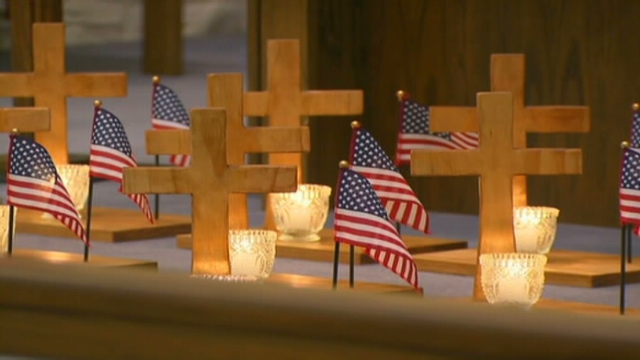
May the memory of the victims be for a blessing.

Hotel Workers Speak Out Against “Un Troussage De Domestique”

Having been involved in the Hyatt boycott here in Chicago, I’m familiar with the hotel chain’s increasingly abysmal record on worker safety. Now I’m learning that the issue of sexual assault against hotel workers in general has long been a serious problem, long predating the current unpleasantness with Dominique Strauss-Kahn:

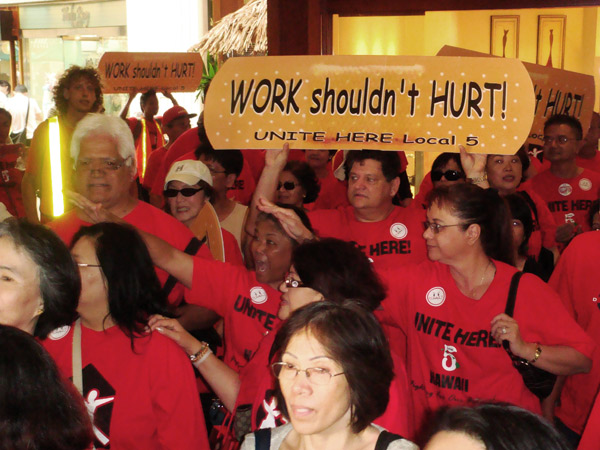
On June 2, hotel workers held speak-outs on sexual harassment and assault by customers in eight cities. The events were organized by UNITE HERE, the hotel union.

“These customers think they can use us for anything they want, because we don’t have the power that they have or the money that they have,” said Yazmin Vazquez, a Chicago room attendant.

Hotel workers face injuries from the physical stress of their work, including the awkward lifting of heavy mattresses hundreds of times a day. But the hidden hazard of hotel work, housekeepers say, is customers’ assaults on their dignity and physical integrity.

Workers report that male customers expose themselves, attempt to buy sexual services, grab and grope them and, in some cases, attempt to rape them…

The management response has been “deafening silence,” (said Annemarie Strassel of UNITE HERE), adding that she’s aware of only one hotel in which a staff meeting was called around the issue.

(h/t: Susan Klonsky)

Osama Bin Laden: Was Justice Done?

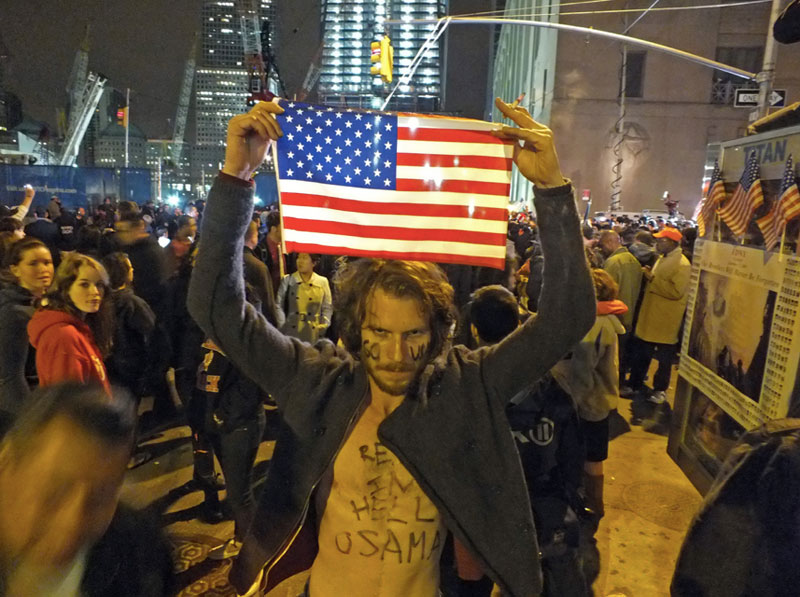
On nights like this one, we can say to those families who lost loved ones to al Qaeda’s terror: justice has been done (President Obama, May 1, 2011)

I can’t say that.

In Jewish tradition, there are two different terms for “justice.” The first is mishpat, which is generally understood to mean “retributive justice.” In other words, we apply mishpat when we settle our disputes by right rather than by might, through due process of law rather than by resorting to revenge or vigilantism. Jewish – as well as American – values teach that law must be held in the highest regard by any community that considers itself a free society.

By this standard, justice was certainly not done when bin Laden was summarily executed by extra-judicial assassination. Many American leaders have repeated that terrorists have declared war on American values. What does it mean, then, when we fight them by betraying the very values of justice that we purport to uphold?

Louise Richardson, whose book “What Terrorists Want” is the wisest book on terrorism I’ve ever read, hits right it on the head:

Had we captured bin Laden alive and then resisted the very human urge to exact revenge and instead handed him over to an international court of impeccable rectitude and reputation for trial on charges against humanity, we would have deprived him of glory and demonstrated, even to the skeptical, the vast difference between his values and ours (p. 198)

(Though I hold tight to this moral conviction, I have no illusions that trying bin Laden in an international court would have been anywhere near the realm of political possibility. Just last month, the White House gave up on its intention to try accused 9/11 mastermind Khalid Shaikh Mohammed in a New York civilian court. Attorney General Eric Holder now says Mohammed and four other 9/11 terror suspects will face a military trial at, you guessed it, Guantanamo Bay.)

The other word for justice is tzedek, or “distributive justice.” According to this definition, we promote justice whenever we strive to eradicate the inequities in our society, be they imbalances of wealth, power, or privilege.

By this measure, our execution of bin Laden represents the tragic failure of imagination that our government calls the “War on Terror.” We are sadly deluded if we believe we will end terror through the force of our military might. We will never fully eradicate terrorism – but we can certainly mitigate it by taking responsibility for the ways our nation may be contributing to the global injustices that create breeding grounds for terrorists around the world.

Now that we’ve killed bin Laden, are we ready to have a real national conversation about the hundreds of military bases our country maintains around the world, our ongoing wars in three Middle Eastern countries, and our unconditional military support for Israel’s occupation? For all of the billions of dollars we are pouring into our national military machine, might we be prepared to contemplate, as Richardson suggests, “the adoption of a comprehensive development agenda to address the underlying or permissive causes of terrorism?” (p. 221)

No, I do not believe justice, in any sense of the word has been achieved here. Visceral satisfaction, relief or grim pleasure, perhaps, but not justice.

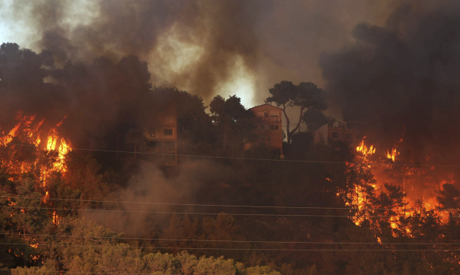
Fire in Northern Israel: Israel’s Katrina?

The news out of Israel is just heartbreaking.

We in post-Katrina America know a thing or two about a how a country can spend obscene amounts of resources on weapons of war while its basic home front preparations are left to languish. I well remember how back in 2005, even while the causalities in NOLA mounted, painful readiness issues were being publicly debated.

Now they’re asking the same questions in Israel. Israeli blogger Noam Sheizaf has placed direct blame at the feet of the Ministry of Interior, who may turn out to be the the Israeli equivalent of our Michael (“You’re doin’ a heck of a job, Brownie”) Brown:

By yesterday evening the supply of chemicals used in fighting flames ran out, and the firefighters had to settle for water. Israel issued an urgent request for help form other European countries, but for the casualties and their families it was too late…

Eli Yishai is the Interior Minister. Yesterday, when PM Netanyahu did the right thing and showed up at the emergency command center in Haifa, Yishai was nowhere to be found. Earlier, he tried to spin the story, blaming the finance ministry for the budget cuts.

Reuters pointed out that for all of its high tech military aircraft, Israel lacked even one even one water bombing plane:

Israel could buy three state-of-the-art Bombardier Superscooper firefighting planes for the price of just one of the F-35 stealth fighters it has on order.

The highly specialized amphibious aircraft, costing $28.5 million each, can scoop and drop six tones of water up to 10 times per hour on a fire that is near a big body of water. The Israeli blaze is only a few km (miles) from the sea.

But Israel does not have any. Instead it has to rely on Mediterranean neighbors who also face a constant wildfire risk and were prudent enough to buy the water-bomber aircraft. Greece has 21 of them, Croatia 6.

Israel instead has chosen to “improvise,” critics said. On Thursday night, airforce mobile water cannon designed to operate on flat tarmac could be seen trundling warily into position on steep earthen slopes, their range still quite inadequate.

By contrast, Israel has 360 F-16 fighters, far more than most countries outside the United States that have bought the world’s best-selling attack plane, not to mention many F-15s and the whole panoply of costly, advanced military aviation.

Israeli journalist Aluf Benn, writing in Haa’retz, says this tragedy makes it clear that Israel might well think twice about waging war on Iran:

Under such circumstances, it is best for Israel not to embark on war against Iran, which will involve thousands of missiles being fired on the home front.

After the Second Lebanon War, which exposed how pathetic the civil defense system was, reports were written, exercises were held, but everything broke down under the stress of a real emergency on the Carmel range − an area that already experienced the trauma of Hezbollah missiles.

Yesterday Israel asked for help from Cyprus and Greece, and the air force traveled to France to bring fire retardants to make up for the material that had run out. In war time, it is doubtful whether Israel will be able to rely on the generosity and largess of its neighbors.

We can expect more recrimination and accounting in the days to come. In the meantime, however, I know our hearts and prayers are with all whose lives have been torn by this horrible tragedy that, as of this writing, continues to rage on.

The Politics of Archaeology Unearthed

This just in from AP:

An Israeli archaeologist said Monday that ancient fortifications recently excavated in Jerusalem date back 3,000 years to the time of King Solomon and support the biblical narrative about the era.

If the age of the wall is correct, the finding would be an indication that Jerusalem was home to a strong central government that had the resources and manpower needed to build massive fortifications in the 10th century B.C.

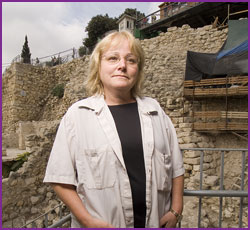
Just dig a little deeper, however and the plot thickens even more. The researcher in question is Eilat Mazar (above), an old school Israeli archaeologist whose essential goal is to prove the historical veracity of the Bible.  She’s made no bones (sorry) about this over the years.  In a 2006 interview with Moment Magazine, she made this very telling comment:

One of the many things I learned from my grandfather was how to relate to the biblical text. Pore over it again and again, for it contains within it descriptions of genuine historical reality.  I work with the Bible in one hand and the tools of excavation in the other. That’s what biblical archaeologists do. The Bible is the most important historical source and therefore deserves special attention.

The only problem with this is that the Bible is not a history book – it’s religious literature.  There certainly may be kernels of historical fact to be found in these narratives, but I’d say it’s exceedingly problematic for an archaeologist to assume ipso facto the historical veracity of the Bible.  Mazar’s comment that she works with a Bible in one hand and her tools in the other speaks volumes about her fundamental bias.

It’s also noteworthy that Mazar worked until recently for the Shalem Center, a partisan Israeli think-tank.  Among other things, the Shalem Center believes archeology should support “the claim that the Bible can be viewed as a work whose historical narrative is in large part accurate, and (strengthen) the ancient connection of the Jewish people to the land of Israel.”

It’s striking to compare Mazar’s approach to that of Israel Finkelstein, who comes from a new school of Israeli archaeologists who are aren’t driven by political ideology and are willing to go wherever their research takes them.   In a nutshell, Finkelstein and his colleagues have argued convincingly that it’s impossible to say much of anything about ancient Israel until the 7th century BCE (around the time of the reign of King Josiah). This casts doubt on the historical veracity of the Biblical narrative from the period of the Patriarchs/Matriarchs through the reigns of David and Solomon. These claims have largely been accepted as normative by most mainstream archaeologists outside of Israel.

If you are interested the current thinking of Israeli researchers who are unfazed by nationalist bias, I highly recommend Finkelstein’s 2002 book (with Neal Asher Silberman), “The Bible Unearthed.” Also check out this 2001 piece from Salon, which explores the deeper socio-political implications of Israeli archeology.

What We Need To Do For Haiti

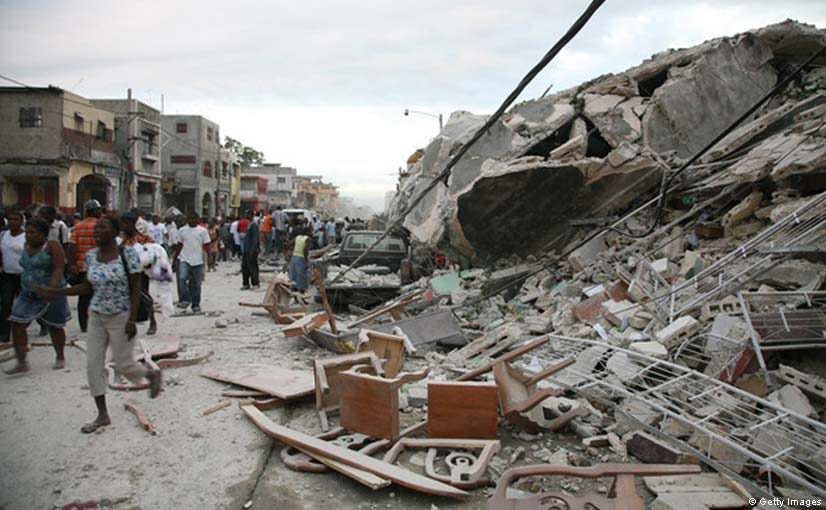
In the wake of the terrifyingly tragic earthquake in Haiti, it has been gratifying to see private citizens give so generously to relief efforts. At the same time however, we shouldn’t forget that our own country’s policies can have a considerable impact on Haiti’s recovery. Check out what constitutional lawyer/human rights activist/Katrina survivor Bill Quigley has to say in his piece, “Ten Things the US Can and Should Do for Haiti.”

Item #3, for example:

Give Haiti grants as help, not loans. Haiti does not need any more debt. Make sure that the relief given helps Haiti rebuild its public sector so the country can provide its own citizens with basic public services.

Pogo Was Right

From today’s JTA:

The Los Angeles Police Department is investigating whether Israeli organized crime is connected to an attack at a local synagogue.

The department initially listed the Oct. 30 shooting at the Adat Yeshurun Valley Sephardic Synagogue in North Hollywood, Calif., as a hate crime, but in recent weeks police been working on the theory that the shooting was to silence someone, the Los Angeles Times reported Thursday.

Two people were shot in the legs in the parking lot of the synagogue, located in the San Fernando Valley’s Orthodox community. Police believe one of the men that was shot was the target of the attack, the newspaper reported…

Israeli organized crime has been operating in Los Angeles since the mid-1990s, according to the newspaper.

Postscript: I spoke with a friend who read the local Israeli press in LA immediately after the shooting and said that even then there was serious speculation that Israeli organized crime was behind it.

If it was indeed an “inside job,” it puts a very interesting twist on our thinking about Jewish safety in general. It was notable that the ADL, immediately after the shooting, issued a press release with the predictable language:

Statistics consistently show Jews to be far and away the most frequently targeted religious group, with 74 percent of hate crimes motivated by religion being perpetrated against Jews in Los Angeles County.

I think the issue of Jewish power vs. vulnerability in America and the diaspora at large is an important and complex one. For my part, I believe (ADL’s problematic “annual audit” notwithstanding) that we Jews have never been more secure in our history than we are in present day America. If for nothing else, this latest incident is newsworthy for adding one more complicated dimension to the issue.

Parsing Ft. Hood

I’ve been voraciously reading the various editorial reactions to the Ft. Hood shooting – and have found much of it to be confused at best and patently offensive at worst. If you’re eager for some intelligent commentary, I recommend this post from my friend Rabbi Nancy Fuchs-Kreimer, who took NY Times columnist David Brooks to task for his recent piece that explored the nature and causes of religious extremism, focusing exclusively on Islam.

Nancy writes:

Yes, there is evil in human hearts. Yes, religion can be the carrier of malevolent narratives. But it is both historically and ethically flawed to write a whole column devoted to this theme and never once even mention that Islam is not the only tradition that has this problem. Brooks speaks about suicide bombers and terrorists but he does not mention that we have seen these troubled tales of “us and them” played out by many other religious folks.

As a Jew, David Brooks might have had the grace to remind us that in 1994 an orthodox Jew,  Baruch Goldstein,  killed 29  Muslims and wounded 150 while they prayed in Hebron.  Like Dr. Hassan, Dr. Goldstein, also a physician,  was both a deeply troubled individual and a product of a deeply problematic version of his faith tradition.

Another adherent to a deeply problematic version of our faith tradition is Rabbi Yitzhak Shapira, head of the Od Yosef Chai Yeshiva in the West Bank settlement of Yitzhar, who recently published a book in which he opined that gentile babies and children can be killed if they pose a threat to the Jewish nation. This followed on the heels of the arrest of Jewish terrorist Yaakov Teitel, a West Bank settler who was charged with murdering two Palestinians in 1997 and bombing the home of a prominent Israeli professor last year.  (Teitel reportedly had this to say when arraigned in an Israeli courtroom: “It was a pleasure and an honor to serve my God. I have no regret and no doubt that God is pleased.”)

Intolerance is intolerance, regardless of the faith tradition to which it is attached.  As Nancy correctly points out, all religions can be carriers of malevolent narratives. And when deeply disturbed individuals such as Teitel and Hassan attach themselves to these toxic world views, we can predict all too well the tragic results.