Category Archives: Energy Efficiency

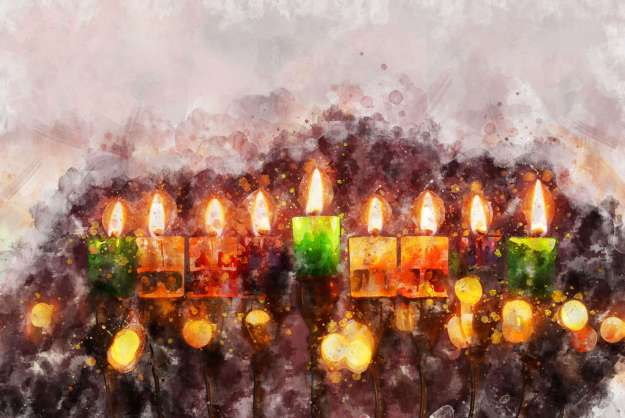
On Hanukkah, Let’s Rededicate Our Commitment to Environmental Justice

2019_1222-hannukah-2400x1606

TOMERTU / SHUTTERSTOCK

Cross-posted with Truthout

The central story commemorated on Hanukkah comes from books 1 and 2 Maccabees, which tells of a small group of Jews in the land of Israel that fought to liberate their community from the increasingly oppressive reign of the Seleucid empire. Under Antiochus IV Epiphanes, the empire had imposed their Hellenistic culture upon the Jewish community; in 167 BCE, Antiochus intensified his campaign by defiling the temple in Jerusalem and banning Jewish practice. The Jewish band known as the Maccabees subsequently waged a three-year campaign that culminated in the cleaning and rededication of the temple and ultimately, the establishment of the second Jewish commonwealth.

The meaning of Hanukkah has historically been understood and interpreted in many different ways by Jewish communities throughout the centuries. For the rabbis of the Talmud, who sought to downplay the militarism and violence of the story, the holiday is emblematic of God’s miraculous power, symbolized famously by the Talmudic legend (quoted above) of a miraculous cruse of oil in the rededicated Temple that lasted for eight days. The Zionist movement and the state of Israel celebrate Hanukkah as a nationalist holiday, glorifying the Maccabees’ military struggle for political independence. In many nations throughout the Jewish diaspora, the festival is often understood as an expression of Jewish minority pride and a celebration of religious freedom.

More recently, some American Jewish religious leaders have been reinterpreting Hanukkah as a holiday of sacred environmental concern, framing the legend of the oil as a lesson about the importance of energy sustainability. Jewish environmental activist Rabbi Arthur Waskow, for instance, has proposed observing “Eight Days of Environmental Action” during Hanukkah, suggesting that the legend “is a reminder that if we have the courage to change our lifestyles to conserve energy, the miracle of our own creativity will sustain us.” The website of the Reform movement’s Religious Action Center (RAC) now devotes an entire section to “Green Resources for Hanukkah.” The Jewish environmental organization Hazon also offers extensive resources for the holiday, including “10 Ways to Make your Hanukkah More Sustainable.”

While these new approaches are certainly meaningful as far as they go, it is worth questioning why the environmental dimensions of Hanukkah must begin and end with green personal behaviors. Given that the festival celebrates a struggle for liberation, Hanukkah also offers us a powerful opportunity to highlight and celebrate the emergent global movement for environmental justice.

This connection is particularly relevant since this struggle is unfolding in critical ways in the land where the Hanukkah story actually took place. In fact, the state of Israel has a well-documented history of monopolizing and exploiting the natural resources of historic Palestine — all too often at the expense of the Palestinian people themselves. If we are truly serious about celebrating Hanukkah as a “green holiday,” we should also use these eight days to shine a light on the myriad environmental injustices being committed in Israel/Palestine — and further, to rededicate ourselves to the movement for environmental justice there and around the world.

“Green Colonialism” in Israel/Palestine

Environmentalism has always been central to the myth of Zionist pioneers who described themselves as having “greened the barren desert” of Palestine. Like many of my generation who came of age in American Jewish religious schools, I well remember being taught that helping the Jewish National Fund (JNF) plant pine trees in Israel was an act of almost sacred significance. Like generations of Hebrew school students before and after us, we were encouraged to regularly put coins in the iconic blue-and-white JNF collection boxes and were given certificates as gifts whenever a tree was planted in our honor or for a special occasion.

The reality beneath this mythos, however, reveals a much more problematic and troubling history. We didn’t learn the crucial colonial goal behind the JNF’s forestation policy throughout Palestine — that the widespread planting of pine groves and forests was instrumental in the dispossession of Palestinians. We certainly didn’t learn about Yosef Weitz, director of the JNF from 1932 to 1948, who was a primary architect of the Zionist policy of Palestinian Arab “transfer,” often advocating for this policy openly and unabashedly.

At a meeting of the Transfer Committee in 1937, for instance, Weitz stated:

The transfer of Arab population from the area of the Jewish state does not serve only one aim — to diminish the Arab population. It also serves a second, no less important, aim which is to advocate land presently held and cultivated by the Arabs and thus to release it for Jewish inhabitants.

It is now known that pine forests planted by the JNF were widely used as national and recreational parks to hide the remains of destroyed Palestinian villages and neighborhoods that were depopulated by force in 1948. According to scholars Ilan Pappé and Samer Jaber, “covering ethnic cleansing with pine trees is probably the most cynical method employed by Israel in its quest to take over as much of Palestine as possible with as few Palestinians in it as possible.” The Israeli organization Zochrot estimates that “more than two-thirds of [JNF] forests and sites — 46 out of 68 — conceal or are located on the ruins of Palestinian villages demolished by Israel.”

In a recent conference call sponsored by Jewish Voice for Peace (JVP), journalist/activist Naomi Klein referred to this practice as “green colonialism,” pointing out that “the use of conservation and tree planting and forest protection as a tool of settler colonialism is not unique to Israel” and that “the creation of state parks and national parks (in North America) are seen by Indigenous people in these settler colonial contexts in similar ways.” According to Klein, “there is a long and ongoing history of conservation … where the land is declared a park and the traditional inhabitants and users of the land are locked out.”

The cumulative environmental impact of nonindigenous pine trees throughout historic Palestine has been devasting. European pines, which were consciously planted to evoke the memory of the forests familiar to Zionist settlers, have largely failed to adapt to the local soil, requiring frequent replanting. As they have aged, non-native pines also have demanded more and more water, rendering them more vulnerable to disease. Moreover, falling pine needles have acidified the soil, inhibiting the growth of native species.

This practice, coupled with the steadily soaring temperatures in the region, has increasingly led to devastating forest fires such as the Carmel wildfire in 2010, estimated to be the worst in Israel’s history. Given its grievous environmental impact, the 2010 fire subsequently precipitated a widespread reassessment in Israel of early Zionist tree-planting policies. In 2011, Yisrael Tauber, director of forest management for the JNF, grudgingly admitted, “Planting is still important, but in many cases we have to make a kind of change in our consciousness.…We are now building sustainable forestry after these pioneering pines did a wonderful job for the first generation.”

Of course, given the rising threat of the global climate crisis, this admission arrives as too little, too late. Increasingly dangerous conflagrations are now a regular occurrence throughout Israel; this past summer, three simultaneous wildfires necessitated the evacuation of hundreds of residents across the country. This trend is particularly ominous given that this region is among the hardest hit by the climate crisis. At the UN Climate Conference in Madrid this month, the Israeli Ministry of Environmental Protection issued a report listing a number of devastating projections, including an expected rise in the risk of natural disasters.

“Water Apartheid” in the West Bank

The struggle over water resources is another important example of historic and ongoing climate injustice in Israel/Palestine. Israel has almost complete control over water sources in the region, a monopoly the human rights group Al-Haq refers to as “water apartheid.” According to Amnesty International, Palestinian consumption in the Occupied Palestinian Territories is about 70 liters a day per person (well below the 100 liters per capita daily recommended by the World Health Organization) whereas Israeli daily per capita consumption is about 300 liters. In some rural communities, Palestinians survive on 20 liters per day.

Those who visit the West Bank cannot help but be struck by the sight of Israeli settlements, with lush, well-watered lawns looming over Palestinian towns and villages surrounded by rocky soil and sparse vegetation. This is largely due to the fact that Israel uses more than 80 percent of the water from the Mountain Aquifer, the only source of underground water in the West Bank, as well as all of the surface water available from the Jordan River, which is completely denied to Palestinians.

As a result of this inequitable system, some 180,000 to 200,000 Palestinians in rural communities have no access to running water. In towns and villages which are connected to the water network, water rationing is common, many Palestinians have no choice but to purchase additional supplies from mobile water tankers which deliver water of often dubious quality at a much higher price. (The Mountain Aquifer, one of the most valuable natural resources in the region, is situated almost completely east of the Green Line, a key factor in Israel’s inexorable annexation of the West Bank.)

Over the years, Israel’s over-pumping of underground aquifers has lowered the groundwater table below sea level and caused saline water intrusion in many areas. The average flow of the Jordan River has been decreasing dramatically and has become so polluted by Israeli settlement and industry run-off that it was declared unsafe for baptism by Friends of the Earth Middle East in 2010 (known today as EcoPeace Middle East). The Dead Sea has shrunk into two separate and rapidly evaporating bodies of water, increasingly polluted by Israeli companies that pump out its salts for cosmetic products.

Environmental Injustice in Gaza

When it comes to Gaza, Israel’s crushing 12-year-old blockade has almost completely depleted the supply of drinkable water for the nearly 2,000,000 Palestinians who live in this small strip of land. Gaza’s only water resource, the Coastal Aquifer, is insufficient for the needs of the population, and Israel does not allow the transfer of water from the West Bank to Gaza. In the meantime, the aquifer has been steadily depleted and contaminated by over-extraction and by sewage and seawater infiltration, and 97 percent of its water has been contaminated and unfit for human consumption.

Stringent restrictions imposed in recent years by Israel on the entry into Gaza of material and equipment necessary for the development and repair of infrastructure have caused further deterioration of its water and sanitation situation. For the past several years, sewage has been flowing into the Mediterranean at a rate of 110 million liters a day. At present, 97 percent of Gaza’s freshwater is unsuitable for human consumption and only 10 percent of Gaza’s residents have access to safe drinking water.

However, as is invariably the case with issues of environmental injustice, what goes around comes around. This past June, EcoPeace Middle East reported that the collapsing environmental situation in Gaza was creating a “national security risk” to Israel, warning that “the collapsing water, sewage and electricity infrastructure in the Gaza Strip pose a material danger to (Israel).” In a particularly perverse example of victim-blaming, the Israeli military recently urged the World Health Organization to condemn the “ecological catastrophe” caused by the burning of tires by Palestinians on the border during the weekly Great March of Return protests.

In addition to water pollution, there have also been reports of rapidly increasing soil contamination due to Israel’s regular military assaults on Gaza. According to a report by the New Weapons Research Group, Israeli bombings in Gaza Strip have left a high concentration of toxic metals, such as tungsten, mercury, molybdenum, cadmium and cobalt in the soil. These metals can cause tumors and problems with fertility, and they can have serious and harmful effects on newly born babies.

Hanukkah and Global Climate Justice

What does this current environmental reality bode for the future of the Jewish state? British journalist Robert Cohen powerfully concludes that the climate crisis, coupled with Israel’s steady over-exploitation of resources, has functionally rendered Zionism “obsolete.”

“How,” writes Cohen, “can Israel present itself as a Jewish safe haven from a hostile world when its water security is at high risk, crop yields will soon be falling and fires will be raging all year round…? When it comes to climate change, national borders will offer no protection from antisemitism. Climate has no interest in faith or ethnicity or in historical or religious claims to a particular piece of land.”

Cohen’s point can certainly be applied to the world at large. The climate crisis clearly knows no borders. But while no one will ultimately be safe from its devastating effects, we can be sure that the more powerful will increasingly seek to safeguard themselves and their interests at all costs at the expense of the less powerful. Such is the harsh reality of “green colonialism”: as the climate crisis renders more and more of the world uninhabitable, we are clearly witnessing increased state efforts at border militarization, population control and the warehousing of humanity.

What then, is to be done? In a recent op-ed for The Nation, journalist Ben Ehrenreich offered this compelling prescription: “it is time to shout, and loudly, that the freedom of all the earth’s people to move across borders must be at the center of any response to the climate crisis.… If we are to survive as a species, we must know that no boat can save us except the one we build together.” In her JVP presentation, Naomi Klein echoed this challenge in similarly powerful terms:

What is clear is that the space for humanity to live well is contracting…. So, the core question is what kind of people are we going to be as we live in greater density? And if we look to Israel/Palestine, we see a really terrifying example of how to lose your humanity and how to fail to share land — and the monstrousness it requires to fail to share….

This is a global process that is happening now … so we’re going to have to start practicing solidarity and mutual aid. And we’re going to have to practice love and show each other what love looks like in public more and more. Because a lot of people have lost faith that they can do it.

There can be no better Hanukkah message for the 21st century. Given the realities of our current age, the nationalist dimensions of the holiday are not merely irrelevant, but dangerous. In the words of poet/liturgist Aurora Levins Morales, “this time it’s all of us or none.” If Hanukkah is to be a true celebration of environmental justice, it must become a “rededication” to fight for a more universal vision of liberation, for a world of solidarity, mutual aid and open borders.

Or to put it another way, the Maccabees’ struggle must now be broadened to represent the universal struggle of all who are committed to showing what love looks like in public, for the sake of all humanity. For the age of global climate crisis, the stakes could not be higher.
“Birthday of a World on Fire” – A Sermon for Rosh Hashanah 5780

photo credit: Reuters

One of the signature moments on Rosh Hashanah is the sentence traditionally proclaimed after the shofar is sounded: “Hayom Harat Olam” (“Today is the birthday of the world.”) On Rosh Hashanah, tradition tells us, we celebrate a world reborn, joyfully acknowledging the order and balance of God’s creation and the awesome power embedded deep within it. What better way to celebrate the potential for our own renewal in the year ahead than by looking to a world that renews itself every year according to the sacred rhythms of birth and rebirth?

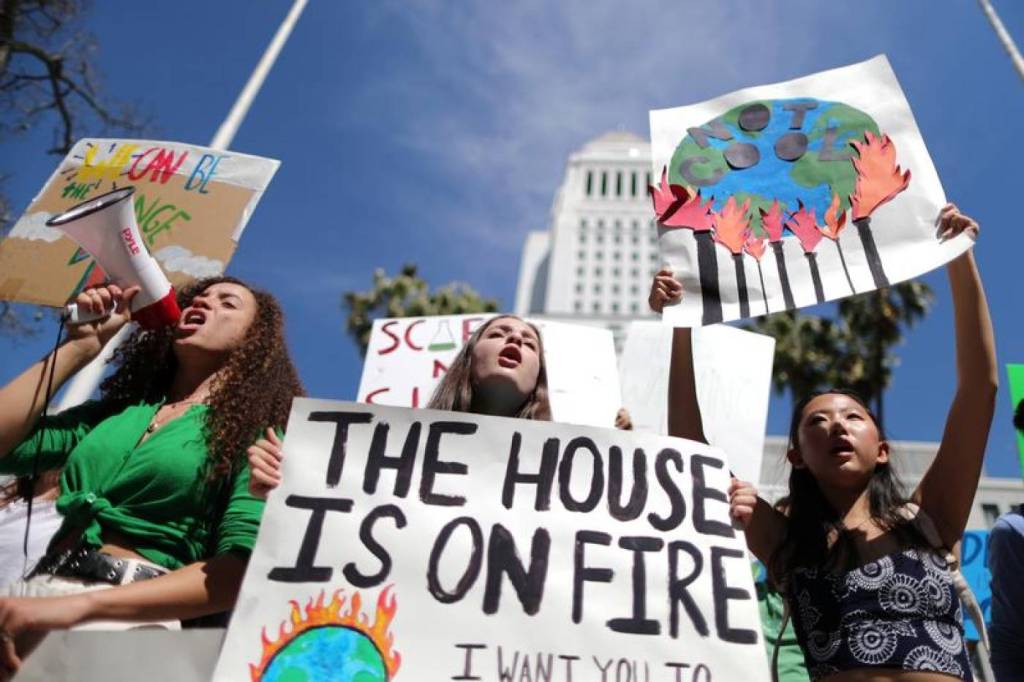
While I personally find this idea to be among the most profound of this season, I’ll confess, I’ve been struggling with it in recent years. With the hard reality of the global climate crisis hitting home deeper and deeper every year, I find myself asking, what does it mean to gather every Rosh Hashanah to reaffirm creation even as we are literally undoing it?  How can we honestly celebrate the power embedded in God’s world, even as human power is steadily destroying it? Even as the world is literally on fire? To be completely honest, in this era of global climate crisis, I’m not sure the traditional understanding of Rosh Hashanah really makes much sense any more.

And it is indeed a crisis. Many are suggesting, in fact, that we’ve moved beyond crisis and have entered the category of emergency. And we can’t say we haven’t been warned. As far back as 1992, 1700 scientists around the world issued a famous statement called a “warning to humanity,” declaring that we were on a “collision course” with the natural world if we did not “fundamentally change” the way we lived upon it. 

More than 25 year later, almost all of their chilling predictions are now in full swing. Last year, the UN Intergovernmental Panel on Climate Change (IPCC) issued the first in a series of three reports that describe in vivid detail the effects of greenhouse gas emissions throughout the world. The first of three reports, which came out last October, warned that we have only a dozen years to keep global warming to a maximum of 1.5 degrees Celsius beyond pre-industrial levels. If we go up even half a degree beyond this, we will significantly worsen the risks of drought, floods, extreme heat and poverty for hundreds of millions of people. 

However, this was not merely a prediction: the report made it clear that this crisis was already well underway. The world is currently 1.1 degrees warmer than pre-industrial levels. The average global temperature for 2015–2019 is already the hottest of any five-year period on record. The Amazon rainforest, even as I speak now, is still burning. It’s been estimated that we’ve already lost 50% of the planet’s biodiversity in the past four decades. 20% of the earth’s coral reefs have died. The Antarctic ice sheet has lost three trillion tons of ice in the last 25 years. In roughly that same amount of time, the rate of global ocean warming has doubled. Many, if not most, of these losses are irreversible. 

And these losses are increasing exponentially. Every new half degree will cause rapidly increasing and irreversible chain reactions: growing species extinction, greater food insecurity, the disappearance of coastal cities and island nations, increased migration and social conflict, more wildfires and hurricanes, the destruction of polar ice, the loss of entire ecosystems. 

It’s important to note however, that the IPCC report did not conclude that all is lost. The scientists repeatedly stressed that it was still possible to limit warming to 1.5 degrees. But they also made it clear it will take a radical global effort to achieve this goal. Jim Skea, Co-Chair of IPCC Working Group put it this way: “Limiting warming to 1.5°C is possible within the laws of chemistry and physics, but doing so would require unprecedented changes.”

Unprecedented indeed. Given our voracious dependance upon fossil fuels – and the economic interests in the companies that produce them – the hard truth is that we have only twelve years to reverse the growth of global capitalism itself. This is not a radical statement – I’d argue it’s actually quite reasonable under the circumstances. Those who dismiss advocate structural proposals such as the Green New Deal as naive, “pie in the sky” ideas routinely miss this one essential point: we need radical solutions if we are to take on the unfettered economic greed that has brought us to this terrifying moment in human history.

Now I know that many, if not most of you have heard these facts and figures before. But even so, as I pondered what to talk about this Rosh Hashanah, it felt enormously important to me that the findings of the IPCC report be spoken out loud. We need to say them out loud. Otherwise, I’m really not sure if the rest of our prayers really make much sense.

I realize how depressing, how enormous – how terrifying – it is to contemplate all of this. But as we gather for Rosh Hashanah, I really can’t think of a more important issue for us to talk about. And so this morning, I’d like to push a brief pause on our celebration of creation’s power and face the ways we are willfully degrading that power. I’d like to offer a few thoughts on how we might reframe our understanding of this crisis so that we might avoid the inevitable overwhelm, paralysis and despair that comes with it. Ultimately, I suppose, what I’d really like to do is offer a measure of hope in the face of an increasingly hopeless reality. To take our cue from the new year and imagine a world reborn – so that we might feel that much more ready to go forth and actually make it so. 

When most of us confront the overwhelming reality of the global climate crisis, I think we tend to do what comes naturally: we compartmentalize it. We silo it into its own separate category the way we do with so many other complex social issues. We view it as one issue among many in the desperate hope that if we isolate it, we might be able to find a way to somehow address it. 

But in truth, the climate crisis isn’t one issue. In fact, I would say it is in many ways the issue. It’s the one universal issue that connects all others. The changes we are causing to the earth’s temperatures have direct causal relationships to immigration, to human rights, to poverty, to housing, to war, to so many examples of social and political upheaval worldwide. 

So yes, addressing this crisis means we must advocate for policies that will keep global temperatures from reaching the 1.5 mark. But it cannot only mean that. It must also mean that we must stand with the scores of people around the world who are already suffering from the effects of the climate crisis. In the end, there is really no contradiction between working for justice and climate activism. They are, in fact, intimately intertwined. 

We know full well that the primary brunt of the global climate crisis is being borne by the poor and communities of color. It has been estimated that the global climate crisis could push more than 120 million more people into poverty by 2030. Even if we do manage to increase to only 1.5 degrees by 2100, extreme temperatures in the global south will leave disadvantaged populations increasingly food insecure, with less incomes and worsening health. Increasing numbers of people will have to make the agonizing choice between starvation or migration. 

Here in the US, we can see the connection between the climate crisis and structural racism all too well. Polluting facilities are routinely built in low-income neighborhoods and communities of color, which means that people with marginalized identities experience more asthma, a greater likelihood of heart attacks and premature death. The disadvantages that come with those health issues create a cycle of poverty and lack of access to opportunity for people of color and the poor in the United States.

It’s a sad irony that the ones least responsible for the climate crisis are bearing the brunt of it – and have the least capacity to protect themselves. This phenomenon has been referred to as “environmental racism” or “climate apartheid” – in which the wealthy have the means to escape overheating, hunger and conflict while the rest of the world is left to fend for itself. 

We witnessed climate apartheid in full swing when the devastating Hurricane Dorian slammed into the Bahamas earlier this month. In advance of the hurricane, the ultra-wealthy homeowners on Abaco Island hired local workers to board up their vacation houses, while they escaped to their primary homes in the US or Europe. The Baker’s Bay Golf & Ocean Club hired a private security team, equipped with helicopters and assault rifles, to protect their property. The rest of the island’s residents, made up mostly of undocumented Haitians, had nowhere to go and had to ride out the storm in shanty towns and church shelters. Within hours, the community was almost completely flattened. Dozens of poor residents were killed and thousands more are still missing. 

As Jews, we need to acknowledge that climate apartheid is deeply enmeshed throughout Israel/Palestine as well. Since the Middle East is among the hardest hit by global warming, the issue of justice in Israel/Palestine is directly related to the control of water resources – and Israel has almost complete control over water sources in the region. The so-called Mountain Aquifer, the most critical water source in Israel/Palestine, is situated almost completely east of the Green Line. This goes a long way to explain why Israel has not and likely will never give up the West Bank – as doing so would mean surrendering its most valuable water source. 

The environmental situation in Gaza is even more dire, due largely to Israel’s crushing blockade. At present, 97% of Gaza’s freshwater is unsuitable for human consumption, and only 10% of Gaza’s two million people have access to safe drinking water. As a result of Israel’s regular military assaults, 110 million liters of raw and untreated sewage are pouring directly into the Mediterranean every day, creating a massive sanitation crisis. 

But, as is invariably the case in all forms of climate apartheid, what goes around comes around. This past June, Ha’aretz reported on the effects of Gaza’s toxic pollution on Israel. The headline read: “Collapsing Environmental State of Gaza Poses Threat to Israel’s National Security, Report Warns.” Tellingly, even as it maintains total control over natural resources, Israel cannot escape the devastating impact of the growing climate crisis.

My friend and colleague, Robert Cohen, a writer and blogger from the UK, recently wrote a post in which he argued that “the climate emergency makes Zionism obsolete.” In it, he made this very compelling argument:

How can Israel present itself as a Jewish safe haven from a hostile world when its water security is at high risk, crop yields will soon be falling and fires will be raging all year round. In a region already fraught with conflict, climate analysts expect temperature rise to have a multiplier effect that exacerbates and accelerates wars and mass migrations. Promoting Zionism starts to look like an invitation to Jews to jump from the metaphorical frying pan into the literal fire.

When it comes to climate change, national borders will offer no protection from antisemitism. Climate has no interest in faith or ethnicity or in historical or religious claims to a particular piece of land. Climate change is staunchly apolitical, ahistorical and agnostic.

Of course, climate change won’t make antisemitism go away. But like much else that’s wrong and unfair about the world, the Climate Emergency compels us to look at things differently, consider the root causes, and understand the interconnectedness of injustice. As well as terrible threats, climate change forces upon us the possibility of a profound ethical revolution.

I believe Robert hits the nail on the head with this analysis. In a way, the Israel/Palestine issue is a microcosm of a much larger, universal issue. In the face of global climate crisis, nationalism will not save us. Stronger borders will not save us. Sooner or later this crisis will come for us all. In the meantime, however, we can be sure that those who have more power will do everything they can to protect themselves from its effects until the very bitter end – at the expense of everyone else. 

This is where, as Robert Cohen puts it, the “profound ethical revolution” comes in. Yes, to address the climate crisis, we must be advocating for policies and practices that decrease our global carbon output – but it must mean standing in solidarity with those most affected by the crisis as well. There can be no separation between the two. And in this regard, we all have a part to play. 

The first step, I believe, is to resist the temptation toward overwhelm and despair. This is, quite frankly, a luxury we cannot afford. While it can be tempting to adopt a fatalistic, “all is lost” attitude, we would do well to remind ourselves that some of the most committed, inspired climate activists are those who are most directly affected by it. If they have not succumbed to despair, than neither can we.

In fact, the movement for climate justice is being led by members of indigenous nations worldwide. This past April in Brazil, an estimated 4,000 indigenous peoples from various tribes gathered for three days in that nation’s capital to protest for their rights, demonstrate their traditions and confront congressional leaders. This nonviolent mobilization, called Free Land Camp, has taken place every year since 2004 and is organized by the Articulation of Indigenous Peoples of Brazil — an alliance of indigenous communities and organizations from several regions of the country. 

Closer to home, the resistance by at Standing Rock has been at the vanguard of the fight for climate justice in this country. And as this movement is increasingly youth led, we need to be lifting up the work of indigenous youth activists – young people such as 15 year old Autumn Peltier, of the Wiik-wem-koong First Nation in Northern Ontario who recently spoke at the UN and 19 year old Naelyn Pike, of the San Carlos Apache tribe in Arizona, who had this to say in her speech at a youth leadership gathering in 2017:

I’m saying no! And many people, millions of people in this world, are saying no! We have so many sacred lands that are going to be desecrated, so many fights to protect Chaco Canyon, to protect Bears Ears, to protect Indigenous land, food, water, the right to live, our identity. We’re fighting against so many pipelines. And the thing is that these generations behind us had told us this prophecy.

But there’s another prophecy: That the youth is going to stand. And that’s us today. That’s us here and now.

In addition to Indigenous-led movements, there are any number of growing climate justice movements that deserve our attention and support – and I know many in this room have long been active in these efforts: the Sunrise Movement, the Climate Strike, +350 and Extinction Rebellion, to name a few. And as I mentioned earlier, given everything that is at stake, we need to wage an all-out political fight against the economic interests that make greater profit through increased greenhouse gas emissions. In this country, this fight is primarily being waged nationally via the Green New Deal, but it is also being fought on state and local levels as well. As I said before, there is a part we can all play. The main thing is to connect the dots, to understand that the climate crisis is at heart a justice issue – and that all struggles for justice are ultimately bound up with the movement to roll back the climate crisis. 

So what can Rosh Hashanah mean at this moment in human history, in this unprecedented time when the very future of our world is literally hanging in the balance? I want to suggest that we can no longer celebrate the new year – the birthday of the world – without explicitly spelling out what is at stake. Yes, it is a day of hope, but this hope must be celebrated together with a hard and sober realism. 

We know that the task ahead of us will be daunting. We know that some of the effects of climate change can yet be turned back. But we also know that some of the damage we’ve inflicted upon the earth is permanent. We do have a window of time in which we can stop or decrease global temperatures, but it will take a Herculean world-wide effort to achieve this. We’ve been told by scientists that we have 12 years before the social and economic fabric we take for granted starts to unravel beyond the point of no return. We need to admit this and say it out loud if these New Year’s rituals are to retain any meaning for us whatsoever any more. 

In the end, it may well be that the High Holidays will hold more meaning than ever before. After all, when the new year is through, when we move toward Yom Kippur, our prayers will literally evoke a world that hangs in the balance. We will ask “who shall live and who shall die?” We will plead to be written into the Book of Life. We will ask ourselves honestly, how can we change our ways to ensure it shall be so? It seems to me that these prayers have never had more universal, global meaning than right now.

One of the things I love most about Judaism and Jewish culture in general, is that it invites us to work toward the world to come, the world as it should be. Yes, this work can be a struggle, but it can also be filled with joy and celebration. And there are yet times during the struggle when we create a microcosm – when we get a glimpse of the world to come. These moments remind us we must continue to live with a spirit of joyous resistance, even if we know full well that world we seek may never be at hand.

How do we possibly do this? How do we find the strength to fight a fight we know we may not win? And to so joyfully? Let me share with you the words of indigenous activist and organizer, Kelly Hayes, who offers us as eloquent a manifesto for the new year as I can imagine:

I would prefer to win, but struggle is about much more than winning. It always has been. And there is nothing revolutionary about fatalism. I suppose the question is, are you antifascist? Are you a revolutionary? Are you a defender of decency and life on Earth? Because no one who is any of those things has ever had the odds on their side. But you know what we do have? A meaningful existence on the edge of oblivion. And if the end really is only a few decades away, and no human intervention can stop it, then who do you want to be at the end of the world? And what will you say to the people you love, when time runs out? If it comes to that, I plan on being able to tell them I did everything I could, but I’m not resigning myself to anything and neither should you. Adapt, prepare, and take the damage done seriously, but never stop fighting. Václav Havel once said that “Hope is not the conviction that something will turn out well, but the certainty that something is worth doing no matter how it turns out.” I live in that certainty every day. Because while these death-making systems exist both outside and inside of us, so do our dreams, so long as we are fighting for them. And my dreams are worth fighting for. I bet yours are too.

This new year, let us commit to fight like hell for the world of our dreams, for a world reborn anew. Let us fight with joy, commitment and solidarity, knowing full well that this is a fight for the survival of the world as we know it. And let us fight not with the certainty that we will ultimately be victorious, but with the faith that it is worth waging no matter what.             

Ken Yehi Ratzon – May it be our will this new year – and every new year from this time forward.

Shanah Tovah.

Getting Political with Sandy

Lots of pundits are cautioning Obama and Romney against “playing politics” with the tragic aftermath of Hurricane Sandy. I disagree. I’d say if there was ever a time to play politics, now is it.

As far as I can tell, neither candidate has broken their “climate silence” in relation to Hurricane Sandy – that is, explicitly connect the dots and say in no uncertain terms that Hurricane Sandy was, as George Lakoff so accurately described it, systemically caused by global warming:

Global warming systemically caused the huge and ferocious Hurricane Sandy. And consequently, it systemically caused all the loss of life, material damage, and economic loss of Hurricane Sandy. Global warming heated the water of the Gulf and Mexico and the Atlantic Ocean, resulting in greatly increased energy and water vapor in the air above the water.  When that happens, extremely energetic and wet storms occur more frequently and ferociously. These systemic effects of global warming came together to produce the ferocity and magnitude of Hurricane Sandy.

The precise details of Hurricane Sandy cannot be predicted in advance, any more than when, or whether, a smoker develops lung cancer, or sex without contraception yields an unwanted pregnancy, or a drunk driver has an accident.  But systemic causation is nonetheless causal.

If we do believe that, in the wake of this devastation we must redouble our efforts to prevent future tragedies such as this from occurring, then the most important thing we can do is to play politics. And the first step is to break climate silence. Even if our leaders are unwilling, it is time for us to speak up and face down the deniers.

Please watch and share the clip above to everyone you know. Then help those who are advocating in no uncertain terms for public policies that will curb carbon emissions and promote alternative energies worldwide.

Green Mosque, Green Shul

Here’s a nice piece that ran on Chicago’s ABC affiliate last January: a feature on JRC’s green building as well as a local mosque that incorporated energy-saving features into their recent renovation. Especially nice that they highlighted two “Abrahamic environmental efforts.”  (One snarky correction: it’s Jewish Reconstructionist Congregation, not Center).