Category Archives: Food

The Nightmare in Gaza is Far From Over

photo: Khames Alrefi/Anadolu

It is the morning after. While the ink has dried on Trump’s 20 point “peace plan,” it has become brutally clear that the nightmare for Gazans is far from over.

Yes, the return of Palestinian and Israeli captives has been an occasion for genuine joy and celebration. Yes, Israel has ended its relentless genocidal bombing of Gaza. Yes, Palestinians are returning en masse to their homes. But this nightmare is far from over.

Israel is by no means finished. Despite the plan’s requirement that “Israeli forces will withdraw to (an) agreed-upon line,” the military has restricted Palestinians’ access to 70% of Gaza, either by declaring large areas as no-go zones or by issuing forced displacement orders, according to the UN Office for the Coordination of Humanitarian Affairs. The Gazan health ministry reported that since Saturday – the first full day of the ceasefire – Israel has already killed 23 Palestinians and wounded 122.

Israel is also ramping up its support of rival Gazan militias to increase the violence on the ground. On October 12, one such group tortured and murdered the beloved Palestinian journalist Saleh Al-Jaafrawi. As Al-Jazeera reporter Eman Murtaja recently wrote: “The message of Saleh’s assassination is clear: Anyone who continues to critically report on what is going on in Gaza, on Israel’s continuing destructive presence and the betrayal of its allies on the ground will be captured, tortured and killed.”

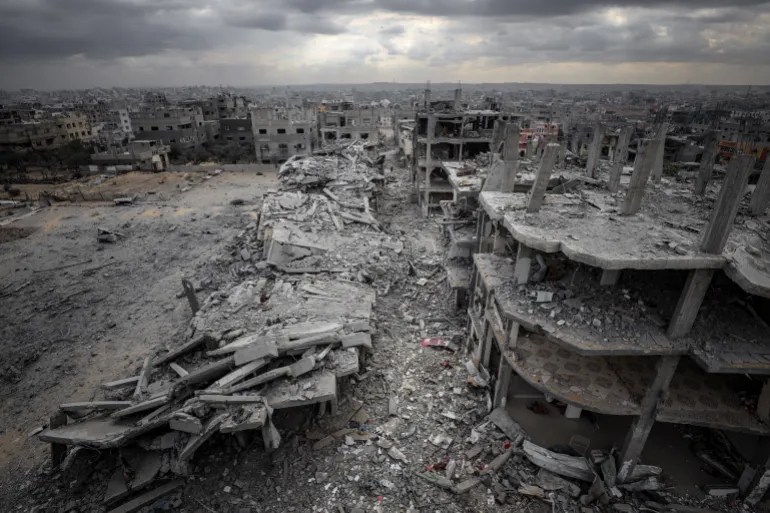
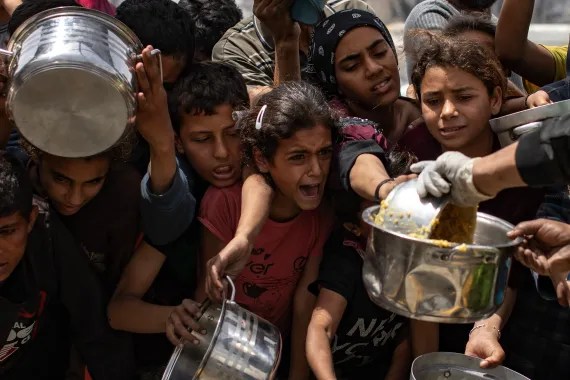
Meanwhile as Gazans continue to stream back to their homes, it has become tragically apparent that the overwhelming majority of them have no homes to return to. Scores of buildings have been reduced to rubble. Palestinians are arriving home to unlivable, broken shards of concrete, many of which still entomb dead loved ones. At the same time Israel’s forced starvation of Gazans continues to claim lives. As of October 12, at least 463 people, including 157 children, have died from starvation as Israel continues to block aid from entering the Gaza Strip. Nearly one in four children suffers from severe acute malnutrition.

It is difficult to overstate the depths of the annihilation that Israel has inflicted on Gaza over the past two years. As journalist Branko Marcetic has rightly termed it, “Israel’s Gaza war is one of history’s worst crimes”:

What we have watched, what we are continuing to watch, is the obliteration of a society of two million people. Every facet of modern civilization, as well as the most elementary things needed for even a state of basic subsistence for a human community, has been deliberately and almost completely destroyed by the Israeli military in Gaza. And now we are watching the gradual but accelerating mass die-off of the people who once lived there, through a combination of starvation, disease, and murder.

Though the political elites are rapturously describing a neo-liberal, neo-colonial post-war Gaza coastal resort, the hard truth is that the Gaza Strip is now a toxic moonscape and mass graveyard. According to the UN Environment Programme (UNEP), Israel’s relentless bombardment of populated areas has contaminated soil and groundwater for the long term, both through the bombardment of munitions and hazardous materials (such as asbestos, industrial chemicals and fuel) that have been released into the surrounding air, soil and groundwater from collapsed buildings. As of July 2024, UNEP estimated that Israel’s bombing had left 40 million tons of debris and hazardous material in Gaza, with much of the rubble containing human remains. It has been estimated that clearing this war rubble will take 15 years and could cost up to 40 to 50 billion dollars.

In addition to the toxicity of the environment, there also remains enormous amounts of unexploded ordnance throughout the Gaza Strip. An estimated 70,000 tons of explosives have been dropped on Gaza since October 2023 – the equivalent of roughly six Hiroshima bombings on an area less than half the size of Hiroshima but with six times its population. This past January, the UN Mine Action Service (UNMAS) estimated that between 5% and 10% of the munitions fired on Gaza have not yet exploded. According to the UNMAS, it could take 14 years to clear Gaza of all unexploded ordnance.

As I noted above, Israel is still restricting food aid from entering Gaza. According to the World Health Programme, over half a million people in the Gaza Strip are still facing catastrophic conditions characterized by starvation, destitution and deathOver 1 million more are facing emergency levels of food insecurity. Acute malnutrition is projected to continue worsening rapidly, with at least 132,000 children aged under 5 at risk of death through to June 2026. 

But even if food supplies were let in by Israel tomorrow, food alone will not save the starving population of Gaza. Starving people cannot simply become healthier by feeding themselves. A condition known as “refeeding syndrome” occurs when starving people who are desperate for food are simply given food supplies. Rapid eating can be catastrophic to the heart, lungs, nerves, and blood, resulting in arrhythmias, respiratory failure, and death. In order to nurse the malnourished back to health, a skilled, multidisciplinary team and routine laboratory testing are required. It has been estimated that without medical specialists and infrastructure accompanying aid, thousands will possibly die from refeeding syndrome.

In addition to starvation, deadly infectious diseases continue to spiral out of control in Gaza. The WHO has warned that the challenge of life-saving medicines reaching Palestinians in Gaza is currently dire:

Whether meningitis… diarrhea, respiratory illnesses, we’re talking about a mammoth amount of work,” Hanan Balkhy, regional director for the United Nations’ health body, told AFP in Cairo. A ceasefire deal between Israel and Hamas has raised hopes of life-saving aid and healthcare finally reaching Palestinians in Gaza after two years of war, but Balkhy warned the challenges are “unimaginable.” 

In this week’s Torah portion, Parashat Bereshit, we read that after Cain kills Abel, God exclaims, “Your brother’s blood cries out to me from the ground!” This is not the first time we will read that bloodshed literally pollutes the earth – and that this pollution must be expiated and atoned for.

Israel – and those who have aided and abetted its genocidal onslaught – has polluted the ground of Gaza in a myriad of ways, and the blood of its people continues to cry out to us even now. We cannot delude ourselves into thinking a ceasefire brokered by craven politicians and real estate oligarchs has ended the genocide. Now more than ever, we must respond to the voice that cries out to us from the ground of Gaza.

The Nakba Unfolds in Gaza as the World Watches

(photo: Haitham Imad/EPA)

In December 2023, just three months into Israel’s genocide on Gaza, Tzedek Chicago’s board released a public statement entitled, “In Gaza, Israel is Revealing the True Face of Zionism,” arguing that “ongoing Nakba is the essential context for understanding the horrifying violence of the past three months.” A year and a half later, these words are resonating with an even more powerful urgency. There is every indication that Israel is beginning the process of engineering the wholesale destruction of Gaza – and the Palestinians who live there – by any means necessary. 

We are now three months into Israel’s total blockade of food, fuel and humanitarian aid – and Gazans are gripped by an increasing famine. On May 4 it was reported by Gaza’s government media office that at least 57 Palestinians have already starved to death, more than 3,500 young children face imminent death from starvation, another 70,000 children are being hospitalized for severe malnutrition, and 1.1 million Palestinian children lack the minimum nutritional requirements for survival. Over 20 UN human rights experts have determined that Israel is wielding starvation as a weapon of war, concluding that “these acts, beyond constituting grave international crimes, follow alarming, documented patterns of genocidal conduct.”

At the same time, the Israeli military has been stepping up its bombing campaign, killing Palestinians at a higher rate than any point since the beginning of the genocide. As of this writing, Israel has killed 100 people in the past 24 hours in a series of bombings throughout northern Gaza. In footage taken by NBC News, the bodies of young children could be seen lying among the dead at Al-Shifa Hospital in Gaza City. 

There are ominous, compelling signs that we are indeed witnessing the end game of Israel’s Nakba in Gaza. On May 4, the Israeli government approved a military operation called “Gideon’s Chariots,” directing the Israeli army to seize complete control of the Gaza Strip and displace the entire population to a small area of land in the south. Though this was technically a leaked story, some Israeli politicians have been unabashed about the plan. Finance Minister Betzalel Smotrich put it very plainly: “Gaza will be entirely destroyed” as a result of an Israeli military victory, and that Palestinians will “start to leave in great numbers to third countries.”

On top of this news, this past Wednesday, Reuters recently reported that the US and Israel have discussed the possibility of Washington leading “a temporary post-war administration of Gaza.” According to five sources, there would be no set timeline for how long the US led administration would last. They compared the proposal to the Coalition Provisional Authority in Iraq that Washington established in 2003, shortly after the US led invasion that toppled the regime of Saddam Hussein. As journalist/commentator Mehdi Hasan correctly pointed out in an interview today, the US’s administration of Iraq was an “absolute disaster.” As Hasan put it, “It increased sectarian tensions. It increased violence. It divided the country. It fomented more violent resistance.”

On May 15, the Palestinian people will observe Nakba Day, their collective observance of their dispossession and ethnic cleansing from their homes. For Palestinians this is not only an acknowledgement of an event that occurred in the past but a commemoration of an injustice that is still unfolding in real time. And yet the genocide in Gaza – as well as the ongoing ethnic cleansing of the West Bank – are completely absent from the mainstream press and international governmental concern. How long will the world allow this decades-long crime to continue? 

I can’t help but note that this week’s Torah portion, Parashat Acharei Mot (which means “after the death”) describes an elaborate sacrificial rite of collective atonement. As I read these words, it is so clear to me that our complicity in this ongoing sacrilege continues to deepen the longer we allow it to unfold. The news out of Gaza has long since receded into the background, even as the Palestinian people continue to cry out to the world.

As the 20 UN human rights experts wrote in their statement:

The world is watching. Will Member States live up to their obligations and intervene to stop the slaughter, hunger, and disease, and other war crimes and crimes against humanity that are perpetrated daily in complete impunity?

…The decision is stark: remain passive and witness the slaughter of innocents or take part in crafting a just resolution. The global conscience has awakened, if asserted – despite the moral abyss we are descending into – justice will ultimately prevail.

Ken Yehi Retzon – So may it be.

On Shavuot, the Book of Ruth and Palestinian Exile

On the surface, the Book of Ruth, the Biblical story traditionally read on the Jewish festival of Shavuot (which began last evening), appears to be a simple parable about two women struggling to survive in the wake of a devastating famine. If we dig deeper, however, we’ll find that Ruth is actually a profound and radical story that explores themes of isolation and connection, dispossession and return, emptiness and plenitude, exile and redemption.

As a Jew who views solidarity with the Palestinian struggle for liberation to be a sacred obligation, I find that these themes to be particularly resonant. As we celebrate Shavuot this year, for instance, we are receiving tragic reports that the Israeli military has forcibly transferred the Palestinian residents of the Ein Samiya village, including 78 children (whose school was targeted for demolition). This latest act of political dispossession is only the latest in a larger Israeli program of ethnic cleansing that dates back to the establishment of the state in 1948.

Amidst this ongoing reality of Palestinian exile, I’d like to suggest four themes from the Book of Ruth that call out to me with special urgency this Shavuot:

One: the story of Ruth tells the story of Naomi, a childless Israelite widow and her Moabite daughter in law Ruth, who return to Naomi’s home in Bethlehem, in the hopes of finding safety and security. As unmarried women, they are radically marginalized, forced to use the power they have at their disposal to survive in a world that has symstemically disempowered them. Those of us who stand in solidarity with Palestinians – indeed, all who are oppressed – would do well to heed the moral imperative at the heart of this story.

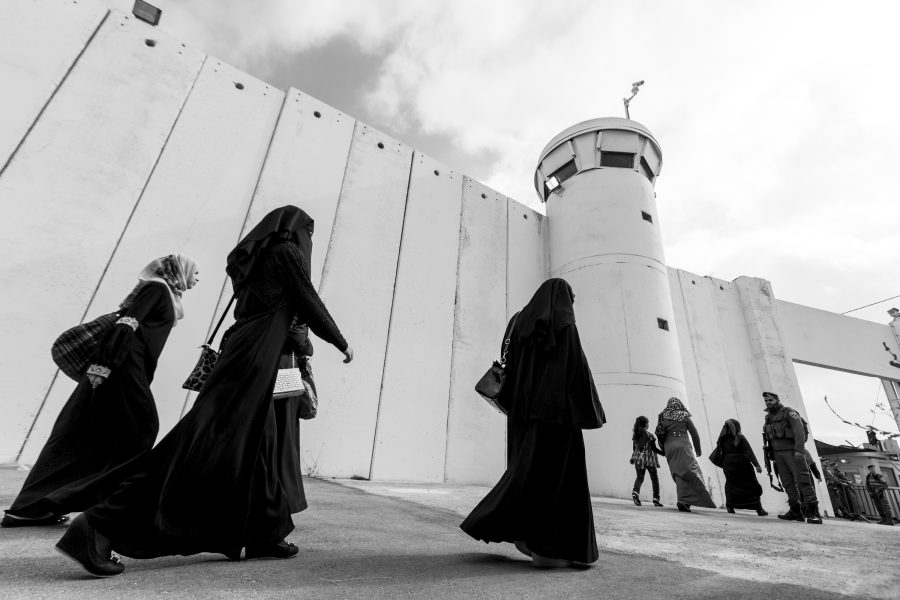
Two: as the story opens, Naomi migrates with her husband and two sons to the land of Moab. She later crosses back with her daughter-in-law when she receives word that the famine has lifted in her home country. In its way, the Book of Ruth portrays a world in which migration was a natural social phenomenon; when border-crossing was an accepted and necessary part of life. Today, this very land is strewn with militarized borders, checkpoints and refugee camps – and Palestinians are routinely denied the most basic right of human mobility. The Book of Ruth thus calls to us with a striking vision: a land and a world in which borders pose no barrier to those seeking a better future for themselves and their families.

Third: the driving center of the Book of Ruth is the deep and loyal relationship between an Israelite woman and her Moabite daughter-in-law. Those who are familiar with the Hebrew Bible will not help but note that the Moabite nation is typically portrayed as the arch enemy of the Israelite people. In this story, however, these national allegiances and historical enmities are nowhere to be found. Instead we are left with this simple, sacred message: the ultimate path to redemption is not to be found through power and violence – but rather through mutual love and solidarity.

And finally, the Book of Ruth opens in amidst a devastating famine in Bethlehem and ends with the reaping of a new harvest and the promise of an abundant future for Ruth, Naomi, their family and descendents. This vision of abundance: in which there is more than enough for all who dwell on the land, is indeed at the heart of the Palestinian struggle for liberation: one that envisions a future of equity, justice and peace for all who live between the river and the sea.

Sukkot Sacrilege: House Votes to Gut Food Stamp Program

It’s Sukkot – the Jewish harvest festival in which we acknowledge the fragility of our lives and invoke God’s sheltering presence. How sad and ironic, then, that the US House of Representatives voted on this very day to slash $40 billion from the federal food stamp program (known as SNAP). An act of sacrilege on any day but on this day in particular.

As I mentioned in my Yom Kippur sermon, the House Republicans know full well that these draconian cuts will never be passed by the Senate or signed by the President. But don’t be fooled – this is clearly a ploy to try and pressure the Senate into make even deeper cuts than the ones they have passed already.

Click here to read Feeding America’s extensive report, “Fact, Myths and Realities on the Food Stamp Program.”  Then please click here to sign a petition urging the House to “end its quest to stigmatize and traumatize poor people.”

I frankly can think of no more sacred gesture this Sukkot season.

At-Risk Communities from Syria to the South Side: A Sermon for Yom Kippur 5774

AzLP81g

While I’m sure that Syria has been on the lips of many a rabbi this High Holiday season, I’ll be honest with you: I’ve struggled with whether or not to give that sermon this year. Not because I don’t consider it to be an issue of critical importance, quite the contrary – no one can deny that the situation in Syria is a tragic and critically important one in our world at the moment. If I’ve been hesitant, it’s only because I’m not really sure I have much to add to the myriad of political analyses we’ve heard in the media these past few weeks.

So while my words to you today are not directly related to Syria, I would like to begin with one small but powerful story out of this crisis. It comes from an article written by my friend Aziz Abu Sarah, a young Palestinian peace activist and educator. At the moment Aziz is the Co-Executive Director at the Center for World Religions, Diplomacy and Conflict Resolution at George Mason University – and he was recently made a National Geographic Emerging Explorer where he serves as a cultural educator. Several JRC members know Aziz well as he was one of our tour guides of a JRC trip to East Jerusalem and the West Bank two years ago.

As the news out of Syria became more and more dire, particularly the news of the growing refugee crisis, Aziz and a colleague put their heads together to explore some kind of action they might possibly take. There are currently more than 2,000,000 Syrian refugees in camps throughout the Middle East – mostly in Lebanon, Jordan, Turkey, Iraq and Egypt. Women and children make up three quarters of the refugee population. There are over 1,000,000 children refugees as a result of this crisis.

In the end, Aziz and his colleague decided to establish an educational summer camp for refugee children on Syrian-Turkish border. In a blog post about his experiences in the camp, he wrote, “Whether the US bombs Assad or not is not in my control, but being active to help those in need is.”

In his post, Aziz wrote movingly about the children he had met and the stories they told him – stories that were at once horrific and at the same time the ordinary everyday stories of children everywhere. At the conclusion of his post, he wrote:

These are the stories that we need to remember when we argue about Syria. These are the people paying the heavy price. When we pass by a news item about Syria, we must remember the millions of children that could become another lost generation without our willingness to engage and help…

Opening our hearts and finding compassion must come before any discussion on military intervention.

When I read Aziz’s post, it reminded me how easily we debate these crises even while knowing so very little about the people who are actually living through them. How we tend to view these kinds of global tragedies in the abstract. It’s understandable, of course – when we read the staggering statistics coming out of these crises zones, it literally staggers our comprehension. How on earth do we grasp numbers such as these, let alone the reality of the suffering behind the statistics?

But while it’s understandable, I do find something profoundly troubling about this phenomenon. Because when we reduce people in crisis zones to abstractions, it invariably creates a kind of emotional callousness in the ways we think and form our opinions about the crises themselves. When we don’t make an effort to understand the human reality behind the headlines, it seems to me, our political ideas emerge in something of a moral and emotional vacuum.

I do believe that Aziz is absolutely right: before we start holding forth on whether or not to bomb, we must first open our hearts and find compassion for the people of Syria. We must make an effort to learn who they are, to learn about their unique experiences, to listen to them. Whatever we believe must be done, the process by which we form our opinions must begin with an effort to get to know the human beings behind the abstractions.

Now I realize that most of us don’t have the wherewithal to pack up and move to Turkey to work with Syrian refugees – but this doesn’t let us off the hook. Because quite frankly, we don’t have to literally go to the Middle East to discover populations at risk. While Syria has been at the center of the headlines of late, in truth there are all too many of communities in crisis in our midst. We don’t have to go all that far to find them.

Indeed, this is another way that our abstractions affect our perception of the world. Crises are things that happen “over there.” To be honest, sometimes it seems to me that we relate to the at-risk populations in our own backyard as if they are as far away as the Middle East. But of course, they’re not. They are right here, right outside our very door. They may not be of the same magnitude of those in places like Syria, but they are all too real nonetheless.

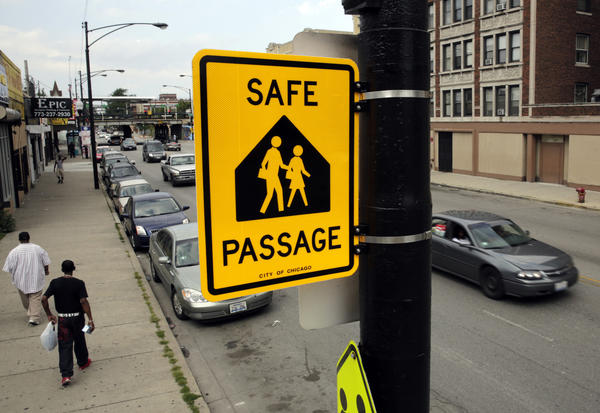
Here’s but one example, from right here in Chicago. Many of you, I know, are familiar with the initiative known as “Safe Passage” a program formed in 2009 as a response to gang and street violence in at risk Chicago neighborhoods. The program places community workers wearing bright fluorescent vests near public schools as a presence that will help create “safe passage” for High Schoolers who were walking to and from school.

The program was expanded significantly this past May, after the Chicago School Board closed almost 50 public elementary and middle schools in predominantly African-American and Hispanic communities on the South and West sides. Among the many devastating impacts of this decision was that it forced many children to walk longer routes to their new schools, through additional dangerous neighborhoods and across multiple gang boundaries. Whereas these children had previously walked an average of a few blocks to their neighborhood schools, many of them now have to walk half a mile or more through areas that are, quite literally, battle zones.

To deal with this reality, the school board expanded Safe Passage, hiring an additional 600 workers at $10 an hour to serve 12,000 schoolchildren in at-risk communities on their way to their new schools. While it is still early in the new school year, the preliminary reports are not promising. There have already been reports of violence along Safe Passage routes – not including the myriad of areas where children are not served by the program. We are now hearing reports that overwhelmed workers are quitting or just not showing up for work. One alderman has suggested the use of drones to protect children along Safe Passage routes.

No, we don’t need to look far away to find stories of children in battle zones. They are, in a very real way, right outside our door.

How do we respond to news such as this? Though it pains me to say so, I would suggest most of us who live the relatively safe and secure neighborhoods of greater Chicago respond to this news the same way we respond to the tragic news coming out of Syria, or Somalia or the Congo. Most of us, I think, thank goodness it’s not our reality. We quantify it in the abstract. We respond as if it’s happening “over there.”

Except it’s not. It’s happening right here in our very own community and in communities just like it across our country. These populations may not be terrorized by tyrannical dictators or civil war, but their lives and their families’ lives are at risk in a very real way. As a parent, I cannot fathom how it must feel to raise my children in neighborhoods wracked with violence, to send them off to walk miles to school through gangland battle zones. I cannot begin to fathom it. And maybe that is part of the problem.

This Yom Kippur, the season when our community honestly takes account of itself and how we might collectively atone, I think it is eminently appropriate to ask ourselves: what has been our response to communities in crisis? And are we truly able to see them? Have we truly opened our eyes and our hearts to their realities – particularly those who live right here in our own nation, our own city?

I can’t help but wonder what our communities would look like if our public policy was guided by such an approach. Let’s return to the example of Safe Passage that I gave earlier. There is no doubt that Chicago Public Schools, like all major urban school districts, faces daunting challenges. But unfortunately in my opinion, the Chicago School Board, like so many other urban school boards, now seeks to address these challenges from a corporate, efficiency-focused mindset rather than a community-based one.

I believe this approach to public education is problematic on many levels – but perhaps the most troubling is the way it has utterly blinded us to the critical role neighborhood schools play as the bedrock of our communities – particularly our at-risk communities. In areas that have already been profoundly destabilized by massive cuts to public services, neighborhood schools have served as the only real glue that holds these communities together. By closing these schools, CPS was in many cases literally cutting the final piece of government investment in these communities – and the last remaining institution in which residents can invest in one another.

It is impossible to understate the devastation these kinds of decisions inflict on low-income communities that have long been seriously at-risk. For decades, in fact, urban renewal policies have been decimating neighborhoods, uprooting residents who are largely poor and people of color. Neighborhood assets, like churches, stores, and parks that have been important community centers for generations, have become abandoned or have disappeared. And so residents have been forced out – they have become refugees, in as sense, of a different sort.

The neighborhood school is often the one institution still surviving in low-income neighborhoods and it has historically served as points of pride and community for families. If you had any doubt that these schools are important to their neighborhoods, you had only to listen to the thousands of parents who attended community meetings on school closings over the past few months. Despite their pleas, however, our new “education reformers” have chosen to close schools rather improve them, using the argument that we are in a time of public sector austerity and that we need to orient them to market forces.

This is what happens when leaders view schools using a corporate model rather than a community-based one. When CPS closed 50 neighborhood schools and slashed the budgets of those that remained, Chicago’s non-elected board addressed this issue with a top-down mindset that was ultimately divorced from the real-life reality on the ground. And so now we have it: thousands of students are now leaving their already devastated neighborhoods every day are forced to walk through battle zones in order to get to their schools.

Of course this phenomenon is not only restricted to our schools. In too many ways, our public policy is guided by the corporate goals of efficiency and profit over community and the greater good. While it is certainly true that many of our public institutions are bloated and inefficient and in need of reform, when we destroy them wholesale in this manner, we fail to reckon with the very real human cost of these actions. Even worse, when we privatize our public works, whether it is public housing, our health care system, or our prisons, we do more than simply turn lives into abstractions. We increasingly view human lives – and in some cases, human misery – as commodities to be profited from.

Whether we call this privatization or neo-liberalism whatever we choose to call it, I do believe it represents a very real form of institutional oppression. It may not be as obvious or as brutal as the oppression meted out by the Bashar Al-Assads of the world, but I submit it is a form of oppression nonetheless. Both stem from a view of our neighbors as somehow “other.” Both benefit from a more privileged people’s willingness to turn a blind eye. And most important, both forms of oppression affect the real lives of real people.

So what is there to be done? On an individual level, I think, one answer is very simple: we need to connect. We need to venture out of the hermetically sealed worlds we too often construct for ourselves and learn more about the people with whom we live – particularly those whose day-to-day reality is fundamentally different from our own.

Earlier this month, I read an article by a German journalist who was in Chicago to write about urban gun violence through a grant from the Pulitzer Center. It was fascinating to read the impressions of this European visitor from a Berlin, a city larger than Chicago but with a fraction of the homicides.

Here is how the journalist, Rieke Havertz, ended the article:

It is human nature to ignore Chicago’s gun violence as long as the shooting stays in the “bad” neighborhoods. Don’t take the “L” down south — that was the advice I always heard when I spoke about visiting less-fortunate neighborhoods.

I ignored the advice and nothing happened to me except that I got to know the city. I discovered that it’s not just money that needs to be thrown at these neighborhoods. They need economic opportunity, education, health care. They need a Chicago that is not a segregated city.

They need people who care. Take a different path, reach over the walls.

I know many JRC members who work and volunteer with in at-risk communities in Chicago and right here in Evanston – and I have learned a great deal from them over the years. I think it would behoove us all to not just to learn about these communities, but to create real connections, nurture real relationships. To meet and listen to those who live there. To relate to them as real people, not as charity cases to be helped or problems to be solved. To learn about their reality, their struggles, their needs, from them, not news reports or politicians or pundits.

We need to learn and act on an advocacy level as well. Here in Chicago, there is a remarkable grass-roots coalition that is shaping up and organizing on behalf of the at-risk communities in our city. In fact, polls show that 60% of Chicago’s citizens oppose the school closings and they are starting to make their voices and their presence heard in a major way. After the CPS’s announcement, many of us took to the streets for three straight days of marches in protest – and although the school closings and budget cuts are now a reality, they have galvanized a movement that is attracting a remarkable coalition – including growing numbers of young people.

But this movement has not grown up overnight – and it is not simply focused on the issue of public schools. It has in fact been building steadily over the years; it is the product of many community-based organizations mobilizing and organizing on behalf of the most vulnerable members of the greater Chicago community.

I’m proud to say here at JRC we are becoming increasingly active in this movement. I encourage you to find out more about our efforts and seriously consider lending us your support. Specifically speaking, I encourage to consider getting involved in our Labor Justice Task Force, our Immigrant Justice Task Force and to speak with JRC members who are currently exploring ways we can become active with Northside P.O.W.E.R., an institution-based people’s power organization with members on the Chicago’s North side and in North Shore Communities.

I have also personally been active with the wonderful organization Arise Chicago, an interfaith community organization that does important, critical local work on behalf of worker justice. (And of course, I would be derelict if I did not mention that we have many other active and vital Tikkun Olam Task Forces at JRC – I hope you will speak to JRC’s VP for Tikkun Olam and  learn how you can get involved in our ongoing social justice efforts.)

I also want to encourage us all to educate ourselves and find ways to act on a national level as well. Indeed, it is not an understatement to say that the at-risk populations in our country are currently vulnerable in ways we haven’t seen in decades. According to new data from the US Department of Agriculture, more than one in five American children face hunger, this at a time in which our Congress is considering cutting the SNAP program (aka food stamps) for more than 800,000 Americans who currently receive them but still do not get enough to eat or maintain only a barely adequate diet.

The crisis facing our food stamp program is a particularly critical issue at this very moment – and I would be extremely derelict if I devoted a sermon to our at-risk populations without mentioning this. According to a new report released just a few days ago by the Agriculture Department, food insecurity in our nation remains at a stubbornly high 14.5 percent. According to these statistics, one in five American children are currently facing hunger.

Thanks to the stimulus package, we’ve been able to address this issue through the SNAP program, which last year served 47 million Americans to meet their basic nutrition requirements. However next week, House Republicans, in an effort led by Representative Eric Cantor, will vote to cut $40 billion out of the food stamp program – an act that would literally force hundreds of thousands of Americans into food insecurity.

In regard to this bill, Rep. Jim McGovern made this very astute comment:

There are 50 million people in the United States of America who are hungry, 17 million are kids. It is something we all should be ashamed of, and the United States House of Representatives is about to make that worse. This is a big deal and my hope is that we’ll treat it as such and not just let it go by without a lot of discussion and debate because we’re all focused on Syria.

Now these cuts are unlikely to become law since the Senate would never pass them and President Obama would certainly never sign them. But the very fact that such a bill could even be voted on in the House is a clear sign that those advocating for the poor and the hungry in our country must remain incredibly vigilant. We simply cannot let our foreign policy discussions, however important, to eclipse these critical issues facing at-risk citizens here at home.

Every Yom Kippur, we recite our prayers in the first person plural. When we seek atonement, hope and healing for the New Year, we don’t do so for our own individual selves – we ask for these things on behalf of our entire community. I would claim that in this day and age it is getting harder and harder for us to connect with this aspect of our Yom Kippur prayers. Increasingly, it feels to me that we liturgical lip service to the concept of community. Too often it seems like we’re all living our parallel lives, without the sense that at the end of the day we’re all somehow in this together.

But in fact, we are. I do believe this sense of living separately from one another is itself the illusion. At the end of the day, our fates are intertwined. We’re very much mistaken if we believe that we’re somehow immune from risk. As we all know too well, the middle class is being squeezed and endangered in ways we haven’t witnessed in decades. Over the years and even now, there have been JRC members living on the verge of hunger and homelessness. These problems are not somewhere “over there” and in truth, they never really were. Perhaps it’s only our individualistic 21st century perspective that has changed.

So this Yom Kippur, I’m suggesting a recalibration of our spiritual perspective. To view the risk to the well-being of some members of our community as a risk to our own well-being. In a very real way, to own the danger and let go of our illusions of invulnerability. Otherwise, what do all of these prayers really mean? What do our lives really amount to if we cannot somehow see them as integrally connected to the lives of others, whether they live in Syria or the Southwest side of Chicago or in Evanston?

May this be the new year we let go of our illusions. May this be the year we decide to share the risks as well as the rewards.

May it be a rewarding year for us all.

(Click here to sign a petition that tells the House and Senate to put low-income families ahead of corporate welfare and to oppose all cuts to food stamps.)
Pay a Visit to the Gaza Kitchen

gazanfood

Now that the dust has cleared from Israel’s “Operation Pillar of Defense,” Gaza has sadly faded off the media radar screen once again. In the meantime, if you’re interested in some new essential reading about this significant but chronically misunderstood region, I have just the thing: a cookbook.

Yes, “The Gaza Kitchen: A Palestinian Culinary Journey” by Palestinian blogger Laila El-Haddad and Madrid-based writer/researcher Maggie Schmitt, newly published by Just World Books, is far and away the most important book I’ve read on Gaza in some time – and I’m not even a cook.

I’ve been a huge fan of Laila El-Haddad’s work for years. Her blog “Gaza Mom” provided me with my first real “beyond-the-headlines” insights into Gazan life and culture and I remain a devoted reader. For those unfamiliar with her work, her “Gaza Mom” anthology (also published by Just World Books) is the perfect introduction – if it leaves you hungry for more, then you must check out “The Gaza Kitchen.”

If you had any doubts that this was not your typical cookbook, the authors of “Gaza Kitchen” will explicitly lay them to rest for you in their Introduction:

“(This) is a hybrid sort of book: it is mostly a cookbook which recovers and compiles both traditional and contemporary elements of a rich and little-known cuisine. But it also attempts to do a little ethnography, a little history, a little political analysis. Cuisine always lies somewhere at the intersection of geography, history and economy. What makes it such a compelling subject is that it serves as a cultural record of daily life for ordinary people, traces of a history from below made palpable in something as evocative and delicious as a plate of food. Our hope in this book is to share this food with you and in so doing, something of the indefatigable spirit of the people we interviewed.

Indeed, history has indeed left an indelible imprint on Gazan cuisine. Gaza was historically an important station along the spice route, providing a link between southern Arabia and the Mediterranean – and eastern spices continue to shape Gazan cuisine to this very day. Food historian Nancy Harmon Jenkins illuminates this point vividly in the Foreword:

In many ways, food in Gaza is classic Palestinian, Middle Eastern cuisine, but it is unique with its own regional diversity, which includes a deep appreciation for the kick of red chili peppers, the zest of eastern spices (cardamom, cloves, cinnamon), and the soothing calm of fresh dill and dill seeds. You can see this immediately in Gazan-style falafel, those those delectably crisp, deep-fried morsels of ground chickpeas with spices, universal street food throughout the Middle East, from Turkey to the banks of the Nile. In Gaza, however, the addition of chopped chilis and fresh green dill gives a special twist to felafel. (Only in Greece is dill used to the delicious extent it is in Gaza.)

More recent history has also impacted Gazan cuisine. After the Nakba of 1947/48, Gaza was filled with a massive population influx of Palestinian refugees. As Jenkins points out, this event turned the newly-created Gaza Strip into “a repository of traditional foods and dishes from all over historic Palestine, a living legacy of the refugees who flocked here, driven from their homes in the north and the east.” All this to say that “The Gaza Kitchen” succeeds not only because of its delicious recipes, but through its illumination of the social-cultural-political context from which they emerged.

Moreover, sprinkled among the dishes the authors include brief essays that consistently debunk the image of Gazans as either “hapless objects of pity or as vicious objects of fear.” It is impossible to read this book and not be powerful affected by the lives of ordinary Gazans (notably Gazan women) who struggle to maintain their cultural dignity amidst an almost total socio-economic isolation from the rest of the world.

In addition to learning new recipes, we meet Gazans themselves: we eavesdrop on neighbors sharing Arabian fables while kneading dough for hulba (feungreek cake); we meet Fatema Qaadan, a widow and single mother who supports her family by rearing rabbits through the help of a local community center; and we learn about al-Muharrarat (“Liberated Lands”), a Hamas government-sponsored initiative that responds to blockade shortages through a variety of innovative agricultural projects.

The authors also do not flinch from exploring the political impact of Zionism on Gazans and their cuisine. One interesting short essay entitled “On Schnitzel,” points out that many Gazan fast food joints serve schnitzel – the classic pan-fried “Wienerschnitzel” brought to the region by European Zionist immigrants. The authors continue:

Now, with Gaza totally isolated, it is easy to forget that for decades thousands of Gazans went every day to work in Israel, that Israeli and Gazan entrepreneurs had partnerships, that both commerce and social relations existed, albeit on unequal footing. Adult Gazans remember this, and many speak admiringly of aspects of Israeli society or maintain contact with Israeli business partners, employers and friends. But for the enormous population of young people who were not old enough to work or travel before Israel sealed the borders in 2000, this is impossible. Though their lives are completely conditioned by Israeli political decisions, they have never laid eyes on a single Israeli person except the soldiers that have come in on tanks or bulldozers, wreaking destruction. And the generation of young Israelis to which those soldiers belong has likewise never met a single Gazan Palestinian in any other context. A terrible recipe for continued conflict.

I personally consider the legacy of Israeli cuisine to be a complex and painful one. Reading through this book through the eyes of an American Jew, I was constantly reminded that so many of the foods that we assume to be uniquely “Israeli” are in fact dishes that have long been indigenous to Palestinian culture.

It is certainly true that there is really no such thing as uniquely “Jewish food.” To be sure, Jews have lived (and cooked) in a myriad of societies and cultural contexts over the centuries – and our cuisine has traditionally emerged from a (pardon the expression) fusion of Jewish sensibilities with our respective host cultures. Given the circumstances of Israel’s creation, however, I have long been troubled by Israel’s appropriation of Palestinian/Mediterranean culture – and the assumption, for instance, that dishes such as hummous and felafel are somehow “uniquely Israeli.”

(An interesting case in point occurred when the Harvard Business School cafeteria recently featured an “Israeli Mezze station” with such “authentically Israeli” dishes as Cous Cous, Za’atar Chicken, Fattoush, and Tahini Sauce. In response, Lebanese Harvard graduate Sara el-Yafi posted an impressively researached and widely shared Facebook comment that sought to set culinary record straight once and for all. Also highly recommended reading).

For their part, El-Haddad and Schmitt have now created their own cultural reclamation project. It deserves to be read, served up and shared widely. Bravo to my good friends and colleagues at Just World Books for making this delicious document available to the world.