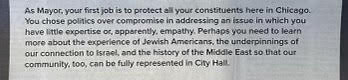
Last Sunday, this full-page ad appeared in the Chicago Tribune: a hate-filled diatribe against Mayor Brandon Johnson for his support of the recent city council ceasefire resolution. Here it is, in full, along with my commentary.
Criticizing one resolution for “doing nothing to substantively affect the outcomes in the Middle East” is a straw man argument. No one who supported this resolution has any illusions that it alone will change the terrible facts on the ground in Israel-Palestine. It does represent, however, a civic statement of conscience. To date, over 70 US cities have passed similar ceasefire resolutions. Taken together, they constitute a collective moral call for an end to the humanitarian nightmare that has been unfolding and escalating in Gaza for the past four months.
The letter makes the unsubstantiated claim that the City Council’s resolution proceedings “fanned the flames of antisemitism.” This is a serious accusation – and it is exceedingly irresponsible to level such a claim without any examples or proof. No, ceasefire resolutions do not cause antisemitism – and protesting Israel’s genocidal violence against Palestinians in Gaza is not antisemitic. It is a call for justice.
Chicago’s ceasefire resolution was based on a resolution passed by the UN last December, which emphasized that “the Palestinian and Israeli civilian populations must be protected in accordance with international humanitarian law.” It also called for “the immediate and unconditional release of all hostages, as well as ensuring humanitarian access.”
This is an exceedingly fair resolution. No, it did not absolve Hamas for the war and civilian deaths, but neither did it condemn Israel for its outrageous prosecution of a military assault that international experts and courts have have claimed fits the definition of genocide.
The letter then goes on to say that Hamas “misused humanitarian aid” – another unsubstantiated claim – and criticizes the resolution for failing to demand that Hamas disarm. Since this is an Israeli demand, to include this would be to inject an egregiously partisan statement into the resolution.
The January 30 high school walkouts were powerful demonstrations of collective student conscience that Mayor Johnson was right to support. The claim that “hundreds of CPS parents, students and teachers” were harassed during the protests is completely anecdotal and in fact, outrageous. If harassment on such a scale actually took place, there would surely be widespread press and investigations into these alleged actions. In fact, the press around the walkouts cited “worries from some CPS parents and Jewish groups that Jewish students could be targeted or made to feel uncomfortable.” There is, of course, a world of difference between “uncomfortable” and “unsafe.”
Palestinians have longpointedout that the call “from the river to the sea” is not a genocidal threat, but a demand for equality and justice for all. If that makes some Jews uncomfortable, they should interrogate their support for “the world’s only Jewish state” – an ethno-nation that does not afford equal rights to the Palestinians who happen to live between the river and the sea.
The “compromises” suggested in this letter are exceedingly more political than anything Mayor Johnson supported – and slamming him for having no expertise or empathy is hateful in its own right. What these signees really want is for him to submit to their own personal opinions about “the Jewish American experience, the underpinnings of our (sic) connection to Israel and the history and the history of the Middle East.”
For shame. These individuals speak for themselves – not for the growing numbers of American Jews who are actively protesting Israel’s genocidal violence in Gaza – and who fully support Mayor Johnson’s courageous moral leadership.
It’s safe to day that International Holocaust Remembrance Day will arrive tomorrow at a deeply fraught moment for the Jewish community. Just today, we’ve received the news that the International Court of Justice, ruling on a case brought by South Africa, has ordered Israel to take action to “prevent acts of genocide” in Gaza. And later today, a federal court in California will hear a case brought by the Center for Constitutional Rights on behalf of Palestinian human rights organizations, Palestinians in Gaza and Palestinian Americans accusing Biden and other senior US leaders of being complicit in genocide.
In short, International Holocaust Remembrance Day 2024 is arriving just as Israel and the US government are literally being judged on the world stage for an ongoing genocide against the Palestinian people.
As we contemplate the monumental nature of this moment, it’s instructive to consider the history of International Holocaust Remembrance Day itself. This annual commemoration was created by the UN in 2005, to take place annually on January 27: the day Auschwitz was liberated by allied forces. In its resolution establishing the day, the UN General Assembly made it clear that this observance would not merely be about commemorating the past; it pointedly urged member states “to develop educational programs that will inculcate future generations with the lessons of the Holocaust in order to help to prevent future acts of genocide.”
The GA also made it explicit that this remembrance would not be limited to the European Jewry alone, but should also extend to “countless members of other minorities” who were murdered en masse by the Nazi regime. As then Secretary General Ban-Ki Moon pointedly commented during the 2015 commemoration, “More than a million inmates, primarily Jews, were brutally and systematically killed in the place where the Nazis introduced the monstrous concept of ‘industrialized murder.’ Among the other victims were non-Jewish Poles, political prisoners, Soviet prisoners of war, Sinti and Roma, homosexuals, disabled persons and Jehovah’s witnesses.”
In other words, International Holocaust Remembrance Day was purposely established to universalize the memory and the lessons of the Holocaust.
There is of course, another Holocaust memorial day widely observed by the world Jewish community – namely, Yom Hashoah. In contrast, to International Holocaust Remembrance Day, Yom Hashoah is not universal in nature – it is a day set apart by the Jewish community to mourn their own in a Jewish context, as part of the Jewish festival calendar. While it is altogether appropriate for the Jewish people to honor the memories of our ancestors in such a way, it’s worth noting the history of this particular day as well.
Yom Hashoah was officially founded by an act of Israeli parliament in 1951, immediately following the founding of the state itself. It was purposefully established on Jewish date of the 27 Nisan (April/May) to begin a week of commemoration leading into Yom Hazikaron (Memorial Day), concluding with Yom Ha’atzmaut (Independence Day). In this way, Yom Hashoah served to promote the Zionist historical mythology that viewed the establishment of the state of Israel as a “rebirth,” arising out of the ashes of the Holocaust, through the brave sacrifice made by the soldiers who fought in the War of Independence.
Like many Jews growing up in America, I simply accepted Yom Hashoah as an organic part of the rhythm of the Jewish year, observed annually in synagogue services and communal commemorations. I was never taught that it was first and foremost an Israeli national holiday. And of course, I was never taught that the state of Israel was founded in the wake of the Holocaust through the ethnic cleansing of the Palestinian people from their homes.
While there should most certainly be a communal Jewish day of memorial for the six million, it’s worth questioning the prominent status afforded Yom Hashoah by world Jewry. This is, after all, a day that serves to reinforce the view that the Israel’s founding was a “redemptive” moment for the Jewish people following the tragic cataclysm of the Holocaust – utterly ignoring the reality that the state of Israel was established through the dispossession of another people. I strongly believe we should consider an entirely different Jewish frame for commemorating the Holocaust; in the meantime, however, we should have no illusions about the real agenda behind Yom Hashoah and the problematic narrative it seeks to support.
It might well be said that in this terrifying current moment, the very real implications of this Zionist mythology are being directly challenged by the universal message of International Holocaust Remembrance Day. It’s actually quite staggering to consider: as the world prepares to observe this day, compelling legal proceedings are formally accusing Israel of (and the US of abetting) genocide. Even more sobering: it arrives amidst an increasingly damning verdict in the court of public opinion in which, according to a recent poll, “more than one in three Americans believe Israel is committing genocide against Palestinians.”
I realize how painful – even unthinkable – it will be for many Jews to lift up the lessons of International Holocaust Remembrance Day to suggest Israel that is committing genocide against the Palestinian people. But as I suggested in my sermon this past Yom Kippur, we must find the courage to say out loud the words that must be spoken. If this particular day is truly is to be a day for us to apply the “lessons of the Holocaust in order to help to prevent future acts of genocide,” it is all the more critical for us to speak out and name a genocide that is literally unfolding before us in real time. No matter how uncomfortable or painful the prospect.
In this regard, I’m immensely proud to be part of a Jewish community that has the courage to say these words out loud. In a just released public letter to President Biden, the Jewish Voice for Peace Rabbinical Council is demanding that he “honor the word and spirit of the International Holocaust Remembrance Day by using (his) office to bring a ceasefire to this tragic violence — and to stop blocking efforts toward building a truly just peace for all who live between the river and the sea.”
An excerpt:
We hold the traumatic history of our people with care and sensitivity — and know how painful it is for Jews to grasp that a Jewish state could possibly commit a genocide. Nevertheless, we must agree with increasing numbers of scholars and international rights experts who have determined that Israel’s actions in Gaza constitute, in the words of Prof. Raz Segal, “a textbook case of genocide.”
We support and uplift South Africa’s recent application to the International Court of Justice claiming Israel is in breach of the 1948 Convention on the Prevention and Punishment of the Crime of Genocide. And now, Palestinian human rights organizations, together with Palestinians in the US and Gaza, are bringing a case against your administration for failure to prevent, and complicity in, the Israeli government’s unfolding genocide against them, their families, and the 2.2 million Palestinians in Gaza. We stand in support of their action as well.
According to a core teaching of Jewish spiritual tradition, humanity was created in the image of God. That means that each and every human being is of infinite value. The UN 1948 Convention on Genocide was created to uphold this very idea. The Torah also teaches that there will always be moments when we must make a critical moral choice. As Deuteronomy 30:19 says, “I have put before you life and death, blessing and curse. Choose life.” President Biden, you have chosen death. Instead of using your considerable power to prevent or end this genocide, you have directly abetted it with weapons, funds and diplomatic cover.
On this day of remembrance in 2021, you noted that, “The Holocaust was no accident of history.” As you stated, “It occurred because too many governments cold-bloodedly adopted and implemented hate-fueled laws, policies, and practices to vilify and dehumanize entire groups of people, and too many individuals stood by silently. Silence is complicity.”
President Biden, what is happening right now in Gaza is no accident of history — and your complicity has been anything but silent. We call upon you to be true to your word and end US complicity in Israel’s genocide against the Palestinian people.
This International Holocaust Remembrance Day, let us find the courage to speak the words that must be spoken. This International Holocaust Remembrance Day, let us find the courage to speak the words that must be spoken: Ceasefire now. Never again, for anyone. No more genocide.
Remarks by Maya Schenwar, from last night’s Tu B’shvat gathering sponsored by Tzedek Chicago and the Jewish Fast for Gaza. (Maya is director of the Truthout Center for Grassroots Journalism. She is also a coordinator of the Jewish Fast for Gaza and a member of Tzedek Chicago.)
Many of those of us involved in Jewish Fast for Gaza are breaking our fast tonight. We’ve been fasting weekly on Sundays since mid-October, and we will keep fasting weekly until a ceasefire. We donate the money we would’ve spent on food to organizations supporting people in Gaza in this time of starvation and mass death. And each week, we are also reflecting on and renewing our commitment to solidarity with our Palestinian co-strugglers and people around the world who are calling for an end to this genocide, an end to US funding for Israel’s weapons, an end to colonization and apartheid.
When we call for a ceasefire, when we fast for a ceasefire, we are uplifting a call for life. In the months since October 7, I’ve heard many people quote Ruth Wilson’s Gilmore’s sacred words, “Where life is precious, life is precious.” And one of the things Ruthie is saying, with that message, is that in societies where life is actually treated as precious—where they don’t have the death penalty and life sentences and large-scale state violence and state-sanctioned environmental devastation—in those places, violence is less likely overall, the culture is less violent, because life is affirmed.
We should bear in mind that as the US fuels Israel’s genocide in Gaza, here in the US, Alabama is preparing to carry out the US’s first execution via nitrogen gas—which is torture—on the day of Tu B’Shvat.
People are more likely to treat life as precious when their own lives are treated as precious. So we have to create the conditions in which everyone’s life is treated as inherently sacred and irreplaceable. That work is on all of us.
Our Fast for Gaza draws inspiration from the Jewish tradition of fasting as an act of mourning, and it also draws inspiration from Palestinians incarcerated inside Israeli jails, who have launched many hunger strikes to protest their incarceration, and the incarceration of all Palestinians under occupation, to INSIST that their lives are precious.
When Ruth Wilson Gilmore first introduced this idea—where life is precious, life is precious—she was at an environmental justice conference for youth, where, among other things, the youth denounced the effects of pesticides, including on humans– and of course, pesticides also have impacts on native plants and animals. I think this is significant, for Tu B’Shvat. Recognizing that all life is precious means recognizing our interconnection with all life around us. It means we need to, in the words of Thich Nhat Hahn, “awaken from the illusion of our separateness.” It means recognizing the ways that trees have been weaponized to push Palestinians off their land. It means recognizing Israel’s mass destruction of olive trees.
Trees themselves recognize that where life is precious, life is precious. Forests are social systems in which trees support each other through their root systems, through chemical signals in their leaves, through the social climate they create. As we celebrate the trees’ birthday today, we can also celebrate their preciousness, the preciousness of all the life they nurture and that nurtures them. And we can express that through our urgent calls for a ceasefire, for Palestinian liberation, and for collective liberation.
When we say ceasefire now, we are also saying environmental justice now. When we say ceasefire now, it is a call for Indigenous liberation now, from Palestine to Turtle Island and beyond.
Ceasefire now can be a call to stop death penalties of all kinds, including this execution that is set to happen in our own country on the day of Tu B’Shvat. Let’s insist on the preciousness of people, and of trees, and of the interconnectedness of all beings.
The introduction to the book of Exodus, which we begin reading this Shabbat, has never resonated so deeply or so powerfully for me as it does this very moment.
We’re all familiar with the events that spark the Exodus narrative: a new Pharoah arises over Mitzrayim who does not know or remember Joseph. Alarmed that the Israelite minority is growing, he oppresses them with forced labor – but the more he oppresses them, the more the Israelites increase in number.
Pharoah then attempts to stem the Israelite birth rate directly by ordering the Hebrew midwives Shifra and Puah to kill every newborn boy. When they defy his order, Pharoah orders that every newborn boy be cast into the Nile. Commentators differ on why Pharoah made this very specific decree. Some say that in his paranoia, he believed the boys would eventually grow up to be soldiers and take up arms against his people. Other say his soothsayers predicted the birth of Moses. Still others say Pharoah believed that the Israelite women would intermarry and assimilate into the majority culture.
Whatever the reason, it is striking to note that Exodus’ liberation narrative begins with Pharoah’s efforts to head off the Israelite birth rate. As I’ve noted before, there are powerful parallels between this narrative and the state of Israel’s regard of the Palestinian people as a “demographic threat” to their Jewish majority. But in the midst of Israel’s genocidal assault on the people of Gaza, I’m finding that these verses now resonate with a brutal – and almost unbearable – urgency.
On November 3, less than a month into Israel’s military bombardment of Gaza, UNICEF, the World Health Organization and other NGOs reported that “Women, children and newborns in Gaza are disproportionately bearing the burden of the escalation of hostilities in the occupied Palestinian territory, both as casualties and in reduced access to health services.” More recently, the UN estimated that “around 50,000 pregnant women are currently living in Gaza, with more than 180 births taking place every day amid the ‘decimation’ of its healthcare system.”
The most devastating details on the impact of this onslaught on Gazan mothers can be read in the South African government’s application to the International Court of Justice, formally accusing Israel of committing genocide in Gaza. I strongly recommend reading this document in its entirety. Though South Africa’s claim was cynically dismissed by the White House as “meritless, counterproductive and completely without any basis in fact whatsoever,” its 84 page report is painstakingly researched, citing 574 independent sources. Though it is often near-unbearable to read, I believe it is an immensely important document and deserves the widest possible readership.
Here is a sample of the report’s findings on impact of Israel’s genocidal violence on pregnant women and newborn babies. Please be warned: the following quote it includes very graphic descriptions of traumatic violence inflicted on women and children.
Pregnant women and children –– including newborn babies –– are also particularly impacted by displacement, lack of access to food and water, shelter, clothes, hygiene and sanitation, and lack of access to health services. These effects are severe and significant. An estimated 5,500 of approximately 52,000 pregnant Palestinian women in Gaza giving birth each month are doing so in unsafe conditions, often with no clean water, much less medical assistance, “in shelters, in their homes, in the streets amid rubble, or in overwhelmed healthcare facilities, where sanitation is worsening, and the risk of infection and medical complications is on the rise”. Where they are able to get to a functioning hospital, pregnant women are having to undergo caesarean sections without anaesthetic.
Given the lack of access to critical medical supplies, including blood, doctors are being compelled to perform ordinarily unnecessary hysterectomies on young women in an attempt to save their lives, leaving them unable to have more children. Indeed, the Minister of Health for the State of Palestine, Dr May al-Kaileh, confirms that the only option facing Palestinian women in Gaza who ‘bleed out’ after giving birth is to undergo a hysterectomy in order for their lives to be saved. The lack of available drugs, such as the anti-D injection –– given to Rhesus negative women on the birth of a Rhesus positive baby –– also seriously impacts the possibility of future healthy pregnancies for affected women.
Premature births have reportedly increased by between 25-30 per cent, as stressed and traumatised pregnant women face a myriad of challenges, including being compelled to walk long distances in search of safety, attempting to escape from bombs and being crowded into shelters in often squalid conditions. Particularly in northern Gaza, cases of placenta abruption –– a serious condition that occurs to pregnant women during childbirth which is potentially life-threatening to both mother and baby –– have more than doubled.
An ever-increasing number of Palestinian babies in Gaza are reportedly dying from entirely preventable causes, brought about by Israel’s actions: newborns up to three months old are dying of diarrhea, hypothermia, and other preventable causes. Without essential equipment and medical support, premature and underweight babies have little to no chance of survival. Palestinian newborn babies have died due to the lack of fuel to supply hospital generators; others have been found decomposing in their hospital cots, medical staff taking care of them having been forced by Israel to evacuate.
On 3 November 2023, the World Health Organisation warned that “[m]aternal deaths are expected to increase given the lack of access to adequate care”, with deadly consequences on reproductive health, including a rise in stress-induced miscarriages, stillbirths and premature births. The impact will necessarily be long lasting and severe for Palestinians in Gaza as a group. By 22 November 2023 the United Nations Special Rapporteur on violence against women and girls, its causes and consequences, has expressly warned that:
“[T]he reproductive violence inflicted by Israel on Palestinian women, newborn babies, infants, and children could be qualified as… acts of genocide under Article 2 of the Convention on the Prevention of Genocide … including “imposing measures intended to prevent births within a group”. She stressed that “States must prevent and punish such acts in accordance with their responsibilities under the Genocide Convention.”
(Sections 96-100)
If there could be any doubt as to the question of intentionality behind these barbaric measures, the section immediately following these findings includes exhaustive quotes by Israeli politicians and military leaders that make their genocidal intentions all too clear. Most chillingly, it offers this quote from 95-year old Israeli army reservist Ezra Yachin — a veteran of the Deir Yassin massacre during the 1948 Nakba — who was called up for reserve duty to “boost morale” amongst Israeli troops ahead of the ground invasion: Be triumphant and finish them off and don’t leave anyone behind. Erase the memory of them. Erase them, their families, mothers and children. These animals can no longer live. . . Every Jew with a weapon should go out and kill them. (Section 102)
In this week’s Torah portion, the cry of the oppressed Israelites rises up to God, who hears and hearkens to their pain. This year, there can be no more critical question posed by our Torah portion: will God hearken to the collective cry of the people of Gaza?
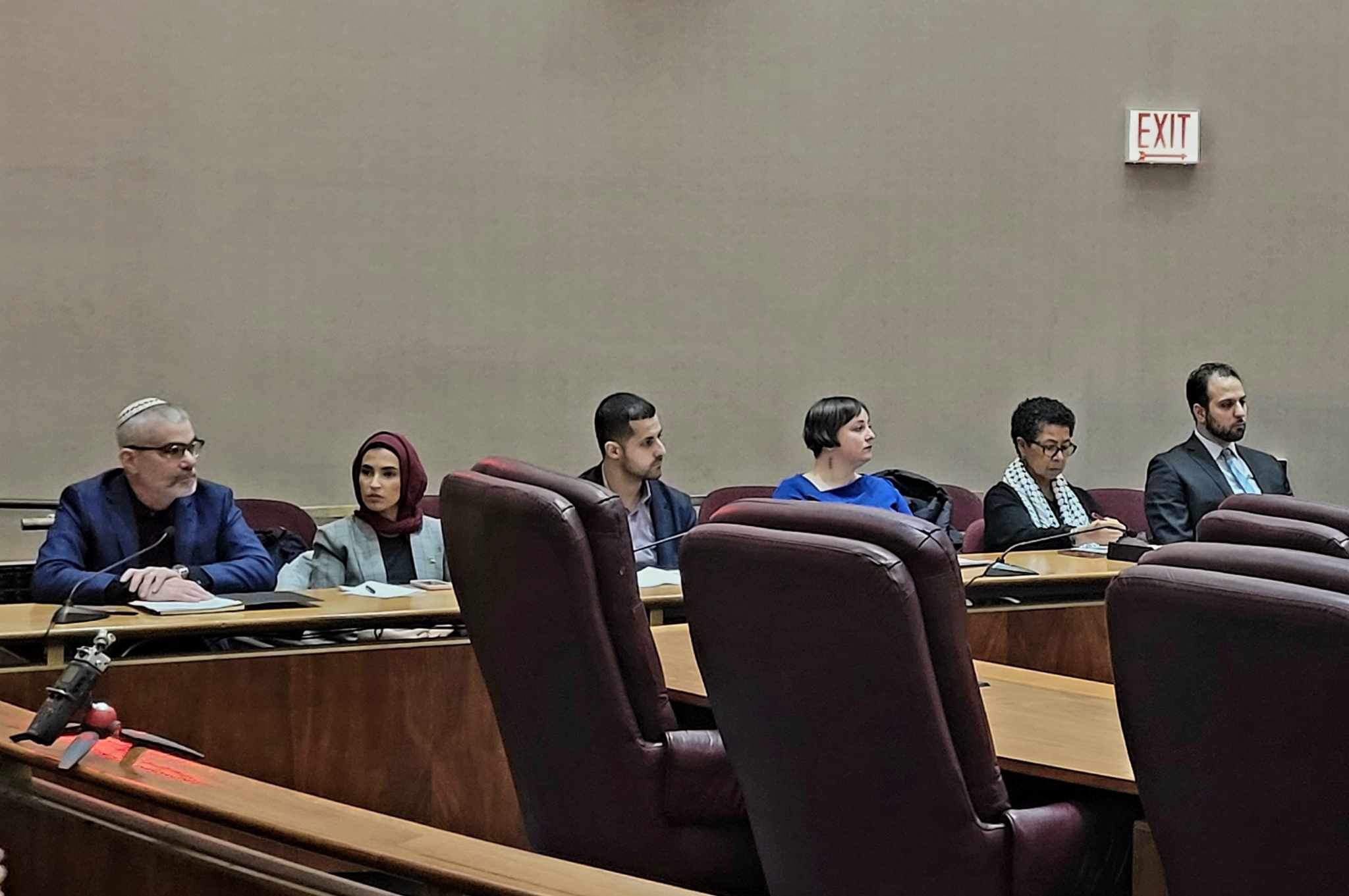
Here are the remarks, below, that I delivered at Chicago City Hall yesterday at a meeting of the Committee on Health and Human Relations as it considered an endorsement of UN Resolution 377, which calls for an immediate ceasefire in Gaza. I was among a panel of community members – which included historian Dr. Barbara Ransby and State Rep. Abdulnasser Rashid – who offered statements at the meeting. In the end, the committee voted unanimously to approve the resolution, which will now go before the entire city council in January.
As has been the case with many local legislative bodies around the county, the politics around the issue of ceasefire has been marked by deep cowardice and toxicity. In October, the city council passed a strongly worded resolution in support for Israel that only glancingly referred to Palestinians – or to Israel’s rapidly escalating military onslaught on Gaza. As it became clear that the very word “ceasefire” was a political non-starter, Alder Rossana Rodriguez-Sanchez of the 33rd Ward decided to build supportfor the UN resolution as chair of the Committee on Health and Human Services. Such is the politics of ceasefire in this horrid moment: it takes these kinds of torturous procedural efforts just to get a city council to call for an end to genocidal violence that has killed 20,000 people, almost half of whom are children.
Due to time constraints, I didn’t read my entire statement. Here are my remarks, in full:
I’m honored to be able to offer these remarks here today in support of this resolution. I agree with so much of the powerful testimony that was given during public comment and I want to thank the speakers for those remarks. I don’t want to go over much of what has been said other than to say I lift up the sentiment of outrage over the genocidal violence that Israel is committing in Gaza even as we speak.
But I would like to speak in particular, as a leader in the Jewish community, to many of the disingenuous and frankly false claims about Jews, about Judaism, about Zionism, about antisemitism that are being lifted up over the past two plus months during this terrible, tragic time. I hope it will at least provide a little bit of context as we start to consider the importance of calling for a ceasefire and our support of this resolution here in the city of Chicago.
We are living, at this very moment, through an extraordinary moment of reckoning. It’s not an understatement to say that the ongoing, unspeakable violence in Israel-Palestine is confronting us with the most critical moral challenge of our lifetimes. I can personally attest that this is most certainly the case in the Jewish community. Hamas’ violent attack on October 7 has deeply traumatized Israelis and many Jews throughout the world. This trauma, however, is not being manifest in one particular way. There are many Jews, myself included, who are deeply grieving these losses, who pray for the safe return of Israeli hostages – but who are also anguished and appalled at the massive violence and trauma Israel has been unleashing on the people of Gaza.
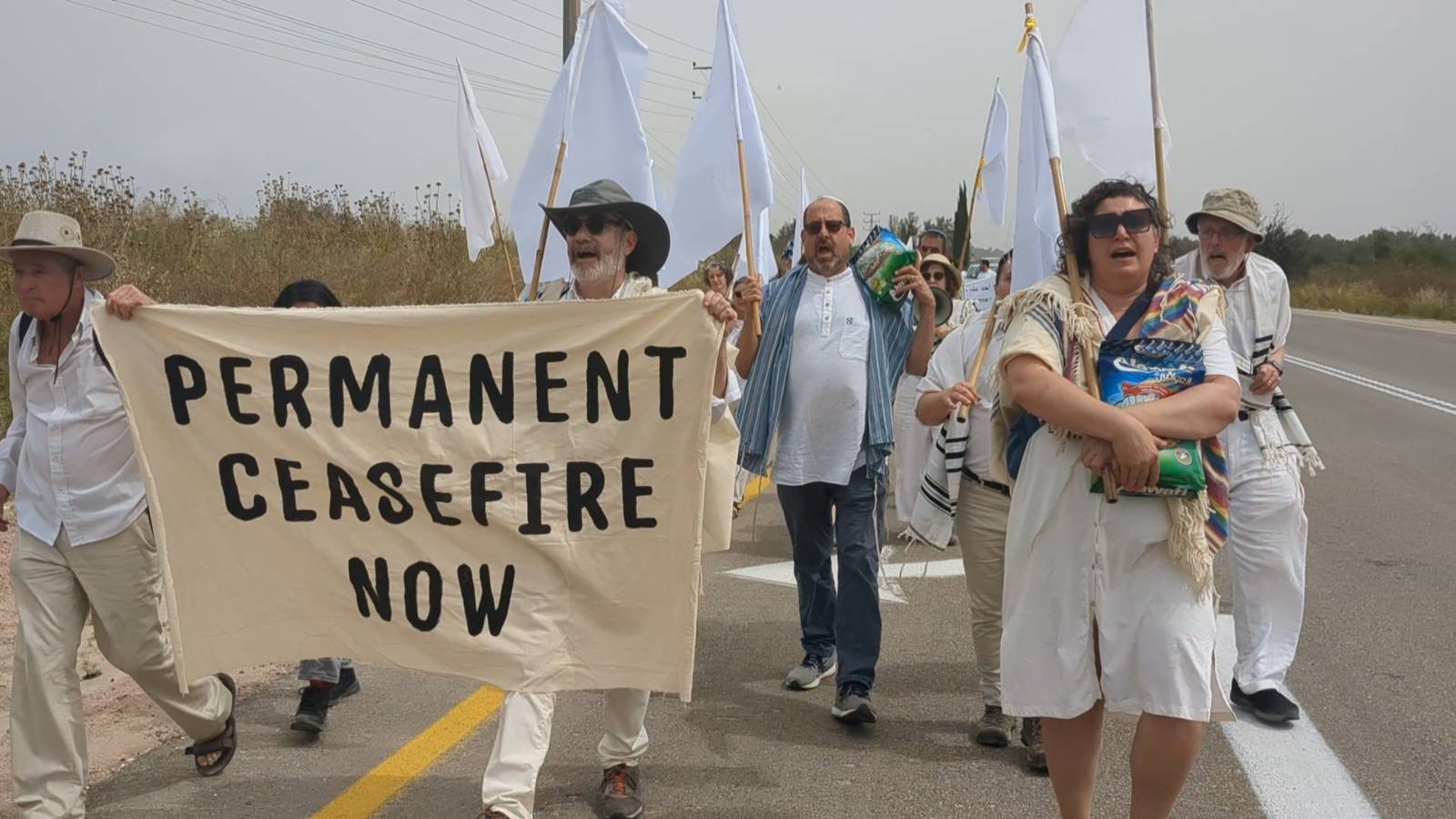
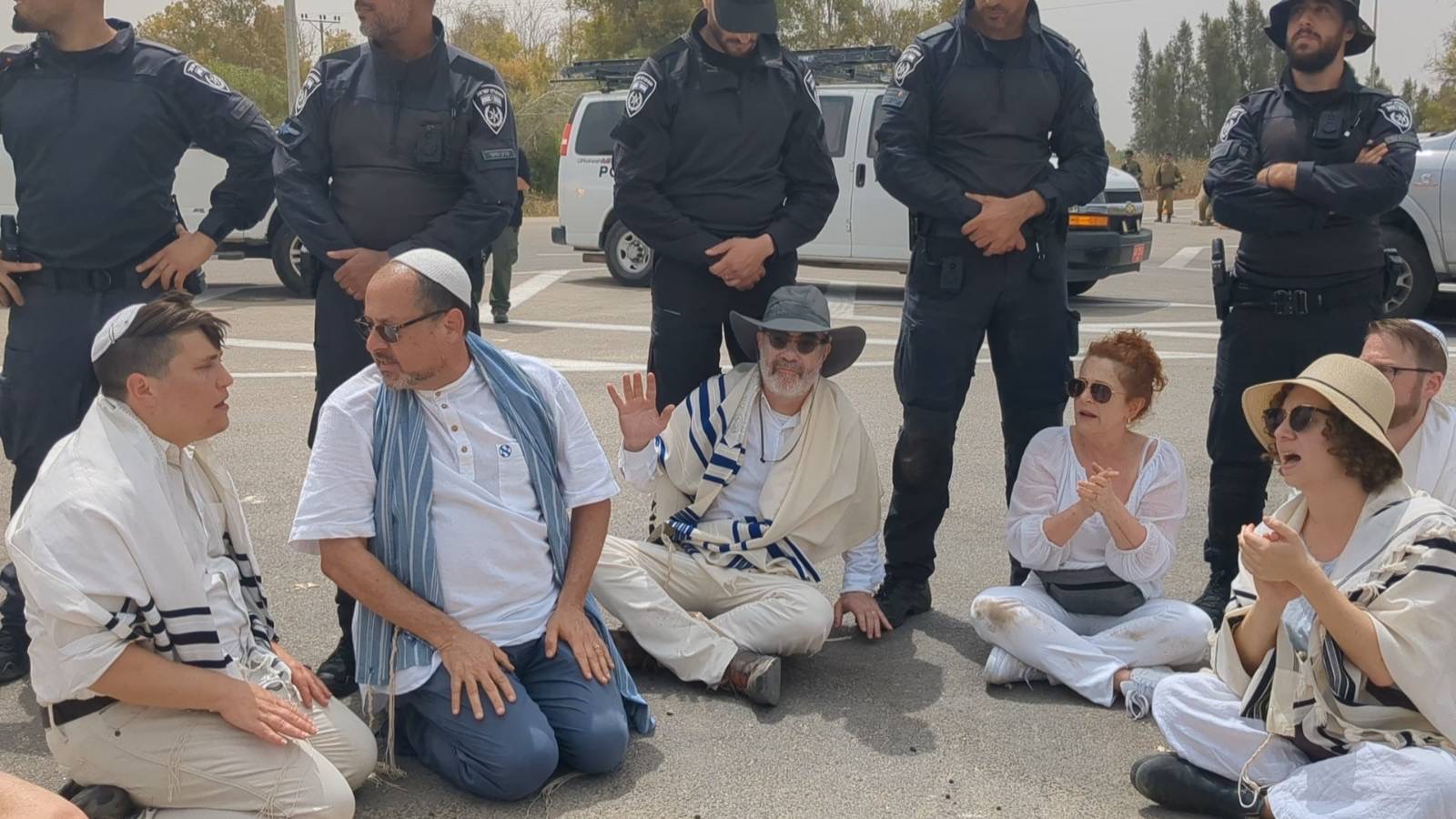
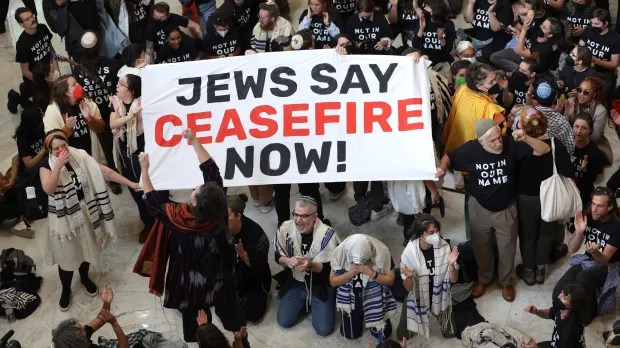
The Jewish community has never been monolithic – and it certainly has never been lockstep on the issue of Israel. And right now, the divisions within our community are becoming manifest in unprecedented ways. For the past two months, day after day, thousands of Jews have been organizing and taking to the streets throughout the country, engaging in relentless acts of civil disobedience to demand an immediate ceasefire in Gaza.
The events of the past two months reflect an important trend that has long been growing in the American Jewish community. The traditional legacy Jewish organizations, who have typically purported to speak for the Jewish community have become increasingly out of touch on the issue of Israel-Palestine. Over the past two decades, every Jewish communal survey has shown support for the state of Israel steadily eroding in the American Jewish community.
Moreover, the percentage of Jews – particularly young Jews – who identify as anti-Zionist is growing. We are pushing back strongly on the fallacy that Judaism = Zionism – and the deeply disingenuous accusation that anti-Zionism is antisemitism. We hear this claim being made repeatedly by the state of Israel and its advocates in the American Jewish establishment. Here’s but one example: Jonathan Greenblatt, the CEO of the Anti-Defamation League, who has been repeating this accusation over and over again in recently said this in an interview with the New Yorker:
Zionism, a desire to go back to Jerusalem, the longing for Zion, isn’t something that David Ben-Gurion came up with. It isn’t something that Theodor Herzl came up with. It has been embedded in the faith and the traditions of Judaism for thousands of years. You can’t open a Torah on a Saturday morning for your daily prayer, you can’t go through a holiday, without seeing these references.
I’d like to address this claim head on because it a deeply inaccurate statement – and in its way, even dangerous. Greenblatt is of course correct that there is an important connection in Judaism to the Land of Israel. And yes, this connection is quite clear throughout the Torah, liturgy and Jewish tradition in general. However – and this is a big however – the notion of creating a political Jewish nation state was never part of Jewish tradition until the rise of the Zionist movement in the 19th century.
Judaism is a centuries-old Jewish peoplehood. Zionism is a political movement of modernity that arose in Europe that sought to radically change Jewish identity and Jewish life. For most of Jewish history, the yearning to return to Zion was expressed as an idealized messianic vision. Some Jews made pilgrimage to the land. And a small minority of indigenous Jews consistently lived in historic Palestine throughout the centuries. But the rabbis fervently opposed the establishment of a 3rd Jewish commonwealth in historic Palestine. They actually considered it to be blasphemous – a “forcing of God’s hand” to create something that could and should only occur in the messianic age.
From the very beginning, there has always been principled Jewish opposition to Zionism. Many Jews have embraced anti-Zionism not as a matter of traditional messianic belief, but as a matter of Jewish moral and political conscience. We recognize that there is a fundamental injustice at the core of Zionism, namely, the creation of a Jewish majority state through the dispossession and oppression of another people.
It is important to note that political Zionism is a form of ethno-nationalism. In other words, the Jewish identity of the state of Israel is predicted on the maintenance of a majority of one particular group of people in the land. Up until 1948, Jews were a minority in Palestine – and this necessarily posed a problem for the Zionist movement. In the end, the state of Israel could only be created one way: through what Palestinians refer to as the Nakba. Today, even many Israeli historians agree: the state of Israel was founded through the ethnic cleansing of Palestinian Arabs from their homes and Israel’s refusal to let them return. This is what happened in 1948 – and this dispossession of Palestinians to make way for a Jewish state has been happening every day for the past 75 years.
In 2021, B’Tselem, a respected Israeli human rights organization released a 300-page report in which it concluded, “The Israeli regime, which controls all the territory between the Jordan River and the Mediterranean Sea, seeks to advance and cement Jewish supremacy throughout the entire are.” I want to make this clear: a prominent Israeli human rights organization has said that Israel has created a regime of Jewish supremacy between the river and the sea. This is not an antisemitic claim – it is a claim rooted international law and human rights. This is what it means when Palestinians and solidarity activists call for Palestine to be free “from the river to the sea” – they are expressing basic human rights that we all take for granted – or should. And it is not antisemitic to say so.
Are there some individual anti-Zionists who antisemitic? Undoubtedly. But it is disingenuous and wrong to claim that anti-Zionism is fundamentally antisemitic. As I said earlier, there are increasing numbers of Jews, myself included, whose are anti-Zionist as a deep expression of our Jewish values. Torah teaches that all human beings are created in the divine image, that we must seek justice and liberation for all. It teaches that love for Zion is not divine entitlement to a piece of land, but an expression of a Zion consciousness. That the land – like the entire earth itself – does not belong to us but to God, and we are but strangers upon it.
Another central precept of Judaism is the prophetic injunction, “Not by might and not by power, but by my spirit, says the Lord of Hosts.” This sacred imperative is what compels us to reject Israel’s militarism or to affirm in any way that Jewish state power will keep Jews safe. If there was ever any doubt, the events of the last two months should make this abundantly clear. It makes us all less safe – Jewish and Palestinians alike. And make no mistake: if this nightmarish war should spread through the region, it will endanger the safety and security of us all.
This why so many of us in the Jewish community are literally taking to the streets, calling for an immediate ceasefire and return of all hostages. This is why we welcome and support resolutions like UN Resolution 377. And this is why we are urging our political leaders, on every level, to join the call for ceasefire. This is moment of deep moral reckoning for us – and for the world. History will judge us by our action or our inaction in this critical moment. And that is why I urge us all to support the cause of justice and peace for all who live between the river and the sea – and for all who dwell and earth.
Again, I thank you for giving me the opportunity to speak to you today.
There have been, in recent years, increasingly vociferous calls from the Israeli government, Israel advocates and Jewish institutions to label anti-Zionism as antisemitism. While it’s a troubling phenomenon, it’s not too difficult to understand why this is happening. To put it simply: our numbers are growing. The patently oppressive nature of the Zionist project is becoming all too clear to growing numbers of people – particularly in the younger generation. Indeed, there’s a detect a distinct tone of desperation in the equation of anti-Zionism = antisemitism, and the attempt to literally “excommunicate” those who refuse to attach our Judaism to an entho-nationalist Jewish state.
Not surprisingly, since October 7, Israel and Israel’s supporters have doubled down on this equation – and on the centrality of Zionism in general. Even Joe Biden, during his visit to Israel in October, stated pointedly, “I don’t believe you have to be a Jew to be a Zionist, and I am a Zionist.” And now, the US House of Representatives have weighed in as well. This past Tuesday, the House, by an overwhelming majority, passed a bill asserting that “the Jewish people are native to the land of Israel” and that “denying Israel’s right to exist is a form of antisemitism.”
The insistence on Israel’s “right to exist” has long been a red herring in debates over Israel/Palestine. It is essentially a euphemism for the Zionist justification of a Jewish majority state in historic Palestine, which by definition views Palestinians as a demographic threat to the “existence” of the Jewish state. Not surprisingly, the resolution makes no mention of the Palestinian people, who themselves have a fairly compelling claim to being “native to the land.”
If ever there was a moment for Jewish anti-Zionists to proudly stand up and be counted, this is it. And if ever there was a more terrifying demonstration of the end game of Zionism, it is Israel’s military assault on Gaza. From the outset, the raison d’etre of Zionism was the creation of a Jewish state by acquiring the greatest amount of land with the least amount of Palestinians. Over the past few weeks, Israeli politicians have been terrifyingly open about their intentions in this regard, making it clear that their ultimate end goal is to ethnically cleanse Gaza of its residents, thereby eliminating up to 2.2 million Palestinians from the demographic equation. In the meantime, the Israeli military is systemically reducing that equation through its genocidal onslaught on Gaza’s population. As a recent New York Times article chillingly pointed out, “experts say that even a conservative reading of the casualty figures reported from Gaza shows that the pace of death during Israel’s campaign has few precedents in this century.”
With the internal logic of Zionism becoming so clear for all to see, it isn’t surprising to witness increasing numbers of Jews proudly and openly identifying as anti-Zionist. If we needed any evidence, the regular public protests of Jews calling for a ceasefire in Gaza – and who are willing to take arrest in the thousands – are a powerful testimony to this phenomenon. And I am proud to say that Tzedek Chicago is on the vanguard of this phenomenon as well: over the past two months, we have acquired close to 30 new member households, almost all of them attesting that they are actively seeking out an anti-Zionist Jewish congregation in this critical moment.
It’s not an overstatement to say that the Jewish community is currently facing a critical “which side are you on?” moment. While much of the Jewish establishment is doubling down on Zionism and Israel’s genocidal war effort, the so-called liberal quarters of the Jewish community are facing a reckoning as well. It’s now abundantly clear that the very term “liberal Zionism” is an oxymoronic contradiction in terms. There is simply nothing liberal about a nation state predicated exclusively on the demographic majority of one particular group of people.
Lately, we’ve been hearing news of Jewish congregations that promote an “open tent” approach when it comes to Zionism – i.e., congregations that openly make room for the views of non and anti-Zionists along with liberal Zionists in their communities. Though this might seem to be a welcome development, I have to ask myself, is this so-called open-tent ultimately tenable? Is it sustainable? Is it even ethical: to build congregational communities in which members have such fundamentally different moral approaches to being Jewish? In which some congregational members cherish and celebrate an ethno-nationalist Jewish project, while others rightly call it out as an apartheid, settler colonial state? However well meaning, I cannot view this as anything other than an untenable, unbridgeable divide.
In a recent episode of the Truthout podcast, “Movement Memos,” I commented sadly on this divide: From my vantage point as a Jewish American, I can attest that our community has now been deeply, profoundly broken, perhaps irrevocably. … I am staggered by the voices in the Jewish community that support Israel’s atrocities without reservation. Otherwise so-called progressive leaders who cannot get themselves to endorse a simple ceasefire. When the dust settles — and please may it settle soon — I don’t know if the brokenness of my community will ever, ever truly heal from this.
While I still grieve over the moral brokennness of the Jewish community, I am proud to be part of a congregation that openly places itself on the side of the divide that celebrates a Jewish tradition of solidarity and liberation for all. For all who live between the river and the sea – and for all who dwell on earth.
According to Jewish law, it is forbidden to mourn on Shabbat: between sundown on Friday and sundown on Saturday, funerals do not take place and the public aspects of shiva observance are suspended. For many, the very notion “forbidding mourning” can feel harsh and emotionally insensitive. I’ve often heard from mourners who resist this idea of “suspending their grief.” More than one congregant has pointed this out to me over the years: “Grief isn’t something I can just turn on and off. How do I possibly stop my grieving for this one day? Should I pretend that Shabbat will just magically make everything better?”
One way to answer to this question is to understand the difference between grief and mourning. While grief is an emotional state; mourning refers to the rituals and practices we observe to help us manuever through our experience of loss. Of course, we cannot turn our grief on and off, nor should we be expected to. Grief by its very nature cannot be scheduled to our convenience. As anyone who has experienced the loss of a loved one will attest, the emotions that attend grief will invariably grip us with unsettling randomness – often when we least expect it.
When we suspend certain mourning practices on Shabbat, however, even in the midst of intense grief, we affirm a life beyond the loss, beyond the pain. Shabbat is our weekly reminder of this: our regular opportunity to experience olam haba – “the world as it should be.” When we suspend these rituals on Shabbat, we make a point of affirming healing during the most painful times in our lives. In some ways, it feels like nothing less than an act of spiritual defiance.
For over a month now, it has been a time of unimaginable, exponential, cascading grief on a scale few of us have ever seen. Israelis and scores of Jews the world over are still experiencing deep shock and trauma over Hamas’ brutal attack on October 7. Even as I write these words, we do not know the full extent of these massacres and abductions – many still do not know if their loved ones are alive or dead, whether they were killed or taken hostage. We are still learning the heinous nature of the attacks that unfolded on that terrible day. How does one even begin to mourn when faced with grief of such magnitude?
Tragically, we were never given the opportunity to learn the answer to this question. Only a few days after this attack, the Israeli government chose to respond with a vengeful military onslaught. As so many have now observed, Israel “weaponized its grief” against an imprisoned population of 2.2 million Palestinians trapped in Gaza with nowhere to run. The exponential human loss Israel has unleashed is truly beyond comprehension: to date, the current death toll: 12,000 people, including 5,000 children.
For so many of us, the only work of the past six weeks has been to voice our collective conscience as loudly, as often and as fiercely as possible. We have been bearing witness to the most sacred values of our tradition: pikuach nefesh – saving a life is sacrosanct and tzelem elohim – affirming that all humanity is created in the divine image. All of these values are embodied in the two sacred words we’ve been chanting over and over and over again: “Ceasefire Now!” To end this vengeful, genocidal violence. To negotiate a homecoming for hostages and prisoners. To begin the process of rebuilding and healing through a process of just peace for all.
No, as Shabbat falls this evening, we will not “switch off our grief.” We will not deny this all-pervading, still unfolding pain. But we will affirm a world beyond it.
We know all too well that in moments of brokenness, it is difficult to imagine a world beyond. We know from experience that brokenness, by definition, involves loss. We know that what is broken can never be put back exactly the same way it was. But beyond the loss, Shabbat comes to remind us that no matter what, we never forfeit the chance to rebuild and heal. While grief can break us open, it also has the potential to transform us: opening us up to new visions, new opportunities, new worlds that we never may have dreamed possible.
In this moment, when so much around us seems to be shattering into so many painful shards, let us hold tightly to this truth.
As of this writing, Israel has killed over 7,000 Palestinians in Gaza – almost 3,000 of whom are children. (According to Defense for Children International – Palestine, almost 1,000 children are reported missing under the rubble of destroyed buildings.) Israel has cut off all food, water and power to the Gaza Strip. Gazans will soon run out of fuel to run their generators – their last link to medical treatment and drinkable water.
Israel clearly has no intention to end their onslaught any time soon; in fact, they are making their intentions all too clear. Prime Minister Netanyahu: “We will turn Gaza into an island of ruins.” Israeli army spokesman, Daniel Hagari: “We are dropping hundreds of tons of bombs on Gaza. The focus is on destruction, not accuracy.” President Herzog: “It is an entire nation who are responsible. This rhetoric about civilians being involved is absolutely untrue…We will fight until we break their backs.”
I don’t think it’s an overstatement to say we are currently facing the greatest moral reckoning of our time. A genocidal onslaught in unfolding before us in real time – countenanced by the international community and enabled by the US government. There can be no more pressing, urgent need at this moment than an immediate ceasefire to this unspeakable violence.
On the face of it, a ceasefire would seem to be the most morally obvious and straightforward course of action – but alas, the simple suggestion that Israel cease its carnage is tantamount to a radical – even extreme – idea at the moment. The Biden administration has made its staunch opposition to a ceasefire abundantly clear. When asked about the human toll, White House spokesperson John Kirby commented, “It is ugly and it’s going to be messy, and innocent civilians are going to be hurt.” When Biden himself was asked a similar question, he answered that he “has no confidence in the numbers that the Palestinians are using.”
Ceasefire is the last thing on Biden’s mind at the moment. Quite the contrary: he’s asking Congress for $14.3 billion in supplemental military aid to enable Israel’s war effort. The only sign of moral leadership in Washington: the “Ceasefire Now” resolution introduced last week by Rep. Cori Bush, which actually asserts currently audacious suggestion that “all human life is precious.” As Bush put it, “We can’t bomb our way to peace, equality, and freedom. With thousands of lives lost and millions more at stake, we need a ceasefire now.” (The number of endorsers currently stands at 18 members of congress. Click here to urge your representative to sign it – or to thank them for doing so.)
Yes, in the current political moment, simply calling for a ceasefire is considered to be a radically dangerous act. Democratic Rep. Josh Gottheimer lambasted the 18 signers, referring to them as “a very small group of extremists.” UN General Secretary António Guterres was subjected to similar treatment: after he recently called for a ceasefire, Israel’s envoy Gilad Erdan, demanded that he resign immediately, saying, “His comments … constitute a justification for terrorism and murder. It’s sad that a person with such views is the head of an organization that arose after the Holocaust.”
This is what it has come to.
I’m profoundly sorry to say that things are no better in the Jewish community. While it’s not a surprise that the Jewish communal establishment is offering its full-throated support to Israel’s military actions, The response from liberal Jewish organizations, sadly, has been no different. J Street, for instance, has warned Democrats who don’t sponsor a “We Stand with Israel” bill that they will lose the group’s endorsement come reelection time. The rabbinical organization T’ruah has also resisted calls for a ceasefire, issuing instead a tepid call for Israel to “follow the laws of armed conflict to avoid harm to civilians” and a “humanitarian corridor” to be opened so that “critical supplies” can enter Gaza.
For its part, the venerable Boston Workers’ Circle dared to sign on to a call for a ceasefire and promptly found itself facing expulsion from the Boston Jewish Community Relations Council. The organization choose to quit the group voluntarily, stating, “Rather than engage in the lengthy and arduous process to be formally expelled, we are turning our attention to focusing on building a future of peace and justice for all.”
According to the Torah, we must not stand idly by while the blood of our neighbor is being shed. And yet here we are. The world is allowing – if not actively enabling – the mass carnage Israel is inflicting on the people of Gaza. Please do what you can: contact President Biden, tell Congress, write to the press. Hit the streets. Shout it to the world:
When I heard the initial reports that Palestinians had breached the fences of Gaza this past Saturday, I will be completely honest – my first reaction was “good for them.” Israel had been collectively punishing Palestinians in Gaza for years with a crushing blockade with little to no care from the rest of the world. Now, amazingly, Palestinians had broken free from this seemingly impenetrable open-air prison. With power and ingenuity, they were resisting their oppression, reminding Israel – and the world at large – that they were still here. That they would not submit.
Inevitably, as the news of the attacks trickled in during the course of the day, however, my emotions turned to shock and grief. Along with the rest of the world, I learned about the sheer scale of violence committed by Hamas militants against Israeli civilians: the largest single day massacre in Israeli history. At last count, at least 1,200 Israelis have been killed and it is estimated that 150 have been abducted and taken hostage into Gaza. Everyone in Israel and many Jews throughout the world, know people – or know of people – who were killed, injured or taken hostage. Like so many in the Jewish community, my social media feed has been filled with heartbreaking pictures and stories of Israelis who have been slain or are still unaccounted for.
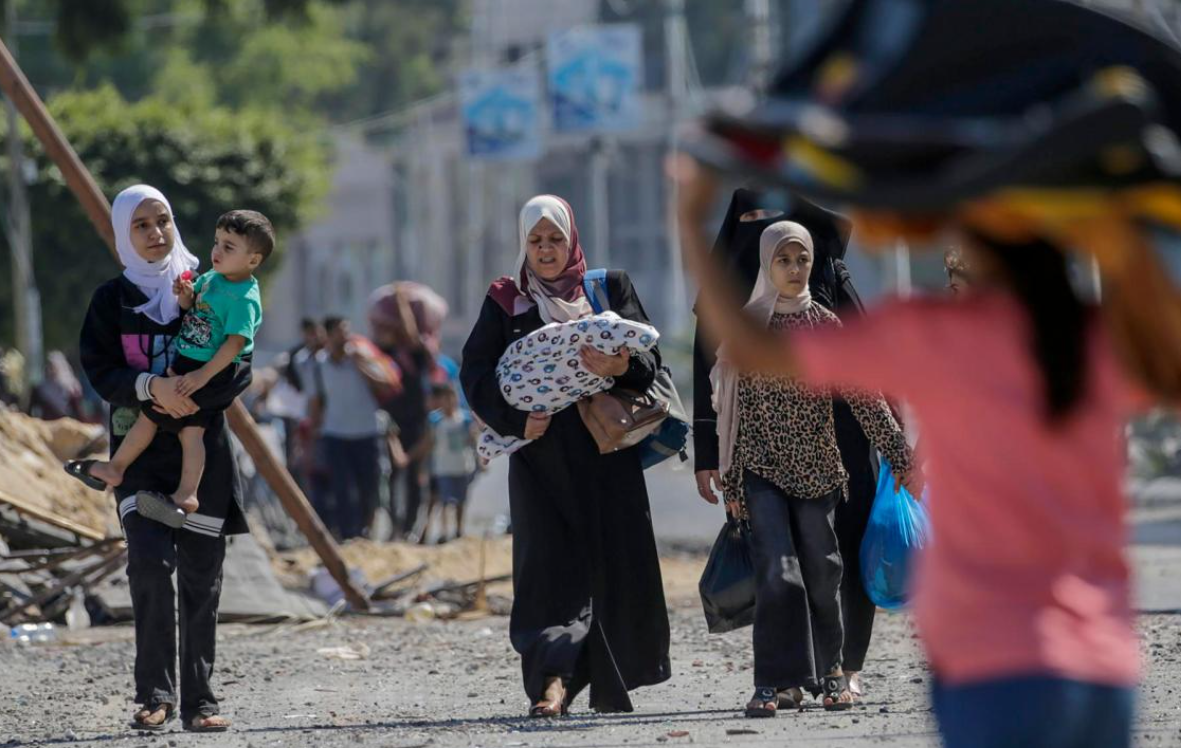
Amidst all the grief, however, I was also deeply troubled by the ominous, growing cries for vengeance voiced by the Israeli government and media, and felt a creeping dread over the shattering military response that would almost certainly rain down on the people of Gaza. And now that day has come. Israel has shut off all electricity and water for over two million Palestinians as the military wreaks complete and total devastation on across that tiny strip, attacking hospitals, schools, mosques, marketplaces, and apartment buildings. As of this writing, the death toll has risen to more than 1,200, with 5,600 wounded. More than 250,000 people have been rendered homeless – and these numbers will almost certainly rise significantly in the coming days and weeks.
In a letter to my congregation a few days ago, I wrote that “so many of us are feeling layers upon layers of intense emotion, in often confusing and contradictory ways. For Jews who stand in solidarity with Palestinians, I know these confusing contradictions are particularly keen.” Even so, I wrote, we simply must lift up the underlying context of this horrible violence. I continue to hold tightly to this conviction. While the sheer scope of our grief may feel incomprehensible, we simply must find the wherewithal to say out loud that the facts of these events have not only been comprehensible, but in fact inevitable.
Indeed, Palestinians and their allies have long been sounding the alarm that Israel was subjecting Palestinians to a brutally violent apartheid regime with impunity – and that there would be terrible consequences if the international community failed to intervene. Over and over, we’ve been warned about the cataclysmic violence that would inevitably ensue if Israel was not held to account. As Palestinian historian Rashid Khalidi put it recently, “an entire people (has been) living under this kind of incredible oppression, in a pressure cooker. It had to explode.”
As we attempt to understand the context of this recent violence, I believe it’s utterly critical to know where to plot the starting point – and to my mind, this is precisely where most of the media analyses of the past several days have sadly gone astray. To judge by any number of pundits, this current outbreak of violence began alternatively with the US – Saudi deal or the policies of the far-right Netanyahu administration. While it might be said that any of these causes may have provided the most recent spark, I’ve been deeply disappointed, if not surprised, that precious few of these analyses have even mentioned the Nakba in relation to this latest outbreak of violence.
To be sure, the Nakba was an act of violence and harm that has been reverberating through the land between the river and the sea from 1948 until this very day. To put it simply, for the past 75 years, Israel has been violently dispossessing Palestinians in order to make way for a majority Jewish state. And for just as long, the Palestinian people have been resisting their dispossession – yes, often violently.
It is not by chance that this most recent violence has occurred in and around Gaza. As many commentators have observed, Gaza has in many ways been the epicenter of the Nakba – and of the Palestinian people’s resistance to it. To grasp this fully, it is important to understand the history of this region. Gaza’s narrative did not begin with Israel’s blockade or the political ascension of Hamas. What we call today the “Gaza Strip” was artificially created in 1949, when it became a repository for a flood of ethnically cleansed Palestinian refugees from cities and villages in the coastal plain and lower Galilee. Before the Nakba, the population of this small region numbered 60 to 80,000 residents. By the end of the hostilities, at least 200,000 refugees were crowded into this 140 square mile strip of land.
At the time, most of the refugees fully expected to return home – some could even see their towns and villages through the fences. Those who crossed the border to gather their possessions or harvest their crops were considered “infiltrators” by Israel and shot on sight. Eventually, it became all too clear there would be no return. Over the years the tents turned into concrete buildings that grew ever higher along that narrow corridor. The numbers of that once sparse territory have grown to a population today of over 2,000,000 people – at least 70% of whom are refugees.
Following the founding of the state of Israel, many of the original settlements and kibbutzim founded on the border with Gaza were military outposts, most of which were built on top of or near demolished Palestinian villages. In fact, the sites that suffered the brunt of last Saturday’s massacres (including Kibbutz Kfar Aza, Re’im and Sderot) were settlements that were originally established in these locations for reasons of Israeli “national security.”
One such site was Kibbutz Nahal Oz, which was flooded by dozens of Hamas militants, and where, according to witnesses, at least two entire families were killed, and two more kidnapped and taken to Gaza as hostages. When I heard about the massacre at Nahal Oz, I couldn’t help but recall that this was not the first time this community had experienced Palestinian armed resistance. Back in 1956, a group of Palestinian militants entered Nahal Oz and killed a kibbutznik named Roi Rotenberg. At the time, this tragedy was keenly felt throughout the nascent state of Israel. At Roi’s funeral, the famed Israeli general Moshe Dayan offered a eulogy, expressing himself with brutal and unexpected honesty:
Do not today besmirch the murderers with accusations. Who are we that we should bewail their mighty hatred of us? For eight years they sit in refugee camps in Gaza, and opposite their gaze we appropriate for ourselves as our own portion the land and the villages in which they and their fathers dwelled…This we know: that in order that the hope to destroy us should die we have to be armed and ready, morning and night. We are a generation of settlement, and without a steel helmet and the barrel of a cannon we cannot plant a tree and build a house. Our children will not live if we do not build shelters, and without a barbed wire fence and a machine gun we cannot pave a road and channel water. The millions of Jews that were destroyed because they did not have a land look at us from the ashes of Israelite history and command us to take possession of and establish a land for our nation.
Dayan’s words resonate today with terrible prescience. Decades later, the descendants of this original Gazan generation still remain in refugee camps in Gaza, “gazing though the barrier fences as Israel appropriates as its own portion the land and the villages in which their ancestors dwelled.” Dayan’s eulogy also powerfully described a hypervigilant Israeli mindset that has only deepened throughout the decades. Since the Nakba could not and did not result in the complete ethnic cleansing of Palestinians from their homes, Israel has attempted to control them with a “steel helmet and the barrel of a cannon” for the past 75 years. During this time, Israel has widened its regime of violence in order to contain Palestinians in the occupied territories, subjecting them to a daily context of systemic, unceasing state violence every moment of their lives.
It is also telling that Dayan invoked the trauma of the Holocaust in his eulogy – and today, so many decades later, we can clearly see that this trauma was not limited to his generation alone. If anything, it has been handed down to subsequent generations in way that are all too real and all too palpable. Indeed, we can clearly see this generational trauma at work in Jewish responses to this latest violence, which is being openly characterized as “the worst mass murder of Jews since the Holocaust.” It is painfully poignant to consider that these massacres occurred in a state that was founded in the wake of the Holocaust in order to safeguard Jewish lives once and for all.
At the same time, however, this Holocaust rhetoric is deeply troubling given the vengeful fury currently being whipped up by a far-right Israeli government that is demonizing Palestinians with unabashedly genocidal language. Israel’s Defense Minister Yoav Gallant recently stated “Israel is fighting human animals” and should “act accordingly.” Netanyahu has promised that Israel’s military offensive on Gaza will “reverberate for generations.” One prominent Israeli general has promised to “open the gates of hell.” And perhaps most chillingly, a member of Israeli Parliament has called for a “second Nakba that will overshadow the Nakba of 1948.”
As I write these words, the Israeli military is mercilessly bombarding the Gaza Strip with a ferocity that is truly terrifying to behold. For the past few days, I’ve been combing social media for their postings from friends in Gaza, as I helplessly watch footage of whole neighborhoods and communities completely destroyed along with their inhabitants. One of the last messages I read came from a friend and former colleague at American Friends Service Committee: “Nothing left to say. More than 80 hours without electricity, water, or internet connection. Communication is very limited with everyone inside or outside Gaza. Carnage everywhere, hard to recognize streets, we are all waiting for the time to die.”
It is not an understatement to suggest that the Jewish community is now faced with a profound moral challenge. Even as we mourn our dead in Israel, we must acknowledge and protest the genocide Israel is currently perpetrating in their memory in no uncertain terms. I cannot say this forcefully enough: those of us who ignore this reality – who mourn the Jewish dead exclusively without even a mention of the massive crimes Israel is actively committing against the Palestinian people – will be quite frankly, complicit in this horrific bloodshed.
Over the past several days, I’ve found myself returning to a famous narrative from this week’s Torah portion: the story of Cain and Abel. In the wake of the first act of violence in human history, God says to Cain, “What have you done? The blood of your brother is crying out to me from the ground! Cursed by the ground that opened its mouth to receive the blood of your brother.” From this we learn, among other things, that bloodshed actually has the power to pollute the earth. Later on in the Torah, we will learn that nothing can ever be the same – or considered normal again – when blood is spilled. it must be expiated, or atoned for through a set of very complex and explicit sacrificial rituals. In our day, we can understand these to be acts of reparation, restoration and repatriation. We will only truly make atonement for this bloodshed with very real measures that will restore justice and balance for those who dwell in the land.
As I read this story, I can’t help but think of the blood originally shed in the terrible days of the Nakba, and how it continues to cry out to us all from the ground. I can’t help but think of the immense amount of blood that has been shed since, whose collective cry must certainly be a searing roar, if only we would allow ourselves to hear it. But we will never heed the cry as along as we remain hardened into sides, into “us and them.” In fact, in this week’s Torah portion, there are no “sides” to speak of. There are no nations, no Israelites, no Canaanites, no Amalekites, no Moabites. There is only one common humanity, struggling how to live together in a too often harsh and unyielding world.
Those it may seem more painfully difficult than ever, let us hearken to this voices that have so long been crying out from the ground. Let us respond with understanding, compassion and action. Even amidst the terrible grief, let us shine an unflinching light on the true roots of this violence – and on the vision of a future based on justice and equality for all who live in the land.
With this in mind, I will conclude now with the prayerful words of my dear friend and colleague Rabbi Alissa Wise:
May the One Who Remembers allow us to hold in one hand 75 years of occupation, dispossession and violence and in the other a future of peace, justice and freedom;
May the One Who is Slow to Anger soften our hearts and our fists helping us to put down the sword even at the height of the arc of our rage;
May the One of Possibility remind us that a future of peace with justice is possible;
May the One Who Awakens Us to Life hold us in our pain and vindictiveness until we set those down for the sake of life;
May the One Who Endures allow us to act for the sake of the coming generations;
May the One Who is Without Limit expand our senses of what is possible as we reach for justice, freedom and peace for us all.
Today marks the seventy eighth anniversary of a public Shabbat service held in liberated Dachau. While it’s not a particularly well-known story, it deserves to be commemorated and widely retold, not least because it illuminates the powerful ways that prayer has historically served as a form of resistance.
The service was led by Rabbi David Max Eichhorn, a Jewish chaplain in the US Army’s XV Corps. Rabbi Eichhorn wrote extensively about this – and many other of his remarkable wartime experiences – in letters that were compiled in (the highly recommended) book, “The GI’s Rabbi.” While Eichhorn experienced a number of well-known historical events during the war, for me, the most indelible moments in the book come from his witness to the liberation of Dachau: from his description of the army’s numbing discovery of masses of naked, emaciated bodies, to the acts of revenge committed by ex-prisoners against their former captors, to his moving description of courageous non-Jews who “had saved Jewish lives at the risk of their own.”
Eichhorn’s most memorable recollections of the liberation of Dachau involve his role in the Shabbat service he led on May 5, 1945. One day before, on Friday afternoon, after leading a service in the women’s barracks, a lieutenant colonel approached him with tears in his eyes. It was the famed Hollywood film director George Stevens, who was in charge of the Signal Corps unit that had been taking official army footage of Dachau. (Stevens’ movie “D-Day to Berlin” is among the films made by five Hollywood directors who were embedded in Europe to document the war effort – a project powerfully recollected in the book and documentary “Five Came Back” – also highly recommended.)
Eichhorn and Stevens made arrangements for Stevens to film the camp-wide service that was scheduled to take place the next day in the main square of the Dachau compound. When Eichhorn arrived the next morning, however, he discovered that no preparations had been made. He was subsequently informed that Polish non-Jewish inmates had threatened to break up the service by force if was held in the main square. As a result, the service was moved to the camp laundry, which only accommodated a fraction of Jews who desired to attend. As Eichhorn recalls it:
While the service was in progress, in a jam-packed room with hundreds of others crowded around the open doors and windows, Colonel Stevens came in, elbowed his way to my side and demanded to know why the service was not being held in the square. His cameras and crews were ready for action and he wanted the event to go on as scheduled…After hearing the “inside story,” he exploded in anger. “I did not give up my good job in the movie business in Hollywood,” he bellowed, “to risk my life in combat for months and months, in order to free the world from the threat of Fascism and then stand idly by while the very victims of Fascism seek to perpetuate its evils.” …He took me to the Camp Commandant, and with a loudness of voice and much banging on the table, George Stevens repeated his anti-Fascistic sentiments.
…And so, thanks to the decent instincts of an American movie director, the camp-wide service was held in the main square. It was attended by every Jewish male and female whose health permitted. As promised, every nationality was represented by flag and delegation. There were an estimated two thousand Jews and non-Jews at the service. And ringing the outer rim of the service with faces turned away from the platform was the American military “guard of honor.” They were prepared to deal with a situation which did not develop. No untoward incident of any kind marred the service.
(from “The GI’s Rabbi: World War II Letters of David Max Eichhorn,” pp. 185-186.)
When I first watched it on YouTube, I found that the very familiar words of these prayers had a powerful new resonance. It was essentially an abbreviated Torah service, with other added prayers relevant to the occasion. It began with a prayer known as the Shehechianu – a blessing of gratitude for having been kept alive long enough to celebrate a sacred moment or season. He followed with Birkat Hagomel – a blessing traditionally recited by someone who has recovered from a serious illness or has otherwise survived a traumatic, potentially life-threatening episode. While I have been part of countless services that have included these blessings, it is indescribably moving to witness them recited by thousands of Jews recently liberated from a death camp. I had a similar response to the recitation of El Male Rachimim – the prayer for the dead – a prayer that has become a staple at Holocaust remembrance services.
In the end, however, it seems to me that the very act of holding the service was itself an act of resistance. I was most moved by the sight of the Torah scroll – the most indelible symbol of Jewish spiritual survival – being held aloft before the liberated of Dachau. It is, in its way, an iconic and redemptive image – one that speaks not only to this historical moment, but to our collective responsibility to a liberative future.
As Rabbi Eichhorn so aptly put it to his “congregation” that day:
What message of comfort and strength can I bring you from your fellow Jews? What can I say that will compare in depth or intensity to that which you have suffered and overcome? Full well do I know and humbly do I confess the emptiness of mere words in this hour of mingled sadness and joy. Words will not being the dead back to life nor right the wrongs of the past ten years. This is not a time for words, you will say, and rightfully so. This is a time for deeds, deeds of justice, deeds of love … Justice will be done.