It’s difficult to describe the feelings I experienced this past weekend, as I watched hundreds of thousands of Gazans in a long and seemingly endless line, heading on foot to their homes in the north. Crossing the Netzarim corridor – the border the Israeli military demarcated separating north from south – they headed back with whatever possessions they were able to carry. Family members who thought each other dead clutched each other in tearful embrace. It was truly a wonder to behold: this resilient people who had defied and withstood the most destructive miliary onslaught in modern times. As Gazan activist Jehad Abusalim put it:
Gaza today, for now, disrupts and defies the global agenda of rendering entire populations disposable and rightless. This was achieved through the resilience of an entire population that has endured months of displacement, starvation, disease and bombardment.
Though this is a fragile and temporary ceasefire, it’s striking to note the depth of Israel’s failure to achieve any of its stated objectives of its genocidal war. It failed to destroy Hamas and the Palestinian armed resistance in Gaza. It failed to rescue hostages taken on Oct. 7 through military means. It failed to implement its so-called “General’s Plan” – its blueprint for ethnically cleansing northern Gaza. And perhaps most importantly, it failed to break the will of the Gazan people to survive its genocidal war.
Jehad’s words “for now” are appropriate. The overwhelming number of Gazans are returning to homes that are rubble – and it is by no means certain how they will be able to rebuild their lives. The ceasefire is a tenuous one; there is still no agreement on the second or third phases of deal and there is every possibility that Netanyahu will use the deal as cover to eventually depopulate Gaza of Palestinians. Trump’s recent comments (“I’d like Egypt to take people, and I’d like Jordan to take people…we just clean out that whole thing”) have made his intentions clear, even if his plan has been rejected outright by Arab states.
As I read the reports and analyses in the wake of this ceasefire, one thing seemed consistent to me: as ever, there is little, if any, concern for the humanity of the Palestinian people. On the contrary, every pronouncement by Western governments and the mainstream media treats their mere existence as a problem to be dealt with. In this regard, Jehad’s reference to “the global agenda of rendering entire populations disposable and rightless” is spot on. Palestinians in general – and Gazans in particular – have always been the canaries in the coal mine when it comes to the use of state violence against “problematic populations” deemed “disposable” by authoritarian states seeking to consolidate their power.
“Entire populations rendered disposable and rightless” certainly applied to events in my hometown of Chicago this past Sunday, where the Trump launched “Operation Safeguard,” a shock and awe blitz spearheaded by ICE, the FBI, ATF, DEA, CBP and US Marshals Service. Led by Trump’s so-called “border czar” Tom Homan (and surreally videotaped live by “Dr” Phil), heavily armed and armored forces terrorized Chicago neighborhoods all day, mostly going door to door, staking out streets in search of undocumented people, taking them away in full-body chains. While there is no definitive information on the numbers of people taken, federal immigration authorities claim to have arrested more than 100 people in recent days.
On a positive note, however, we are seeing that the strategies employed by local immigrant justice coalitions are making a real difference. My congregation, Tzedek Chicago is part of a local interfaith coalition called the Sanctuary Working Group, which has been mobilizing Know Your Rights trainings and Rapid Response teams. From our experience in Chicago over these past few days, we’ve seen that this kind of mobilization really does have an impact. Perhaps the strongest validation of these resistance strategies came from Homan himself, who said on an interview with CNN:
Sanctuary cities are making it very difficult to arrest the criminals. For instance, Chicago, very well educated, they’ve been educated how to defy ICE, how to hide from ICE. They call it “Know Your Rights.” I call it how to escape arrest.
in my previous post, I wrote that “the current political moment has left many of us breathless.” But over the course of the last several days, we’ve seen it is indeed possible “to disrupt and defy the global agenda of rendering entire populations disposable and rightless.” If we had any doubt at all, let us take our inspiration from the Gazan people, who have refused to submit after 15 months of merciless genocidal violence and are returning to their homes, vowing to rebuild and remain.
The most powerful shock and awe in the world could not break them. Let this be a lesson to us all.
Why do we sound the shofar on Rosh Hashanah? Over the centuries, commentators have offered us a variety of reasons. Moses Maimonides famously called it a wake-up call to personal atonement; others view it a call to action or a tribute to God’s power. This new year, however, I believe one reason stands out among all others. Today, this Rosh Hashanah, we sound the shofar as a call to moral accountability.
Today, we begin the holiest season of the year. Over the next ten days, we’ll be challenged to break open the shells of inertia and complacency that have built up over the past year. We’ll sound the shofar to herald the inauguration of a deep, collective soul searching: to look deep within, to face honestly what must be faced, if we are to truly begin our new year anew.
To put it frankly, I honestly cannot remember a Rosh Hashanah when the collective moral stakes were any higher for the Jewish community than this year. I would even go as far to say that this may be the most morally consequential High Holiday season of our lifetimes. As we begin this new year, the shofar calls us to account for a genocide, ongoing even as we speak, perpetrated by a nation acting in the name of the Jewish people.
How can we begin to fathom a moral accounting of such a magnitude? Over 41,000 Palestinians killed in Gaza to date and over 95,000 injured, the majority of whom are women and children. According to one estimate, the ultimate death toll may eventually be nearly 200,000. Whole extended families, entire Palestinian bloodlines have been wiped out completely. Much of Gaza has been literally reduced to a human graveyard, with scores of bodies buried beneath the rubble of destroyed and bulldozed homes. Neighborhoods and regions have been literally wiped off the map.
Gaza’s infrastructure and health care system has been decimated. According to the UN an “intentional and targeted starvation campaign” has led to widespread famine and disease throughout the Gaza strip. Polio has now broken out – relief workers are literally working to deliver vaccines to children as bombs and missiles fall around them.
Health care workers, humanitarian workers and journalists are being killed, injured and imprisoned in massive numbers. Human rights agencies have documented widespread torture and abuse of prisoners, including sexual abuse, throughout a network of torture camps.
Please note that this unspeakable litany is not a review of the past year. It is a description of a nightmare that continues as I speak, with no end in sight.
As we contemplate this inhuman status quo, it occurs to me that this Rosh Hashanah, the broken sound of the shofar is more than a mere all to accounting. It is a broken wail of grief – and a desperate moral challenge. This year the shofar calls out to us in no uncertain terms: We Charge Genocide.
This is not a point upon which we can equivocate. Not today. On this day, we face what must be faced and say out loud what must be said. To argue this point now would frankly be a sacrilege.
From a purely legal point of view, a myriad of academic and legal experts have long since confirmed the charge of genocide. As far back as October, Holocaust and Genocide scholar Raz Segal has called Israel’s actions in Gaza “a textbook case of genocide.” On October 18, almost 800 scholars, lawyers and practitioners called on “all relevant UN bodies…as well as the Office of the Prosecutor of the International Criminal Court to immediately intervene…to protect the Palestinian population from genocide.” More recently, Omer Bartov, a respected historian of the Holocaust and Genocide Studies at Brown University accused Israel of “systematic war crimes, crimes against humanity and genocidal actions.”
But beyond the legal arguments, there is a critical, moral imperative behind this claim. For many Jews, it’s impossible to imagine – let alone say out loud – that a Jewish state, founded in the wake of the Holocaust, could possibly be perpetrating a genocide.
I understand the pain behind this refusal. I know it confronts many Jews with an unimaginable prospect: to accept that we have become our own worst nightmare. But if we cannot admit the truth on this of all days, then why bother gathering for Rosh Hashanah in the first place? To dither on this point would make a sham of a festival we dare to call the holiest season of the year.
Not long ago I had a long conversation with my dear friend and colleague Rachel Beitarie, director of the Israeli organization Zochrot. Rachel is among the precious few Israeli activists who are in unabashed solidarity with Palestinians. You may remember her presentation to our Tzedek community several months ago. Among other things, she spoke about what it was like to be an Israeli activist for Palestinian liberation who grew up on a kibbutz near the Gaza border, who personally knew Israelis who were killed and taken hostage on October 7.
During our recent conversation, Rachel and I talked in particular about the way Israel metabolizes the traumatic memory of the Holocaust as a way to rationalize away its genocidal violence in Gaza. In a follow up letter to our conversation, Rachel wrote the following words to me:
As years go by and most Holocaust survivors are no longer with us, the identification and reliving of the trauma of former genocide seems to only grow, in direct relation to the crimes committed under the excuse of the right to defend ourselves and “prevent a second Holocaust.”
Because of this unrelenting propaganda, the linkage of the Hamas attack of October 7 to the Holocaust was made immediately, even though it was logically bogus. It was understandable at first, especially from people – many of my friends and acquaintances among them – who personally experienced the horrors of that day, waiting for help that took many hours to come.
Having grown up in Israel, exposed as we are to re-traumatizing Holocaust education, the associative connection was almost inevitable. Soon however, it became clear that this linkage was being overblown and manipulated to justify the annihilation of Gaza; to justify, dare I say it, another Holocaust.
Many outside of Israel have made the linkage between October 7 and the Holocaust as well. Almost immediately in fact, the terrible massacres of that day were openly characterized as “the worst mass murder of Jews since the Holocaust.” As Rachel pointed out, the two events have nothing to do with each other whatsoever. Still, it is indeed painfully poignant to consider that this mass killing occurred in a state founded in the wake of the Holocaust in order to safeguard Jewish lives once and for all.
We can only imagine what on earth will be said about October 7 on its one year anniversary, which will arrive exactly between Rosh Hashanah and Yom Kippur. From what I’ve read about officially sponsored Jewish community commemorations, the dominant message will be thoroughly suffused with a Holocaust-informed victim mentality: “Bring them home,” “We stand with Israel,” “It’s us against the world,” with nary a mention of the vengeful carnage Israel has been unleashing on Gaza for the better part of a year.
In contrast to this particular messaging, however, I would suggest that sacred Jewish tradition presents us with an important opportunity on this anniversary. Yes, the Days of Awe are an occasion to mourn the losses of the past year – but this season is also a time to seek out a deeper understanding. To do a genuine accounting and to take real accountability.
As we start to reckon with the events of October 7, I would suggest that the first step would be to admit that this date was not a starting point. If we are to truly and honestly commemorate this tragic anniversary, we must understand it in the context of the ongoing violence and injustice known as the Nakba – a nightmare that began decades ago and is still ongoing.
As Israel’s violence in Gaza escalated during the final months of 2023, Tzedek Chicago’s board had numerous conversations about whether or not to issue a congregational statement. I’ll make a confession: I wasn’t originally in favor of it. To be honest, I was starting to become dubious about the value of these kinds of gestures. At a moment when so many of us were working overtime organizing on behalf of the Palestine solidarity movement, it seemed like a waste of time to spend our time on a congregational statement. It felt as if the only statement that needed to be made, over and over again in the streets, was “Ceasefire Now!”
Eventually, however, I came to agree with our board that Tzedek Chicago – as an avowedly anti-Zionist congregation – had a unique voice to offer on this issue. And so, during the month of December, we worked together to craft a statement titled, “In Gaza, Israel is Revealing the True Face of Zionism.”
Here’s an excerpt:
We … know there was a crucial, underlying context to (the) horrible violence (of October 7). We assert without reservation that to contextualize is not to condone. On the contrary, we must contextualize these events if we are to truly understand them – and find a better way forward.
The violence of October 7 did not occur in a vacuum. It was a brutal response to a regime of structural violence that has oppressed Palestinians for decades. At the root of this oppression is Zionism: a colonial movement that seeks to establish and maintain a Jewish majority nation-state in historic Palestine.
While Israel was founded in the traumatic wake of the Holocaust to create safety and security for the Jewish people, it was a state founded on the backs of another people, ultimately endangering the safety and security of Jews and Palestinians alike. Israel was established through what Palestinians refer to as the Nakba: the ethnic cleansing of 750,000 Palestinians from their homes in 1948. And since that time, Israel has subjected Palestinians to a regime of Jewish supremacy in order to maintain its demographic majority in the land.
This ongoing Nakba is the essential context for understanding the horrifying violence of the past three months. Indeed, since October 7, Israeli politicians have been terrifyingly open about their intentions, making it clear that the ultimate end goal of their military assault is to ethnically cleanse Gaza of its 2.2 million Palestinian residents. One prominent member of the Israeli government put it quite plainly: “We are now rolling out the Gaza Nakba. Gaza Nakba 2023. That’s how it’ll end.” More recently, Prime Minister Netanyahu was reported as saying that he is actively working to transfer Palestinians out of Gaza. The problem, he said, “is which countries will take them.”
Israeli leaders are being true to their word: we are witnessing the continuation of the Nakba in real time. As in 1948, Palestinians are being driven from their homes through force of arms. As in 1948, families are being forced to march long distances with hastily-collected possessions on their backs. As in 1948, entire regions are being razed to the ground, ensuring that they will have no homes to return to. As in 1948, Israel is actively engineering the wholesale transfer of an entire population of people.
It is now eight months since we released that statement and I believe it is more accurate than ever. In her letter to me, Rachel observed the irony that more and more Israelis are now threatening a “second Nakba” when “until recently Israelis denied that the Nakba ever happened.” Now however, many Israelis are using the term with unabashed vengeance. Through word and deed, Israel’s ultimate end game is becoming all too clear: it is the ethnic cleansing of Gaza.
This past August, in fact, the Israeli press revealed the presence of a government plan for Israel’s long term occupation of Gaza on “the day after.” According to the plan:
Israel will control the northern Gaza Strip and drive out the 300,000 Palestinians still there. Major Gen.Giora Eiland, the war’s ideologue, proposes starving them to death, or exiling them, as a lever with which to defeat Hamas. The Israeli right envisions a Jewish settlement of the area, with vast real estate potential of convenient topography, a sea view, and proximity to central Israel… The southern Gaza Strip will be left for Hamas, which will have to care for the destitute residents under Israeli siege, even after the international community loses interest in the story and moves on to other crises.
In other words, a “real time Nakba” is being discussed openly in Israeli political and academic circles. More recently, on September 15, Professor Uri Rabi, a prominent researcher at Tel Aviv University, actually said these words in a radio interview: “Remove the entire civilian population from the north, and whoever remains there will be lawfully sentenced as a terrorist and subjected to a process of starvation or extermination.”
As we engage in moral accounting over the next ten days, we must reckon seriously with words such as these. Indeed, from the very beginning of this genocide, Israeli leaders and politicians have been all too transparent about their intentions. Just as the founders of the Zionist movement themselves, from Theodor Herzl to David Ben-Gurion promoted the “transfer” of the native Palestinian population to make way for a majority Jewish state. Then, as now, we must take these leaders at their word. We must take them very seriously. We can never say we didn’t know.
More than ever before, this High Holiday season calls to us to reckon seriously with what Zionism has wrought. Not only in Gaza, but throughout the West Bank, where violence and ethnic cleansing is running rampant and in Lebanon, which is now experiencing its own carnage and displacement, bringing the entire region ever closer to all-out war.
How could it be otherwise? This is what comes of an ideology and movement that from the beginning viewed Jewish safety as zero sum; in which our security can only be achieved at the expense of others, empowerment gained through the sheer power of superior military technology, stronger weapons and higher walls.
And finally, this High Holiday season, we must take this opportunity to ask ourselves collectively: where have we fallen short? This is a critical question in particular for those of us who have been active in the Palestine solidarity movement.
If this is indeed the season for hard truths, we must face the fact that despite all our efforts this past year, we failed to stop a genocide. For all our calls for ceasefire, on street corners and in the halls of city governments, for all of the mass protests and acts of civil disobedience, for all of the courageous student activism on college campuses, a ceasefire seems farther away than ever at the moment.
This is not to say that there has not been genuine progress this past year. But how do we measure these successes against the mass killing that has occurred and continues to occur every single day? On this point, I’d like to share with you the words of Sumaya Awad, of the Adalah Justice Project, who offered us this powerful challenge at the plenary for the Socialism 2024 conference here in Chicago last month:
We know that there has been a massive shift in the United States around Palestine. We have seen poll after poll show that the majority of Americans support an arms embargo, the majority of Americans don’t want to support Israel, are critical of Israel and yet we haven’t seen that translate into the mass action we need.
Despite this massive shift, we grapple with the fact that this shift came at the expense of how many lives lost? How many people murdered? Who paid the price for these people to shift? And it’s not to say that this shift is not tremendous and incredible and good – it is all of those things, but we must also grapple with the fact that lives are being lost on the daily. And that it is all by design and that it all can be stopped in basically a moment.
And I say all of this not to pity Palestinians, quite the opposite, nor that we must grieve more. Grief is necessary, but that’s not the answer. I say it all because … we have to keep asking ourselves – you have to ask yourselves – what am I doing with this knowledge? What am I doing with this education? How is it translating into action? How does it translate into action that does not preach to the choir, but preaches to those who are not yet where we need them to be?
And you have to have an answer to that question. Because a year from now, when you are back here, you have to have an answer. Don’t find yourself just asking the same question. Be ready to answer, what have I done in the last year?
Though Sumaya spoke these words in a very different context, I find them nonetheless appropriate to the sacred imperative of this new year. A year from now, when we are back here, we will have to have an answer. We can’t find ourselves just asking the same question. We must be ready to answer: what did we do in the last year to bring this genocide to an end?
I know this in my heart and soul as well: years from now, we will likewise have to stand in judgment. When the story of this genocide is written, we will be asked: did we speak out? And if so, what did we say? What did we risk?
For now, that book is still open, even if every new page is becoming increasingly unbearable to read. Even if the world would rather move on to another story. How will we write ourselves into this book when it is finally recorded?
May we all play our part in bringing this book of the genocide to a finish. May it come to an end soon, in our own day. And when it does, may we come to understand it was only part of a larger story – an even greater book that will conclude with these glorious words: “then Palestine was finally free, from the river to the sea.”
In 2017, I spent several days in Gaza as a staff person for the American Friends Service Committee. Although I took away many powerful and vivid memories from that trip, some of the most indelible involved the delicious food that was continuously served to us by our Gazan hosts. Gazans are famously proud of their cuisine, and rightfully so, as it provides them with a palpable connection to Palestinian history and life outside that small 140 square mile strip – to communities in Palestine that their ancestors used to live. As journalist Laila El-Haddad has observed, Gazan food is “a sort of treasure map to a largely invisible, or invisibilized, world of Palestinian history going back well before the 1948 Nakba.”
During the course of our visit, Ali, a member of the AFSC Gaza staff, mentioned more than once that Gazan knafeh (a traditional Arabic dessert) was by far the best in Palestine. When our staff group gathered at a restaurant in Gaza City for our final meal, Ali was chagrined to learn that there was no more knafeh left in the kitchen. Determined, Ali got up, ran down the street to another restaurant, and returned with a huge round plate of the sticky, golden pastry for our table. It was indeed more delicious than any knafeh I have eaten before or since.
I’ve recalled that sweet memory often over the past seven years. When I think of it now, however, I find its sweetness has curdled into horror. As far back as December, human rights agencies determined that Israel “was using starvation as a weapon of war.” According to the World Food Program, Gaza’s food system was on the brink of collapse and the population was facing a “high risk of famine.”
This past March, the mainstream media published shocking, heartbreaking pictures of Yazan Kafarneh, a 10 year old Gazan boy reduced to skin and bones from starvation. To date, it has been estimated that 28 children have died of malnutrition and starvation in northern Gaza. By allaccounts, starvation in Gaza has now reached “catastrophic” proportions. Knowing about the Gazan people’s deep pride in their food culture, I’m experiencing deep heartbreak as I read reports that Palestinians in Gaza are now forced to eat grass just to survive.
As a congregational rabbi, I’ve spoken with many people have told me that they are not sure how – or even if – they will celebrate Passover this year. With the genocide and forced starvation of the people of Gaza deepening with no end in sight, they say, it just feels beyond challenging to celebrate a festival of Jewish liberation. To make the moral dissonance even more dissonant, many in the Jewish communal establishment are framing Passover by focusing exclusively on the Israeli hostages in Gaza and call for their liberation from Hamas, with nary a mention of the 35,000 Gazans who have been destroyed in the process through Israel’s genocidal war of vengeance.
More than once I’ve been asked, “How can I partake of this festive meal while Israel has been starving Palestinians in the name of the Jewish people?” How can I read about Pharaoh’s oppression of Israelite children when I’ve just read the latest death count of Palestinian children dying increasingly things from forced starvation?
As a political-spiritual response to this unprecedented Passover moment, Rabbis for Ceasefire mobilized and began to organize as action at the Gaza border, to literally bring food supplies with us and demand to that Israel allow us to pass through the Erez Crossing, motivated by Passover’s central imperative, “All who are hungry come and eat!” Our action would include 10 American rabbis, writer/essayist Ayelet Waldman and 30 other Israeli activists – including Israeli rabbis – who have been tirelessly protesting both at the Gaza border and organizing protective presence for West Bank communities targeted by settler violence.
Our action was originally planned for the week leading up to Passover; but when Iran’s missile attack caused the country to go on alert and airlines cancelled their flights to Israel, we almost had to cancel our action. As we read the news, Israel’s escalating hostilities with Iran took front and center The US and the West were rearming Israel and focusing on the threat from Iran – even as Israel continuingly maintained its policy of starvation and bombardment of Gaza. Most alarming were the reports that an Israeli agreement to retaliate lightly against Iran would give them leeway to move ahead with a potentially disastrous ground invasion of Rafah. We bought plane tickets for the next week, determined to make a collective Passover statement that felt more critical than ever.
During our action, we gathered at a preplanned meet-up location, with a truck filled with half a ton of flour. We each shouldered backs of rice and, carrying banners and flags, march in the direction of the Erez Crossing. The Israeli police quickly drove up to intercept us. During that initial stand-off, several of us offered statements. I began with an opening prayer, an adaptation of the “Magid” section of the Passover Haggadah:
“This is the bread of affliction, the bread and food systemically, cruelly denied the people of Gaza. Let all who are hungry come and eat. Let all who are oppressed be liberated this Pesach. Now we are here – tomorrow let there be bread for Gaza. Now we are here – next year may there be liberation from the river to the sea!”
Other speakers included Israeli Rabbi Avi Dabush of Rabbis for Human Rights, a resident and survivor of a kibbutz that was attacked on October 7 and Noam Shuster-Eliassi, a well-known Israeli activist, writer and comedian. When our program was over, we pushed forward toward the border. When the soldiers violently attempted to break us up, several of us sat down in the road. During the course of the protest seven of our group: four Americans and three Israelis were arrested.
All of the arrested were fully prepared for this eventuality – the Israelis were in fact veterans at protest-arrests and had previously briefed us on protocol. They were taken to two dentention centers and interrogated for eight to nine hours. The American were told, perversely, that they were being held for “attempting to bring food into Gaza.” All the arrested were released that evening; thankfully the food we attempted to bring into Gaza was not confiscated; as we have previously planned, it was donated to the community of Masafer Yatta – an area in the South Hebron Hills were almost 3,000 residents are resisting the daily threat of demolitions, evictions and dispossession.
While we are satisfied with the attention our action has received, we have no illusions about the current moment in Gaza. Nearly 2.2 million Palestinians in Gaza currently face mass starvation and encroaching famine, these words have resonated with unbearably profound force during Passover this year. Hundreds of trucks filled with humanitarian goods have been sitting idle on roads leading into the Rafah crossing on the border with Egypt, blocked from entering Gaza by a draconian inspection process that severely limits the number of trucks that can pass through. Inside Gaza, the Israeli has been attacking efforts aid efforts with tragic results. According to the UN, the Israeli military has killed 196 relief workers; soldiers have also shot and killed hundreds of Gazans who venture out to seek food.
Amidst it all, the one agency that has the capacity and infrastructure to effectively distribute relief to the people of Gaza, the United Nations Relief and Works Agency (UNRWA), has been defunded by the Biden administration. This past January, the Israeli government leveled the still-unsubstantiated claim that 12 UNRWA employees were involved in Hamas’ October 7 attacks in Israel. Though UNRWA immediately fired the employees in question and launched an investigation, the US immediately withdrew their financial support of the agency, which was founded in 1949 to provide support to the hundreds of thousands of refugees created by the establishment of the state of Israel.
In its spending bill this past March, the US government extended its defunding of UNRWA for a year. Though the agency reports it has sufficient funds to operate until the end of May, its ability to operate in Gaza has already been gutted. Last month, Israel announced it would no longer approve UNRWA food convoys to the north of Gaza, where famine is the most. According to its report this month, the agency noted that “a total of 420 trucks food trucks were denied or impeded by Israeli authorities (during the month of March) …Gaza is on the brink of famine, with 1.1 million people—half of its population—experiencing catastrophic food insecurity due to the intense conflict and severe restrictions on humanitarian access.”
Most ominously, Israel continues to amplify its threats to invade Rafah, which would almost certainly result in massive human tragedy and the complete ethnic cleansing of Palestinians from Gaza. And yet, in the wake our action on the border, I continue to hold out hope. It is clear to me that our border-protest was part of something much larger: the dramatic rise in student resistance on college campuses throughout the US and unprecedented popular Palestine solidarity increasing around the world. For me, this moment expresses the core meaning of Passover powerfully than I have every experienced in my lifetime: in every generation, the cry of the oppressed demands to be heard.
This Passover, I also hold out hope from my own memory of meals in Gaza back in 2017. To be sure, AFSC’s Gaza staff has suffered terribly during this genocidal onslaught – and I’m sure the restaurants and neighborhoods where we enjoyed such delicious meals with our Gazan friends are no more. But I will never forget the tastes of the food that were so graciously served, as well as the communities in Palestine that they represent. And I am more convinced than ever that Israel cannot, try as it may, starve, bomb, or shoot away the Palestinian people’s love for their culture that is so deeply, fragrantly rooted in their homeland: In the words of El-Haddad:
Lately, I’ve been thinking about what I would go back to, and what I would find, if I returned to Gaza. Most of the landmarks have been destroyed. Gone too are many of the people I cherished. But … it feels like I am the torchbearer now, the family’s keeper of treasured recipes. Like Um Hani (Leila’s aunt, who was killed in an Israeli airstrike), I will cook and I will teach, connecting the next generation of Palestinians to our homeland.
An op-ed version of this sermon was published in Truthout
Jewish tradition teaches that words have a sacred power. In the very beginning of the Torah, God creates the world itself through the power of the word. In the book of Exodus, the Israelites speak as one people at Sinai, thereby entering into a covenant with God. It is said that on Yom Kippur, the High Priest would enter the Holy of Holies in the Jerusalem Temple and utter the otherwise unspeakable name of God – and at that moment the fate of the very world would hang in the balance. On Yom Kippur, we ourselves stand as a community and say the words of our collective confessions together. As our liturgy would have it, we may not be written into the book of Life for the new year unless we speak these words out loud.
In their way, the power of words is akin to energy. Once they are spoken, they are out in the world – and from that point on there are a myriad of ways their impact might be manifest. Sometimes their power will remain dormant. Other times, our words can be the conduit for deep and powerful transformation.
I think a great deal about the impact of our words when it comes to the issue of Israel/Palestine. We have witnessed their power for instance, over the course of this past year, as thousands of Israelis have been holding regular demonstrations against the current Israeli administration and its plans to limit the power of the Israeli judiciary. Week after week, protesters have chanted words in the streets and carried them on signs, expressing their collective outrage over the government’s “threat to Israeli democracy.” More recently, many in the American Jewish community – including many rabbis – have voiced their support for these protests and have even been staging public protests of their own.
On one level, it could be said that these massive rallies have had a powerful impact. They are the largest and most sustained protests in Israeli history and the most massive mobilization of the Israeli left in years. The rhetoric of the rally has also empowered Zionists in general. Many who advocate for Israel will often refer to it as “the only democracy in the Middle East.” I would suggest that the use of this word is powerful for all the wrong reasons. It covers up the reality that while Israel may be a democracy for Jews, it is decidedly not one for Palestinians. Indeed, for many centrist and right wing Israelis these demonstrations are important because they bolster the illusion of democracy. In so doing, they serve to entrench Zionism and strengthen the Jewish state.
It is true that at many of these demonstrations, there have been some chants and signs condemning Israel’s “occupation.” However, this is an oft-invoked word that can mean different things to different people. For some it refers only to Israel’s military occupation of the West Bank and Gaza. For others it also includes annexed territories such as East Jerusalem and the Golan Heights. For still others, the entire land between the river and the sea is considered to be occupied territory. Thus, when the word “occupation” is invoked during the demonstrations, there is little clarity on what it actually means – or what is actually being demanded.
There is yet another powerful word that has recently emerged in relation to Israel/Palestine, and that word is “apartheid.” Last year, three respected human rights organizations: Amnesty International, Human Rights Watch and the Israeli group B’Tselem, all released well-researched reports concluding that Israel is an apartheid regime. Over the past year, many surprising figures have also been increasingly using this word in relation to Israel, including a retired Israeli general.
This past year, a letter was posted online by Israeli academics that openly criticized American Jews for “(paying) insufficient attention to the elephant in the room: Israel’s long-standing occupation.” The letter pointedly stated that “there cannot be democracy for Jews in Israel as long as Palestinians live under a regime of apartheid, as Israeli legal experts have described it.” The so-called Elephant in the Room Letter was widely distributed and was eventually signed by Jewish leaders and figures – to date it has over 2,700 signatures.
With liberal Jewish leaders increasingly willing to use the “A” word in public, there is every indication that it is losing its stigmatized, transgressive status in the Jewish community. But even here, the meaning of the word “apartheid” depends on how it is used. The B’Tselem report, for instance, claims that Israeli apartheid extends “from the Jordan River to the Mediterranean Sea.” The Israeli general, on the other hand, limited it to the West Bank alone.
There are also those who would say that the term “apartheid” itself doesn’t go far enough – that it is a technical term from international humanitarian law that has limited legal applications. Many would argue that the word “settler colonialism” is much more powerful and meaningful because it is related to decolonization – a concrete process of action that includes the return of refugees and reparations to the Palestinian people.
Yes, all of these words do indeed have a complex kind of power when it comes to Israel/Palestine, and I’m often fascinated by the strategic ways we utilize this power. Years ago, I used to avoid controversial and potentially incendiary words in connection with Israel, feeling that they might well alienate and push away the very people I was trying to reach. I would typically use words I thought were less triggering: “dispossession” instead of “ethnic cleansing,” “non-Zionist” instead of “anti-Zionist,” “occupation” instead of “settler colonialism.”
I feel differently about this now. I actually think it’s important to use words such as these. I believe it’s important to name oppression explicitly and not to soften it with euphemisms. If some words make people uncomfortable, that’s OK. Once a word is said, it can’t be unsaid. It’s now part of the discourse. While some may well recoil from that word, they may well come around to accept it in time.
Words can indeed push the line of what is considered acceptable. But they can also represent one step too far, or the crossing of a line. There is still, for instance, a hard line drawn on the word Zionism. For most Jews, it is still considered beyond the pale to refer to oneself as an anti-Zionist: to break not just with the Israeli government, not just with the 1967 occupation, but with the very concept of an exclusively Jewish nation-state.
Apropos of Yom Kippur, it seems to me that when we say these words and cross this particular line openly, we’re really making a kind of confession. It’s not merely a political opinion – it’s an ethical admission that our Jewish identity has been inextricably connected to the oppression of another people.
When I was growing up, I was routinely taught that Zionism was the national liberation movement of the Jewish people. But I was never taught that this “liberation” came at the expense of another people. Like many American Jews, I was raised to view the establishment of the state of Israel as the exclusive Jewish homeland; a Jewish refuge after centuries of persecution; a redemptive homecoming following the collective trauma of the Holocaust.
Our trauma has been compounded by the sense that the world was complicit in it – that the Jewish people were abandoned by the international community. To be sure, the allied nations should rightly bear deep shame for their inaction during the Holocaust and their refusal to accept Jewish refugees following the war. But even as collective Jewish trauma is all too real, it was tragic and profoundly wrong to justify it by inflicting trauma on another people: by establishing a Jewish state on their backs and creating what has now become the largest refugee population in the world.
When Jewish Zionists publicly confess and act on the truth of this history it can often shake their Jewish identity to the core. This phenomenon often reminds me of something James Baldwin wrote in his classic 1962 essay, “A Letter to My Nephew:”
As you will discover, people find it very difficult to act on what they know. To act is to be committed and to be committed is to be in danger. In this case the danger in the minds and hearts of most white Americans is the loss of their identity. Try to imagine how you would feel if you woke up one morning to find the sun shivering and all the stars aflame. You would be frightened because it is out of the order of nature. Any upheaval in the universe is terrifying because it so profoundly attacks one’s sense of one’s own reality.
Though Baldwin was addressing white supremacy in the US, I think his words are equally applicable to Jewish supremacy in Israel. Zionism has become such an indelible part of Jewish identity that it has caused us to enable – or at the very least tolerate – the oppression of another people. The power of this mythic Zionist narrative manages to keep the truth of this ongoing oppression at bay, lest it causes everything we once held so dear to come crashing to the ground.
I experienced this upheaval personally in 2008, at my former congregation. During Israel’s military assault on Gaza, I experienced deep anguish – and I expressed those feelings in a blog post. While I had often been critical of Israel in the past, this was very different. Rather than using the usual words, calling for “balance” and a plea for “peace on both sides,” I used strong and angry language, explicitly naming Israel as the oppressor. I concluded my post with these words:
We good Jews are ready to protest oppression and human rights abuses anywhere in the world but are all too willing to give Israel a pass. It’s a fascinating double standard, and one I know all too well. I understand it, because I’ve been just as responsible as anyone else for perpetrating it.
So no more rationalizations. What Israel has been doing to the people of Gaza is an outrage. It has brought neither safety nor security to the people of Israel and it has wrought nothing but misery and tragedy upon the Palestinian people.
There I said it. Now what do I do?
Now many years after later, I realize that post was a kind of confession. Though I didn’t know it at the time, when I wrote those words I was actually crossing a line that would eventually force me to leave my congregation. To use Baldwin’s words, it was upheaval so profound that it attacked my sense of my own reality. I was fairly sure I couldn’t continue as a congregational rabbi – and I wasn’t completely sure what kind of Jew I would be either.
But as I said earlier, once our words are out in the world, there are myriad ways their power might be manifested. I was eventually able to recover my Jewish identity along with my Jewish conscience. Speaking those words was unexpectedly liberating. I discovered there were other Jews like me – lots and lots of them. And together we became part of an emergent Jewish community that had the freedom to say out loud what must be said. I have no illusions that there is a distinct minority of Jews on this side of the line, but I also know that there are many who are now crossing over, breaking their silence on Israel/Palestine in unprecedented ways.
In its way, this new Jewish community is creating a new counter-narrative to the Zionist narrative that has been dominant for so long. One critical part of this counter-narrative is the understanding that standing in solidarity with Palestinians is a mitzvah – a sacred act. When it comes to solidarity in particular, words are enormously important. Those who engage in solidarity with disenfranchised people know that while words may have great power, words can quickly lose their power if they do not lead to action.
Indeed, history is littered with the betrayal of empty words, promises unkept and treaties broken. Staying true to one’s word can often be a challenge for those who are trying to practice solidarity in good faith. The growing popularity of land acknowledgements is a good example. Land acknowledgements are significant and important, but as many Native people have pointed out, they amount to empty words unless they contain accountability – unless they exist in a larger context of decolonization and reparation. As President Robert Larsen of the Lower Sioux Indian Community has put it, “An apology or an acknowledgment is one thing, but what are you going to do next?”
The same applies to those of us who express solidarity with the Palestinian people. Yes, the words we say matter, but unless they lead to genuine transformation, they will remain little more than empty words. To return to my metaphor of energy, words represent the initial spark, but once kindled, it takes real effort to sustain and increase its power. We must take active responsibility to maintain that initial spark by acting on our words, lest it eventually sputter out.
Putting our words of solidarity with Palestinians can take many forms, but a core priority requested by Palestinian civil society groups is support for BDS – the Palestinian-led Boycott, Divestment and Sanctions movement. In this regard, I encourage those who are able to attend our Yom Kippur afternoon program today. We will be hosting a conversation with Omar Barghouti, the co-founder of the BDS national committee, whose presentation is entitled, “Repentance, Reparation and Ethical Reconciliation: A Palestinian Vision for Common Liberation.” Omar was deeply honored to be asked to be our teacher for Yom Kippur – but as I told him, I could think of no more appropriate way for a congregation such as ours to observe this day.
I also want to remind our members that Tzedek Chicago was one of the first congregations to sign a pledge from the Apartheid-Free Communities initiative, a newly created interfaith coalition convened by the American Friends Service Committee. In that statement, signatories pledge “to join others in working to end all support to Israel’s apartheid regime, settler colonialism and military occupation.” Now that we have publicly made this pledge, it will be our challenge to live out these words as a community – and in the spirit of Yom Kippur, I want to encourage us to explore what this will mean for our congregation in the years ahead. By signing this public pledge, it is also our hope that it will give other Jewish congregations and organizations the courage to speak these previously unspeakable truths as well.
In the Shacharit service – the Jewish morning prayer – we say the words, “Baruch she’amar ve’haya ha’olam” – “Blessed is the one who spoke and the world became.” While this literally refers to God but it is also a statement about the potential within each and every one of us. Our words have the power to transform our lives and our world – indeed, to create whole new worlds anew.
So let this be our collective blessing this Yom Kippur: let us find the courage to speak the words that must be spoken. Let our words kindle sparks of possibility, and may they inspire us all to create the world we know is possible: a world of Tzedek/Justice, of Tikkun/Repair and of Shalom/Wholeness for all who dwell on earth.
As I write, I write we are receiving the horrifying news that Israel has launched its largest military operation in the occupied West Bank city of Jenin in more than 20 years, killing at least ten people – including children – and injuring at least 80 others. The Israeli military has cut off all exits from the refugee camp and is preventing ambulances from reaching critically injured Palestinians. They have damaged the infrastructure and interrupted Jenin’s water and electricity supplies, bulldozed homes, ripped up roads, and attacked journalists reporting on the invasion as well as the Jenin Freedom Theater, where families were seeking refuge.
For an overview and analysis of Israel’s military onslaught on Jenin, I encourage you to read this piece by Amjad Iraqi, senior editor of +972mag:
Like Gaza, Jenin has long been a center of Palestinian social life and political resistance — and as such, a target of vicious repression. For over a year, the Israeli army has carried out a deadly and protracted operation in the city, repeatedly closing off the region while ground troops break into civilian homes and destroy public infrastructure on a near-weekly basis. The Palestinian armed groups, led by young men who have only known a life of despair and death, have put up a relentless fight, and have recently shown that they can make it even more difficult for Israeli troops to invade — a fact that forced the army to desperately turn to air power last week. The bombardment of a populated urban area, together with the city’s collective punishment, is further justified by the demonization of Jenin as a “cesspool of terrorism” requiring constant intervention — in essence, the same doctrine of “mowing the lawn” that is applied in the blockaded strip a few kilometers away.
I also strongly encourage you to read and share this letter written by Mustafa Sheta, General Manager of the Jenin Freedom Theater:
Today, Monday, July 3, 2023, I stand before you to share my personal account of the events that unfolded in Jenin refugee camp early this morning. The Israeli military operation commenced with an aggressive assault on sites believed to be affiliated with the Palestinian resistance. They claimed these locations as their targets, launching three missiles that resulted in the loss of innocent lives and left many wounded.
Soon after, a full-scale invasion ensued, with an overwhelming presence of military forces. Jeeps, armored vehicles and military bulldozers stormed into Jenin, asserting their dominance over the ground. The skies above were not spared either, as a multitude of drones hovered ominously.
During this tumultuous time it was impossible for the inhabitants of Jenin to sleep, young and old alike. My daughter, Salma, was terrified by the blaring warning sirens that announced the army’s incursion, her tears flowing uncontrollably. Meanwhile, my son, Adam, displayed a mix of fear and curiosity, trying to comprehend the gravity of the situation.
Isra Awartani, The Freedom Theatre’s accountant, hastily created a safe space within her home to shield her three daughters from harm. Ahmed Tobasi, artistic director of The Freedom Theatre, found himself face-to-face with an armoured vehicle stationed right outside his house, its barrel aimed at his window. Rania Wasfi, TFT former colleague, frantically tried to reach her mother and sister after news that their house was bombed.
The morning brought news of a devastating attack on The Freedom Theatre, where a group of families sought refuge amidst the turmoil. The occupying forces callously targeted them with missiles, shattering their hopes for safety. Adnan, who lives next door to The Freedom Theatre, huddled together with his family in one room, struggling to find comfort in the midst of chaos. Adnan’s niece Sadeel, 14 was murdered by an Israeli sniper less than two weeks ago. Her family lives in the same neighborhood.
The gravity of the situation cannot be understated. The occupation relentlessly tightens its grip on the refugee camp, decimating its infrastructure and obliterating the main roads in the camp. The message is crystal clear – punish the stronghold of popular resistance in Jenin, and project an image of invincibility to Israeli society regarding their military prowess.
What lies ahead? For me, the answer is nothing. The occupation’s attempts to eradicate the resistance in Jenin will not succeed, just as their predecessors failed in 2002. Buildings may crumble, cars may be reduced to wreckage, and countless individuals may be detained, wounded and even martyred. However, these actions will only serve to breed a new generation that will carry the torch of resistance passed down by those who came before them, as we do today, and as our children will do in the future. It is a relentless pursuit, driven by the aspiration to reclaim our land and restore the dignity of every human being.
And finally: click here to demand that the US Congress stop arming Israel’s massacres against the Palestinian people by ending U.S. military funding to Israel.
When I tried to think of the most appropriate saying I could offer you this Rosh Hashanah, I kept coming back to those famous Yiddish words from The Partisans Song: mir zaynen do – “we are here.” It somehow feels right to invoke words of resistance at this particular moment, doesn’t it? It’s been a hard and painful battle for us all this past year, but we are here. Tragically, too many of our comrades are no longer with us, but, nevertheless, mir zaynen do. We are here.
In an age of pandemic, just surviving itself can feel like a victory. So here we are: to date, COVID has claimed 640,000 lives in the US and over 4.5 million worldwide. And though it felt as if we’d finally turned a corner last spring, the arrival of the Delta variant was a brutal reminder that the pandemic is not at all behind us. The number of deaths is climbing again. Hospitals around the country are filling up, in some states to over-capacity. And though Trump is no longer our President, the Republican party continues to politicize the pandemic with ever-astonishing cynicism.
Despite a slight rebound last spring, things are still economically dire in our country. The percentages of those who are unemployed and uninsured are still shamefully high. Just this last August, the Supreme Court struck down eviction protections for most of the US, putting as many as 3.5 million households at risk of losing their homes, including hundreds of thousands of tenants this year alone.
Last Rosh Hashanah, I suggested that, in a very real way, we’re all in a state of grief over the world we’ve lost. If we were to continue with this metaphor – and I still believe it’s an apt one – we’ve now gone through one full year of mourning. In Jewish tradition, the year following a loss is a spiritually intense time for mourners, traditionally marked by the regular recitation of Kaddish. When the first year is up, the intensive part of our observance is lifted and we begin our reemergence back into the world. We know, however, that we won’t be reentering the world as it was. That world has been forever changed.
And so, even though the year of formal mourning is over, we’ll continue to say Kaddish regularly for the rest of our lives. We will never stop grieving what we’ve lost. The pain may come and go, but it never goes away entirely. Indeed, sometimes it will grip us when we least expect it. At the same time, however, we know that thingscan get better. If we work at it. If we affirm the truth of our healing and actively participate in the healing process.
So all of this to say yes, it is one year later and yes, we are still experiencing the pain of the loss of the world we once knew. But while the reality of what was lost is still brutally painful for us, it is also true that there has been healing. We are not, in fact, in the same place that we were last year.
Most obviously – and most importantly – last Rosh Hashanah, I don’t think any of us would dare to imagine that we would see a COVID vaccine any time soon. Then just a few months later, the first fully-tested immunization was approved. Let’s pause now and just try to grasp the enormity of this. It is actually unprecedented in scientific history to go from the onset of a deadly new virus to the creation of a tested vaccine in less than a year. There is really no other word for it: the vaccine is a blessing. It is saving scores of lives as we speak and it remains our greatest hope to finally reach the end of this pandemic.
It has often occurred to me, when we gather for the High Holidays and pray to be written in the Book of Life for the coming year, we’re essentially coming to grips with the terrifying truth of our mortality. Every Rosh Hashanah we say the unsayable out loud: this time next year, some of us will still be alive and some of us will not. The Book of Life is a stark liturgical metaphor of this immensely painful truth.
But it also occurs to me that maybe it’s not quite that simple. Maybe the book is a work in progress. Maybe, just maybe, there are a myriad of ways that we take the radical, audacious step to write ourselves into the Book of Life. If we ever needed a reminder of this, just think: last year, after the holidays were over and the gates were supposedly closed, so many people from around the world: doctors and scientists and researchers and immunologists and donors and vaccine developers and caregivers heroically took it upon themselves to write scores of human souls into the Book of Life.
So before I continue any further, I’d like us to pause and honor the blessing of this moment – to offer a blessing of gratitude for having been kept alive long enough to reach this New Year. Please join together with me:
Blessed are you, spirit of the universe, you have given us life, you kept us alive and you have brought us all to arrive at this season together.
Now of course, while the arrival of a vaccine has been a game changer, it has decidedly not brought about the end of the pandemic. And in some ways I think this kind of magical thinking has contributed to the pain and confusion of our current moment. Last spring, when the shelter orders ended and the re-openings began, we all experienced a collective euphoria and elation that the world was finally getting back to normal. That’s why the mutations of the virus and the arrival of variants has been so brutal. That’s why we’re asking the questions now: will this ever end? Will it ever get any better?
Again, these are the very same questions we ask when we go through the experience of grief: will things ever get back to normal? Will it ever get any better? Yes, the questions are the same – and the answers are the same as well. No, things will not get back to “normal.” But yes, it canget better. If we work at it.
We know that this coronavirus will never be eradicated completely. The key is to suppress it to the point that it no longer poses a significant threat to us. When enough people have gained some immunity through either vaccination or infection – preferably vaccination – the coronavirus will transition from pandemic to “endemic.” It won’t be eliminated, but it won’t upend our lives anymore. It won’t cause our ICUs to overflow, force us to shelter at home and wreak havoc with our economy. We can learn to live with it.
So therein lies both the blessing and the challenge for us this Rosh Hashanah. The arrival of the vaccine last year was an undeniable blessing. And this year, it seems to me, our challenge is to not squander that blessing. Our challenge is to advocate in no uncertain terms for the blessing of this vaccine to be spread as widely as is humanly possible in this country and throughout the world.
I would go as far as to say that vaccine advocacy is, in fact, nothing short of a sacred obligation. In Jewish tradition, the mitzvah of pikuach nefesh – saving a life – is our most sacred religious value, the one that supersedes all others. That means fighting misinformation is pikuach nefesh. Advocating for vaccine mandates is pikuach nefesh. Making vaccines available to underserved populations that lack access to health care is pikuach nefesh.
And there is every reason to believe we can succeed in these efforts. Strategically speaking, I don’t think it makes much sense to try to convince people who utterly refuse to get vaccinated to change their minds. I think the more effective strategy is to make the vaccine as widely available as possible to anyone and everyone. According to a recent poll, nearly four out of five adults in this country say they are ready and willing to get vaccinated. As well, the number of parents who report they are planning to vaccinate their children are increasing – more than at any other time during the pandemic. This is particularly critical, given that vaccines for children five years old and up will likely be authorized soon – and clinical trials are currently underway for children as young as six months old.
I also want to stress that this sacred obligation is not merely local but global. Truly, one of the most shameful aspects of 2020 – and this was a year that had no shortage of shameful moments – is the phenomenon known as “vaccine apartheid.” The development of vaccines was indeed the result of the unprecedented cooperation between researchers, governments, and businesses throughout the world. But when it came time to roll them out, wealthy countries hoarded enough to vaccinate their citizens several times over. Now these countries are already administering booster shots – while fewer than 1% of people in low-income countries have received any vaccinations at all.
But ironically enough, it is actually in our self-interest to ensure global vaccine distribution. Because the longer the world goes unvaccinated, the greater the risk for new variants to emerge that are even more dangerous than Delta – and the longer it will take for those of us in wealthy countries to achieve endemic status. This is one of the many tragic realities of the current moment: in this age of rising nativism and hyper-nationalism, we’re discovering that viruses don’t respect national borders. Economically powerful countries might find safety for their citizens in the short term, but as ever, our well-being is ultimately tied to the well-being of all who dwell on earth.
Here are some links that will give you more information about how you can participate in advocacy for global vaccine distribution. I encourage you to get involved in this sacred effort, whether in your own home country or abroad, to ensure that this life-saving blessing is made as widely available as possible.
On Rosh Hashanah, we undertake a cheshbon nefesh – a soul accounting – of ourselves and of the greater community. We examine deeply and unsparingly the ways we as individuals are accountable to the collective. In our 21st century world, I believe it’s imperative that we define the collective as nothing less than the global community. I can’t think of a better kavanah – spiritual intention – for the New Year than that: to affirm that our well-being is irrevocably tied to the well-being of all who dwell on earth.
So this Rosh Hashanah, let us joyously say to one another, Mir Zaynen Do – We are here. Let us grieve those we’ve lost and celebrate the lives we’ve saved. Let’s continue to show up for one another. Let us fight every moment of this New Year to write ourselves and our neighbors into the Book of Life.
May it be a Shanah Tovah – a good year, a Shanah Bri’ah – a year of health, a Shanah Shel Hayyim – a year of life – for us all.
One of the signature moments on Rosh Hashanah is the sentence traditionally proclaimed after the shofar is sounded: “Hayom Harat Olam” (“Today is the birthday of the world.”) On Rosh Hashanah, tradition tells us, we celebrate a world reborn, joyfully acknowledging the order and balance of God’s creation and the awesome power embedded deep within it. What better way to celebrate the potential for our own renewal in the year ahead than by looking to a world that renews itself every year according to the sacred rhythms of birth and rebirth?
While I personally find this idea to be among the most profound of this season, I’ll confess, I’ve been struggling with it in recent years. With the hard reality of the global climate crisis hitting home deeper and deeper every year, I find myself asking, what does it mean to gather every Rosh Hashanah to reaffirm creation even as we are literally undoing it? How can we honestly celebrate the power embedded in God’s world, even as human power is steadily destroying it? Even as the world is literally on fire? To be completely honest, in this era of global climate crisis, I’m not sure the traditional understanding of Rosh Hashanah really makes much sense any more.
And it is indeed a crisis. Many are suggesting, in fact, that we’ve moved beyond crisis and have entered the category of emergency. And we can’t say we haven’t been warned. As far back as 1992, 1700 scientists around the world issued a famous statement called a “warning to humanity,” declaring that we were on a “collision course” with the natural world if we did not “fundamentally change” the way we lived upon it.
More than 25 year later, almost all of their chilling predictions are now in full swing. Last year, the UN Intergovernmental Panel on Climate Change (IPCC) issued the first in a series of three reports that describe in vivid detail the effects of greenhouse gas emissions throughout the world. The first of three reports, which came out last October, warned that we have only a dozen years to keep global warming to a maximum of 1.5 degrees Celsius beyond pre-industrial levels. If we go up even half a degree beyond this, we will significantly worsen the risks of drought, floods, extreme heat and poverty for hundreds of millions of people.
However, this was not merely a prediction: the report made it clear that this crisis was already well underway. The world is currently 1.1 degrees warmer than pre-industrial levels. The average global temperature for 2015–2019 is already the hottest of any five-year period on record. The Amazon rainforest, even as I speak now, is still burning. It’s been estimated that we’ve already lost 50% of the planet’s biodiversity in the past four decades. 20% of the earth’s coral reefs have died. The Antarctic ice sheet has lost three trillion tons of ice in the last 25 years. In roughly that same amount of time, the rate of global ocean warming has doubled. Many, if not most, of these losses are irreversible.
And these losses are increasing exponentially.
Every new half degree will cause rapidly increasing and irreversible chain
reactions: growing species extinction, greater food insecurity, the
disappearance of coastal cities and island nations, increased migration and
social conflict, more wildfires and hurricanes, the destruction of polar ice,
the loss of entire ecosystems.
It’s important to note however, that the IPCC report did not conclude that all is lost. The scientists repeatedly stressed that it was still possible to limit warming to 1.5 degrees. But they also made it clear it will take a radical global effort to achieve this goal. Jim Skea, Co-Chair of IPCC Working Group put it this way: “Limiting warming to 1.5°C is possible within the laws of chemistry and physics, but doing so would require unprecedented changes.”
Unprecedented indeed. Given our voracious dependance upon fossil fuels – and the economic interests in the companies that produce them – the hard truth is that we have only twelve years to reverse the growth of global capitalism itself. This is not a radical statement – I’d argue it’s actually quite reasonable under the circumstances. Those who dismiss advocate structural proposals such as the Green New Deal as naive, “pie in the sky” ideas routinely miss this one essential point: we need radical solutions if we are to take on the unfettered economic greed that has brought us to this terrifying moment in human history.
Now I know that many, if not most of you have heard these facts and figures before. But even so, as I pondered what to talk about this Rosh Hashanah, it felt enormously important to me that the findings of the IPCC report be spoken out loud. We need to say them out loud. Otherwise, I’m really not sure if the rest of our prayers really make much sense.
I realize how depressing, how enormous – how terrifying – it is to
contemplate all of this. But as we gather for Rosh Hashanah, I really can’t
think of a more important issue for us to talk about. And so this
morning, I’d like to push a brief pause on our celebration of creation’s power
and face the ways we are willfully degrading that power. I’d like to offer a
few thoughts on how we might reframe our understanding of this crisis so that
we might avoid the inevitable overwhelm, paralysis and despair that comes with
it. Ultimately, I suppose, what I’d really like to do is offer a measure of
hope in the face of an increasingly hopeless reality. To take our cue from the
new year and imagine a world reborn – so that we might feel that much more
ready to go forth and actually make it so.
When most of us confront the overwhelming reality of the global
climate crisis, I think we tend to do what comes naturally: we compartmentalize
it. We silo it into its own separate category the way we do with so many other
complex social issues. We view it as one issue among many in the desperate hope
that if we isolate it, we might be able to find a way to somehow address
it.
But in truth, the climate crisis isn’t one issue. In fact, I would say it is in many ways the issue. It’s the one universal issue that connects all others. The changes we are causing to the earth’s temperatures have direct causal relationships to immigration, to human rights, to poverty, to housing, to war, to so many examples of social and political upheaval worldwide.
So yes, addressing this crisis means we must advocate for policies that will keep global temperatures from reaching the 1.5 mark. But it cannot only mean that. It must also mean that we must stand with the scores of people around the world who are already suffering from the effects of the climate crisis. In the end, there is really no contradiction between working for justice and climate activism. They are, in fact, intimately intertwined.
We know full well that the primary brunt of the
global climate crisis is being borne by the poor and communities of color. It
has been estimated that the global climate crisis could push more than 120
million more people into poverty by 2030. Even if we do manage to increase to
only 1.5 degrees by 2100, extreme temperatures in the global south will leave
disadvantaged populations increasingly food insecure, with less incomes and
worsening health. Increasing numbers of people will have to make the agonizing
choice between starvation or migration.
Here in the US, we can see the connection between the climate crisis and structural racism all too well. Polluting facilities are routinely built in low-income neighborhoods and communities of color, which means that people with marginalized identities experience more asthma, a greater likelihood of heart attacks and premature death. The disadvantages that come with those health issues create a cycle of poverty and lack of access to opportunity for people of color and the poor in the United States.
It’s a sad irony that the ones least responsible
for the climate crisis are bearing the brunt of it – and have the least
capacity to protect themselves. This phenomenon has been referred to as
“environmental racism” or “climate apartheid” – in which the wealthy have the
means to escape overheating, hunger and conflict while the rest of the world is
left to fend for itself.
We witnessed climate apartheid in full swing when the devastating Hurricane Dorian slammed into the Bahamas earlier this month. In advance of the hurricane, the ultra-wealthy homeowners on Abaco Island hired local workers to board up their vacation houses, while they escaped to their primary homes in the US or Europe. The Baker’s Bay Golf & Ocean Club hired a private security team, equipped with helicopters and assault rifles, to protect their property. The rest of the island’s residents, made up mostly of undocumented Haitians, had nowhere to go and had to ride out the storm in shanty towns and church shelters. Within hours, the community was almost completely flattened. Dozens of poor residents were killed and thousands more are still missing.
As Jews, we need to acknowledge that climate apartheid is deeply enmeshed throughout Israel/Palestine as well. Since the Middle East is among the hardest hit by global warming, the issue of justice in Israel/Palestine is directly related to the control of water resources – and Israel has almost complete control over water sources in the region. The so-called Mountain Aquifer, the most critical water source in Israel/Palestine, is situated almost completely east of the Green Line. This goes a long way to explain why Israel has not and likely will never give up the West Bank – as doing so would mean surrendering its most valuable water source.
The environmental situation in Gaza is even more dire, due largely to Israel’s crushing blockade. At present, 97% of Gaza’s freshwater is unsuitable for human consumption, and only 10% of Gaza’s two million people have access to safe drinking water. As a result of Israel’s regular military assaults, 110 million liters of raw and untreated sewage are pouring directly into the Mediterranean every day, creating a massive sanitation crisis.
But, as is invariably the case in all forms of climate apartheid, what goes around comes around. This past June, Ha’aretz reported on the effects of Gaza’s toxic pollution on Israel. The headline read: “Collapsing Environmental State of Gaza Poses Threat to Israel’s National Security, Report Warns.” Tellingly, even as it maintains total control over natural resources, Israel cannot escape the devastating impact of the growing climate crisis.
My friend and colleague, Robert Cohen, a writer and blogger from the UK, recently wrote a post in which he argued that “the climate emergency makes Zionism obsolete.” In it, he made this very compelling argument:
How can Israel present itself as a Jewish safe haven from a hostile world when its water security is at high risk, crop yields will soon be falling and fires will be raging all year round. In a region already fraught with conflict, climate analysts expect temperature rise to have a multiplier effect that exacerbates and accelerates wars and mass migrations. Promoting Zionism starts to look like an invitation to Jews to jump from the metaphorical frying pan into the literal fire.
When it comes to climate change, national borders will offer no protection from antisemitism. Climate has no interest in faith or ethnicity or in historical or religious claims to a particular piece of land. Climate change is staunchly apolitical, ahistorical and agnostic.
Of course, climate change won’t make antisemitism go away. But like much else that’s wrong and unfair about the world, the Climate Emergency compels us to look at things differently, consider the root causes, and understand the interconnectedness of injustice. As well as terrible threats, climate change forces upon us the possibility of a profound ethical revolution.
I believe Robert hits the nail on the head with this analysis. In
a way, the Israel/Palestine issue is a microcosm of a much larger, universal
issue. In the face of global climate crisis, nationalism will not save us.
Stronger borders will not save us. Sooner or later this crisis will come for us
all. In the meantime, however, we can be sure that those who have more power
will do everything they can to protect themselves from its effects until the
very bitter end – at the expense of everyone else.
This is where, as Robert Cohen puts it, the “profound ethical
revolution” comes in. Yes, to address the climate crisis, we must be advocating
for policies and practices that decrease our global carbon output – but it must
mean standing in solidarity with those most affected by the crisis as well. There
can be no separation between the two. And in this regard, we all have a part to
play.
The first step, I believe, is to resist the temptation toward
overwhelm and despair. This is, quite frankly, a luxury we cannot afford. While
it can be tempting to adopt a fatalistic, “all is lost” attitude, we would do
well to remind ourselves that some of the most committed, inspired climate
activists are those who are most directly affected by it. If they have
not succumbed to despair, than neither can we.
In fact, the movement for climate justice is being led by members of indigenous nations worldwide. This past April in Brazil, an estimated 4,000 indigenous peoples from various tribes gathered for three days in that nation’s capital to protest for their rights, demonstrate their traditions and confront congressional leaders. This nonviolent mobilization, called Free Land Camp, has taken place every year since 2004 and is organized by the Articulation of Indigenous Peoples of Brazil — an alliance of indigenous communities and organizations from several regions of the country.
Closer to home, the resistance by at Standing Rock has been at the vanguard of the fight for climate justice in this country. And as this movement is increasingly youth led, we need to be lifting up the work of indigenous youth activists – young people such as 15 year old Autumn Peltier, of the Wiik-wem-koong First Nation in Northern Ontario who recently spoke at the UN and 19 year old Naelyn Pike, of the San Carlos Apache tribe in Arizona, who had this to say in her speech at a youth leadership gathering in 2017:
I’m saying no! And many people, millions of people in this world, are saying no! We have so many sacred lands that are going to be desecrated, so many fights to protect Chaco Canyon, to protect Bears Ears, to protect Indigenous land, food, water, the right to live, our identity. We’re fighting against so many pipelines. And the thing is that these generations behind us had told us this prophecy.
But there’s another prophecy: That the youth is going to stand. And that’s us today. That’s us here and now.
In addition to Indigenous-led movements, there are any number of growing climate justice movements that deserve our attention and support – and I know many in this room have long been active in these efforts: the Sunrise Movement, the Climate Strike, +350 and Extinction Rebellion, to name a few. And as I mentioned earlier, given everything that is at stake, we need to wage an all-out political fight against the economic interests that make greater profit through increased greenhouse gas emissions. In this country, this fight is primarily being waged nationally via the Green New Deal, but it is also being fought on state and local levels as well. As I said before, there is a part we can all play. The main thing is to connect the dots, to understand that the climate crisis is at heart a justice issue – and that all struggles for justice are ultimately bound up with the movement to roll back the climate crisis.
So what can Rosh Hashanah mean at this moment in human history, in this unprecedented time when the very future of our world is literally hanging in the balance? I want to suggest that we can no longer celebrate the new year – the birthday of the world – without explicitly spelling out what is at stake. Yes, it is a day of hope, but this hope must be celebrated together with a hard and sober realism.
We know that the task ahead of us will be
daunting. We know that some of the effects of climate
change can yet be turned back. But we also know that some of the damage we’ve
inflicted upon the earth is permanent. We do have a window of time in which we
can stop or decrease global temperatures, but it will take a Herculean
world-wide effort to achieve this. We’ve been told by scientists that we have
12 years before the social and economic fabric we take for granted starts to
unravel beyond the point of no return. We need to admit this and say it out
loud if these New Year’s rituals are to retain any meaning for us whatsoever
any more.
In the end, it may well be that the High Holidays will hold more
meaning than ever before. After all, when the new year is through, when we move
toward Yom Kippur, our prayers will literally evoke a world that hangs in the
balance. We will ask “who shall live and who shall die?” We will plead to be
written into the Book of Life. We will ask ourselves honestly, how can we
change our ways to ensure it shall be so? It seems to me that these prayers
have never had more universal, global meaning than right now.
One of the things I love most about Judaism and Jewish culture in
general, is that it invites us to work toward the world to come, the world as
it should be. Yes, this work can be a struggle, but it can also be filled with
joy and celebration. And there are yet times during the struggle when we create
a microcosm – when we get a glimpse of the world to come. These moments remind
us we must continue to live with a spirit of joyous resistance, even if we know
full well that world we seek may never be at hand.
How do we possibly do this? How do we find the strength to fight a fight we know we may not win? And to so joyfully? Let me share with you the words of indigenous activist and organizer, Kelly Hayes, who offers us as eloquent a manifesto for the new year as I can imagine:
I would prefer to win, but struggle is about much more than winning. It always has been. And there is nothing revolutionary about fatalism. I suppose the question is, are you antifascist? Are you a revolutionary? Are you a defender of decency and life on Earth? Because no one who is any of those things has ever had the odds on their side. But you know what we do have? A meaningful existence on the edge of oblivion. And if the end really is only a few decades away, and no human intervention can stop it, then who do you want to be at the end of the world? And what will you say to the people you love, when time runs out? If it comes to that, I plan on being able to tell them I did everything I could, but I’m not resigning myself to anything and neither should you. Adapt, prepare, and take the damage done seriously, but never stop fighting. Václav Havel once said that “Hope is not the conviction that something will turn out well, but the certainty that something is worth doing no matter how it turns out.” I live in that certainty every day. Because while these death-making systems exist both outside and inside of us, so do our dreams, so long as we are fighting for them. And my dreams are worth fighting for. I bet yours are too.
This new year, let us commit to fight like hell for the world of
our dreams, for a world reborn anew. Let us fight with joy, commitment and
solidarity, knowing full well that this is a fight for the survival of the
world as we know it. And let us fight not with the certainty that we will
ultimately be victorious, but with the faith that it is worth waging no matter
what.
Ken Yehi Ratzon – May it be our will this new year – and every new year from this time forward.
Honduran street protest against 2009 coup (photo: DH Noticias)
It was my honor last week to travel with 75 delegates representing diverse religious traditions and advocacy organizations on a “Root Causes Pilgrimage” to Honduras. Sponsored by the the Bay Area-based SHARE – El Salvador and Interfaith Movement for Human Integrity, we spent seven days traveling throughout the country, meeting with local grass roots groups, indigenous activists and faith leaders to learn about the root causes of forced migration – particularly those driven by US policies and multinational corporate profit.
While there has been a great deal of justified attention paid to the cruel and unjust immigration system in the US, there has been far less public discussion of how our country contributes to the poverty, violence and displacement that causes forced migration from Central America – and other countries across the global south.
Of course empires, nations and corporations have been colonizing and exploiting the natural resources of Central American countries for centuries. Shortly after Honduras gained its independence from Spain in 1821, US corporate influence in the country began with the development of the banana industry. Over the next century, the intervention of the United and Standard Fruit companies in the politics of Honduras would usurp indigenous communal lands to trade for capital investment contracts as the fair rights of Honduran laborers were ignored and exploited. This corporate/political exploitation brought instability, misery and poverty to the people of that country.
However, corporate exploitation is only one side of the story – the other is the courageous resistance of the Honduran people. The general strike of 1954 for instance, was a watershed moment, marking the first time in the history of that a country that a private corporation was pressured to negotiate with protesters to reach a collective agreement. In the 1970s, agrarian land reform reached a peak, in which the campesinos (small farmers) were able to create farm cooperatives. This came to a halt in the 1980s when neoliberal reforms opened the way for the widespread mono-cropping of the African palm tree, which overwhelmed local farms and has created environmental havoc for the region ever since.
By the time of the coup d’etat in 2009, the fortunes of Hondurans were actually starting to improve. President Jose Manuel Zelaya Rosales, who came from the Honduran elite and belonged to one of the two traditional conservative parties, had begun to take more progressive positions, influenced by democratically-elected governments that had come to power in Central America throughout the 1990s and early 2000s. In 2009, Zelaya introduced a non-binding referendum that included the creation of a new constitutional convention that would expand the rights and power of Indigenous people, women, campesinos and other disenfranchised populations in Honduras. The promise of Zelaya’s reforms however, were dashed by a military coup in June 2009, encouraged by the Obama administration.
As a result of the coup, a massive popular protest movement arose throughout the nation of Honduras. Despite widespread grassroots resistance however, the new regime was strengthened by the tacit acquiescence of the US government (Obama and Clinton famously refused to use the phrase “military coup,” which would have legally obligated the US to stop almost all foreign aid to Honduras immediately.) A sham election in late November was likewise supported by the US State Department.
Since the coup, privatization of public lands, the construction of mega-projects on indigenous and campesino land, targeted political repression, and violence has increased throughout the country. Human rights defenders, environmental activists, and others have been targeted by state repression and violence, including the March 2016 assassination of indigenous rights activist Berta Cáceres.
In November of 2017, Honduran president Juan Orlando Hernández was reelected with overwhelming evidence of electoral fraud, and in contradiction to the Honduran constitution’s prohibition against multiple terms for presidents. In response, hundreds of thousands of Hondurans again took to the streets to defend their vote and their democracy. In turn, they were met with widespread and systematic human rights abuses, including extrajudicial killings, torture, forced disappearance, kidnapping, and arbitrary detention. The abuses committed by Honduran security forces that receive U.S. training and funding, amount to crimes against humanity.
I’m sure at this point some readers might be glazing over this all-too-familiar litany of Central American military/corporate interventions. But this history is crucial for so many reasons, not least of which is the US government’s culpability in the forced migration of Hondurans. Indeed, it is impossible to underestimate how our encouragement/acquiescence to the Honduran coup its subsequent regime has normalized the rapid immiseration of the Honduran people and has caused so many of them to migrate northward.
As Professor Joseph Nevins of Vassar College has observed:
Although its once sky-high murder rate has declined over the last few years, the continuing exodus of many youth demonstrates that violent gangs still plague urban neighborhoods.
Meanwhile, post-coup governments have intensified an increasingly unregulated, free market form of capitalism that makes life unworkable for many by undermining the country’s limited social safety net and greatly increasing socioeconomic inequality. Government spending on health and education, for example, has declined in Honduras. Meanwhile, the country’s poverty rate has risen markedly. These contribute to the growing pressures that push many people to migrate.
Enough for now. Please consider this your background reading for my next few posts. I encourage you to read the links as well, which contain critical context for the experiences I’ll be sharing over the next few days.
Gaza City, 10/8/17. The Bakr children were killed on this beach by Israeli military forces on 7/16/14.
I’ve been writing a great deal on this blog about Gaza for over ten years but until this past week, I haven’t had the opportunity to visit in person. I’m enormously grateful for the opportunity to experience Gaza as a real living, breathing community and I’m returning home all the more committed to the movement to free Gaza from Israel’s crushing blockade – now eleven years underway with no end in sight.
For the past ten days, I’ve been attending strategic planning meetings with staff colleagues of the American Friends Service Committee (AFSC) to sharpen our vision for our Israel/Palestine programs in the US, Israel, the West Bank and Gaza. We began with three days of meetings in Ramallah – with our Gazan staff members joining us via Skype. Following these meetings, six of us spent two days in Gaza, hosted by the two full-time members of the Gaza staff: Ali Abdel Bari and Firas Ramlawi.
AFSC Israel/Palestine staff meeting in Ramallah (with Ali and Firas joining us from Gaza via Skype).
It’s extremely rare for Americans to receive permission from Israel to enter Gaza through the Erez Crossing. Permits are generally issued only for journalists and staff people of registered international NGOs. Though I was technically allowed to enter Gaza as an AFSC staff member, I wasn’t 100% sure it would really happen until the moment I was actually waved through the crossing by the solider at Passport Control in Erez.
Quakers have a long history in Israel/Palestine – dating back to before the founding of the state of Israel. The Ramallah Friends School for Girls was founded in 1889, and their School for Boys in 1901. The two schools subsequently merged into one; now well into the 21st century Ramallah Friends remains a important and venerable Palestinian educational institution. (The former head of the school Joyce Aljouny, was recently appointed AFSC’s General Secretary.)
AFSC has a particularly significant connection to Gaza. In 1949, immediately following Israel’s founding and the start of the Palestinian refugee crisis, the organization was asked by the UN to organize relief efforts for refugees in the Gaza Strip. Their efforts continued until the United Nations Relief Works Agency started its operations there a year later. Since that time, AFSC has retained its programmatic presence throughout the Israel and the Occupied Territories.
Up until relatively recently, AFSC’s Palestine youth program focused largely on Public Achievement, seeking to strengthen the civic ties of youth to their communities. Our current program, Palestinian Youth Together for Change (PYTC) is a more ambitious project, working to combat Palestinian geographical, social and cultural fragmentation in Israel, the West Bank and Gaza. It’s difficult to overestimate the devastating impact of this fragmentation – particularly on Palestinian youth who are growing up with increasing separation from one another. This isolation is most keenly felt of course, by the youth of Gaza who are literally imprisoned by Israel inside a small 140 square mile strip of land.
When we met the Gazan youth who participated in the PYTC program, they spoke powerfully about their experiences growing up with a strong sense of Palestinian identity while isolated from their peers in Israel and the West Bank. This particularly hit home for me when I heard one young woman speak of entering into Israel through the Erez Crossing for the first time to travel to the West Bank for meetings with her fellow participants. She was eighteen years old and had never seen an Israeli Jew in person in her life. Up until that time, she said, she had only seen them as “helicopters, planes and bombs.” Needless to say, this contrasted dramatically from the experience of her West Bank peers, who encountered Israeli soldiers as a very real, everyday presence in the streets and at checkpoints.
With current participants of AFSC’s Palestinian Youth Together for Change program.
It’s also important to bear in mind that this isolation is not a “humanitarian” issue that can be fully addressed by greater NGO and civil society investment. Rather it is the result of very real and very intentional policies promulgated by Israel to purposefully divide and weaken Palestinian society. By the same token, the PYTC program is not a merely a youth service project – it’s ultimate goal is to strengthen Palestinian identity in order to counter the brutal and unjust occupation of their people. In this regard this program is connected in important ways to AFSC programs in the US that promote “co-resistance:” initiatives that support the Palestinian civil society call for Boycott, Divestment and Sanctions, advocate for Palestinian children held by Israel in military detention and educate the public about the devastating costs of the Gaza blockade.
There’s so much more I could write about my experiences in Gaza. As I prepare now to head back to the States, I’m struggling to give voice the myriad of emotions that are flooding through me. At the moment, I’m thinking particularly of Ali and Firas, our Gaza staff members, who were not only gracious and wonderful hosts (although they were entirely that); but also talented and visionary organizers who teach us a great deal about how to do this work effectively in the most extreme of circumstances.
Even under the brutality of Israel’s blockade, we could not help but be struck by the beauty of this place and the dignity of its people and culture (which includes, I hasten to add, the deliciousness of its cuisine). As it happened, our visit occurred immediately after the beginning of reconciliation talks between Hamas and the Palestinian Authority, brokered by the Egyptian government. Most of the Gazans we spoke to expressed a guarded sense of hope that it might result in some easement of the blockade – particularly in regards to freedom of movement, drinkable water and electrical service. Of course this optimism occurs within a constant context of isolation and vulnerability. The next Israeli military assault is altogether possible at any moment – and every Gazan must contend with this horrible reality every moment of every day.
Left to right: AFSC staff Jennifer Bing, Lucy Duncan, Erin Polley, Brant Rosen, Mati Gomis-Perez, Aura Kanegis and Firas Ramlawi. Kneeling: Ali Abdel Bari
I’ve posted below some additional pictures of memorable moments from our visit. My staff colleagues will be writing more about these moments and I will be sure to share their posts here. For now, I’ll end on a note of gratitude: to AFSC for giving me the opportunity to participate in this sacred work; to our gracious hosts in East Jerusalem, Ramallah and Gaza; and to my US staff colleagues who are true travel companions in more ways than one.
I took the picture at the top of this post during our final hours in Gaza. As we debriefed on a beautiful morning over coffee at a seaside cafe in Gaza City, three young boys came down to the beach to hang out and have fun together. The loveliness of the moment was both very real and very illusory. There was no mistaking the beauty of the place and people with whom we were sharing this moment. At the same time, however, we were aware that we were in the affluent tourist part of town and that we were privileged enough to soon be leaving Gaza to travel without restriction. We were also well aware that not far from the place these boys were standing, Ismail Mohammed Bakr (9), Zakaria Ahed Bakr (10), Ahed Atef Bakr (10) and Mohamed Ramez Bakr (11) were murdered by Israeli naval fire while they played soccer on the beach on July 16, 2014.
There can be no illusions where Gaza is concerned. As I leave for home, I’m more convinced than ever that we are all complicit in this cruelty – and that we are the ones who must end it.
The almost mile-long corridor between the Erez Crossing in Israel and the entrance into Gaza.
Our meeting with the Gazan Fishermen’s Union. Ali translates the presentations of Zakaria Bakr – chair of the union and uncle of the murdered Bakr boys (Center), and Amjad Shrafi, President of the union (Right). Below: video from our morning excursion with Gazan fishermen:
At the Rafah crossing, on Gaza’s southern border with Egypt.
Yesterday I spent the afternoon together with nearly 2,000 others who came from across the country to McDonald’s corporate headquarters in Oakbrook, IL to demand a $15 an hour living wage and the right to form a union. It was truly my honor to participate in this new global movement which has been called the “largest fast food strike in world history.”
McDonald’s is the standard bearer of an industry that makes profits of $200 billion a year while its workers across the country earn minimum wage or just above it and are forced to rely on public assistance programs to provide for their families and get healthcare for their children. Each year, fast food workers bring record profits into restaurants nationwide while they struggle to provide their families with basic necessities such as food, rent, healthcare and transportation. At present, 52 percent of these families are enrolled in one or more public assistance programs such as food stamps and Medicaid, compared with 25 percent of the workforce as a whole.
Yesterday’s protest included McDonald’s workers and other fast food employees as well as supporters and clergy. As I pulled into the park that served as our initial staging area, I saw lines of chartered buses arriving that I later learned had come from as far away as Kansas City, Detroit, Philadelphia, Wisconsin, and North Carolina. Just before the march began, we were told that McDonald’s, which had already been described as facing a “public relations minefield” in advance of its upcoming shareholders’ meeting, had told their corporate employees to vacate a portion of the premises in advance of our protest.
As the protest began, we marched and chanted down the street leading to the McDonald’s corporate campus. After entering the security gate, we were met by a huge phalanx of police, state troopers and corporate security decked out in heavy riot gear. We then sat down in an act of civil disobedience, chanting, praying and singing songs together. Eventually we were led away one by one, our hands cuffed and put onto buses that drove us to the DuPage County police station where our citations were processed. There were approximately 110 arrests in all.
While the law enforcement treated us fairly and respectfully overall, I couldn’t help but be struck by the fearfully heavy handed response of this immensely powerful international corporation to a band of peaceful demonstrators made up largely of fast food workers and clergy. Truly a testament to the undeniable power of popular protest.
While some might consider it to be tilting at windmills to demand $15/hr from such a corporate behemoth, there is every indication that this movement is gaining traction. Last March, for instance, voters here in Chicago went to the polls to determine whether or not they would support a $15/hour minimum wage for large employers in the city. As John Nichols noted in The Nation at the time:
The results were overwhelming. With 100 of the 103 precincts where the issue was on the ballot reporting, 87 percent of voters were backing the $15-an-hour wage. Just 13 percent voted against the advisory referendum. That huge level of support will strengthen the hand of activists who are encouraging the city council to consider a major wage hike.
The Chicago vote illustrates a phenomenon that is being seen in many of the nation’s largest—and most expensive—urban areas.
Indeed, polls are clearly indicating that Americans from across the political and ideological spectrum are in favor of a substantial increase in the minimum wage – and election results seem to be confirming the sentiment. There is every indication that this new global movement is being powered by genuine – and powerful – popular support.
Click here to learn more about how you can get involved in the growing Fight for 15. And click here to sign a petition to be delivered to McDonald’s, Burger King and Wendy’s, that demands a minimum of $15/hour, noting that “it is outrageous that most of your full-time workers need to get public assistance to survive.”
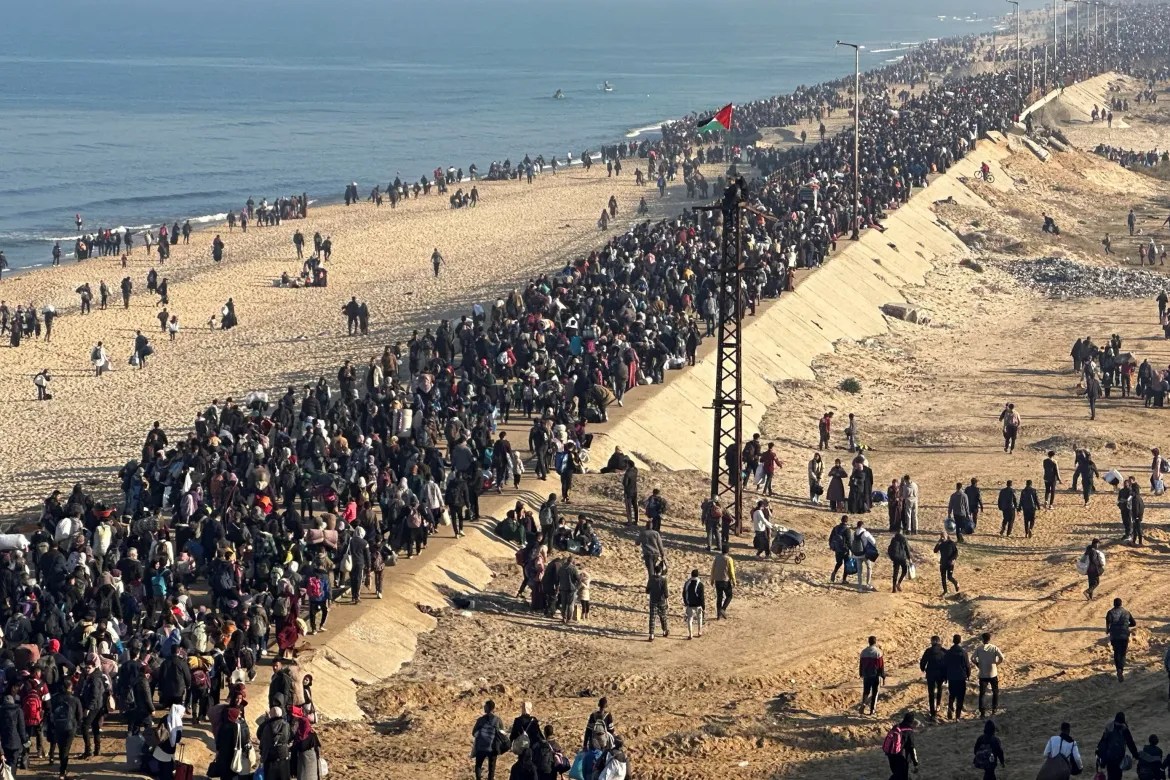
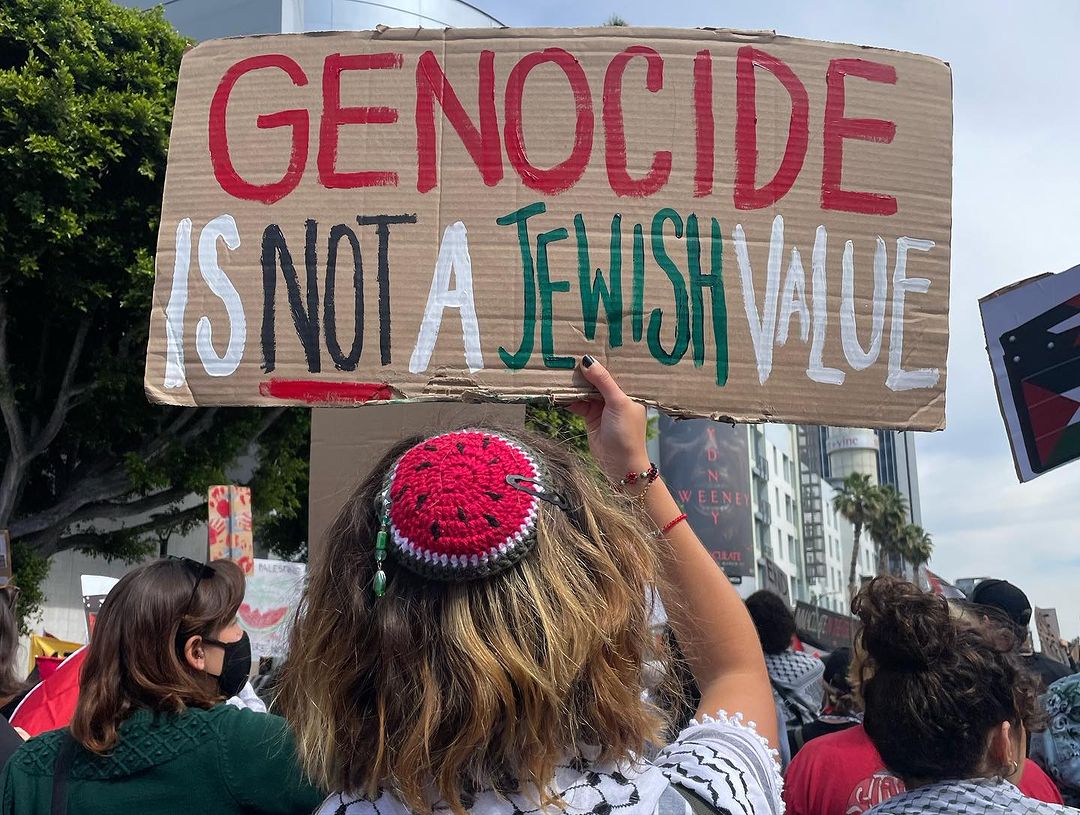
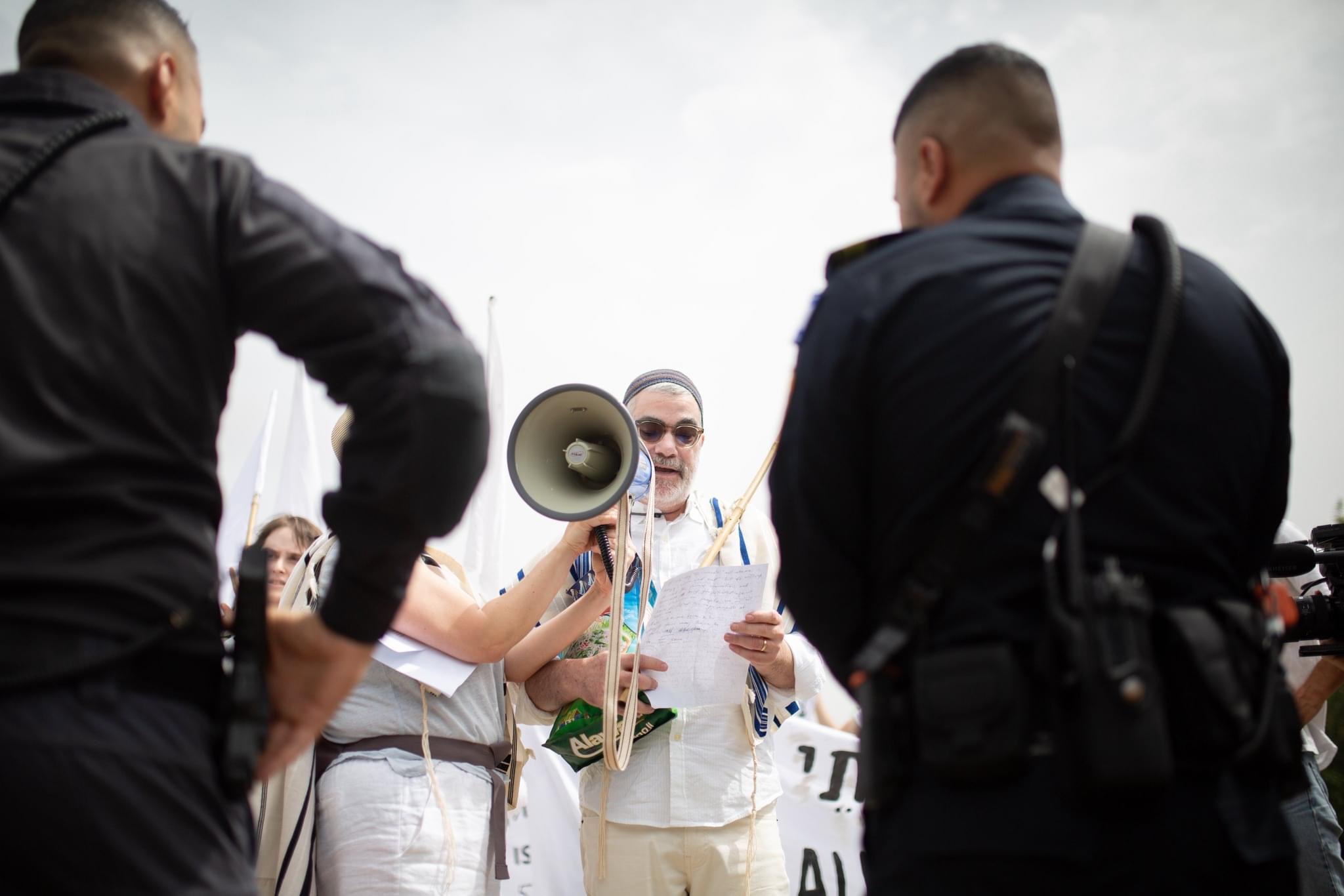
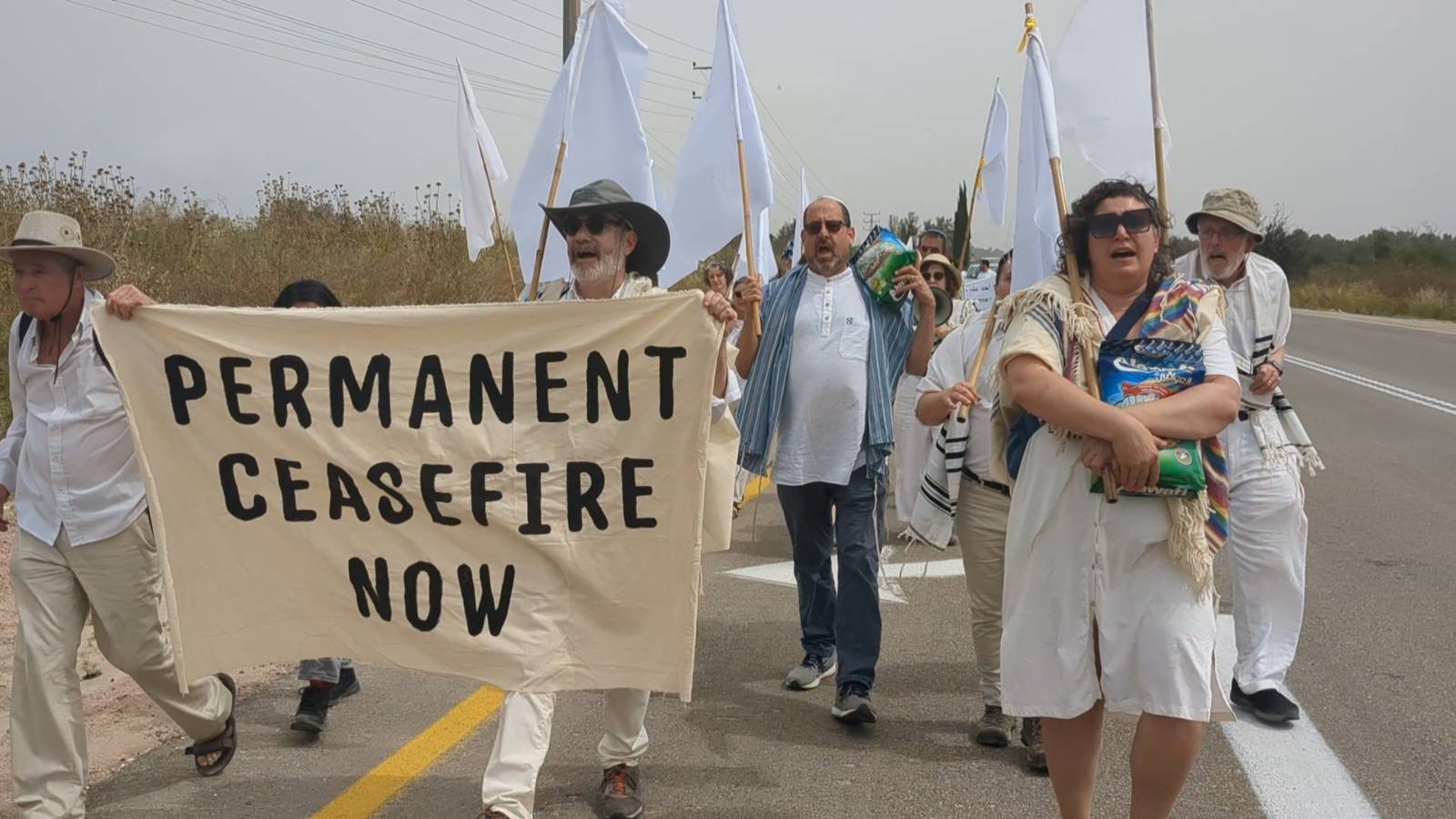
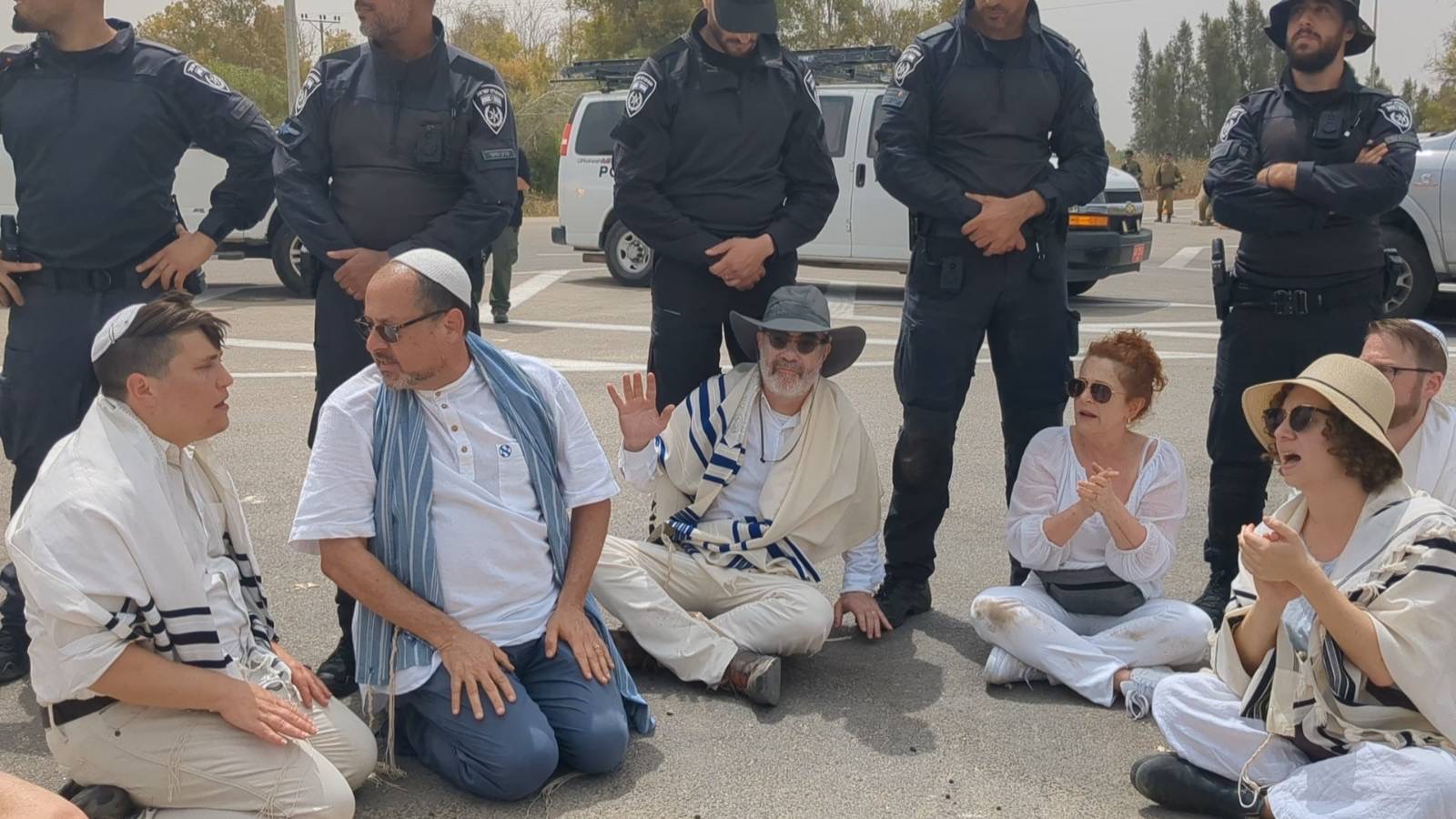
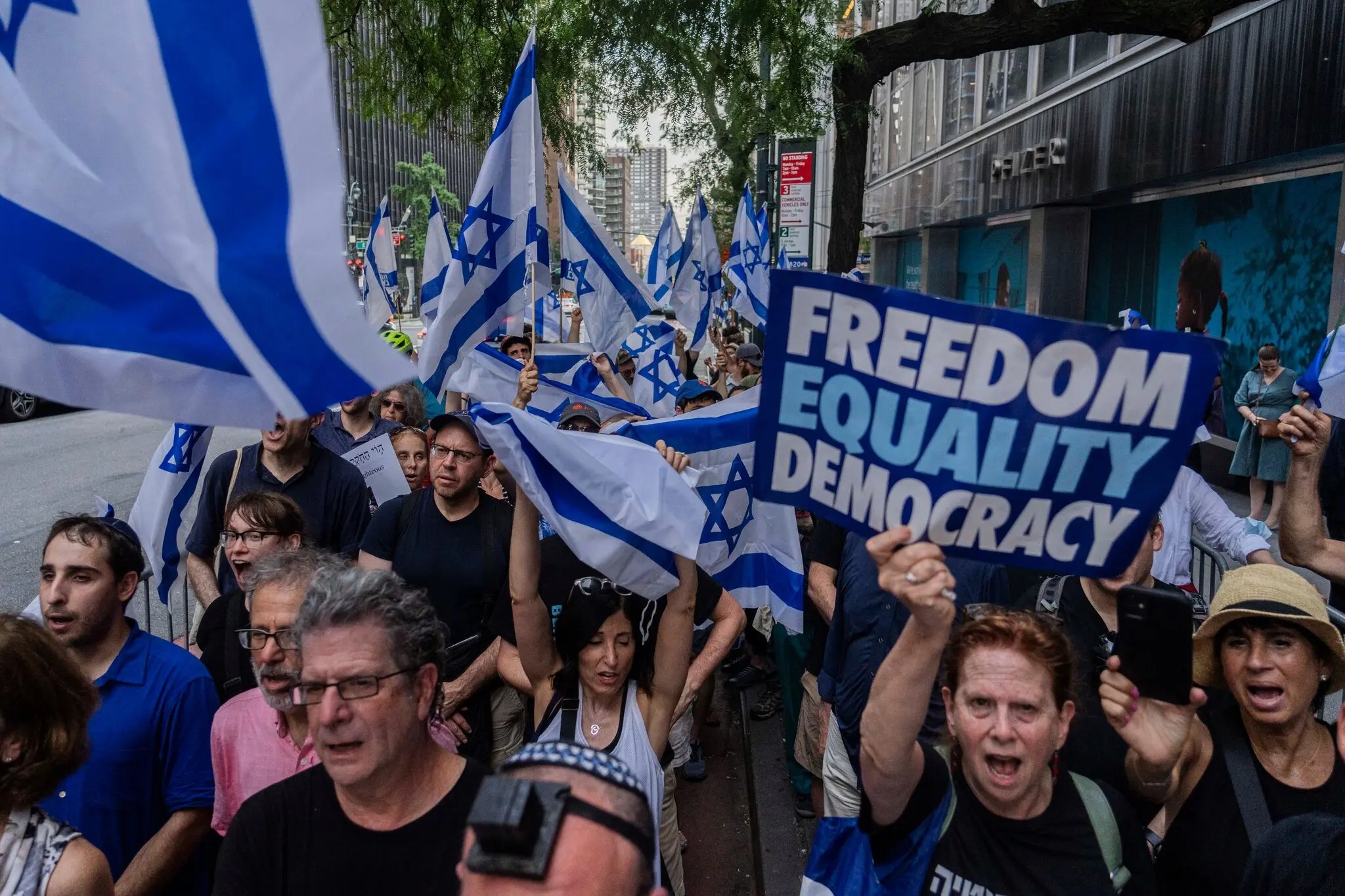
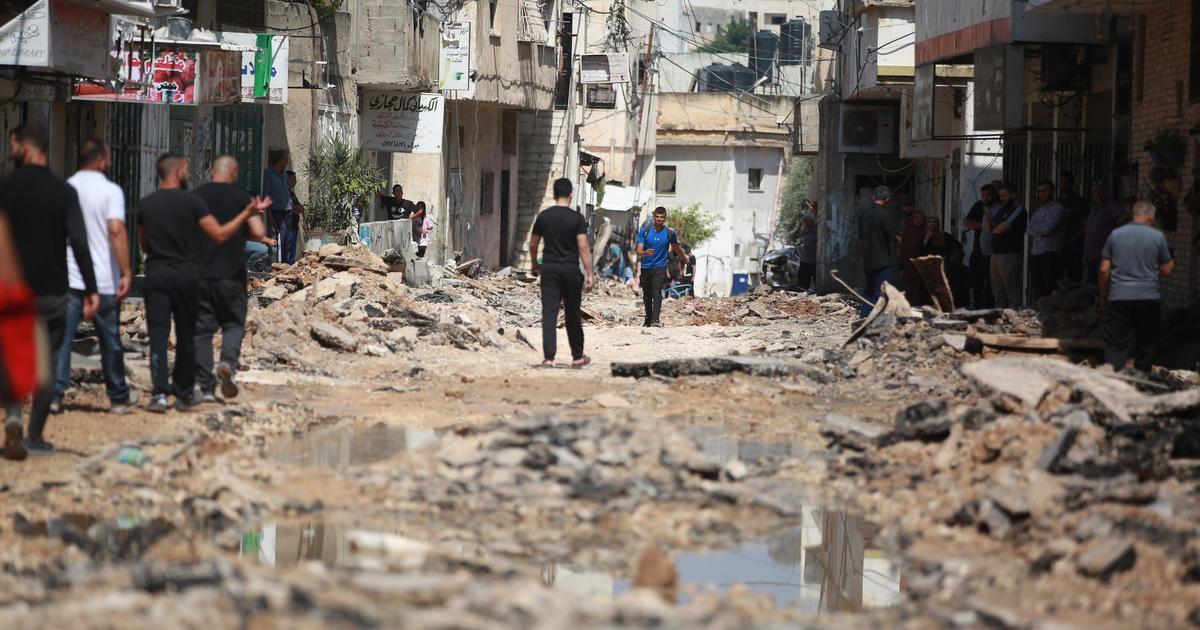
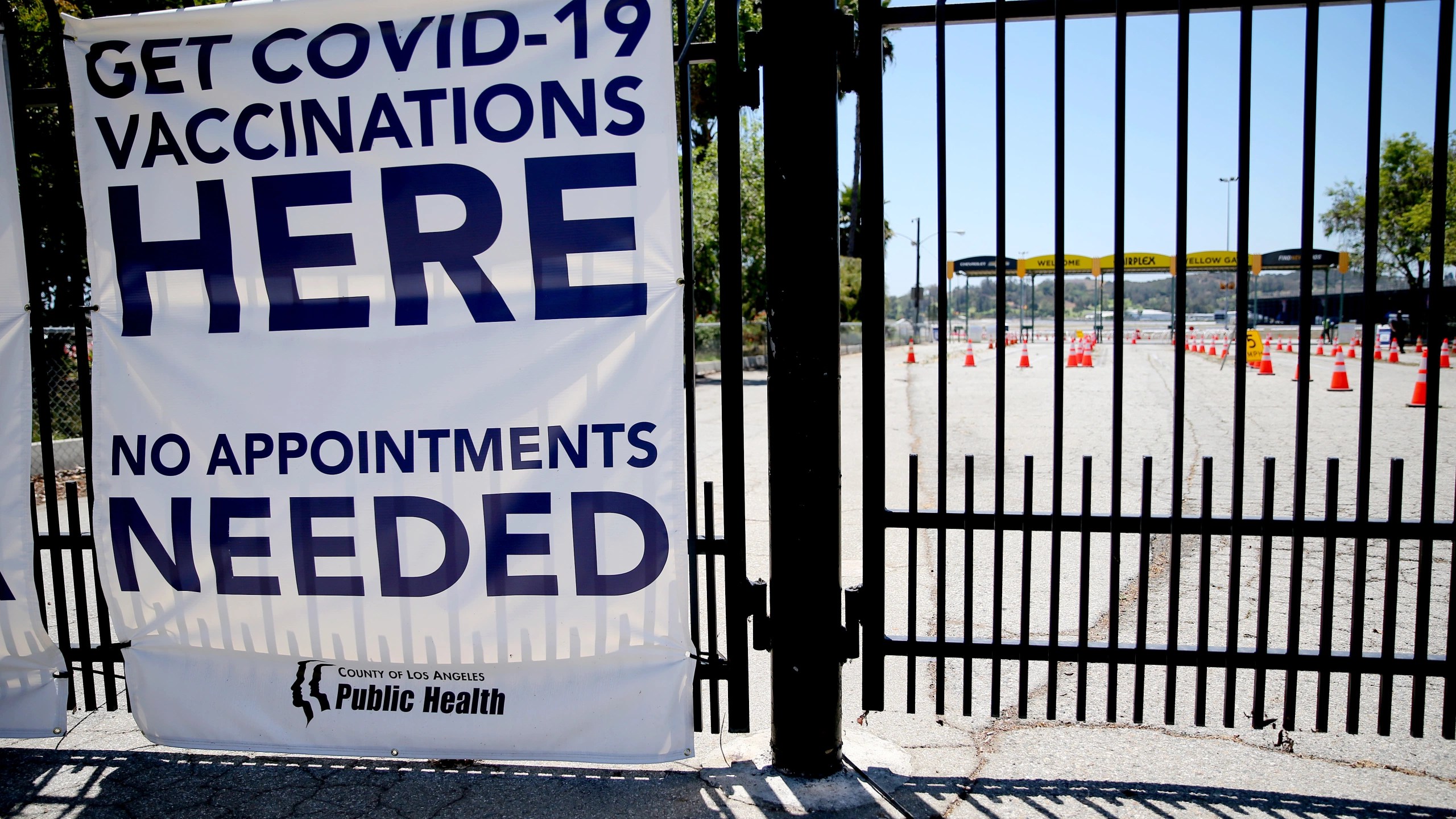
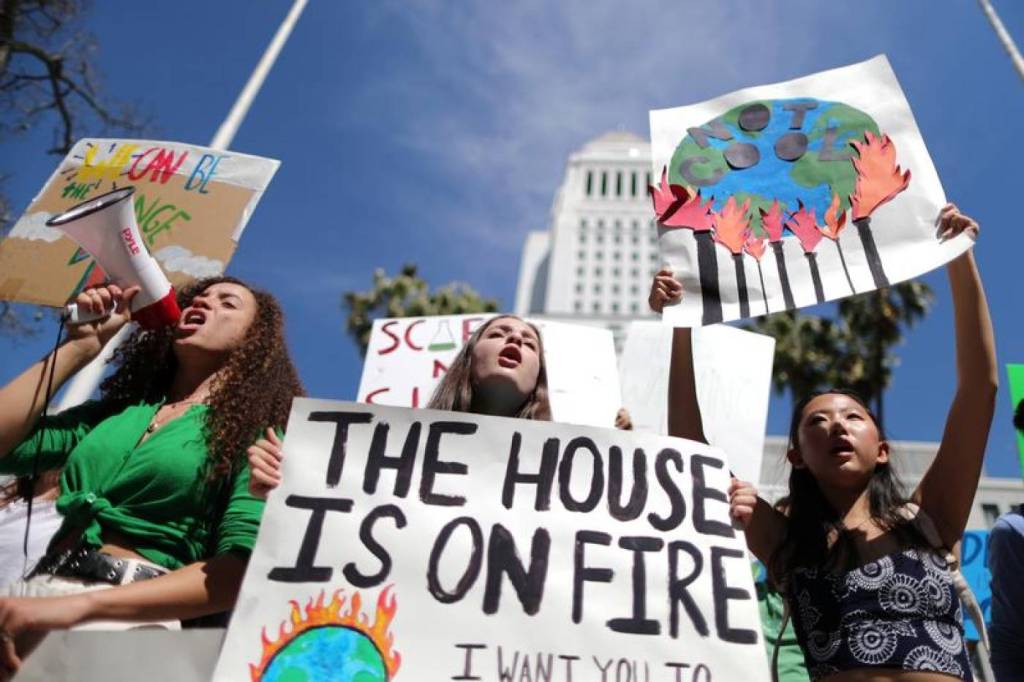
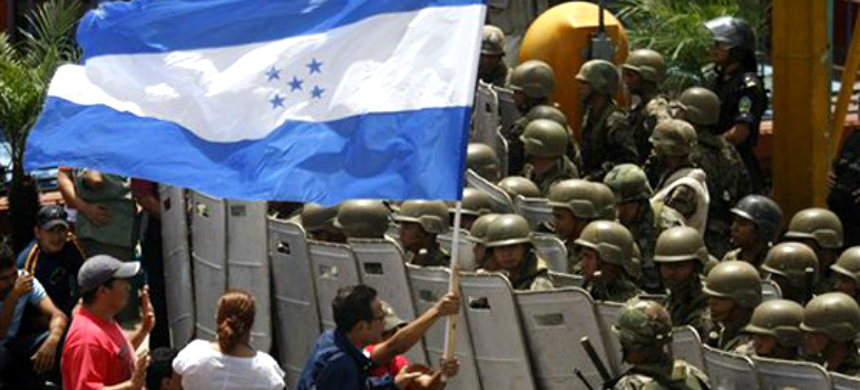
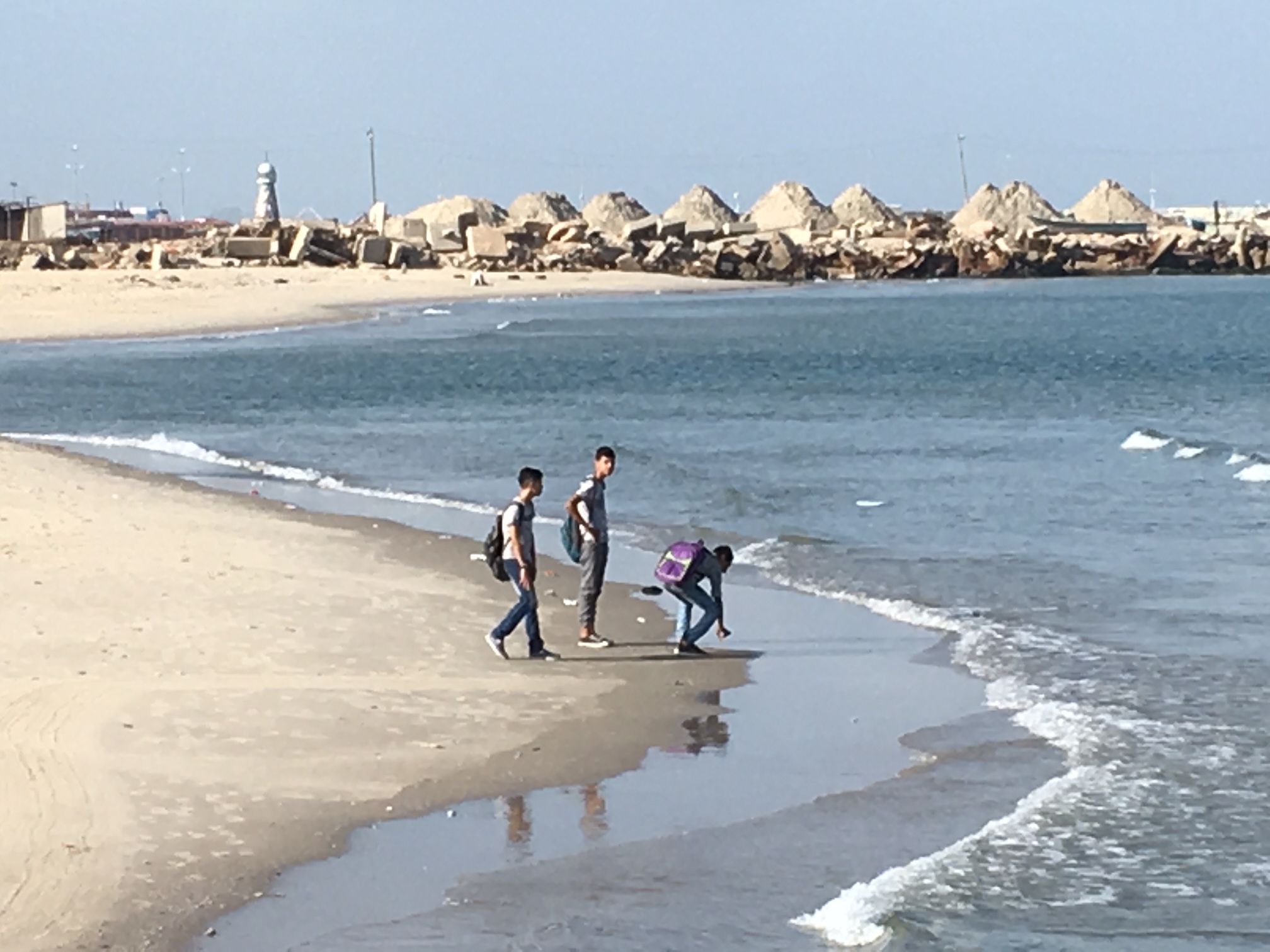
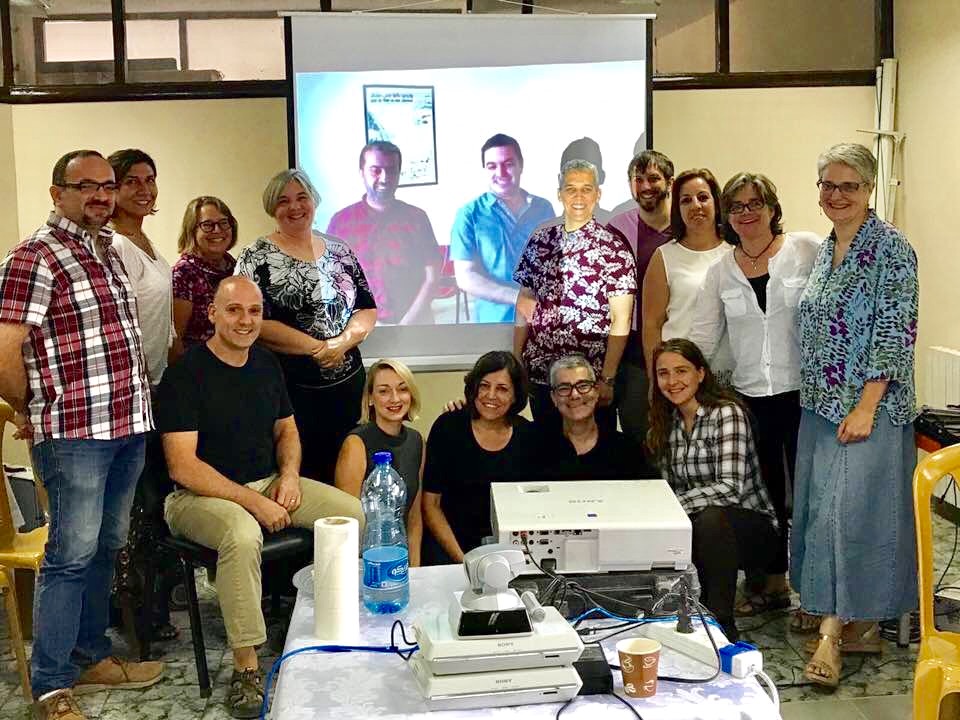
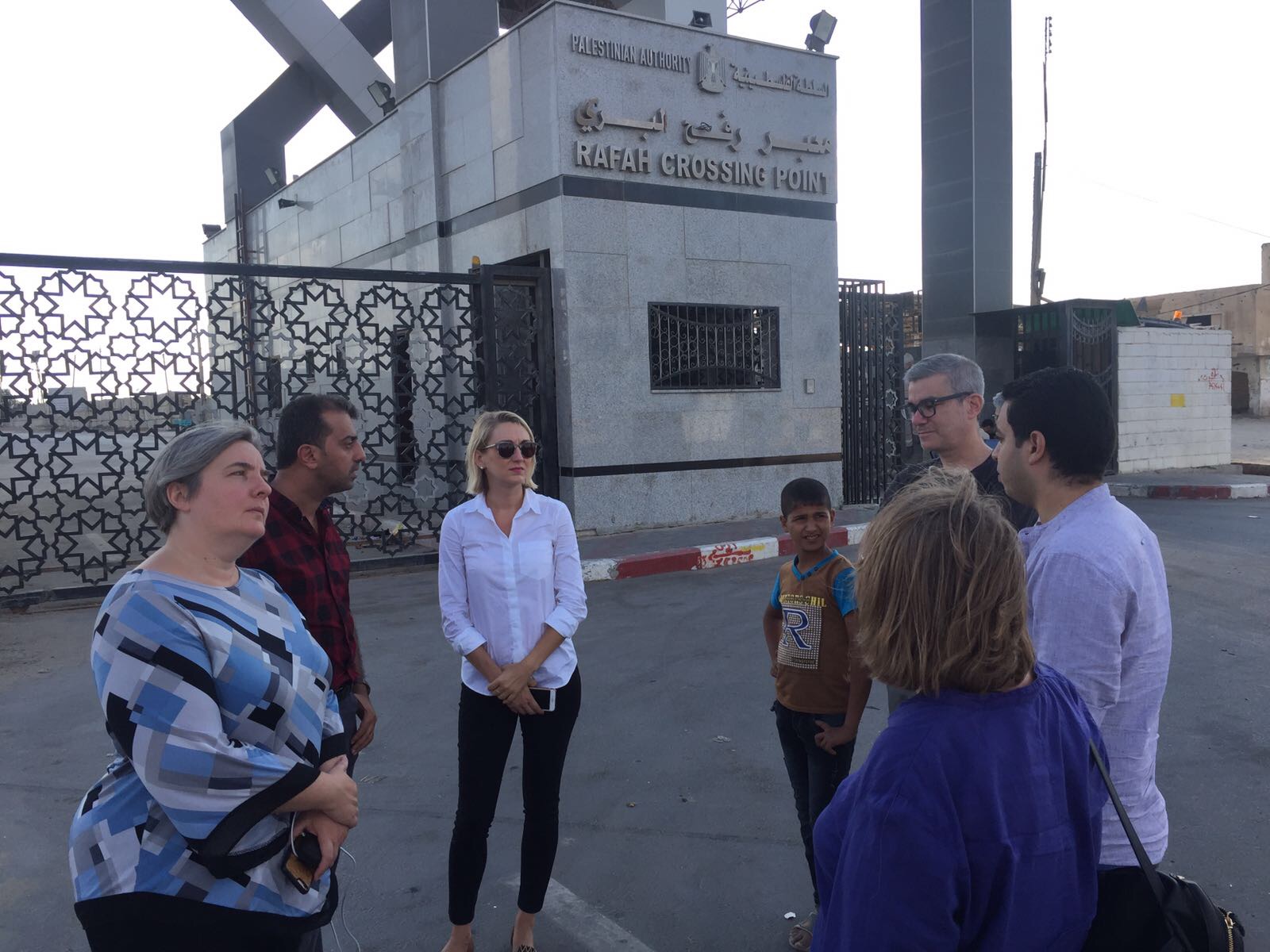
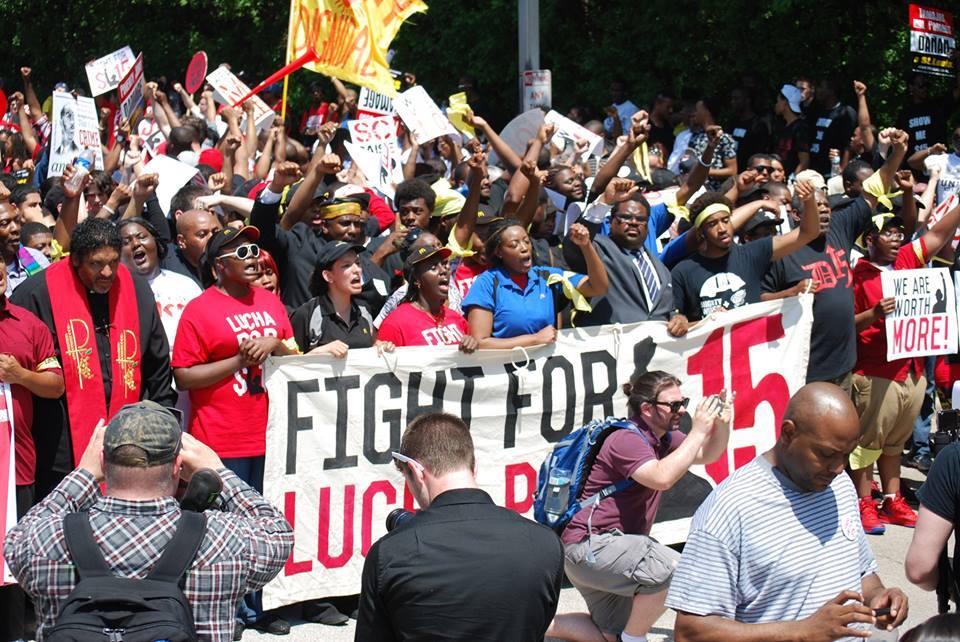
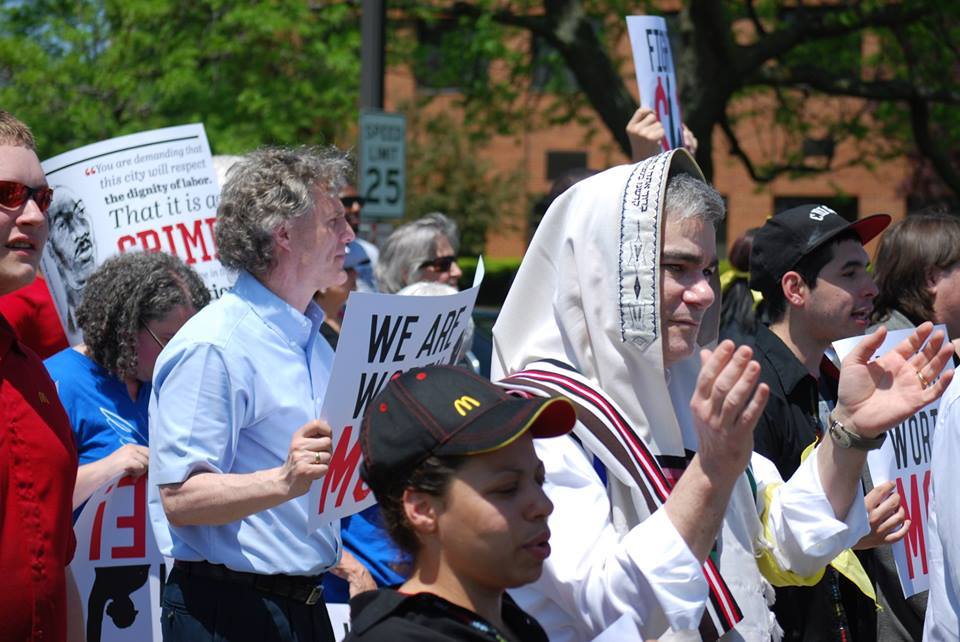
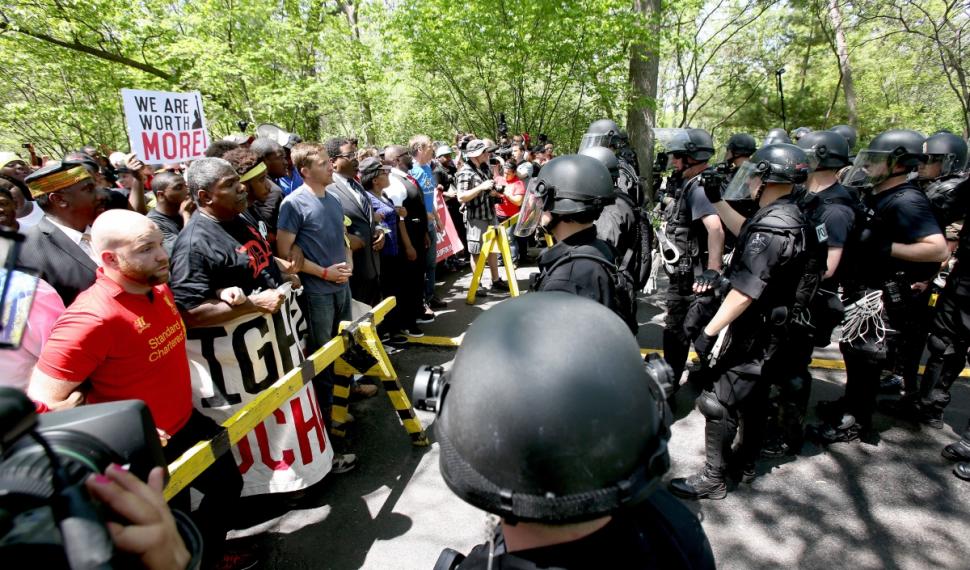
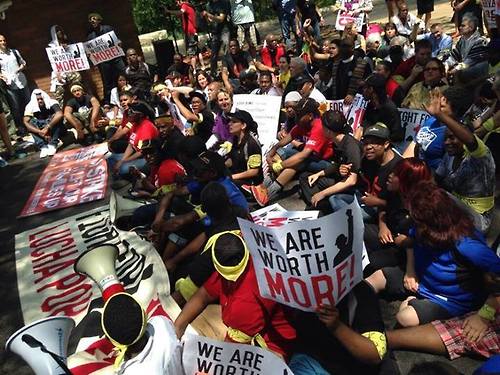
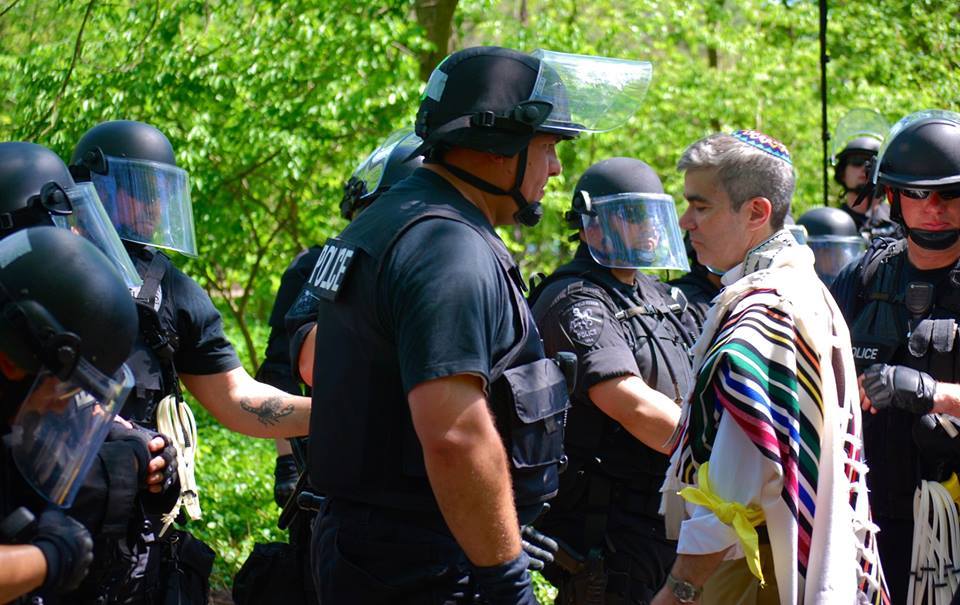
 Shalom Rav