CHICAGO (JTA) — There has long been an unwritten covenant between the Jewish establishment and Christian leaders when it comes to interfaith dialogue: “We can talk about any religious issues we like, but criticism of Israel’s human rights violations is off limits.”
Over the past few weeks, we’ve painfully witnessed what can happen when Christians break this covenant by speaking their religious conscience.
The undersigned members of the Jewish Voice for Peace Rabbinical Council stand with our American Christian colleagues in their recent call to “make U.S. military aid to Israel contingent upon its government’s compliance with applicable US laws and policies.”
We are as troubled as our Christian colleagues by the human rights violations Israel commits against Palestinian civilians, many of which involve the misuse of US – supplied weapons. It is altogether appropriate – and in fact essential – for Congress to ensure that Israel is not in violation of any US laws or policies that regulate the use of US supplied weapons.
The US Foreign Assistance Act and the US Arms Export Control Act specifically prohibit assistance to any country which engages in a consistent pattern of human rights violations and limit the use of US weapons to “internal security” or “legitimate self-defense.” The Christian leaders’ letter points out, in fact, that the most recent 2011 State Department Country Report on Human Rights Practices covering Israel and the Occupied Territories detailed widespread Israeli human rights violations committed against Palestinian civilians, many of which involve the misuse of US – supplied weapons such as tear gas.
It is certainly not unreasonable to insist that foreign assistance be contingent on compliance with US laws and policies. Mideast analyst MJ Rosenberg has rightly pointed out that during this current economic downturn, Congress has been scrutinizing all domestic assistance programs - including Social Security and food stamps - to ensure that they are being carried out legally in compliance with stated US policy. Why should US military aid to Israel be exempt from the same kind of scrutiny?
While some might feel that requiring assistance to be contingent with compliance would compromise Israels security, we believe the exactly the opposite is true. As Israels primary ally, the US alone is in a place to create the kind of leverage that might challenge Israel to turn away from policies that impede the cause of a just peace for Israelis and Palestinians - and true security for all who live in the region.
As Jews we acknowledge that the signers of the letter, and the churches they represent, have ancient and continuing ties to the land of Israel just as we do, and that their concerns for the safety and dignity of Christians in Israel and in the occupied Palestinian territories is as compelling as our concern for the safety and dignity of Jews there.
We are troubled that several Jewish organizations have cynically attacked this faithful and sensitive call – and we are deeply dismayed that the Anti-Defamation League has gone so far as to pull out of a scheduled Jewish-Christian dialogue in protest. We believe that actions such as these run directly counter to the spirit and mission of interfaith dialogue. True dialogue occurs not simply on the areas where both parties find agreement, but in precisely those places where there is disagreement and divergence of opinion. We call on all of our Jewish colleagues to remain at the table and engage our Christian colleagues on this painful issue that is of such deep concern to both our communities.
We express our full support for the spirit and content of this statement and likewise call upon US citizens to urge their representatives to end unconditional military aid to Israel.
Signed (list in formation):
Rabbi Brant Rosen
Rabbi Margaret Holub
Rabbi Alissa Wise
Rabbi Elizabeth Bolton
Rabbi Lynn Gottleib
Rabbi Brian Walt
Rabbi Julie Greenberg
Rabbi David Mivasair
Rabbi Joseph Berman
Cantor Michael Davis
Rabbi Shai Gluskin
Rabbi Tirzah Firestone
Jessica Rosenberg, Rabbinical Student
Ari Lev Fornari, Rabbinical Student
Check out my wide-ranging and freewheeling conversation with Truthout’s Mark Karlin, which focuses on my book, but also touches on subjects such as Zionism, BDS, the two-state solution and Palestinian solidarity, among others.
Here’s a taste, below. Click here for the full interview.
Mark Karlin: Stereotyping any group of people is dangerous. In polls during peaceful periods, most Palestinians and Israelis appear to support peace. A lot of what Netanyahu appears to do is stir up the pot so that there will never be a long enough period to negotiate a peace. That’s not to excuse those in Hamas and Hezbollah who have their own motives in heating up the conflict now and then, along with other parties who have vested interests in stalling peace. When you talk of your Palestinian solidarity, some critics accuse you of abandoning Jewish solidarity and not sufficiently condemning those Arab extremists who are in the “destroy Israel” industry as much as Netanyahu is in the suppression-of-Palestinian-rights industry. How do you respond?
Brant Rosen: At the end of my book I addressed this issue directly:
As a Jew, I will also say without hesitation that I reject the view that I must choose between standing with Jews or standing with Palestinians. This is a zero-sum outlook that only serves to promote division, enmity and fear.
For me, the bottom line is this: the cornerstone value of my religious tradition commands me to stand in solidarity with all who are oppressed. It would thus be a profound betrayal of my own Jewish heritage if I consciously choose not to stand with the Palestinian people.
In other words, I believe my Jewish liberation to be intrinsically bound up with Palestinian liberation. It’s really that simple.
I’ve come to believe that solidarity should ultimately be driven by values, not tribal allegiances. It should be motivated by the prophetic vision that demands that we stand with the powerless and call out the powerful. Of course, in the case of Israel, this form of solidarity presents a very painful challenge to many Jews. I understand that. But at the very least, shouldn’t we be talking about this challenge and what it represents for us?
Does my solidarity mean that I agree with everything that is done by Palestinians in furtherance of their liberation? Of course not. When you stand in solidarity with a people, it is inevitable that you will find yourself standing next to some people whose actions and beliefs you will find odious. That comes with the territory when you choose to take a stand. And I might add that this is the case for liberal Zionists who stand in solidarity with Israel as well.
The Code Pink founder and nonviolence activist is currently leading a delegation of 31 American peace activists through Pakistan to protest the tragic damage wrought by US drone attacks. Traveling with popular Pakistani politican, Imran Khan, the delegation recently attempted to hold a rally in the tribal regions that have been hardest hit by the US drone campaign. On October 9, the delegation will publicly fast from sunrise to sunset at a vigil in front of the Islamabad Press Club, where they will display pictures of the more than 160 Pakistani children who have been killed by American drones. (Jews who have only recently completed a fast of atonement should appreciate the spiritual power of such an act…)
The majority-female delegation — in their early 20s to late 70s — traveled with no security guards despite announced militant threats against them and Khan, head of the Pakistan Justice Movement political party. They fell in line behind Khan’s procession as legions joyously waved party flags atop trucks.
By late Saturday, when the Codepink delegates finally reached a large farm belonging to a regional party official, they were mobbed by an admiring Pakistani media and given a hero’s welcome by hundreds of the candidate’s fans.
Anti-American sentiment runs extremely high in Pakistan, but the delegation focused on a simple message: “We are against drones” was emblazed in Urdu in green fluorescent script, outlined with glitter, on the oversize white bibs they wore.
“You hit people with these drones and you create instant enemies,” said JoAnne Lingle, a silver-haired Mennonite from Indianapolis. “It’s supposed to be increasing our national security and it’s doing the opposite.”
In the United States, the dominant narrative about the use of drones in Pakistan is of a surgically precise and effective tool that makes the US safer by enabling “targeted killing” of terrorists, with minimal downsides or collateral impacts.
This narrative is false.
Following nine months of intensive research—including two investigations in Pakistan, more than 130 interviews with victims, witnesses, and experts, and review of thousands of pages of documentation and media reporting—this report presents evidence of the damaging and counterproductive effects of current US drone strike policies. Based on extensive interviews with Pakistanis living in the regions directly affected, as well as humanitarian and medical workers, this report provides new and firsthand testimony about the negative impacts US policies are having on the civilians living under drones…
(While) civilian casualties are rarely acknowledged by the US government, there is significant evidence that US drone strikes have injured and killed civilians. In public statements, the US states that there have been “no” or “single digit” civilian casualties.”2 It is difficult to obtain data on strike casualties because of US efforts to shield the drone program from democratic accountability, compounded by the obstacles to independent investigation of strikes in North Waziristan. The best currently available public aggregate data on drone strikes are provided by The Bureau of Investigative Journalism (TBIJ), an independent journalist organization. TBIJ reports that from June 2004 through mid- September 2012, available data indicate that drone strikes killed 2,562-3,325 people in Pakistan, of whom 474-881 were civilians, including 176 children.
Shortly after this report was issued, Obama had the temerity to stand before the UN and decry the “killing of innocents” in the US mission in Benghazi. This, while his administration continues to kill innocents in a secrecy-shrouded military program that blatantly undermines the US Constitution and international law – and is most surely inflaming further Mideast rage toward the US. In the face of such hypocrisy, all I can say is thank God for truth-tellers like Medea Benjamin.
Let me leave you with this vision: the vision of a people who have over the centuries learned to build a nation without borders, a multi-ethnic nation suffused with the beauty of a myriad of cultures, a nation inspired by a religious tradition it constructs and reconstructs in every age and in every generation. At its heart, a nation committed to the struggle for meaning in our lives and justice in our world. And in the end, a nation that has nothing to fear and every opportunity to gain from the remarkable changes underway in the 21st century.
However – I also wonder if Jewish tribalism is starting to come at a cost. I especially wonder what it means for the Jewish community to be tribal in this day and age, when we are experiencing openness and freedom in historically unprecedented ways. Given the global realities of our 21st century world, I wonder if there might be new models for Jewish identity – ones that value tribalism less than a deeper sense of engagement and kinship with the world outside.
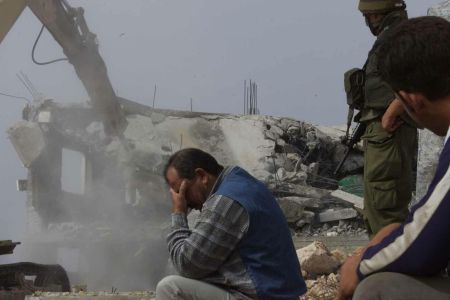
I’m sure many people find it perfectly reasonable that an Israeli court recently ruled Palestinian solidarity protester Rachel Corrie caused her own death in 2003 by standing in front of a moving bulldozer. After all, as Judge Oded Gershon pointed out, she knew the risks. She “chose to endanger herself” by going into a “closed military zone” to try and stop the destruction of a Palestinian home in southern Gaza. Then she refused to step aside, as “any reasonable person would have done.”
If this verdict all sounds perfectly “reasonable” to some, I believe it is only because it was presented devoid of any real context. It utterly ignores the fact that it is the Israeli military – and by extension, Israel itself – that creates the rules that govern the “reality” of this situation. The court could rule any way it pleased – even despite all evidence to the contrary – because at the end of the day it answers to no one but itself.
Why was this civilian area deemed a “closed combat zone?” Because the Israeli military deemed it as such. This, despite the fact that no combat was taking place in the area on that day and no closed military zone order was ever presented in court. This despite the compelling claims that these home demolitions have nothing to do with Israeli’s security and everything to do with collective punishment.
If you have any doubt about the length and breadth of Israel’s military impunity, I urge you to read this article by the Guardian’s Chris McGreal – to my mind the most important article about the Corrie verdict thus far:
The case laid bare the state of the collective Israeli military mind, which cast the definition of enemies so widely that children walking down the street were legitimate targets if they crossed a red line that was invisible to everyone but the soldiers looking at it on their maps. The military gave itself a blanket protection by declaring southern Gaza a war zone, even though it was heavily populated by ordinary Palestinians, and set rules of engagement so broad that just about anyone was a target.
Yes, Rachel Corrie knew the risks. As an activist with the International Solidarity Movement (ISM), she went through extensive training to prepare herself to engage in this form of nonviolent protest. Eyewitnesses testified that she wore a high visibility orange vest and stood in full view of the soldier driving the bulldozer. But tragically, I doubt all the precautions in the world could ever have protected her from what McGreal refers to as “the collective Israeli military mind.”
Or, for that matter, Israeli military justice. As is now well known – and has even been admitted by US Ambassador to Israel Dan Shapiro – the IDF’s investigation into Rachel’s death was a sham, carried out by a team of 19-year-old inexperienced boys who never interrogated a single Palestinian or non-military witness. This is a critical point: Israel has to date not carried out a full, credible investigation of its military’s actions on that day – actions that resulted in the death of an American citizen. As Rachel’s mother Cindy has correctly pointed out: “a lawsuit is not a substitute for a legal investigation, which we never had.”
I have met Rachel’s parents Cindy and Craig on several occasions now and I know them to be among the most compassionate and principled social justice activists I have ever met. Yes, they are pursuing this case because of what happened to their daughter, but anyone who knows them knows they are driven by a deeply held belief in justice. Notably, they only sought one dollar in damages from the Israeli government – an award which Judge Gershon refused to grant them in his ruling. I have no doubt that Cindy Corrie meant it from the bottom of her heart when she said after the verdict:
This is a sad day, not only to us, as a family. This is a sad day for Israel, a sad day for human right activists, a sad day for international law, a sad day for justice.
I do agree with Judge Gershon when he ruled that Rachel did not step aside “as any reasonable person would have done.” As too many nonviolent protesters know all too well, when you find yourself in the midst of an unjust context, doing the just thing is rarely the most reasonable option. (I’m sure many didn’t consider it “reasonable,” for instance, when marchers in Selma walked straight into a line of armed state troopers on the Edmund Pettus Bridge in 1965.)
Look at the clip above. It comes from a Korean news story about the Palestinian nonviolent protest movement in the West Bank. In this clip, you can see ISM founder Huwaida Arraf protecting protesters from armed soldiers with her own body. Nothing reasonable there. How many of us have one iota of her – or Rachel’s – courage to stand firm in the face of such overwhelming injustice?
At the press conference following the verdict, the Corries were asked how they felt that the judge said that Rachel should have moved out of the bulldozer’s way. Cindy Corrie’s response:
I don’t think that Rachel should have moved. I think we should all have been standing there with her.
From a recent review by Rabbi Rachel “Velveteen Rabbi” Barenblat:
Gwen Macsai
“Wrestling in the Daylight”… is Rabbi Brant’s self-curated compilation of his blog posts from Shalom Rav, so if you’ve been reading Shalom Rav, this material won’t be new to you. But I’m finding, as I read, that reading the posts in this new setting and context — curated by their author into a narrative which clearly shows the progression of his thinking over time — is a different experience from reading the blog. And Rabbi Brant has chosen to reprint some of the comments from readers as well as responses he’s offered to those comments, which gives the book a bit of the internet’s Talmudic multivocality (and offers an example of how one can host difficult conversations in a thoughtful and generous way — which can be hard to come by on the internet, especially on questions of Israel/Palestine.)
Andrew White
The choice to include commentary makes the book particularly interesting, I think. Some of Rabbi Brant’s most frequent commentors disagree with him deeply. Over the course of the book, one can see conversations unfolding. Sometimes they are quite heated. And his responses are always thoughtful and respectful, even as he resists attempts at derailing the conversation. Having hosted some conversations about Israel at this blog over the years, I have a sense for how difficult that can be.
Kevin Coval
… Rabbi Brant Rosen is one of my role models in the difficult but important work of coming to terms with the clash between the classic Zionist narrative (a story which many of us want to continue believing — I know I still yearn for it to be true) and some of the realities on the ground in Israel and the Palestinian territories. He models for me not how one would do this internal work despite his ardent Jewishness, but precisely of it; not despite being a rabbi, but precisely because his rabbinate calls him to take seriously the Jewish call to stand with those who are oppressed. And he has also taught me a great deal about how to disagree without falling into the trap of looking down on (or dehumanizing) those with whom one disagrees.
If you’re interested in progressive Jewish takes on Israel and Palestine, this book is worth reading, and worth having on your bookshelf to return to again.
I’m thrilled to be joined at our September launch party by local Chicago celebs Kevin Coval, (Poet, Co-Founder, “Louder Than a Bomb“), Gwen Macsai, (Host, WBEZ’s Re:Sound) and Andrew White (Artistic Director, Lookingglass Theatre Company), who will join me in reading excerpts from the book. We’ll also make plenty of time for Q&A, book signing and quality bookstore shmoozing.
It promises to be a wonderful evening – RSVP at our Facebook event page here.
I’m looking for some godly men and women in the Senate, in the Congress, who will stand in the face of the danger of Islam in America without political correctness. Islam is not the peaceful, loving religion we hear about.
I don’t know about a domestic “radical Islamic plot” but by now it should be abundantly clear that there is a deadly strain of Islamophobia in our country. In such a climate, I’d say it is the height of irresponsibility for public servants to issue remarks such as these.
It was my honor to stand, together with interfaith colleagues, with my good friends at CAIR – Chicago to express our outrage at Walsh’s sick bigotry (clip above). If you stand with us, please, please let Rep. Walsh know how you feel.
I recently had the pleasure, along with my good friend, community organizer extraordinaire Michael Deheeger (left), to be interviewed by Gonzalo and Maya Escobar for the Poco a Poco Radio program on WLUW 88.7 Chicago. During our wonderfully wide-ranging bilingual conversation, we had the opportunity to explore the Jewish roots of social justice and how it informs our work as activists.
Chicago locals can hear the interview on Sunday, August 12 1:30 pmat 88.7 FM, but anyone anywhere can tune in to the live stream from the WLUW website. And if you can’t catch it live, never fear – the full version of the interview will soon be archived at the site.




 Shalom Rav