Category Archives: Human Rights

The IDF Belly Dance: This Is What Occupation Does to the Occupied and the Occcupier

From Ha’aretz:

A video uploaded to YouTube shows an Israel Defense Forces soldier wriggling in a belly dance beside a bound and handcuffed Palestinian woman, to the cheers of his comrades who were documenting the incident.

The IDF’s internal investigation department ordered an immediate probe into the matter…

As the article notes, it’s only the latest incident of an IDF “Abu Ghraib-style” scandal – but don’t think for a second that all is well now that the IDF is “investigating the matter.” I’m in agreement with blogger Mitchell Plitnick, who points out that these incidents are just the outward manifestation of something much more fundamental and much more troubling:

In my work I’ve come to meet and get to know many soldiers, from several countries (most, of course, either Israeli or American), both active ones and veterans. I know that most soldiers do not behave this way. But it is clear, from every war, conflict, police action and occupation that there are always some soldiers who do.

Israelis are no different, but there is something that is different about this dynamic. It is that these soldiers are the products of a militarized society which has been holding millions of people under military occupation, with no rights of citizenship, for over 43 years. That has a long term effect on both occupier and occupied.

These soldiers are young men and women, who are the second or even third generation of occupiers. They have been raised in a culture that, as is natural for an occupying power, both dominates the Palestinians and also fears them. That fear is not limited to terrorists, but extends to the very existence of the Palestinians, and their legacy of dispossession.

Protest the FBI Raids – Support Freedom of Dissent in post 9/11 America!

On September 24, the FBI raided eight homes and offices of antiwar activists in Chicago and Minneapolis and subsequently issued a summons for them to appear before a grand jury in Chicago.  I won’t go into the details of this egregious violation of the Constitutional rights of US citizens because this Democracy Now piece (part one above, part two, below) does a thorough job in covering all the sordid details. (You can read the transcript here.)

If you live in the Chicago area (and are outraged at the increasing criminalization of dissent in post 9/11 America), I encourage you to attend a rally to against the raids and support of the peace activists subpoenaed by the FBI on Tuesday, October 5 at 8:30 am outside the Dirksen Federal Building, 230 S. Dearborn Avenue, Chicago.

If you can’t attend the rally, please join me and a growing list of signers who have added their names to the following interfaith statement (to sign, send an email to MMcConnell@afsc.org):

We are people of faith and conscience who condemn the recent FBI raids in Chicago as a violation of the constitutional rights of the people and organizations raided. They are a dangerous step to further criminalize dissent. The FBI raids chisel away and bypass fundamental constitutional rights by hauling activists before grand juries under the guise of national security. An overly broad definition of “material support for terrorism” in the June 2010 US Supreme Court ruling concerns us as people of faith who continue to be actively engaged in humanitarian work and peacemaking.

The real illegitimate activities are U.S. foreign policies that support war and occupation. We believe that peacemaking is a sacred commandment.  We feel compelled to work to end military solutions that kill and maim innocent people, destroy civil society institutions, create massive poverty and dislocation of people from their homelands, militarize our own nation and continue to create more animosity against the United States, thus undermining our security.

We are committed to a just peace in Israel and Palestine, Iraq, Afghanistan and Colombia. Some of us have visited these conflicted areas and accompanied those most affected by the violence. Some of us have permanent staff and volunteers working nonviolently for a peaceful resolution to these conflicts. We all stand opposed to the United States’ and all nations’ support of military aid and military intervention in these countries. The infusion of military aid has exacerbated violence rather than resolved it.

We believe in a divine spirit of justice and hope that promotes understanding and equality of all humanity. We refuse to remain silent in the face of the latest efforts of the FBI to chill dissent against war by invading homes of peace activists and calling a grand jury with sweeping powers to manufacture fear. We denounce the use of fear and the far-reaching labeling of critical dissent as “terrorism” that tramples on not only our right, but our duty to dissent as people called to a moral standard of justice for all.

Jews, Power and Privilege: A Sermon for Yom Kippur 5771

From my Yom Kippur sermon yesterday:

For matter how painful the prospect, I don’t think we can afford to dodge this question. If we agree that the inequitable distribution of power and privilege is a critical problem for us and for our world, then there will inevitably be times in which we are faced with an intensely difficult question: does tribal loyalty trump solidarity with the oppressed?

Actually, I’m coming to believe that this is not the best way to frame the question. I don’t really think it’s all that helpful to view this issue as some kind of zero-sum game; to see it as a question of tribal allegiance; to insist that I either stand with my own people or I don’t. I prefer to say it this way: that it is in my self interest as a Jew to stand in solidarity with the oppressed because I believe that Jews cannot be fully human while they benefit from a system that denies others their own humanity. For those with power and privilege, the struggle against racism and oppression is fought knowing that our own liberation is also at stake.

Click below to read the entire sermon:

Continue reading

The Supreme Sacrifice: A Sermon for Erev Yom Kippur 5771

From my Erev Yom Kippur sermon last Friday:

And as I think about it, perhaps this is why we read a Martyrology on Yom Kippur. As we remember our martyrs, we search our own souls and ask ourselves honestly: what have we done in the past year to prove ourselves worthy of these profound sacrifices? What have we done to affirm that these people did not die in vain? Did we indeed honor their memories by transforming loss into justice and hope for our world?

Click below to read the entire sermon:

A JRC member recently asked why we never do the Martyrology service on Yom Kippur. I wrote back to the congregant – and I’ll confess to you now: I’ve never been a huge fan of this particular liturgy.

Continue reading

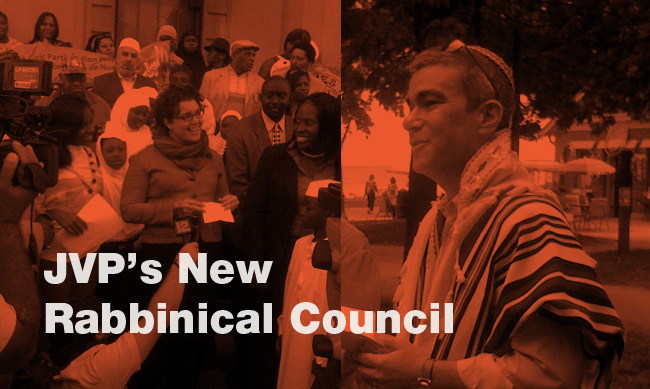
Jewish Voice for Peace Launches Rabbinical Council

I’ve just begun serving with my good friend and colleague Rabbi Alissa Wise as co-chair of Jewish Voice for Peace’s newly launched Rabbinical Council. As readers of this blog may have surmised by now, JVP has become an increasingly important and vital organizational address for me – and I’m honored to be working with Alissa to help organize Jewish spiritual leaders on its behalf.

If you’re a rabbi, rabbinical student or cantor, we invite you to sign on. You can contact us at rabbis@jvp.org.

Martin Indyk on the Peace Process: Hoping Against Hope

martin_indyk001_16x9

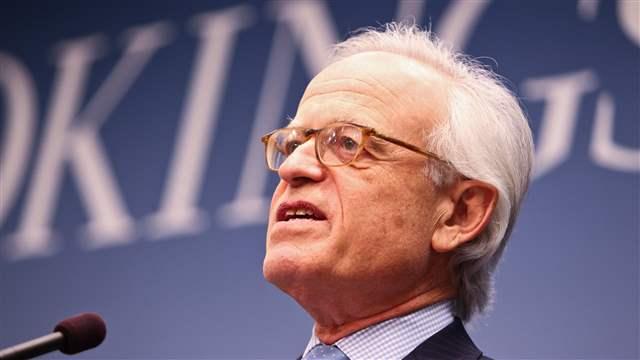
A commenter on my last post asked me what I thought of Martin Indyk’s recent NY Times op-ed, in which he expresses a powerful optimism about the upcoming I/P peace talks in Washington.

My answer?  Indyk’s article represents a picture-perfect example of the inherent inequity of the peace process as it is currently defined.

In his op-ed, Indyk lists four factors that he believes distinguish this round of direct talk from previous attempts. Number one, he claims that “violence is down considerably in the region.” Thanks to the PA’s security measures in the West Bank and Hamas’ in Gaza, Indyk explains, Palestinian violence against Israelis has decreased considerably.

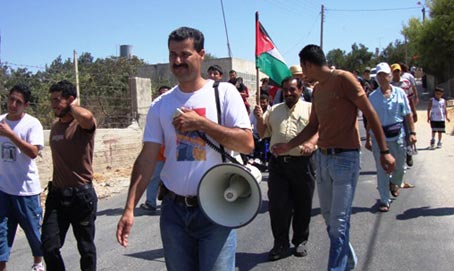
His analysis, however, completely leaves out the other side of the equation: Israel’s violence against Palestinians, which remains as brutal and oppressive as ever. The examples are legion: Israel’s military assault in Gaza in 2008/09 that left 1,400 dead, the structural violence of its ongoing blockade of Gaza, which is having a devastating effect on Gaza’s economy, health care system, infrastructure and Gazans’ freedom of movement. In the West Bank, the IDF continues its armed crackdown on weekly non-violent protests and has increased its arrests and incarceration of non-violent Palestinian leaders.  Home evictions and demolitions continue throughout the territories, East Jerusalem and even in Israel proper.

Indyk’s myopia on this front is fascinating. Indeed, it offers an important window into a fundamental injustice that currently pervades the peace process – a process where only Palestinian violence against Israelis is considered germane to negotiations. It might reasonably be asked: is this process about delineating the terms of a equitable peace treaty or dictating the terms of a Palestinian surrender?

Indyk’s second factor: Israel’s “settlement activity has slowed down considerably.” To demonstrate his claim he quotes from the Israeli Central Bureau of Statistics, which reports that

(No) new housing starts in the West Bank were reported…in the first quarter of this year. What’s more, there have been hardly any new housing projects in East Jerusalem since the brouhaha in March, when Vice President Joe Biden, during a visit to Israel, condemned the announcement of 1,600 additional residential units. The demolition of Palestinian houses there is also down compared with recent years.

It is a clear sign of Indyk’s abiding prejudice that he turns to the Israeli government for an accurate report of facts on the ground. I’d suggest a more trustworthy source: namely, Peace Now, who has been indefatigably tracking Israel’s settlement activity in the West Bank.

According to its most recent report:

(On) the ground, there is almost no freeze or even a visible slowdown, despite the fact that legal construction starts have been frozen for 8 months (and) that the Government of Israel is not enforcing the moratorium.

The report’s main findings:

• At least 600 housing units have started to be built during the freeze, in over 60 different settlements.

• At least 492 of those housing units are in direct violation of the law of the freeze.

• During an average year (when there is no freeze) approximately 1,130 housing units start to be built in 8 months in the settlements. The new construction starts during the moratorium constitute approximately half of the normal construction pace in the settlements.

• Some 2,000 housing units are currently under construction in the settlements, most of them started before the freeze was announced in November 2009.

This means that on the ground, there is almost no freeze or even a visible slowdown, despite the fact that legal construction starts have been frozen for 8 months.  It also means that the Government of Israel is not enforcing the moratorium.

In short? Indyk’s claim is misleading and spurious. Palestinians have been reasonably concerned about entering into direct talks while Israel’s settlement activity is ongoing.  As things currently stand, the “freeze” is slated to be lifted next month – precisely the same time talks in Washington are scheduled to commence.

For factors three and four, Indyk points out that a majority of the public on both sides support a two-state solution – and that there really isn’t that much left to negotiate anyway.  He blames Arafat exclusively for the breakdown of Camp David in 2000, a failure that left “Palestinians and Israelis mired in conflict.” This is, of course, the conventional Israeli narrative regarding the failure of Camp David: the Israelis made a generous offer, the Palestinians spurned it, and the Second Intifada ensued.

This is a simplistic, one-sided narrative that has long been challenged by compelling accounts of the actual negotiations.  Most famously, this narrative asserts that Israel was prepared to offer 96% of the Occupied Territories to the Palestinians. It has since been pointed out that this 96% number more accurately represented the percentage of the land over which Israel was prepared to negotiate. It did not include, among other things, East Jerusalem, the huge belt of Jewish settlements around the city or a ten mile wide military buffer zone around the Palestinian territories. In fact, after factoring in an obligation to lease back settlements to Israel for twenty five years, the total Palestinian land from which Israel was prepared to withdraw actually came to approximately 46%.

Regardless of which narrative we choose to believe, it is clear that ten years after Camp David many difficult complicated issues remain unaddressed. In the meantime, Israel has continued to expand its settlement regime across Palestinian territories, which likely means the amount of land from which it is prepared to withdraw has shrunk all the more. Under these circumstances, Indyk has little cause to treat the current round of negotiations as pro-forma.

Albert Einstein has been quoted as observing that “the definition of insanity is doing the same thing over and over again and expecting different results each time.” For the past twenty years the peace process has been defined by the same basic – and one-sided – parameters. Each time the process has been rebooted, we’ve heard the same kinds of hopeful tropes that Indyk expresses here. Each time we’ve been told that we have an unprecedented opportunity for peace. Each time we’ve been told that those who criticize the process are the “enemies of hope.” But each time, this flawed political process has brought us no further along toward a viable two-state solution.

Perhaps it is time to envision a different process. One that takes values of justice and equity as seriously as it does peace. One in which the United States acts as a truly honest broker, in which Israel is held to account for its violence against Palestinians, for its oppressive policies and its ongoing settlement of the occupied territories. Then, and only then, will there truly be, as Indyk puts it, “hope in the Middle East.”
Peace with Justice in Israel/Palestine: A Dialogue

Since my recent post on the current round of the Israeli-Palestinian peace process I’ve received many responses, via comment, in person, and email. Here’s one of the most thoughtful and challenging, sent to me by a good friend. Click at the finish for my response:

As the Midrash (Leviticus Rabbah 9) teaches, “Great is Peace, since even in a time of war, one should begin with peace…”

Even now, when the prospect of achieving peace seems so remote and the hostility from some in the Netanyahu government so hostile, we as Jews are commanded to pursue peace. This doesn’t mean that we should be Pollyannaish about the possibilities of success in the upcoming talks, but neither should we give up before they’ve started. There is always the possibility, however remote, that Netanyahu will decide to take the bull by the horns and do a Nixon to China like move. Those of us who care deeply must encourage the best possible outcome. After all, if these talks fail and the Palestinian Authority disintegrates, where will this leave in terms of security in the West Bank and international credibility? Where will it leave President Obama who has hinged so much of his foreign policy on resolving the conflict? These are serious and weighty matters for Israel and the U.S.

I know that the political maneuvering around peace talks can be very discouraging for those like you who are trying to improve the situation on the ground. Politicians make all sorts of moves that are hard to swallow. Hillary Clinton, for example, started out very strongly on human rights issues leading the way for international financial assistance to Gaza following the war and strong denouncing settlement building in East Jerusalem. To get to these talks, she has become much more restrained in response to both the failure of the settlement freeze policy and to fear of attacks from the right wing (both Jewish and Christian) in characterizing Obama as anti-Israel. There is a place for politics in moving things forward, but it operates in a very different manner than truth telling. Mobilizing support from people with a broad range of perspectives involves compromises that can be very hard to swallow, but until we find a way to win over broader grassroots support, this is the price we will pay until then.

I admire your decision as a prominent rabbi to telling the truth about the on the ground situation in Israel and Palestine. This is extremely difficult to look at for many of us, and yet you have decided to unflinchingly dive in headfirst. However, I believe that your framing the political process in opposition to justice on the ground is quite problematic and ultimately more harmful to your dreams than heuylpful.

I cannot praise your glorification of hopelessness and the messianic like idea that we cannot pursue peace until there is justice. We cannot stop seeking peace and we cannot stop seeking justice, and we must use all of the tools at our disposal including politics and including truth telling.

Most importantly, if you really want to “extend civil rights, human rights, equity and equality for all inhabitants of Israel/Palestine” then you will need every possible ally. Please don’t make yourself the leader of an exclusive club that turns away your natural allies for lack of moral purity. It’s so much easier to stand on supposed high moral ground and criticize those who imperfectly seek to bring about change than to do the dirty work of making it happen. In the end, we all need each other if we’re going to move this forward.

Continue reading

Hyatt Boycott Reaches Chicago

It was my honor today to join with Hyatt workers and supporters for a press conference to announce that Unite Here Local 1 is now urging patrons to boycott three Chicago Hyatt locations.

From the union’s press release:

Today, UNITE HERE Local 1 members are gathering in front of Hyatt Global Headquarters in Chicago to call for a boycott at several area Hyatt Hotels—the Hyatt Regency Chicago, the Hyatt O’Hare, and the Park Hyatt. Hyatt workers will be joined by Jewish allies, who are releasing a pledge signed by over 250 Rabbis and other Jewish leaders nationwide in support of Hyatt workers across North America. The boycott and national pledge represent the latest escalation of a labor dispute with Hyatt, which has become the target of labor demonstrations across North America in recent weeks.

The boycott announcement comes almost one year after union contracts with Hyatt in Chicago have expired (Aug. 31, 2009). Hyatt workers have taken several actions in recent months, including a work stoppage on May 26, 2010, a picket of Hyatt’s annual shareholders meeting on June 9, 2010, a massive demonstration outside the Hyatt Regency Chicago on July 22, 2010, and a strike vote on July 29, 2010. Hyatt protests in Chicago have been echoed by other major demonstrations this summer in 15 cities across the U.S. and Canada.

The three Hyatt boycotts in Chicago, which join seven other active boycotts of Hyatt properties nationwide, signal a growing crisis for Chicago-based Hyatt and its billionaire owners—the Pritzker Family—who have become a symbol among hotel workers for how the wealthy are trying to take unfair advantage of the recession. Hotel workers in Chicago have endured staff cuts, reduced hours, and excessive injury rates. Frustration among area workers has deepened, as Hyatt has tried to make further job cuts and lock workers into recession contracts even as the economy rebounds.

In the clip above: behind me stands Rabbi Alison Abrams of Temple Chai in Long Grove and Cantor Michael Davis of Lakeside Congregation, Highland Park, both of whom spoke at the press conference as well.

The Peace Process is Dead

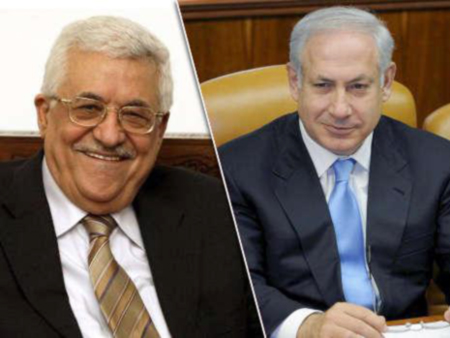
Israelis and Palestinians are being brought back to the table, but no one really seems to be all that happy about it. Indeed, I can’t remember a time when renewed peace talks were greeted with such widespread cynicism. And that’s when you can even read about it at all – as I scour my usual media outlets for news and commentary on the peace process, I’m getting the distinct impression that this kind of thing is simply not considered to be news any more.

The only significant piece I’ve read recently is Ethan Bronner’s front page article in Saturday’s NY Times. The first few paragraphs pretty much tell you everything you need to know:

The American invitation on Friday to the Israelis and Palestinians to start direct peace talks in two weeks in Washington was immediately accepted by both governments. But just below the surface there was an almost audible shrug. There is little confidence — close to none — on either side that the Obama administration’s goal of reaching a comprehensive deal in one year can be met…

“These direct negotiations are the option of the crippled and the helpless,” remarked Zakaria al-Qaq, vice president of Al Quds University and a Palestinian moderate, when asked his view of the development. “It is an act of self-deception that will lead nowhere.”

And Nahum Barnea, Israel’s pre-eminent political columnist, said in a phone interview: “Most Israelis have decided that nothing is going to come out of it, that it will have no bearing on their lives. So why should they care?”

I used to believe where there’s talk, there’s hope. (In fact, I think I’ve even written those very words on this blog once or twice before). I don’t think I really believe this any more – not, at least, when it comes to the Israeli-Palestinian peace process. For almost two decades, the US and the international community has been brokering talks between both sides and now this is what it has come to: beyond the pro-forma diplomatic statements, everyone seems to agree that it’s really just a road to nowhere. And a half-hearted attempt to bring the “crippled and the helpless” to the bargaining table simply doesn’t inspire hope. Quite the opposite.

I’m not even tempted any more to engage in an analytical discussion of how/why/where talks have failed. There are still more than enough pundits out there ready to parse the political maneuvering. To my mind, it’s all fairly moot at this point. For so many years, so many of us have been working overtime to advocate for the peace process. But while so many of us have held forth the two-state solution as a kind of Holy Grail, the prospect of a viable Palestinian state has grown increasingly remote.

Again, from Ethan Bronner:

Most Palestinians — and many on the Israeli left — argue that there are now too many Israeli settlements in the West Bank for a viable, contiguous Palestinian state to arise there. Settlement growth has continued despite a construction moratorium announced by Mr. Netanyahu.

Moreover, support for many of the settlements remains relatively strong in Israel. In other words, if this view holds, the Israelis have closed out any serious option of a two-state solution. So the talks are useless.

As someone who has fervently supported peace talks from the beginning, I write these words with great sorrow: it is time to face the facts and declare that the peace process is dead. I respect those who honestly disagree with such a position, but for myself at least, I cannot in good conscience advocate for a peace process that is so fatally flawed in so many ways. For me, the much more critical and pressing question at this point is not “how can we get both parties to the table?” but “how can we find a way to extend civil rights, human rights, equity and equality for all inhabitants of Israel/Palestine?”

That’s really the crux of the issue for me: peace without justice is no peace at all. Whether or not there is eventually a one-state, two-state or fifteen-state solution, it will need to be a just solution. And at the moment, justice seems to be precisely what is missing from the peace process.

At the end of the day, Israel simply cannot claim to take the concept of Palestinian statehood seriously while it establishes Jewish settlements throughout the Palestinian territories with impunity. Israel cannot say it accepts the concept of a Palestinian capital in Jerusalem yet at the same time evict Palestinians from their homes in East Jerusalem with a clear intention of Judaizing these neighborhoods. And perhaps most critically, Israel cannot claim to meet the Palestinians across the peace table in good faith while it oppresses Palestinians on a daily basis.

My friend and colleague Cantor Michael Davis once said to me that the real problem with the peace process is that “we are focusing exclusively on the future at the expense of the present.” I agree. For far too long we have been using the peace process as a shield to keep us from honestly facing the very real and troubling human rights abuse Israel is committing on the ground right now. Yes, there will need to be a political solution to this conflict. But until a present justice is consciously attached to a future peace, I believe in my heart that the peace process will remain as good as dead.

Ta’anit Tzedek Sponsors “A Conversation About Women, Health, Children and Human Rights in Gaza”

The next fast day sponsored by Ta’anit Tzedek – Jewish Fast for Gaza will take place on Thursday, August 19. To mark the occasion, we will host “A Conversation About Women, Health, Children and Human Rights in Gaza,” a conference call with Dr. Mona El-Farra, Director of Gaza Projects for the Middle East Children’s Alliance.

Dr. El-Farra is a physician by training and a human rights and women’s rights activist by practice in the Gaza Strip. She was born in Khan Younis, Gaza, and has dedicated herself to developing community-based programs that seek to improve health quality and link health services with cultural and recreational services throughout the Gaza Strip.

Our conference call will take place on Thursday, August 19, at 12:00 pm (EST).

Call info:

Access Number: 1.800.920.7487

Participant Code: 92247763#

There will be a question and answer period during the call.