Category Archives: Movies

On the Battle of Jenin and “The Battle of Algiers”

For many, Gillo Pontecorvo’s “The Battle of Algiers” (1966) remains one of the truly great movies of modern times – and arguably the greatest anti-colonial film ever made. So much has been written about its audacious pseudo-documentary style and its radical ideological pedagogy – and well as the ways it has provided a kind of real life template for colonial powers and liberation movements throughout history. For me, this latter point has particular resonance and relevance in the wake of Israel’s latest military “counter-terrorism” operation in Jenin.

I use the word “latest,” because this recent assault was precisely that – the latest of a continuum of Israeli military incursions into the Jenin refugee camp on the pretense of rooting out Palestinian “terrorists” and “militants.” Jenin – a camp composed of refugees who were ethnically cleansed from their homes in 1948 – has long been a center of Palestinian resistance by groups such as the PLO, the Al Aqsa Martyrs Brigades, Hamas and Palestinian Islamic Jihad (PIJ), among others. Despite a long litany of Israeli operations to crush them, however, Palestinian resistance groups have inevitably continued to regroup and thrive throughout the years.

This dynamic was incisively described in a recent New York Times op-ed by Tareq Baconi, “The Tale of Two Invasions,” in which he compared Israel’s recent assault on Jenin to its 2002 Jenin assault led by then Prime Minister Ariel Sharon. Baconi powerfully concludes:

Residents of the Jenin camp, some of whom had fled from their homes in what is now Israel in 1948, are refugees once again. And some of the toddlers who were in the camp in 2002 are now the young men of the Palestinian resistance. As the history of other struggles against apartheid and colonial violence have taught us, today’s children will no doubt take up arms to resist such domination in the future, until these structures of control are dismantled.

After reading Baconi’s article, I immediately flashed on a memory from Israel’s 2002 invasion of Jenin (in which, according to Human Rights Watch, 52 Palestinians were killed, at least 22 of whom were civilians, including children, physically disabled, and elderly people). I well recall reading at the time that Israeli commander, Col. Moshe “Chico” Tamir, believed that “The Battle of Algiers” was “a valuable source of information” for his soldiers who were fighting against PIJ in the Jenin casbah. It was also noted that PIJ leader Iyad Sawalhe was hunted down and killed much in the same manner as in the conclusion of the film, when the Algerian rebel leader Ali La Pointe is killed by the French military.

Much of the power of “The Battle of Algiers” derives from its complex portrayal of the military mentality and tactics of the French in Algeria. In one of its most famous scenes, the French commander Col.  Mathieu offers a long monologue at at press conference in which he calmly and rationally presents the colonial case for what amounts to the torture and oppression of the Algerian people. When he concludes, he offers this final rhetorical argument: “Do you think France should stay in Algeria? If you do, you have to accept the necessary consequences.”

This colonial rationale, of course, is often made in a myriad of ways by the state of Israel and its defenders – and it goes a long way in explaining why Israel continues to stage brutal assaults upon Jenin, Gaza and other sites of Palestinian resistance. In essence: “Do you believe a Jewish state must continue to exist? If so, you have to accept the necessary consequences.”

Every time I watch “The Battle of Algiers,” I’m always moved by the dramatic finale, which portrays the killing of Ali La Pointe then abruptly jump cuts five years later to the liberation of the resistance and end of French colonial rule in Algeria. The message is all too clear: colonial powers may win the battles, but they will inevitably be defeated in the end.

So too in Jenin: Israel’s regular assaults may succeed in quashing the latest leaders of the Palestinian resistance, but it will never destroy the Palestinian people’s will to resist. As Baconi so aptly put it: “today’s children will no doubt take up arms to resist such domination in the future, until these structures of control are dismantled.”
Support “A People Without a Land” – New Documentary on Israel/Palestine

In 2007, Orthodox Jewish filmmaker Eliyahu Ungar-Sargon made “Cut,” a provocative and important film about circumcision. Now he’s poised to do the same with Israel/Palestine:

“A People Without a Land,” is a feature-length documentary that challenges the conventional wisdom about the Israeli-Palestinian conflict. (It) grew out of our frustration with the narrowness and lack of depth that characterizes so many discussions about the conflict. We wanted to make a film that would both broaden the conversation and articulate a vision for a real and lasting solution. Unlike many films about Israel/Palestine, we do not limit our field of vision to Israel’s 1967 occupation of the West Bank and Gaza Strip. A People Without a Land examines the questions that lie at the heart of the conflict: Why has the peace process failed? What does it mean that Israel is a Jewish State? What should happen to the millions of Palestinian refugees? How about the Palestinian citizens of Israel, or the West Bank settlers? We believe that by directly addressing these questions, we can jump-start a conversation that will ultimately lead to a just solution.

This project promises to be pretty special: among those interviewed are Ali Abunimah, co-founder of the Electronic Intifada, Eitan Bronstein, founder of Zochrot, Middle East scholar Ghada Karmi and Neta Golan, co-founder of the International Solidarity Movement. It will also feature the music of klezmer great Daniel Kahn and the Painted Bird as well as a score by Alan Sufrin of Stereo Sinai.

Ungar-Sargon is currently raising money for “A People Without a Land” through a Kickstarter campaign. It’s entered into its final week – click here to contribute.

The Critical Difference Between “The Gatekeepers” and “5 Broken Cameras”

tumblr_mir1v1xAaW1qazgz2o1_500

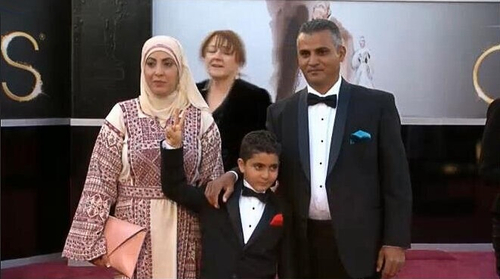
Emad Burnat with wife Soraya and son Gibreel at the Academy Awards

Like many Israel/Palestine activists, I was thrilled to see two thoughtful films on the subject nominated for Best Documentary Oscars – and if I was pulling for any movie at all last Sunday night, it was Emad Burnat and Guy Davidi’s “5 Broken Cameras.”   If you haven’t seen it yet, please do. It is, I believe, one of the most important films on Palestine and Palestinians you will ever see. It’s also brilliantly constructed and deeply, almost unbearably moving. It’s available for free on Netflix, so you won’t need to wait for it to come to a theater near you.

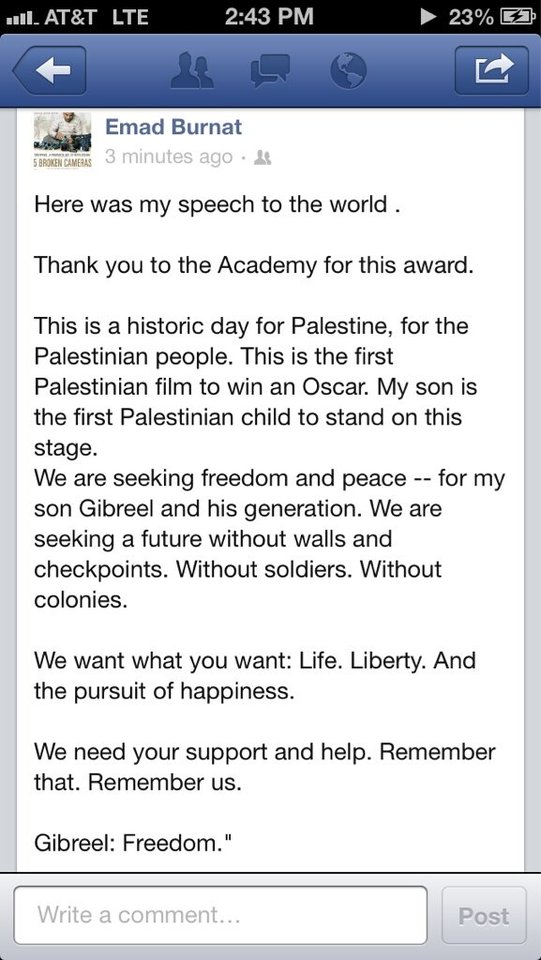
I knew, of course, that it was a long shot, but oh, what an incredible, incredible opportunity it would have been if Emad Burnat could have gotten up before 3 billion people and read the speech he had prepared:

BD-VaFkCUAMj-j4

I’ve been thinking a great deal lately about the differences between “Cameras” and the other nominated Israel/Palestine documentary, “The Gatekeepers.”  I’m particularly struck that the latter film, which features interviews with six ex-Shin Bet chiefs, is in many ways as characteristically Israeli as “Cameras” is Palestinian. For me, the most fundamental difference between the two films resides in their literal perspectives: In “Gatekeepers,” we largely view Palestinians from above – mostly through footage taken by the Israeli Air Forces as they surgically strike their targets from the skies. We never see anyone actually get killed  – they just seem to disappear in a sudden puff of smoke.

By contrast, “Cameras” was filmed on the ground in a Palestinian village. We see Palestinian non-violent protesters getting beaten and shot. In one particularly heartbreaking instance we witness the shooting death of Bassem (“Phil”) Abu-Rahma.  Indeed, the moral center of this movie resides in the way it places us firmly in the lives and reality of these Palestinians – we experience their humanity, their tragedies, their courage up close and personally.

For all of its depth and nuance, “The Gatekeepers,” is ultimately a film that presents us with the moral angst of a people who are, quite simply, on the side of the oppressor.  Many critics have have been struck by the level of ethical soul-searching evidenced by ex-Shin Bet chiefs who were, after all, the heads of Israel’s powerful security establishment – and I fully agree. It is a tribute to the genius of “Gatekeepers”  that it gives us a genuine glimpse into the humanity of men who occupy a position of invisibility in Israel’s massive national security apparatus.

For me, however,  this insight cuts both ways. While we can and should understand the concerns of the real, living flesh and blood human beings behind the Shin Bet, their humanity is ultimately subsumed by an inherently oppressive infrastructural reality. And this reality is much, much larger than these individuals, no matter how deeply they might engage in soul-searching over their actions.

This institutional soul-searching is, in fact, a time honored Israeli cultural enterprise – they even have a name for it: “Yorim U’vochim” (“Shoot and Cry”) –  a term that was coined in the wake of the Six Day War to describe this uniquely Israeli expression of angst. Indeed, Israelis have produced countless films, books, poetry and essays that struggle deeply over their treatment of Palestinians. But in the end, no amount of individual soul searching, no matter how heartfelt, can itself erase the collective guilt of what Israel has perpetrated – and continues to perpetrate – against Palestinians.

Take a look at the clip below: an interview with “Gatekeepers” director Dror Moreh on “Democracy Now.” Pay particular attention to Moreh’s comments at the 3:30 mark, where he expresses his discomfort with those who portray Israelis as the oppressors and the Palestinians as the poor innocent victims. In a (possibly) unguarded but telling moment, he says, “After, all, there is a reason why the Shin Bet is doing what it is doing.”  Moreh continues: this is not a black and white situation – we must see it in “shades of grey.”

I fully agree that this is a complicated situation. But I would add that there is nothing complicated about the institutional oppression that the Shin Bet inflicts on Palestinians. While the fears and pain and moral anguish of Israelis very real, we must be willing to admit that these feelings are largely helpless in the face of a larger infrastructural reality that Israelis have created – and within which they have become subsumed.

Critics who condemn those who stand in solidarity with Palestinians often fail to appreciate this point: it is not Israelis to whom we stand in opposition, but rather the oppressive institutions that they have constructed and which we believe threaten the well being and future of Israelis and Palestinians alike.  In watching “The Gatekeepers,” I could understand the concerns of men such as Ami Ayalon, Avraham Shalom and Carmi Gillon. But I never forgot for a second that the organization they led was and remains a profoundly oppressive, even criminal institution – and no amount of soul-searching, no matter how heartfelt can wash away this essential reality.

A final note: less than one week before the Academy Awards ceremony, the Israel Defense Forces and the Shin Bet arrested a 30 year Palestinian named Arafat Jaradat, claiming that he threw stones at cars from a nearby settlement. Jaradat was taken first to the Jalameh Interrogation Center in the northern West Bank before being transferred to Megiddo Prison. Four days later, he was dead, tortured to death by the Shin Bet.

Jaradat was a student at Al Quds Open University, married with two children (Yara, 4 years old and Mohammad, 3 years old) and was expecting a third child with his wife Dalal.  His lawyer, Kamil Sabbagh, who defended him in a court hearing two days before he died, reported that Jaradat was terrified and complained of intense back pain when he saw him.

The Shin Bet claimed Jaradat died from cardiac arrest, despite the fact that an initial autopsy indicated he was in fine cardiac health. A subsequent autopsy determined that Jaradat had been beaten with repeated blows to his chest and body and had sustained a total of six broken bones in his spine, arms and legs; his lips lacerated; his face badly bruised.

I agree with Dror Moreh: there is a reason the Shin Bet is doing what it is doing. We just disagree what that reason actually is.  Their ultimate goal is not simply the security of Israelis, but the security of Israelis maintained through the subjugation of Palestinians.

And for all the Israeli soul-searching on this point, this oppression will only make Israel less secure in the long run.

Zero Dark Thirty: My Shalom Rav Review

1163224_Zero-Dark-Thirty-2

Finally saw Zero Dark Thirty yesterday. Here’s my review:

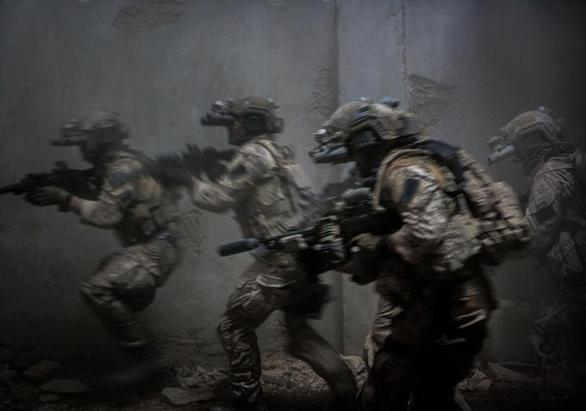
From an artistic point of view, I can say without hesitation that I was riveted by ZDT from beginning to end. Kathryn Bigelow is clearly one of our most talented American directors, particularly in her ability to construct a film with a palpable sense of documentary realism. In so many ways she, along with screenwriter Mark Boal, and her entire filmmaking team had me in the palm of their collective hand.

Which is why I also found ZDT to be a morally reprehensible piece of cinematic propaganda.

My experience of this film, among other things, was a profound reminder that movies have immense power to manipulate emotions and shape attitudes. I will readily admit that I found myself thoroughly caught up in the intensity of the CIA’s quest (embodied by character of the passionately driven agent “Maya”) to find and kill Usama Bin Laden. What can I say? For two and half hours, the film worked its magic on me. But when it was over, all I felt was dirty and ashamed. Sickened, actually, that I allowed myself to be seduced by what amounted to an insidious, if deeply sophisticated, revenge fantasy.

I use the word insidious very consciously here – particularly since the film purports to be a facts-driven portrayal of the CIA hunt for Bin Laden. In the very first frame, in fact, a title that tells us we are about to watch a film “based on firsthand accounts of actual events”. The next title we see are the words “September 11, 2001”. Then for at least a minute we listen to audio tapes of terrified 9/11 victims calling for help. One woman in the World Trade Center tells a 911 dispatcher that she is “burning up,” then says, crying, “I’m going to die aren’t I?” The dispatcher tells her to “stay calm” but there is no further answer. The last thing we hear is the dispatcher’s voice saying, “Oh my God…”

This is how the movie is framed from the outset: we are told we are watching a movie based on actual events, constructed from information gained from those who were there. We hear the very real voices of American citizens as they are being burned alive.  Then we watch the “real-life” account of how the man responsible for their deaths was hunted down and killed by the CIA.

Listening to those terrified voices unsettled me to my core – but it was only after the movie was over that I realized how obscene their usage actually was.  Why did the filmmakers choose to play these recordings? After all, aren’t the tragic events of 9/11 well-known to everyone in the world? If the filmmakers were really interested in making a dispassionate, non-fiction account of the hunt for Bin Laden, wouldn’t it have made more sense to start with the beginning of the hunt itself?

Indeed, Bigelow has been quoted as saying she used “a journalistic approach” to making this film and that “it doesn’t have an agenda, and it doesn’t judge.” This, of course, is hogwash.  If Bigelow and Boal were interested in presenting a “values-free” docudrama, they certainly wouldn’t have manipulated viewers with the voices of civilians being burned alive. After hearing the terrified voices of actual victims, how could we not cheer the CIA on as it uses any means necessary to find and kill Bin Laden?

Much has been written about the infamous scene in which one tortured Al-Qaeda operative gives up the name of Bin Laden’s courier after having been beaten, waterboarded, sexually humiliated and stuffed into a tiny wooden box. The inclusion of this scene – along with numerous references to information gained from tortured detainees – has been rightly condemned by many who point out it has already been conclusively determined that the information that ultimately led to Bin Laden’s execution was not gained through the use of torture. By including these scenes, ZDT conveys the incorrect – and dangerous – impression that torture “works.”  It’s a critical point to which I have nothing to add except to refer you to Glenn Greenwald’s excellent pieces on the subject.

Beyond this issue, ZDT is dangerous for an even more essential reason. As Peter Haas pointed out in a recent piece for the Atlantic, it represents a new genre of “entertainment” he calls “embedded filmmaking”:

The fundamental problem is that our government has again gotten away with offering privileged access to carefully selected individuals and getting a flattering story in return. Embeds, officially begun during the invasion of Iraq, are deeply troubling because not every journalist or filmmaker can get these coveted invitations (Seymour Hersh and Matt Taibbi are probably not on the CIA press office’s speed dial), and once you get one, you face the quandary of keeping a critical distance from sympathetic people whom you get to know and who are probably quite convincing. That’s the reason the embed or special invitation exists; the government does its best to keep journalists, even friendly ones, away from disgruntled officials who have unflattering stories to tell…

(The) new and odd rub in the case of Zero Dark Thirty is that the product of this privileged access is not just-the-facts journalism but a feature film that merges fact and fiction. An already problematic practice—giving special access to vetted journalists—is now deployed for the larger goal of creating cinematic myths that are favorable to the sponsoring entity (in the case of Zero Dark Thirty, the CIA). If the access that Boal and Bigelow received was in addition to access that nonfiction writers and documentarians received, I would be a bit less troubled, because at least the quotes in history’s first draft would be reliable, and that means a lot. But as it stands, we’re getting the myth of history before getting the actual history.

In other words, no matter how unsavory the protagonists behavior might be, no matter how “gritty” and “journalistic” the style, this is the CIA’s movie through and through.

In a more recent article, Greenwald pointed out the essential simplicity of ZDT’s world view:

All agents of the US government – especially in its intelligence and military agencies – are heroic, noble, self-sacrificing crusaders devoted to stopping The Terrorists; their only sin is all-consuming, sometimes excessive devotion to this task. Almost every Muslim and Arab in the film is a villainous, one-dimensional cartoon figure: dark, seedy, violent, shadowy, menacing, and part of a Terrorist network…

Other than the last scene in which the bin Laden house is raided, all of the hard-core, bloody violence is carried out by Muslims, with Americans as the victims. The CIA heroine dines at the Islamabad Marriott when it is suddenly blown up; she is shot at outside of a US embassy in Pakistan; she sits on the floor, devastated, after hearing that seven CIA agents, including one of her friends, a “mother of three”, has been killed by an Al Qaeda double-agent suicide-bomber at a CIA base in Afghanistan … Nobody is ever heard talking about the civilian-destroying violence brought to the world by the US.

The CIA and the US government are the Good Guys, the innocent targets of terrorist violence, the courageous warriors seeking justice for the 9/11 victims. Muslims and Arabs are the dastardly villains, attacking and killing without motive (other than the one provided by Bloomberg) and without scruples. Almost all Hollywood action films end with the good guys vanquishing the big, bad villain – so that the audience can leave feeling good about the world and themselves – and this is exactly the script to which this film adheres.

And in the end, that is what makes the technical and narrative brilliance of this film all the more pernicious. It creates the illusion of authenticity and truth when what we’re really watching is the CIA’s truth. One in which Bin Laden was never, once upon a time, an ally of the United States government. One in which “heroes” commit war crimes in secret locations in the furtherance of extra-judicial assassination. One that utterly ignores the realities of what the CIA’s civilian-destroying violence has wrought.

More than anything else, this is why I felt so very dirty after allowing myself to be entertained – and at times even moved – by Zero Dark Thirty.

“Beneath the Blindfold” and Torture’s Tragic Legacy

“Zero Dark Thirty” hasn’t come to Chicago yet, so I can’t weigh in on the controversy surrounding its portrayal of the torture in the Bin Laden raid. Having read countless articles already, however (most notably the pointed criticisms by Glenn Greenwald), I can safely say it’s going to be pretty hard for me to overcome my prejudices going in. I certainly can’t imagine feeling sanguine about a film that gives the mistaken (and dangerous) impression that torture “works.” Still, I’ll do my best to keep an open mind – and offer my thoughts after I’ve actually seen the movie.

In the meantime, if you’re looking interested in a film that accurately and powerfully explores torture’s tragic legacy, check out “Beneath the Blindfold,” a new documentary by Evanston-based independent filmmakers Ines Somer and Kathy Berger. The film follows the lives of four torture survivors – a nurse from Africa, an actor from Colombia, A US Navy veteran from Chicago, and a physician from Guatemala – and documents their journeys as they attempt to build new lives, careers, and relationships. Despite the painful fallout from their experiences, we witness each of them becoming empowered to speak out and become public advocates for an end to torture.

“Beneath the Blindfold” has been garnering rave reviews and was just voted the Best Political Documentary of 2012 by the Chicago Reader. JRC was honored to host Ines and Kathy four years ago when they showed and discussed some footage of their work in progress. Now that the film in finished, we are thrilled to screening and discussion with the filmmakers on Saturday, January 19 at 7:00, in partnership with Percolator Films. (Click here for more info.)

Click here for Ines’ and Kathy’s recent interview with Jerome McDonnell on WBEZ’s Worldview.

On the Killing of Children and the Price of Our Freedom

obama-newtown-speech

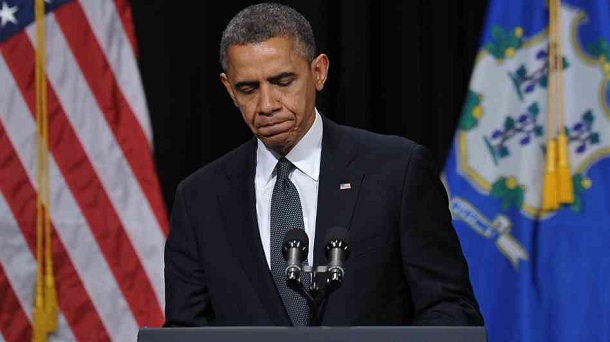
Last night Hallie and I watched President Obama’s eloquent and moving speech at the interfaith prayer vigil for those killed in the Sandy Hook Elementary School shootings. About halfway through, when Obama discussed our nation’s collective responsibility to our children, a certain cognitive dissonance popped into my head – a pesky, but familiar distraction that remained with me for the rest of the speech.

Obama concluded by reciting the first name of each of the 20 children killed. When it was over we both sat silently looking at the screen. “Don’t say it, just don’t say it” I thought to myself.

“What did you think?” she finally asked me.

“Very moving” I said, “but..”

“But what?”

“What the hell,” I thought to myself, “go ahead and say it…”

“I don’t know, it’s hard for me to listen to Obama talk about our responsibility to keep our children safe knowing that he personally approves the drone strikes that kill hundreds of innocent children in other countries.”

Hallie rolled her eyes at me. But before she could say “Oh my God, can’t you give it a rest just this once?” I said it myself: “I know, I know, I can’t help it..”

Over the weekend, I thought of a certain moment in the Michael Moore documentary “Bowling for Columbine.” Toward the outset of the movie, Moore pointed out that the Columbine shooting took place during the largest one day bombing by the US in the Kosovo war.  He showed news footage from that day which showed the bloody aftermath of the bombing that killed numerous civilians, including those in a local hospital and primary school. The news footage also included President Clinton telling reporters that the US military was trying to “minimize harm to innocent people.”

Then Moore flashes the words “One Hour Later” and there’s Clinton again: “We all know there has been a terrible shooting at a high school in Littleton, Colorado.” Moore’s point was clear: there is an important connection to be made between our killing of Serbian civilians and the killing of students in Columbine.

So too, I believe there is a similar connection between the killing of innocent children in Newtown to the killing of innocent children in Pakistan.  Both are the product of a uniquely American culture of violence, insecurity and fear – and both are the consequences of a national penchant for manufacturing, selling and profiting from ever more sophisticated weapons of death.

Might it be that our Constitutional right to bear arms reflects a national sense of entitlement to create and sell weapons and to use them wherever and whenever we see fit?  And if so, might we be ready to limit this right for the sake of our children both here and around the world?

In this regard, I think the most telling moment in Obama’s speech was when he asked the rhetorical question:

Are we prepared to say that such violence visited on our children year after year after year is somehow the price of our freedom?

Would that our President would ask himself that very question before he approves his next drone strike.

(Please read this recent report by the Bureau of Investigative Journalism that determines over 160 children have been killed in seven years by US drone strikes in Pakistan’s tribal areas.)

Coming Soon: 5 Broken Cameras

If you haven’t heard about the documentary “5 Broken Cameras,” you will very soon. It was the talk of the 2012 Sundance Festival (winning the World Cinema Directing Award) and it’s going to be hitting theaters this summer.

Click here for a NY Times feature on the film. Here’s a description, according to the distributor’s website:

An extraordinary work of both cinematic and political activism, 5 Broken Cameras is a deeply personal, first-hand account of non-violent resistance in Bil’in, a West Bank village threatened by encroaching Israeli settlements. Shot almost entirely by Palestinian farmer Emad Burnat, who bought his first camera in 2005 to record the birth of his youngest son, the footage was later given to Israeli co-director Guy Davidi to edit. Structured around the violent destruction of each one of Burnat’s cameras, the filmmakers’ collaboration follows one family’s evolution over five years of village turmoil. Burnat watches from behind the lens as olive trees are bulldozed, protests intensify, and lives are lost. “I feel like the camera protects me,” he says, “but it’s an illusion.”

“Home Front” – Just Vision Chronicles the Struggle in Sheikh Jarrah

Just Vision (the folks behind the documentary films “Encounter Point” and “Budrus“) has just released “Home Front” – a new series of four video portraits that profiles Palestinians fighting Israeli settler takeover of their homes in Sheikh Jarrah as well as Israeli solidarity activists who are standing with them in their struggle.

If you ‘re unfamiliar with the situation in Sheikh Jarrah (and similar circumstances in other parts of E. Jerusalem and the West Bank) this film will provide you with a powerful and expertly documented introduction.  Click above to see the first clip. Click here to see all four.

Highly recommended.

Coming Soon: Martin Luther King Jr. in Palestine

Last March, Academy Award nominated documentary director Connie Field went to Palestine with Clayborne Carson, director of the Martin Luther King, Jr. Institute, to film Carson’s play about King performed by the Palestinian National Theater and an African-American gospel choir.  Along the way, Field documented the accompanying cultural exchange between the two peoples – and the growing consciousness of the African-American choir members as they bore witness to the harsh realities of Palestinian life in the occupied West Bank.

I’ve long believed that the growing nonviolent movement in Palestine is reminiscent of the American civil rights movement in so many ways – and I’ll wager this film certainly has the potential to drive this point home in a powerful way. (Click above to see the trailer and you’ll see what I mean.)

Field and her production company, Clarity Films, are seeking donations via Kickstarter in order to complete the film. Click here if you’d like to contribute. You can also learn more about this worthy project through their Facebook page.

My “Budrus” Review

Just saw “Budrus” last night. (Why it takes independent films forever and a day to get to Chicago is beyond me. Aren’t we even considered a movie market any more? Sheesh…)

My two cents:

I think it’s a brilliant film in so many ways. I simultaneously experienced it as a compelling “how-to textbook” on grassroots organizing, an honest portrait of real nonviolent resistance in action, an up-close document of the human impact of the Occupation and a compassionate profile of life in one West Bank village.

It is also a masterfully constructed film that often transcends the documentary genre itself. Filmmakers Julia Bacha, Ronit Avni and Rula Salameh present us with a true story that has a genuine dramatic arc.

The story in short: in 2003, Ayed Morrar a remarkable Palestinian community leader, organized a nonviolent resistance movement to save his village Budrus from being destroyed by Israel’s Separation Barrier. He brought together an impressive coalition of local Fatah and Hamas members along with Israeli and international solidarity activists to resist the wall’s construction.

After some initial success, Budrus was put under military curfew and their resistance effort threatened to come apart. In the end, however, after ten months of steadfast resistance, the Israeli government relented and redrew the route of the fence, saving the village.

There is no question that “Budrus” is a profound and authentic document of what well-organized nonviolent resistance can truly achieve. It’s the kind of story that would move you even if it wasn’t actually true. And I won’t deny the story of these villagers’ courage left me deeply inspired.

And yet…

…and yet I must also confess to having a nagging feeling that there was one critical puzzle piece left out of the story. The film is essentially the document of one village and it more or less takes place within the bubble of this village’s exclusive universe. But I was somewhat disappointed that “Budrus” failed to explore the overall context of institutional oppression in which this one village’s story took place.

The film does indeed explain how the barrier cut significantly into Palestinian lands rather than simply follow the route of the Green Line. The filmmakers, however, never address the reasons why Israel chose to do this. There are many references to Israel’s security needs, but notably, no one ever asks the critical question: why, if security was the only reason for the barrier, didn’t Israel build it along the internationally recognized border between the West Bank and Israel proper?

The answer, of course, is that this wall is not just about security. It is also very much about about the settlements and about Israel’s desire to create its own unilateral border in advance of a final negotiated settlement. To wit: it is ultimately about taking land away from Palestinians.

If the film had included but one talking head to address this reality, viewers would understand the true stakes of Budrus’ struggle. But by leaving this context unexamined, the filmmakers essentially document one village’s travail without really explaining how it fits into a much larger injustice.

In truth, it must also be admitted that Budrus’ victory was and continues to be notably exceptional. While the film mentions briefly at the end that this kind of nonviolent resistance is ongoing in other West Bank villages, none of these villages have experienced anything near the level of Budrus’ success.

In fact, the exact opposite is happening. The Israeli military is brutally clamping down on the leaders of the popular committees that organize nonviolent campaigns. And although this repression is not regularly reported in the mainstream media, it is in fact unfolding on an almost daily basis.

Last Monday, for instance, it was reported that Abdallah Abu Rahmah, a leader in the Bil’in campaign was denied release from prison even though he has completed his twelve month sentence in full. Just yesterday we learned that the sixteen year old son of another jailed Bil’in activist leader, Adeeb Abu Rahmah, was arrested by a “a group of masked soldiers (who) forcefully entered the house without showing a warrant.”

Adeeb, by the way, was sentenced to one year but also remains in jail beyond his release date as the military prosecutors appeal his sentence. He will stay imprisoned “indefinitely” – which likely means for a long, long time. (That is Adeeb Abu Rahmah in the clip above. I encourage you to watch this incredible video document in its entirety if you can).

These kinds of actions, tragically, are taking a huge toll on local nonviolent resistance campaigns. With many of their leaders in jail or targeted for imprisonment, local committees (with the notable exception of Sheikh Jarrah) are reporting fewer numbers at their demonstrations. Those of us who are justifiably inspired by Budrus’ story should find these developments deeply, deeply troubling.

Bottom line? Please see “Budrus” and encourage your friends to do the same. Buy copies when it comes out on DVD and give them to anyone you know that needs to know that despite media portrayals to the contrary, there is a significant and important nonviolent resistance movement in the Palestinian community.

But after you see it, please don’t leave the film with the impression that this movement is experiencing the kind of success you’ve just witnessed. Israel is quite rightly threatened by Palestinian nonviolent resistance, and is currently doing its level best to crush this movement under its military heel. Alas, it is too often succeeding.

To learn more about these campaigns, you should regularly visit the blog of activist Joseph Dana, who has been indefatigably reporting from the ground in the West Bank and East Jerusalem. (He’s probably uploaded enough video onto his site to make hundreds of documentary films on the subject.)

And if the film inspires you to make a difference yourself, please visit the website of Taayush: Arab-Jewish Partnership and send them a much-needed donation.