Category Archives: Movies

Ajami: A Review

Just saw “Ajami,” the Israeli entry for Best Foreign Language film, over the weekend. I recommend it highly, though it’s not a movie for the emotionally faint of heart.

“Ajami” is a crime drama with a “Babel”- like structure – it unfolds in five chapters, each telling a separate narrative from the point of view of different characters. It portrays a powerfully claustrophobic world, in which ordinary people struggle to better their lives against exceedingly tall odds.

Almost everyone in this film is trapped in some sense. At least two of the film’s protagonists are literally house-bound: one is being targeted for murder by a Bedouin gang and the other is a resident of the occupied West Bank working on the other side of the Green Line. Another character, an Israeli policeman, is searching in vain for his brother who has gone ominously missing. There are also two fatally star-crossed love affairs: one between a Palestinian and a Jewish Israeli and another between an Arab Muslim and an Arab Christian.

More than anything else, I experienced this film as a portrait of ethnic and religious communities in constant, tragic collision with one another. At times, it’s sometimes difficult to keep all of the complicated rivalries straight. There is tension between Bedouins and Palestinian Arabs, Palestinian citizens of Israel and Palestinian residents of the Occupied Territories, citizens of Arab Jaffa and citizens of Jewish Tel Aviv, Arab Muslims and Arab Christians. The Israel portrayed here is not simply a Jewish state – it is nothing less than a simmering multi-ethnic powder keg.

As a portrait of Israeli society, it’s a decidedly non-redemptive vision. You watch the drama play out, knowing deep down that nothing good will possibly come of any of this. And yet what I loved about this film its genuine heart. You can’t help feel a deep compassion for the humanity of these characters, no matter how flawed or broken they are. Even though it’s technically a crime drama, there are really no heroes and villains in “Ajami” per se – just ordinary, imperfect individuals doing their best to survive under increasingly dire circumstances.

I’m sure there will be those who understand this film as a reflection of the hopeless political situation in Israel/Palestine. But I think the true genius of the film is how it works on so many levels: as a crime thriller, a family drama, or a slice of socio-political commentary. Whichever way you choose to take it, it’s not a pretty picture. As befits a film directed jointly by a Jewish Israeli and a Christian Palestinian, however, it’s an exceedingly courageous statement.
I Can’t Dance Any More

Salah_Fam

I know there are those who wonder why, with all of the various injustices going on in the world, do I seem to dwell on Israel’s treatment of Palestinians?  It’s a fair and important question.  For me it boils down to this: I’ve come to believe that too many of us in the Jewish community will unabashedly protest persecution anywhere in the world, yet remain silent when Israel acts oppressively.

I know all too well how we actively avoid this truth. We use any number of rhetorical and political arguments to deny it, to mitigate the discomfort and pain it causes us.  We engage in a kind of tortured dance of rationalization that we save for no other world issue but this one. But for me, at least, but none of it really addresses the core issue at hand: however difficult it might be for us to face, Israel is unjustly oppressing Palestinians.

So what are we going to do about it?

Many of us deal with it by putting our faith and efforts into the peace process. And well we should: though I’ve been honest in expressing my own doubts and concerns regarding the peace process, I understand that in the end the only true solution to this conflict will be a political one.  But as the peace process enters into its latest incarnation, as the various actors involved painfully wrangle over diplomatic parameters, it is safe to say this saga will continue to take its time to unfold. And in the meantime, the real lives of real Palestinians on the ground will continue to grow increasingly intolerable.

For myself, at least, I cannot use the peace process, critical as it is, as a kind cover to keep me from facing and protesting the oppression that is occuring in Israel/Palestine every day, even as I write these very words.  While I will do what I can to advocate for a just and peaceful political settlement to this crisis, this work does not give me a pass on speaking out. If we truly believe we must protest injustice anywhere, anytime, then it seems to me that this principle must apply to Israel/Palestine as well, no matter how painful or difficult the prospect of doing so.

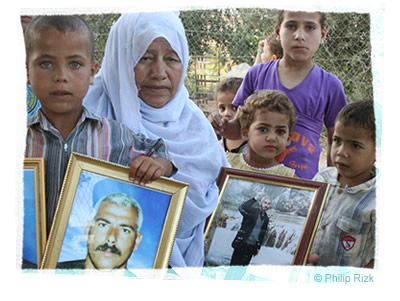
Earlier this week, I was the moderator of a discussion following the showing of a powerful new documentary, “This Palestinian Life” – a film that was often unbearably painful to watch. TPL documents a little-seen aspect of Palestinian life: the nonviolent steadfastness (in Arabic: “sumoud“) of Palestinian villagers who live with a crushing occupation, constant settler attacks, and the deliberate, relentless annexation of their farm land.

This quote from one villager sums up the movie’s essential theme:

I don’t own a gun.

I don’t own any weapons and I’m not prepared to own any…

My only weapon of defense is that I won’t leave this place…

and my hope is that the world will respond to Israel’s treatment of us.

As difficult as it was, I was honored to have been asked to moderate the post-film discussion. I know there are many who would regard my participation in such a program as an act of disloyalty or at the very least an exercise in masochism. But in the end, it really came down to this: I just can’t do the dance any more.

Dancing Around Bashir

bashir

Waltz With Bashir” has been racking up the prizes. In addition to a slew of international awards, it was awarded Best Picture by the National Society of Film Ciritics, Best Foreign Film at the Golden Globes, and it seems to have the inside track on the same award at the Oscars this Sunday night.  But as “Bashir” amasses its acclaim, some observers are frankly critiquing the film against Israel’s painful present-day reality.

In a recent Nation article, Israeli author Liel Liebovitz wonders why the Israeli public has so thoroughly embraced this fiercely anti-war statement (enough to vote it as their third-favorite Israeli film of all time) while ignoring its “harrowing lessons” through its strong support of their government’s military actions against Gaza.

Liebovitz concludes that “Bashir’s” popularity not withstanding, Israel is sadly disregarding director Ari Folman’s powerfully moral vision – particularly in light of the recent elections:

Israel of today is not Ari Folman’s. It is Avigdor Lieberman’s and Benjamin Netanyahu’s, the country of the countless men and women crying out for revenge. As we root for Waltz with Bashir, if we want to truly honor that film’s message, let us never forget that. Otherwise, all we have is just a pretty animated film.

Journalist Naira Antoun, writing in the Electronic Intifada comes to a similar conclusion:

(We) are reminded of the psychologist’s comment near the start of the film: “We don’t go to places we don’t want to. Memory takes us where we want to go.” Perhaps this explains how at the same time that Gaza was being decimated, Israel heaped acclaim and awards on Waltz with Bashir; in addition to numerous international awards, the film scooped up six awards at the Israeli Film Academy. Indeed, the same Israelis who flocked to see the film gave their enthusiastic approval to Operation Cast Lead in Gaza. According to a poll released on 14 January by Tel Aviv University, a staggering 94 percent of Israeli Jews supported or strongly supported the operation.

As a Palestinian viewer, however, Antoun goes even farther than Liebovitz: she faults the film for rendering Palestinians essentially invisible:

There is nothing interesting or new in the depiction of Palestinians — they have no names, they don’t speak, they are anonymous. But they are not simply faceless victims. Instead, the victims in the story that Waltz with Bashir tells are Israeli soldiers. Their anguish, their questioning, their confusion, their pain — it is this that is intended to pull us…We don’t see Palestinian facial expressions; only a lingering on dead, anonymous faces. So while Palestinians are never fully human, Israelis are, and indeed are humanized through the course of the film.

Among other things, I think these reviews illuminate the painful difficulties inherent in making an anti-war statement while the war is still raging.  A sad anecdote: a congregant recently told me that when she saw the film, a screaming match erupted in the audience after it ended.  Apparently someone screamed “That’s Gaza!” to which another responded “Shut up!” and on it went…

And on it goes…

Update 2/23/09: Thanks to Eric for forwarding this devastating Ha’aretz piece re “Bashir” by (who else?) Gideon Levy.