Category Archives: Palestine

Reclaiming a Tu B’shvat of Liberation

central-park-snow-snow-covered-trees-and-benches---central-park-new-york-city-a-6sa3zgb0

Tonight is the eve of Tu B’shvat, the Jewish festival that celebrates the “New Year of the Trees.” According to the Talmud, Tu B’shvat marks the dividing point for the tithing of the fruit from trees for the year to come. Throughout the centuries, this festival has been announced by the blossoming of the white almond blossoms that proliferate throughout the central and northern parts of the land of Israel.

As a celebration of the natural world and the tentative beginnings of spring, Tu B’shvat has been celebrated in different ways during different eras of Jewish history and through a variety of Jewish cultural contexts around the world. But with the rise of the Zionist movement and the establishment of the state of Israel, Tu B’shvat has become, for many Jews, almost exclusively associated with the Jewish National Fund’s fund raising efforts to plant pine forests throughout modern-day Israel.

In a recent blog post, my friend and colleague Cantor Michael Davis underlined the darker legacy of this particular Tu B’shvat observance, noting that the JNF’s mission to create Jewish facts on the land has led to tragedy for the Palestinian people:

My first home in Israel was in a little village in the Jerusalem hills. On the bus to school in Jerusalem, I could see the pine forests stretching from the crest of the hilltops down to the dirt trail at the base of the slopes. Sometimes, I would go on hikes along these trails, passing through the deserted stone buildings of Lifta at the entrance to Jerusalem. Close up, I could see the man-made stone terraces hidden by the trees.

Occasionally, you would come across broken stone walls tracing the shape of a ruined house. The pines blurred the lines of previous ownership and concealed the destruction of Palestinian civilization that happened with the birth of the State. (Over) 80% of the forests were planted after the birth of the State of Israel, many of them on land vacated by the departing indigenous population. Some 80% of the Palestinian population left in 1948, never to return. And this project continues with JNF’s focus on land in the Palestinian areas of the State of Israel in the Galilee and Negev and the secretive planting of trees in the West Bank. (In a call-in interview that JNF just posted on YouTube, the organization’s CEO, Russell Robinson, does not answer a caller’s question about JNF tree planting over the Green Line.)

I was particularly struck by Cantor Davis’ observation that the forests of the Jewish National Fund forests are not fruitbearing, but pine:

It is deeply symbolic then that the early 20th century Eastern European settlers chose a non-native, barren tree. Symbolically and in a real sense, this foreign tree displaced the olive trees of the indigenous population.

Might there be a way to decouple Tu B’shvat from this destructive legacy of colonialism and disenfranchisement? I’d like to suggest one possibility:

I’ve long noticed the power of celebrating this “harbinger of spring” in the colder climates of the northern-hemisphere diaspora, where we are barely one month into winter and the landscape is filled not by the white of newly-budding almond blossoms, but by the white of snow-covered trees.

While some might think this would be an unlikely setting to celebrate Tu B’shvat, I actually find it quite profound to contemplate the coming of Spring in the midst of a Chicago winter. It comes to remind us that even during this dark, often bitterly cold season, there are unseen forces at work preparing our world for renewal and rebirth. Deep beneath the ground, the sap is beginning to rise in the roots of our trees. In the chilly diaspora, we can celebrate the invisible forces of liberation reborn underground even as the prison of winter seems to reign above.

Thus we observe Tu B’shvat as a welcome reminder that spring will always follow winter; that even in the coldest and darkest of times, the unseen power of liberation will inexorably rise up.

I encourage you to reclaim Tu B’shvat as a celebration of liberation: seasonal, spiritual, political, or all of the above.

Click here for more information on how you can support tree-planting for justice, not disenfranchisement.

Sharon’s Legacy: Survival at All Costs

aptopix-midease-israel-ariel-sharon.jpeg-1280x960

From Vice President Joe Biden’s remarks at the funeral of Ariel Sharon today:

Like all historic leaders, Prime Minister Sharon was a complex man about whom, as you’ve already heard from his colleagues, who engendered strong opinions from everyone.  But like all historic leaders, all real leaders, he had a North Star that guided him — a North Star from which he never, in my observation, never deviated.  His North Star was the survival of the State of Israel and the Jewish people, wherever they resided.

In talking about his spiritual attachment to the land of Israel back in an interview in the late ‘90s, he said, and I quote, “Before and above all else, I am a Jew…”

As a Jew – and as a human being of conscience – I submit that this myopic obsession with Jewish physical survival “before and above all else” has led the Jewish people down a very dark road indeed. In so many ways, Ariel Sharon represents the embodiment of this obsession – and I for one recoil at the suggestion that he might in any way be held up as a Jewish exemplar.

As the tributes of world leaders continue to roll in, please consider the life’s work of a man Joe Biden quite mistakenly claimed is “loved by the Jewish people:”

– In the early 1950s, as a young major in the Israeli army, Sharon led the infamous Unit 101, which carried out numerous cross-border “pre-emptive” and “retaliatory” attacks into the West Bank, deliberately killing and wounding Palestinian civilians.  In the most notorious incident involving Unit 101, between October 14 and 16, 1953, soldiers under Sharon’s command massacred 69 Palestinian civilians, most of them women and children, in the West Bank town of Qibya. Sharon’s orders included “total destruction of the village and maximum harm to the villagers, again forcing them to flee.”

– On October 29, 1956, Israel attacked Egypt, part of an invasion in conjunction with Britain and France. During the resulting hostilities, soldiers under Sharon’s command committed a series of massacres of POWs, including more than 100 civilians. In one incident, Israeli soldiers shot and killed 49 Egyptian prisoners of war, including civilians, after binding their hands and forcing them into a quarry. In another, 56 Egyptian civilians were murdered while sheltering in the back of a truck. In a third incident, some 50 Egyptian civilian workers were murdered by Israeli soldiers near the town of Ras Sudar.

– Following Israel’s surprise attack against Egypt in June 1967, which resulted in Israel’s occupation of the Gaza Strip, West Bank, East Jerusalem, the Egyptian Sinai peninsula, and Syrian Golan Heights, Ariel Sharon, by now a general responsible for Israel’s southern command, was tasked with “pacifying” Gaza. In his efforts to crush resistance, Sharon ordered his soldiers to execute without trial any Palestinians suspected of involvement in the resistance, resulting in the killing of more than 1000 Palestinians.

– On June 6, 1982, Israel launched a massive invasion of Lebanon, masterminded by then-Defense Minister Sharon. Between June and September, the Israeli army killed between 18,000 and 20,000 Lebanese and Palestinian civilians, bombarding and laying siege to the western half of the capital of Beirut.

– On September 16, 1982, under Sharon’s direction, Israeli soldiers surrounded the Sabra and Shatila refugee camps and sent in about 150 of their local Christian Phalangist militia allies, even though the long and bloody history between Palestinians and Phalangists in Lebanon was well known to the Israelis. Over the next three days, between 800 and 3500 Palestinian refugees and Lebanese, mostly women, children, and the elderly, were butchered by the Phalangists, who sexually assaulted, tortured and mutilated many of their victims, in one of the worst atrocities in the modern history of the Middle East.

For more details on these facts – and other aspects of Sharon’s legacy that were likely not recounted at his funeral today, click here.

Some Thoughts as the BDS March Continues

PGGM-logo-BE9F491EDE-seeklogo.comStep by step, the BDS movement inexorably marches on. Now the news has just come down that PGGM, the largest pension fund management company in the Netherlands, has decided to withdraw all its investments from Israel’s five largest banks (Bank Hapoalim, Bank Leumi, Bank Mizrahi-Tefahot, the First International Bank of Israel and Israel Discount Bank) because they have branches in the West Bank and/or are involved in financing construction in the settlements.

I’m struck that whenever we hear this kind of news, BDS opponents invariably claim that this is “one isolated incident” that will not have any real effect or influence. But of course, this is not one isolated incident – it is but a part of a growing pattern occurring throughout the world. This latest news is but one more indication that the BDS movement is quickly gaining momentum.

And there is every indication that Israel’s leaders understand this. In the wake of the PGGM decision, Knesset member and Bayit Hayehudi party chairwoman Ayelet Shaked called for an Israeli response to the BDS movement, adding that “it was the greatest threat faced by the country.”

I’m also struck by one paragraph from the Ha’aretz report on the PGGM move:

The Israeli banks responded that Israeli law doesn’t allow them to cease providing service to entities connected to the settlements. Nor, given the daily reality in which the banks operate, would this even be feasible, they added.

This is an enormously telling comment – particularly as a response to those who advocate for BDS within the Occupied Territories only but not in Israel proper. Perhaps the most prominent advocate of this approach is Peter Beinart, who has long spoken of a difference between “Good Israel” and “Bad Israel:”

(We) should call the West Bank “nondemocratic Israel.” The phrase suggests that there are today two Israels: a flawed but genuine democracy within the green line and an ethnically-based nondemocracy beyond it. It counters efforts by Israel’s leaders to use the legitimacy of democratic Israel to legitimize the occupation and by Israel’s adversaries to use the illegitimacy of the occupation to delegitimize democratic Israel.

Having made that rhetorical distinction, American Jews should seek every opportunity to reinforce it. We should lobby to exclude settler-produced goods from America’s free-trade deal with Israel. We should push to end Internal Revenue Service policies that allow Americans to make tax-deductible gifts to settler charities. Every time an American newspaper calls Israel a democracy, we should urge it to include the caveat: only within the green line.

But a settlement boycott is not enough. It must be paired with an equally vigorous embrace of democratic Israel. We should spend money we’re not spending on settler goods on those produced within the green line. We should oppose efforts to divest from all Israeli companies with the same intensity with which we support efforts to divest from companies in the settlements: call it Zionist B.D.S.

This is, of course, an utterly artificial distinction, as the recent comment by the Israeli banks makes clear. The “daily reality” is that the Occupation is facilitated and fed by Israel itself. They are, quite simply, inseparable from one another – as Israel’s own economic establishment openly admits.

As the BDS movement inevitably amasses more gains, we will likely hear louder and and louder calls to “take this threat seriously.” But I believe the inexorable growth of this movement suggests something more fundamental: the world is increasingly taking Israel’s oppression of Palestinians seriously.

NGO Report: Palestinian Children Kept in Outdoor Cages

Ramle Prison (photo: Nir Keidar)

Ramle Prison (photo: Nir Keidar)

Earlier this week, the Public Committee Against Torture in Israel (PCATI) published a report that claimed children suspected of minor crimes were subjected to a variety of human rights abuses, including threats and acts of sexual violence and “public caging”, in which minors were held for extended periods of time in outdoor cages.

According to a group of public defenders making an official visit to Ramle prison, children were caged outside and exposed to severely cold weather during Israel’s recent winter storm. In a statement to the Israel Prison Service (IPS), the lawyers reported that “they spent several hours in the freezing cold and rain, until the transport arrived to take them to court around 6:00 am.”  The statement said that the practice had been going on for months, a fact “verified during other official visits and not denied by IPS.”

I read a number of news reports on the incident, and was particularly struck by this one from the Jerusalem Post (pay particular attention to the second paragraph):

The practice of placing the children in outdoor cages was halted when Justice Minister Tzipi Livni learned of it and immediately telephoned Public Security Minister Yitzhak Aharonovitch, telling him to end the practice…

It was unclear who within the Prisons Service initiated the practice, why it was initiated or who decided to continue it despite the adverse weather conditions, but the service responded that since it had received criticism the situation had been improved.

Livni’s attempts at fig-leaf PR notwithstanding, the issue of child detention issue far transcends this one particularly horrifying revelation. Last March, I reported on a UNICEF report that concluded the ill-treatment of Palestinian minors held within the Israeli military detention system is “widespread, systematic and institutionalized.” The 22 page report carefully examined the Israeli military court system for holding Palestinian children and found evidence of “cruel, inhuman and degrading treatment or punishment.”

A Huffington Post feature on the report noted:

In a step-by-step analysis of the procedure from arrest to trial, the report said the common experience of many children was being “aggressively awakened in the middle of the night by many armed soldiers and being forcibly brought to an interrogation centre tied and blindfolded, sleep deprived and in a state of extreme fear.”

Many were subjected to ill-treatment during the journey, with some suffering physical or verbal abuse, being painfully restrained or forced to lie on the floor of a vehicle for a transfer process of between one hour and one day.

In some cases, they suffered prolonged exposure to the elements and a lack of water, food or access to a toilet.

During my recent visit to the West Bank, our delegation spoke with Gerard Horton (formerly of Defence of Children International – Palestine and currently founder/director of Military Court Watch), who described for us this process in shocking detail. Much of what he had to tell us can be found in his article on the subject here.

As a Jew and a human being of conscience, I am sickened by Israel’s practice of child detention. Please join me in contacting Tzipi Livni (zlivni@knesset.gov.il) to tell her you agree – to let her know this is not a problem that cannot be solved with one face-saving phone call.

Why I Support the ASA Boycott of Israeli Academic Institutions

ASA-logo-tiff-1-copy

The recent decision of the American Studies Association (ASA) to endorse the academic boycott of Israel has engendered increasingly intense press coverage and social media conversation over the past several days. I’ve already engaged in more than a few of them via Facebook –  but now I’m ready now to weigh in and offer some thoughts in a more systematic fashion.

First, some background:

The ASA is according to its website, “the nation’s oldest and largest association devoted to the interdisciplinary study of American culture and history.” According to a released statement, the ASA has been discussing and debating whether or not to endorse an academic boycott since 2006. On December 4, the ASA National Council announced its support of the academic boycott. Then this past Monday, the ASA membership endorsed the boycott resolution by a two to one margin. 1252 voters participated in the election – the largest number of participants in the organization’s history.

Because there is so much misinformation regarding the precise nature of the boycott, I think it’s important to quote the ASA statement at length:

The Council voted for an academic boycott of Israeli institutions as an ethical stance, a form of material and symbolic action. It represents a principle of solidarity with scholars and students deprived of their academic freedom and an aspiration to enlarge that freedom for all, including Palestinians.

We believe that the ASA’s endorsement of a boycott is warranted given U.S. military and other support for Israel; Israel’s violation of international law and UN resolutions; the documented impact of the Israeli occupation on Palestinian scholars and students; the extent to which Israeli institutions of higher education are a party to state policies that violate human rights; and the support of such a resolution by many members of the ASA.

Our resolution understands boycott as limited to a refusal on the part of the Association in its official capacities to enter into formal collaborations with Israeli academic institutions, or with scholars who are expressly serving as representatives or ambassadors of those institutions, or on behalf of the Israeli government, until Israel ceases to violate human rights and international law.

The resolution does not apply to individual Israeli scholars engaged in ordinary forms of academic exchange, including conference presentations, public lectures at campuses, or collaboration on research and publication. The Council also recognizes that individual members will act according to their convictions on these complex matters.

For all of the concern over the resolution’s attack on academic freedom, it is important to note, as the ASA statement does, that Israel actively curtails and denies the academic freedom of Palestinian academics and students on a regular basis. Palestinian universities have been bombed, schools have been closed, scholars and students have been deported and even killed. Palestinian scholars and students have their mobility and careers restricted by a system that limits freedoms through an oppressive bureaucracy. Many Palestinian scholars cannot travel easily, if at all, for conferences or research because they are forbidden from flying out of Israel.

Though many are excoriating the Association’s decision as a denial of Israeli academic freedom, their resolution does not endorse a blanket boycott of individual academics and institutions – as was the case with the academic boycott of South Africa, for instance. The ASA endorsement responds to the call from the Palestinian Campaign for the Academic & Cultural Boycott of Israel (PACBI), which explicitly targets institutions, not individuals.  It does not endorse limiting the academic freedom of individual Israeli scholars to participate in conferences, lectures, research projects, publications etc.

Why is the ASA refusing to collaborate with Israeli academic institutions? Because it knows that every major Israeli university is a government institution that is intimately tied to the Israeli military, furnishing it with scientific, geographic, demographic and other forms of research that directly supports Israel’s human rights abuses of Palestinians.

This 2009 report by the Alternative Information Center cites a myriad of such collaborations. For example, Haifa University and Hebrew University have special programs for military intelligence and training for the Shin Bet (the Israeli security service) and members of the military and Shin Bet have served on administrative boards of Israeli universities. The Technion – Israel Institute of Technology has strong ties to Israeli military and arms manufacturers such as Elbit Systems.  And as of the date of the report, Tel Aviv University had conducted 55 research projects with the Israeli army.

Many criticize the ASA boycott endorsement by asking why, of all the odious regimes in the world, are they singling out and targeting Israel? This is probably the most commonly heard refrain against the Boycott, Divestment and Sanction movement in general, and I’ve addressed it numerous times in previous posts.

I’ll repeat it again: this accusation is abject misdirection. The academic boycott is part of a larger call for BDS that was sent out in 2005 by over 170 Palestinian political parties, organizations, trade unions and movements – the overwhelming majority of Palestinian civil society – to support their resistance against Israeli oppression through classic, time honored methods of civil disobedience.  The ASA did not initiate this boycott – it made a principled, good faith decision to respond to the Palestinian call for support. Thus the real question before us when addressing BDS is not “what about all of these other countries?” but rather “will we choose to respond to this call?” To miss this point is to utterly misunderstand the very concept of solidarity.

One of the most widely read criticisms of the ASA boycott endorsement came from Open Zion’s Peter Beinart, who wrote that the “real problem” with the boycott was the problem with BDS as a whole:

BDS proponents note that the movement takes no position on whether there should be one state or two between the Jordan River and the Mediterranean Sea. But it clearly opposes the existence of a Jewish state within any borders.  The BDS movement’s call for “respecting, protecting and promoting the rights of Palestinian refugees to return to their homes and properties” denies Israel’s right to set its own immigration policy. So does the movement’s call for “recognizing the fundamental rights of the Arab-Palestinian citizens of Israel to full equality”, which presumably denies Israel’s right to maintain the preferential immigration policy that makes it a refuge for Jews. Indeed, because the BDS movement’s statement of principles makes no reference to Jewish rights and Jewish connection to the land, it’s entirely possible to read it as giving Palestinians’ rights to national symbols and a preferential immigration policy while denying the same to Jews.

This is the fundamental problem: Not that the ASA is practicing double standards and not even that it’s boycotting academics, but that it’s denying the legitimacy of a democratic Jewish state, even alongside a Palestinian one.

This is classic Beinart: while he writes in the reasonable tones of a liberal Zionist, when you actually deconstruct his analysis, it’s really quite draconian. Beinart condemns the majority of Palestinian civil society for asking that their right of return be respected – a right that is enshrined in international law. Then he goes on to criticize Palestinians for not respecting Israel’s “right” to create preferential immigration policies that keep them from their own ancestral homes (a right that is enshrined nowhere in particular.)

As ever, Beinart seems galled that the BDS movement is not J St. No, the BDS National Committee does not respect preferential treatment for Jews. No, it is not actively lobbying for a two-state solution. While Beinart remains imprisoned in the vagaries of national rights, the BDS call is grounded in the values of universal human rights.

From the BDS National Committee Website:

The campaign for boycotts, divestment and sanctions (BDS) is shaped by a rights-based approach and highlights the three broad sections of the Palestinian people: the refugees, those under military occupation in the West Bank and Gaza Strip, and Palestinians in Israel. The call urges various forms of boycott against Israel until it meets its obligations under international law by:

1. Ending its occupation and colonization of all Arab lands occupied in June 1967 and dismantling the Wall;

2. Recognizing the fundamental rights of the Arab-Palestinian citizens of Israel to full equality; and

3. Respecting, protecting and promoting the rights of Palestinian refugees to return to their homes and properties as stipulated in UN Resolution 194.

This call takes no stand on the final political parameters of the conflict, nor should it. As a rights based call, it recognizes that the first order of business is to pressure Israel to end its violations of human rights and to adhere to international law. If at the end of the day, a two-state solution is made impossible, it will not be because of the Palestinian people’s desire for their legal right of return to be respected and recognized – rather it will be due to Israel’s ongoing colonization and Judaization of the Occupied Territories.

I’ve heard many say that this one little resolution by one American academic organization is really no big deal and doesn’t really amount to much at the end of the day. But if this was truly the case, why are so many people talking about it so often and so fervently?  Yes, the ASA is but one humble scholarly institution. But by endorsing this boycott, it is clearly becoming part of a movement – and one that is gaining in strength. Just last April, the Association for Asian American Studies broke the ice to be the first American academic institution to endorse the boycott. And immediately on the heels of the ASA, the Native American and Indigenous Studies Association has now signed on as well.

I realize that it is painful for many to see Israel isolated in such a fashion. But in the end, as long as the US government remains unwilling to use its leverage to end its oppressive behavior, this movement will only gain in strength and influence. For those who doubt its effectiveness, we have only to look at the way the international BDS campaign against apartheid South Africa eventually reached a tipping point until the Pretoria regime had no choice but to dismantle apartheid.

As the world mourns Mandela’s death, we would do well remind ourselves of the ways popular movements can help bring institutional systems of oppression to an end.

Prawer Plan Scrapped – How Will the “Bedouin Problem” be Solved?

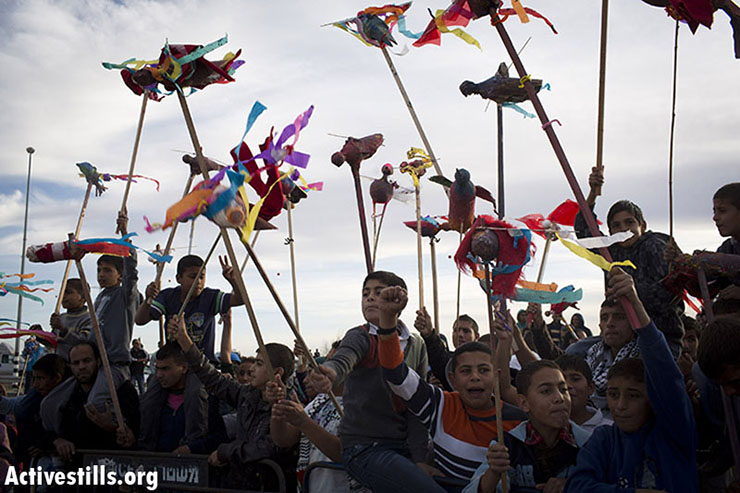
Children flying kites to the demonstration against the Prawer Plan during November 30 "Day of Rage" protest outside Hura in the Negev Desert.

Children protest against the Prawer Plan during a “Day of Rage” demonstration in the Negev town of Hura.

Received the wonderful news yesterday that Israel’s Prawer-Begin Plan – a bill which would forcibly relocate over 40,000 Israeli Bedouin from their ancestral lands – was just scrapped by the Knesset.

This is huge on a number of levels. Most importantly, it’s very welcome news for the tens of the thousands of Bedouin who were facing an unjust eviction and transfer from their homes. Up until relatively recently, in fact, the passage of Prawer seemed virtually assured. But as I mentioned in my last post, Knesset support began to unravel when Benny Begin, the co-sponsor of the bill, revealed that he had never even shown the plan to the Bedouin – putting to lie the widespread claims of government officials that the majority of Bedouins had approved of it.

After revealing a map of the actual plan, the Knesset’s right wing attacked it, claiming it actually allocated too much land to the Bedouin (even though it would have taken 61,700 acres from them and resettled them in a compound totaling 42,000 acres.) Feeling the pressure from both sides, the government was forced to scrap their plan entirely.

As I’ve followed this issue, I’ve found it utterly infuriating whenever I read supporters of the bill invoke a “Bedouin Problem” that needed to be solved, as if the economic and social issues facing the Bedouin were somehow of their own making. In truth, there is no need for a special government relocation bill to “solve” this “problem.” What the Bedouin need is for the Israeli government to officially recognize the areas in which they live so that they can finally receive basic infrastructure such as water, sewage, and electricity. They need Israel to treat them them as equal citizens, offering them full government services, to allow them to vote or run in local government elections.

But they can’t, of course, because Israel desires to create more facts on the ground in the Negev. In other words, the real “Bedouin Problem” stems from the fact that the Bedouin are not Jewish.

Of course the scrapping of this bill does not mean that the fate of the Bedouin is by any means assured. There is every possibility that the government will resubmit the plan in an even more draconian fashion. As Mairav Zonszein pointed out yesterday in +972mag:

While today’s news will at the very least delay the State’s plan to implement the largest displacement a Palestinian population since 1967, there is little reason for celebration. It it will only be the end of the current version, which  was in jeopardy mostly due to concerns from right-wing MKs that it was “too generous” to the Bedouin.  It is probable a revised bill will be drafted that will in all likelihood not be any better as far as Bedouin claims.

While this may well come to pass, it is fair to say that a more restrictive bill will undeniably be met with fierce opposition from a powerful and widespread movement of solidarity that has now coalesced to support the Bedouin’s cause. And this is another reason why the scrapping of Prawer-Begin is so significant: it speaks to the growing power and influence of the Palestinian solidarity movement.

Indeed, over the past several months, this movement was galvanized by Prawer-Begin, bringing together a wide coalition of organizations in Israel/Palestine and abroad. The tipping point was reached two weeks ago during the “Days of Rage” protests, in which hundreds of Palestinians and solidarity activists staged demonstrations in the Negev town of Hura as well as Haifa, East Jerusalem, Ramallah and Jaffa. Simultaneous protests took place throughout the world in London, Berlin, Rome, Istanbul, Cairo and in the US. There is a very real movement growing, and it is slowly but surely chalking up significant victories for the cause of justice in Israel/Palestine.

Still, while there is every reason for this movement to celebrate this latest legislative success, the need for vigilance ever continues. Many Bedouin homes and villages are still slated for demolition – and the village of Al-Araqib has already been demolished over 60 times. As this press release from Jewish Voice for Peace aptly puts it:

We can exhale for now, with relief the Prawer Plan is no more, and then take a new breath and get ready to continue the work to ensure that the Negev Bedouin, and all people in the region, have what they need to thrive.

The Horrifying Scope of Israel’s Prawer Plan

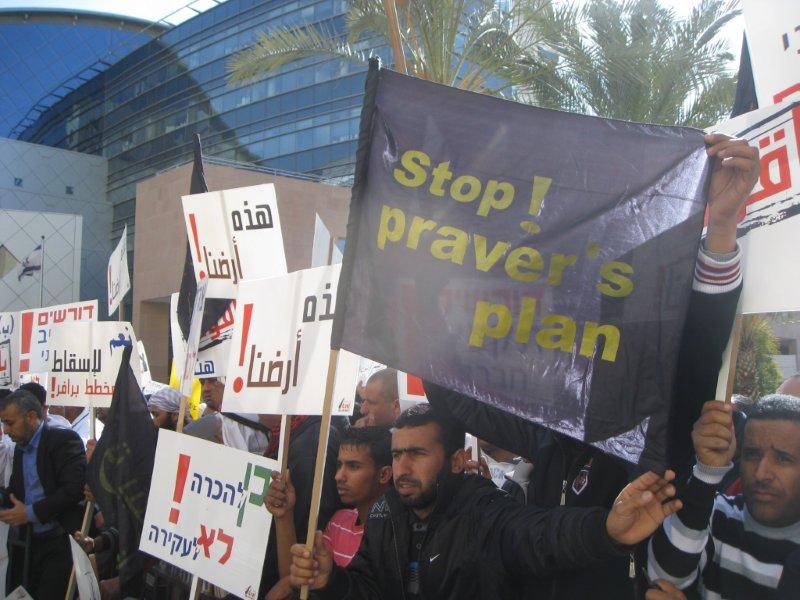
stop-prawer-plan-israel-Bedouin

By now i’ve written more than a few blog posts about Israel’s Prawer-Begin Plan which, if approved by the Knesset would displace tens of thousands of Bedouin from their ancestral home in the Negev desert.  Up until now, many defenders of the plan have claimed that this “relocation” was developed for the benefit of the Bedouin. In recent weeks, Israeli government spokespeople have responded to anti-Prawer protests by claiming 80 percent of the Bedouin population actually support the plan.

The patent falsehood of such claims have now been laid bare. A map of the project has just been released to the Knesset Interior Affairs Committee and the massive extent (and injustice) of the plan has now been brought into the light of day.

Ironically enough, according to Michael Omer-man of +972mag, the map was prepared by the Prime Minister’s Office for Housing Minister Uri Ariel, in an attempt to assuage his party’s fears that too much land would be given to the Bedouin.  (That’s right – apparently the far right Jewish Home party opposes the Prawer Plan because they believe it is too lenient to the Bedouin.)

According to the report, the bill’s co-sponsor Benny Begin has admitted Bedouin leaders have never even seen the plan until now:

Begin on Monday refuted that he ever made such statements, writing, “I have never said to anyone that the Bedouin accept my plan.”

He couldn’t have made such a claim, he explained, because he never even presented the Bedouin community with his plan, “and therefore I could not have heard their reactions to it.”

“[Because] I was not able to know their level of support for the law, it therefore follows that I couldn’t say that I know anything about their support for the law.”

According to the new map, the state of Israel will take over 250,000 dunams (61,700 acres) currently populated by Bedouins, while the Bedouins will be resettled in an area totaling 170,000 dunams (42,000 acres). Around 40,000 people will be forced to leave their homes.

I don’t know any other way to say it: if implemented, this plan would result in a crime that is truly staggering to contemplate. It will lead to the uprooting and forcible eviction of dozens of villages. Tens of thousands of residents will be stripped of their property and their historical land rights. Thousands of families will be condemned to poverty and unemployment. The communal life and social fabric of these villages will be destroyed.

This plan is decidedly not about the best interests of the Bedouin. If it is about anything, it is about a large swath of land in the south of Israel that government leaders have been attempting to “Judaize” since the days of Ben-Gurion. The only reason the Bedouin are slated for removal, quite frankly, is because they are not Jews. By any other name, such an act would be called ethnic cleansing and I am not hesitant to say so.

If you haven’t yet, please join me and the growing number of Jews and people of conscience who are voicing their opposition to the Prawer-Begin plan in no uncertain terms.

New Hillel and AIPAC Partnership: Open Hillel Responds

photo: iowa.hillel.org

photo: iowa.hillel.org

This just in: Eric Fingerhut, the President of Hillel and Jonathan Kessler, the Leadership Development Director of AIPAC, have just announced in the Jewish Week that Hillel and AIPAC will be formally “working together to strategically and proactively empower, train and prepare American Jewish students to be effective pro-Israel activists on and beyond the campus.”

What this means essentially is that Hillel, an organization that is meant to serve as an umbrella for the diverse Jewish student communities on college campuses nation wide, is now formally aligning itself with a lobbying group’s specific definition of what it means to be “pro-Israel.”

By way of response, I encourage you to read this statement (below) by Open Hillel, a grassroots student-run campaign that works to encourage inclusivity and open discourse at campus Hillels. I’ve long been a huge fan of OH and was not surprised to read that they had drafted an articulate and thoughtful response to Fingerhut and Kessler.

And if you agree with them that this new Hillel-AIPAC partnership will “stifle discussion and debate on issues concerning Israel, and undermine Hillel’s commitment to creating an inclusive community,” please click here and let Hillel know.

Statement of Opposition to AIPAC and Hillel’s New Partnership

Hillel has consistently demonstrated an admirable commitment to religious pluralism, welcoming students who span the full spectrum of Jewish religious practices and beliefs and encouraging students to connect with Judaism in ways that are meaningful to them. We are worried that this pluralistic spirit, so beneficial to Hillel and the Jewish community, is lacking in the political arena. In particular, we are deeply troubled by Hillel President and CEO Eric Fingerhut and AIPAC Leadership Development Director Jonathan Kessler’s recent declaration that Hillel and AIPAC “are working together to strategically and proactively empower, train and prepare American Jewish students to be effective pro-Israel activists on and beyond the campus.” We fear that this new partnership will alienate Jewish students whose views do not align with those of AIPAC, stifle discussion and debate on issues concerning Israel, and undermine Hillel’s commitment to creating an inclusive community.

AIPAC’s policy positions are highly controversial among Jewish college students and the American Jewish community at large. Thus, if Hillel operates with AIPAC’s definition of “pro-Israel” as the benchmark for what is and is not acceptable within the Jewish community on campus, it will alienate many Jewish students. For instance, Point 6 of AIPAC’s 2012 Action Plan calls for “the recognition of Jerusalem as Israel’s undivided capital.” However, since Palestinians also claim Jerusalem as their capital, many students who support a two-state solution believe that Jerusalem should be divided or shared. Indeed, 82% of American Jews support a two-state solution with an independent Palestinian state in the West Bank, Gaza, and East Jerusalem in exchange for full diplomatic recognition of Israel by the surrounding countries. Similarly, AIPAC’s national council voted down (by a large majority) a measure calling on Israel to dismantle “illegal settlement outposts” – the small minority of settlements that are illegal under Israeli law. However, nearly three times as many U.S. Jews believe that settlement construction hurts Israel’s security as do believe that it helps. Hillel is an umbrella organization serving all Jewish students, as its vision and mission statements express. AIPAC supporters can and must have a voice in Hillel. But that voice is just one voice; it is not and cannot be THE voice.

In their article, Fingerhut and Kessler describe the AIPAC-Hillel partnership as strategically necessary to combat “anti-Israel” activity on campus. However, in order for Jewish students to truly engage with Israel in a thoughtful manner, we should have the opportunity to hear a wide range of perspectives on Israel-Palestine — including voices that speak to Israel’s shortcomings and criticize its policies. For instance, in pointing to “anti-Israel organizing” at Stanford University, we assume that Fingerhut and Kessler refer to a national conference held at Stanford by Students for Justice in Palestine. SJP raises important questions about the Occupation and human rights abuses in the Palestinian Territories. Many Jewish students (and American Jews in general) from across the political spectrum care deeply about these issues; indeed, many American Jews oppose and protest the Occupation. While some seek to write off conferences and events like these as malevolent and silence their efforts, we believe that Hillel, the campus center for all Jewish students, should provide a space for discussion and debate so that students can better understand the complexity of the situation in Israel-Palestine. As one Jewish student at Stanford explained last spring, when the Jewish community refuses to talk about controversial issues, it creates an image of unity but actually divides the community and alienates students who hold ‘dissident’ views or who simply are looking for honest and open discussion.

We also are saddened that AIPAC, in Fingerhut and Kessler’s piece, implied that the success of Hillel at Stanford’s Shabbat Across Differences somehow justifies this new AIPAC-Hillel partnership. Part of what made that Shabbat event so wonderful was that it was not run by AIPAC or any other one Israel-advocacy group. Students of all different political persuasions, as well as Hillel staff, worked together to create that Shabbat — and we believe that that is a model for other schools to follow. The picture that the article painted, of Hillel needing AIPAC to rally more students on campus in support of their form of pro-Israel advocacy, was not the reality and it should not be in the future.

AIPAC deserves a place within Hillel, as one of many voices on Israel-Palestine. However, given AIPAC’s specific and narrow policy agenda, it should not define what it means to be “pro-Israel.” Even more fundamentally, no political advocacy organization should set the boundaries of what is encouraged, acceptable, and forbidden within the Jewish community on campus; and we worry that this partnership means that AIPAC will be asked to do so. Just as, at Shabbat dinner, students of all denominations come together, share their experiences, and learn from one another; Hillel should encourage students with different political views to come together and discuss relevant issues for the sake of dialogue and mutual understanding. Ultimately, a strong community is one that acknowledges and embraces its own diversity.

Firebrand Rabbi Looks “Vanilla”

Vanilla-Ice-Cream-ice-cream-34732705-1528-2307Headline from a just-published feature about me and my activism from the Jewish Forward:

Brant Rosen looks every bit like a plain vanilla suburban Chicago rabbi. He doubles as a firebrand critic of Israel — and his congregation has stood by him through thick and thin.

“Plain vanilla” – my kids got a kick out of that one…
Click here to read the entire article.

Postscript: A Shooting in Bil’in

iyad1

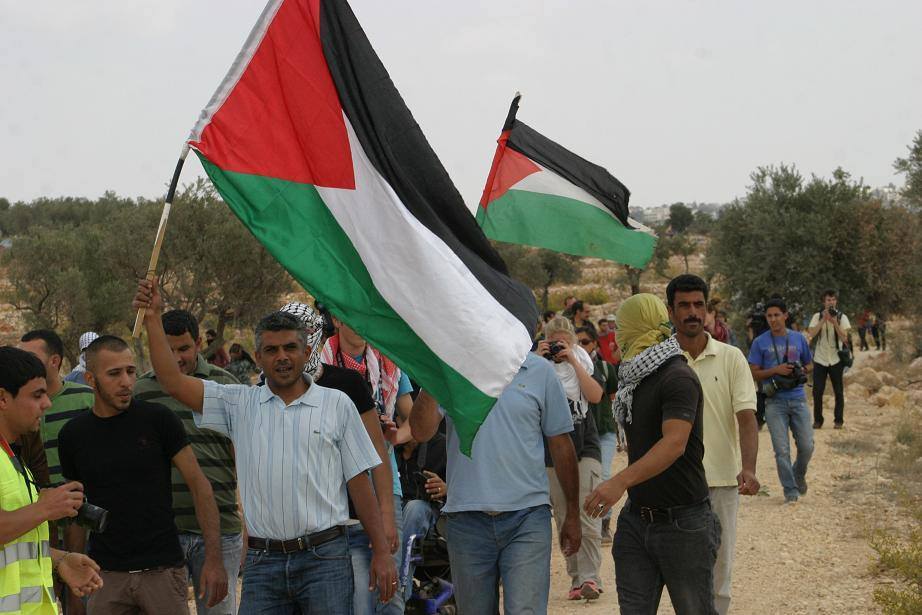
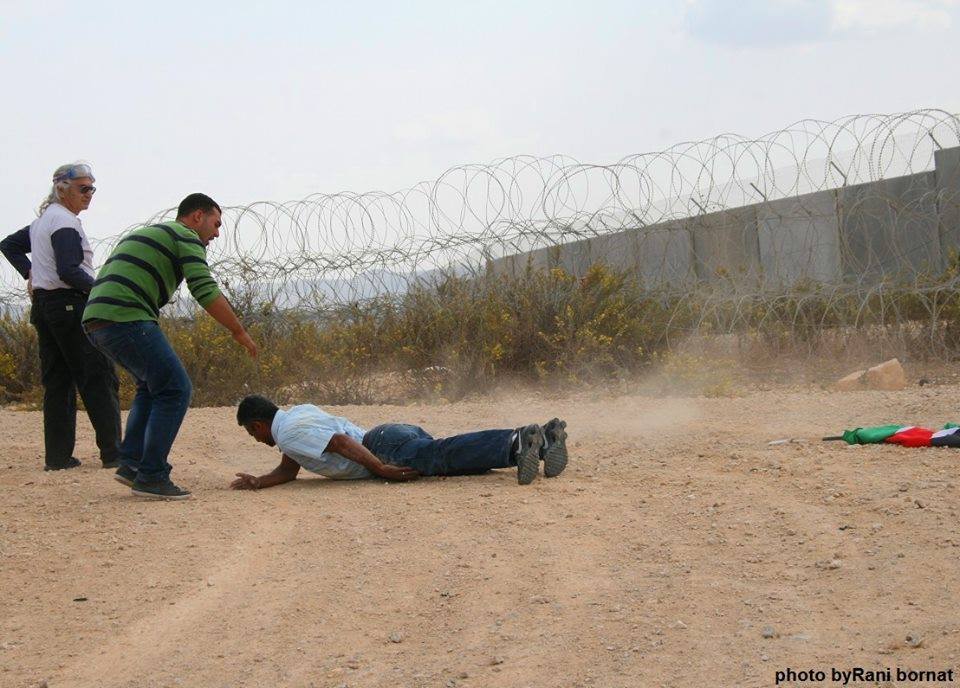
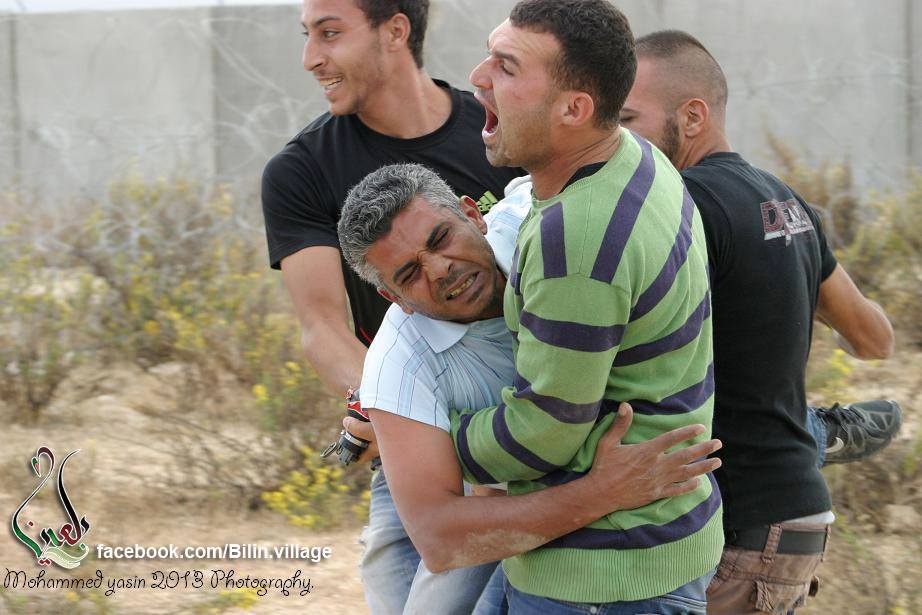
Postscript to my last post: this morning members of our delegation were furiously texting each other with the horrible news that our dear friend Iyad Burnat, leader of the Popular Committee in Bil’in was shot during their weekly demonstration today.

According to reports on Bil’in’s Facebook page, Iyad and the other marchers were approaching the separation wall when the IDF opened fire with tear gas and coated steel bullets – two of which struck Iyad directly. Hearts sinking, we waited for a full report – much to our relief, we eventually learned that his injury was not life-threatening.

Just another reminder of the unbearably high stakes faced weekly by the Palestinian nonviolent activists in villages across the West Bank…

Iyad2

iyad4

Iyad3