Category Archives: Palestine

Thousands Rally in Sheikh Jarrah!

By all reports, the protests against Palestinian home evictions in Sheikh Jarrah, East Jerusalem have evolved into a political phenomenon that cannot be ignored. Last Saturday night, thousands of demonstrators came out in the largest joint Israeli-Palestinian protest on record.

For more: this Ynet article posted in Coteret, blogger Jerry Haber’s report on Magnes Zionist, and a piece from the Jerusalem Post.  My friend and colleague Father Cotton Fite is currently visiting Israel/Palestine; he attended the rally and has just posted impressions on his blog.  My good pal Rabbi Brian Walt also offers a thorough report.

An excerpt from Brian’s post:

I have attended several Israeli demonstrations but this was the first demonstration where there was a large presence of Palestinians, Palestinian flags, and speakers who addressed the crowd in Arabic.  The mixed crowd – Israeli Jews, mostly secular but some wearing kippot, Palestinian women in traditional dress, Palestinian and Israeli youth – felt wonderful, a rare experience of the reality in this country, two peoples living together on the land with two languages, two cultures and three or more religions.  It is very rare for the two peoples to share anything.   I think among the young people involved in this struggle it is truly an Israeli – Palestinian effort and their vision is one of a shared future.  One of the most prominent posters at these rallies reads: Jews and Arabs together, refuse to be enemies.  In Hebrew it rhymes: Yehudim v’Aravim, mesarvim lih’yot oyvim.

This image inspired something in me something resembling hope – something I haven’t felt re the Israel/Palestine conflict in a long, long time…

Rep. Brian Baird is the Bravest, Sanest Politician in the United States

Can I just say that Washington Rep. Brian Baird is my personal hero? Watch this recent interview with RTAmerica which took place on the heels of his third trip to Gaza. Among other things, Baird calls for the US to break the blockade with Gaza, for US envoy George Mitchell to visit Gaza personally, and to consider withholding “certain kinds of aid” to Israel if it continues to settle the West Bank and East Jerusalem.  Toward the end of the interview, he comments: “ignoring the plight of these good people is at our peril.”

On the international front, my personal bravery award goes to Ireland’s Foreign Minister Micheal Martin, who was recently the first European Union foreign minister to visit Gaza in over a year.  He discussed his experiences yesterday in a powerful NY Times  op-ed:

The tragedy of Gaza is that it is fast in danger of becoming a tolerated humanitarian crisis, a situation that most right-thinking people recognize as utterly unacceptable in this day and age but which is proving extremely difficult to remedy or ameliorate due to the blockade and the wider ramifications of efforts to try and achieve political progress in the Middle East.

One can imagine how hard it is not to give in to despair and hopelessness in such an environment. However, what was most impressive and heartening during my visit was the resilience and incredible dignity of ordinary people.

Mobilization for Justice in Sheikh Jarrah

The protest in Sheikh Jarrah, East Jerusalem seems to be reaching a fever pitch. Organizers have now called for a rally this Saturday night that they hope will attract thousands.

From a Ma’ariv article by Hagai El-Ad, Executive Director of the Association for Civil Rights in Israel:

This Saturday night (March 6, 2010) will witness one of the most important demonstrations in years, in the struggle for human rights and justice here…

The asymmetric legal situation in Israel, through the Absentee Property Law, makes it possible for Jews to return to property that was owned by Jews before 1948 — while Palestinian property return is completely impossible. This is both unjust and unwise. In Sheikh Jarrah, this has resulted in Palestinian refugees, originally housed in the neighborhood by the Jordanian government after 1948, becoming refugees a second time. Of course, unlike the settlers forcing the Palestinians out of their homes, the Palestinians cannot return to the homes they owned before 1948 — not in Jaffa, nor in West Jerusalem or anywhere else…

(What) is happening in Sheikh Jarrah is part of a larger process — the Hebronization of East Jerusalem … As if watching the replay of a movie whose ending we have already seen, here in front of our eyes the Hebron processes are taking place once again, this time in Jerusalem: the entry of settlers to the heart of a Palestinian neighborhood, the provocations and violence, the one-sided actions of the security forces – always serving the interests of the Jewish settlers over the rights of the Palestinian residents. And then, what follows: restrictions of movement, segregation, life becoming a nightmare, and all this in the name of “security considerations.” Shuhada Street in Hebron is already closed for Palestinians for years — a street that was part of the bustling heart of one of the largest Palestinian cities, and has become a ghost road in the service of extremist settlers, the human rights of local Palestinians thrown to the roadside.

A similar process to what has already happened in Hebron is now happening in Jerusalem. Sheikh Jarrah now has police checkpoints at the entrance to the neighborhood. During certain hours on Friday the entrance to the neighborhood is generally blocked, but is open to Jewish worshipers. In contrast, Jews wishing to enter Sheikh Jarrah to express solidarity with the Palestinian families are prevented from entering the neighborhood. Violence against Palestinians ends with arrests — of Palestinians. The mechanism of dispossession and the construction of security excuses are already at work. And all this is happening right here, in Jerusalem.

Rabbi Brian Walt has also written a powerful post about a recent protest in Sheikh Jarrah. This is what I wrote about the situation there last December:

International protesters refer to these actions as “ethnic cleansing.” If that seems like too incendiary a term, what do we prefer to call it? And more critically, what are we going to do about it?

A BDS Wake Up Call?

A recent report from the Forward:

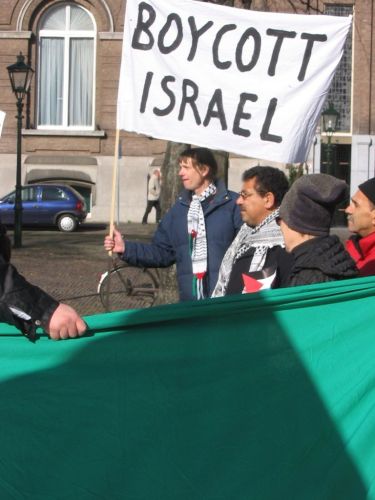
With anti-Israel boycott, divestment and sanctions efforts gaining visibility, the Jewish community’s main public-policy coordinating body is for the first time confronting the BDS movement as a specific and stated priority.

At its recent annual plenum, the Jewish Council for Public Affairs passed a resolution stating that BDS should now “be regarded with the utmost seriousness and urgency.”

“This is a very serious matter,” JCPA’s executive director, Rabbi Steve Gutow, told the Forward. “We need to wake up, whether we are on the right, left or center.”

The JCPA, an umbrella body representing Jewish community relations councils across the country and more than a dozen leading national Jewish groups, adopted the anti-BDS resolution at its plenum in Dallas on February 23. Gutow said that JCPA member groups are planning to create a permanent body that would respond to the activities of the BDS movement.

My two cents: creating a permanent body to combat the “negative branding” caused by BDS is a waste of Jewish communal resources.  I just don’t believe that the old counterattack tactics will work any more (if they ever did).  I’d suggest that if the Jewish community really wants to “wake up” to the challenge presented by BDS, then we need to honestly confront the fundamental reasons for its growth in the first place.

The BDS movement was founded in 2005 by a coalition of Palestinian groups who sought to fight for Israel’s human rights violations through nonviolent direct action. It arose out of their frustration over Israel’s continued refusal to comply with international law on any number of critical issues – and the oppressive manner in which it has occupied and ruled over Palestinians. I can’t help but think that by treating BDS simply as a PR threat to be fought, we’re utterly misunderstanding the essential of the point (and strength) of this movement.

By all accounts, this campaign is rapidly gaining support. It’s not a stretch to assume that the longer this oppressive status quo is allowed to continue, the longer Palestinians will resist – and the longer they will seek international support for their resistance.  One year ago, I predicted as much on this blog: BDS will grow as long as very real injustices remain unaddressed.

When will we wake up to this painful reality?

Ajami: A Review

Just saw “Ajami,” the Israeli entry for Best Foreign Language film, over the weekend. I recommend it highly, though it’s not a movie for the emotionally faint of heart.

“Ajami” is a crime drama with a “Babel”- like structure – it unfolds in five chapters, each telling a separate narrative from the point of view of different characters. It portrays a powerfully claustrophobic world, in which ordinary people struggle to better their lives against exceedingly tall odds.

Almost everyone in this film is trapped in some sense. At least two of the film’s protagonists are literally house-bound: one is being targeted for murder by a Bedouin gang and the other is a resident of the occupied West Bank working on the other side of the Green Line. Another character, an Israeli policeman, is searching in vain for his brother who has gone ominously missing. There are also two fatally star-crossed love affairs: one between a Palestinian and a Jewish Israeli and another between an Arab Muslim and an Arab Christian.

More than anything else, I experienced this film as a portrait of ethnic and religious communities in constant, tragic collision with one another. At times, it’s sometimes difficult to keep all of the complicated rivalries straight. There is tension between Bedouins and Palestinian Arabs, Palestinian citizens of Israel and Palestinian residents of the Occupied Territories, citizens of Arab Jaffa and citizens of Jewish Tel Aviv, Arab Muslims and Arab Christians. The Israel portrayed here is not simply a Jewish state – it is nothing less than a simmering multi-ethnic powder keg.

As a portrait of Israeli society, it’s a decidedly non-redemptive vision. You watch the drama play out, knowing deep down that nothing good will possibly come of any of this. And yet what I loved about this film its genuine heart. You can’t help feel a deep compassion for the humanity of these characters, no matter how flawed or broken they are. Even though it’s technically a crime drama, there are really no heroes and villains in “Ajami” per se – just ordinary, imperfect individuals doing their best to survive under increasingly dire circumstances.

I’m sure there will be those who understand this film as a reflection of the hopeless political situation in Israel/Palestine. But I think the true genius of the film is how it works on so many levels: as a crime thriller, a family drama, or a slice of socio-political commentary. Whichever way you choose to take it, it’s not a pretty picture. As befits a film directed jointly by a Jewish Israeli and a Christian Palestinian, however, it’s an exceedingly courageous statement.

Thank You, Rep. Baird

Yet another American political voice calls to lift the Gaza blockade. From yesterday’s NY Times:

The United States should break Israel’s blockade of Gaza and deliver badly needed supplies by sea, a U.S. congressman told Gaza students.

Rep. Brian Baird, a Democrat from Washington state, also urged President Barack Obama’s Mideast envoy to visit the Hamas-ruled territory to get a firsthand look at the destruction caused by Israeli’s military offensive last year.

Rep. Baird’s statement on Gaza, from his website:

(Rocketing) from Gaza doesn’t necessarily mean that any response, regardless of scope, target or impact on civilians, is necessarily justified, moral or strategically prudent.  This kind of misleading duality itself reflects the thinking, on both sides, that can make peace so hard to achieve and violence so easy to justify.  The fact is, there were and are many alternative responses possible and it is a false dichotomy to suggest, as some have, that if one criticizes the actions taken by Israel in Gaza and the West Bank then one is necessarily ignoring the rocket attacks from Gaza or somehow siding with or enabling terrorists.

In my judgment what has happened in Gaza and what goes on in the West Bank every day endangers U.S. integrity and security and ultimately strengthens hard line extremists at the expense of moderates and to the detriment of long term Israeli security.   I also believe, having traveled and met with people throughout the region, that this adverse effect is not confined to Palestine but extends to varying degrees throughout the Islamic world and beyond.

I understand that people may disagree strongly with this perspective, but I am certainly not alone in expressing it.  Many people have contacted my office to convey support for what we have said about our visit and this includes many friends of Israel within our own country.

Click here to thank Rep. Baird for his courage.

More Join the Call to Lift the Blockade

When Brian Walt and I initiated the Jewish Fast for Gaza last year, advocating for a lifting of the Gaza blockade was not a particularly popular thing to do. I’m gratified to see that situation is beginning to change.

I’ve already reported on the Ha’aretz editorial; and now MJ Rosenberg, a respected Mideast analyst/columnist has recently made a forceful call to end the blockade as well.  In the political arena, 77 members of the British House of Commons have done the same through the introduction of an Early Day Motion. Here in the US, 54 members of Congress recently wrote a letter to President Obama that called for a lifting of the blockade, citing its dire strategic and humanitarian effects:

The unabated suffering of Gazan civilians highlights the urgency of reaching a resolution to the Israeli-Palestinian conflict, and we ask you to press for immediate relief for the citizens of Gaza as an urgent component of your Middle East peace efforts.

Several American Jewish organizations have publicly supported the letter and I was happy to learn that J Street actively lobbied members of Congress to sign on.  Take a look at all 54 signatories of the letter – if your Rep is not on the list, please consider contacting him/her to express your disappointment. (For my part, I’m very disappointed that my Rep, Jan Schakowsky – an active and vocal supporter of J St. – chose not to sign on).

Finally, if you agree with the sentiments expressed above, please sign on as a supporter of Ta’anit Tzedek – Jewish Fast for Gaza. Our next fast day is Thursday, February 18.

Rosenberg: BDS May Be Inevitable

MJ Rosenberg, a Mideast analyst I’ve respected for years, has just written a powerful blog post entitled, “Are Israeli-Palestinian Negotiations Finished?”  His words are particularly meaningful, I believe, coming from someone who is firmly ensconced in the mainstream liberal Zionist camp.

He opens with an all-too familiar concern: that Israel’s suicidal path of settlement expansion will soon make the possibility of a viable Palestinian state impossible (if it hasn’t already).

Then he takes this concern to its next logical conclusion, articulating what most two-staters are generally too frightened to say out loud:

What would happen is that the Palestinians would go to the United Nations, to the European Union, and even to the United States to seek ..consequences. And these would most likely come in the demand for sanctions. There is already a burgeoning BDS (Boycott, Divestment, Sanctions) movement that is seeking to bring down the occupation the way a similar movement brought down apartheid.

Is this what Israelis want? Do they really want those concerned about the occupation to be forced to turn to an option this extreme?

I know that the last thing I want is a successful international movement that would boycott and sanction Israel as if it was apartheid South Africa. But it’s probably inevitable unless Israelis come to their senses and begin the process of ending the occupation while the decision is still theirs to make.

In other words, sooner than later we’ll have to choose between a Jewish state and basic, fundamental human rights.  It’s not the first time we’ve heard sentiments such as this, but when they come from people like Rosenberg, it’s a sign that the lines on this issue are inexorably shifting.

The Sick Slandering of NIF

In my last post I addressed the sliming of J Street.  I’m so sorry to report on yet another slanderous campaign against a respectable Jewish organization.

The New Israel Fund, a institution that has long supported social justice efforts in Israel is now being viciously attacked by a right-wing ultra-nationalist group called Im Tirtzu (a shadow organization that apparently has connections to Christian Zionist leader Pastor John Hagee).

The most sickening aspect of their campaign is a full-page ad run in the Israeli press attacking NIF President Naomi Chazan. (See right: the anti-Semitic overtones of this image are truly astonishing, especially coming from a group that purports to support the State of Israel.)

This issue has been well covered in the Jewish blogosphere. For more info I recommend reports by Noam Sheizaf in Promised Land and Richard Silverstein in Tikun Olam. Click here to read a response by NIF CEO Daniel Sokatch – I also encourage you to click here to support the NIF.

(Yesterday, I received an email from a congregant that read “what the hell is going on in Israel?”  I’m asking the very same question…)

J Street’s Bumpy Philadelphia Road

Now that Brit Tzedek has merged with J Street, we’re witnessing the rapid growth of  “J Street Locals” proliferating throughout more than 20 regions across the country.  (I’m happy to be attending the launch of J Street Chicago at Emanuel Congregation this Thursday night and even happier to hear that a healthy turnout is expected).

I’m dismayed, tho, to learn that J Street Philadelphia‘s debut is receiving more than its share of ridiculous attacks from certain corners of the Philly Jewish community.  I’ve just read that even Penn Hillel has come under fire for renting out its facility to this “anti-Israel” group.

According to the Philadelphia Jewish Exponent:

A flap over Hillel of Greater Philadelphia’s decision to lease its space to J Street — for the official launch of its Philadelphia branch — is just one local manifestation of a debate that has roiled much of the national Jewish establishment since the advocacy organization was founded nearly two years ago…

Gary Erlbaum, who sits on the Jewish Community Relations Council’s Israel advocacy committee and is also a board member of the Jewish Publishing Group, has been outspoken in his opposition to J Street, and is upset about Hillel’s decision to host the group’s Feb. 4 event.

“What makes them pro-Israel? If the Palestinians had a lobby, it would be called J Street,” said Erlbaum. “The Hillel building is an inappropriate spot for a group that’s anti-Israel.”

Oh, for God’s sake. A group committed to supporting the two-state solution through a diplomatic means while safeguarding Israel security and its future as a Jewish and democratic state is somehow “anti-Israel?”

You know, sometimes when I’m feeling really, really optimistic, I dream about what it might feel like if the American Jewish community actually could tolerate the kind of vigorous and freewheeling debate that they enjoy in the actual Jewish state itself.  (Now wouldn’t that be “pro-Israel?”)