Category Archives: Peace

My “Budrus” Review

Just saw “Budrus” last night. (Why it takes independent films forever and a day to get to Chicago is beyond me. Aren’t we even considered a movie market any more? Sheesh…)

My two cents:

I think it’s a brilliant film in so many ways. I simultaneously experienced it as a compelling “how-to textbook” on grassroots organizing, an honest portrait of real nonviolent resistance in action, an up-close document of the human impact of the Occupation and a compassionate profile of life in one West Bank village.

It is also a masterfully constructed film that often transcends the documentary genre itself. Filmmakers Julia Bacha, Ronit Avni and Rula Salameh present us with a true story that has a genuine dramatic arc.

The story in short: in 2003, Ayed Morrar a remarkable Palestinian community leader, organized a nonviolent resistance movement to save his village Budrus from being destroyed by Israel’s Separation Barrier. He brought together an impressive coalition of local Fatah and Hamas members along with Israeli and international solidarity activists to resist the wall’s construction.

After some initial success, Budrus was put under military curfew and their resistance effort threatened to come apart. In the end, however, after ten months of steadfast resistance, the Israeli government relented and redrew the route of the fence, saving the village.

There is no question that “Budrus” is a profound and authentic document of what well-organized nonviolent resistance can truly achieve. It’s the kind of story that would move you even if it wasn’t actually true. And I won’t deny the story of these villagers’ courage left me deeply inspired.

And yet…

…and yet I must also confess to having a nagging feeling that there was one critical puzzle piece left out of the story. The film is essentially the document of one village and it more or less takes place within the bubble of this village’s exclusive universe. But I was somewhat disappointed that “Budrus” failed to explore the overall context of institutional oppression in which this one village’s story took place.

The film does indeed explain how the barrier cut significantly into Palestinian lands rather than simply follow the route of the Green Line. The filmmakers, however, never address the reasons why Israel chose to do this. There are many references to Israel’s security needs, but notably, no one ever asks the critical question: why, if security was the only reason for the barrier, didn’t Israel build it along the internationally recognized border between the West Bank and Israel proper?

The answer, of course, is that this wall is not just about security. It is also very much about about the settlements and about Israel’s desire to create its own unilateral border in advance of a final negotiated settlement. To wit: it is ultimately about taking land away from Palestinians.

If the film had included but one talking head to address this reality, viewers would understand the true stakes of Budrus’ struggle. But by leaving this context unexamined, the filmmakers essentially document one village’s travail without really explaining how it fits into a much larger injustice.

In truth, it must also be admitted that Budrus’ victory was and continues to be notably exceptional. While the film mentions briefly at the end that this kind of nonviolent resistance is ongoing in other West Bank villages, none of these villages have experienced anything near the level of Budrus’ success.

In fact, the exact opposite is happening. The Israeli military is brutally clamping down on the leaders of the popular committees that organize nonviolent campaigns. And although this repression is not regularly reported in the mainstream media, it is in fact unfolding on an almost daily basis.

Last Monday, for instance, it was reported that Abdallah Abu Rahmah, a leader in the Bil’in campaign was denied release from prison even though he has completed his twelve month sentence in full. Just yesterday we learned that the sixteen year old son of another jailed Bil’in activist leader, Adeeb Abu Rahmah, was arrested by a “a group of masked soldiers (who) forcefully entered the house without showing a warrant.”

Adeeb, by the way, was sentenced to one year but also remains in jail beyond his release date as the military prosecutors appeal his sentence. He will stay imprisoned “indefinitely” – which likely means for a long, long time. (That is Adeeb Abu Rahmah in the clip above. I encourage you to watch this incredible video document in its entirety if you can).

These kinds of actions, tragically, are taking a huge toll on local nonviolent resistance campaigns. With many of their leaders in jail or targeted for imprisonment, local committees (with the notable exception of Sheikh Jarrah) are reporting fewer numbers at their demonstrations. Those of us who are justifiably inspired by Budrus’ story should find these developments deeply, deeply troubling.

Bottom line? Please see “Budrus” and encourage your friends to do the same. Buy copies when it comes out on DVD and give them to anyone you know that needs to know that despite media portrayals to the contrary, there is a significant and important nonviolent resistance movement in the Palestinian community.

But after you see it, please don’t leave the film with the impression that this movement is experiencing the kind of success you’ve just witnessed. Israel is quite rightly threatened by Palestinian nonviolent resistance, and is currently doing its level best to crush this movement under its military heel. Alas, it is too often succeeding.

To learn more about these campaigns, you should regularly visit the blog of activist Joseph Dana, who has been indefatigably reporting from the ground in the West Bank and East Jerusalem. (He’s probably uploaded enough video onto his site to make hundreds of documentary films on the subject.)

And if the film inspires you to make a difference yourself, please visit the website of Taayush: Arab-Jewish Partnership and send them a much-needed donation.
Parsing the Latest Peace Process “Breakthrough”

From today’s New York Times:

Prime Minister Benjamin Netanyahu of Israel has agreed to push his cabinet to freeze most construction on settlements in the West Bank for 90 days to break an impasse in peace negotiations with the Palestinians, an official briefed on talks between the United States and Israel said Saturday evening.

In return, the Obama administration has offered Israel a package of security incentives and fighter jets worth $3 billion that would be contingent on the signing of a peace agreement, the official said. The United States would also block any moves in the United Nations Security Council that would try to shape a final peace agreement.

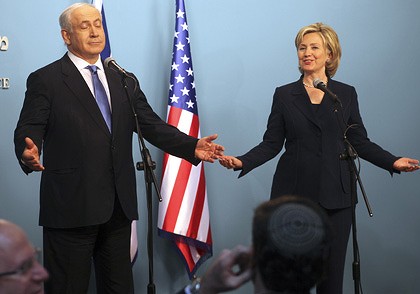
The quid pro quo was hashed out by Mr. Netanyahu and Secretary of State Hillary Rodham Clinton in seven and a half hours of talks in New York on Thursday.

Let’s parse this now:

According to Peace Now’s most recent research, in six short weeks, Israel has all but made up for the construction it lost during the ten month freeze. So that means we’re back to square one. And since this new ninety day freeze is “nonrenewable,” this latest breakthrough is essentially meaningless (except perhaps as a face-saving maneuver on for the Obama administration).

We’re also told that this new freeze would not include East Jerusalem, which was likewise never a part of the last freeze – when home demolitions, evictions of Palestinians, and plans for new Jewish construction continued apace.

(I personally find American Jewry’s deafening silence over what is going on in East Jerusalem to be beyond egregious. Can’t find it in your heart to address the humanitarian implications? Fine. But if you are at all a proponent of the two state solution, you should at least be concerned that Israel’s actions have now made the prospects for a shared capital in Jerusalem all but impossible).

By any other name, this latest diplomatic “breakthrough” is nothing but a fig leaf.  Does anyone really believe that anything substantive will be accomplished during a ninety day settlement (non) freeze? When will our community find the courage to name these dangerously empty gestures for what they really and truly are?

Protest the FBI Raids – Support Freedom of Dissent in post 9/11 America!

On September 24, the FBI raided eight homes and offices of antiwar activists in Chicago and Minneapolis and subsequently issued a summons for them to appear before a grand jury in Chicago.  I won’t go into the details of this egregious violation of the Constitutional rights of US citizens because this Democracy Now piece (part one above, part two, below) does a thorough job in covering all the sordid details. (You can read the transcript here.)

If you live in the Chicago area (and are outraged at the increasing criminalization of dissent in post 9/11 America), I encourage you to attend a rally to against the raids and support of the peace activists subpoenaed by the FBI on Tuesday, October 5 at 8:30 am outside the Dirksen Federal Building, 230 S. Dearborn Avenue, Chicago.

If you can’t attend the rally, please join me and a growing list of signers who have added their names to the following interfaith statement (to sign, send an email to MMcConnell@afsc.org):

We are people of faith and conscience who condemn the recent FBI raids in Chicago as a violation of the constitutional rights of the people and organizations raided. They are a dangerous step to further criminalize dissent. The FBI raids chisel away and bypass fundamental constitutional rights by hauling activists before grand juries under the guise of national security. An overly broad definition of “material support for terrorism” in the June 2010 US Supreme Court ruling concerns us as people of faith who continue to be actively engaged in humanitarian work and peacemaking.

The real illegitimate activities are U.S. foreign policies that support war and occupation. We believe that peacemaking is a sacred commandment.  We feel compelled to work to end military solutions that kill and maim innocent people, destroy civil society institutions, create massive poverty and dislocation of people from their homelands, militarize our own nation and continue to create more animosity against the United States, thus undermining our security.

We are committed to a just peace in Israel and Palestine, Iraq, Afghanistan and Colombia. Some of us have visited these conflicted areas and accompanied those most affected by the violence. Some of us have permanent staff and volunteers working nonviolently for a peaceful resolution to these conflicts. We all stand opposed to the United States’ and all nations’ support of military aid and military intervention in these countries. The infusion of military aid has exacerbated violence rather than resolved it.

We believe in a divine spirit of justice and hope that promotes understanding and equality of all humanity. We refuse to remain silent in the face of the latest efforts of the FBI to chill dissent against war by invading homes of peace activists and calling a grand jury with sweeping powers to manufacture fear. We denounce the use of fear and the far-reaching labeling of critical dissent as “terrorism” that tramples on not only our right, but our duty to dissent as people called to a moral standard of justice for all.

The Settlement Freeze: Painted Into a Corner?

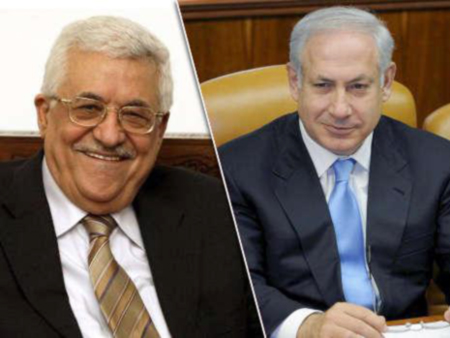
The deadline on Israel’s “settlement freeze” has come and gone. On the West Bank, construction crews are gearing back up and the settler celebrations have begun. Abbas is mulling over his options with the Arab League.  Once again, the peace process seems to be hanging by a thread.

For their part, many analysts are now using a “painted into a corner” metaphor to dissect the impact of the settlement freeze. Israeli analyst Nahum Barnea, for instance, recently opined that,

Three politicians – Barack Obama, Benjamin Netanyahu and Mahmoud Abbas – painted themselves into a corner and didn’t know how to get out of it.

And none other than King Abdullah of Jordan said this on the Daily Show last week:

We all got painted into a corner on the issue of settlements, unfortunately, and where we should have concentrated was on territories and the borders of a future Israeli-Palestinian two-state solution.

It’s bewildering to me that the issue of settlements can somehow considered to be a pesky distraction to the peace process. How can talks on “territories and borders” proceed with anything resembling good faith if one side settles these disputed areas with impunity and the “honest broker” to the proceedings refuses to rein it in?  How can we be expected to take such a process seriously?

We already know that one of the main reasons for Oslo’s failure was the inability to deal with the settlement issue directly.  As a result, Israel took that as an opportunity to significantly expand its settlement regime during the course of the “peace process.” This has brought us to where we are today: in the wake of Oslo more than 500,000 settlers now live throughout the West Bank in settlements and small cities, with special Israeli-only highways that effectively cut Palestinian territories into individual cantons separated by military checkpoints.

Have we learned nothing from past experience? Here’s lesson #1: the settlements are not a side issue. The Israel’s settlement of the West Bank and East Jerusalem are – and have always been – a central obstacle to the peace process. Until it is made to cease and desist, I can’t see how the latest round of talks can be considered anything but a charade.

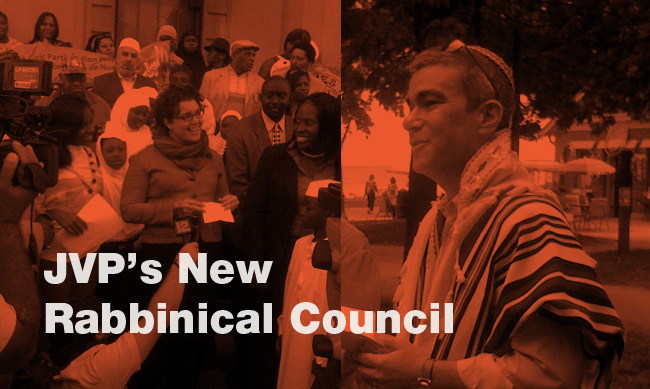
Jewish Voice for Peace Launches Rabbinical Council

I’ve just begun serving with my good friend and colleague Rabbi Alissa Wise as co-chair of Jewish Voice for Peace’s newly launched Rabbinical Council. As readers of this blog may have surmised by now, JVP has become an increasingly important and vital organizational address for me – and I’m honored to be working with Alissa to help organize Jewish spiritual leaders on its behalf.

If you’re a rabbi, rabbinical student or cantor, we invite you to sign on. You can contact us at rabbis@jvp.org.

South Hebron Tragedy: Blogosphere Reactions

Two posts from today’s blogosphere offer spot-on responses to yesterday’s tragic killings in Hebron:

From Mitchell Plitnick’s “The Third Way:”

I very much appreciate President Obama condemning yesterday’s murders of four settlers in the South Hebron Hills.

But that condemnation would be an awful lot more meaningful, to myself and to many others I’m sure, if we saw similar outrage in Washington when Israel killed over 700 Palestinian non-combatants in Operation Cast Lead. Or when a border policeman killed Bassem Abu Rahmeh by firing a gas cannister directly and intentionally at him. Or for any of the 100 Palestinians killed since the end of Operation Cast Lead (many of whom were killed as combatants, to be sure, but 32 of whom were not taking part in hostilities nor were counted as “targeted assassinations”).

From Paul Woodward’s “War in Context:”

Whether or not Hamas had a role in yesterday’s attack it is too soon to tell. And even if some or all of the gunmen turn out to belong to the movement does not necessarily reveal a great deal about the level of command and control or political motives for the attack.

Whatever the motives, the outcome itself has opened political opportunities to each constituency that now portrays itself as a victim.

Given that the attack took place in an area controlled by the IDF, President Abbas could have taken the opportunity to point out that the attack underlines the fact that there can ultimately be no security solution to the political conflict. Instead, Palestinian security services have been quick to launch what is being described as one of the largest arrest waves of all time in the West Bank.

At the funerals of the four Israelis killed, settler leaders took the opportunity to push for settlement expansion, call for vengeance (a call which has already been acted upon), deny the existence of the Palestinian people and made a thinly-veiled appeal for ethnic cleansing…

When President Obama tries to press Benjamin Netanyahu to extend the so-called settlement freeze, the Israeli prime minister will no doubt tell him solemnly that in light of recent events, his hands are well and truly tied.

They shoot and we build has become the settlers’ slogan — one that is almost certainly to Netanyahu’s liking.

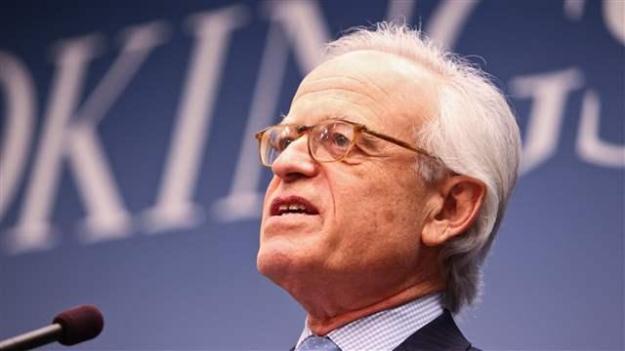
Martin Indyk on the Peace Process: Hoping Against Hope

martin_indyk001_16x9

A commenter on my last post asked me what I thought of Martin Indyk’s recent NY Times op-ed, in which he expresses a powerful optimism about the upcoming I/P peace talks in Washington.

My answer?  Indyk’s article represents a picture-perfect example of the inherent inequity of the peace process as it is currently defined.

In his op-ed, Indyk lists four factors that he believes distinguish this round of direct talk from previous attempts. Number one, he claims that “violence is down considerably in the region.” Thanks to the PA’s security measures in the West Bank and Hamas’ in Gaza, Indyk explains, Palestinian violence against Israelis has decreased considerably.

His analysis, however, completely leaves out the other side of the equation: Israel’s violence against Palestinians, which remains as brutal and oppressive as ever. The examples are legion: Israel’s military assault in Gaza in 2008/09 that left 1,400 dead, the structural violence of its ongoing blockade of Gaza, which is having a devastating effect on Gaza’s economy, health care system, infrastructure and Gazans’ freedom of movement. In the West Bank, the IDF continues its armed crackdown on weekly non-violent protests and has increased its arrests and incarceration of non-violent Palestinian leaders.  Home evictions and demolitions continue throughout the territories, East Jerusalem and even in Israel proper.

Indyk’s myopia on this front is fascinating. Indeed, it offers an important window into a fundamental injustice that currently pervades the peace process – a process where only Palestinian violence against Israelis is considered germane to negotiations. It might reasonably be asked: is this process about delineating the terms of a equitable peace treaty or dictating the terms of a Palestinian surrender?

Indyk’s second factor: Israel’s “settlement activity has slowed down considerably.” To demonstrate his claim he quotes from the Israeli Central Bureau of Statistics, which reports that

(No) new housing starts in the West Bank were reported…in the first quarter of this year. What’s more, there have been hardly any new housing projects in East Jerusalem since the brouhaha in March, when Vice President Joe Biden, during a visit to Israel, condemned the announcement of 1,600 additional residential units. The demolition of Palestinian houses there is also down compared with recent years.

It is a clear sign of Indyk’s abiding prejudice that he turns to the Israeli government for an accurate report of facts on the ground. I’d suggest a more trustworthy source: namely, Peace Now, who has been indefatigably tracking Israel’s settlement activity in the West Bank.

According to its most recent report:

(On) the ground, there is almost no freeze or even a visible slowdown, despite the fact that legal construction starts have been frozen for 8 months (and) that the Government of Israel is not enforcing the moratorium.

The report’s main findings:

• At least 600 housing units have started to be built during the freeze, in over 60 different settlements.

• At least 492 of those housing units are in direct violation of the law of the freeze.

• During an average year (when there is no freeze) approximately 1,130 housing units start to be built in 8 months in the settlements. The new construction starts during the moratorium constitute approximately half of the normal construction pace in the settlements.

• Some 2,000 housing units are currently under construction in the settlements, most of them started before the freeze was announced in November 2009.

This means that on the ground, there is almost no freeze or even a visible slowdown, despite the fact that legal construction starts have been frozen for 8 months.  It also means that the Government of Israel is not enforcing the moratorium.

In short? Indyk’s claim is misleading and spurious. Palestinians have been reasonably concerned about entering into direct talks while Israel’s settlement activity is ongoing.  As things currently stand, the “freeze” is slated to be lifted next month – precisely the same time talks in Washington are scheduled to commence.

For factors three and four, Indyk points out that a majority of the public on both sides support a two-state solution – and that there really isn’t that much left to negotiate anyway.  He blames Arafat exclusively for the breakdown of Camp David in 2000, a failure that left “Palestinians and Israelis mired in conflict.” This is, of course, the conventional Israeli narrative regarding the failure of Camp David: the Israelis made a generous offer, the Palestinians spurned it, and the Second Intifada ensued.

This is a simplistic, one-sided narrative that has long been challenged by compelling accounts of the actual negotiations.  Most famously, this narrative asserts that Israel was prepared to offer 96% of the Occupied Territories to the Palestinians. It has since been pointed out that this 96% number more accurately represented the percentage of the land over which Israel was prepared to negotiate. It did not include, among other things, East Jerusalem, the huge belt of Jewish settlements around the city or a ten mile wide military buffer zone around the Palestinian territories. In fact, after factoring in an obligation to lease back settlements to Israel for twenty five years, the total Palestinian land from which Israel was prepared to withdraw actually came to approximately 46%.

Regardless of which narrative we choose to believe, it is clear that ten years after Camp David many difficult complicated issues remain unaddressed. In the meantime, Israel has continued to expand its settlement regime across Palestinian territories, which likely means the amount of land from which it is prepared to withdraw has shrunk all the more. Under these circumstances, Indyk has little cause to treat the current round of negotiations as pro-forma.

Albert Einstein has been quoted as observing that “the definition of insanity is doing the same thing over and over again and expecting different results each time.” For the past twenty years the peace process has been defined by the same basic – and one-sided – parameters. Each time the process has been rebooted, we’ve heard the same kinds of hopeful tropes that Indyk expresses here. Each time we’ve been told that we have an unprecedented opportunity for peace. Each time we’ve been told that those who criticize the process are the “enemies of hope.” But each time, this flawed political process has brought us no further along toward a viable two-state solution.

Perhaps it is time to envision a different process. One that takes values of justice and equity as seriously as it does peace. One in which the United States acts as a truly honest broker, in which Israel is held to account for its violence against Palestinians, for its oppressive policies and its ongoing settlement of the occupied territories. Then, and only then, will there truly be, as Indyk puts it, “hope in the Middle East.”

Peace with Justice in Israel/Palestine: A Dialogue

Since my recent post on the current round of the Israeli-Palestinian peace process I’ve received many responses, via comment, in person, and email. Here’s one of the most thoughtful and challenging, sent to me by a good friend. Click at the finish for my response:

As the Midrash (Leviticus Rabbah 9) teaches, “Great is Peace, since even in a time of war, one should begin with peace…”

Even now, when the prospect of achieving peace seems so remote and the hostility from some in the Netanyahu government so hostile, we as Jews are commanded to pursue peace. This doesn’t mean that we should be Pollyannaish about the possibilities of success in the upcoming talks, but neither should we give up before they’ve started. There is always the possibility, however remote, that Netanyahu will decide to take the bull by the horns and do a Nixon to China like move. Those of us who care deeply must encourage the best possible outcome. After all, if these talks fail and the Palestinian Authority disintegrates, where will this leave in terms of security in the West Bank and international credibility? Where will it leave President Obama who has hinged so much of his foreign policy on resolving the conflict? These are serious and weighty matters for Israel and the U.S.

I know that the political maneuvering around peace talks can be very discouraging for those like you who are trying to improve the situation on the ground. Politicians make all sorts of moves that are hard to swallow. Hillary Clinton, for example, started out very strongly on human rights issues leading the way for international financial assistance to Gaza following the war and strong denouncing settlement building in East Jerusalem. To get to these talks, she has become much more restrained in response to both the failure of the settlement freeze policy and to fear of attacks from the right wing (both Jewish and Christian) in characterizing Obama as anti-Israel. There is a place for politics in moving things forward, but it operates in a very different manner than truth telling. Mobilizing support from people with a broad range of perspectives involves compromises that can be very hard to swallow, but until we find a way to win over broader grassroots support, this is the price we will pay until then.

I admire your decision as a prominent rabbi to telling the truth about the on the ground situation in Israel and Palestine. This is extremely difficult to look at for many of us, and yet you have decided to unflinchingly dive in headfirst. However, I believe that your framing the political process in opposition to justice on the ground is quite problematic and ultimately more harmful to your dreams than heuylpful.

I cannot praise your glorification of hopelessness and the messianic like idea that we cannot pursue peace until there is justice. We cannot stop seeking peace and we cannot stop seeking justice, and we must use all of the tools at our disposal including politics and including truth telling.

Most importantly, if you really want to “extend civil rights, human rights, equity and equality for all inhabitants of Israel/Palestine” then you will need every possible ally. Please don’t make yourself the leader of an exclusive club that turns away your natural allies for lack of moral purity. It’s so much easier to stand on supposed high moral ground and criticize those who imperfectly seek to bring about change than to do the dirty work of making it happen. In the end, we all need each other if we’re going to move this forward.

Continue reading

The Peace Process is Dead

Israelis and Palestinians are being brought back to the table, but no one really seems to be all that happy about it. Indeed, I can’t remember a time when renewed peace talks were greeted with such widespread cynicism. And that’s when you can even read about it at all – as I scour my usual media outlets for news and commentary on the peace process, I’m getting the distinct impression that this kind of thing is simply not considered to be news any more.

The only significant piece I’ve read recently is Ethan Bronner’s front page article in Saturday’s NY Times. The first few paragraphs pretty much tell you everything you need to know:

The American invitation on Friday to the Israelis and Palestinians to start direct peace talks in two weeks in Washington was immediately accepted by both governments. But just below the surface there was an almost audible shrug. There is little confidence — close to none — on either side that the Obama administration’s goal of reaching a comprehensive deal in one year can be met…

“These direct negotiations are the option of the crippled and the helpless,” remarked Zakaria al-Qaq, vice president of Al Quds University and a Palestinian moderate, when asked his view of the development. “It is an act of self-deception that will lead nowhere.”

And Nahum Barnea, Israel’s pre-eminent political columnist, said in a phone interview: “Most Israelis have decided that nothing is going to come out of it, that it will have no bearing on their lives. So why should they care?”

I used to believe where there’s talk, there’s hope. (In fact, I think I’ve even written those very words on this blog once or twice before). I don’t think I really believe this any more – not, at least, when it comes to the Israeli-Palestinian peace process. For almost two decades, the US and the international community has been brokering talks between both sides and now this is what it has come to: beyond the pro-forma diplomatic statements, everyone seems to agree that it’s really just a road to nowhere. And a half-hearted attempt to bring the “crippled and the helpless” to the bargaining table simply doesn’t inspire hope. Quite the opposite.

I’m not even tempted any more to engage in an analytical discussion of how/why/where talks have failed. There are still more than enough pundits out there ready to parse the political maneuvering. To my mind, it’s all fairly moot at this point. For so many years, so many of us have been working overtime to advocate for the peace process. But while so many of us have held forth the two-state solution as a kind of Holy Grail, the prospect of a viable Palestinian state has grown increasingly remote.

Again, from Ethan Bronner:

Most Palestinians — and many on the Israeli left — argue that there are now too many Israeli settlements in the West Bank for a viable, contiguous Palestinian state to arise there. Settlement growth has continued despite a construction moratorium announced by Mr. Netanyahu.

Moreover, support for many of the settlements remains relatively strong in Israel. In other words, if this view holds, the Israelis have closed out any serious option of a two-state solution. So the talks are useless.

As someone who has fervently supported peace talks from the beginning, I write these words with great sorrow: it is time to face the facts and declare that the peace process is dead. I respect those who honestly disagree with such a position, but for myself at least, I cannot in good conscience advocate for a peace process that is so fatally flawed in so many ways. For me, the much more critical and pressing question at this point is not “how can we get both parties to the table?” but “how can we find a way to extend civil rights, human rights, equity and equality for all inhabitants of Israel/Palestine?”

That’s really the crux of the issue for me: peace without justice is no peace at all. Whether or not there is eventually a one-state, two-state or fifteen-state solution, it will need to be a just solution. And at the moment, justice seems to be precisely what is missing from the peace process.

At the end of the day, Israel simply cannot claim to take the concept of Palestinian statehood seriously while it establishes Jewish settlements throughout the Palestinian territories with impunity. Israel cannot say it accepts the concept of a Palestinian capital in Jerusalem yet at the same time evict Palestinians from their homes in East Jerusalem with a clear intention of Judaizing these neighborhoods. And perhaps most critically, Israel cannot claim to meet the Palestinians across the peace table in good faith while it oppresses Palestinians on a daily basis.

My friend and colleague Cantor Michael Davis once said to me that the real problem with the peace process is that “we are focusing exclusively on the future at the expense of the present.” I agree. For far too long we have been using the peace process as a shield to keep us from honestly facing the very real and troubling human rights abuse Israel is committing on the ground right now. Yes, there will need to be a political solution to this conflict. But until a present justice is consciously attached to a future peace, I believe in my heart that the peace process will remain as good as dead.

The Jewish Community Debates BDS

As the Boycott, Divestment and Sanctions movement gains momentum, I’ve been pleasantly surprised to see at least two internal Jewish community conversations in which this painful, volatile issue with was debated with intelligence and mutual respect.

Last month, the New York-based org Jews Say No sponsored a debate/discussion featuring Israeli activist Yonatan Shapira, Birthright Unplugged director Hannah Mermelstein, Forward editor JJ Goldberg and J Street board member Kathleen Peratis.  It takes thirteen YouTube clips to see the entire program, but I highly recommend watching it from beginning to end. I found it informative, intelligent, passionate – and ultimately inspiring for the way a Jewish gathering could discuss such a potentially divisive subject so gracefully. (Click above for the first clip, then surf to the Jews Say No website to watch the next twelve.)

For its part, Tikkun Magazine held its own Jewish roundtable on BDS featuring Tikkun editor Rabbi Michael Lerner, Jewish Voice for Peace director Rebecca Vilkomerson; Rabbi Lynn Gottlieb, founder of Shalom Shomer Network for Jewish Nonviolence, J Street president Jeremy Ben Ami; and Israeli Shministit (refuser) Maya Wind. The entire conversation can only be accessed by purchasing the July/August edition of Tikkun Magazine, but you can read key excerpts at the JVP website.