Category Archives: People You Should Know About

People You Should Know About: Sister Pat Murphy and Sister JoAnn Persch

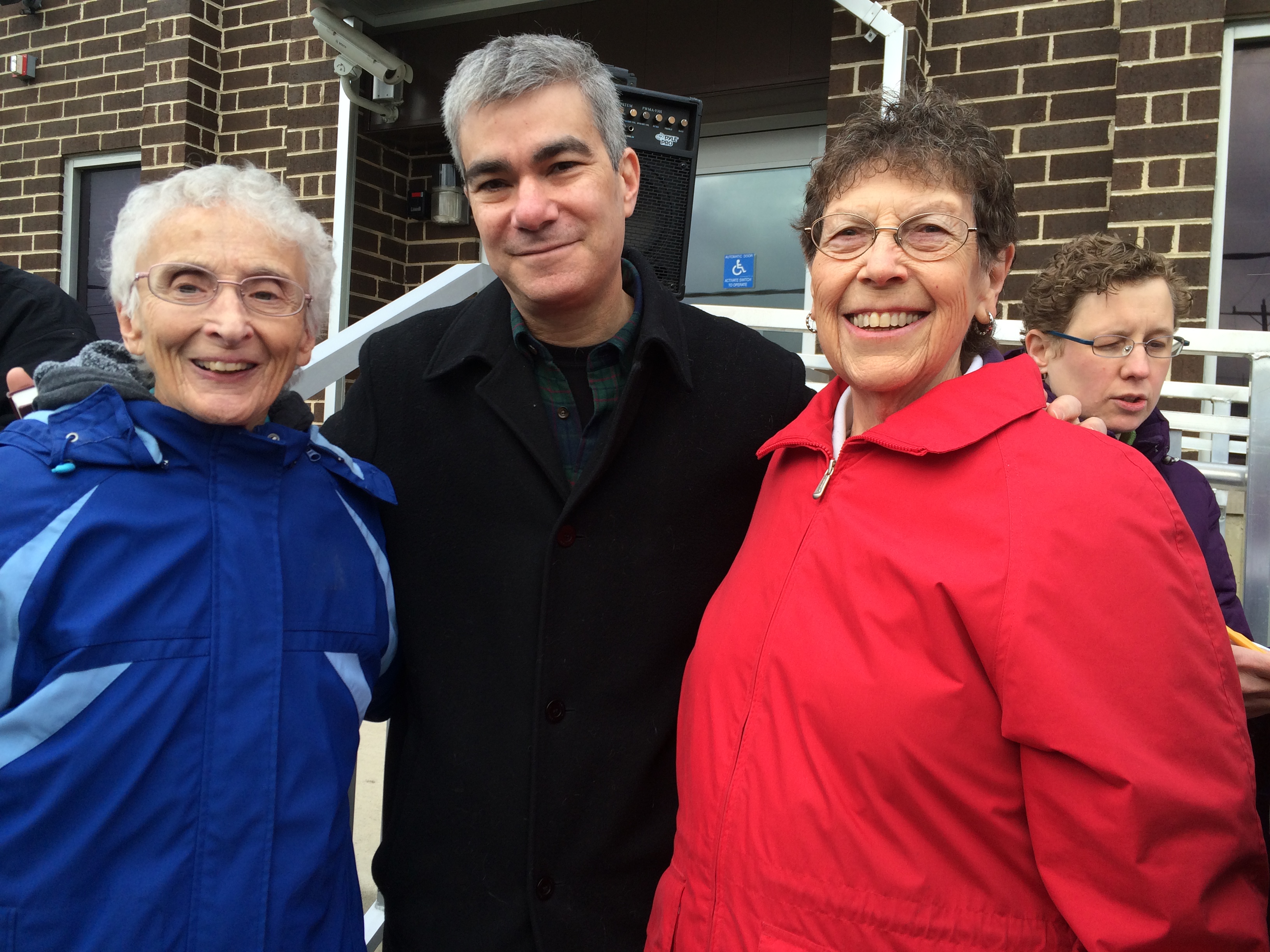
Jo and Pat

This past Friday morning, members of my congregation and I participated in an interfaith vigil at the immigrant detention facility in Broadview, IL. We’ve come to this spot many times over the years and I’ve written about the vigil many times before. It was founded several years ago Sister JoAnn Persch (right) and Sister Pat Murphy (left) of the Sisters of Mercy – two of my spiritual heroes.

During the vigil, Sister Jo joyfully announced that the Marie Joseph House of Hospitality, a home that provides shelter, meals, transportation, and community support for people awaiting their immigration proceedings, was finally open. Sister Jo and Sister Pat have been indefatigably working to create this community-based alternative to detention of undocumented immigrants, who are typically treated as “inventory” during deportation hearings. Her announcement provided one small but profound ray of hope in an otherwise dark and dismal reality for those fighting for compassionate immigration reform.

In a recent article about the Marie Joseph House, Sister Pat and Sister Jo pointed out that this new facility will be able to provide these services for significantly less than the $122 to $164 per day ICE says it pays to hold someone in jail. The home will have 18 bedrooms and extra space for short-term residents. It’s a small capacity compared to the 33,400 people ICE typically detains each night, but as Sister Pat and Jo rightly note, it’s a start:

We are not alone in our efforts. A network of similar shelters is emerging across the country. The outpouring of financial, in-kind, and volunteer support we receive from communities of all backgrounds shows us the immense generosity Americans have when people are in need.

As Alabama Republican Congressman Spencer Bachus observed during a recent House Judiciary hearing, “It seems there is an overuse of detention.” John Morton said that “alternatives to detention” programs are promising. We agree. Outside detention, people have better access to lawyers, doctors, and other support. Congress should use new immigration legislation to allow ICE to invest in alternatives rather than prisons. To get it right, they need to consult with communities and groups like ours.

I’ve known and worked alongside Sister Pat and Sister Jo for many years now, and am consistently inspired by their example of deep faith, abiding compassion and dogged persistence. For the past 45 years they have worked together in Chicago to minister to immigrants, refugees, older persons, and homeless families – and to advocate for their basic rights. In 2008, they helped to spearhead an intense lobbying drive to pass historic legislation that allows all immigrant detainees held in Illinois jails the same access to clergy as those imprisoned for other crimes. As a result, many professional and lay ministers can now serve the pastoral needs of undocumented immigrants who would otherwise be locked away and forgotten by everyone but their families.

Sister Pat and Sister Jo’s work has not gone unnoticed in the wider world. They were profiled in the play Home/Land (produced by Chicago’s Albany Park Theater Project) and more recently in the documentary film, “Band of Sisters,” (below) which explores the social justice activism of American nuns throughout the country. Though this kind of attention is much deserved, Sister Pat and Sister Jo would be the first to say that they are simply living out their faith in the most basic of ways: to minister to the needs of the most vulnerable members of society and to demand that our system do the same.

Sister Pat and Sister Jo are truly my spiritual teachers and I am so grateful to know and work alongside them. I know of few others who model compassion and justice with such decency and grace.
 

Stanford Professor, Poet and Ex-Sixties Radical Hilton Obenzinger on What it Means to Be a Jew

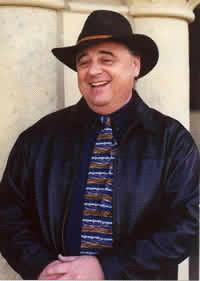
obenzingerHighly recommended: this recent interview with Stanford professor Hilton Obenzinger, who among other things is a prolific writer and poet and was one of the student leaders of the 1968 Columbia University protests which led to the six day takeover of the President’s office.  Obenzinger definitely speaks my heart on all kinds of issues. (h/t: Susan Klonsky)

A few choice excerpts:

What makes you proud to be a Jew?

Jewish culture is rich and varied with a transnational sense of peoplehood. In Europe, my ancestors were everything from ultra-orthodox to Polish nationalists, to escape-to-America émigrés, to Zionist and Communist. The Nazis murdered almost all of them. In the face of that horror and other horrors of history, Jewish survival is astonishing.

I’m especially proud of the American Jewish experience that pushed me, and others, to join the civil rights and social justice movements. I’ve heard it said that support for equality and justice flows from Jewish ethics and from the history of Jewish persecution. I’d like to believe it.

What are you most ashamed about Jews as an ethnic group?

From my point of view, Zionism turned out to be a moral disaster for the Jews. American Jews have been suckered into supporting Israel in unthinking ways. This has been changing, but not enough American Jews are yelling and screaming to stop Israel’s expansion.

Forty years ago, did you believe there would be a resolution to the conflict between Israel and the Palestinians?

Yes. And I still do.

Do you see a resolution to the conflict in your own lifetime?

Assuming I live another decade or two, probably not. But you never know. Who would have thought the Soviet Union would collapse? Or a black man would be president? I may not live to see it but it’s likely to happen.

Do you think that there can be a one-state solution to the conflicts between Palestinians and Israelis?

Of course, there can be — which doesn’t mean it will happen, at least in the near future. The conflict is not at root religious and it hasn’t been going on for thousands of years, as many claim. It started about 130 years ago when Zionism, a Western political movement, called for the settlement of Palestine and the exclusion of the native people. It’s a conflict started by people, not by God; humans created it; humans can fix it.

What do you see happening now?

Israeli Jews are a nationality with their own language and culture, as are the Palestinians, so it would take a lot of good faith to fit all of them together, including the refugees. Good faith is not an abundant commodity nowadays. Meanwhile, the Israeli government has been doing all it can to prevent a two-state solution by expanding settlements and uprooting Palestinian communities.

One state may be inevitable, since the foundations for a viable Palestinian state have been greatly undermined. Israel might move further in its current colonialist direction, creating reservations for the natives and a large open-air prison in Gaza. I don’t care if there are one or four states, actually, just so long as equality and democratic rights are at the core of all of them.

What have you learned from studying the Holocaust?

When we protested the war in Vietnam many of us didn’t want to be “good Germans” — people passively accepting evil and genocide. My family’s murder always weighs on my mind, so for me it’s imperative to speak out about injustice.

I produced my aunt’s oral testimony called Running through Fire about her escape from the Warsaw Ghetto. I learned from her that everything is muddy — with some Germans acting morally and courageously and some Jews acting in a craven fashion. I also leaned that in a situation of utter horror, no matter how smart and skilled and, in her case, how beautiful you were, pure luck is a determining factor. I’ve also learned to keep my passport up-to-date.

What does it mean to you to be a Jew?

After my son’s birth I felt compelled to pass on to him a positive Jewish experience without the corruptions of anti-Arab racism, and the “Jewish Disneyland” kitsch that American Jews love. I wanted my son to laugh, to enjoy the bar mitzvah experience, to feel comfortable being Jewish and Filipino — which is his mother’s ethnic identity.

What do you think Jews and Arabs have in common?

I told my aunt who survived the Nazis that if she could meet Palestinians in refugee camps she would like them, and that they were a lot like her. Palestinians, like Jews, value education and culture, and they insist on persisting. They, too, have historical memories that they won’t allow to be erased and that they act upon. Both Israeli Jews and Palestinians have also managed to drive each other insane. It’s painful watching two peoples destroy each other.

People You Should Know About: Ezra Nawi

If you’re looking for the definition of an Israeli hero, here’s my nomination: human rights activist Ezra Nawi.  Well-known in the Israeli-Palestinian peace movement, Nawi is a true original. This is how he was described by journalist Neve Gordon in a recent Guardian article:

Nawi is not a typical rights activist. A member of the Ta’ayush Arab-Jewish Partnership he is a Jewish Israeli of Iraqi descent who speaks fluent Arabic. He is a gay man in his fifties and a plumber by trade. Perhaps because he himself comes from the margins, he empathises with others who have been marginalised – often violently.

Nawi has long been active on behalf of the Palestinians and Bedouins of South Hebron, a region where the occupation is particularly oppressive and harassment at the hands of Jewish settlers is virtually constant. While his non-violent activism has helped bring international attention to this troubled region, it has also made him a target in the eyes of the occupation authorities. In July 2007, he was arrested and charged with assaulting a police officer while protesting the destruction of a Palestinian house. He will be sentenced next month and will most certainly face jail time unless there is a significant public outcry.

As it turns out, the home demolition and arrest were all captured on film and broadcast on the Israeli news. (Click above – Nawi is the one in the green jacket and the grey cap.)  The footage is riveting and everything is clearly documented from beginning to end (including the non-assault of the officer.)  Nawi himself gets the last word however. Sitting handcuffed in a military vehicle before laughing, scornful soldiers he says, “Yes, I was also a soldier, but I did not demolish houses. There’s a big difference. The only thing that will be left here is hatred…”

Since Nawi’s arrest, support has been building. Jesse Hochheiser’s blog, “Across the Borderline” contains several powerful testimonials, including this from Hebrew University professor and fellow Ta’ayush activist David Shulman:

Ezra Nawi is probably the most courageous person I have ever met. I have seen him in countless moments when settlers violently attacked him and other peace activists, Palestinians and Israelis; his presence of mind, steadfastness, and clarity always got us through such times. He is that most unusual of human beings– a person of profound inner gentleness and moral principle, selfless and creative in finding ways to help the Palestinian shepherds and farmers of the South Hebron hills.

The only thing standing between Ezra Nawi and imprisonment is your voice. Click here to offer your support.