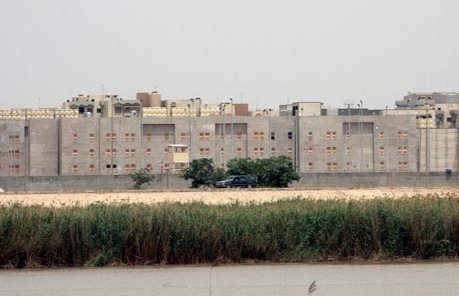
The new American embassy in Iraq is the largest in the world and is built on a tract of land roughly the size of the Vatican
In my recent Yom Kippur sermon, I linked to an article that explained why, even if Obama did honor the pledge to withdraw US troops at the end of 2011, this wouldn’t be the end of our militarized presence in that country by a long shot.
The list of responsibilities the State Department will pick up from the military is daunting. It will have to provide security for the roughly 1,750 traditional embassy personnel — diplomats, aid workers, Treasury employees and so on — in a country rocked by daily bombings and assassinations.
To do so, the department is contracting about 5,000 security personnel. They will protect the U.S. Embassy in Baghdad plus two consulates, a pair of support sites at Iraqi airports and three police-training facilities.
The department will also operate its own air service — the 46-aircraft Embassy Air Iraq — and its own hospitals, functions the U.S. military has been performing. About 4,600 contractors, mostly non-American, will provide cooking, cleaning, medical care and other services. Rounding out the civilian presence will be about 4,600 people scattered over 10 or 11 sites, where Iraqis will be instructed on how to use U.S. military equipment their country has purchased.
“This is not what State Department people train for, to run an operation of this size. Ever since 2003, they’ve been heavily reliant on U.S. military support,” said Max Boot, a national security expert at the Council on Foreign Relations.
Make no mistake: we’re all going to be paying for Bush’s Folly for a long, long time to come…
In 2006, I was approached by JRC’s Peace Dialogue task force and asked if I would consider adding something to our Shabbat prayer for peace. Could we, they asked, introduce the prayer by reading the names of three American soldiers, three Iraqi civilians and three Afghan civilians who had been killed in these two ongoing wars?
The reason, they explained, was to remind ourselves that peace is not just an abstract concept. If we’re going to say a prayer for peace, we should own up to the stakes – we should acknowledge that we are citizens of nation at war, that war comes with a very real human cost, and that as American citizens, we are complicit in all actions made by our country.
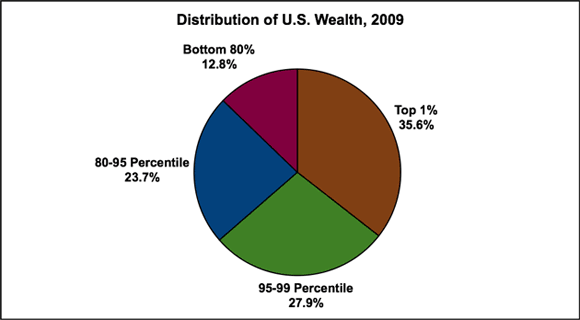
Source: Economic Policy Institute, The State of Working America 2011
Three years ago, I traveled with several JRC members and nearly 1,500 others to Postville, Iowa. We went to show our solidarity with 400 immigrant workers of the Agriprocessor kosher meat packing plant who had recently been arrested and imprisoned. It was, at the time, the largest single-site workplace raid in US history.
After participating in an interfaith service, we marched through the streets of Postville. As we reached the downtown area, we met up with angry counter-protestors, many of whom were holding signs condemning the invasion of “illegal immigrants” into their communities. One woman held a large sign that still sticks in my mind – it read: “What Would Jesus Do? Obey the Law.” I distinctly remember pointing out the irony of this sign to a fellow marcher, considering Jesus is actually considered to be one of the earliest practitioners of civil disobedience.
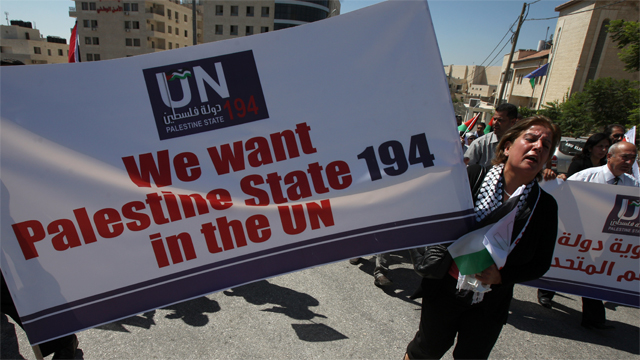
How can we understand the PA’s initiative to declare statehood at the UN? How should US and the international community respond? Will it advance the prospects for justice and peace in Israel/Palestine?
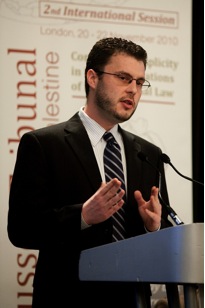
Ruebner is a former Analyst in Middle East Affairs at Congressional Research Service, a federal government agency providing Members of Congress with policy analysis. His analysis and commentary on US policy toward the Middle East appear frequently in media such as NBC, ABC Nightline, CSPAN, Al Jazeera, USA Today, Los Angeles Times, Huffington Post, Middle East Report, and more.
The US Campaign to End the Israeli Occupation is a national coalition of nearly 350 organizations working to end US support for Israel’s illegal 43-year military occupation of the Palestinian West Bank, East Jerusalem, and Gaza Strip, and to change U.S. policy toward Israel/ Palestine to support human rights, international law, and equality.
Call-in info:
Call in number: 1-800-920-7487
Code: 92247763#
Participants in the call are encouraged to read one or more of the following articles:
I don’t have a position on whether or not it is a good thing for the PA to seek membership status for Palestine at the UN. That is for the Palestinians to determine – and I know there are a variety of Palestinian opinions both pro and con on this issue.
On this one I’m in full agreement with former AJC Executive Director Henry Siegman, who offered this analysis yesterday:
(Is) there anyone who witnessed the frenzied applause that greeted Prime Minister Benjamin Netanyahu’s most recent speech before the U.S. Congress in which he left no doubt about his government’s intentions for East Jerusalem and for the West Bank, or heard President Obama’s assurances to AIPAC’s conventioneers that the ties that bind the U.S. to Israel are forever “unbreakable,” who still believes that the U.S. will ever exert the kind of pressure on Israel that will finally change its cost/benefit calculations with regard to its colonial project?
America will not turn our backs on the legitimate Palestinian aspiration for dignity, opportunity, and a state of their own…
The only resolution is for the aspirations of both sides to be met through two states, where Israelis and Palestinians each live in peace and security…
The United States does not accept the legitimacy of continued Israeli settlements. This construction violates previous agreements and undermines efforts to achieve peace. It is time for these settlements to stop…
And now here we are. The Obama administration has done everything it can to undermine its own publicly articulated goals. It continues to support Israel unconditionally as it settles the West Bank with impunity. Last February it cast the sole veto vote on a UN Security Council resolution that condemned the settlements. Now it is poised to publicly oppose Palestinians formal membership at the UN – the very body by which Israel itself became a state.
No, I’m not personally taking a stand on this because I don’t presume to preach to Palestinians what I think is in their best interest. But as an American citizen, I can’t accept my government’s claim that it is in any way committed to this so-called “peace process.” Until the Obama administration is truly ready to be an honest and effective broker, it could at the very least refrain from smacking Palestinians down when they seek recourse through other means.
And when it comes to the larger implications of a US veto, I’ll say this: whatever good will Obama might have engendered after Cairo is now on the verge of being completely and utterly squandered. You know things are looking dire when a former Saudi Ambassador to the US writes in the NY Times:
The United States must support the Palestinian bid for statehood at the United Nations this month or risk losing the little credibility it has in the Arab world. If it does not, American influence will decline further, Israeli security will be undermined and Iran will be empowered, increasing the chances of another war in the region.
When one of your only allies left in the Arab world makes a public statement such as this, I’d say its time to pay heed.
This Labor Day I’d like to think globally and act locally.
Bowing to an increasing culture of all-out warfare on public sector jobs in our nation, the city council in my hometown of Evanston is currently considering privatizing up to twenty of its public services, including recreation programs, community health initiatives, information technology, the city vehicle fleet program, street maintenance and more.
Yes, even here in our supposedly “progressive” little town of Evanston, we’re not immune to the spreading disease that views “big government” as the source of all economic evils. This Labor Day, it seems a good time as any to make this point: a balanced budget is not a de facto virtue. Budgets are value-neutral. How we generate income and how we spend that income are inherently values-based decisions.
And on a purely practical level, I’m in full agreement with those who claim that balancing the budget by slashing government spending does not stimulate the economy. Given that we’re experiencing zero job growth – and probably will for some time to come – it seems to be doing the exact opposite. Indeed, Paul Krugman makes this point convincingly in today’s NY Times:
Although you’d never know it listening to the ranters, the past year has actually been a pretty good test of the theory that slashing government spending actually creates jobs. The deficit obsession has blocked a much-needed second round of federal stimulus, and with stimulus spending, such as it was, fading out, we’re experiencing de facto fiscal austerity. State and local governments, in particular, faced with the loss of federal aid, have been sharply cutting many programs and have been laying off a lot of workers, mostly schoolteachers.
I know our experience here in Evanston is being currently played out in any number of communities around the country: we are falling prey to a knee jerk, fear-based assumption that the only way to balance a budget is to cut spending. But there is certainly more then one way to slice a pie – and I would claim that doing it at the expense of public sector workers is not only economically unjust but economically irrational.
Click here to read how privatizing Evanston services would affect our workers – and why it would cost our city more in the long run. And if you are an Evanston resident, click here to sign a petition that calls on our city council to keep public services in the public’s hands.
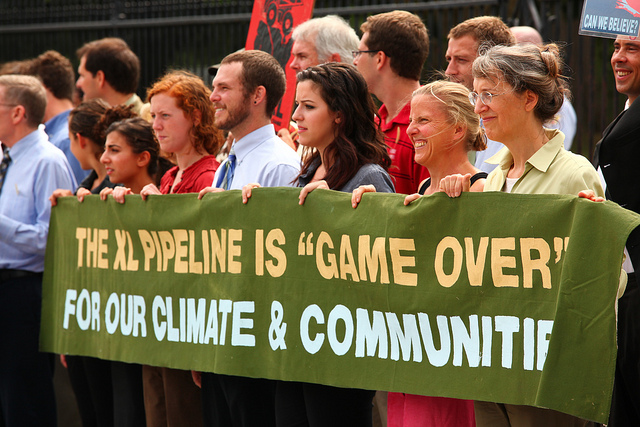
Have you been following the Tar Sands XL Pipeline Sit-In at the White House? This still-ongoing protest is being described as the biggest environmental civil disobedience action in a generation. It began on Saturday, Aug 21 and will continue until September 3. This action has already led to the arrest of almost 600 protesters to date, with crowds increasing every day.
The Canadian oil and gas company TransCanada hopes to begin building a new oil pipeline that would trek close to 2,000 miles from Alberta, Canada to Texas. If constructed, the pipeline, known as the Keystone XL, will carry one of the world’s dirtiest fuels: tar sands oil. Along its route from Alberta to Texas, this pipeline could devastate ecosystems and pollute water sources, and would jeopardize public health.
Giant oil corporations invested in Canada’s tar sands are counting on the Keystone XL pipeline to make the expansion of oil extraction operations profitable: The pipeline would double imports of dirty tar sands oil into the United States.
Pollution from tar sands oil greatly eclipses that of conventional oil. During tar sands oil production alone, levels of carbon dioxide emissions are three times higher than those of conventional oil, due to more energy-intensive extraction and refining processes. The Keystone XL pipeline would carry 900,000 barrels of dirty tar sands oil into the United States daily, doubling our country’s reliance on it and resulting in climate-damaging emissions equal to adding more than six million new cars to U.S. roads.
Before TransCanada can begin construction, the company needs a presidential permit from the Obama administration (no Congressional approval is needed.) Alas, Secretary of State Clinton is already on record as being “inclined” to approve the project and Obama has been ominously silent on the issue. Hence, this incredible, inspiring mobilization in DC.
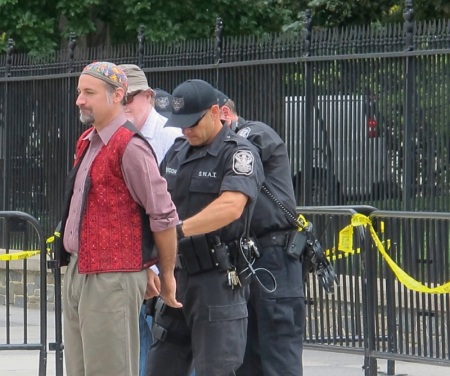
All honor to my friend and colleague, Rabbi Fred Scherlinder Dobb of Adat Shalom Reconstructionist Congregation in Bethesda – one of the leading rabbinical heroes of the environmental movement – who was among those arrested today (see above.) In a subsequent press release, he was quoted thus:
We must turn up the heat in a sustained effort against the scourge of climate change, which harms not just our land and water but people here and now, our human future and all earthly creation.
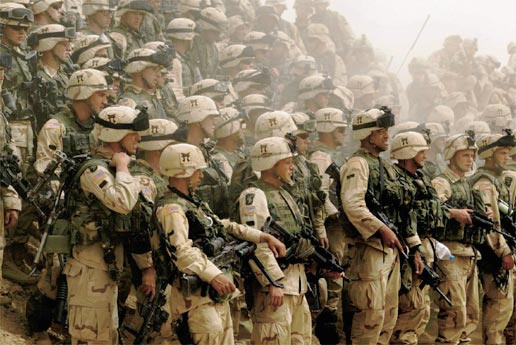
At every JRC Shabbat evening service since December 2006, we’ve introduced our Prayer for Peace by reading the names of three American soldiers, three Iraqi civilians and three Afghan civilians who have been killed since these wars began in 2001.
It’s our way of very simply reminding ourselves that we are citizens of nation at war, that war comes with a real human cost, and that war is a terrible and daily reality for real life individuals. And we do it to acknowledge that as American citizens, we are complicit in all actions made by our country.
Exactly one year ago, when Obama announced a reduction of American combat forces in Iraq from 144,000 to 50,000 troops, I was tempted to stop reading the names of the Iraqi war dead during our services – but I was prevailed upon to continue by many JRC members. After all, Obama himself said that our active combat presence would be maintained until the end of 2011. And as long as this is the case, we’d be hard pressed to deny that we were still a nation at war.
Oh yes, make no mistake: we are still very much at war in Iraq….
Obama campaigned on the promise to end this war. Americans oppose the war in Iraq by an overwhelming margin. Our economy is in crisis and Congress has committed to find $1.2 trillion in savings for the coming year. It’s time to wake up from our slumber and let our leaders know its time to end this misbegotten adventure as promised.
Rep. Barbara Lee of California is currently sponsoring a bill known as the “Iraq Withdrawal Accountability Act” – legislation that would prohibit funding of troops and military contractors in Iraq past 2011. Please click here and join me in urging your Congressperson to co-sponsor Rep. Lee’s bill.
PS: At the risk of ending this post on an abjectly depressing note, I recently read that regardless of when the American military pulls out of Iraq, our presence there would still not be over by a long shot. Read, if you dare, this piece by ex-foreign service staffer Peter Van Buren, in which he explains what will actually happen when the American presence in Iraq is transferred from the military to the Dept. of State:
(The) State Department hasn’t exactly been thinking small when it comes to its future “footprint” on Iraqi soil. The U.S. mission in Baghdad remains the world’s largest embassy, built on a tract of land about the size of the Vatican and visible from space. It cost just $736 million to build — or was it $1 billion, depending on how you count the post-construction upgrades and fixes?
In its post-“withdrawal” plans, the State Department expects to have 17,000 personnel in Iraq at some 15 sites. If those plans go as expected, 5,500 of them will be mercenaries, hired to shoot-to-kill Iraqis as needed, to maintain security. Of the remaining 11,500, most will be in support roles of one sort or another, with only a couple of hundred in traditional diplomatic jobs. This is not unusual in wartime situations. The military, for example, typically fields about seven support soldiers for every “shooter.” In other words, the occupation run by a heavily militarized State Department will simply continue in a new, truncated form — unless Congress refuses to pay for it.
A record 81 House members, about a fifth of the chamber, are spending a week in Israel this month, courtesy of a foundation set up by the American Israel Public Affairs Committee, a pro-Israel lobby.It’s apparently the largest number of lawmakers in the 20 years or so that these trips have been undertaken. They are run every other August in nonelection years. A group of 26 Democrats — the senior member is House Minority Whip Steny Hoyer (Md.) — is already there … (and) 55 Republican members , traveling in two groups, will take week-long jaunts to the Holy Land.
Yes, you heard that right: we’ve narrowly avoided a default on our national debt, our credit rating has been downgraded by the S&P, US markets are in a downfall, unemployment is at 9%, 10 million families are facing foreclosure on their homes by next year, and 20% of the House of Representatives is going to Israel on an all expense paid junket.
We are in an economic crisis. We’ve got to send a stringent warning to our elected officials that we will no longer accept business as usual. Take action today to demand that Members of Congress do their job to respond to this crisis by working in their districts and listening to us, not by taking lobbyist-paid junkets to guarantee their support for even more money and weapons to Israel.
If you share my sentiments, you might want to find out if your Rep is participating in this mega-junket. Click here for some helpful action suggestions provided by the US Campaign.
(The Organization for Economic Cooperation and Development) has reported that poverty is almost twice as widespread in Israel, 19.9% of the population, compared to the OECD average, 10.9%. The gap between the overall standard of living in Israel and that of the lowest tenth of the population was three times higher than the OECD average. In its latest release of data, made public April 12, the OECD reported that 39% of Israelis find it “difficult” or “very difficult” to live on their current incomes, well above the OECD average of 24%.
More than 150,000 protesters took to the streets in 12 Israeli cities, calling for a change in the division of wealth and the resignation of Prime Minister Benjamin Netanyahu.
In Tel Aviv, an estimated 100,000 protesters marched from Habima Square to the Tel Aviv Museum. “We are happy to see the people of Israel taking to the streets, each in their own city, each with their own troubles, but many troubles that are common to all of us,” said one of the organizers, Yonatan Levy.
This one is a game changer, no question, but the jury is still out on how much it might eventually change, or what the game even is. Indeed, as Dahlia Scheindlin and Joseph Dana have just reported in +972:
Every grievance is coming out: there are slogans against the huge concentration of the country’s wealth into the hands of a very few, slogans raging against enormous economic gaps between rich and poor in Israel, lists of demands for just resource distribution and for various elements of a welfare state, salary hikes and lower costs, better education conditions and health care; against the national housing committees law, against the government, for Tahrir. At 10pm on Friday night, when a song group spontaneously burst into chants of “The people! Want! Social Justice!” one young woman sang out beatifically, “The people! Want! All Sorts of Things!”
It’s also notable that one critical cause of this economic disparity is glaringly absent from the protesters’ concern, as Aziz Abu Sarah noted last week:
What amazes me is many Israelis’ inability to make the connection between the continuation of the occupation and the domestic problems Israel faces today; Israel is building constantly in the West Bank but it is failing to provide housing to its citizens within Israel proper. The current Israeli government’s focus on improving living standards in settlements while failing to do the same for the rest of the country is a moral failure.
According to a Peace Now report published on July 20, settlers in the West Bank receive69 percent discount on the value of the land (so that buyers have to pay only 31 percent of the price of the land) and 50 percent funding of the development costs of the building project. In 2009 Israel investment of settlements public building (excluding East Jerusalem) was 431 million shekels, which was 15.36 percent of all public investment in construction for housing that year, despite the fact that they compose only 4 percent of the residents of Israel.
Scheindlin/Dana drive this critical point home in their article as well:
On Friday, some protesters hassled other Palestinian protesters, citizens suffering from housing crises. It came to scuffles. The diminutive Palestinian flags they hung were removed. Joseph recalls the struggles against apartheid in South Africa and Jim Crow south. Can we imagine the ruling classes there demanding “social justice” without addressing their gravest internal injustices? What does the term “social justice” mean if so many who don’t have it are left out? Sure, let’s protest exorbitant housing costs – but why call it “social justice” if the very crux of social justice, namely equality, is not addressed? Can Israelis have a social justice revolution without speaking about the rights of people they control and occupy?
The remarkable power of these grassroots protests is undeniable – but just how far it goes in shifting power still remains to be seen.
(While we wait, however, at least we can enjoy this great mix by Israeli viral video satirist Noy Alooshe – see above…)