In the cycle of weekly Torah readings, we’ve recently begun the book of Exodus, the central sacred narrative of the Israelites’ journey from oppression to liberation. In the story, Egypt, the place of the Israelites’ servitude, is less historical than mythical, referred to in Hebrew by the word Mitzrayim, meaning “narrowness.” Mitzrayim is the Exodus story’s embodiment of systemic state oppression, signified by the constricting, crushing experience of ongoing persecution in which life becomes increasingly unlivable for the oppressed. In the opening reading of the book of Exodus, we read that Pharaoh oppressed the Israelites “be’farech,” which literally means “pulverized.” Last week we read that their “spirits were crushed” so thoroughly that they were unable to hear or respond to Moses’ message of liberation.
As we read the Exodus story this year, I can’t help but note that this narrative is playing out before us every day in real time. It is becoming brutally, tragically clear that the people of Gaza are experiencing Mitzrayim, forced to live in an increasingly narrow – and intolerable –place of genocidal oppression.
Last October, as part of the ceasefire deal between Israel and Hamas, Gaza was divided into two north-south zones divided by a “yellow line.” The eastern side of the line, which comprises roughly 58% of the Gaza strip, is under the control of the Israeli military. (It also includes most of the agricultural land used by Palestinians in Gaza before the war.) Meanwhile, over 2,000,000 Gazans have been forcibly displaced into the narrow western part of the strip, though many of them have (or had) homes on the other side of the line. As a result, this narrow strip of land – which was already one of the most densely populated places on earth, has been narrowed yet further.
Hundreds of Palestinians have already been killed since the ceasefire began – and at least 77 have been killed by Israeli gunfire near or over the line, which is not consistently delineated. Teenagers and young children have been among the slain, according to the AP. In October, an Israeli tank fired on a civilian car, killing 11 members of the Abu Shaaban family in the Zeitoun neighborhood of Gaza City. In December, two Palestinian boys were killed by an Israeli drone when they went out to gather some firewood for their father Tamer, who is paralyzed. The Israeli military announced it had killed “two suspects who crossed the yellow line, conducted suspicious activities on the ground, and approached IDF troops operating in the southern Gaza Strip, posing an immediate threat to them.”
If all of this sounds familiar, it should. The narrow space known as the “Gaza Strip” never existed until it was artificially created in 1948 following the Nakba, when it became a repository for a flood of Palestinian refugees ethnically cleansed from cities and villages in the coastal plain and lower Galilee. In the end, at least 200,000 refugees were crowded into tents in the 140 square mile strip of land. Its borders were determined by the position of Egyptian and Israeli forces when the ceasefire was announced. At the time, most of the refugees fully expected to return home – some could even see their towns and villages through the fences. Those who crossed the border to gather their possessions or harvest their crops were considered “infiltrators” by Israel and shot on sight.
In December 1948, the UN passed Resolution 194, which decreed that Palestinian refugees seeking to return home “should be permitted to do so at the earliest practicable date.” Of course, Israel proceeded to create facts on that ground to render their return impossible. Over 400 villages were completely destroyed, many of which had new Jewish settlements built upon them. In towns and cities, new Jewish immigrants moved into empty Palestinian houses that had been appropriated by Israel. To this day, “the earliest practical date” for the return of Palestinians to their homes remains unrealized.
Now, almost eighty years later, Gazans have once again been dispossessed from their homes, forced into a “temporary” repository. Once again, Palestinians in Gaza are living in tents while other military powers make plans to permanently entrench their presence and power there. In the words of Palestinian scholar Rashid Khalidi, “1948 is immediately brought to mind when you see those images (of tents).”
And once again, the “temporary” lines drawn by colonial powers are inexorably becoming permanent. Last month, Israel’s military chief of staff Eyal Zamir unabashedly announced that the yellow line was now “a new border.” Even more ominously, it was reported that the Israeli military is expanding the yellow line yet further in eastern Gaza, squeezing Palestinians into an even narrower section of the narrow strip. According to Al Jazeera’s Hani Mahmoud, “The expansion of the yellow line (is) meant to eat up more of the territory across the eastern part, really shrinking the total area where people are sheltering…Everyone is cramped here. The population here not just doubled but tripled in many of the neighborhoods, given the fact that none of these people is able to go back to their neighborhoods.”
It is reasonable to assume that this intolerable status quo will go continue indefinitely, i.e., a de facto partition of Gaza east of the yellow line controlled by Israel, where it cultivates and empowers anti-Hamas Palestinian groups, and a smaller western area controlled by Hamas which will be left to languish in ruins. As Sam Rose, acting director of Gaza affairs at UNRWA has pointed out, “It’s right from the kind of typical Israeli playbook of ‘we’ll take as much as we can while there’s a process ongoing that isn’t delivering much.’ Then when it comes down to negotiations, there’s less to negotiate over.”
Given the bewildering political maneuvering of the current moment – the immediate future looks grim for the people of Gaza. Though almost none of the ceasefire’s Phase One goals have been accomplished, the US and Israel and their geopolitical partners are already proceeding with Phase Two of the plan. Trump has announced plans to hold a signing ceremony at Davos this Thursday for his “Board of Peace” – the consortium of nations and hand-picked Palestinian “technocrats” that will supposedly manage Gaza going forward. There is already controversy over Washington’s apparent effort to use the Board of Peace to usurp the United Nations from the planning process. It seems clear that the project is being largely steered by Trump cronies such as Steve Witkoff and Jared Kushner – i.e., real estate moguls who have a financial interest in how Gaza will eventually be carved up.
Like most of Trump’s foreign policy plans, this entire process has turned into a surreal circus. On Monday, when Trump was told that France was unlikely to join the Board of Peace, Trump replied, “Well, nobody wants (President Macron) because he’s going to be out of office very soon. I’ll put a 200 percent tariff on his wines and champagnes and he’ll join.” Meanwhile, Ali Shaath, a former deputy minister in the Western-backed Palestinian Authority who was chosen to lead the Palestinian technocrat committee recently said that providing relief and housing for Gaza will his committee’s first priority, adding, bizarrely, “If I bring bulldozers and push the rubble into the sea, and make new islands, new land, I can win new land for Gaza and at the same time clear the rubble. This won’t take more than three years.” (In fact, the UN has estimated it will take until 2040 and many billions of dollars to reconstruct Gaza.)
Beyond these surreal machinations, however, the pattern of this process is ultimately much the same as it ever was, dating back to post-1948 – or even the 1917 issuance of the Balfour Declaration: Western colonial powers are meeting to determine the fate and divide the spoils of historic Palestine absent any consultation with the Palestinian people themselves. In the meantime, the people of Gaza continue to languish in a contemporary Mitzrayim – an increasingly narrow place, subjected to ongoing military attack, forced to live in tents during a cold, wet winter, besieged by hypothermia and starvation.
In this week’s portion, the Israelites finally go through the waters and emerge into the wide-open spaces of liberation. Our sacred Exodus narrative makes this reality clear: the experience of Mitzrayim may be increasingly intolerable, but it cannot last forever. Pharaohs may rise, but they will inevitably fall. Though such a future may feel unbearably remote at the moment, we must hold tight to this vision. Even as the genocide continues, even as the rest of the world moves on, it will be up to us all to make this latest version of the liberation story a reality.
On Yom Kippur, we say the hard truths out loud. On Yom Kippur, we proclaim together as a community: chatanu, we have sinned. We have failed. We have not lived up to our promises of the past year.
I don’t know that I’ve ever experienced these words more brutally than I do this year. In last year’s Rosh Hashanah sermon, I ended with these words: “A year from now, when we are back here, we will have to have an answer. We can’t find ourselves just asking the same question. We must be ready to answer: what did we do in the last year to bring this genocide to an end?”
We have failed. It is now one year later and Israel’s genocide against the Palestinian people in Gaza is continuing toward its second year mark. As I speak these words, the Israeli military is literally leveling the entire northern region of Gaza to the ground. Earlier today, Israel issued its final warning for Palestinians in Gaza City to evacuate, saying everyone who remains will be considered a “terrorist.” Many are refusing to leave, many are unable to leave.
It is horrifying to even say these words out loud: on this Yom Kippur, the day when we plead to be written into the Book of Life, Israel is systematically erasing Gaza from the map – and the people of Gaza along with it.
I’ll be honest with you: I’ve struggled mightily over what I could possibly say tonight that would be worthy of Yom Kippur. I could discuss the geo-political causes that have been prolonging this genocide. I could discuss craven US politicians and corporate gangsters who are planning to carve up Gaza for their own profit. I could spend my time excoriating the Jewish establishment for supporting this genocide – and too many Jewish communal leaders for their silence. But frankly, none of it would be particularly new. None of it feels worthy of the grief pervadingthis sacred moment of Yom Kippur.
I also don’t want to spend this sermon describing the specific litany of the atrocities being inflicted on the people of Gaza – to reduce them to trapped, powerless victims. We’re all too familiar with the horrors of the past two years. Like so many of you, I’ve been scrolling daily through unbearable pictures and videos live streaming Gazan’s agony, their erasure. There’s something obscene about the casual way we’ve been viewing these horrors on our mobile devices, right alongside memes and texts and emails as we go about our daily business.
And yet at the same time, I know we must bear witness. We owe it in particular to the courageous young Gazans reporting on their own erasure from the ground even as Israel maintains a total media blackout. We cannot and must not look away. This has been our sacred responsibility to the people of Gaza. It is precisely through this bearing witness that we affirm their essential humanity.
As I thought about what I could possibly say to you tonight, I kept returning the same basic truth: if these days are to have any meaning for us at all, it is Yom Kippur’s sacred challenge to publicly affirm our accountability to the Palestinian people – as Jews and as human beings of conscience. We cannot let ourselves become complicit in their erasure. If we are truly serious about Yom Kippur, we must vow that solidarity is our sacred obligation.
When I think about Jewish accountability to the Palestinian people, I must mention our profound debt to Prof. Marc Ellis, of blessed memory, the great Jewish scholar, writer and theologian, who was an important teacher to me and a friend to our congregation from our earliest days. I quoted Marc in my very first sermon at Tzedek Chicago and many more times over the years. He was a prolific writer, but more importantly he was a courageous writer. Among other things, he wrote a great deal about what he called “revolutionary forgiveness” and the imperative for a collective Jewish confession to the Palestinian people. As he put it:
Revolutionary forgiveness in Israel-Palestine begins with a confession by the Jewish people. The confession is simple. What we as Jews have done to the Palestinian people is wrong. What we are doing to the Palestinian people today is wrong. With that confession, we agree to begin to walk the path with Palestinians towards justice and equality. As that path begins to be walked, the memories of each people, broken by history, remain. But as that path is walked, new memories begin to be created. As those memories of justice and equality are created, they begin to dominate the history of both peoples until in the end an injury against one is an injury against all. Revolutionary forgiveness; confession, justice at the center.
Marc died last year, far too young, as Israel’s genocide against the Palestinian people was raging in full force. I yearn to talk to him now about this confession. I so want to ask him if he would still, in this terrible moment, be writing about mutual, revolutionary forgiveness? I want to ask: is forgiveness even possible any more? Or is what Israel is doing to the Palestinian people truly unforgivable? And if that is the case, is there really any future at all? Can there ever be any hope for real justice in Palestine/Israel?
For the past two years I’ve been in touch with my friend Rachel Betarie, an antizionist Israeli Jew and activist and former director of the organization Zochrot. Over the months, her words to me have become progressively more despairing as she’s described how it feels to live in Israel at this terrifying moment, in a country where the majority of its citizens support the genocide.
Recently, Rachel told that she was part of a new working group organized by Zochrot, as she put it, “of activists in Palestine, colonized and Anti-Zionist colonizers, who have been meeting since April to think, re-imagine, and suggest concrete processes through which the right of return for Palestinian refugees from Gaza could be realized after the genocide.” She went on to write:
It is not easy to imagine a better, more just future at a time when the ground is crumbling under our feet. Some of us have families in Gaza and most of us have deep ties there. All of us see our future here in Palestine, between the river and the sea. The question arose again and again in our meetings: Is it even relevant to talk about the future right now? Isn’t this just escapism? Still, we chose to trust each other – a work in progress – and our deeply held values, and extract some ideas from our process of learning and discussing. With every meeting it became clearer to what extent the Nakba, and the ongoing system of settler colonialism – not October 7, 2023 – was and still remains the root of the problems we face today, and that return is the core of every future solution that has a chance to bring any stability, justice and peace to our communities, and that entails dismantling of the Zionist colonial regime.
Through this work, we came to the conclusion that return from Gaza must begin – not at some distant point in the future. Our discussions did not only focus on the design of return but also raised questions of community, of collective and individual healing, and of how social processes of repair can accompany physical return. With our hearts shattered daily by the horrors of the genocide, and with fear and hopelessness engulfing us, envisioning this still possible future is in itself a remedy.
I’m so inspired by their effort, their determination to come together, Israelis and Palestinians – or as Rachel put it, colonized and colonizers – even in this unbearably tragic moment, to vision a future of reparation and return. They know full well that they are a tiny minority in Israeli society, a small island of hope amidst an ocean of trauma and fury. And yet they are determined to keep this vision alive despite it all.
As I think further about how we might envision the future this Yom Kippur, particularly here in the diaspora, I keep returning to one basic truth: Palestinian voices must be centered in our observance. Quite frankly, I don’t know how we can do the work of teshuvah, of repentance and return if we don’t hear their stories directly, open up fully to their voices and honor their experience.
As I said earlier, as we gather tonight for Yom Kippur, Israel is erasing the entire northern region of Gaza City, the most populous, built-up region of the Gaza Strip. According to reports, the scale of these demolitions are unprecedented. Over the past few weeks, the Israeli military has been systematically destroying every high-rise building in Gaza City. Satellite pictures show that the most populous region of Gaza has been reduced to a lunar landscape. Israel has already done this to large swathes of the Gaza Strip, including the city of Rafah in the south and the town of Beit Hanoun in the north.
These words, however, are mere reportage. I believe it’s critical that we hear the story of this erasure from those who are most directly impacted. And so I’d like to share with you two extended testimonies for this Yom Kippur, our day of reckoning. The first is the voice of Taher Herzallah, who comes from Gaza City and works as the Director of Organizing for American Muslims for Palestine. These are the words that Taher recently posted his Facebook page:
Gaza has fallen.
I’m not a sensationalist, nor am I someone who likes to shatter people’s hopes. But what we are witnessing today is the complete and utter annihilation of a people. It really feels like the end of Gaza City, and I don’t say this lightly, especially since I have family members and friends in Gaza who follow me on this page. This is the city where my father was born and where my family has lived for centuries.
Many of my relatives held out for two years under the worst conditions human beings can live under. But for more than 700 days, they’ve endured and found ways to survive in Gaza City.
No longer.
They’ve decided to leave Gaza City for the first time since this all started. It is just no longer possible to live there. With Israel’s systematic destruction of many of the major residential high rises in the city this week, the message is unequivocal: all of Gaza City will be leveled to the ground, the way Rafah and Jabalya and Khan Younis and Beit Hanoun were.
The images of displacement today broke something inside of me. People, looking back at Gaza with tears in their eyes, are moving south into another uncertain reality. Death and suffering are still a high likelihood as “safe zones” don’t truly exist. They know a return to Gaza is unlikely and they will be stuck in a cycle of displacement and suffering for years to come. But what choice do people have?
Some people refuse to leave Gaza. Not only out of stubbornness but also because they don’t have the means to leave. With the lack of aid organizations or large-scale efforts to facilitate the transfer of the population to another area, everyone in Gaza is left alone to figure out how to move their families to safer zones.
I have family members in Gaza who have gone back and forth from Gaza City to Deir El Balah 3 or 4 times to find a small plot of land to set up their tents. Finding an apartment or a built structure to live in is an absolutely hopeless endeavor. The best-case scenario now is to find a small plot of land large enough to erect a tent. With 2 million people squeezed into a small area on the Gaza coast, even that has become nearly impossible…
The stories we are hearing out of Gaza are heartbreaking and soul-crushing. A 10-year-old child in Gaza City was asked what his hopes are for ending this war. His response: “I only hope for one thing–to find my dad’s body and to bury him.” This is the extent of the boy’s hopes and dreams. To find consolation in burying the body of his father, who was killed at a Gaza Humanitarian Foundation distribution site.
Other people have similar stories. They refuse to leave Gaza City, not because they don’t think it’s dangerous, but because they have loved ones buried under the rubble that they have not retrieved and can’t fathom moving on in life without burying them. The psychological and physical trauma of this genocide is so severe that people know that carrying that trauma will be the end of them anyway, and would rather die in Gaza City than endure years of more suffering…
To my family reading this: I am sorry. I have failed you. I don’t know what else to say. I hope you forgive me.
For the rest of us: whatever happens next will be very difficult. So prepare accordingly.
The next Palestinian voice I’d like to share with you is that of Asem Alnabih, an engineer and PhD student and spokesman for the Gaza municipality, who recently evacuated from the Shujayea region of Gaza City. Shujayea is one of the largest neighborhoods in Gaza and once had up to 100,000 residents. It is also a historically significant neighborhood, located in the southern quarter of Gaza’s Old City. Shujayea dates back to the 13th century and is named after Shuja’ al-Din Uthman al-Kurdi, a Muslim commander who died fighting the Crusaders. In the Ottoman period, it was the only mixed quarter in the Old City, where Muslims, Christians and Jews once lived together.
I remember Shujayea well when I visited Gaza in 2017 as a staff member for the American Friends Service Committee. It’s residents were clearly proud of their home, of its history, its deep sense of community and especially of its resilience. Although Shujayea was heavily bombed by Israel in its 2009 and 2014 assaults, residents rebuilt their homes each time.
Here is Asem Alnabih’s testimony, which he wrote in an article for Al-Jazeera:
My neighbourhood in east Gaza, Shujayea, is gone! The streets that once echoed with the laughter of children, the calls of vendors, and the familiar rhythms of daily life now lie in silence, smothered by dust and destruction. What was once a vibrant community, full of stories and memories, has been erased in a matter of moments.
A few days ago, my brother Mohammed went back to Shujayea to check on our family home. When he came back he told my father that nothing remained except for a few broken walls and scattered columns. A few hours later, we were shocked to learn that my father himself had braved extreme danger to see it with his own eyes. In a place where every step can mean death, he chose to walk through the ruins of our past.
This was the house my grandfather and father had built with years of effort, the house that carried my dad’s dreams and bore the marks of his sweat and sacrifice. It was where he raised his children, where we celebrated weddings and birthdays, where countless family memories were made. And now, it is nothing but rubble.
But our family’s loss is not just this one house. My father’s destroyed home is now added to my own burned apartment, my sister Nour’s bombed apartment, my sister Heba’s demolished home, and my sister Somaia’s two apartments – one reduced to rubble and the other burned. To this list are added my uncle Hassan’s destroyed building, my uncle Ziad’s building, my uncle Zahir’s home, my aunt Umm Musab’s apartment, my aunt Faten’s apartment, and the completely destroyed homes of my aunts Sabah, Amal, and Mona. And these are only the losses within our immediate family. All around us, countless relatives, friends, and neighbours have seen their homes obliterated, their memories buried under the debris.
This is not simply about the staggering material value of what we have lost. Yes, the homes were filled with furniture, personal belongings, and cherished possessions, but the destruction goes far deeper than material things. What has been taken from us is irreplaceable. A house can be rebuilt, but the sense of belonging that comes from walking familiar streets, from living in the same neighbourhood where generations of your family have grown up – that cannot be reconstructed with bricks and cement.
Shujayea was more than just buildings. It was a community stitched together by relationships, shared histories, and the memories of ordinary lives. It held the neighbourhood bakery where we bought fresh bread at dawn, the small corner shop where neighbours gathered to chat, the ancient Ibn Othman mosque that echoed with prayers during Ramadan. These were the spaces where children played, where families celebrated, and where neighbours supported each other through good times and bad.
When a neighbourhood like Shujayea is erased, it is not only walls that fall; it is a whole way of life. The destruction severs ties between neighbours, scatters families across shelters and refugee camps, and leaves a deep wound that no reconstruction project can truly heal. A rebuilt house may have four walls and a roof, but it will not be the same home that once carried generations of stories.
The pain of this loss is not unique to my family. Across Gaza, entire neighbourhoods have been flattened. Each pile of rubble hides the history of a family, the laughter of children, the wisdom of elders, and the love of a community that once thrived there. Each destroyed home is a silent witness to the human cost of this war, costs that cannot be measured in money or damage assessment.
What we have lost is not just property, but identity. A home is where a person’s life unfolds, where milestones are celebrated, where griefs are shared, where bonds are formed. To see so many homes destroyed is to see an entire people uprooted from the places that defined them. It is a calculated erasure, not only of lives, but of memory, heritage, and belonging.
Rebuilding will not bring back what was taken. The new buildings, if they ever come, will stand on top of the graves of our memories. They will not bring back my father’s years of hard work, nor the sense of comfort and security that once came with having a home. They will not resurrect the neighbourhood we knew, the one full of warmth, familiarity, and life.
The destruction of Shujayea is a wound that will remain open for generations. It is not simply a matter of humanitarian aid or reconstruction funds. This is about the deliberate dismantling of a community’s heart and soul. No amount of concrete can rebuild trust, restore memories, or bring back the neighbours who have been killed.
Shujayea is gone. And with it, a part of us has been buried. Yet even as we grieve, we hold on to the stories, to the love that once filled our homes, to the hope that someday justice will prevail. Because while they can destroy our houses, they cannot destroy the bonds we carry in our hearts, nor the memories that no bulldozer or bomb can erase.
On Yom Kippur, we say the hard truths out loud. And this Yom Kippur we must vow to hear them directly from the voices of those who would otherwise be silenced. Those whose lives would otherwise be erased. We cannot even imagine atonement if these voices are not with us during this most sacred observance.
On this evening of Kol Nidre, we admit publicly that we will fail to live up to the vows we make in the coming year. Does that mean we should adjust our vows to be more realistic, more achievable? Does it mean we should not make them at all? I personally find that prospect unbearable. On Yom Kippur, we are obliged to strive for our highest selves, even as we know we will not fully succeed.
So tonight, let us hold tight to these vows. Let us vow that our movement will end this genocide in the coming year. Let us vow that the armies will withdraw, that Gaza will be rebuilt, that the dead will be given dignified burials, that the dispossessed will find home and shelter.
And further, let us vow that Israel will be held accountable for its crimes, that the refugees will return, that reparations will be paid. Let us vow that Palestine will be free, that all will be liberated from the river to the sea.
Yom Kippur demands that we make such vows, as unreal as they may seem to us now. Because as Asem reminds us, “even as we grieve, we hold on to the stories, to the love that once filled our homes, to the hope that someday justice will prevail. Because while they can destroy our houses, they cannot destroy the bonds we carry in our hearts, nor the memories that no bulldozer or bomb can erase.”
On Yom Kippur we vow these vows because we know that as long as we hold on to these stories, to these memories, to this love, then nothing and no one can ever truly be erased. And the hope for justice will never die.
Ken Yehi Ratzon – May it be God’s will. V’chen Yehi Retzoneinu – And may it be our’s.
I’m sure I’m not the only anti-Zionist Jew who experiences cognitive dissonance when we get to the line that ends every Passover seder, “Next year in Jerusalem!” In the age of Zionism, what do these words really mean: when a Jewish person can fly to Jerusalem not next year, but tomorrow, and become an instant citizen upon arrival? How can we joyfully shout these words knowing that Israel ethnically cleansed half of Jerusalem in 1948 and militarily conquered and occupied the other half in 1967? What do they mean while scores of Palestinians who have deep generational ties to the land are forbidden from even setting foot in that city?
Over the years, I’ve come to the conclusion that the only way I can say this line with moral integrity is to understand the word “Jerusalem” not as referring to a physical city but to a spiritual ideal. This ideal, in fact, is central to Jewish tradition. After the destruction of the Temple and the ruination of Jerusalem by the Romans, the rabbis posited the existence of two Jerusalems: Yerushalayim Shel Mata (“Jerusalem Below”) and Yerushalayim Shel Mala (“Jerusalem Above”). Earthly Jerusalem is the physical city we know while the Heavenly Jerusalem is the messianic Jerusalem: a mirror reflection of the city on high: the Jerusalem of our highest aspirations.
In other words, while a small number of Jews always lived in the city after the destruction of the Temple, for the majority of Jews who lived throughout the diaspora, the concept of Jerusalem became a spiritualized symbol. I’ve often been struck that diaspora cities that were centers of robust Jewish life have typically been referred to as “Jerusalems.” In the late 16th and early 17th centuries, for instance, Amsterdam was referred to as the “Jerusalem of the West” following the immigration of Sephardic Jews from Spain and Portugal. Likewise, Vilna was known as the “Jerusalem of Lithuania” and Tlemcen, Algeria was called “Jerusalem of the Maghreb.”
When the ideology of Zionism emerged, and this spiritual ideal was subsumed into a physical place, the words “Next Year in Jerusalem” became a literal battle cry. But when we limit our understanding of Jerusalem to one specific city, we do damage to the very idea of Jerusalem itself. It’s tragically ironic that while the Hebrew word Yerushalayim literally means “City of Peace,” it has rarely known a moment’s peace in its history. It certainly hasn’t since the establishment of the state of Israel.
While the metaphor of Jerusalem still has a prominent place in Jewish tradition and liturgy – the words “Next Year in Jerusalem” mark the end of Yom Kippur as well as the Pesach seder – this ideal can be deeply meaningful even for those of us who do not ascribe to the messianic aspects of Jewish tradition. They can continue to be deeply aspirational, indicating our hope for a future of justice, equity, and peace throughout the world – and our commitment to the work it will take to make that future real.
For anti-Zionist Jews, these words are not only a statement, but an affirmation of our opposition to the violence and dispossession that continues to be wrought in the name of the Jewish people in that city and throughout the land. “Next Year in Jerusalem” can mean “Next Year, a Jerusalem for all its inhabitants.” It means “Next Year in Jerusalem without Jewish Supremacy.” It can mean “Next Year, may there be a return for all who have been dispossessed from their homes.” When we affirm that Jerusalem is not only an earthly location, we affirm the true Jerusalem cannot be destroyed, conquered or reconquered: it continues to live in our hearts and motivate our actions.
May it be so this and every Passover: “Next Year in Jerusalem!”
It’s difficult to describe the feelings I experienced this past weekend, as I watched hundreds of thousands of Gazans in a long and seemingly endless line, heading on foot to their homes in the north. Crossing the Netzarim corridor – the border the Israeli military demarcated separating north from south – they headed back with whatever possessions they were able to carry. Family members who thought each other dead clutched each other in tearful embrace. It was truly a wonder to behold: this resilient people who had defied and withstood the most destructive miliary onslaught in modern times. As Gazan activist Jehad Abusalim put it:
Gaza today, for now, disrupts and defies the global agenda of rendering entire populations disposable and rightless. This was achieved through the resilience of an entire population that has endured months of displacement, starvation, disease and bombardment.
Though this is a fragile and temporary ceasefire, it’s striking to note the depth of Israel’s failure to achieve any of its stated objectives of its genocidal war. It failed to destroy Hamas and the Palestinian armed resistance in Gaza. It failed to rescue hostages taken on Oct. 7 through military means. It failed to implement its so-called “General’s Plan” – its blueprint for ethnically cleansing northern Gaza. And perhaps most importantly, it failed to break the will of the Gazan people to survive its genocidal war.
Jehad’s words “for now” are appropriate. The overwhelming number of Gazans are returning to homes that are rubble – and it is by no means certain how they will be able to rebuild their lives. The ceasefire is a tenuous one; there is still no agreement on the second or third phases of deal and there is every possibility that Netanyahu will use the deal as cover to eventually depopulate Gaza of Palestinians. Trump’s recent comments (“I’d like Egypt to take people, and I’d like Jordan to take people…we just clean out that whole thing”) have made his intentions clear, even if his plan has been rejected outright by Arab states.
As I read the reports and analyses in the wake of this ceasefire, one thing seemed consistent to me: as ever, there is little, if any, concern for the humanity of the Palestinian people. On the contrary, every pronouncement by Western governments and the mainstream media treats their mere existence as a problem to be dealt with. In this regard, Jehad’s reference to “the global agenda of rendering entire populations disposable and rightless” is spot on. Palestinians in general – and Gazans in particular – have always been the canaries in the coal mine when it comes to the use of state violence against “problematic populations” deemed “disposable” by authoritarian states seeking to consolidate their power.
“Entire populations rendered disposable and rightless” certainly applied to events in my hometown of Chicago this past Sunday, where the Trump launched “Operation Safeguard,” a shock and awe blitz spearheaded by ICE, the FBI, ATF, DEA, CBP and US Marshals Service. Led by Trump’s so-called “border czar” Tom Homan (and surreally videotaped live by “Dr” Phil), heavily armed and armored forces terrorized Chicago neighborhoods all day, mostly going door to door, staking out streets in search of undocumented people, taking them away in full-body chains. While there is no definitive information on the numbers of people taken, federal immigration authorities claim to have arrested more than 100 people in recent days.
On a positive note, however, we are seeing that the strategies employed by local immigrant justice coalitions are making a real difference. My congregation, Tzedek Chicago is part of a local interfaith coalition called the Sanctuary Working Group, which has been mobilizing Know Your Rights trainings and Rapid Response teams. From our experience in Chicago over these past few days, we’ve seen that this kind of mobilization really does have an impact. Perhaps the strongest validation of these resistance strategies came from Homan himself, who said on an interview with CNN:
Sanctuary cities are making it very difficult to arrest the criminals. For instance, Chicago, very well educated, they’ve been educated how to defy ICE, how to hide from ICE. They call it “Know Your Rights.” I call it how to escape arrest.
in my previous post, I wrote that “the current political moment has left many of us breathless.” But over the course of the last several days, we’ve seen it is indeed possible “to disrupt and defy the global agenda of rendering entire populations disposable and rightless.” If we had any doubt at all, let us take our inspiration from the Gazan people, who have refused to submit after 15 months of merciless genocidal violence and are returning to their homes, vowing to rebuild and remain.
The most powerful shock and awe in the world could not break them. Let this be a lesson to us all.
Benyamin Netanyahu and Steve Witkoff, January 11, 2025
For Palestinians and those who stand in solidarity with them, the news of a ceasefire agreement between the Netanyahu administration and Hamas was welcome news. When the reports first broke, and I saw images of Gazans singing and dancing in the streets, I couldn’t help but feel a joyful solidarity with them. But like all brokered agreements between Israelis and Palestinians, this deal is also fragile and fraught – and filled with deeply disingenuous political maneuvering.
Some history: according to reports, this ceasefire deal is identical to the one brokered by the Biden administration last May, which was accepted by Hamas leaders in early July. At the last minute, however, Netanyahu later backed out, insisting on nothing less than the total destruction of Hamas. Israel then assassinated Hamas’ political leader and chief negotiator, Ismail Haniyeh and continued its relentless bombardment of Gaza.
Though this was all a direct affront to the Biden administration, the US government responded not by pressuring Netanyahu to accept the deal but by rewarding Israel with a $20 billion arms sale. Biden and Secretary of State Blinken also actively promoted the lie that it was Hamas and not Israel that had kiboshed the deal. In the meantime, the Israeli military continued with its genocidal onslaught. From the time that the talks fell apart until now, the death toll of Palestinians rose from at least 39,000 to 46,707, including more than 18,000 children.
So why is Israel accepting the very same deal a half a year later? We now know it was due to the efforts of Donald Trump, who has made it clear he didn’t want to deal with the distraction of Israel’s war on Gaza as he began his presidency. Last week, Trump asked his friend, Steve Witkoff, a billionaire real estate developer, to call Netanyahu and tell him in no uncertain terms that Israel’s military operations in Gaza must end before the inauguration.
In other words, a President-elect was able to do with a single visit from a private citizen what the Biden administration was either unable or unwilling to do for over a year.
Though the ceasefire deal was welcome news, it was not accomplished through the “tireless efforts of the Biden administration.” Neither was it due to the altruism (needless to say) of the President elect. Trump is nothing if not transactional – and there is already speculation over what he might give Netanyahu in return, whether it’s a brokered diplomatic deal with Saudi Arabia or the annexation of the West Bank (or both).
In the meantime, within 24 hours of the announcement of the deal, Israel escalated its bombing of Gaza, killing 80 Palestinians. According to analyst Yousef Munayyer, Israel has a habit of late-hour bombing to empty its stockpiles in anticipation of larger military aid packages from the US. In this case, since Israel has not realized its military objective of obliterating Hamas, “there may be an urge to do great damage while they can before ceasefire comes in, reacting to that disappointment.” As of this morning, the Netanyahu government, is indicating his government is prepared to accept the deal, which is set to go into effect on Sunday, but it is still yet to be signed.
But even if it is finalized, we should have no illusions. Like past deals, there is so much that Israel can do to pursue its own designs going forward. Like past deals, this one is set to unfold in stages. The first phase will feature a ceasefire, a withdrawal of Israeli troops, an initial swap of hostages and prisoners and an influx of humanitarian aid into Gaza. However, the second and third phases are far less developed. There is no agreement on the rebuilding of Gaza, the future of the Israeli military presence, who will govern, or how.
When I read the details of this agreement, I couldn’t help but recall the Oslo Accords in 1993, which was also negotiated in phases. The first was an interim phase, in which Israel would gradually withdraw from Palestinian areas in the West Bank and transfer administrative power to a temporary “Palestinian Authority.” The second phase involved permanent status details such as Jerusalem, refugee rights, settlements and borders. In the end, Israel agreed to the first phase as a cover to extend its settlement regime across the West Bank – all the while enacting policies that further dispossessed Palestinians from their homes.
Oslo was a hard lesson on the ultimate designs of all Israeli administrations, from left to right. No matter who is in power, the Israel’s goals are the goals of Zionism itself: the maintenance of a Jewish majority in the land. This goal necessarily entails the ongoing ethnic cleansing – an ongoing Nakba – of the Palestinian people. After the genocide in Gaza, we can honestly add the words “by any means necessary” to this sentence. No matter the diplomatic rhetoric around this current deal, we must not lose sight of this crucial history. Put simply: Netanyahu is all too likely to assent to phase one of the deal, get back a requisite number of hostages, then continue with the genocide in Gaza in order to destroy Hamas completely, ensure a maximum number of Palestinians are either dead or unable to return to their homes, and re-entrench Israeli civilian settlement there.
In this week’s Torah portion, Parashat Shemot, there arises a new Pharoah who “did not know Joseph.” Threatened by the demographic growth of the Israelite people in the land, he institutes murderous policies to stem their birthrate and reduce their number through harsh enslavement. But there are also those who resist Pharoah’s tyranny through acts of courageous civil disobedience: Hebrew midwives who refuse to kill Israelite baby boys, a mother and sister who save an Israelite child and a daughter of Pharoah who adopts him. All of these events set in motion a chain that will inexorably, inevitably lead toward the liberation of the Israelite people.
So in this moment, let us welcome the prospect of the cessation of hostilities. But let us have no illusions about the designs of all Pharoahs past and present. Like the Israelites in our Torah portion, the Palestinian people continue to cry out for liberation.
The centerpiece of this week’s Torah portion, Parshat Vayechi, is Jacob’s final soliloquy to his individual sons: a Biblical poem that is equal part blessing and curse, history and prediction. While his words are complex and wide ranging, Jacob saves his harshest words for his sons Shimon and Levi:
Shimon and Levi are a pair/Their weapons are tools of lawlessness. Let not my person be included in their council/Let not my being be counted in their assembly. (Genesis 49:5-6)
Jacob’s curse of Shimon and Levi seems to be a reference to their role in the calculated and deadly attack on Shechem that occurred in Genesis 34. Biblical scholars surmise that these verses likely reflect the tribal biases of the original author. But whatever the reason for Jacob’s words, his characterization of Shimon and Levi have come to represent the cursed impact of calculated and unrestrained violence.
As I read these words this year, I recalled something I hadn’t thought of in a long time: a speech delivered by the late Israeli Prime Minister Yitzhak Rabin on February 28, 1994. Four days earlier, a Jewish extremist settler, Baruch Goldstein, had murdered 29 Muslim worshippers in the Cave of the Patriarchs/Ibrahimi Mosque in Hebron/Al Khalil in a calculated, vicious attack. In an address before the Knesset, Rabin actually quoted Jacob’s words to Shimon and Levi. He then continued, addressing the late Goldstein, who was already becoming viewed as a martyr in the eyes of his zealous followers:
To him and to those like him we say: You are not part of the community of Israel. You are not part of the national democratic camp to which we in this house all belong, and many of the people despise you. You are not partners in the Zionist enterprise. You are a foreign implant. You are an errant weed. Sensible Judaism spits you out. You placed yourself outside the wall of Jewish Law. You are a shame on Zionism and an embarrassment to Judaism.
A year after delivering this speech, Rabin was dead, murdered by another Jewish extremist settler.
Since his death, Yitzhak Rabin has since achieved mythic status in Liberal Zionist circles as a heroic figure who was struck down for daring to make peace with the Palestinians. And for many years, I was among those who believed he was indeed a casualty of the curse of Shimon and Levi to which he referred just one year earlier. As I read Rabin’s speech 30 years later, however, I believe the reality is not nearly that simple.
I’m particularly taken by his characterization of Goldstein as an “errant weed” and “foreign implant” to the Zionist enterprise, as if we can draw a meaningful line between “good Zionism” and “bad Zionism.” It’s worth noting that Rabin himself was the general who oversaw the most massive expulsion of Palestinians during the Nakba: the ethnic cleansing of the Palestinian villages of Lydda and Ramle in July 1948, which included the infamous Lydda massacres and the Lydda death march. Rabin personally signed the expulsion order which stated, “The inhabitants of Lydda must be expelled quickly without attention to age….”
Years later during the First Intifada in 1988/9, Rabin was Israel’s Defense Minister when he issued the well known order to “break Palestinians bones” – a directive that was intended “to permanently disable Palestinian youth by inflicting lasting injuries that incapacitate them.” As generations of disabled Palestinians will attest, the legacy of this order has had a devastating impact on their lives to this day.
Although many promote the mythology of Rabin as a former military man who later became a man of peace, the truth is much more problematic. In fact, Rabin never supported Palestinian statehood throughout the Oslo “peace process.” It is more accurate to say he used the veneer of this process to enable an Israeli settlement regime that has since become permanently entrenched in the West Bank. Rabin’s role in Oslo can be directly linked in a straight line to the systemic violence against Palestinians that is now raging with impunity throughout the Occupied Territories.
In other words, while Liberal Zionist mythology attributes the curse of Shimon and Levi to “bad apple” Zionists, this kind of systemic, unrestrained violence has been central to the Zionist project from its very beginning. Indeed, Israel’s still ongoing genocide in Gaza is not the result of “errant weeds” in the Israeli government like Netanyahu, Smotrich and Ben-Givir. It is the logical end game of Zionism itself: an ideology and movement that has from its very origins dehumanized and dispossessed Palestinians to make way for Jewish settlement.
As the book of Genesis comes to a close, Jacob’s deathbed words ring out to us with renewed clarity. Zionism’s weapons are tools of lawlessness. Let us not be included in their council. Let our being not be counted in their assembly.
As I’ve written previously, a large coalition of leftist groups has been preparing to take to the streets when the Democratic National Convention comes to Chicago next week. Although there will be a variety of different demands leveled at the DNC during the course of the convention, one key issue clearly stands out as a central common thread through them all – namely, an immediate US arms embargo and a permanent ceasefire to end Israel’s genocide in Gaza.
To name but one example: a rally and march for reproductive justice (of which my congregation, Tzedek Chicago, is a co-sponsor) will take place this Sunday, on the eve of the convention. As “Bodies Outside of Unjust Laws” organizers have made clear, however, the demands of this protest are not limited to issues of domestic reproductive justice alone:
Reproductive justice inherently includes ending the reproductive genocide in Palestine. As U.S. citizens, it is our duty to call on our own government to end the funding of weapons to Israel that enable this nightmare to continue and robs us of funds at home. As feminists and reproductive justice activists, we must also highlight a horrific aspect of the war on Palestinians: it is a war against women and children, who suffer in uniquely cruel ways.
Likewise, the Coalition to March on the DNC, a group of over 200 national and local organizations is calling for an “End to US Aid to Israel” along with demands on immigrant justice, police crimes, healthcare, housing and the environment. Here again, justice for Palestinians is not viewed in isolation from other issues. As protest organizers correctly understand, these issues are irrevocably interlinked and intertwined.
During the course of this election cycle, those of us who have been demanding an arms embargo and ceasefire in Gaza have become all too familiar with one recurrent criticism in particular: that we are “one issue voters.” I find this to be a dangerous attitude for a number of reasons. More than anything, it’s an egregiously dismissive stand to take in an age of genocide, smacking of “it’s not my problem” American isolationism during the 1940s. For the Palestinian people, of course, Israel’s genocide in Gaza is not simply one issue – it’s the issue.
Witness, for instance, the news from this past weekend:
Officials in Gaza say more than 100 people were killed Saturday in an Israeli attack on a school and mosque where thousands of displaced Palestinians had sought shelter. The attack on the al-Tabin school in Gaza City was one of the deadliest individual attacks since Israel’s war on Gaza began over 10 months ago. Rescue workers said they did not find a “single full body” among the deceased — just body parts often destroyed beyond recognition. Survivors said Israel attacked the school during morning prayers…
CNN has confirmed a US-made GBU-39 small diameter bomb was used in the Israeli strike on the school. The attack came two days after the Biden administration notified Congress that it was preparing to provide Israel with an additional $3.5 billion to spend on US weapons and military equipment. Congress had approved the money as part of a $14 billion package for Israel in April. Zeteo reports part of the new US package includes a direct sale of 6,500 joint direct action munitions to Israel.
First and foremost, the genocide in Gaza is a crime against humanity that should concern us all. But as citizens of the nation that is funding and abetting this genocide, we Americans cannot look away from the blood that is surely on our collective hands. Nor can we ignore the shock waves that resonate far outside the borders of Palestine/Israel: the threat of an all-out regional war, the profits enjoyed by the arms and surveillance industry at taxpayer expense, the devastating environmental impact – the list goes on and on. Palestinian human rights lawyer and activist Noura Erakat put it perfectly on Twitter/X recently: “PSA: ending a genocide is not ‘a single issue’ it is an entire universe of issues.”
Another refrain I’ve been hearing repeatedly is the critique that protesting at the DNC “will only help Trump.” Harris herself leveled this argument at a campaign rally in Detroit when she sternly admonished pro-Palestinian protesters: “If you want Donald Trump to win, then say that. Otherwise, I’m speaking.” To be sure, it was an astonishingly tone-deaf and dismissive response to make in Michigan, the very birthplace of the Uncommitted Campaign. But on a more fundamental level, Harris’s response denied the very real impact of her own administration’s policies. As one of the protesters later put it, “When people are demanding a ceasefire and arms embargo and an end to the genocide and you say that we want Donald Trump to step in—it just shows a lack of accountability. It shows a lack of leadership, a lack of responsibility and a lack of ownership.”
In essence, Harris’s comment was just the latest version of the “shut up and vote” message that the Democratic party routinely sends progressives during every election cycle. In an age of US-supported genocide, however, the cynical emptiness of this message has become patently, painfully obvious. As journalist Masha Gessen has rightly pointed out. “These voters are not choosingbetween Harris and Trump. They are choosing between their sense of themselves as moral beings if they vote for Harris and their sense of themselves if they vote for a third-party candidate or for no one at all.”
Of course those who will be protesting at the DNC next week do not want to see Trump elected in November. But even from a purely strategic point of view, what has a better chance of helping the Democrats fortunes in November? We know that a strong majority of American voters across the political spectrum support a permanent ceasefire in Gaza. What would be the more winning strategy: telling those who want to end a genocide to shut up, or exert real leadership that will bring about a ceasefire and an end to the threat of a devastating regional war?
While party conventions function largely as candidate-coronations, they still function as places where parties express their collective vision and finalize their political platforms. On this score, I’m not at all optimistic that an arms embargo to Israel and a permanent ceasefire will find any purchase at the DNC. There are a mere 30 Uncommitted delegates out of 4,600 – and while they are pushing for a voice at the convention (they’ve asked that Dr. Tanya Haj-Hassan, a pediatric intensive care doctor who has volunteered in Gaza, speak from the convention floor), they have still not been offered a slot. Harris’s national security advisor has also made it clear that she opposes an arms embargo to Israel. By every indication, it certainly feels like “shut up and vote” will be the dominant Democratic party message coming out of the convention next week.
I have enormous respect for the Uncommitted delegates who will engage within the convention, particularly co-founder Layla Elabed, who has said even if they are not given a speaking slot, delegates will make their presence known with “news conferences, candle light vigils, tables to distribute literature and, they hope, guest testimonies about life in war-torn Gaza.” When it comes to political advocacy, however, there is always an inside game and an outside game. That’s why those of us who are not delegates will (quite appropriately) be making our presence known outside the walls of the convention hall as well.
Protest organizers have no illusions about the overwhelming militarized presence that will greet us when we gather next week. Federal authorities have divided the area surrounding the United Center, where the main speaking events of the convention will take place, into “soft” and “hard” zones – the latter being off limits to cars and non-credentialled delegates. But even in the soft zones, movement has been heavily restricted. The main protests have been given approved routes far from the convention site, and at one point goes through narrow residential side streets, that will be completely inadequate to handle thousands of protesters. While organizers have appealed the march route, as of this writing there has been no response from the city of Chicago.
When we talk about the potential for police violence next week, of course, the specter of the 1968 Democratic convention in Chicago looms very large. A great deal of ink has been spilled analyzing the differences and similarities between Chicago 1968 and Chicago 2024 – and while I’m loath to venture too far into this rabbit hole, there is one point of commonality I believe bears noting. In general, the mythos around the 1968 DNC protests tend to lay the blame for the Democrats’ defeat on the protest movement that “divided the party.” Often lost in this discussion is the fact that in 1968, those protests were directed toward a political party that had been prosecuting an increasingly unpopular war in Vietnam. Today, as then, I find it deeply misguided to blame protesters and not the immoral policies of the Democratic party itself.
While it’s not particularly helpful to use Chicago 1968 to heighten hysteria over the DNC, protestors are certainly justified in being vigilant over the very real possibility of police violence. I’m not the only one who finds it ominous that the city is doubling down on armed presence in the city. In advance of the convention, the Secret Service agent in charge of “security” has commented that “Chicago has a proven track record when it comes to putting on huge events” – citing the city’s response to Lollapalooza, the NASCAR Chicago Street Race and the Chicago Air & Water Show – as if the DNC is just another tourist event to showcase to the public.
No, we cannot deny of the very real moral and political reality that will be at stake in Chicago next week. We cannot deny that state violence directed against Palestinians is one and the same with so many other forms of state violence that are routinely normalized as “necessary.” And we must resist the call to dismiss any form of systemic violence as just “one issue.” As my friend and comrade, organizer Kelly Hayes has so wisely written:
We have to recognize victims of police brutality, Palestinians, our disabled and unhoused neighbors, and so many others who are subject to forgetting as worthy of grief, outrage and action. Everyday people who are fleeing violence, hunger, and militarism, everyday people whose cites are running out of water or are in danger of disappearing beneath rising flood waters, everyday people who are dying right now because they lack air conditioning amid heat waves – these are the people whose plights and fates should shape our politics. If we are going to fight for any semblance of human decency, we need to reclaim and reassert the value of our lives.
Here are my remarks from, “Gaza: Religion, Politics and Solidarity,” a program sponsored by Bright Stars of Bethlehem on May 5, held at the First Presbyterian Church in Evanston. It was my honor to speak in conversation with Palestinian liberation theologian Rev. Dr. Mitri Raheb (founder and President of Dar al-Kalima University College of Arts and Culture in Bethlehem), Dr, Rami Nashashibi, (founder and Executive Director of the Inner-City Muslim Action Network) and Dr. Iva E. Carruthers, (General Secretary of the Samuel DeWitt Proctor Conference).
When I heard the initial reports that Palestinians had breached the fences of Gaza this past Saturday, I will be completely honest – my first reaction was “good for them.” Israel had been collectively punishing Palestinians in Gaza for years with a crushing blockade with little to no care from the rest of the world. Now, amazingly, Palestinians had broken free from this seemingly impenetrable open-air prison. With power and ingenuity, they were resisting their oppression, reminding Israel – and the world at large – that they were still here. That they would not submit.
Inevitably, as the news of the attacks trickled in during the course of the day, however, my emotions turned to shock and grief. Along with the rest of the world, I learned about the sheer scale of violence committed by Hamas militants against Israeli civilians: the largest single day massacre in Israeli history. At last count, at least 1,200 Israelis have been killed and it is estimated that 150 have been abducted and taken hostage into Gaza. Everyone in Israel and many Jews throughout the world, know people – or know of people – who were killed, injured or taken hostage. Like so many in the Jewish community, my social media feed has been filled with heartbreaking pictures and stories of Israelis who have been slain or are still unaccounted for.
Amidst all the grief, however, I was also deeply troubled by the ominous, growing cries for vengeance voiced by the Israeli government and media, and felt a creeping dread over the shattering military response that would almost certainly rain down on the people of Gaza. And now that day has come. Israel has shut off all electricity and water for over two million Palestinians as the military wreaks complete and total devastation on across that tiny strip, attacking hospitals, schools, mosques, marketplaces, and apartment buildings. As of this writing, the death toll has risen to more than 1,200, with 5,600 wounded. More than 250,000 people have been rendered homeless – and these numbers will almost certainly rise significantly in the coming days and weeks.
In a letter to my congregation a few days ago, I wrote that “so many of us are feeling layers upon layers of intense emotion, in often confusing and contradictory ways. For Jews who stand in solidarity with Palestinians, I know these confusing contradictions are particularly keen.” Even so, I wrote, we simply must lift up the underlying context of this horrible violence. I continue to hold tightly to this conviction. While the sheer scope of our grief may feel incomprehensible, we simply must find the wherewithal to say out loud that the facts of these events have not only been comprehensible, but in fact inevitable.
Indeed, Palestinians and their allies have long been sounding the alarm that Israel was subjecting Palestinians to a brutally violent apartheid regime with impunity – and that there would be terrible consequences if the international community failed to intervene. Over and over, we’ve been warned about the cataclysmic violence that would inevitably ensue if Israel was not held to account. As Palestinian historian Rashid Khalidi put it recently, “an entire people (has been) living under this kind of incredible oppression, in a pressure cooker. It had to explode.”
As we attempt to understand the context of this recent violence, I believe it’s utterly critical to know where to plot the starting point – and to my mind, this is precisely where most of the media analyses of the past several days have sadly gone astray. To judge by any number of pundits, this current outbreak of violence began alternatively with the US – Saudi deal or the policies of the far-right Netanyahu administration. While it might be said that any of these causes may have provided the most recent spark, I’ve been deeply disappointed, if not surprised, that precious few of these analyses have even mentioned the Nakba in relation to this latest outbreak of violence.
To be sure, the Nakba was an act of violence and harm that has been reverberating through the land between the river and the sea from 1948 until this very day. To put it simply, for the past 75 years, Israel has been violently dispossessing Palestinians in order to make way for a majority Jewish state. And for just as long, the Palestinian people have been resisting their dispossession – yes, often violently.
It is not by chance that this most recent violence has occurred in and around Gaza. As many commentators have observed, Gaza has in many ways been the epicenter of the Nakba – and of the Palestinian people’s resistance to it. To grasp this fully, it is important to understand the history of this region. Gaza’s narrative did not begin with Israel’s blockade or the political ascension of Hamas. What we call today the “Gaza Strip” was artificially created in 1949, when it became a repository for a flood of ethnically cleansed Palestinian refugees from cities and villages in the coastal plain and lower Galilee. Before the Nakba, the population of this small region numbered 60 to 80,000 residents. By the end of the hostilities, at least 200,000 refugees were crowded into this 140 square mile strip of land.
At the time, most of the refugees fully expected to return home – some could even see their towns and villages through the fences. Those who crossed the border to gather their possessions or harvest their crops were considered “infiltrators” by Israel and shot on sight. Eventually, it became all too clear there would be no return. Over the years the tents turned into concrete buildings that grew ever higher along that narrow corridor. The numbers of that once sparse territory have grown to a population today of over 2,000,000 people – at least 70% of whom are refugees.
Following the founding of the state of Israel, many of the original settlements and kibbutzim founded on the border with Gaza were military outposts, most of which were built on top of or near demolished Palestinian villages. In fact, the sites that suffered the brunt of last Saturday’s massacres (including Kibbutz Kfar Aza, Re’im and Sderot) were settlements that were originally established in these locations for reasons of Israeli “national security.”
One such site was Kibbutz Nahal Oz, which was flooded by dozens of Hamas militants, and where, according to witnesses, at least two entire families were killed, and two more kidnapped and taken to Gaza as hostages. When I heard about the massacre at Nahal Oz, I couldn’t help but recall that this was not the first time this community had experienced Palestinian armed resistance. Back in 1956, a group of Palestinian militants entered Nahal Oz and killed a kibbutznik named Roi Rotenberg. At the time, this tragedy was keenly felt throughout the nascent state of Israel. At Roi’s funeral, the famed Israeli general Moshe Dayan offered a eulogy, expressing himself with brutal and unexpected honesty:
Do not today besmirch the murderers with accusations. Who are we that we should bewail their mighty hatred of us? For eight years they sit in refugee camps in Gaza, and opposite their gaze we appropriate for ourselves as our own portion the land and the villages in which they and their fathers dwelled…This we know: that in order that the hope to destroy us should die we have to be armed and ready, morning and night. We are a generation of settlement, and without a steel helmet and the barrel of a cannon we cannot plant a tree and build a house. Our children will not live if we do not build shelters, and without a barbed wire fence and a machine gun we cannot pave a road and channel water. The millions of Jews that were destroyed because they did not have a land look at us from the ashes of Israelite history and command us to take possession of and establish a land for our nation.
Dayan’s words resonate today with terrible prescience. Decades later, the descendants of this original Gazan generation still remain in refugee camps in Gaza, “gazing though the barrier fences as Israel appropriates as its own portion the land and the villages in which their ancestors dwelled.” Dayan’s eulogy also powerfully described a hypervigilant Israeli mindset that has only deepened throughout the decades. Since the Nakba could not and did not result in the complete ethnic cleansing of Palestinians from their homes, Israel has attempted to control them with a “steel helmet and the barrel of a cannon” for the past 75 years. During this time, Israel has widened its regime of violence in order to contain Palestinians in the occupied territories, subjecting them to a daily context of systemic, unceasing state violence every moment of their lives.
It is also telling that Dayan invoked the trauma of the Holocaust in his eulogy – and today, so many decades later, we can clearly see that this trauma was not limited to his generation alone. If anything, it has been handed down to subsequent generations in way that are all too real and all too palpable. Indeed, we can clearly see this generational trauma at work in Jewish responses to this latest violence, which is being openly characterized as “the worst mass murder of Jews since the Holocaust.” It is painfully poignant to consider that these massacres occurred in a state that was founded in the wake of the Holocaust in order to safeguard Jewish lives once and for all.
At the same time, however, this Holocaust rhetoric is deeply troubling given the vengeful fury currently being whipped up by a far-right Israeli government that is demonizing Palestinians with unabashedly genocidal language. Israel’s Defense Minister Yoav Gallant recently stated “Israel is fighting human animals” and should “act accordingly.” Netanyahu has promised that Israel’s military offensive on Gaza will “reverberate for generations.” One prominent Israeli general has promised to “open the gates of hell.” And perhaps most chillingly, a member of Israeli Parliament has called for a “second Nakba that will overshadow the Nakba of 1948.”
As I write these words, the Israeli military is mercilessly bombarding the Gaza Strip with a ferocity that is truly terrifying to behold. For the past few days, I’ve been combing social media for their postings from friends in Gaza, as I helplessly watch footage of whole neighborhoods and communities completely destroyed along with their inhabitants. One of the last messages I read came from a friend and former colleague at American Friends Service Committee: “Nothing left to say. More than 80 hours without electricity, water, or internet connection. Communication is very limited with everyone inside or outside Gaza. Carnage everywhere, hard to recognize streets, we are all waiting for the time to die.”
It is not an understatement to suggest that the Jewish community is now faced with a profound moral challenge. Even as we mourn our dead in Israel, we must acknowledge and protest the genocide Israel is currently perpetrating in their memory in no uncertain terms. I cannot say this forcefully enough: those of us who ignore this reality – who mourn the Jewish dead exclusively without even a mention of the massive crimes Israel is actively committing against the Palestinian people – will be quite frankly, complicit in this horrific bloodshed.
Over the past several days, I’ve found myself returning to a famous narrative from this week’s Torah portion: the story of Cain and Abel. In the wake of the first act of violence in human history, God says to Cain, “What have you done? The blood of your brother is crying out to me from the ground! Cursed by the ground that opened its mouth to receive the blood of your brother.” From this we learn, among other things, that bloodshed actually has the power to pollute the earth. Later on in the Torah, we will learn that nothing can ever be the same – or considered normal again – when blood is spilled. it must be expiated, or atoned for through a set of very complex and explicit sacrificial rituals. In our day, we can understand these to be acts of reparation, restoration and repatriation. We will only truly make atonement for this bloodshed with very real measures that will restore justice and balance for those who dwell in the land.
As I read this story, I can’t help but think of the blood originally shed in the terrible days of the Nakba, and how it continues to cry out to us all from the ground. I can’t help but think of the immense amount of blood that has been shed since, whose collective cry must certainly be a searing roar, if only we would allow ourselves to hear it. But we will never heed the cry as along as we remain hardened into sides, into “us and them.” In fact, in this week’s Torah portion, there are no “sides” to speak of. There are no nations, no Israelites, no Canaanites, no Amalekites, no Moabites. There is only one common humanity, struggling how to live together in a too often harsh and unyielding world.
Those it may seem more painfully difficult than ever, let us hearken to this voices that have so long been crying out from the ground. Let us respond with understanding, compassion and action. Even amidst the terrible grief, let us shine an unflinching light on the true roots of this violence – and on the vision of a future based on justice and equality for all who live in the land.
With this in mind, I will conclude now with the prayerful words of my dear friend and colleague Rabbi Alissa Wise:
May the One Who Remembers allow us to hold in one hand 75 years of occupation, dispossession and violence and in the other a future of peace, justice and freedom;
May the One Who is Slow to Anger soften our hearts and our fists helping us to put down the sword even at the height of the arc of our rage;
May the One of Possibility remind us that a future of peace with justice is possible;
May the One Who Awakens Us to Life hold us in our pain and vindictiveness until we set those down for the sake of life;
May the One Who Endures allow us to act for the sake of the coming generations;
May the One Who is Without Limit expand our senses of what is possible as we reach for justice, freedom and peace for us all.
An op-ed version of this sermon was published in Truthout
Jewish tradition teaches that words have a sacred power. In the very beginning of the Torah, God creates the world itself through the power of the word. In the book of Exodus, the Israelites speak as one people at Sinai, thereby entering into a covenant with God. It is said that on Yom Kippur, the High Priest would enter the Holy of Holies in the Jerusalem Temple and utter the otherwise unspeakable name of God – and at that moment the fate of the very world would hang in the balance. On Yom Kippur, we ourselves stand as a community and say the words of our collective confessions together. As our liturgy would have it, we may not be written into the book of Life for the new year unless we speak these words out loud.
In their way, the power of words is akin to energy. Once they are spoken, they are out in the world – and from that point on there are a myriad of ways their impact might be manifest. Sometimes their power will remain dormant. Other times, our words can be the conduit for deep and powerful transformation.
I think a great deal about the impact of our words when it comes to the issue of Israel/Palestine. We have witnessed their power for instance, over the course of this past year, as thousands of Israelis have been holding regular demonstrations against the current Israeli administration and its plans to limit the power of the Israeli judiciary. Week after week, protesters have chanted words in the streets and carried them on signs, expressing their collective outrage over the government’s “threat to Israeli democracy.” More recently, many in the American Jewish community – including many rabbis – have voiced their support for these protests and have even been staging public protests of their own.
On one level, it could be said that these massive rallies have had a powerful impact. They are the largest and most sustained protests in Israeli history and the most massive mobilization of the Israeli left in years. The rhetoric of the rally has also empowered Zionists in general. Many who advocate for Israel will often refer to it as “the only democracy in the Middle East.” I would suggest that the use of this word is powerful for all the wrong reasons. It covers up the reality that while Israel may be a democracy for Jews, it is decidedly not one for Palestinians. Indeed, for many centrist and right wing Israelis these demonstrations are important because they bolster the illusion of democracy. In so doing, they serve to entrench Zionism and strengthen the Jewish state.
It is true that at many of these demonstrations, there have been some chants and signs condemning Israel’s “occupation.” However, this is an oft-invoked word that can mean different things to different people. For some it refers only to Israel’s military occupation of the West Bank and Gaza. For others it also includes annexed territories such as East Jerusalem and the Golan Heights. For still others, the entire land between the river and the sea is considered to be occupied territory. Thus, when the word “occupation” is invoked during the demonstrations, there is little clarity on what it actually means – or what is actually being demanded.
There is yet another powerful word that has recently emerged in relation to Israel/Palestine, and that word is “apartheid.” Last year, three respected human rights organizations: Amnesty International, Human Rights Watch and the Israeli group B’Tselem, all released well-researched reports concluding that Israel is an apartheid regime. Over the past year, many surprising figures have also been increasingly using this word in relation to Israel, including a retired Israeli general.
This past year, a letter was posted online by Israeli academics that openly criticized American Jews for “(paying) insufficient attention to the elephant in the room: Israel’s long-standing occupation.” The letter pointedly stated that “there cannot be democracy for Jews in Israel as long as Palestinians live under a regime of apartheid, as Israeli legal experts have described it.” The so-called Elephant in the Room Letter was widely distributed and was eventually signed by Jewish leaders and figures – to date it has over 2,700 signatures.
With liberal Jewish leaders increasingly willing to use the “A” word in public, there is every indication that it is losing its stigmatized, transgressive status in the Jewish community. But even here, the meaning of the word “apartheid” depends on how it is used. The B’Tselem report, for instance, claims that Israeli apartheid extends “from the Jordan River to the Mediterranean Sea.” The Israeli general, on the other hand, limited it to the West Bank alone.
There are also those who would say that the term “apartheid” itself doesn’t go far enough – that it is a technical term from international humanitarian law that has limited legal applications. Many would argue that the word “settler colonialism” is much more powerful and meaningful because it is related to decolonization – a concrete process of action that includes the return of refugees and reparations to the Palestinian people.
Yes, all of these words do indeed have a complex kind of power when it comes to Israel/Palestine, and I’m often fascinated by the strategic ways we utilize this power. Years ago, I used to avoid controversial and potentially incendiary words in connection with Israel, feeling that they might well alienate and push away the very people I was trying to reach. I would typically use words I thought were less triggering: “dispossession” instead of “ethnic cleansing,” “non-Zionist” instead of “anti-Zionist,” “occupation” instead of “settler colonialism.”
I feel differently about this now. I actually think it’s important to use words such as these. I believe it’s important to name oppression explicitly and not to soften it with euphemisms. If some words make people uncomfortable, that’s OK. Once a word is said, it can’t be unsaid. It’s now part of the discourse. While some may well recoil from that word, they may well come around to accept it in time.
Words can indeed push the line of what is considered acceptable. But they can also represent one step too far, or the crossing of a line. There is still, for instance, a hard line drawn on the word Zionism. For most Jews, it is still considered beyond the pale to refer to oneself as an anti-Zionist: to break not just with the Israeli government, not just with the 1967 occupation, but with the very concept of an exclusively Jewish nation-state.
Apropos of Yom Kippur, it seems to me that when we say these words and cross this particular line openly, we’re really making a kind of confession. It’s not merely a political opinion – it’s an ethical admission that our Jewish identity has been inextricably connected to the oppression of another people.
When I was growing up, I was routinely taught that Zionism was the national liberation movement of the Jewish people. But I was never taught that this “liberation” came at the expense of another people. Like many American Jews, I was raised to view the establishment of the state of Israel as the exclusive Jewish homeland; a Jewish refuge after centuries of persecution; a redemptive homecoming following the collective trauma of the Holocaust.
Our trauma has been compounded by the sense that the world was complicit in it – that the Jewish people were abandoned by the international community. To be sure, the allied nations should rightly bear deep shame for their inaction during the Holocaust and their refusal to accept Jewish refugees following the war. But even as collective Jewish trauma is all too real, it was tragic and profoundly wrong to justify it by inflicting trauma on another people: by establishing a Jewish state on their backs and creating what has now become the largest refugee population in the world.
When Jewish Zionists publicly confess and act on the truth of this history it can often shake their Jewish identity to the core. This phenomenon often reminds me of something James Baldwin wrote in his classic 1962 essay, “A Letter to My Nephew:”
As you will discover, people find it very difficult to act on what they know. To act is to be committed and to be committed is to be in danger. In this case the danger in the minds and hearts of most white Americans is the loss of their identity. Try to imagine how you would feel if you woke up one morning to find the sun shivering and all the stars aflame. You would be frightened because it is out of the order of nature. Any upheaval in the universe is terrifying because it so profoundly attacks one’s sense of one’s own reality.
Though Baldwin was addressing white supremacy in the US, I think his words are equally applicable to Jewish supremacy in Israel. Zionism has become such an indelible part of Jewish identity that it has caused us to enable – or at the very least tolerate – the oppression of another people. The power of this mythic Zionist narrative manages to keep the truth of this ongoing oppression at bay, lest it causes everything we once held so dear to come crashing to the ground.
I experienced this upheaval personally in 2008, at my former congregation. During Israel’s military assault on Gaza, I experienced deep anguish – and I expressed those feelings in a blog post. While I had often been critical of Israel in the past, this was very different. Rather than using the usual words, calling for “balance” and a plea for “peace on both sides,” I used strong and angry language, explicitly naming Israel as the oppressor. I concluded my post with these words:
We good Jews are ready to protest oppression and human rights abuses anywhere in the world but are all too willing to give Israel a pass. It’s a fascinating double standard, and one I know all too well. I understand it, because I’ve been just as responsible as anyone else for perpetrating it.
So no more rationalizations. What Israel has been doing to the people of Gaza is an outrage. It has brought neither safety nor security to the people of Israel and it has wrought nothing but misery and tragedy upon the Palestinian people.
There I said it. Now what do I do?
Now many years after later, I realize that post was a kind of confession. Though I didn’t know it at the time, when I wrote those words I was actually crossing a line that would eventually force me to leave my congregation. To use Baldwin’s words, it was upheaval so profound that it attacked my sense of my own reality. I was fairly sure I couldn’t continue as a congregational rabbi – and I wasn’t completely sure what kind of Jew I would be either.
But as I said earlier, once our words are out in the world, there are myriad ways their power might be manifested. I was eventually able to recover my Jewish identity along with my Jewish conscience. Speaking those words was unexpectedly liberating. I discovered there were other Jews like me – lots and lots of them. And together we became part of an emergent Jewish community that had the freedom to say out loud what must be said. I have no illusions that there is a distinct minority of Jews on this side of the line, but I also know that there are many who are now crossing over, breaking their silence on Israel/Palestine in unprecedented ways.
In its way, this new Jewish community is creating a new counter-narrative to the Zionist narrative that has been dominant for so long. One critical part of this counter-narrative is the understanding that standing in solidarity with Palestinians is a mitzvah – a sacred act. When it comes to solidarity in particular, words are enormously important. Those who engage in solidarity with disenfranchised people know that while words may have great power, words can quickly lose their power if they do not lead to action.
Indeed, history is littered with the betrayal of empty words, promises unkept and treaties broken. Staying true to one’s word can often be a challenge for those who are trying to practice solidarity in good faith. The growing popularity of land acknowledgements is a good example. Land acknowledgements are significant and important, but as many Native people have pointed out, they amount to empty words unless they contain accountability – unless they exist in a larger context of decolonization and reparation. As President Robert Larsen of the Lower Sioux Indian Community has put it, “An apology or an acknowledgment is one thing, but what are you going to do next?”
The same applies to those of us who express solidarity with the Palestinian people. Yes, the words we say matter, but unless they lead to genuine transformation, they will remain little more than empty words. To return to my metaphor of energy, words represent the initial spark, but once kindled, it takes real effort to sustain and increase its power. We must take active responsibility to maintain that initial spark by acting on our words, lest it eventually sputter out.
Putting our words of solidarity with Palestinians can take many forms, but a core priority requested by Palestinian civil society groups is support for BDS – the Palestinian-led Boycott, Divestment and Sanctions movement. In this regard, I encourage those who are able to attend our Yom Kippur afternoon program today. We will be hosting a conversation with Omar Barghouti, the co-founder of the BDS national committee, whose presentation is entitled, “Repentance, Reparation and Ethical Reconciliation: A Palestinian Vision for Common Liberation.” Omar was deeply honored to be asked to be our teacher for Yom Kippur – but as I told him, I could think of no more appropriate way for a congregation such as ours to observe this day.
I also want to remind our members that Tzedek Chicago was one of the first congregations to sign a pledge from the Apartheid-Free Communities initiative, a newly created interfaith coalition convened by the American Friends Service Committee. In that statement, signatories pledge “to join others in working to end all support to Israel’s apartheid regime, settler colonialism and military occupation.” Now that we have publicly made this pledge, it will be our challenge to live out these words as a community – and in the spirit of Yom Kippur, I want to encourage us to explore what this will mean for our congregation in the years ahead. By signing this public pledge, it is also our hope that it will give other Jewish congregations and organizations the courage to speak these previously unspeakable truths as well.
In the Shacharit service – the Jewish morning prayer – we say the words, “Baruch she’amar ve’haya ha’olam” – “Blessed is the one who spoke and the world became.” While this literally refers to God but it is also a statement about the potential within each and every one of us. Our words have the power to transform our lives and our world – indeed, to create whole new worlds anew.
So let this be our collective blessing this Yom Kippur: let us find the courage to speak the words that must be spoken. Let our words kindle sparks of possibility, and may they inspire us all to create the world we know is possible: a world of Tzedek/Justice, of Tikkun/Repair and of Shalom/Wholeness for all who dwell on earth.
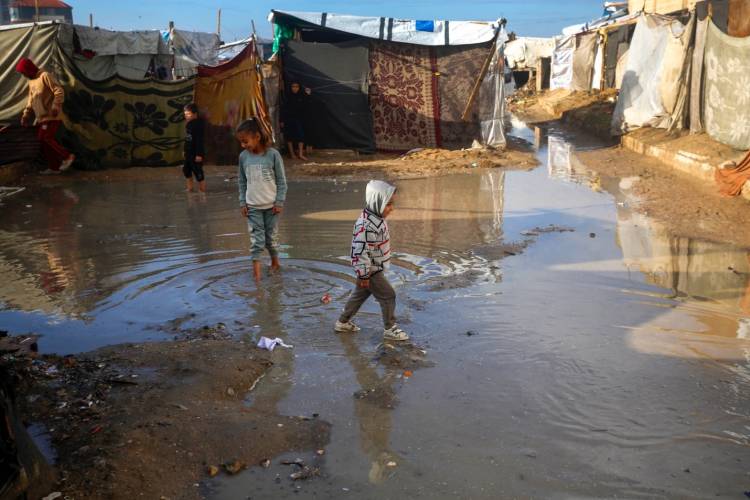
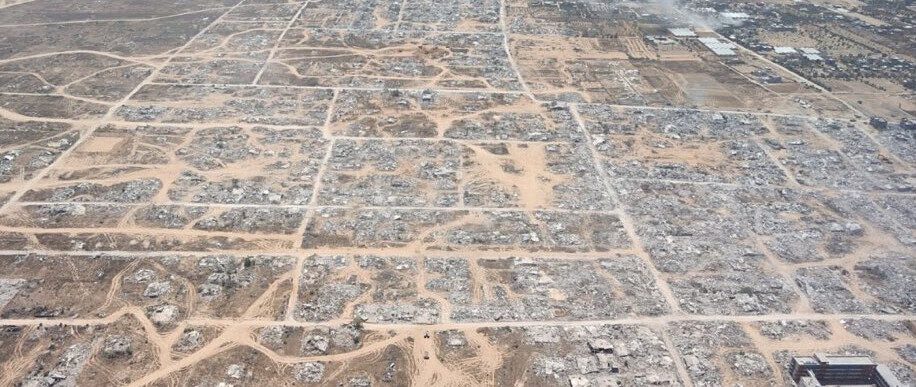

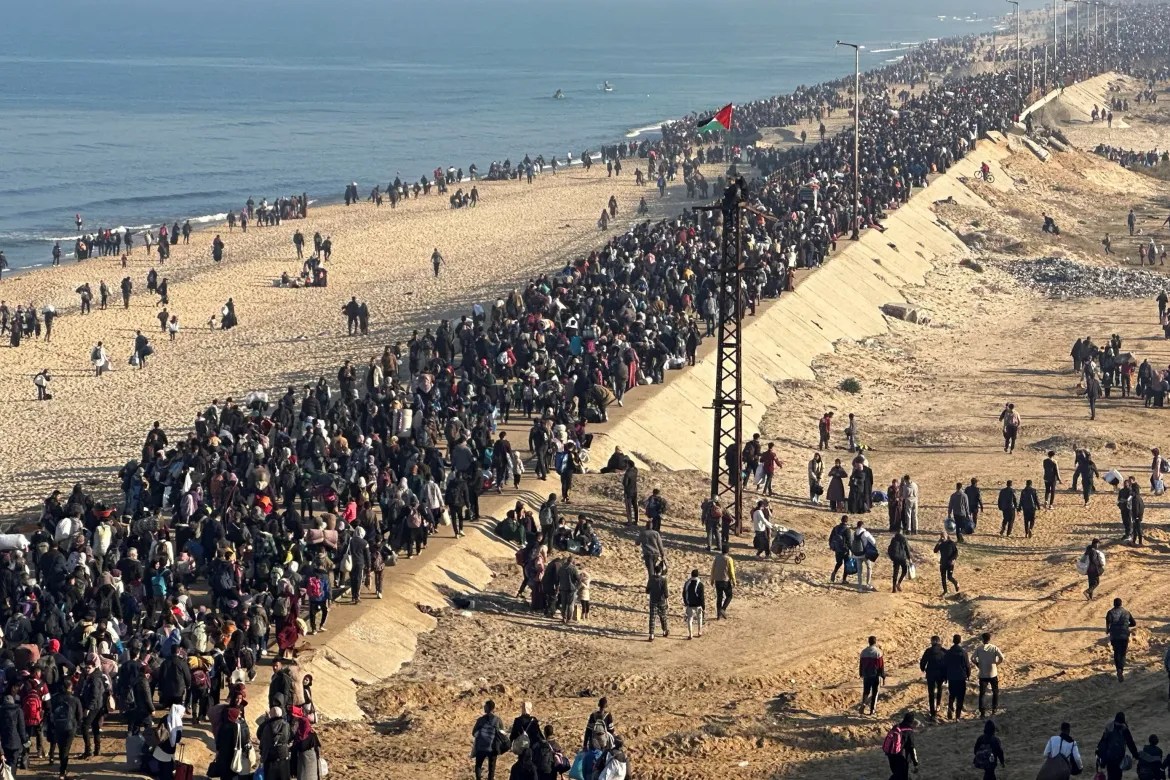
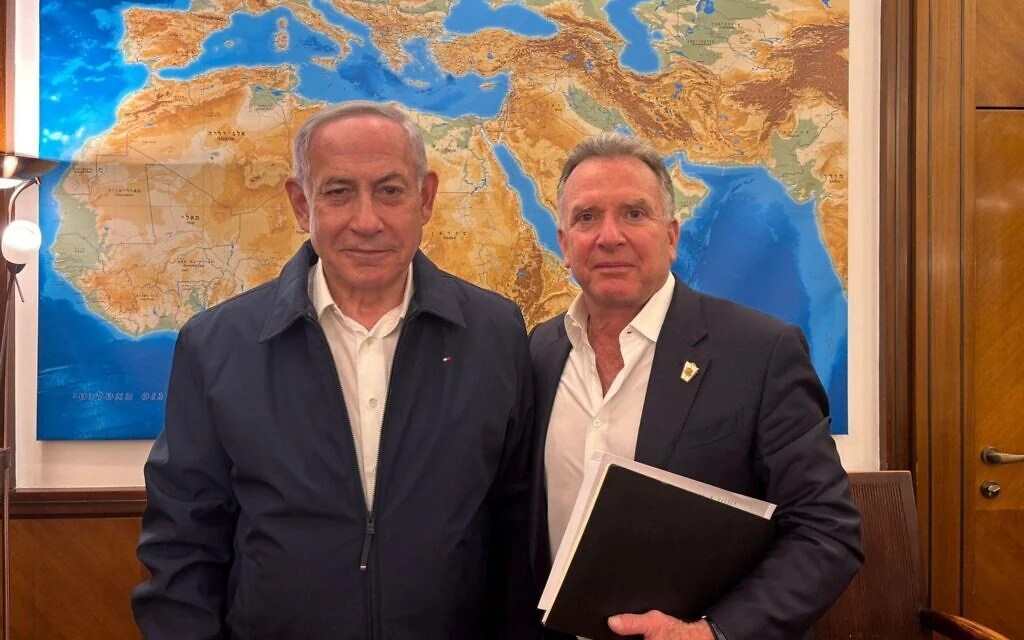
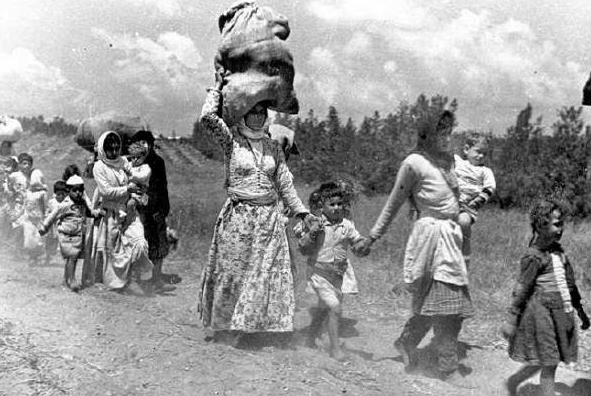
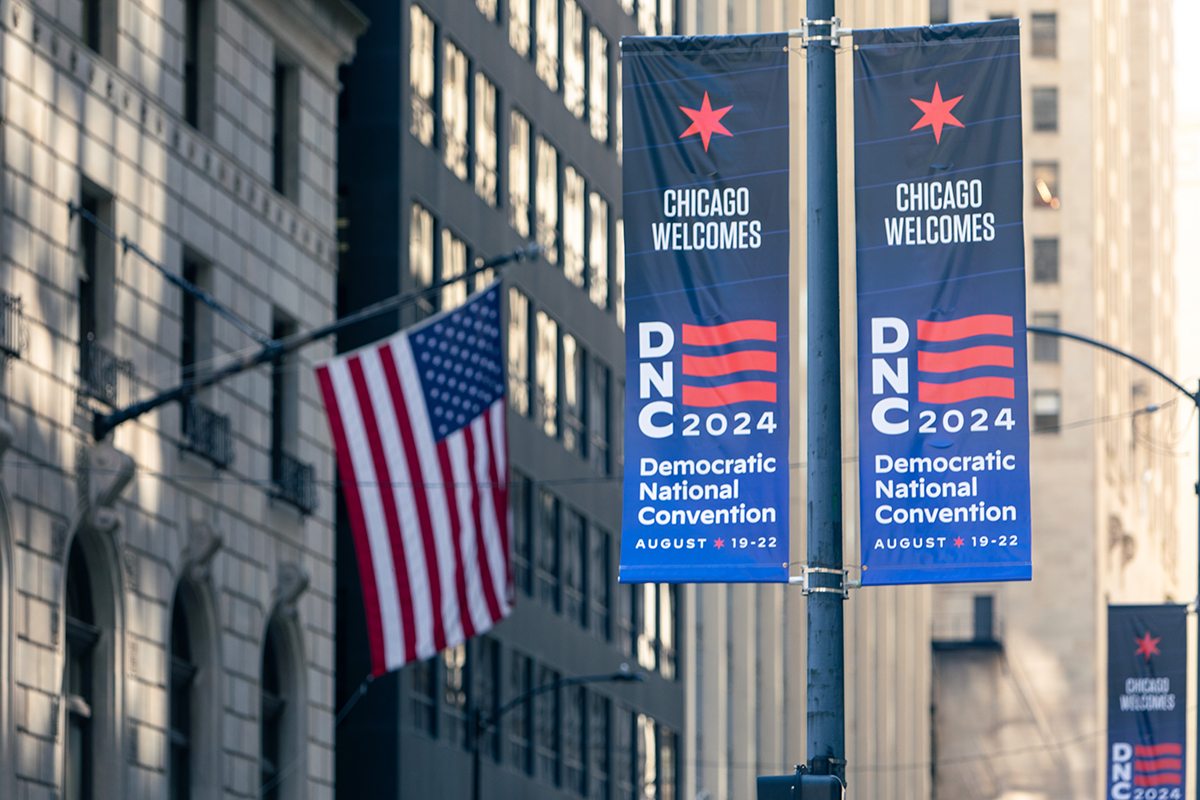
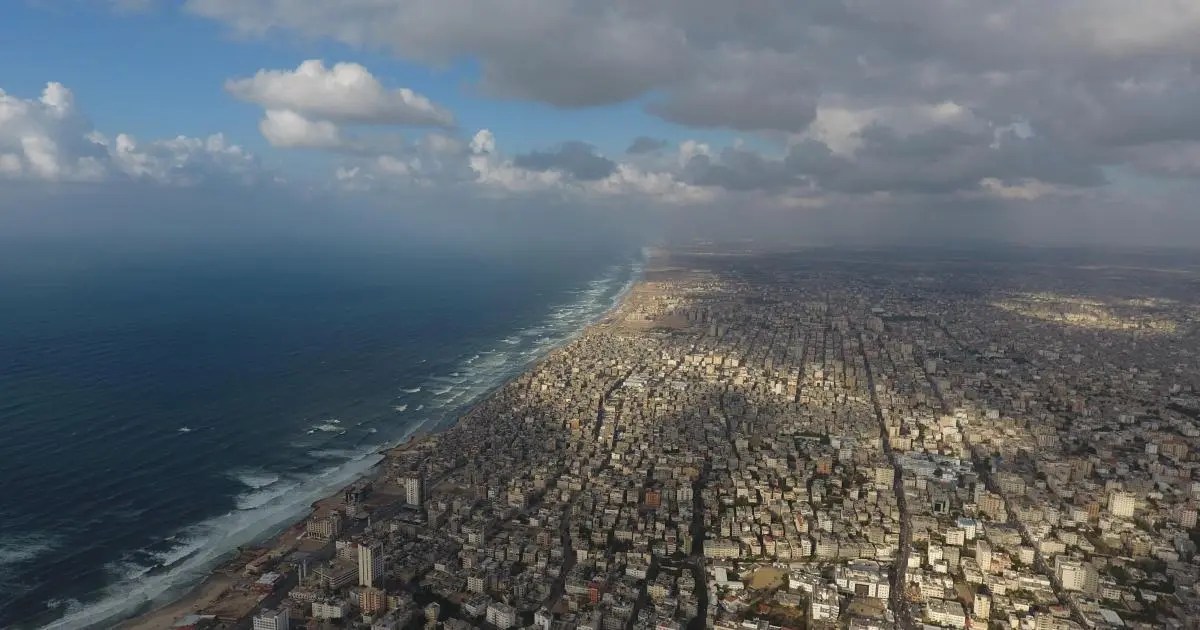
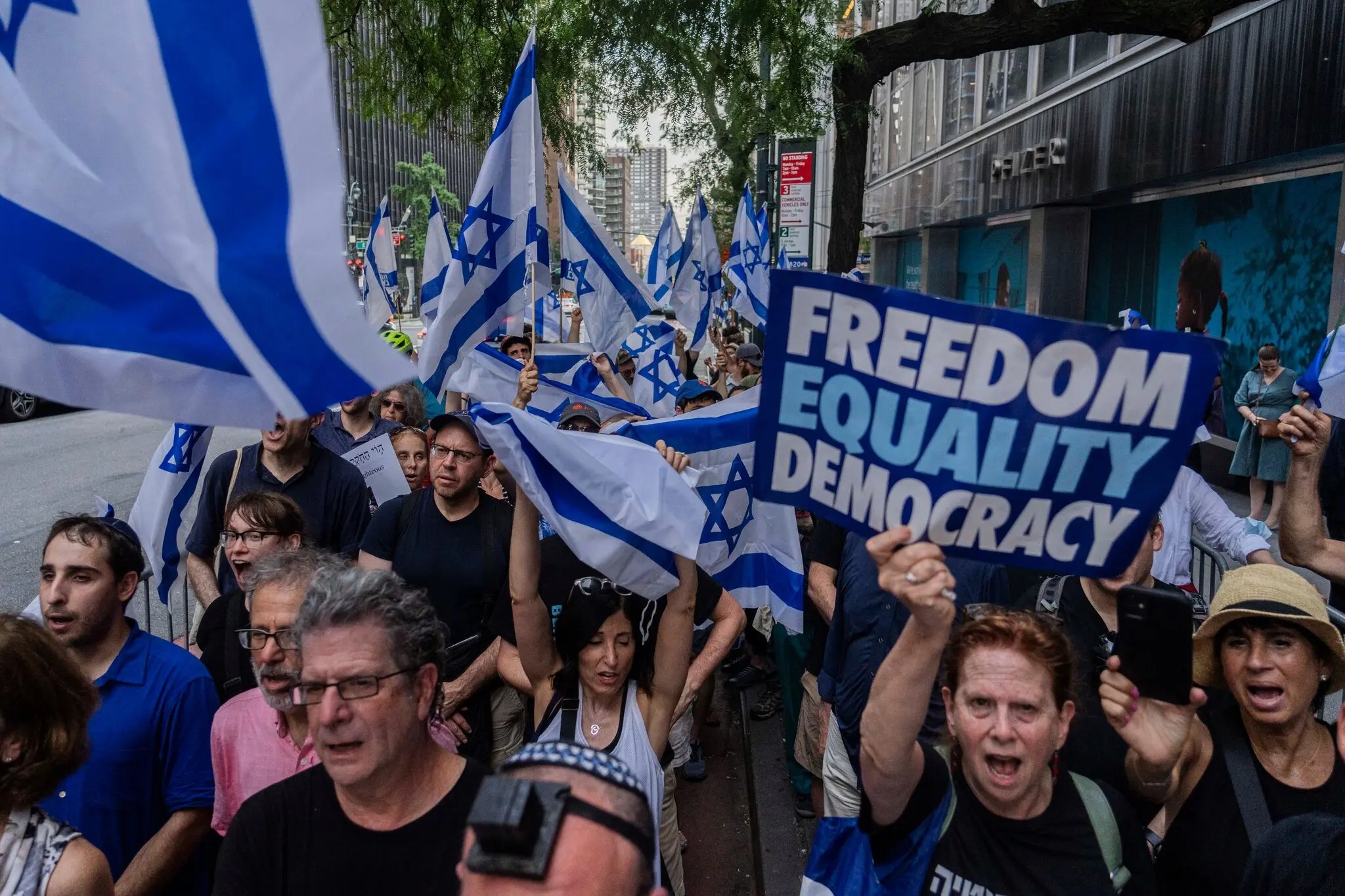
 Shalom Rav