Category Archives: Refugees

Gaza 1956

gaza1956

Earlier this year I shared a 2004 Jerusalem Post interview with Arnon Soffer, the architect of Israel’s disengagement from the Gaza Strip. It was a painfully sobering read, not least for his chilling predictions of Israel’s post-disengagement reality:

(When) 2.5 million people live in a closed-off Gaza, it’s going to be a human catastrophe. Those people will become even bigger animals than they are today, with the aid of an insane fundamentalist Islam. The pressure at the border will be awful. It’s going to be a terrible war. So, if we want to remain alive, we will have to kill and kill and kill. All day, every day…

If we don’t kill, we will cease to exist. The only thing that concerns me is how to ensure that the boys and men who are going to have to do the killing will be able to return home to their families and be normal human beings.

I thought of this article today as I read another piece about Gaza: a famous 1956 eulogy given by Moshe Dayan for a young kibbutznik named Ro’i Rotenberg, who was killed by Gazan Arabs who had crossed over the border into Israel.

At the start of his eulogy, Dayan offered these astonishingly candid remarks:

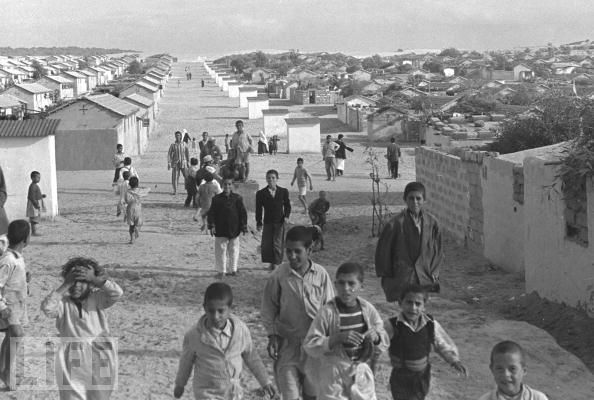
Do not today besmirch the murderers with accusations. Who are we that we should bewail their mighty hatred of us?  For eight years they sit in refugee camps in Gaza, and opposite their gaze we appropriate for ourselves as our own portion the land and the villages in which they and their fathers dwelled.

Not from the Arabs in Gaza, but from ourselves shall we require the blood of Ro’i. How did we close our eyes so as not to see the goal of our generation in its full measure of cruelty?  Did we forget that this group of young men and women, which dwells in Nahal Oz, bear on their shoulders the heavy gates of Gaza, gates on the other side of which are crowded together with hundreds of thousands of eyes and hands that pray for our weakness, that it may come, so that they may rip us to shreds – have we forgotten this?

This we know: that in order that the hope to destroy us should die we have to be armed and ready, morning and night. We are a generation of settlement, and without a steel helmet and the barrel of a cannon we cannot plant a tree and build a house. Our children will not live if we do not build shelters, and without a barbed wire fence and a machine gun we cannot pave a road and channel water. The millions of Jews that were destroyed because they did not have a land look at us from the ashes of Israelite history and command us to take possession of and establish a land for our nation.

(Translation, Michael Shalom Kochin, 2009)

Bibi’s History Tutorial

netanyahu

I’m in agreement with the pundits who conclude that there was absolutely nothing new for consideration offered in Netanyahu’s speech. Perhaps he achieved a personal milestone by finally uttering the words “Palestinian state” but beyond this it was a tune we’ve all heard before. He offered “peace negotiations immediately without prior conditions” then proceeded to spell out the all too familiar prior conditions that everyone knows are non-starters for the Palestinians (i.e. Jerusalem remains the “united capital of Israel,” “natural growth” of the settlements will continue, there will be no right of return for the Palestinians.)

Same old, same old.   For me at least, the most interesting parts of his speech were not his tired policy pronouncements, but his extended forays into historical analysis – and in particular, his repeated justifications of the Jewish people’s right to the land:

The connection of the Jewish People to the Land has been in existence for more than 3,500 years. Judea and Samaria, the places where our forefathers Abraham, Isaac and Jacob walked, our forefathers David, Solomon, Isaiah and Jeremiah this is not a foreign land, this is the Land of our Forefathers.

It seemed clear that Netanyahu’s history lesson was a pointed rejoinder to Obama’s Cairo speech, in which Obama stated that the “Jewish homeland is rooted in a tragic history that cannot be denied.” You may have heard that following his speech, many in the Jewish community criticized Obama for connecting Israel’s right to exist to the Holocaust and failing to cite the Jewish people’s historical connection to the land.  Witness this livid Jerusalem Post editorial:

Mr. President, long before Christianity and Islam appeared on the world stage, the covenant between the people of Israel and the Land of Israel was entrenched and unwavering. Every day we prayed in our ancient tongue for our return to Zion. Every day, Mr. President. For 2,000 years.

Perhaps it’s because Palestine was never sovereign under the Arabs that even moderate Palestinians cannot find it in their hearts to acknowledge the depth of the Jews’ connection to Zion. Instead, they insist we are interlopers.

When Obama implies that Jewish rights are essentially predicated on the Holocaust—not once asserting they are far, far deeper and more ancient—he is dooming the prospects for peace.

For why should the Arabs reconcile themselves to the presence of a Jewish state, organic to the region, when the US president keeps insinuating that Israel was established to atone for Europe’s crimes?

Thus Netanyahu’s pointed words yesterday:

The right of the Jewish People to a state in the Land of Israel does not arise from the series of disasters that befell the Jewish People over 2,000 years – persecutions, expulsions, pogroms, blood libels, murders, which reached its climax in the Holocaust, an unprecedented tragedy in the history of nations…The right to establish our sovereign state here, in the Land of Israel, arises from one simple fact: Eretz Israel is the birthplace of the Jewish People.

It’s facinating to me that Netanyahu et al are so threatened by the suggestion that Israel’s establishment is ultimately bound to the Holocaust.   After all, didn’t Theodor Herzl himself found political Zionism as a reponse to world anti-Semitism?  And whatever historical claim the Jewish people might have to the land of Israel, it’s safe to say there would never have been international support for a Jewish state had it not been for the Holocaust.

Beyond this, I’m troubled by the need to continuously and defensively remind the world of the historical Jewish connection to this particular piece of land. I’m not at all sure that this is really a road we really need or want to go down.

What does it really mean for any people to have a “right” to a land?  I understand that the Jewish nation, like every nation, has its historic narrative, but let’s face it: nations don’t exist by right, they exist by fiat. Nations exist by virtue of military power and by their ability to maintain a system of governance  that will ensure their survival as a polity. Beyond this, it’s pointless to argue one’s historical or moral right to a land. It seems to me that if history has proven anything, it’s that might makes right – and all the rest is commentary.

The real question here is not who has a right to this land. The central issue is how its inhabitants will see fit to exist on the land. And on this point, I don’t see that Netanyahu gave us anything fresh to consider.

Rabbis Remembering the Nakba

IMG_0324

“These I remember and I pour out my soul…”

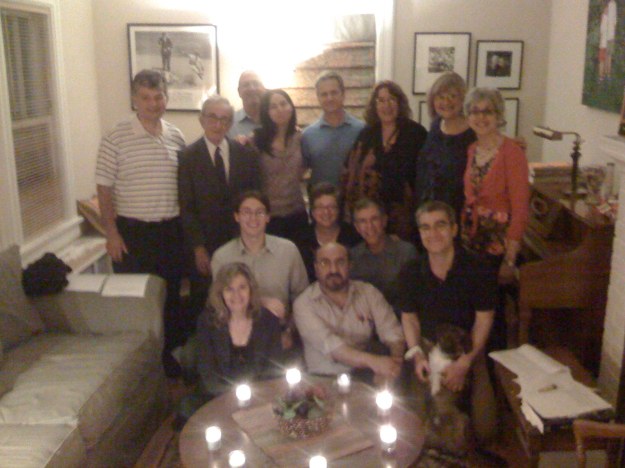
Last Thursday night I welcomed 14 people  – 9 Jews and 5 Palestinians – into my home for what turned out to be a powerful and sacred experience. The timing of our gathering was significant. May 14, 1948, the date of the State of Israel was declared, is a joyful milestone for Israel and Jews around the world. For the collective memory of the Palestinian people, however, this date represents their displacement and dispossession – an event they refer to collectively as the Nakba (“catastrophe.”)

The gathering in my home was one of four events that took place throughout the country on Thursday evening sponsored by “Rabbis Remembering the Nakba” – a new ad hoc group of rabbis and rabbinical students who seek to create a Jewish context for remembering this tragic event. Even more crucially, we believe it is critical that the Jewish community find a way to honestly face the painful truth of this event – and in particular, of Israel’s role in it.

In the words of a statement that was read at each gathering:

Our gathering tonight, “Rabbis Remembering the Nakba” is part of a series of programs occurring simultaneously around the country. It was originated by an ad-hoc group of American rabbis who desire to seriously reflect upon the meaning of Israel’s Independence Day. We are united in our common conviction that we cannot view Yom Ha’atzmaut – or what is for Palestinians the Nakba – as an occasion for celebration. Guided by the values of Jewish tradition, we believe that this day is more appropriately an occasion for zikaron (memory), cheshbon nefesh (“soul searching”) and teshuvah (“repentance.”)

These spiritual values compel us to acknowledge the following: that Israel’s founding is inextricably bound up with the dispossession of hundreds of thousands indigenous inhabitants of the land, that a moment so many Jews consider to be the occasion of national liberation is the occasion of tragedy and exile for another people, and that the violence begun in 1948 continues to this day. This is the truth of our common history – it cannot be denied, ignored or wished away.

Jewish tradition teaches that peace and reconciliation can only be achieved after a process of repentance. And we can only repent after an honest accounting of our responsibility in the wronging of others. While it is true that none of the Jews present tonight were actively involved in the dispossession of Palestinians from their homes in 1948, it is also true that if we deny or remain silent about the truth of these events, past and present, we remain complicit in this crime. In the words of Rabbi Abraham Joshua Heschel, “In a free society some are guilty, but all are responsible.”

Our gatherings this evening bring together Jews and Palestinians in this act of remembrance. This coming together is an essential, courageous choice. To choose to face this painful past together is to begin to give shape to a vision of the future where refugees go home, when the occupation is ended, when walls are torn down and where reconciliation is underway.

In addition to the event I hosted in Chicago, “Rabbis Remember the Nakba” gatherings were held simultaneously in Berkeley (led by Rabbi Lynn Gottlieb), New York (Rabbinical Student Alissa Wise), and Philadelphia (Rabbi Linda Holtzman). Though each event was organized separately and involved the additional participation of various local peace and justice groups, each gathering was linked by a few important common factors: each was led by a rabbi or rabbinical student, each involved the participation of both Jews and Palestinians, and each incorporated aspects of Jewish ritual in their ceremonies.

At the Chicago gathering, the guiding value of our ritual was zikaron – remembrance. As part of our ceremony, we bore witness by reading the history of the eight Palestinian villages that were destroyed on May 14, 1948. (In all, over 400 villages were depopulated of their inhabitants over the course of that year.)  In addition to learning about the events that transpired on the Nakba, we also learned about the history, culture, and communal life of each village. (Palestinian historian Walid Khalidi’s exhaustive and highly recommended work, “All That Remains” was an essential resource for our ceremony.) After hearing the history and fate of each village, a memorial candle was lit and we recited the following line from the Yom Kippur liturgy together: “These I remember and I pour out my soul.”

IMG_0328

On the whole I would describe our evening as a modest first effort that nonetheless contained some profound and indelible moments. By incredible coincidence, one of the Palestinian participants, Shafic Budron, mentioned that his wife’s family was from al-Bassa – one of the eight villages we commemorated in our ceremony. (Al-Bassa was a large village in Acre District, near the northwest coast of Palestine.)

As we read about al-Bassa’s fate during the Nakba, we learned this tragic account relayed by Palestinian eyewitnesses: after occupying the village, Haganah forces lined up some of the townspeople outside a church, shot them, and ordered others to bury the bodies. Shafic said he has heard numerous stories about al-Bassa from his mother-in-law over the year, including her traumatic recounting of the massacre on May 14. He added that his mother-in-law now has Alzheimer’s and has lost most of her adult memory – her only remaining memories are of her childhood village.

After our ritual, other Palestinian participants spoke at length about the stories of their own families. One man told us about the experiences of his mother, who was a survivor of an infamous massacre in the village of Deir Yassin, outside Jerusalem. Our gathering also included a Christian Palestinian from the north of the country, who experienced the Nakba personally.  Another Palestinian participant told us about his father who was saved by a Jewish friend during the Irgun’s attack on Jaffa.

In the end, the Palestinian participants were quite obviously moved that they were given this opportunity to have this conversation with Jews, as part of a ceremony convened by a rabbi. To put it mildly, it was obviously something quite unprecedented in their experience.  For the Jewish participants, there were a myriad of complex and powerful emotions. I’m personally still trying to sort through them all.

Whatever cognitive dissonance I might feel over this issue, I truly believe that this kind of reckoning is utterly essential for us as Jews. When it comes to the Nakba, most of us tend to respond through denial, avoidance, or dismissive rationalization (“that’s just how nations are made – what can you do?”)  The reason seems fairly clear: to face the painful truths of this history means to admit that our people  – a people who has been the victim of dispossession and dehumanization for centuries – has now become the perpetrator. And if we do indeed manage to face these truths, where does that leave the Zionist narrative that has been so deeply cherished by so many of us for so long?

I don’t know where we will go from here, but everyone present agreed that this was the tentative beginning of something enormously important. Our humble gathering resonated with a myriad of implications that ranged from the personal to the political. But by the end of the evening, it was clear that whatever happens next, Jews and Palestinians must do it together.

PS: Just learned that Yisrael Beiteinu, the party of Avigdor Lieberman, seeks to make it illegal for Arabs in Israel to commemorate the Nakba. This is what it has now come to: memory is not only denied, it is now deemed against the law…
American Gulag

127166

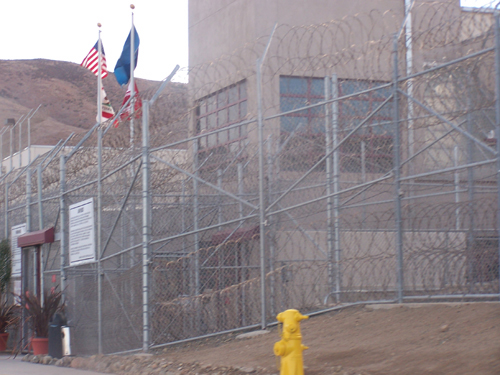
You need to read this new Amnesty International report on immigrant detention in our country. Even those who have some knowledge about this national shame will be jolted by AI’s findings:

– Tens of thousands of people languish in U.S. immigration detention facilities every year — including a number of U.S. citizens — without receiving a hearing to determine whether their detention is warranted.

– Hundreds of millions of taxpayer dollars are being used to hold these people for months—sometimes years—in detention. The people detained include lawful permanent residents, undocumented immigrants, asylum seekers and survivors of torture and human trafficking.

– Oversight and accountability is almost nonexistent and individuals in detention often lack treatment for their medical needs. 74 people have died while in immigration detention over the past five years.

If you’re looking for a healthy way to channel your rage after reading the report, you can send this letter to Homeland Security Secretary Janet Napolitano,  urging her to find meaningful alternatives to detention and ensure that conditions in detention are “humane and meet international standards.”

(…and then while you’re inspired to help change our deeply broken immigration system, send this letter to your congressperson and urge him/her to help pass the Dream Act in 2009. )