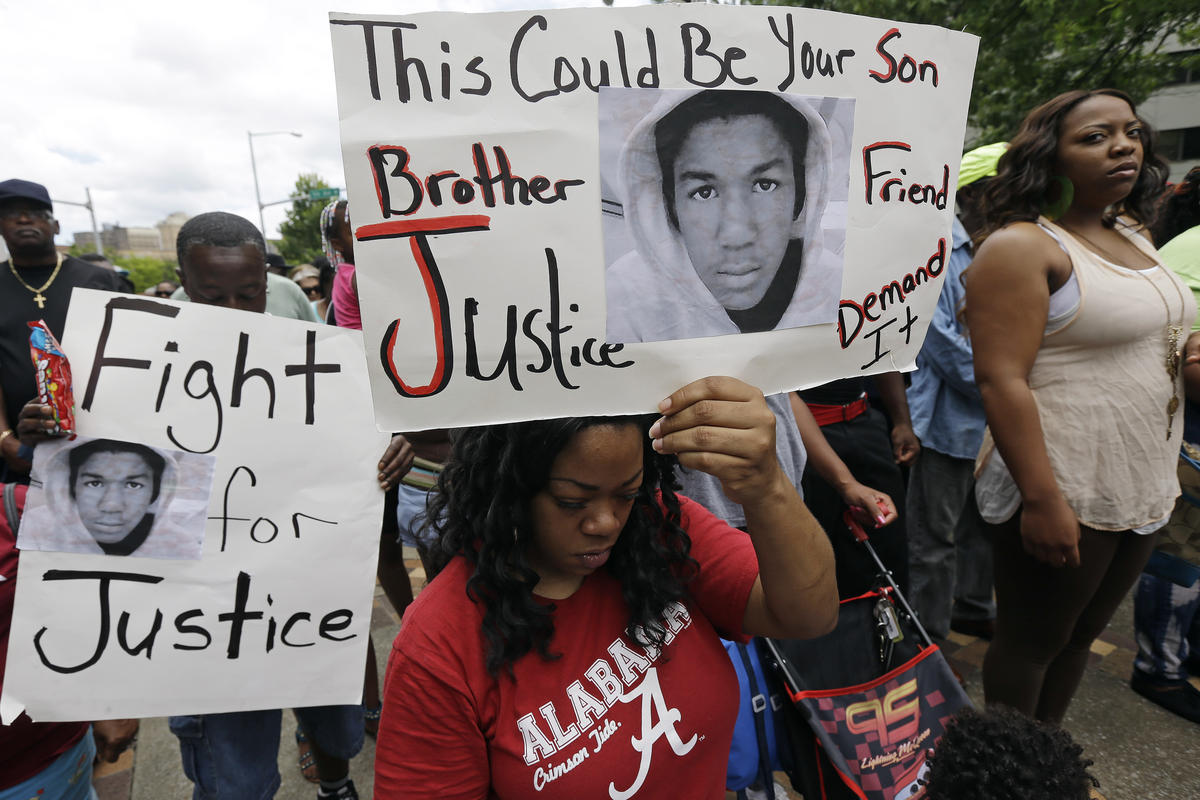
photo credit: Boston Herald
A few thoughts in the wake of Tisha B’Av yesterday…
According to Jewish tradition the Second Temple was destroyed because of the Jewish people’s sinat chinam – or “baseless hatred.” On Tisha B’Av we affirm that isn’t enough to simply mark our collective tragedies and mourn our collective losses. We must honestly own the ways our own prejudices and intolerance have contributed to these losses.
I was particularly mindful of this spiritual insight this year, as Tisha B’Av followed directly on the heels of the Trayvon Martin verdict and the communal soul-searching it sparked on racism in America. Indeed, more than once over the past several days we’ve heard politicians and pundits call for yet another “national conversation on race.” Witness Attorney General Eric Holder’s post-verdict remarks:
Independent of the legal determination that will be made, I believe that this tragedy provides yet another opportunity for our nation to speak honestly about the complicated and emotionally-charged issues that this case has raised. We must not – as we have too often in the past – let this opportunity pass.
This isn’t the first time, of course, that we’ve heard the call for such a conversation. I distinctly remember President Bill Clinton making just such a call back in 1997. It was actually considered fairly controversial at the time – sad to say we haven’t made much headway in the conversation over the past 17 years.
I don’t mean to be facetious about this. Part of the problem, I think, is that I’m not sure anyone really knows what something as monumental as a “national conversation” would actually look like, particularly on a subject as profoundly charged as race. Though I hesitate to say so, in some ways I think this call does more harm than good. While I do believe in the importance of dialogue, I can’t help but think that the constant call for communal conversation on race mostly serves to help us to feel better while we dodge the deeper infrastructural realities of racism in America.
While we regularly call for “conversation,” for instance, hard facts such as these continue to go chronically unaddressed:
– Prison sentences of black men are nearly 20% longer than those of white men convicted of similar crimes;
– While people of color make up about 30 percent of the United States’ population, they account for 60 percent of those imprisoned;
– While people of color are no more likely to use or sell illegal drugs than whites, they have higher rate of arrests;
– Voter laws that prohibit people with felony convictions from voting disproportionately impact men of color.
And the list of shameful statistics goes on and on…
This litany, quite frankly, is nothing short of institutional sinat chinam. And at the end of the day, its going to take much more than dialogue it we’re going to take down the patently unjust and racist laws that oppress people of color in our country. In this regard, I’d claim national conversation is only truly valuable inasmuch as it leads to real socio-political transformation and change.
So where do we start? Why not with the “Stand Your Ground” laws, one of which egregiously allowed a man go free after stalking and shooting an unarmed African-American teenager? It’s critically important that we know that history of laws such this, many of which have been long been pushed through legislatures by the corporate-funded American Legislative Exchange Council (ALEC) and have subsequently been spreading across the country:
Ostensibly a network of state legislators, ALEC is a shadowy, $7 million-a-year organization funded by powerful corporate interests like the Koch brothers, Big Oil, and Big Tobacco. The NRA has been a longtime financial supporter and served as the corporate co-chair of the ALEC Criminal Justice Task Force, voting with legislators on “model” bills. Through ALEC, special interests groups like the NRA push their dream legislation through state legislatures. Wal-Mart was corporate co-chair of ALEC taskforce approving FL’s “Shoot First” bill as a “model” for other states. The NRA was the next co-chair of that ALEC committee.
According to PR Watch’s Brendan Fischer, ALEC’s influence has has been behind other racially discriminatory legislation as well:
ALEC’s connections to those issues are not limited to Stand Your Ground. The group was instrumental in pushing “three strikes” and “truth in sentencing” laws that in recent decades have helped the U.S. incarcerate more human beings than any other country, with people of color making up 60 percent of those incarcerated. At the same time ALEC was pushing laws to put more people in prison for more time, they were advancing legislation to warehouse them in for-profit prisons, which would benefit contemporaneous ALEC members like the Corrections Corporation of America.ALEC has also played a key role in the spread of restrictive voter ID legislation that would make it harder to vote for as many as ten million people nationwide — largely people of color and students — who do not have the state-issued identification cards the laws require.
If you’d like to engage in action as well as conversation, you can click here to sign a petition urging Attorney General Holder to “review the application of Stand Your Ground laws nationwide and the importance of their repeal.”
And if you live in or around Chicago, I encourage you to join me and other activists of conscience at the ALEC Exposed Protest Rally, which will take place outside ALEC’s 40th Anniversary Conference on Thursday, August 8 at 12 noon.
I hope I’ll see you there.
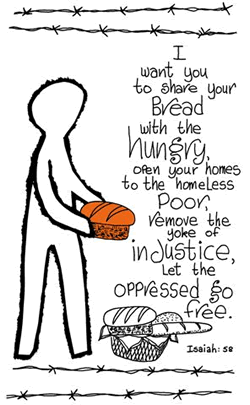 Learn to do good, seek justice; relieve the oppressed. Uphold the orphan’s rights; take up the widow’s cause. (Isaiah 1:17)
 Shalom Rav