Category Archives: Torah Commentary

The Nightmare in Gaza is Far From Over

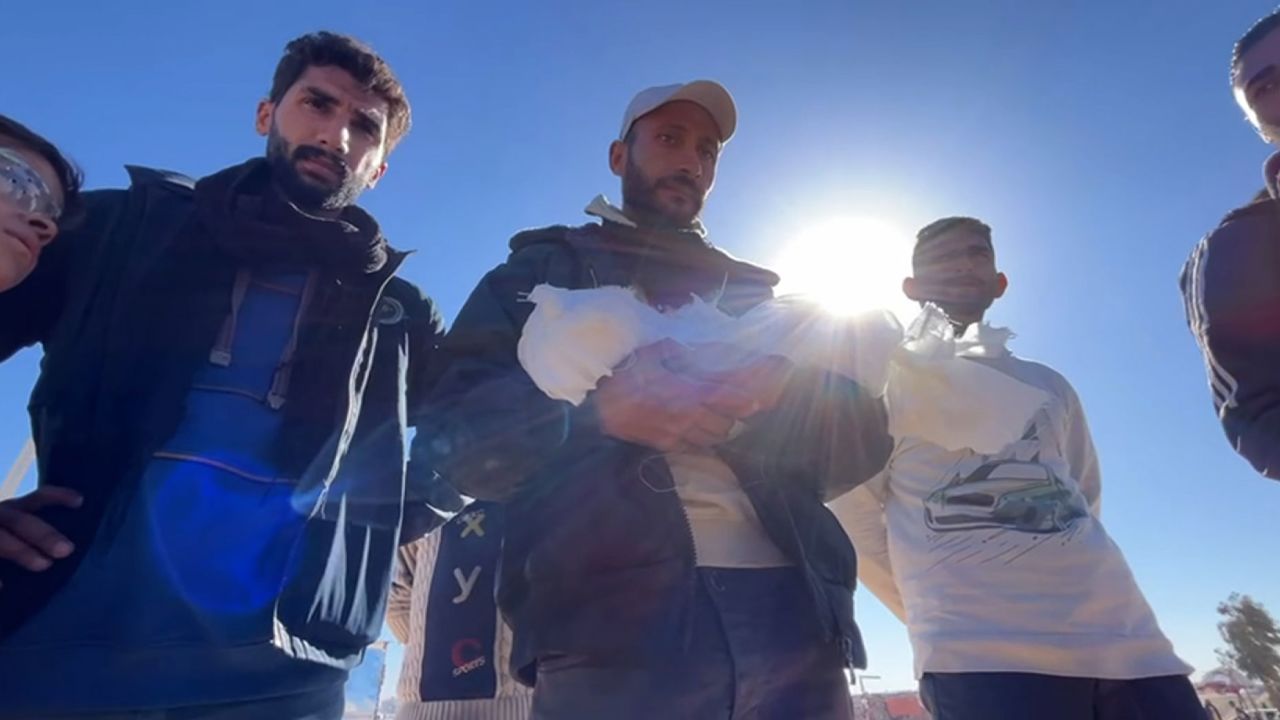
photo: Khames Alrefi/Anadolu

It is the morning after. While the ink has dried on Trump’s 20 point “peace plan,” it has become brutally clear that the nightmare for Gazans is far from over.

Yes, the return of Palestinian and Israeli captives has been an occasion for genuine joy and celebration. Yes, Israel has ended its relentless genocidal bombing of Gaza. Yes, Palestinians are returning en masse to their homes. But this nightmare is far from over.

Israel is by no means finished. Despite the plan’s requirement that “Israeli forces will withdraw to (an) agreed-upon line,” the military has restricted Palestinians’ access to 70% of Gaza, either by declaring large areas as no-go zones or by issuing forced displacement orders, according to the UN Office for the Coordination of Humanitarian Affairs. The Gazan health ministry reported that since Saturday – the first full day of the ceasefire – Israel has already killed 23 Palestinians and wounded 122.

Israel is also ramping up its support of rival Gazan militias to increase the violence on the ground. On October 12, one such group tortured and murdered the beloved Palestinian journalist Saleh Al-Jaafrawi. As Al-Jazeera reporter Eman Murtaja recently wrote: “The message of Saleh’s assassination is clear: Anyone who continues to critically report on what is going on in Gaza, on Israel’s continuing destructive presence and the betrayal of its allies on the ground will be captured, tortured and killed.”

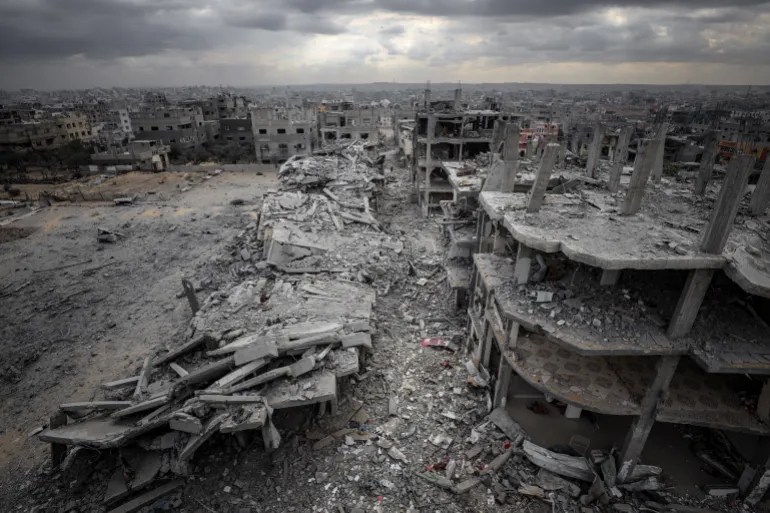
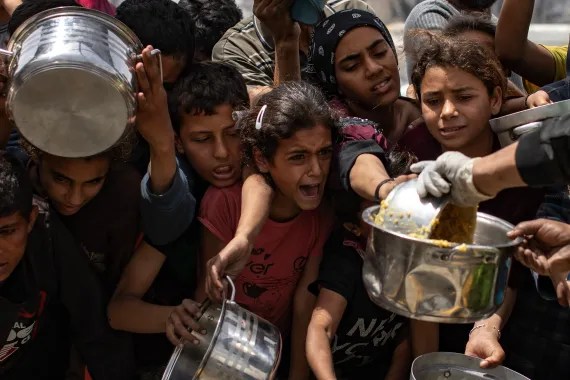
Meanwhile as Gazans continue to stream back to their homes, it has become tragically apparent that the overwhelming majority of them have no homes to return to. Scores of buildings have been reduced to rubble. Palestinians are arriving home to unlivable, broken shards of concrete, many of which still entomb dead loved ones. At the same time Israel’s forced starvation of Gazans continues to claim lives. As of October 12, at least 463 people, including 157 children, have died from starvation as Israel continues to block aid from entering the Gaza Strip. Nearly one in four children suffers from severe acute malnutrition.

It is difficult to overstate the depths of the annihilation that Israel has inflicted on Gaza over the past two years. As journalist Branko Marcetic has rightly termed it, “Israel’s Gaza war is one of history’s worst crimes”:

What we have watched, what we are continuing to watch, is the obliteration of a society of two million people. Every facet of modern civilization, as well as the most elementary things needed for even a state of basic subsistence for a human community, has been deliberately and almost completely destroyed by the Israeli military in Gaza. And now we are watching the gradual but accelerating mass die-off of the people who once lived there, through a combination of starvation, disease, and murder.

Though the political elites are rapturously describing a neo-liberal, neo-colonial post-war Gaza coastal resort, the hard truth is that the Gaza Strip is now a toxic moonscape and mass graveyard. According to the UN Environment Programme (UNEP), Israel’s relentless bombardment of populated areas has contaminated soil and groundwater for the long term, both through the bombardment of munitions and hazardous materials (such as asbestos, industrial chemicals and fuel) that have been released into the surrounding air, soil and groundwater from collapsed buildings. As of July 2024, UNEP estimated that Israel’s bombing had left 40 million tons of debris and hazardous material in Gaza, with much of the rubble containing human remains. It has been estimated that clearing this war rubble will take 15 years and could cost up to 40 to 50 billion dollars.

In addition to the toxicity of the environment, there also remains enormous amounts of unexploded ordnance throughout the Gaza Strip. An estimated 70,000 tons of explosives have been dropped on Gaza since October 2023 – the equivalent of roughly six Hiroshima bombings on an area less than half the size of Hiroshima but with six times its population. This past January, the UN Mine Action Service (UNMAS) estimated that between 5% and 10% of the munitions fired on Gaza have not yet exploded. According to the UNMAS, it could take 14 years to clear Gaza of all unexploded ordnance.

As I noted above, Israel is still restricting food aid from entering Gaza. According to the World Health Programme, over half a million people in the Gaza Strip are still facing catastrophic conditions characterized by starvation, destitution and deathOver 1 million more are facing emergency levels of food insecurity. Acute malnutrition is projected to continue worsening rapidly, with at least 132,000 children aged under 5 at risk of death through to June 2026. 

But even if food supplies were let in by Israel tomorrow, food alone will not save the starving population of Gaza. Starving people cannot simply become healthier by feeding themselves. A condition known as “refeeding syndrome” occurs when starving people who are desperate for food are simply given food supplies. Rapid eating can be catastrophic to the heart, lungs, nerves, and blood, resulting in arrhythmias, respiratory failure, and death. In order to nurse the malnourished back to health, a skilled, multidisciplinary team and routine laboratory testing are required. It has been estimated that without medical specialists and infrastructure accompanying aid, thousands will possibly die from refeeding syndrome.

In addition to starvation, deadly infectious diseases continue to spiral out of control in Gaza. The WHO has warned that the challenge of life-saving medicines reaching Palestinians in Gaza is currently dire:

Whether meningitis… diarrhea, respiratory illnesses, we’re talking about a mammoth amount of work,” Hanan Balkhy, regional director for the United Nations’ health body, told AFP in Cairo. A ceasefire deal between Israel and Hamas has raised hopes of life-saving aid and healthcare finally reaching Palestinians in Gaza after two years of war, but Balkhy warned the challenges are “unimaginable.” 

In this week’s Torah portion, Parashat Bereshit, we read that after Cain kills Abel, God exclaims, “Your brother’s blood cries out to me from the ground!” This is not the first time we will read that bloodshed literally pollutes the earth – and that this pollution must be expiated and atoned for.

Israel – and those who have aided and abetted its genocidal onslaught – has polluted the ground of Gaza in a myriad of ways, and the blood of its people continues to cry out to us even now. We cannot delude ourselves into thinking a ceasefire brokered by craven politicians and real estate oligarchs has ended the genocide. Now more than ever, we must respond to the voice that cries out to us from the ground of Gaza.
The Nakba Unfolds in Gaza as the World Watches

(photo: Haitham Imad/EPA)

In December 2023, just three months into Israel’s genocide on Gaza, Tzedek Chicago’s board released a public statement entitled, “In Gaza, Israel is Revealing the True Face of Zionism,” arguing that “ongoing Nakba is the essential context for understanding the horrifying violence of the past three months.” A year and a half later, these words are resonating with an even more powerful urgency. There is every indication that Israel is beginning the process of engineering the wholesale destruction of Gaza – and the Palestinians who live there – by any means necessary. 

We are now three months into Israel’s total blockade of food, fuel and humanitarian aid – and Gazans are gripped by an increasing famine. On May 4 it was reported by Gaza’s government media office that at least 57 Palestinians have already starved to death, more than 3,500 young children face imminent death from starvation, another 70,000 children are being hospitalized for severe malnutrition, and 1.1 million Palestinian children lack the minimum nutritional requirements for survival. Over 20 UN human rights experts have determined that Israel is wielding starvation as a weapon of war, concluding that “these acts, beyond constituting grave international crimes, follow alarming, documented patterns of genocidal conduct.”

At the same time, the Israeli military has been stepping up its bombing campaign, killing Palestinians at a higher rate than any point since the beginning of the genocide. As of this writing, Israel has killed 100 people in the past 24 hours in a series of bombings throughout northern Gaza. In footage taken by NBC News, the bodies of young children could be seen lying among the dead at Al-Shifa Hospital in Gaza City. 

There are ominous, compelling signs that we are indeed witnessing the end game of Israel’s Nakba in Gaza. On May 4, the Israeli government approved a military operation called “Gideon’s Chariots,” directing the Israeli army to seize complete control of the Gaza Strip and displace the entire population to a small area of land in the south. Though this was technically a leaked story, some Israeli politicians have been unabashed about the plan. Finance Minister Betzalel Smotrich put it very plainly: “Gaza will be entirely destroyed” as a result of an Israeli military victory, and that Palestinians will “start to leave in great numbers to third countries.”

On top of this news, this past Wednesday, Reuters recently reported that the US and Israel have discussed the possibility of Washington leading “a temporary post-war administration of Gaza.” According to five sources, there would be no set timeline for how long the US led administration would last. They compared the proposal to the Coalition Provisional Authority in Iraq that Washington established in 2003, shortly after the US led invasion that toppled the regime of Saddam Hussein. As journalist/commentator Mehdi Hasan correctly pointed out in an interview today, the US’s administration of Iraq was an “absolute disaster.” As Hasan put it, “It increased sectarian tensions. It increased violence. It divided the country. It fomented more violent resistance.”

On May 15, the Palestinian people will observe Nakba Day, their collective observance of their dispossession and ethnic cleansing from their homes. For Palestinians this is not only an acknowledgement of an event that occurred in the past but a commemoration of an injustice that is still unfolding in real time. And yet the genocide in Gaza – as well as the ongoing ethnic cleansing of the West Bank – are completely absent from the mainstream press and international governmental concern. How long will the world allow this decades-long crime to continue? 

I can’t help but note that this week’s Torah portion, Parashat Acharei Mot (which means “after the death”) describes an elaborate sacrificial rite of collective atonement. As I read these words, it is so clear to me that our complicity in this ongoing sacrilege continues to deepen the longer we allow it to unfold. The news out of Gaza has long since receded into the background, even as the Palestinian people continue to cry out to the world.

As the 20 UN human rights experts wrote in their statement:

The world is watching. Will Member States live up to their obligations and intervene to stop the slaughter, hunger, and disease, and other war crimes and crimes against humanity that are perpetrated daily in complete impunity?

…The decision is stark: remain passive and witness the slaughter of innocents or take part in crafting a just resolution. The global conscience has awakened, if asserted – despite the moral abyss we are descending into – justice will ultimately prevail.

Ken Yehi Retzon – So may it be.

First They Came for Mahmoud Khalil

photo: Mary Altaffer/AP

Yesterday I received a DM that read: “Evil, kapo, judenrat, self hating Jew.” (If you don’t know the meaning of some of those words, let’s just say that two of them are historical terms for Jews who collaborated with the Nazis during WW II.) As this kind of thing isn’t an uncommon occurrence for me, it wasn’t particularly upsetting. I’ve been receiving these kinds of messages for over a decade now, to the point that it’s become a kind of background noise – as I’m sure it is for any Jewish activist who dares to publicly affirm the humanity of the Palestinian people.

This time, however, I received the message as I was reading news of the heinous abduction and disappearing of Columbia grad student Mahmoud Khalil – and it caused me to pause and think: given the message, who are the real Jewish collaborators at this particular moment?

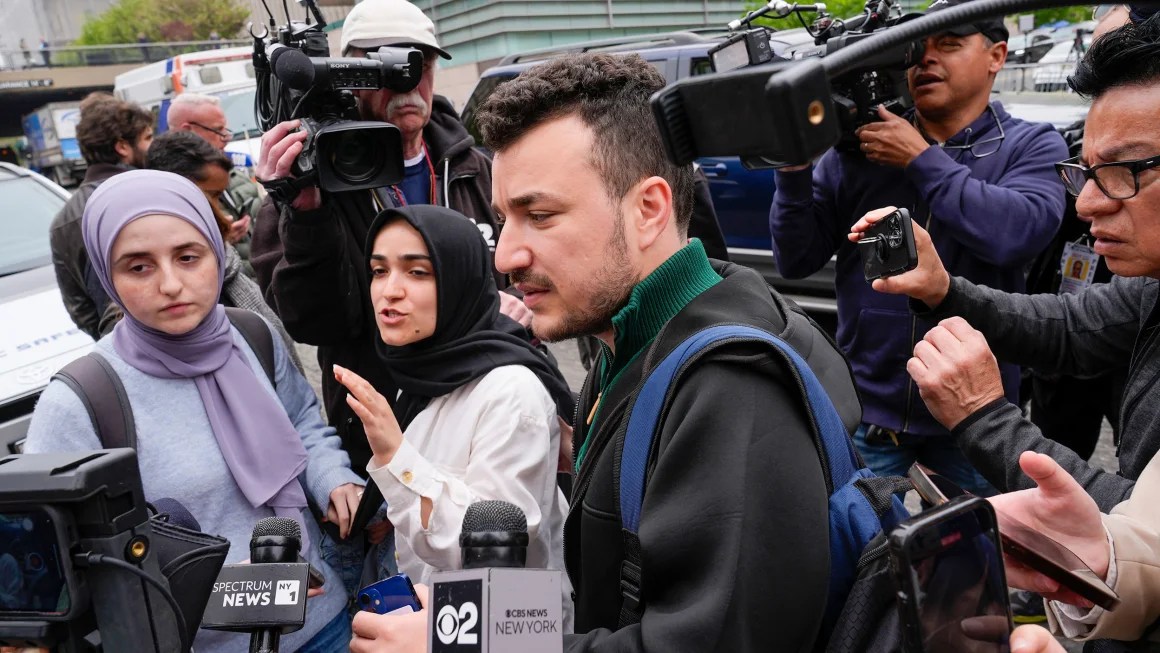
As has been widely reported, Khalil (a prominent leader of the student Palestine solidarity protests at Columbia) was walking home with his wife last Saturday when they were approached plain-clothed agents from the Department of Homeland Security who informed them that the government was revoking Khalil’s student visa. When they showed them his Green Card, which made him a legal US resident, an agent made a phone call and told them they had now revoked his Green Card. When they protested, the agents threatened to abduct Khalil’s wife, who is 8 months pregnant. Then they put Khalil in a car and drove him away.

For the next several hours, Khalil’s loved ones had no idea where he was. His lawyers immediately filed a writ of habeus corpus in a New York City court; they later learned that the authorities transported Khalil to an infamous ICE detention center in Louisiana, where he will almost certainly be subjected to a more government-friendly immigration court. In the meantime, a federal judge in Manhattan has ordered the government not to remove Khalil from the US while the judge reviews his lawyer’s petition challenging his abduction and detention.

There is so much that is so deeply chilling about this story it’s difficult to know where to start. For me, however, one of the most disturbing aspects was the report that Khalil had sent multiple emails appealing to Columbia’s interim president Katrina Armstrong for protection from harassment, doxxing and the threat of ICE agents. He sent his final email to Armstrong on March 7 one day before he was abducted and disappeared:

Since yesterday, I have been subjected to a vicious, coordinated, and dehumanizing doxxing campaign led by Columbia affiliates Shai Davidai and David Lederer who, among others, have labeled me a security threat and called for my deportation.

Their attacks have incited a wave of hate, including calls for my deportation and death threats. I have outlined the wider context below, yet Columbia has not provided any meaningful support or resources in response to this escalating threat.

I haven’t been able to sleep, fearing that ICE or a dangerous individual might come to my home. I urgently need legal support, and I urge you to intervene and provide the necessary protections to prevent further harm.

Khalil’s emails, of course highlight the very real likelihood that Columbia actively collaborated with ICE and DHS, thereby compromising the physical safety and security of their own student. They also illuminate the active role of Jewish Zionist activists in the events leading to Khalil’s abduction and disappearance. Shai Davidai is an Israeli assistant professor of business at Columbia Business School who has a documented history of harassing students and school employees. David Lederer is a junior in Columbia’s School of Engineering and Applied Sciences and the co-chair of Aryeh, a self-described “student-led organization that aims to provide opportunities to engage with Israel and Zionism.”

It should not come as a surprise that Zionist activists and organizations played a part in Khalil’s abduction. Last December, it was reported that the US chapter of Betar, a worldwide Zionist youth organization (originally founded by Revisionist Zionist leader Vladimir Jabotinsky in 1923) had recently been revived. It’s Executive Director, Ross Glick, made it clear that targeting college students would be its first order of business. Most ominously, Glick revealed that Betar US “had amassed a large repository of video footage from college protests over the past year” and was employing a team of professionals using facial recognition software and relationship databases to identify foreign students appearing in the videos.

Glick has now been openly bragging about his role in the government’s abduction and disappearance of Mahmoud Khalil. In an interview with the Forward, Glick said that he had met with aides to Senators Ted Cruz and John Fetterman in DC to discuss Khalil during the Columbia encampment protests and that the senators promised to “escalate” the issue. He also said that “some members of Columbia’s board had also reported Khalil to officials.” In the interview, Glick referred to Khalil’s unmasked presence in the protests, commenting “This unfolded very quickly because it was very obvious… This guy was making it too easy for us.”

The Forward article also reported that David Lederer, circulated photos of a pamphlet labeled as coming from the “Hamas Media Office,” suggesting it was distributed at the protest. Lederer also claimed Khalil was “known to have been on a foreign visa last year.” Clearly, the government was aided and abetted by well-known Jewish Zionist activists who made no secret of their intentions to work with authorities to target Palestinians and pro-Palestine student activists who protested Israel’s genocidal violence against the Palestinian people in Gaza last spring.

The government abduction and disappearance of legal residents who exercise their right to free speech is, of course, a basic staple of fascist regimes. What can we say about Jewish activists and organizations that collaborate with such a government – a regime led by a president that actively emboldens antisemitic hate groups and has given significant power to a billionaire who promotes antisemitic theories and publicly sig heils at rallies?  While I won’t use the vile terms that extremist right-wing Jews sling against Jewish activists who dare to express their solidarity with Palestinians, I do believe it’s important to name them what they truly are: collaborationists.

It’s important to note that this most recent Jewish collaboration with rising fascism is not limited to small extremist actors such as Betar US. The Anti-Defamation League itself responded to Khalil’s abduction with this statement on X: “We appreciate the Trump Administration’s broad, bold set of efforts to counter campus antisemitism — and this action further illustrates that resolve by holding alleged perpetrators responsible for their actions… We also hope that this action serves as a deterrent to others who might consider breaking the law on college campuses or anywhere.”

For its part, the Trump administration celebrated Khalil’s abduction on X with the statement “Shalom Mahmoud” – a cynical and appropriative expression of “solidarity” with the Jewish people. Even more chillingly, the statement went on: “This is the first arrest of many to come. We will find apprehend and deport these terrorist supervisors from our country ‒ never to return again.” By now we should know that Trump should be taken at his word. If Mahmoud Khalil, a legal resident of the US can be disappeared by this government, they will almost certainly continue with any American citizen whom they identify in their growing data base: and not only Palestinian Americans and Muslims.

I’ll make it plain: collaborationist Jews will not help make Jews safer. In the end, Glick, Davidi, Lederer and their ilk are extremely useful idiots who are actively working with an antisemitic regime that has zero interest in Jewish safety and security. Even more important, collaborating with fascism will not make anyone safer. It feels somehow ridiculous to have to say these words out loud, but here we are. For the sake of our collective liberation, we must all actively resist and stand down this fascist regime – as well as those who aid and abet it.

It occurs to me that this form of collaboration with illegitimate authority really is a form of idolatry. In this week’s Torah portion, the recently-liberated Israelites, who have just entered into a sacred covenant with God, construct a Golden Calf, bow down to it and exclaim, “This is your god, O Israel, who brought you out of the land of Egypt!” (Exodus 32:4) This narrative is powerfully resonant to the current moment, in which members of the Jewish community are betraying the sacred, liberatory core of Jewish tradition through idolatrous attachment to corrupt state power.

But in the end, this is a fatal form of idolatry: a Faustian bargain. And we know all too well from history where this will lead. Please join me in answering this call from Jewish Voice for Peace to contact our senators and representatives demanding that they do everything in their power to secure Khalil’s release and to protect student activists and immigrants.

Standing at Sinai: Interrogating our National Myths of Unity

In the week’s Torah portion, Parashat Yitro, the Israelites stand at Mt. Sinai and collectively enter into a covenant with God. With a message conveyed through Moses, God says to the people:

“(If) you will obey Me faithfully and keep My covenant, you shall be My treasured possession among all the peoples. Indeed, all the earth is Mine, but you shall be to Me a kingdom of priests and a holy nation.” (Exodus 19:5-6)

Shortly after, the Israelites collectively accept:

…All the people answered as one, saying, “All that God has spoken we will do!” (19:8)

In this mythic moment, the Israelites become a nation unified in a shared, transcendent purpose.

But do they really, though? Most of the Torah’s narrative post-Sinai is less a record of a nation united by a shared purpose than a portrayal of a deeply fractured collection of tribes struggling mightily to live up to the covenant they made with God at Mt. Sinai. This certainly tracks with the evolution of Jewish peoplehood throughout the centuries. Though the organized Jewish community routinely clings to the mythic notion that “We are One,” we have always been a nation of sub-communities: a family divided by a of myriad of assumptions over what it means to be and behave as a Jew, often rancorously.

Of course, in the current moment the Jewish people are experiencing an exceedingly powerful and painful division. As I suggested in my sermon this past Yom Kippur:

Jewish life is going through … a monumental crisis and transformation right now. I’m speaking of course, about the abyss that has opened over the issue of Zionism – an abyss that has widened considerably this past year as a result of Israel’s genocide in Gaza.  

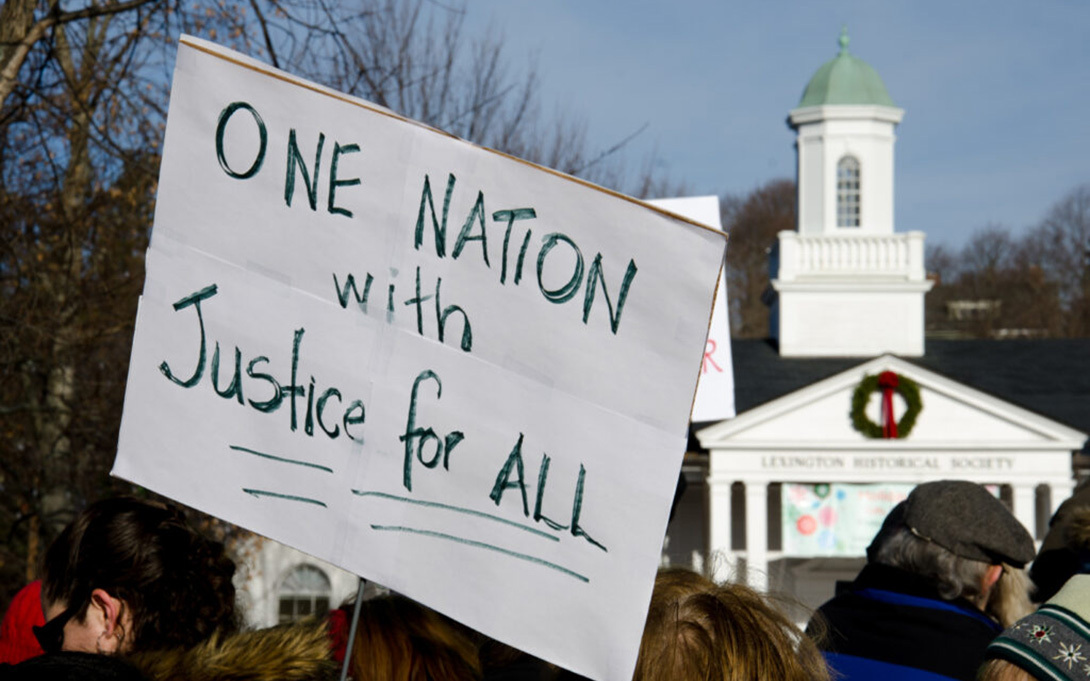
This mythology of national unity, however, is not unique to the Jewish people. Those of us raised in the US are all too familiar with such tropes, socialized as we were with the famous line from the Pledge of Allegiance: “One nation, under God, indivisible, with liberty and justice for all.” In truth, however, the US has been a deeply divided nation since the day it was founded. While the preamble of the Constitution reads “We the People,” the “people” it referred to were white, landowning men. The Naturalization Act of 1790 limited access to citizenship to “free white persons.” Later on, the US broke in two after slaveholding states succeeded – and the nation only became “one” again after fighting a bloody civil war. In too many ways, it’s a war that has never really ended.

As we see the rise of nativism and authoritarianism in nations around the world, it’s fair to say that this reckoning over national identity is truly a global phenomenon. Like many, I’ve been watching with alarm the rise of the far right nationalist AfD party in Germany (with the unabashed support of the ubiquitous Elon Musk) as they seek to build a coalition with conservative opposition parties. German Vice Chancellor Robert Habeck has warned ominously that such an alignment would “destroy Europe.”

So where does this leave us? Can we actually affirm these narratives of national unity in good faith? Do they serve us in any way – or do inevitably lead to authoritarianism and genocide?

I personally believe that national mythologies should not be literal oaths to be sworn to, but collective narratives to be interrogated deeply. In the case of the US narrative, we must ask honestly: what is the place of dispossessed indigenous nations in our national narrative? What is the place of descendants of kidnapped Africans who were brought here in chains to build up this nation? What is the place of immigrants who come to these shores seeking a better life – or to escape certain harm in in their home countries? What is the place of LGBTQ+ people, disabled people and members of other historically marginalized groups?

Those who uphold national mythologies must ask honestly, who exactly is the “we” in “We the People?” Because these narratives will only be useful if they lead to actual collective liberation for all. More critically, those of us who are committed to a truly inclusive national vision must prepare for the inevitable, often violent backlash from those who do not share our narrative. Indeed, history has proven all too often that a truly inclusive national vision never comes easily. On the contrary, it must be fought for.

At the end of the Torah, God says to the Israelites:

“I make this covenant and this oath, not with you alone, but both with those who are standing here with us this day before the ETERNAL our God and with those who are not with us here this day.” (Deuteronomy 29:13-14)

This Shabbat Yitro, as we stand once more at Sinai, let us ask ourselves: “Who are not with us on this day?” Why are they not here? What are we willing to sacrifice to ensure that they will be included in the covenant as well?”

Learning How to Breathe in the Era of Trump

(photo: Carl Juste/AP)

In this week’s Torah portion, Parashat Va’era, God’s tells Moses to return to Mitzrayim and say to the Israelites:

“I am יהוה. I will free you from the labors of the Egyptians and deliver you from their bondage. I will redeem you with an outstretched arm and through extraordinary chastisements.” (Exodus 6:6)

But when Moses attempts to impart this message of liberation to the people, they weren’t able to hear it as “their spirits were crushed (kotzer ruach) by cruel bondage.” (6:9)

This one verse says so much about the trauma of personal and systemic abuse. The Hebrew word ruach means both “spirit” and “breath/wind.” On one level this could mean that their oppression was so severe that individual Israelites could barely breathe. On a deeper level, it might indicate that their collective spirit was so damaged they couldn’t even begin to comprehend the possibility of liberation.  

The dual meaning of the word ruach in Jewish tradition suggests that the divine spirit is embodied by our very breath: the life force that we share with God and all that lives. In the first chapter of Genesis, we read that the process of creation began when the ruach elohim (“God’s breath”) rippled across the primordial waters. Humanity itself came to life when God breathed into the first human. In Jewish liturgy, we awaken every morning expressing gratitude for “the breath of every living thing and the spirit of all flesh.”

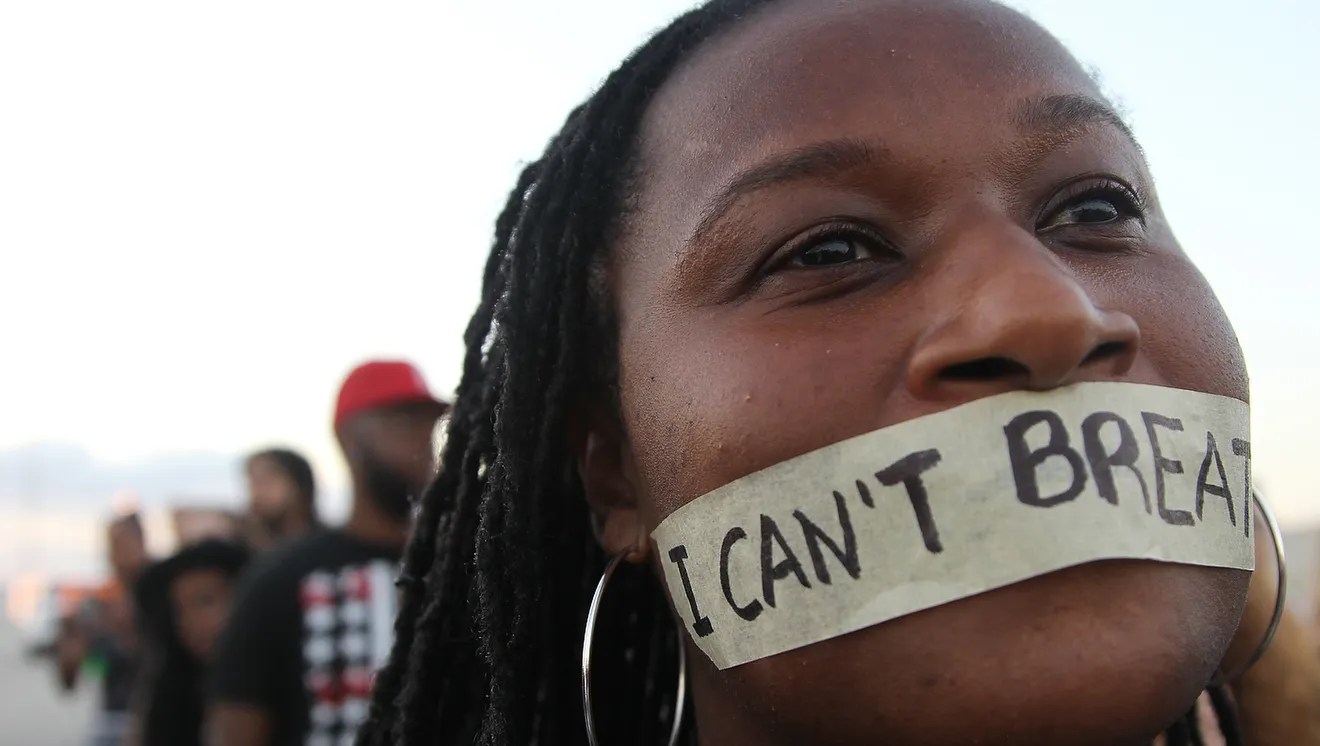
I believe there are powerful spiritual/political implications embedded in this theological concept. It suggests that when human beings – or humanly-created systems of oppression – deprive people of their ability to breathe freely, the flow of divine life force in the world is disrupted. Moreover, the demand to be able to breathe is itself a clarion call to action. We need look no farther than the phrase “I can’t breathe,” the final words of George Floyd and Eric Garner, whose deaths at the hands of systemic racism provided a powerful spark for the Black Lives Matter movement. Nigerian writer/poet Ben Okri has suggested that these three words “should become the mantra of oppression,” from the racist systems in our communities to the life-choking forces of global climate change.

In this regard, we might view the Jewish practice of giving thanks for our breath every morning as much more than a simple prayer discipline: it is nothing less than a statement of connection and solidarity with all that lives. Those who can breathe easily tend to regard the act of breathing as a natural, involuntary reflex. But as those with chronic respiratory illnesses will surely attest, it is no small thing to be able to take a breath. And in the age of COVID and climate change, millions throughout the world are increasingly becoming chronically kotzer ruach as a result of systemic oppression and corporate profit.

In other words, a commitment to a world in which everyone can breathe freely is a spiritual/political act of resistance. As disability justice activist Rabbi Julia Watts Belser has written:

Let’s learn to work more slowly, move more deliberately. Let’s learn to listen, when our bones say no. Let’s mandate breaks for anyone who works outside. Let’s require air purifiers, ventilation systems and safe work environments. Let’s make sure that all of us can breathe.

It is not too hyperbolic to suggest that the current political moment has left many of us breathless. As we death-scroll through the news of Trump’s executive orders and authoritarian policies, the ferocity of this onslaught can leave us literally or figuratively gasping for air. But this is, of course, just what Trump and his movement wants: to leave us reeling through a calculated strategy of shock and awe. They want us to feel breathless, paralyzed, despairing. We must not succumb. We must not accept that breathlessness is the new existential normal of our political age. We cannot become, like the Israelites of our Torah portion, so kotzer ruach that we cannot even imagine the possibility of something better beyond this authoritarian tyranny.

In the work of resistance, the first order of business is, quite simply, remembering to take a breath. Because in the end, if we are paralyzed with breathlessness for the next four years, we will be of no use to ourselves or anyone else. Moreover, once we regain our breath and our equilibrium, we will be in a better place to discern what we can do to meet this moment. In the wise words of Chicago organizer Kelly Hayes:

When your enemy wants you disoriented, your ability to focus is an important means of self-defense. What matters to you in this moment? Most of us can meaningfully dedicate ourselves to one or two causes, at the most. What can you commit to doing something about? Where do you get trustworthy information about those subjects? Who do you connect with when deciding what to do about what you’ve learned? Is there an organization whose resources you will employ or whose calls to action you will answer? Do you have a friend group or solidarity network that will formulate a response together? Answering these questions is key to steadying yourself in these times. Remember: Vulnerable people don’t need a sea of reactivity right now. They need caring groups of people who are working together to create as much safety as they can. We need to create a rebellious culture of care. That will take focus and intention. It will take relationships and a whole lot of energy. 

This Shabbat, let’s all commit to breathing more freely. Then let’s fight for a world in which that freedom is extended to all.

The Gaza Ceasefire: Pharoah is Still Pharoah

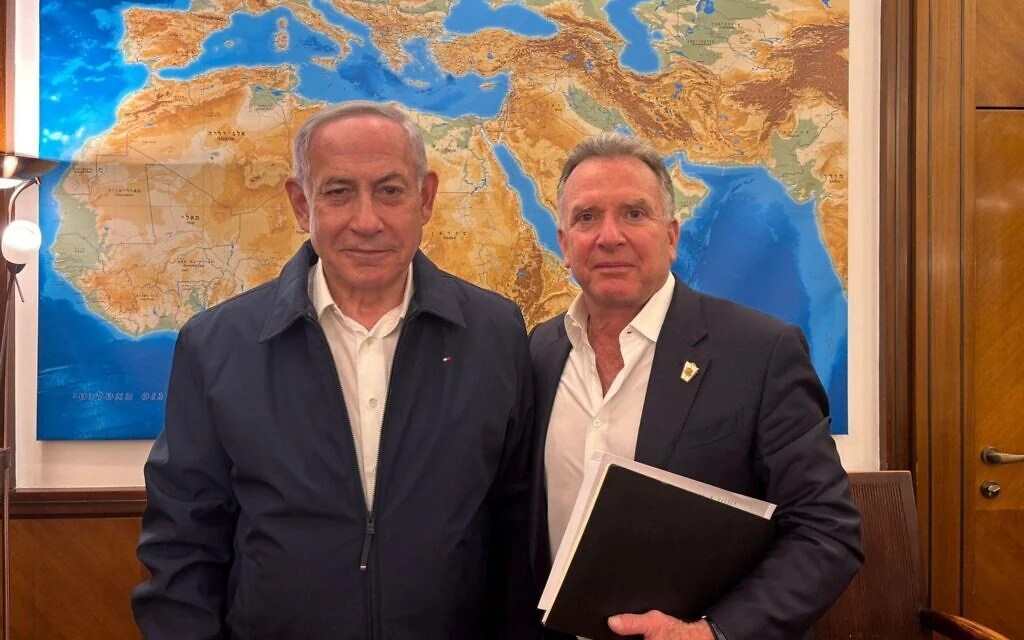
Benyamin Netanyahu and Steve Witkoff, January 11, 2025

For Palestinians and those who stand in solidarity with them, the news of a ceasefire agreement between the Netanyahu administration and Hamas was welcome news. When the reports first broke, and I saw images of Gazans singing and dancing in the streets, I couldn’t help but feel a joyful solidarity with them. But like all brokered agreements between Israelis and Palestinians, this deal is also fragile and fraught – and filled with deeply disingenuous political maneuvering.

Some history: according to reports, this ceasefire deal is identical to the one brokered by the Biden administration last May, which was accepted by Hamas leaders in early July. At the last minute, however, Netanyahu later backed out, insisting on nothing less than the total destruction of Hamas. Israel then assassinated Hamas’ political leader and chief negotiator, Ismail Haniyeh and continued its relentless bombardment of Gaza.

Though this was all a direct affront to the Biden administration, the US government responded not by pressuring Netanyahu to accept the deal but by rewarding Israel with a $20 billion arms sale. Biden and Secretary of State Blinken also actively promoted the lie that it was Hamas and not Israel that had kiboshed the deal. In the meantime, the Israeli military continued with its genocidal onslaught. From the time that the talks fell apart until now, the death toll of Palestinians rose from at least 39,000 to 46,707, including more than 18,000 children.

So why is Israel accepting the very same deal a half a year later? We now know it was due to the efforts of Donald Trump, who has made it clear he didn’t want to deal with the distraction of Israel’s war on Gaza as he began his presidency. Last week, Trump asked his friend, Steve Witkoff, a billionaire real estate developer, to call Netanyahu and tell him in no uncertain terms that Israel’s military operations in Gaza must end before the inauguration.

In other words, a President-elect was able to do with a single visit from a private citizen what the Biden administration was either unable or unwilling to do for over a year.

Though the ceasefire deal was welcome news, it was not accomplished through the “tireless efforts of the Biden administration.” Neither was it due to the altruism (needless to say) of the President elect. Trump is nothing if not transactional – and there is already speculation over what he might give Netanyahu in return, whether it’s a brokered diplomatic deal with Saudi Arabia or the annexation of the West Bank (or both).

In the meantime, within 24 hours of the announcement of the deal, Israel escalated its bombing of Gaza, killing 80 Palestinians. According to analyst Yousef Munayyer, Israel has a habit of late-hour bombing to empty its stockpiles in anticipation of larger military aid packages from the US. In this case, since Israel has not realized its military objective of obliterating Hamas, “there may be an urge to do great damage while they can before ceasefire comes in, reacting to that disappointment.” As of this morning, the Netanyahu government, is indicating his government is prepared to accept the deal, which is set to go into effect on Sunday, but it is still yet to be signed.  

But even if it is finalized, we should have no illusions. Like past deals, there is so much that Israel can do to pursue its own designs going forward. Like past deals, this one is set to unfold in stages. The first phase will feature a ceasefire, a withdrawal of Israeli troops, an initial swap of hostages and prisoners and an influx of humanitarian aid into Gaza. However, the second and third phases are far less developed. There is no agreement on the rebuilding of Gaza, the future of the Israeli military presence, who will govern, or how.

When I read the details of this agreement, I couldn’t help but recall the Oslo Accords in 1993, which was also negotiated in phases. The first was an interim phase, in which Israel would gradually withdraw from Palestinian areas in the West Bank and transfer administrative power to a temporary “Palestinian Authority.” The second phase involved permanent status details such as Jerusalem, refugee rights, settlements and borders. In the end, Israel agreed to the first phase as a cover to extend its settlement regime across the West Bank – all the while enacting policies that further dispossessed Palestinians from their homes.

Oslo was a hard lesson on the ultimate designs of all Israeli administrations, from left to right. No matter who is in power, the Israel’s goals are the goals of Zionism itself: the maintenance of a Jewish majority in the land. This goal necessarily entails the ongoing ethnic cleansing – an ongoing Nakba – of the Palestinian people. After the genocide in Gaza, we can honestly add the words “by any means necessary” to this sentence. No matter the diplomatic rhetoric around this current deal, we must not lose sight of this crucial history. Put simply: Netanyahu is all too likely to assent to phase one of the deal, get back a requisite number of hostages, then continue with the genocide in Gaza in order to destroy Hamas completely, ensure a maximum number of Palestinians are either dead or unable to return to their homes, and re-entrench Israeli civilian settlement there.

In this week’s Torah portion, Parashat Shemot, there arises a new Pharoah who “did not know Joseph.” Threatened by the demographic growth of the Israelite people in the land, he institutes murderous policies to stem their birthrate and reduce their number through harsh enslavement. But there are also those who resist Pharoah’s tyranny through acts of courageous civil disobedience: Hebrew midwives who refuse to kill Israelite baby boys, a mother and sister who save an Israelite child and a daughter of Pharoah who adopts him. All of these events set in motion a chain that will inexorably, inevitably lead toward the liberation of the Israelite people.

So in this moment, let us welcome the prospect of the cessation of hostilities. But let us have no illusions about the designs of all Pharoahs past and present. Like the Israelites in our Torah portion, the Palestinian people continue to cry out for liberation.

Let us continue to heed their call.

Yitzhak Rabin and the Violent Legacy of Shimon and Levi

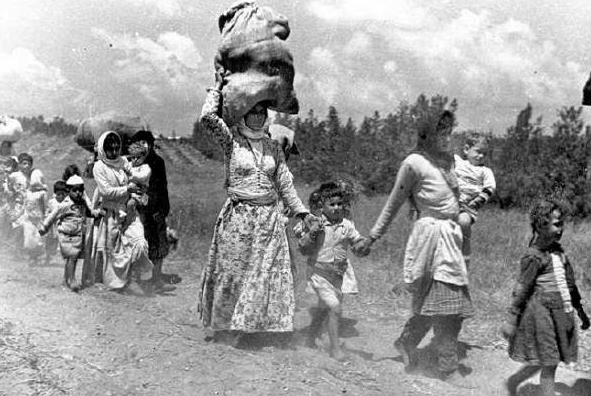
The Lyyda Death March, July 1948

The centerpiece of this week’s Torah portion, Parshat Vayechi, is Jacob’s final soliloquy to his individual sons: a Biblical poem that is equal part blessing and curse, history and prediction. While his words are complex and wide ranging, Jacob saves his harshest words for his sons Shimon and Levi:

Shimon and Levi are a pair/Their weapons are tools of lawlessness. Let not my person be included in their council/Let not my being be counted in their assembly. (Genesis 49:5-6)

Jacob’s curse of Shimon and Levi seems to be a reference to their role in the calculated and deadly attack on Shechem that occurred in Genesis 34. Biblical scholars surmise that these verses likely reflect the tribal biases of the original author. But whatever the reason for Jacob’s words, his characterization of Shimon and Levi have come to represent the cursed impact of calculated and unrestrained violence.

As I read these words this year, I recalled something I hadn’t thought of in a long time: a speech delivered by the late Israeli Prime Minister Yitzhak Rabin on February 28, 1994. Four days earlier, a Jewish extremist settler, Baruch Goldstein, had murdered 29 Muslim worshippers in the Cave of the Patriarchs/Ibrahimi Mosque in Hebron/Al Khalil in a calculated, vicious attack. In an address before the Knesset, Rabin actually quoted Jacob’s words to Shimon and Levi. He then continued, addressing the late Goldstein, who was already becoming viewed as a martyr in the eyes of his zealous followers:

To him and to those like him we say: You are not part of the community of Israel. You are not part of the national democratic camp to which we in this house all belong, and many of the people despise you. You are not partners in the Zionist enterprise. You are a foreign implant. You are an errant weed. Sensible Judaism spits you out. You placed yourself outside the wall of Jewish Law. You are a shame on Zionism and an embarrassment to Judaism.

A year after delivering this speech, Rabin was dead, murdered by another Jewish extremist settler.

Since his death, Yitzhak Rabin has since achieved mythic status in Liberal Zionist circles as a heroic figure who was struck down for daring to make peace with the Palestinians. And for many years, I was among those who believed he was indeed a casualty of the curse of Shimon and Levi to which he referred just one year earlier. As I read Rabin’s speech 30 years later, however, I believe the reality is not nearly that simple.

I’m particularly taken by his characterization of Goldstein as an “errant weed” and “foreign implant” to the Zionist enterprise, as if we can draw a meaningful line between “good Zionism” and “bad Zionism.” It’s worth noting that Rabin himself was the general who oversaw the most massive expulsion of Palestinians during the Nakba: the ethnic cleansing of the Palestinian villages of Lydda and Ramle in July 1948, which included the infamous Lydda massacres and the Lydda death march. Rabin personally signed the expulsion order which stated, “The inhabitants of Lydda must be expelled quickly without attention to age….”

Years later during the First Intifada in 1988/9, Rabin was Israel’s Defense Minister when he issued the well known order to “break Palestinians bones” – a directive that was intended “to permanently disable Palestinian youth by inflicting lasting injuries that incapacitate them.” As generations of disabled Palestinians will attest, the legacy of this order has had a devastating impact on their lives to this day.

Although many promote the mythology of Rabin as a former military man who later became a man of peace, the truth is much more problematic. In fact, Rabin never supported Palestinian statehood throughout the Oslo “peace process.” It is more accurate to say he used the veneer of this process to enable an Israeli settlement regime that has since become permanently entrenched in the West Bank. Rabin’s role in Oslo can be directly linked in a straight line to the systemic violence against Palestinians that is now raging with impunity throughout the Occupied Territories. 

In other words, while Liberal Zionist mythology attributes the curse of Shimon and Levi to “bad apple” Zionists, this kind of systemic, unrestrained violence has been central to the Zionist project from its very beginning. Indeed, Israel’s still ongoing genocide in Gaza is not the result of “errant weeds” in the Israeli government like Netanyahu, Smotrich and Ben-Givir. It is the logical end game of Zionism itself: an ideology and movement that has from its very origins dehumanized and dispossessed Palestinians to make way for Jewish settlement.

As the book of Genesis comes to a close, Jacob’s deathbed words ring out to us with renewed clarity. Zionism’s weapons are tools of lawlessness. Let us not be included in their council. Let our being not be counted in their assembly.  

Remembering the Forgotten on Shabbat Hanukkah

Mahmoud Al-Fasih holds the body of his three-week-old daughter, Sela, before laying her to rest. (Photo: CNN)

I’m sure there are many people who read what I write regularly (or scroll through my social media feeds) and think to themselves, “What a ‘one-note’ rabbi, just going on and on about Gaza. Why doesn’t he write or talk about other things for a change?”

If I could answer, these hypothetical folks, I’d say, yes there are surely many things in the world I could be writing or talking about. But when you live in a time of genocide – particularly one that is being funded by your government and carried out in your name as a Jew – it seems to me that being “one note” is a moral imperative. 

All the more so as Israel’s genocide on Gaza is now in its fourteenth month and the rest of the world seems have moved on – treating Israel’s genocide in Gaza as mere background noise. In such a context, it seems to me, bearing witness – i.e., to remember when others have forgotten – is a profoundly sacred act.  

Though it is not being widely reported, Israel’s mass killing of Gazans has been increasing dramatically in recent weeks. Earlier this week, it was reported that Israel’s genocide claimed 77 lives in one day. Two days ago, Israel attacked five journalists in a clearly marked news van outside Al-Awda Hospital in Nuseirat. (One of the journalists, Ayman Al-Jidi, was waiting for his wife to give birth inside the hospital.) It is also being reported that Gazan babies are freezing to death inside their increasingly frigid tent encampments. Truly, in the face of such shameful and shameless genocidal violence, how can we not bear witness?

Remembering Gaza is at the heart of Tzedek Chicago’s new Hanukkah supplement, “Rededicating our Solidarity with Gaza” which highlights a different group of Gazans who have been subjected to grave and deadly harm during the course of the genocide (including journalists and children). Each group is represented here by individuals whose lives and deaths testify to the dignity and humanity of the Palestinian people. We encourage you to read them aloud each night after reciting the Hanukkah blessings bear witness to their stories and sanctify their memories. 

Remembrance is also an important theme in this week’s Torah portion, Parashat Miketz. At the very end of last week’s Torah portion, while Joseph was languishing in Egyptian prison, he interpreted the dreams of his cell mates, the chief baker and the royal cupbearer. He told the cupbearer, “Think of me when all is well with you again, and do me the kindness of mentioning me to Pharaoh, so as to free me from this place.” But after the cupbearer is released from prison, we are told, “Yet the chief cupbearer did not think of Joseph; he forgot him.”

At the start of this week’s portion, the cupbearer learns of Pharaoh’s nightmares and tells him, “I must make mention today of my misdeeds.” He then tells Pharaoh about Joseph, the young man in prison who has the gift of dream divination. On the surface, this might be the self-effacing rhetoric of a royal courtier addressing his king. But on a deeper level, his statement could be understood as a kind of confession: admission that he has sinned by allowing the incarcerated to remain forgotten. 

Of course, systems of incarceration themselves are inherently sinful inasmuch as they treat humanity as disposable – and too easily forgotten. Whether it is the massive for-profit prison systems, the cages on our border, or the people of Gaza, who have been incarcerated in an open-air prison for over a decade and are now being subjected to genocidal violence at the hands of their captors. 

This Hanukkah, let us shine our lights to remind the world of what it would just as soon forget. Let us commit the kind of hope that is rooted in action: toward a world free of prison walls, a world where no one is disposable and the divine image in all is cherished and nurtured and liberated into its full and unfettered potential.

Shabbat Shalom and Chag Hanukkah Sameach.

Lifting up the Torah of Struggle and Collective Liberation

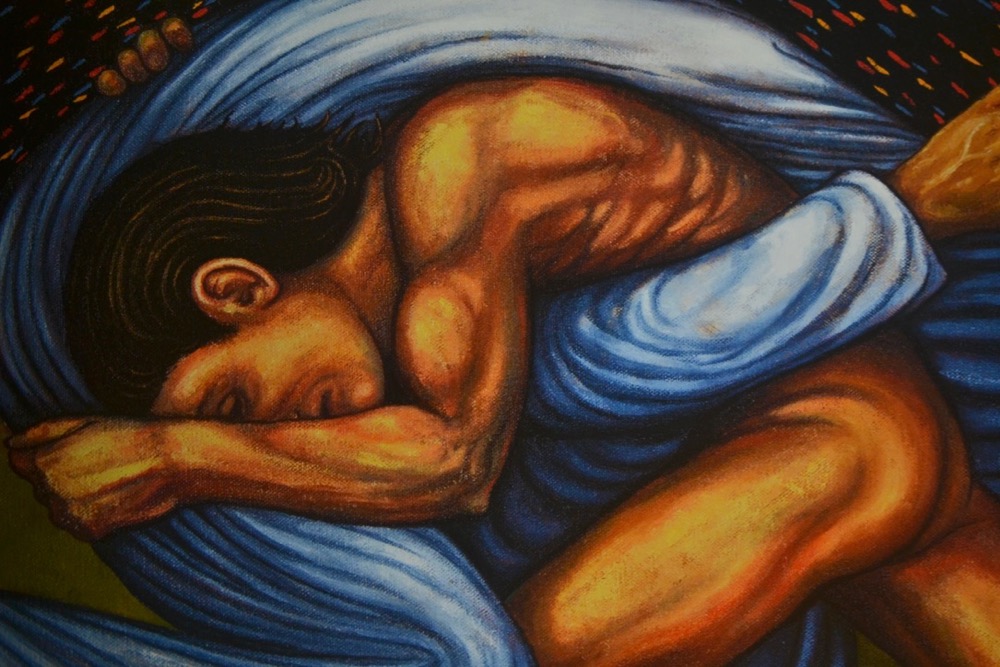
Artist credit: Jack Baumgartner

In this week’s Torah portion, Parashat Vayishlach, Jacob prepares for a meeting with his long-estranged brother, who is coming to meet him with a retinue of four hundred. Understandably frightened, Jacob divides his family up into groups and sends them ahead separately, hoping to placate Esau with tribute. He then spends the night alone on the bank of the Jabbok River.

During the night, Jacob wrestles by the riverbank with a mysterious man until the break of dawn. When the man sees that he cannot prevail against Jacob, he wrenches his hip at the socket. Jacob demands a blessing from the stranger, who renames him Israel (Hebrew for “wrestles with God”) adding, “you have struggled with beings divine and human and you have prevailed.” Jacob names the place of this encounter Peniel, (“God’s face”), saying, “I have seen a divine being face to face and have survived.”

The next morning, Jacob/Israel approaches Esau. Esau runs to greet him and weeping, they embrace and kiss one another. During the course of their reunion, Esau asks why Jacob had sent him gifts. “I have enough, my brother,” he says, “Let what you have remain yours.” But Jacob insists, “No, please do me this favor by accepting this gift, for to see your face is like seeing the face of God.”

There’s so much to say about this short, powerful story. Like much of Genesis, since many characters are representative of nations, we can read it on two levels simultaneously: as a narrative about an extended family and as a symbolic allegory about the relations of nations in the ancient Near East. Here, Jacob represents Israel and Esau is Edom; thus, we are reading both about the struggles of twin siblings and the origins of the fraught relations between the Israelites and Edomites.

Since these two peoples have a largely antagonistic relationship in the Hebrew Bible, classical commentary has not been kind to Esau and the Edomites. The Rabbis famously associated Esau with the Romans, the “wicked empire” who persecuted the Jews before and after the destruction of the Temple. One vivid midrash relates that Esau didn’t kiss but rather bit Jacob in the neck! Jewish commentators later coined the term “Esau hates Jacob,” a reference to (what they believed was) the eternal, immutability of gentile antisemitism.

It has always seemed to me that this complex and poignant narrative of twin brothers struggling toward reconciliation belies this simplistic interpretation of “good Israel” vs. “evil Esau.” I’m struck that the first time we met Jacob and Esau, they are wrestling with each other in utero – and when they are reunited, they embrace. This is not just a simple story about the struggle for personal/national dominance. The struggle we read about here is much deeper and far more profound than that.

I would argue that it is far too reductive – and even dangerous – to view the Torah as a narrative about the heroic Israelite wars with antagonistic nations. Embedded in Biblical tradition, there is a much deeper and more profound portrayal of deep love and solidarity between different peoples who are described as a complex, yet loving extended family. There are numerous examples: Abraham’s sons Isaac and Ishmael reunite to bury their father (as Jacob and Esau do when Isaac dies at the end of our portion). Moses marries Zipporah, the daughter of the Midianite High Priest Jethro (who is his spiritual mentor). Ruth, a Moabite, shows great love and loyalty to her Israelite mother-in-law Naomi, and later marries an Israelite, beginning the lineage that leads to King David. 

In this fearful current moment, when war and fascism is escalating in too many places around the world, it seems to me that these sacred streams of our spiritual tradition are speaking out to us with renewed urgency. Let us reject the voices in Judaism – and all traditions – that preach the immutability of hatred and war. Let us live up to our inherited spiritual legacy as Israel/Godwrestlers. Let us lift up the Torah of struggle that leads to reconciliation and collective liberation.

What Makes Space Sacred? What Makes Land Holy?

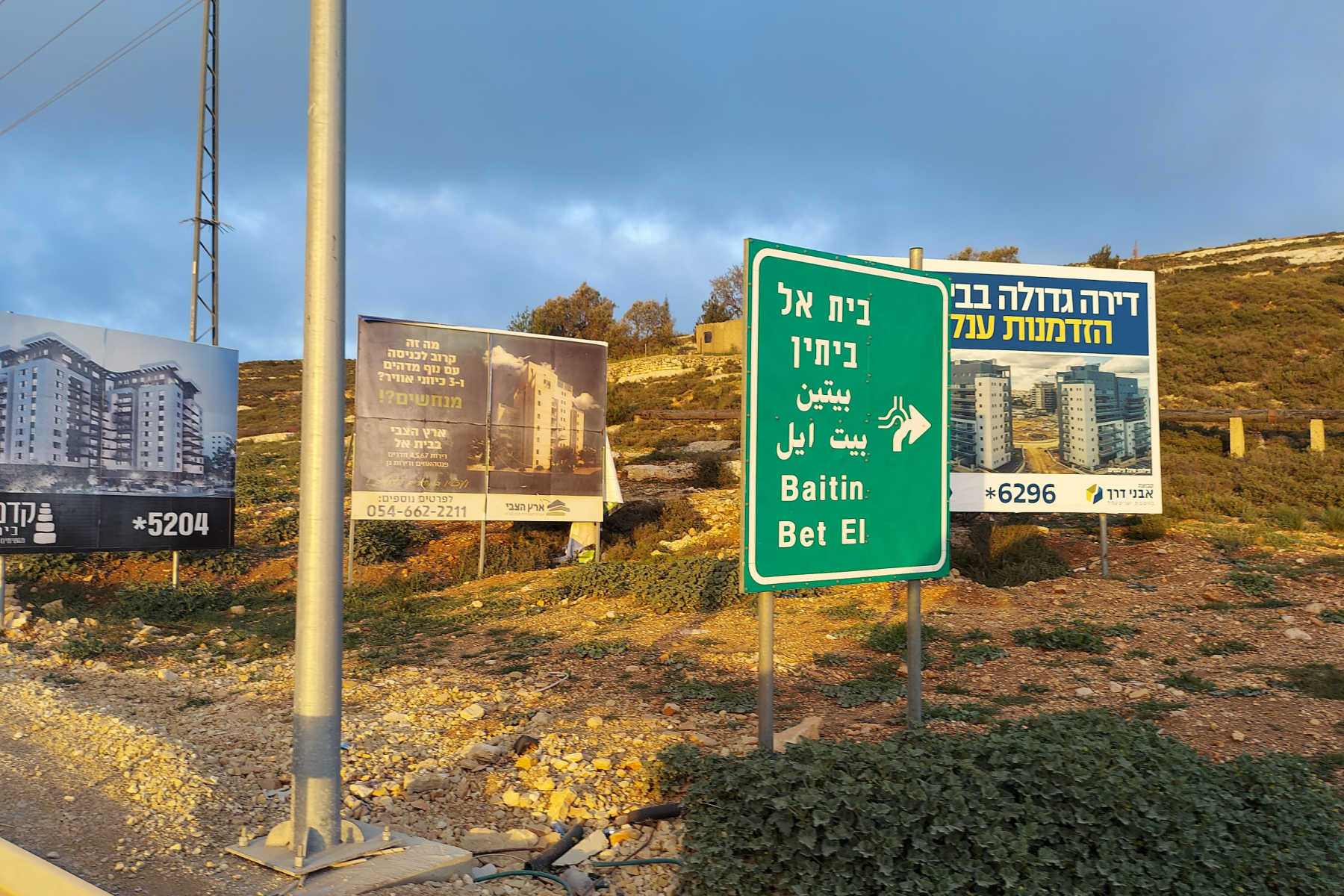
photo credit: Zaha Hassan

Are some places in the world more inherently sacred than others? Or is the entire world itself a sacred place? These questions are at the heart of this week’s Torah portion, Parsahat Vayetze.

As the portion opens, Jacob has fled his home to escape from the wrath of his brother, Esau. Alone in the wilderness, he arrives at a place (in Hebrew, makom) to spend the night, using a stone as his pillow. That night, he dreams of steps reaching from earth to heaven, upon which angels ascend and descend. God appears to Jacob and reaffirms the promise made to Isaac and Abraham, promising to protect Jacob on his journey until he returns home.

When Jacob awakens, he exclaims, “Mah norah ha’makom hazeh” – “How awesome is this place! God was present in it and I did not know! This is none other than the house of God and that is the gateway to heaven.” Jacob then sets up the stone he used as his pillow as a sacred pillar and names the place Beit El (“house of God”).

Centuries of commentators have inquired about the specific nature of this makom/place. Was it just a random spot where Jacob happened to spend the night or was it a sacred place toward which he was somehow guided by God? Our interrogation of this question begs an even deeper question: is the whole world in a sense, sacred space or are there some places in the world that are “more sacred” than others?

The answers to these questions are not, of course, are not mutually exclusive. Most spiritual traditions consider certain locations or sites to be uniquely invested with divinity. It is undeniable that Jewish tradition has traditionally ascribed sacred meaning to a specific land known as Eretz Yisrael. Some commentators say this land is uniquely holy because certain commandments can only be observed there and nowhere else. According to Jewish mystical tradition Eretz Yisrael – and the Temple Mount in particular – marks the very center of the universe.

It does not follow, however, that these ideas ipso facto give the Jewish people entitlement to assert control or dominion over the land (or the people who dwell upon it). On the contrary, I would argue that this sense of entitlement actually betrays the sanctity of the land. Indeed, it is difficult to read this Torah portion in the age of Zionism and fail to note that Beit El is the name of a prominent West Bank settlement that was established in 1977 by the ultranationalist settler group Gush Emunim.  

This sacrilegious hyperliteralism also ignores what the Torah teaches us from the very first chapter of Genesis: namely, that the entire earth is God’s divine creation. This ideal became more critical in Judaism after the destruction of the Temple in Jerusalem in 70 CE, when the Jewish people spread throughout the diaspora and created a spiritual system where God could be found anywhere in the world. Notably, the rabbis taught that the word makom is one of the names of God, referring specifically, the experience of the divine that is connected to place. (Or in the words of my favorite movie superhero, “wherever you go, there you are.”)

The Hebrew word for diaspora, galut, literally means exile, but as a famous rabbinic midrash teaches, “when the people of Israel went into exile, God went into exile with them.” Of course, the experience of exile is a universal one: as human beings, we understand that live in an imperfect world that has not yet experienced a complete and lasting justice. Nevertheless, as this midrash suggests, the imperfect exilic state in which we live is still infused with transcendent meaning and purpose wherever our steps may lead us.

As the great Yiddish writer S. Ansky powerfully wrote in his play “The Dybbuk,” “Every piece of ground on a person resides when they raise their eyes to heaven is a Holy of Holies.” That is to say, every place on earth has the potential to be a place of divine encounter. Every place has the potential to be a makom: holy space. Every home we create can be a Beit El – the sacred meeting place between heaven and earth.

I’m sure we all can think of these holy spaces in our own lives: places that are sacred because they were the sites of deep and significant meaning for us; places made holy because of the experiences we experience in them and the sacred memories we associate with them. At the same time, it is impossible to ignore that the entire earth abounds in sanctity – as we read in the book of Isaiah: “The whole world is filled with God’s glory.”

In other words, like Jacob, any place we lay down our heads has the potential to be a makom: a holy place with limitless potential for sacred, transformative experience.