On November 2 I had the pleasure to engage in a public conversation with journalist/author Peter Beinart in a program co-sponsored by Jewish Currents and my congregation Tzedek Chicago, We explored a wide range of issues arising from the current moral-political moment in Israel Palestine.
I was particularly grateful to interrogate the issues raised by Peter in his recent book “Being Jewish After the Destruction of Gaza: A Reckoning:”
• Is the Jewish community currently facing an unbridgeable ethical divide?
• Is it possible to make community with Jews whom we believe support – or remain silent over – the genocide of Palestinian people in Gaza?
• Does Peter identify as a Zionist now? What is his opinion of the growing movement for antizionist Judaism?
I appreciated Peter’s honesty and willingness to engage over these issues – and many others. The entire program is available on the video recording above.
As if there wasn’t enough drama over the candidacy of Zohran Mamdani in New York City’s mayoral race, last week saw the release of “A Rabbinic Call to Action: Defending the Jewish Future,” a statement from an ad hoc group calling itself “The Jewish Majority,” condemning Mamdani for voicing political convictions that “delegitimize the Jewish community and encourage and exacerbate hostility toward Judaism and Jews.” By the end of the week, the call had garnered over 1,000 signatures from rabbis, cantors and rabbinical students from NYC and around the US.
Notably, the statement only mentions Mamdani once. The rest of the six-paragraph letter is devoted to defending the state of “Israel’s right to exist in peace and security” and promoting Zionism as central to Judaism and Jewish identity. It’s centerpiece is a long and pointed quote from a recent sermon by Rabbi Elliot Cosgrove of Park Avenue Synagogue, in which he warned that Mamdani “poses a danger to the New York Jewish community”:
Zionism, Israel, Jewish self-determination—these are not political preferences or partisan talking points. They are constituent building blocks and inseparable strands of my Jewish identity. To accept me as a Jew but to ask me to check my concern for the people and state of Israel at the door is a nonsensical proposition and an offensive one, no different than asking me to reject God, Torah, mitzvot, or any other pillar of my faith.
Given the timing of the letter, “The Jewish Majority” statement is clearly an effort to stem Mamdani’s surging lead – and his popularity with young leftist Jews in NYC. But on a deeper level, the fundamental goal of the letter is made all-too plain: it seeks to combat the growing “political normalization of anti-Zionism.”
From what I can tell, Mamdani has never explicitly referred to himself as an “anti-Zionist.” What he has said, over and over again in response to the incessant gotcha question “does Israel have the right to exist as a Jewish state?” is that he “believes Israel has the right to exist as a state with equal rights.” Of course, the words “a state with equal rights” is enough to make him an anti-Zionist – because the only way Israel can exist as a Jewish state is by denying equal rights to Palestinians.
For me, this is the real significance of this statement – it shines a hard light on the deep moral hypocrisy of a Jewish communal establishment that is threatened by anti-Zionism: a political position that is rooted in human rights and equal rights for all. Indeed, if you listen to Mamdani’s words carefully, he takes pains to point this out: he refers to Israel’s actions in Gaza as a genocide because he agrees with the opinions of international bodies such as ICJ as well as scores of otherhuman rightsobservers. He openly says he would not welcome Netanyahu in NYC because the ICC has put a warrant out for his arrest as a war criminal.
These are not hateful or inciteful positions. What is remarkable – and galling to the Jewish communal establishment – is that Mamdani is not paying a political price for expressing them. Quite the contrary: he is the one who comes off as eminently principled and reasonable, while apoplectic Jewish leaders are having an increasingly difficult time explaining why a genocidal, apartheid nation-state is a “building block” of their Jewish identity. True to form, this clergy group is simply trotting out familiar talking points, fully expecting their morality and veracity to be self-evident.
Contrary to the claims of the statement’s signers, the increasing normalization of anti-Zionism does not “delegitimize Jewish identity and community.” As the rabbi of an openly anti-Zionist Jewish congregation, I can attest that increasing numbers of Jews are identifying as such out of genuine Jewish conscience: from a deep attachment to Jewish ethical values that mandate the pursuit of justice and hold that all human beings are equally created in the divine image.
Recent surveys certainly bear this out: according to an October 2025 Washington Post poll, of American Jews, 61% believe Israel has committed war crimes and 4 out of 10 say the country is guilty of genocide against the Palestinians, views that would certainly track with an anti-Zionist identity. As Jewish Currents editor-in-chief Arielle Angel has observed, “the catastrophic failure of Zionist Judaism” has marked “an opening for anti-Zionist Jews to step into greater influence, (to) make our case for something new.” By all accounts, the time has come for a Judaism that rejects the fusion of toxic ethno-nationalism with Judaism.
I’m also struck by another note of desperation from this ad-hoc group of Jewish clergy: they purport to speak for the Jewish majority as if that alone confers legitimacy. They of all people should know dissent is a sacred, cherished aspect of Jewish tradition. They of all people should know that in Talmudic debate, both majority and minority views are given equal weight and consideration. They of all people should know of the Torah’s sacred injunction “Do not go after the majority to do evil” (Exodus 23:2). And any student of history, Jewish or not, should know that the majority is not always right, whether it be the majority of Southern Whites who supported slavery and Jim Crow in the US, apartheid in South Africa or the injustices of Zionism today.
The real moral question here, it seems to me, is not “who is in the majority?” but rather “who is on the right side of history?”
This Yom Kippur, amazingly, is Tzedek Chicago’s tenth Yom Kippur. And since Yom Kippur is a day for taking stock of the year that’s past, I want to to share some thoughts about our congregation’s first ten: to explore our history, our growth and perhaps most importantly, to offer some thoughts about what has changed in the Jewish world since Tzedek Chicago first began.
This will be a significant sermon for me for a number of reasons, so let’s just get it out of the way at the outset: this is not my goodbye. It may be my final sermon at Tzedek Chicago, but the year is young. There will be time for goodbyes later – but for now, please know I’m not going anywhere just yet. And there is so much work to be done in the coming year.
When I think back over the first ten years at Tzedek Chicago, I can clearly see critical milestones that fundamentally and irrevocably shaped our congregation. Like most things in life, the majority of these milestones were wholly unexpected. And yet they ended up being transformative.
How we began is a classic example. Just to give some context, in early 2015, Israel had just finished a military assault on Gaza it called “Operation Protective Edge.” At the time, it was Israel’s most brutal attack on Gaza yet, killing nearly 2,500 Palestinians and wounding 11,000 over the course of a month. It’s hard to imagine now, but at the time it felt like the most devastating massacre any of us could possibly fathom. Of course, we couldn’t begin to fathom the nightmare Israel would unleash upon the Palestinian people of Gaza nine years later.
Still, like other Israeli assaults before it, it was a last straw for many Jews, including me. A few months earlier I had painfully resigned from the congregation I had served as Rabbi for 16 years and I was fairly sure I’d never work as a congregational rabbi again. And there were others in Chicago who felt Jewishly adrift – many of us knew each other through our connection to the Chicago chapter of Jewish Voice for Peace and had marched together in Palestine solidarity protests for years.
At the time, we felt as if we were at a crossroads, not knowing where or how to express our Judaism in a community that seemed so thoroughly enmeshed in Israel and Zionism. But beyond the political, we had an underlying, perhaps still imperceptible yearning to be part of a religious community that expressed a different kind of Judaism.
So after Rosh Hashanah 2014, we began to meet semi-regularly as a havurah, a completely lay-led group. We got together for occasional Shabbat dinners and some Jewish holidays, including a memorable Palestine solidarity Passover seder. In those days, we called ourselves the Haymarket Havurah. Very quickly, it felt like we were organically creating the spiritual community we had been yearning for. We were celebrating Jewish life together, observing the Jewish rituals that we cherished so deeply, but we also included readings, prayers and music that reflected our political convictions, consciously centering solidarity with Palestinians as a sacred Jewish value.
Eventually, we started to talk together about what it would mean to actually turn our group into a formal congregation. Some of us had been members of synagogues for many years, others had never belonged to one in their lives. None of us however, had any experience founding a congregation. We decided fairly quickly that if we did start something, it would have to be a consciously intentional community. So before we recruited a single member, we drafted a list of core values that would be foundational to the life of our congregation. We listed them under seven categories: “A Judaism Beyond Borders,” “A Judaism of Solidarity,” “A Judaism of Nonviolence,” “A Judaism of Spiritual Freedom,” “A Judaism of Equity,” and “A Judaism Beyond Nationalism.”
By spelling out our values so specifically, we were consciously going against a major tenet of liberal synagogue life, which is to hew to the path of least resistance. If truth be brutally told, the central value of most liberal synagogues – most liberal congregations for that matter – is growth. I can’t tell you how many times, in my former congregations, I’ve sat at board and committee meetings convened to discuss the question, “What are our strategies for growth?” “What is our outreach plan?” “How can we attract more young families with school age kids?”
In building our new congregation, we approached this question from the opposite direction. We knew our congregation wouldn’t be for everyone, and we didn’t expect it to be. At the same time, we just knew there was a genuine desire for the Judaism we wanted to see in the world. So if we had a plan for growth, it was to be loud and proud about our values, and let our growth take care of itself.
So during the summer of 2015 we held a series of orientation meetings in people’s homes throughout Chicago. As word began to spread, the meetings got larger and larger. When we held our first High Holiday service that fall at Luther Memorial Church in Lincoln Square, over 200 people attended. Here is what I said at my very first Rosh Hashanah sermon:
I’ll be honest with you: I still can’t quite believe that we pulled this off. It was only a short time ago that we even began to think about creating this new congregation. The leadership of Tzedek Chicago began these conversations a few months ago, and we held our first orientation meeting just this last summer. Our start up period has been astonishingly short – but I think I can speak for the entire leadership of Tzedek when I say I’m not surprised by how far we’ve come in this relatively brief period of time. I’ve known in my heart that there is a very real need in the world for a congregation such as ours.
Those who attended that service will attest to the excitement we felt in that sanctuary on that first Rosh Hashanah when we said the Shechehianu blessing together. It all felt so right and so transgressive at the same time, which I guess means it felt so Jewish.
When we started out we were almost completely lay-driven. Our first board was a volunteer steering committee, led by our founders, Susan Klonsky and Mark Miller. My wife Hallie was our first part-time administrator. And I served as part-time rabbi for the congregation while I worked full time at the American Friends Service Committee, who very graciously allowed me to organize this new congregation as my side gig for our first five years. Our first family education program was created by our member families themselves, organized by member Erin Weinstein, of blessed memory.
In those early days, we were essentially a part-time congregation, careful to do what we could within our capacity. We held Shabbat services and Torah Studies once a month, observed all the major holidays and held educational programs throughout the year. We also became a regular presence in the Chicago justice community. One of our first acts of solidarity was with the hunger strikers at Dyett High School, which was one of 50 Chicago public schools closed in 2015 by then mayor Rahm Emanuel. On the second day of our first Rosh Hashanah, in fact, we hosted a solidarity action with hunger strikers at Chicago City Hall.
Despite our size, however, word about us spread fairly quickly. I remember getting regular emails from folks asking if there was a congregation like us in their community. We knew that we had tapped into a very real and growing desire in the Jewish world for a synagogue that centered justice-focused core values such as ours.
In 2019, we marked an important milestone when I made the decision to leave AFSC to serve as Tzedek Chicago’s full-time rabbi. When I officially started at the beginning of 2020, our first order of business was to find a more permanent rental space for our congregation. Of course, we all know what happened that year. When the pandemic descended upon us, everything changed for everyone.
We all recall the profound fear and uncertainty of those days. It was a time of so much grief and loss, so much fear and isolation. We weren’t sure what the future would hold but we knew the world would never be the same. We also knew we had to find creative, unprecedented ways to connect with each other and create community, which we realized more than ever was so essential to our collective well-being.
So like the rest of the world, we did find new ways to connect and care for each other. Our Chesed Committee, tasked with community care, quickly became our most important committee. We instituted a weekly virtual check-in gathering for members and friends that still meets every Wednesday. We also went from being a part time congregation to a full-time one, expanding our services and programs significantly. This was when we initiated our weekly Friday night online candle lighting and Shabbat morning Torah study. These gatherings also continue to meet every week, and are still the anchors of our congregational schedule.
Our congregation also grew. Significantly. By the end of 2020, we had almost doubled in size. But we didn’t only grow in numbers – we also grew geographically, gaining members throughout North America and from around the world. We attracted people from far outside our shtetl in Chicago who had long been seeking a Jewish congregation such as ours. We now had regularly attending members from across North America and as far away as the UK, Ireland, New Zealand, and Singapore. We also gained members who were disabled and immunocompromised who never had access to a congregation before. By going online, our community became available to the outside world in ways we never could have imagined.
To put it simply, that year transformed Tzedek Chicago into a Chicago-based, world-wide Jewish congregation. And that will always be the case. As we continue to grow, our leadership remains committed to maintaining this balance, to find creative new ways to build community in a congregation that is both local and global. And while this may be a challenge, it also makes perfect sense. Our congregation was never a neighborhood shul. We’ve always been more values-based than location-based. I personally never dreamed I would be leading Shabbat services and Torah Studies from my laptop every week, but then again, everything about our congregation has been a leap into the unprecedented.
I am also mindful that it would be a mistake to refer to this milestone as a historical or past tense phenomenon. Of course, the pandemic is by no means over. As I look out into our sanctuary now, to a room full of masked people gathering for Yom Kippur, I see a powerful visual of our congregation’s commitment to the health of all its members. This value will always be sacrosanct to us as well. Whether you’re a member or a guest with us today, we’re grateful for your readiness to honor our congregation’s mandatory community health policy – our congregation’s commitment to our collective well-being.
Another major milestone for our congregation occurred in 2022, when we voted to formally change our core value from “non-Zionist” to “antizionist.” Once again, it began rather unexpectedly, as an initial board conversation, that eventually turned into a unanimous vote. Since the board did not want to approve of this change unilaterally, however, it facilitated member meetings over a series of months, to discuss what this change would mean for our members and for our congregation. In the end, we held a vote and more than 70% of our membership quorum voted to approve the change. Since then, Tzedek Chicago has been, openly and officially, an antizionist congregation.
This was much, much more than a semantical change – it was a decision that reflected our moral commitment as a congregation. In our original core values statement, we define Zionism as “the creation of an ethnic Jewish nation state in historic Palestine” and affirm that “(Zionism)” resulted in an injustice against the Palestinian people – an injustice that continues to this day.” In other words, we make it clear that Zionism, at its core, is a form of systematic oppression.
The term non-Zionist, however, is a neutral term. It doesn’t take a stand or make a judgement about this injustice. In our deliberations, many of us were impacted by Angela Davis’ famous quote: “In a racist society, it is not enough to be non-racist – we must be anti-racist.” That is to say, we cannot remain neutral about systems of oppression. If we truly oppose them, we must affirm transformative justice: we must commit to dismantling oppressive systems and replacing them with ones that are more equitable and just.
I strongly recommend reading and sharing the board statement that explained the reasoning behind our decision; it is, in its way, just as important as our original core values statement. I truly believe it offers a critical vision for the direction and future for Jewish life, reflecting a consciousness that far transcends the simple label “antizionist”:
While we affirm that Tzedek Chicago is an anti-Zionist congregation, that is not all we are. This value is but one aspect of a larger vision we refer to in our core values statement as a “Judaism Beyond Borders.” Central to this vision is an affirmation of the diaspora as the fertile ground from which Jewish spiritual creativity has flourished for centuries. Indeed, Jewish life has historically taken root, adapted and blossomed in many lands throughout the world. At Tzedek Chicago we seek to develop and celebrate a diasporic consciousness that joyfully views the entire world as our homeland.
Moving away from a Judaism that looks to Israel as its fully realized home releases us into rich imaginings of what the World to Come might look like, where it might be, and how we might go about inhabiting it now. This creative windfall can infuse our communal practices, rituals, and liturgy. We also believe that Jewish diasporic consciousness has the real potential to help us reach a deeper solidarity with those who have been historically colonized and oppressed.
When Tzedek Chicago was first founded, we were something of a voice in the Zionist hegemonic wilderness. In 2015, one newspaper article about us included a snarky quote from a rabbi who said, “Statistically, they don’t exist.” Ten years on, I think it’s fair to say that antizionist Jews are now standing up to be counted. If there could be any doubt, just look at the dramatic increase in political efforts to label and legislate antizionism as antisemitism. Why would Israel and Israel advocates bother if they didn’t take us seriously? This is a reactionary response to a phenomenon that is very real – and growing.
Today, our congregation is on the vanguard of this emergent movement. Jewish Voice for Peace formally became an antizionist organization in 2019 – and for the past several years, JVP has coordinated a growing network of antizionist Jewish ritual spaces. Some are congregations with rabbis, some are lay-lead havurot, some are more traditional, some are more progressive in their liturgy, but all are committed to creating and building a Judaism beyond Zionism.
In addition, there are educational initiatives such as Jewish Liberation Learning in New York City, an “antizionist education program for kids,” Achvat Olam Diaspora Community Day School in Boston and Shel Mala, a queer, antizionist Talmud study program that meets online. There are antizionist Jewish student groups proliferating on universities and college campuses across North America. There are antizionist artists creating new Jewish liturgy and ritual art. There are antizionist spiritual resources such as “For Times Such as These,” the already classic “radical Jewish guide” to the holidays written by my colleagues, Rabbis Jessica Rosenberg and Ariana Katz.
Speaking of antizionist rabbis, more and more of them are being ordained every year. I know many of them through the JVP Rabbinical Council and Rabbis for Ceasefire: gifted, passionate Jewish leaders who have much to offer our community. Perhaps more than anything else, the emergence of new Jewish leadership is the most powerful signifier that antizionist Judaism has a real future – that it will continue to grow and thrive.
Though we’re still at the nascent beginnings of this movement, its emergence is surely a sign that Jewish life has changed dramatically over the past ten years. It’s also a validation of the leap of faith we took when we founded Tzedek Chicago, just knowing in our hearts there were growing numbers of Jews out there who shared our passionate vision for the kind of Judaism we wanted to live – or more to the point, the kind of world we wanted to live in.
I’ve just highlighted a few of the milestones that I believe have been critical in our congregation’s growth during our first decade of existence. In the coming year, we will mark another one: this spring Tzedek Chicago will be hiring a new rabbi to lead us into the next chapter of our journey.
Naturally, I have all kinds of feels about this, but mostly, I’m excited and proud. I’ve been doing the work of a congregational rabbi for a very long time – since I’ve been in my twenties, actually – and I’m genuinely ready for this change. But I’m also so proud that we’ve created a robust and thriving congregational community that will provide a full-time rabbinical job to one of the growing number of very talented antizionist rabbis who are emerging into the Jewish world.
As I said before, this is not goodbye yet. And I also want to say that while I’ll be stepping down from the day to day work of the synagogue, I’ll still be around. Soon enough I’ll have a conversation with the board about what an appropriate future involvement with Tzedek Chicago might look like for us. But for right now, there is still much work for us in the year ahead – and I’m eager for the blessings and challenges that the new year will bring.
I’d like to end on a personal note. I have often said, one of the most painful experiences of my life – resigning from my former congregation – led to one of the biggest blessings in my life: the opportunity to help found Tzedek Chicago. To be the rabbi of a congregational community of conscience, where I could for the first time in my rabbinical career, be my authentic self and speak my authentic truth.
I cannot begin to tell you how liberating this has been for me. I’ll offer you one small but telling example: Last year, as I was considering participating in the Rabbis for Ceasefire Passover action at the Gaza border, I was stressing because it came during a particularly busy, event-filled week in the congregation, not least of which was our annual Pesach Seder.
When I mentioned my hesitance to our then board president Nate Goldbaum, he said to me, “You have to do this. You need to be there. We need you to be there.” Mind you, this was the president of a congregation telling the rabbi that their congregation needed him to protest at the Gaza border. It was only later when I realized how revolutionary this actually was, how rare it is that any of us are given the permission to be our full moral selves, to speak our consciences openly, freely and without fear.
The opportunity to be one’s authentic self is a rare gift, and it is one that I have never taken for granted. I fervently hope that Tzedek Chicago has provided this gift to you as well. Because at the end of the day, isn’t this what our spiritual communities should be: places of authenticity and conviction, where no one has to bury their most deeply held values, where we have the permission to express our truest and best selves? It really shouldn’t be too much to ask: that our congregations reflect the world we want to see, or as I so often put it, the world we know is possible.
I don’t think I can put it any better than I did in 2015, at the conclusion of my first sermon for our congregation. So I will conclude with those very same words:
I want to express once more how blessed I feel that I have been granted such an opportunity at this point in my life and my career. I am so very grateful and excited to be embarking on a journey such as this with all of you and many more who will be joining us as we make our way. I know it will be a complex and challenging journey in many ways. We’ve set our sights high and it goes without saying that we will be learning together as we go.
To be sure, it is not easy to do this kind of work. It is challenging, it is painful, it can often mean being alienated or isolated from family and friends, from the larger community. But for so many of us, we don’t have a choice but to do this work – and we know that we will ultimately find the strength to continue through the sacred relationships we cultivate along the way. In the end, this is a journey we must take – and I can’t think of anyone I’d rather take it with than all of you. Speaking for myself and the leadership of Tzedek Chicago, thank you for putting your faith in us and in one another. Wherever our steps may lead us, I know we will be going from strength to strength.
And finally, please join me in expressing gratitude at having been sustained long enough to reach this incredible new season together:
Holy One of Blessing, your presence fills creation, you have given us life, sustained us and brought us all to this very sacred time together.
On Yom Kippur, we say the hard truths out loud. On Yom Kippur, we proclaim together as a community: chatanu, we have sinned. We have failed. We have not lived up to our promises of the past year.
I don’t know that I’ve ever experienced these words more brutally than I do this year. In last year’s Rosh Hashanah sermon, I ended with these words: “A year from now, when we are back here, we will have to have an answer. We can’t find ourselves just asking the same question. We must be ready to answer: what did we do in the last year to bring this genocide to an end?”
We have failed. It is now one year later and Israel’s genocide against the Palestinian people in Gaza is continuing toward its second year mark. As I speak these words, the Israeli military is literally leveling the entire northern region of Gaza to the ground. Earlier today, Israel issued its final warning for Palestinians in Gaza City to evacuate, saying everyone who remains will be considered a “terrorist.” Many are refusing to leave, many are unable to leave.
It is horrifying to even say these words out loud: on this Yom Kippur, the day when we plead to be written into the Book of Life, Israel is systematically erasing Gaza from the map – and the people of Gaza along with it.
I’ll be honest with you: I’ve struggled mightily over what I could possibly say tonight that would be worthy of Yom Kippur. I could discuss the geo-political causes that have been prolonging this genocide. I could discuss craven US politicians and corporate gangsters who are planning to carve up Gaza for their own profit. I could spend my time excoriating the Jewish establishment for supporting this genocide – and too many Jewish communal leaders for their silence. But frankly, none of it would be particularly new. None of it feels worthy of the grief pervadingthis sacred moment of Yom Kippur.
I also don’t want to spend this sermon describing the specific litany of the atrocities being inflicted on the people of Gaza – to reduce them to trapped, powerless victims. We’re all too familiar with the horrors of the past two years. Like so many of you, I’ve been scrolling daily through unbearable pictures and videos live streaming Gazan’s agony, their erasure. There’s something obscene about the casual way we’ve been viewing these horrors on our mobile devices, right alongside memes and texts and emails as we go about our daily business.
And yet at the same time, I know we must bear witness. We owe it in particular to the courageous young Gazans reporting on their own erasure from the ground even as Israel maintains a total media blackout. We cannot and must not look away. This has been our sacred responsibility to the people of Gaza. It is precisely through this bearing witness that we affirm their essential humanity.
As I thought about what I could possibly say to you tonight, I kept returning the same basic truth: if these days are to have any meaning for us at all, it is Yom Kippur’s sacred challenge to publicly affirm our accountability to the Palestinian people – as Jews and as human beings of conscience. We cannot let ourselves become complicit in their erasure. If we are truly serious about Yom Kippur, we must vow that solidarity is our sacred obligation.
When I think about Jewish accountability to the Palestinian people, I must mention our profound debt to Prof. Marc Ellis, of blessed memory, the great Jewish scholar, writer and theologian, who was an important teacher to me and a friend to our congregation from our earliest days. I quoted Marc in my very first sermon at Tzedek Chicago and many more times over the years. He was a prolific writer, but more importantly he was a courageous writer. Among other things, he wrote a great deal about what he called “revolutionary forgiveness” and the imperative for a collective Jewish confession to the Palestinian people. As he put it:
Revolutionary forgiveness in Israel-Palestine begins with a confession by the Jewish people. The confession is simple. What we as Jews have done to the Palestinian people is wrong. What we are doing to the Palestinian people today is wrong. With that confession, we agree to begin to walk the path with Palestinians towards justice and equality. As that path begins to be walked, the memories of each people, broken by history, remain. But as that path is walked, new memories begin to be created. As those memories of justice and equality are created, they begin to dominate the history of both peoples until in the end an injury against one is an injury against all. Revolutionary forgiveness; confession, justice at the center.
Marc died last year, far too young, as Israel’s genocide against the Palestinian people was raging in full force. I yearn to talk to him now about this confession. I so want to ask him if he would still, in this terrible moment, be writing about mutual, revolutionary forgiveness? I want to ask: is forgiveness even possible any more? Or is what Israel is doing to the Palestinian people truly unforgivable? And if that is the case, is there really any future at all? Can there ever be any hope for real justice in Palestine/Israel?
For the past two years I’ve been in touch with my friend Rachel Betarie, an antizionist Israeli Jew and activist and former director of the organization Zochrot. Over the months, her words to me have become progressively more despairing as she’s described how it feels to live in Israel at this terrifying moment, in a country where the majority of its citizens support the genocide.
Recently, Rachel told that she was part of a new working group organized by Zochrot, as she put it, “of activists in Palestine, colonized and Anti-Zionist colonizers, who have been meeting since April to think, re-imagine, and suggest concrete processes through which the right of return for Palestinian refugees from Gaza could be realized after the genocide.” She went on to write:
It is not easy to imagine a better, more just future at a time when the ground is crumbling under our feet. Some of us have families in Gaza and most of us have deep ties there. All of us see our future here in Palestine, between the river and the sea. The question arose again and again in our meetings: Is it even relevant to talk about the future right now? Isn’t this just escapism? Still, we chose to trust each other – a work in progress – and our deeply held values, and extract some ideas from our process of learning and discussing. With every meeting it became clearer to what extent the Nakba, and the ongoing system of settler colonialism – not October 7, 2023 – was and still remains the root of the problems we face today, and that return is the core of every future solution that has a chance to bring any stability, justice and peace to our communities, and that entails dismantling of the Zionist colonial regime.
Through this work, we came to the conclusion that return from Gaza must begin – not at some distant point in the future. Our discussions did not only focus on the design of return but also raised questions of community, of collective and individual healing, and of how social processes of repair can accompany physical return. With our hearts shattered daily by the horrors of the genocide, and with fear and hopelessness engulfing us, envisioning this still possible future is in itself a remedy.
I’m so inspired by their effort, their determination to come together, Israelis and Palestinians – or as Rachel put it, colonized and colonizers – even in this unbearably tragic moment, to vision a future of reparation and return. They know full well that they are a tiny minority in Israeli society, a small island of hope amidst an ocean of trauma and fury. And yet they are determined to keep this vision alive despite it all.
As I think further about how we might envision the future this Yom Kippur, particularly here in the diaspora, I keep returning to one basic truth: Palestinian voices must be centered in our observance. Quite frankly, I don’t know how we can do the work of teshuvah, of repentance and return if we don’t hear their stories directly, open up fully to their voices and honor their experience.
As I said earlier, as we gather tonight for Yom Kippur, Israel is erasing the entire northern region of Gaza City, the most populous, built-up region of the Gaza Strip. According to reports, the scale of these demolitions are unprecedented. Over the past few weeks, the Israeli military has been systematically destroying every high-rise building in Gaza City. Satellite pictures show that the most populous region of Gaza has been reduced to a lunar landscape. Israel has already done this to large swathes of the Gaza Strip, including the city of Rafah in the south and the town of Beit Hanoun in the north.
These words, however, are mere reportage. I believe it’s critical that we hear the story of this erasure from those who are most directly impacted. And so I’d like to share with you two extended testimonies for this Yom Kippur, our day of reckoning. The first is the voice of Taher Herzallah, who comes from Gaza City and works as the Director of Organizing for American Muslims for Palestine. These are the words that Taher recently posted his Facebook page:
Gaza has fallen.
I’m not a sensationalist, nor am I someone who likes to shatter people’s hopes. But what we are witnessing today is the complete and utter annihilation of a people. It really feels like the end of Gaza City, and I don’t say this lightly, especially since I have family members and friends in Gaza who follow me on this page. This is the city where my father was born and where my family has lived for centuries.
Many of my relatives held out for two years under the worst conditions human beings can live under. But for more than 700 days, they’ve endured and found ways to survive in Gaza City.
No longer.
They’ve decided to leave Gaza City for the first time since this all started. It is just no longer possible to live there. With Israel’s systematic destruction of many of the major residential high rises in the city this week, the message is unequivocal: all of Gaza City will be leveled to the ground, the way Rafah and Jabalya and Khan Younis and Beit Hanoun were.
The images of displacement today broke something inside of me. People, looking back at Gaza with tears in their eyes, are moving south into another uncertain reality. Death and suffering are still a high likelihood as “safe zones” don’t truly exist. They know a return to Gaza is unlikely and they will be stuck in a cycle of displacement and suffering for years to come. But what choice do people have?
Some people refuse to leave Gaza. Not only out of stubbornness but also because they don’t have the means to leave. With the lack of aid organizations or large-scale efforts to facilitate the transfer of the population to another area, everyone in Gaza is left alone to figure out how to move their families to safer zones.
I have family members in Gaza who have gone back and forth from Gaza City to Deir El Balah 3 or 4 times to find a small plot of land to set up their tents. Finding an apartment or a built structure to live in is an absolutely hopeless endeavor. The best-case scenario now is to find a small plot of land large enough to erect a tent. With 2 million people squeezed into a small area on the Gaza coast, even that has become nearly impossible…
The stories we are hearing out of Gaza are heartbreaking and soul-crushing. A 10-year-old child in Gaza City was asked what his hopes are for ending this war. His response: “I only hope for one thing–to find my dad’s body and to bury him.” This is the extent of the boy’s hopes and dreams. To find consolation in burying the body of his father, who was killed at a Gaza Humanitarian Foundation distribution site.
Other people have similar stories. They refuse to leave Gaza City, not because they don’t think it’s dangerous, but because they have loved ones buried under the rubble that they have not retrieved and can’t fathom moving on in life without burying them. The psychological and physical trauma of this genocide is so severe that people know that carrying that trauma will be the end of them anyway, and would rather die in Gaza City than endure years of more suffering…
To my family reading this: I am sorry. I have failed you. I don’t know what else to say. I hope you forgive me.
For the rest of us: whatever happens next will be very difficult. So prepare accordingly.
The next Palestinian voice I’d like to share with you is that of Asem Alnabih, an engineer and PhD student and spokesman for the Gaza municipality, who recently evacuated from the Shujayea region of Gaza City. Shujayea is one of the largest neighborhoods in Gaza and once had up to 100,000 residents. It is also a historically significant neighborhood, located in the southern quarter of Gaza’s Old City. Shujayea dates back to the 13th century and is named after Shuja’ al-Din Uthman al-Kurdi, a Muslim commander who died fighting the Crusaders. In the Ottoman period, it was the only mixed quarter in the Old City, where Muslims, Christians and Jews once lived together.
I remember Shujayea well when I visited Gaza in 2017 as a staff member for the American Friends Service Committee. It’s residents were clearly proud of their home, of its history, its deep sense of community and especially of its resilience. Although Shujayea was heavily bombed by Israel in its 2009 and 2014 assaults, residents rebuilt their homes each time.
Here is Asem Alnabih’s testimony, which he wrote in an article for Al-Jazeera:
My neighbourhood in east Gaza, Shujayea, is gone! The streets that once echoed with the laughter of children, the calls of vendors, and the familiar rhythms of daily life now lie in silence, smothered by dust and destruction. What was once a vibrant community, full of stories and memories, has been erased in a matter of moments.
A few days ago, my brother Mohammed went back to Shujayea to check on our family home. When he came back he told my father that nothing remained except for a few broken walls and scattered columns. A few hours later, we were shocked to learn that my father himself had braved extreme danger to see it with his own eyes. In a place where every step can mean death, he chose to walk through the ruins of our past.
This was the house my grandfather and father had built with years of effort, the house that carried my dad’s dreams and bore the marks of his sweat and sacrifice. It was where he raised his children, where we celebrated weddings and birthdays, where countless family memories were made. And now, it is nothing but rubble.
But our family’s loss is not just this one house. My father’s destroyed home is now added to my own burned apartment, my sister Nour’s bombed apartment, my sister Heba’s demolished home, and my sister Somaia’s two apartments – one reduced to rubble and the other burned. To this list are added my uncle Hassan’s destroyed building, my uncle Ziad’s building, my uncle Zahir’s home, my aunt Umm Musab’s apartment, my aunt Faten’s apartment, and the completely destroyed homes of my aunts Sabah, Amal, and Mona. And these are only the losses within our immediate family. All around us, countless relatives, friends, and neighbours have seen their homes obliterated, their memories buried under the debris.
This is not simply about the staggering material value of what we have lost. Yes, the homes were filled with furniture, personal belongings, and cherished possessions, but the destruction goes far deeper than material things. What has been taken from us is irreplaceable. A house can be rebuilt, but the sense of belonging that comes from walking familiar streets, from living in the same neighbourhood where generations of your family have grown up – that cannot be reconstructed with bricks and cement.
Shujayea was more than just buildings. It was a community stitched together by relationships, shared histories, and the memories of ordinary lives. It held the neighbourhood bakery where we bought fresh bread at dawn, the small corner shop where neighbours gathered to chat, the ancient Ibn Othman mosque that echoed with prayers during Ramadan. These were the spaces where children played, where families celebrated, and where neighbours supported each other through good times and bad.
When a neighbourhood like Shujayea is erased, it is not only walls that fall; it is a whole way of life. The destruction severs ties between neighbours, scatters families across shelters and refugee camps, and leaves a deep wound that no reconstruction project can truly heal. A rebuilt house may have four walls and a roof, but it will not be the same home that once carried generations of stories.
The pain of this loss is not unique to my family. Across Gaza, entire neighbourhoods have been flattened. Each pile of rubble hides the history of a family, the laughter of children, the wisdom of elders, and the love of a community that once thrived there. Each destroyed home is a silent witness to the human cost of this war, costs that cannot be measured in money or damage assessment.
What we have lost is not just property, but identity. A home is where a person’s life unfolds, where milestones are celebrated, where griefs are shared, where bonds are formed. To see so many homes destroyed is to see an entire people uprooted from the places that defined them. It is a calculated erasure, not only of lives, but of memory, heritage, and belonging.
Rebuilding will not bring back what was taken. The new buildings, if they ever come, will stand on top of the graves of our memories. They will not bring back my father’s years of hard work, nor the sense of comfort and security that once came with having a home. They will not resurrect the neighbourhood we knew, the one full of warmth, familiarity, and life.
The destruction of Shujayea is a wound that will remain open for generations. It is not simply a matter of humanitarian aid or reconstruction funds. This is about the deliberate dismantling of a community’s heart and soul. No amount of concrete can rebuild trust, restore memories, or bring back the neighbours who have been killed.
Shujayea is gone. And with it, a part of us has been buried. Yet even as we grieve, we hold on to the stories, to the love that once filled our homes, to the hope that someday justice will prevail. Because while they can destroy our houses, they cannot destroy the bonds we carry in our hearts, nor the memories that no bulldozer or bomb can erase.
On Yom Kippur, we say the hard truths out loud. And this Yom Kippur we must vow to hear them directly from the voices of those who would otherwise be silenced. Those whose lives would otherwise be erased. We cannot even imagine atonement if these voices are not with us during this most sacred observance.
On this evening of Kol Nidre, we admit publicly that we will fail to live up to the vows we make in the coming year. Does that mean we should adjust our vows to be more realistic, more achievable? Does it mean we should not make them at all? I personally find that prospect unbearable. On Yom Kippur, we are obliged to strive for our highest selves, even as we know we will not fully succeed.
So tonight, let us hold tight to these vows. Let us vow that our movement will end this genocide in the coming year. Let us vow that the armies will withdraw, that Gaza will be rebuilt, that the dead will be given dignified burials, that the dispossessed will find home and shelter.
And further, let us vow that Israel will be held accountable for its crimes, that the refugees will return, that reparations will be paid. Let us vow that Palestine will be free, that all will be liberated from the river to the sea.
Yom Kippur demands that we make such vows, as unreal as they may seem to us now. Because as Asem reminds us, “even as we grieve, we hold on to the stories, to the love that once filled our homes, to the hope that someday justice will prevail. Because while they can destroy our houses, they cannot destroy the bonds we carry in our hearts, nor the memories that no bulldozer or bomb can erase.”
On Yom Kippur we vow these vows because we know that as long as we hold on to these stories, to these memories, to this love, then nothing and no one can ever truly be erased. And the hope for justice will never die.
Ken Yehi Ratzon – May it be God’s will. V’chen Yehi Retzoneinu – And may it be our’s.
Protesters outside an ICE processing facility, Broadview Chicago. (Credit: Vincent D. Johnson/Block Club Chicago)
I’ll be honest with you: I never liked High Holiday services when I was a kid.
There were so many things that just rubbed me the wrong way: they felt interminably long, the old school Reform choir music wasn’t my thing, and my parents would constantly shush me and my brothers when we got squirrelly (which was often). But most of all, I resented the seeming irrelevance of it all. I just couldn’t relate to the content of the services – and there was never any effort to explain why it should be relevant to me.
On Rosh Hashanah in particular, I just couldn’t relate to the constant stream of prayers singing God’s praises, extolling God’s greatness and invoking God’s power. It all seemed designed to make us feel small and insignificant: this repeated glorification of an all-powerful God to whom we must beg and plead for another year of life.
I realize now that I was a pretty astute kid. “Malchuyot,” which literally means “sovereignty,” is one of the central themes of Rosh Hashanah. Every new year we declare over and over that God is our supreme ruler. This theme is repeated throughout the liturgy, particularly during the Musaf service, when it is traditional to physically prostrate oneself on the floor before the divine throne during the Aleinu prayer.
Over the years, however, as I began to attend services on my own terms rather than under duress, I came to appreciate Rosh Hashanah, yes, even the idea of Malchuyot. In fact, the older I get, the more relevant and important this concept feels to me. On a personal level, I understand to be a Malchuyot is a reminder that we often labor under illusions of our own power and control. We face these illusions head on during Rosh Hashanah when we do the work of teshuvah: the sacred process of return and repentance.
Of course, we are not all powerful. But ironically, acknowledging the limits of our power can actually be liberating. By affirming a transcendent source of power greater than our own, we can better focus and identify the things we can control in our lives. When we invoke God’s Malchuyot on Rosh Hashanah, we do so in the spirit of this liberation, to break free of our illusions of power and put ourselves on a more productive, healing path during the Days of Awe.
Beyond the personal, I’d suggest Malchuyot has a collective and political dimension as well. It’s deeply rooted in Judaism’s central sacred narrative, the Exodus story. I actually made this very point during my very first sermon for Tzedek Chicago on Rosh Hashanah ten years ago:
At its core, I would suggest affirming Malchuyot means affirming that there is a Force Yet Greater: greater than Pharoah in Egypt, greater than the mighty Roman empire, greater than the myriad of powerful empires that have oppressed so many peoples throughout the world.
I would argue that this sacred conviction has been one of the central driving forces of Jewish tradition throughout the centuries: that it is not by might and not by power – but by God’s spirit that our world will ultimately be redeemed. I would further argue that this belief in a Power Yet Greater has sustained Jewish life in a very real way. After all, the Jewish people are still here, even after far mightier empires have come and gone. It might well be said that this allegiance to a Power Yet Greater is the force that keeps alive the hopes of all peoples who have lived with the reality of dislocation and state oppression.
I went on to suggest that through Zionism, the Jewish people have tragically betrayed this sacred Jewish narrative of liberation. When you think about it, the raison d’etre of Zionism literally is human sovereignty. It is an ideology that unabashedly deifies state power as a redemptive force in Jewish life and overturns centuries of Jewish tradition. It has subverted the sacred ideal of Malchuyot by centering and sacralizing human power above all else.
When I delivered that first Rosh Hashanah sermon, however, I never could have predicted where Zionism’s bargain with state power would lead us. In the misguided name of Jewish safety and supremacy, Israel has doubled down on its assumption of human Malchuyot to an unbearable degree. As we gather for Rosh Hashanah this year, Israel has been perpetrating an almost two-year genocide against the Palestinian people. Nearly 70,000 Palestinians have been killed, with real numbers likely to reach the hundreds of thousands. Whole families have been killed and entire bloodlines erased. Untold numbers of people have been buried under rubble, burned alive, dismembered and starved to death. At this very moment, Israel is literally bombing the entire north of Gaza off the map, trapping scores of residents who cannot leave their homes and sending scores of others to the south into active war zones.
And yet of course. Of course it has come to this. From the very beginning, the goal of establishing a Jewish-majority nation state could only be realized by dispossessing another people – what the Palestinian people refer to as the Nakba. Israel’s genocide against the Palestinians did not begin on October 7; it has been ongoing for over 70 years. There is a direct line leading from Zionism’s idolatrous attachment to Malchuyot to the crimes we are witnessing daily in Gaza.
This idolatrous attachment, of course, is not unique to Zionism. Looking back, I realize that Tzedek Chicago’s first Rosh Hashanah service took place shortly after Trump announced his first Presidential campaign. It’s also fair to say when I gave that first sermon, I never would have dreamed that just ten years later, the US would be rapidly descending into authoritarian fascist rule. That ICE would serve as our President’s secret police force, prowling the streets in plain clothes and face masks, abducting immigrants and student activists in unmarked vans. That thousands of National Guard troops would be mobilized to occupy American cities. That so many of our nation’s institutions would be defunded, plundered and centralized by unelected oligarchs. That our government would openly declare whole groups of people, including immigrants, trans people, people of color and unhoused people to be literal “enemies of the state.”
In the wake of Charlie Kirk’s murder, the incitement against these imagined enemies has reached a terrifying fever pitch. Trump and the movement he spawned are now seizing this moment to foment fury against a broad array of individuals and institutions they call the “radical left.” Trump’s aide Stephen Miller has chillingly characterized the current moment in America as a battle between “family and nature” and those who celebrate “everything that is warped, twisted and depraved.”
Words such as these should not sound new to us; the Trump regime is using a time-honored tactic from the fascist playbook. We know that totalitarian regimes have historically consolidated their power during times of instability by fomenting a toxic “us vs. them” narrative. Hannah Arendt identified this mentality very clearly seventy-five years ago in her book The Origins of Totalitarianism: “Tribal nationalism always insists that its own people are surrounded by a ‘world of enemies’ – one against all – and that a fundamental difference exists between this people and all others.”
Although the context of 21st century fascism is different in many ways from fascisms of the past, the fundamental building blocks of this phenomenon remain the same. In the parlance of Rosh Hashanah, the fascists of today are claiming Malchuyot – ultimate power – for themselves. And they are consolidating their power by demonizing those who do not fit into their idealized, privileged group as enemies who must be fought and eradicated at all costs.
However, as overwhelming as the current political moment might feel, there is a textbook for resisting fascism as well. The essential rules for fighting fascism remain the same as they ever were. And the first order of business is: do not collaborate.
This may seem obvious, but given the hard truth of the moment, I don’t think it can be repeated enough. It has been truly breathtaking to witness how quickly ostensibly independent non-governmental institutions have capitulated to Trump’s bullying and blackmail: from universities firing professors and defunding whole programs to businesses eradicating their DEI programs; from corporate media outlets becoming state mouthpieces, to law firms allocating hundreds of millions of dollars in legal services to defend the federal government.
Has the liberal establishment been up to the challenge of this moment? Just consider its response to the murder of Charlie Kirk. Let’s be clear: Kirk was an unabashed white Christian Nationalist who incited young people on college campuses to hatred under the cynical pretense of “open dialogue.” Even so – and even as the MAGA movement is dangerously exploiting this moment – liberal leaders and institutions have been normalizing Kirk by openly praising him as a paragon of free speech and good faith debate.
After he was killed, CA Governor Gavin Newsom eulogized Kirk by saying: “The best way to honor Charlie’s memory is to continue his work: engage with each other, across ideology, through spirited discourse. In a democracy, ideas are tested through words and good-faith debate.” Similarly, following Kirk’s murder, the Dean of Harvard College, David J. Deming publicly vowed to protect conservative students on campus, adding that Kirk’s enthusiasm for publicly debating his opponents could be a model for Harvard’s own civil discourse initiatives. And for his part, liberal New York Times columnist Ezra Klein wrote an op-ed entitled “Charlie Kirk Practiced Politics the Right Way.”
It’s not clear if these apologists honestly believe what they are saying or if they’re just trying to avoid the government’s takedown of anyone who has anything remotely critical to say about Charlie Kirk. But in the end, it really doesn’t matter. The bottom line: liberal normalization will not appease fascists.
To put it frankly, the government has declared war on us – and we must respond accordingly. The days of partisan cooperation and dialogue are over. The days of good faith debate and civic compromise are over. Capitulating to demagoguery and hatred will not convert the MAGA movement to the values of democracy and civil discourse. Yes, in a healthy democratic society, the concept of “collaboration” is something to be valued. But in a fascist regime, the term “collaborator” has a different meaning entirely.
The first step in resisting collaboration is to accept that none of this is normal. We must let go of old assumptions, many of which, frankly, have led us to this moment. If we are to be totally honest, it must be said that the Democrats and the liberal establishment have been collaborating with corporate interests along with Republicans for years. As we interrogate the abnormality of this moment, we must admit that the entire system has been disenfranchising whole groups of people in this country for far too long.
Resisting fascism also means letting go of our ultimate faith in the “rule of law.” Indeed, both the left and the right tend to fetishize the rule of law as an absolute good. And while it’s true that the law can be a tool to ensure a more just society, it can just as often be used as a blunt instrument to dismantle democracy.
We know from history that governments routinely create laws that are inherently unjust. Slavery was legal in the US for almost 250 years. Apartheid in South Africa was legal. Apartheid continues to be legal in Palestine/Israel. In the face of such legal injustice, the obvious moral and strategic response is not to follow but to break the rule of law. As Dr. Martin Luther King famously wrote in his “Letter from a Birmingham Jail:”
We should never forget that everything Adolf Hitler did in Germany was “legal” and everything the Hungarian freedom fighters did in Hungary was “illegal.” It was “illegal” to aid and comfort a Jew in Hitler’s Germany. Even so, I am sure that, had I lived in Germany at the time, I would have aided and comforted my Jewish brothers.
This is, in fact, the radical truth we affirm every Rosh Hashanah. When we affirm Malchuyot, we affirm that there is a moral law yet greater than any law levied by a government or regime. On this Rosh Hashanah in particular, the sound of the shofar calls on us to resist conformity; to vow to become criminals when confronted with laws that are inherently unjust. More than any Rosh Hashanah in our lifetimes, we must be ready to defy the illegitimate laws wielded by the illegitimate rulers who would govern us.
Even if we do accept this challenge, however, the question remains: where does Malchuyot, ultimate Power, reside, if not with governments, politicians or the rule of law? Here, I’d like to quote yet another one of my heroes, the Puerto-Rican Jewish liturgist Aurora Levins Morales:
They told me we cannot wait for governments. There are no peacekeepers boarding planes. There are no leaders who dare to say every life is precious, so it will have to be us.
Yes. God’s power is revealed in our readiness to show up for one another. When we acknowledge Malchuyot on Rosh Hashanah, we affirm that the Divine Presence is manifest whenever we struggle and resist and fight for our communities, for a world where all are liberated and cherished and protected. When there are no leaders who dare to ensure that every life is precious, it will have to be us.
Here are two concrete examples of Malchuyot in action: this last January, shortly after the inauguration, the Trump administration launched a series of raids in Chicago they called “Operation Safeguard” where, over the course of a few days, ICE, the FBI, the ATF and other federal forces coordinated massive raids in neighborhoods throughout the city and suburbs. We don’t know how many were arrested or detained, but we do know that this federal blitzkrieg was deeply frustrated by local organizing. Trump’s so-called “border czar” Tom Homan later complained that immigration organizers in Chicago were “making it very difficult” to arrest and detain people. He said, “They call it Know Your Rights. I call it how to escape from ICE.”
Of course, even as we win these battles, this fierce war continues to escalate. ICE violence continues to rage in the neighborhoods of our cities. In Chicago, ICE has now launched another sweep, this one called “Operation Midway Blitz.” Just last Friday, at an immigrant processing center in the Broadview section of Chicago, federal agents shot tear gas, pepper spray and flash bang grenades into hundreds of demonstrators. Ten protesters were taken into custody by federal agents over the course of the day. Even amidst this escalating violence, however, local organizers here in Chicago continue to hold the line.
Another example: in Washington DC which is still under occupation by National Guard troops, groups of local residents called “night patrols” have been regularly patrolling the streets. According to journalist Dave Zirin, whose reports from the ground have become invaluable:
These night patrols watch over the city to ensure that people are protected from state violence, false arrest, abduction, and harassment. Failing that, their goal is to document the constitutional violations or brutality they witness, so people can see the truths about the occupation that a compliant, largely incurious media are not showing.
Critically, these neighborhood patrols are being led and stewarded by members of impacted groups: As one night patroller put it: “a lot of young people, a lot of people of color, queer and trans folks, people who have been directly impacted by policing, and folks with street medic backgrounds. It skews toward people who already know what it’s like to be criminalized.”
Though it isn’t being highlighted by the corporate mainstream media, this local organizing is happening in communities all over the country: in Los Angeles, where there are also still hundreds of National Guard troops, as well as New Orleans, Memphis, Baltimore and other cities that the Trump administration is directly threatening with military invasion. I know that many Tzedek Chicago members have long been active in these organizing efforts, here in Chicago, around the US and even around the world. But again, we can have no illusions over what we are up against.
I know that the magnitude of these events often leads us to a state of overwhelm and despair. We doom-scroll through the news every day, we read about Trump’s newest executive order, the latest regressive Supreme Court ruling or some other heinous event and the ferocity of this onslaught can literally leave us breathless. This is, of course, yet another page from the authoritarian textbook: to neutralize the population through a calculated strategy of shock and awe. They want us to feel that all is lost, to give in to our despair that their power over us is all but inevitable.
Our experience of shock and overwhelm is compounded all the more by an all-pervasive sense of grief. So much of what we have fought for has been lost. So many of the institutions we assumed would be eternally with us are being plundered and dismantled. Some of these losses may be permanent, some may not, but the harms they are causing are very, very real.
I feel this grief myself, believe me, I do. But I also know that if we surrender to it, then their victory over us will become self-fulfilling. The way through the fear and the grief, I trulybelieve, is to never forget that we have power, that our words and actions matter and that nothing is ever inevitable unless we let it be so.
Whenever we feel overwhelmed, I think the critical first step is to reclaim our equilibrium by asking ourselves, what matters most to me? What are the issues that are nearest to my heart? Most of us have the capacity to devote our time and energy to one or two causes at most. What are the most effective organizations fighting for this cause? Who are the people in my life that can connect me with the people doing this work? If I don’t have the capacity or physical ability to engage actively in these kinds of responses, what are other meaningful ways I can show up?
Amidst all this loss, we must never forget: even if our victory is not guaranteed, there are still things in this world worth fighting for. Generations of resisters have understood this axiom well: “If I’m going to go down, I’m sure as hell going to go down swinging.” In the words of my friend and comrade, Chicago organizer Kelly Hayes, who I’ve quoted in more than one High Holiday sermon over the years:
I would prefer to win, but struggle is about much more than winning. It always has been. And there is nothing revolutionary about fatalism. I suppose the question is, are you antifascist? Are you a revolutionary? Are you a defender of decency and life on Earth? Because no one who is any of those things has ever had the odds on their side. But you know what we do have? A meaningful existence on the edge of oblivion. And if the end really is only a few decades away, and no human intervention can stop it, then who do you want to be at the end of the world? And what will you say to the people you love, when time runs out? If it comes to that, I plan on being able to tell them I did everything I could, but I’m not resigning myself to anything and neither should you. Adapt, prepare, and take the damage done seriously, but never stop fighting. Václav Havel once said that “Hope is not the conviction that something will turn out well, but the certainty that something is worth doing no matter how it turns out.” I live in that certainty every day. Because while these death-making systems exist both outside and inside of us, so do our dreams, so long as we are fighting for them. And my dreams are worth fighting for. I bet yours are too.
This New Year, I realize I’ve come a long way from that beleaguered kid who felt disempowered on the High Holidays to a rabbi telling you Rosh Hashanah is our clarion call to fight facism. But here I am. And here we are. May this new year inspire us all with the knowledge that true sovereignty, true Malchuyot, lives at the heart of the struggle.
On this, my final Rosh Hashanah with this amazing community, this is what I am feeling to my very bones at this moment: that while Pharaohs may rise, they will inevitably fall, that beyond the horizon of Olam Hazeh, this terribly broken world, there lies Olam Haba: the world we know is possible. And no matter what may happen this new year – and every new year to come – that world is always worth fighting for.
It’s difficult to describe the feelings I experienced this past weekend, as I watched hundreds of thousands of Gazans in a long and seemingly endless line, heading on foot to their homes in the north. Crossing the Netzarim corridor – the border the Israeli military demarcated separating north from south – they headed back with whatever possessions they were able to carry. Family members who thought each other dead clutched each other in tearful embrace. It was truly a wonder to behold: this resilient people who had defied and withstood the most destructive miliary onslaught in modern times. As Gazan activist Jehad Abusalim put it:
Gaza today, for now, disrupts and defies the global agenda of rendering entire populations disposable and rightless. This was achieved through the resilience of an entire population that has endured months of displacement, starvation, disease and bombardment.
Though this is a fragile and temporary ceasefire, it’s striking to note the depth of Israel’s failure to achieve any of its stated objectives of its genocidal war. It failed to destroy Hamas and the Palestinian armed resistance in Gaza. It failed to rescue hostages taken on Oct. 7 through military means. It failed to implement its so-called “General’s Plan” – its blueprint for ethnically cleansing northern Gaza. And perhaps most importantly, it failed to break the will of the Gazan people to survive its genocidal war.
Jehad’s words “for now” are appropriate. The overwhelming number of Gazans are returning to homes that are rubble – and it is by no means certain how they will be able to rebuild their lives. The ceasefire is a tenuous one; there is still no agreement on the second or third phases of deal and there is every possibility that Netanyahu will use the deal as cover to eventually depopulate Gaza of Palestinians. Trump’s recent comments (“I’d like Egypt to take people, and I’d like Jordan to take people…we just clean out that whole thing”) have made his intentions clear, even if his plan has been rejected outright by Arab states.
As I read the reports and analyses in the wake of this ceasefire, one thing seemed consistent to me: as ever, there is little, if any, concern for the humanity of the Palestinian people. On the contrary, every pronouncement by Western governments and the mainstream media treats their mere existence as a problem to be dealt with. In this regard, Jehad’s reference to “the global agenda of rendering entire populations disposable and rightless” is spot on. Palestinians in general – and Gazans in particular – have always been the canaries in the coal mine when it comes to the use of state violence against “problematic populations” deemed “disposable” by authoritarian states seeking to consolidate their power.
“Entire populations rendered disposable and rightless” certainly applied to events in my hometown of Chicago this past Sunday, where the Trump launched “Operation Safeguard,” a shock and awe blitz spearheaded by ICE, the FBI, ATF, DEA, CBP and US Marshals Service. Led by Trump’s so-called “border czar” Tom Homan (and surreally videotaped live by “Dr” Phil), heavily armed and armored forces terrorized Chicago neighborhoods all day, mostly going door to door, staking out streets in search of undocumented people, taking them away in full-body chains. While there is no definitive information on the numbers of people taken, federal immigration authorities claim to have arrested more than 100 people in recent days.
On a positive note, however, we are seeing that the strategies employed by local immigrant justice coalitions are making a real difference. My congregation, Tzedek Chicago is part of a local interfaith coalition called the Sanctuary Working Group, which has been mobilizing Know Your Rights trainings and Rapid Response teams. From our experience in Chicago over these past few days, we’ve seen that this kind of mobilization really does have an impact. Perhaps the strongest validation of these resistance strategies came from Homan himself, who said on an interview with CNN:
Sanctuary cities are making it very difficult to arrest the criminals. For instance, Chicago, very well educated, they’ve been educated how to defy ICE, how to hide from ICE. They call it “Know Your Rights.” I call it how to escape arrest.
in my previous post, I wrote that “the current political moment has left many of us breathless.” But over the course of the last several days, we’ve seen it is indeed possible “to disrupt and defy the global agenda of rendering entire populations disposable and rightless.” If we had any doubt at all, let us take our inspiration from the Gazan people, who have refused to submit after 15 months of merciless genocidal violence and are returning to their homes, vowing to rebuild and remain.
The most powerful shock and awe in the world could not break them. Let this be a lesson to us all.
In this week’s Torah portion, Parashat Va’era, God’s tells Moses to return to Mitzrayim and say to the Israelites:
“I am יהוה. I will free you from the labors of the Egyptians and deliver you from their bondage. I will redeem you with an outstretched arm and through extraordinary chastisements.” (Exodus 6:6)
But when Moses attempts to impart this message of liberation to the people, they weren’t able to hear it as “their spirits were crushed (kotzer ruach) by cruel bondage.” (6:9)
This one verse says so much about the trauma of personal and systemic abuse. The Hebrew word ruach means both “spirit” and “breath/wind.” On one level this could mean that their oppression was so severe that individual Israelites could barely breathe. On a deeper level, it might indicate that their collective spirit was so damaged they couldn’t even begin to comprehend the possibility of liberation.
The dual meaning of the word ruach in Jewish tradition suggests that the divine spirit is embodied by our very breath: the life force that we share with God and all that lives. In the first chapter of Genesis, we read that the process of creation began when the ruach elohim (“God’s breath”) rippled across the primordial waters. Humanity itself came to life when God breathed into the first human. In Jewish liturgy, we awaken every morning expressing gratitude for “the breath of every living thing and the spirit of all flesh.”
I believe there are powerful spiritual/political implications embedded in this theological concept. It suggests that when human beings – or humanly-created systems of oppression – deprive people of their ability to breathe freely, the flow of divine life force in the world is disrupted. Moreover, the demand to be able to breathe is itself a clarion call to action. We need look no farther than the phrase “I can’t breathe,” the final words of George Floyd and Eric Garner, whose deaths at the hands of systemic racism provided a powerful spark for the Black Lives Matter movement. Nigerian writer/poet Ben Okri has suggested that these three words “should become the mantra of oppression,” from the racist systems in our communities to the life-choking forces of global climate change.
In this regard, we might view the Jewish practice of giving thanks for our breath every morning as much more than a simple prayer discipline: it is nothing less than a statement of connection and solidarity with all that lives. Those who can breathe easily tend to regard the act of breathing as a natural, involuntary reflex. But as those with chronic respiratory illnesses will surely attest, it is no small thing to be able to take a breath. And in the age of COVID and climate change, millions throughout the world are increasingly becoming chronically kotzer ruach as a result of systemic oppression and corporate profit.
In other words, a commitment to a world in which everyone can breathe freely is a spiritual/political act of resistance. As disability justice activist Rabbi Julia Watts Belser has written:
Let’s learn to work more slowly, move more deliberately. Let’s learn to listen, when our bones say no. Let’s mandate breaks for anyone who works outside. Let’s require air purifiers, ventilation systems and safe work environments. Let’s make sure that all of us can breathe.
It is not too hyperbolic to suggest that the current political moment has left many of us breathless. As we death-scroll through the news of Trump’s executive orders and authoritarian policies, the ferocity of this onslaught can leave us literally or figuratively gasping for air. But this is, of course, just what Trump and his movement wants: to leave us reeling through a calculated strategy of shock and awe. They want us to feel breathless, paralyzed, despairing. We must not succumb. We must not accept that breathlessness is the new existential normal of our political age. We cannot become, like the Israelites of our Torah portion, so kotzer ruach that we cannot even imagine the possibility of something better beyond this authoritarian tyranny.
In the work of resistance, the first order of business is, quite simply, remembering to take a breath. Because in the end, if we are paralyzed with breathlessness for the next four years, we will be of no use to ourselves or anyone else. Moreover, once we regain our breath and our equilibrium, we will be in a better place to discern what we can do to meet this moment. In the wise words of Chicago organizer Kelly Hayes:
When your enemy wants you disoriented, your ability to focus is an important means of self-defense. What matters to you in this moment? Most of us can meaningfully dedicate ourselves to one or two causes, at the most. What can you commit to doing something about? Where do you get trustworthy information about those subjects? Who do you connect with when deciding what to do about what you’ve learned? Is there an organization whose resources you will employ or whose calls to action you will answer? Do you have a friend group or solidarity network that will formulate a response together? Answering these questions is key to steadying yourself in these times. Remember: Vulnerable people don’t need a sea of reactivity right now. They need caring groups of people who are working together to create as much safety as they can. We need to create a rebellious culture of care. That will take focus and intention. It will take relationships and a whole lot of energy.
This Shabbat, let’s all commit to breathing more freely. Then let’s fight for a world in which that freedom is extended to all.
Benyamin Netanyahu and Steve Witkoff, January 11, 2025
For Palestinians and those who stand in solidarity with them, the news of a ceasefire agreement between the Netanyahu administration and Hamas was welcome news. When the reports first broke, and I saw images of Gazans singing and dancing in the streets, I couldn’t help but feel a joyful solidarity with them. But like all brokered agreements between Israelis and Palestinians, this deal is also fragile and fraught – and filled with deeply disingenuous political maneuvering.
Some history: according to reports, this ceasefire deal is identical to the one brokered by the Biden administration last May, which was accepted by Hamas leaders in early July. At the last minute, however, Netanyahu later backed out, insisting on nothing less than the total destruction of Hamas. Israel then assassinated Hamas’ political leader and chief negotiator, Ismail Haniyeh and continued its relentless bombardment of Gaza.
Though this was all a direct affront to the Biden administration, the US government responded not by pressuring Netanyahu to accept the deal but by rewarding Israel with a $20 billion arms sale. Biden and Secretary of State Blinken also actively promoted the lie that it was Hamas and not Israel that had kiboshed the deal. In the meantime, the Israeli military continued with its genocidal onslaught. From the time that the talks fell apart until now, the death toll of Palestinians rose from at least 39,000 to 46,707, including more than 18,000 children.
So why is Israel accepting the very same deal a half a year later? We now know it was due to the efforts of Donald Trump, who has made it clear he didn’t want to deal with the distraction of Israel’s war on Gaza as he began his presidency. Last week, Trump asked his friend, Steve Witkoff, a billionaire real estate developer, to call Netanyahu and tell him in no uncertain terms that Israel’s military operations in Gaza must end before the inauguration.
In other words, a President-elect was able to do with a single visit from a private citizen what the Biden administration was either unable or unwilling to do for over a year.
Though the ceasefire deal was welcome news, it was not accomplished through the “tireless efforts of the Biden administration.” Neither was it due to the altruism (needless to say) of the President elect. Trump is nothing if not transactional – and there is already speculation over what he might give Netanyahu in return, whether it’s a brokered diplomatic deal with Saudi Arabia or the annexation of the West Bank (or both).
In the meantime, within 24 hours of the announcement of the deal, Israel escalated its bombing of Gaza, killing 80 Palestinians. According to analyst Yousef Munayyer, Israel has a habit of late-hour bombing to empty its stockpiles in anticipation of larger military aid packages from the US. In this case, since Israel has not realized its military objective of obliterating Hamas, “there may be an urge to do great damage while they can before ceasefire comes in, reacting to that disappointment.” As of this morning, the Netanyahu government, is indicating his government is prepared to accept the deal, which is set to go into effect on Sunday, but it is still yet to be signed.
But even if it is finalized, we should have no illusions. Like past deals, there is so much that Israel can do to pursue its own designs going forward. Like past deals, this one is set to unfold in stages. The first phase will feature a ceasefire, a withdrawal of Israeli troops, an initial swap of hostages and prisoners and an influx of humanitarian aid into Gaza. However, the second and third phases are far less developed. There is no agreement on the rebuilding of Gaza, the future of the Israeli military presence, who will govern, or how.
When I read the details of this agreement, I couldn’t help but recall the Oslo Accords in 1993, which was also negotiated in phases. The first was an interim phase, in which Israel would gradually withdraw from Palestinian areas in the West Bank and transfer administrative power to a temporary “Palestinian Authority.” The second phase involved permanent status details such as Jerusalem, refugee rights, settlements and borders. In the end, Israel agreed to the first phase as a cover to extend its settlement regime across the West Bank – all the while enacting policies that further dispossessed Palestinians from their homes.
Oslo was a hard lesson on the ultimate designs of all Israeli administrations, from left to right. No matter who is in power, the Israel’s goals are the goals of Zionism itself: the maintenance of a Jewish majority in the land. This goal necessarily entails the ongoing ethnic cleansing – an ongoing Nakba – of the Palestinian people. After the genocide in Gaza, we can honestly add the words “by any means necessary” to this sentence. No matter the diplomatic rhetoric around this current deal, we must not lose sight of this crucial history. Put simply: Netanyahu is all too likely to assent to phase one of the deal, get back a requisite number of hostages, then continue with the genocide in Gaza in order to destroy Hamas completely, ensure a maximum number of Palestinians are either dead or unable to return to their homes, and re-entrench Israeli civilian settlement there.
In this week’s Torah portion, Parashat Shemot, there arises a new Pharoah who “did not know Joseph.” Threatened by the demographic growth of the Israelite people in the land, he institutes murderous policies to stem their birthrate and reduce their number through harsh enslavement. But there are also those who resist Pharoah’s tyranny through acts of courageous civil disobedience: Hebrew midwives who refuse to kill Israelite baby boys, a mother and sister who save an Israelite child and a daughter of Pharoah who adopts him. All of these events set in motion a chain that will inexorably, inevitably lead toward the liberation of the Israelite people.
So in this moment, let us welcome the prospect of the cessation of hostilities. But let us have no illusions about the designs of all Pharoahs past and present. Like the Israelites in our Torah portion, the Palestinian people continue to cry out for liberation.
The centerpiece of this week’s Torah portion, Parshat Vayechi, is Jacob’s final soliloquy to his individual sons: a Biblical poem that is equal part blessing and curse, history and prediction. While his words are complex and wide ranging, Jacob saves his harshest words for his sons Shimon and Levi:
Shimon and Levi are a pair/Their weapons are tools of lawlessness. Let not my person be included in their council/Let not my being be counted in their assembly. (Genesis 49:5-6)
Jacob’s curse of Shimon and Levi seems to be a reference to their role in the calculated and deadly attack on Shechem that occurred in Genesis 34. Biblical scholars surmise that these verses likely reflect the tribal biases of the original author. But whatever the reason for Jacob’s words, his characterization of Shimon and Levi have come to represent the cursed impact of calculated and unrestrained violence.
As I read these words this year, I recalled something I hadn’t thought of in a long time: a speech delivered by the late Israeli Prime Minister Yitzhak Rabin on February 28, 1994. Four days earlier, a Jewish extremist settler, Baruch Goldstein, had murdered 29 Muslim worshippers in the Cave of the Patriarchs/Ibrahimi Mosque in Hebron/Al Khalil in a calculated, vicious attack. In an address before the Knesset, Rabin actually quoted Jacob’s words to Shimon and Levi. He then continued, addressing the late Goldstein, who was already becoming viewed as a martyr in the eyes of his zealous followers:
To him and to those like him we say: You are not part of the community of Israel. You are not part of the national democratic camp to which we in this house all belong, and many of the people despise you. You are not partners in the Zionist enterprise. You are a foreign implant. You are an errant weed. Sensible Judaism spits you out. You placed yourself outside the wall of Jewish Law. You are a shame on Zionism and an embarrassment to Judaism.
A year after delivering this speech, Rabin was dead, murdered by another Jewish extremist settler.
Since his death, Yitzhak Rabin has since achieved mythic status in Liberal Zionist circles as a heroic figure who was struck down for daring to make peace with the Palestinians. And for many years, I was among those who believed he was indeed a casualty of the curse of Shimon and Levi to which he referred just one year earlier. As I read Rabin’s speech 30 years later, however, I believe the reality is not nearly that simple.
I’m particularly taken by his characterization of Goldstein as an “errant weed” and “foreign implant” to the Zionist enterprise, as if we can draw a meaningful line between “good Zionism” and “bad Zionism.” It’s worth noting that Rabin himself was the general who oversaw the most massive expulsion of Palestinians during the Nakba: the ethnic cleansing of the Palestinian villages of Lydda and Ramle in July 1948, which included the infamous Lydda massacres and the Lydda death march. Rabin personally signed the expulsion order which stated, “The inhabitants of Lydda must be expelled quickly without attention to age….”
Years later during the First Intifada in 1988/9, Rabin was Israel’s Defense Minister when he issued the well known order to “break Palestinians bones” – a directive that was intended “to permanently disable Palestinian youth by inflicting lasting injuries that incapacitate them.” As generations of disabled Palestinians will attest, the legacy of this order has had a devastating impact on their lives to this day.
Although many promote the mythology of Rabin as a former military man who later became a man of peace, the truth is much more problematic. In fact, Rabin never supported Palestinian statehood throughout the Oslo “peace process.” It is more accurate to say he used the veneer of this process to enable an Israeli settlement regime that has since become permanently entrenched in the West Bank. Rabin’s role in Oslo can be directly linked in a straight line to the systemic violence against Palestinians that is now raging with impunity throughout the Occupied Territories.
In other words, while Liberal Zionist mythology attributes the curse of Shimon and Levi to “bad apple” Zionists, this kind of systemic, unrestrained violence has been central to the Zionist project from its very beginning. Indeed, Israel’s still ongoing genocide in Gaza is not the result of “errant weeds” in the Israeli government like Netanyahu, Smotrich and Ben-Givir. It is the logical end game of Zionism itself: an ideology and movement that has from its very origins dehumanized and dispossessed Palestinians to make way for Jewish settlement.
As the book of Genesis comes to a close, Jacob’s deathbed words ring out to us with renewed clarity. Zionism’s weapons are tools of lawlessness. Let us not be included in their council. Let our being not be counted in their assembly.
Some final thoughts on Hanukkah as we say farewell to this complex holiday:
I’m mindful that many of us struggle to find meaning in the historical events commemorated by Hanukkah. It’s a complicated story that I won’t recount in detail here other than to say that the “heroic” Maccabees were actually religious zealots who engaged in a civil war with the assimilated Hellenistic Jews of their day – and that when they succeeded in overthrowing the Seleucid empire, the independent Hasmonean commonwealth they established was corrupt and oppressive. This period of Jewish independence lasted a little more than 100 years before the Hasmoneans fell to the Roman empire.
The rabbis of classical Pharisaic Judaism were not, to put it mildly, fans of the militaristic, corrupt shenanigans of the Maccabees and the Hasmonean dynasty, which is why this story is nowhere to be found in rabbinic writings (and why the books of the Maccabees were not canonized as part of the Hebrew Bible). The Rabbis knew this all too well: empires, nations and states are artificially-created entities, manufactured through military might and inevitably destined to fall. It was not by coincidence that the famous line from Zechariah: Not by might and not by power but by My spirit says the Lord of Hosts was chosen to be the prophetic portion chanted on the Shabbat of Hanukkah.
Their famous Talmudic story about rededication of the Temple in Jerusalem and the cruse of oil that miraculously lasted for eight days is much more than a quaint legend. At its heart it’s a spiritual-political allegory about the limits of human military power – and the enduring resilience embodied by faith and light. Although the short-lived victory of the Maccabees is valorized by political Zionism and the state of Israel, I’d argue that the enduring aspect of this holiday is a rejection of the ephemeral, temporary nature of empire and state power – and the recognition of a Power yet greater.
This Faustian bargain with state power is also at the heart of this week’s Torah portion, Parashat Vayigash, in which Egypt becomes ravaged by famine. In response, Joseph (who is second in power only to Pharoah) offers to sell the Egyptians their own food back to them from Pharaoh’s storehouses that they had previously stocked. When they run out of money, they sell him their livestock. When they run out of livestock, he buys up their land. In the end, the only things they have left to sell are their own bodies and their labor, so they agree to become indentured servants (i.e., slaves) to Pharaoh.
This part of the Joseph story, needless to say, is not an easy read. Over the years, my shocked Torah study students have compared Joseph’s draconian policies to the mandatory collectivization of agriculture in Maoist China and the US government’s foreclosure of mortgages/repossession of Dust Bowl farms during the Great Depression. Among other things, this episode offers a stark commentary on the wages of absolute political power, and how this power is invariably built upon shaky and precarious foundations. (We will learn about this all too soon when we get to the Exodus story and meet “the Pharaoh who knew not Joseph.”)
The Jewish liberation theologian Marc Ellis, of blessed memory, wrote and spoke a great deal about the complex interface between Jews and power in the post Holocaust era, viewing Jewish state power embodied by the state of Israel as fatally “Constantinian.” At the same time, however, he had no desire to return to the days of Jewish disempowerment at the hands of Christian Europe. “Jewish empowerment,” he once said in an interview, “is important and should be affirmed…I want Jews to be empowered and act justly. Of course, minority communities around the world need empowerment, too. My ideal, which includes Palestinians, is an interdependent empowerment.”
With Hanukkah now behind us, I’m more convinced than ever that this is the sacred core of that holiday: not the ignoble story of the Maccabees and the ill-fated Hasmonean Kingdom, but the light-filled spirit of interdependent empowerment. Let us hold onto this vision as Hanukkah recedes into the daunting challenges of the new year 2025. Let us put our trust in a Power yet greater than the power of the mightiest empire. Let us reject narratives that glorify nationalism and militarism – and instead embrace a vision of Judaism rooted in justice, peace, and collective liberation.
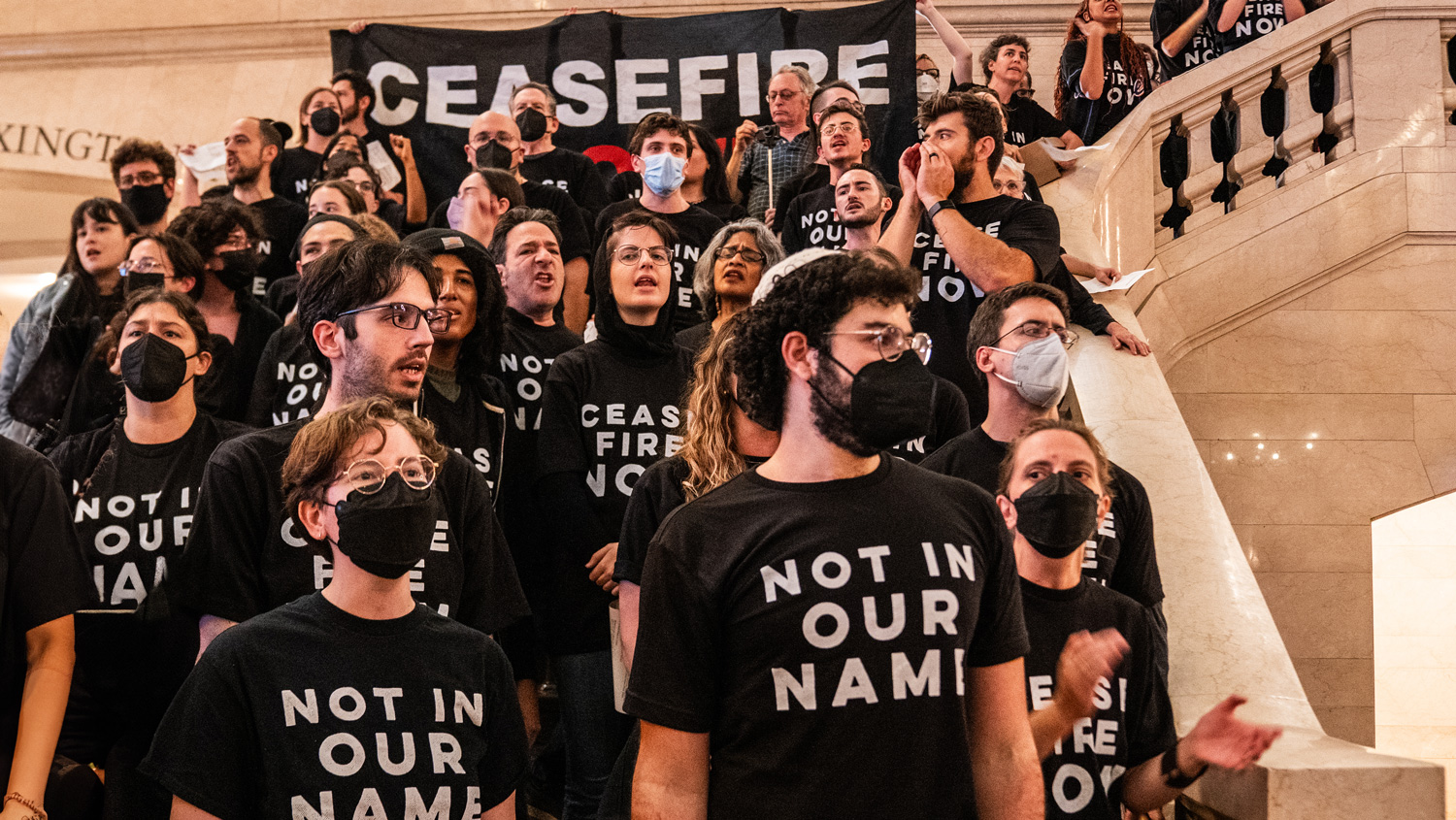
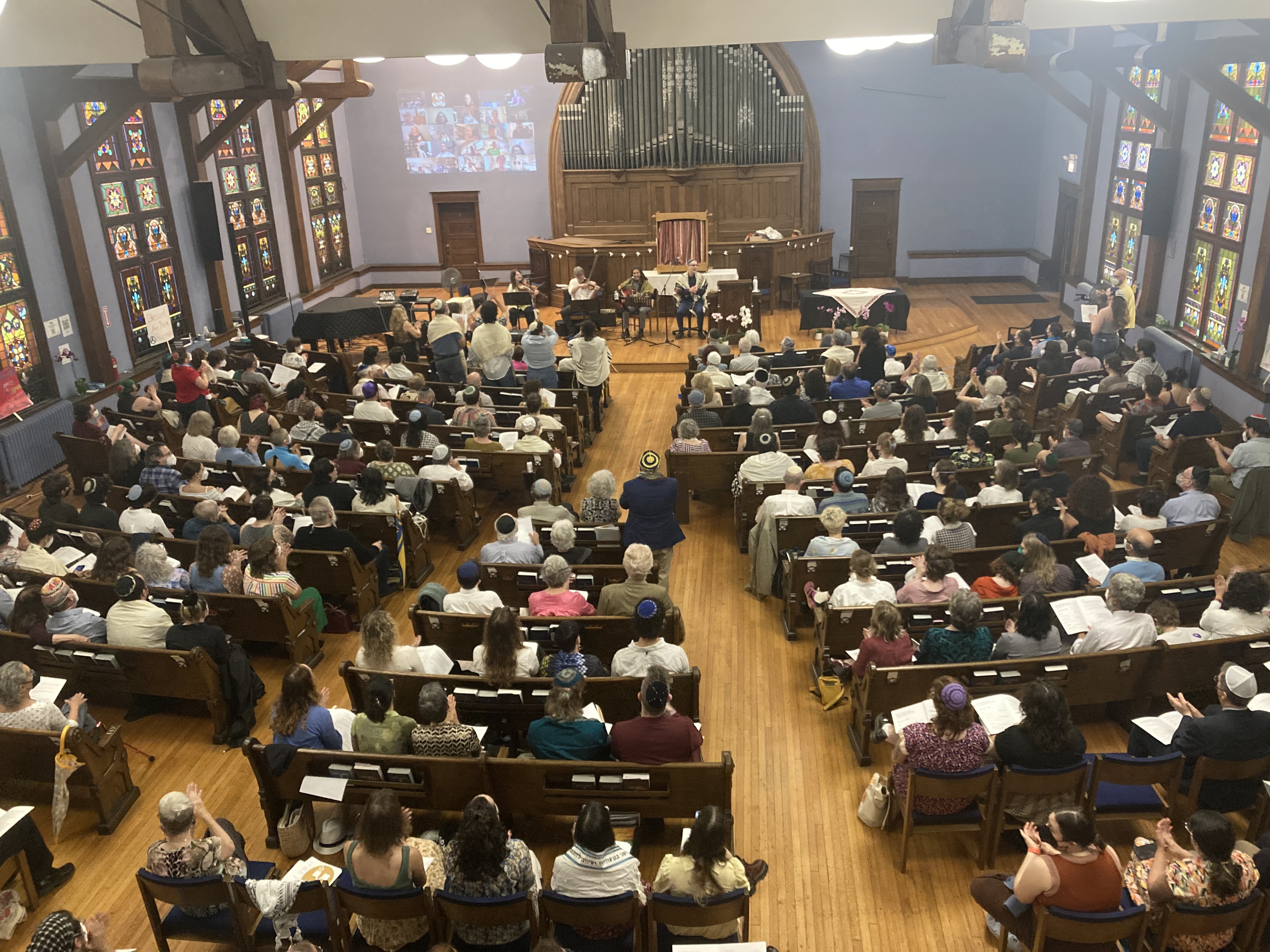
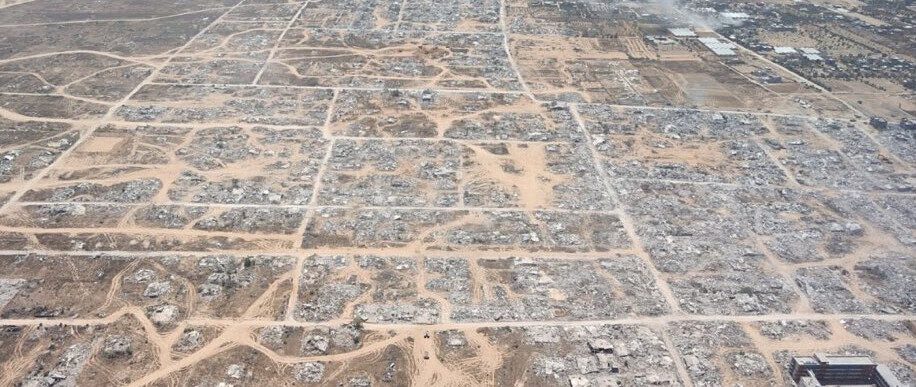
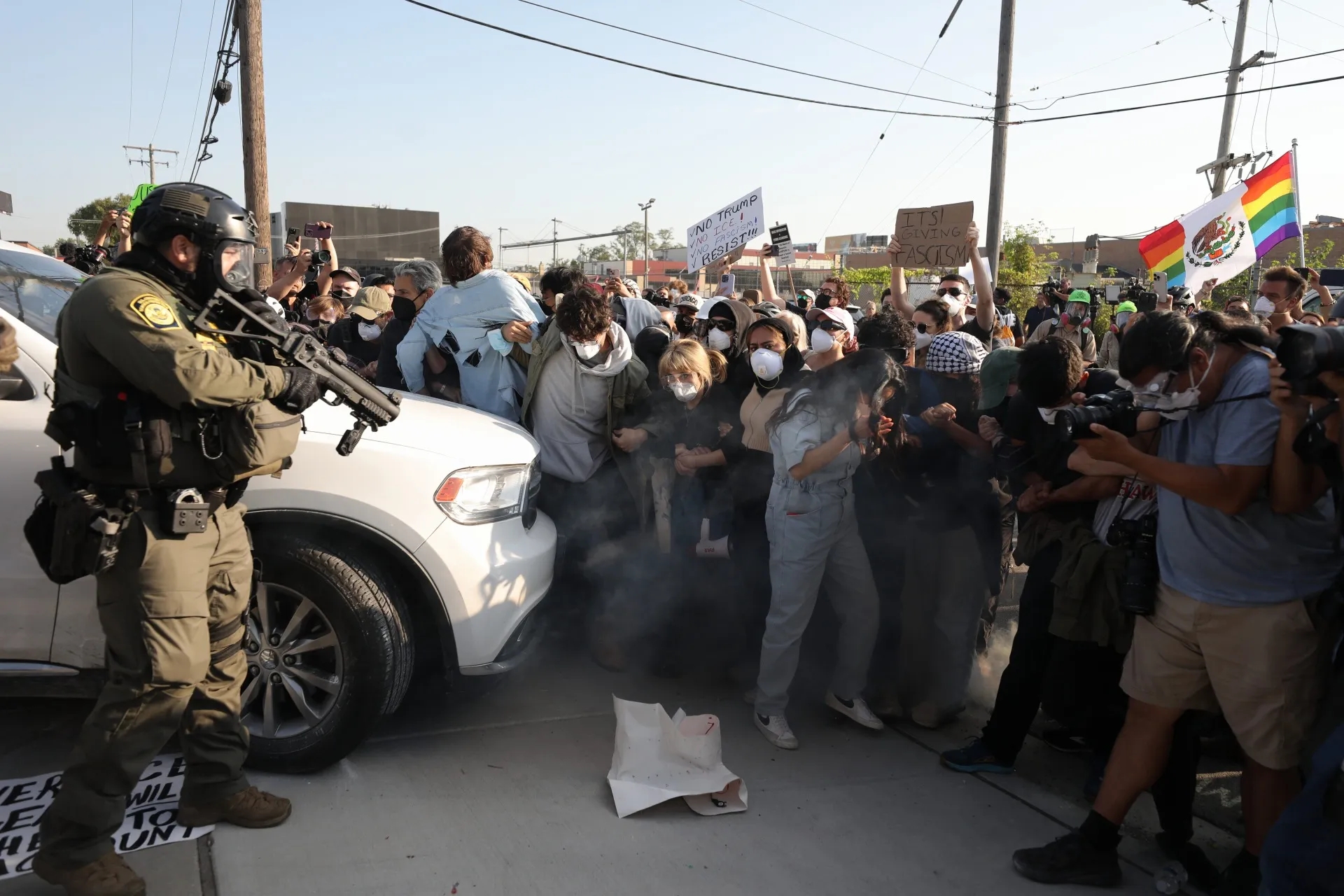
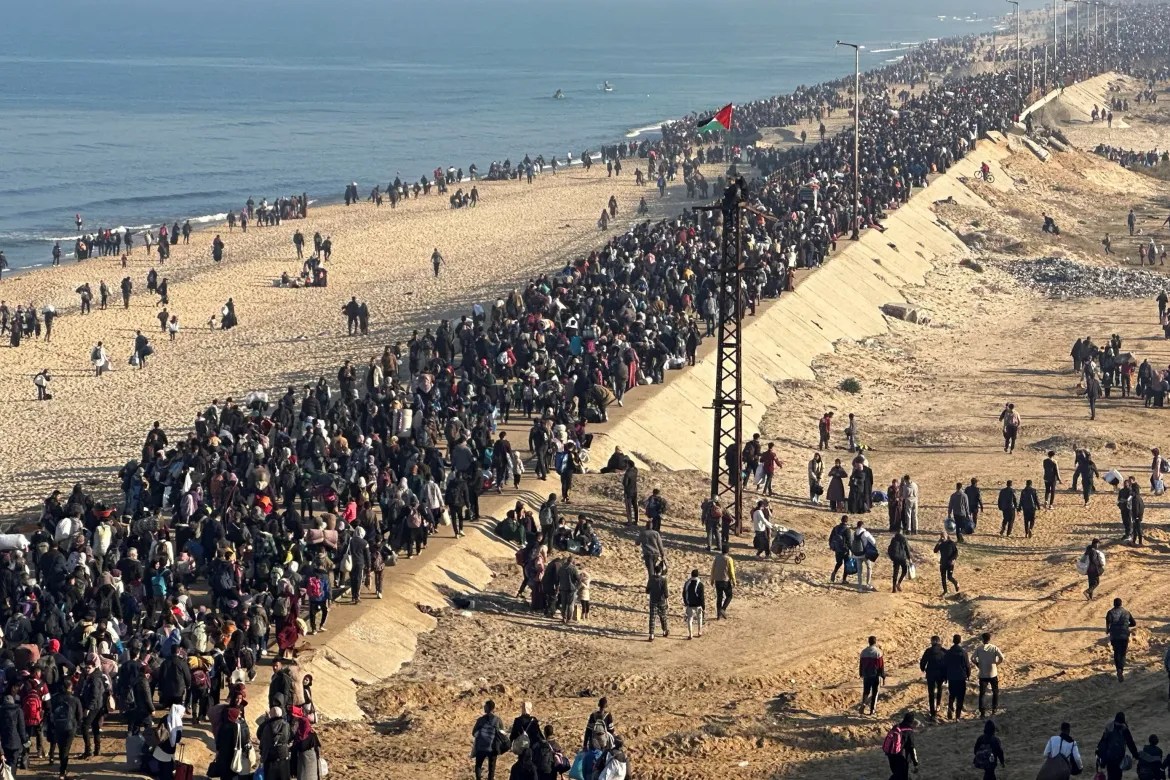
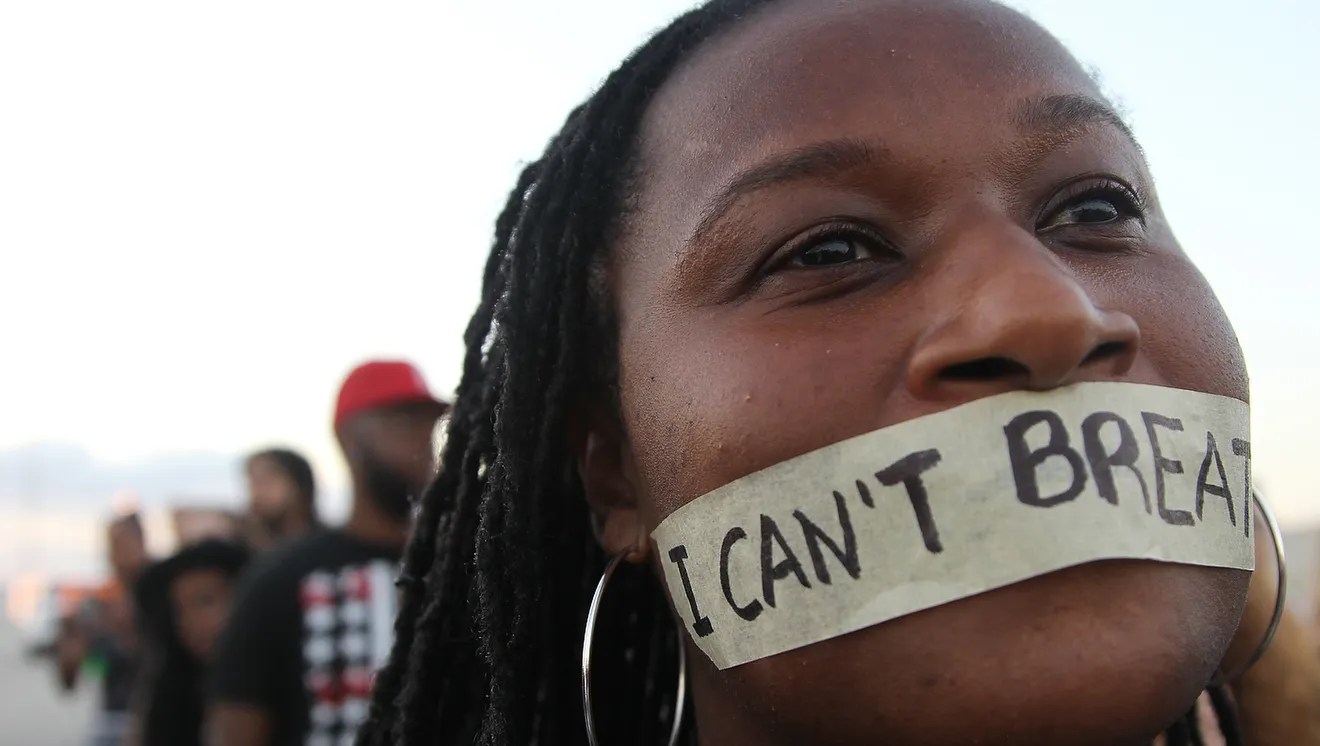
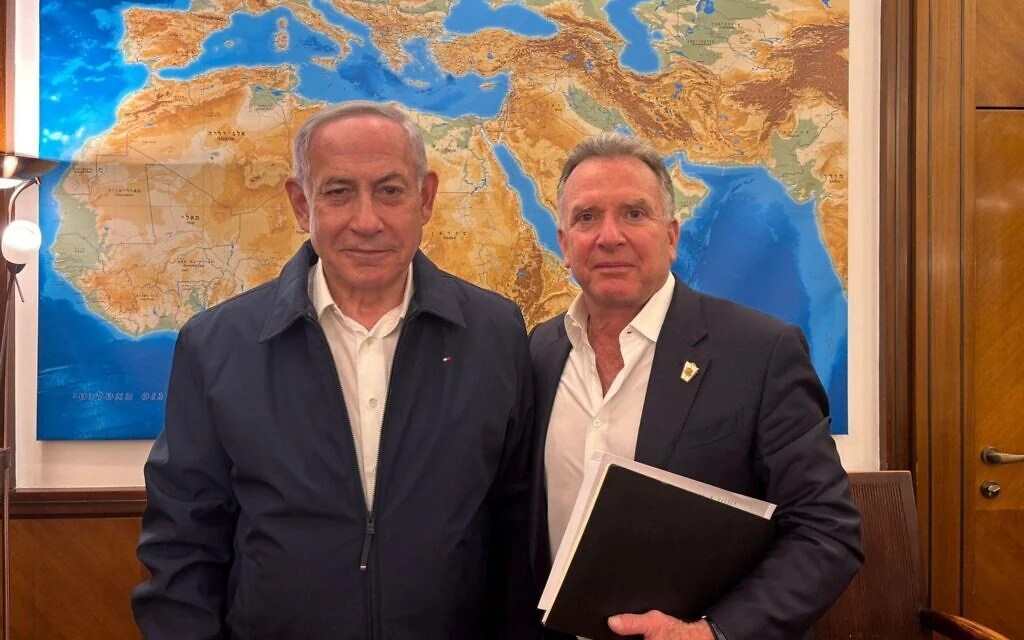
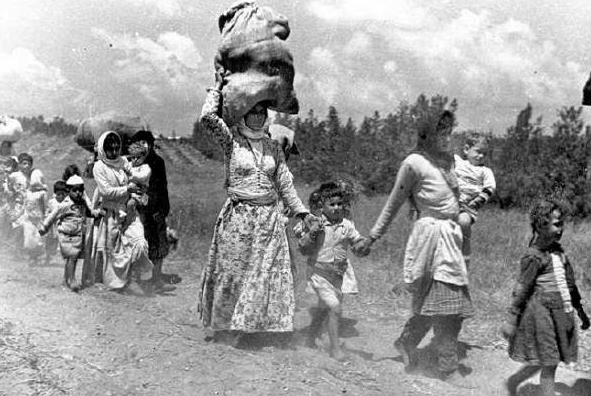

 Shalom Rav