Category Archives: Zionism

Anti-Semitism in Kiev? What is our Response?

photo: World Forum of Russian Jewry

I’ve been thinking all day about a recent article in the Forward that documented the vicious beating of a 25 year old yeshiva student in Kiev – and the Jewish reactions it has engendered.

According to the article, Alexander “Aron” Goncharov left the hostel of Kiev’s Brodsky Synagogue on the second night of Passover and never returned. Yeshiva authorities found him the next day in hospital, barely alive after suffering massive head wounds.  A few days later, Goncharov was flown to a Tel Aviv hospital for emergency treatment and was put in a medically induced coma. When he awoke one week later, he said that his attackers had yelled “Yid” as they beat him.

Not surprisingly, the Israeli establishment was quick to make political hay out of the incident:

Israel’s chief rabbi Yona Metzger visited Goncharov on Holocaust Remembrance Day, underlining his new status as a symbol of contemporary anti-Semitism. Goncharov told Metzger that he hoped to immigrate to Israel, calling it “the safest place for Jews.”

What I found interesting, however, was reaction of many in Kiev’s Jewish community itself. While some attributed it to anti-Semitism, others flatly denied it:

“It has nothing to do with anti-Semitism,” said Yaakov Dov Bleich, rabbi of Kiev’s Podol Synagogue and one of several rabbis who claim the mantle of chief rabbi of Ukraine. “The fact he was taken to Israel will probably stop any [police] investigation in its tracks.”

I was also struck by this response:

Vyacheslav Likhachev, a researcher focused on racism, said there was little evidence that the attack was anti-Semitic. Likhachev, who has studied anti-Semitism in Ukraine for the Euro-Asian Jewish Congress for 10 years, told the Forward that anti-Semitic incidents have fallen in Ukraine in recent years…

“I don’t want to say there is no Nazi violence in Ukraine,” Likhachev hastened to say. But he said that Africans and Asians suffer much more than Jews. In an article published soon after the attack, Likhachev noted that on the same night Goncharov was injured, an African student was severely beaten. He said that the following week, a court case opened into a “racist pogrom” which resulted in four students from India, Azerbaijan and Turkmenistan being seriously injured.

Likhachev went on to point out that while Ukrainian President Viktor Yanukovych publicly condemned the attack on Goncharov, he “did not deem it necessary to make a statement on these crimes.”

And this for me is the rub: whether or not this was an act of anti-Semitic violence, what should be our response? For me the answer is clear: it is not to let anti-Jewish actions to drive us from our homes. And it is not to insist that Jews will only truly be safe if they retreat into a nation-state ghetto of their own making.

Rather, we must understand Jew-hatred as no different from any other form of prejudice.  And if we do agree that this is the case, then it would behoove us to find common cause with all minorities targeted with racism.

Rabbi Brian Walt Imagines a Judaism Without Zionism

My dear friend and colleague Rabbi Brian Walt just posted a transcript of his talk, “Affirming a Judaism and Jewish Identity Without Zionism” – a breathtaking piece that deserves the widest possible audience. I don’t know exactly how describe it except to say it’s at once an intensely personal confession, spiritual autobiography, political treatise and most of all, an anguished cri de coeur.

I finally had to admit to myself what I had known for a long time but was too scared to acknowledge: political Zionism, at its core, is a discriminatory ethno-nationalism that privileges the rights of Jews over non-Jews. As such political Zionism violates everything I believe about Judaism. While there was desperate need in the 1940s to provide a safe haven for Jews, and this need won over most of the Jewish world and the Western world to support the Zionist movement, the Holocaust can in in no way justify or excuse the systemic racism that was and remains an integral part of Zionism.

In the past I believed that the discrimination I saw – the demolished homes, the uprooted trees, the stolen land – were an aberration of the Zionist vision. I came to understand that all of these were not mistakes nor a blemishes on a dream – they were all the logical outcome of Zionism.

As a Jew, I believe in the inherent dignity of every human being. As a Jew, I believe that justice is the core commandment of our tradition. As a Jew, I believe that we are commanded to be advocates for the poor, the oppressed, the marginalized. Zionism and the daily reality in Israel violated each of these core values. And I could no longer be a Zionist. I will always be a person with deep and profound connection to Israel and my friends and family there, but I was no longer a Zionist.

I’m sure many readers will not agree with Brian’s conclusions. I’m even surer he will be attacked viciously by many for such “apostasy.”  As for me, I salute the courage it took for him to venture out onto such a precarious limb by sharing his thoughts.

Whatever your reactions, I hope you will be open to the challenge he lays before us.

Chatting Up Beinart’s Book on “Beyond the Pale”

I recently had the pleasure of being interviewed on WBAI radio’s “Beyond the Pale” to discuss Peter Beinart’s (much-discussed) new book “The Crisis of Zionism” with hosts Lizzy Ratner and Adam Horowitz.

Here’s a description of the program:

We spend the hour discussing Peter Beinart’s controversial and much-discussed new book about the struggle at the heart of contemporary zionism: the occupation of the West Bank and Gaza. We begin with a lengthy interview with Beinart himself, who argues that the only way to save Zionism is to end the Occupation and recommit to the ideals of “democratic” Israel. From there we head to Israel-Palestine for a fascinating discussion with Abir Kopty, a human rights activist and Palestinian citizen of Israel, who tells of the ugly discrimination faced by Palestinians within the Jewish state and questions the notion that a “democratic” Israel ever has or ever can exist. Finally, we conclude with an interview with Rabbi Brant Rosen, a Reconstructionist rabbi and Palestinian solidarity activist, who hails The Crisis of Zionism as a passionate effort that came twenty years too late.

Click here to give it a listen.

Moral Courage from the General’s Son

Please, please take 30 minutes of your time to watch this presentation by Israeli peace activist, Miko Peled, author of the recently published book, “The General’s Son.”

Among other things, Peled’s ideas and convictions carry a profound sense of moral authority because he comes with impeccable Zionist credentials. His grandfather, Avraham Katznelson, was a prominent Zionist leader and signer of the Israeli Declaration of Independence. His father Matti Peled was a major Israeli military leader who fought in the 1948 War of Independence and was an Aluf (“Major-General”) during the 1967 Six-Day War. He later became a scholar of Arabic literature, a leftist politician, and a prominent Israeli advocate of peace talks with the PLO.

Miko is following in his father’s footsteps in more ways than one. In reading his book, it is so clear to me that he is an Israeli through and through and very much a product of his family’s remarkable history. At the same time, he has carried his father’s work of moral witness firmly into the 21st century.

In the video above, he addresses what he considers the fundamental myths of Israeli society: the “Land Without a People for a People Without a Land” myth of 1948, the “War of Survival” myth of 1967, and the myth of “Israeli democracy.” He also speaks eloquently about the moral outrage of the war in Gaza and the issue of Palestinian terror.  (Tragically, Peled’s family has first-hand experience with the latter subject: his niece Smadar was killed by a Palestinian suicide bomber in Jerusalem in 1997).

Please watch the clip and send the link on. Moral heroes such as Miko Peled deserve the widest possible audience.

PS: I’m thrilled to be able to say that the publisher of “The General’s Son,” Just World Books, will be soon publishing my book – a curated anthology of “Shalom Rav” posts and comments from 2008-2010.  Much more on this soon – stay tuned!

Biblical Myths, Cultural Boundaries and Political Realities: Rachel Havrelock’s Important New Book

I don’t usually review books while I’m reading them, but I’m definitely making an exception in this case.

I’m currently enthralled by and savoring “River Jordan: The Mythology of a Dividing Line,” an amazing new book by by Rachel Havrelock of the University of Illinois at Chicago. Havrelock, an associate professor of Jewish studies and English at UIC is a particularly gifted scholar of the Hebrew Bible, its historical interpretation and contemporary cultural/political relevance. I don’t think I’ve ever read a book that so skillfully maneuvers through the terrain of Biblical scholarship, cultural anthropology, modern history and contemporary politics.

In “River Jordan,” Havrelock investigates what she identifies as five essential “national myths” in the Hebrew Bible and discusses their history, their implications and their uses. Her ideas will certainly surprise those who have internalized more conventional assumptions about Biblical national mythology – and particular the Biblical myths that have been utilized by modern Zionism.  All of this, needless to say, has very real – and profoundly important – implications for envisioning a viable future for contemporary Israel/Palestine.

For an introduction to Havrelock’s work, I strongly recommend watching her presentation in the video interview above.

An excerpt:

There are two maps that have really impacted political life and one of these is the idea from the book of Deuteronomy and related sources of the expansionist idea, of conquest and expelling indigenous others. The other idea, the kind of Priestly idea of a discrete land that ends at the Jordan river, these have participated in a prominent way in modern political thought.

But there are other maps there – and the ones that I talk about in the book, that I try to make available also for political use, are on the one hand are this idea of the Northern Kingdom of Israel where boundaries aren’t fixed lines – they’re open, fluid frontiers and people cross them, they go in and out… But there also is a very potent geographic tradition in the book of Joshua.  In chapters 12 through 21 there are all of these regional maps or “boundary lists” if you will, and they talk about the tribes of Israel ultimately settling and living and they concede to the fact that Israel under Joshua did not expel everyone or exterminate them but rather that they lived alongside them.

And so we see in these traditions in the book of Joshua the coexistence of overlapping claims, the simultaneity of different identities and different peoples and we also really get to a regional model. In chapter 15 of the book of Joshua, there’s even a verse that says “until today, the tribe of Judah and the Jebusites live in Jerusalem.” Jerusalem is divided between them.  So there, right in the Bible, is the idea of a shared Jerusalem which really is much closer to the reality of contemporary Jerusalem – and it has Biblical precedent.

So I would say to those who say wait, Jerusalem must be Judaicized, Palestinians must be run out of their neighborhoods – and the idea that this has to be done in the name of King David, I would tell them to look closer at the text and see how these traditions of coexistence have as much root in the Bible as the military traditions that inspired the early movement and the wars in many ways.

Truthout has also recently published this extended written interview as well.  If all this whets your appetite for more, it’s time to check out her book.  Highly, highly recommended.

Moment of Truth for Liberal Zionism

For the last ten plus years, advocates of a two-state solution in Israel/Palestine have been warning that the “window of opportunity” for a two-state solution is closing fast.

Here’s Jordan’s King Abdullah II using the image in a 2005 speech:

Israelis and Palestinians must take advantage of a “small window of opportunity” for peacemaking, he warned. “If we don’t do it, I think the Middle East will be doomed, unfortunately, to many more decades of violence.”

From a 2007 Boston Globe report:

Secretary of State Condoleezza Rice said yesterday that a “two-state solution” in the Middle East is in jeopardy and described a narrow window of opportunity to push Israel and the Palestinians toward peace.

J Street director Jeremy Ben-Ami, writing in a 2008 Forward op-ed:

The window is closing on a two-state solution, and Israel’s prospects for a second, safer 60 years grow are growing ever dimmer.

And as recently as two weeks ago, Ben-Ami used a different metaphor to underscore the urgency of the latest “moment:”

If this round of talks breaks down yet again – and you’ll be hard-pressed to find a single observer who’ll argue that they won’t – then Israel, like the boater on the river, can briefly revel in having avoided the risk of heading to shore.

But bear in mind that “sitting this one out” isn’t an option. The waterfall is still dead ahead.

As someone who’s invoked the “closing window” more than once myself over the years, I’m quite familiar with this pedagogy. Time is running out for a viable negotiated two-state agreement between Israelis and Palestinians – and thus the future of a Jewish and democratic state. The status quo – namely unrestricted Israeli settlement of the West Bank, coupled with an ever-increasing Palestinian birth rate – simply cannot be sustained.

At a certain point, however, I think it’s fair to pose the challenge: how many times can you repeatedly warn of a last chance before the notion is rendered devoid of all meaning? How long can advocates of a two-state solution invoke the urgency of a fleeting opportunity before admitting that this solution is simply no longer a realistic option any more?

To be sure, with each passing day, the warning of a last chance opportunity appears increasingly toothless. The latest “window of opportunity” occurred earlier this month when it was reported that Israeli Prime Minister Bibi Netanyahu was “mulling gestures to Palestinians to keep the peace talks going.” Barely a week later, we learned that Israeli officials had formally informed the PA of its position that West Bank settlements “must be a part of the Israeli State.”

Such a position, of course, makes a complete mockery of any suggestion of a viable, contiguous Palestinian state. It lays bare the truth that Israel is not really interested in two actual states, but merely the formalization of an inherently inequitable status quo.

The political realities here are stark and undeniable. Israel’s settlement of the West Bank continues with impunity and the US continues to provide its “closest ally” with all the diplomatic cover it needs to do so. Politically speaking, it is no longer possible to invoke windows of opportunity with a straight face. Perhaps the real question before us is not “how many times have we missed these opportunities?” but rather, “did they ever really exist at all?”

So what happens now? It’s reasonable to assume that this paralyzed, inequitable status quo will continue apace into the indeterminate future. Israel will continue to create facts on the West Bank with the tacit permission of the US, creating a conditions that no Palestinian leader could possibly be expected to accept.

Under such circumstances, it is equally reasonable to expect the reality for Palestinians on the ground to grow increasingly oppressive and dire.  As this occurs, their plight and their cause will be more difficult for the world to ignore. Governments, individuals and institutions will increasingly rally to Palestinian requests for support, most prominently the Palestinian civil society call for Boycott, Divestment and Sanctions against Israel.

In turn, Israel’s actions will be increasingly more difficult for its supporters to defend.  As the status quo is allowed to languish, the state of Israel will become further and further isolated from the rest of the world community and more pressure will be brought to bear upon the political elites to fundamentally change their approach to ending this conflict.

While these are certainly sobering and painful prospects, I don’t think they are exaggerated or far-fetched. On the contrary, I believe the burden of proof is on those who believe the same tired approach to the “peace process” will somehow yield results in the future when it has failed repeatedly in the past.

Once we accept that a division into two states is no longer realistically possible, the calculus is sobering, to put it mildly: we will be forced to choose between a patently undemocratic apartheid Jewish state, in which a minority rules over a majority or a civil democracy in which all citizens have equal rights under the law.

For many liberal Zionists, this unbearably painful decision will represent a profound moment of truth. If forced to choose, which will it be? A Jewish state that parcels out its citizens’ rights according to their ethnicity – or a democratic state in which equal rights are enjoyed by all its citizens?

I truly believe this is more than an academic question.  Perhaps it’s time to stop talking about mythic “windows of opportunity” and open a new discussion: what will it take for us to admit that it is finally closed? And what will our options be then?

“Rabbi Outcast:” Important New Book on Rabbi Elmer Berger

Recently finished Jack Ross’ fine biography, “Rabbi Outcast: Elmer Berger and American Jewish Anti-Zionism.” Highly recommended, especially for those unaware of the American Jewish community’s complex historical relationship to Zionism and the Zionist movement.

Rabbi Elmer Berger is not a commonly known figure in American Jewish history, but as the Executive Director of the American Council for Judaism, he played an important role in promoting alternatives to political Jewish nationalism from before World War II through and after the 1967 Six Day War.  Today Zionism – and the Zionist narrative of Jewish history – occupies an indelible place in the American Jewish communal psyche. But not long ago it was a point of lively debate in our community.

Rabbi Berger himself came from a classical Reform mileau that thoroughly rejected Jewish political nationalism on religious grounds. This ethic was made official Reform movement policy when, under the leadership of Rabbi Isaac Mayer Wise, Reform rabbis passed the 1885 Pittsburgh Platform which declared, among other things:

We consider ourselves no longer a nation, but a religious community, and therefore, expect neither a return to Palestine, nor a sacrificial worship under the sons of Aaron, nor the restoration of any laws concerning the Jewish state.

Even for those familiar with classical Reform’s opposition to Zionism, it is startling to read that anti-Zionism was actually fairly widespread throughout American Jewish communal life at large. I had not realized, for example, that the American Jewish Committee – today among the Jewish community’s leading Israel-advocacy organizations – considered itself “non-Zionist” even after the establishment of the state of Israel in 1948.

I was also rather startled (actually troubled) to learn how deeply the Zionist movement has influenced the evolution of American Jewish communal life. Ross points out, for instance, that the Conference of Presidents of Major Jewish Organizations, considered by many to be the most powerful American Jewish organization today, was originally formed in 1943 as “The Committee on Unity for Palestine” – an effort mobilized specifically to quell dissent over Zionism in the American Jewish community.

Although Zionism would eventually become sine qua non for the Reform movement and the American Jewish community at large, Rabbi Berger’s leadership through the American Council for Judaism continued to provide an important dissenting voice in our community until his death in 1996.  As the the American Jewish community grows increasingly ambivalent to its relationship to Israel and Zionism – and as we witness more and more the sorrows wrought by a Judaism that puts its faith in nation-statism, militarism and land-acquisition, Berger’s vision and leadership feels more relevant than ever. (Jack Ross thoughtfully discusses these implications in depth in his Epilogue.)

Jack packs an enormous amount of material into a relatively short book – and those who are not somewhat versed in the history might find its density challenging. But his book is an important one and is well worth the effort. Click above to hear Jack speaking about his book during a recent appearance at the National Press Club. Pay attention carefully – like his writing style, he often strings his ideas together in something of a mad rush.  But they are critical and pertinent ideas indeed – and deeply deserving of our attention.

Ahmed Moor on the One-State Solution

Last Thursday, Ta’anit Tzedek hosted a fascinating, stimulating conference call with Palestinian-American journalist Ahmed Moor. Moor, who was born in Gaza, has reported from Lebanon and Egypt and is currently a graduate student in public policy at Harvard.  He has been an outspoken advocate of a one-state solution in Israel/Palestine – and during our conversation he elaborated extensively on a subject not commonly countenanced in the American Jewish community.

We recorded the call and will be posting it on our website soon. In the meantime, I’ve transcribed portions of our conversation and have posted them below. Personally speaking, I find Moor’s way of thinking to be fresh and important and I believe these kinds of ideas deserve a fair hearing in our community.

On the notion that Israel must exist in order to safeguard Jewish culture:

First I want to address this idea that a Jewish state has a right to exist because Jewish culture is valuable.  Jewish culture is valuable. Hebrew culture is valuable. It is intrinsic – that’s true whether or not Newt Gingrich thinks it’s invented. But the question of whether culture needs to be mapped on a geographical space in a state environment, I think, is one that is open to discussion.

And so when we think about Jewish life here in America, I don’t know that many people would disagree with me when I say that some of the most vibrant examples of Jewish life are here in America, in the diaspora, amongst non-Jewish people. So right-wing Israelis like to make the argument that where Hitler failed, assimilation is going to succeed. Intermarriage is the biggest threat to the Jewish people, not Iran.

Well, if you believe that Israel is the homeland of the Jewish people and that it’s the only state guarding Jewish culture, well then you are in a sense aligning yourself with those arguments.  It’s illiberal, fundamentally illiberal.  We know from American experience that a multiplicity of cultures can exist alongside one another and engage with one another and strengthen one another and maybe, even yes, impact one another in positive ways.

And when it comes to Palestine and Israel, American Jews say, “Well this is kind of the homeland of the Jewish people, it’s going to preserve Jewish culture for us,” but it’s almost a relationship apt to an amusement park. “I don’t want to live there – I want to experience it for two weeks. I want to take some of the symbols home with me, but I don’t really want to engage with it in the way that I do at home.”

Well, that’s unfair. No matter how much you value Jewish culture, and no matter how much you believe Israel needs to exist for the preservation of Jewish culture, if it’s a museum, which I don’t think it is, you’ve got to realize that your cultural progress is coming at the expense of somebody else’s freedom. And I think that there’s an asymmetry there in what matters.

On the notion that Israel should exist in case another Holocaust should occur – and Israelis’ fears that a one-state solution is just a pretext for “throwing them into the sea:”

I think that first we’ve got to look at the reality today. The status quo is about expelling Palestinians from Jerusalem, their land in the West Bank, and disenfranchising them in greater ways in Israel proper…So the reality is exactly the opposite. The status quo, the two-state solution process, is about pushing the Palestinians not into the sea, but in the other direction.

First I want to address Jewish American fear, and I hear this from a lot of Jewish Americans of a certain age, when they talk about the Holocaust, which is obviously an evil, genocidal but I want to emphasize, a historical act. I had the benefit of speaking with (New York Times columnist) Roger Cohen recently, and we talked about American Jewish life and I asked him whether he feels unsafe in America. And he was unequivocal: “Absolutely not, America is safe for the Jewish people, we’re welcome here, we’re part of the people, we’re part of the cultural fabric. We are America. America is us.”

Do you ever believe as American people that there’s ever going to be something like Kristallnacht or a pogrom targeting the Jewish people in America?  If the answer is yes, well then perhaps it’s time to move to Israel – and that’s what most right-wing Israelis say. If the answer is no, well then you’ve got to realize that you are opting for the preservation of an insurance policy, but the price of that insurance policy is being borne by another people. The Palestinians are paying the cost of a Jewish American insurance policy. There’s that asymmetry again. That doesn’t work. That’s not a moral position to take and it’s unsustainable.

As for Israelis’ fear about whether we seek to ethnically cleanse them, I think there’s again a gap in perceptions of realities. The Israelis are the ones with the guns. The Israelis are the ones with the American support. When the one-state solution is actualized, it’s going to be necessarily through Israeli consent. The idea that the Middle East or Palestine has to be in any way ethnically cleansed of Jewish people is a European action transplanted onto Palestine.

On Israeli historian Gershon Gorenberg’s recent claim that a one-state solution in Israel/Palestine would create civil war à la Lebanon:

Gershon’s fear is related directly to governmental structures – the way in which you structure multi-ethnic, multi-religious societies, or sectarian societies. In Lebanon I think it was structured exactly the wrong way. In Lebanon, whether you’re liberal or you’re somebody who’s more conservative, whether you believe in one policy versus another, the state almost compels you to vote along sectarian lines.

In Lebanon the Speaker of the Parliament has to be a Shia Muslim, the Prime Minister is a Sunni and the President has to be a Maronite Christian. That’s constitutionally true – that’s mandated. And so what that means is that you end up voting – where your vote is impactful and meaningful – is in your sectarian group. The Lebanese demography there is so sensitive – they haven’t had a national census since 1932 or 33, I think.

You have the American case, on the other hand – the structure of this country is along a federal basis. Federalism enabled this country to recover from the wounds of the Civil War and to persist for another 150 – 160 years since the Civil War ended.

It’s important that we think about questions like the ones Gershon is raising, but I don’t think that those questions necessarily stand in the way of a one-state solution. So there are good federal structures, confederal structures even, for dealing with ethnic or religious strife in democracy.

What I’m thinking of specifically is a state with four federal units: the Gaza Strip, Jerusalem is its own district, sort of like Washington DC, central Israel and the Negev and finally the West Bank and the Mediterranean corridor so now you’ve got four districts and Jerusalem. And each of those federal units would be defined geographically and every one of them, with the exception of the Strip, would be made up of minorities either of Jewish people or Palestinian people.

And so in the West Bank federal state you’d have an expression mostly of Palestinian culture. Why? Because 5 out of every 6 people on the West Bank are Palestinians. In the Gaza Strip you could have an expression of Palestinian culture. In the northwestern state there’s a big minority of Palestinian Israelis, but it’s primarily Jewish. I mean we’re talking about the Tel Aviv – Haifa corridor and that would be a majority Hebrew culture state. Same with the Negev.

So you have parity amongst the states because the states are defined geographically and you enable people over time to move for personal preference reasons. Over time your could get a drift across these federal lines, kind of like what happened in the States. You used to define yourself as an American 100 years ago as a South Carolinian or a New Yorker, but today your primary locus of identity is as an American when you deal with the rest of the world. This was the failure of Lebanon – instead of geographically defining the states, the individual community boundaries within Lebanon don’t allow for that drift, so what they’ve ended up with is kind of ossified sectarian structure.

So I don’t think it will be perfect, I don’t it will be easy, but the idea is that you grant people equal rights and give them the freedom to move back and forth across borders. They won’t initially, but they will eventually. That’s been the American experience.

On the political future of the one-state solution:

I heard an Israeli speak recently, an older guy, an activist, and he mentioned the one-state solution is about where he remembers the two-state solution was in the seventies. And so it’s really about changing discourse, changing people’s thought patterns. Lots of people will come into the one-state conversation because they’ve realized the two-state solution is unworkable and that apartheid is just not something they are capable of supporting.  We’ll achieve a critical mass. It’s impossible to predict how or when, but two states isn’t going to work and apartheid isn’t going to work. And so you can arrive at this position by default even if you don’t actually believe it’s the best thing anyway.

On cultural autonomy in one democratic state:

People talk about a unitarian model where it would be just one man/one vote and I think that’s a great model to think about. My biggest concern there would be preservation of cultural autonomy, which I think many people at this stage really, really value in that part of the world. Palestinians don’t want to give up what it means to be a Palestinian and I think Jewish Israelis have developed a Jewish kind of culture. I don’t know whether its an Ashkenazic culture or a Sephardic culture, I don’t know. It’s not for me to decide. But there is an Israeli culture and I think those people want to preserve it. And when American Jewish people talk about Jewish culture in Israel, that’s something they’d like to be capable of accessing. And so I’m concerned that the unitary system may not permit the kind of cultural autonomy that many people would like.

But we’re still in the early stages of imagining what it could look like and the question of how to get there really does hinge on people of good will standing up and saying no to apartheid.

On the Palestinian right of return:

The right of return today for the Palestinians is actually about the right to be able to go back and live in Palestine. Lots of people still remember native villages which no longer exist, so the practicalities of it are difficult to map out.

The right of return for the diaspora is more about, I think, official recognition of the ethnic cleansing of Palestine in 1948 and in the period leading up to May 15 1948. It’s an official apology, reparations where appropriate and possible and just recognition. And I think the Jewish people probably understand this better than anybody. Once a historical injustice has been done to you as a people, recognition matters. Apologies matter. Reparations matter. Even symbolic measures matter a great deal.

When it comes to the practical implementation of the right of return, (Palestinian researcher) Salman Abu-Sitta has done really great work on identifying where refugees could return to.  Eitan Bronstein of Zochrot, an Israeli organization, has also done a lot of great work on the right of return…

Who do I believe will return to Palestine? I think most of us will not. The Palestinians in the diaspora have done pretty well for themselves. Palestinians in Jordan have done pretty well, the ones in Western Europe, in Latin America, in Northern America are doing pretty well. I think you could draw a direct analogy to the Jewish American diaspora. You want to go you want to visit, you want to go and hang out on the beach and go home to where you’re from.

The only missing group of Palestinian refugees who will actually return to Palestine if they have the opportunity are the 300,000 or 400,000 Palestinian refugees who live in Lebanon. Their lot really is very, very poor and the Lebanese state is racist in many ways in the way they interact with Palestinians there – it’s inexcusable, but that’s also the reality. And given the opportunity I think many of them will leave their squalid and impoverished camps and return to Palestine. But everywhere else, I think you’ll get kind of a vibrant interaction with a diaspora community and the country itself, which I think mirrors, in many ways, the Jewish experience.

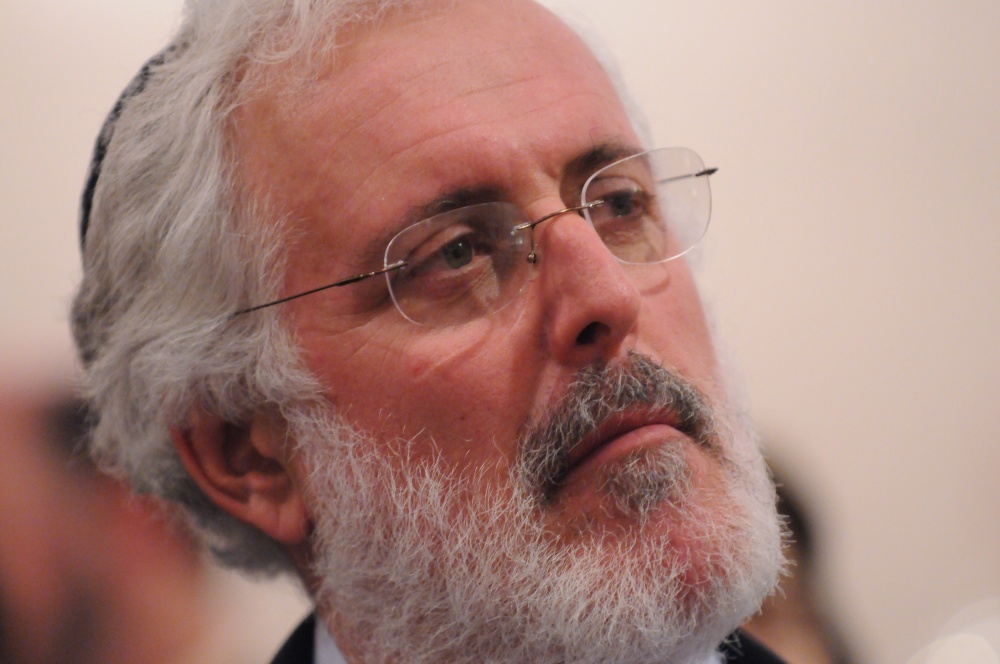
Ta’anit Tzedek Conference Call: Journalist Ahmed Moor on the One State Solution

As the prospects for a viable two-state solution for Israel/Palestine grow more and more unlikely, we are witnessing a tentative but growing discussion of a one-state solution in the Jewish community.

Indeed, this concept has already been raised and advocated by respected Israelis. As far back as  2002 a one state solution was publicly supported by famed political scientist Meron Benenisti. And more recently, Israeli journalist Dimi Reider has pointed out:

In light of the ongoing deadlock in Israeli-Palestinian peace talks, leaders such as U.S. Secretary of State Hillary Clinton and Israeli opposition leader Tzipi Livni have raised the specter of a one-state solution. Their intention, of course, is to scare some sense into Israeli Prime Minister Benjamin Netanyahu and his intransigent coalition partners. But, as this once-taboo idea becomes a legitimate part of political discussion in the region, some Israeli intellectuals are making the case that this is not something to fear, but a path toward a viable resolution to the region’s long-running crisis.

Here in the American Jewish community, however, this sort of discussion is considered to be naive at best and heresy at worst. But as difficult and painful as it might be for us to contemplate, I believe that sooner or later (and probably sooner than later) it is a conversation we will inevitably have to have – regardless of where we might personally stand on the issue.

To this end, I am proud to announce the next conference call sponsored by Ta’anit Tzedek – Jewish Fast for Gaza: “Conceiving of a One-State Solution” with Palestinian-American journalist Ahmed Moor on Thursday, December 15 at 12 noon EST.

Ahmed Moor was born in Gaza and raised in the US, graduated from University of Pennsylvania in 2005 and spent several years as a freelance journalist based in Lebanon and Cairo. His work as been published in numerous publications, including Al Jazeera, Huffington Post, and the Los Angeles Times. He is currently a graduate student of Public Policy at Harvard University.

During our conversation, Moor will share his views on the need and the prospects for one secular democratic state in which Jews and Palestinians live together as equal citizens.  Can we conceive of such a solution and what would such a state look like practically speaking?  What are the political realities that mitigate against it and how could they ever be shifted? What are the prospects that these two peoples could live and govern a state together?

Call Info:

Thursday, December 15 at 12 noon EST
Access Number: 1.800.920.7487
Participant Code: 92247763#

As always, there will be opportunities for questions and answers during the call.

We are looking forward to an informative and respectful conversation. I encourage you to join us.

They are Young, Jewish, Proud: Will We Let Them In?

“How do we reach Jewish young people?” has long been one of the central mantras of the organized Jewish community, as those of us who work as Jewish professionals can surely attest. But while we wring our hands over at the state of the Jewish future, a remarkable new generation of Jews has been knocking insistently at our door.

Case in point: Almost one year ago, five young Jews disrupted the keynote speech by Israeli Prime Minister Benjamin Netanyahu at the Jewish Federation General Assembly in New Orleans. One by one, at five different points during the speech, the activists stood on their chairs, unfurled banners and shouted out in turn:

Young Jews say the settlements delegitimize Israel!
Young Jews say the Occupation delegitimizes Israel!
Young Jews say the siege of Gaza delegitimizes Israel!
Young Jews say the loyalty oath delegitimizes Israel!
Young Jews say silencing dissent delegitimizes Israel!

With each successive interruption the shouts from the crowd grew louder and angrier. As security attempted to safely walk them out, one protester was put in a choke hold by a convention attendee and wrestled to the floor. Another conventioneer grabbed a banner and tore it in half with his teeth.

At the very same moment, “Young, Jewish, Proud” launched its website, featuring the “Young Jewish Declaration” — an astonishing statement of purpose that seemed to come directly from the collective heart, mind and gut of this newly formed youth movement:

We exist. We are everywhere. We speak and love and dream in every language…

We remember how to build our homes, and our holiness, out of time and thin air, and so do not need other people’s land to do so…

We refuse to have our histories distorted or erased, or appropriated by a corporate war machine. We will not call this liberation…

We commit ourselves to peace. We will stand up with honest bodies, to offer honest bread…

We are young Jews, and we get to decide what that means.

Predictably, the Jewish establishment wasted no time in excoriating the protesters. Some chided them condescendingly for their “misguided” behavior. Others angrily criticized them for “aiding the enemy.”

As for me, I watched these events unfold with genuine hope for our Jewish future.

After all, weren’t these young people claiming and proclaiming their Jewishness in classic Jewish fashion? Like young Abraham destroying his father’s icons, they stood up to the hypocrisy and corruption of their elders. In the heart of the the largest gathering of American Jewish leaders, these proud young Jews called out their community on its most sacred of sacred cows: namely, the unquestioning, unconditional support of the state of Israel.

In all honesty, I can’t say I’ve ever witnessed as authentic an act of young Jewish self-expression as I did that afternoon at the New Orleans General Assembly.

Yes, as a professional Jew, I’ve participated in the “how can we inspire young people?” conversation more times than I care to admit. I’ve watched a myriad of Jewish community-sponsored initiatives come and go. And invariably, all of them focused on what we believed was best for Jewish young people.

But while the Jewish establishment has been excellent at creating and funding expensive projects, we seem to be chronically incapable of actually listening. We love to tell young people how we think they should express their Jewishness, but rarely do we stop long enough to really, truly learn what drives and inspires them.

Taglit-Birthright Israel, the Jewish establishment’s signature youth initiative, is the most obvious case in point. For well over a decade, we have invested literally hundreds of millions of dollars in providing free, all-expense-paid trips to Israel. The essential goal of these trips, as Birthright’s Marketing Director puts it plainly, is to make Israel “an integral part of every Jew’s identity.”

It’s well known that Birthright was born in response to growing reports that American Jewish young people were becoming increasingly disconnected to the state of Israel. But by rushing to address this issue through a massive multimillion dollar community initiative, we successfully avoided asking the deeper questions.

Could it be that we were afraid to know the answers?

Could it be that young people are becoming disenchanted with Israel because they are becoming increasingly troubled by its treatment of Palestinians? Could it be that growing numbers of young Jews regard Israel more as an oppressive colonial project than a source of Jewish pride? Could it be that in the 21st century world, the identities of young Jews are tied less to Jewish ethno-nationalism than to a more universal vision of liberation?

“Young, Jewish, Proud” is decidedly not the product of a Jewish communal initiative. On the contrary it is a grass-roots, self-organized effort of young Jews who seek to express their Jewish identity in a time-honored Jewish manner: by speaking truth to power, by advocating unabashedly for peace, justice and liberation, by standing up to oppression, racism and persecution in Israel/Palestine and throughout the world. They simply aren’t buying what the Jewish establishment has been selling them. They are finding their own voices.

We are young Jews, and we get to decide what that means…

I am well aware that it is not easy for a Jewish community so thoroughly focused on Zionism to hear it challenged in such a fundamental way. But aren’t these young Jews doing precisely what they were raised to do?  They are taking a good, educated look around them, thinking critically about what they see and are taking a stand for what they believe in as Jews.  Are we really prepared to disown them because their conclusions make us uncomfortable?

In the Torah portion for the first day of Rosh Hashanah, we read that when God saves the life of young Ishmael in the wilderness, “God heeded the cries of the boy where he is” (Genesis 21:17). In other words, God was able to find Ishmael by truly listening to him. Not where God wanted him to be or where God thought he should be, but where he was.

This New Year, I fervently hope our community can do the same with our newest adult generation. These young people certainly have every reason to be disenchanted with the organized Jewish community, but for some reason they refuse to go away. They’re here, and they’re knocking loudly at our door.

Do we, the gatekeepers of the Jewish community, have the vision, the faith and the courage to open it up and let them in?