Tony Judt, May His Memory Be for a Blessing

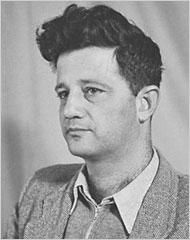
When Tony Judt passed away from ALS on August 6, the world lost a brilliant historian and a brave, unflinching observer of current political events. In the Jewish community, Judt was famous (some undoubtedly would say infamous) for his views on the Israel/Palestine conflict; particularly for a piece he wrote for the New York Review of Books in 2003:

The problem with Israel, in short, is not—as is sometimes suggested—that it is a European “enclave” in the Arab world; but rather that it arrived too late. It has imported a characteristically late-nineteenth-century separatist project into a world that has moved on, a world of individual rights, open frontiers, and international law. The very idea of a “Jewish state”—a state in which Jews and the Jewish religion have exclusive privileges from which non-Jewish citizens are forever excluded—is rooted in another time and place. Israel, in short, is an anachronism.

Judt’s historical/political analysis of Zionism, needless to say, ensured that he would become persona non grata in many Jewish circles. But whether or not you agreed with his conclusions, I believe he courageously raised crucial, if painful questions that we continue to confront today – and whose relevance, I predict, will become only more critical in the coming years.

One of his final editorials on the subject was this trenchant analysis of the recent Gaza flotilla tragedy. Click above to get a poignant glimpse of the man himself. May his memory be for a blessing.

Facing the Silence: On Reading Khirbet Khizeh

When I was twenty or so and living in Israel, I made a valiant attempt to plow my way through the classic 1949 Hebrew novella, Khirbet Khizeh by S. Yizhar. Alas, there was only so much a young American college student could really understand, but I persevered because I was just so eager to experience this seemingly radical counter-cultural work of Israeli literature.

Khirbet Khizeh, which painfully portrays an Israeli unit’s expulsion of Palestinian villagers from their homes in 1948, has long been considered a seminal work in modern Israeli literature, fusing stream of consciousness style Hebrew with poetic Biblical literary allusions.  Even more remarkable is the fact that despite its profoundly controversial subject matter, Khirbet Khizeh has generally been accepted as a classic by Israelis. Indeed, the book has long been included in Israeli high school curriculum and the the author himself went on to enjoy a long and distinguished career as a member of the Knesset.

So imagine my pleasant surprise to learn that almost thirty years later, the great Khirbet Khizeh has finally been published in English translation by a boutique press called Ibis Editions. And I must say that having just now finished it, I am all the more moved by its literary power and moral urgency.

At the same time, however, reading it today left me with a baffling set of resonances. How could a work of such abject moral outrage be widely considered as a classic in Israel? How could a society embrace a work such as this, and be so unwilling to face its essential message? (In Yizhar’s words: “We came, we shot, we burned, we blew up, expelled, drove out and sent into exile.”)

Witness the devastating conclusion of the novella, which is told from the point of view of a morally conflicted Israeli soldier who has just participated in the expulsion of Arab villagers from the fictional village of Khirbet Khizeh:

When they reached their place of exile night would already have fallen. Their clothing would be their only bedding. Fine. What could be done? The third truck began to rumble. Had some astrologer already seen in the conjuncture of the stars in the sky over the village or in some horoscope how things would turn out here? And what indifference there was in us, as if we had never been anything but peddlers of exile, and our hearts had coarsened in the process. But this was not the point either.

And how does it end?

The valley was calm. Somebody started talking about supper. Far away on this dirt track, close to what appeared to be its end, a distant, darkening swaying truck, in the manner of heavy trucks laden with fruit or produce or something, was gradually being swallowed up. Tomorrow, both painful humiliation and helpless rage would turn into a kind of casual irritation, shameful, but fading fast. Everything was suddenly so open. So big, so very big. And we had all become so small and insignificant. Soon a time would arise in the world when it would be good to come home from work, to return exhausted, to meet someone, or walk alone, to walk saying nothing. All around silence was falling, and very soon it would close upon the last circle. And when silence had closed in on everything and no man disturbed the stillness, which yearned noiselessly for what was beyond stillness – then God would come forth and descend to roam the valley, and see whether all was according to the cry that had reached him.

I am particularly taken by Yizhar’s reference to silence – and how he subverts it with a final allusion to the anguished cries of Sodom and Gomorrah. Yizhar, who himself fought in the 1948 war as an intelligence officer, was already able to articulate a deep dark silence descending upon the land in the aftermath of those deep, dark days. Now over sixty years after the terrible events recorded in this novella, it seems that this silence has only deepened all the more.

So how could such a devastating book be considered to be an Israeli classic by Israelis?  By any other yardstick, one might assume that such a work would be considered something of an underground novel. In a recent NY Times feature, Israeli author A.B. Yehoshua suggested that “there was no scandal” when it was written “because the society felt itself so just that it could absorb a critic.”

I interpret his comment to mean that as the victorious party, Israel could certainly allow itself a bit of angst over how its victory was achieved. In this regard, you could well draw a straight line from Khirbet Khizeh to the deep moral challenges represented in works of contemporary Israeli writers such as Amos Oz or David Grossman, or films such as Waltz with Bashir or the just-released Lebanon.

In fact, the Hebrew term “shoot and cry” (“yorim u’vochim“) was actually coined in the wake of the 1982 Lebanon war to describe this unique form of Israeli cultural angst, as if these powerful expressions of moral accounting could somehow erase the guilt of what Israel had perpetrated – and continues to perpetrate – against Palestinians.

And so in the end, despite all of the genuinely anguished soul-searching, we are still left with the terrifying silence. But ironically enough, whatever the statement Yizhar was intending to make with Khirbet Khizeh, whatever its literary/cultural legacy, I find that it still cries out with unbearable intensity.

(Click here to hear a very interesting and informative interview with co-translator Yaacob Dweck.)

Israel Levels a Bedouin Village – Add Your Voice of Protest

On July 27, an Israeli police force of 1,500 evicted over 300 Bedouin Israeli citizens – mostly children – from the village of Al-Arakib in the Negev, leaving them homeless, expelled from their land, and bereft of their possessions. Bulldozers from the Israel Lands Administration then proceeded to demolish their homes, sheep pens, fruit orchards and olive tree groves, so that the Jewish National Fund can plant a forest on their land.

You can read more about this shameful episode here in the LA Times and here in the BBC News. I also encourage you to read the reactions of the New Israel Fund and Adalah – The Legal Center for Arab Minority rights in Israel.

From an Adalah press release:

Residents of the Arab Bedouin unrecognized village al-Araqib in the Naqab (Negev) in the south of Israel were woken up at dawn on 27 July 2010 to find themselves surrounded by police officers, some of them on horseback. The police declared the village to be a “closed area”, and warned residents that any attempt to resist their orders would lead to their forced evacuation. The police ordered the residents to leave their homes in two minutes. The residents tried to take their belongings from their houses, but the police did not wait and began to immediately demolish their homes. No less than 1,300 police officers, accompanied by the Green Patrol, a unit within the Nature Reserves and Parks Authority that often harass the Arab Bedouin, took part in the brutal destruction of the village. Throughout the demolition operation, a helicopter flew above the village. When the demolition ended, all 45 houses of the houses were razed to the ground and its 250 residents – men, women, elderly people and children, were left without a roof over their heads and all of their belongings confiscated.

In violation of law, most police officers who took part in the raid covered their faces and did not wear identity tags. They had weapons, tear gas, truncheons and other arms. Apparently in this way, the police officers sought to prevent the residents from identifying them. T-he residents did not respond violently to the destruction.

One of the most shocking aspects of the raid was that a bus filled with dozens of radical right-wing Jewish youth accompanied the police to the village. The youth began to tease the Arab Bedouin residents, who are citizens of Israel and who just lost their homes, and applauded when the police officers demolished the homes. This conduct amounts to vigilantism, a punishment outside of the law.

During the operation of destruction, the police confiscated all personal possessions of the residents from their homes including refrigerators, ovens, closets, bedroom and dining room furniture, textiles, carpets, crafts, etc. They also took other property from the area surrounding the houses such as electricity generators, plows, flour bags and the like.

Representatives of the Tax Authority also accompanied the police and seized property of residents in debt to the tax authorities. This confiscation was undertaken without prior warning or demand from the residents to pay their debt, and therefore, it too was illegal. Residents were required to pay NIS 22,500 (almost US $6,000) to retrieve their property.

One final encouragement if you are a member of the Jewish community: while this action is clearly a violation of international human rights, it is also of critical importance to Jews, who are implicated in all actions taken by the Jewish state. Please sign and pass on this petition which is being disseminated by the Jewish Alliance for Change. The campaign hopes to add American Jewish voices to a growing Israeli petition, which will be hand delivered to the Prime Minister’s Office in Jerusalem on August 10.

Big News: Jews Find a Way to Talk Civilly About Israel!

The latest issue of the Chicago Jewish News contains a wonderful cover story about my congregation and how we’ve been working to find a way to talk openly, honestly and civilly together about Israel. (The eye-grabbing headline: “HELL FREEZES OVER, CUBS WIN WORLD SERIES, JEWS FIND WAY TO DISAGREE AGREEABLY.”)

Here’s an excerpt:

“I have very strong feelings about Israel and I express them pretty openly. My activism is very public,” (Rabbi Rosen) says. “That is my own truth as a Jew and a rabbi, and it is very important to me to be true to my private personal conscience.”

But as the rabbi of JRC, “I also feel strongly that my job is to create the kind of environment where people, even those who don’t agree with me — and there are many — feel welcome to express those views and have those views heard. I respect the diversity of opinion at JRC,” he says. “We may be (perceived as) left-leaning, but on the subject of Israel, we are more diverse than people think.”

The largest group of congregants, he says, fall somewhere in the middle of a continuum, with some on both ends of the spectrum.

With these thoughts in mind, Rosen says, he and a number of congregants “decided together that rather than raise all this dust, it would be a great opportunity to use these emotions in some kind of constructive way.”

What else can I say other than that I’m enormously proud of my congregation?!

Seek Interfaith Justice This Labor Day Weekend!

Interfaith Worker Justice has just launched its annual “Labor in the Pulpits/on the Bimah/in the Minbar” initiative, encouraging houses of worship around the country to dedicate Labor Day weekend (September 3-5) to worker justice awareness.

You can access the resources and materials by clicking here. I encourage you to share them with your Priest, Rabbi, Pastor or Imam, as the case may be. (I contributed a piece to the Jewish resources – click here to download the pdf.)

Confronting Immigration Policy in Israel and America

The LA Times reports:

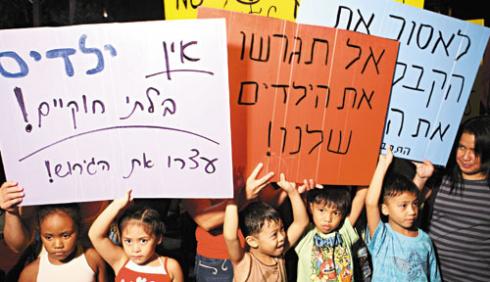
Israel moved Sunday to deport the offspring of hundreds of migrant workers, mostly small children who were born in Israel, speak Hebrew and have never seen their parents’ native countries.

Prime Minister Benjamin Netanyahu said the new policy was intended to stem a flood of illegal immigrants, whose children receive state-funded education and healthcare benefits, and to defend Israel’s Jewish identity.

“On the one hand, this problem is a humanitarian problem,” Netanyahu said during a meeting Sunday of the Cabinet, which had debated the move for nearly a year. “We all feel and understand the hearts of children. But on the other hand, there are Zionist considerations and ensuring the Jewish character of the state of Israel.”

My two cents:

In many ways, this story is reminiscent of the immigration policy debate here in the US. (I encourage you to learn about and support “The Dream Act” which has been considered by Congress in one form or another since 2001 but shamefully, has yet to be signed into law).

Still, there are important differences between the American and the Israeli situations.  Perhaps most critically, although Netanyahu cites concern over illegal immigration, Israel is moving to deport children of immigrants who entered the country legally.

As the article points out, Israel began allowing Chinese, Thai, Filipino and other workers into the country in the 1990’s to replace Palestinians as a source of cheap labor in the wake of the First and Second Intifadas. Today there are 250,000 to 400,000 foreign workers in Israel – but now that they have (quite naturally) begun having families of their own, Israel is growing increasingly concerned over the “demographic makeup” of the Jewish state.

To be sure, every nation has the right/responsibility to regulate its own residency and citizenship laws. Nonetheless, the criteria it uses to maintain these regulations is crucial. And this raises another important difference between the American and Israeli immigration policy debates. Here in America, no one but the most abject racist would openly suggest it is appropriate to cite the religious/ethnic identity of immigrants when considering their children’s legal status.

In this regard, Netanyahu’s comment – framing it as a choice between humanitarianism and Zionism – in profoundly telling. Is this indeed Israel’s ultimate choice? And if so, which will it ultimately choose?

Bravo to Rotem Ilan, chairwoman of an Israeli advocacy group for migrant workers’ families, who is quoted in the article thus:

It’s the deportation of children that threatens Israel’s Jewish character. The obligation to act with kindness and compassion to foreigners is the most frequently repeated commandment in the Torah.

The Jewish Community Debates BDS

As the Boycott, Divestment and Sanctions movement gains momentum, I’ve been pleasantly surprised to see at least two internal Jewish community conversations in which this painful, volatile issue with was debated with intelligence and mutual respect.

Last month, the New York-based org Jews Say No sponsored a debate/discussion featuring Israeli activist Yonatan Shapira, Birthright Unplugged director Hannah Mermelstein, Forward editor JJ Goldberg and J Street board member Kathleen Peratis.  It takes thirteen YouTube clips to see the entire program, but I highly recommend watching it from beginning to end. I found it informative, intelligent, passionate – and ultimately inspiring for the way a Jewish gathering could discuss such a potentially divisive subject so gracefully. (Click above for the first clip, then surf to the Jews Say No website to watch the next twelve.)

For its part, Tikkun Magazine held its own Jewish roundtable on BDS featuring Tikkun editor Rabbi Michael Lerner, Jewish Voice for Peace director Rebecca Vilkomerson; Rabbi Lynn Gottlieb, founder of Shalom Shomer Network for Jewish Nonviolence, J Street president Jeremy Ben Ami; and Israeli Shministit (refuser) Maya Wind. The entire conversation can only be accessed by purchasing the July/August edition of Tikkun Magazine, but you can read key excerpts at the JVP website.

More Hyatt Demonstration Pix

Here are some more pix of the Hyatt civil disobedience actions that took place across the country last Thursday. The first two come from the Chicago demonstration, next down are demonstrators on the red carpet in (where else?) Hollywood, CA.

Click here to see my good friend and brave colleague Rabbi Toba Spitzer getting arrested at the demonstration in Boston.

Workers to Hyatt: Enough is Enough!

It was my honor to participate yesterday in a civil disobedience action in front of the Chicago Hyatt Regency Hotel. The action was part of a 15-city North American campaign targeting the Hyatt and other hotel corporations who have been squeezing workers and cutting staff across the country.

I’ve written about the Hyatt’s increasingly draconian labor practices before. Last August, Hyatt fired its longtime housekeeping staff at its three Boston-area hotels, many of whom had worked for their hotels for over 20 years. Many were required to train their replacements, who are being paid minimum wage. Hyatt defended its action by claiming it was a “business decision” and to this day the workers have not been rehired.

Meanwhile, Hyatt and other hotel chains are using the recession as an excuse to lock in employees to new long-term contracts that will freeze salaries and require workers to contribute to their own health care benefits. Blaming these actions on the recession is dubious at best, as the Hotel Workers Rising website points out:

Nationwide, the hotel industry is rebounding faster and stronger than expected, with a hearty rebound projected in 2011 and 2012. In the six months following Hyatt’s November initial public offering, Hyatt’s shares were up over 65%. In one day, majority owners of Hyatt Hotels, the Pritzker family, cashed out over $900 million in an initial public offering of the company’s stock.

Yesterday’s Chicago action in front of the Hyatt Regency took place on the busy intersection of Michigan Avenue and Wacker Drive. In the presence of hundreds of cheering supporters, two hundred hotel employees, allies, and clergy locked arms and sat down in rows in the middle of the street, and chanted “Enough is enough!”

Though we were all prepared to be arrested, Unite Here Local 1 leaders decided at the last minute that the majority of us would leave the scene before arrests took place, out of respect for the recently slain Chicago police officer Michael Bailey, whose wake was taking place that day. In the end, only 25 protesters were formally taken into custody.

It was a profound experience to send this public message of solidarity to the Hyatt company – and it was moving indeed to witness the mutual respect exchanged by protesters and police, which is obviously not always the case when it comes to acts of civil disobedience.

Click above to see a clip from the Chicago demonstration. I’m the one in the third row, in the light blue shirt. To my right is Cantor Michael Davis of Lakeside Congregation, Highland Park. That’s me and Michael in the pic below.

Fellow Jewish clergy and community leaders: I enourage you to sign this statement of support for Hyatt workers.

Sari Bashi on Gaza: Control Without Responsibility

Today Ta’anit Tzedek sponsored an incredibly informative and thought-provoking conference call with Sari Bashi, Executive Director of Gisha Legal Center for Freedom of Movement.  We were also joined by Reut Katz of Physicians for Human Rights – Israel who shared information about the medical infrastructure in Gaza and the difficulties faced by Gazans needing medical treatment

Toward the end of the call, I asked Sari why the crisis in Gaza always seemed to be so central to the Palestinian-Israeli conflict. Her incisive response:

I think Gaza is a bit like the canary in the coal mine. What is being done now in Gaza is being done to a lesser extent in the West Bank and we will see some of the terrible effects in the West Bank as well if we continue on the path we are on. The concern about Israel’s behavior in Gaza is that it is exercising control without taking responsibility. It is controlling people’s lives by controlling movement and access but it is not taking responsibility for the effects of that control on a million and half civilians who need to be able to access all of the things we’ve been discussing.

In the West Bank that process is also underway. Israel is dividing up the West Bank between Jewish areas, where the settlements are, and Palestinian areas – and it is slowly disengaging from responsibility for what happens in the Palestinian areas without giving up on control of those borders and of movement and access. And it can’t be both ways: either Israel continues to control movement and access but takes responsibility for that control or if it wants to disengage from responsibility it must let go of control – and that also means letting go of checking for security reasons what leaves and enters Gaza and the West Bank.

Click here to hear the call in its entirety. The conversation begins at 1:38 minutes and includes several questions from participants.