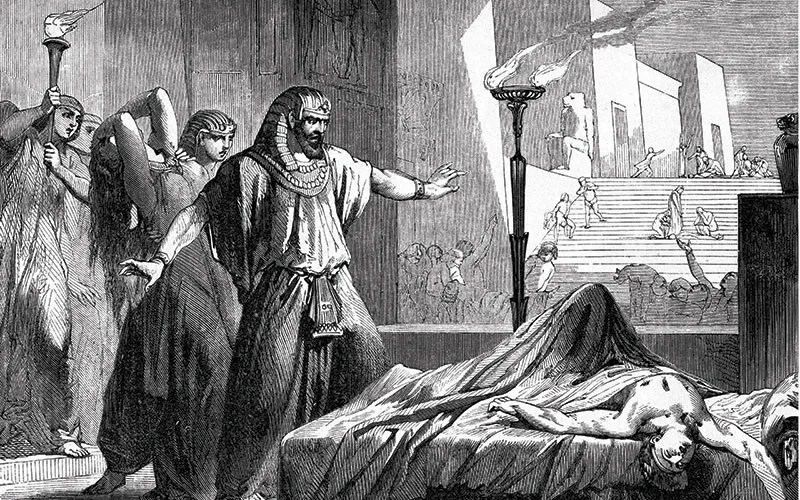
The recitation of the Ten Plagues is one of the signature moments of the Passover seder – and for many, one the most morally problematic. At the apex of the Magid section – the telling of the Exodus story – seder participants read aloud the series of plagues that God inflicts on the Egyptians to coerce Pharaoh into liberating the Israelites. The tenth and final plague is the most terrifying of them all: the death of all Egyptian first-born. In the seder ritual, we act out this moment by taking ten drops out of our cups of wine, one for each of the plagues.
While this story is integral to the narrative of the Israelites’ liberation, there’s no getting around it: this episode portrays God inflicting collective punishment on a population that results in the deaths of innocents, including children and even the Egyptians first born animals. If there could be any doubt about the abject vengeance behind God’s intentions, they were made plain earlier in the book of Exodus when God tells Moses:
“You shall say to Pharaoh, ‘Thus says God: Israel is My first-born son. I have said to you, “Let My son go, that he may worship Me,” yet you refuse to let him go. Now I will slay your first-born son.’” (Exodus 4:23)
There are different pedagogical approaches for dealing with this troubling story during the seder. In family settings, adults typically make light of this section by playfully acting out the different plagues with props and singing whimsical songs about “frogs jumping everywhere.” Although most children sense full well the moral problems at the heart of the plague narrative, I’m not sure this sort of friviolity effectively shields them from the more terrifying dimensions of the story.
It’s also common to comment that taking drops from our wine symbolizes the “lessening of our joy” at the fall of our adversaries. Many haggadot include a famous midrash that quotes God rebuking the angels for rejoicing at the fall of the Egyptians: “How can you sing songs of praise while my children are drowning?” Although the midrash is not part of the traditional seder service, it has become ubiquitous in most contemporary haggadot – so much so that it has become virtually canonical. In the end however, this commentary amounts to a kind of liberal hand wringing over God’s collateral damage: an apologetic that expresses regret, but stops short of outright condemnation.
This moral problem posed by the Ten Plagues, of course, is not unique to the seder – it’s inherent to the source material itself. Yes, the God of the Torah is a God that demands liberation of the oppressed, but the text also portrays God at times as vengeful, destructive, misogynistic and xenophobic, if not downright genocidal. In the case of the Exodus story, God is not merely motivated by the liberation of the Israelites; God’s display of wonders and miracles (i.e., plagues) are also intended to serve as a display of superior divine power, which God repeatedly makes clear:
“Then the Egyptians shall know that I am YHVH, when I stretch out My hand over Egypt and bring out the Israelites from their midst.” (Exodus 7:5)
When we consider the moral issues with the Ten Plagues, then, we must directly confront the essential issues with Biblical theology itself: a theology rooted in a mythic world view dating back centuries that is light years away from our own. As I often comment to my Torah study students, when we read these difficult stories about God’s bad behavior we are not reading about God – we are reading what the Biblical writers living in the ancient Near East wrote about God. We might say that these narratives teach us less about the nature of the divine than they do the human attributes the writers have projected onto God. Still, whatever the Torah may lack in relatable theology, it does present us with a quintessential challenge: it invites us to engage in a sacred struggle with these texts – much the way that Jacob struggled with the divine night stranger in that famous story from Genesis. In other words, the time-honored Jewish pedagogy is not to simply read the Torah, but to wrestle with it.
And we are not the first to wrestle with the problems inherent with the plague narrative. The Talmud, in fact, records a famous rabbinic debate about the evening of the first Passover, when the Israelites were instructed to sacrifice a lamb and daub their doorposts with blood to protect themselves and their households as the tenth plague unfolded. As described in the Torah:
God, when going through to smite the Egyptians, will see the blood on the lintel and the two doorposts, and God will pass over the door and not let the Destroyer enter and smite your home. (Exodus 12:23)
During a very complex consideration of this verse, the question is raised why the Israelites had to mark their doors and stay inside. Didn’t God know the difference between Israelite and Egyptian households? The answer lies with the figure of the “Destroyer” (in Hebrew, “Hamashchit,” sometimes rendered as the “Angel of Death.”) God apparently doesn’t slay the Egyptian first-born personally but relies on the Destroyer as a kind of hired assassin. But of course, this raises another, even more chilling problem.
At one point in the debate, Rav Yosef offers this comment to explain why the Israelites needed to remain in their homes on that fateful evening:
“Once the Destroyer is given permission to destroy, it does not distinguish between the righteous and the wicked.” (BT Baba Kamma 60a)
Even for those of us who cannot countenance the view of a God utilizing the services of an amoral hit man over the people of Egypt, the power of Rav Yosef’s comment is still unbearably potent: when collective violence is unleashed upon a population, it does not discriminate between combatants and civilians, young and old, medical workers or first responders, reporters or press personnel. Moreover, once the Destroyer is let loose on its murderous rampage, it is very difficult, if not impossible, to hold it back.
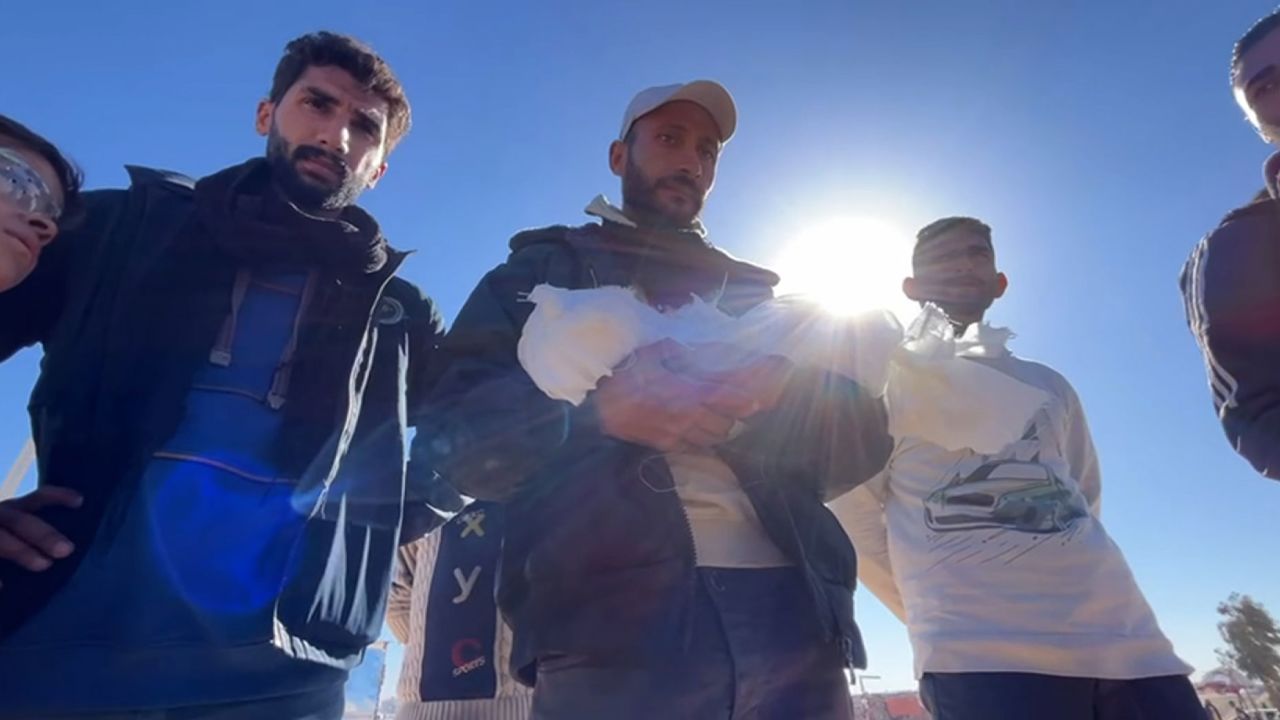
This Passover, we are all feeling this truth particularly keenly. As we sit down to seder, the Pharaohs of our world have given the Destroyer the permission to destroy – and we are witnessing the tragic results on the daily. In the US and around the world, authoritarian rule is sending armed militias into the streets to abduct and incarcerate residents and kill those who protest or resist. Israel’s genocide against the people of Gaza continues; the US and Israel has unleashed a senseless, murderous rampage on Iran that is rapidly turning into a regional war that threatens to upend the entire world economy. The violence symbolized by the Destroyer unleashed has become all too terrifyingly real.
This Passover, let us openly acknowledge the unmitigated mass murder that is unfolding outside the doors of our comfortable homes even as we gather for seder. As we take the ten drops out of our cups, let us understand them for what they truly are: the blood of innocents. As we count them off one by one, let them serve as signifiers of our solidarity with the slain and our resolve that when our seders are over, we will not huddle in fear behind our doorposts. Let us show up for all who are being cut down by the Destroyer – and commit to dismantling the systems that enable its violence once and for all.

 Shalom Rav