In the cycle of weekly Torah readings, we’ve recently begun the book of Exodus, the central sacred narrative of the Israelites’ journey from oppression to liberation. In the story, Egypt, the place of the Israelites’ servitude, is less historical than mythical, referred to in Hebrew by the word Mitzrayim, meaning “narrowness.” Mitzrayim is the Exodus story’s embodiment of systemic state oppression, signified by the constricting, crushing experience of ongoing persecution in which life becomes increasingly unlivable for the oppressed. In the opening reading of the book of Exodus, we read that Pharaoh oppressed the Israelites “be’farech,” which literally means “pulverized.” Last week we read that their “spirits were crushed” so thoroughly that they were unable to hear or respond to Moses’ message of liberation.
As we read the Exodus story this year, I can’t help but note that this narrative is playing out before us every day in real time. It is becoming brutally, tragically clear that the people of Gaza are experiencing Mitzrayim, forced to live in an increasingly narrow – and intolerable –place of genocidal oppression.
Last October, as part of the ceasefire deal between Israel and Hamas, Gaza was divided into two north-south zones divided by a “yellow line.” The eastern side of the line, which comprises roughly 58% of the Gaza strip, is under the control of the Israeli military. (It also includes most of the agricultural land used by Palestinians in Gaza before the war.) Meanwhile, over 2,000,000 Gazans have been forcibly displaced into the narrow western part of the strip, though many of them have (or had) homes on the other side of the line. As a result, this narrow strip of land – which was already one of the most densely populated places on earth, has been narrowed yet further.
Hundreds of Palestinians have already been killed since the ceasefire began – and at least 77 have been killed by Israeli gunfire near or over the line, which is not consistently delineated. Teenagers and young children have been among the slain, according to the AP. In October, an Israeli tank fired on a civilian car, killing 11 members of the Abu Shaaban family in the Zeitoun neighborhood of Gaza City. In December, two Palestinian boys were killed by an Israeli drone when they went out to gather some firewood for their father Tamer, who is paralyzed. The Israeli military announced it had killed “two suspects who crossed the yellow line, conducted suspicious activities on the ground, and approached IDF troops operating in the southern Gaza Strip, posing an immediate threat to them.”
If all of this sounds familiar, it should. The narrow space known as the “Gaza Strip” never existed until it was artificially created in 1948 following the Nakba, when it became a repository for a flood of Palestinian refugees ethnically cleansed from cities and villages in the coastal plain and lower Galilee. In the end, at least 200,000 refugees were crowded into tents in the 140 square mile strip of land. Its borders were determined by the position of Egyptian and Israeli forces when the ceasefire was announced. At the time, most of the refugees fully expected to return home – some could even see their towns and villages through the fences. Those who crossed the border to gather their possessions or harvest their crops were considered “infiltrators” by Israel and shot on sight.
In December 1948, the UN passed Resolution 194, which decreed that Palestinian refugees seeking to return home “should be permitted to do so at the earliest practicable date.” Of course, Israel proceeded to create facts on that ground to render their return impossible. Over 400 villages were completely destroyed, many of which had new Jewish settlements built upon them. In towns and cities, new Jewish immigrants moved into empty Palestinian houses that had been appropriated by Israel. To this day, “the earliest practical date” for the return of Palestinians to their homes remains unrealized.
Now, almost eighty years later, Gazans have once again been dispossessed from their homes, forced into a “temporary” repository. Once again, Palestinians in Gaza are living in tents while other military powers make plans to permanently entrench their presence and power there. In the words of Palestinian scholar Rashid Khalidi, “1948 is immediately brought to mind when you see those images (of tents).”
And once again, the “temporary” lines drawn by colonial powers are inexorably becoming permanent. Last month, Israel’s military chief of staff Eyal Zamir unabashedly announced that the yellow line was now “a new border.” Even more ominously, it was reported that the Israeli military is expanding the yellow line yet further in eastern Gaza, squeezing Palestinians into an even narrower section of the narrow strip. According to Al Jazeera’s Hani Mahmoud, “The expansion of the yellow line (is) meant to eat up more of the territory across the eastern part, really shrinking the total area where people are sheltering…Everyone is cramped here. The population here not just doubled but tripled in many of the neighborhoods, given the fact that none of these people is able to go back to their neighborhoods.”
It is reasonable to assume that this intolerable status quo will go continue indefinitely, i.e., a de facto partition of Gaza east of the yellow line controlled by Israel, where it cultivates and empowers anti-Hamas Palestinian groups, and a smaller western area controlled by Hamas which will be left to languish in ruins. As Sam Rose, acting director of Gaza affairs at UNRWA has pointed out, “It’s right from the kind of typical Israeli playbook of ‘we’ll take as much as we can while there’s a process ongoing that isn’t delivering much.’ Then when it comes down to negotiations, there’s less to negotiate over.”
Given the bewildering political maneuvering of the current moment – the immediate future looks grim for the people of Gaza. Though almost none of the ceasefire’s Phase One goals have been accomplished, the US and Israel and their geopolitical partners are already proceeding with Phase Two of the plan. Trump has announced plans to hold a signing ceremony at Davos this Thursday for his “Board of Peace” – the consortium of nations and hand-picked Palestinian “technocrats” that will supposedly manage Gaza going forward. There is already controversy over Washington’s apparent effort to use the Board of Peace to usurp the United Nations from the planning process. It seems clear that the project is being largely steered by Trump cronies such as Steve Witkoff and Jared Kushner – i.e., real estate moguls who have a financial interest in how Gaza will eventually be carved up.
Like most of Trump’s foreign policy plans, this entire process has turned into a surreal circus. On Monday, when Trump was told that France was unlikely to join the Board of Peace, Trump replied, “Well, nobody wants (President Macron) because he’s going to be out of office very soon. I’ll put a 200 percent tariff on his wines and champagnes and he’ll join.” Meanwhile, Ali Shaath, a former deputy minister in the Western-backed Palestinian Authority who was chosen to lead the Palestinian technocrat committee recently said that providing relief and housing for Gaza will his committee’s first priority, adding, bizarrely, “If I bring bulldozers and push the rubble into the sea, and make new islands, new land, I can win new land for Gaza and at the same time clear the rubble. This won’t take more than three years.” (In fact, the UN has estimated it will take until 2040 and many billions of dollars to reconstruct Gaza.)
Beyond these surreal machinations, however, the pattern of this process is ultimately much the same as it ever was, dating back to post-1948 – or even the 1917 issuance of the Balfour Declaration: Western colonial powers are meeting to determine the fate and divide the spoils of historic Palestine absent any consultation with the Palestinian people themselves. In the meantime, the people of Gaza continue to languish in a contemporary Mitzrayim – an increasingly narrow place, subjected to ongoing military attack, forced to live in tents during a cold, wet winter, besieged by hypothermia and starvation.
In this week’s portion, the Israelites finally go through the waters and emerge into the wide-open spaces of liberation. Our sacred Exodus narrative makes this reality clear: the experience of Mitzrayim may be increasingly intolerable, but it cannot last forever. Pharaohs may rise, but they will inevitably fall. Though such a future may feel unbearably remote at the moment, we must hold tight to this vision. Even as the genocide continues, even as the rest of the world moves on, it will be up to us all to make this latest version of the liberation story a reality.
It is the morning after. While the ink has dried on Trump’s 20 point “peace plan,” it has become brutally clear that the nightmare for Gazans is far from over.
Yes, the return of Palestinian and Israeli captives has been an occasion for genuine joy and celebration. Yes, Israel has ended its relentless genocidal bombing of Gaza. Yes, Palestinians are returning en masse to their homes. But this nightmare is far from over.
Israel is by no means finished. Despite the plan’s requirement that “Israeli forces will withdraw to (an) agreed-upon line,” the military has restricted Palestinians’ access to 70% of Gaza, either by declaring large areas as no-go zones or by issuing forced displacement orders, according to the UN Office for the Coordination of Humanitarian Affairs. The Gazan health ministry reported that since Saturday – the first full day of the ceasefire – Israel has already killed 23 Palestinians and wounded 122.
Israel is also ramping up its support of rival Gazan militias to increase the violence on the ground. On October 12, one such group tortured and murdered the beloved Palestinian journalist Saleh Al-Jaafrawi. As Al-Jazeera reporter Eman Murtaja recently wrote: “The message of Saleh’s assassination is clear: Anyone who continues to critically report on what is going on in Gaza, on Israel’s continuing destructive presence and the betrayal of its allies on the ground will be captured, tortured and killed.”
Meanwhile as Gazans continue to stream back to their homes, it has become tragically apparent that the overwhelming majority of them have no homes to return to. Scores of buildings have been reduced to rubble. Palestinians are arriving home to unlivable, broken shards of concrete, many of which still entomb dead loved ones. At the same time Israel’s forced starvation of Gazans continues to claim lives. As of October 12, at least 463 people, including 157 children, have died from starvation as Israel continues to block aid from entering the Gaza Strip. Nearly one in four children suffers from severe acute malnutrition.
It is difficult to overstate the depths of the annihilation that Israel has inflicted on Gaza over the past two years. As journalist Branko Marcetic has rightly termed it, “Israel’s Gaza war is one of history’s worst crimes”:
What we have watched, what we are continuing to watch, is the obliteration of a society of two million people. Every facet of modern civilization, as well as the most elementary things needed for even a state of basic subsistence for a human community, has been deliberately and almost completely destroyed by the Israeli military in Gaza. And now we are watching the gradual but accelerating mass die-off of the people who once lived there, through a combination of starvation, disease, and murder.
Though the political elites are rapturously describing a neo-liberal, neo-colonial post-war Gaza coastal resort, the hard truth is that the Gaza Strip is now a toxic moonscape and mass graveyard. According to the UN Environment Programme (UNEP), Israel’s relentless bombardment of populated areas has contaminated soil and groundwater for the long term, both through the bombardment of munitions and hazardous materials (such as asbestos, industrial chemicals and fuel) that have been released into the surrounding air, soil and groundwater from collapsed buildings. As of July 2024, UNEP estimated that Israel’s bombing had left 40 million tons of debris and hazardous material in Gaza, with much of the rubble containing human remains. It has been estimated that clearing this war rubble will take 15 years and could cost up to 40 to 50 billion dollars.
In addition to the toxicity of the environment, there also remains enormous amounts of unexploded ordnance throughout the Gaza Strip. An estimated 70,000 tons of explosives have been dropped on Gaza since October 2023 – the equivalent of roughly six Hiroshima bombings on an area less than half the size of Hiroshima but with six times its population. This past January, the UN Mine Action Service (UNMAS) estimated that between 5% and 10% of the munitions fired on Gaza have not yet exploded. According to the UNMAS, it could take 14 years to clear Gaza of all unexploded ordnance.
As I noted above, Israel is still restricting food aid from entering Gaza. According to the World Health Programme, over half a million people in the Gaza Strip are still facing catastrophic conditions characterized by starvation, destitution and death. Over 1 million more are facing emergency levels of food insecurity. Acute malnutrition is projected to continue worsening rapidly, with at least 132,000 children aged under 5 at risk of death through to June 2026.
But even if food supplies were let in by Israel tomorrow, food alone will not save the starving population of Gaza. Starving people cannot simply become healthier by feeding themselves. A condition known as “refeeding syndrome” occurs when starving people who are desperate for food are simply given food supplies. Rapid eating can be catastrophic to the heart, lungs, nerves, and blood, resulting in arrhythmias, respiratory failure, and death. In order to nurse the malnourished back to health, a skilled, multidisciplinary team and routine laboratory testing are required. It has been estimated that without medical specialists and infrastructure accompanying aid, thousands will possibly die from refeeding syndrome.
In addition to starvation, deadly infectious diseases continue to spiral out of control in Gaza. The WHO has warned that the challenge of life-saving medicines reaching Palestinians in Gaza is currently dire:
Whether meningitis… diarrhea, respiratory illnesses, we’re talking about a mammoth amount of work,” Hanan Balkhy, regional director for the United Nations’ health body, told AFP in Cairo. A ceasefire deal between Israel and Hamas has raised hopes of life-saving aid and healthcare finally reaching Palestinians in Gaza after two years of war, but Balkhy warned the challenges are “unimaginable.”
In this week’s Torah portion, Parashat Bereshit, we read that after Cain kills Abel, God exclaims, “Your brother’s blood cries out to me from the ground!” This is not the first time we will read that bloodshed literally pollutes the earth – and that this pollution must be expiated and atoned for.
Israel – and those who have aided and abetted its genocidal onslaught – has polluted the ground of Gaza in a myriad of ways, and the blood of its people continues to cry out to us even now. We cannot delude ourselves into thinking a ceasefire brokered by craven politicians and real estate oligarchs has ended the genocide. Now more than ever, we must respond to the voice that cries out to us from the ground of Gaza.
On Yom Kippur, we say the hard truths out loud. On Yom Kippur, we proclaim together as a community: chatanu, we have sinned. We have failed. We have not lived up to our promises of the past year.
I don’t know that I’ve ever experienced these words more brutally than I do this year. In last year’s Rosh Hashanah sermon, I ended with these words: “A year from now, when we are back here, we will have to have an answer. We can’t find ourselves just asking the same question. We must be ready to answer: what did we do in the last year to bring this genocide to an end?”
We have failed. It is now one year later and Israel’s genocide against the Palestinian people in Gaza is continuing toward its second year mark. As I speak these words, the Israeli military is literally leveling the entire northern region of Gaza to the ground. Earlier today, Israel issued its final warning for Palestinians in Gaza City to evacuate, saying everyone who remains will be considered a “terrorist.” Many are refusing to leave, many are unable to leave.
It is horrifying to even say these words out loud: on this Yom Kippur, the day when we plead to be written into the Book of Life, Israel is systematically erasing Gaza from the map – and the people of Gaza along with it.
I’ll be honest with you: I’ve struggled mightily over what I could possibly say tonight that would be worthy of Yom Kippur. I could discuss the geo-political causes that have been prolonging this genocide. I could discuss craven US politicians and corporate gangsters who are planning to carve up Gaza for their own profit. I could spend my time excoriating the Jewish establishment for supporting this genocide – and too many Jewish communal leaders for their silence. But frankly, none of it would be particularly new. None of it feels worthy of the grief pervadingthis sacred moment of Yom Kippur.
I also don’t want to spend this sermon describing the specific litany of the atrocities being inflicted on the people of Gaza – to reduce them to trapped, powerless victims. We’re all too familiar with the horrors of the past two years. Like so many of you, I’ve been scrolling daily through unbearable pictures and videos live streaming Gazan’s agony, their erasure. There’s something obscene about the casual way we’ve been viewing these horrors on our mobile devices, right alongside memes and texts and emails as we go about our daily business.
And yet at the same time, I know we must bear witness. We owe it in particular to the courageous young Gazans reporting on their own erasure from the ground even as Israel maintains a total media blackout. We cannot and must not look away. This has been our sacred responsibility to the people of Gaza. It is precisely through this bearing witness that we affirm their essential humanity.
As I thought about what I could possibly say to you tonight, I kept returning the same basic truth: if these days are to have any meaning for us at all, it is Yom Kippur’s sacred challenge to publicly affirm our accountability to the Palestinian people – as Jews and as human beings of conscience. We cannot let ourselves become complicit in their erasure. If we are truly serious about Yom Kippur, we must vow that solidarity is our sacred obligation.
When I think about Jewish accountability to the Palestinian people, I must mention our profound debt to Prof. Marc Ellis, of blessed memory, the great Jewish scholar, writer and theologian, who was an important teacher to me and a friend to our congregation from our earliest days. I quoted Marc in my very first sermon at Tzedek Chicago and many more times over the years. He was a prolific writer, but more importantly he was a courageous writer. Among other things, he wrote a great deal about what he called “revolutionary forgiveness” and the imperative for a collective Jewish confession to the Palestinian people. As he put it:
Revolutionary forgiveness in Israel-Palestine begins with a confession by the Jewish people. The confession is simple. What we as Jews have done to the Palestinian people is wrong. What we are doing to the Palestinian people today is wrong. With that confession, we agree to begin to walk the path with Palestinians towards justice and equality. As that path begins to be walked, the memories of each people, broken by history, remain. But as that path is walked, new memories begin to be created. As those memories of justice and equality are created, they begin to dominate the history of both peoples until in the end an injury against one is an injury against all. Revolutionary forgiveness; confession, justice at the center.
Marc died last year, far too young, as Israel’s genocide against the Palestinian people was raging in full force. I yearn to talk to him now about this confession. I so want to ask him if he would still, in this terrible moment, be writing about mutual, revolutionary forgiveness? I want to ask: is forgiveness even possible any more? Or is what Israel is doing to the Palestinian people truly unforgivable? And if that is the case, is there really any future at all? Can there ever be any hope for real justice in Palestine/Israel?
For the past two years I’ve been in touch with my friend Rachel Betarie, an antizionist Israeli Jew and activist and former director of the organization Zochrot. Over the months, her words to me have become progressively more despairing as she’s described how it feels to live in Israel at this terrifying moment, in a country where the majority of its citizens support the genocide.
Recently, Rachel told that she was part of a new working group organized by Zochrot, as she put it, “of activists in Palestine, colonized and Anti-Zionist colonizers, who have been meeting since April to think, re-imagine, and suggest concrete processes through which the right of return for Palestinian refugees from Gaza could be realized after the genocide.” She went on to write:
It is not easy to imagine a better, more just future at a time when the ground is crumbling under our feet. Some of us have families in Gaza and most of us have deep ties there. All of us see our future here in Palestine, between the river and the sea. The question arose again and again in our meetings: Is it even relevant to talk about the future right now? Isn’t this just escapism? Still, we chose to trust each other – a work in progress – and our deeply held values, and extract some ideas from our process of learning and discussing. With every meeting it became clearer to what extent the Nakba, and the ongoing system of settler colonialism – not October 7, 2023 – was and still remains the root of the problems we face today, and that return is the core of every future solution that has a chance to bring any stability, justice and peace to our communities, and that entails dismantling of the Zionist colonial regime.
Through this work, we came to the conclusion that return from Gaza must begin – not at some distant point in the future. Our discussions did not only focus on the design of return but also raised questions of community, of collective and individual healing, and of how social processes of repair can accompany physical return. With our hearts shattered daily by the horrors of the genocide, and with fear and hopelessness engulfing us, envisioning this still possible future is in itself a remedy.
I’m so inspired by their effort, their determination to come together, Israelis and Palestinians – or as Rachel put it, colonized and colonizers – even in this unbearably tragic moment, to vision a future of reparation and return. They know full well that they are a tiny minority in Israeli society, a small island of hope amidst an ocean of trauma and fury. And yet they are determined to keep this vision alive despite it all.
As I think further about how we might envision the future this Yom Kippur, particularly here in the diaspora, I keep returning to one basic truth: Palestinian voices must be centered in our observance. Quite frankly, I don’t know how we can do the work of teshuvah, of repentance and return if we don’t hear their stories directly, open up fully to their voices and honor their experience.
As I said earlier, as we gather tonight for Yom Kippur, Israel is erasing the entire northern region of Gaza City, the most populous, built-up region of the Gaza Strip. According to reports, the scale of these demolitions are unprecedented. Over the past few weeks, the Israeli military has been systematically destroying every high-rise building in Gaza City. Satellite pictures show that the most populous region of Gaza has been reduced to a lunar landscape. Israel has already done this to large swathes of the Gaza Strip, including the city of Rafah in the south and the town of Beit Hanoun in the north.
These words, however, are mere reportage. I believe it’s critical that we hear the story of this erasure from those who are most directly impacted. And so I’d like to share with you two extended testimonies for this Yom Kippur, our day of reckoning. The first is the voice of Taher Herzallah, who comes from Gaza City and works as the Director of Organizing for American Muslims for Palestine. These are the words that Taher recently posted his Facebook page:
Gaza has fallen.
I’m not a sensationalist, nor am I someone who likes to shatter people’s hopes. But what we are witnessing today is the complete and utter annihilation of a people. It really feels like the end of Gaza City, and I don’t say this lightly, especially since I have family members and friends in Gaza who follow me on this page. This is the city where my father was born and where my family has lived for centuries.
Many of my relatives held out for two years under the worst conditions human beings can live under. But for more than 700 days, they’ve endured and found ways to survive in Gaza City.
No longer.
They’ve decided to leave Gaza City for the first time since this all started. It is just no longer possible to live there. With Israel’s systematic destruction of many of the major residential high rises in the city this week, the message is unequivocal: all of Gaza City will be leveled to the ground, the way Rafah and Jabalya and Khan Younis and Beit Hanoun were.
The images of displacement today broke something inside of me. People, looking back at Gaza with tears in their eyes, are moving south into another uncertain reality. Death and suffering are still a high likelihood as “safe zones” don’t truly exist. They know a return to Gaza is unlikely and they will be stuck in a cycle of displacement and suffering for years to come. But what choice do people have?
Some people refuse to leave Gaza. Not only out of stubbornness but also because they don’t have the means to leave. With the lack of aid organizations or large-scale efforts to facilitate the transfer of the population to another area, everyone in Gaza is left alone to figure out how to move their families to safer zones.
I have family members in Gaza who have gone back and forth from Gaza City to Deir El Balah 3 or 4 times to find a small plot of land to set up their tents. Finding an apartment or a built structure to live in is an absolutely hopeless endeavor. The best-case scenario now is to find a small plot of land large enough to erect a tent. With 2 million people squeezed into a small area on the Gaza coast, even that has become nearly impossible…
The stories we are hearing out of Gaza are heartbreaking and soul-crushing. A 10-year-old child in Gaza City was asked what his hopes are for ending this war. His response: “I only hope for one thing–to find my dad’s body and to bury him.” This is the extent of the boy’s hopes and dreams. To find consolation in burying the body of his father, who was killed at a Gaza Humanitarian Foundation distribution site.
Other people have similar stories. They refuse to leave Gaza City, not because they don’t think it’s dangerous, but because they have loved ones buried under the rubble that they have not retrieved and can’t fathom moving on in life without burying them. The psychological and physical trauma of this genocide is so severe that people know that carrying that trauma will be the end of them anyway, and would rather die in Gaza City than endure years of more suffering…
To my family reading this: I am sorry. I have failed you. I don’t know what else to say. I hope you forgive me.
For the rest of us: whatever happens next will be very difficult. So prepare accordingly.
The next Palestinian voice I’d like to share with you is that of Asem Alnabih, an engineer and PhD student and spokesman for the Gaza municipality, who recently evacuated from the Shujayea region of Gaza City. Shujayea is one of the largest neighborhoods in Gaza and once had up to 100,000 residents. It is also a historically significant neighborhood, located in the southern quarter of Gaza’s Old City. Shujayea dates back to the 13th century and is named after Shuja’ al-Din Uthman al-Kurdi, a Muslim commander who died fighting the Crusaders. In the Ottoman period, it was the only mixed quarter in the Old City, where Muslims, Christians and Jews once lived together.
I remember Shujayea well when I visited Gaza in 2017 as a staff member for the American Friends Service Committee. It’s residents were clearly proud of their home, of its history, its deep sense of community and especially of its resilience. Although Shujayea was heavily bombed by Israel in its 2009 and 2014 assaults, residents rebuilt their homes each time.
Here is Asem Alnabih’s testimony, which he wrote in an article for Al-Jazeera:
My neighbourhood in east Gaza, Shujayea, is gone! The streets that once echoed with the laughter of children, the calls of vendors, and the familiar rhythms of daily life now lie in silence, smothered by dust and destruction. What was once a vibrant community, full of stories and memories, has been erased in a matter of moments.
A few days ago, my brother Mohammed went back to Shujayea to check on our family home. When he came back he told my father that nothing remained except for a few broken walls and scattered columns. A few hours later, we were shocked to learn that my father himself had braved extreme danger to see it with his own eyes. In a place where every step can mean death, he chose to walk through the ruins of our past.
This was the house my grandfather and father had built with years of effort, the house that carried my dad’s dreams and bore the marks of his sweat and sacrifice. It was where he raised his children, where we celebrated weddings and birthdays, where countless family memories were made. And now, it is nothing but rubble.
But our family’s loss is not just this one house. My father’s destroyed home is now added to my own burned apartment, my sister Nour’s bombed apartment, my sister Heba’s demolished home, and my sister Somaia’s two apartments – one reduced to rubble and the other burned. To this list are added my uncle Hassan’s destroyed building, my uncle Ziad’s building, my uncle Zahir’s home, my aunt Umm Musab’s apartment, my aunt Faten’s apartment, and the completely destroyed homes of my aunts Sabah, Amal, and Mona. And these are only the losses within our immediate family. All around us, countless relatives, friends, and neighbours have seen their homes obliterated, their memories buried under the debris.
This is not simply about the staggering material value of what we have lost. Yes, the homes were filled with furniture, personal belongings, and cherished possessions, but the destruction goes far deeper than material things. What has been taken from us is irreplaceable. A house can be rebuilt, but the sense of belonging that comes from walking familiar streets, from living in the same neighbourhood where generations of your family have grown up – that cannot be reconstructed with bricks and cement.
Shujayea was more than just buildings. It was a community stitched together by relationships, shared histories, and the memories of ordinary lives. It held the neighbourhood bakery where we bought fresh bread at dawn, the small corner shop where neighbours gathered to chat, the ancient Ibn Othman mosque that echoed with prayers during Ramadan. These were the spaces where children played, where families celebrated, and where neighbours supported each other through good times and bad.
When a neighbourhood like Shujayea is erased, it is not only walls that fall; it is a whole way of life. The destruction severs ties between neighbours, scatters families across shelters and refugee camps, and leaves a deep wound that no reconstruction project can truly heal. A rebuilt house may have four walls and a roof, but it will not be the same home that once carried generations of stories.
The pain of this loss is not unique to my family. Across Gaza, entire neighbourhoods have been flattened. Each pile of rubble hides the history of a family, the laughter of children, the wisdom of elders, and the love of a community that once thrived there. Each destroyed home is a silent witness to the human cost of this war, costs that cannot be measured in money or damage assessment.
What we have lost is not just property, but identity. A home is where a person’s life unfolds, where milestones are celebrated, where griefs are shared, where bonds are formed. To see so many homes destroyed is to see an entire people uprooted from the places that defined them. It is a calculated erasure, not only of lives, but of memory, heritage, and belonging.
Rebuilding will not bring back what was taken. The new buildings, if they ever come, will stand on top of the graves of our memories. They will not bring back my father’s years of hard work, nor the sense of comfort and security that once came with having a home. They will not resurrect the neighbourhood we knew, the one full of warmth, familiarity, and life.
The destruction of Shujayea is a wound that will remain open for generations. It is not simply a matter of humanitarian aid or reconstruction funds. This is about the deliberate dismantling of a community’s heart and soul. No amount of concrete can rebuild trust, restore memories, or bring back the neighbours who have been killed.
Shujayea is gone. And with it, a part of us has been buried. Yet even as we grieve, we hold on to the stories, to the love that once filled our homes, to the hope that someday justice will prevail. Because while they can destroy our houses, they cannot destroy the bonds we carry in our hearts, nor the memories that no bulldozer or bomb can erase.
On Yom Kippur, we say the hard truths out loud. And this Yom Kippur we must vow to hear them directly from the voices of those who would otherwise be silenced. Those whose lives would otherwise be erased. We cannot even imagine atonement if these voices are not with us during this most sacred observance.
On this evening of Kol Nidre, we admit publicly that we will fail to live up to the vows we make in the coming year. Does that mean we should adjust our vows to be more realistic, more achievable? Does it mean we should not make them at all? I personally find that prospect unbearable. On Yom Kippur, we are obliged to strive for our highest selves, even as we know we will not fully succeed.
So tonight, let us hold tight to these vows. Let us vow that our movement will end this genocide in the coming year. Let us vow that the armies will withdraw, that Gaza will be rebuilt, that the dead will be given dignified burials, that the dispossessed will find home and shelter.
And further, let us vow that Israel will be held accountable for its crimes, that the refugees will return, that reparations will be paid. Let us vow that Palestine will be free, that all will be liberated from the river to the sea.
Yom Kippur demands that we make such vows, as unreal as they may seem to us now. Because as Asem reminds us, “even as we grieve, we hold on to the stories, to the love that once filled our homes, to the hope that someday justice will prevail. Because while they can destroy our houses, they cannot destroy the bonds we carry in our hearts, nor the memories that no bulldozer or bomb can erase.”
On Yom Kippur we vow these vows because we know that as long as we hold on to these stories, to these memories, to this love, then nothing and no one can ever truly be erased. And the hope for justice will never die.
Ken Yehi Ratzon – May it be God’s will. V’chen Yehi Retzoneinu – And may it be our’s.
5 month old Gazan baby Sinwar Ashour, starving to death (photo: BBC)
This is what it has come to: Israel is forcibly starving Palestinians. And when Palestinians go to the places Israel has designated as food distribution sites, they shoot them to death.
I will repeat that: Israel is forcibly starving Palestinians. And when Palestinians go to the places Israel has designated as food distribution sites, they shoot them to death.
Health authorities in Gaza said that 19 people died of starvation yesterday, including at least one infant.
Also yesterday, Israel killed 115 Palestinians – 92 of whom were shot while seeking food from the so-called “Gaza Humanitarian Aid Foundation” in Zikim, in Northern Gaza. Israeli troops opened fire and massacred at least 79 Palestinians as they gathered to wait for 25 aid trucks from the UN World Food Program.
One of those killed was Raed Sindy, who was killed while attempting to access aid for his family. His brother Ahmed said, “They go out just trying to stave off their hunger and the hunger of their children, but they come back wrapped in shrouds.”
And this was just Sunday. Identical massacres and reports of death by starvation have been occurring regularly for months. We know this.
We know this because it has been happening in plain view of the world. Although this news has been all but pushed aside in the mainstream media, it is readily available on Al-Jazeera and alternative news sites and through social media.
Most importantly, we know this because Palestinians themselves have been telling us: reporting on their own genocide every day, in real time. Every day, I scroll through my mobile device and see videos of decapitated babies, corpses pulled from the rubble of bombed houses, bodies burned beyond recognition.
We also know that Israel is building a concentration camp for Palestinians in Rafah, a major southern center which has been completely reduced to rubble. The Israeli Defense Minister is calling it a “humanitarian city,” which will accommodate an initial group of some 600,000 displaced Palestinians. It would then be expanded to accommodate Gaza’s pre-war population of some 2.2 million people. They would not be allowed to move to other areas in Gaza but would instead be encouraged to “voluntarily emigrate” to unspecified countries.
So many of us who have been protesting Israel’s genocide in Gaza for the past year and a half have warned that this what it would come to: the total ethnic cleansing of Gaza. Now it is happening in front of us, for all too see: by bombs, by bullets, by starvation and by forced emigration.
In the decades after the Holocaust, a number of books were written that took the American government and the Allies to task for its inaction during the genocide against European Jewry. But even in that case, it could be argued that while we knew much of what was going on, we didn’t know the full extent of the heinous reality that was the Final Solution. In this case, we have no such excuse. This plans of this genocide are being announced openly and without shame by its perpetrators.
They are doing so because they know they no one will stop them. Not the US government, which is funding and supporting this genocide, not the international community, which is either aiding and abetting or simply wringing its hands. Not the UN, nor the ICC nor the ICJ, which can make pronouncements but have no power of enforcement.
The destruction of the Palestinian people in Gaza is the moral outrage of our time. Shame on every government and institution that has the power to stop it and has refused. Shame on every individual who had the power to lift their voices against this outrage and has remained silent.
The shooting death of the two Israeli embassy workers in Washington DC this past Wednesday evening was tragic and horrific. All human life is precious – there can be no conceivable justification for this immoral act. Moreover, the man who perpetrated these murders is no hero; in addition to the lives he took and the grief he caused their families, his action has only served to harm – not help the Palestinian people. This is not what solidarity looks like.
As of this writing, there is much we don’t know about the shooting – and it would be irresponsible of me to speculate on whether the shooter was motivated by antisemitism. We do know that it was an act of political violence – and that the victims were embassy representatives of a nation that itself is engaged in an act of political violence that has killed tens of thousands of Palestinians – and is currently taking the lives of hundreds of people in Gaza every day.
Of course, there is no shortage of disingenuous politicians and media figures who are all too eager to use this act of violence for their own political advantage. But we cannot and should not equate the actions of one isolated incident with the entire movement for Palestinian liberation. Indeed, over the past nineteen months, millions of people across the US and around the world have protested peacefully for a ceasefire and an end to Israel’s genocide in Gaza. It is inaccurate – and in fact racist – to use this tragic event to make assumptions about Palestinians or collectively punish people of conscience who have been advocating for Palestinian safety and freedom. Our movement has always been about freedom, dignity and safety for all. The murderous action of one vigilante does not define us – nor should it lessen our resolve to continue advocating for an end to Israel’s genocide in Gaza.
According to one of the most sacrosanct teachings in Jewish tradition, all human beings are created in the divine image – and that all lives are equally, infinitely precious. I can’t help but think of this sacred value as I read the many poignant news stories about the young embassy workers Yaron Lischinsky and Sarah Milgrim: stories that honor the people they were as well as their hopes and dreams for the future.
At the same time, I couldn’t help but think: where are these stories in the mainstream media about the tens of thousands of Palestinians killed through political violence in Gaza over the past nineteen months? Where are the tributes to their lives, their hopes, their dreams? If they were afforded the same kinds of tributes, the media would be overwhelmed an endless cascade of stories about precious lives lost forever.
In her book, “Frames of War,” the scholar Judith Butler examines why some lives are “grievable” while others are not. Butler suggests that this selective mourning is due to a process of dehumanization, in which state powers determine which lives have the status of personhood – and thus more worthy of our grief. In short, if a person is deemed less human, they become less grievable.
When we engage in this kind of selective mourning, we become complicit in this process of anti-Palestinian dehumanization and racism. Here in the US, of course, people of color are all too familiar with this process. As Bernice Johnson Reagon powerfully wrote in her classic, “Ella’s Song:” Until the killing of black men, black mothers’ sons/Is as important as the killing of white men, white mothers’ sons/…We who believe in freedom will not rest.
How do we respond to the killings of Yaron Lischinsky and Sarah Milgrim? The same way we must respond to the tens of thousands of Palestinians who have been killed – and continue to be killed – by the Israeli military in Gaza: by continuing to protest openly and as openly as possible for an end to Israel’s genocide against the Palestinian people. By advocating for a free Palestine for all who live between the river and the sea.
And further: to insist on a world in which all may live in safety and dignity – and all people are mourned equally when they die.
In December 2023, just three months into Israel’s genocide on Gaza, Tzedek Chicago’s board released a public statement entitled, “In Gaza, Israel is Revealing the True Face of Zionism,” arguing that “ongoing Nakba is the essential context for understanding the horrifying violence of the past three months.” A year and a half later, these words are resonating with an even more powerful urgency. There is every indication that Israel is beginning the process of engineering the wholesale destruction of Gaza – and the Palestinians who live there – by any means necessary.
We are now three months into Israel’s total blockade of food, fuel and humanitarian aid – and Gazans are gripped by an increasing famine. On May 4 it was reported by Gaza’s government media office that at least 57 Palestinians have already starved to death, more than 3,500 young children face imminent death from starvation, another 70,000 children are being hospitalized for severe malnutrition, and 1.1 million Palestinian children lack the minimum nutritional requirements for survival. Over 20 UN human rights experts have determined that Israel is wielding starvation as a weapon of war, concluding that “these acts, beyond constituting grave international crimes, follow alarming, documented patterns of genocidal conduct.”
At the same time, the Israeli military has been stepping up its bombing campaign, killing Palestinians at a higher rate than any point since the beginning of the genocide. As of this writing, Israel has killed 100 people in the past 24 hours in a series of bombings throughout northern Gaza. In footage taken by NBC News, the bodies of young children could be seen lying among the dead at Al-Shifa Hospital in Gaza City.
There are ominous, compelling signs that we are indeed witnessing the end game of Israel’s Nakba in Gaza. On May 4, the Israeli government approved a military operation called “Gideon’s Chariots,” directing the Israeli army to seize complete control of the Gaza Strip and displace the entire population to a small area of land in the south. Though this was technically a leaked story, some Israeli politicians have been unabashed about the plan. Finance Minister Betzalel Smotrich put it very plainly: “Gaza will be entirely destroyed” as a result of an Israeli military victory, and that Palestinians will “start to leave in great numbers to third countries.”
On top of this news, this past Wednesday, Reuters recently reported that the US and Israel have discussed the possibility of Washington leading “a temporary post-war administration of Gaza.” According to five sources, there would be no set timeline for how long the US led administration would last. They compared the proposal to the Coalition Provisional Authority in Iraq that Washington established in 2003, shortly after the US led invasion that toppled the regime of Saddam Hussein. As journalist/commentator Mehdi Hasan correctly pointed out in an interview today, the US’s administration of Iraq was an “absolute disaster.” As Hasan put it, “It increased sectarian tensions. It increased violence. It divided the country. It fomented more violent resistance.”
On May 15, the Palestinian people will observe Nakba Day, their collective observance of their dispossession and ethnic cleansing from their homes. For Palestinians this is not only an acknowledgement of an event that occurred in the past but a commemoration of an injustice that is still unfolding in real time. And yet the genocide in Gaza – as well as the ongoing ethnic cleansing of the West Bank – are completely absent from the mainstream press and international governmental concern. How long will the world allow this decades-long crime to continue?
I can’t help but note that this week’s Torah portion, Parashat Acharei Mot (which means “after the death”) describes an elaborate sacrificial rite of collective atonement. As I read these words, it is so clear to me that our complicity in this ongoing sacrilege continues to deepen the longer we allow it to unfold. The news out of Gaza has long since receded into the background, even as the Palestinian people continue to cry out to the world.
The world is watching. Will Member States live up to their obligations and intervene to stop the slaughter, hunger, and disease, and other war crimes and crimes against humanity that are perpetrated daily in complete impunity?
…The decision is stark: remain passive and witness the slaughter of innocents or take part in crafting a just resolution. The global conscience has awakened, if asserted – despite the moral abyss we are descending into – justice will ultimately prevail.
Content Warning: This article contains graphic descriptions of violence to children.
As the Jewish community prepares to observe Passover this year, I’m thinking a great deal about the centrality of children to the Exodus story we tell around the seder table. In particular, I’m struck that this narrative from the Torah begins with a terrifying description of atrocities committed against children. As Exodus opens, a new pharaoh arises over Egypt who openly dreads the demographic growth of the Israelite minority. After oppressing them with forced labor, he orders Hebrew midwives to kill newborn male children. When they resist his demand, he charges the Egyptians to throw all baby boys into the Nile. Shortly after, Moses is born and is saved from this decree of death by his mother, his sister and the pharaoh’s daughter, who adopts him.
Among other things, the Exodus story drives home the tragically familiar truth that children are not mere casualties of wartime atrocities, but are actually targeted by state violence. According to a 2014 report in The New Yorker, “The specific targeting of children is one of the grimmest new developments in the way conflicts have been waged over the past fifty years.”
Those who participate in the Passover seder are required not only to read the story of the Exodus, but to examine its relevance, as the Haggadah instructs us, “in every generation.” As such, the opening of the narrative presents us with all too disturbing parallels — and a critical moral challenge. This Passover — the second to come amidst the ongoing genocide perpetrated by Israel against Palestinians in Gaza, we would be grievously remiss if we failed to acknowledge the scores of children who have been killed, maimed and traumatized by Israel’s ongoing military onslaught.
The official death toll in Gaza has now broken the 50,000 mark, including more than 17,000 children. (The medical journal The Lancet has concluded that the total number of those killed is likely 40 percent higher.) On March 18, the day that Israel broke a two-month ceasefire, the Israeli military killed more than 400 Palestinians, including 183 children and 94 women — on what observers call the single bloodiest day of the genocide.
More recently, on April 3, Israel bombed the Dar al-Arqam School-turned-shelter in Gaza City, killing 29 people, 18 of whom were children. In its report on the attack, Al Jazeeraquoted a spokesperson from Gaza’s emergency rescue workers: “What is going on here is a wake-up call to the entire world. This war and these massacres against women and children must stop immediately. Children are being killed with cold blood here in Gaza.”
For those who stand in solidarity with Palestinians, certain reports and images have become seared into our hearts and minds. For many, the tipping point moment into the abyss occurred in early 2024, with the phone recording of 6-year-old Hind Rajab, pleading with her mother for rescue before the Israeli military shot 335 bullets into her family’s car. One month later, the world was horrified by the image of Sidra Hassouna, a 7-year-old Palestinian girl from northern Gaza, hanging dead off the ledge of a destroyed house with half her body missing.
On May 26, 2024, a 1-year-old baby, Ahmad Al-Najjar, whose headless body was held aloft by a terrified, grief stricken man following what has come to known as the Rafah Tents Massacre — a night in which 45 Palestinians, most of them women and children, were killed, burned alive and beheaded. One doctor who witnessed the carnage commented, “In all my years of humanitarian work, I have never witnessed something so barbaric, so atrocious, so inhumane. These images will haunt me forever… And will stain our conscience for eternity.”
Denial can take many forms. For some, it is rooted in racist dehumanization of the other; others may be just too overwhelmed to allow themselves to comprehend the massive slaughter of children in such a heinous fashion; still others rationalize the truth of it away, dismissing mass murder as “collateral damage” or Hamas’s use of “human shields” (a cynical claim that has been consistently debunked by human rights observers).
For Israel’s supporters, it is even more unthinkable to face the increasing evidence that the Israeli military might well be intentionally targeting children for mass murder. A recent Al Jazeera “Fault Lines” documentary, “Kids Under Fire,” makes a compelling case for this claim, with extensive eyewitness interviews with volunteer American health care workers and human rights experts. Their accounts, corroborated across hospitals and over time, suggest a systematic pattern: increasing numbers of child victims were not injured as a result of bombing raids, but of direct gunshot wounds, often to the head. One of the doctors interviewed in the film, Tammy Abughnaim, an American emergency physician from Chicago, commented:
More and more, I started to see children with penetrating injuries like gunshot wounds. After five, six, seven, eight, I came to the realization that somebody is shooting children. I didn’t want to believe that children were being shot. Nobody wants to believe that. Nobody wants to think that other humans are capable of annihilating children in that way.
Abughnaim’s testimony is corroborated in the film by Mark Perlmutter, an orthopedic surgeon from North Carolina: “The target at the end of a scope is unmistakable. They are a young human being, and when that trigger gets pulled on that target, it is not by accident. At all. Ever.”
At one point, the interviewer asked Miranda Cleland of Defense for Children International – Palestine, “How you ever thought through ‘what’s the strategic reason to shoot a child? What message should we take from a military that would target children?’” Cleland’s reply: “I’ve thought about it a lot and the only conclusion I can come to is that Israeli soldiers are shooting Palestinian children because they want to. And I think they do it because they are allowed to and nobody has stopped them.”
Nabeel Rana, a vascular surgeon from Peoria, Illinois, put a finer point on it: “You’re wiping out a certain number, maiming a certain number and permanently mentally and emotionally disabling the rest. And that’s going to be passed down to the next generation. So, this is how you cripple a society.”
As centuries of state violence against oppressed communities have long demonstrated, the most direct way to undermine and even eradicate a society is to target its children. In December 2024, the Palestinian Centre for Human Rights (PCHR) released a report, “Generation Wiped Out: Gaza’s Children in the Crosshairs of Genocide,” examining Israel’s crime of genocide against Gazans, including the genocide of children. The PCHR report concluded:
The killing of children, infliction of serious physical and mental harm, and subjection to harsh living conditions that destroy their lives cannot be dismissed as mere collateral damage of military attacks. Instead, these actions are part of a systematic strategy aimed at erasing Palestinian identity and annihilating future generations.
There are ominous indications that this annihilation is well underway. A Reutersanalysis of data from the Gaza Health Ministry revealed that at least 1,238 families — defined as married couples and any children they might have — have been totally erased, with no survivors. In an AP article on this issue last year, Omar Shabaan, a Gazan researcher and economist, observed that of Gaza’s 400,000 families, none have been spared, causing permanent harm to Gaza’s society, history and future. “It is becoming clear,” he said, “that this is a targeting of the social structure.”
This dramatic upsurge in the killing of Palestinian children is not limited solely to Gaza. According to a recent report on the “Gazafication” of the West Bank, the Israeli human rights group B’Tselem found that Israel is now using the military tactics of its assault on Gaza throughout the Occupied Territories, “where Palestinians face mass forced displacements, a surge in airstrikes and a sharp rise in attacks on children and other civilians.” B’Tselem reported that 180 children have been killed by Israeli forces in the West Bank since the Gazan genocide began, making it the deadliest period of Israel’s nearly 60-yearlong occupation for adults and children alike.
Reports of violence against children are indeed reminiscent of reports from Gaza. In an article entitled “Child Deaths Surge Amid ‘Gazafication’ of the West Bank,” the Guardian, interviewed Rigd Gasser, the father of 14-year-old Ahmad Rashid Jazar, who was shot in the chest in the village of Sebastia by an Israeli soldier while on an errand to get bread in January. Gasser was in a cafe when he heard the gunshots and rushed out when he heard calls for help. “I got closer and recognized my son. I knew him by his clothes, his body was all covered in blood,” he said.
The article also reports on the killing of cousins Reda Basharat (8) and Hamza Basharat (10) who were killed near home by an Israeli drone strike on January 8. The children were sitting outside with their 23-year-old cousin Adam when Hamza’s mother Eman heard the explosion. When she ran outside, she found Hamza injured and struggling to breathe. “He died in my arms,” she said. Eman added, “When I think about what happened to my son and remember the images of their bodies, and I see what is happening in Gaza on TV, I felt suddenly that they are doing the same thing.”
While these individual reports portray unspeakable cruelty, it’s important to bear in mind that it ultimately serves a larger purpose. Just like the violence inflicted by the pharaoh in the Exodus story, Israel’s violence toward children stems from the view of an entire people as a “demographic threat.” This view itself stems from Zionism: an ideology and movement that seeks to create and maintain a majority Jewish nation-state in historic Palestine. As such, the targeting of children is part of a larger effort to ethnically cleanse Gaza through a variety of means, including demolition of homes, population transfer and, as the PCHR report puts it, “erasing Palestinian identity and annihilating future generations.”
In this regard, Israel’s open fire policy toward Palestinian children is inseparable from other draconian actions that clearly seek the depopulation of Gaza and the West Bank. As of this writing, the AP has reported that Israel now controls 50 percent of Gaza as it enlarges its buffer zone, razing Palestinian homes, farmland and infrastructure to “the point of uninhabitability.” The military has also destroyed 90 percent of the southern city of Rafah, after issuing evacuation orders to its residents.
If there could be any doubt as to Israel’s intentions, Deputy Speaker of the Knesset Nissim Vaturi, of the Likud party, like so many other Israeli politicians and military leaders before him, recently made Israel’s end game all too clear. In a radio interview he said pointedly that Israel should “wipe Gaza off the face of the earth,” adding, “There are no innocents there.… I have no mercy for those who are still there. We need to eliminate them.” More recently he commented in a TV interview: “You can’t live with these creatures next to us.… There is no peace with anyone here.… Every child born now — in this minute — is already a terrorist when he is born.”
Notably, Vaturi has also made similar comments about the West Bank region of Jenin, where 40,000 Palestinians were displaced by Israel in the month of February alone. “Erase Jenin. Don’t start looking for the terrorists — if there’s a terrorist in the house, take him down, tell the women and children to get out.” While Israel’s apologists dismiss comments such as these as hyperbole, it is critical to note that these very clear statements of intent are being backed up by very clear action.
As a congregational rabbi, I’ve been asked recurring questions over the last two Passovers. How can I celebrate this holiday while a genocide is being committed in my name? How can I observe a festival of Jewish liberation while a Jewish nation-state is acting as a pharaoh over an entire people? While I understand the anguish behind these questions, I believe the Passover ritual actually offers us an important opportunity: to squarely face the way the Exodus narrative is playing out in a very real way in our own day, to ask hard questions and avoid the simple, pat answers.
In his searing book about Israel’s genocide, One Day, Everyone Will Have Always Been Against This, writer Omar El Akkad writes:
A woman’s leg amputated, without anesthesia, the surgery conducted on a kitchen table. A boy holding his father’s shoe, screaming. A girl whose jaw has been torn off. A child, still in diapers, pulled out of the tents after the firebombing, his head severed from his body.
Is there distance great enough, to be free of this? To be made clean?
This Passover, the season for asking questions, El Akkad’s challenge pounds insistently on the collective conscience of the world.
(There) are plenty of Jewish congregations out there: why does the world need another? What do we have that’s unique to offer? As I think about it, this is a critical question for any Jewish community. Do we exist just to exist or for a more transcendent purpose? Does our existence actively seek to repair the world or does it merely serve to use up Jewish community resources? Or worse still, does our communal existence contribute to harm in the world?
I recalled those words last week when I learned that Anshe Emet, a prominent Conservative synagogue in Chicago planned to host a program with invited guest Yoav Gallant, the former Israeli Minister of Defense and one of the primary architects of Israel’s genocide against Gaza – who currently has a warrant out for his arrest issued by the International Criminal Court.
It should go without saying, but I’ll say it out loud: it is appalling and sickening that a prominent synagogue welcomed – and in fact celebrated – a genocidal war criminal in their house of worship. I’m proud to say that a massive protest was organized by a wide coalition of Palestine solidarity groups, including US Palestine Community Network, American Muslims for Palestine, Jewish Voice for Peace and #IfNotNow to voice a message of outrage, solidarity and collective conscience.
Hundreds of us gathered last night across the street from the synagogue in the freezing cold to express our outrage and mutual solidarity. There were many speakers from our diverse coalition and it was my honor to be among them. Here are my remarks, below:
photo: Love and Struggle/Sarah Ji
My name is Brant Rosen; I’m a proud member of Jewish Voice for Peace, the Jewish Voice for Peace Rabbinical Council, and I’m the founding rabbi of Tzedek Chicago – a proudly anti-Zionist synagogue here inI Chicago with members here and around the world.
In Jewish tradition there is a central concept we call Hillul Hashem. It literally means “desecration of God’s name.” This is at root a deeply moral concept that goes to the heart of what it means to be a human being. When we diminish the humanity of another, we diminish God’s presence in the world – and we commit the worst kind of Hillul Hashem when we commit the crime against genocide against another people.
In October 2023, Yoav Gallant, Israel’s then defense minister, said:
We are imposing a complete siege on Gaza. There will be no electricity, no food, no water, no fuel, everything is closed. We are fighting human animals and we are acting accordingly.
The Palestinian people know what it means to be robbed of their humanity. They have been deemed a collectively disposable people by Israel for over 100 years. Their very presence is a problem for Israel. We Jews should know all too well what happens when a state robs a people of its essential humanity.
The ICC has put a warrant out for Yoav Gallant’s arrest as a war criminal because he actively dehumanized the Palestinian people in word and in deed. Over 60,000 Palestinians killed in Gaza to date and over 100,000 injured, the majority of whom are women and children. According to one estimate, the ultimate death toll may eventually be nearly 200,000. Whole extended families, entire Palestinian bloodlines have been wiped out completely. Much of Gaza has been literally reduced to a human graveyard, with scores of bodies buried beneath the rubble of destroyed and bulldozed homes. Neighborhoods and regions have been literally wiped off the map.
Gaza’s infrastructure and health care system has been decimated. According to the UN an “intentional and targeted starvation campaign” has led to widespread famine and disease throughout the Gaza strip. Health care workers, humanitarian workers and journalists are being killed, injured and imprisoned in massive numbers. Human rights agencies have documented widespread torture and abuse of prisoners, including sexual abuse, throughout a network of torture camps.
This is dehumanization, this is Hillul Hashem of the worst kind. And to you Yoav Gallant, we say, “We Charge Genocide!” “You are not welcome in our city!”
But Yoav Gallant and the nation he served could not have succeeded if there where not those who normalized this genocide. And that is why we are here tonight. As a rabbi, as a Jew, as a person of conscience, I am morally outraged – I am sickened – that this war criminal is being hosted – and in fact celebrated – at a synagogue, a Jewish house of worship. This is what it has come to.
And here I want to address the members of Anshei Emet and the Jewish community of Chicago. Our community has a profound moral choice to make. What is the Judaism we will affirm? Will we uphold Zionism – and its ideology of Jewish supremacy – or will we stand for the sacred divine image of all people? Will we stand with war criminals or will we stand with those who are deemed to be disposable? Will we stand with the genocidal state of Israel or will we stand with the Palestinian people?
Now I’d like to address my friends and comrades in the Palestinian community:, please know that are so many of us in the Jewish community who stand in solidarity with you. There is nowhere else we can possibly be at this moment. And there are so many of us who are voicing the alarm, marching in the streets, taking arrest to demand justice for Palestinians
It is not an overstatement to say this: history will remember what we did or did not do in this moment. We are ready, together with you, to call out those who, in our name, are committing the worst kind of Hillul Hashem against you, whether it is in the streets of Rafah and Deir al Balah, the halls of Washington DC or a synagogue in Chicago. And we will not cease until all are free, from the river to the sea!
It’s been a busy week. This past Wednesday, I was in Springfield with friends and comrades to announce new IL state legislation, “The Illinois Human Rights Advocacy Protection Act,” which would repeal our state’s 2015 anti-boycott legislation that punishes advocacy for Palestinian human rights. This unconstitutional and immoral legislation, signed by then Gov. Bruce Rauner, directed the Illinois Investment Policy Board to restrict public funding to companies that use human rights filters that exclude doing business with Israel.
The new legislation, which is being introduced in the IL State House by Palestinian-American representative Abdulnasser Rashid, will “(remove) provisions requiring the Illinois Investment Policy Board to include companies that boycott Israel in its list of restricted companies.” An identical bill will be introduced in the IL Senate as well.
You can watch the entire press conference here. My remarks follow below:
Here in Illinois and around the world, we are at a critical and frightening moment. The US is governed by an administration that openly considers certain populations to be disposable. Whether it is undocumented immigrants, birthright citizens, trans youth or the Palestinian people. Just yesterday, our president announced his intention to depopulate the entire Gaza strip of over 2 million Palestinians and turn it into the “Riviera of the Middle East.” This after a previous administration helped to arm Israel in its crushing military assault – one that many reputable human rights organizations have termed a genocide against the Palestinian people.
In Jewish tradition, one of our most central theological tenets, which is repeated over and over, is that God responds to the cries of the oppressed. The Palestinian people have long been crying out to the international community. Over the past sixteen months, their cries have reached a fever pitch. The question before us, that has ever been before us, is how will we respond?
That is the essence of the Palestinian call for Boycott, Divestment and Sanctions. It is a call from an oppressed people who are seeking support and solidarity from the international community. It originated in 2005, when a wide coalition of Palestinian civil society organizations made a crie de cour for solidarity and support. They issued a call to the world to use the time-honored nonviolent strategy of Boycott, Divestment and Sanctions.
There are three essential demands of this call, which are all are based in international law: to end the occupation of the West Bank and Gaza, full and equal rights for Palestinian citizens of Israel, and to honor the UN mandated Palestinian right of return. Like all boycotts, it allows private citizens, companies and civil society organizations around the world to actively and meaningfully respond to the legitimate and collective cry of the Palestinian people.
It is also a form of free speech. Just like historic Montgomery Bus Boycott, the United Farm Workers Boycott, the boycott of apartheid South Africa before it. When the state of Illinois passed legislation restricting participation in this pro-peace, pro-human rights movement, it actively criminalized free speech. It was immoral and illegal to do so when it was enacted by Governor Rauner in 2015 – and it remains so today. In the current moment, when our country is ruled by a regime that is actively and unabashedly criminalizing free speech, we should see this legislation for what it is. The state of Illinois has no business aiding and abetting in this stripping of our right to free speech. It has no moral standing to stifle and stigmatize the legitimate cry of the oppressed.
In the Jewish community this week we are reading from our Torah, the Exodus story. And the Exodus story makes it very clear: that God responds to the cry of the oppressed and demands their liberation. We also read that this process began with brave people to defy and resist oppression. That is how liberation happens.
We are at just a moment right now. This is truly a which side are you on moment. Will we hearken to the cries of the oppressed, or will suppress their voices – and those who support their call for liberation? We urge the state of Illinois to stand the right side of history.
A Jewish letter of support for the Illinois Human Rights Advocacy Act will soon be made public as well. I’ll make sure to post it when its available.
It’s difficult to describe the feelings I experienced this past weekend, as I watched hundreds of thousands of Gazans in a long and seemingly endless line, heading on foot to their homes in the north. Crossing the Netzarim corridor – the border the Israeli military demarcated separating north from south – they headed back with whatever possessions they were able to carry. Family members who thought each other dead clutched each other in tearful embrace. It was truly a wonder to behold: this resilient people who had defied and withstood the most destructive miliary onslaught in modern times. As Gazan activist Jehad Abusalim put it:
Gaza today, for now, disrupts and defies the global agenda of rendering entire populations disposable and rightless. This was achieved through the resilience of an entire population that has endured months of displacement, starvation, disease and bombardment.
Though this is a fragile and temporary ceasefire, it’s striking to note the depth of Israel’s failure to achieve any of its stated objectives of its genocidal war. It failed to destroy Hamas and the Palestinian armed resistance in Gaza. It failed to rescue hostages taken on Oct. 7 through military means. It failed to implement its so-called “General’s Plan” – its blueprint for ethnically cleansing northern Gaza. And perhaps most importantly, it failed to break the will of the Gazan people to survive its genocidal war.
Jehad’s words “for now” are appropriate. The overwhelming number of Gazans are returning to homes that are rubble – and it is by no means certain how they will be able to rebuild their lives. The ceasefire is a tenuous one; there is still no agreement on the second or third phases of deal and there is every possibility that Netanyahu will use the deal as cover to eventually depopulate Gaza of Palestinians. Trump’s recent comments (“I’d like Egypt to take people, and I’d like Jordan to take people…we just clean out that whole thing”) have made his intentions clear, even if his plan has been rejected outright by Arab states.
As I read the reports and analyses in the wake of this ceasefire, one thing seemed consistent to me: as ever, there is little, if any, concern for the humanity of the Palestinian people. On the contrary, every pronouncement by Western governments and the mainstream media treats their mere existence as a problem to be dealt with. In this regard, Jehad’s reference to “the global agenda of rendering entire populations disposable and rightless” is spot on. Palestinians in general – and Gazans in particular – have always been the canaries in the coal mine when it comes to the use of state violence against “problematic populations” deemed “disposable” by authoritarian states seeking to consolidate their power.
“Entire populations rendered disposable and rightless” certainly applied to events in my hometown of Chicago this past Sunday, where the Trump launched “Operation Safeguard,” a shock and awe blitz spearheaded by ICE, the FBI, ATF, DEA, CBP and US Marshals Service. Led by Trump’s so-called “border czar” Tom Homan (and surreally videotaped live by “Dr” Phil), heavily armed and armored forces terrorized Chicago neighborhoods all day, mostly going door to door, staking out streets in search of undocumented people, taking them away in full-body chains. While there is no definitive information on the numbers of people taken, federal immigration authorities claim to have arrested more than 100 people in recent days.
On a positive note, however, we are seeing that the strategies employed by local immigrant justice coalitions are making a real difference. My congregation, Tzedek Chicago is part of a local interfaith coalition called the Sanctuary Working Group, which has been mobilizing Know Your Rights trainings and Rapid Response teams. From our experience in Chicago over these past few days, we’ve seen that this kind of mobilization really does have an impact. Perhaps the strongest validation of these resistance strategies came from Homan himself, who said on an interview with CNN:
Sanctuary cities are making it very difficult to arrest the criminals. For instance, Chicago, very well educated, they’ve been educated how to defy ICE, how to hide from ICE. They call it “Know Your Rights.” I call it how to escape arrest.
in my previous post, I wrote that “the current political moment has left many of us breathless.” But over the course of the last several days, we’ve seen it is indeed possible “to disrupt and defy the global agenda of rendering entire populations disposable and rightless.” If we had any doubt at all, let us take our inspiration from the Gazan people, who have refused to submit after 15 months of merciless genocidal violence and are returning to their homes, vowing to rebuild and remain.
The most powerful shock and awe in the world could not break them. Let this be a lesson to us all.
Like all of you, I’m sure, I’m still in deep shock and anguish over Donald Trump’s electoral victory this past Tuesday. And while I certainly have my opinions about how this terrifying outcome could have possibly happened, I’m going to resist the urge to engage in post-election punditry. There’s more than enough to go around right now, some of it interesting, some of it clarifying, but to my mind, much of it tone-deaf and destructive. There will be time for the analysis, the interrogating and the strategizing. For now, however, I think it is critical that we sit with what has happened and give ourselves space to grieve and respond emotionally to the enormity of what has just occurred.
Of course, none of this happened overnight. Well before last Tuesday, were all too aware of the growth of fascism in the US and around the world, the scourge of state violence and mass incarceration, the loss of reproductive freedoms, the genocide against Palestinians, political targeting of immigrants, LGBTQ+ people, Muslims, disabled people, and other vulnerable minorities. After Tuesday, however, the stakes of these threats have reached a terrifying new level. Yes, what happened this week was shocking and heartbreaking. But it was also clarifying. We should no longer have any illusions about what we are up against.
I know that many of us who have been on the front line of the resistance to these threats are feeling exhausted and demoralized. Those who are members of targeted groups are understandably feeling a new level of fear for their own well-being. That is why, I believe to the core of my being, that the most important thing that those of us who have been organizing movements for justice can do in this moment is to reaffirm our commitment and care for one another.
In order to do that, we will need to resist the politics of division lest they infect the movements of solidarity we’ve been building so carefully and lovingly. During this past election, there was strong and passionate disagreement on whether a vote for Kamala Harris was a vote for genocide or a vote to hold back a Trump presidency. There were good, principled arguments to be made on both side of that debate. Even so, it was immensely painful to witness what this election did to the Palestine solidarity movement. Those who chose to vote for Harris were accused of “supporting genocide.” Those who chose withhold their vote for Harris were accused of being “MAGA enablers.” Our movement was faced with a profoundly untenable choice. There were times I feared it would rip us apart.
But after last Tuesday’s election, none of this really matters anymore. We simply cannot afford to turn on each other. Not now. We need each other more than ever.
I don’t yet know what kind of political strategies we will need to employ to resist the fascist reality posed by the MAGA movement – but I do know that whatever happens, we will need to show up for one another now more than ever. We will need to protect and defend one another. We will need to be clearer than ever about the values we hold sacred and be prepared to ground everything we do in the conviction that every single human life is of infinite worth – and is worth fighting for.
We will need to be clear-eyed about the challenges ahead and stand together to face them. For those of us in the Jewish community, that means lifting up solidarity as our most central sacred imperative. All the rest is mere commentary. As I said this past Yom Kippur:
In the 21st century, I believe this is the sacred calculus the Jewish people have to offer the world: Creation + Exodus = Solidarity. More than ever, the Jewish communities we create simply must value solidarity as our most sacrosanct mitzvah. In an age in which we are witnessing the increased scapegoating, yes of Jews, but also of Muslims, LGBTQ+ people, people of color, disabled people, immigrants, indigenous people and so many others, our sacred tradition must promote collective liberation first and foremost.
The predominant theme in this week’s Torah portion, Lech Lecha, is the act of going forth into the unknown with nothing but a promise of blessing and liberation. But unlike the literal meaning of the words in our portion, we must affirm that this liberation cannot be for one privileged group of people alone. We must affirm a Lech Lecha of collective liberation, where all people are God’s people and all people are chosen and the boundaries of the Promised Land extend to include all who dwell on earth.
In this moment, like Abraham and Sarah, we are all being called into a land we do not yet know. But as we read in our portion, it is a collective going-forth – for the sake of both the living and future generations.
Yes, in this current moment, there is much we do not yet know. But we do know that we will have the hearts and minds to resist what is to come. That there is still a world worth fighting for. And that the way to that world is through our solidarity and care for one another.
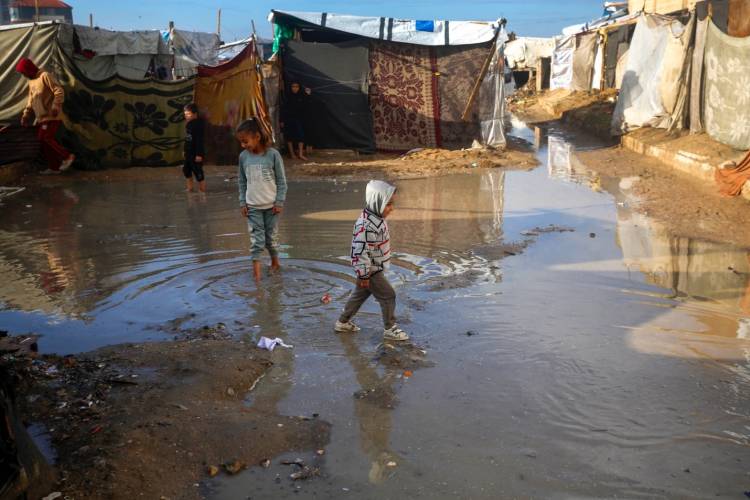
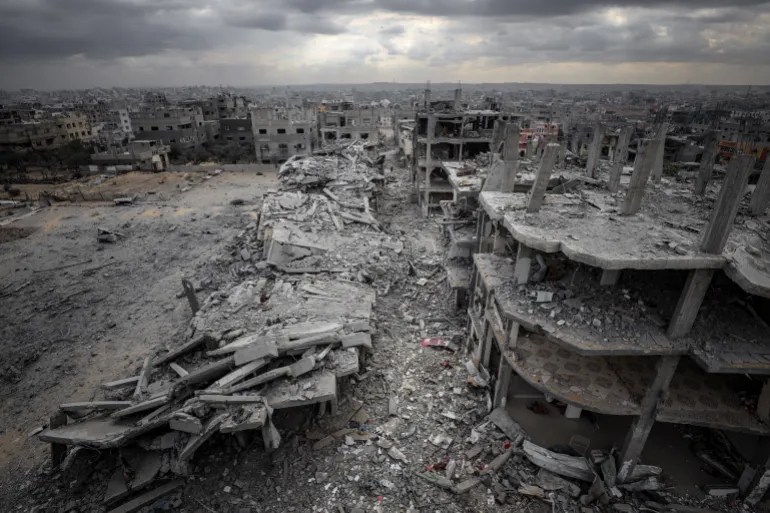
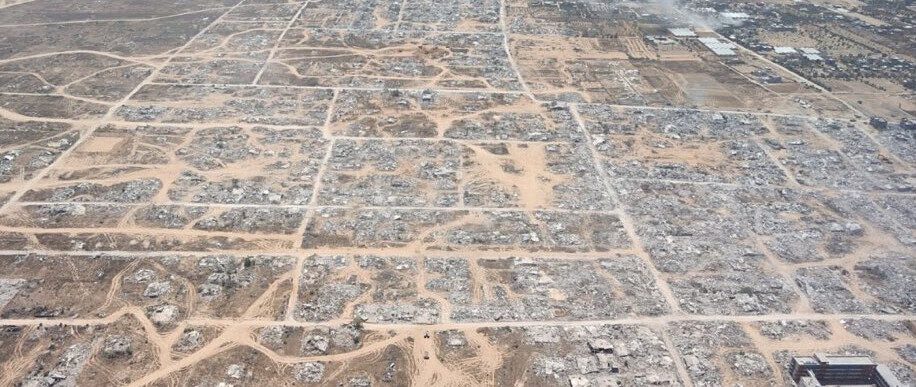
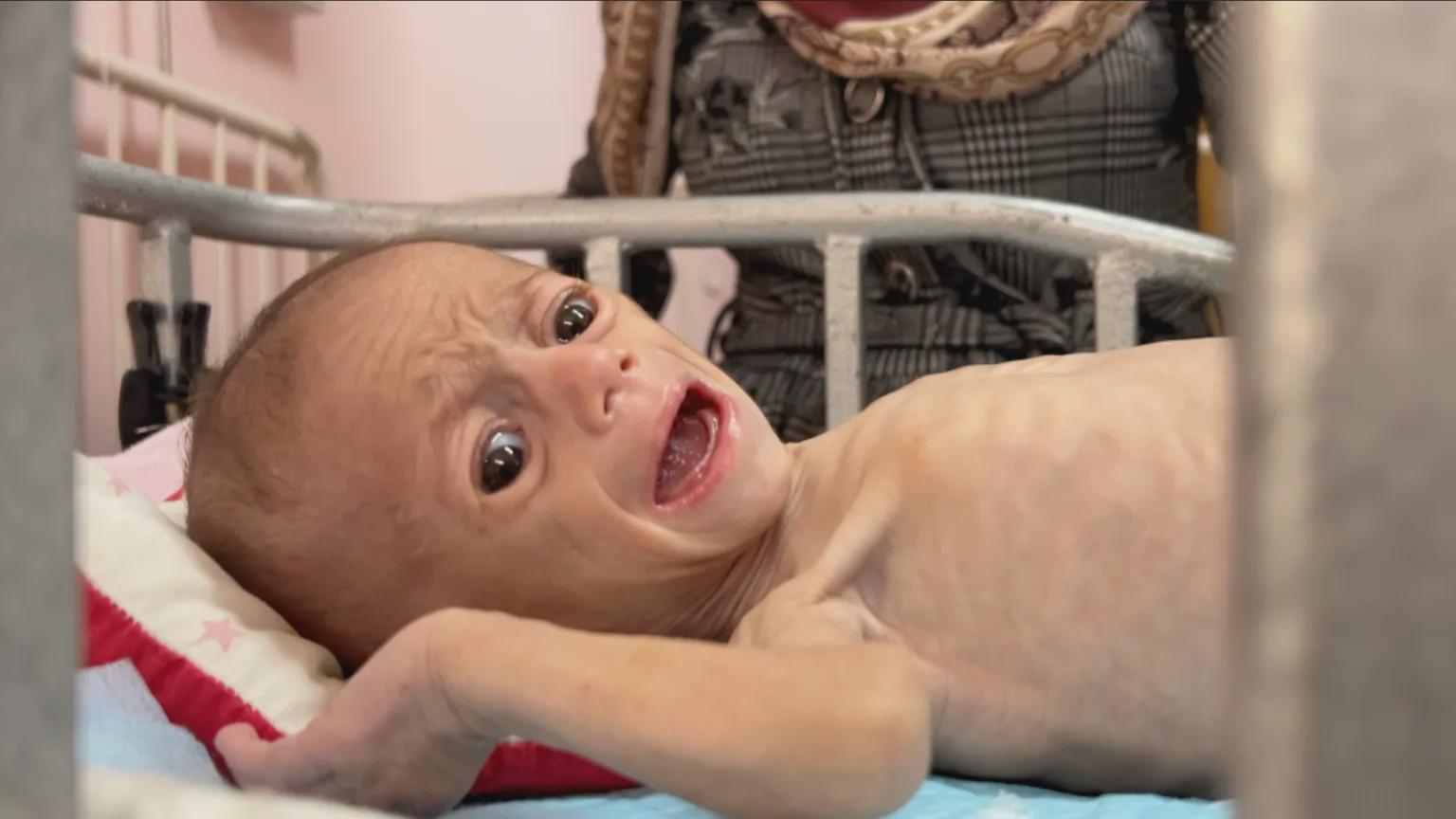
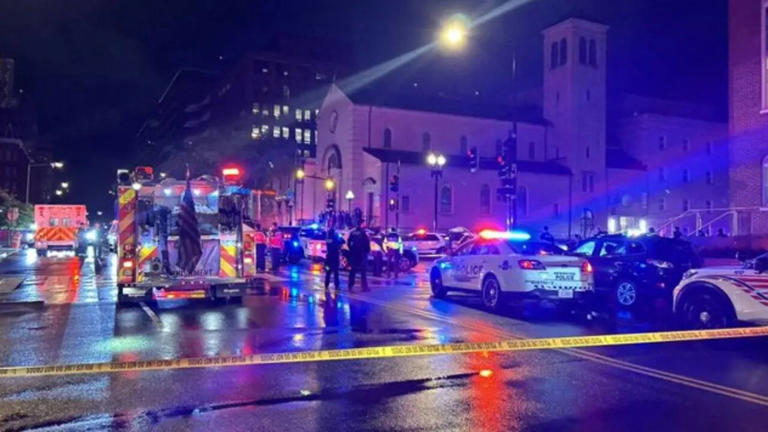
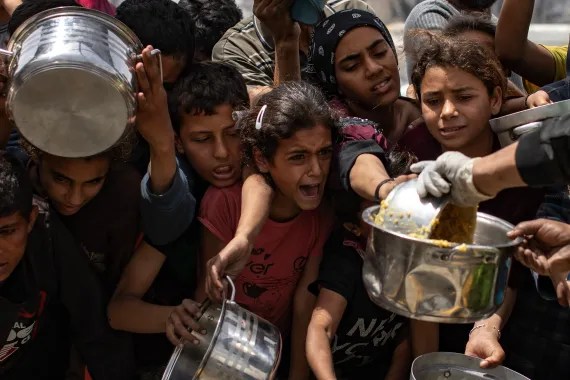
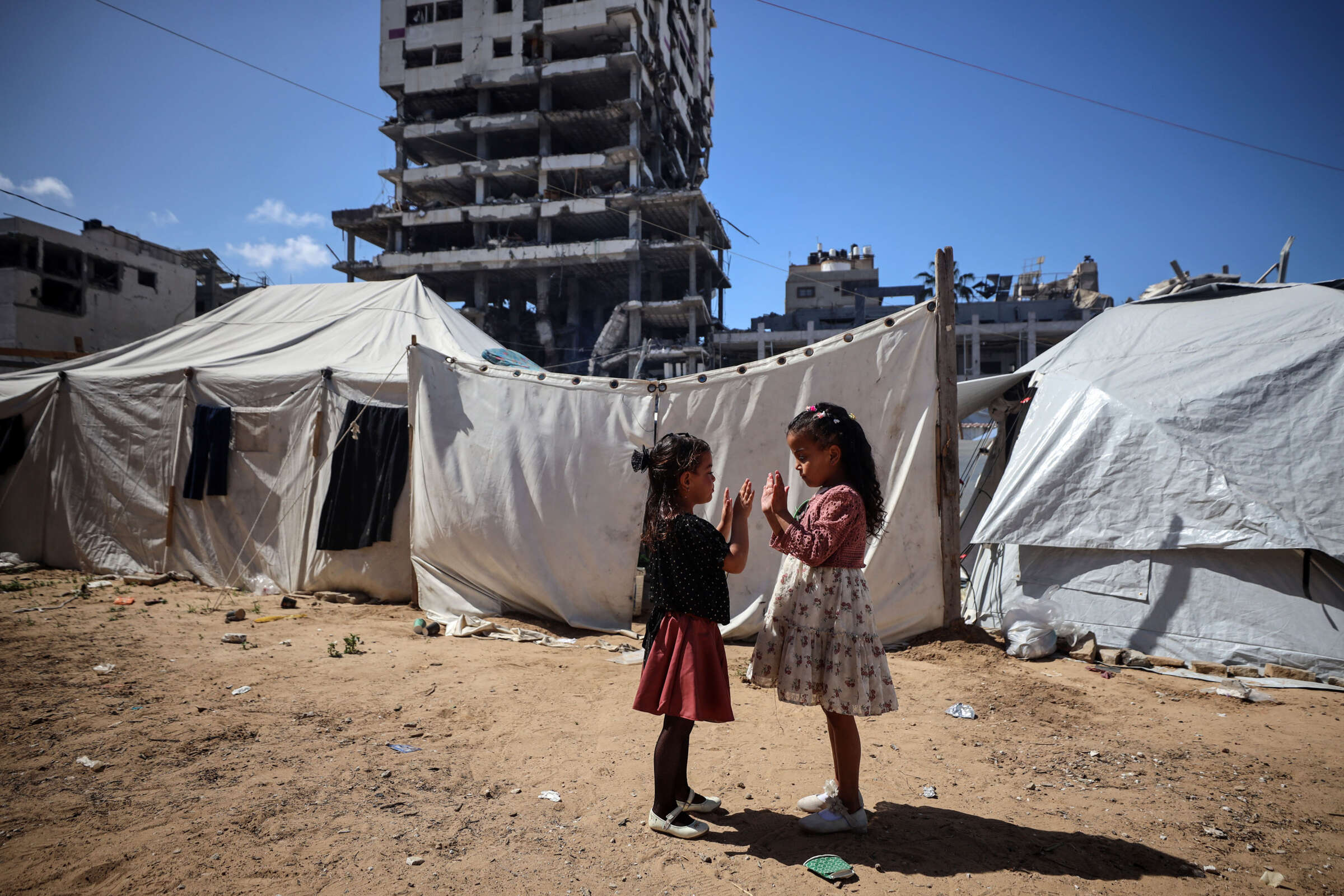
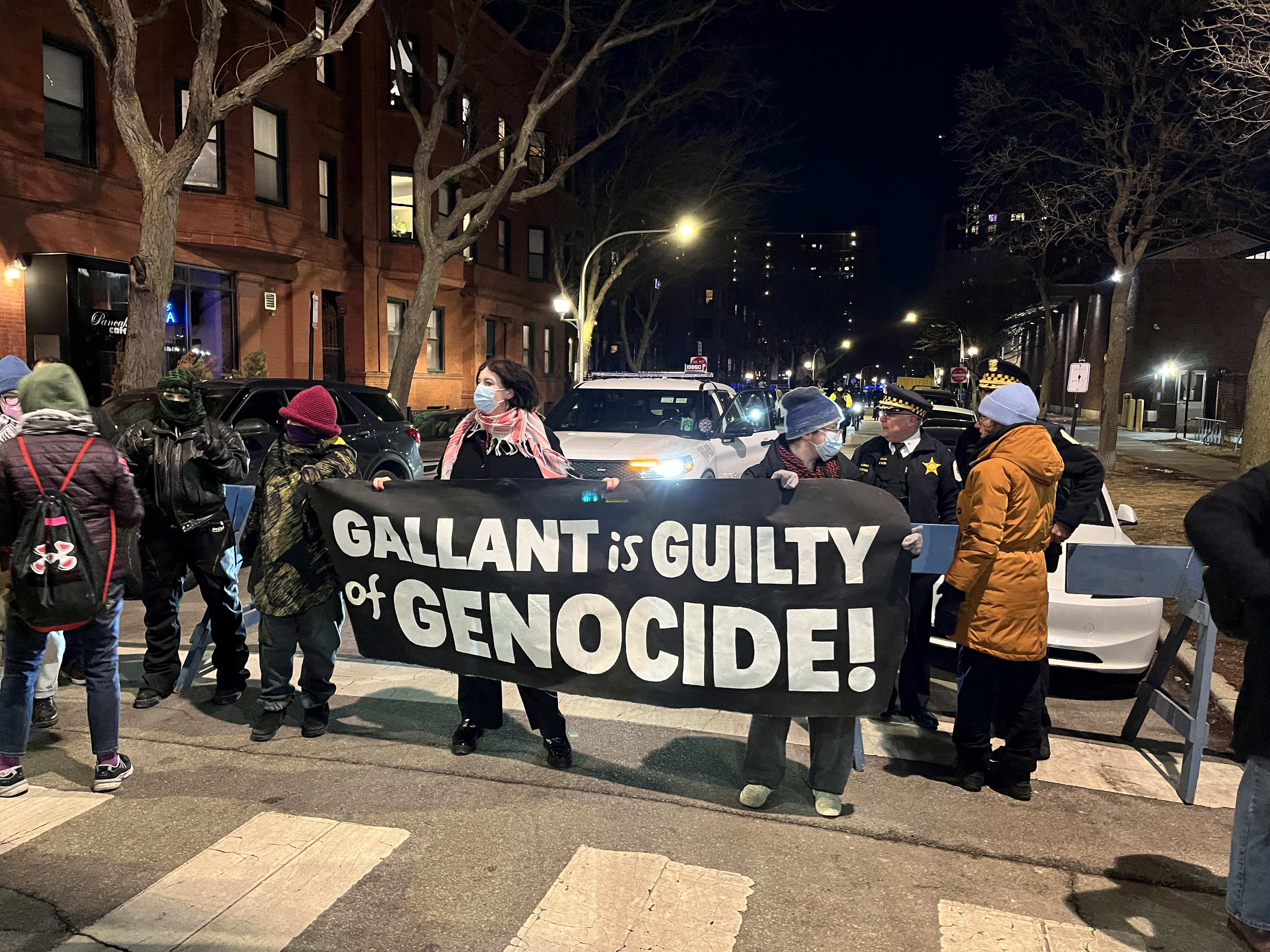
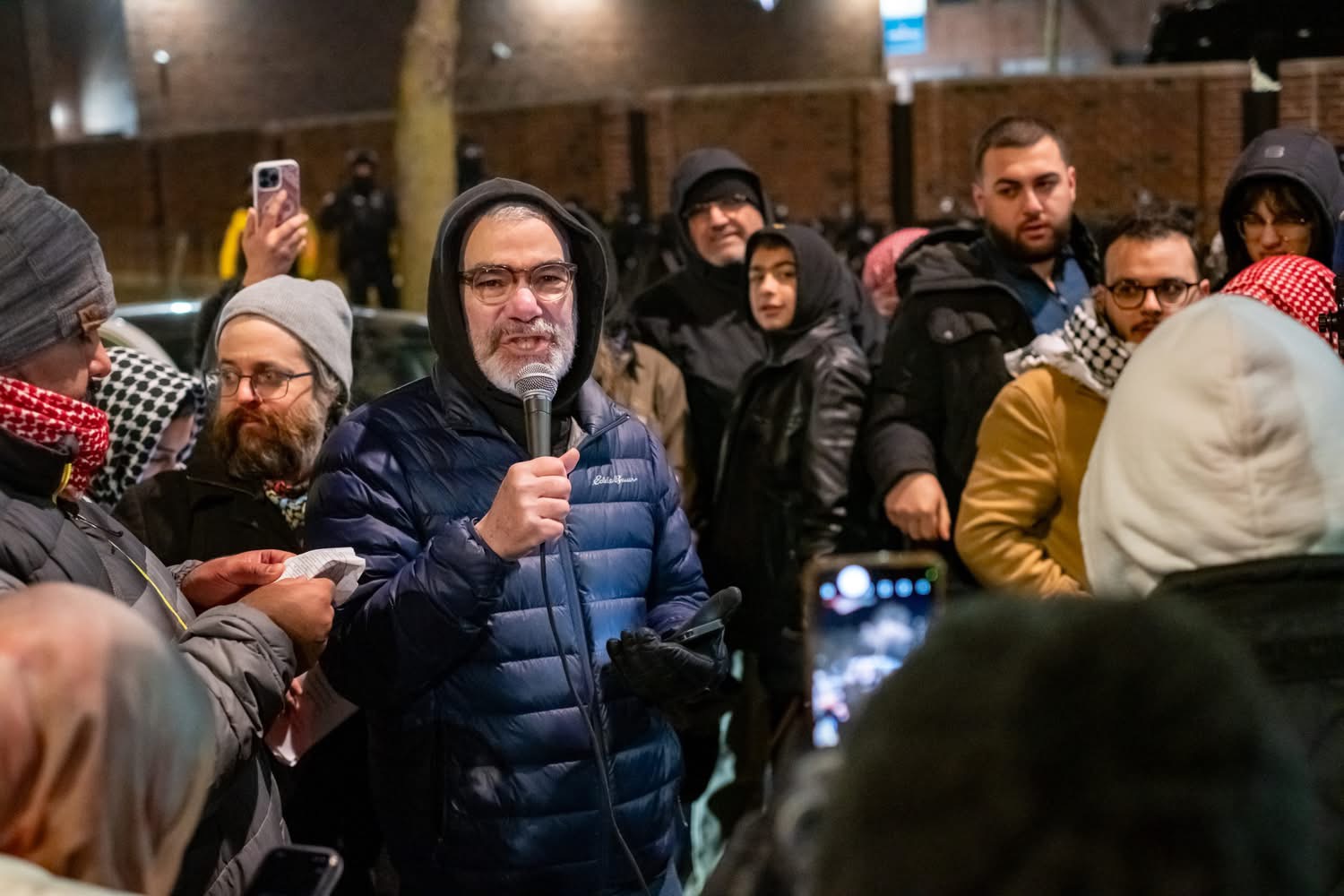
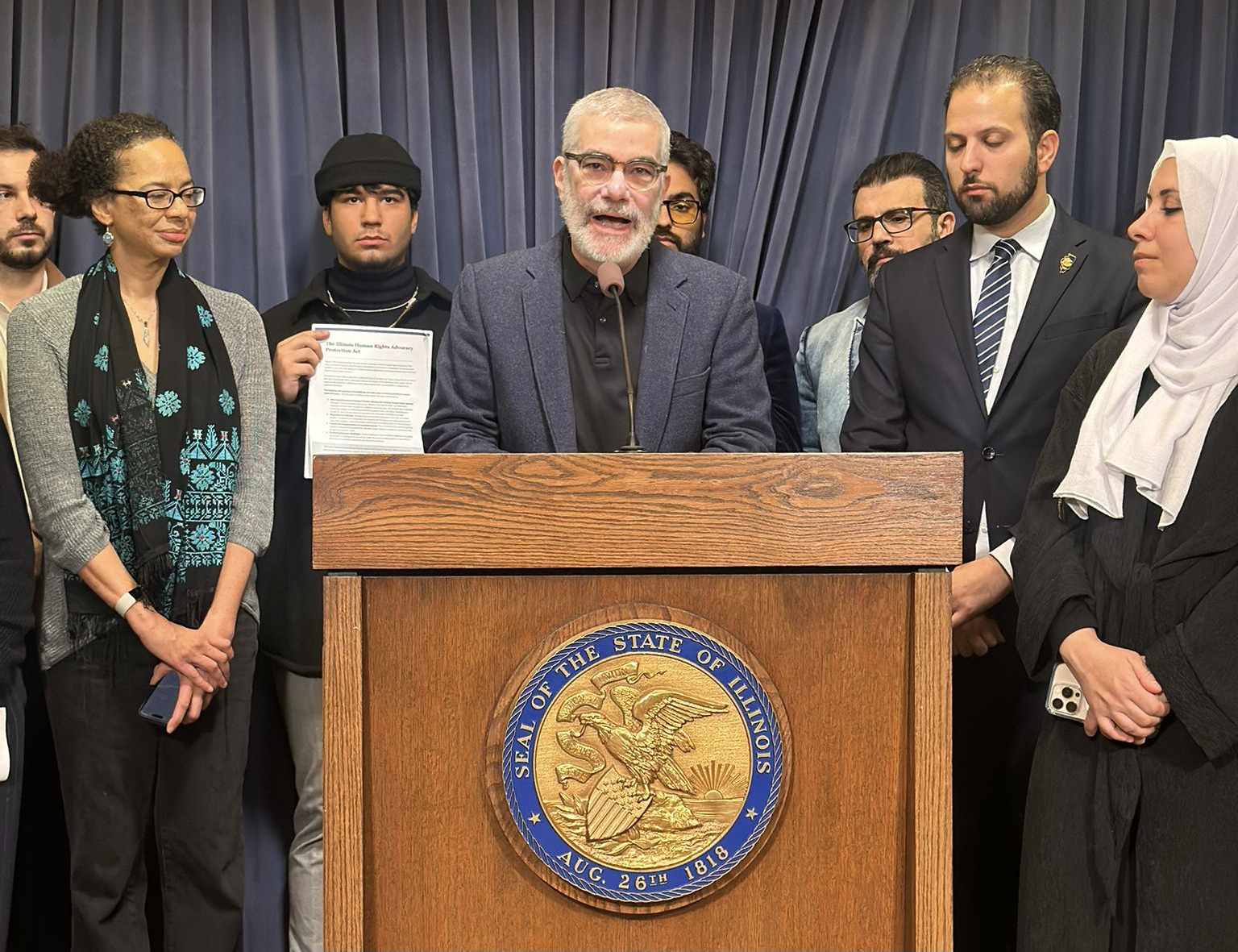
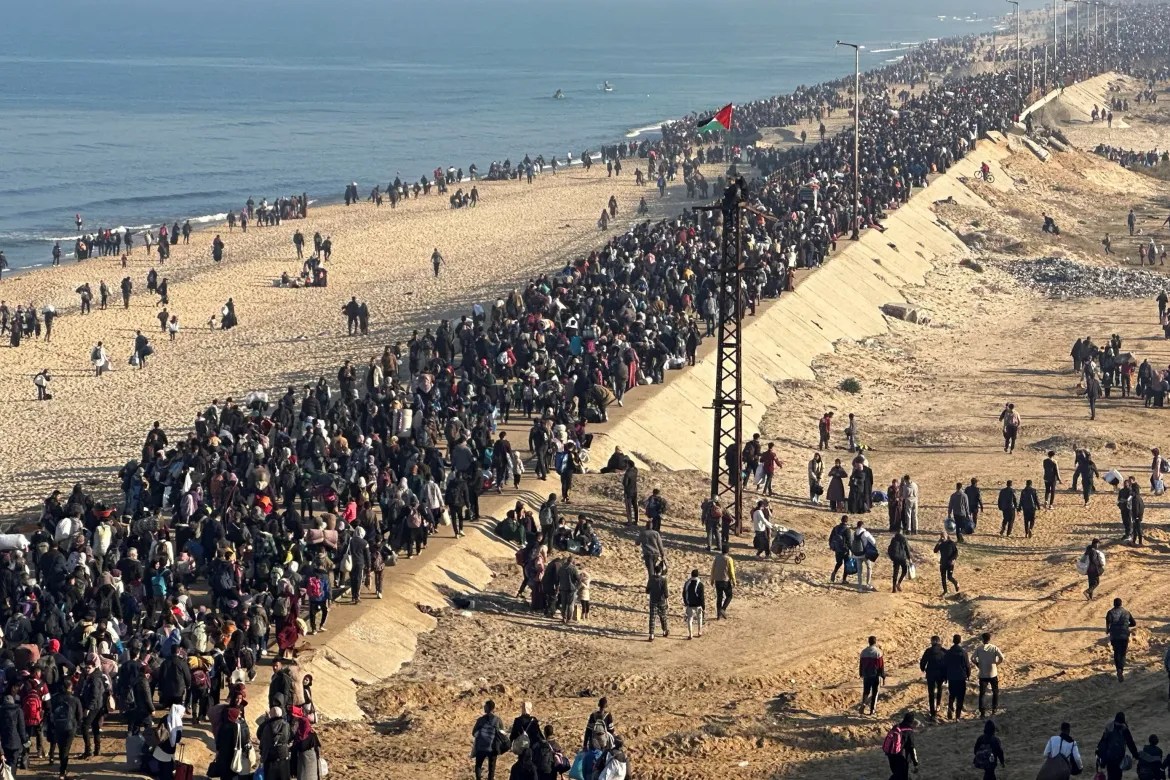
 Shalom Rav