Tag Archives: Passover

Next Year in Jerusalem?

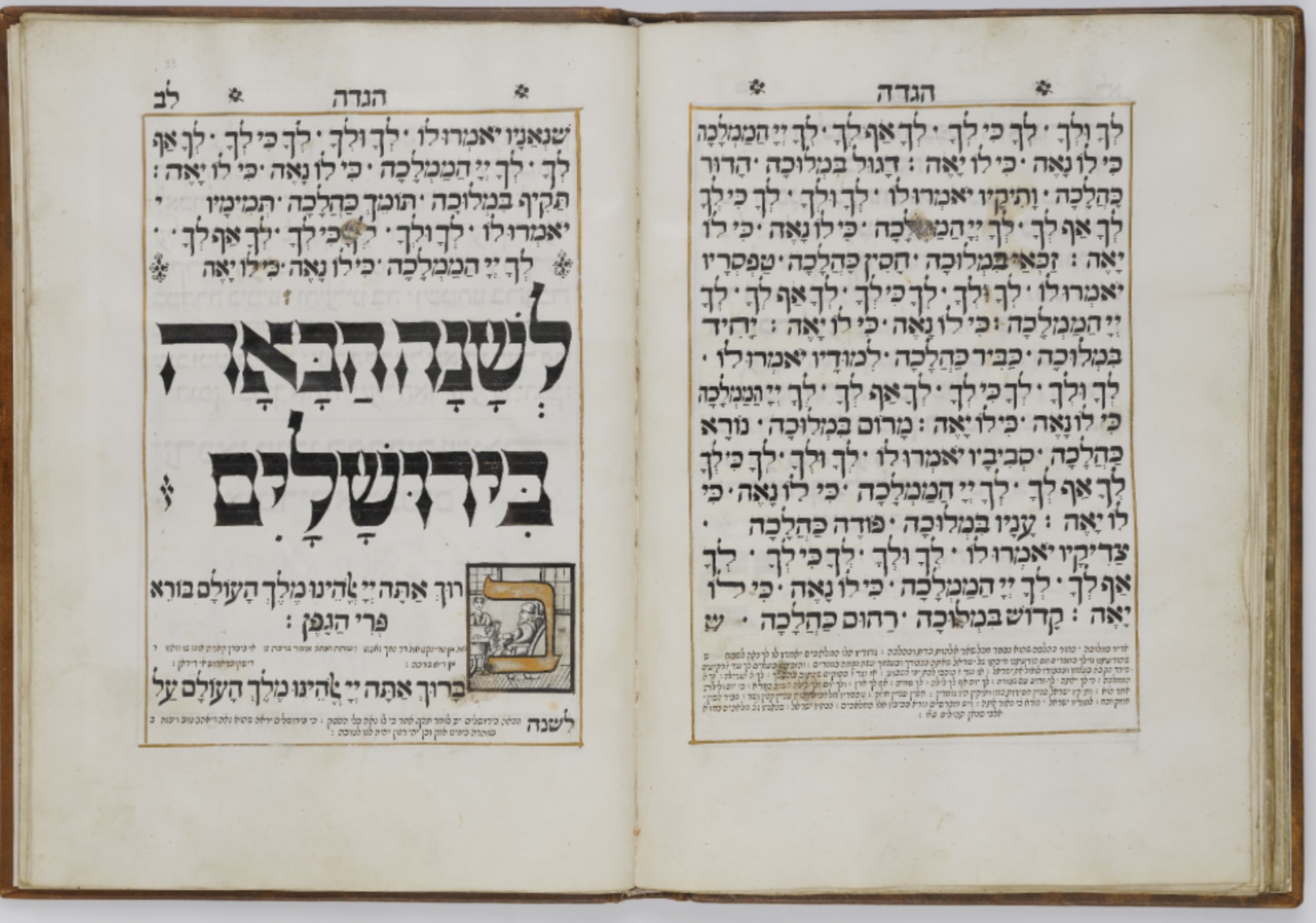
I’m sure I’m not the only anti-Zionist Jew who experiences cognitive dissonance when we get to the line that ends every Passover seder, “Next year in Jerusalem!” In the age of Zionism, what do these words really mean: when a Jewish person can fly to Jerusalem not next year, but tomorrow, and become an instant citizen upon arrival? How can we joyfully shout these words knowing that Israel ethnically cleansed half of Jerusalem in 1948 and militarily conquered and occupied the other half in 1967? What do they mean while scores of Palestinians who have deep generational ties to the land are forbidden from even setting foot in that city? 

Over the years, I’ve come to the conclusion that the only way I can say this line with moral integrity is to understand the word “Jerusalem” not as referring to a physical city but to a spiritual ideal. This ideal, in fact, is central to Jewish tradition. After the destruction of the Temple and the ruination of Jerusalem by the Romans, the rabbis posited the existence of two Jerusalems: Yerushalayim Shel Mata (“Jerusalem Below”) and Yerushalayim Shel Mala (“Jerusalem Above”). Earthly Jerusalem is the physical city we know while the Heavenly Jerusalem is the messianic Jerusalem: a mirror reflection of the city on high: the Jerusalem of our highest aspirations. 

In other words, while a small number of Jews always lived in the city after the destruction of the Temple, for the majority of Jews who lived throughout the diaspora, the concept of Jerusalem became a spiritualized symbol. I’ve often been struck that diaspora cities that were centers of robust Jewish life have typically been referred to as “Jerusalems.” In the late 16th and early 17th centuries, for instance, Amsterdam was referred to as the “Jerusalem of the West” following the immigration of Sephardic Jews from Spain and Portugal. Likewise, Vilna was known as the “Jerusalem of Lithuania” and Tlemcen, Algeria was called “Jerusalem of the Maghreb.” 

When the ideology of Zionism emerged, and this spiritual ideal was subsumed into a physical place, the words “Next Year in Jerusalem” became a literal battle cry. But when we limit our understanding of Jerusalem to one specific city, we do damage to the very idea of Jerusalem itself. It’s tragically ironic that while the Hebrew word Yerushalayim literally means “City of Peace,” it has rarely known a moment’s peace in its history. It certainly hasn’t since the establishment of the state of Israel. 

While the metaphor of Jerusalem still has a prominent place in Jewish tradition and liturgy – the words “Next Year in Jerusalem” mark the end of Yom Kippur as well as the Pesach seder – this ideal can be deeply meaningful even for those of us who do not ascribe to the messianic aspects of Jewish tradition. They can continue to be deeply aspirational, indicating our hope for a future of justice, equity, and peace throughout the world – and our commitment to the work it will take to make that future real. 

For anti-Zionist Jews, these words are not only a statement, but an affirmation of our opposition to the violence and dispossession that continues to be wrought in the name of the Jewish people in that city and throughout the land. “Next Year in Jerusalem” can mean “Next Year, a Jerusalem for all its inhabitants.” It means “Next Year in Jerusalem without Jewish Supremacy.” It can mean “Next Year, may there be a return for all who have been dispossessed from their homes.” When we affirm that Jerusalem is not only an earthly location, we affirm the true Jerusalem cannot be destroyed, conquered or reconquered: it continues to live in our hearts and motivate our actions. 

May it be so this and every Passover: “Next Year in Jerusalem!” 

This Passover, We Must Reckon With Israel’s Heinous Violence Against Children in Gaza

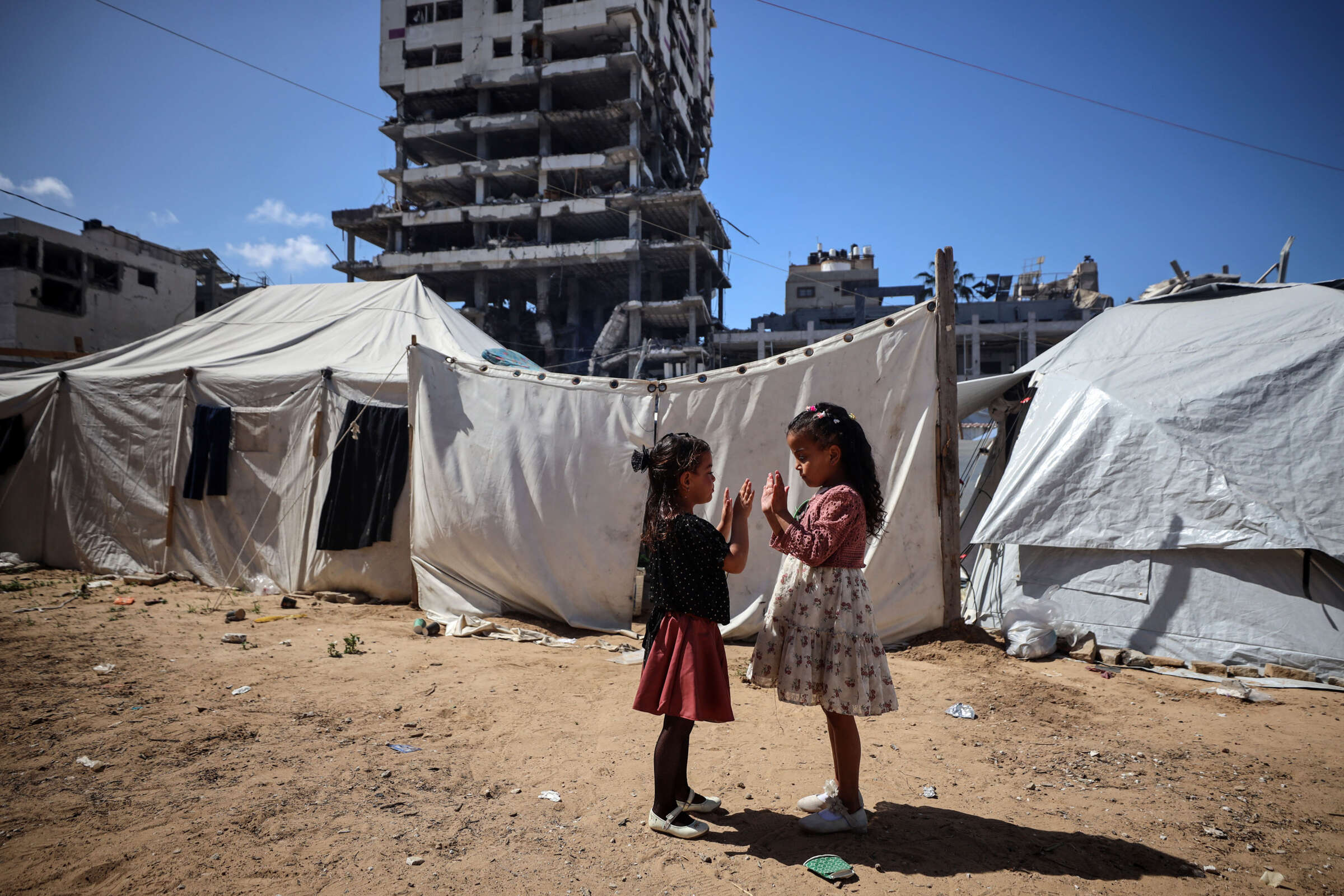
Majdi Fathi / NurPhoto via Getty Images

Cross-posted with Truthout

Content Warning: This article contains graphic descriptions of violence to children.

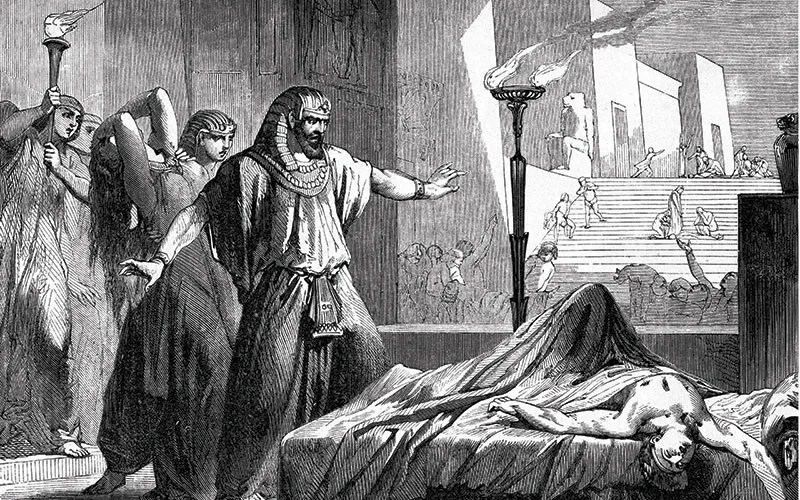
As the Jewish community prepares to observe Passover this year, I’m thinking a great deal about the centrality of children to the Exodus story we tell around the seder table. In particular, I’m struck that this narrative from the Torah begins with a terrifying description of atrocities committed against children. As Exodus opens, a new pharaoh arises over Egypt who openly dreads the demographic growth of the Israelite minority. After oppressing them with forced labor, he orders Hebrew midwives to kill newborn male children. When they resist his demand, he charges the Egyptians to throw all baby boys into the Nile. Shortly after, Moses is born and is saved from this decree of death by his mother, his sister and the pharaoh’s daughter, who adopts him.

Among other things, the Exodus story drives home the tragically familiar truth that children are not mere casualties of wartime atrocities, but are actually targeted by state violence. According to a 2014 report in The New Yorker, “The specific targeting of children is one of the grimmest new developments in the way conflicts have been waged over the past fifty years.”

Those who participate in the Passover seder are required not only to read the story of the Exodus, but to examine its relevance, as the Haggadah instructs us, “in every generation.” As such, the opening of the narrative presents us with all too disturbing parallels — and a critical moral challenge. This Passover — the second to come amidst the ongoing genocide perpetrated by Israel against Palestinians in Gaza, we would be grievously remiss if we failed to acknowledge the scores of children who have been killed, maimed and traumatized by Israel’s ongoing military onslaught.

The official death toll in Gaza has now broken the 50,000 mark, including more than 17,000 children. (The medical journal The Lancet has concluded that the total number of those killed is likely 40 percent higher.) On March 18, the day that Israel broke a two-month ceasefire, the Israeli military killed more than 400 Palestinians, including 183 children and 94 women — on what observers call the single bloodiest day of the genocide.

More recently, on April 3, Israel bombed the Dar al-Arqam School-turned-shelter in Gaza City, killing 29 people, 18 of whom were children. In its report on the attack, Al Jazeera quoted a spokesperson from Gaza’s emergency rescue workers: “What is going on here is a wake-up call to the entire world. This war and these massacres against women and children must stop immediately. Children are being killed with cold blood here in Gaza.”

For those who stand in solidarity with Palestinians, certain reports and images have become seared into our hearts and minds. For many, the tipping point moment into the abyss occurred in early 2024, with the phone recording of 6-year-old Hind Rajab, pleading with her mother for rescue before the Israeli military shot 335 bullets into her family’s car. One month later, the world was horrified by the image of Sidra Hassouna, a 7-year-old Palestinian girl from northern Gaza, hanging dead off the ledge of a destroyed house with half her body missing.

On May 26, 2024, a 1-year-old baby, Ahmad Al-Najjar, whose headless body was held aloft by a terrified, grief stricken man following what has come to known as the Rafah Tents Massacre — a night in which 45 Palestinians, most of them women and children, were killed, burned alive and beheaded. One doctor who witnessed the carnage commented, “In all my years of humanitarian work, I have never witnessed something so barbaric, so atrocious, so inhumane. These images will haunt me forever… And will stain our conscience for eternity.”

Denial can take many forms. For some, it is rooted in racist dehumanization of the other; others may be just too overwhelmed to allow themselves to comprehend the massive slaughter of children in such a heinous fashion; still others rationalize the truth of it away, dismissing mass murder as “collateral damage” or Hamas’s use of “human shields” (a cynical claim that has been consistently debunked by human rights observers).

For Israel’s supporters, it is even more unthinkable to face the increasing evidence that the Israeli military might well be intentionally targeting children for mass murder. A recent Al Jazeera “Fault Lines” documentary, “Kids Under Fire,” makes a compelling case for this claim, with extensive eyewitness interviews with volunteer American health care workers and human rights experts. Their accounts, corroborated across hospitals and over time, suggest a systematic pattern: increasing numbers of child victims were not injured as a result of bombing raids, but of direct gunshot wounds, often to the head. One of the doctors interviewed in the film, Tammy Abughnaim, an American emergency physician from Chicago, commented:

More and more, I started to see children with penetrating injuries like gunshot wounds. After five, six, seven, eight, I came to the realization that somebody is shooting children. I didn’t want to believe that children were being shot. Nobody wants to believe that. Nobody wants to think that other humans are capable of annihilating children in that way.

Abughnaim’s testimony is corroborated in the film by Mark Perlmutter, an orthopedic surgeon from North Carolina: “The target at the end of a scope is unmistakable. They are a young human being, and when that trigger gets pulled on that target, it is not by accident. At all. Ever.”

At one point, the interviewer asked Miranda Cleland of Defense for Children International – Palestine, “How you ever thought through ‘what’s the strategic reason to shoot a child? What message should we take from a military that would target children?’” Cleland’s reply: “I’ve thought about it a lot and the only conclusion I can come to is that Israeli soldiers are shooting Palestinian children because they want to. And I think they do it because they are allowed to and nobody has stopped them.”

Nabeel Rana, a vascular surgeon from Peoria, Illinois, put a finer point on it: “You’re wiping out a certain number, maiming a certain number and permanently mentally and emotionally disabling the rest. And that’s going to be passed down to the next generation. So, this is how you cripple a society.”

As centuries of state violence against oppressed communities have long demonstrated, the most direct way to undermine and even eradicate a society is to target its children. In December 2024, the Palestinian Centre for Human Rights (PCHR) released a report, “Generation Wiped Out: Gaza’s Children in the Crosshairs of Genocide,” examining Israel’s crime of genocide against Gazans, including the genocide of children. The PCHR report concluded:

The killing of children, infliction of serious physical and mental harm, and subjection to harsh living conditions that destroy their lives cannot be dismissed as mere collateral damage of military attacks. Instead, these actions are part of a systematic strategy aimed at erasing Palestinian identity and annihilating future generations.

There are ominous indications that this annihilation is well underway. A Reuters analysis of data from the Gaza Health Ministry revealed that at least 1,238 families — defined as married couples and any children they might have — have been totally erased, with no survivors. In an AP article on this issue last year, Omar Shabaan, a Gazan researcher and economist, observed that of Gaza’s 400,000 families, none have been spared, causing permanent harm to Gaza’s society, history and future. “It is becoming clear,” he said, “that this is a targeting of the social structure.”

This dramatic upsurge in the killing of Palestinian children is not limited solely to Gaza. According to a recent report on the “Gazafication” of the West Bank, the Israeli human rights group B’Tselem found that Israel is now using the military tactics of its assault on Gaza throughout the Occupied Territories, “where Palestinians face mass forced displacements, a surge in airstrikes and a sharp rise in attacks on children and other civilians.” B’Tselem reported that 180 children have been killed by Israeli forces in the West Bank since the Gazan genocide began, making it the deadliest period of Israel’s nearly 60-yearlong occupation for adults and children alike.

Reports of violence against children are indeed reminiscent of reports from Gaza. In an article entitled “Child Deaths Surge Amid ‘Gazafication’ of the West Bank,” the Guardian, interviewed Rigd Gasser, the father of 14-year-old Ahmad Rashid Jazar, who was shot in the chest in the village of Sebastia by an Israeli soldier while on an errand to get bread in January. Gasser was in a cafe when he heard the gunshots and rushed out when he heard calls for help. “I got closer and recognized my son. I knew him by his clothes, his body was all covered in blood,” he said.

The article also reports on the killing of cousins Reda Basharat (8) and Hamza Basharat (10) who were killed near home by an Israeli drone strike on January 8. The children were sitting outside with their 23-year-old cousin Adam when Hamza’s mother Eman heard the explosion. When she ran outside, she found Hamza injured and struggling to breathe. “He died in my arms,” she said. Eman added, “When I think about what happened to my son and remember the images of their bodies, and I see what is happening in Gaza on TV, I felt suddenly that they are doing the same thing.”

While these individual reports portray unspeakable cruelty, it’s important to bear in mind that it ultimately serves a larger purpose. Just like the violence inflicted by the pharaoh in the Exodus story, Israel’s violence toward children stems from the view of an entire people as a “demographic threat.” This view itself stems from Zionism: an ideology and movement that seeks to create and maintain a majority Jewish nation-state in historic Palestine. As such, the targeting of children is part of a larger effort to ethnically cleanse Gaza through a variety of means, including demolition of homes, population transfer and, as the PCHR report puts it, “erasing Palestinian identity and annihilating future generations.”

In this regard, Israel’s open fire policy toward Palestinian children is inseparable from other draconian actions that clearly seek the depopulation of Gaza and the West Bank. As of this writing, the AP has reported that Israel now controls 50 percent of Gaza as it enlarges its buffer zone, razing Palestinian homes, farmland and infrastructure to “the point of uninhabitability.” The military has also destroyed 90 percent of the southern city of Rafah, after issuing evacuation orders to its residents.

If there could be any doubt as to Israel’s intentions, Deputy Speaker of the Knesset Nissim Vaturi, of the Likud party, like so many other Israeli politicians and military leaders before him, recently made Israel’s end game all too clear. In a radio interview he said pointedly that Israel should “wipe Gaza off the face of the earth,” adding, “There are no innocents there.… I have no mercy for those who are still there. We need to eliminate them.” More recently he commented in a TV interview: “You can’t live with these creatures next to us.… There is no peace with anyone here.… Every child born now — in this minute — is already a terrorist when he is born.”

Notably, Vaturi has also made similar comments about the West Bank region of Jenin, where 40,000 Palestinians were displaced by Israel in the month of February alone. “Erase Jenin. Don’t start looking for the terrorists — if there’s a terrorist in the house, take him down, tell the women and children to get out.” While Israel’s apologists dismiss comments such as these as hyperbole, it is critical to note that these very clear statements of intent are being backed up by very clear action.

As a congregational rabbi, I’ve been asked recurring questions over the last two Passovers. How can I celebrate this holiday while a genocide is being committed in my name? How can I observe a festival of Jewish liberation while a Jewish nation-state is acting as a pharaoh over an entire people? While I understand the anguish behind these questions, I believe the Passover ritual actually offers us an important opportunity: to squarely face the way the Exodus narrative is playing out in a very real way in our own day, to ask hard questions and avoid the simple, pat answers.

In his searing book about Israel’s genocide, One Day, Everyone Will Have Always Been Against This, writer Omar El Akkad writes:

A woman’s leg amputated, without anesthesia, the surgery conducted on a kitchen table. A boy holding his father’s shoe, screaming. A girl whose jaw has been torn off. A child, still in diapers, pulled out of the tents after the firebombing, his head severed from his body.

Is there distance great enough, to be free of this? To be made clean?

This Passover, the season for asking questions, El Akkad’s challenge pounds insistently on the collective conscience of the world.

Tzedek Chicago’s New Seder Supplement: “Passover as Collective Liberation”

With Passover starting Saturday evening, April 12, Tzedek Chicago is honored to present our annual seder supplement, “Passover as Collective Liberation.”

As we witness fascism growing in the US and around the world, Passover arrives this year with a special urgency – and a sacred opportunity. As our supplement notes:

Merely telling the story is not enough. The seder requires us to interrogate this sacred narrative: to contemplate its meaning and to examine the questions it raises for us in our own day. Most critically, Passover demands that we connect the lessons of the Exodus story to Pharaohs that arise “in every generation.”

To that end, we encourage you to use the Passover narrative as a template to understand – and respond – to the stakes of the current political moment. First and foremost, we encourage you to universalize the Exodus narrative; to view our sacred liberation story in the context of collective liberation; to understand that the Jewish struggle and liberation is ultimately inseparable from so many other liberation struggles, past and present.

I believe it is more critical than ever to make these connections. As the Columbia grad student Mahmoud Khalil wrote in his “Letter from a Palestinian Political Prisoner in Louisiana.” (which we include in our supplement):

The Trump administration is targeting me as part of a broader strategy to suppress dissent. Visa-holders, green-card carriers, and citizens alike will all be targeted for their political beliefs. In the weeks ahead, students, advocates, and elected officials must unite to defend the right to protest for Palestine. At stake are not just our voices, but the fundamental civil liberties of all.

As another Palestinian American, Noura Erakat has noted (in an article that we quote in our supplement as well):

But resisting fascism is our collective goal. We just know that in order to resist it, we have to fight it on two fronts of U.S. state violence: at home and abroad. Because if the United States, together with Israel, manages to disembowel the ICJ, the ICC, the UN, and a broader global order built after the Holocaust and World War II, no one is safe… As Colombian President Gustavo Petro warned back in December 2023, ‘“What we are seeing in Gaza is a rehearsal of the future.’”

Yes, resisting fascism must be our collective goal. Those of us who have been advocating for Palestinian liberation must understand that their liberation is irrevocably connected to the liberation of all who are targeted by state violence. At this moment, the stakes could not be higher. Under the current regime, we are witnessing a terrifying state backlash about those who have publicly voiced their support for the Palestinian people. At the moment, activists of color with student visa are the primary targets. But as Mahmoud Khalil rightly noted in his letter, soon “visa-holders, green-card carriers, and citizens alike will all be targeted for their political beliefs.”

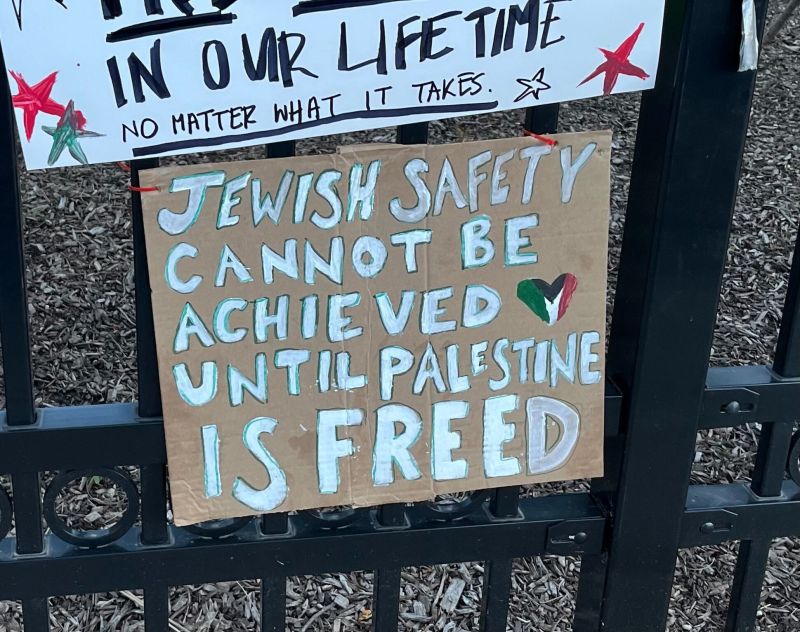
As Jews, we have a unique role in the current political moment. Indeed, we must fail to note that this state violence is being cynically carried out in our name, justified by concern for “Jewish security,” More than ever, we must to refuse to let our safety be used as a pretense to strengthen fascist state power. We must insist that this pretense will only endanger Jewish security all the more. We must affirm in no uncertain terms that Jewish safety and security is inseparable from the safety and security of all.

This Passover, let us insist that the Exodus story must be about the liberation of all who are oppressed by the contemporary Pharaohs of our day. This Passover, may we discover the true meaning of collective liberation – and find the inspiration to make it real in our world.

Click here for the supplement.