Monthly Archives: December 2009

Gaza One Year Later: Beyond the Complications

It was exactly one year ago that I read the first news accounts of Israel’s military assault in Gaza:

Waves of Israeli airstrikes destroyed Hamas security facilities in Gaza on Saturday in a crushing response to the group’s rocket fire, killing more than 225 — the highest one-day toll in the Israeli-Palestinian conflict in decades…

(There) was a shocking quality to Saturday’s attacks, which began in broad daylight as police cadets were graduating, women were shopping at the outdoor market, and children were emerging from school. The center of Gaza City was a scene of chaotic horror, with rubble everywhere, sirens wailing, and women shrieking as dozens of mutilated bodies were laid out on the pavement and in the lobby of Shifa Hospital so that family members could identify them. The dead included civilians, including several construction workers and at least two children in school uniforms.

By afternoon, shops were shuttered, funerals began and mourning tents were visible on nearly every major street of this densely populated city.

Previously, whenever I’d hear this kind of news out of Israel/Palestine, my shock and anguish would quickly be tempered by a familiar voice telling me to calm down, don’t overreact, don’t forget how terribly “complicated” the situation is. (Indeed, I recall hearing that voice distinctly three years earlier when the IDF responded to Hezbollah rocket attacks with a similarly massive military onslaught.)

This time, though, it was different. This time I didn’t hear the voice. Somehow, it just didn’t seem all that complicated to me any more.

This is what I wrote on my blog that day:

The news today out of Israel and Gaza makes me just sick to my stomach.

I know, I can already hear the responses: every nation has a responsibility to ensure the safety of its citizens. If the Qassams stopped, Israel wouldn’t be forced to take military action. Hamas also bears responsibility for this tragic situation…

I could answer each and every one of these claims in turn, but I’m ready to stop this perverse game of rhetorical ping-pong. I don’t buy the rationalizations any more. I’m so tired of the apologetics. How on earth will squeezing the life out of Gaza, not to mention bombing the living hell out of it, ensure the safety of Israeli citizens?

We good liberal Jews are ready to protest oppression and human-rights abuse anywhere in the world, but are all too willing to give Israel a pass. It’s a fascinating double-standard, and one I understand all too well. I understand it because I’ve been just as responsible as anyone else for perpetrating it.

So no more rationalizations. What Israel has been doing to the people of Gaza is an outrage. It has brought neither safety nor security to the people of Israel and it has wrought nothing but misery and tragedy upon the people of Gaza.

There, I’ve said it. Now what do I do?

As I read this post one year later, I remember well the emotions I felt as I wrote it. I also realize what a critical turning point that moment represented for me.

As a Jew, I’ve identified deeply with Israel for my entire life. I first visited the country as a young child and since then I’ve been there more times that I can count. Family members and some of my dearest friends in the world live in Israel.

Ideologically speaking, I’ve regarded Zionism with great pride as the “national liberation movement of the Jewish people.” Of course I didn’t deny that this rebirth had come at the expense of another. Of course I recognized that Israel’s creation was bound up with the suffering of the Palestinian people. The situation was, well, it was “complicated.”

Last year, however, I reacted differently. I read of Apache helicopters dropping hundreds of tons of bombs on 1.5 million people crowded into a 140 square mile patch of land with nowhere to run. In the coming days, I would read about the bombing of schools, whole families being blown to bits, children literally burned to the bone with white phosphorous. Somehow, it didn’t seem so complicated at all any more. At long last, it felt as if I was viewing the conflict with something approaching clarity.

Of course I think we’d all agree that the Israeli-Palestinian conflict is technically complicated. But at the same time I think we all know that at the end of the day, there is nothing complicated about persecution. The political situation in Darfur, for instance, is enormously complicated – but these complications certainly haven’t stopped scores of Jews across North America from protesting the human rights injustices being committed there. We do so because we know that underneath all of the geopolitical complexities, oppression is oppression. And as Jews, we know instinctively that our sacred tradition and own tragic history require us to speak out against all oppression committed in our midst.

I’d suggest that if there is anything complicated for us here, it is in possibility that we might in fact have become oppressors ourselves. That is painfully complicated. After all, our Jewish identity has been bound up with the memory of our own persecution for centuries. How on earth can we respond – let alone comprehend – the suggestion that we’ve become our own worst nightmare?

More than anything else, this is was what I was trying to say in that anguished, emotional blog post one year ago: is this what it has come to? Have we come to the point in which Israel can wipe out hundreds of people, whole families, whole neighborhoods and our response as Jews will be to simply rationalize it away? At the very least will we able to stop and question what has brought us to this terrifying point? Have we become unable to recognize persecution for what it really and truly is?

Those who know me (or read my blog) surely know that it has been a painfully challenging year for me. My own relationship to Israel is changing in ways I never could have predicted. Since I started raising questions like those above, I’ve lost some friends and, yes, my congregation has lost some members. If Zionism is the unofficial religion of the contemporary Jewish community then I’m sure there are many who consider me something of an apostate.

But at the same time, I’ve been surprised and encouraged by the large number of people I’ve met who’ve been able to engage with these questions openly and honestly, even if they don’t always agree with me. I suppose this is what I decided to do one year ago: to put my faith in our ability to stand down the paralyzing “complexities,” no  matter how painful the prospect.

One year later, I still hold tight to this faith.

Parabéns, Jews of Brazil!

Another sign of the times – this just in from the JTA:

Brazil has set aside a day to honor Jewish immigrants to the country.

Brazilian Vice President Jose Alencar signed a measure setting March 18 as Jewish Immigration Day. The date coincides with the re-inauguration date in 2002 of the Brazilian synagogue Kahal Zur Israel, the oldest synagogue in the Americas.

“It was not easy to choose a date among many that represent the influence and the contribution of the Jewish community to the development of our country,” said Marcelo Itagiba, the Jewish congressman who had proposed the bill…

Brazil has some 120,000 Jews, the second largest Jewish population in Latin America after Argentina.

After reading the news I did a quick survey of Brazilian Jewish history and discovered that there have been Jews in Brazil since after the Spanish Inquisition. Moroccan Jews immigrated in the 19th century and, of course, European Jews arrived during and after the Shoah. As this latest news indicates, the Brazilian Jewish community clearly continues to thrive into the 21st century.

If you’d like to celebrate, JDub records has helpfully provided some choice jams from the contemporary Brazilian music scene in honor of this news. Parabéns!

Garrison Keillor: Nutcase or Post-Modern Ironist?

Just read Garrison Keillor’s sinus-clearing editorial, “Nonbelievers, Please Leave Christmas Alone.”  Jesus, Mary and Joseph, just check this out:

If you don’t believe Jesus was God, OK, go write your own damn “Silent Night” and leave ours alone. This is spiritual piracy and cultural elitism, and we Christians have stood for it long enough. And all those lousy holiday songs by Jewish guys that trash up the malls every year, Rudolph and the chestnuts and the rest of that dreck. Did one of our guys write “Grab your loafers, come along if you wanna, and we’ll blow that shofar for Rosh Hashanah”? No, we didn’t.

Christmas is a Christian holiday – if you’re not in the club, then buzz off. Celebrate Yule instead or dance around in druid robes for the solstice. Go light a big log, go wassailing and falalaing until you fall down, eat figgy pudding until you puke, but don’t mess with the Messiah.

And those are just the milder parts.

What do you think, is this irony or has GK flown off the rails? Folks like blogger Jerry Haber and the Atlantic’s Jeffrey Goldberg think it’s the latter; I’m tending toward the former.  If you can lay down your wassal for just a moment, I’d love to hear your thoughts…

Jewish Ritual Reinvented

If you’re in New York or are planning to be, you need to get to the Jewish Museum and check out their latest exhibit, “Reinventing Ritual, survey of “the explosion of new Jewish rituals, art, and objects that has occurred since the mid-1990s.”

The exhibit celebrates the post-modern age as a time in which Jewish ritual can be radical as well as a return to its elemental basics:

This attitude of innovation is shared by a wide range of artists inclusive of generation, nationality, and religion. Contemporary artists and designers focus on Judaism as a lived experience by transforming the physical acts of ritual into new forms.

Outstanding works of industrial design, metalwork, ceramics, video, drawing, comics, sculpture, installation, and textiles from Europe, Israel, and North America reveal the diversity within Judaism. The exhibition will present works in thematic groups and environments that suggest the spaces and situations in which ritual is performed.

Here at JRC, we’re particularly honored that our new synagogue building is included in the exhibit. The Museum was interested in our LEED Platinum rated facility because “its principle of active conservation is at the heart of the exhibition.”

If you can’t make it to NYC, you can still see and read about many amazing pieces from the exhibit at the Museum website (like artist Michael Berkowitz’s combination wedding dress/amulet, above).

Palestinian Christians: “The Occupation is a Sin”

Last week, a group of Palestinian Christians representing a variety of churches and church-related organizations issued a powerful, prayerful call for an end to the Israeli occupation.  My friend Rabbi Brian Walt was present at the meeting in Bethlehem in which the statement – known as  “The Kairos Palestine Document” – was released. Upon his return, he described to me his profound, often painful conversations with Palestinian Christians and he told me that as a Jew, he considered the Kairos Document to be an enormously important spiritual/political statement. Having now read the entire 12 page document, I must say that I agree wholeheartedly.

Palestinian Christian liberation theologians such as Naim Ateek of the Sabeel Institute have been doing important work for decades and I believe their ideas present important spiritual challenges to the Jewish community. Many Jews point to the more radical incarnations of these theologies - and while I share some of these concerns, I believe that we make a profound mistake by dismissing Palestinian Christian theology wholesale. (Frankly, I am much more troubled by the “End of Days” theologies of fundamentalist Zionist Christians such as Pastor John Hagee than I am by Naim Ateek and the authors of the Kairos document.)

My friend and colleague Father Cotton Fite of St. Luke’s Church in Evanston, tells me he hopes that American Christians will study the Kairos Document carefully. I mentioned to him that I hoped Jews would read it as well. In fact, I think we should create opportunities to read it together. Despite our differences, I believe it offers both of our communities an ideal place to begin meaningful dialogue over the spiritual implications of this conflict.

One of the more important and challenging passages:

Our presence in this land, as Christian and Muslim Palestinians, is not accidental but rather deeply rooted in the history and geography of this land, resonant with the connectedness of any other people to the land it lives in. It was an injustice when we were driven out. The West sought to make amends for what Jews had endured in the countries of Europe, but it made amends on our account and in our land. They tried to correct an injustice and the result was a new injustice.

I can already predict that many Jews will bristle that this passage does not specifically reference the Jewish connection to the land as well. To this I would say, how deeply do we Jews ever honor the reality that we are not the only people who are “deeply rooted in the history and geography of this land?” Moreover, how deeply do we ever face the true injustice that was committed when a people with deep roots in the land were driven out and not allowed to return?

Another sobering passage in the document describes the Occupation as no less than a “sin:”

We also declare that the Israeli occupation of Palestinian land is a sin against God and humanity because it deprives the Palestinians of their basic human rights, bestowed by God. It distorts the image of God in the Israeli who has become an occupier just as it distorts this image in the Palestinian living under occupation. We declare that any theology, seemingly based on the Bible or on faith or on history, that legitimizes the occupation, is far from Christian teachings, because it calls for violence and holy war in the name of God Almighty, subordinating God to temporary human interests, and distorting the divine image in the human beings living under both political and theological injustice.

Many of us view the Occupation as a political problem to be solved. But indeed, as Jews, we must admit basic human rights are rooted in our religious tradition. Like Christians, we also believe that all human beings are created in the image of God. We also believe that when the basic dignity of anyone’s humanity is diminished, the Divine Image is diminished as well. How then, can we fail to understand that the Occupation is not only a geo-political problem but a spiritual/moral problem as well?

This conclusion leads to a logical next step:

Love is seeing the face of God in every human being. Every person is my brother or my sister. However, seeing the face of God in everyone does not mean accepting evil or aggression on their part. Rather, this love seeks to correct the evil and stop the aggression.

The injustice against the Palestinian people which is the Israeli occupation, is an evil that must be resisted. It is an evil and a sin that must be resisted and removed. Primary responsibility for this rests with the Palestinians themselves suffering occupation. Christian love invites us to resist it. However, love puts an end to evil by walking in the ways of justice. Responsibility lies also with the international community, because international law regulates relations between peoples today. Finally responsibility lies with the perpetrators of the injustice; they must liberate themselves from the evil that is in them and the injustice they have imposed on others.

Again, the Occupation is viewed not as a diplomatic issue to be negotiated but a spiritual evil to be resisted.

I have no illusions that for many Jews, suggestions such as these present daunting and painful challenges.  So will many of the ultimate political ramifications of the Kairos Document. All I can hope for is that political disagreements will not keep us from honestly facing the profound spiritual dimensions of this conflict.  Speaking for myself, I do believe this statement was written in good faith, genuine love and true religious conviction:

Our message to the Jews tells them: Even though we have fought one another in the recent past and still struggle today, we are able to love and live together. We can organize our political life, with all its complexity, according to the logic of this love and its power, after ending the occupation and establishing justice.

What can I say to this except “Amen?”

Life in the Green Zone

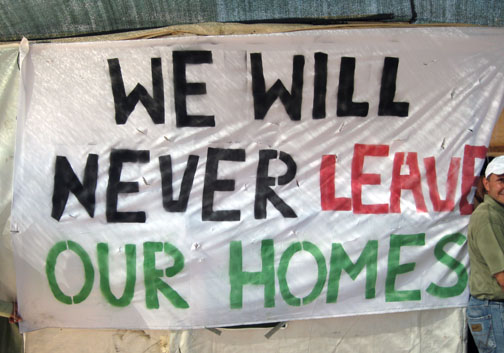
A few posts ago I described the crisis in Sheikh Jarrah and the increasing Judaization of Arab East Jerusalem. For further analysis of this issue, I strongly encourage you to watch the 20 minute documentary, “Green Zone” (above). It brilliantly exposes the sham of a legal system that is Jerusalem’s housing policy.

The bottom line: Arabs are being expelled from their homes for no other reason than they are not Jews.

Please find 20 minutes to watch this film.  Then please consider supporting the Israel Committee Against Home Demolitions and their campaign to rebuild demolished Palestinian homes.

(H/T to Adam Horowitz and Mondoweiss)

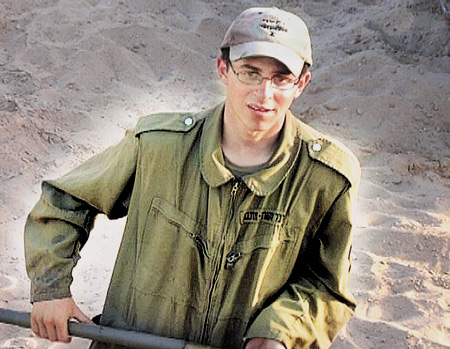
Gilad Shalit and the Sorrows of Tribalism

Not long ago I was asked by a friend: why are Israelis and Jews so fixated on the kidnapping of Gilad Shalit? With all of the crises and injustices being committed in the world, why is there such a hue and cry over this one particular man?

I answered that like all nations, Israel takes this kind of thing personally. I mentioned that just like many Jews in Israel and around the world, I also experienced Hamas’ abduction of Gilad Shalit as an injustice committed against one of my own. Even as a Jew living in the comfort of my Evanston home, I felt a visceral sense of pain three years ago when I first heard the news of Shalit’s kidnapping. Over time, my pain turned to anger as Hamas denied him Red Cross visits and refused to confirm (until only recently) whether he was even dead or alive.

I went on to compare Israel’s trauma to the feeling of collective trauma we felt in our country in 1979, when Iranian militants took American embassy workers hostage: how violated our nation felt: how personally we identified with the hostages; how deeply we experienced the injustice of their imprisonment.

On a less tribal level, of course, I do understand that there was a deeper context to the hostage crisis. Underneath our feelings of personal violation were more challenging questions – questions few of us were prepared to ask out loud. Why, for instance, did we have so much concern over 53 fellow Americans, but not for countless other political prisoners around the world, many of them incarcerated by regimes actively supported by our nation?

In just the same way, I believe too few Jews even know – let alone protest – that while Hamas unjustly imprisons Shalit, Israel holds hundreds of Palestinians taken in operations that at best must be considered ethically dubious. While Israel defends its actions legally by terming these prisoners “enemy combatants,” the hard truth remains that for decades Israel’s security services have rounded up scores of Palestinians without charge and have imprisoned them indefinitely – in many cases for years.

Yes, many of the prisoners are undoubtedly guilty of plotting or carrying out violent acts against Israelis. Many of these incarcerations can surely be defended on grounds of security. But it has become impossible to ignore that Israel has also incarcerated considerable numbers of Palestinians who by any reasonable definition must be considered political prisoners.

(One recent case in point: many Jews are familiar with the case of Gilad Shalit, but I’m sure that far fewer know, for instance, about Abdallah Abu Rahmah, a Palestinian high school teacher and coordinator of the non-violent campaign in the West Bank village of Bil’in, who was arrested last week by the Israeli military. According to eyewitness accounts, Abu Rahmah was taken from his bed at 2:00 am in the presence of his wife and children.)

And so, beyond the emotions of tribalism, the question remains: will we ever be able to see past our own loyalties and find equal value in the lives of others – human beings who are just as eminently worthy of fair treatment, justice and dignity? And even more challenging: will we ever be ready to admit that the violence committed against us is often inspired in no small way by the injustices we ourselves have committed – and continue to commit?

To return to the Iranian hostage example: back in 1979, few Americans cared to even ask why their Iranian captors might have been so motivated to commit this act. Most of us were ignorant to the powerful significance of the American embassy for Iranians – that it was this very same embassy from which our nation had plotted the overthrow of Iran’s democratically elected government in 1953. As it turned out, the regime we subsequently installed would persecute and unjustly imprison countless Iranian citizens over the next two decades.

So too in the case of Gilad Shalit. Few of us in the Jewish community are truly ready to examine the source of Gazan’s fury toward Israel – a fury that has been building since long before Hamas even existed. Few of us are willing to face the history of Israel’s oppressive policies in Gaza or the fact that Gazans have been living under an intolerable occupation for decades.

And even fewer of us even know that the overwhelming majority of the 1.5 million who live in Gaza belong to families that originally came from outside of Gaza – from towns and villages like Ashkelon and Beersheba – and were expelled from their homes by the Israeli military in 1948. Indeed, when I think of Gazan rage in 2009, I can’t help but think of these chilling words by Moshe Dayan from back in 1956:

Who are we that we should bewail their mighty hatred of us? (They) sit in refugee camps in Gaza, and opposite their gaze we appropriate for ourselves as our own portion the land and the villages in which they and their fathers dwelled.

The history of Gaza is indeed a tragic one – and yes, Israel’s oppression of its population is a critical part of this tragedy. Unless we take the time to understand this history – and our part in it – I don’t believe we can even begin to pretend there is a way out of this conflict.

To be clear: understanding the source of Gazans feelings toward Israel does not mean condoning their actions. Hamas’ imprisonment of Gilad Shalit is barbaric. As a fellow Jew, I grieve for Shalit and I pray for his safe return. But at the same time, I cannot look away from the more painful realities that led to his capture in the first place, and I truly believe that until we make an honest effort to face and address these realities, there will invariably be more Gilad Shalits in Israel’s future.

Following Israel’s military campaign in Lebanon in the summer of 2006, journalist Amira Hass wrote these powerful words in Ha’aretz. I believe she presents us with a profound model of an Israeli who is able to hold her own concern for her people together with a willingness to face the truth of the injustices perpetrated her nation. Her words are doubly tragic as we now approach the one-year anniversary of Israel’s military campaign in Gaza:

We are justly concerned about the welfare of northern residents, proud of their fortitude, understand those who leave, are shocked by the death of each person and by every rocket hit, and identify with those suffering from anxiety. Take what the northern residents have been going through for a month, multiply it by 1,000, add an economic blockade, power and water cuts, and no wages. This is how the Palestinians in the Gaza Strip have been “living” for the past six years.

The Israelis allow their army to continue destroying, trampling and killing in the Palestinian territories. Here, like in Lebanon, the real intelligence and security failure is Israel’s ignoring the extent of our uninhibited, unrestrained devastation and their amazing power of human endurance. This is why Israel has delusions of “victories.” If the homemade rockets are still being fired at Sderot despite the Palestinians’ extensive suffering, it is because they have concluded, correctly, that Israel’s destruction power is not intended to stop Qassam rockets – or to free Gilad Shalit. It is intended to force them to accept a surrender arrangement, which they reject not with military victories but with their power of endurance.

Brighter Times Are On the Way

It’s only mid-day and already more than several people have e-mailed me David Brooks’ NY Times editorial on the meaning of Hanukkah. As those who know and love me will attest, I am not a huge fan of the actual Maccabee story – so I was interested to read Brook’s fairly accurate historical retelling.

This insight, I thought, was especially spot on:

(The Maccabees) were not the last bunch of angry, bearded religious guys to win an insurgency campaign against a great power in the Middle East, but they may have been among the first. They retook Jerusalem in 164 B.C. and rededicated the temple. Their regime quickly became corrupt, brutal and reactionary. The concept of reform had been discredited by the Hellenizing extremists. Practice stagnated. Scholarship withered. The Maccabees became religious oppressors themselves, fatefully inviting the Romans into Jerusalem.

Not sure, though, about Brooks’ denouement – in which he offers his take on the central lesson of Hanukkah:

(There) is no erasing the complex ironies of the events, the way progress, heroism and brutality weave through all sides. The Maccabees heroically preserved the Jewish faith. But there is no honest way to tell their story as a self-congratulatory morality tale. The lesson of Hanukkah is that even the struggles that saved a people are dappled with tragic irony, complexity and unattractive choices.

(Hmmm, not sure I want to retell that stirring lesson as I light the menorah tonight.)

Truth be told, with every passing year, I find myself relying less and less upon Maccabean history – however watered-down – to provide me with a spiritual foundation for the observance of Hanukkah. I’m much more interested in the universal meaning of the festival: increasing the light during an increasingly dark time of year.

This meaning, by the way, is not lost on Jewish tradition. Witness this lovely parable from the Talmud (which may well describe the earliest recorded case of Seasonal Affective Disorder):

When Adam saw the day getting gradually shorter, he said, “Woe is me, perhaps because I have sinned, the world around me is being darkened and returning to its state of chaos and confusion; this then is the kind of death to which I have been sentenced from Heaven!”

So he began keeping an eight-day fast. But as he observed the winter equinox and noted the day getting increasingly longer, he said, “This is the world’s course,” and he set forth to keep an eight-day festivity.” (Talmud Avodah Zarah 8a)

Isn’t this all the lesson we need? As the dark descends, Hanukkah comes to remind us that brighter times are in our future. Keep it in mind as you light the first candle tonight.

You Are But Strangers: Jewish Theology and the Land of Israel

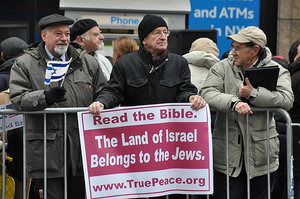
The land of Israel is ours because God gave it to us.

This particular Jewish claim is bandied about so much that I imagine it would some as a surprise to many that it is, in fact, a misrepresentation of the Torah and its teachings.

I would go farther and say this: this view is actually a betrayal of Jewish tradition – and has only become widely popular since the rise of political Zionism.

Let’s take a closer look at the texts in question:

Jewish fundamentalists and ultra-nationalists are fond of pointing out that God promised the land of Israel to Abraham in the book of Genesis:

On that day, the Lord made a covenant with Abram, saying, “To your offspring I assign this land, from the river of Egypt to the great river, the river Euphrates…” (Genesis 15:18)

Biblical scholars and commentators note that the covenant God makes with Abram (soon to be renamed Abraham) appears as a promisory covenant. In this early point in the narrative, the land indeed seems to be assigned to the people Israel with “no strings attached.”

Later in Exodus, however, once Israel has left Egypt and has become a nation at Sinai, God clarifies the terms of this covenant. It is spelled out in decidedly conditional language: if Israel follows God’s commandments, then they will indeed be able to live on the land that has been assigned to them by God. In other words, Israel now learns that their future on the land will be radically dependent on how they behave on the land.

As I see it, this is the fatal mistake made by those who claim that the land must ipso facto “belong” to the Jewish people. They focus exclusively on the Abrahamic promise, but neglect the critical next step: God’s conditional covenant with the Israelite nation.

In so doing, they pervert the Torah’s meaning – and do great damage to the central Jewish understanding of our relationship to the land. The land is not given to us unconditionally – we will only be able to live on the land if we prove ourselves worthy of it.

Interestingly, the Torah actually points out that previous inhabitants of the land had failed in this regard. Following a long litany of laws in Leviticus, we read:

Do not defile yourselves in any of those ways, for it is by such that the nations that I am casting out before you defiled themselves. Thus the land became defiled; and I called it to account for its iniquity and the land vomited out its inhabitants. (Leviticus 18:24-25)

In similarly colorful language, Israel is told that they might well meet the same fate if they do not keep God’s laws when they live on the land:

So let not the land vomit you out for defiling it, as it spewed out the nation that came before you. (18:28)

In another important verse from Leviticus, God makes it clear to whom the land ultimately belongs. In the discussion of the Jubilee year (in which landholdings revert back to their original owners) we read:

…the land must not be sold beyond reclaim, for the land is Mine; you are but strangers resident with Me. (Leviticus 25:23)

Notably, the Hebrew word for “stranger,” (“ger”) literally means “resident alien.” This word appears over and over throughout the Torah – particularly in admonitions to Israel not to mistreat the stranger, “for you were once strangers in the land of Egypt.” It is sobering indeed to learn that even after the Israelites enter Israel, they will still be, in effect, resident aliens on the land.

In the end, although many Jewish fundamentalists often treat the Torah as the Jews “deed of sale” to the land of Israel, it might be more accurate to describe it as a “lease” with very explicit conditions. In Deuteronomy, this conditional language reaches its apex. As the Israelites prepare to enter the land of Israel, Moses reminds them that they could be exiled from the land in an instant if they do not remain faithful to God’s covenant:

If you fail to observe faithfully all the terms of this Teaching…the Lord will scatter you among all the people from one end of the earth to the other, and there you shall serve other gods, wood and stone, whom neither you nor your ancestors have experienced. Yet even among those nations you shall find no peace, nor shall your foot find a place to rest… (Deuteronomy 28:58-65)

For the prophets and later the rabbis, the conditional covenant was central in understanding Israel’s collective tragedy: “mipnei chataeinu” – “because of our sins” we were exiled from the land. This in fact remained the normative Jewish understanding of our centuries-long sojourn in the diaspora until the advent of Zionism and the establishment of the state of Israel.

Though today we live in a radically different context than Ancient Israel, this question remains powerfully relevant: now that we have returned again to this land, how will we prove ourselves worthy of it?

Whatever our answer, this much seems clear: we will not be worthy of the land if we betray our own religious teachings and cling to misguided, exclusivist claims. The Torah teaches us still: if we insist that the land “belongs” to us and us alone, we will only endanger our collective future upon it.

Subscribe to Shalom Rav!

Yes, now you can actually subscribe to Shalom Rav! If you’d like to receive notification by email every time I post a new post, just click the link on the right side of the home page (just under the “Welcome” message).

(Can you stand the excitement?)