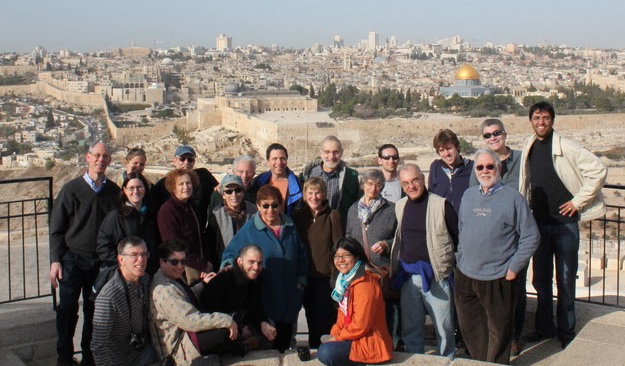
JRC Israel/Palestine Study Tour Participants 12/21/10 (Photo: Rich Katz)
My turn:
Our JRC Israel/Palestine Study Tour has been over for almost a week now, but I think I speak for everyone when I say it was a transformative experience for us all. I’ll also say that I am bursting with pride and admiration for my fellow JRC travelers.
I don’t know for sure, but I’m fairly certain this was an unprecedented Jewish congregational Israel tour. Most trips of this kind generally offer what I’d call a “hermetically-sealed” experience of Israel: an itinerary that remains largely west of the Green Line, offering participants a decidedly Jewish-centric perspective. I think most would agree it’s unusual for a rabbi to bring nineteen of his congregants on a trip that focused almost exclusively on East Jerusalem and the West Bank, spending the night in refugee camps, meeting with Palestinians, and learning from Palestinian civil society activists.
If I ever had any doubt, the reaction we encountered from those we met along the way drove this point dramatically home for us. Whenever we introduced ourselves and explained what we were doing, we’d invariably get the same open-mouthed reaction from our hosts. As the Israeli reporter Orly Halpern wrote me immediately after meeting with our group:
It was great meeting your open-minded and courageous congregation, Brant. Courageous because they were willing to hear the Other.
So yes, I’m very proud. Proud that we could take such a trip, and particularly proud of the congregational members who stepped forward to participate in it. Each and every one of them was willing to be deeply challenged – to lower their their ingrained defenses enough to face very real and painful truths – a reality that often directly contradicted the image of Israel with which they were raised.

Jewish Settlement in the heart of the Muslim Quarter (Photo: Rich Katz)
To be sure, it’s one thing to read about Israel’s oppression of Palestinians in the newspaper or hear about it second-hand; it’s quite another to witness it right in front of you where it’s impossible to rationalize or explain away. These congregants were willing to go places – literally and figuratively – where most American Jews remain resolutely unwilling to go. They were ready to let down their guard and be touched and transformed by what they saw.
And they were. Over and over and over again.
There will undoubtedly be those who will criticize us for taking a trip such as this, who will claim that our tour was “not balanced,” that is was unduly “biased,” that we didn’t take time to hear from the “other side.” I can’t help but be struck that these kinds of concerns are never raised when Jewish congregations organize Israel trips that pay scant attention to Palestinians and Palestinian life. And I don’t believe I’ve ever heard anyone in the American Jewish establishment criticize Birthright trips for being too “one-sided.”
I also believe that in our obsessive need to achieve balance, we conveniently ignore the fact that this is an inherently unbalanced conflict. As trip participant Marge Frank so eloquently put it in her previous guest post, “When one people is being oppressed and occupied by another, there is only one side to the story: that of the oppressed.” For most American Jews, it seems to me, the truth of Israel’s oppression of Palestinians is impossibly difficult to admit – and so we habitually explain it away, rationalize it, or deflect it in the name of balance.
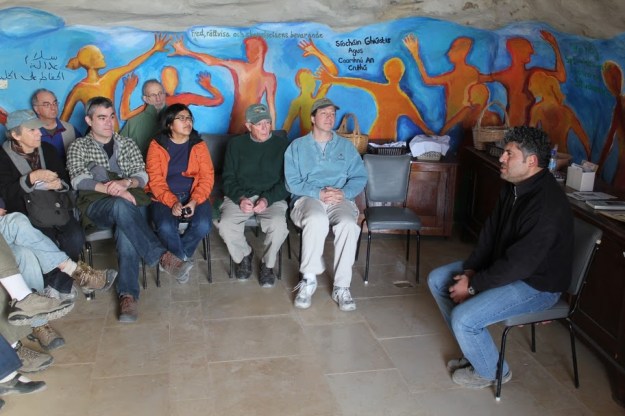
With Daoud Nasser in one of the natural caves on his family farm, Tent of Nations (Photo: Rich Katz)
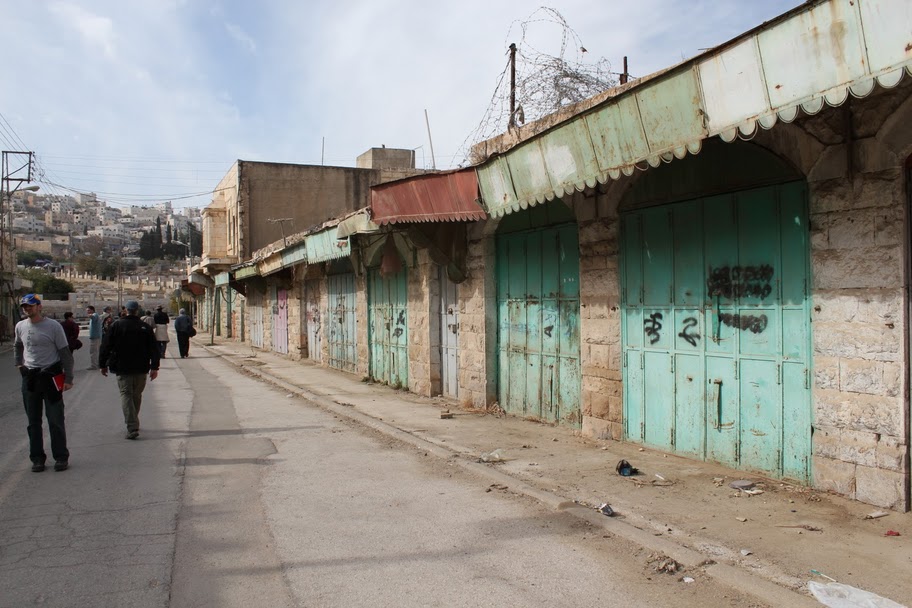
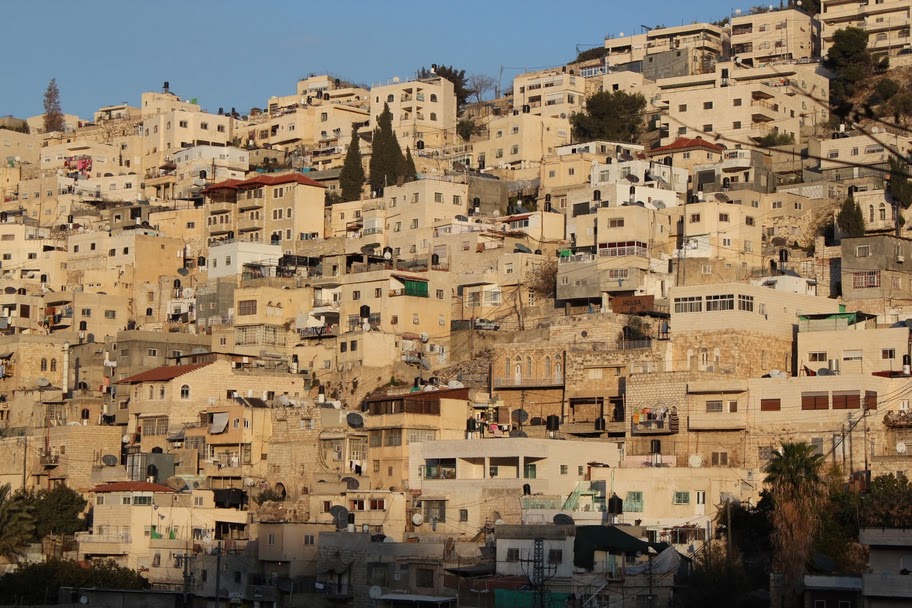
At the end of the day, the experiences I wrote about on my blog this past week weren’t mere isolated examples of Israeli bad behavior. The home demolitions in Silwan, the attempted expropriation of Daoud Nasser’s family farm, the dehumanizing checkpoints, the racial separation and settlers’ harassment in Hevron – in the end I believe these are all part of a larger fabric of persecution. As painful as this might be for us to admit, these are not merely exceptional blemishes on the face of an otherwise healthy state. If any of us had any doubt about this, it became painfully difficult for us to deny once we saw it with our own eyes.

Kobi and Aziz, Hevron (photo: Rich Katz)
While our group experienced some profoundly dark truths, however, we also bore witness to very real signs of hope: the resilience and dignity of the Palestinian people and the inspiring example of those Israelis who stand in solidarity with them. In this regard we had no more powerful example of than Aziz and Kobi, our Palestinian and Israeli tour guides – two very courageous men who have transcended their own painful pasts and are now devoting their lives to reconciliation, justice and peace. As every member of our group will agree, they were truly our guides in every sense of the word.
For myself, I’m irrevocably committed to this journey now – and I am heartened beyond measure to know that there are American Jews who are willing to take it with me.

Busy Hevron street, (H1) (Photo: Rich Katz)

- Shehadeh St. in Hevron (H2), now rendered completely off-limits to Palestinians

Demonstration at Silwan Peace Tent, E. Jerusalem 12/24/10 (Photo: Rich Katz)

Translation: "There is no holiness in an occupied city." Silwan demonstration, 12/24/10 (Photo: Rich Katz)




 Shalom Rav