Over the last several months, Al Jazeera has been given unhindered access to the largest-ever leak of confidential documents related to the Israeli-Palestinian conflict. There are nearly 1,700 files, thousands of pages of diplomatic correspondence detailing the inner workings of the Israeli-Palestinian peace process. These documents – memos, e-mails, maps, minutes from private meetings, accounts of high level exchanges, strategy papers and even power point presentations – date from 1999 to 2010.
The material is voluminous and detailed; it provides an unprecedented look inside the continuing negotiations involving high-level American, Israeli, and Palestinian Authority officials.
Monthly Archives: January 2011
Celebrate and Take Action This Tu B’shvat!
It’s utterly frigid here in Chicago. As I lose feeling in my toes, however, the Jewish calendar tells me it’s Tu B’shvat: the Birthday of the Trees, and the first harbinger of Spring.
And so my Tu B’shvat offerings for you:
– An email I wrote on behalf of Jewish Voice for Peace: this Tu B’shvat, please take action to save trees and uprooted communities in Israel/Palestine;
– From the Velveteen Rabbi: a lovely two-page Tu B’shvat Haggadah that covers all the bases quite gracefully. (Mazel Tov to the Velveteen Rabbi, who recently received her smicha and is now, as she puts it, “running and playing with the real rabbis.” Rabbi Rachel: don’t you know you’ve been a “real” rabbi to many of us for quite some time now…)
– For Tu B’shvat reading material, I encourage you to read this inspiring piece on “Spiritual Environmentalism” by Wangari Maathai, Kenyan tree-planter extraordinaire:
Human beings have a consciousness by which we can appreciate love, beauty, creativity, and innovation or mourn the lack thereof. To the extent that we can go beyond ourselves and ordinary biological instincts, we can experience what it means to be human and therefore different from other animals. We can appreciate the delicacy of dew or a flower in bloom, water as it runs over the pebbles or the majesty of an elephant, the fragility of the butterfly or a field of wheat or leaves blowing in the wind. Such aesthetic responses are valid in their own right, and as reactions to the natural world they can inspire in us a sense of wonder and beauty that in turn encourages a sense of the divine.
That consciousness acknowledges that while a certain tree, forest, or mountain itself may not be holy, the life-sustaining services it provides — the oxygen we breathe, the water we drink — are what make existence possible, and so deserve our respect and veneration. From this point of view, the environment becomes sacred, because to destroy what is essential to life is to destroy life itself.
I feel my toes warming up already…
The Latest UN Resolution: Will Obama Do the Right Thing?
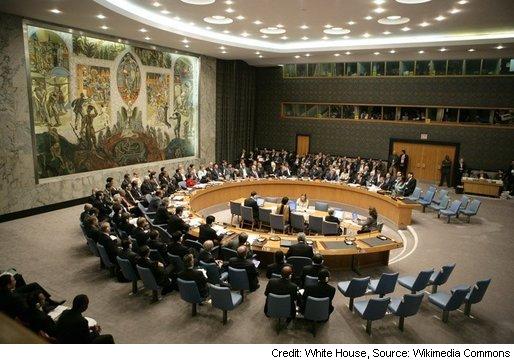
Will the Obama administration ever be ready to act as an honest broker in the Israeli-Palestinian peace process? Another test seems to be looming.
The following resolution, introduced by 120 co-sponsors, is currently pending the UN Security Council:
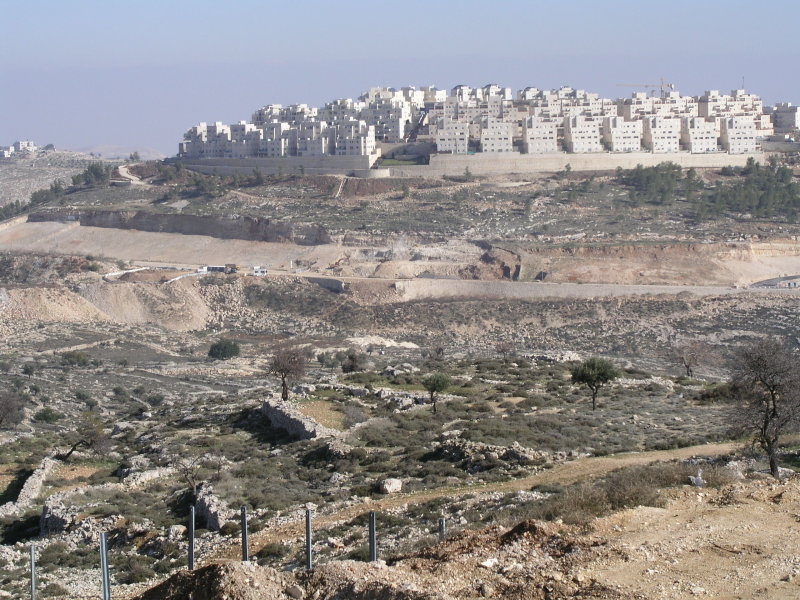
Israeli settlements established in the Palestinian Territory occupied since 1967, including East Jerusalem, are illegal and constitute a major obstacle to the achievement of a just, lasting and comprehensive peace.
On its face its not a particularly controversial claim. It more or less echoes long-held US policy on Israeli settlements. But of course when it comes to the UN, nothing is ever that simple.
What makes this situation a bit more interesting is that it is not only the usual suspects who are urging Obama to support the resolution. A letter signed by former US officials, prominent policy writers, academics and religious figures has just been released, calling upon the US to cast a yes vote.
An excerpt:
At this critical juncture, how the US chooses to cast its vote on a settlements resolution will have a defining effect on our standing as a broker in Middle East peace. But the impact of this vote will be felt well beyond the arena of Israeli-Palestinian deal-making – our seriousness as a guarantor of international law and international legitimacy is at stake.
America’s credibility in a crucial region of the world is on the line – a region in which hundreds of thousands of our troops are deployed and where we face the greatest threats and challenges to our security. This vote is an American national security interest vote par excellence. We urge you to do the right thing.
To be sure, the signators are not easily dismissible: they include former US Trade Representative and Council on Foreign Relations Chair Carla Hills, journalist and former New Republic editor Peter Beinart, former Under Secretary of State for Political Affairs Thomas Pickering, former Assistant Secretary of State James Dobbins, former Assistant Secretary of State Robert Pastor, former US Secretary of Defense Frank Carlucci and former US Ambassador to Israel Edward “Ned” Walker, among others.
It’s easy to be cynical about the UN, but it will still be interesting to see how this saga plays out. As Alex Spillius recently pointed out in The Telegraph, it may be Obama’s last chance to present himself as a fair dealer in this region.
If history is any indication, the final vote on this resolution will not be forthcoming any time soon. We can surely expect months of wordsmithing and back room dealing, and public posturing. Still, it certainly seems that there’s a bit more riding on this particular UN resolution than usual.
Stay tuned on this one.

Illinois Senate Abolishes the Death Penalty!
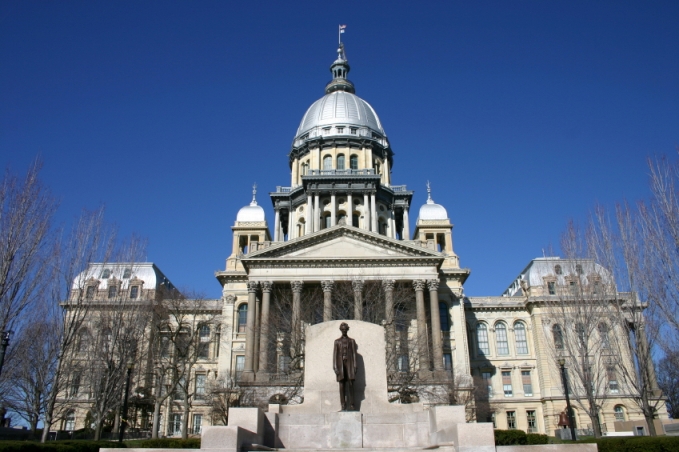
Amidst all of the talk of our nation’s violent political rhetoric, here’s a ray of light: the Illinois senate voted yesterday to abolish the death penalty in our state! In other words, they took a stand against “state-sponsored” violence.
The bill now goes to Governor Pat Quinn, who has not indicated yet whether or not he intends to sign. Illinois residents: contact Governor Quinn now and let him know you want Illinois to be the 16th state to strike down the death penalty!
JRC Israel-Palestine Trip Featured on Chicago Public Radio
Our JRC Israel/Palestine Study Tour was featured today on the Chicago Public Radio program, “Worldview.” I was interviewed along with trip participants Marge Frank and Michael Deheeger for an extensive and quite wide-ranging conversation about our experiences.
The first half of the program featured an powerful interview with Israeli Palestinian solidarity activist Joseph Dana, whose important work I’ve cited on this blog on several occasions. All told, a pretty important hour of radio.
Click here to give a listen. I strongly encourage you to tune in for the entire program; if you choose to listen to our interview alone, click here.
Lessons In Humility – A Guest Post From Palestine
Here’s a guest post by Lynn Pollack, another participant from our JRC trip to Israel/Palestine:
I was one of the people on the recent JRC trip to the West Bank and Israel, but having visited three times before in the last few years I didn’t think I had that much to learn. After all, I had devoted much of the last decade to advocating for a just peace for Israelis and Palestinians – a peace that includes an end to occupation and a beginning of real equality. What could possibly move me on another visit? Arrogant, huh? Well, yes, and on this trip I was humbled many times.
Not In Your Local Paper: Egyptian Muslims Protect Coptic Community With Their Bodies

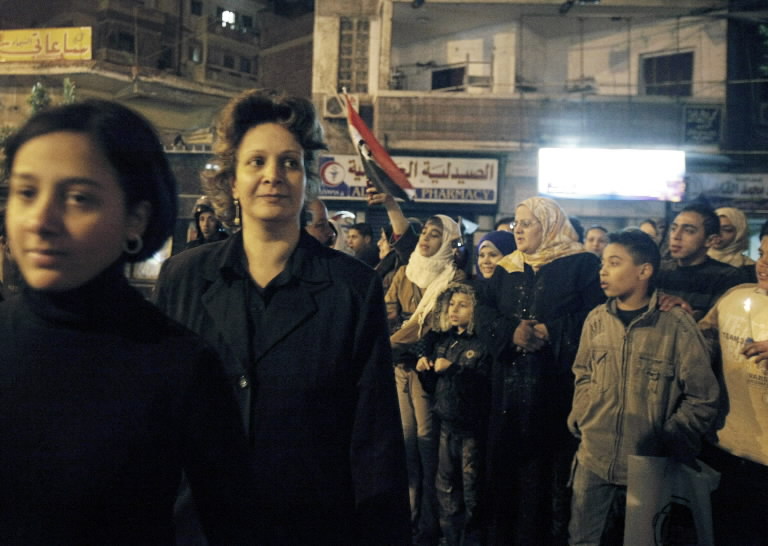
Muslims protect and greet Orthodox Christians leaving the church where Alexandria bomb blast took place. (Photo: REUTERS/Asmaa Waguih)
An important and inspiring report out of Egypt. From AhramOnline:
Egypt’s majority Muslim population stuck to its word Thursday night. What had been a promise of solidarity to the weary Coptic community, was honoured, when thousands of Muslims showed up at Coptic Christmas eve mass services in churches around the country and at candle light vigils held outside.
From the well-known to the unknown, Muslims had offered their bodies as “human shields” for last night’s mass, making a pledge to collectively fight the threat of Islamic militants and towards an Egypt free from sectarian strife.
“We either live together, or we die together,” was the sloganeering genius of Mohamed El-Sawy, a Muslim arts tycoon whose cultural centre distributed flyers at churches in Cairo Thursday night, and who has been credited with first floating the “human shield” idea.
Among those shields were movie stars Adel Imam and Yousra, popular preacher Amr Khaled, the two sons of President Hosni Mubarak, and thousands of citizens who have said they consider the attack one on Egypt as a whole.
Sorry to see that this story has been virtually ignored by the mainstream media. It seems to have been broken by the Egyptian press, but other than a report on WaPo’s online edition, I could only see it covered via the blogosphere.
What else is new? When it comes to Islam, it seems, the actions of an extremist minority is considered newsworthy while the courage of the Muslim majority flies right off the radar screen.
Be sure to pass this one on…
Initial Impressions and Later Reflections: A Guest Post From Palestine
Here’s a guest post by Michael Shapiro, another participant from our JRC trip to Israel/Palestine:
Let me first thank Rabbi Brant Rosen for his vision and leadership in organizing this trip and for his astuteness in working with Aziz and Kobi. They were articulate, deeply knowledgeable, warm and witty guides, but through their life histories and their relationship modeled the struggle for mutual understanding between their communities. I am also grateful to Rabbi Rosen for the invitation to post on his blog.
The trip gave me a deeper understanding of the way the conflict burdens the lives of Palestinians. It was no surprise to me that the weight of military occupation could be oppressive, but I now have a more acute sense of what it is like for those whose daily lives include humiliation and harassment at checkpoints or for those separated from farms, jobs, schools, and families by a wall built on their own land.
I will not forget hearing Marge Frank translate our Jenin host’s anguished and angry account of being made, more than once, to strip to his underwear at a checkpoint he had to pass through on his way to work in Israel. Nor will I forget the head of the Budrus Popular Committee, who led his village in a successful non-violent protest that resulted in a rerouting of the wall. These and other equally indelible memories have deepened my understanding of the conflict and of the unconscionable injustice and suffering inflicted on the Palestinian people by the occupation and settlements.
In some instances, however, I have found that distance and reflection have placed initial impressions in a wider context and introduced “complications,” a word that can sometimes mask moral callousness if not moral cowardice, but can sometimes challenge simplistic thinking by focusing on thorny realities. I would offer three examples.
Illinois Death Penalty On Brink of Abolition!
Opponents of capital punishment got some rare good news yesterday when the Illinois House voted to approve legislation that would abolish the death penalty in our state.
It ain’t law yet, though. With the days ticking down on the lame duck session of the General Assembly, the bill now goes to the State Senate, where its approval is by no means assured.
If you are an Illinois resident, please check out the website of the Illinois Coalition to Abolish the Death Penalty, to learn how you can take action to help pass SB 3539 at this critical juncture. Legislators will only be in session for a few more days so we really do have little time to spare.
And if you’re so inclined, here’s a post I wrote on Judaism and Capital punishment back in 2008.
Hear O Israel, The Land is One: A Guest Post from Palestine
Here is a guest post from Leon Fink – another a participant of our JRC trip to Israel/Palestine. (Leon and his wife Sue toured Israel for a week before our group arrived):
An intense two-week, late-December trip to Israel/Palestine (the first segment visiting classic Israeli sites, the second as part of a synagogue-sponsored “listening tour” of Palestine) has left me with myriad impressions but one overall conviction. Like it or not—and I know many American Jews as well as Jewish Israelis do not—both the welfare and future of Israelis and Palestinians are indelibly linked. And the sooner the Jewish community recognizes the need for a common, dual stewardship of the Biblical Land, including both its human and physical resources, the better.