Monthly Archives: July 2012

The New One-State Solution: Connecting the Dots

Connect these dots:

From The Guardian:

The number of Jewish settlers in the West Bank grew by more than 15,000 in the past year to reach a total that exceeds 350,000 for the first time and has almost doubled in the past 12 years.

Figures from Israel’s population registry show a 4.5% increase in the past 12 months. Most of the newcomers moved into settlements that many observers expect to be evacuated in any peace deal leading to a Palestinian state.

There are an additional 300,000 Jews living in settlements across the pre-1967 border in East Jerusalem, the pro-government and mass-circulation newspaper Israel Hayom reported.

Putting a finer point on these statistics, Dani Dayan, chairman of the settlers Yesha Council had this to say in a recent NY Times op-ed:

(We) aim to expand the existing Jewish settlements in Judea and Samaria, and create new ones. This is not — as it is often portrayed — a theological adventure but is rather a combination of inalienable rights and realpolitik. Even now, and despite the severe constraints imposed by international pressure, more than 350,000 Israelis live in Judea and Samaria. With an annual growth rate of 5 percent, we can expect to reach 400,000 by 2014 — and that excludes the almost 200,000 living in Jerusalem’s newer neighborhoods. Taking Jerusalem into account, about 1 in every 10 Israeli Jews resides beyond the 1967 border. Approximately 160,000 Jews live in communities outside the settlement blocs that proponents of the two-state solution believe could be easily incorporated into Israel.

…Our presence in all of Judea and Samaria — not just in the so-called settlement blocs — is an irreversible fact. Trying to stop settlement expansion is futile, and neglecting this fact in diplomatic talks will not change the reality on the ground; it only makes the negotiations more likely to fail.

In essence, Dayan is calling for a kind of a one-state solution here – albeit one that does not extend citizenship rights to non-Jewish residents. (Although in fairness to Dayan, he does say they should be given “freedom of movement.”)

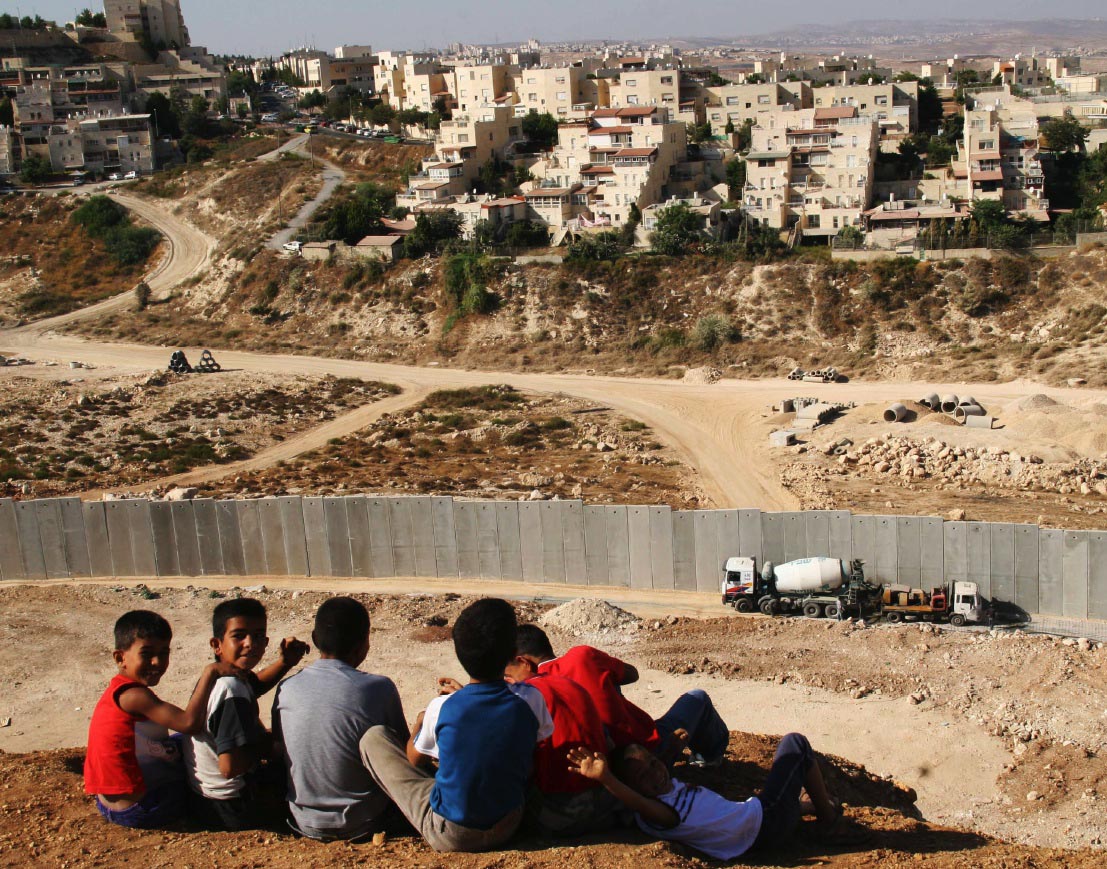
Still can’t figure out what’s going on here? Let’s connect the final dot.  While the Jewish population in Area C of the West Bank is increasing, Israel is demolishing homes, evicting Palestinians, and moving them into Areas A and B at an ever-increasing pace.

Here’s Mya Guarnieri, writing in +972:

At the same time that Israeli settlements are expanding unchecked, the state is putting the Palestinians and Bedouins who live in Area C under extreme, unrelenting pressure, as exemplified by this week’s report by Haaretz that Defense Minister Barak has ordered the demolition of eight Palestinian villages to make way for IDF training.

Demolitions of homes and structures in 2012 have seen an increase. According to a source at the United Nations, between January 1 and April 27 of 2011, 352 Palestinian and Bedouin were forcibly displaced from their homes in East Jerusalem and the West Bank. The same period of 2012 saw “at least 487″ people lose their homes.

It’s a one-two punch intended to increase the Jewish population in the West Bank as much as possible and deplete the Palestinian population as much as possible to ready the area for annexation. Susya, a Palestinian village that is under threat of demolition, is an example of how this works. The village has been destroyed numerous times since the Jewish settlement of Susya was built there in 1983, despite the documents proving it belongs to Palestinians and the fact that this small community has no where else to go.

Israeli pressure on the Palestinian and Bedouin residents of Area C has resulted in a drop in the Arab population in the same area.

And then there’s the Levy Committee Report, which denies that there is an occupation and, according to some observers, lays the legal groundwork (at least in the mind of the Israeli government) for a unilateral annexation of Area C.

It’s not a matter of if. It’s a matter of when.

OK, I’ll say it for you: Israel has no intention of creating a two-state solution. It is creating it’s own “one-state” solution by increasing the Jewish population in the West Bank and warehousing Palestinians in Bantustans throughout Areas A and B. By any other name this would be called an “apartheid” state.

If there are those who disagree with my calculus, I’m certainly open to hearing alternative explanations. In the meantime, here are two questions I’m still unable to answer: when will our community be ready to call out this illegal and immoral behavior?  And what will we be willing to do about it?
The Olympic Moment of Silence and the Politics of Victimhood

I’ve been following with some interest a cyber-dustup between Emory University Jewish Studies professor Deborah Lipstadt and Elisheva Goldberg, Assistant Editor of the Open Zion blog. In its way, I think it shines an interesting light on the ways the Jewish community deals with its sense of victimhood in public discourse.

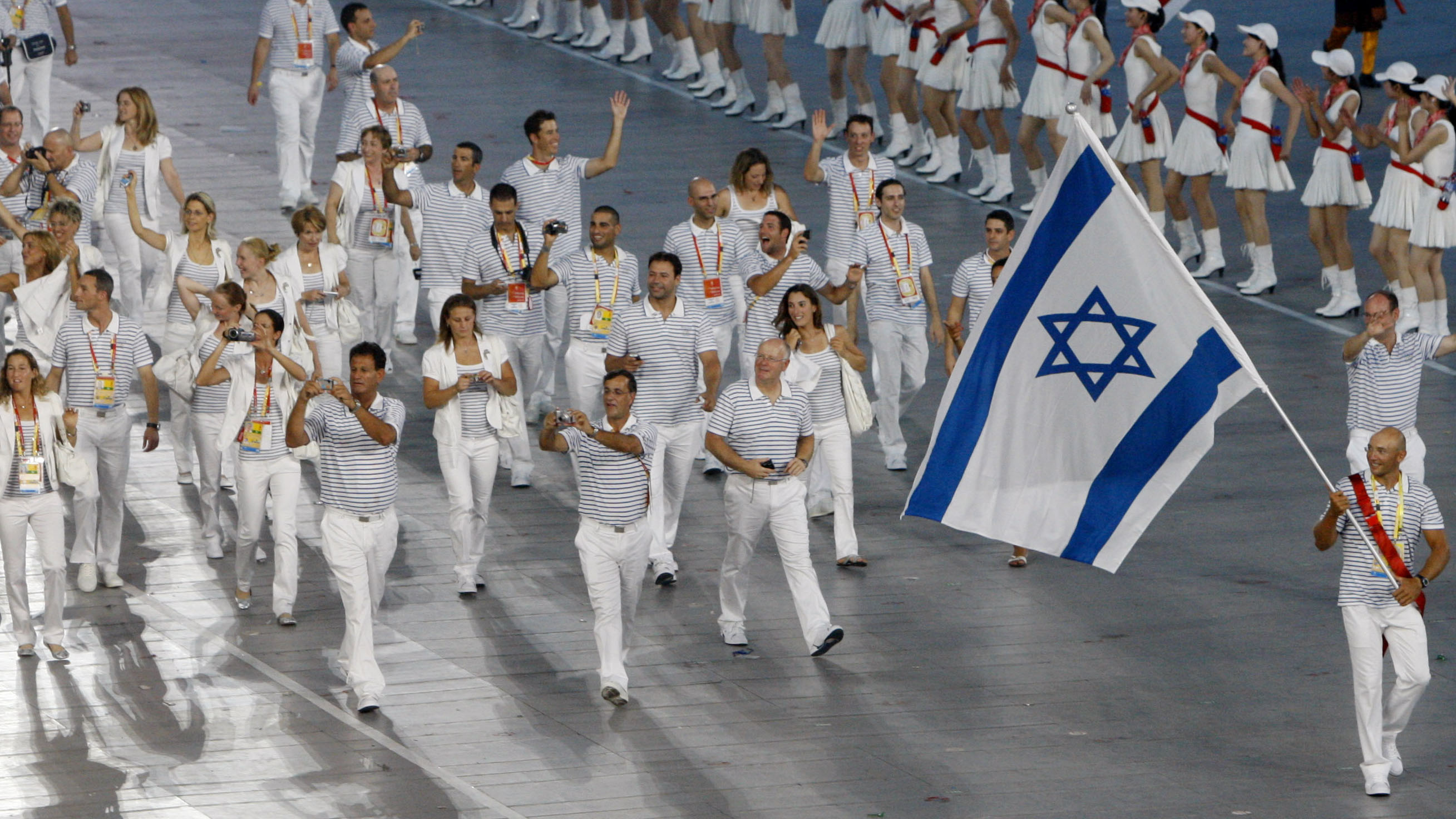
The debate began with a piece Lipstadt wrote for Tablet on July 17, entitled “Jewish Blood is Cheap.” In her article, she inveighed against the International Olympic Committee for refusing requests to hold a one minute moment of silence during Opening Ceremonies to commemorate the 40th anniversary of the murder of 11 Israeli athletes in Munich. Lipstadt explored the various reasons given by the IOC for its refusal: that the IOC has honored the athletes repeatedly in other venues, that the Games should be “apolitical,” and that a commemoration of this sort was inappropriate at a “celebratory event.”

Lipstadt would have none of it:

The IOC’s explanation is nothing more than a pathetic excuse. The athletes who were murdered were from Israel and were Jews—that is why they aren’t being remembered. The only conclusion one can draw is that Jewish blood is cheap, too cheap to risk upsetting a bloc of Arab nations and other countries that oppose Israel and its policies.

…This was the greatest tragedy to ever occur during the Olympic Games. Yet the IOC has made it quite clear that these victims are not worth 60 seconds. Imagine for a moment that these athletes had been from the United States, Canada, Australia, or even Germany. No one would think twice about commemorating them. But these athletes came from a country and a people who somehow deserve to be victims. Their lost lives are apparently not worth a minute.

When I first read Lipstadt’s words, I strongly recoiled at her statement “Jewish blood is cheap” – and her claim that the IOC was motivated by anti-Semitism. Whether or not one agrees with the IOC’s decision, I found Lipstadt’s rhetoric to be incendiary and distinctly smacking of “victim politics.”

So, it seems did Elisheva Goldberg, who gently chided Lipstadt in a post for Open Zion. Goldberg pointed out that in fact, IOC President Jacques Rogge did make a statement and lead a minute of silence during a ceremony last Monday at the athlete’s village promoting the Olympic Truce (a UN backed initiative calling on warring parties around the world to end hostilities during the period of the games).  In her post, Goldberg asked what I thought was a valid question: when it comes to public commemoration of these kinds of tragedies, how much is really enough?  Or as she put it, “when will we be satisfied?”

To my dismay, Lipstadt did not think this question worthy of serious consideration – she responded to Goldberg instead with a petulant smackdown. In a Tablet piece entitled “No, Open Zion, Deborah Lipstadt Won’t Shut Up,” she concluded thus:

In making a statement on Monday, the IOC’s president tried to throw the victims’ families a bone. Goldberg has caught it, and is happily gnawing away. I, and many others, have no intention of being so easily satisfied.

While I agree with Lipstadt that Rogge is disingenuous in claiming the Games aren’t “political,” it bears noting that the Jewish establishment’s full court press on this issue has been highly politicized.  The minute of silence has been now pressed on the IOC by Israel’s Foreign Ministry (who produced a one minute video as part of the campaign), it has been introduced as a US House Resolution, and now of course, the obligatory campaign year statements of support have been elicited from President Obama and Mitt Romey. At this point, even if the IOC did assent to minute of silence at the ceremonies, it would resonate more as a moment of political victory than a genuine act of remembrance.

And that’s the problem I have with Lipstadt and the “many others” who have chosen to press the issue in this manner. They – and we – would do well to ask: when does the desire for public commemoration cross the line into cynical politicking?  On a deeper level, we might well ask: at what point does our need for the world to acknowledge Jewish suffering give way to a collective victim mentality?

To me, these are the critical questions, regardless of what does or doesn’t take place at Opening Ceremonies this Friday.

Supreme Court Opens the Door: Help End Juvenile Life Without Parole!

Adolfo Davis

Last year I gave a Kol Nidre sermon spotlighting our nation’s shameful practice of sentencing juveniles to life-without-parole. Now less than one year later, I’m thrilled to announce that the US Supreme Court has just recognized the fundamental unfairness of mandatory death-in-prison sentences that don’t allow sentencers to consider the unique status of children and their potential for change.

This decision has very direct bearing on the case of Adolfo Davis – one of the prisoners whose life I described in my sermon. It also has the potential to affect the case of Jacqueline Montanez, who has been in prison for 20 years and is the only woman in Illinois serving Juvenile Life Without Possibility of Parole. Adolfo and Jacqueline are two of nearly 2500 young people in the United States sentenced to life without the possibility of parole before their 18th birthday. As I mentioned in my sermon, the United States is the only country in the world that sentences children to life without possibility of parole.

At this critical moment, I’m asking you now to lend your voice in asking Governor Pat Quinn to join the Supreme Court in this tremendous decision and ask him to grant executive clemency to Adolfo and Jacqueline.  This past April their cases were heard before the Illinois Prisoner Review Board, with petitions seeking clemency.  The final decision to grant executive clemency is now in the hands of our Governor and is not guaranteed or ensured by the Court’s decision.

You can voice your concern by signing both Jacqueline and Adolfo’s online petitions, which can be found here and here.  In addition to signing the petitions, please consider contacting the Governor with your concerns through the State of Illinois website or by writing a letter to:

Governor Pat Quinn
c/o Era Laudermilk
Associate General Counsel
Office of the Governor,
James R. Thompson Center
100 W. Randolph, Suite 16-100
Chicago, IL 60601, United States
Fax: +1 312 814 3806

If you have the time, please send copies of your letters to Adolfo and Jacqueline so that they will know of your support. Letters may be sent to:

Children and Family Justice Center
Ms. Toni Curtis
Bluhm Legal Clinic, Northwestern University
School of Law, 357 East Chicago Avenue
Chicago, IL 60611, United States
Email: e-curtis@law.northwestern.edu

Thank you in advance for your support of this important and critical human rights issue.  It is my personal dream to some day invite Adolfo, Jacqueline and Cedric Cal to High Holiday services in the very near future so that we may all celebrate the joy of justice finally realized at long last.