Monthly Archives: November 2018

War on Gaza is Inevitable Because it Benefits Israel: A Rabbinic Response

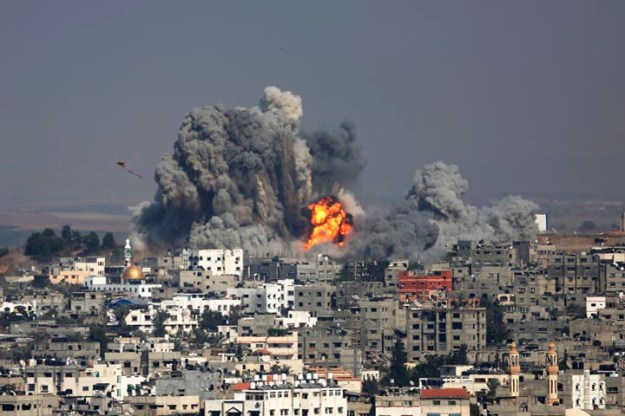
Mideast Israel Palestinians

In her recent op-ed “War Must Never Be Inevitable, Even Between Israel and Hamas,” (Ha’aretz, 11/12/18) Rabbi Jill Jacobs suggests a Jewish religious frame for “avoiding a deadly escalation of violence” between Israel and Gaza. While her attempt to offer hope in the midst of a profoundly hopeless situation is laudable, her analysis suffers from fundamental flaws that ultimately muddle the moral/political context of this tragic crisis.

Jacobs bases her argument on a teshuvah (legal opinion) issued by former Sephardic Chief Rabbi of Tel Aviv Rabbi Hayyim David Halevy, who forcefully advocated for a peace treaty between Israel and Egypt on the eve of the Camp David Accords. Jacobs applies his message to today’s current reality, observing that Halevy’s position “represented a courageous act of religious leadership at a time when most of the religious right opposed the agreement…” There is however, a critical difference between the reality facing Israel and Egypt in 1978 and the one in which Israel and Gaza finds itself today.

When he wrote those words, Halevy was addressing a situation of relative parity between two major nation states, each of whom maintained significant military power. Only a few years earlier, they had been engaged in what we might call a conventional war that eventually drew to a military stalemate. In other words, the Israel-Egypt negotiations emerged out of a balance of power that played out on a level playing field in which two regional powers found it in their respective national interests to make peace instead of war.

But there is no level playing field when it comes to Israel and Gaza. This is not a pairing of two equal sovereign powers, but rather of vast inequity where one power maintains almost complete control over a people it has dispossessed and occupied. Israel enjoys an immense power advantage over Gaza – and it has wielded it mercilessly throughout the years. For over a decade now, Israel has maintained a crushing blockade, turning a 140-square-mile strip of land into a virtual open-air prison. While Jacobs does briefly refer to the blockade, she does so in counterpoint to the equal “blame” borne by Hamas, as if this constituted in any way a balanced conflict.

Jacobs also uses the pedagogy of “both sides” when it comes to direct military violence, claiming that “Hamas bears significant blame for ongoing flare ups at the border” and noting that “firing rockets into civilian areas constitutes a human rights violation.” Again, this frame completely decontextualizes the historical reality in Gaza, a strip of land that was filled with refugees Israel dispossessed from their homes in 1948/49 and whose right to return they have denied ever since. It also ignores the research that convincingly demonstrates the violence in Gaza consistently flares up when Israel – not Hamas – has broken cease fires. (This was indeed the case this past week, when its covert operation “went bad,” leaving seven Palestinians dead.)

Moreover, the devastating series of military operations Israel has launched on Gaza over the past decade cannot rationally be viewed as “conventional wars.” On the contrary: these regular assaults have pitted the world’s most powerful military against small militias that wield crude and largely ineffective missiles and an imprisoned civilian population that literally has nowhere to run.

If there were any doubt, the statistics should make the disproportionate devastation abundantly clear. During “Operation Protective Edge” in 2014, the Israeli military killed at least 2,104 Palestinians, including 1,462 civilians, of whom 495 were children and 253 women. 11,000 were wounded, including 3,000 children. 20,000 homes were destroyed and up to 500,000 residents displaced. By contrast, during the same military operation, six Israeli civilians, one migrant worker and 66 Israeli soldiers were killed.

Jacobs writes that “avoiding a descent into violence will require Israeli political leaders to loosen the closure of Gaza” and to “provide humanitarian relief.” In fact, an end to the violence will only occur when Israel ends its brutal blockade of Gaza, full stop. By using this “noblesse oblige” approach, Jacobs only continues to normalize the inherent inequity of this conflict.

After “loosening the closure,” Jacobs writes optimistically, Israel should “take the leap of faith necessary to negotiate a long-term agreement with sworn enemies.” Of course in order for this to happen, the US government would have to serve as an honest broker. The Carter administration played just such a role the Camp David Accords of 1978, because it – along with Israel and Egypt – deemed a peace treaty as in its own strategic self-interest. This is decidedly not the case today. On the contrary, the US and Israel both consider Hamas to be a “terrorist organization” and a proxy of Iran. Given the current geopolitical reality, it is the height of naïveté to assume either power would view comprehensive negotiations with Hamas in its national or regional self-interest.

Quoting Halevy further, Jacobs writes: “Just as for a generation, we carried out wars with
strength and might, God will bless us now that we will also know how to make peace.” It’s a powerful statement, but it offers no insight into how a nation should know when to stop making war and start making peace. Indeed, the government of Israel has continued to carry out wars against Hamas with “strength and might,” offering no indication it would consider otherwise. And why should it? It oppresses the people of Gaza with impunity – and with the full support of the world’s largest superpower.

Yes, as Jacobs points out, “Israeli communities on the border should not have to live in fear of rocket fire or arson or need to race their children into shelters night after night,” but in reality, Israel has long calculated that this is the price it is willing to pay for maintaining its strategic military edge over the Palestinian people. There is also ample evidence that Israel benefits economically from keeping Gaza on the brink of humanitarian catastrophe and from using Gaza as a laboratory in which it can test its latest military hardware.

In the end, this is where Jacobs’ analysis ultimately fails. Notwithstanding her romantic notion that “Zionism has always meant doing the impossible,” historically speaking sovereign nations have always decided to make peace when it benefits them more than waging war – and Israel has been no different in this regard. However, when it comes to conflicts between oppressor and oppressed, powerful nations don’t tend to give up their power unless they are forced to do so. And so it is in the case of Israel’s oppression of Gazans – and of Palestinians at large.

With apologies to Rabbi Halevy, I’d suggest the ancient wisdom of the Talmud would serve us better when it comes to the tragic reality facing Israel and Gaza: “Rabbi Simeon ben Gamliel said, ‘three things preserve the world: truth, justice, and peace.’” (Avot 1:18)

In other words, true peace will not come when Israel deigns to negotiate a treaty, but when it is held to account by movements and nations who push them to recognize that peace without justice is no peace at all.
After Pittsburgh, We Can No Longer Cry Wolf on “Campus Anti-Semitism”

Cross-posted with Truthout  (UPDATED)

truthout_antisem

MARK DIXON / FLICKR

If the charge of antisemitism becomes a tactic to suppress open criticism and debate on the State of Israel, its practices of dispossession and occupation, its founding and the ongoing implications of that founding for Palestinians, then it will lose its claim to truth…Who will believe the charge when it is used to name and oppose the rising forms of fascism or actual ideologies bound up with its actual toxicity?

– Judith Butler, “On Antisemitism: Solidarity and the Struggle for Justice”

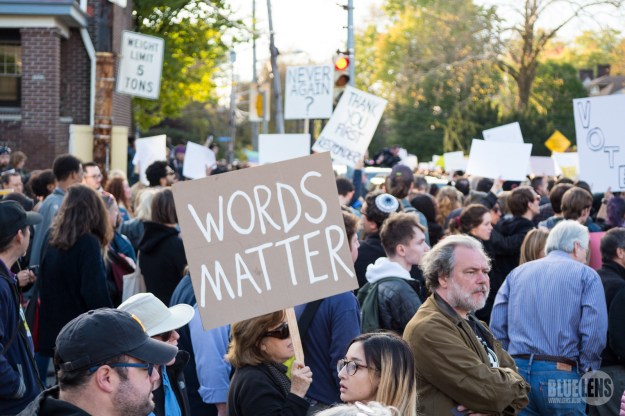
The tragic killing of 11 worshippers at a Pittsburgh synagogue last Saturday has created a painful reckoning over the resurgence of anti-Semitism in the US. If there was ever any question about the threat white nationalism poses to the Jewish community, there can be no doubt after this attack, which some are calling the deadliest act of anti-Semitism in American history.

But if we are to truly respond to this resurgence, we must take pains to analyze anti-Semitism for what it is and what it is not. This is particularly important in the face of Israeli politicians and Israel advocacy organizations that are currently muddling the definition of anti-Semitism for cynical political gain.

One stark and egregious example of this occurred the day after the massacre, when Ron Dermer, the Israeli ambassador to the US, conflated neo-Nazi Jew-hatred with what he described as anti-Semitism of the “radical left” found on college campuses:

One of the big forces in college campuses today is anti-Semitism. And those anti-Semites are usually not neo-Nazis, on college campuses. They’re coming from the radical left. We have to stand against anti-Semitism whether it comes from the right or whether it comes from the left.

While it is important to acknowledge that truly anti-Semitic ideas that paint Jews as rich, conspiratorial “globalists” are occasionally parroted on the left as well as on the right, Dermer is not talking about real anti-Semitism within leftist communities; rather, he is disingenuously seeking to cast all Palestine solidarity activism as necessarily anti-Semitic.

While some Jewish college students may feel discomfort when confronted by a strong criticism of Israel by Palestine solidarity activists, this does not mean that criticisms of Israel are by definition anti-Semitic. This claim blithely conflates the state of Israel with all Jews and ignores the historic reality that there have always been Jews who have criticized Israel’s oppression of Palestinians – and have even opposed the very premise of an ethnically Jewish nation-state itself.  In truth, there is a significant and growing percentage of Jews actively participating in Palestine solidarity campaigns who are not motivated by “Jewish self-hatred” but by the deeply held Jewish values of justice and the dignity for all.

The attempt to conflate criticisms of Israel on the left with bigoted anti-Semitism on the right is a tactic that has long been employed by the Israeli government and professional Israel advocacy organizations. Now that we are coming face to face with the deadly truth of neo-Nazi anti-Semitism in our country, however, it is becoming increasingly clear how their tactic not only enables violence toward Palestinians, but also puts Jews at greater peril by ignoring the resurgence of alt-right rhetoric and violence against them.

Unfortunately, there is every sign that Israel advocacy organizations are doubling down on this tactic. This past week, the Louis B. Brandeis Center for Human Rights Under Law in conjunction with Hasbara Fellowships ( a pro-Israel campus advocacy organization) announced the launching of its so-called “Jigsaw Initiative,” described as an “unprecedented pilot program to train law students and combat and prevent insurgent anti-Semitism.”

In a press release, Brandeis Center President and General Counsel Alyza B. Lewin stated:

As the tragic and horrific events in Pittsburgh made abundantly clear, anti-Semitism is escalating at an alarming rate in the US…We must reverse this rising trend of anti-Semitism and ethnic racism, and there is no substitute for legal action. By properly training a select team of law students to work with undergraduates and utilize specific tools and strategy, we can begin to take the tide in this battle.

While Lewin didn’t mention it in her statement, the “anti-Semitism” the Brandeis Center seeks to fight legally has nothing to do with white supremacist Jew-hatred. In fact, the Louis B. Brandeis Center for Human Rights Under Law is an organization which, despite its lofty universalist name, has dedicated itself almost exclusively to fighting public criticism of Israel by branding critics as “anti-Semitic.” Over the years, the Brandeis Center and other Israel advocacy organizations had tried and failed to prosecute campus anti-Semitism cases through the Office of Civil Rights under Title VI of the 1964 Civil Rights Act — a provision that was originally used during the 1960s to desegregate schools in the South.

The Brandeis Center was founded in 2012 by Kenneth L. Marcus, a far-right ideologue who has a history of abusing civil rights law to further a conservative political agenda and suppress college activists’ criticism of Israel. During his tenure as head of the US Commission on Civil Rights under George W. Bush, he oversaw the publication of a report backing the dismantling of affirmative action in law schools and argued against universities’ use of race-neutral criteria to achieve diversity. He also opposed a proposal to expand the scope of the US Commission on Civil Rights to investigate violations of LGBTQ rights and broader human rights.

Last year, Trump announced Marcus’ nomination to be the new head of the Education Office’s Civil Rights. During his confirmation hearings last year, hundreds of civil rights organizations and academics expressed their opposition to Marcus’ appointment. Despite widespread concern, Marcus was eventually confirmed by a narrow 50-46 Senate vote — and since then it was only a matter of time until he used the power of his new office to quash criticism of Israel on college campuses. One month later, Marcus and the Office of Civil Rights announced they would be reopening a seven-year-old case brought by a Zionist group against Rutgers University, saying the Obama administration, in closing the case, ignored evidence that suggested the school allowed a hostile environment for Jewish students.

Marcus also did not waste any time in announcing his support for the reintroduction of the Congressional Anti-Semitism Awareness Act. While the title of this legislation suggests a sensible government attempt to raise the public consciousness, this bill has zero to do with combating actual anti-Semitism. Quite the contrary, in fact.

The Anti-Semitism Awareness Act has a long and somewhat tortured history. In December 2016, the Senate passed the first version of this bill quickly, unanimously and without debate. Introduced by Senators Bob Casey and Tom Scott, the bill purports to address claims of anti-Semitism on college campuses as “civil rights violations.”

For many, most troubling aspects of the bill came from the way it defined anti-Semitism itself:

For purposes of this Act, the term ‘‘definition of anti-Semitism’’’—

(1) includes the definition of anti-Semitism set forth by the Special Envoy to Monitor and Combat Anti-Semitism of the Department of State in the Fact Sheet issued on June 8, 2010, as adapted from the Working Definition of Anti-Semitism of the European Monitoring Center on Racism and Xenophobia (now known as the European Union Agency for Fundamental Rights); and

(2) includes the examples set forth under the headings ‘‘Contemporary Examples of Anti-Semitism’’ and ‘‘What is Anti-Semitism Relative to Israel?’’ of the Fact Sheet.

Both the State Department and the “What is Anti-Semitism Relative to Israel?” fact sheets contain definitions of Anti-Semitism that include such vague criteria as “demonizing,” “delegitimizing,” and “applying a double-standard to the state of Israel” — broad and vague language that would allow virtually any criticism of Israel to be labeled as anti-Semitic.

The Anti-Semitism Awareness Act was pushed through the Senate despite the strong opposition of numerous civil rights and free speech advocacy groups. Following its passage, the ACLU released a statement warning that the bill “poses a serious threat to the First Amendment free speech rights of those on campus who may hold certain political views,” adding that they were confident that Senators “must have been unaware of the unconstitutional implications of the only operative provision of the bill.”

The House soon introduced its own version of the bill, but despite furious lobbying by Israel advocacy groups, it failed to pass before Congress wrapped up its 2016 legislative session. Not surprisingly, Congress re-introduced the Anti-Semitism Awareness Act in June 2018.  Shortly after, in an August letter obtained by The New York Times, Marcus notified the Zionist Organization of America that the Office of Civil Rights would put the full force of his government office behind the State Department definition of Anti-Semitism.

Clearly, the effects of this new inquisition on the Palestine solidarity movement on campus — and the cause of free speech in general — are potentially devastating. At the same time, many are warning this legislation will do meaningful damage to the cause to fight the very real threat of Trump-era anti-Semitism in the US.

In his testimony before the House Judiciary Committee during its debate over the original Antisemitism Awareness Act, Holocaust historian Barry Trachtenberg of Wake Forest University openly stated that the supporters of the bill were “motivated less by an actual threat facing American or world Jewry than they are part of a persistent campaign to thwart debates, scholarly research, and political activism that is critical of the State of Israel.”

He went on to point out that despite widely reported “depictions of rampant anti-Semitism… in the press,” a Stanford University study reported that they do not represent the “actual experiences” of Jewish students at the campus level. They discovered that campus life is neither threatening nor alarmist. “In general,” noted Trachtenberg, “students reported feeling comfortable on their campuses, and, more specifically, feeling comfortable as Jews on their campuses.”

It is also worth noting that like all forms of racism, anti-Semitism is most dangerous and deadly when it is enabled and supported by state power. In the US, the anti-Semitism that fits this description is the “alt-right” anti-Semitism enabled and emboldened by a Trump administration that clearly views this movement as an essential part of its base. We would do well to view legislation such as the Anti-Semitism Awareness Act as a form of state-sponsored oppression inasmuch as it unfairly targets an oppressed group and its allies for exercising their constitutional rights of free speech.

While this misguided focus commits a very real injustice to the cause of Palestinian human rights, it will also make it more difficult to identify and combat the real threat of anti-Semitism in our midst today. If there was ever any doubt, it should have been made abundantly clear last summer in Charlottesville, when neo-Nazis rallied in Charlottesville with torches chanting “Jews will not replace us” while others stood across from a local synagogue armed with semi-automatic rifles shouting “There’s the synagogue!” and “Sieg Heil!”

Following the tragic Pittsburgh synagogue massacre of course, there can no longer be any doubt that old-style anti-Semitism is real and deadly in the United States. While our government uses spurious claims of anti-Semitism to suppress criticism of Israel on college campuses, real anti-Semites have gunned down 11 Jewish worshippers in their synagogue. It’s long past time to put to rest the equation of “far right and far left anti-Semitism” for cynical political gain.

The stakes are simply far too high.