Monthly Archives: November 2024

Toward a Judaism of Love over Land, People over Profit

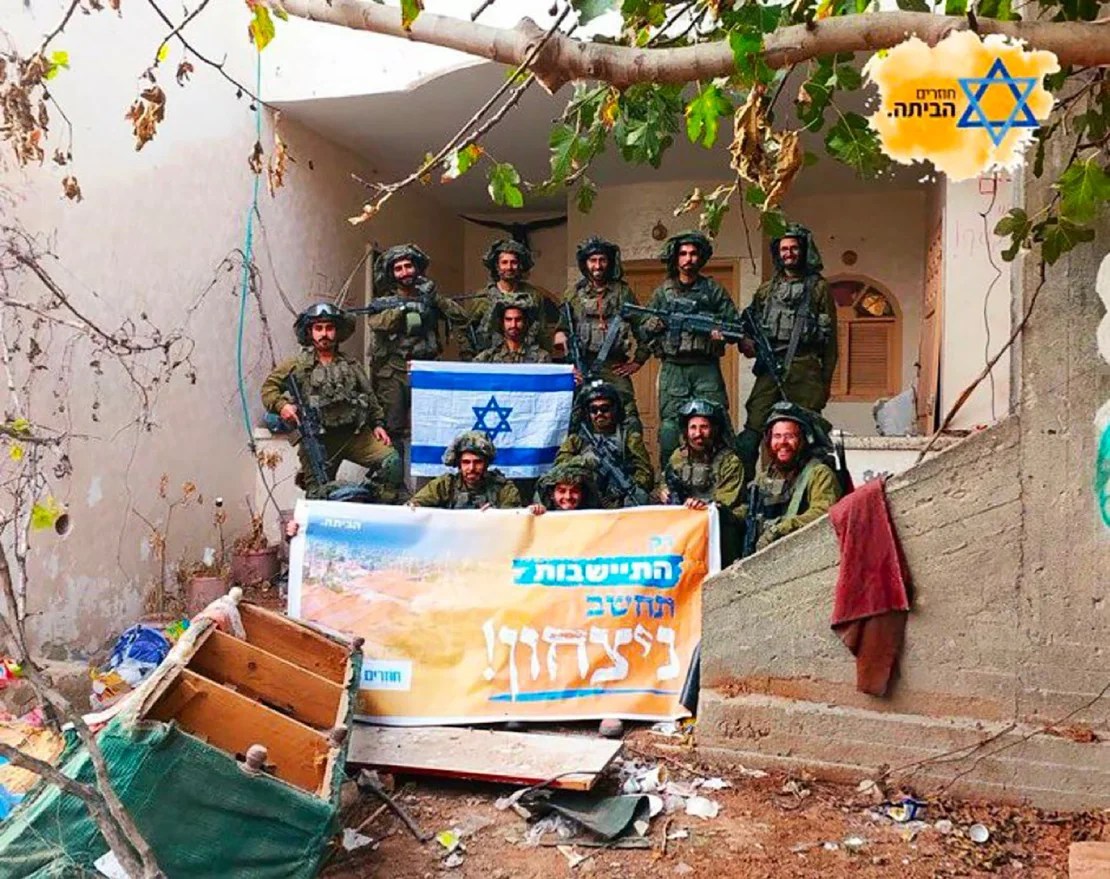
A photograph shows soldiers posing with an orange banner that reads: “Only settlement would be considered victory!” The color orange was used by the settler movement in 2004 and 2005 to protest Israel’s disengagement from Gaza.

It’s becoming ominously clear that the end game of Israel’s genocide in Gaza is the end of game of Zionism itself: namely, settlement. The writing has been on the wall for some time now. As I mentioned on Rosh Hashanah, we now know the existence of the so-called “General’s Plan,” in which:

Israel will control the northern Gaza Strip and drive out the 300,000 Palestinians still there. Major General Giora Eiland, the war’s ideologue, proposes starving them to death, or exiling them, as a lever with which to defeat Hamas. The Israeli right envisions a Jewish settlement of the area, with vast real estate potential of convenient topography, a sea view, and proximity to central Israel…

News accounts bear out that the General’s Plan is well underway. The vast majority of residents of Northern Gaza have now been ethnically cleansed from their homes and Israel has said it has no intentions to let them return. At a recent two-day conference, “Preparing to Resettle Gaza,” Israel’s National Security Minister Itamar Ben-Gvir told the hundreds who gathered, “If we want it, we can renew settlements in Gaza.”

With Trump now poised to take power, there will very likely be new wind behind these plans. Last March, Jared Kushner was quoted as saying: “Gaza’s waterfront property could be very valuable … It’s a little bit of an unfortunate situation there, but from Israel’s perspective I would do my best to move the people out and then clean it up.”  With Kushner widely expected to be “pivotal” to Trump’s Middle East policy, his words now take on a terrifying new resonance of possibility.

Even more ominously, there is every reason to expect these plans will be aided and abetted by the American Jewish communal establishment. One week after Donald Trump’s reelection, Karen Paikin Barall, the Jewish Federation’s VP of government relations, remarked to a group of local Jewish community relations councils, “We should all look forward to the day we can hope to buy townhouses in the West Bank and Gaza.”

As a settler colonial movement, Zionism was always focused on the maintenance of a majority Jewish presence in historic Palestine. However, the seizing and control of resources has been no less integral to this project. The settler colonial reality of the 21st century is driven in no small part by the corporate interest of weapons manufacturers as well as the billionaire and oligarch class that seek to profit off the spoils of war and genocide. In the current moment, it should come as no surprise that there is also unabashed talk about the annexation of the West Bank and even parts of South Lebanon.

Such is the natural result of a movement and ideology that prizes real estate over the well-being of the actual people who happen to live on the land. I’m particularly mindful of this as I contemplate this week’s Torah portion, Chayei Sarah, which begins with the famous episode in which Abraham negotiates with the Hittites to purchase the Cave of Machpelah as a burial site for his recently deceased wife Sarah. This story is often wielded by many Zionists as a deed of sale to this sacred site – and contemporary land acquisition in Palestine as the “inalienable possession of the Jewish people.”

There is, of course, another way to understand the spiritual meaning of this story: it is not about land acquisition but love and loyalty. Abraham is not motivated to purchase this land in order to claim exclusive entitlement to it: he is driven by his desire to honor his beloved wife Sarah, and to ensure that she and his extended family will have a permanent resting place. To read this episode only about entitlement to land is limited at best – and to judge by the apartheid and violence by which Israel maintains its control of this site today – a moral sacrilege at worst.

At the end of the portion, following the death of Abraham, we read that his sons Ishmael and Isaac buried their father together in the Cave of Machpelah. I can think of no better image to underscore the critical importance of pursuing a Judaism that prizes love over land. This Shabbat Chayei Sarah, may we rededicate our commitment to this sacred vision.
After Trump’s Election, We Need Each Other More Than Ever

Like all of you, I’m sure, I’m still in deep shock and anguish over Donald Trump’s electoral victory this past Tuesday. And while I certainly have my opinions about how this terrifying outcome could have possibly happened, I’m going to resist the urge to engage in post-election punditry. There’s more than enough to go around right now, some of it interesting, some of it clarifying, but to my mind, much of it tone-deaf and destructive. There will be time for the analysis, the interrogating and the strategizing. For now, however, I think it is critical that we sit with what has happened and give ourselves space to grieve and respond emotionally to the enormity of what has just occurred.

Of course, none of this happened overnight. Well before last Tuesday, were all too aware of the growth of fascism in the US and around the world, the scourge of state violence and mass incarceration, the loss of reproductive freedoms, the genocide against Palestinians, political targeting of immigrants, LGBTQ+ people, Muslims, disabled people, and other vulnerable minorities. After Tuesday, however, the stakes of these threats have reached a terrifying new level. Yes, what happened this week was shocking and heartbreaking. But it was also clarifying. We should no longer have any illusions about what we are up against.

I know that many of us who have been on the front line of the resistance to these threats are feeling exhausted and demoralized. Those who are members of targeted groups are understandably feeling a new level of fear for their own well-being. That is why, I believe to the core of my being, that the most important thing that those of us who have been organizing movements for justice can do in this moment is to reaffirm our commitment and care for one another.

In order to do that, we will need to resist the politics of division lest they infect the movements of solidarity we’ve been building so carefully and lovingly. During this past election, there was strong and passionate disagreement on whether a vote for Kamala Harris was a vote for genocide or a vote to hold back a Trump presidency. There were good, principled arguments to be made on both side of that debate. Even so, it was immensely painful to witness what this election did to the Palestine solidarity movement. Those who chose to vote for Harris were accused of “supporting genocide.” Those who chose withhold their vote for Harris were accused of being “MAGA enablers.” Our movement was faced with a profoundly untenable choice. There were times I feared it would rip us apart.

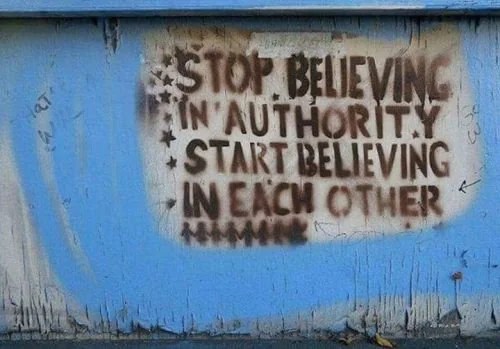
But after last Tuesday’s election, none of this really matters anymore. We simply cannot afford to turn on each other. Not now. We need each other more than ever.

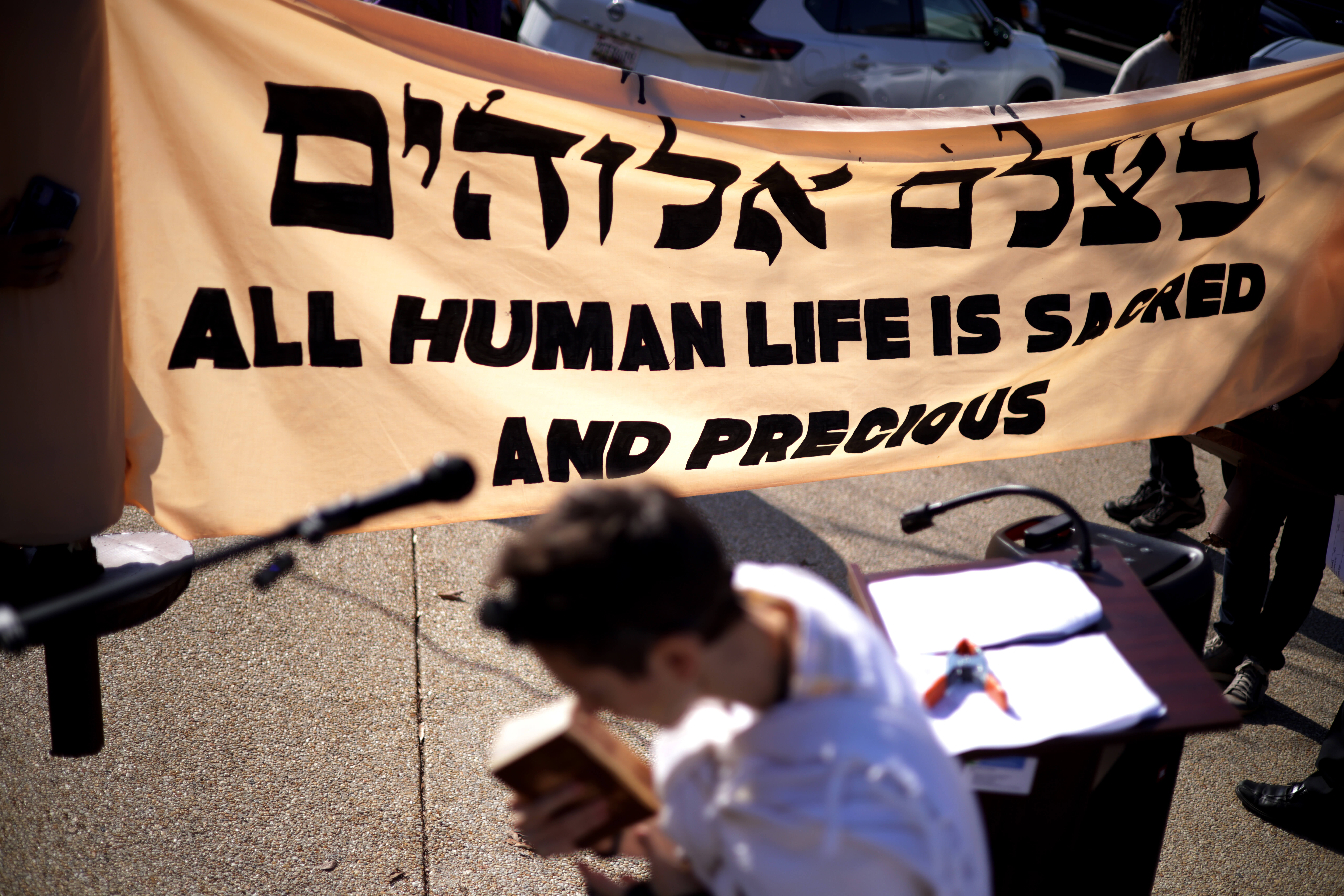
I don’t yet know what kind of political strategies we will need to employ to resist the fascist reality posed by the MAGA movement – but I do know that whatever happens, we will need to show up for one another now more than ever. We will need to protect and defend one another. We will need to be clearer than ever about the values we hold sacred and be prepared to ground everything we do in the conviction that every single human life is of infinite worth – and is worth fighting for.

We will need to be clear-eyed about the challenges ahead and stand together to face them. For those of us in the Jewish community, that means lifting up solidarity as our most central sacred imperative. All the rest is mere commentary. As I said this past Yom Kippur:

In the 21st century, I believe this is the sacred calculus the Jewish people have to offer the world: Creation + Exodus = Solidarity. More than ever, the Jewish communities we create simply must value solidarity as our most sacrosanct mitzvah. In an age in which we are witnessing the increased scapegoating, yes of Jews, but also of Muslims, LGBTQ+ people, people of color, disabled people, immigrants, indigenous people and so many others, our sacred tradition must promote collective liberation first and foremost. 

The predominant theme in this week’s Torah portion, Lech Lecha, is the act of going forth into the unknown with nothing but a promise of blessing and liberation. But unlike the literal meaning of the words in our portion, we must affirm that this liberation cannot be for one privileged group of people alone. We must affirm a Lech Lecha of collective liberation, where all people are God’s people and all people are chosen and the boundaries of the Promised Land extend to include all who dwell on earth.

In this moment, like Abraham and Sarah, we are all being called into a land we do not yet know. But as we read in our portion, it is a collective going-forth – for the sake of both the living and future generations.

Yes, in this current moment, there is much we do not yet know. But we do know that we will have the hearts and minds to resist what is to come. That there is still a world worth fighting for. And that the way to that world is through our solidarity and care for one another.

Shabbat Shalom,

Rabbi Brant Rosen