As if there wasn’t enough drama over the candidacy of Zohran Mamdani in New York City’s mayoral race, last week saw the release of “A Rabbinic Call to Action: Defending the Jewish Future,” a statement from an ad hoc group calling itself “The Jewish Majority,” condemning Mamdani for voicing political convictions that “delegitimize the Jewish community and encourage and exacerbate hostility toward Judaism and Jews.” By the end of the week, the call had garnered over 1,000 signatures from rabbis, cantors and rabbinical students from NYC and around the US.
Notably, the statement only mentions Mamdani once. The rest of the six-paragraph letter is devoted to defending the state of “Israel’s right to exist in peace and security” and promoting Zionism as central to Judaism and Jewish identity. It’s centerpiece is a long and pointed quote from a recent sermon by Rabbi Elliot Cosgrove of Park Avenue Synagogue, in which he warned that Mamdani “poses a danger to the New York Jewish community”:
Zionism, Israel, Jewish self-determination—these are not political preferences or partisan talking points. They are constituent building blocks and inseparable strands of my Jewish identity. To accept me as a Jew but to ask me to check my concern for the people and state of Israel at the door is a nonsensical proposition and an offensive one, no different than asking me to reject God, Torah, mitzvot, or any other pillar of my faith.
Given the timing of the letter, “The Jewish Majority” statement is clearly an effort to stem Mamdani’s surging lead – and his popularity with young leftist Jews in NYC. But on a deeper level, the fundamental goal of the letter is made all-too plain: it seeks to combat the growing “political normalization of anti-Zionism.”
From what I can tell, Mamdani has never explicitly referred to himself as an “anti-Zionist.” What he has said, over and over again in response to the incessant gotcha question “does Israel have the right to exist as a Jewish state?” is that he “believes Israel has the right to exist as a state with equal rights.” Of course, the words “a state with equal rights” is enough to make him an anti-Zionist – because the only way Israel can exist as a Jewish state is by denying equal rights to Palestinians.
For me, this is the real significance of this statement – it shines a hard light on the deep moral hypocrisy of a Jewish communal establishment that is threatened by anti-Zionism: a political position that is rooted in human rights and equal rights for all. Indeed, if you listen to Mamdani’s words carefully, he takes pains to point this out: he refers to Israel’s actions in Gaza as a genocide because he agrees with the opinions of international bodies such as ICJ as well as scores of otherhuman rightsobservers. He openly says he would not welcome Netanyahu in NYC because the ICC has put a warrant out for his arrest as a war criminal.
These are not hateful or inciteful positions. What is remarkable – and galling to the Jewish communal establishment – is that Mamdani is not paying a political price for expressing them. Quite the contrary: he is the one who comes off as eminently principled and reasonable, while apoplectic Jewish leaders are having an increasingly difficult time explaining why a genocidal, apartheid nation-state is a “building block” of their Jewish identity. True to form, this clergy group is simply trotting out familiar talking points, fully expecting their morality and veracity to be self-evident.
Contrary to the claims of the statement’s signers, the increasing normalization of anti-Zionism does not “delegitimize Jewish identity and community.” As the rabbi of an openly anti-Zionist Jewish congregation, I can attest that increasing numbers of Jews are identifying as such out of genuine Jewish conscience: from a deep attachment to Jewish ethical values that mandate the pursuit of justice and hold that all human beings are equally created in the divine image.
Recent surveys certainly bear this out: according to an October 2025 Washington Post poll, of American Jews, 61% believe Israel has committed war crimes and 4 out of 10 say the country is guilty of genocide against the Palestinians, views that would certainly track with an anti-Zionist identity. As Jewish Currents editor-in-chief Arielle Angel has observed, “the catastrophic failure of Zionist Judaism” has marked “an opening for anti-Zionist Jews to step into greater influence, (to) make our case for something new.” By all accounts, the time has come for a Judaism that rejects the fusion of toxic ethno-nationalism with Judaism.
I’m also struck by another note of desperation from this ad-hoc group of Jewish clergy: they purport to speak for the Jewish majority as if that alone confers legitimacy. They of all people should know dissent is a sacred, cherished aspect of Jewish tradition. They of all people should know that in Talmudic debate, both majority and minority views are given equal weight and consideration. They of all people should know of the Torah’s sacred injunction “Do not go after the majority to do evil” (Exodus 23:2). And any student of history, Jewish or not, should know that the majority is not always right, whether it be the majority of Southern Whites who supported slavery and Jim Crow in the US, apartheid in South Africa or the injustices of Zionism today.
The real moral question here, it seems to me, is not “who is in the majority?” but rather “who is on the right side of history?”
A photograph shows soldiers posing with an orange banner that reads: “Only settlement would be considered victory!” The color orange was used by the settler movement in 2004 and 2005 to protest Israel’s disengagement from Gaza.
It’s becoming ominously clear that the end game of Israel’s genocide in Gaza is the end of game of Zionism itself: namely, settlement. The writing has been on the wall for some time now. As I mentioned on Rosh Hashanah, we now know the existence of the so-called “General’s Plan,” in which:
Israel will control the northern Gaza Strip and drive out the 300,000 Palestinians still there. Major General Giora Eiland, the war’s ideologue, proposes starving them to death, or exiling them, as a lever with which to defeat Hamas. The Israeli right envisions a Jewish settlement of the area, with vast real estate potential of convenient topography, a sea view, and proximity to central Israel…
News accounts bear out that the General’s Plan is well underway. The vast majority of residents of Northern Gaza have now been ethnically cleansed from their homes and Israel has said it has no intentions to let them return. At a recent two-day conference, “Preparing to Resettle Gaza,” Israel’s National Security Minister Itamar Ben-Gvir told the hundreds who gathered, “If we want it, we can renew settlements in Gaza.”
With Trump now poised to take power, there will very likely be new wind behind these plans. Last March, Jared Kushner was quoted as saying: “Gaza’s waterfront property could be very valuable … It’s a little bit of an unfortunate situation there, but from Israel’s perspective I would do my best to move the people out and then clean it up.” With Kushner widely expected to be “pivotal” to Trump’s Middle East policy, his words now take on a terrifying new resonance of possibility.
Even more ominously, there is every reason to expect these plans will be aided and abetted by the American Jewish communal establishment. One week after Donald Trump’s reelection, Karen Paikin Barall, the Jewish Federation’s VP of government relations, remarked to a group of local Jewish community relations councils, “We should all look forward to the day we can hope to buy townhouses in the West Bank and Gaza.”
As a settler colonial movement, Zionism was always focused on the maintenance of a majority Jewish presence in historic Palestine. However, the seizing and control of resources has been no less integral to this project. The settler colonial reality of the 21st century is driven in no small part by the corporate interest of weapons manufacturers as well as the billionaire and oligarch class that seek to profit off the spoils of war and genocide. In the current moment, it should come as no surprise that there is also unabashed talk about the annexation of the West Bank and even parts of South Lebanon.
Such is the natural result of a movement and ideology that prizes real estate over the well-being of the actual people who happen to live on the land. I’m particularly mindful of this as I contemplate this week’s Torah portion, Chayei Sarah, which begins with the famous episode in which Abraham negotiates with the Hittites to purchase the Cave of Machpelah as a burial site for his recently deceased wife Sarah. This story is often wielded by many Zionists as a deed of sale to this sacred site – and contemporary land acquisition in Palestine as the “inalienable possession of the Jewish people.”
There is, of course, another way to understand the spiritual meaning of this story: it is not about land acquisition but love and loyalty. Abraham is not motivated to purchase this land in order to claim exclusive entitlement to it: he is driven by his desire to honor his beloved wife Sarah, and to ensure that she and his extended family will have a permanent resting place. To read this episode only about entitlement to land is limited at best – and to judge by the apartheid and violence by which Israel maintains its control of this site today – a moral sacrilege at worst.
At the end of the portion, following the death of Abraham, we read that his sons Ishmael and Isaac buried their father together in the Cave of Machpelah. I can think of no better image to underscore the critical importance of pursuing a Judaism that prizes love over land. This Shabbat Chayei Sarah, may we rededicate our commitment to this sacred vision.
The course of Jewish history has never been a straight line. Throughout the centuries, the evolution of Jewish life has been shaped by a series of crises, tension points – and outright cataclysms. More often than not, these tumultuous events have even transformed the very nature of Judaism itself.
To offer just a few examples: classical Judaism as we know it emerged out of a catastrophe: the destruction of the Temple in Jerusalem by the Romans in 70 ACE. The Spanish Inquisition in 1492 ended the Golden Age of Jewish life in Muslim Spain and initiated the spread of Sephardic Judaism throughout Europe, Africa and the Middle East; the Hasidic movement was born out of tensions in Eastern European Jewish life in the 17th century; the onset of modernity and the Enlightenment in Western Europe, created a wide constellation of movements whose legacies still influence Jewish life today.
I’m making this point because there’s every indication that Jewish life is going through just such a monumental crisis and transformation right now. I’m speaking of course, about the abyss that has opened over the issue of Zionism – an abyss that has widened considerably this past year as a result of Israel’s genocide in Gaza. .
Last night, Aviva Stein described how she painfully crossed this divide when she shared her own personal Jewish journey with us. I’d like to thank Aviva for her powerful words, which were truly a gift to our community. In my remarks to you today, I’d like to pick up where she left off. I want to begin by responding to her painful point about the increasing exile of young Jews from the Jewish community:
There is an epidemic in the Jewish community – young people are losing and leaving their jobs, and the Jewish community is losing the passion, critical thinking, and vitality that their best and brightest brought to their work. So many Jewish organizations are breaking this way – the big tent, so to speak, has collapsed, and Jews of conscience, Jews who say no to genocide and no to Islamophobia and war mongering, find ourselves on the outside.
Just two weeks ago, there was an extensive investigative article in the journal “In These Times,” which documented how “US Jewish institutions are purging their staffs of anti-Zionists.” The author of the article, Shane Burley observed:
If the trend continues, it could contribute significantly to one of the sharpest breaks in the history of American Jewish life, forcing out a generation of progressive Jews and furthering the crisis of legitimacy plaguing much of the communal Jewish infrastructure.
In other words, we’re currently witnessing a fundamental divide in the Jewish community – even a potential schism in the making. While it’s far too early to predict how it will play out, one thing seems clear to me: just as Israel is fast losing its legitimacy in the international community, Zionism is just as quickly losing its legitimacy in the Jewish community itself.
Of course we can’t write Zionism’s obituary just yet. There are still plenty of staunch Zionists in our community who have a decidedly different view of the past year – who insist that Israel is doing what it has to do to defeat its existential enemies. And there are also many liberal Zionists who refuse to recognize the reality of Israel’s genocide, who still point to the “complexities” of the “conflict.”
This is what it has come to. The Jewish community has become irrevocably divided between those who stand with Israel – or apologize for its behavior – and those who believe Israel is a settler colonial apartheid state that is committing a genocide in our name. There is no more big tent, if there ever was one. There is little use in pretending that there is any conceivable room for consensus on this issue.
While these fissures over Israel and Zionism have always been present in the Jewish community, it’s clear that they’ve been widening over the last decade or so. This past year, however, the divide broke wide open. And I honestly don’t believe we’ll ever be able to put the pieces back together again, certainly not in the way they were.
Over the years, prophetic voices in our community have been sounding the alarm over this coming schism. One such voice was the great Jewish scholar and theologian Marc Ellis, of blessed memory, who tragically died far too soon this past June. Among other things, he wrote about the rise of what he called “Constantinian Judaism.” This was a reference to the pivotal moment in the 4th century when the Emperor Constantine made Christianity the official religion of the Roman Empire, transforming what had previously been a small and persecuted religious community in the first century after Jesus, into a religion of empire and state power.
As Marc taught, after the cataclysm of the Holocaust and the birth of the state of Israel, Jewish tradition itself became Constantinian. In the 20th century, Judaism, which had previously been prophetic at its core, became wedded to systems of empire, militarism and Jewish supremacy. In very short order, Constantinian Judaism became the central focal point of Jewish life.
From the very beginning of the Zionist movement, however, there were always prophetic Jewish voices opposing Zionism. And they remained even after the founding of the state of Israel. Marc referred to them as “Jews of Conscience” – the minority of Jews who resisted Constantian Judaism, often at great cost. Because of Zionist hegemony, Jews of Conscience necessarily lived in exile, socially, religiously, and in many cases professionally from the Jewish communal establishment (as was the case, very sadly, for Marc).
Even so, every Jewish communal study over the past several years has shown that the ranks of Jews of Conscience have been growing, particularly among the younger generations. As Aviva explained to us last night, they have now burst out into the open – and the Jewish communal establishment is responding with ferocious, desperate backlash
As we contemplate this unfolding schism, I believe it’s important to reckon with the profound damage Zionism has done to sacred Jewish tradition. This marriage of Judaism and ethno-nationalism has been so deeply normalized, it often feels difficult to know where one starts and the other stops. For example, for centuries, the Hebrew word “Yisrael” which means “wrestles with God” referred to a Jewish spiritual peoplehood. It had a religious cultural meaning that spoke deeply to Jewish collective identity throughout the diaspora. It referred to our history and practice of debate, of questioning, of challenging the status quo. Today, for most Jews – and most people in the world – the word “Yisrael” means one thing only: it refers exclusively to a heavily militarized political nation state.
So too with the word “Zion,” which was always much more than a physical location. In Jewish liturgy, Zion is a signifier of our highest spiritual aspirations: the world to come that we were actively working to manifest in our day. After it was appropriated by Zionism, however, it became synonymous with a political movement whose realization tragically resulted in the dispossession and oppression of millions of people.
There are so many other examples. The glorification of militarism we instill in our children in our religious schools; the holidays of conquest, like Israel Independence Day that have become an indelible part of the Jewish holiday calendar. The idolatrous placement of national symbols such as Israeli flags in our sacred spaces. The list goes on and on and on.
Marc Ellis used to observe that with the fusion of Judaism with empire, we have now reached the end of ethical Jewish history. As he once put it:
We Jews, all of us, no matter our various political positions, are responsible for what Israel has done and is doing to the Palestinian people. That is why I believe that we, as Jews, dwell in the abyss of injustice. The injustice we have perpetrated upon Palestinians has brought us to the end of ethical Jewish history. The question for Jews, the only question, is what are we to do at this end?
When Marc spoke those particular words, communities of Jews of conscience were still fairly nascent. But when we founded Tzedek Chicago in 2015, we were, in a sense, answering his question “what are we to do at this end?” by creating a vibrant, Jewish spiritual community that turned away from this abyss of injustice. I know it meant a great deal to Marc to become a member of our congregation after so many years of professional exile.
When we founded Tzedek, we realized that we were one small, modest effort in this regard – but we still believed there was still a place for a dissident Jewish community such as ours. This is how I described it in 2015 in my very first Rosh Hashanah sermon:
(Ever) since our announcement, I’ve been hearing consistently from people all over the country who have told me they wish that something like Tzedek existed in their community. So while we might not statistically exist in the institutional sense, I believe we are very much alive out there in the borderlands of Jewish life. I just know in my heart that there is a place for a Jewish congregation such as ours. And while we are starting off modestly, mindful of our capacity, of what we are able and not able to do during this first year of our existence, I do believe the response we’ve received thus far indicates that the time has truly arrived for a congregation such as Tzedek Chicago.
Since that inaugural service, Tzedek has grown in ways we never could have predicted. In 2020, when we started holding our services and programs online, our membership expanded in numbers and geographically, transforming us into a global congregation. The people who told me they wished something like Tzedek existed in their community now participated in our programs and services and became members of our congregation. Many of them are among our most active members and more than a few serve on our boards and committees.
The horrors and atrocity of this past year, however, changed the Jewish community irrevocably. It has become a profoundly tragic irony that during times of particularly brutal Israeli military assaults on Palestinians, membership in anti-Zionist organizations like Jewish Voice for Peace tends to spike dramatically. During the genocide of this past year, we’ve witnessed this growth at Tzedek like nothing we’ve ever seen before, nearly doubling in size.
There were months on end that new members were literally joining us every week. As many of you know, our membership application includes a field that asks our new members to tell us why they were joining Tzedek Chicago. The statements we received were powerful and moving – and almost all of them expressed common themes: those who could no longer bear the the support of Israel’s genocide in their synagogues; those who had never belonged to a synagogue before because of the constant centering of Israel; those who were converting to Judaism but were starting to despair that it might never be possible if it required fealty to an ethnic Jewish nation-state.
One of the most powerful examples of Jewish anti-Zionist religious organizing I witnessed occurred this past Spring, during the growth of the student encampment movement on college campuses. In May, Tzedek was contacted by the student group Jews 4 Justice at DePaul, who asked if we could come lead a Shabbat service in their encampment. Adam Gottlieb and I came twice to lead Havdalah services. I’m not exaggerating when I say they were among the most inspiring ritual experiences I’ve ever experienced.
Those of you who organized or visited these encampments likely know what I’m talking about. These were organically generated, living, breathing student communities. At DePaul, as in many other student encampments, there was a food tent and a first aid tent. There were learning sessions and tutoring stations. There were workshops on deescalation tactics.
But for me, the most powerful aspect of the encampment was its grassroots, interfaith nature. Throughout the encampment there were signs that included solidarity statements from a variety of religious traditions. Hijabi women were congregating very naturally alongside Jews wearing kippot. When Adam and I arrived, there was a Muslim call to worship where the communal gathering took place. Our havdalah service was immediately followed by a ritual dance by a local indigenous dance troupe.
Needless to say, this encampment was not the bastion of antisemitic Jew-hatred that has been falsely characterized by the media and the Jewish communal establishment. The Jewish students who we met at these and other student encampments are deeply serious, passionate Jews who are creating real communities that express solidarity with Palestinians as a sacred Jewish value.
It was sad, but not at all surprising, that these encampments were eventually destroyed – overturned by state violence. But in the end, the brutality of this response only proved the students’ essential point about the world they were actively resisting – and more importantly, the one they sought to create in its stead.
Yes, over the past summer, colleges and universities have cracked down hard on regulations prohibiting students’ freedom of assembly and speech. But I have no doubt that they will continue to find creative, meaningful ways to organize. So too, I know that these young Jewish students will not be deterred in their desire to create meaningful Jewish communities where they can be their full Jewish selves. To my mind they truly represent the best of our Jewish future.
As we continue to organize these Jewish communities however, I think it’s enormously important to reckon with the tragic reason why they are growing in the first place. While the creation of these new Jewish communities of conscience is something to celebrate, there is absolutely nothing to celebrate about the circumstances that have led to their creation. Those of us who create spiritual anti-Zionist communities know that we must create them with deep sensitivity. In particular, as we craft our religious rituals, we must take care not to exploit Palestinian trauma for our own benefit.
We must also draw a meaningful distinction between private Jewish ritual services, such as we are engaged in now – and public, politicized Jewish ritual, which has a different function and different goals. In their wonderful new book, “For Times Such as These: A Radical’s Guide to the Jewish Year,” my dear friends Rabbis Jessica Rosenberg and Ariana Katz offered this important wisdom:
We’ve experienced the way bringing Jewish ritual into political actions opposing the occupation of Palestine, which primarily harms Palestinians, can recenter the action and conversation on Jews and Jewish feelings. As with all ritual, and all political action, we believe in thinking strategically about the what, where, when and why. We can make plenty of Jewish ritual prayer space that grieves and counters Zionist narratives; when we bring the ritual into the street, it must be done strategically and in partnership with Palestinian-led organizing.
So yes, while this new Jewish spiritual community organizing is exciting to witness, it is also complex and often fraught. This new Jewish transformation is occurring not as a result of a catastrophe that was inflicted on the Jewish people, but one a Jewish state is inflicting on others. This is something that is truly unprecedented in Jewish history; we cannot and should not take it for granted.
We don’t yet know what the future will hold for the Jewish community but we do know that it will never be what it once was. And we know that this schism will be painful. It is not only dividing our community, it is causing deep estrangements in families and relationships between loved ones. I’ve done my share of what I call “political-pastoral counseling” in the past year and I can attest to the very real personal pain this schism is leaving in its wake.
As Aviva told us last night, “I believe we are moving towards a Jewish future where the social norm of Zionism will become increasingly rare, and where communities like ours are not an anomaly but a standard of Jewish communities around the country.” I agree with her hopeful declaration. While it won’t be easy, I know it will happen. Why? Because we are ultimately building our communities with deep-seated, deeply held core values.
When we created Tzedek Chicago, we started by crafting our core values statement before we actually began to recruit any members. As time goes by, I’ve come to realize that this was among the smartest things we ever did. I remember thinking at the time, there are plenty of Jewish congregations out there: why does the world need another? What do we have that’s unique to offer? As I think about it, this is a critical question for any Jewish community. Do we exist just to exist or for a more transcendent purpose? Does our existence actively seek to repair the world or does it merely serve to use up Jewish community resources? Or worse still, does our communal existence contribute to harm in the world?
I’d like to finish by addressing these questions: Why should we create Jewish community in the first place? And more fundamentally, does Judaism have anything to uniquely offer the world in the 21st century?
I’d like to return to the Hebrew word “Yisrael” – the community that wrestles and struggles with God. To me this means that Jewish tradition has never been self-evident; it has always been dialectical – we have always wrestled with very different meanings of what it means to be Jewish; what kind of Judaism we want to lift up in the world. The essential question before us has never been simply “What is Judaism?” but rather, “What is theJudaism we want to affirm and bequeath to future generations?”
Let’s take the two central sacred narratives in Torah: the Creation story and the Exodus story – the two poles that form the foundation of Jewish tradition. A signature moment of the creation story is God’s creation of humanity b’tzelem elohim – in God’s image. In the Talmud, there is a famous debate between the two great rabbis, Rabbi Akiba and Rabbi Ben Azzai. They were arguing, as rabbis are wont to do, about what they considered to be the central precept in Torah. Rabbi Akiba quotes the famous verse from Leviticus, “Love your neighbor as yourself.” Which certainly seems like a strong contender. But Ben Azzai says, no, it’s the verse from the Creation story, “God created humanity in God’s image.”
At the root of this argument, I believe, is a profound debate about particularism versus universalism. “Love your neighbor as yourself” could very well be taken to mean “love your fellow community member as yourself.” In fact, there are many prominent Jewish commentators who interpret it to mean precisely this: “love your fellow Jew as yourself.” But Ben Azzai comes back with “we are created in God’s image,” pointing out that all people are of infinite worth.
This approach has profound implications for the kind of Judaism we seek to affirm. Among other things, it comes from the section in the Torah before there were nations, before there were even Israelites, before land was promised to one particular people, conquered and carved up by the victors. When we promote a universalist approach to Judaism, it is a sacrilege to value Jewish lives over any other; it is an averah – a sin – to create a system of Jewish supremacy: a nation state that literally privileges Jews over non-Jews.
Our other sacred narrative, the Exodus, includes the famous moment when God heard the cry of the oppressed and responded by demanding their liberation. Again, there are some who might understand this narrative as a particularist one: a singular story about Jewish liberation in which a Jewish God hearkens to the cry of God’s chosen people. But when we promote a Judaism of universalism, we come to understand that God hearkens to the cry of all who are oppressed. Indeed, this is a precious lesson we can learn from Liberation Theology: all who are oppressed are God’s chosen.
In the 21st century, I believe this is the sacred calculus the Jewish people have to offer the world: Creation + Exodus = Solidarity. More than ever, the Jewish communities we create simply must value solidarity as our most sacrosanct mitzvah. In an age in which we are witnessing the increased scapegoating, yes of Jews, but also of Muslims, LGBTQ+ people, people of color, disabled people, immigrants, indigenous people and so many others, our sacred tradition must promote collective liberation first and foremost.
As I contemplate the growing schism in the Jewish community, it occurs to me that it really is a microcosm of a larger coming apart we are seeing in the world. And yes, so much of it is frightening to behold. At this moment, so much is breaking wide open around us – in our community and in our world. With so much uncertainty and no guarantees, we must respond by choosing the path of solidarity above all.
I’d like to end with words from our dear friend Marc Ellis, whose voice was largely silenced by the Jewish establishment. We miss his presence and his moral witness terribly, and it feels only appropriate to give him the last word.
For Marc, the essence of being Jewish was what he called “the prophetic” – he often referred to it as “the Jewish indigenous.” The prophetic, he taught, is where Jewish particularism and universalism came together. As he often wrote and said, the only authentic way to act Jewishly today is to act prophetically; to take a moral stand against empire, against oppressive state power, even if it invariably comes at great cost.
This is where we end – now. The prophetic is always before us. When Jews – with others – embody the prophetic, the worldly powers are put on notice. What happens then we know from history. The struggle intensifies. The casualties mount. The empire, always on a war footing, intensifies the war against the prophetic. Yet history remains open. Perhaps this is the ultimate message the prophets communicate to us throughout the ages. When we come to the end, against all odds, the prophet glimpses a new beginning on the horizon. When that hope will be embraced, when it will broaden so that the global community becomes prophetic, cannot be foretold in advance. The prophet is not a soothsayer. The prophet is a gatherer of light in dark times. Gathering light, hope on the horizon, justice around the corners of our lives. Eyes wide open, Israel’s ancient wisdom, re-presented, reborn.
May these words inspire us to make real in the coming year: a new beginning on the horizon, justice around the corner, the birth pangs, at long last, of global prophetic community.
(photo: Irfan Khan / Los Angeles Times via Getty Images)
Guest sermon at Tzedek Chicago’s Erev Yom Kippur service by Tzedek staff member Aviva Stein on October 11, 2024:
Good Yuntif.
I am honored to have the opportunity to speak to you all tonight. I began working at Tzedek Chicago as our Family Program Coordinator in early 2019. In July of this year I became Tzedek Chicago’s second full-time staff person, serving as the community and organizational director for this inspiring congregation.
I am speaking to you now at Kol Nidre of Yom Kippur in the year 5785, as a genocide is being carried out against the Palestinian people.
For the past many months, and particularly on this day of reflection, as the gates of heaven open wide for our most intimate and vulnerable supplication, my mind keeps coming back to the question–how could we let this happen?
One answer I keep returning to is that this tragedy is in part a product of the decades-long campaign by American Jewish institutions to build nationalist, dogmatic support for the state of Israel within our communities, and particularly in our children. When reflecting on my own upbringing, the clarity with which I can see the indoctrination of my Jewish education as a young person is chilling.
From my summer camp’s obligatory High School Israel trip, where we dressed up in IDF uniforms and took pictures for instagram, to “Israeli club,” the only Jewish affinity space at my public high school, which I later learned was funded by an Orthodox “youth education” organization, to the march for Israel being an annual youth group event to singing the Israeli national anthem in Hebrew school. When I look back, I see the many ways nationalist fervor a created an ersatz version of Jewish identity for me as a child. I had been taught that being Jewish was loving Israel, and I believed it. By the time I was in college, I had become a successful product of what all that institutional Zionist funding had set out to do.
I got my first job after college in 2014 as a teacher’s aide at the local Jewish day school. It was sitting in on the daily “Jewish Studies” class, where I for the first time was able to clearly see the ideological manipulation of the Israel education machine. At that point, I did not identify as a Zionist – I didn’t feel I had enough political knowledge to know what that meant. I know now that internalized sense of ignorance is a tool well-used by the zionist establishment – telling us that it was “too complicated” and that “we didn’t understand” was a reliable way to suppress dissent among their targets. At that time I did, though, feel an obligation to the state of Israel as a Jewish person.
Watching those children create maps of Israel that highlighted popular tourist destinations, making pita on Israel day, and hanging pictures of Jewish men praying at the Western Wall, I had the perspective I needed to question the establishment in which I was raised and in which I was watching these children grow up. Wasn’t Israel a country, just like the US, and wasn’t it a country at war? My family openly objected to the war in Iraq – why not in Israel? I had questions that I as a young adult knew were too taboo to ask. But I had a new perspective in my position as a teacher of experiential and inquiry-based education: wasn’t being afraid to ask questions an indicator that something was very, very wrong?
That same year, #IfNotNow held its first public action, when a small group of young Jewish activists read the Mourner’s Kaddish in New York City in recognition of the Palestinian lives lost in the assault on Gaza that summer. And, also in 2014, my childhood rabbi, Brant Rosen, left the synagogue in which I had grown up in the wake of his increased outspokenness about human rights violations in Palestine that were being committed in our names as Jews. My questioning came at a moment in US history when objection to the occupation of Palestine in the Jewish community was more visible than ever. Without looking very hard, I was able to find community that ultimately carried me through the process of unlearning Zionism. I recognize that opportunity of being guided in loving, joyful Jewish community towards a Judaism of solidarity as a real gift for my generation, one that was not afforded to so many Jews of conscience in the decades before me.
My heart breaks when I see the same cycle of propaganda and silencing posing as pedagogy continue in Jewish education today. Six years ago I took a job at a religious school where I felt it was special that I was allowed to teach there while being open with leadership about my politics. It was challenging to work somewhere where I was not politically aligned, but it was a job, and I could manage. In October of last year, something broke in that community. Donors who had made their contributions with strings attached started pulling those strings, and leadership, which had prided itself on a liberal and open perspective on Palestine, quickly adopted the right-wing politics of their biggest donors. This spring, after months of censorship posing as policy, when my coworker was told that they could not wear a keffiyeh for explicitly Islamophobic reasons, we quit.
I am ashamed of the choice that synagogue made to uphold racism to shield its community from critical engagement with the devastation of Palestine. But my coworker and I were not alone – since March, eleven full and part time staff people at that “progressive” organization have left their jobs. In the past year, Adam and Leah, Tzedek Chicago’s cantorial team, both have left Jewish education jobs in solidarity with Palestine. Around the country, I know of a dozen more people who have left their jobs this past year, by being fired or quitting. There is an epidemic in the Jewish community –young people are losing and leaving their jobs, and the Jewish community is losing the passion, critical thinking, and vitality that their best and brightest brought to their work. So many Jewish organizations are breaking this way – the big tent, so to speak, has collapsed, and Jews of conscience, Jews who say no to genocide and no to Islamophobia and anti-Arab racism and war mongering, find ourselves on the outside.
But outside does not mean alone. Over the past 10 years at Tzedek Chicago, our membership has seen tremendous growth to nearly 400 member households. Our family program community has grown from four families to seven to more than twenty, and for the past six years, we’ve seen our children build joyful Jewish space rooted in solidarity with Palestine. Our membership has grown as a blended community across generations and our most active members range from movement elders to very young children, all of whom are committed to this new Jewish future we are building together.
These past 10 years have experienced a blossoming in Jewish communal life beyond zionism not just at Tzedek Chicago but around the world. Making Mensches in New York, Tirdof in Denver, and Makom in North Carolina are all explicitly anti zionist Jewish ritual communities. Organizing spaces #IfNotNow and JVP have become household names. The Jewish Liberation Fund has successfully challenged the status quo in philanthropy and offers grants for proudly anti-Zionist Jewish work (of which Tzedek Chicago has been a beneficiary). Tzedek UK/Ireland is a thriving community. In Chicago, we are now home to two prayer communities beyond Zionism, Tzedek Chicago and Higaleh Nah. There are of course many more chavurot, friend groups, and organizing communities around the country making meaningful Jewish life that reject Zionism.
So much has changed in the last ten years. And I believe it with all my heart when I say that we have entered a paradigm shift, where the politicized young, queer, disabled and neurodivergent people we have relied on to staff our Hebrew schools and summer camps will no longer accept propaganda and nationalism as normal. We don’t have to. We can choose to work in Jewish organizations that are actually values aligned rather than those that just “allow” us our politics. Of course these opportunities are few relative to Zionist institutions, but I believe we are moving towards a Jewish future where the social norm of Zionism will become increasingly rare, and where communities like ours are not an anomaly but a standard of Jewish communities around the country.
It has been truly meaningful to see what had felt like such a lonely landscape become so varied and rich. And, as heartening as this change is, it feels essential that we acknowledge that this is nowhere near enough. It breaks my heart that this is considered such a radical concept: a joyful community of people who are committed to a world beyond colonialism and oppression, and who say so, full stop. It breaks my heart that the victories we have to celebrate are about staffing and organizational capacity as we watch the devastation of Palestine in real time.
Twelve years ago I was pursuing a degree in environmental studies, and I remember very clearly a class where we discussed the mounting science pointing to the inevitability of climate collapse, just a couple years after it had become remotely socially acceptable to even use the term “global warming.”
“Something really big is going to happen,” we said, “and people will realize, something will change, something has to give.” This was seven years after Hurricane Katrina, and two years after the Deepwater Horizon oil spill. Still, we found ourselves saying, “something really big is going to happen, and then, and then…”
This memory haunts me as we consider the fight for Palestinian liberation. Climate collapse is here – I don’t need to list the many ways we experience its consequence. We know it’s here. We are right now seeing the extent of the destruction brought by Hurricanes Helene and Milton, record breaking storms inarguably exacerbated by rapidly warming seas. The consequence of our inaction is here.
The Nakba happened. The ethnic cleansing of hundreds of thousands of Palestinians from their homes, creating the largest refugee population in the world, happened. The occupation of millions of Palestinians happened. This year, at least 40,000 people, (though we know in truth many, many more) have been murdered. Entire family lines are gone from this earth and we suffer for the loss of each one of those lives. There is nothing bigger, nothing greater that will awaken our collective consciousness. The consequence of our inaction is here. The unthinkable has happened, and it’s happening right now as we sit here, gathered on this holiest day, the gates of heaven open wide.
We will never get back the biodiversity that once blanketed the earth, nor the beauty, and freedom and abundance that it provided. And, the earth is not lost. Song birds migrate, leaves change their color, networks of fungus communicate through untold billions of channels under our feet.
I mourn for the world we might have lived in had those tens of thousands of lives not been lost. The world and our souls are irrevocably damaged by this unthinkable loss of life.
And, in the face of this unimaginable loss we, as Jewish people, as Americans, as living beings on this earth, owe Palestine our radical imagination. We owe our steadfast belief that Palestine will be free. Palestine will be free, nation states will fall, families will flourish, and we will live in a world where everyone is fed, and everyone is housed, and children will play in river beds and groves of olive trees.
We are painfully far from that dream. Our small successes in the face of unspeakable evil are just that: small.
Kabbalah teaches that every time a person performs a mitzvah, they bring us that tiniest step closer to Olam Haba, the world to come. I do not believe that a Messiah will come and save us from the world we have created for ourselves. I do believe that when we make visible our refusal to participate in the Judaism of violence and supremacy that is normative in our institutions, we become that small bit more visible to the people who are looking for us. To the young people first entering a critical perspective of Israel, to the people who need to leave their job but don’t know where they can go, to the people who love being Jewish and don’t believe that it makes their safety more important than anyone else’s, they can find us. We’re here.
And no, the visibility of Jews who reject Zionism will not free Palestine. But our communities are growing. And as we grow, and our voices become louder, and as we send our money and march in the streets and dedicate our prayer and build our power, we bring more and more people into the sacred responsibility of radical imagination. As Aurora Levins Morales writes in “V’ahavta:”
When you inhale and when you exhale breathe the possibility of another world into the 37.2 trillion cells of your body until it shines with hope. Then imagine more.
We are here tonight, on the eve of Yom Kippur, to release all vows we have not fulfilled and to recommit ourselves to the holy work of teshuvah, of imagining more. Thank you for being here. We will be here. And Palestine will be free, soon and in our days.
Here are my remarks from, “Gaza: Religion, Politics and Solidarity,” a program sponsored by Bright Stars of Bethlehem on May 5, held at the First Presbyterian Church in Evanston. It was my honor to speak in conversation with Palestinian liberation theologian Rev. Dr. Mitri Raheb (founder and President of Dar al-Kalima University College of Arts and Culture in Bethlehem), Dr, Rami Nashashibi, (founder and Executive Director of the Inner-City Muslim Action Network) and Dr. Iva E. Carruthers, (General Secretary of the Samuel DeWitt Proctor Conference).
Last week, the board of my congregation, Tzedek Chicago released this statement in repsonse to Israel’s ongoing military assault in Gaza. Although it is addressed to all people of conscience, it contains a specific challenge to the Jewish community at large.I’m immensely proud of the statement, which I hope will be considered seriously even (especially) by those members of the community aren’t ready to heed its words.
Our statement is not so much an academic argument as it is a call to moral action. As we say in our statement, “We are witnessing the continuation of the Nakba in real time…Now more than ever, it is time for Jews of conscience to call out the essential injustice at the heart of Zionism in no uncertain terms.“
The full statement follows below:
The unspeakable violence currently unfolding in Gaza is confronting the Jewish community with the most critical moral challenge of our lifetime.
As of this writing, over 21,000 Palestinians have been killed by the Israeli military, almost half of them children. According to the UN, nearly two million people have been internally displaced, confining them to less than one-third of the Gaza Strip’s territory. Disease and starvation are rampant, subjecting one in four households into “catastrophic conditions.” As the Secretary General of the UN recently described, “(Gaza) is at a breaking point. There is a high risk of a total collapse of the humanitarian system.”
Together with Jews and allies around the world, we grieve the massive loss of life that occurred as a result of Hamas’ heinous violence in Israel on October 7. We join with those around the world who are demanding the safe return of the remaining hostages currently being held in Gaza. We unreservedly condemn Hamas’ actions on that terrible day – there can be no justification for this brutal attack on civilian life.
We also know there was a crucial, underlying context to this horrible violence. We assert without reservation that to contextualize is not to condone. On the contrary, we must contextualize these events if we are to truly understand them – and find a better way forward.
The violence of October 7 did not occur in a vacuum. It was a brutal response to a regime of structural violence that has oppressed Palestinians for decades. At the root of this oppression is Zionism: a colonial movement that seeks to establish and maintain a Jewish majority nation-state in historic Palestine.
While Israel was founded in the traumatic wake of the Holocaust to create safety and security for the Jewish people, it was a state founded on the backs of another people, ultimately endangering the safety and security of Jews and Palestinians alike. Israel was established through what Palestinians refer to as the Nakba: the ethnic cleansing of 750,000 Palestinians from their homes in 1948. And since that time, Israel has subjected Palestinians to a regime of Jewish supremacy in order to maintain its demographic majority in the land.
This ongoing Nakba is the essential context for understanding the horrifying violence of the past three months. Indeed, since October 7, Israeli politicians have been terrifyingly open about their intentions, making it clear that the ultimate end goal of their military assault is to ethnically cleanse Gaza of its 2.2 million Palestinian residents. One prominent member of the Israeli government put it quite plainly: “We are now rolling out the Gaza Nakba. Gaza Nakba 2023. That’s how it’ll end.” More recently, Prime Minister Netanyahu was reported as saying that he is actively working to transfer Palestinians out of Gaza. The problem, he said, “is which countries will take them.”
Israeli leaders are being true to their word: we are witnessing the continuation of the Nakba in real time. As in 1948, Palestinians are being driven from their homes through force of arms. As in 1948, families are being forced to march long distances with hastily-collected possessions on their backs. As in 1948, entire regions are being razed to the ground, ensuring that they will have no homes to return to. As in 1948, Israel is actively engineering the wholesale transfer of an entire population of people.
In a statement last week, the UN Special Rapporteur on the human rights of internally displaced persons warned:
As evacuation orders and military operations continue to expand and civilians are subjected to relentless attacks on a daily basis, the only logical conclusion is that Israel’s military operation in Gaza aims to deport the majority of the civilian population en masse.
In short: Israel’s military onslaught on Gaza is revealing the true face of Zionism.
From its founding, Tzedek Chicago has openly rejected the conflation of Judaism with Zionism. As expressed in our congregation’s core values statement: We are anti-Zionist, openly acknowledging that the creation of an ethnic Jewish nation state in historic Palestine resulted in an injustice against the Palestinian people – an injustice that continues to this day.
Since Israel’s most recent military assault on Gaza began, Tzedek Chicago has been a proud and active participant in the cease-fire movement, which has been steadily growing in the Jewish community. This movement is collectively motivated by the Jewish mitzvah of pikuach nefesh – the sacred imperative to save life. At the same time, however, it is critical to assert the Jewish value of “tzedek, tzedek tirdof” – “justice, justice shall you pursue.” Beyond ceasefire, we must acknowledge and call out the human dispossession that is at the root of Israel’s latest assault on Gaza.
Now more than ever, it is time for Jews of conscience to call out the essential injustice at the heart of Zionism in no uncertain terms. This is a critical moment for our Jewish communal organizations as well. We know it is not easy for Jewish institutions to reject Zionism, but we believe it’s critical that they do. In particular, we ask synagogues that are proudly “standing with Israel” to morally reckon with whom they are choosing to stand and consider the real human costs of their position.
There are some Jewish congregations that maintain an inclusive “wide tent” that makes room for both Zionists and anti-Zionists alike. While this may seem like a welcome development, we encourage these synagogues to consider how this inherently contradictory position nonetheless enables the violence Israel is perpetrating against Palestinians. We also invite congregations that publicly support “Palestinian liberation” to be clear about what this liberation will ultimately look like. Will it be a liberation in name only or will it include the dismantling and transformation of the colonial Zionist project once and for all?
The moral challenge of the moment is clear. We invite other Jews of conscience to join us in the creation of a thriving movement of Judaism beyond Zionism. A Judaism that lifts up a diasporic consciousness that doesn’t express entitlement over land. A Judaism that rejects ethno-nationalism, militarism and dispossession and celebrates our spiritual tradition of justice, liberation and solidarity with all who are oppressed.
Let our call for ceasefire be but the first step toward a greater liberation: one that extends true justice and equality for all who live between the river and the sea.
Here are the remarks, below, that I delivered at Chicago City Hall yesterday at a meeting of the Committee on Health and Human Relations as it considered an endorsement of UN Resolution 377, which calls for an immediate ceasefire in Gaza. I was among a panel of community members – which included historian Dr. Barbara Ransby and State Rep. Abdulnasser Rashid – who offered statements at the meeting. In the end, the committee voted unanimously to approve the resolution, which will now go before the entire city council in January.
As has been the case with many local legislative bodies around the county, the politics around the issue of ceasefire has been marked by deep cowardice and toxicity. In October, the city council passed a strongly worded resolution in support for Israel that only glancingly referred to Palestinians – or to Israel’s rapidly escalating military onslaught on Gaza. As it became clear that the very word “ceasefire” was a political non-starter, Alder Rossana Rodriguez-Sanchez of the 33rd Ward decided to build supportfor the UN resolution as chair of the Committee on Health and Human Services. Such is the politics of ceasefire in this horrid moment: it takes these kinds of torturous procedural efforts just to get a city council to call for an end to genocidal violence that has killed 20,000 people, almost half of whom are children.
Due to time constraints, I didn’t read my entire statement. Here are my remarks, in full:
I’m honored to be able to offer these remarks here today in support of this resolution. I agree with so much of the powerful testimony that was given during public comment and I want to thank the speakers for those remarks. I don’t want to go over much of what has been said other than to say I lift up the sentiment of outrage over the genocidal violence that Israel is committing in Gaza even as we speak.
But I would like to speak in particular, as a leader in the Jewish community, to many of the disingenuous and frankly false claims about Jews, about Judaism, about Zionism, about antisemitism that are being lifted up over the past two plus months during this terrible, tragic time. I hope it will at least provide a little bit of context as we start to consider the importance of calling for a ceasefire and our support of this resolution here in the city of Chicago.
We are living, at this very moment, through an extraordinary moment of reckoning. It’s not an understatement to say that the ongoing, unspeakable violence in Israel-Palestine is confronting us with the most critical moral challenge of our lifetimes. I can personally attest that this is most certainly the case in the Jewish community. Hamas’ violent attack on October 7 has deeply traumatized Israelis and many Jews throughout the world. This trauma, however, is not being manifest in one particular way. There are many Jews, myself included, who are deeply grieving these losses, who pray for the safe return of Israeli hostages – but who are also anguished and appalled at the massive violence and trauma Israel has been unleashing on the people of Gaza.
The Jewish community has never been monolithic – and it certainly has never been lockstep on the issue of Israel. And right now, the divisions within our community are becoming manifest in unprecedented ways. For the past two months, day after day, thousands of Jews have been organizing and taking to the streets throughout the country, engaging in relentless acts of civil disobedience to demand an immediate ceasefire in Gaza.
The events of the past two months reflect an important trend that has long been growing in the American Jewish community. The traditional legacy Jewish organizations, who have typically purported to speak for the Jewish community have become increasingly out of touch on the issue of Israel-Palestine. Over the past two decades, every Jewish communal survey has shown support for the state of Israel steadily eroding in the American Jewish community.
Moreover, the percentage of Jews – particularly young Jews – who identify as anti-Zionist is growing. We are pushing back strongly on the fallacy that Judaism = Zionism – and the deeply disingenuous accusation that anti-Zionism is antisemitism. We hear this claim being made repeatedly by the state of Israel and its advocates in the American Jewish establishment. Here’s but one example: Jonathan Greenblatt, the CEO of the Anti-Defamation League, who has been repeating this accusation over and over again in recently said this in an interview with the New Yorker:
Zionism, a desire to go back to Jerusalem, the longing for Zion, isn’t something that David Ben-Gurion came up with. It isn’t something that Theodor Herzl came up with. It has been embedded in the faith and the traditions of Judaism for thousands of years. You can’t open a Torah on a Saturday morning for your daily prayer, you can’t go through a holiday, without seeing these references.
I’d like to address this claim head on because it a deeply inaccurate statement – and in its way, even dangerous. Greenblatt is of course correct that there is an important connection in Judaism to the Land of Israel. And yes, this connection is quite clear throughout the Torah, liturgy and Jewish tradition in general. However – and this is a big however – the notion of creating a political Jewish nation state was never part of Jewish tradition until the rise of the Zionist movement in the 19th century.
Judaism is a centuries-old Jewish peoplehood. Zionism is a political movement of modernity that arose in Europe that sought to radically change Jewish identity and Jewish life. For most of Jewish history, the yearning to return to Zion was expressed as an idealized messianic vision. Some Jews made pilgrimage to the land. And a small minority of indigenous Jews consistently lived in historic Palestine throughout the centuries. But the rabbis fervently opposed the establishment of a 3rd Jewish commonwealth in historic Palestine. They actually considered it to be blasphemous – a “forcing of God’s hand” to create something that could and should only occur in the messianic age.
From the very beginning, there has always been principled Jewish opposition to Zionism. Many Jews have embraced anti-Zionism not as a matter of traditional messianic belief, but as a matter of Jewish moral and political conscience. We recognize that there is a fundamental injustice at the core of Zionism, namely, the creation of a Jewish majority state through the dispossession and oppression of another people.
It is important to note that political Zionism is a form of ethno-nationalism. In other words, the Jewish identity of the state of Israel is predicted on the maintenance of a majority of one particular group of people in the land. Up until 1948, Jews were a minority in Palestine – and this necessarily posed a problem for the Zionist movement. In the end, the state of Israel could only be created one way: through what Palestinians refer to as the Nakba. Today, even many Israeli historians agree: the state of Israel was founded through the ethnic cleansing of Palestinian Arabs from their homes and Israel’s refusal to let them return. This is what happened in 1948 – and this dispossession of Palestinians to make way for a Jewish state has been happening every day for the past 75 years.
In 2021, B’Tselem, a respected Israeli human rights organization released a 300-page report in which it concluded, “The Israeli regime, which controls all the territory between the Jordan River and the Mediterranean Sea, seeks to advance and cement Jewish supremacy throughout the entire are.” I want to make this clear: a prominent Israeli human rights organization has said that Israel has created a regime of Jewish supremacy between the river and the sea. This is not an antisemitic claim – it is a claim rooted international law and human rights. This is what it means when Palestinians and solidarity activists call for Palestine to be free “from the river to the sea” – they are expressing basic human rights that we all take for granted – or should. And it is not antisemitic to say so.
Are there some individual anti-Zionists who antisemitic? Undoubtedly. But it is disingenuous and wrong to claim that anti-Zionism is fundamentally antisemitic. As I said earlier, there are increasing numbers of Jews, myself included, whose are anti-Zionist as a deep expression of our Jewish values. Torah teaches that all human beings are created in the divine image, that we must seek justice and liberation for all. It teaches that love for Zion is not divine entitlement to a piece of land, but an expression of a Zion consciousness. That the land – like the entire earth itself – does not belong to us but to God, and we are but strangers upon it.
Another central precept of Judaism is the prophetic injunction, “Not by might and not by power, but by my spirit, says the Lord of Hosts.” This sacred imperative is what compels us to reject Israel’s militarism or to affirm in any way that Jewish state power will keep Jews safe. If there was ever any doubt, the events of the last two months should make this abundantly clear. It makes us all less safe – Jewish and Palestinians alike. And make no mistake: if this nightmarish war should spread through the region, it will endanger the safety and security of us all.
This why so many of us in the Jewish community are literally taking to the streets, calling for an immediate ceasefire and return of all hostages. This is why we welcome and support resolutions like UN Resolution 377. And this is why we are urging our political leaders, on every level, to join the call for ceasefire. This is moment of deep moral reckoning for us – and for the world. History will judge us by our action or our inaction in this critical moment. And that is why I urge us all to support the cause of justice and peace for all who live between the river and the sea – and for all who dwell and earth.
Again, I thank you for giving me the opportunity to speak to you today.
As Israel intensifies its horrific military assault on Gaza – at current count, over 8,000 Palestinians have been killed, including over 3,000 children – the popular call for a ceasefire in Gaza is growing powerfully around the US and throughout the world. Last weekend, hundreds of thousands of protesters took to the streets. Jewish Voice for Peace, together with other Jewish groups, have organized massive actions of civil disobedience in Washington DC, New York City and other cities throughout the North America. Last Friday, “Rabbis for Ceasefire” released a new initiative that included a video calling for a “complete ceasefire now.” To date, over 100 rabbis have signed on to our statement.
As I wrote in my previous post, there is still a discernable resistance to the call for a ceasefire from members of the Jewish community. That resistance now seems to have developed a public call of its own: “Free the Hostages Now.” Over the past week or so, this adversarial binary has been echoing throughout social media in the form of dueling memes. When I posted a “Ceasefire Now” profile picture on my Facebook page, a FB friend immediately added the comment, “Free the Hostages” as a kind of knee-jerk rejoinder to my public statement. The increasing back and forth between these two demands has all but turned into a perverse game of rhetorical ping-pong.
As I consider this phenomenon, I can’t help but think that this alternative call is presenting us with a moral litmus test – as if those who advocate for a ceasefire without also demanding a release of the hostages somehow favor Palestinian lives over Israeli lives. As if calling for a ceasefire expresses concern for Palestinians only and not all who happen to be in Gaza at this terrifying moment.
Of course, any humane person would and should desire a return of the hostages. The details of Hamas’ mass murders and their abduction of hostages have been appalling and horrific to behold. But just as we struggled to comprehend the scope the trauma that occurred on October 7, our grief was weaponized and metabolized into a war of vengeance. Before we had time to even catch our breath, Israel immediately initiated a massive scorched earth military campaign in Gaza, unleashed a scale of death and destruction that has magnified this grief to unimaginable proportions.
It has been truly unsettling to witness the apocalyptic language used by Israeli leaders to describe the military objectives of this withering assault. Despite their claim to be prioritizing the release of the hostages, Israeli leaders have made it clear that vengeance and the destruction of Hamas – along with the rest of Gaza – is its primary objective. On October 11, Israel’s President Isaac Herzog said, “It is an entire nation who are responsible. This rhetoric about civilians being uninvolved is absolutely untrue…We will fight until we break their backs.” More recently, Israeli PM Netanyahu compared their military assault to the commandment to destroy the Amalekites – the divine Biblical imperative to wipe out an entire people completely.
Amidst this unsparing bombing campaign, family members of hostages have been speaking openly about their fear that their loved ones will be killed before they can be rescued. The father of one hostage has said “We are very worried about our loved ones who are there and we don’t know if the military operation will take those hostages under consideration, (to make sure) that no one will be injured.” Others are imploring their government to engage diplomatically to ensure the return their loved ones in exchange for Palestinian prisoners.
Indeed, the issue of Palestinian prisoners raises a crucial piece of context that has been regularly been lost in discussions of the current hostage crisis. Over the past several decades, in fact, there has been precious little discussion in the mainstream media of Israel’s practice of imprisoning Palestinians in military prisons as well as in “administrative detention” – a central feature of its brutal occupation. While many Palestinian prisoners have been committed violent acts against Israelis, many more are imprisoned without anything remotely resembling due process. Israel’s Military Order 101 has essentially criminalized civic activities under the basis of “hostile propaganda and prohibition of incitement.” The order, which is still in use in the occupied West Bank, outlaws the participation and organization of protests, printing and distributing political material, waving flags and other political symbols – and any activity that demonstrates sympathy for an organization deemed illegal under military orders.
As described by the Israeli human rights organization B’Tselem:
In administrative detention, a person is held without trial without having committed an offense, on the grounds that he or she plans to break the law in the future. As this measure is supposed to be preventive, it has no time limit. The person is detained without legal proceedings, by order of the regional military commander, based on classified evidence that is not revealed to them. This leaves the detainees helpless – facing unknown allegations with no way to disprove them, not knowing when they will be released, and without being charged, tried or convicted.
Unjust illegal imprisonment has long been a way of life for the Palestinian people. It has been estimated that four in ten Palestinian men have spent time in Israeli jails. According to the Palestinian prisoner support and human rights organization Adameer, there are currently, 1264 administrative detainees – and 5,200 Palestinian political prisoners overall – currently being held in Israeli prisons.
As has been widely noted, Palestinian minors are also among the imprisoned. Defense for Children International – Palestine has reported, approximately 500 to 700 Palestinian children, some as young as 12 years old, are detained and prosecuted in the Israeli military court system every year. Israel remains the only country in the world that automatically and systematically prosecute children in military courts. According to child rights groups, these children are often interrogated without the presence of a parent or lawyer, subjecting them to physical and psychological torture.
Bottom line? Abducting and imprisoning civilians – whether by militant groups or militarized states – is an immoral act. But as we do this moral calculus, we must also make sure to include an honest power analysis. Israel’s imprisonment of Palestinians in administrative detention – not to mention their imprisonment of 2.2 million Gazans in an open-air prison – occurs in the context of a heavily militarized state who have been subjecting the Palestinian people to systemic oppression and dispossession for decades. Hamas’ abduction of hostages – brutal and heinous as it was – occurred in response to a colonial, apartheid regime that been governing their lives for the past 75 years.
This is key: while Netanyahu would like us to believe that Hamas are Amalekites who have abducted hostages out of sheer evil, these acts were ultimately carried out in order to gain some leverage in amidst a never-ending blockade that has left them completely at Israel’s mercy. Such has always been the case with these hostage crises: underlying the terrifying violence of these acts lie a desire for strategic leverage in potential negotiations.
When it comes to understanding the strategic realities involved in hostage negotiations, there are few Israelis with more experience than Gershon Baskin, Middle East director of the International Communities Organization. According to Baskin, who was instrumental in procuring the release of the abducted Israeli solider Gilad Shalit in 2011 and has had relationships with Hamas leaders over the years, the current situation is considerably more complex than the one he faced back twelve years ago. As Baskin has pointed out, Israel has never had to face such a massive number of civilians taken hostage. Things are further complicated by the fact that the hostages seem to be held by multiple groups in addition to Hamas, Moreover, he says:
We’re in the midst of a war with an enormous bombing campaign going on in Gaza, destroying much of the Gaza Strip. More than a million Gazans are homeless already. So there’s a horrific humanitarian crisis in Gaza as well, with so many innocent people being killed.
Baskin added that while the safe return of the hostages is the number one priority of their family members, “it’s not necessarily the number one priority of Israel. There are other priorities, like dismantling Hamas’s ability to ever attack Israel again and threaten Israel.” In other words, Israel is more interested in the destruction of Hamas than ensuring the welfare of anyone who happens to be in Gaza at the moment. At the end of the day, the hard fact remains: Israel cannot destroy Hamas without killing scores of Palestinians – and likely many hostages as well.
This, in short, is why it is so profoundly problematic to counter the demand for a ceasefire with a demand to release the hostages first. As long as Israel rains bombs mercilessly on Gaza, the chances of getting the hostages back alive grow that much dimmer. At the same time, it is utterly unrealistic to expect that Hamas will release the hostages without a ceasefire. The hostages are the only realistic leverage Hamas has at this moment. And Hamas most certainly knows if they hand over the hostages before a ceasefire is negotiated, Israel will almost certainly press on with its massive military assault until Hamas is completely destroyed – along with much of Gaza.
On both a moral and strategic level, if we want to save the lives of Israelis as well as Palestinians, we simply must put all our efforts into a demand for a ceasefire now. As ever, there is no military solution to this crisis. There are only two alternatives: engagement or annihilation. While the former now feels more remote than ever, the latter is simply unthinkable.
I’ll end now with the powerful, heartfelt, urgent words of Gershon Baskin:
My heart bleeds for all of the innocent people of Gaza who have been killed, many of them buried alive under the thousands of homes that have been destroyed by Israeli bombs. War crimes are being committed by Israel in Gaza. Killing innocent people is not “collateral damage.” We are talking about the lives of thousands of people who are victims of this conflict as well, regardless of their political opinions or their views on Hamas. If they are non-combatants, they are innocent victims. The indiscriminate bombings have to end. There will be a day after tomorrow when this war ends. There will still be two peoples living on this land and we will either look back at the horrors of what we have done to each other, or we will begin to look forward. These events are the biggest traumas for Israelis since the Holocaust and for the Palestinians since the Nakba. We will not forget. This will be the new chapters in our collective memories and narratives. The question is will we stand up from the ashes and from the pains and finally realize that everyone living between the River and the Sea must have the same right to the same rights or we will continue to say that only my side has the rights to express our collective identity on this Land?
When I heard the initial reports that Palestinians had breached the fences of Gaza this past Saturday, I will be completely honest – my first reaction was “good for them.” Israel had been collectively punishing Palestinians in Gaza for years with a crushing blockade with little to no care from the rest of the world. Now, amazingly, Palestinians had broken free from this seemingly impenetrable open-air prison. With power and ingenuity, they were resisting their oppression, reminding Israel – and the world at large – that they were still here. That they would not submit.
Inevitably, as the news of the attacks trickled in during the course of the day, however, my emotions turned to shock and grief. Along with the rest of the world, I learned about the sheer scale of violence committed by Hamas militants against Israeli civilians: the largest single day massacre in Israeli history. At last count, at least 1,200 Israelis have been killed and it is estimated that 150 have been abducted and taken hostage into Gaza. Everyone in Israel and many Jews throughout the world, know people – or know of people – who were killed, injured or taken hostage. Like so many in the Jewish community, my social media feed has been filled with heartbreaking pictures and stories of Israelis who have been slain or are still unaccounted for.
Amidst all the grief, however, I was also deeply troubled by the ominous, growing cries for vengeance voiced by the Israeli government and media, and felt a creeping dread over the shattering military response that would almost certainly rain down on the people of Gaza. And now that day has come. Israel has shut off all electricity and water for over two million Palestinians as the military wreaks complete and total devastation on across that tiny strip, attacking hospitals, schools, mosques, marketplaces, and apartment buildings. As of this writing, the death toll has risen to more than 1,200, with 5,600 wounded. More than 250,000 people have been rendered homeless – and these numbers will almost certainly rise significantly in the coming days and weeks.
In a letter to my congregation a few days ago, I wrote that “so many of us are feeling layers upon layers of intense emotion, in often confusing and contradictory ways. For Jews who stand in solidarity with Palestinians, I know these confusing contradictions are particularly keen.” Even so, I wrote, we simply must lift up the underlying context of this horrible violence. I continue to hold tightly to this conviction. While the sheer scope of our grief may feel incomprehensible, we simply must find the wherewithal to say out loud that the facts of these events have not only been comprehensible, but in fact inevitable.
Indeed, Palestinians and their allies have long been sounding the alarm that Israel was subjecting Palestinians to a brutally violent apartheid regime with impunity – and that there would be terrible consequences if the international community failed to intervene. Over and over, we’ve been warned about the cataclysmic violence that would inevitably ensue if Israel was not held to account. As Palestinian historian Rashid Khalidi put it recently, “an entire people (has been) living under this kind of incredible oppression, in a pressure cooker. It had to explode.”
As we attempt to understand the context of this recent violence, I believe it’s utterly critical to know where to plot the starting point – and to my mind, this is precisely where most of the media analyses of the past several days have sadly gone astray. To judge by any number of pundits, this current outbreak of violence began alternatively with the US – Saudi deal or the policies of the far-right Netanyahu administration. While it might be said that any of these causes may have provided the most recent spark, I’ve been deeply disappointed, if not surprised, that precious few of these analyses have even mentioned the Nakba in relation to this latest outbreak of violence.
To be sure, the Nakba was an act of violence and harm that has been reverberating through the land between the river and the sea from 1948 until this very day. To put it simply, for the past 75 years, Israel has been violently dispossessing Palestinians in order to make way for a majority Jewish state. And for just as long, the Palestinian people have been resisting their dispossession – yes, often violently.
It is not by chance that this most recent violence has occurred in and around Gaza. As many commentators have observed, Gaza has in many ways been the epicenter of the Nakba – and of the Palestinian people’s resistance to it. To grasp this fully, it is important to understand the history of this region. Gaza’s narrative did not begin with Israel’s blockade or the political ascension of Hamas. What we call today the “Gaza Strip” was artificially created in 1949, when it became a repository for a flood of ethnically cleansed Palestinian refugees from cities and villages in the coastal plain and lower Galilee. Before the Nakba, the population of this small region numbered 60 to 80,000 residents. By the end of the hostilities, at least 200,000 refugees were crowded into this 140 square mile strip of land.
At the time, most of the refugees fully expected to return home – some could even see their towns and villages through the fences. Those who crossed the border to gather their possessions or harvest their crops were considered “infiltrators” by Israel and shot on sight. Eventually, it became all too clear there would be no return. Over the years the tents turned into concrete buildings that grew ever higher along that narrow corridor. The numbers of that once sparse territory have grown to a population today of over 2,000,000 people – at least 70% of whom are refugees.
Following the founding of the state of Israel, many of the original settlements and kibbutzim founded on the border with Gaza were military outposts, most of which were built on top of or near demolished Palestinian villages. In fact, the sites that suffered the brunt of last Saturday’s massacres (including Kibbutz Kfar Aza, Re’im and Sderot) were settlements that were originally established in these locations for reasons of Israeli “national security.”
One such site was Kibbutz Nahal Oz, which was flooded by dozens of Hamas militants, and where, according to witnesses, at least two entire families were killed, and two more kidnapped and taken to Gaza as hostages. When I heard about the massacre at Nahal Oz, I couldn’t help but recall that this was not the first time this community had experienced Palestinian armed resistance. Back in 1956, a group of Palestinian militants entered Nahal Oz and killed a kibbutznik named Roi Rotenberg. At the time, this tragedy was keenly felt throughout the nascent state of Israel. At Roi’s funeral, the famed Israeli general Moshe Dayan offered a eulogy, expressing himself with brutal and unexpected honesty:
Do not today besmirch the murderers with accusations. Who are we that we should bewail their mighty hatred of us? For eight years they sit in refugee camps in Gaza, and opposite their gaze we appropriate for ourselves as our own portion the land and the villages in which they and their fathers dwelled…This we know: that in order that the hope to destroy us should die we have to be armed and ready, morning and night. We are a generation of settlement, and without a steel helmet and the barrel of a cannon we cannot plant a tree and build a house. Our children will not live if we do not build shelters, and without a barbed wire fence and a machine gun we cannot pave a road and channel water. The millions of Jews that were destroyed because they did not have a land look at us from the ashes of Israelite history and command us to take possession of and establish a land for our nation.
Dayan’s words resonate today with terrible prescience. Decades later, the descendants of this original Gazan generation still remain in refugee camps in Gaza, “gazing though the barrier fences as Israel appropriates as its own portion the land and the villages in which their ancestors dwelled.” Dayan’s eulogy also powerfully described a hypervigilant Israeli mindset that has only deepened throughout the decades. Since the Nakba could not and did not result in the complete ethnic cleansing of Palestinians from their homes, Israel has attempted to control them with a “steel helmet and the barrel of a cannon” for the past 75 years. During this time, Israel has widened its regime of violence in order to contain Palestinians in the occupied territories, subjecting them to a daily context of systemic, unceasing state violence every moment of their lives.
It is also telling that Dayan invoked the trauma of the Holocaust in his eulogy – and today, so many decades later, we can clearly see that this trauma was not limited to his generation alone. If anything, it has been handed down to subsequent generations in way that are all too real and all too palpable. Indeed, we can clearly see this generational trauma at work in Jewish responses to this latest violence, which is being openly characterized as “the worst mass murder of Jews since the Holocaust.” It is painfully poignant to consider that these massacres occurred in a state that was founded in the wake of the Holocaust in order to safeguard Jewish lives once and for all.
At the same time, however, this Holocaust rhetoric is deeply troubling given the vengeful fury currently being whipped up by a far-right Israeli government that is demonizing Palestinians with unabashedly genocidal language. Israel’s Defense Minister Yoav Gallant recently stated “Israel is fighting human animals” and should “act accordingly.” Netanyahu has promised that Israel’s military offensive on Gaza will “reverberate for generations.” One prominent Israeli general has promised to “open the gates of hell.” And perhaps most chillingly, a member of Israeli Parliament has called for a “second Nakba that will overshadow the Nakba of 1948.”
As I write these words, the Israeli military is mercilessly bombarding the Gaza Strip with a ferocity that is truly terrifying to behold. For the past few days, I’ve been combing social media for their postings from friends in Gaza, as I helplessly watch footage of whole neighborhoods and communities completely destroyed along with their inhabitants. One of the last messages I read came from a friend and former colleague at American Friends Service Committee: “Nothing left to say. More than 80 hours without electricity, water, or internet connection. Communication is very limited with everyone inside or outside Gaza. Carnage everywhere, hard to recognize streets, we are all waiting for the time to die.”
It is not an understatement to suggest that the Jewish community is now faced with a profound moral challenge. Even as we mourn our dead in Israel, we must acknowledge and protest the genocide Israel is currently perpetrating in their memory in no uncertain terms. I cannot say this forcefully enough: those of us who ignore this reality – who mourn the Jewish dead exclusively without even a mention of the massive crimes Israel is actively committing against the Palestinian people – will be quite frankly, complicit in this horrific bloodshed.
Over the past several days, I’ve found myself returning to a famous narrative from this week’s Torah portion: the story of Cain and Abel. In the wake of the first act of violence in human history, God says to Cain, “What have you done? The blood of your brother is crying out to me from the ground! Cursed by the ground that opened its mouth to receive the blood of your brother.” From this we learn, among other things, that bloodshed actually has the power to pollute the earth. Later on in the Torah, we will learn that nothing can ever be the same – or considered normal again – when blood is spilled. it must be expiated, or atoned for through a set of very complex and explicit sacrificial rituals. In our day, we can understand these to be acts of reparation, restoration and repatriation. We will only truly make atonement for this bloodshed with very real measures that will restore justice and balance for those who dwell in the land.
As I read this story, I can’t help but think of the blood originally shed in the terrible days of the Nakba, and how it continues to cry out to us all from the ground. I can’t help but think of the immense amount of blood that has been shed since, whose collective cry must certainly be a searing roar, if only we would allow ourselves to hear it. But we will never heed the cry as along as we remain hardened into sides, into “us and them.” In fact, in this week’s Torah portion, there are no “sides” to speak of. There are no nations, no Israelites, no Canaanites, no Amalekites, no Moabites. There is only one common humanity, struggling how to live together in a too often harsh and unyielding world.
Those it may seem more painfully difficult than ever, let us hearken to this voices that have so long been crying out from the ground. Let us respond with understanding, compassion and action. Even amidst the terrible grief, let us shine an unflinching light on the true roots of this violence – and on the vision of a future based on justice and equality for all who live in the land.
With this in mind, I will conclude now with the prayerful words of my dear friend and colleague Rabbi Alissa Wise:
May the One Who Remembers allow us to hold in one hand 75 years of occupation, dispossession and violence and in the other a future of peace, justice and freedom;
May the One Who is Slow to Anger soften our hearts and our fists helping us to put down the sword even at the height of the arc of our rage;
May the One of Possibility remind us that a future of peace with justice is possible;
May the One Who Awakens Us to Life hold us in our pain and vindictiveness until we set those down for the sake of life;
May the One Who Endures allow us to act for the sake of the coming generations;
May the One Who is Without Limit expand our senses of what is possible as we reach for justice, freedom and peace for us all.
An op-ed version of this sermon was published in Truthout
Jewish tradition teaches that words have a sacred power. In the very beginning of the Torah, God creates the world itself through the power of the word. In the book of Exodus, the Israelites speak as one people at Sinai, thereby entering into a covenant with God. It is said that on Yom Kippur, the High Priest would enter the Holy of Holies in the Jerusalem Temple and utter the otherwise unspeakable name of God – and at that moment the fate of the very world would hang in the balance. On Yom Kippur, we ourselves stand as a community and say the words of our collective confessions together. As our liturgy would have it, we may not be written into the book of Life for the new year unless we speak these words out loud.
In their way, the power of words is akin to energy. Once they are spoken, they are out in the world – and from that point on there are a myriad of ways their impact might be manifest. Sometimes their power will remain dormant. Other times, our words can be the conduit for deep and powerful transformation.
I think a great deal about the impact of our words when it comes to the issue of Israel/Palestine. We have witnessed their power for instance, over the course of this past year, as thousands of Israelis have been holding regular demonstrations against the current Israeli administration and its plans to limit the power of the Israeli judiciary. Week after week, protesters have chanted words in the streets and carried them on signs, expressing their collective outrage over the government’s “threat to Israeli democracy.” More recently, many in the American Jewish community – including many rabbis – have voiced their support for these protests and have even been staging public protests of their own.
On one level, it could be said that these massive rallies have had a powerful impact. They are the largest and most sustained protests in Israeli history and the most massive mobilization of the Israeli left in years. The rhetoric of the rally has also empowered Zionists in general. Many who advocate for Israel will often refer to it as “the only democracy in the Middle East.” I would suggest that the use of this word is powerful for all the wrong reasons. It covers up the reality that while Israel may be a democracy for Jews, it is decidedly not one for Palestinians. Indeed, for many centrist and right wing Israelis these demonstrations are important because they bolster the illusion of democracy. In so doing, they serve to entrench Zionism and strengthen the Jewish state.
It is true that at many of these demonstrations, there have been some chants and signs condemning Israel’s “occupation.” However, this is an oft-invoked word that can mean different things to different people. For some it refers only to Israel’s military occupation of the West Bank and Gaza. For others it also includes annexed territories such as East Jerusalem and the Golan Heights. For still others, the entire land between the river and the sea is considered to be occupied territory. Thus, when the word “occupation” is invoked during the demonstrations, there is little clarity on what it actually means – or what is actually being demanded.
There is yet another powerful word that has recently emerged in relation to Israel/Palestine, and that word is “apartheid.” Last year, three respected human rights organizations: Amnesty International, Human Rights Watch and the Israeli group B’Tselem, all released well-researched reports concluding that Israel is an apartheid regime. Over the past year, many surprising figures have also been increasingly using this word in relation to Israel, including a retired Israeli general.
This past year, a letter was posted online by Israeli academics that openly criticized American Jews for “(paying) insufficient attention to the elephant in the room: Israel’s long-standing occupation.” The letter pointedly stated that “there cannot be democracy for Jews in Israel as long as Palestinians live under a regime of apartheid, as Israeli legal experts have described it.” The so-called Elephant in the Room Letter was widely distributed and was eventually signed by Jewish leaders and figures – to date it has over 2,700 signatures.
With liberal Jewish leaders increasingly willing to use the “A” word in public, there is every indication that it is losing its stigmatized, transgressive status in the Jewish community. But even here, the meaning of the word “apartheid” depends on how it is used. The B’Tselem report, for instance, claims that Israeli apartheid extends “from the Jordan River to the Mediterranean Sea.” The Israeli general, on the other hand, limited it to the West Bank alone.
There are also those who would say that the term “apartheid” itself doesn’t go far enough – that it is a technical term from international humanitarian law that has limited legal applications. Many would argue that the word “settler colonialism” is much more powerful and meaningful because it is related to decolonization – a concrete process of action that includes the return of refugees and reparations to the Palestinian people.
Yes, all of these words do indeed have a complex kind of power when it comes to Israel/Palestine, and I’m often fascinated by the strategic ways we utilize this power. Years ago, I used to avoid controversial and potentially incendiary words in connection with Israel, feeling that they might well alienate and push away the very people I was trying to reach. I would typically use words I thought were less triggering: “dispossession” instead of “ethnic cleansing,” “non-Zionist” instead of “anti-Zionist,” “occupation” instead of “settler colonialism.”
I feel differently about this now. I actually think it’s important to use words such as these. I believe it’s important to name oppression explicitly and not to soften it with euphemisms. If some words make people uncomfortable, that’s OK. Once a word is said, it can’t be unsaid. It’s now part of the discourse. While some may well recoil from that word, they may well come around to accept it in time.
Words can indeed push the line of what is considered acceptable. But they can also represent one step too far, or the crossing of a line. There is still, for instance, a hard line drawn on the word Zionism. For most Jews, it is still considered beyond the pale to refer to oneself as an anti-Zionist: to break not just with the Israeli government, not just with the 1967 occupation, but with the very concept of an exclusively Jewish nation-state.
Apropos of Yom Kippur, it seems to me that when we say these words and cross this particular line openly, we’re really making a kind of confession. It’s not merely a political opinion – it’s an ethical admission that our Jewish identity has been inextricably connected to the oppression of another people.
When I was growing up, I was routinely taught that Zionism was the national liberation movement of the Jewish people. But I was never taught that this “liberation” came at the expense of another people. Like many American Jews, I was raised to view the establishment of the state of Israel as the exclusive Jewish homeland; a Jewish refuge after centuries of persecution; a redemptive homecoming following the collective trauma of the Holocaust.
Our trauma has been compounded by the sense that the world was complicit in it – that the Jewish people were abandoned by the international community. To be sure, the allied nations should rightly bear deep shame for their inaction during the Holocaust and their refusal to accept Jewish refugees following the war. But even as collective Jewish trauma is all too real, it was tragic and profoundly wrong to justify it by inflicting trauma on another people: by establishing a Jewish state on their backs and creating what has now become the largest refugee population in the world.
When Jewish Zionists publicly confess and act on the truth of this history it can often shake their Jewish identity to the core. This phenomenon often reminds me of something James Baldwin wrote in his classic 1962 essay, “A Letter to My Nephew:”
As you will discover, people find it very difficult to act on what they know. To act is to be committed and to be committed is to be in danger. In this case the danger in the minds and hearts of most white Americans is the loss of their identity. Try to imagine how you would feel if you woke up one morning to find the sun shivering and all the stars aflame. You would be frightened because it is out of the order of nature. Any upheaval in the universe is terrifying because it so profoundly attacks one’s sense of one’s own reality.
Though Baldwin was addressing white supremacy in the US, I think his words are equally applicable to Jewish supremacy in Israel. Zionism has become such an indelible part of Jewish identity that it has caused us to enable – or at the very least tolerate – the oppression of another people. The power of this mythic Zionist narrative manages to keep the truth of this ongoing oppression at bay, lest it causes everything we once held so dear to come crashing to the ground.
I experienced this upheaval personally in 2008, at my former congregation. During Israel’s military assault on Gaza, I experienced deep anguish – and I expressed those feelings in a blog post. While I had often been critical of Israel in the past, this was very different. Rather than using the usual words, calling for “balance” and a plea for “peace on both sides,” I used strong and angry language, explicitly naming Israel as the oppressor. I concluded my post with these words:
We good Jews are ready to protest oppression and human rights abuses anywhere in the world but are all too willing to give Israel a pass. It’s a fascinating double standard, and one I know all too well. I understand it, because I’ve been just as responsible as anyone else for perpetrating it.
So no more rationalizations. What Israel has been doing to the people of Gaza is an outrage. It has brought neither safety nor security to the people of Israel and it has wrought nothing but misery and tragedy upon the Palestinian people.
There I said it. Now what do I do?
Now many years after later, I realize that post was a kind of confession. Though I didn’t know it at the time, when I wrote those words I was actually crossing a line that would eventually force me to leave my congregation. To use Baldwin’s words, it was upheaval so profound that it attacked my sense of my own reality. I was fairly sure I couldn’t continue as a congregational rabbi – and I wasn’t completely sure what kind of Jew I would be either.
But as I said earlier, once our words are out in the world, there are myriad ways their power might be manifested. I was eventually able to recover my Jewish identity along with my Jewish conscience. Speaking those words was unexpectedly liberating. I discovered there were other Jews like me – lots and lots of them. And together we became part of an emergent Jewish community that had the freedom to say out loud what must be said. I have no illusions that there is a distinct minority of Jews on this side of the line, but I also know that there are many who are now crossing over, breaking their silence on Israel/Palestine in unprecedented ways.
In its way, this new Jewish community is creating a new counter-narrative to the Zionist narrative that has been dominant for so long. One critical part of this counter-narrative is the understanding that standing in solidarity with Palestinians is a mitzvah – a sacred act. When it comes to solidarity in particular, words are enormously important. Those who engage in solidarity with disenfranchised people know that while words may have great power, words can quickly lose their power if they do not lead to action.
Indeed, history is littered with the betrayal of empty words, promises unkept and treaties broken. Staying true to one’s word can often be a challenge for those who are trying to practice solidarity in good faith. The growing popularity of land acknowledgements is a good example. Land acknowledgements are significant and important, but as many Native people have pointed out, they amount to empty words unless they contain accountability – unless they exist in a larger context of decolonization and reparation. As President Robert Larsen of the Lower Sioux Indian Community has put it, “An apology or an acknowledgment is one thing, but what are you going to do next?”
The same applies to those of us who express solidarity with the Palestinian people. Yes, the words we say matter, but unless they lead to genuine transformation, they will remain little more than empty words. To return to my metaphor of energy, words represent the initial spark, but once kindled, it takes real effort to sustain and increase its power. We must take active responsibility to maintain that initial spark by acting on our words, lest it eventually sputter out.
Putting our words of solidarity with Palestinians can take many forms, but a core priority requested by Palestinian civil society groups is support for BDS – the Palestinian-led Boycott, Divestment and Sanctions movement. In this regard, I encourage those who are able to attend our Yom Kippur afternoon program today. We will be hosting a conversation with Omar Barghouti, the co-founder of the BDS national committee, whose presentation is entitled, “Repentance, Reparation and Ethical Reconciliation: A Palestinian Vision for Common Liberation.” Omar was deeply honored to be asked to be our teacher for Yom Kippur – but as I told him, I could think of no more appropriate way for a congregation such as ours to observe this day.
I also want to remind our members that Tzedek Chicago was one of the first congregations to sign a pledge from the Apartheid-Free Communities initiative, a newly created interfaith coalition convened by the American Friends Service Committee. In that statement, signatories pledge “to join others in working to end all support to Israel’s apartheid regime, settler colonialism and military occupation.” Now that we have publicly made this pledge, it will be our challenge to live out these words as a community – and in the spirit of Yom Kippur, I want to encourage us to explore what this will mean for our congregation in the years ahead. By signing this public pledge, it is also our hope that it will give other Jewish congregations and organizations the courage to speak these previously unspeakable truths as well.
In the Shacharit service – the Jewish morning prayer – we say the words, “Baruch she’amar ve’haya ha’olam” – “Blessed is the one who spoke and the world became.” While this literally refers to God but it is also a statement about the potential within each and every one of us. Our words have the power to transform our lives and our world – indeed, to create whole new worlds anew.
So let this be our collective blessing this Yom Kippur: let us find the courage to speak the words that must be spoken. Let our words kindle sparks of possibility, and may they inspire us all to create the world we know is possible: a world of Tzedek/Justice, of Tikkun/Repair and of Shalom/Wholeness for all who dwell on earth.
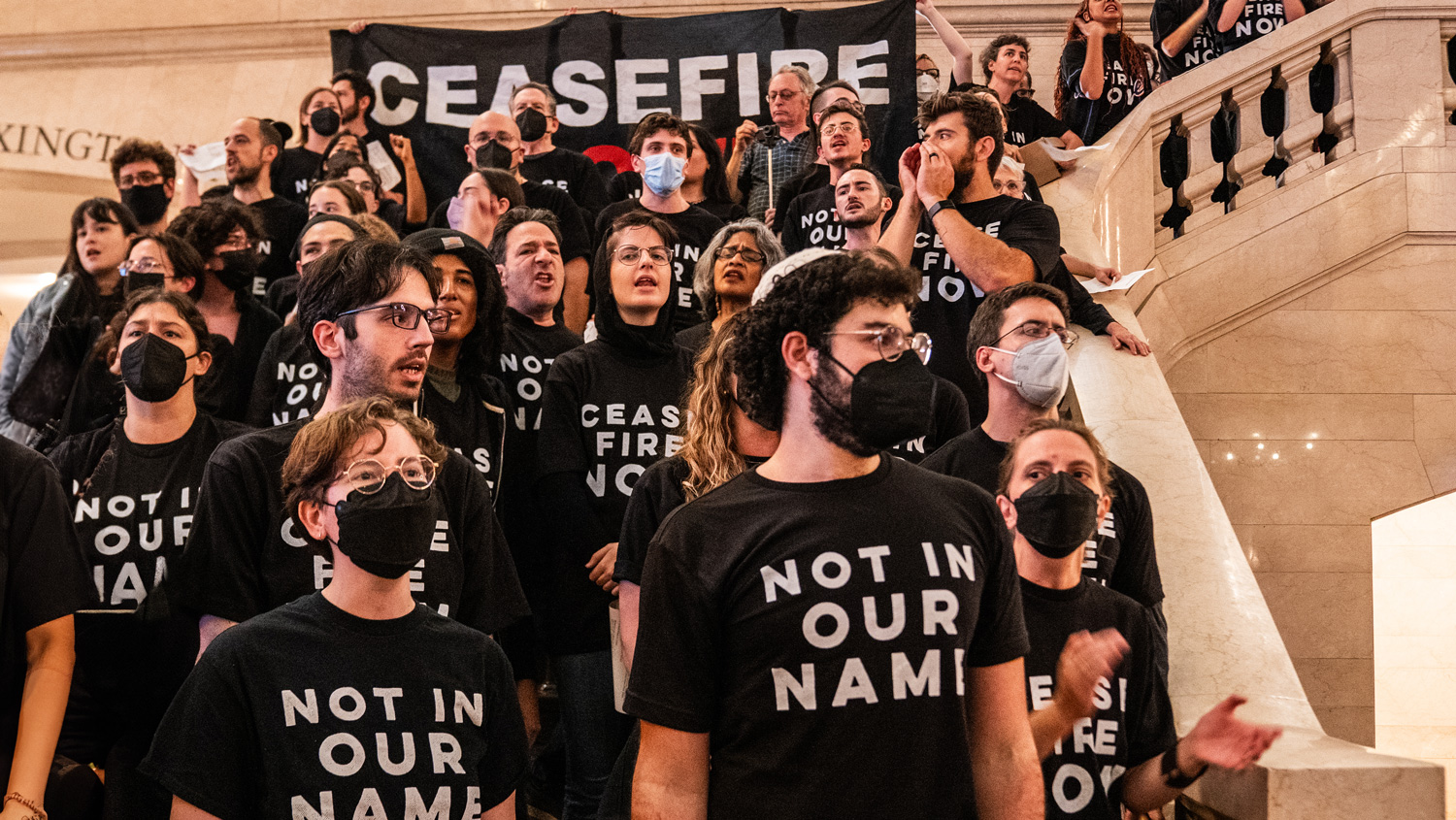
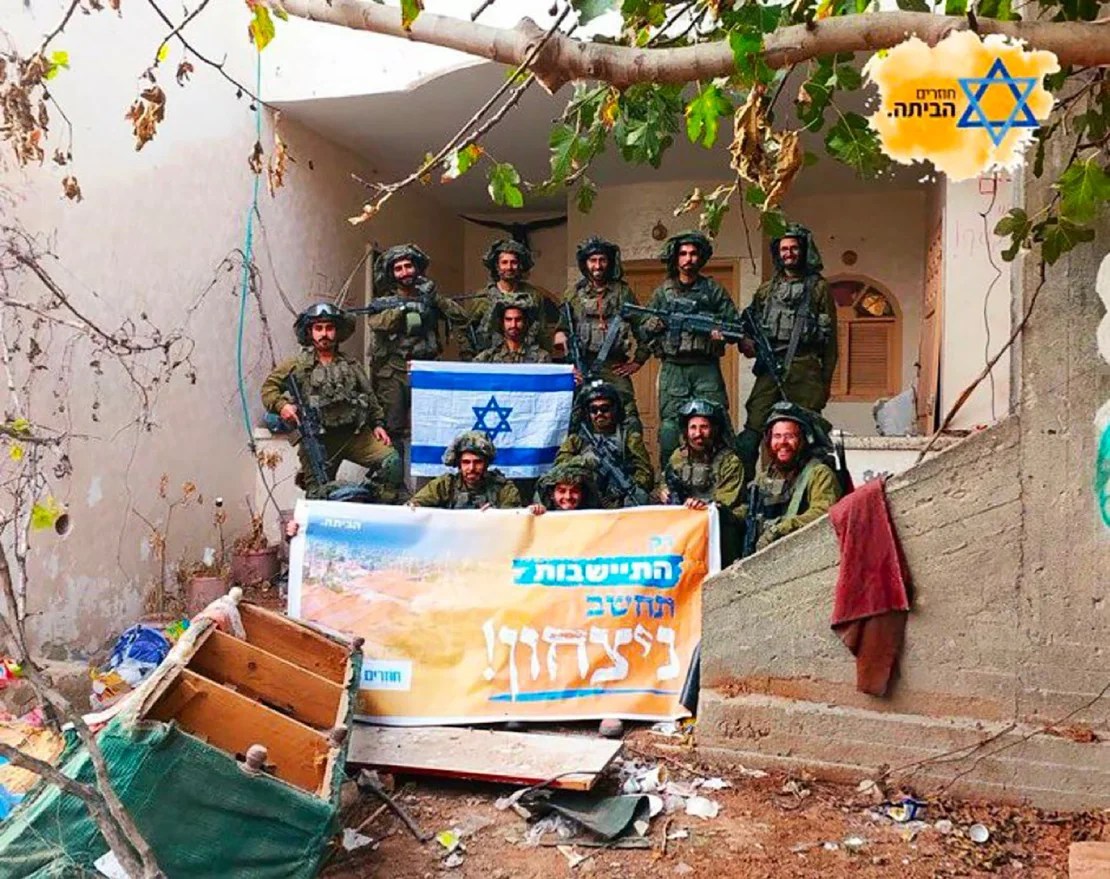
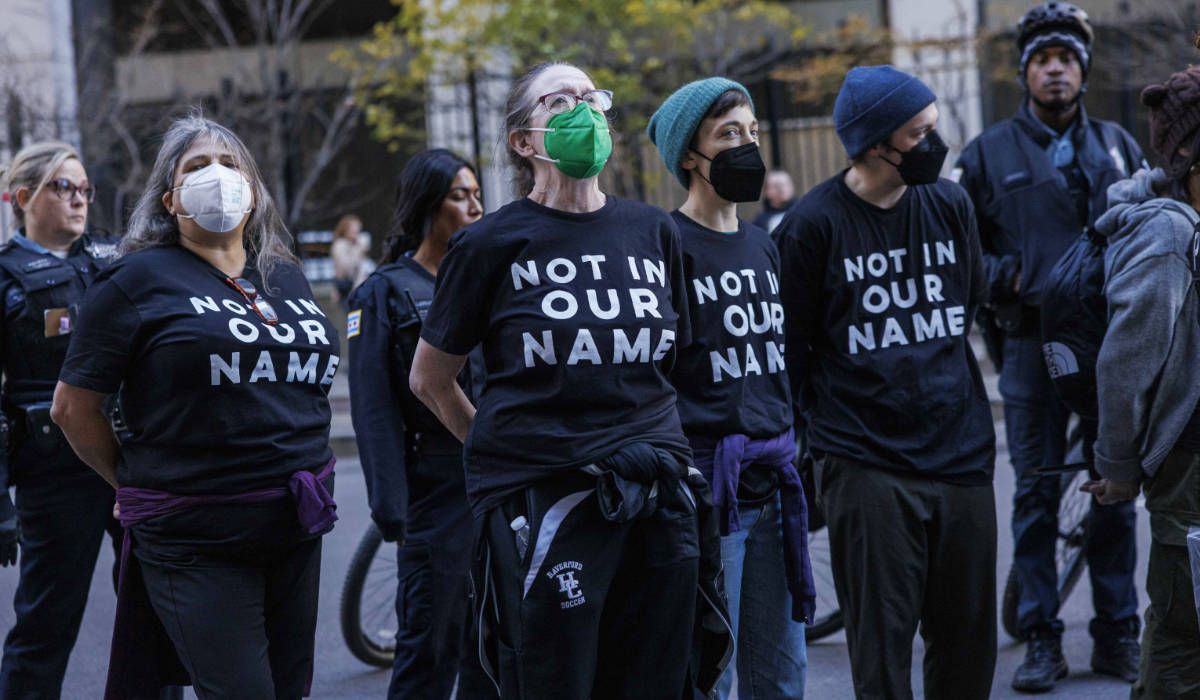


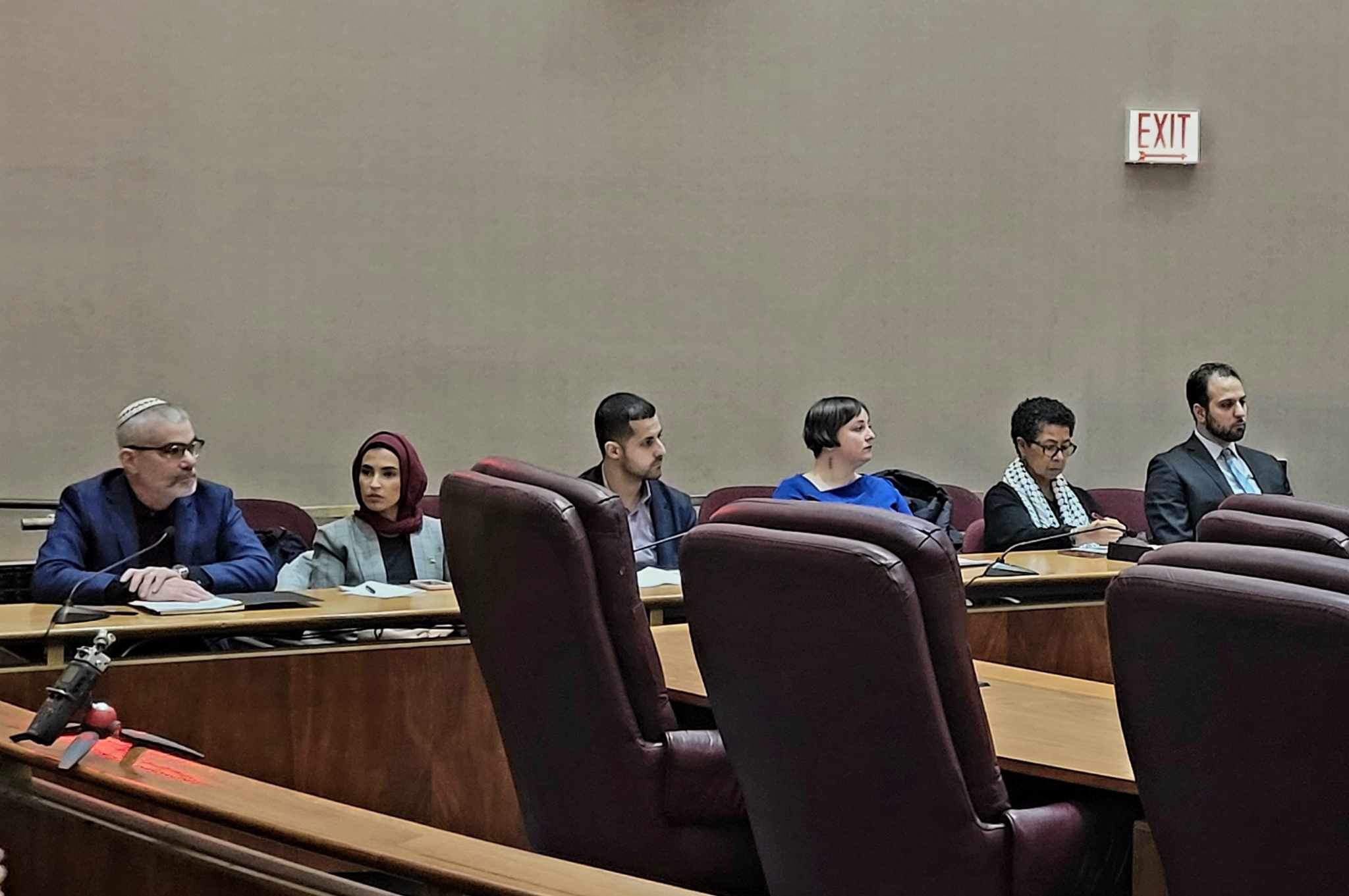
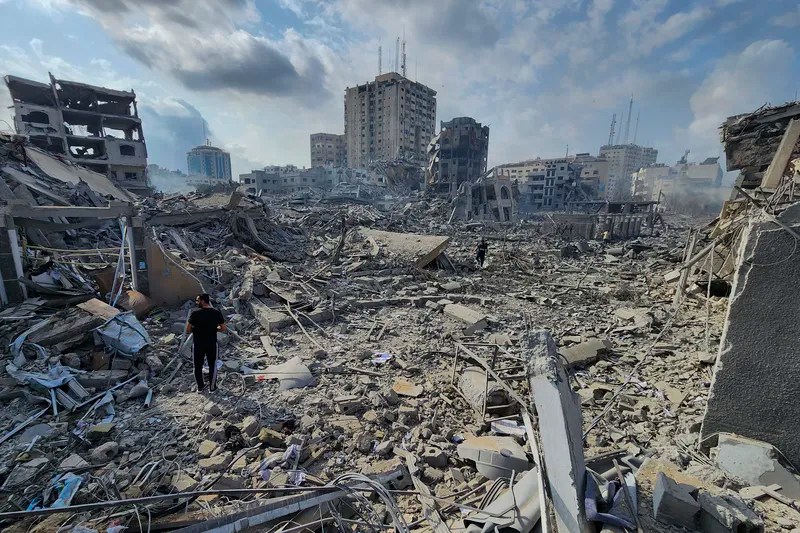
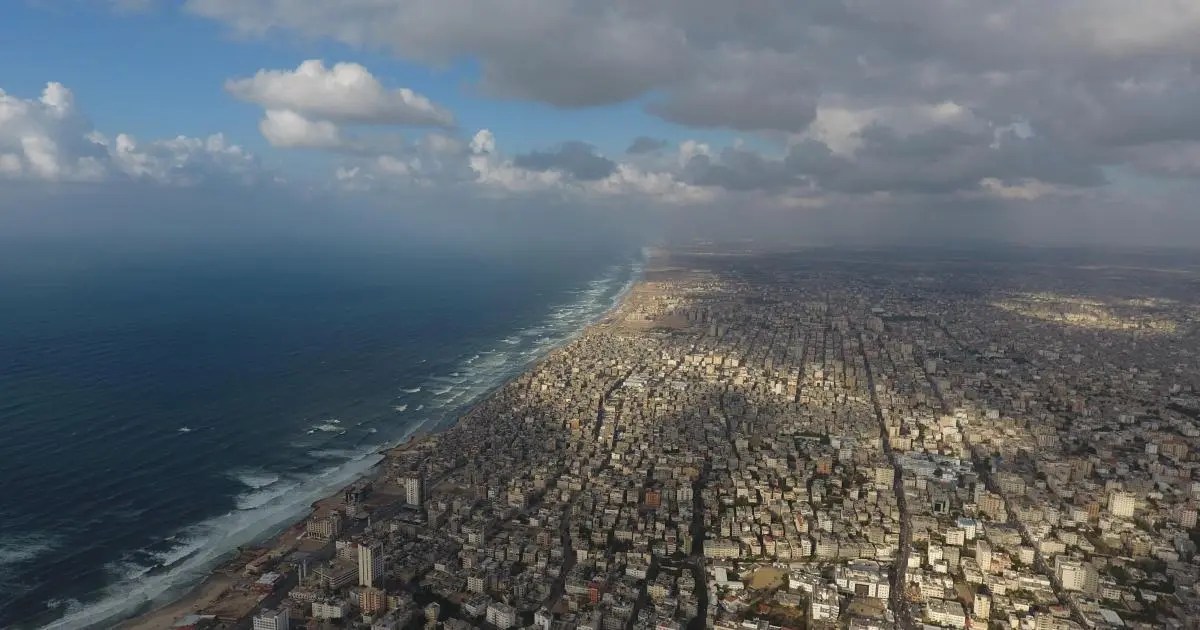
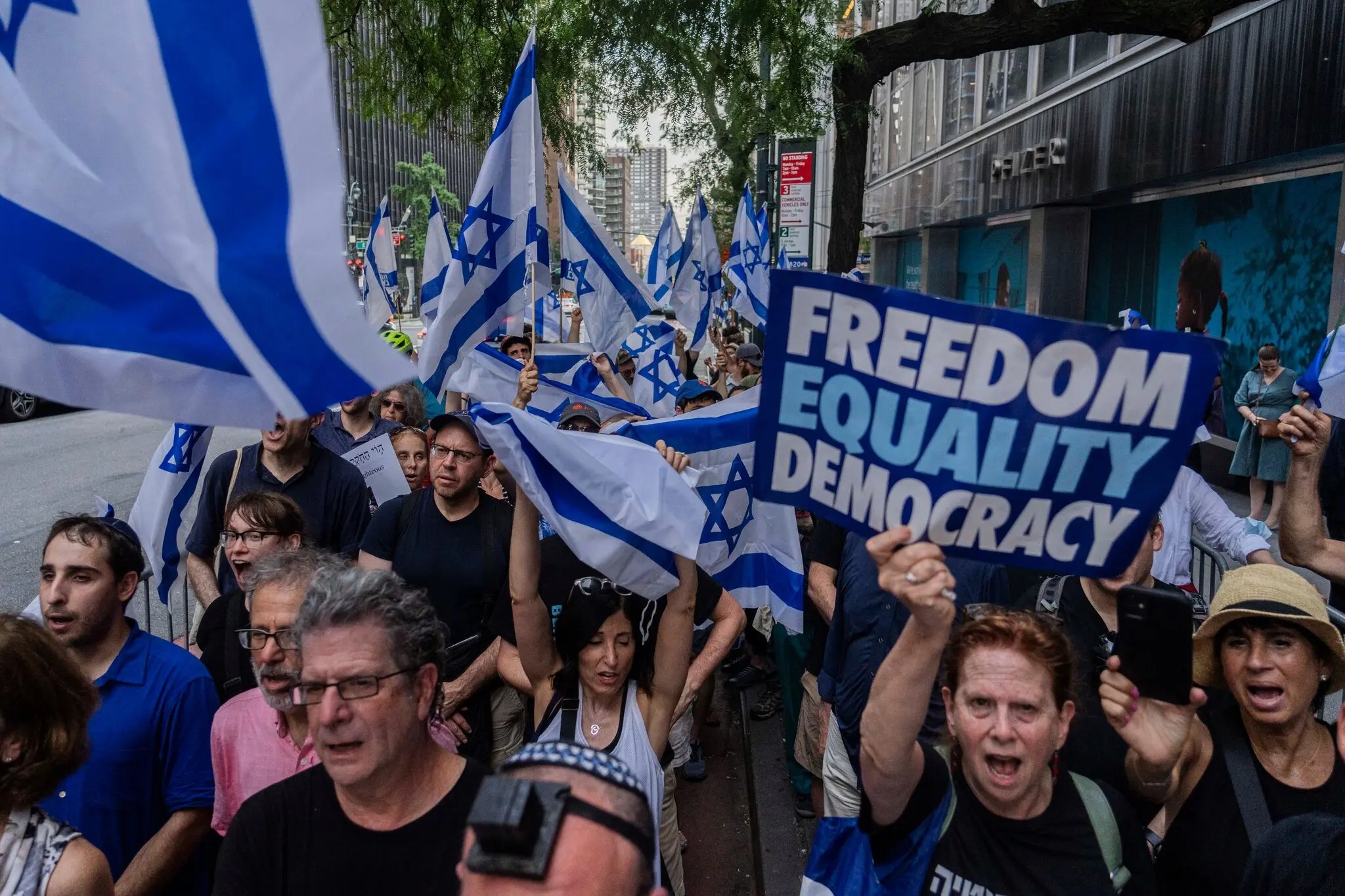
 Shalom Rav