Category Archives: Capital Punishment

On Tu B’Shevat, Our Call for Ceasefire Affirms the Sacredness of All Life

Guest Post by Maya Schenwar

Remarks by Maya Schenwar, from last night’s Tu B’shvat gathering sponsored by Tzedek Chicago and the Jewish Fast for Gaza. (Maya is director of the Truthout Center for Grassroots Journalism. She is also a coordinator of the Jewish Fast for Gaza and a member of Tzedek Chicago.)

Many of those of us involved in Jewish Fast for Gaza are breaking our fast tonight. We’ve been fasting weekly on Sundays since mid-October, and we will keep fasting weekly until a ceasefire. We donate the money we would’ve spent on food to organizations supporting people in Gaza in this time of starvation and mass death. And each week, we are also reflecting on and renewing our commitment to solidarity with our Palestinian co-strugglers and people around the world who are calling for an end to this genocide, an end to US funding for Israel’s weapons, an end to colonization and apartheid.

When we call for a ceasefire, when we fast for a ceasefire, we are uplifting a call for life. In the months since October 7, I’ve heard many people quote Ruth Wilson’s Gilmore’s sacred words, “Where life is precious, life is precious.” And one of the things Ruthie is saying, with that message, is that in societies where life is actually treated as precious—where they don’t have the death penalty and life sentences and large-scale state violence and state-sanctioned environmental devastation—in those places, violence is less likely overall, the culture is less violent, because life is affirmed.

We should bear in mind that as the US fuels Israel’s genocide in Gaza, here in the US, Alabama is preparing to carry out the US’s first execution via nitrogen gas—which is torture—on the day of Tu B’Shvat.

People are more likely to treat life as precious when their own lives are treated as precious. So we have to create the conditions in which everyone’s life is treated as inherently sacred and irreplaceable. That work is on all of us.

Our Fast for Gaza draws inspiration from the Jewish tradition of fasting as an act of mourning, and it also draws inspiration from Palestinians incarcerated inside Israeli jails, who have launched many hunger strikes to protest their incarceration, and the incarceration of all Palestinians under occupation, to INSIST that their lives are precious.

When Ruth Wilson Gilmore first introduced this idea—where life is precious, life is
precious—she was at an environmental justice conference for youth, where, among other things, the youth denounced the effects of pesticides, including on humans– and of course, pesticides also have impacts on native plants and animals. I think this is significant, for Tu B’Shvat. Recognizing that all life is precious means recognizing our interconnection with all life around us. It means we need to, in the words of Thich Nhat Hahn, “awaken from the illusion of our separateness.” It means recognizing the ways that trees have been weaponized to push Palestinians off their land. It means recognizing Israel’s mass destruction of olive trees.

Trees themselves recognize that where life is precious, life is precious. Forests are social
systems in which trees support each other through their root systems, through chemical signals in their leaves, through the social climate they create. As we celebrate the trees’ birthday today, we can also celebrate their preciousness, the preciousness of all the life they nurture and that nurtures them. And we can express that through our urgent calls for a ceasefire, for Palestinian liberation, and for collective liberation.

When we say ceasefire now, we are also saying environmental justice now. When we say ceasefire now, it is a call for Indigenous liberation now, from Palestine to Turtle Island and beyond.

Ceasefire now can be a call to stop death penalties of all kinds, including this execution that is set to happen in our own country on the day of Tu B’Shvat. Let’s insist on the preciousness of people, and of trees, and of the interconnectedness of all beings.

Chag Sameach and peace to you all.
Our Wayward and Defiant Children

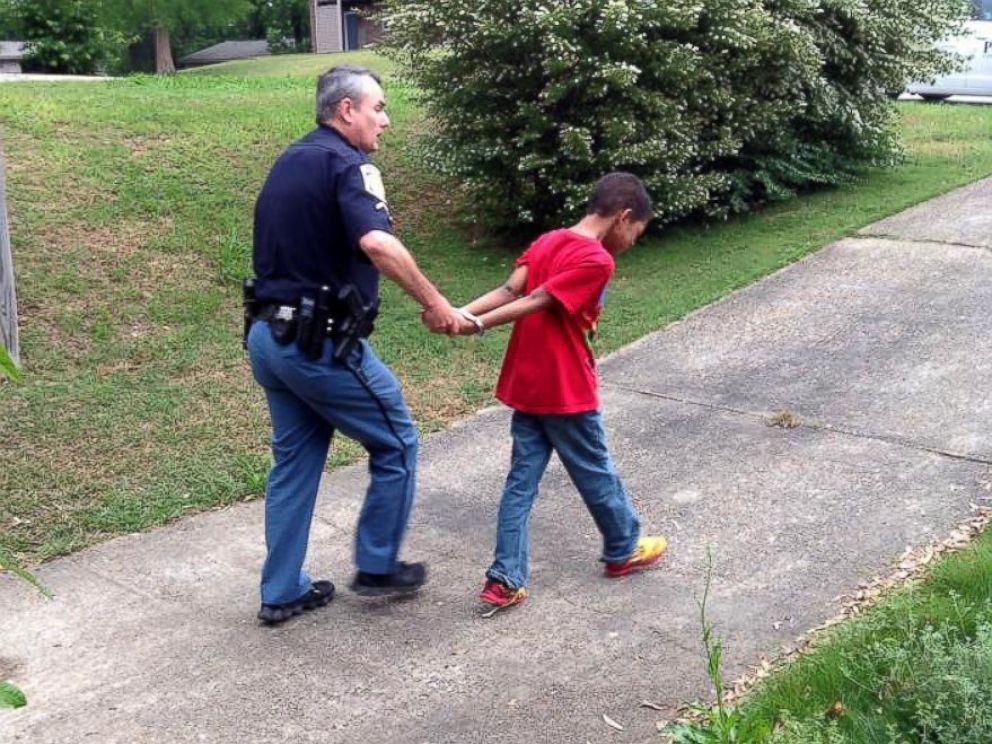
HT_georgia_mom_02_jef_150501_4x3_992In this week’s Torah portion, Ki Tetzei, we read:

If a man has a wayward and defiant son, who does not heed his father or mother and does not obey them even after they discipline him, his father and mother shall take hold of him and bring him out to the elders of his town at the public place of his community. They shall say to the elders of his town: “This son of ours is disloyal and defiant; he does not heed us. He is a glutton and a drunkard.” Thereupon, the men of his town shall stone him to death. Thus you will sweep out evil from your midst: all Israel will hear and be afraid. (Deuteronomy 21:18-21)

So what is this, some kind of sick joke?

In fairness, it should be noted that many classical Jewish commentators have properly recoiled from these infamous verses. In a well-known Talmudic passage, R. Judah and R. Simeon went as far as to claim that this law was never actually enacted, stating, “There never was and never will be a wayward and defiant son. (BT Sanhedrin 71a)

Why then, you might ask, was this law included in the Torah? Rabbis Judah and Simeon cryptically respond: “Seek and you shall find reward” – a comment commonly understood to mean parents should study this passage and be appropriately scared enough to set their children on the right path.

In this Talmudic understanding, then, the commandment of the wayward and defiant son thus seems to serve as a kind of parental shock therapy. Whether or not we find this advice “rewarding,” I do think that these Torah verses reflect every parent’s deepest insecurities – and society’s latent fear that it might somehow lose control of its children.

When I think of this week’s Torah portion, I can’t help but think of our own city of Chicago, where the police’s customary response to youth violence too often, is more violence. As Tamar Manasseh, founder of the local South Side organization Mother’s Against Senseless Killings recently wrote:

Putting more police on the streets or sending in the National Guard will not solve the scourge of gun violence in our communities. There will be no reduction in crime; in reality, nothing will be reduced except the number of people who are left in these neighborhoods. That’s what happens when you eliminate schools and allow food deserts to exist: People who can afford to move will do so, and the people left behind will be over-policed.

“Seek and you shall find reward.” Or, as Tamar so wisely noted,

It’s time to invest in our public schools, in job creation and in training programs to give back hope to people who have so little of it left. Chicago’s ghettos are in dire need of repair; they can be healed only when our politicians pursue policies that will raise our communities up instead of keeping us under the heel of the police.

Amen and Shabbat Shalom.

Illinois Senate Abolishes the Death Penalty!

Amidst all of the talk of our nation’s violent political rhetoric, here’s a ray of light:  the Illinois senate voted yesterday to abolish the death penalty in our state!  In other words, they took a stand against “state-sponsored” violence.

The bill now goes to Governor Pat Quinn, who has not indicated yet whether or not he intends to sign. Illinois residents: contact Governor Quinn now and let him know you want Illinois to be the 16th state to strike down the death penalty!

Illinois Death Penalty On Brink of Abolition!

Opponents of capital punishment got some rare good news yesterday when the Illinois House voted to approve legislation that would abolish the death penalty in our state.

It ain’t law yet, though. With the days ticking down on the lame duck session of the General Assembly, the bill now goes to the State Senate, where its approval is by no means assured.

If you are an Illinois resident, please check out the website of the Illinois Coalition to Abolish the Death Penalty, to learn how you can take action to help pass SB 3539 at this critical juncture.  Legislators will only be in session for a few more days so we really do have little time to spare.

And if you’re so inclined, here’s a post I wrote on Judaism and Capital punishment back in 2008.

Uganda’s Anti-Gay Bill: The Plot Thickens

If ever we needed a lesson in how prejudice can fan the flames of oppression, how is this? The NY Times recently reported that three American evangelical Christians visited Uganda last March to give a series of high profile talks:

For three days, according to participants and audio recordings, thousands of Ugandans, including police officers, teachers and national politicians, listened raptly to the Americans, who were presented as experts on homosexuality. The visitors discussed how to make gay people straight, how gay men often sodomized teenage boys and how “the gay movement is an evil institution” whose goal is “to defeat the marriage-based society and replace it with a culture of sexual promiscuity.”

As it turns out, just one month after the conference, a Ugandan politician who claims to have ties to evangelical members of the American government, introduced the Anti-Homosexuality Bill of 2009, which among other things, imposes a death sentence for “aggravated homosexuality.”

The evangelicals are naturally backtracking, claiming they had no idea their anti-gay ideas could possibly be used in such a way. (One is actually quoted as saying, “Some of the nicest people I have ever met are gay people.”)

I’ve visited Uganda twice with members of my congregation, and I can personally attest to the palpable growth of American evangelicalism in that country. Whether or not this bill bears direct American influence, I can’t help but note the disingenuousness of someone who preaches that “the gay movement is an evil institution” then expresses surprise when others prove more than willing to take him at his word.

Click here for a CNN article on the Ugandan bill, and here for a Human Rights Watch Report.