Category Archives: Chicago

God is in the Resistance: Sermon for Rosh Hashanah 5786

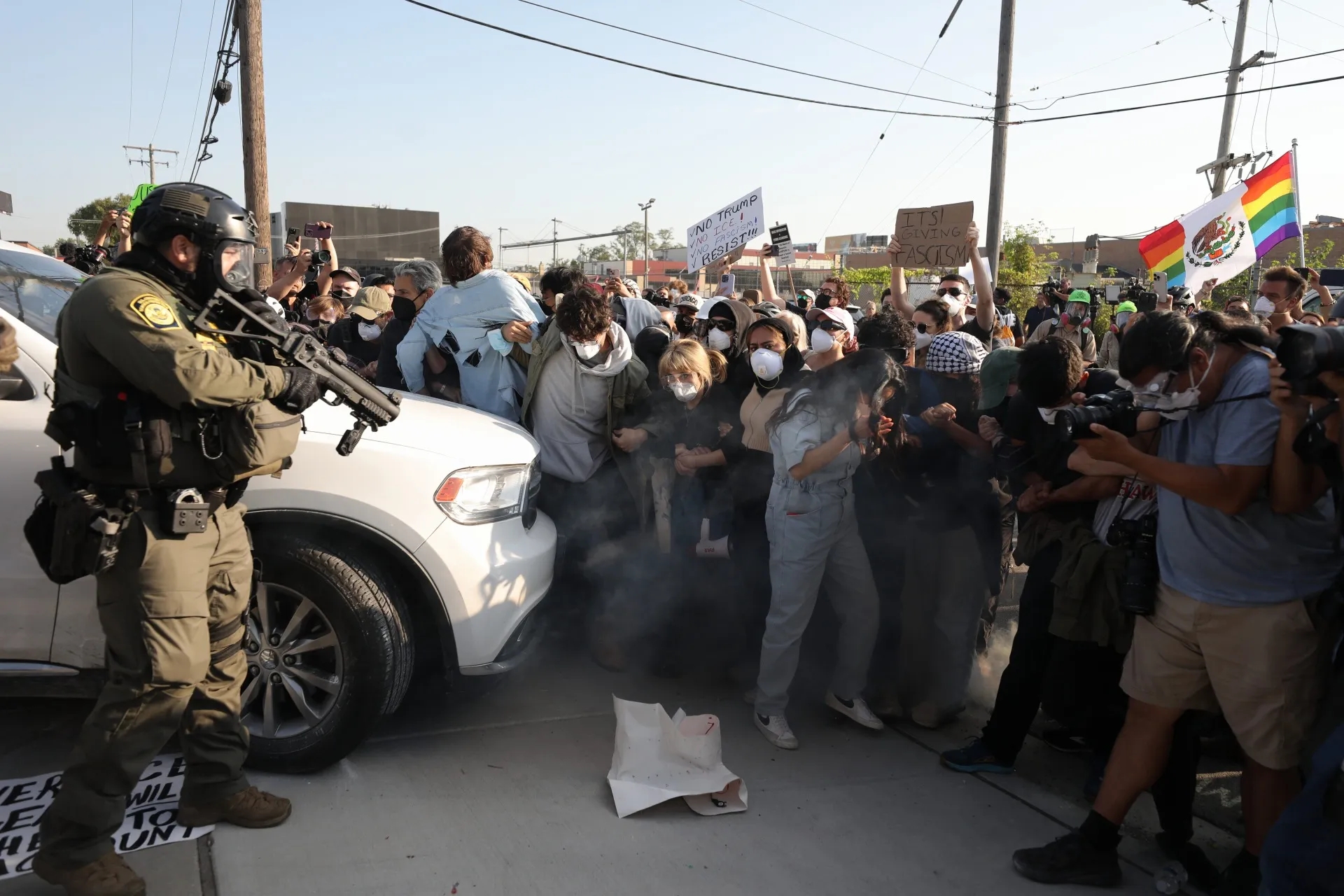
Protesters outside an ICE processing facility, Broadview Chicago. (Credit: Vincent D. Johnson/Block Club Chicago)

I’ll be honest with you: I never liked High Holiday services when I was a kid. 

There were so many things that just rubbed me the wrong way: they felt interminably long, the old school Reform choir music wasn’t my thing, and my parents would constantly shush me and my brothers when we got squirrelly (which was often). But most of all, I resented the seeming irrelevance of it all. I just couldn’t relate to the content of the services – and there was never any effort to explain why it should be relevant to me. 

On Rosh Hashanah in particular, I just couldn’t relate to the constant stream of prayers singing God’s praises, extolling God’s greatness and invoking God’s power. It all seemed designed to make us feel small and insignificant: this repeated glorification of an all-powerful God to whom we must beg and plead for another year of life. 

I realize now that I was a pretty astute kid. “Malchuyot,” which literally means “sovereignty,” is one of the central themes of Rosh Hashanah. Every new year we declare over and over that God is our supreme ruler. This theme is repeated throughout the liturgy, particularly during the Musaf service, when it is traditional to physically prostrate oneself on the floor before the divine throne during the Aleinu prayer. 

Over the years, however, as I began to attend services on my own terms rather than under duress, I came to appreciate Rosh Hashanah, yes, even the idea of Malchuyot. In fact, the older I get, the more relevant and important this concept feels to me. On a personal level, I understand to be a Malchuyot is a reminder that we often labor under illusions of our own power and control. We face these illusions head on during Rosh Hashanah when we do the work of teshuvah: the sacred process of return and repentance.

Of course, we are not all powerful. But ironically, acknowledging the limits of our power can actually be liberating. By affirming a transcendent source of power greater than our own, we can better focus and identify the things we can control in our lives. When we invoke God’s Malchuyot on Rosh Hashanah, we do so in the spirit of this liberation, to break free of our illusions of power and put ourselves on a more productive, healing path during the Days of Awe. 

Beyond the personal, I’d suggest Malchuyot has a collective and political dimension as well. It’s deeply rooted in Judaism’s central sacred narrative, the Exodus story. I actually made this very point during my very first sermon for Tzedek Chicago on Rosh Hashanah ten years ago:

At its core, I would suggest affirming Malchuyot means affirming that there is a Force Yet Greater: greater than Pharoah in Egypt, greater than the mighty Roman empire, greater than the myriad of powerful empires that have oppressed so many peoples throughout the world.

I would argue that this sacred conviction has been one of the central driving forces of Jewish tradition throughout the centuries: that it is not by might and not by power – but by God’s spirit that our world will ultimately be redeemed. I would further argue that this belief in a Power Yet Greater has sustained Jewish life in a very real way. After all, the Jewish people are still here, even after far mightier empires have come and gone. It might well be said that this allegiance to a Power Yet Greater is the force that keeps alive the hopes of all peoples who have lived with the reality of dislocation and state oppression.

I went on to suggest that through Zionism, the Jewish people have tragically betrayed this sacred Jewish narrative of liberation. When you think about it, the raison d’etre of Zionism literally is human sovereignty. It is an ideology that unabashedly deifies state power as a redemptive force in Jewish life and overturns centuries of Jewish tradition. It has subverted the sacred ideal of Malchuyot by centering and sacralizing human power above all else.

When I delivered that first Rosh Hashanah sermon, however, I never could have predicted where Zionism’s bargain with state power would lead us. In the misguided name of Jewish safety and supremacy, Israel has doubled down on its assumption of human Malchuyot to an unbearable degree. As we gather for Rosh Hashanah this year, Israel has been perpetrating an almost two-year genocide against the Palestinian people. Nearly 70,000 Palestinians have been killed, with real numbers likely to reach the hundreds of thousands. Whole families have been killed and entire bloodlines erased. Untold numbers of people have been buried under rubble, burned alive, dismembered and starved to death. At this very moment, Israel is literally bombing the entire north of Gaza off the map, trapping scores of residents who cannot leave their homes and sending scores of others to the south into active war zones.

And yet of course. Of course it has come to this. From the very beginning, the goal of establishing a Jewish-majority nation state could only be realized by dispossessing another people – what the Palestinian people refer to as the Nakba. Israel’s genocide against the Palestinians did not begin on October 7; it has been ongoing for over 70 years. There is a direct line leading from Zionism’s idolatrous attachment to Malchuyot to the crimes we are witnessing daily in Gaza.

This idolatrous attachment, of course, is not unique to Zionism. Looking back, I realize that Tzedek Chicago’s first Rosh Hashanah service took place shortly after Trump announced his first Presidential campaign. It’s also fair to say when I gave that first sermon, I never would have dreamed that just ten years later, the US would be rapidly descending into authoritarian fascist rule. That ICE would serve as our President’s secret police force, prowling the streets in plain clothes and face masks, abducting immigrants and student activists in unmarked vans. That thousands of National Guard troops would be mobilized to occupy American cities. That so many of our nation’s institutions would be defunded, plundered and centralized by unelected oligarchs. That our government would openly declare whole groups of people, including immigrants, trans people, people of color and unhoused people to be literal “enemies of the state.”

In the wake of Charlie Kirk’s murder, the incitement against these imagined enemies has reached a terrifying fever pitch. Trump and the movement he spawned are now seizing this moment to foment fury against a broad array of individuals and institutions they call the “radical left.” Trump’s aide Stephen Miller has chillingly characterized the current moment in America as a battle between “family and nature” and those who celebrate “everything that is warped, twisted and depraved.” 

Words such as these should not sound new to us; the Trump regime is using a time-honored tactic from the fascist playbook. We know that totalitarian regimes have historically consolidated their power during times of instability by fomenting a toxic “us vs. them” narrative. Hannah Arendt identified this mentality very clearly seventy-five years ago in her book The Origins of Totalitarianism: “Tribal nationalism always insists that its own people are surrounded by a ‘world of enemies’ – one against all – and that a fundamental difference exists between this people and all others.” 

Although the context of 21st century fascism is different in many ways from fascisms of the past, the fundamental building blocks of this phenomenon remain the same. In the parlance of Rosh Hashanah, the fascists of today are claiming Malchuyot – ultimate power – for themselves. And they are consolidating their power by demonizing those who do not fit into their idealized, privileged group as enemies who must be fought and eradicated at all costs. 

However, as overwhelming as the current political moment might feel, there is a textbook for resisting fascism as well. The essential rules for fighting fascism remain the same as they ever were. And the first order of business is: do not collaborate. 

This may seem obvious, but given the hard truth of the moment, I don’t think it can be repeated enough. It has been truly breathtaking to witness how quickly ostensibly independent non-governmental institutions have capitulated to Trump’s bullying and blackmail: from universities firing professors and defunding whole programs to businesses eradicating their DEI programs; from corporate media outlets becoming state mouthpieces, to law firms allocating hundreds of millions of dollars in legal services to defend the federal government. 

Has the liberal establishment been up to the challenge of this moment? Just consider its response to the murder of Charlie Kirk. Let’s be clear: Kirk was an unabashed white Christian Nationalist who incited young people on college campuses to hatred under the cynical pretense of “open dialogue.” Even so – and even as the MAGA movement is dangerously exploiting this moment – liberal leaders and institutions have been normalizing Kirk by openly praising him as a paragon of free speech and good faith debate. 

After he was killed, CA Governor Gavin Newsom eulogized Kirk by saying: “The best way to honor Charlie’s memory is to continue his work: engage with each other, across ideology, through spirited discourse. In a democracy, ideas are tested through words and good-faith debate.” Similarly, following Kirk’s murder, the Dean of Harvard College, David J. Deming publicly vowed to protect conservative students on campus, adding that Kirk’s enthusiasm for publicly debating his opponents could be a model for Harvard’s own civil discourse initiatives. And for his part, liberal New York Times columnist Ezra Klein wrote an op-ed entitled “Charlie Kirk Practiced Politics the Right Way.” 

It’s not clear if these apologists honestly believe what they are saying or if they’re just trying to avoid the government’s takedown of anyone who has anything remotely critical to say about Charlie Kirk. But in the end, it really doesn’t matter. The bottom line: liberal normalization will not appease fascists. 

To put it frankly, the government has declared war on us – and we must respond accordingly. The days of partisan cooperation and dialogue are over. The days of good faith debate and civic compromise are over. Capitulating to demagoguery and hatred will not convert the MAGA movement to the values of democracy and civil discourse. Yes, in a healthy democratic society, the concept of “collaboration” is something to be valued. But in a fascist regime, the term “collaborator” has a different meaning entirely. 

The first step in resisting collaboration is to accept that none of this is normal. We must let go of old assumptions, many of which, frankly, have led us to this moment. If we are to be totally honest, it must be said that the Democrats and the liberal establishment have been collaborating with corporate interests along with Republicans for years. As we interrogate the abnormality of this moment, we must admit that the entire system has been disenfranchising whole groups of people in this country for far too long. 

Resisting fascism also means letting go of our ultimate faith in the “rule of law.” Indeed, both the left and the right tend to fetishize the rule of law as an absolute good. And while it’s true that the law can be a tool to ensure a more just society, it can just as often be used as a blunt instrument to dismantle democracy. 

We know from history that governments routinely create laws that are inherently unjust. Slavery was legal in the US for almost 250 years. Apartheid in South Africa was legal. Apartheid continues to be legal in Palestine/Israel. In the face of such legal injustice, the obvious moral and strategic response is not to follow but to break the rule of law. As Dr. Martin Luther King famously wrote in his “Letter from a Birmingham Jail:” 

We should never forget that everything Adolf Hitler did in Germany was “legal” and everything the Hungarian freedom fighters did in Hungary was “illegal.” It was “illegal” to aid and comfort a Jew in Hitler’s Germany. Even so, I am sure that, had I lived in Germany at the time, I would have aided and comforted my Jewish brothers.

This is, in fact, the radical truth we affirm every Rosh Hashanah. When we affirm Malchuyot, we affirm that there is a moral law yet greater than any law levied by a government or regime. On this Rosh Hashanah in particular, the sound of the shofar calls on us to resist conformity; to vow to become criminals when confronted with laws that are inherently unjust. More than any Rosh Hashanah in our lifetimes, we must be ready to defy the illegitimate laws wielded by the illegitimate rulers who would govern us. 

Even if we do accept this challenge, however, the question remains: where does Malchuyot, ultimate Power, reside, if not with governments, politicians or the rule of law? Here, I’d like to quote yet another one of my heroes, the Puerto-Rican Jewish liturgist Aurora Levins Morales:

They told me we cannot wait for governments.
There are no peacekeepers boarding planes.
There are no leaders who dare to say
every life is precious, so it will have to be us.

Yes. God’s power is revealed in our readiness to show up for one another.  When we acknowledge Malchuyot on Rosh Hashanah, we affirm that the Divine Presence is manifest whenever we struggle and resist and fight for our communities, for a world where all are liberated and cherished and protected. When there are no leaders who dare to ensure that every life is precious, it will have to be us. 

Here are two concrete examples of Malchuyot in action: this last January, shortly after the inauguration, the Trump administration launched a series of raids in Chicago they called “Operation Safeguard” where, over the course of a few days, ICE, the FBI, the ATF and other federal forces coordinated massive raids in neighborhoods throughout the city and suburbs. We don’t know how many were arrested or detained, but we do know that this federal blitzkrieg was deeply frustrated by local organizing. Trump’s so-called “border czar” Tom Homan later complained that immigration organizers in Chicago were “making it very difficult” to arrest and detain people. He said, “They call it Know Your Rights. I call it how to escape from ICE.”  

Of course, even as we win these battles, this fierce war continues to escalate. ICE violence continues to rage in the neighborhoods of our cities. In Chicago, ICE has now launched another sweep, this one called “Operation Midway Blitz.” Just last Friday, at an immigrant processing center in the Broadview section of Chicago, federal agents shot tear gas, pepper spray and flash bang grenades into hundreds of demonstrators. Ten protesters were taken into custody by federal agents over the course of the day. Even amidst this escalating violence, however, local organizers here in Chicago continue to hold the line. 

Another example: in Washington DC which is still under occupation by National Guard troops, groups of local residents called “night patrols” have been regularly patrolling the streets. According to journalist Dave Zirin, whose reports from the ground have become invaluable:

These night patrols watch over the city to ensure that people are protected from state violence, false arrest, abduction, and harassment. Failing that, their goal is to document the constitutional violations or brutality they witness, so people can see the truths about the occupation that a compliant, largely incurious media are not showing. 

Critically, these neighborhood patrols are being led and stewarded by members of impacted groups: As one night patroller put it: “a lot of young people, a lot of people of color, queer and trans folks, people who have been directly impacted by policing, and folks with street medic backgrounds. It skews toward people who already know what it’s like to be criminalized.” 

Though it isn’t being highlighted by the corporate mainstream media, this local organizing is happening in communities all over the country: in Los Angeles, where there are also still hundreds of National Guard troops, as well as New Orleans, Memphis, Baltimore and other cities that the Trump administration is directly threatening with military invasion. I know that many Tzedek Chicago members have long been active in these organizing efforts, here in Chicago, around the US and even around the world. But again, we can have no illusions over what we are up against. 

I know that the magnitude of these events often leads us to a state of overwhelm and despair. We doom-scroll through the news every day, we read about Trump’s newest executive order, the latest regressive Supreme Court ruling or some other heinous event and the ferocity of this onslaught can literally leave us breathless. This is, of course, yet another page from the authoritarian textbook: to neutralize the population through a calculated strategy of shock and awe. They want us to feel that all is lost, to give in to our despair that their power over us is all but inevitable. 

Our experience of shock and overwhelm is compounded all the more by an all-pervasive sense of grief. So much of what we have fought for has been lost. So many of the institutions we assumed would be eternally with us are being plundered and dismantled. Some of these losses may be permanent, some may not, but the harms they are causing are very, very real. 

I feel this grief myself, believe me, I do. But I also know that if we surrender to it, then their victory over us will become self-fulfilling. The way through the fear and the grief, I truly believe, is to never forget that we have power, that our words and actions matter and that nothing is ever inevitable unless we let it be so. 

Whenever we feel overwhelmed, I think the critical first step is to reclaim our equilibrium by asking ourselves, what matters most to me? What are the issues that are nearest to my heart? Most of us have the capacity to devote our time and energy to one or two causes at most. What are the most effective organizations fighting for this cause? Who are the people in my life that can connect me with the people doing this work? If I don’t have the capacity or physical ability to engage actively in these kinds of responses, what are other meaningful ways I can show up?  

Amidst all this loss, we must never forget: even if our victory is not guaranteed, there are still things in this world worth fighting for. Generations of resisters have understood this axiom well: “If I’m going to go down, I’m sure as hell going to go down swinging.” In the words of my friend and comrade, Chicago organizer Kelly Hayes, who I’ve quoted in more than one High Holiday sermon over the years:

I would prefer to win, but struggle is about much more than winning. It always has been. And there is nothing revolutionary about fatalism. I suppose the question is, are you antifascist? Are you a revolutionary? Are you a defender of decency and life on Earth? Because no one who is any of those things has ever had the odds on their side. But you know what we do have? A meaningful existence on the edge of oblivion. And if the end really is only a few decades away, and no human intervention can stop it, then who do you want to be at the end of the world? And what will you say to the people you love, when time runs out? If it comes to that, I plan on being able to tell them I did everything I could, but I’m not resigning myself to anything and neither should you. Adapt, prepare, and take the damage done seriously, but never stop fighting. Václav Havel once said that “Hope is not the conviction that something will turn out well, but the certainty that something is worth doing no matter how it turns out.” I live in that certainty every day. Because while these death-making systems exist both outside and inside of us, so do our dreams, so long as we are fighting for them. And my dreams are worth fighting for. I bet yours are too.

This New Year, I realize I’ve come a long way from that beleaguered kid who felt disempowered on the High Holidays to a rabbi telling you Rosh Hashanah is our clarion call to fight facism. But here I am. And here we are. May this new year inspire us all with the knowledge that true sovereignty, true Malchuyot, lives at the heart of the struggle. 

On this, my final Rosh Hashanah with this amazing community, this is what I am feeling to my very bones at this moment: that while Pharaohs may rise, they will inevitably fall, that beyond the horizon of Olam Hazeh, this terribly broken world, there lies Olam Haba: the world we know is possible. And no matter what may happen this new year – and every new year to come – that world is always worth fighting for.

Shanah Tovah.
Palestine Solidarity from the Streets to the Statehouse

From my Yom Kippur sermon this past October:

(There) are plenty of Jewish congregations out there: why does the world need another? What do we have that’s unique to offer? As I think about it, this is a critical question for any Jewish community. Do we exist just to exist or for a more transcendent purpose? Does our existence actively seek to repair the world or does it merely serve to use up Jewish community resources? Or worse still, does our communal existence contribute to harm in the world? 

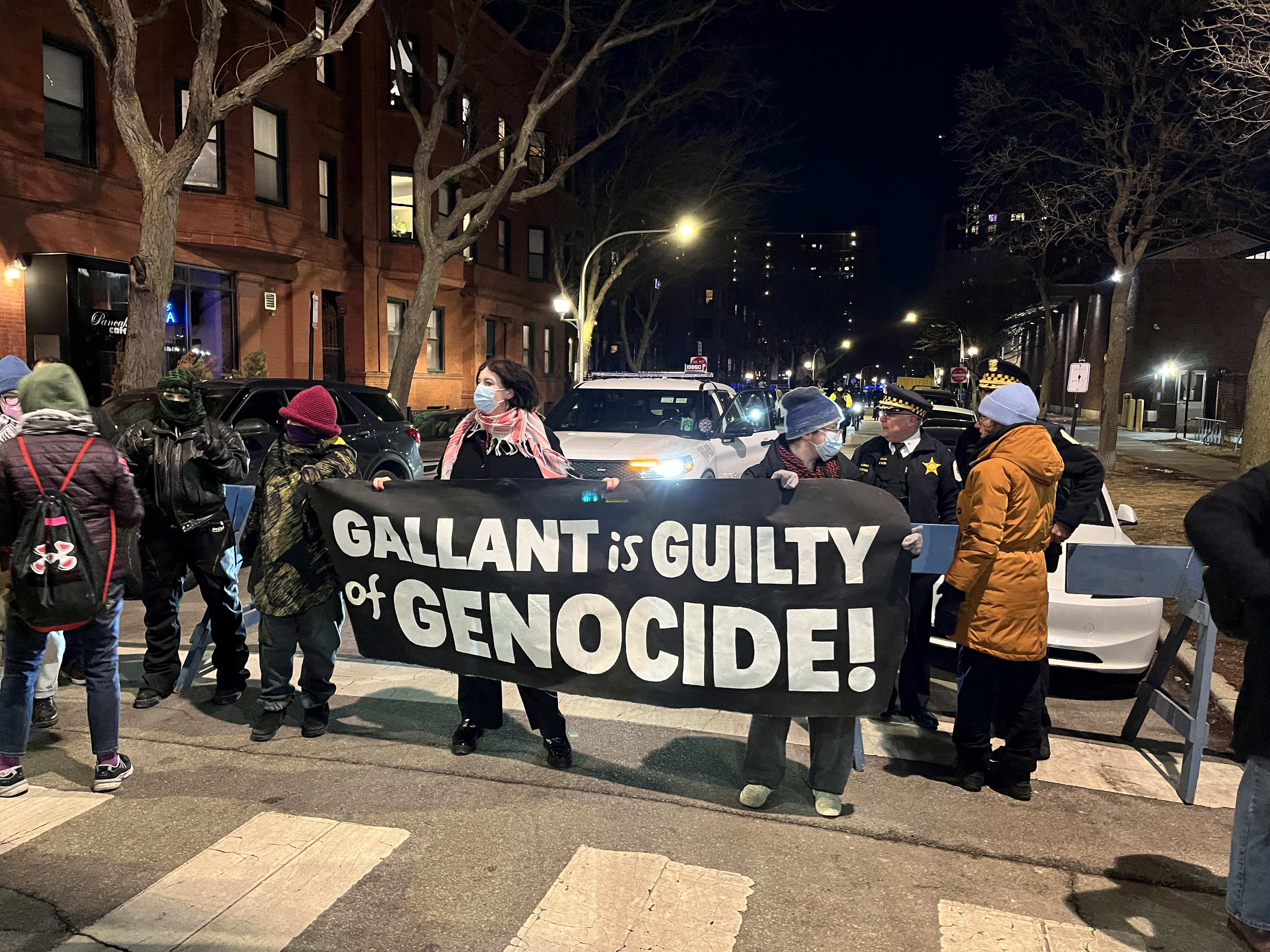
I recalled those words last week when I learned that Anshe Emet, a prominent Conservative synagogue in Chicago planned to host a program with invited guest Yoav Gallant, the former Israeli Minister of Defense and one of the primary architects of Israel’s genocide against Gaza – who currently has a warrant out for his arrest issued by the International Criminal Court.

It should go without saying, but I’ll say it out loud: it is appalling and sickening that a prominent synagogue welcomed – and in fact celebrated – a genocidal war criminal in their house of worship. I’m proud to say that a massive protest was organized by a wide coalition of Palestine solidarity groups, including US Palestine Community Network, American Muslims for Palestine, Jewish Voice for Peace and #IfNotNow to voice a message of outrage, solidarity and collective conscience.

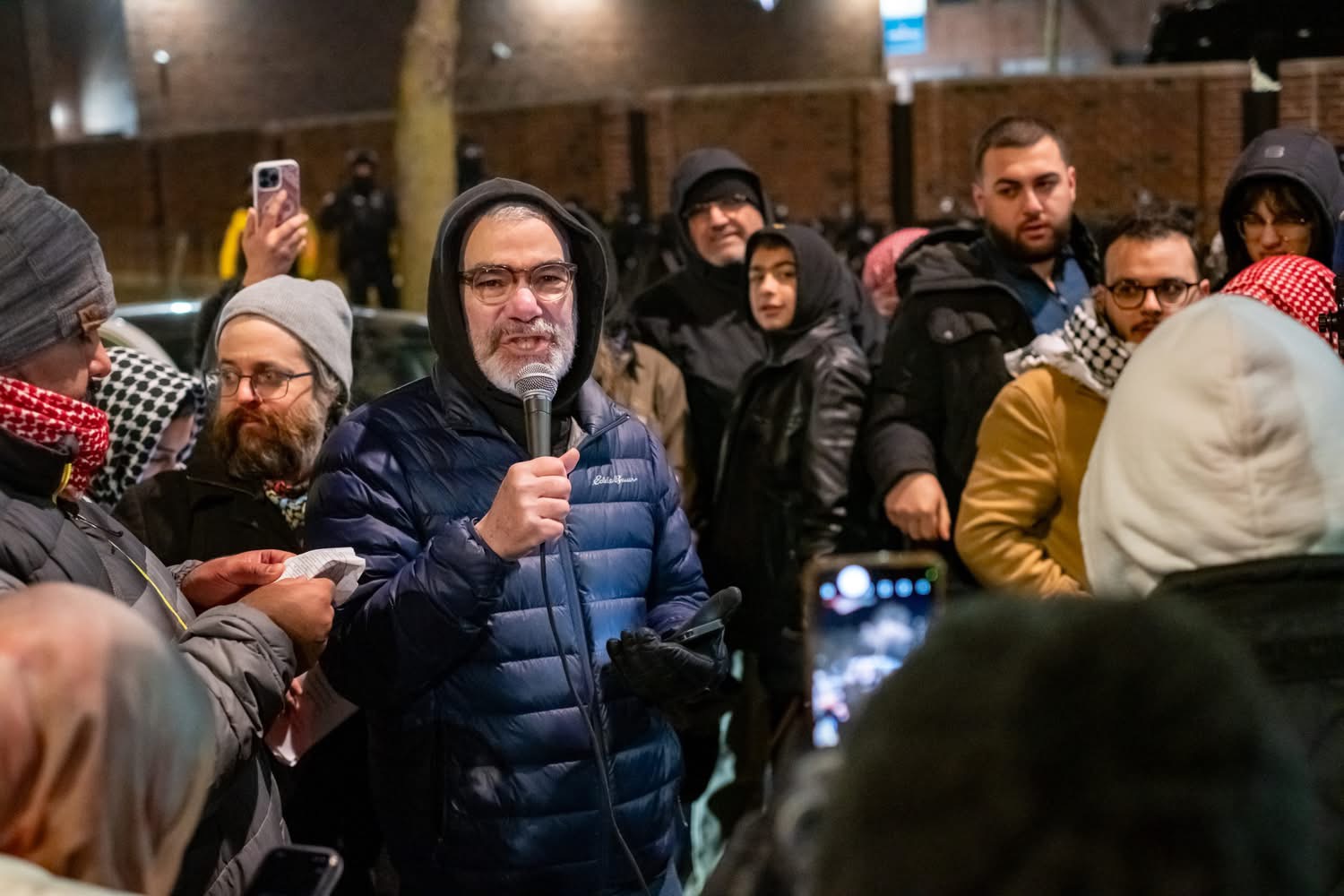
Hundreds of us gathered last night across the street from the synagogue in the freezing cold to express our outrage and mutual solidarity. There were many speakers from our diverse coalition and it was my honor to be among them. Here are my remarks, below:

photo: Love and Struggle/Sarah Ji

My name is Brant Rosen; I’m a proud member of Jewish Voice for Peace, the Jewish Voice for Peace Rabbinical Council, and I’m the founding rabbi of Tzedek Chicago – a proudly anti-Zionist synagogue here inI Chicago with members here and around the world.

In Jewish tradition there is a central concept we call Hillul Hashem. It literally means “desecration of God’s name.” This is at root a deeply moral concept that goes to the heart of what it means to be a human being. When we diminish the humanity of another, we diminish God’s presence in the world – and we commit the worst kind of Hillul Hashem when we commit the crime against genocide against another people.

In October 2023, Yoav Gallant, Israel’s then defense minister, said:

We are imposing a complete siege on Gaza. There will be no electricity, no food, no water, no fuel, everything is closed. We are fighting human animals and we are acting accordingly.

The Palestinian people know what it means to be robbed of their humanity. They have been deemed a collectively disposable people by Israel for over 100 years. Their very presence is a problem for Israel. We Jews should know all too well what happens when a state robs a people of its essential humanity.

The ICC has put a warrant out for Yoav Gallant’s arrest as a war criminal because he actively dehumanized the Palestinian people in word and in deed. Over 60,000 Palestinians killed in Gaza to date and over 100,000 injured, the majority of whom are women and children. According to one estimate, the ultimate death toll may eventually be nearly 200,000. Whole extended families, entire Palestinian bloodlines have been wiped out completely. Much of Gaza has been literally reduced to a human graveyard, with scores of bodies buried beneath the rubble of destroyed and bulldozed homes. Neighborhoods and regions have been literally wiped off the map. 

Gaza’s infrastructure and health care system has been decimated. According to the UN an “intentional and targeted starvation campaign” has led to widespread famine and disease throughout the Gaza strip. Health care workers, humanitarian workers and journalists are being killed, injured and imprisoned in massive numbers. Human rights agencies have documented widespread torture and abuse of prisoners, including sexual abuse, throughout a network of torture camps. 

This is dehumanization, this is Hillul Hashem of the worst kind. And to you Yoav Gallant, we say, “We Charge Genocide!” “You are not welcome in our city!”

But Yoav Gallant and the nation he served could not have succeeded if there where not those who normalized this genocide. And that is why we are here tonight. As a rabbi, as a Jew, as a person of conscience, I am morally outraged – I am sickened – that this war criminal is being hosted – and in fact celebrated – at a synagogue, a Jewish house of worship. This is what it has come to.

And here I want to address the members of Anshei Emet and the Jewish community of Chicago. Our community has a profound moral choice to make. What is the Judaism we will affirm? Will we uphold Zionism – and its ideology of Jewish supremacy – or will we stand for the sacred divine image of all people? Will we stand with war criminals or will we stand with those who are deemed to be disposable? Will we stand with the genocidal state of Israel or will we stand with the Palestinian people?

Now I’d like to address my friends and comrades in the Palestinian community:, please know that are so many of us in the Jewish community who stand in solidarity with you. There is nowhere else we can possibly be at this moment. And there are so many of us who are voicing the alarm, marching in the streets, taking arrest to demand justice for Palestinians

It is not an overstatement to say this: history will remember what we did or did not do in this moment. We are ready, together with you, to call out those who, in our name, are committing the worst kind of Hillul Hashem against you, whether it is in the streets of Rafah and Deir al Balah, the halls of Washington DC or a synagogue in Chicago. And we will not cease until all are free, from the river to the sea!

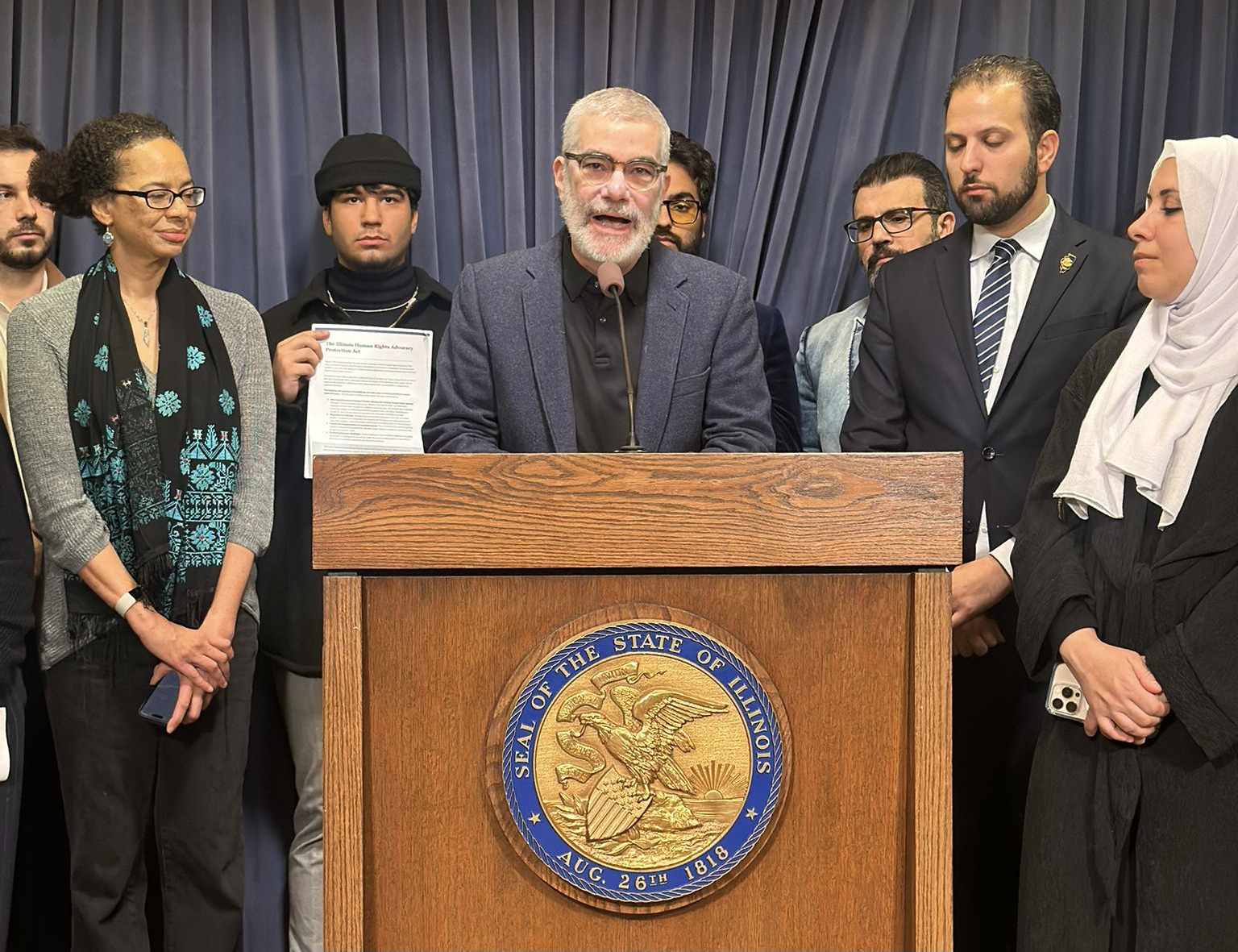
It’s been a busy week. This past Wednesday, I was in Springfield with friends and comrades to announce new IL state legislation, “The Illinois Human Rights Advocacy Protection Act,” which would repeal our state’s 2015 anti-boycott legislation that punishes advocacy for Palestinian human rights. This unconstitutional and immoral legislation, signed by then Gov. Bruce Rauner, directed the Illinois Investment Policy Board to restrict public funding to companies that use human rights filters that exclude doing business with Israel.

The new legislation, which is being introduced in the IL State House by Palestinian-American representative Abdulnasser Rashid, will “(remove) provisions requiring the Illinois Investment Policy Board to include companies that boycott Israel in its list of restricted companies.” An identical bill will be introduced in the IL Senate as well.

You can watch the entire press conference here. My remarks follow below:

Here in Illinois and around the world, we are at a critical and frightening moment. The US is governed by an administration that openly considers certain populations to be disposable. Whether it is undocumented immigrants, birthright citizens, trans youth or the Palestinian people.  Just yesterday, our president announced his intention to depopulate the entire Gaza strip of over 2 million Palestinians and turn it into the “Riviera of the Middle East.”  This after a previous administration helped to arm Israel in its crushing military assault – one that many reputable human rights organizations have termed a genocide against the Palestinian people.

In Jewish tradition, one of our most central theological tenets, which is repeated over and over, is that God responds to the cries of the oppressed. The Palestinian people have long been crying out to the international community. Over the past sixteen months, their cries have reached a fever pitch. The question before us, that has ever been before us, is how will we respond?

That is the essence of the Palestinian call for Boycott, Divestment and Sanctions. It is a call from an oppressed people who are seeking support and solidarity from the international community. It originated in 2005, when a wide coalition of Palestinian civil society organizations made a crie de cour for solidarity and support. They issued a call to the world to use the time-honored nonviolent strategy of Boycott, Divestment and Sanctions.

There are three essential demands of this call, which are all are based in international law: to end the occupation of the West Bank and Gaza, full and equal rights for Palestinian citizens of Israel, and to honor the UN mandated Palestinian right of return. Like all boycotts, it allows private citizens, companies and civil society organizations around the world to actively and meaningfully respond to the legitimate and collective cry of the Palestinian people.

It is also a form of free speech. Just like historic Montgomery Bus Boycott, the United Farm Workers Boycott, the boycott of apartheid South Africa before it. When the state of Illinois passed legislation restricting participation in this pro-peace, pro-human rights movement, it actively criminalized free speech. It was immoral and illegal to do so when it was enacted by Governor Rauner in 2015 – and it remains so today. In the current moment, when our country is ruled by a regime that is actively and unabashedly criminalizing free speech, we should see this legislation for what it is. The state of Illinois has no business aiding and abetting in this stripping of our right to free speech. It has no moral standing to stifle and stigmatize the legitimate cry of the oppressed.

In the Jewish community this week we are reading from our Torah, the Exodus story. And the Exodus story makes it very clear: that God responds to the cry of the oppressed and demands their liberation. We also read that this process began with brave people to defy and resist oppression. That is how liberation happens.

We are at just a moment right now. This is truly a which side are you on moment. Will we hearken to the cries of the oppressed, or will suppress their voices – and those who support their call for liberation?  We urge the state of Illinois to stand the right side of history.

A Jewish letter of support for the Illinois Human Rights Advocacy Act will soon be made public as well. I’ll make sure to post it when its available.

From Gaza to Chicago: the Resistance of Disposable Populations

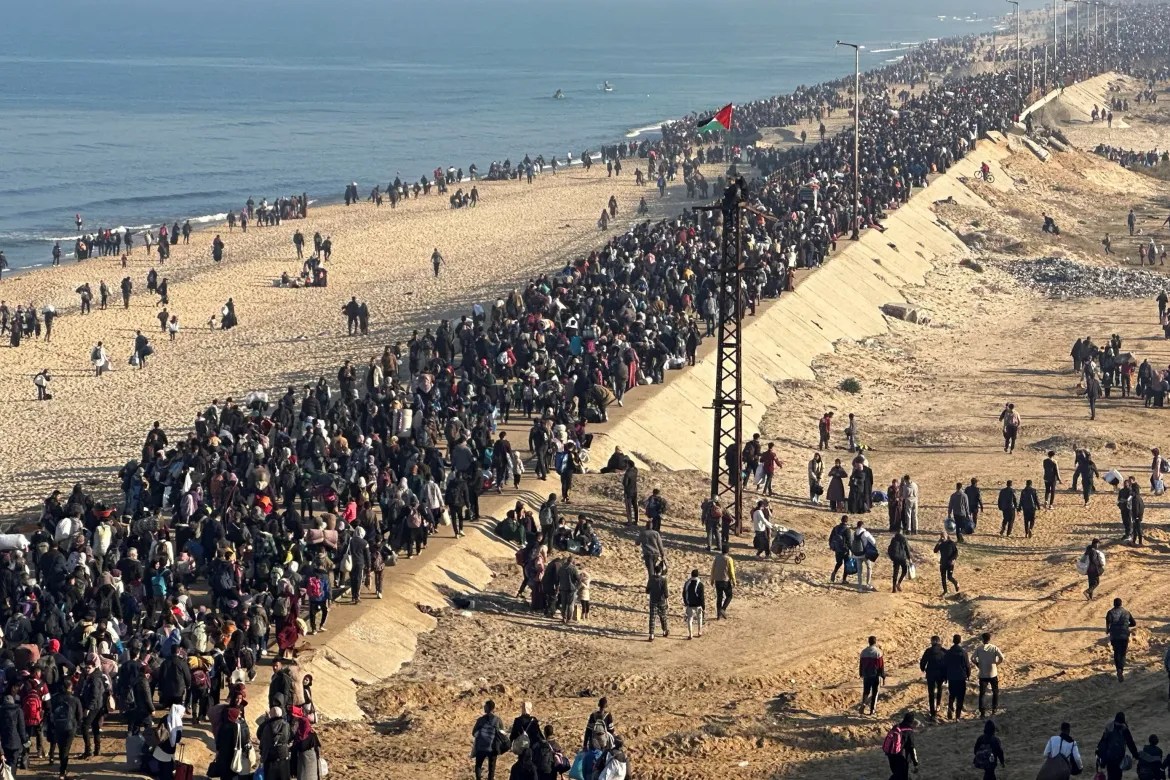
(Photo: Ramadan Abed/Reuters)

It’s difficult to describe the feelings I experienced this past weekend, as I watched hundreds of thousands of Gazans in a long and seemingly endless line, heading on foot to their homes in the north. Crossing the Netzarim corridor – the border the Israeli military demarcated separating north from south – they headed back with whatever possessions they were able to carry. Family members who thought each other dead clutched each other in tearful embrace. It was truly a wonder to behold: this resilient people who had defied and withstood the most destructive miliary onslaught in modern times. As Gazan activist Jehad Abusalim put it:

Gaza today, for now, disrupts and defies the global agenda of rendering entire populations disposable and rightless. This was achieved through the resilience of an entire population that has endured months of displacement, starvation, disease and bombardment.

Though this is a fragile and temporary ceasefire, it’s striking to note the depth of Israel’s failure to achieve any of its stated objectives of its genocidal war. It failed to destroy Hamas and the Palestinian armed resistance in Gaza. It failed to rescue hostages taken on Oct. 7 through military means. It failed to implement its so-called “General’s Plan” – its blueprint for ethnically cleansing northern Gaza. And perhaps most importantly, it failed to break the will of the Gazan people to survive its genocidal war.

Jehad’s words “for now” are appropriate. The overwhelming number of Gazans are returning to homes that are rubble – and it is by no means certain how they will be able to rebuild their lives. The ceasefire is a tenuous one; there is still no agreement on the second or third phases of deal and there is every possibility that Netanyahu will use the deal as cover to eventually depopulate Gaza of Palestinians. Trump’s recent comments (“I’d like Egypt to take people, and I’d like Jordan to take people…we just clean out that whole thing”) have made his intentions clear, even if his plan has been rejected outright by Arab states.

As I read the reports and analyses in the wake of this ceasefire, one thing seemed consistent to me: as ever, there is little, if any, concern for the humanity of the Palestinian people. On the contrary, every pronouncement by Western governments and the mainstream media treats their mere existence as a problem to be dealt with. In this regard, Jehad’s reference to “the global agenda of rendering entire populations disposable and rightless” is spot on. Palestinians in general – and Gazans in particular – have always been the canaries in the coal mine when it comes to the use of state violence against “problematic populations” deemed “disposable” by authoritarian states seeking to consolidate their power.

“Entire populations rendered disposable and rightless” certainly applied to events in my hometown of Chicago this past Sunday, where the Trump launched “Operation Safeguard,” a shock and awe blitz spearheaded by ICE, the FBI, ATF, DEA, CBP and US Marshals Service. Led by Trump’s so-called “border czar” Tom Homan (and surreally videotaped live by “Dr” Phil), heavily armed and armored forces terrorized Chicago neighborhoods all day, mostly going door to door, staking out streets in search of undocumented people, taking them away in full-body chains. While there is no definitive information on the numbers of people taken, federal immigration authorities claim to have arrested more than 100 people in recent days.

On a positive note, however, we are seeing that the strategies employed by local immigrant justice coalitions are making a real difference.  My congregation, Tzedek Chicago is part of a local interfaith coalition called the Sanctuary Working Group, which has been mobilizing Know Your Rights trainings and Rapid Response teams. From our experience in Chicago over these past few days, we’ve seen that this kind of mobilization really does have an impact. Perhaps the strongest validation of these resistance strategies came from Homan himself, who said on an interview with CNN:

Sanctuary cities are making it very difficult to arrest the criminals. For instance, Chicago, very well educated, they’ve been educated how to defy ICE, how to hide from ICE. They call it “Know Your Rights.” I call it how to escape arrest.

in my previous post, I wrote that “the current political moment has left many of us breathless.” But over the course of the last several days, we’ve seen it is indeed possible “to disrupt and defy the global agenda of rendering entire populations disposable and rightless.” If we had any doubt at all, let us take our inspiration from the Gazan people, who have refused to submit after 15 months of merciless genocidal violence and are returning to their homes, vowing to rebuild and remain.

The most powerful shock and awe in the world could not break them. Let this be a lesson to us all.

Protesting Genocide at the DNC in Chicago: Beyond “One Issue”

(photo by Keeton Holder)

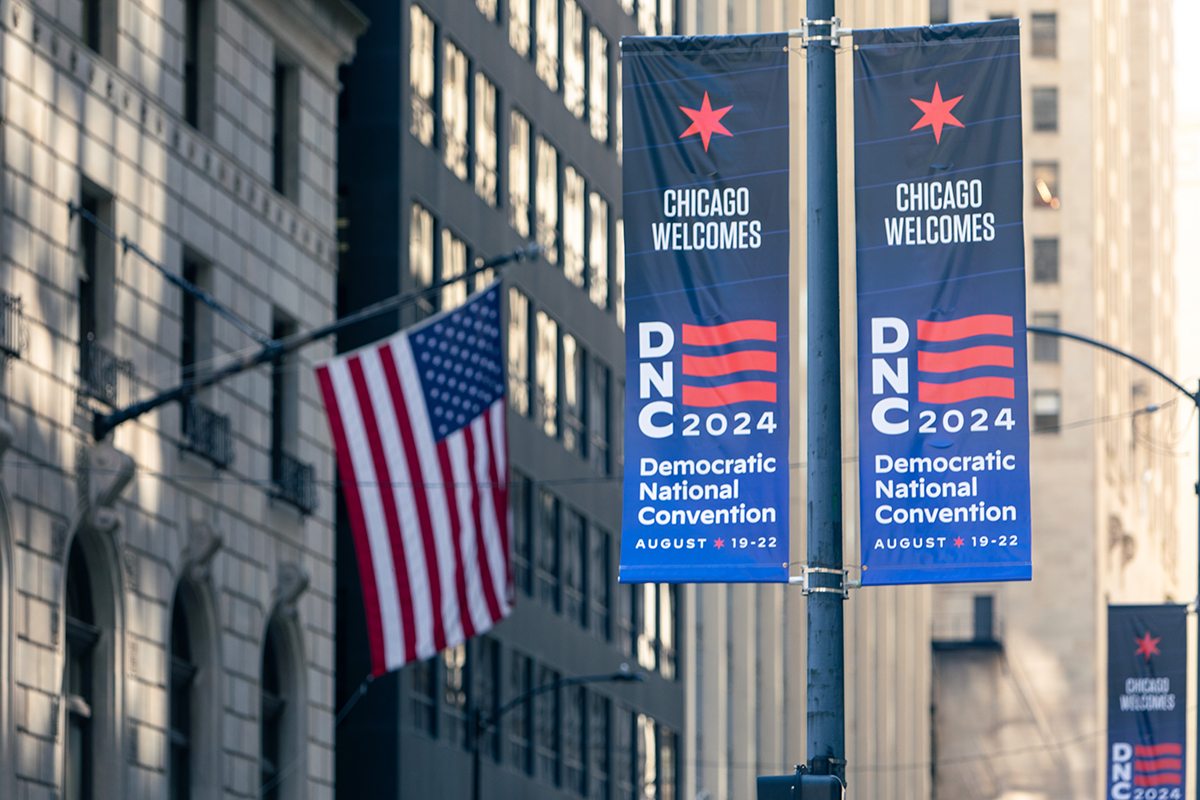
As I’ve written previously, a large coalition of leftist groups has been preparing to take to the streets when the Democratic National Convention comes to Chicago next week. Although there will be a variety of different demands leveled at the DNC during the course of the convention, one key issue clearly stands out as a central common thread through them all – namely, an immediate US arms embargo and a permanent ceasefire to end Israel’s genocide in Gaza.

To name but one example: a rally and march for reproductive justice (of which my congregation, Tzedek Chicago, is a co-sponsor) will take place this Sunday, on the eve of the convention. As “Bodies Outside of Unjust Laws” organizers have made clear, however, the demands of this protest are not limited to issues of domestic reproductive justice alone:

Reproductive justice inherently includes ending the reproductive genocide in Palestine. As U.S. citizens, it is our duty to call on our own government to end the funding of weapons to Israel that enable this nightmare to continue and robs us of funds at home. As feminists and reproductive justice activists, we must also highlight a horrific aspect of the war on Palestinians: it is a war against women and children, who suffer in uniquely cruel ways. 

Likewise, the Coalition to March on the DNC, a group of over 200 national and local organizations is calling for an “End to US Aid to Israel” along with demands on immigrant justice, police crimes, healthcare, housing and the environment. Here again, justice for Palestinians is not viewed in isolation from other issues. As protest organizers correctly understand, these issues are irrevocably interlinked and intertwined.

During the course of this election cycle, those of us who have been demanding an arms embargo and ceasefire in Gaza have become all too familiar with one recurrent criticism in particular: that we are “one issue voters.” I find this to be a dangerous attitude for a number of reasons. More than anything, it’s an egregiously dismissive stand to take in an age of genocide, smacking of “it’s not my problem” American isolationism during the 1940s. For the Palestinian people, of course, Israel’s genocide in Gaza is not simply one issue – it’s the issue.

Witness, for instance, the news from this past weekend:

Officials in Gaza say more than 100 people were killed Saturday in an Israeli attack on a school and mosque where thousands of displaced Palestinians had sought shelter. The attack on the al-Tabin school in Gaza City was one of the deadliest individual attacks since Israel’s war on Gaza began over 10 months ago. Rescue workers said they did not find a “single full body” among the deceased — just body parts often destroyed beyond recognition. Survivors said Israel attacked the school during morning prayers…

CNN has confirmed a US-made GBU-39 small diameter bomb was used in the Israeli strike on the school. The attack came two days after the Biden administration notified Congress that it was preparing to provide Israel with an additional $3.5 billion to spend on US weapons and military equipment. Congress had approved the money as part of a $14 billion package for Israel in April. Zeteo reports part of the new US package includes a direct sale of 6,500 joint direct action munitions to Israel.

First and foremost, the genocide in Gaza is a crime against humanity that should concern us all. But as citizens of the nation that is funding and abetting this genocide, we Americans cannot look away from the blood that is surely on our collective hands. Nor can we ignore the shock waves that resonate far outside the borders of Palestine/Israel: the threat of an all-out regional war, the profits enjoyed by the arms and surveillance industry at taxpayer expense, the devastating environmental impact – the list goes on and on. Palestinian human rights lawyer and activist Noura Erakat put it perfectly on Twitter/X recently: “PSA: ending a genocide is not ‘a single issue’ it is an entire universe of issues.”

Another refrain I’ve been hearing repeatedly is the critique that protesting at the DNC “will only help Trump.” Harris herself leveled this argument at a campaign rally in Detroit when she sternly admonished pro-Palestinian protesters: “If you want Donald Trump to win, then say that. Otherwise, I’m speaking.” To be sure, it was an astonishingly tone-deaf and dismissive response to make in Michigan, the very birthplace of the Uncommitted Campaign. But on a more fundamental level, Harris’s response denied the very real impact of her own administration’s policies. As one of the protesters later put it, “When people are demanding a ceasefire and arms embargo and an end to the genocide and you say that we want Donald Trump to step in—it just shows a lack of accountability. It shows a lack of leadership, a lack of responsibility and a lack of ownership.”

In essence, Harris’s comment was just the latest version of the “shut up and vote” message that the Democratic party routinely sends progressives during every election cycle. In an age of US-supported genocide, however, the cynical emptiness of this message has become patently, painfully obvious. As journalist Masha Gessen has rightly pointed out. “These voters are not choosing between Harris and Trump. They are choosing between their sense of themselves as moral beings if they vote for Harris and their sense of themselves if they vote for a third-party candidate or for no one at all.”

Of course those who will be protesting at the DNC next week do not want to see Trump elected in November. But even from a purely strategic point of view, what has a better chance of helping the Democrats fortunes in November? We know that a strong majority of American voters across the political spectrum support a permanent ceasefire in Gaza. What would be the more winning strategy: telling those who want to end a genocide to shut up, or exert real leadership that will bring about a ceasefire and an end to the threat of a devastating regional war?

While party conventions function largely as candidate-coronations, they still function as places where parties express their collective vision and finalize their political platforms. On this score, I’m not at all optimistic that an arms embargo to Israel and a permanent ceasefire will find any purchase at the DNC. There are a mere 30 Uncommitted delegates out of 4,600 – and while they are pushing for a voice at the convention (they’ve asked that Dr. Tanya Haj-Hassan, a pediatric intensive care doctor who has volunteered in Gaza, speak from the convention floor), they have still not been offered a slot. Harris’s national security advisor has also made it clear that she opposes an arms embargo to Israel. By every indication, it certainly feels like “shut up and vote” will be the dominant Democratic party message coming out of the convention next week.

I have enormous respect for the Uncommitted delegates who will engage within the convention, particularly co-founder Layla Elabed, who has said even if they are not given a speaking slot, delegates will make their presence known with “news conferences, candle light vigils, tables to distribute literature and, they hope, guest testimonies about life in war-torn Gaza.” When it comes to political advocacy, however, there is always an inside game and an outside game. That’s why those of us who are not delegates will (quite appropriately) be making our presence known outside the walls of the convention hall as well.

Protest organizers have no illusions about the overwhelming militarized presence that will greet us when we gather next week. Federal authorities have divided the area surrounding the United Center, where the main speaking events of the convention will take place, into “soft” and “hard” zones – the latter being off limits to cars and non-credentialled delegates. But even in the soft zones, movement has been heavily restricted. The main protests have been given approved routes far from the convention site, and at one point goes through narrow residential side streets, that will be completely inadequate to handle thousands of protesters. While organizers have appealed the march route, as of this writing there has been no response from the city of Chicago.

When we talk about the potential for police violence next week, of course, the specter of the 1968 Democratic convention in Chicago looms very large. A great deal of ink has been spilled analyzing the differences and similarities between Chicago 1968 and Chicago 2024 – and while I’m loath to venture too far into this rabbit hole, there is one point of commonality I believe bears noting. In general, the mythos around the 1968 DNC protests tend to lay the blame for the Democrats’ defeat on the protest movement that “divided the party.” Often lost in this discussion is the fact that in 1968, those protests were directed toward a political party that had been prosecuting an increasingly unpopular war in Vietnam. Today, as then, I find it deeply misguided to blame protesters and not the immoral policies of the Democratic party itself.

While it’s not particularly helpful to use Chicago 1968 to heighten hysteria over the DNC, protestors are certainly justified in being vigilant over the very real possibility of police violence. I’m not the only one who finds it ominous that the city is doubling down on armed presence in the city. In advance of the convention, the Secret Service agent in charge of “security” has commented that “Chicago has a proven track record when it comes to putting on huge events” – citing the city’s response to Lollapalooza, the NASCAR Chicago Street Race and the Chicago Air & Water Show – as if the DNC is just another tourist event to showcase to the public.

No, we cannot deny of the very real moral and political reality that will be at stake in Chicago next week. We cannot deny that state violence directed against Palestinians is one and the same with so many other forms of state violence that are routinely normalized as “necessary.” And we must resist the call to dismiss any form of systemic violence as just “one issue.” As my friend and comrade, organizer Kelly Hayes has so wisely written:

We have to recognize victims of police brutality, Palestinians, our disabled and unhoused neighbors, and so many others who are subject to forgetting as worthy of grief, outrage and action. Everyday people who are fleeing violence, hunger, and militarism, everyday people whose cites are running out of water or are in danger of disappearing beneath rising flood waters, everyday people who are dying right now because they lack air conditioning amid heat waves – these are the people whose plights and fates should shape our politics. If we are going to fight for any semblance of human decency, we need to reclaim and reassert the value of our lives.

Safety in Abundance: Remembering Wadee Alfayoumi

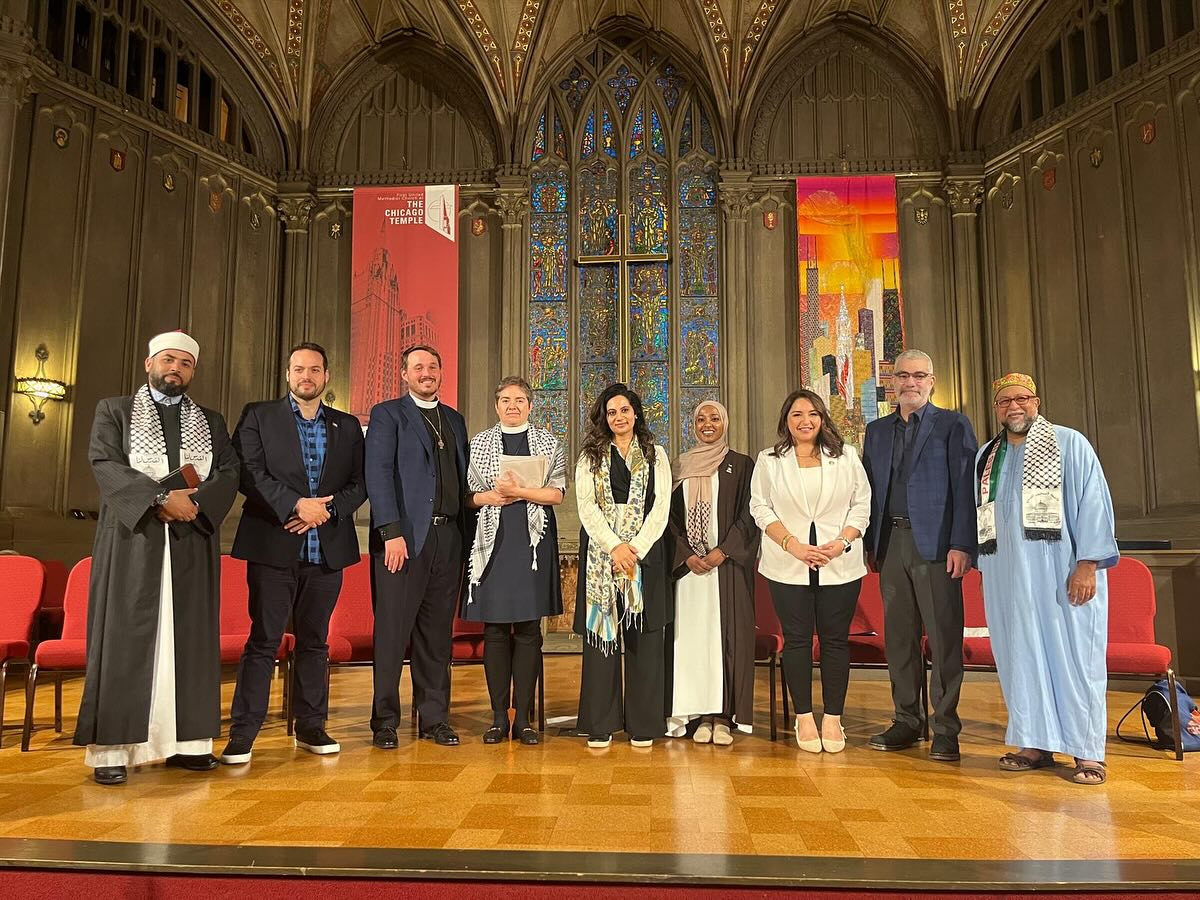
left to right: Sheikh Hassan Ali, Tarek Khalil, Rev. Michael Wolff, Rev. Anna Piela, Maaria Mozaffar, Deena Habbal, Rep. Delia Ramirez, Rabbi Brant Rosen, and Imam Hassan Aly.

My remarks from last Sunday, delivered at an interfaith memorial in Chicago for Wadee Alfayoumi, a six year old Palestinian-American boy from Plainfield, IL, who was murdered in a hate crime on. October 14. Our service also included words from IL Rep. Delia Ramirez, who is co-sponsoring a House resolution affirming that “the United States has zero tolerance for hate crimes, Islamophobia, anti-Semitism, and anti-Palestinian and anti-Arab discrimination.” 

When precious lives are unjustly taken from the world, the most essential way we can honor their memory is to ensure that they have not died in vain. Wadee’s young life was cruelly taken from us through a heinous and unjust act. While it is true that his murderer has been caught and will be tried by our legal system, our work is by no means over. We must continue to demand justice for Wadee Alfayoumi. 

While it is true that Wadee’s life was taken by one hateful, hate-filled individual, those who view this was a random, isolated incident are gravely mistaken. Wadee’s murder did not occur in a vacuum. It occurred in the toxic context of Islamophobia and anti-Palestinianism that has long been rising throughout this country and around the world. It was inspired by an ideology emanating from the state of Israel that has routinely and regularly dehumanized Palestinians for decades – a state that is, even as we speak, unleashing genocidal violence against a captive Palestinian population in Gaza. 

How can we honor the life of Wadee Alfayoumi? How can we ensure his death will not be in vain? By speaking out as loudly and unabashedly as possible against anti-Muslim, anti-Arab and anti-Palestinian hatred – and the systems that support it. By demanding that the safety and security of some groups cannot be upheld at the expense of others. By affirming the most essential of moral truths: that all people – and peoples – are equally precious in the eyes of God, and equally worthy of human dignity and respect. 

In a celebrated Talmudic debate, two rabbis, Rabbi Akiba and Rabbi Ben Azzai argued over what is the most central precept in Torah. Rabbi Akiba claims it is the famous verse from Leviticus: “Love your neighbor as yourself.” Ben Azzai disagrees, and cites the verse from Genesis: “When God created humankind, God created humankind in God’s image.” Why does Ben Azzai disagree? Some commentators suggest that while “love your neighbor as yourself” is a powerful moral imperative, it is somehow incomplete. It potentially limits our love to our immediate neighbors, to members of our community, religious or ethnic group. However when we lift up the Biblical precept that all humanity is created in the divine image, we assert our love and care for all who dwell on earth. Likewise, when we dehumanize or diminish the humanity of others, God’s presence is diminished in the world.

In other words, this divine precept is rooted in a vision of abundance. Human safety and security cannot be a zero-sum game: in the end, it must be all of us or none. There are many of us in the American Jewish community who are deeply, profoundly dismayed by the cynical accusations of antisemitism wielded by right wing political leaders who have made it abundantly clear they do not, to put it mildly, have my community’s well-being at heart. We know that the charge has less to do with Jewish safety than punishing those who stand in solidarity with Palestinians. 

We would do well to ask: why does the ignorant conflation of anti-Zionism with antisemitism merit so many hearings on Capitol Hill? Why is antisemitism being politically exceptionalized over other forms of bigotry and hatred? Why has the murder of Wadee Alfayoumi – and the shooting of three Palestinian college students in Burlington, Vermont – met with nothing but abject silence from the representatives holding these hearings? In this time of growing hatred, we must stand down this privileging of one group of people over others for cynical political gain. We must demand that our politics be leveraged to protect the safety and security for all groups targeted by hate. 

Unfortunately – tragically – we live in an age in which right-wing, white supremacists are strategically targeting their hate at Muslims, Jews, people of color, immigrants, gay, trans and disabled people, among others. Yes, as a Jewish person, I feel genuinely threatened by the rise of antisemitism in this country and around the world – but I also know full well that Christian nationalist hatred is equal opportunity in nature. I understand full well that my safety and security is inseparable from the safety and security of all. 

As remember the precious life of Wadee Alfayoumi, whose was taken from the world so unjustly, let us demand justice. Let us, as affirm, as the House Resolution introduced by Rep. Delia Ramirez and her colleagues states so plainly, that it is “the duty of elected officials and media to tell the truth without dehumanizing rhetoric when informing the public of factual information.” And that “the United States has zero tolerance for hate crimes, Islamophobia, anti-Semitism, and anti-Palestinian and anti-Arab discrimination.” 

In Jewish tradition, when we invoke the name of someone who has died, we traditionally follow with “may their life be for a blessing.” This is not only a statement of respect to the dead: it is also a moral imperative for the living. If their memories are to be a blessing, it is we that must make it so. 

I’d like to end my remarks now with the traditional Jewish prayer for the dead, El Male Rachamim (“God Full of Compassion”). We offer it now in memory of Wadee Alfayoumi, whose precious life was unjustly taken from us. Let it’s resonance be a blessing to all whose lives have been ended by bigotry – and an inspiration to us all to dismantle the systems that enable hate and oppression once and for all:

Oh God filled with compassion, whose loving presence ever surrounds us, bring final rest to the soul of Wadee Alfayoumi, who has returned to his source. May the memory of his life shine forth like the brilliance of the skies above, as it brightens our own lives and even now. Source of mercy, please shelter him beneath the softness of you wings, that he may be protected in your presence for eternity, that he may rest in peace and power.

Amen.

The World as it Should Be: Reflections on the DePaul Student Encampment

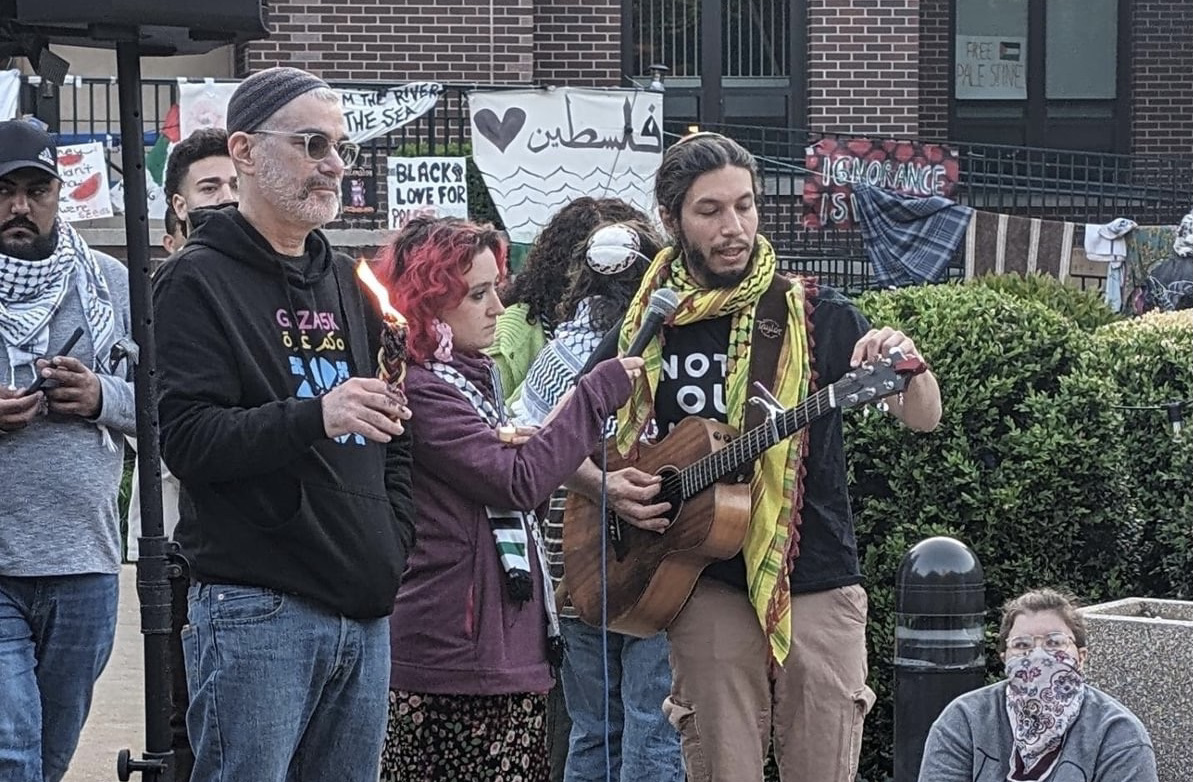
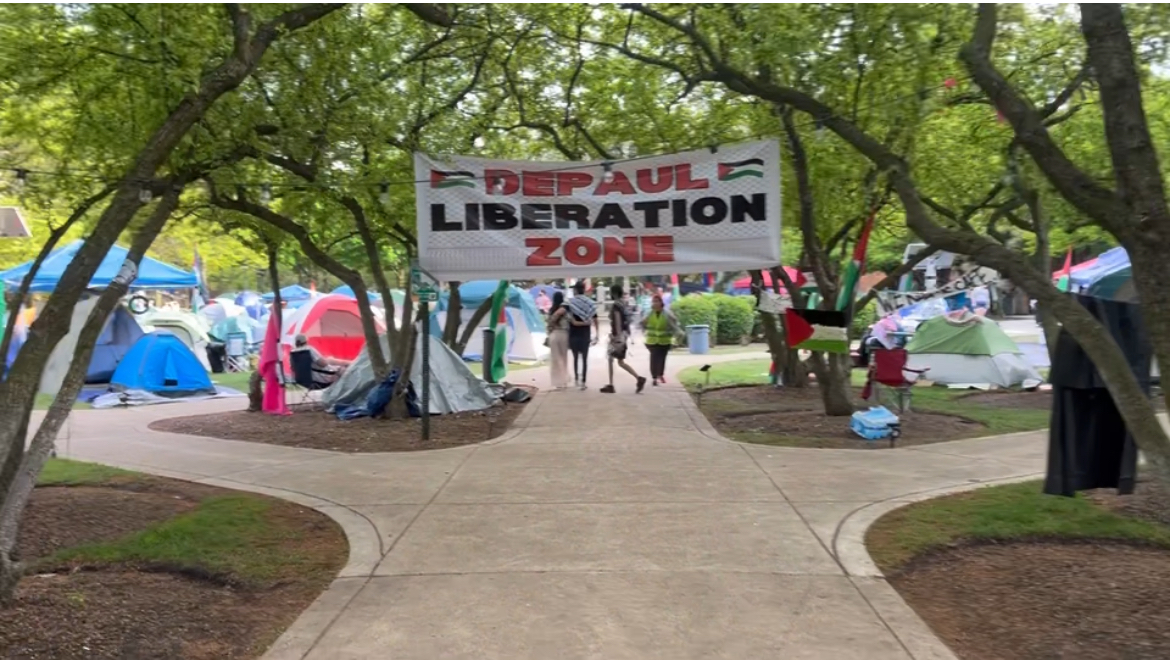
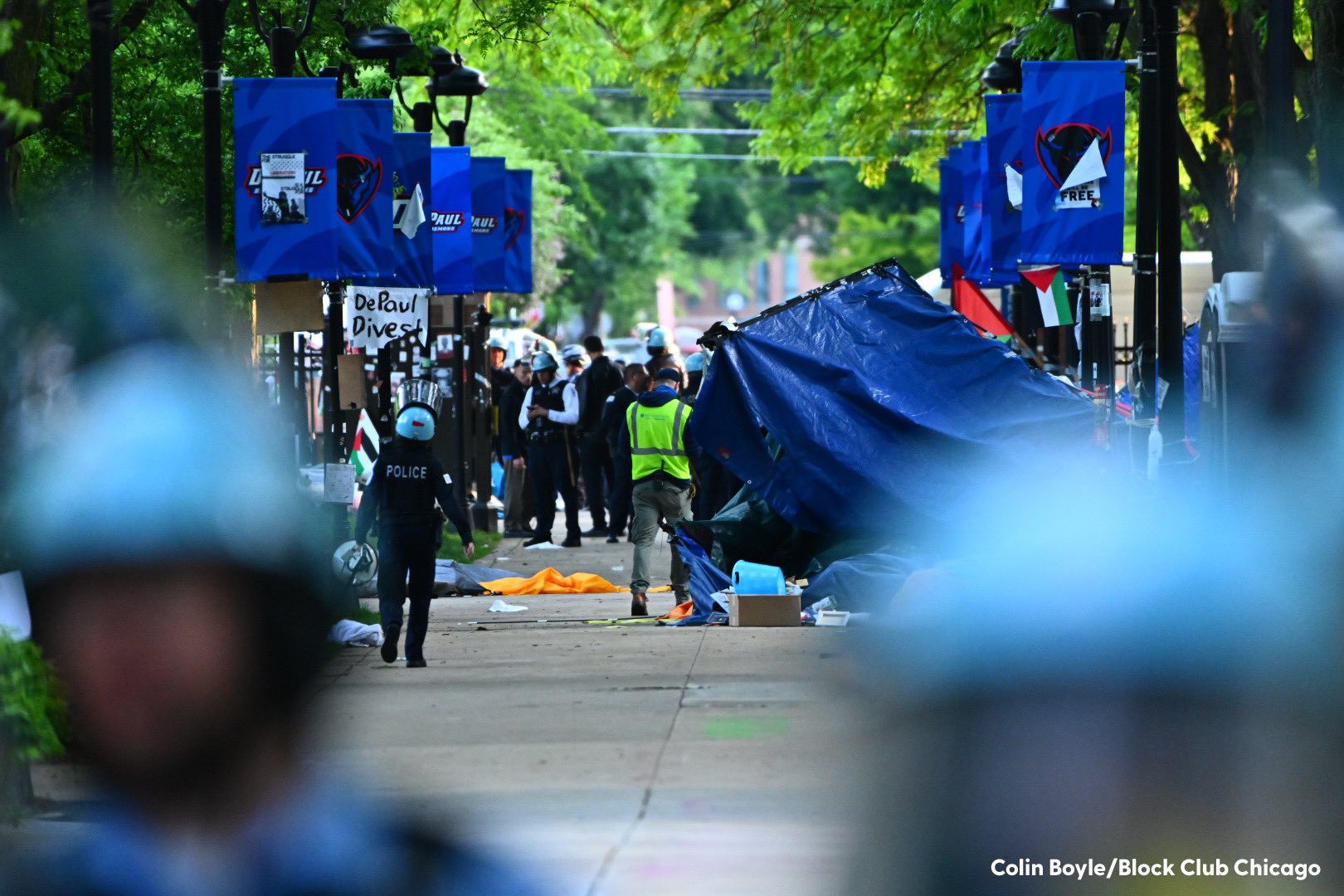
Early yesterday morning, the Chicago Police Department raided and destroyed the student encampment at DePaul University. The DePaul Liberation Zone was the last remaining student encampment in the Chicago area and had been ongoing for seventeen days. Here are my remarks from the student-called press conference at the DePaul student center that took place last night:

My name is Brant Rosen – I’m the rabbi of the congregation Tzedek Chicago and the co-founder of the Jewish Voice for Peace Rabbinical Council, and I’m here today representing the rapidly growing section of the Jewish community that is actively protesting Israel’s genocidal violence against the Palestinian people. As part of this protest, we stand with the student movement across the country – and around the world – that demand their schools divest from Israel’s war crimes in Gaza and throughout Palestine.

It has been my personal honor to visit the DePaul Liberation Zone numerous times over the past two weeks. Together with members of my congregation, we led two Havdalah services – the ceremonies that mark the end of the Jewish Sabbath. We were invited and scheduled to lead Shabbat services at the student encampment tomorrow evening – and are deeply saddened that this will now not be possible.

When I led Havdalah, I made the observation that Jewish tradition views Shabbat as a foretaste of Olam Haba – the World to Come. I added that this is exactly what the students were creating in their encampment. The students of DePaul created for themselves the World-As-It-Should-Be in real time. 

In truth, it was less a political protest encampment than a mindfully organized, genuine grassroots community. There was a planning committee to schedule ongoing events. There was a food tent and a first aid center. There were tutoring sites. There was training in nonviolent resistance and de-escalation. The students supported one another. They took care of one another. And they celebrated together as a truly multi-faith, multi-ethnic community. Last Saturday, our Jewish service was preceded by a Muslim call to prayer. Afterwards, a dance and music ceremony was performed by a local Aztec indigenous troupe.

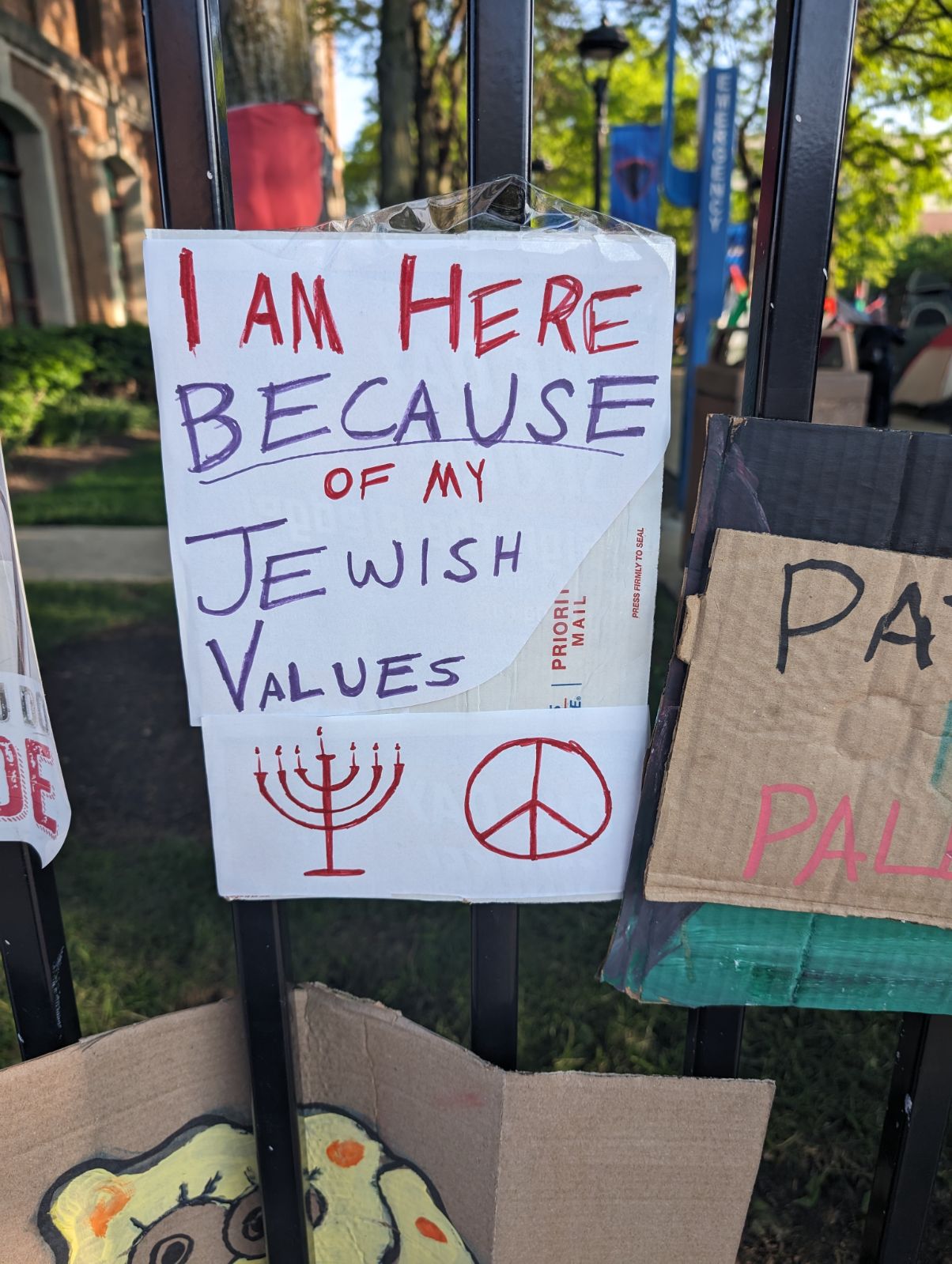
I want it to be known, for the record, that Jewish students – many of them members of Jews 4 Justice at DePaul, were an integral part of the DePaul Liberation Zone community. And I want to say as clear as I possibly can that the cynical characterization of this encampment – and others like it across the country – as bastions of Jew hatred could not be farther from the truth. As a Jewish person, I was welcomed into this community as an honored guest.

Last week, after leading Havdalah, I was approached by scores of students – many of them Palestinian – who expressed their appreciation for our presence there. There were also many Jewish students who thanked us for giving them a spiritual Jewish context for their solidarity. To my mind, this was the safest possible place I could be as a Jew: at a place where security was a shared and mutual concern. If there was any threat to safety, it came from the state violence that was unleashed on this community by DePaul and the Chicago Police Department.

As a faith-based university, DePaul should have respected the deep moral conviction at the heart of the student community. They could have followed the example of Rev. Serene Jones, the President of Union Theological Seminary, who had this to say about the students at the Columbia University encampment:

I’ve had the chance to see the protests up close, where the simple message of the demonstrators can still be heard: Stop the war, now. And I’ve learned a lot about who these protesters really are…

First and foremost, these encampments are filled with students from different religious traditions — Jews, Muslims, Christians, Buddhists, unaffiliated as well as spiritual but not religious students. They are finding solace and courage among themselves.

These spontaneous, interreligious communities happened organically, with the strikingly easy flow of connection different from self-consciously manufactured “interfaith moments.” It is simply who these protesters are: a community bound by a greater common cause to stop the mass killing of besieged Palestinians.”

But shamefully, tragically, the DePaul administration chose a different course. It chose to negotiate in bad faith. They never seriously engaged with students’ deeply held, conscience-based convictions. They egregiously demanded that student leaders attend meetings during the Muslim and Jewish Sabbaths. Rather than responding honestly to the students’ counter proposals, they abruptly declared that the negotiations were at a stalemate, unlilaterally bringing the process to a halt. And then, early this morning, they brought in the CPD, clad in full riot gear, to violently overturn and destroy a peaceful student community.

Let me be clear – what DePaul did to its students this morning was a shandeh: for shame. It represents a moral stain on a university that purports to uphold Vincentian religious values of peace and justice. It represents a failure of leadership and imagination by responding violently to a good faith, conscience-driven action of students who were challenging their school to behave morally and to divest from genocidal violence. 

That their demand has occasioned such vicious state violence clearly demonstrates the truth of the students’ essential point for all the world to see. Their acts of solidarity and mutual support are a clear and direct threat to state power. There can be no better example of this truth than the travesty we witnessed at DePaul this morning.

But make no mistake, this violence will not break the will of these students, nor will it slow the progress of a solidarity movement that is breaking wide open across the country and around the world. We are all – as I speak to you now – living in a very real moment of truth. We are all being challenged to answer the question: where do I stand? Will I remain silent or will I speak out? Will I be complicit, or will I demand accountability? Will I enable the oppressive status quo, or will I call I find the courage to say out loud, “From the river to the sea, Palestine will be free!”

These students know the answers to these questions. We would do well to listen and learn from them. We would do well to follow their example. No matter how cynically they are characterized, no matter how violent the response to their moral challenge, they will not be deterred until liberation. And until that moment comes, it will be my honor – and the honor of so many others – to stand right alongside them.

The “Jewish Community” Letter to Mayor Johnson, With Commentary

Last Sunday, this full-page ad appeared in the Chicago Tribune: a hate-filled diatribe against Mayor Brandon Johnson for his support of the recent city council ceasefire resolution. Here it is, in full, along with my commentary.

Criticizing one resolution for “doing nothing to substantively affect the outcomes in the Middle East” is a straw man argument. No one who supported this resolution has any illusions that it alone will change the terrible facts on the ground in Israel-Palestine. It does represent, however, a civic statement of conscience. To date, over 70 US cities have passed similar ceasefire resolutions. Taken together, they constitute a collective moral call for an end to the humanitarian nightmare that has been unfolding and escalating in Gaza for the past four months.

The letter makes the unsubstantiated claim that the City Council’s resolution proceedings “fanned the flames of antisemitism.” This is a serious accusation – and it is exceedingly irresponsible to level such a claim without any examples or proof. No, ceasefire resolutions do not cause antisemitism – and protesting Israel’s genocidal violence against Palestinians in Gaza is not antisemitic. It is a call for justice.

Chicago’s ceasefire resolution was based on a resolution passed by the UN last December, which emphasized that “the Palestinian and Israeli civilian populations must be protected in accordance with international humanitarian law.” It also called for “the immediate and unconditional release of all hostages, as well as ensuring humanitarian access.”

This is an exceedingly fair resolution. No, it did not absolve Hamas for the war and civilian deaths, but neither did it condemn Israel for its outrageous prosecution of a military assault that international experts and courts have have claimed fits the definition of genocide.

The letter then goes on to say that Hamas “misused humanitarian aid” – another unsubstantiated claim – and criticizes the resolution for failing to demand that Hamas disarm. Since this is an Israeli demand, to include this would be to inject an egregiously partisan statement into the resolution.

The January 30 high school walkouts were powerful demonstrations of collective student conscience that Mayor Johnson was right to support. The claim that “hundreds of CPS parents, students and teachers” were harassed during the protests is completely anecdotal and in fact, outrageous. If harassment on such a scale actually took place, there would surely be widespread press and investigations into these alleged actions. In fact, the press around the walkouts cited “worries from some CPS parents and Jewish groups that Jewish students could be targeted or made to feel uncomfortable.” There is, of course, a world of difference between “uncomfortable” and “unsafe.”

Palestinians have long pointed out that the call “from the river to the sea” is not a genocidal threat, but a demand for equality and justice for all. If that makes some Jews uncomfortable, they should interrogate their support for “the world’s only Jewish state” – an ethno-nation that does not afford equal rights to the Palestinians who happen to live between the river and the sea.

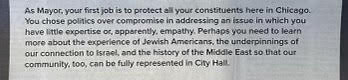
The “compromises” suggested in this letter are exceedingly more political than anything Mayor Johnson supported – and slamming him for having no expertise or empathy is hateful in its own right. What these signees really want is for him to submit to their own personal opinions about “the Jewish American experience, the underpinnings of our (sic) connection to Israel and the history and the history of the Middle East.”

For shame. These individuals speak for themselves – not for the growing numbers of American Jews who are actively protesting Israel’s genocidal violence in Gaza – and who fully support Mayor Johnson’s courageous moral leadership.

“It’s Time for All-Out Freedom” A Passover Guest Post by Maya Schenwar

c2tzcfgxgaitcn3

Remarks delivered by Maya Schenwar (editor of Truthout and author of “Locked Down, Locked Out” and the upcoming “Prison by Any Other Name”) at the Tzedek Chicago Passover Seder, April 14, 2020. 

A few months ago, which feels like a few centuries ago, Brant and I discussed the idea of me saying something at this seder about the difference between reform and liberation. I’d been writing about how popular prison reforms such as electronic monitoring, drug courts, and psychiatric institutions are actually entrenching the prison-industrial complex. I thought, what better occasion than Passover to talk about how we shouldn’t be pursuing fake liberation, and how we don’t want nicer-looking reforms that are still forms of oppression? What better occasion to affirm that we have to demand all-out freedom and stick with it?

Now, in these terrifying new times, it feels even more imperative to make vast, sweeping demands—demands that rise higher than we might think we can dream. In the midst of a worldwide plague that, in one way or another, engulfs us all, it’s time for that all-out freedom call.

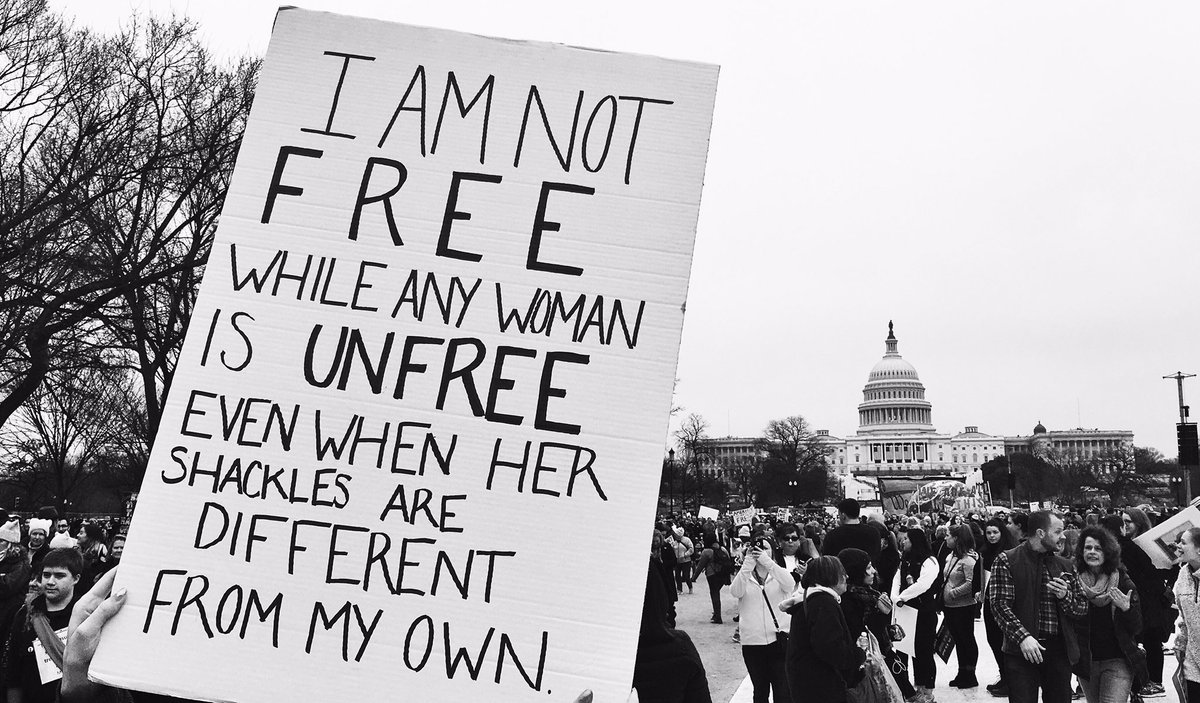
What do I mean by “all-out freedom”? I’m thinking about the refrain that “no one is free while others are oppressed.” I’m thinking about Audre Lorde saying, “I am not free while any woman is unfree, even when her shackles are very different from my own.” The COVID-19 crisis has deeply and horribly impacted our own communities — and communities everywhere. Marginalized people have, of course, been disproportionately impacted. (Consider that approximately 70% of people who’ve died from COVID-19 in Chicago are Black.)

Right now, we are coming to understand that none of us are healthy while others are sick. As long as anyone is in peril, more will be in peril. And liberation for only some is not liberation.

Yet, in a lot of different arenas, we’ve come to accept small offerings from our political representatives and leaders—a bailout mostly geared toward banks and corporations, a slight reduction in drug prices, a few people freed from prisons, some limits on carbon emissions. We say, “Well, something is better than nothing,” even when the something is far from enough, and when the something leaves many people to die.

Even in the face of coronavirus, the health care plan of the presumptive Democratic presidential nominee would leave many millions of Americans uninsured. At this moment in which all of our lives are threatened, it’s time to call for Medicare for All—and much more. We need comprehensive cost-free mental and physical health services, including treatments that go well beyond doctors and hospitals. We need to recognize that plentiful nutritious food, housing, sleep, free time, relaxation, and self-determination are also part of health and survival—and part of liberation. This is the moment to demand universal housing, universal food access, and drastically improved labor practices, which are key to building the kind of freedom that sacrifices no one.

And, at a time when unemployment is skyrocketing and the climate crisis is amplifying the effects of COVID, where is our Green New Deal? Where is our jobs guarantee, our income guarantee for those who don’t work—and our guarantee that our leaders will do everything in their power to confront the climate emergency, which is on track to kill billions? These aren’t far-off dreams or hypotheticals; they are steps that it makes sense to implement now to directly address the public health and economic crises enveloping our country.

At a time when we’re witnessing a shortage of life-saving equipment – ventilators and protective gear – we can issue a pragmatic call for the end of the war industry. In fact, we can challenge the existence of the military-industrial complex as a whole. Has there ever been a clearer moment to say no to the machinery of death, and to demand a mass shift of funds away from the Pentagon and toward public health?

It’s not a time for compromise—not a time to save some and not others.

Moses abided by this philosophy in his dealings with Pharaoh. He said to Pharaoh, “Let us go into the wilderness and worship our own God!” In response, Pharaoh proposed compromises—little reforms, fake liberations.

Pharaoh’s first compromise proposal was for the Jews to stay in Egypt, but worship their own God there. Some people might have said, “Take what you can get! Stop there, Moses! It’s better than nothing.”

But Moses declined the compromise, which was a little better than nothing—but it wasn’t freedom.

So then some plagues happened, as we know, and Moses asked again. Pharaoh scrounged up another compromise: He would let the men go off into the wilderness, but the women and children would have to stay in Egypt. Of course, women and children were groups that were more vulnerable—multiply oppressed, within the oppressed group. And in this compromise, they’d be thrown under the bus.

This compromise reminds me of the “moderate” reforms we see all over the political stage right now, reforms that modestly benefit some people, while throwing other people entirely under the bus:

For example – the proposal that a few more people can have health care, but there will still be millions and millions who are uninsured. Some would say, It’s better than nothing!

And there are the proposals to let some people with nonviolent first-time drug offenses out of prison, while millions of others will be left in cages. Some would say, It’s better than nothing!

And of course, there’s the compromise that younger people with no criminal record will temporarily not be deported, while older people and people with criminal records are condemned to deportation. Some would say, It’s better than nothing!

These are reforms that throw people away. Liberation refuses to throw anybody away.

Moses said no to the compromise, and we have to say no to the politics of disposability, too.

So then there were more plagues, and Pharaoh issued a final compromise: The Jews, including the women and children, could go into the wilderness – but they’d have to leave their animals behind. Basically, they’d have to be released from captivity with barely any resources.

There’s no freedom without some means to survive, and even thrive. A country where many millions are without health care in the middle of a pandemic is not a free country. A country in which people are starving because they’ve suddenly lost their jobs and have no safety net is not a free country. A country in which a few people are released from jails because of a pandemic, but are released into homelessness, is not a free country. In fact, a country in which people experience homelessness is not a free country.

My longtime pen pal and friend Lacino Hamilton, who is incarcerated in Michigan, wrote me a letter about the experience of the pandemic behind bars. He is hoping to be released soon: After 26 years in prison, his challenge to his conviction appears to be on the verge of being recognized. But, Lacino wrote, “I’m worried that I’ll leave here and materially my life will worsen.” He wrote, “Returning citizens are supposed to be happy with dead-end opportunities, the kind that offer only a ‘piece of a life.’ I want a whole life.”

Everyone should have a whole life. Without that, it’s not real liberation.

So, Moses said “no” to the no-animals compromise, because it was not freedom at all.

Eventually, after the most gruesome and horrifying plague of all, the one we hate to talk about, Pharaoh agreed to the whole package.

Of course, that wasn’t the end of the story. Pharaoh tried to prevent the actual implementation of the plan, necessitating some miracles from God to allow the Jews to truly leave.

Some miracles are probably necessary now, too, because the forces of power are never going to agree to full liberation. But I personally don’t think those miracles will be bestowed by a powerful God (who, to be honest, sometimes comes across in parts of the Torah as another angry dictator). I think we have to make those miracles ourselves.

What would it look like for us to create miracles, in the uniquely brutal time we’re currently living through? A couple of weeks ago, Arundhati Roy wrote a beautiful piece about the COVID-19 crisis, in which she talked about this time as one that forces us into a kind of magic. She wrote,

Historically, pandemics have forced humans to break with the past and imagine their world anew. This one is no different. It is a portal, a gateway between one world and the next. We can choose to walk through it, dragging the carcasses of our prejudice and hatred, our avarice, our data banks and dead ideas, our dead rivers and smoky skies behind us. Or we can walk through lightly, with little luggage, ready to imagine another world. And ready to fight for it.

I love that passage, and it speaks to something important. I don’t think the miracle of a full-scale societal transformation that allows for the possibility of liberation will come from above. As far as I know, God cannot unilaterally snap their fingers and provide a universal health care plan or a Green New Deal, or end white supremacy or incarceration, or provide a home for every human being. We will need to grow these things. And I believe that we can, if we remember that no one is safe and healthy until everyone is safe and healthy, and that liberation cannot mean throwing anyone away.

There are many ways to take action right now to pursue liberatory goals, from mutual aid efforts that address urgent needs and build organizing infrastructure for the world we want to live in, to critical housing and labor campaigns, to racial justice movements working to release people from jails and prisons, to environmental campaigns that are drawing connections between this moment and the looming climate emergency, to the ongoing battle for Medicare for All, and much more. Brant is going to share some links in the chat for this Zoom call that will point you toward ways to get involved. These are only a smattering of the many crucial efforts currently underway.

I don’t think we need to drop horrible plagues on our enemies in order to refuse harmful compromises. Instead, we need to unite against horrible plagues – including the plagues of injustice, inequity, and mass violence – and for mass liberation.

I believe that we can enter the portal and fight for that new world, if we are prepared to do it together.

____________________________________________________________________________________________

Action items (National and Chicago-Based):

* The People’s Bailout: a coalitional effort by environmental, economic, racial and health justice groups to advocate a transformative economic package in response to COVID-19. 

#FreeThePeoplea coalition of advocacy organizations who do work to support imprisoned community members across the state of Illinois.

Physicians for a National Health Plan’s COVID-19 and Medicare for All

•  National Nurses United’s broad-based Medicare for All effort. 

Chicago COVID-19 Help & Hardship Page:  a mutual aid effort for direct food and housing assistance.

Rogers Park Food Not Bombs: Saves food from the waste stream while highlighting the inequities of our society.

Brave Space Alliance’s Crisis Food Pantry and Trans Relief Fund.

Greater Chicago Food Depository.

Restore Justice Illinois: to help provide for someone being released from prison.

Help Love & Protect: to make masks for people in women’s prisons:

Autonomous Tenants Union​: an all-volunteer organization committed to organizing for housing justice from below and to the left.

Lift the Ban: to advocate for lifting the ban on rent control in Chicago.

Organized Communities Against Deportations: resistance movement against deportations and the criminalization of immigrants and people of color in Chicago and surrounding areas.

Remembering Stanley Tigerman

Tigerman

(Photo: WTTW)

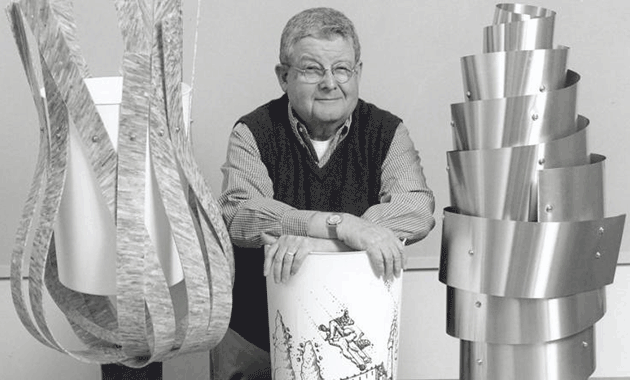
Below: an excerpt from a eulogy I gave today at the funeral of celebrated Chicago architect Stanley Tigerman. As this Tribune obituary notes, “Stanley Tigerman (was) the most influential Chicago architect of his generation and the ringleader of a group of rebels who opened the way for a more inclusive view of Chicago architecture and changed the course of the city’s design.”

As I note below, it was a truly an honor for me to officiate at his funeral. 

Given that Stanley made no secret of his antipathy for organized religion, some of you might be wondering why a rabbi is leading his service. Stanley actually reached out to me several months ago through my wife – whom he knew professionally – and personally asked me to officiate at this funeral. Somehow, Stanley found out that Hallie’s  husband was a rabbi and when he asked her about me, she related to him that I had my own issues with organized religion myself.  I was humbled and honored that he reached out to me the way that he did – and that he trusted me enough to ask me to help lead this tribute to his life and work.

My wife and I spent a wonderful evening recently with Stanley and Margaret. It was clear that he wanted to share certain parts of his story with me and most importantly, to make sure I knew about the formative influences his life. In particular, he spoke to me at length about his childhood and his experiences growing up in grandfather’s Edgewater rooming house during the Great Depression. His grandfather Max was an immigrant tailor from Hungary who, after arriving in America, devoted his life to traditional Jewish Talmud study.  Stanley’s parents, Sam and Emma, like so many of their generation, were hit hard by the Depression and struggled economically – and eventually had to move in with Stanley’s grandfather, where he spent his formative years.

Stanley’s stories about growing up as an only child in the rooming house, as you might expect, were colorful and filled of characters that could easily fit into a Damon Runyon novel. The central character in his childhood was clearly Max, who Stanley described as “the most significant individual in my young life.” His grandfather was clearly his most important early teacher, teaching him English and Hebrew and enrolling him in the Hebrew school at Agudas Achim, an orthodox synagogue in Uptown.

Of these years, Stanley wrote in his memoir:

My grandpa and I were together constantly. He was a role model of some consequence, and if he had lived somewhat longer than he did there is the distinct likelihood that my life would have taken an entirely different turn. Conceivably, I can imagine studying to become a rabbi. But, given my notoriously short attention span combined with excruciating memories of difficult Hebrew lessons at Agudas Achim, where knuckles bloodied by baton-wielding rabbis were a daily occurrence, I have serious doubts about my ability for such a noble calling with its attendant discipline.

Stanley told me that he only realized later what a profound influence his grandfather had on his life during those early years. As he grew older, he came to believe that his schooling in the interpretive traditions of the Jewish religion and his devotion to the field of architecture were inextricably linked. In particular, he felt a deep kinship to Judaism’s culture of inquiry and debate – of contrarianism. Of course Stanley was nothing, if not a contrarian – and he told me he was sure this aspect of his makeup was due in no small way to his childhood education in yeshiva.

When Stanley was eight years old his grandfather died and his yeshiva days came to an end. His mother enrolled him in very different Jewish school: the Reform Temple Shalom on Lake Shore Drive. Stanley told me that as a child from a poor home, he never fully fit in at the high-end Temple Shalom. This experience only exacerbated his sense of being an outsider. It also left him with a lifelong antipathy to organized religion, although his own personal sense of connection to Jewish spiritual tradition remained an important influence on him and his work for the remainder of his life.

There are those who are far more equipped than I to discuss Stanley Tigerman’s architectural achievements and the monumental legacy he has left behind: his years as a leader in the post-modernist movement, his role in the so-called “Chicago Seven.” There is also so much more to say about Stanley’s formative days in the Navy, his love of progressive jazz music, his deep commitment to social justice, his famously irascible sense of humor, his professional partnerships so many important colleagues – and his personal/professional relationship with his beloved wife Margaret. And there is even more than that – much more than we could ever cover in one short service. And I am confident that these tributes and stories will be shared at length as his legacy is discussed and shared by those who were touched by his life and his genius.

For now, I’d like to offer just a few brief thoughts based on Stanley’s words to me during that memorable evening we spent together. It was clear to me from the beginning that he didn’t need to tell me details of his biography or to recount his specific accomplishments. Rather, he wanted me to understand the essence of his philosophy of life that clearly animated everything he did – indeed, everything he stood for.

Stanley gifted me two books that he had written, and he urged me to read them in order to understand him more thoroughly. One was his memoir, appropriately titled “Designing Bridges to Burn,” and the other was an astonishing scholarly work entitled “The Architecture of Exile,” that he dedicated to the memory of his grandfather. His ideas, I believe are quintessentially Jewish, quintessentially American, and quintessentially Stanley Tigerman.

In “The Architecture of Exile,” he wrote,

We are in a state of exile. Post-modern Americans, like their Renaissance predecessors, yearn for another, simpler, time. America is a land of foundlings and orphans, who are detached from their proper parenthood and wander in search of legitimacy in a world of other histories of longer periods of time. Americans, collectively displaced from the many lands of their separate origins, are torn between the desire to gain their roots and the knowledge that this information, once attained, will do them little good.

When you hear these words, you understand the essence of Stanley’s identification as an outsider. You can also plainly see his understanding of conflict as an essential fact of our existence. Throughout his life it seems to me, Stanley embraced these essential contradictions in a brave and beautiful way. Of course we must know and understand our past. But we cannot and must be imprisoned by it, which for Stanley would mean to descend into shallow nostalgia. As Stanley wrote, “While it is common practice to predict where we are going by where we have come from, there is no assurance that memory will help us to ascertain where we are going.” The only true way forward, Stanley seems to be telling us, is to simultaneously honor and challenge convention. To be acknowledge the status quo even as we show no hesitation in upending it.

I believe this ideal explains so much about Stanley Tigerman. It certainly explains his fierce devotion to social justice and solidarity with the outsiders, the downtrodden and the oppressed of our world. It also explains why he did not suffer fools – or those whom he considered to be fools – and why he was ready to take the hits for ideas and principles he deeply believed in. When I think of one of his most iconic artistic works, the collage of Mies Van Der Rohe’s Crown Hall sinking into the sea like the Titanic, I can’t help but think of the Biblical midrash of Abraham destroying his father’s idols. There are few in the world such as Stanley, who at once could honor those who blazed trails before him, even as he sent their work sinking into the watery depths.

So let us honor Stanley’s legacy. Let us honor his legacy by embodying his courage, his principled iconoclasm, his understanding that conflict is an essential building block of creativity and justice in our world. If we are indeed brave enough to embody these ideals, then the sacred narrative of his remarkable life will live on, perhaps even longer than the buildings he built while he was alive. And I have no doubt that Stanley would have wanted it this way.

Zichrono Livracha – may his memory be for a blessing.

Responding to Anti-Semitic Violence With Solidarity’s Sacred Power

Crossposted at Truthout

vigil

photo via Getty images

Like so many, when I first heard the news of the horrific shooting in a Pittsburgh synagogue Saturday, I went immediately to the news and could not turn away. The initial reports were sketchy and inconclusive. Eventually it became clear that the outcome was as horrible as we could possibly have feared. 11 Shabbat worshippers at Tree of Life synagogue have been killed. Six people wounded.

Then, like so many, I sought any information I could find about the alleged shooter. I learned that he was a white supremacist named Robert Bowers and that among other things, he had a particular fixation with the Hebrew Immigrant Aid Society (HIAS), the venerable Jewish organization that works to aid and resettle refugees from Latin America, Europe, Africa and the Middle East.

Apparently HIAS had recently sponsored a National Refugee Shabbat as “a moment for congregations, organizations, and individuals around the country to create a Shabbat experience dedicated to refugees.” Bowers posted the list of participating congregations on Gab, an alt-right social media site, with the words: “Why hello there HIAS! You like to bring in hostile invaders to dwell among us? We appreciate the list of friends you have provided.”

Bowers also reposted another white supremacist’s post that read: “It’s the filthy EVIL jews Bringing the Filthy EVIL Muslims into the Country!! Stop the kikes then Worry About the Muslims!” Finally, he wrote this ominous post: “HIAS likes to bring invaders that kill our people. I can’t sit by and watch my people get slaughtered. Screw your optics. I’m going in.”

Shortly after, he entered Tree of Life Synagogue armed with an AR-15-style assault rifle and at least three handguns.

For those trying to make sense of this senseless moment, two things seem immediately clear. One is that the growth of far-right white supremacy (not so-called “Muslim extremism,” the fear of which is stoked by racism and xenophobia) is the most significant threat to Jewish safety and security in the US. Another is that many white supremacists view both Jews and Muslims as a threat to their “way of life” in the United States.

Moreover, we know that Jews of color; Jews with disabilities; trans, queer and nonbinary Jews; Jewish immigrants and Jews from other marginalized groups are targeted in multiple ways, as overt white supremacist violence festers around the country.

What then, might be the appropriate response this terrible tragedy? I would suggest that the answer, as ever, is solidarity.

What might this solidarity look like? Here’s an example: In September 2017, protests filled the streets of St. Louis after a white former city policeman, Jason Stockley, was found not guilty of the first-degree murder of Anthony Lamar Smith, a Black 24-year-old whom he shot to death on December 20, 2011. The St. Louis police eventually used tear gas and rubber bullets against the demonstrators. Some of the demonstrators retreated to Central Reform Congregation of St. Louis, which opened its doors to the protesters. (The police actually followed them and surrounded the synagogue. During the standoff, a surge of anti-Semitic statements trended on Twitter under the hashtag #GasTheSynagogue.)

Another example: last year, a 27-year-old man entered a mosque in Quebec City and opened fire on a room filled with Muslim worshippers, killing six men and wounding another 16. The following week, Holy Blossom Temple, a Toronto synagogue, organized an action in which multi-faith groups formed protective circles around at least half a dozen mosques. It was inspired by the “Ring of Peace” created by about 1,000 Muslims around an Oslo synagogue in 2015, following a string of anti-Semitic attacks in Europe.

Returning to the current moment: Very soon after the news of the shooting broke, Muslim organizations and organizations led by other communities targeted by white supremacist violence responded with fundraisers for the victims and their families. And I was heartened to read on Sunday about an interfaith candlelight vigil of solidarity with Tree of Life Congregation that took place last night in downtown Chicago. Among the primary sponsors: the Chicago office of the Council on American Islamic Relations. Here is how the vigil was described:

Join an interfaith, inter-community vigil of solidarity in memory of the fallen members of the Tree of Life Synagogue, and those killed in Kentucky earlier this week. Anti-Semitism can have no home in America. We must call it out directly as well as speaking out against homophobia, transphobia, islamophobia, xenophobia, racism, sexism, and bigotry of all forms. Join us to mourn, pray, and stand in solidarity.

Yes, among the many important takeaways from this terrible, tragic moment is the simple truth that we must never underestimate the sacred power of solidarity. Moments such as these must remind all targeted minorities that we are always stronger when we resist together.