Dear Reverend Leighton,
Thank you for your response to my open letter. While I’m also not particularly interested in turning our dialogue into a debate to be “won” or “lost,” I do take exception to much of what you wrote and feel compelled to respond in kind. I agree with you that our differences are worthy of ongoing dialogue. I can only hope that the airing of our disagreement might somehow be helpful to those who struggle with an issue that is of such critical importance to our respective faith communities.
I’d like to start with your observation:
(To) deny…Zionism and Judaism do not share deep historical and religious roots…strikes me as a serious error. You work with a very limited conception of Zionism as a 19th century political movement that breaks from Jewish tradition. I work with a much broader understanding of Zionism and see this movement as driven by yearnings for a Jewish homeland with deep biblical underpinnings. The blending of peoplehood, land and Torah strikes me as integral to Jewish tradition.
In writing this statement, you’ve chosen to sidestep my point that for thousands of years, the Jewish connection to the land was expressed as a spiritual yearning – not as a desire to create a sovereign Jewish nation. “Homeland” and “political nation” are two intrinsically different concepts, and as I’ve already written, Jewish tradition consistently regarded the notion of Jewish political nationhood to be an anathema. Political Zionism was never “integral to Jewish tradition” and this concept was not even introduced into Jewish life until the 19th century.
By insisting on this point, your analysis of Jewish tradition and history betrays a characteristically Zionist bias that assumes the centrality of sovereign statehood. That is fine – you are certainly welcome to your biases. But you should at least be prepared to own them for what they are and not attempt to present them as normative.
The very concept of nation-statehood itself is a fundamentally modern notion. Like all modern forms of nationalism, Zionism arose to consciously create a sense of seamless continuity to the past through recourse to an ancient mythic history. But of course, this is an artificial “continuity;” one that owes more to modern political ideology than Jewish religious tradition.
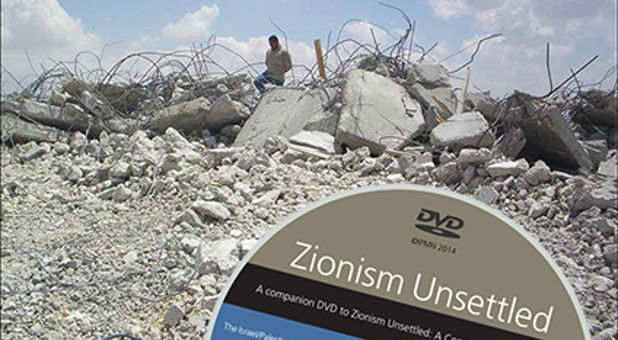
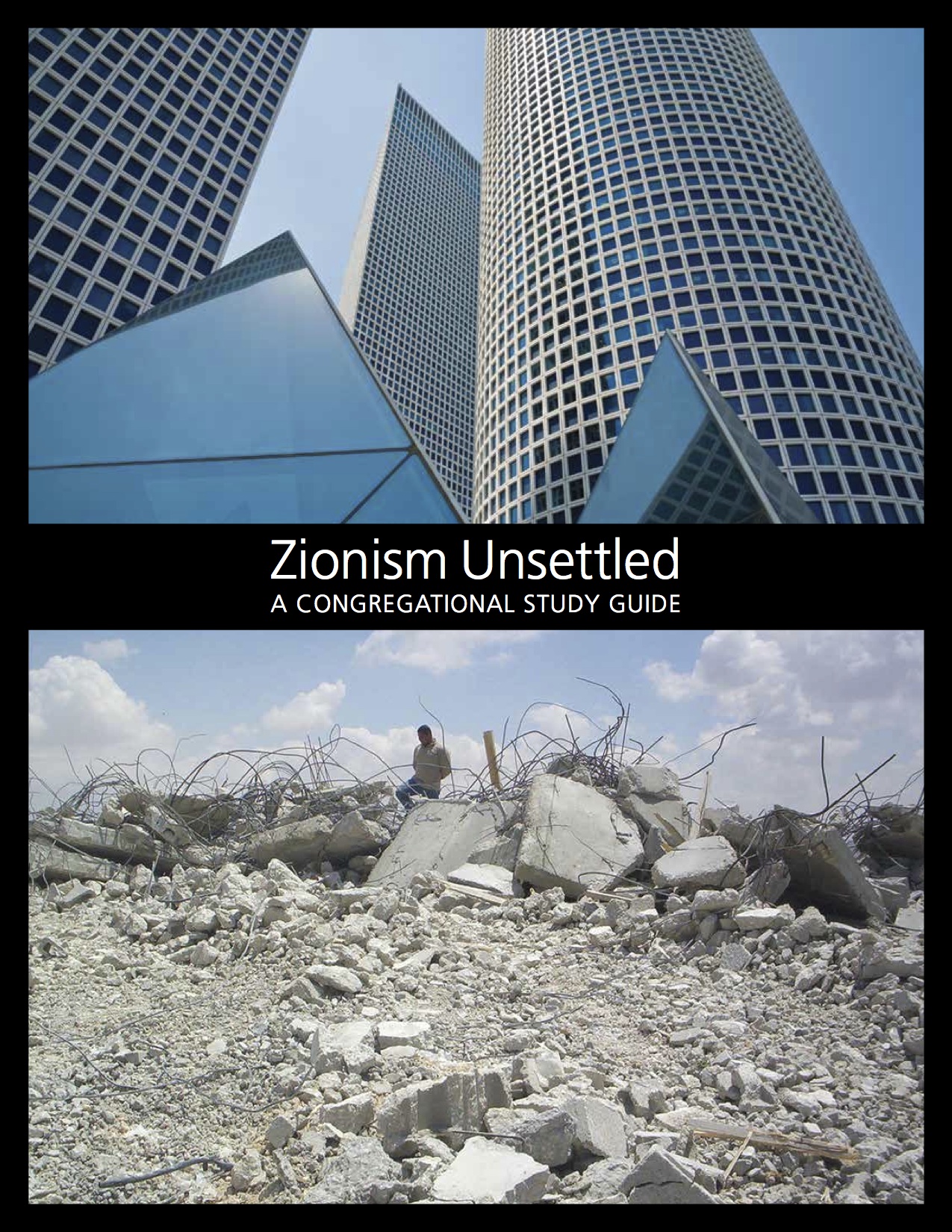
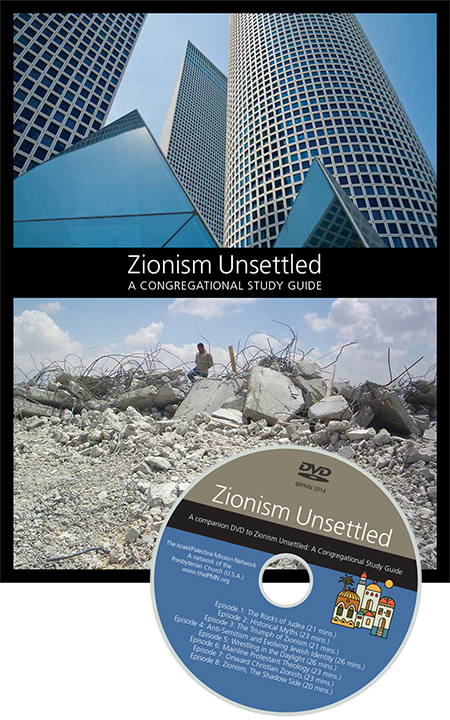
It also has little to do with actual “history” as we know it today. As “Zionism Unsettled” notes, it is extremely problematic to use the Bible as a history book to lay claim to particular piece of land. In the first place, the Bible is a profoundly ahistorical document, as we have long since learned from literary scholars and archaeologists. Moreover, the Bible was certainly never intended to be “history” according to our current understanding of the term. The authors of the Bible did not purport to create a literal history of the events of their day – rather, it is a religiously inspired narrative that reflects ideas and values unique to the world of the ancient Near East.
This is more than just an academic point. As “Zionism Unsettled” points out, the use of the Bible as a historical justification for a modern nationalist movement is not merely historically problematic – it has had tragic consequences for the inhabitants of historic Palestine, particularly when you consider Biblical passages that express entitlement to the land, a religious intolerance of the “foreign nations of Canaan” and commandments that require nothing short of their total dispossession – and in some cases, even annihilation.
So in one sense we are in complete agreement when you write “even the more secular strains of Zionism that became predominant in the 19th century were suffused with Biblical imagery.” Perhaps we only disagree on the dark outcome of this phenomenon. We should not be unmindful of the ways that the Biblical land traditions were used by early Zionist ideologues and the political founders of the state – and are currently wielded by Israeli politicians, settler leaders and ultra-religious rabbis alike. This use of Biblical imagery must not be dismissed as mere religious rhetoric – these theological linkages have enormous power, particularly when we consider the expulsion of Palestinians from their homes in 1947-48 and policies of displacement and transfer that continue to this very day.
You go on to ask:
Do you want to uncouple Zionism from Judaism altogether, or do you want to critique its more militant and “colonial” manifestations? Can all expressions and forms of Zionism be accurately placed into an ideological lump and legitimately condemned as a movement that leads “inexorably” to the displacement and mistreatment of the Palestinians, as the IPMN guide indicates? Do you think that Jews do not belong or have a legitimate claim to the land of Israel?
It is true that there are many different forms of Zionism – a fact that is extensively explored in “Zionism Unplugged” (see Chapter 2). I would argue, however, that since the establishment of the state of Israel, the existence of these various “Zionisms” has largely become an academic point. In a very real way, the birth of Israel represents the ultimate victory of the values of political Zionism that were promoted by the founders of the state.
As someone who identified as a Zionist for most of his adult life, it is with no small measure of sadness that I acknowledge the ways political Zionism has “inexorably led to the displacement and mistreatment of the Palestinians.” Perhaps most critically, I have come to painfully reckon with the ethnic nationalism at the core of political Zionism’s raison d’etre – and its insistence upon the maintenance of a demographic Jewish majority in the land to safeguard the “Jewish character of the state.” In the end, no matter how vociferously Israel might insist that it is, in fact, “Jewish and democratic,” I do not believe it is ultimately possible to establish a demographically Jewish state without regarding the presence of non-Jews to be a problem.
In this regard, I do believe that “Zionism Unsettled” bravely shines a light on the tragic legacy of the Zionist idea, a concept that ultimately resulted in the forced depopulation of Palestinians from their homes in 1947/48 (a phenomenon by now well attested to by Israeli historians) as well as the policies of dispossession that continue to be enacted by the Israeli government even today. These events and policies do not exist in a vacuum – they are the logical end-product of a very specific nationalist ideology that privileges the rights of one particular group over another.
You ask me if I believe Jews “do not belong” or “have a legitimate claim to the land of Israel.” Of course I believe that Jews have every right to live in the land. I’m not sure, however, what you mean by a “legitimate claim.” If you mean can we Jews rightly maintain a religious connection to the land, then my answer is certainly yes. If you mean do we have some kind of intrinsic right to exert our political sovereignty over this land, then my answer is most certainly no. When it comes to nation-statism, it has historically been the case that “might makes right.” The real question, it seems to me, is not “who has the right to this land?” but rather “how can we extend full rights to all who live on this land?”
You write that you “have yet to see efforts to undo the establishment of the State of Israel produce constructive results.” I’m struck that you equate an insistence upon equal rights for all to be tantamount to Israel’s “undoing.” But when it comes to a choice between a Jewish and democratic state, as increasingly seems likely, what should be our choice? My community is fast approaching a reckoning: which kind of state will ultimately be more “Jewish,” one that unabashedly places Jewish rights above Palestinian rights or one that allows full and equal rights for all?
I also find your statement about “Israel’s undoing” to be more than a little incendiary. By projecting nefarious designs onto an entire movement, this kind of rhetoric only exploits the deepest and darkest of Jewish fears. I will tell you that I have been participated in the Palestinian solidarity movement for some years now and have yet to encounter the kind of anti-Semitic anti-Zionists you speak of. Are there anti-Semites in this movement? Undoubtedly. There are odious types on the margins of every political movement. But I can say without hesitation that the Palestinians and pro-Palestinian activists I have met and worked with have nothing but the deepest respect for Jews and Judaism at large and consistently endeavor, as I do, to draw a scrupulous differentiation between Zionism and Judaism.
I don’t disagree with you that “the quest for home is deeply woven into the tissue of our humanity” and that this concept is deeply woven into the fabric of Jewish collective consciousness. But I must disagree with you strongly when you insist that “the search for homeland aim(s) at sovereignty.” To me, this is an astonishingly narrow and reductionist reading of the notions of home and homeland.
You write that “a national identity is difficult to construct and preserve without the power and freedom that is exercised by the state.” But in fact, that is precisely what the Jewish people have done for centuries. Judaism as we know it was born in the wake of the destruction of the Second Temple, as a profound and spiritually courageous response to the reality of dispersion and exile. As such, Jewish tradition is replete with teachings that respond to this trauma with a message of spiritual hope and renewal.
In one of my favorite rabbinic midrashim, for instance, Rabbi Akiba teaches, “Wherever the people of Israel were exiled, the Divine Presence was exiled with them.” In other words, Judaism arose to assert that despite the experience of exile, the Jewish people would always be “home.” God was no longer geographically specific to one particular land – spiritual meaning and fulfillment could be found throughout the diaspora wherever the Jewish people might live. (The midrash ends, notably, on a messianic note: “And when they return in the future, the Divine Presence will return with them.”)
In so doing, the rabbinic Judaism transformed a land-based cultic practice to a global religion, enabling Jewish life to flourish and grow widely throughout the Diaspora. This, I believe represents the intrinsic beauty and genius of the Jewish conception of peoplehood: in a time of profound upheaval and crisis we spiritualized the concept of homeland and redefined ourselves as a globally based, multi-ethnic, multi-cultural nation that viewed the entire world as its “home.” The concept of exile became, in a sense, a spiritual prism through which we viewed the world and our place in it. It might well be claimed that centuries of Jewish religious creativity resulted from this profound existential mindset.
As a Jew I do not need you to tell me that this conception of Judaism is somehow “exceptionalist” because it “refuses the rights and conditions that every other nation claims for itself.” With all due respect, it is not for you to take it upon yourself to define my Jewish rights and claims, particularly when it runs counter to centuries of Jewish tradition and experience. I understand that you have chosen to adopt the Zionist narrative of my history and that is certainly your right. But you do not have the right to preach to a Jew that his understanding of “homeland” must ipso facto be expressed through sovereign statehood.
Moreover, there are numerous stateless peoples throughout the world. Would you go on to suggest that they too have the intrinsic right to “the opportunities and burdens of an independent state?” If so, where does this right come from and how might it possibly be implemented? If not, then why are you granting this unique right to the Jewish people? Quite frankly, I find your conflation of the concepts of “homeland” and “nation-state” to be hopelessly confused, creating a myriad more problems than it purports to solve.
On the concept of exceptionalism, you write:
I have yet to encounter a nation or religion that does not fuse religion and politics – and overtly or implicitly make a claim to being exceptional. The challenge is how to identify and respond when the mixture turns toxic.
Like the authors of “Zionism Unsettled” I would go much farther than this. I believe that challenge is to identify and respond to those aspects of our respective religious traditions that assume our superiority over others – and to thoroughly disavow them.
It is all well and good to “support and sustain our nations, our religious communities, and families with financial and psychological investments that give them priority.” I’m even willing to admit that it is natural for a person or group to feel “chosen” in a way that doesn’t automatically denote superiority. The problem occurs, as ZU rightly points out, when exceptionalism “exempts the chosen from the need to conform to normal rules, laws, or general principles that we use to hold other people accountable.” (p. 8)
As the study guide notes, religious exceptionalism has historically been at its most dangerous when it is wedded to state power. In illuminating this point, ZU actually devotes a significant amount of analysis to post-Constantinian Christianity and its legacy of anti-Semitism over the centuries. In so doing, it identifies the ultimate problem as the merging of religion and empire – not Zionism per se. You misrepresent the guide egregiously when you accuse it of treating Zionism as “an exceptional and inherently evil manifestation of nationalism.” In fact, “Zionism Unsettled” repeatedly places political Zionism within the larger context of religious and national exceptionalism – a phenomenon that has historically proven to be, to paraphrase your words, a uniquely toxic mixture.
Finally, you bemoan the lack of a more “comprehensive and balanced account” in “Zionism Unsettled.” I would suggest that this lack of balance does not originate in the guide but rather the Israel-Palestine conflict itself. To be sure, this conflict does not and has never constituted a level playing field. Rather, it has pitted one of the most militarized nations in the world – one that enjoys the near unconditional support of the world’s largest superpower – against a people it has dispossessed from its land; a people whose yearning for home now reflects, as you so eloquently put it, “a quest…that is woven into the very tissue of (its) humanity.”
I do believe this is the most critical place where you and I part company. You express your religious faith through your work in the world of interfaith dialogue – an arena that assumes balance and equity on two equal “sides.” I view my faith as refracted through my work as an activist who stands in solidarity with a people that is seeking its liberation. As such I do not view this conflict in any way as a balanced equation. On the contrary, I seek to re-right what I believe to be an inherently unbalanced situation.
I realize full well that by saying such things I leave myself open to further accusations of “polemical excess that does not do justice to what needs to be said.” So be it. I would only ask you to consider that rhetoric has a fundamentally different function in the world of dialogue than in the arena of political transformation. I understand that in your world, words are typically wielded in the furtherance of creating “more light than heat.” But when there is very real oppression occurring, as I truly believe is the case here, it is not at all inappropriate to turn up the heat, no matter how upsetting it may be for Israel and its advocates.
I do not know if you have ever visited Palestinians in the West Bank or Gaza and have witnessed first hand the deeply oppressive reality of their daily existence. If you haven’t, I encourage you to do so. I encourage you to talk to Palestinians who live in villages whose livelihood has been choked off by a wall that separates them from their agricultural lands in order to make way for the growth of Jewish settlements. I encourage you to meet with Palestinians whose weekly nonviolent demonstrations against the wall are met regularly with brutal force by the Israeli military. Speak to Palestinians mothers and fathers whose children have been abducted in the middle of the night by the IDF and subjected to interrogation in Israeli prisons. Get to know Palestinians who have had their residency rights revoked and/or their homes demolished so that Jewish demographic facts can be created on the ground. Talk with Palestinians in Gaza who are being collectively punished by a crushing blockade and subjected to life inside what has essentially become one of the largest open air prisons in the world.
I believe if you take the time to do so you will invariably come to find that these men and women represent spiritual teachers just as compelling as the American Jews and Christians which whom you regularly engage in dialogue. At the very least, I hope they might somehow challenge your views on “what needs to be said” about this conflict.
While you may well consider the above to be just another example of my “polemical excess,” I would only say that my convictions come from a faithful place – and from a religious tradition that exhorts me to stand with the oppressed and call out the oppressor. I also believe these same religious convictions inform the very heart of “Zionism Unplugged” and whatever its specific flaws, I find it to be an enormously important and courageous resource. You claim that the “vast majority of Presbyterians will not align themselves with a project that aims to disassemble the State of Israel.” Of course the guide does nothing of the kind. It does, however, call for the dissembling of an inequitable system that privileges one group over another and replacing it with one that guarantees full rights for all. For this it makes no apology, nor should it.
You certainly know the Presbyterian community better than I, but I will say that I have met and spoken with many Presbyterians – and members of other Protestant denominations – who have expressed gratitude for this new guide and are eager to use it in their churches. As with my own faith community, I do sense that we are currently in the midst of a paradigm shift on the issue of Zionism and I am not anywhere near as certain as you that the “vast majority” of Christians or Jews are so ready as you to denounce such ideas as abject anti-Semitism.
Again, thank you for taking the time to respond to my open letter. I agree with you that there is much more to be discussed. Whether or not we engage in further exploration together, I hope and trust that our conversation might still be helpful to those who have read our exchange.
 Shalom Rav