Last Shabbat the Jewish community received the devastating news that Beth Israel, the oldest synagogue in Jackson, Mississippi, was attacked by an arsonist. The fire caused extensive damage to the library and sanctuary, destroying two Torah scrolls and damaging five more. Thankfully, though the synagogue building was extensively burned, no one, other than the arsonist himself, was harmed.
The accused perpetrator, Stephen Pittman, a 19 year-old local man, was turned into the police by his father, who reported that his son texted him in real time while he was committing the crime. He later returned home with burns on his body and told his father “I finally got them.” According to reports, Pittman described Beth Israel as a “synagogue of Satan” to police investigators. When a judge read him his rights, he responded, “Jesus Christ is Lord.”
I can’t begin to imagine how I would feel if my synagogue was targeted on Shabbat with violence and religious desecration. The trauma is compounded by the reality of the current moment – a moment in which violent attacks on Jews, such the shooting attack at a Hanukkah party in Australia just last month, are one the rise. I’m sure I’m not the only one who feels as if our community is experiencing a state of permanent hypervigilance, dreading the inevitable next report of terrible, tragic news.
Even as we experience this trauma, however, I believe it’s critical to contextualize these incidents within a larger perspective. It’s important to understand that violent attacks on Jews are not exceptional or unique, but occurring within a larger rise in xenophobic violence around the world targeting vulnerable groups: Muslims, immigrants, people of color, LGBT people, among others. We know that in times of political and economic instability, this kind of scapegoating violence will inevitably rise. In other words, even as the Jewish community might feel isolated within our trauma, we must understand the ways that this is a collective, shared trauma. And that the antidote to isolation is a deeper solidarity with one another.
I would also suggest that beyond the trauma – or perhaps because of it – we must find the wherewithal to respond with clarity and understanding. In particular, we must firmly reject the weaponization of antisemitic incidents for political purposes. To put a finer point on it, for far too long Jewish communal leaders and organizations have been cynically exploiting these tragedies in order to dehumanize Palestinians. When Jewish trauma is weaponized in this way, it only serves to magnify the overwhelming trauma already being inflicted daily on one of the most vulnerable and targeted people in the world.
The cynicism of this tactic has become perversely transparent. Following this latest incident, for instance, scholar Deborah Lipstadt (and former White House “antisemitism czar”) wrote on X: “This is a major tragedy. But it’s more than that. It’s an arson attack and another step in the globalization of the intifada.” Lipstadt is not the only public Jewish figure to exploit this antisemitic incident to foment anti-Palestinian hatred and Islamophobia, even though the arsonist was clearly motivated by Christian antisemitic ideology.
Similarly, Israeli Prime Minister Netanyahu responded to the tragedy of the Bondi Beach massacre by incongruously blaming the incident on Australia’s recognition of a Palestinian state. In fact, the shooters were not Palestinian and had nothing to do with Palestinians. They were reportedly followers of ISIS – an extremist Muslim group that is rejected by the overwhelming majority of and Muslims worldwide, viewing it as a violent, heretical perversion of Islam that targets Muslims and non-Muslims alike.
In addition to seeking clarity, I’ve also found it useful to seek historical perspective. As I’ve read the reports about the arson in Jackson, Mississippi, I learned that this was not, in fact, the first time that Beth Israel was targeted with antisemitic hate. In September 1967, the synagogue was bombed by local Ku Klux Klan members because its then rabbi, Perry Nussbaum, was an outspoken civil rights activist. Two months later, Rabbi Nussbaum’s own house was firebombed by the KKK.
Following that attack, a leading Southern Baptist minister came to Rabbi Nussbaum’s home to express his sympathy. Nussbaum told him to spare his regrets. “If you really want to show your sympathies,” he said to the minister, “then tear up whatever you’re preparing for your sermon next Sunday morning and speak to the people in the front pews about their culpability in everything that’s happened not just to me . . . but to the blacks and their churches over the years.”
How do we respond when our community is increasingly under attack? Let’s take our cue from Rabbi Nussbaum. Let us respond with courage, moral clarity and solidarity.
Protesters outside an ICE processing facility, Broadview Chicago. (Credit: Vincent D. Johnson/Block Club Chicago)
I’ll be honest with you: I never liked High Holiday services when I was a kid.
There were so many things that just rubbed me the wrong way: they felt interminably long, the old school Reform choir music wasn’t my thing, and my parents would constantly shush me and my brothers when we got squirrelly (which was often). But most of all, I resented the seeming irrelevance of it all. I just couldn’t relate to the content of the services – and there was never any effort to explain why it should be relevant to me.
On Rosh Hashanah in particular, I just couldn’t relate to the constant stream of prayers singing God’s praises, extolling God’s greatness and invoking God’s power. It all seemed designed to make us feel small and insignificant: this repeated glorification of an all-powerful God to whom we must beg and plead for another year of life.
I realize now that I was a pretty astute kid. “Malchuyot,” which literally means “sovereignty,” is one of the central themes of Rosh Hashanah. Every new year we declare over and over that God is our supreme ruler. This theme is repeated throughout the liturgy, particularly during the Musaf service, when it is traditional to physically prostrate oneself on the floor before the divine throne during the Aleinu prayer.
Over the years, however, as I began to attend services on my own terms rather than under duress, I came to appreciate Rosh Hashanah, yes, even the idea of Malchuyot. In fact, the older I get, the more relevant and important this concept feels to me. On a personal level, I understand to be a Malchuyot is a reminder that we often labor under illusions of our own power and control. We face these illusions head on during Rosh Hashanah when we do the work of teshuvah: the sacred process of return and repentance.
Of course, we are not all powerful. But ironically, acknowledging the limits of our power can actually be liberating. By affirming a transcendent source of power greater than our own, we can better focus and identify the things we can control in our lives. When we invoke God’s Malchuyot on Rosh Hashanah, we do so in the spirit of this liberation, to break free of our illusions of power and put ourselves on a more productive, healing path during the Days of Awe.
Beyond the personal, I’d suggest Malchuyot has a collective and political dimension as well. It’s deeply rooted in Judaism’s central sacred narrative, the Exodus story. I actually made this very point during my very first sermon for Tzedek Chicago on Rosh Hashanah ten years ago:
At its core, I would suggest affirming Malchuyot means affirming that there is a Force Yet Greater: greater than Pharoah in Egypt, greater than the mighty Roman empire, greater than the myriad of powerful empires that have oppressed so many peoples throughout the world.
I would argue that this sacred conviction has been one of the central driving forces of Jewish tradition throughout the centuries: that it is not by might and not by power – but by God’s spirit that our world will ultimately be redeemed. I would further argue that this belief in a Power Yet Greater has sustained Jewish life in a very real way. After all, the Jewish people are still here, even after far mightier empires have come and gone. It might well be said that this allegiance to a Power Yet Greater is the force that keeps alive the hopes of all peoples who have lived with the reality of dislocation and state oppression.
I went on to suggest that through Zionism, the Jewish people have tragically betrayed this sacred Jewish narrative of liberation. When you think about it, the raison d’etre of Zionism literally is human sovereignty. It is an ideology that unabashedly deifies state power as a redemptive force in Jewish life and overturns centuries of Jewish tradition. It has subverted the sacred ideal of Malchuyot by centering and sacralizing human power above all else.
When I delivered that first Rosh Hashanah sermon, however, I never could have predicted where Zionism’s bargain with state power would lead us. In the misguided name of Jewish safety and supremacy, Israel has doubled down on its assumption of human Malchuyot to an unbearable degree. As we gather for Rosh Hashanah this year, Israel has been perpetrating an almost two-year genocide against the Palestinian people. Nearly 70,000 Palestinians have been killed, with real numbers likely to reach the hundreds of thousands. Whole families have been killed and entire bloodlines erased. Untold numbers of people have been buried under rubble, burned alive, dismembered and starved to death. At this very moment, Israel is literally bombing the entire north of Gaza off the map, trapping scores of residents who cannot leave their homes and sending scores of others to the south into active war zones.
And yet of course. Of course it has come to this. From the very beginning, the goal of establishing a Jewish-majority nation state could only be realized by dispossessing another people – what the Palestinian people refer to as the Nakba. Israel’s genocide against the Palestinians did not begin on October 7; it has been ongoing for over 70 years. There is a direct line leading from Zionism’s idolatrous attachment to Malchuyot to the crimes we are witnessing daily in Gaza.
This idolatrous attachment, of course, is not unique to Zionism. Looking back, I realize that Tzedek Chicago’s first Rosh Hashanah service took place shortly after Trump announced his first Presidential campaign. It’s also fair to say when I gave that first sermon, I never would have dreamed that just ten years later, the US would be rapidly descending into authoritarian fascist rule. That ICE would serve as our President’s secret police force, prowling the streets in plain clothes and face masks, abducting immigrants and student activists in unmarked vans. That thousands of National Guard troops would be mobilized to occupy American cities. That so many of our nation’s institutions would be defunded, plundered and centralized by unelected oligarchs. That our government would openly declare whole groups of people, including immigrants, trans people, people of color and unhoused people to be literal “enemies of the state.”
In the wake of Charlie Kirk’s murder, the incitement against these imagined enemies has reached a terrifying fever pitch. Trump and the movement he spawned are now seizing this moment to foment fury against a broad array of individuals and institutions they call the “radical left.” Trump’s aide Stephen Miller has chillingly characterized the current moment in America as a battle between “family and nature” and those who celebrate “everything that is warped, twisted and depraved.”
Words such as these should not sound new to us; the Trump regime is using a time-honored tactic from the fascist playbook. We know that totalitarian regimes have historically consolidated their power during times of instability by fomenting a toxic “us vs. them” narrative. Hannah Arendt identified this mentality very clearly seventy-five years ago in her book The Origins of Totalitarianism: “Tribal nationalism always insists that its own people are surrounded by a ‘world of enemies’ – one against all – and that a fundamental difference exists between this people and all others.”
Although the context of 21st century fascism is different in many ways from fascisms of the past, the fundamental building blocks of this phenomenon remain the same. In the parlance of Rosh Hashanah, the fascists of today are claiming Malchuyot – ultimate power – for themselves. And they are consolidating their power by demonizing those who do not fit into their idealized, privileged group as enemies who must be fought and eradicated at all costs.
However, as overwhelming as the current political moment might feel, there is a textbook for resisting fascism as well. The essential rules for fighting fascism remain the same as they ever were. And the first order of business is: do not collaborate.
This may seem obvious, but given the hard truth of the moment, I don’t think it can be repeated enough. It has been truly breathtaking to witness how quickly ostensibly independent non-governmental institutions have capitulated to Trump’s bullying and blackmail: from universities firing professors and defunding whole programs to businesses eradicating their DEI programs; from corporate media outlets becoming state mouthpieces, to law firms allocating hundreds of millions of dollars in legal services to defend the federal government.
Has the liberal establishment been up to the challenge of this moment? Just consider its response to the murder of Charlie Kirk. Let’s be clear: Kirk was an unabashed white Christian Nationalist who incited young people on college campuses to hatred under the cynical pretense of “open dialogue.” Even so – and even as the MAGA movement is dangerously exploiting this moment – liberal leaders and institutions have been normalizing Kirk by openly praising him as a paragon of free speech and good faith debate.
After he was killed, CA Governor Gavin Newsom eulogized Kirk by saying: “The best way to honor Charlie’s memory is to continue his work: engage with each other, across ideology, through spirited discourse. In a democracy, ideas are tested through words and good-faith debate.” Similarly, following Kirk’s murder, the Dean of Harvard College, David J. Deming publicly vowed to protect conservative students on campus, adding that Kirk’s enthusiasm for publicly debating his opponents could be a model for Harvard’s own civil discourse initiatives. And for his part, liberal New York Times columnist Ezra Klein wrote an op-ed entitled “Charlie Kirk Practiced Politics the Right Way.”
It’s not clear if these apologists honestly believe what they are saying or if they’re just trying to avoid the government’s takedown of anyone who has anything remotely critical to say about Charlie Kirk. But in the end, it really doesn’t matter. The bottom line: liberal normalization will not appease fascists.
To put it frankly, the government has declared war on us – and we must respond accordingly. The days of partisan cooperation and dialogue are over. The days of good faith debate and civic compromise are over. Capitulating to demagoguery and hatred will not convert the MAGA movement to the values of democracy and civil discourse. Yes, in a healthy democratic society, the concept of “collaboration” is something to be valued. But in a fascist regime, the term “collaborator” has a different meaning entirely.
The first step in resisting collaboration is to accept that none of this is normal. We must let go of old assumptions, many of which, frankly, have led us to this moment. If we are to be totally honest, it must be said that the Democrats and the liberal establishment have been collaborating with corporate interests along with Republicans for years. As we interrogate the abnormality of this moment, we must admit that the entire system has been disenfranchising whole groups of people in this country for far too long.
Resisting fascism also means letting go of our ultimate faith in the “rule of law.” Indeed, both the left and the right tend to fetishize the rule of law as an absolute good. And while it’s true that the law can be a tool to ensure a more just society, it can just as often be used as a blunt instrument to dismantle democracy.
We know from history that governments routinely create laws that are inherently unjust. Slavery was legal in the US for almost 250 years. Apartheid in South Africa was legal. Apartheid continues to be legal in Palestine/Israel. In the face of such legal injustice, the obvious moral and strategic response is not to follow but to break the rule of law. As Dr. Martin Luther King famously wrote in his “Letter from a Birmingham Jail:”
We should never forget that everything Adolf Hitler did in Germany was “legal” and everything the Hungarian freedom fighters did in Hungary was “illegal.” It was “illegal” to aid and comfort a Jew in Hitler’s Germany. Even so, I am sure that, had I lived in Germany at the time, I would have aided and comforted my Jewish brothers.
This is, in fact, the radical truth we affirm every Rosh Hashanah. When we affirm Malchuyot, we affirm that there is a moral law yet greater than any law levied by a government or regime. On this Rosh Hashanah in particular, the sound of the shofar calls on us to resist conformity; to vow to become criminals when confronted with laws that are inherently unjust. More than any Rosh Hashanah in our lifetimes, we must be ready to defy the illegitimate laws wielded by the illegitimate rulers who would govern us.
Even if we do accept this challenge, however, the question remains: where does Malchuyot, ultimate Power, reside, if not with governments, politicians or the rule of law? Here, I’d like to quote yet another one of my heroes, the Puerto-Rican Jewish liturgist Aurora Levins Morales:
They told me we cannot wait for governments. There are no peacekeepers boarding planes. There are no leaders who dare to say every life is precious, so it will have to be us.
Yes. God’s power is revealed in our readiness to show up for one another. When we acknowledge Malchuyot on Rosh Hashanah, we affirm that the Divine Presence is manifest whenever we struggle and resist and fight for our communities, for a world where all are liberated and cherished and protected. When there are no leaders who dare to ensure that every life is precious, it will have to be us.
Here are two concrete examples of Malchuyot in action: this last January, shortly after the inauguration, the Trump administration launched a series of raids in Chicago they called “Operation Safeguard” where, over the course of a few days, ICE, the FBI, the ATF and other federal forces coordinated massive raids in neighborhoods throughout the city and suburbs. We don’t know how many were arrested or detained, but we do know that this federal blitzkrieg was deeply frustrated by local organizing. Trump’s so-called “border czar” Tom Homan later complained that immigration organizers in Chicago were “making it very difficult” to arrest and detain people. He said, “They call it Know Your Rights. I call it how to escape from ICE.”
Of course, even as we win these battles, this fierce war continues to escalate. ICE violence continues to rage in the neighborhoods of our cities. In Chicago, ICE has now launched another sweep, this one called “Operation Midway Blitz.” Just last Friday, at an immigrant processing center in the Broadview section of Chicago, federal agents shot tear gas, pepper spray and flash bang grenades into hundreds of demonstrators. Ten protesters were taken into custody by federal agents over the course of the day. Even amidst this escalating violence, however, local organizers here in Chicago continue to hold the line.
Another example: in Washington DC which is still under occupation by National Guard troops, groups of local residents called “night patrols” have been regularly patrolling the streets. According to journalist Dave Zirin, whose reports from the ground have become invaluable:
These night patrols watch over the city to ensure that people are protected from state violence, false arrest, abduction, and harassment. Failing that, their goal is to document the constitutional violations or brutality they witness, so people can see the truths about the occupation that a compliant, largely incurious media are not showing.
Critically, these neighborhood patrols are being led and stewarded by members of impacted groups: As one night patroller put it: “a lot of young people, a lot of people of color, queer and trans folks, people who have been directly impacted by policing, and folks with street medic backgrounds. It skews toward people who already know what it’s like to be criminalized.”
Though it isn’t being highlighted by the corporate mainstream media, this local organizing is happening in communities all over the country: in Los Angeles, where there are also still hundreds of National Guard troops, as well as New Orleans, Memphis, Baltimore and other cities that the Trump administration is directly threatening with military invasion. I know that many Tzedek Chicago members have long been active in these organizing efforts, here in Chicago, around the US and even around the world. But again, we can have no illusions over what we are up against.
I know that the magnitude of these events often leads us to a state of overwhelm and despair. We doom-scroll through the news every day, we read about Trump’s newest executive order, the latest regressive Supreme Court ruling or some other heinous event and the ferocity of this onslaught can literally leave us breathless. This is, of course, yet another page from the authoritarian textbook: to neutralize the population through a calculated strategy of shock and awe. They want us to feel that all is lost, to give in to our despair that their power over us is all but inevitable.
Our experience of shock and overwhelm is compounded all the more by an all-pervasive sense of grief. So much of what we have fought for has been lost. So many of the institutions we assumed would be eternally with us are being plundered and dismantled. Some of these losses may be permanent, some may not, but the harms they are causing are very, very real.
I feel this grief myself, believe me, I do. But I also know that if we surrender to it, then their victory over us will become self-fulfilling. The way through the fear and the grief, I trulybelieve, is to never forget that we have power, that our words and actions matter and that nothing is ever inevitable unless we let it be so.
Whenever we feel overwhelmed, I think the critical first step is to reclaim our equilibrium by asking ourselves, what matters most to me? What are the issues that are nearest to my heart? Most of us have the capacity to devote our time and energy to one or two causes at most. What are the most effective organizations fighting for this cause? Who are the people in my life that can connect me with the people doing this work? If I don’t have the capacity or physical ability to engage actively in these kinds of responses, what are other meaningful ways I can show up?
Amidst all this loss, we must never forget: even if our victory is not guaranteed, there are still things in this world worth fighting for. Generations of resisters have understood this axiom well: “If I’m going to go down, I’m sure as hell going to go down swinging.” In the words of my friend and comrade, Chicago organizer Kelly Hayes, who I’ve quoted in more than one High Holiday sermon over the years:
I would prefer to win, but struggle is about much more than winning. It always has been. And there is nothing revolutionary about fatalism. I suppose the question is, are you antifascist? Are you a revolutionary? Are you a defender of decency and life on Earth? Because no one who is any of those things has ever had the odds on their side. But you know what we do have? A meaningful existence on the edge of oblivion. And if the end really is only a few decades away, and no human intervention can stop it, then who do you want to be at the end of the world? And what will you say to the people you love, when time runs out? If it comes to that, I plan on being able to tell them I did everything I could, but I’m not resigning myself to anything and neither should you. Adapt, prepare, and take the damage done seriously, but never stop fighting. Václav Havel once said that “Hope is not the conviction that something will turn out well, but the certainty that something is worth doing no matter how it turns out.” I live in that certainty every day. Because while these death-making systems exist both outside and inside of us, so do our dreams, so long as we are fighting for them. And my dreams are worth fighting for. I bet yours are too.
This New Year, I realize I’ve come a long way from that beleaguered kid who felt disempowered on the High Holidays to a rabbi telling you Rosh Hashanah is our clarion call to fight facism. But here I am. And here we are. May this new year inspire us all with the knowledge that true sovereignty, true Malchuyot, lives at the heart of the struggle.
On this, my final Rosh Hashanah with this amazing community, this is what I am feeling to my very bones at this moment: that while Pharaohs may rise, they will inevitably fall, that beyond the horizon of Olam Hazeh, this terribly broken world, there lies Olam Haba: the world we know is possible. And no matter what may happen this new year – and every new year to come – that world is always worth fighting for.
Yesterday I received a DM that read: “Evil, kapo, judenrat, self hating Jew.” (If you don’t know the meaning of some of those words, let’s just say that two of them are historical terms for Jews who collaborated with the Nazis during WW II.) As this kind of thing isn’t an uncommon occurrence for me, it wasn’t particularly upsetting. I’ve been receiving these kinds of messages for over a decade now, to the point that it’s become a kind of background noise – as I’m sure it is for any Jewish activist who dares to publicly affirm the humanity of the Palestinian people.
This time, however, I received the message as I was reading news of the heinous abduction and disappearing of Columbia grad student Mahmoud Khalil – and it caused me to pause and think: given the message, who are the real Jewish collaborators at this particular moment?
As has been widely reported, Khalil (a prominent leader of the student Palestine solidarity protests at Columbia) was walking home with his wife last Saturday when they were approached plain-clothed agents from the Department of Homeland Security who informed them that the government was revoking Khalil’s student visa. When they showed them his Green Card, which made him a legal US resident, an agent made a phone call and told them they had now revoked his Green Card. When they protested, the agents threatened to abduct Khalil’s wife, who is 8 months pregnant. Then they put Khalil in a car and drove him away.
For the next several hours, Khalil’s loved ones had no idea where he was. His lawyers immediately filed a writ of habeus corpus in a New York City court; they later learned that the authorities transported Khalil to an infamous ICE detention center in Louisiana, where he will almost certainly be subjected to a more government-friendly immigration court. In the meantime, a federal judge in Manhattan has ordered the government not to remove Khalil from the US while the judge reviews his lawyer’s petition challenging his abduction and detention.
There is so much that is so deeply chilling about this story it’s difficult to know where to start. For me, however, one of the most disturbing aspects was the report that Khalil had sent multiple emails appealing to Columbia’s interim president Katrina Armstrong for protection from harassment, doxxing and the threat of ICE agents. He sent his final email to Armstrong on March 7 one day before he was abducted and disappeared:
Since yesterday, I have been subjected to a vicious, coordinated, and dehumanizing doxxing campaign led by Columbia affiliates Shai Davidai and David Lederer who, among others, have labeled me a security threat and called for my deportation.
Their attacks have incited a wave of hate, including calls for my deportation and death threats. I have outlined the wider context below, yet Columbia has not provided any meaningful support or resources in response to this escalating threat.
I haven’t been able to sleep, fearing that ICE or a dangerous individual might come to my home. I urgently need legal support, and I urge you to intervene and provide the necessary protections to prevent further harm.
Khalil’s emails, of course highlight the very real likelihood that Columbia actively collaborated with ICE and DHS, thereby compromising the physical safety and security of their own student. They also illuminate the active role of Jewish Zionist activists in the events leading to Khalil’s abduction and disappearance. Shai Davidai is an Israeli assistant professor of business at Columbia Business School who has a documented history of harassing students and school employees. David Lederer is a junior in Columbia’s School of Engineering and Applied Sciences and the co-chair of Aryeh, a self-described “student-led organization that aims to provide opportunities to engage with Israel and Zionism.”
It should not come as a surprise that Zionist activists and organizations played a part in Khalil’s abduction. Last December, it was reported that the US chapter of Betar, a worldwide Zionist youth organization (originally founded by Revisionist Zionist leader Vladimir Jabotinsky in 1923) had recently been revived. It’s Executive Director, Ross Glick, made it clear that targeting college students would be its first order of business. Most ominously, Glick revealed that Betar US “had amassed a large repository of video footage from college protests over the past year” and was employing a team of professionals using facial recognition software and relationship databases to identify foreign students appearing in the videos.
Glick has now been openly bragging about his role in the government’s abduction and disappearance of Mahmoud Khalil. In an interview with the Forward, Glick said that he had met with aides to Senators Ted Cruz and John Fetterman in DC to discuss Khalil during the Columbia encampment protests and that the senators promised to “escalate” the issue. He also said that “some members of Columbia’s board had also reported Khalil to officials.” In the interview, Glick referred to Khalil’s unmasked presence in the protests, commenting “This unfolded very quickly because it was very obvious… This guy was making it too easy for us.”
The Forward article also reported that David Lederer, circulated photos of a pamphlet labeled as coming from the “Hamas Media Office,” suggesting it was distributed at the protest. Lederer also claimed Khalil was “known to have been on a foreign visa last year.” Clearly, the government was aided and abetted by well-known Jewish Zionist activists who made no secret of their intentions to work with authorities to target Palestinians and pro-Palestine student activists who protested Israel’s genocidal violence against the Palestinian people in Gaza last spring.
The government abduction and disappearance of legal residents who exercise their right to free speech is, of course, a basic staple of fascist regimes. What can we say about Jewish activists and organizations that collaborate with such a government – a regime led by a president that actively emboldens antisemitic hate groups and has given significant power to a billionaire who promotes antisemitic theories and publicly sig heils at rallies? While I won’t use the vile terms that extremist right-wing Jews sling against Jewish activists who dare to express their solidarity with Palestinians, I do believe it’s important to name them what they truly are: collaborationists.
It’s important to note that this most recent Jewish collaboration with rising fascism is not limited to small extremist actors such as Betar US. The Anti-Defamation League itself responded to Khalil’s abduction with this statement on X: “We appreciate the Trump Administration’s broad, bold set of efforts to counter campus antisemitism — and this action further illustrates that resolve by holding alleged perpetrators responsible for their actions… We also hope that this action serves as a deterrent to others who might consider breaking the law on college campuses or anywhere.”
For its part, the Trump administration celebrated Khalil’s abduction on X with the statement “Shalom Mahmoud” – a cynical and appropriative expression of “solidarity” with the Jewish people. Even more chillingly, the statement went on: “This is the first arrest of many to come. We will find apprehend and deport these terrorist supervisors from our country ‒ never to return again.” By now we should know that Trump should be taken at his word. If Mahmoud Khalil, a legal resident of the US can be disappeared by this government, they will almost certainly continue with any American citizen whom they identify in their growing data base: and not only Palestinian Americans and Muslims.
I’ll make it plain: collaborationist Jews will not help make Jews safer. In the end, Glick, Davidi, Lederer and their ilk are extremely useful idiots who are actively working with an antisemitic regime that has zero interest in Jewish safety and security. Even more important, collaborating with fascism will not make anyone safer. It feels somehow ridiculous to have to say these words out loud, but here we are. For the sake of our collective liberation, we must all actively resist and stand down this fascist regime – as well as those who aid and abet it.
It occurs to me that this form of collaboration with illegitimate authority really is a form of idolatry. In this week’s Torah portion, the recently-liberated Israelites, who have just entered into a sacred covenant with God, construct a Golden Calf, bow down to it and exclaim, “This is your god, O Israel, who brought you out of the land of Egypt!” (Exodus 32:4) This narrative is powerfully resonant to the current moment, in which members of the Jewish community are betraying the sacred, liberatory core of Jewish tradition through idolatrous attachment to corrupt state power.
But in the end, this is a fatal form of idolatry: a Faustian bargain. And we know all too well from history where this will lead. Please join me in answering this call from Jewish Voice for Peace to contact our senators and representatives demanding that they do everything in their power to secure Khalil’s release and to protect student activists and immigrants.
In the week’s Torah portion, Parashat Yitro, the Israelites stand at Mt. Sinai and collectively enter into a covenant with God. With a message conveyed through Moses, God says to the people:
“(If) you will obey Me faithfully and keep My covenant, you shall be My treasured possession among all the peoples. Indeed, all the earth is Mine, but you shall be to Me a kingdom of priests and a holy nation.” (Exodus 19:5-6)
Shortly after, the Israelites collectively accept:
…All the people answered as one, saying, “All that God has spoken we will do!” (19:8)
In this mythic moment, the Israelites become a nation unified in a shared, transcendent purpose.
But do they really, though? Most of the Torah’s narrative post-Sinai is less a record of a nation united by a shared purpose than a portrayal of a deeply fractured collection of tribes struggling mightily to live up to the covenant they made with God at Mt. Sinai. This certainly tracks with the evolution of Jewish peoplehood throughout the centuries. Though the organized Jewish community routinely clings to the mythic notion that “We are One,” we have always been a nation of sub-communities: a family divided by a of myriad of assumptions over what it means to be and behave as a Jew, often rancorously.
Of course, in the current moment the Jewish people are experiencing an exceedingly powerful and painful division. As I suggested in my sermon this past Yom Kippur:
Jewish life is going through … a monumental crisis and transformation right now. I’m speaking of course, about the abyss that has opened over the issue of Zionism – an abyss that has widened considerably this past year as a result of Israel’s genocide in Gaza.
This mythology of national unity, however, is not unique to the Jewish people. Those of us raised in the US are all too familiar with such tropes, socialized as we were with the famous line from the Pledge of Allegiance: “One nation, under God, indivisible, with liberty and justice for all.” In truth, however, the US has been a deeply divided nation since the day it was founded. While the preamble of the Constitution reads “We the People,” the “people” it referred to were white, landowning men. The Naturalization Act of 1790 limited access to citizenship to “free white persons.” Later on, the US broke in two after slaveholding states succeeded – and the nation only became “one” again after fighting a bloody civil war. In too many ways, it’s a war that has never really ended.
As we see the rise of nativism and authoritarianism in nations around the world, it’s fair to say that this reckoning over national identity is truly a global phenomenon. Like many, I’ve been watching with alarm the rise of the far right nationalist AfD party in Germany (with the unabashed support of the ubiquitous Elon Musk) as they seek to build a coalition with conservative opposition parties. German Vice Chancellor Robert Habeck has warned ominously that such an alignment would “destroy Europe.”
So where does this leave us? Can we actually affirm these narratives of national unity in good faith? Do they serve us in any way – or do inevitably lead to authoritarianism and genocide?
I personally believe that national mythologies should not be literal oaths to be sworn to, but collective narratives to be interrogated deeply. In the case of the US narrative, we must ask honestly: what is the place of dispossessed indigenous nations in our national narrative? What is the place of descendants of kidnapped Africans who were brought here in chains to build up this nation? What is the place of immigrants who come to these shores seeking a better life – or to escape certain harm in in their home countries? What is the place of LGBTQ+ people, disabled people and members of other historically marginalized groups?
Those who uphold national mythologies must ask honestly, who exactly is the “we” in “We the People?” Because these narratives will only be useful if they lead to actual collective liberation for all. More critically, those of us who are committed to a truly inclusive national vision must prepare for the inevitable, often violent backlash from those who do not share our narrative. Indeed, history has proven all too often that a truly inclusive national vision never comes easily. On the contrary, it must be fought for.
At the end of the Torah, God says to the Israelites:
“I make this covenant and this oath, not with you alone, but both with those who are standing here with us this day before the ETERNAL our God and with those who are not with us here this day.” (Deuteronomy 29:13-14)
This Shabbat Yitro, as we stand once more at Sinai, let us ask ourselves: “Who are not with us on this day?” Why are they not here? What are we willing to sacrifice to ensure that they will be included in the covenant as well?”
In this week’s Torah portion, Parashat Va’era, God’s tells Moses to return to Mitzrayim and say to the Israelites:
“I am יהוה. I will free you from the labors of the Egyptians and deliver you from their bondage. I will redeem you with an outstretched arm and through extraordinary chastisements.” (Exodus 6:6)
But when Moses attempts to impart this message of liberation to the people, they weren’t able to hear it as “their spirits were crushed (kotzer ruach) by cruel bondage.” (6:9)
This one verse says so much about the trauma of personal and systemic abuse. The Hebrew word ruach means both “spirit” and “breath/wind.” On one level this could mean that their oppression was so severe that individual Israelites could barely breathe. On a deeper level, it might indicate that their collective spirit was so damaged they couldn’t even begin to comprehend the possibility of liberation.
The dual meaning of the word ruach in Jewish tradition suggests that the divine spirit is embodied by our very breath: the life force that we share with God and all that lives. In the first chapter of Genesis, we read that the process of creation began when the ruach elohim (“God’s breath”) rippled across the primordial waters. Humanity itself came to life when God breathed into the first human. In Jewish liturgy, we awaken every morning expressing gratitude for “the breath of every living thing and the spirit of all flesh.”
I believe there are powerful spiritual/political implications embedded in this theological concept. It suggests that when human beings – or humanly-created systems of oppression – deprive people of their ability to breathe freely, the flow of divine life force in the world is disrupted. Moreover, the demand to be able to breathe is itself a clarion call to action. We need look no farther than the phrase “I can’t breathe,” the final words of George Floyd and Eric Garner, whose deaths at the hands of systemic racism provided a powerful spark for the Black Lives Matter movement. Nigerian writer/poet Ben Okri has suggested that these three words “should become the mantra of oppression,” from the racist systems in our communities to the life-choking forces of global climate change.
In this regard, we might view the Jewish practice of giving thanks for our breath every morning as much more than a simple prayer discipline: it is nothing less than a statement of connection and solidarity with all that lives. Those who can breathe easily tend to regard the act of breathing as a natural, involuntary reflex. But as those with chronic respiratory illnesses will surely attest, it is no small thing to be able to take a breath. And in the age of COVID and climate change, millions throughout the world are increasingly becoming chronically kotzer ruach as a result of systemic oppression and corporate profit.
In other words, a commitment to a world in which everyone can breathe freely is a spiritual/political act of resistance. As disability justice activist Rabbi Julia Watts Belser has written:
Let’s learn to work more slowly, move more deliberately. Let’s learn to listen, when our bones say no. Let’s mandate breaks for anyone who works outside. Let’s require air purifiers, ventilation systems and safe work environments. Let’s make sure that all of us can breathe.
It is not too hyperbolic to suggest that the current political moment has left many of us breathless. As we death-scroll through the news of Trump’s executive orders and authoritarian policies, the ferocity of this onslaught can leave us literally or figuratively gasping for air. But this is, of course, just what Trump and his movement wants: to leave us reeling through a calculated strategy of shock and awe. They want us to feel breathless, paralyzed, despairing. We must not succumb. We must not accept that breathlessness is the new existential normal of our political age. We cannot become, like the Israelites of our Torah portion, so kotzer ruach that we cannot even imagine the possibility of something better beyond this authoritarian tyranny.
In the work of resistance, the first order of business is, quite simply, remembering to take a breath. Because in the end, if we are paralyzed with breathlessness for the next four years, we will be of no use to ourselves or anyone else. Moreover, once we regain our breath and our equilibrium, we will be in a better place to discern what we can do to meet this moment. In the wise words of Chicago organizer Kelly Hayes:
When your enemy wants you disoriented, your ability to focus is an important means of self-defense. What matters to you in this moment? Most of us can meaningfully dedicate ourselves to one or two causes, at the most. What can you commit to doing something about? Where do you get trustworthy information about those subjects? Who do you connect with when deciding what to do about what you’ve learned? Is there an organization whose resources you will employ or whose calls to action you will answer? Do you have a friend group or solidarity network that will formulate a response together? Answering these questions is key to steadying yourself in these times. Remember: Vulnerable people don’t need a sea of reactivity right now. They need caring groups of people who are working together to create as much safety as they can. We need to create a rebellious culture of care. That will take focus and intention. It will take relationships and a whole lot of energy.
This Shabbat, let’s all commit to breathing more freely. Then let’s fight for a world in which that freedom is extended to all.
Like all of you, I’m sure, I’m still in deep shock and anguish over Donald Trump’s electoral victory this past Tuesday. And while I certainly have my opinions about how this terrifying outcome could have possibly happened, I’m going to resist the urge to engage in post-election punditry. There’s more than enough to go around right now, some of it interesting, some of it clarifying, but to my mind, much of it tone-deaf and destructive. There will be time for the analysis, the interrogating and the strategizing. For now, however, I think it is critical that we sit with what has happened and give ourselves space to grieve and respond emotionally to the enormity of what has just occurred.
Of course, none of this happened overnight. Well before last Tuesday, were all too aware of the growth of fascism in the US and around the world, the scourge of state violence and mass incarceration, the loss of reproductive freedoms, the genocide against Palestinians, political targeting of immigrants, LGBTQ+ people, Muslims, disabled people, and other vulnerable minorities. After Tuesday, however, the stakes of these threats have reached a terrifying new level. Yes, what happened this week was shocking and heartbreaking. But it was also clarifying. We should no longer have any illusions about what we are up against.
I know that many of us who have been on the front line of the resistance to these threats are feeling exhausted and demoralized. Those who are members of targeted groups are understandably feeling a new level of fear for their own well-being. That is why, I believe to the core of my being, that the most important thing that those of us who have been organizing movements for justice can do in this moment is to reaffirm our commitment and care for one another.
In order to do that, we will need to resist the politics of division lest they infect the movements of solidarity we’ve been building so carefully and lovingly. During this past election, there was strong and passionate disagreement on whether a vote for Kamala Harris was a vote for genocide or a vote to hold back a Trump presidency. There were good, principled arguments to be made on both side of that debate. Even so, it was immensely painful to witness what this election did to the Palestine solidarity movement. Those who chose to vote for Harris were accused of “supporting genocide.” Those who chose withhold their vote for Harris were accused of being “MAGA enablers.” Our movement was faced with a profoundly untenable choice. There were times I feared it would rip us apart.
But after last Tuesday’s election, none of this really matters anymore. We simply cannot afford to turn on each other. Not now. We need each other more than ever.
I don’t yet know what kind of political strategies we will need to employ to resist the fascist reality posed by the MAGA movement – but I do know that whatever happens, we will need to show up for one another now more than ever. We will need to protect and defend one another. We will need to be clearer than ever about the values we hold sacred and be prepared to ground everything we do in the conviction that every single human life is of infinite worth – and is worth fighting for.
We will need to be clear-eyed about the challenges ahead and stand together to face them. For those of us in the Jewish community, that means lifting up solidarity as our most central sacred imperative. All the rest is mere commentary. As I said this past Yom Kippur:
In the 21st century, I believe this is the sacred calculus the Jewish people have to offer the world: Creation + Exodus = Solidarity. More than ever, the Jewish communities we create simply must value solidarity as our most sacrosanct mitzvah. In an age in which we are witnessing the increased scapegoating, yes of Jews, but also of Muslims, LGBTQ+ people, people of color, disabled people, immigrants, indigenous people and so many others, our sacred tradition must promote collective liberation first and foremost.
The predominant theme in this week’s Torah portion, Lech Lecha, is the act of going forth into the unknown with nothing but a promise of blessing and liberation. But unlike the literal meaning of the words in our portion, we must affirm that this liberation cannot be for one privileged group of people alone. We must affirm a Lech Lecha of collective liberation, where all people are God’s people and all people are chosen and the boundaries of the Promised Land extend to include all who dwell on earth.
In this moment, like Abraham and Sarah, we are all being called into a land we do not yet know. But as we read in our portion, it is a collective going-forth – for the sake of both the living and future generations.
Yes, in this current moment, there is much we do not yet know. But we do know that we will have the hearts and minds to resist what is to come. That there is still a world worth fighting for. And that the way to that world is through our solidarity and care for one another.
My remarks introducing the Yom Kippur “Martyrology” Service this year:
We’ve reached the final point in the Yom Kippur morning service known as Eleh Ezkarah, which means in Hebrew, “These I remember,” also known in English as the Martyrology. It was added to the Yom Kippur liturgy to remember the ten leading rabbis, including Rabbi Akiba, Rabbi Shimon ben Gamliel and Rabbi Yishmael, who were publicly executed for their resistance to the Roman empire in the year 132. On Yom Kippur, we honor their memory – and the memory of all who have paid the ultimate price for taking a stand against injustice and intolerance.
Many people often define martyrs as people who “give their lives so others may live.” It’s worth noting, however, that most of the people we remember as martyrs did not give their lives – their lives were taken from them. And while there are many martyrs who were killed while taking a stand for justice, there are many others who simply did not have a choice. Emmett Till, whom we regularly refer to as a martyr, certainly did not take a stand against injustice – he was on vacation with his family, visiting Mississippi from Chicago, when he was brutally tortured and murdered by white supremacists.
So too, the millions of Jews who were murdered during the Holocaust had no intention to become martyrs. Among tens of thousands of Palestinians who are being martyred during the ongoing genocide in Gaza are scores of children, mothers, fathers who want nothing more than to live a life of normalcy – but have been forced to live and die in an environment of massive, murderous injustice. In all these cases, if it were up to them, most would certainly choose life, not martyrdom.
The word “martyr” comes from a Greek word meaning “to witness.” The Arabic word “shahid” has the same meaning. While there are many religious takes on martyrdom as witness, one meaning, it occurs to me, is that those whose lives are unjustly taken from them are, in a sense the ultimate witnesses to injustice. But their witness, their martyrdom, also contains a challenge to us, the living. It is up to us all to remember and tell their stories, in life as in death. To carry forward their witness. To ensure that their unjust deaths will not be in vain.
On October 8, novelist, poet, and educator Heba Abu Nada, a beloved figure in the Palestinian literary community and the author of Oxygen is Not for the Dead, was killed by an Israeli airstrike. She was thirty-two years old. In her final tweet on that day, Heba wrote these words of witness in Arabic: “Gaza’s night is dark apart from the glow of rockets, quiet apart from the sound of the bombs, terrifying apart from the comfort of prayer, black apart from the light of the martyrs. Good night, Gaza.”
Here is her poem, “Not Just Passing:”
Yesterday, a star said to the little light in my heart, We are not just transients passing.
Do not die. Beneath this glow some wanderers go on walking.
You were first created out of love, so carry nothing but love to those who are trembling.
One day, all gardens sprouted from our names, from what remained of hearts yearning.
And since it came of age, this ancient language has taught us how to heal others with our longing,
how to be a heavenly scent to relax their tightening lungs: a welcome sigh, a gasp of oxygen.
Softly, we pass over wounds, like purposeful gauze, a hint of relief, an aspirin.
O little light in me, don’t die, even if all the galaxies of the world close in.
O little light in me, say: Enter my heart in peace. All of you, come in!
Let us now take a moment of silence in to respond to the witness of all of our martyrs, past, past present and ongoing.
An op-ed version of this sermon was published in Truthout.
I’d like to begin my remarks this Yom Kippur with a sacred refrain that has surely been uttered aloud by many of us over the past several weeks:
Texas, what the hell?
That’s right Texas, what the hell? Just when we thought we’d heard it all from you, there was the news on September 1. In just one day the Texas state legislature all but banned abortions in their state, passed the most restrictive voting laws in the US, and allowed Texans to carry handguns openly without a license. And if that was not nearly enough, this past June, Texas’ governor signed a bill limiting the teaching of Critical Race Theory in public schools.
Now, I mention all of this very advisedly because I know we have members who live in Texas – and I’m sure some of them are attending our service at this very moment. And I must also note that these trends are not at all unique to that state. If truth be told, Arkansas, Florida, South Carolina and South Dakota, are currently preparing abortion bills identical to the Texas legislation, there are twenty other states other than Texas that allow permitless handgun carry, and as of August 26, twenty seven states have introduced bills or have otherwise taken steps to restrict Critical Race Theory.
So while it might feel satisfying for progressives to pile on Texas, it’s probably more accurate to say that this particular state represents a larger phenomenon that has been part of our national culture for some time. For lack of a better term, let’s call it the rage of the white American man.
White rage is, of course, nothing new, but it might be argued that it’s currently entering an era of renewed ferocity. Last month we learned from the Census Bureau that the percentage of white people in the US has actually decreased for the very first time. Since the last report ten years ago, the overall white population in the US has declined by almost 10%. In that same amount of time, the Latinx population grew by 23%, the Asian population increased by over 35% and the Black population grew by almost 6%.
When you consider that the United States was built on a foundation of white supremacy – that is, by white men, for white men – it’s not difficult to grasp the impact of news such as this. While the ranks of white supremacists may be shrinking, we can be sure that they won’t go away quietly. We know from history that a dying beast can still do a considerable amount of damage on the way down. Indeed, this is precisely what we’re seeing unfold in Texas and around the country: the anger of white supremacist, misogynist Americans increasingly galled by what their country is becoming.
And they are galled. They’re galled by the fact that the US actually had a black president for eight years. They’re galled that there’s a new national reckoning going on over the legacy of slavery and structural racism in our country. They’re galled by the increased national attention being paid to police violence against black people and by a Black Lives Matter movement that mobilized the largest mass protests in US history last summer. They are galled every time another statue of a Confederate is toppled in a Southern state, as was the case at the Virginia statehouse last week.
And it doesn’t stop there. They’re also galled when women, non-binary and trans people seek power over their own bodies – and really, when they just seek more power in general. They’re galled that there are now a record number of women serving in Congress, including a Palestinian-American and a hijab-wearing former refugee from Somalia. They’re galled by the #MeToo movement, which is literally removing sexually violent men from positions of power. Last November, they were particularly galled when a powerful voting rights organizing effort largely led by black women helped turn Georgia blue in both the Presidential and Congressional elections.
Of course, white anger over voting rights in this country didn’t begin last year. It surged in 1870, when the 15th Amendment technically gave black men the right to vote. It surged again in 1920, when the 19th Amendment technically gave women the right to vote. And it surged again in 1965, when the Voting Rights Act went into effect. Even as we celebrate these landmark legislative events, we can’t look away from the immense resentment and rage they engendered – and continue to engender – throughout the US, which makes it all the more crucial that we keep fighting for real universal enfranchisement.
As we contemplate how to respond to the events transpiring in Texas and around the country, it’s immensely important for us to understand the historical power of white rage. This phenomenon has been part of US national culture since this country’s founding on stolen land, and its dependance upon the trans-Atlantic slave trade. The current brand of self-righteous white rage is reminiscent of the racist backlash that played out during Reconstruction. So we shouldn’t be surprised by the current devastating setbacks to public policy; on the contrary, should expect them.
The staying power of white supremacist anger in this country sometimes reminds me of a certain Biblical trope. We’re all, of course, familiar with the story of creation in Genesis 1, in which an omnipotent God creates light out of darkness and separates the primordial waters of chaos. It’s a satisfying, deeply aspirational myth that expresses the vision of the world as it should be: a neat and tidy process by which the world moves from chaos to greater order and progress.
However, scholars have pointed out that there is another creation story embedded in the Bible, influenced by the epic myths of the Ancient Near East that portray a battle between the gods and powerful sea monsters that represent the primordial forces of chaos. Biblical books such as the Psalms, Job and Isaiah describe God’s battle with a mighty sea monster named Leviathan, among others. Unlike the orderly movement toward progress that we read about in Genesis 1, this other myth portrays creation as an ongoing and even desperate struggle. And while God generally gets the upper hand, it’s not at all clear in the Bible that the primordial sea monster is ever completely vanquished.
It sometimes occurs to me that our conventional, liberal view of history reflects a “Genesis 1 mindset,” i.e., an orderly movement toward greater progress, proceeding neatly from victory to victory. And while these landmark moments certainly represent political progress, they do not fundamentally change the foundational truth of this country. To put it differently, we too often forget that the sea monster is never fully vanquished. Yes, victories should be celebrated. But even more than that, they must also be protected.
If we were ever sanguine about the threat of white supremacist resentment in this country, we should have no doubt about it after the past four years of Trump, which literally culminated in an armed insurrection on the US Capitol. This rage is real and it’s mobilizing in truly frightening ways. It’s no coincidence that among the bills passed in Texas earlier this month was legislation loosening restrictions on gun carry laws. Indeed, the dramatic spike in gun ownership and the erosion of gun control measures around the country should make it clear to us that the threat of white nationalism is deadly serious.
So where do we go from here? How do we possibly resist such fierce and unrelenting rage? Perhaps the first step is to remember that more than anything else, white resentment is fueled by fear – and in truth, white supremacists have genuine cause to be fearful. They’re afraid because they know full well that there are more of us than there are of them – and that our numbers are growing. We should never forget that while fear may be their primary motivation, it’s also a sign of their fundamental weakness.
White nationalism is essentially a reactionary movement; that is to say, it has historically reacted to changes that genuinely threaten its power and hegemony in this country. But even though by definition, they’ve been playing defense, throughout American history, the liberal response to white supremacy has been to resist a strong offense as “too much,” “too radical,” or “too extreme.” White liberals often distance themselves from revolutionary people-of-color-led movements in this way. Those of us who are white must consciously resist this form of distancing, because this phenomenon is itself a form of white supremacy preservation.
During the years of the civil rights movement, many white liberal leaders would publicly criticize movement tactics they felt were too radical or extreme. This is precisely what Martin Luther King was addressing when he so memorably wrote from a Birmingham jail, “the question is not whether we will be extremist, but what kind of extremists we will be. Will we be extremists for hate, or will we be extremists for love? Will we be extremists for the preservation of injustice, or will we be extremists for the cause of justice?” The black playwright Lorraine Hansberry put it even more succinctly; in a 1964 speech entitled “The Black Revolution and the White Backlash,” she said publicly, “we have to find some way to encourage the white liberal to stop being a liberal and become an American radical.”
In other words, as long as white supremacy is baked into the very systems that govern our country, we can ill afford to play defense. If anyone has any doubts, consider this: two months before the census reported the decrease in the white population in this country, the Reflective Democracy Campaign released a report that demonstrated how radically white minority rule pervades politics across the US. Despite the recent electoral gains for women and people of color, white men represent 30% of the population but 62% of state and national officeholders. By contrast, women and people of color constitute 51% and 40% of the US population respectively, but represent just 31% and 13% of officeholders.
When the Reflective Democracy Campaign released these findings, their director, Brenda Choresi Carter,said it very well: “We have a political system in general that is not built to include new voices and perspectives. It’s a system built to protect the people and the interests already represented in it. It’s like all systems. It’s built to protect the status quo.”
As I read those words, I can’t help but ask: isn’t this what Yom Kippur is ultimately all about? Every year at this season, we’re commanded to take a hard, unflinching look at the status quo, openly admit what needs changing, and commit to the hard work it will take to transform it. It’s an inherently radical idea: to proclaim every year that the status quo is unacceptable and that nothing short of genuine intervention will do. If our Yom Kippur prayers are to mean anything at all, we must be prepared to act upon this radical idea.
I know that many of you are involved in organizing and activist work that intervenes in our racist, inequitable systems so that they may more accurately serve the interests of all who live in this country. Truly, your efforts are an inspiration to me. Because in the end, when we fight for voting rights, reproductive justice, racial justice, economic equity, or any other issue, we’re not only advocating for specific causes that have suffered setbacks – we’re fighting to transform systems that are fundamentally unjust.
So when we sound the shofar with a long blast at the end of Yom Kippur, let’s not only regard it as the conclusion to this season. Let’s consider it a call to action for transformation in the year ahead. And when the inevitable setbacks occur, let us not respond with surprise or dismay; rather, let’s remind each other that setbacks and backlashes are a sign of their fear, not their strength. Let us never forget that there are more of us than there are of them – and if we see fit to summon our strength, we can indeed recreate the world we know is possible.
Gmar Hatimah Tovah – May we all be sealed for a year of life, of justice, of transformation.
On Rosh Hashanah I addressed the powerful feeling of uncertainty that pervades our lives and our world at this unprecedented moment. I want to return to this theme for this Yom Kippur – to speak to a parallel level of uncertainty that I know has been weighing deeply on us all. More specifically, I’d like to address the current political moment in our country; one that is more fraught, dangerous – and frankly more terrifying – than any of us have ever seen in our lifetimes.
I know this isn’t a pleasant topic to talk about. Frankly, this was not a particularly pleasant sermon to write. I know that most of us feel beaten down by political events as they’ve unfolded over the past four years. I know it’s become something of a routine in our social gatherings to set a strict time limit on discussing the latest outrage committed by our President and his administration – or to even declare such talk off limits entirely. And I get this. I know how depleting the past four years have been on our own emotional and psychological well-being. I’m all too familiar with the ways we instinctively compartmentalize the news of the outside world for purposes of self-preservation.
But even so, painful though it may be, I believe we need to talk about it. Our avoidance, while understandable, has come with a cost. On a certain level, I think our denial and incredulity reflect an unwillingness to admit to ourselves that what is happening is really happening. In a very real way, I think this unwillingness has kept us from meeting the challenges of this unprecedented moment.
Jewish tradition teaches us that the ten days between Rosh Hashanah and Yom Kippur is an immensely critical period, spiritually and existentially speaking. It’s said that during the days between these two festivals the gates of heaven are at their widest; the time in which God is most open and receptive to our prayers. It is, if you will, “time out of time:” a liminal, marginal period during which we’re given the unique power to change the course of our lives and our world. There’s no other time on the Jewish calendar when it feels as if there is so much at stake.
I’d suggest that politically speaking, we’re in a very similar place. Indeed, there seems to be a kind of synchronicity between the ten days and the current political moment – as if the confluence of this High Holiday season and this particular election season is demanding us to take stock in a deeper and more fundamental way than ever before. And I believe we’d be remiss if we didn’t take this opportunity to step out of time and honestly face up to what is at stake in our country.
Now that the gates are open, there’s no time for denial. It’s time to say some painful things out loud. It’s time to name the hard fact that we are sliding steadily into an age of authoritarian rule in this country. It has become clearer and clearer with each passing day, even if it’s difficult for us to fully accept. And it’s even harder to contemplate what we must know in our hearts to be true: that if this president gets the opportunity to serve for another four years, authoritarian rule will take hold in our country in ways that will be truly frightening to behold.
From the moment our President first announced his candidacy, there actually were observers who warned us about precisely this. While most of them were dismissed as alarmists, their words now ring with chilling kind of prescience. Here’s one such warning, written by anthropologist and journalist Sarah Kenzidor just two weeks after the 2016 election:
It is increasingly clear, as Donald Trump appoints his cabinet of white supremacists and war mongers, as hate crimes rise, as the institutions that are supposed to protect us cower, as international norms are shattered, that his ascendancy to power is not normal.
This is an American authoritarian kleptocracy, backed by millionaire white nationalists both in the United States and abroad, meant to strip our country down for parts, often using ethnic violence to do so.
This is not a win for anyone except them. This is a moral loss and a dangerous threat for everyone in the United States, and by extension, everyone abroad.
I have been studying authoritarian states for over a decade, and I would never exaggerate the severity of this threat. Others who study or who live in authoritarian states have come to the same conclusion as me.
And the plight is beyond party politics: it is not a matter of having a president-elect whom many dislike, but having a president-elect whose explicit goal is to destroy the nation.
But for all of these warnings, I think the most compelling words came from the President himself. There are so many examples to choose from; I’ll quote a 2014 interview with Fox News, when he was asked how he would solve the problems with the US economy:
You know what solves it? When the economy crashes, when the country goes to total hell, and everything is a disaster, then you’ll have riots to go back to where we used to be, when we were great.
If we’re going to be completely honest, however, our current moment didn’t begin with the election of this particular President. It has been unfolding over a period of many years: the erosion of our voting rights, the creation of the surveillance state, the incarceration of human bodies for profit, the deporting of our immigrants, the rise of a kleptocratic billionaire class in our country. And it’s not incidental that this gutting of our democracy and civil rights has disproportionately harmed black and brown and poor people in our country. In truth, our descent into authoritarianism has actually been decades in the making. The election of this President has only accelerated the process much faster than any of us dared anticipate.
We should also note that this phenomenon isn’t unique to the United States – it is, in fact, a global reality. It’s no accident that our President routinely praises and curries favor with the strongmen leaders of countries like Russia, North Korea, China, Turkey, Saudi Arabia, and yes, Israel. As American Jews, we should have no illusions about this.
So here we are. Our President has been systematically dismantling and plundering the institutions of our government in broad daylight and now he’s openly committing election fraud before our very eyes. We know what is happening: his dismantling of the US Postal service, his baseless claims of voter fraud, his clear intention to sow as much chaos as he can to cast doubt on the election. Most recently, he’s been announcing unabashedly that he has no intention to concede this election, no matter what the outcome.
In American political life, the period between the election on November 3 and the Presidential inauguration on January 20 is called the “interregnum.” This term originally referred to the period between the reign of monarchs. Longer, more complicated interregna have invariably been accompanied by widespread unrest, civil wars and succession battles. Historically, failed states would often fail during an interregnum.
In the US, we’ve taken for granted that there will be an orderly transition of power from one to the other whenever we elect a new President – but I wonder if we’ve ever understood how technically fraught this in-between period really always been. We’re currently on the verge of an interregnum like none other we’ve ever experienced in our lifetimes – and I fear we’re waking up to this reality too late.
But I also believe there is much we can still do. That we must do.
The medieval Jewish philosopher Moses Maimonides famously interpreted the call of the shofar as a wake-up call. The blast of the shofar, he wrote, is meant to say to us “Sleepers, wake up from your slumber! Examine your ways, return, and remember your Creator!” This new year, I’d suggest that this wake-up call is resonating for us with profound urgency: to awaken from our incredulity, our denial, our comforting belief that “it could never happen here.”
And it’s also calling us to wake up on a deeper level: to face up to the very real possibility that this President could be staying in the White House for another four years. And while we might say that prospect is too frightening to contemplate, we must contemplate it. No matter how unthinkable, we must accept in our hearts and our guts that God forbid, it might well happen. It’s calling us to accept that if this does happen, it will not be the end. It will mean the onset of a new fight. And we will need to be prepared to fight it.
So now that I’ve said this out loud, let me say this: we are not there and we don’t have to be there. There is a little over a month until the election – and while we may have been late in our awakening, it is not too late. There is still much we can do, and I know so many of you are doing these things already: registering voters, preparing get out the vote campaigns, fighting against voter suppression on every level.
Yes, we need to vote. We need to vote because it’s clearly the most potent force we have at our disposal at this particular moment. But at the same time, we cannot view politicians as our saviors. We shouldn’t forget that our current situation was caused in no small part by politicians on both sides of the aisle. Too often we assume that politicians are the only change agents in the world – and that political change only happens on the electoral level. Too often we underestimate the historic role of social movements and the power of people to move politics and politicians. In the end, elections are but one tactic among many. More often than not, voting serves more as a form of harm reduction than a means for progressive change. We are most certainly in one of those moments right now.
Even if we fight like we’ve never fought before during this election, we can’t be sanguine about the morning after. We must be prepared for the chaos that is sure to follow. Fomenting chaos is one thing this President knows well and it’s clearly his primary strategy in this election. If there was ever any doubt consider this: last June an organization called the “Transition Integrity Project” convened a group of more than 100 bipartisan experts to simulate what might happen the day after Election Day — a kind of electoral “war game.” They simulated four different scenarios, and each one but one – a Democratic landslide victory – indicated significant levels of post-election chaos, with both sides contesting the election until inauguration day.
What will we do if this happens? In all likelihood, we’ll need to do what citizens of every other authoritarian nation have done when their elections are stolen from them. We’ll have to be prepared to take to the streets and stay in the streets. While this is certainly daunting to contemplate, we would do well to learn from the history of popular protest. We’d also do well to learn from the history that is unfolding as we speak. Indeed, if there’s anything the Black Lives Matter movement has taught us these past several months it’s that sustained popular protest has the very real power to make real change.
I know that given the pandemic, each of us will clearly need to make our own personal health decisions when we consider participating in any form of mass demonstration. And those who do must certainly be prepared for a violent response that will inevitably follow. Whether it comes from armed forces mobilized by the government, from white supremacist militias, or agent provocateurs, we know what will be coming. Even though the overwhelming majority of the recent racial justice protests have been non-violent, the backlash against them has been brutally violent. The unleashing of state violence against public protest is, of course, a hallmark of authoritarianism, and we’ve witnessed it ourselves throughout our country these past several months. We should have no illusions about this.
Beyond mass demonstrations, there are other forms of civil disobedience such as general strikes, boycotts and other acts of noncooperation large and small citizens have historically organized in moments such as this. We know that these kinds of tactics have the potential to succeed when carried out with unity, a clear strategy, and widespread participation. If campaigns of mass resistance are indeed mobilized, we’ll all need to be ready to help organize and participate in them, at whatever level is possible for us.
Whatever comes, the most basic form of resistance will be our readiness to show up for one another. To participate and support mutual aid initiatives in our communities. To learn about and support the areas of greatest need. To stand in particular with those who are most vulnerable, most at risk, those who have always been the first to be impacted by a government that views their lives as disposable. Such is as it’s always been in resistance movements throughout history: in ways large and small everyone has a part to play. There is still a great deal of love and freedom in our world and there is still a myriad of ways we can make a difference. And we must never forget this.
OK. If you haven’t turned off your computer by now, thank you for going to this place with me. I know, as I said earlier, that none of this is easy to hear out loud. This is an enormously frightening moment. Personally, I’m scared shitless. But when I went over the things I felt I should talk about this Yom Kippur, I frankly couldn’t imagine anything more critical to our current moment. And I wouldn’t have said any of this if I felt things were hopeless. As I said on Rosh Hashanah, true hope is in our readiness to act precisely when things feel hopeless. Not to passively hope for the best, but to find courage in each other to fight on, no matter what may happen.
At sundown tonight, they say, this sacred interregnum of the ten days will conclude – and soon enough, another will begin. But this time, it seems to me, we won’t passively ask to be saved. No, this time we’ll have to demand that the gates open and remain open. We’ll need to take responsibility for writing our own names and the names of our neighbors in the Book of Life. If we’re going to be sealed for life, it is we who must affix that seal.
And so, in that spirit I’d like to end now with a prayer I wrote a few years ago. We’ll be saying it at the end of Yom Kippur, at our Neilah service later tonight. But I’d like to offer it now as a prayer for our upcoming interregnum – with the hope it might awaken us all to the possibility of new life in the year to come:
when the final tekiah sounds anyone still sleeping will have to rise up and join the strategizers and schemers the marchers and rabble rousers to chant that final neilah prayer ki fana yom there’s no time left it’s time to storm the gates.
we’ll blow away the wasted years the work undone the dreams denied the lazy thinking and careless complicity so that we may clearly see the road leading to a world we always knew was possible.
yes finally we’ll break the insatiable unquenchable appetites threatening to consume everything we’ve ever known our hunger will turn into desire our hollow emptiness into wide open spaces that roll on without end.
when that final tekiah sounds the barrier walls and security fences will come crashing down no one will be forced to wait in line no one turned away at the border no unseen hands opening and closing the gates on a whim.
so let every shofar send forth one unbroken call quick while the sun is setting we’ll gather together and march forward under cover of darkness in the halls of the most high we’ll make sure there’s room for all.
Remarks delivered by Maya Schenwar (editor of Truthout and author of “Locked Down, Locked Out” and the upcoming “Prison by Any Other Name”) at the Tzedek Chicago Passover Seder, April 14, 2020.
A few months ago, which feels like a few centuries ago, Brant and I discussed the idea of me saying something at this seder about the difference between reform and liberation. I’d been writing about how popular prison reforms such as electronic monitoring, drug courts, and psychiatric institutions are actually entrenching the prison-industrial complex. I thought, what better occasion than Passover to talk about how we shouldn’t be pursuing fake liberation, and how we don’t want nicer-looking reforms that are still forms of oppression? What better occasion to affirm that we have to demand all-out freedom and stick with it?
Now, in these terrifying new times, it feels even more imperative to make vast, sweeping demands—demands that rise higher than we might think we can dream. In the midst of a worldwide plague that, in one way or another, engulfs us all, it’s time for that all-out freedom call.
What do I mean by “all-out freedom”? I’m thinking about the refrain that “no one is free while others are oppressed.” I’m thinking about Audre Lorde saying, “I am not free while any woman is unfree, even when her shackles are very different from my own.” The COVID-19 crisis has deeply and horribly impacted our own communities — and communities everywhere. Marginalized people have, of course, been disproportionately impacted. (Consider that approximately 70% of people who’ve died from COVID-19 in Chicago are Black.)
Right now, we are coming to understand that none of us are healthy while others are sick. As long as anyone is in peril, more will be in peril. And liberation for only some is not liberation.
Yet, in a lot of different arenas, we’ve come to accept small offerings from our political representatives and leaders—a bailout mostly geared toward banks and corporations, a slight reduction in drug prices, a few people freed from prisons, some limits on carbon emissions. We say, “Well, something is better than nothing,” even when the something is far from enough, and when the something leaves many people to die.
Even in the face of coronavirus, the health care plan of the presumptive Democratic presidential nominee would leave many millions of Americans uninsured. At this moment in which all of our lives are threatened, it’s time to call for Medicare for All—and much more. We need comprehensive cost-free mental and physical health services, including treatments that go well beyond doctors and hospitals. We need to recognize that plentiful nutritious food, housing, sleep, free time, relaxation, and self-determination are also part of health and survival—and part of liberation. This is the moment to demand universal housing, universal food access, and drastically improved labor practices, which are key to building the kind of freedom that sacrifices no one.
And, at a time when unemployment is skyrocketing and the climate crisis is amplifying the effects of COVID, where is our Green New Deal? Where is our jobs guarantee, our income guarantee for those who don’t work—and our guarantee that our leaders will do everything in their power to confront the climate emergency, which is on track to kill billions? These aren’t far-off dreams or hypotheticals; they are steps that it makes sense to implement now to directly address the public health and economic crises enveloping our country.
At a time when we’re witnessing a shortage of life-saving equipment – ventilators and protective gear – we can issue a pragmatic call for the end of the war industry. In fact, we can challenge the existence of the military-industrial complex as a whole. Has there ever been a clearer moment to say no to the machinery of death, and to demand a mass shift of funds away from the Pentagon and toward public health?
It’s not a time for compromise—not a time to save some and not others.
Moses abided by this philosophy in his dealings with Pharaoh. He said to Pharaoh, “Let us go into the wilderness and worship our own God!” In response, Pharaoh proposed compromises—little reforms, fake liberations.
Pharaoh’s first compromise proposal was for the Jews to stay in Egypt, but worship their own God there. Some people might have said, “Take what you can get! Stop there, Moses! It’s better than nothing.”
But Moses declined the compromise, which was a little better than nothing—but it wasn’t freedom.
So then some plagues happened, as we know, and Moses asked again. Pharaoh scrounged up another compromise: He would let the men go off into the wilderness, but the women and children would have to stay in Egypt. Of course, women and children were groups that were more vulnerable—multiply oppressed, within the oppressed group. And in this compromise, they’d be thrown under the bus.
This compromise reminds me of the “moderate” reforms we see all over the political stage right now, reforms that modestly benefit some people, while throwing other people entirely under the bus:
For example – the proposal that a few more people can have health care, but there will still be millions and millions who are uninsured. Some would say, It’s better than nothing!
And there are the proposals to let some people with nonviolent first-time drug offenses out of prison, while millions of others will be left in cages. Some would say, It’s better than nothing!
And of course, there’s the compromise that younger people with no criminal record will temporarily not be deported, while older people and people with criminal records are condemned to deportation. Some would say, It’s better than nothing!
These are reforms that throw people away. Liberation refuses to throw anybody away.
Moses said no to the compromise, and we have to say no to the politics of disposability, too.
So then there were more plagues, and Pharaoh issued a final compromise: The Jews, including the women and children, could go into the wilderness – but they’d have to leave their animals behind. Basically, they’d have to be released from captivity with barely any resources.
There’s no freedom without some means to survive, and even thrive. A country where many millions are without health care in the middle of a pandemic is not a free country. A country in which people are starving because they’ve suddenly lost their jobs and have no safety net is not a free country. A country in which a few people are released from jails because of a pandemic, but are released into homelessness, is not a free country. In fact, a country in which people experience homelessness is not a free country.
My longtime pen pal and friend Lacino Hamilton, who is incarcerated in Michigan, wrote me a letter about the experience of the pandemic behind bars. He is hoping to be released soon: After 26 years in prison, his challenge to his conviction appears to be on the verge of being recognized. But, Lacino wrote, “I’m worried that I’ll leave here and materially my life will worsen.” He wrote, “Returning citizens are supposed to be happy with dead-end opportunities, the kind that offer only a ‘piece of a life.’ I want a whole life.”
Everyone should have a whole life. Without that, it’s not real liberation.
So, Moses said “no” to the no-animals compromise, because it was not freedom at all.
Eventually, after the most gruesome and horrifying plague of all, the one we hate to talk about, Pharaoh agreed to the whole package.
Of course, that wasn’t the end of the story. Pharaoh tried to prevent the actual implementation of the plan, necessitating some miracles from God to allow the Jews to truly leave.
Some miracles are probably necessary now, too, because the forces of power are never going to agree to full liberation. But I personally don’t think those miracles will be bestowed by a powerful God (who, to be honest, sometimes comes across in parts of the Torah as another angry dictator). I think we have to make those miracles ourselves.
What would it look like for us to create miracles, in the uniquely brutal time we’re currently living through? A couple of weeks ago, Arundhati Roy wrote a beautiful piece about the COVID-19 crisis, in which she talked about this time as one that forces us into a kind of magic. She wrote,
Historically, pandemics have forced humans to break with the past and imagine their world anew. This one is no different. It is a portal, a gateway between one world and the next. We can choose to walk through it, dragging the carcasses of our prejudice and hatred, our avarice, our data banks and dead ideas, our dead rivers and smoky skies behind us. Or we can walk through lightly, with little luggage, ready to imagine another world. And ready to fight for it.
I love that passage, and it speaks to something important. I don’t think the miracle of a full-scale societal transformation that allows for the possibility of liberation will come from above. As far as I know, God cannot unilaterally snap their fingers and provide a universal health care plan or a Green New Deal, or end white supremacy or incarceration, or provide a home for every human being. We will need to grow these things. And I believe that we can, if we remember that no one is safe and healthy until everyone is safe and healthy, and that liberation cannot mean throwing anyone away.
There are many ways to take action right now to pursue liberatory goals, from mutual aid efforts that address urgent needs and build organizing infrastructure for the world we want to live in, to critical housing and labor campaigns, to racial justice movements working to release people from jails and prisons, to environmental campaigns that are drawing connections between this moment and the looming climate emergency, to the ongoing battle for Medicare for All, and much more. Brant is going to share some links in the chat for this Zoom call that will point you toward ways to get involved. These are only a smattering of the many crucial efforts currently underway.
I don’t think we need to drop horrible plagues on our enemies in order to refuse harmful compromises. Instead, we need to unite against horrible plagues – including the plagues of injustice, inequity, and mass violence – and for mass liberation.
I believe that we can enter the portal and fight for that new world, if we are prepared to do it together.
* The People’s Bailout: a coalitional effort by environmental, economic, racial and health justice groups to advocate a transformative economic package in response to COVID-19.
• #FreeThePeople: a coalition of advocacy organizations who do work to support imprisoned community members across the state of Illinois.
• Autonomous Tenants Union: an all-volunteer organization committed to organizing for housing justice from below and to the left.
• Lift the Ban: to advocate for lifting the ban on rent control in Chicago.
• Organized Communities Against Deportations: resistance movement against deportations and the criminalization of immigrants and people of color in Chicago and surrounding areas.
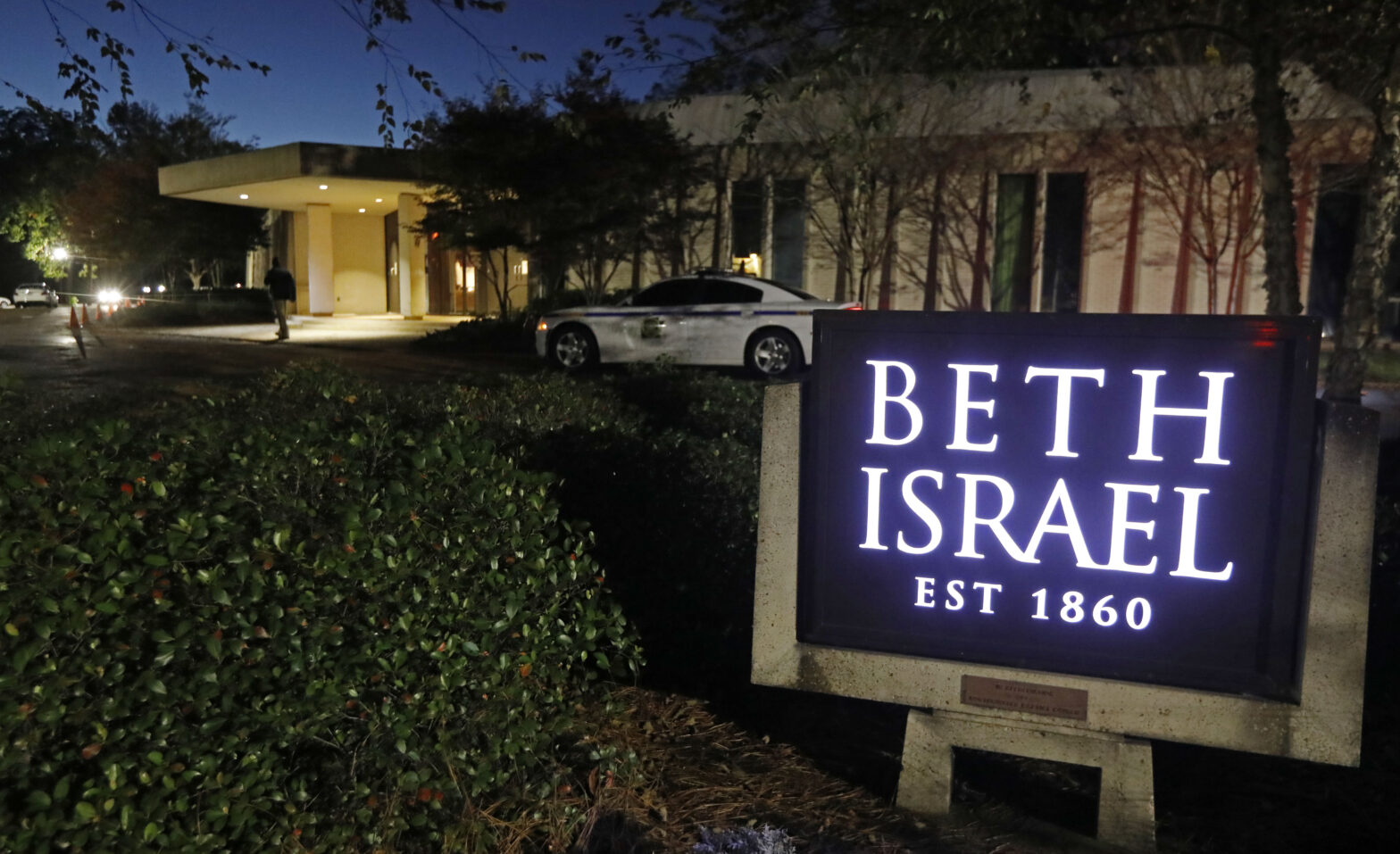
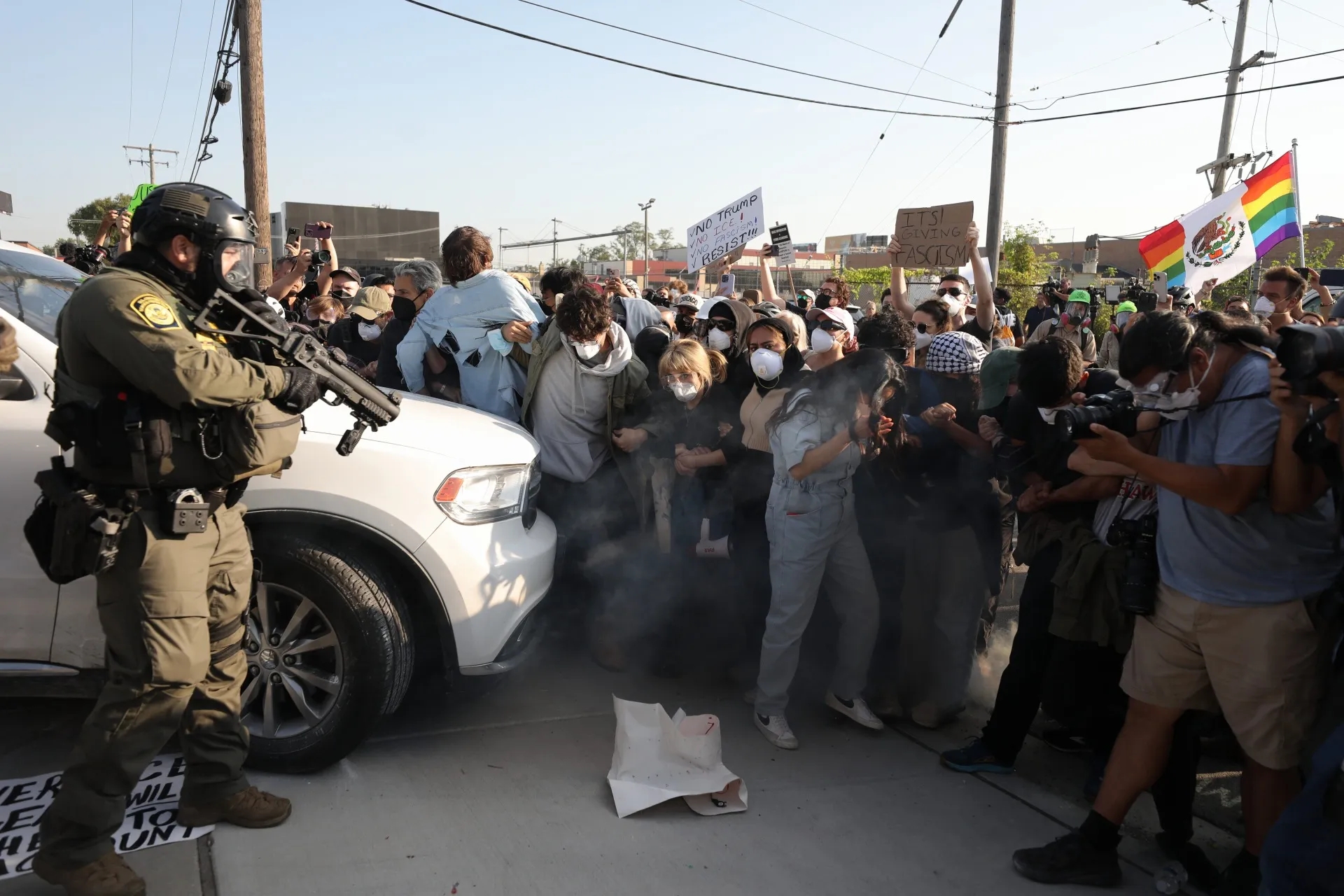
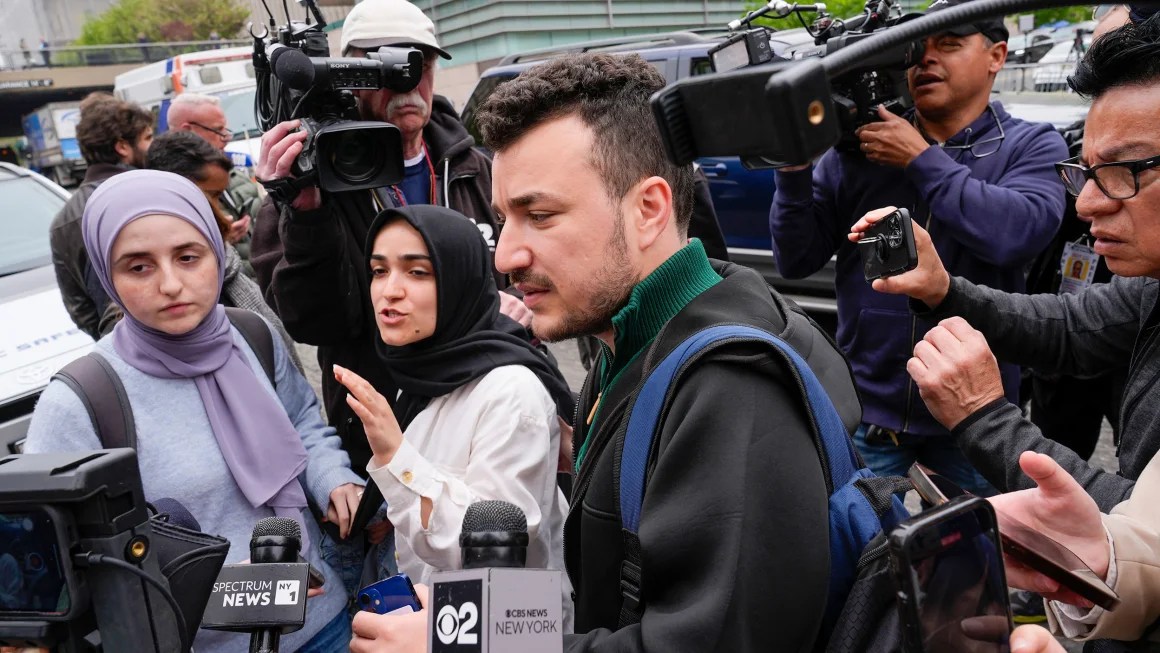
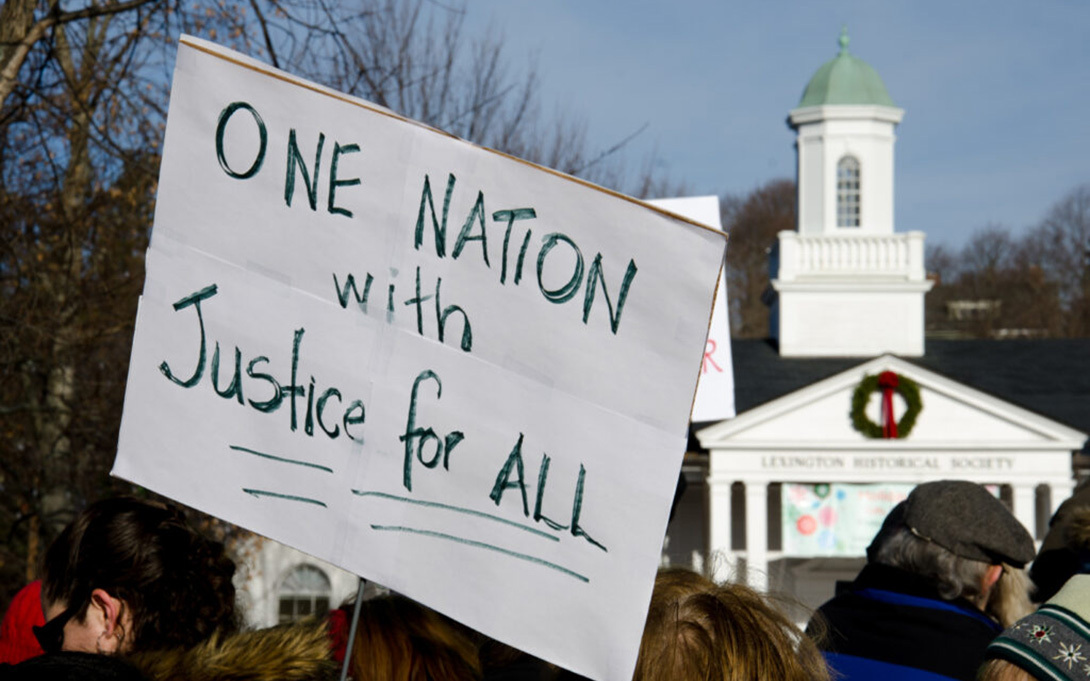
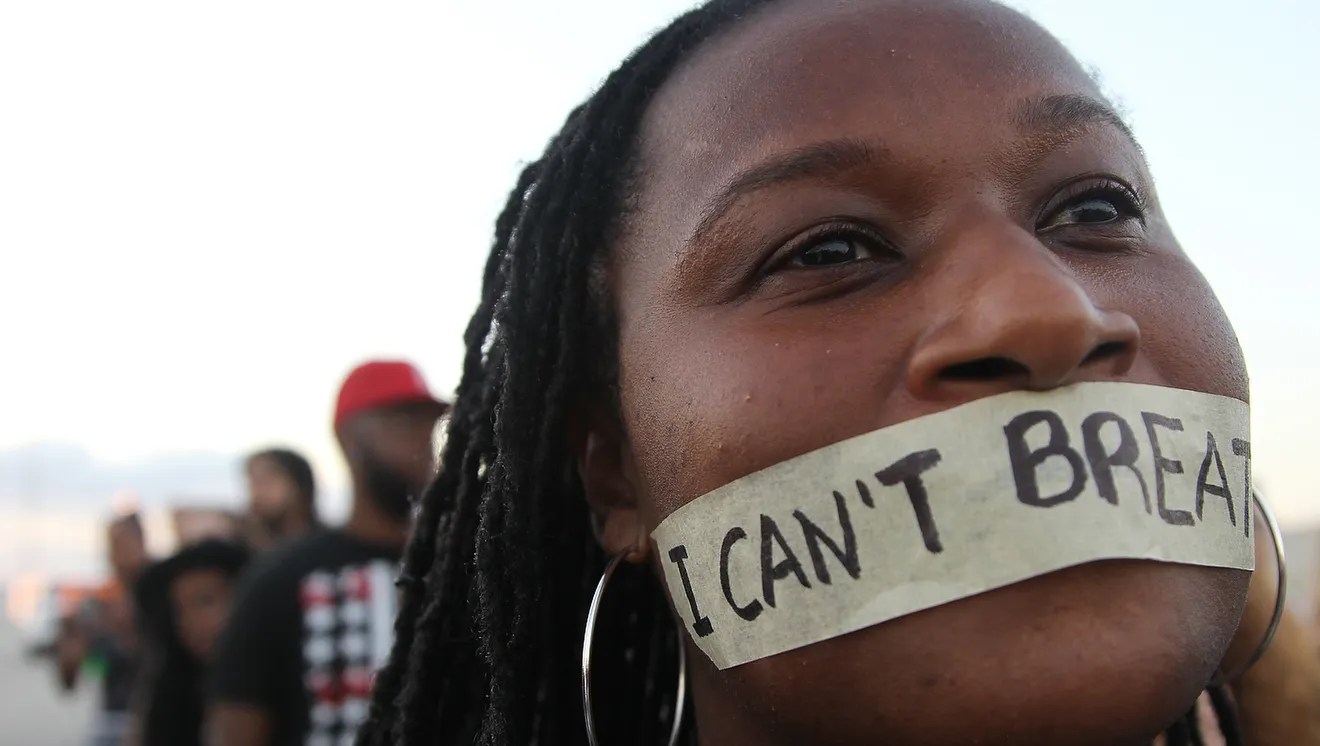
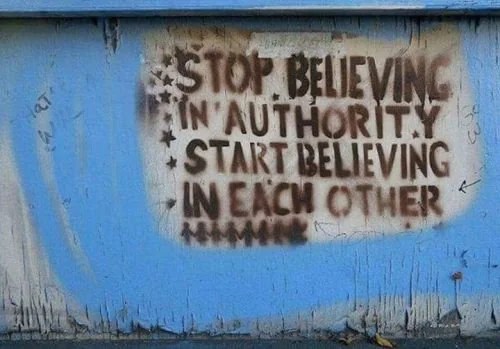


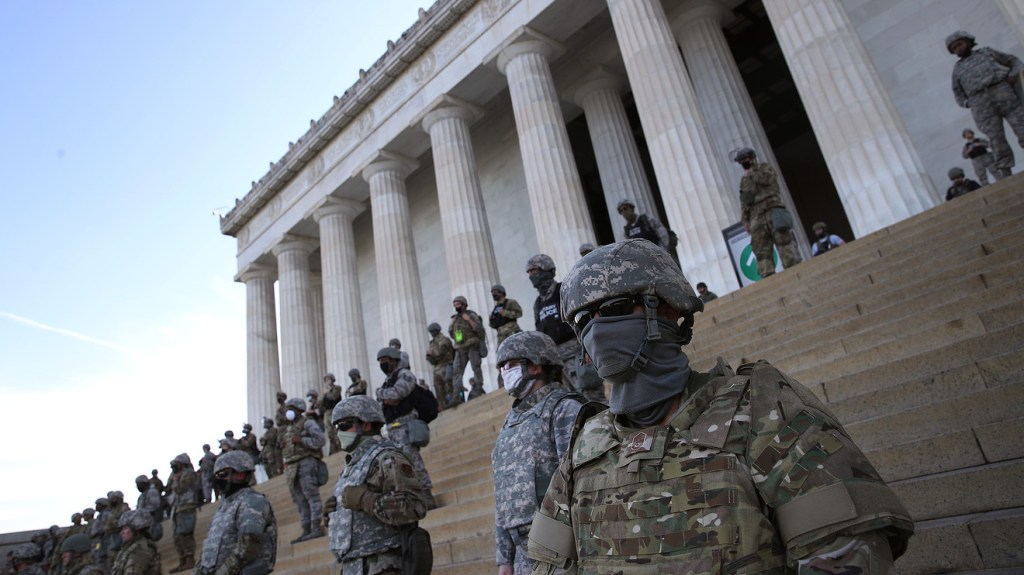
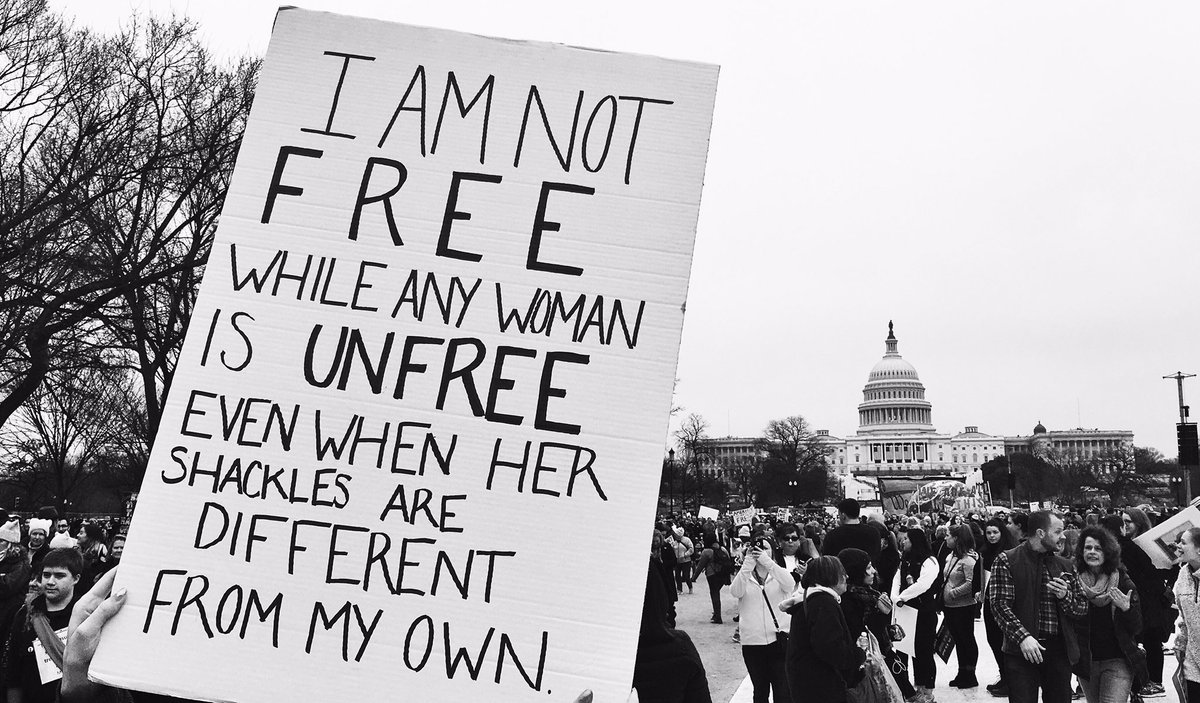
 Shalom Rav