Let me leave you with this vision: the vision of a people who have over the centuries learned to build a nation without borders, a multi-ethnic nation suffused with the beauty of a myriad of cultures, a nation inspired by a religious tradition it constructs and reconstructs in every age and in every generation. At its heart, a nation committed to the struggle for meaning in our lives and justice in our world. And in the end, a nation that has nothing to fear and every opportunity to gain from the remarkable changes underway in the 21st century.
However – I also wonder if Jewish tribalism is starting to come at a cost. I especially wonder what it means for the Jewish community to be tribal in this day and age, when we are experiencing openness and freedom in historically unprecedented ways. Given the global realities of our 21st century world, I wonder if there might be new models for Jewish identity – ones that value tribalism less than a deeper sense of engagement and kinship with the world outside.
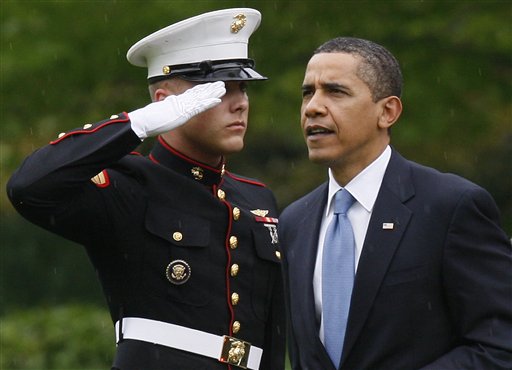
Man, what a difference four years makes. I think I can safely say it will be impossible for me to summon the kind of excitement I expressed in that giddy blog post just four short years ago.
Actually, if truth be told, it was just one year into his presidency when I concluded that Obama, from a foreign policy point of view at least, was essentially Bush 2.0. Now as his first term comes to a close, I’m daring to consider the possibility that he might actually be worse.
I’ve already written a fair amount about my disillusionment on this score – most pointedly in my Yom Kippur serrmon from earlier this year:
For some Americans the most salient lesson of 9/11 was that the world is a dangerous place and we must use military power to mitigate the danger. I include myself among those who learned a very different lesson: 9/11 taught us that when we intervene militarily abroad, we beget blowback here at home.
Many of us had hope that Obama truly believed this as well – that he would turn back the Bush doctrine and steer our nation’s foreign policy toward a saner course. But as it has turned out, the very opposite has happened. He has embroiled us in even more Mideast wars and has deployed even larger numbers of special operations forces to that region. He has also transferred or brokered the sale of substantial quantities of weapons to these countries and has continued to build and expand US military bases at an ever-increasing rate.
He also promised to prosecute the so-called “War on Terror” with greater attention to civil liberties, but that hope has been fairly dashed as well. During his campaign, note what he had to say about this subject:
“As president, I will close Guantanamo, reject the Military Commissions Act, and adhere to the Geneva Conventions. Our Constitution and our Uniform Code of Military Justice provide a framework for dealing with the terrorists. Our Constitution works. We will again set an example for the world that the law is not subject to the whims of stubborn rulers, and that justice is not arbitrary.”
And it’s gotten even worse since then. More recently, we’ve learned that Nobel Peace Prize Laureate Obama has been personally been maintaining a drone “kill list” which, according to the NY Times:
counts all military-age males in a strike zone as combatants … unless there is explicit intelligence posthumously proving them innocent. (Emphasis mine).
Even more recently, the NY Times has revealed that President Obama has been secretly overseeing a massive cyber-war initiative against Iran (known as “Olympic Games”) that, among other things, almost assuredly represents the official kickoff to a global cyber-weapons race. As the article correctly concludes, the blowback to our nation from Obama’s cyber-adventures could potentially be devastating:
(No) country’s infrastructure is more dependent on computer systems, and thus more vulnerable to attack, than that of the United States. It is only a matter of time, most experts believe, before it becomes the target of the same kind of weapon that the Americans have used, secretly, against Iran.
But my disillusionment in the Obama administration is most profound when it comes to its handling Israeli-Palestinian peace process. I’ve written about this issue over and over as well – but if you still need more convincing that this administration has utterly caved to the Israel lobby and has abdicated any semblance of “honest broker” status in this process, it was recently reported that Obama unabashedly assured a group of Jewish orthodox leaders that his administration is “decidedly more attentive to Israel than it is to the Palestinians.”
All this to say that I’m in a very different frame of mind as Obama now runs for reelection. The giddiness has been replaced with a dose of hard, cold realism about the role of the President in the 21st century national security regime:
Again, from my Yom Kippur sermon:
I’m focusing these observations exclusively on our Commander-in-Chief, but of course I realize that this issue is much, much larger than just one man. I know it’s natural to look to our primarily to our President, but in truth what we call “Washington” is really a massive bureaucracy that includes a myriad of interests. It’s a far reaching power elite that includes not only the federal government but the national security state, as well as the intelligence and federal law enforcement communities. It also includes big banks and other financial institutions, defense contractors, major corporations and any number of lawyers, lobbyists former officials, and retired military officers, all of whom hold enormous influence over our foreign policy.
So as we swing into summer and we listen to Obama and Romney trade salvos over foreign policy, don’t be fooled – at the end of the day there is less than an inch of daylight between the two. Mideast analyst Aaron David Miller, in a Foreign Policy post entitled “Barack O’Romney” only half jokingly suggested that if reelected, Obama ought to consider making Mitt Romney his new Secretary of State. Another respected analyst, MJ Rosenberg, has gone as far as to suggest that President Obama would actually be more likely to bomb Iran than a President Romney.
What should we do with all this hard political realism? As for me, I’m taking my cue from the classical Jewish text, Pirke Avot:
Love work. Hate authority. Don’t get too friendly with the government. (1:10)
And for good measure:
Be careful with the government, for they befriend a person only for their own needs. They appear to be friends when it is beneficial to them, but they do not stand by a person at the time of his distress. (2:3)
The events of these last four years have provided a painful education for me. I’ve learned more than ever that it is not politicians who create socio-political change – it is, rather, the people and the movements who make it impossible for them not to.
Yes, there are some important domestic issues at stake in this election (not least of which are potential Supreme Court appointments) but let’s not be fooled into thinking that the future of US foreign policy fundamentally depends on who we choose to be our Commander in Chief.
The real difference will depend on our readiness to hold him accountable once the election is over.
My hometown paper, the Evanston Roundtable, has just published a thorough feature on “Untold Stories,” a program initiated by my congregation’s Peace Dialogue Task Force that features Palestinians sharing their personal stories of their lives under occupation.
“Untold Stories” was initiated after we invited two Chicago-area Palestinians – a man from Gaza and a woman from the West Bank – two speak about their lives during our Rosh Hashanah discussion groups. The presentation was so successful and well-received, the Peace Dialogue decided to make it an ongoing program – and eventually invite other faith communities in Evanston to participate as well.
From the article:
This fall, St. Nicholas Church will host another chapter of “Untold Stories,” knowing the narratives lend themselves to surprise endings. They allow (Palestinian presenter) Daniel Bannoura to learn that in Chicago, some of his best friends can be Jewish. And (JRC’s Peace Dialogue chairperson) Sallie Gratch can discover that her involvement with Palestinians and their stories “sticks closer to my Jewish values than anything I’ve ever done.”
Accusations of anti-semitism in the Occupy Wall Street movement are flying fast and furious now. Newt Kingrich leveled the charge today on the CBS’s Early Show. David Brooks insinuated it in the NY Times not long ago. And Bill Kristol’s Emergency Committee on Israel has actually bought air time in New York and DC to run a laughably misleading ad that implores viewers to “Tell Obama and Leader Pelosi to stand up to the (anti-semitic, anti-Israel) mob.”
Watch the above clip for the real story. Then read this thorough piece by commentator MJ Rosenberg. It would all be pretty hilarious if it wasn’t such a horribly cynical exploitation exploit the real pain and fear of anti-semitism to slow down a movement committed to justice and dignity for all – which is, in the end, what Judaism is all about.
Cedric Cal was born to a single mother, in a family that lived below the poverty line on Chicago’s West Side. His father had left the family, married another woman and had very little to do with him. His mother Olivia worked constantly, doing her best to keep her family together. As the oldest of four, Cedric became the de facto father of the family and was entrusted with protecting his younger brother, who was legally blind.
Cedric’s family moved around a lot and he learned very early on how to make friends quickly. He liked sports, particularly baseball – and when his family lived on the West Side, he played sports in the local Park District. When they moved to the South Side, however, there were no Park District services available, so sports were not an option for him. Still, no matter where they moved, Olivia became very adept at finding ways of getting Cedric and and brothers into decent public schools. From 5th to 8th grade, he attended Alcott Elementary. Minding his younger brother, he took the public bus every day on a long trek from the West Side to Lincoln Park.
Cedric’s mother taught him how to fill out applications and interview for jobs, but there really weren’t any to be found. And those that were hiring certainly weren’t hiring African-American teenage boys. He was never really successful at finding a real job, but when he was 14 he learned that he could make money dealing drugs. He knew that his mother would be beyond furious if she ever found out, so he made sure to keep his drug dealing and his growing gang activity secret from her. Cedric never, ever, brought his earnings into their home – his mother had made it clear that drug money was not welcome anywhere near her house. Even when he bought a car, he parked it far away from their home.
I met and spoke with Cedric two weeks ago at the Stateville Correctional Center in Joliet. He explained to me that as he continued to sell drugs, as he continued the gang life, little by little, he became “desensitized to the things my mother had taught me.” It was quite poignant and sweet to listen to Cedric speak about his mother. “My mother,” he said, “has a lovely spirit,” adding: “I was scared to death of my mother.” He told me of one instance in which Olivia confronted drug dealers on a street corner with a two by four in her hand. Cedric laughed and said that even the toughest gang members in the neighborhood were scared of his mother.
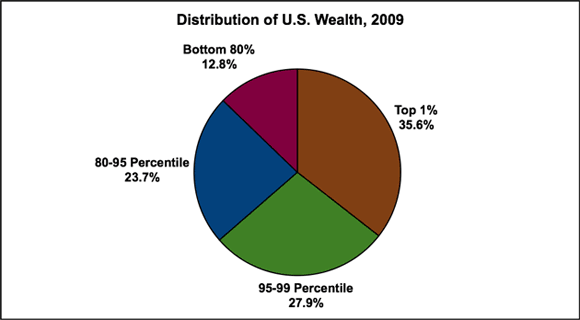
Source: Economic Policy Institute, The State of Working America 2011
Three years ago, I traveled with several JRC members and nearly 1,500 others to Postville, Iowa. We went to show our solidarity with 400 immigrant workers of the Agriprocessor kosher meat packing plant who had recently been arrested and imprisoned. It was, at the time, the largest single-site workplace raid in US history.
After participating in an interfaith service, we marched through the streets of Postville. As we reached the downtown area, we met up with angry counter-protestors, many of whom were holding signs condemning the invasion of “illegal immigrants” into their communities. One woman held a large sign that still sticks in my mind – it read: “What Would Jesus Do? Obey the Law.” I distinctly remember pointing out the irony of this sign to a fellow marcher, considering Jesus is actually considered to be one of the earliest practitioners of civil disobedience.
“How do we reach Jewish young people?” has long been one of the central mantras of the organized Jewish community, as those of us who work as Jewish professionals can surely attest. But while we wring our hands over at the state of the Jewish future, a remarkable new generation of Jews has been knocking insistently at our door.
Young Jews say the settlements delegitimize Israel!
Young Jews say the Occupation delegitimizes Israel!
Young Jews say the siege of Gaza delegitimizes Israel!
Young Jews say the loyalty oath delegitimizes Israel!
Young Jews say silencing dissent delegitimizes Israel!
With each successive interruption the shouts from the crowd grew louder and angrier. As security attempted to safely walk them out, one protester was put in a choke hold by a convention attendee and wrestled to the floor. Another conventioneer grabbed a banner and tore it in half with his teeth.
At the very same moment, “Young, Jewish, Proud” launched its website, featuring the “Young Jewish Declaration” — an astonishing statement of purpose that seemed to come directly from the collective heart, mind and gut of this newly formed youth movement:
We exist. We are everywhere. We speak and love and dream in every language…
We remember how to build our homes, and our holiness, out of time and thin air, and so do not need other people’s land to do so…
We refuse to have our histories distorted or erased, or appropriated by a corporate war machine. We will not call this liberation…
We commit ourselves to peace. We will stand up with honest bodies, to offer honest bread…
We are young Jews, and we get to decide what that means.
Predictably, the Jewish establishment wasted no time in excoriating the protesters. Some chided them condescendingly for their “misguided” behavior. Others angrily criticized them for “aiding the enemy.”
As for me, I watched these events unfold with genuine hope for our Jewish future.
After all, weren’t these young people claiming and proclaiming their Jewishness in classic Jewish fashion? Like young Abraham destroying his father’s icons, they stood up to the hypocrisy and corruption of their elders. In the heart of the the largest gathering of American Jewish leaders, these proud young Jews called out their community on its most sacred of sacred cows: namely, the unquestioning, unconditional support of the state of Israel.
In all honesty, I can’t say I’ve ever witnessed as authentic an act of young Jewish self-expression as I did that afternoon at the New Orleans General Assembly.
Yes, as a professional Jew, I’ve participated in the “how can we inspire young people?” conversation more times than I care to admit. I’ve watched a myriad of Jewish community-sponsored initiatives come and go. And invariably, all of them focused on what we believed was best for Jewish young people.
But while the Jewish establishment has been excellent at creating and funding expensive projects, we seem to be chronically incapable of actually listening. We love to tell young people how we think they should express their Jewishness, but rarely do we stop long enough to really, truly learn what drives and inspires them.
Taglit-Birthright Israel, the Jewish establishment’s signature youth initiative, is the most obvious case in point. For well over a decade, we have invested literally hundreds of millions of dollars in providing free, all-expense-paid trips to Israel. The essential goal of these trips, as Birthright’s Marketing Director puts it plainly, is to make Israel “an integral part of every Jew’s identity.”
It’s well known that Birthright was born in response to growing reports that American Jewish young people were becoming increasingly disconnected to the state of Israel. But by rushing to address this issue through a massive multimillion dollar community initiative, we successfully avoided asking the deeper questions.
Could it be that we were afraid to know the answers?
Could it be that young people are becoming disenchanted with Israel because they are becoming increasingly troubled by its treatment of Palestinians? Could it be that growing numbers of young Jews regard Israel more as an oppressive colonial project than a source of Jewish pride? Could it be that in the 21st century world, the identities of young Jews are tied less to Jewish ethno-nationalism than to a more universal vision of liberation?
“Young, Jewish, Proud” is decidedly not the product of a Jewish communal initiative. On the contrary it is a grass-roots, self-organized effort of young Jews who seek to express their Jewish identity in a time-honored Jewish manner: by speaking truth to power, by advocating unabashedly for peace, justice and liberation, by standing up to oppression, racism and persecution in Israel/Palestine and throughout the world. They simply aren’t buying what the Jewish establishment has been selling them. They are finding their own voices.
We are young Jews, and we get to decide what that means…
I am well aware that it is not easy for a Jewish community so thoroughly focused on Zionism to hear it challenged in such a fundamental way. But aren’t these young Jews doing precisely what they were raised to do? They are taking a good, educated look around them, thinking critically about what they see and are taking a stand for what they believe in as Jews. Are we really prepared to disown them because their conclusions make us uncomfortable?
In the Torah portion for the first day of Rosh Hashanah, we read that when God saves the life of young Ishmael in the wilderness, “God heeded the cries of the boy where he is” (Genesis 21:17). In other words, God was able to find Ishmael by truly listening to him. Not where God wanted him to be or where God thought he should be, but where he was.
This New Year, I fervently hope our community can do the same with our newest adult generation. These young people certainly have every reason to be disenchanted with the organized Jewish community, but for some reason they refuse to go away. They’re here, and they’re knocking loudly at our door.
Do we, the gatekeepers of the Jewish community, have the vision, the faith and the courage to open it up and let them in?
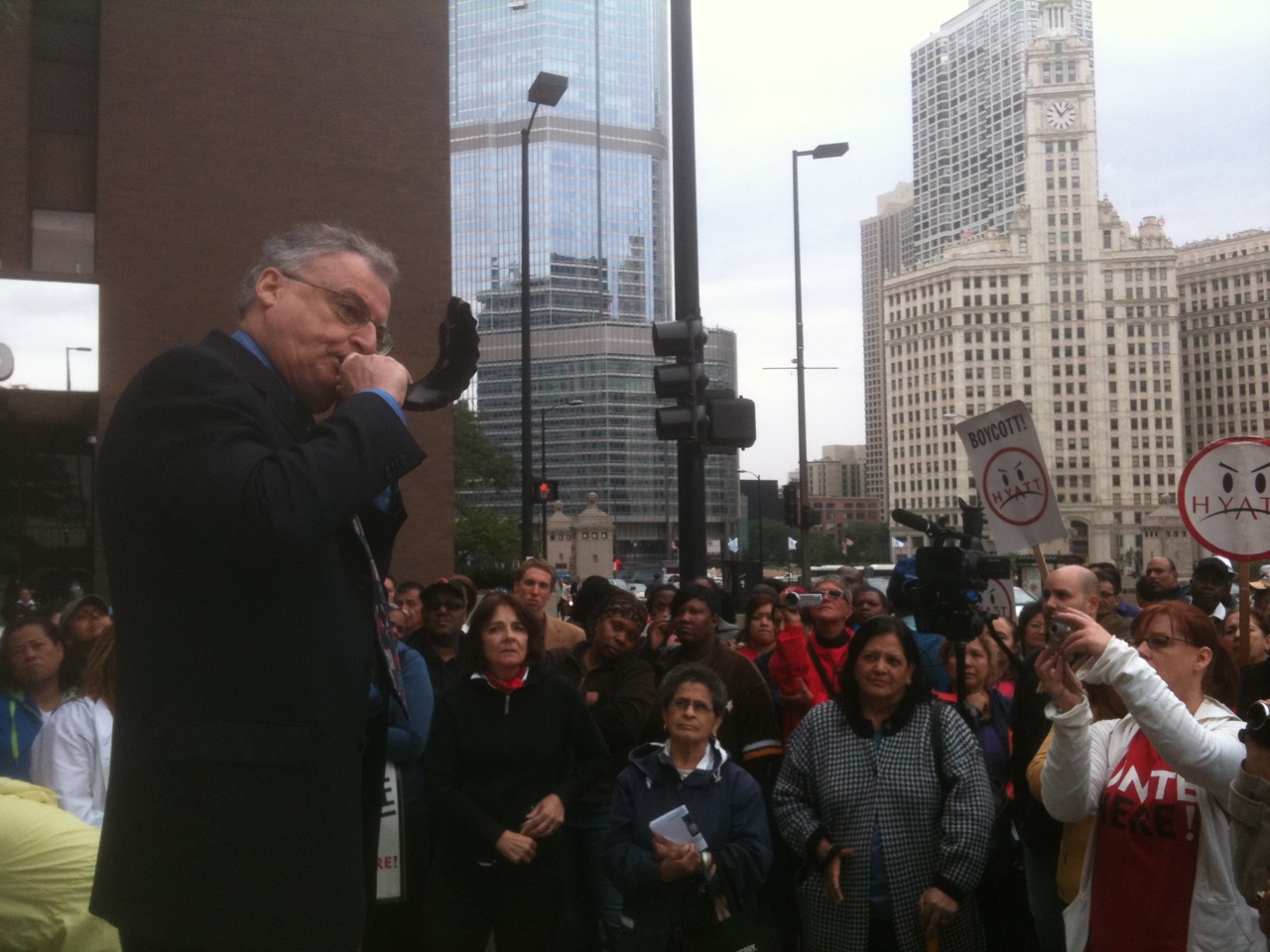
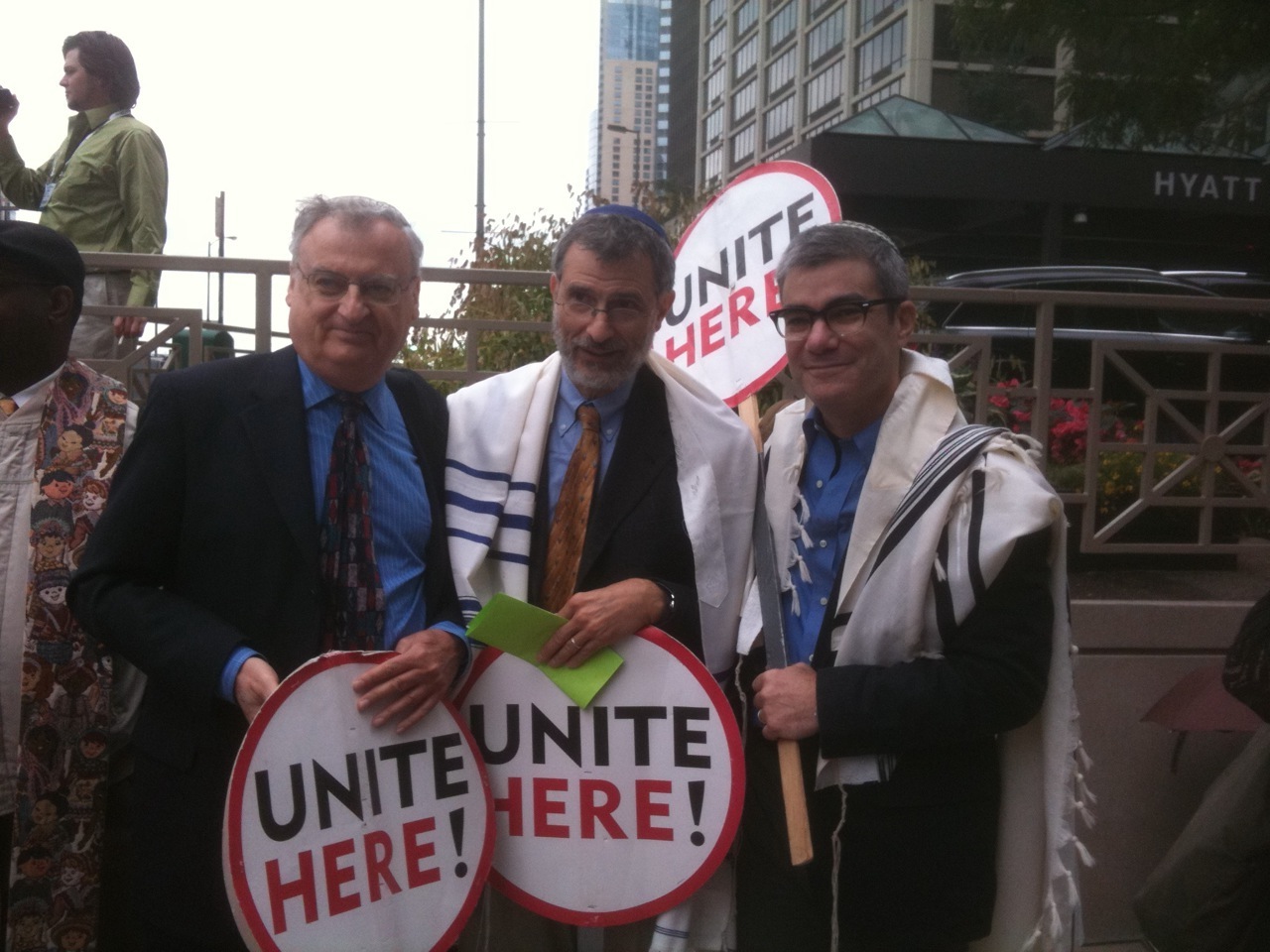
Today marked the end of a week-long strike at the Hyatt Regency Chicago and Hyatt Regency McCormick Place held simultaneously with Hyatt workers in Los Angeles, San Francisco and Honolulu. This morning I walked the picket line at the Hyatt Regency and had the honor of participating in an interfaith solidarity service with local Chicago clergy. That’s me in the pic below, together with Rabbi Victor Mirelman (left) of West Suburban Temple Har Zion and Rabbi Larry Edwards (center) of Congregation Or Chadash. Above you can see Victor sounding the shofar in a dramatic start to our service.
Again, I encourage you to read “Open the Gates of Justice: A Clergy Report on Working Conditions at Hyatt Hotels” for more information. The report contains the direct testimony of hotel workers themselves, who speak eloquently to the injustices they endure – as well as their desire only to be valued as workers for the important work they do for Hyatt hotels.
At the interfaith service today, I read an “Avinu Malkeinu” High Holiday prayer that I reworked in honor of the striking Hyatt workers. Click below to read:
For matter how painful the prospect, I don’t think we can afford to dodge this question. If we agree that the inequitable distribution of power and privilege is a critical problem for us and for our world, then there will inevitably be times in which we are faced with an intensely difficult question: does tribal loyalty trump solidarity with the oppressed?
Actually, I’m coming to believe that this is not the best way to frame the question. I don’t really think it’s all that helpful to view this issue as some kind of zero-sum game; to see it as a question of tribal allegiance; to insist that I either stand with my own people or I don’t. I prefer to say it this way: that it is in my self interest as a Jew to stand in solidarity with the oppressed because I believe that Jews cannot be fully human while they benefit from a system that denies others their own humanity. For those with power and privilege, the struggle against racism and oppression is fought knowing that our own liberation is also at stake.



 Shalom Rav