Category Archives: High Holidays

The Supreme Sacrifice: A Sermon for Erev Yom Kippur 5771

From my Erev Yom Kippur sermon last Friday:

And as I think about it, perhaps this is why we read a Martyrology on Yom Kippur. As we remember our martyrs, we search our own souls and ask ourselves honestly: what have we done in the past year to prove ourselves worthy of these profound sacrifices? What have we done to affirm that these people did not die in vain? Did we indeed honor their memories by transforming loss into justice and hope for our world?

Click below to read the entire sermon:

A JRC member recently asked why we never do the Martyrology service on Yom Kippur. I wrote back to the congregant – and I’ll confess to you now: I’ve never been a huge fan of this particular liturgy.

Continue reading

Confronting Islamophobia: A Sermon for Rosh Hashanah 5771

From my Rosh Hashanah sermon last Thursday:

So what is the real issue here?  I don’t think it’s about sensitivity to individuals who may or may not be offended by this particular construction project. The real issue is really quite straightforward. The real issue, I believe, is the same as it ever was – and as Jews, it’s an issue we know all too well. Will America be a land of religious liberty for all or merely the few?

Click below to read the entire sermon:

Continue reading

Leaving Home: A Sermon for Erev Rosh Hashanah 5771

From my Rosh Hashanah Eve sermon last Wednesday night:

So here’s my question for this Rosh Hashanah: how will you leave the familiarity of your home in the coming year? In ways will you challenge your sense of comfort and complacency and find the strength to venture into unknown territory? To a place that holds out a promise, but no guarantees? For some of you, this coming year might be a time of a significant life transition: how might you mark this experience so that it offers you real potential for transformation and growth? For others, this year might be not all that different from the last. How will you challenge that comfortable sameness? What might you do to, in a sense to create a doorway that leads outward?

Click below to read the entire sermon:

Continue reading

Feeding the God of Compassion: A Sermon for Kol Nidre

From my Yom Kippur eve sermon last Sunday night:

If the Torah teaches us that human beings are made in the image of God, which image of God will we proclaim? The God of fear or the God of forgiveness? The God of hatred or the God of compassion? The God of xenophobia or the God of justice? And if our answer is indeed the latter, then we must affirm it. We must bear witness to this image of God in no uncertain terms. History teaches all too well what the God of hatred can do in our world. Those of us who reject this theology must be ready to do so without hesitation – to actively promote the God of compassion.

Click below to read the entire sermon:

Continue reading

Yom Kippur: Life as a Terminal Illness

3463-000028

I included this reading in our service for Shabbat Shuvah yesterday: an excerpt from a 1999 commencement speech by one of my favorite writers, Anna Quindlen. I believe it’s about as wonderful a Yom Kippur message as you will find.

I’ll be offline until Monday evening. May we all be sealed for health, meaning, peace and life in the coming year…

So here’s what I wanted to tell you today: get a life. A real life, not a manic pursuit of the next promotion, the bigger paycheck, the larger house. Do you think you’d care so very much about those things if you blew an aneurysm one afternoon, or found a lump in your breast?

Get a life in which you notice the smell of salt water pushing itself on a breeze over Seaside Heights, a life in which you stop and watch how a red-tailed hawk circles over the water gap or the way a baby scowls with concentration when she tries to pick up a Cheerio with her thumb and first finger.

Get a life in which you are not alone. Find people you love, and who love you. And remember that love is not leisure; it is work. Each time you look at your diploma, remember that you are still a student, still learning how to best treasure your connection to others. Pick up the phone. Send an e-mail. Write a letter. Kiss your Mom. Hug your Dad.

Get a life in which you are generous. Look around at the azaleas in the suburban neighborhood where you grew up; look at a full moon hanging silver in a black, black sky on a cold night. And realize that life is the best thing ever, and that you have no business taking it for granted.

Care so deeply about its goodness that you want to spread it around. Take money you would have spent on beers and give it to charity. Work in a soup kitchen. Be a big brother or sister. All of you want to do well. But if you do not do good, too, then doing well will never be enough.

It is so easy to waste our lives: our days, our hours, our minutes. It is so easy to take for granted the color of the azaleas, the sheen of the limestone on Fifth Avenue, the color of our kids’ eyes, the way the melody in a symphony rises and falls and disappears and rises again. It is so easy to exist instead of live.

I learned to live many years ago. Something really, really bad happened to me, something that changed my life in ways that, if I had my druthers, it would never have been changed at all. And what I learned from it is what, today, seems to be the hardest lesson of all.

I learned to love the journey, not the destination. I learned that it is not a dress rehearsal, and that today is the only guarantee you get.

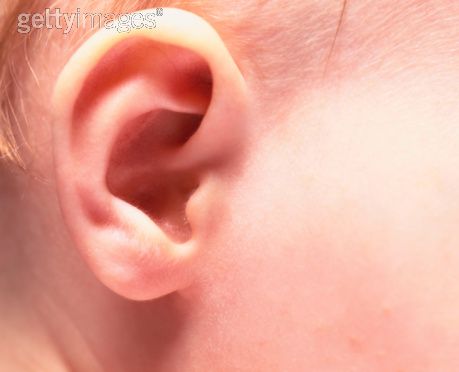
I learned to look at all the good in the world and to try to give some of it back because I believed in it completely and utterly. And I tried to do that, in part, by telling others what I had learned.  By telling them this: Consider the lilies of the field.  Look at the fuzz on a baby’s ear. Read in the backyard with the sun on your face. Learn to be happy.

And think of life as a terminal illness because if you do, you will live it with joy and passion as it ought to be lived.

Well, you can learn all those things, out there, if you get a real life, a full life, a professional life, yes, but another life, too, a life of love and laughs and a connection to other human beings. Just keep your eyes and ears open. Here you could learn in the classroom. There the classroom is everywhere. The exam comes at the very end.
On Gaza and Yom Kippur: A Call to Moral Accounting

From my op-ed in this morning’s Sunday Chicago Tribune:

The actions of the Jewish State ultimately reflect upon the Jewish people throughout the world. We in the Diaspora Jewish community have long taken pride in the accomplishments of the Jewish State. As with any family, the success of some reflects a warm light on us all. But pride cannot blind us to the capacity for error on the part of the country we hold so dear. We cannot identify with the successes, but refuse to see the failures.

As we approach Yom Kippur, I call on America’s Jews to examine the Goldstone findings, and consider their implications. In the spirit of the season, we must consider the painful truth of Israel’s behavior in Gaza, and understand that we must work, together, to discover the truth — and then urge on all relevant parties in the search for peace.

Judaism as Nonviolence: A Sermon for Rosh Hashanah

During my Rosh Hashanah sermon, I asked the following questions:

Is there a place in Judaism for pacifism? Is it in fact possible – or desirable – as a Jew, to walk the path of nonviolence?

Click below to read my answers…

Continue reading

Faith and Faithfulness: A Sermon for Erev Rosh Hashanah

From my sermon this past Rosh Hashanah eve:

How do we discover the true meaning of spiritual commitment in our lives? Perhaps the first step is simply taking a closer look at our lives themselves. Maybe, just maybe, the source of our emunah is much closer than we think.  On Rosh Hashanah we say in our liturgy “Hayom Harat Olam” – on this day the world is born.  Your entire life has been leading up to this moment. Take the time to look back. What has led you here to this place tonight? Who are the people who have helped to guide you on your journey? What are the memories and experiences that you continue to hold sacred? And, finally, how will you transform them into faithful action? How will you commit to them honor them in the coming year and the years after that?

Click below for the entire sermon:

Continue reading

Conservative Movement: Hatikvah Instead of Shofar

The Rabbinical Assembly (the rabbinical association of the Conservative movement) distributed this letter today to its members, asking its rabbis to read the piece below in lieu of the Shofar service on Rosh Hashanah. (The shofar is traditionally not sounded when RH falls on Shabbat, as it does this year.)

Friends,

On this Rosh Hashanah our brothers and sisters in Israel face the threat of a nuclear Iran – a threat to Israel’s very existence.

Today, we Jews around the world also confront the anti-Semitism and anti-Israel sentiment of the Goldstone report which blames Israel disproportionately for the tragic loss of human life incurred in Operation Cast Lead, which took place last winter in Gaza.  This unbalanced United Nations sponsored report portends serious consequences for Israel and the Jewish people.

On this holy day, which is not only Rosh Hashanah, but also Shabbat, the Shofar is silent in the face of this spurious report, the world is far too silent.

Today the state of Israel needs us to be the kol shofar, the voice of the shofar!

We ask you to write to our governmental leaders and call upon them to condemn the Goldstone report and to confront the threat of a nuclear Iran.

While the shofar is silent today, all Conservative rabbis, cantors and congregations have been asked to sing Hatikvah at this moment in the service.

We rise in solidarity with our brothers and sisters in Israel.

What troubles me most about this suggestion is how profoundly it flies in the face of the very meaning of the festival itself. On Rosh Hashanah, we affirm Malchuyot – God’s sovereignty over the universe. Rosh Hashanah is the only time of the year that Jews are commanded to bow all the way to the ground and pledge our allegiance to God and God alone. We acknowledge that our ultimate fealty lies with a Power beyond ourselves, beyond any mortal ruler, any government, any earthly power.

Beyond the political arguments over such a statement, it strikes me as something approaching idolatry.

I’m curious to know your reactions, particularly in regard to its religious implications.