Category Archives: Human Rights

For Yom Hashoah: A Tribute to Pacifist Heroes André and Magda Trocmé

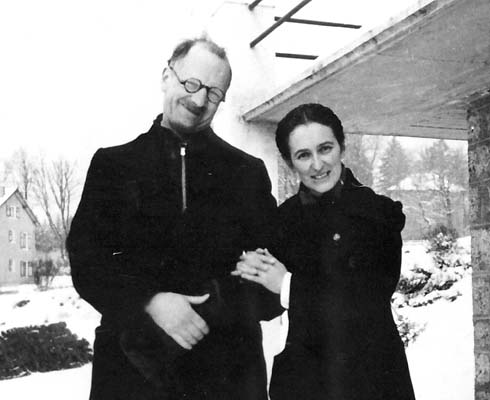
Andre Trocme

In honor of Yom Hashoah, please read about the sacred work of Pastor André and Magda Trocmé, the courageous pacifist Christians who saved 3,000-5,000 Jews from certain death in South Central France. May their memory be for a blessing.

The biography below is reposted from the Swarthmore College Peace Collection:

André and Magda Trocmé are perhaps best known for their work in the small French town of Le Chambon-sur-Lignon where, during World War II, they inspired the villagers to help protect and sometimes to assist in the escape of Jews and other poltiical refugees. This quiet and courageous assistance was given without resorting to violence. Historians estimate that about 3,500 Jews were harbored in the area in and around Le Chambon.

André Trocmé (1901-1971) was born in St. Quentin in the north of France to Huguenot parents. After seminary in Paris and graduate work at Union Theological Seminary in New York, he was ordained into the French Reformed Church and served for eight years among the coal miners and steel workers of Maubeuge and Sin-le-Noble, two small towns in the north of France. He preached nonviolence at a time when such views were unpopular in France. In 1934 André Trocmé accepted a call to be pastor in the remote Huguenot village of Le Chambon-sur-Lignon on the Plateau Vivarais-Lignon in South Central France. These parishioners were more sympathetic to his views on nonviolence.

Magda Trocmé (1901-1996) was born in Italy to an Italian father and a Russian mother. She graduated from the University of Florence with a degree in literature and earned further degrees in French. She and André Trocmé met in the United States while she was attending the New York School of Social Work, and they were married in 1926. The couple had four children, Nelly, Jean-Pierre, Jacques, and Daniel.

In 1938, André Trocmé, and his pacifist colleague Édouard Theis, founded L’Ecole Nouvelle Cévenol in Le Chambon, a Protestant, co-educational secondary school. In addition to the usual French secondary school curriculum, tolerance, honesty, and nonviolence were taught as well. L’Ecole Nouvelle Cévenole soon gained an international focus, and after World War II the name of the school was changed to Collège Cévenol. Magda Trocmé taught Italian at this school which is still in operation today.

During the first part of World War II Le Chambon was located in the “free”( unoccupied) zone of France. By 1942 the Germans had occupied the entire country. However, the population of the Plateau Vivarais-Lignon continued to aid an increasing number of refugees. In 1943, André Trocmé, Édouard Theis, and the head of the public school, Roger Darcissac were interned in a camp by the Vichy police. These men were arrested for their part in assisting the refugees of the area. Trocmé, Theis, and Darcissac were released from prison after one month, but Trocmé and Theis went into hiding for the next ten months.

In the late 1940s André and Magda Trocmé traveled as European Secretaries for the International Fellowship of Reconciliation (IFOR). After their move to Versailles (France) in 1950, the Trocmé’s founded La Maison de la Réconciliation. The Maison de la Reconciliation became an international peace center and the headquarters of the French and Continental Secretariat of the IFOR. During travels in the United States, under IFOR auspices, André Trocmé delivered the Robert Treat Paine lectures which became the basis for his book The Politics of Repentance, published in 1953. During the strife between France and Algeria, André Trocmé helped start Eirene (International Service for Peace), located in Morocco, which provided alternative service for conscientious objectors. He was also active in the movement against atomic weapons, becoming president of the French Federation Against Atomic Armaments in 1959. In 1960, André Trocmé accepted a call to become one of the ministers of the Saint-Gervais Church in Geneva, Switzerland. Many of the sermons he preached at Saint-Gervais were broadcast. His book, Jésus-Christ et la Revolution Non Violente was published in French in 1961 and subsequently in other languages (Orbis Books edition, 2004). In 1965, André Trocmé accompanied a peace mission to Vietnam.

After World War II André Trocmé was awarded the Rosette de la Résistance by the French government. The story of the Trocmé’s pacifist leadership inspired Philip P. Hallie, a professor at Wesleyan University, to write the book Lest Innocent Blood by Shed, published in 1979. Eleven years later Pierre Sauvage produced the documentary Weapons of the Spirit (1988), explaining how his family survived Word War II, through the efforts of the people of Le Chambon.

André Trocmé died in Geneva on June 5, 1971, just a few weeks after he had been scheduled to receive the Médaille des Justes from the government of Israel. As more and more people were recognized as “Righteous Gentiles,” the Yad Vashem honored all the residents of Le Chambon-sur-Lignon and the surrounding area. In their memory an engraved stele and rock garden were installed in the park of Yad Vashem (Israel).

After the death of her husband Magda Trocmé moved to Paris with Alice Reynier (“Jispa”), a close family friend who had lived with the Trocmé family since 1942. Alice Reynier shared their family life and their work. Magda Trocmé received an honorary degree from Haverford College in 1981 in the name of the people of Le Chambon and the surrounding area She died in Paris in 1996. André, Magda, their sons Jean-Pierre and Daniel, and Jispa, are all buried as a family in the cemetery of Le Chambon-sur-Lignon.

Kevin Coval’s “Schtick” – A Take-No-Prisoners Jewish Classic

602968_489173091137490_436884167_n

I’ve just finished Chicago hip-hop poet Kevin Coval’s soon-to-be-released book, “Schtick” (Haymarket Books) – a collection of poems that takes aim and fires at the sensitive edge of every nerve ending in the American Jewish psyche. It’s a new take-no-prisoners Jewish classic.

Coval has long been known here in Chicago as one of our great local treasures. He’s probably best-known as the founder of “Louder Than a Bomb: The Chicago Youth Poetry Festival,” which was recently the subject of an award-winning documentary of the same name. He’s also the author of numerous poetry collections, serves as Artistic Director of Young Chicago Authors, and offers youth writing workshops throughout Chicago and beyond.

While Coval has explored Jewish identity through his writing before, “Schtick” is his most extensive published collection of Jewish-themed poems thus far. It includes previously released poems such as “what i will tell my jewish kids” and “why i stopped going to shul” together with more recently written pieces – en masse, they serve to dissect the post-modern American Jewish experience in as devastating a fashion as you are ever likely to read.

Although I’m a longtime Kevin Coval fan, I will confess that there were more than few times in which I flinched at this unabashed, occasionally venomous assault on the hottest of Jewish hot buttons. I will also say without hesitation that these poems deserve to be read and discussed by the widest possible audience.

At heart, Coval’s work places him in long and venerable tradition of Jewish dissident writers – a legacy he very consciously celebrates. Indeed, this dissident tradition is palpable throughout virtually every poem in this collection. In “what will i tell my jewish kids,” for instance, he writes:

we are a bridge people. red sea parters. translators
between the warring. we see connections. the i in i
the i in thou. Buber taught us that or was it Haile Selassie
or Freud? and what was it Marx demanded, we live as Moses
bent and davening toward justice. a radical equity where everything is
sacred or nothing is. Einstein to unify the chaos.
Emma Goldman to arrange the pieces.

Though there will inevitably be those who find Coval’s writing to be the work of a “self-hating Jew” (he confronts this very issue in a poem entitled, you guessed it, “self-hating jew”), I’d suggest the poems in “Schtick” are quintessentially Jewish. Coval walks proudly in the “self-hating” Jewish steps of Abbie Hoffman, Philip Roth, Howard Zinn and Groucho Marx – a path trod by generations leading all the way back to the young Abraham, the Jewish upstart who one day grabbed a stick and smashed his father’s icons to shards.

As the title of his book implies, Coval’s counts the edgiest of the edgy Jewish comedians among his favorite iconoclasts. His clearest hero and spiritual ancestor is the great Lenny Bruce (“Lenny the Prophet!/Elijah, opening doors”). Coval also pays loving homage to Don Rickles, Sid Casear, Roseanne and Joan Rivers, with particular appreciation for the way they habitually skewer the goyishe power elite – and get away with it. (In “Don Rickles Roasts Ronald Reagan” Coval portrays Rickles as a sacrilegious Jewish court jester, peppering the poem with excerpts from his routine at Reagan’s Second Inaugural Ball.)

Of course, Coval finds equal inspiration from rappers, poets, freedom fighters and truth tellers as diverse as Public Enemy’s Chuck D, Allen Ginsburg, Fred Hampton and (in a choice certain to stick in many a Jewish craw) Louis Farrakhan. His target of choice is the American majority culture of power, privilege and empire  – and the Jews who make their bed in it. He rails against racists of various shapes and sizes, including anti-Semitic icons Mel Gibson and Henry Ford as well as the recently resigned Pope Benedict (“the pope is a nazi/and this is the truth.”)

cityroom_20091230_mtownsend_143567_From_largeIn poem after poem, he delves deeply into the adventures and follies of Jewish assimilation into the white American establishment – an act that he paints as the ultimate betrayal of our minority Jewish heritage. In one notable series, he explores this complex, often absurd process through poetic profiles of show biz figures Irving “White Christmas” Berlin, Al Jolson (“the confused horrible hope of this new country”) and Jennifer Grey (a third generation Jewish performer whose nose job successfully derailed her film career.)

His poem, “how the jews became white” – a meditation on the tragic events that unfolded during the Springfield race riots of 1908 – unpacks the most extreme example of Jewish “assimilation” imaginable. Among the more infamous moments during the riots occurred when Abraham Raymer, a poor Jewish delivery man, was accused of participating in the murder and lynching of of William Donnegan, an elderly, relatively wealthy (and intermarried) African-American man in front of his wife and neighbors:

Donnegan is not isaac
Donnegan is the lamb
abraham sacrifices to the white
g-d of america
slit throat and strung up
front lawn of a house they’d burn
like temples.
abraham raymer
the yiddisher lyncher
the jury of peers
the acquitted
the freshly born
and baptized
american
white man

After reading this poem, I couldn’t help but think that while the lynching of Leo Frank has entered  deeply into Jewish mythic consciousness, the name Abraham Raymer remains utterly unknown to most American Jews. And that, of course, is precisely Coval’s point.

Coval’s forte has always been poems that seamlessly mix the personal with the political – and in the chapter entitled “the family business,” he explores Jewish identity politics through his own personal family history. While I doubt his family members will kvell at some of his revelations, his remembrances of his 1980s Bar Mitzvah (by turns mortifying, hilarious and heartbreaking), family seders and Thanksgiving dinners resonates with a deep truth and the kind of love that refuses to profane his memories with shallow nostalgia.

While American Jews of a certain generation will likely nod in recognition with many of his family reminiscences, Coval’s family poems manage to be both brilliantly universal and nakedly specific at the same time. He shines a particularly unflinching light on the painful dissonance he experienced growing up in an economically struggling Jewish family living in the Chicago suburb of Highland Park. Among other things, these profoundly personal reflections go a long way to explain his own deep identification with the Jews as a “bridge people.”

The chapter entitled “all the pharaoh’s must fall” contains his most directly political pieces, most of them centering on the subject of Israel/Palestine. And for all of his deeply edgy poems, I have no doubt that it is from here that “Schtick” will almost certainly receive the most venomous reception from the Jewish establishment.

While Coval has long addressed the issue of Israel in his work, he took on these themes on in earnest in 2009, when he publicly declared himself to be “a Jewish-American man in solidarity with the Palestinian people.” In a widely read article for the Huffington Post, Coval wrote:

I am in solidarity with Israeli and American and all people who work and risk their lives and livelihood for justice. I am not restricted to working within the confines of the Jewish-American community. Justice and the resistance to imperialism is a global, human concern for all people down to struggle. For Jews, yes, but not Jews alone. For Palestinians, yes, but not Palestinians alone. It will take us all to push and demand governments and corporate interests to create fair, equitable living conditions. It will take all people to hold history accountable for the atrocities that occur.

Coval has expressed these convictions in numerous poems he has written since then, many of which are included in this latest collection. The poignant “explaining myself[1]” is written as a plea for understanding to his father. The title poem of the chapter, a stirring call to action written in response to the Arab Spring, deserves to become a seder table staple.  And in his final poem, appropriately entitled, “post-schtick,” Coval uses an attempted lynching of Palestinian youths by Israeli teenagers as a frame for understanding the sorrows of Jewish empire: “you don’t ask the mouth/from which the rope hangs/to explain the reasons/it’s being lynched.”

In “on becoming a man,” Coval recalls that before his Bar Mitzvah service began, his rabbi made him promise that he would not return to be confirmed.  By standing so firmly on the third rail of Israel/Palestine, Coval is virtually ensuring that he will remain outside the proclaimed borders of the American Jewish establishment. No matter. In the meantime he continues to carve out an authentically Jewish place in the borderlands – a place where Jews have always made their most productive homes.

But make no mistake, Kevin Coval is not simply interested in tossing spitballs from the back of Hebrew school class. On the contrary, he’s knocking loudly at the door. His Jewish vision is carefully and mindfully cultivated, his grasp of Jewish cultural memory undeniable, his respect for his spiritual Jewish ancestors deep and palpably real. And he is among the leaders of an eloquent generation that seeks to find a genuinely Jewish voice to sound a universal message of liberation:

wake in this new day
we will all die soon
let us live while we have the chance while we have this day
to build and plot and devise
to create and make the world
just
this time for us
this time for all
this time the pharaohs must fall

For Passover: Exodus Without Eisodus

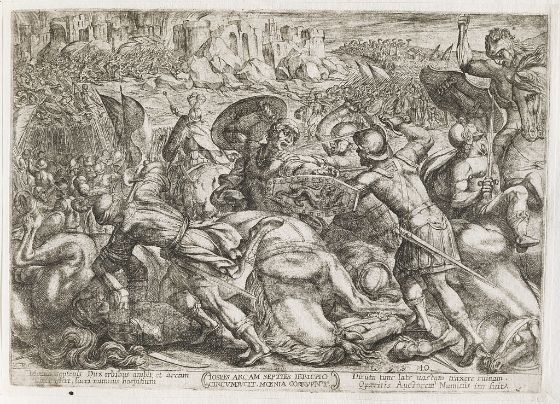
"The Fall of Jericho" (Antonio Tempesta)

“The Fall of Jericho” (Antonio Tempesta)

In honor of Passover, I’d like to share an excerpt from article I’ve recently finished that attempts to articulate a Jewish Theology of Liberation. The longer piece will hopefully be published soon – in the meantime, I offer this snippet to you as “food for thought” for your seder table. All the best for a liberating Pesach!

The Exodus is, of course, the sacred liberation story par excellence, in which God hearkens to the cry of the persecuted, rebukes the oppressor Pharaoh and frees the enslaved. While this narrative is clearly presented within a particularist context (God hearkens to the cry of God’s oppressed people), it has historically resonated with universal power. As the social and political scientist Michael Walzer has observed, a myriad of liberation movements have been indelibly marked with Exodus consciousness throughout the course of Western civilization.[1]

On the most basic level, then, a Jewish theology of liberation must necessarily view the Exodus as both a particular narrative of a certain people as well as a universal narrative that encompasses all humanity.  The oppression of the Jewish people must be understood as inseparable from the oppression of all peoples – likewise the liberation of the Jewish people must be inextricably linked to the liberation of all peoples. While the historical events may differ in the details, they are all bound by a common sacred truth: the voice of the God of Liberation calls out in every language and in every generation to demand the liberation of the oppressed.

However, if we read the Exodus story honestly and unflinchingly, we must be ready to admit the presence of another, darker voice present in this narrative. The Exodus does not only describe the liberation of an oppressed people from bondage – it also contains the story of a journey toward and entrance into a “Promised Land” inhabited by other peoples – indigenous inhabitants whom the Israelites are commanded to dislodge and exterminate without pity.[2]

As difficult as it may be to read morally repugnant passages such as these in one’s “sacred” text, it is even more unsettling when we consider that these imperatives are deeply embedded within our cherished liberation narrative. In a sense, the “Exodus” is only the first half of a much longer story – a saga that begins with the Israelites exit from Egypt (Exodus) and ends with their entrance in Canaan (Eisodus). As the narrative would have it, we cannot have the Exodus without God’s promise of the land – and this promise cannot be fulfilled without the Israelites obedience to a commandment that demands nothing less than ethnic cleansing and even extermination.

Continue reading

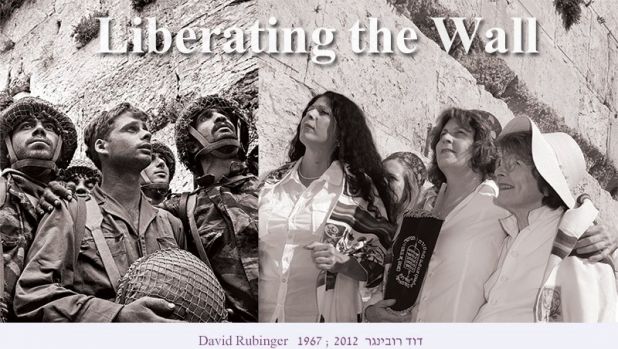
Mobilizing for Women at the Wall – Where is the Outrage for Simple Human Rights?

wow-liberating-wall

There is something sadly skewed with my community’s moral priorities.

I’m sure many of you have been following the growing uproar – in Israel and America – over the curtailment of women’s prayer rights at the Western Wall.  In protest, an Israeli group called the “Women of the Wall” has been holding monthly services there for the past twenty years, advocating for their “social and legal recognition of (their) right, as women, to wear prayer shawls, pray and read from the Torah collectively and out loud at the Western Wall.” This right, of course, is denied by the Israeli foundation that essentially runs the site – widely considered holy by Jews the world over –  as the world’s most famous ultra-orthodox synagogue.

The cause of the Women at the Wall was recently re-galvanized when its chairwoman Anat Hoffman was arrested for wearing a prayer shawl and leading a service there. Since then protests have been spreading across the US – led by an organization called “Wake Up for Religious Tolerance” that has organized monthly solidarity services throughout the Jewish community.

At one such service yesterday, organizer Hallel Silverman commented:

This was hundreds of people with different beliefs coming together to fight for one thing they all have in common—Jewish equality.

Oh, would that the Jewish community might galvanize this level of moral outrage for the cause of simple human equality in the state of Israel.

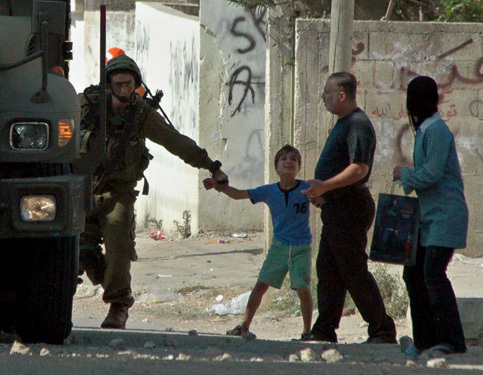
Case in point: during the course of these recent protests, another news item passed far lower across the organized Jewish community’s ethical radar: UNICEF’s recently released report that concluded that the ill-treatment of Palestinian minors held within the Israeli military detention system is “widespread, systematic and institutionalized.” The 22 page report carefully examined the Israeli military court system for holding Palestinian children found evidence of practices it said were “cruel, inhuman and degrading treatment or punishment.”

From a recent HuffPo feature on the report:

In a step-by-step analysis of the procedure from arrest to trial, the report said the common experience of many children was being “aggressively awakened in the middle of the night by many armed soldiers and being forcibly brought to an interrogation center tied and blindfolded, sleep deprived and in a state of extreme fear.”

Many were subjected to ill-treatment during the journey, with some suffering physical or verbal abuse, being painfully restrained or forced to lie on the floor of a vehicle for a transfer process of between one hour and one day.

In some cases, they suffered prolonged exposure to the elements and a lack of water, food or access to a toilet.

UNICEF said it found no evidence of any detainees being “accompanied by a lawyer or family member during the interrogation” and they were “rarely informed of their rights.”

“The interrogation mixes intimidation, threats and physical violence, with the clear purpose of forcing the child to confess,” it said, noting they were restrained during interrogation, sometimes for extended periods of time causing pain to their hands, back and legs.

“Children have been threatened with death, physical violence, solitary confinement and sexual assault, against themselves or a family member,” it said.

Most children confess at the end of the interrogation, signing forms in Hebrew which they hardly understand.

It also found children had been held in solitary confinement for between two days and a month before being taken to court, or even after sentencing.

During court hearings, children were in leg chains and shackles, and in most cases, “the principal evidence against the child is the child’s own confession, in most cases extracted under duress during the interrogation,” it found.

“Ultimately, almost all children plead guilty in order to reduce the length of their pretrial detention. Pleading guilty is the quickest way to be released. In short, the system does not allow children to defend themselves,” UNICEF concluded.

childfather1
I can’t help but ask: where is the moral outrage in my community over this report?  While I certainly believe in the cause of religious freedom, I find it stunning that so many liberal-minded members of the Jewish community are more concerned with “Jewish rights” in a Jewish state than the basic human rights of non-Jewish children who live in it.  Such are the sorrows of Jewish political nationalism: even the more “tolerant “among us seem only to be able to express that tolerance on behalf of those who are in our “tribe.”

A Ha’aretz article covering yesterday’s solidarity service in NYC reported:

People traveled to the event from as far away as Philadelphia. Similar gatherings took place around the U.S., including a demonstration outside Israel’s embassy in Washington, D.C. on Monday, and solidarity prayer services in Cleveland, Chicago and at Brandeis University and the University of Pennsylvania, said service organizer Rabbi Iris Richman. A “sing in” is slated outside Israel’s consulate in San Francisco for Sunday.

In fairness, I’m sure many of the individuals involved in these actions have also advocated for human rights in Israel/Palestine. But the sad truth is that our community would never see fit to mobilize this scale of collective protest in support of Palestinian children. It is well within our comfort zone to protest at Israeli consulates on behalf of Jewish rights. For reasons I understand all too well, universal human rights are still well outside that comfort zone.

The Critical Difference Between “The Gatekeepers” and “5 Broken Cameras”

tumblr_mir1v1xAaW1qazgz2o1_500

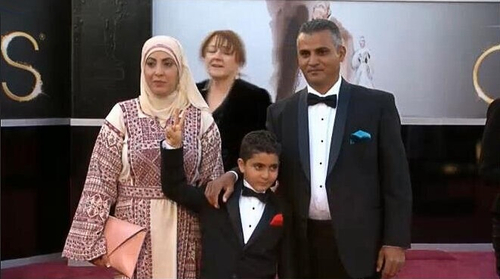
Emad Burnat with wife Soraya and son Gibreel at the Academy Awards

Like many Israel/Palestine activists, I was thrilled to see two thoughtful films on the subject nominated for Best Documentary Oscars – and if I was pulling for any movie at all last Sunday night, it was Emad Burnat and Guy Davidi’s “5 Broken Cameras.”   If you haven’t seen it yet, please do. It is, I believe, one of the most important films on Palestine and Palestinians you will ever see. It’s also brilliantly constructed and deeply, almost unbearably moving. It’s available for free on Netflix, so you won’t need to wait for it to come to a theater near you.

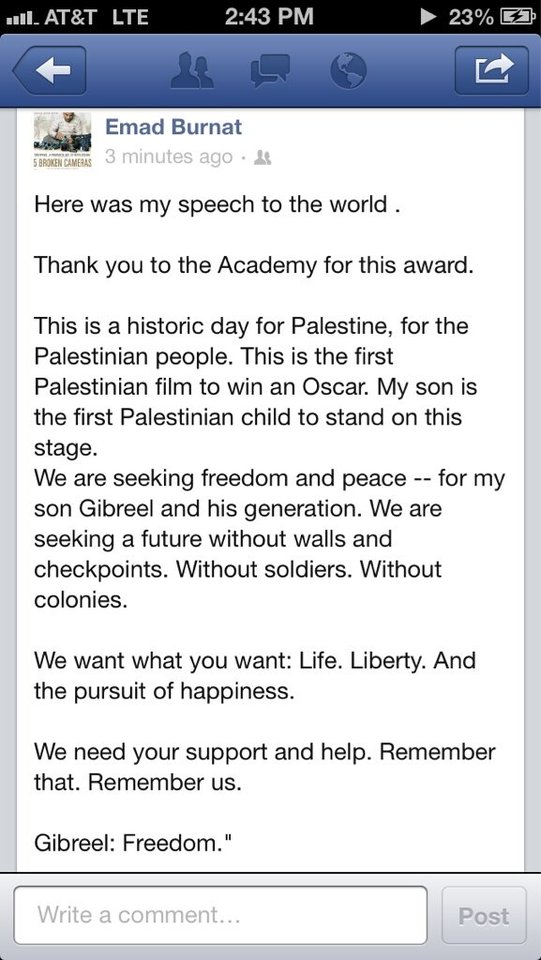
I knew, of course, that it was a long shot, but oh, what an incredible, incredible opportunity it would have been if Emad Burnat could have gotten up before 3 billion people and read the speech he had prepared:

BD-VaFkCUAMj-j4

I’ve been thinking a great deal lately about the differences between “Cameras” and the other nominated Israel/Palestine documentary, “The Gatekeepers.”  I’m particularly struck that the latter film, which features interviews with six ex-Shin Bet chiefs, is in many ways as characteristically Israeli as “Cameras” is Palestinian. For me, the most fundamental difference between the two films resides in their literal perspectives: In “Gatekeepers,” we largely view Palestinians from above – mostly through footage taken by the Israeli Air Forces as they surgically strike their targets from the skies. We never see anyone actually get killed  – they just seem to disappear in a sudden puff of smoke.

By contrast, “Cameras” was filmed on the ground in a Palestinian village. We see Palestinian non-violent protesters getting beaten and shot. In one particularly heartbreaking instance we witness the shooting death of Bassem (“Phil”) Abu-Rahma.  Indeed, the moral center of this movie resides in the way it places us firmly in the lives and reality of these Palestinians – we experience their humanity, their tragedies, their courage up close and personally.

For all of its depth and nuance, “The Gatekeepers,” is ultimately a film that presents us with the moral angst of a people who are, quite simply, on the side of the oppressor.  Many critics have have been struck by the level of ethical soul-searching evidenced by ex-Shin Bet chiefs who were, after all, the heads of Israel’s powerful security establishment – and I fully agree. It is a tribute to the genius of “Gatekeepers”  that it gives us a genuine glimpse into the humanity of men who occupy a position of invisibility in Israel’s massive national security apparatus.

For me, however,  this insight cuts both ways. While we can and should understand the concerns of the real, living flesh and blood human beings behind the Shin Bet, their humanity is ultimately subsumed by an inherently oppressive infrastructural reality. And this reality is much, much larger than these individuals, no matter how deeply they might engage in soul-searching over their actions.

This institutional soul-searching is, in fact, a time honored Israeli cultural enterprise – they even have a name for it: “Yorim U’vochim” (“Shoot and Cry”) –  a term that was coined in the wake of the Six Day War to describe this uniquely Israeli expression of angst. Indeed, Israelis have produced countless films, books, poetry and essays that struggle deeply over their treatment of Palestinians. But in the end, no amount of individual soul searching, no matter how heartfelt, can itself erase the collective guilt of what Israel has perpetrated – and continues to perpetrate – against Palestinians.

Take a look at the clip below: an interview with “Gatekeepers” director Dror Moreh on “Democracy Now.” Pay particular attention to Moreh’s comments at the 3:30 mark, where he expresses his discomfort with those who portray Israelis as the oppressors and the Palestinians as the poor innocent victims. In a (possibly) unguarded but telling moment, he says, “After, all, there is a reason why the Shin Bet is doing what it is doing.”  Moreh continues: this is not a black and white situation – we must see it in “shades of grey.”

I fully agree that this is a complicated situation. But I would add that there is nothing complicated about the institutional oppression that the Shin Bet inflicts on Palestinians. While the fears and pain and moral anguish of Israelis very real, we must be willing to admit that these feelings are largely helpless in the face of a larger infrastructural reality that Israelis have created – and within which they have become subsumed.

Critics who condemn those who stand in solidarity with Palestinians often fail to appreciate this point: it is not Israelis to whom we stand in opposition, but rather the oppressive institutions that they have constructed and which we believe threaten the well being and future of Israelis and Palestinians alike.  In watching “The Gatekeepers,” I could understand the concerns of men such as Ami Ayalon, Avraham Shalom and Carmi Gillon. But I never forgot for a second that the organization they led was and remains a profoundly oppressive, even criminal institution – and no amount of soul-searching, no matter how heartfelt can wash away this essential reality.

A final note: less than one week before the Academy Awards ceremony, the Israel Defense Forces and the Shin Bet arrested a 30 year Palestinian named Arafat Jaradat, claiming that he threw stones at cars from a nearby settlement. Jaradat was taken first to the Jalameh Interrogation Center in the northern West Bank before being transferred to Megiddo Prison. Four days later, he was dead, tortured to death by the Shin Bet.

Jaradat was a student at Al Quds Open University, married with two children (Yara, 4 years old and Mohammad, 3 years old) and was expecting a third child with his wife Dalal.  His lawyer, Kamil Sabbagh, who defended him in a court hearing two days before he died, reported that Jaradat was terrified and complained of intense back pain when he saw him.

The Shin Bet claimed Jaradat died from cardiac arrest, despite the fact that an initial autopsy indicated he was in fine cardiac health. A subsequent autopsy determined that Jaradat had been beaten with repeated blows to his chest and body and had sustained a total of six broken bones in his spine, arms and legs; his lips lacerated; his face badly bruised.

I agree with Dror Moreh: there is a reason the Shin Bet is doing what it is doing. We just disagree what that reason actually is.  Their ultimate goal is not simply the security of Israelis, but the security of Israelis maintained through the subjugation of Palestinians.

And for all the Israeli soul-searching on this point, this oppression will only make Israel less secure in the long run.

Rabbi Margaret Holub Explores Life During and After Apartheid

Jsmalltown jews4My dear friend and colleague Rabbi Margaret Holub (who recently joined me as co-chair of the JVP Rabbinical Council) has just traveled to South Africa to spend the next six weeks in Cape Town. It’s her second sojourn there and in addition to reconnecting with old friends, she’ll be spending her time interviewing clergy in the Dutch Reformed Church about their life during and after the fall of apartheid.

The DRC is the Afrikaans-speaking church which was famous – or notorious – for more or less inventing apartheid and upholding it all the way through to its end in the 1990s.  The Church has come a long way since then – their leaders recanted the doctrine of apartheid, appeared before the Truth and Reconciliation Commission to publicly ask forgiveness and have made moves to integrate their churches.

As a self-described rabbi “edging into the world of organizing about ending Israel’s occupation of Palestine,” Margaret is particularly interested in learning more about the experience of white South African clergy:

What was it like, I wonder, for the rest of them as the world’s banks and universities and entertainers boycotted South Africa, as other churches condemned and isolated the DRC?  What was it like as it became clear that white rule and the separation of the races were going to end?  Did they feel cornered?  Did these ministers have misgivings about their church’s teachings?  Did they  feel like they had to defend them even so?  Were their certain messages that penetrated their defenses?  What would they say to rabbis today, twenty years after apartheid ended, about being on the wrong side of history?  Maybe, with all this hindsight, they’d even have some advice…  I really don’t know, but I look forward to asking.

The quote above came from Margaret’s blog, “Summer in Winter,” in which she promises to faithfully chronicle her experiences on this amazing trip. I plan to follow her adventures faithfully and recommend that you do too!

Interfaith Coalition Launches Boycott of SodaStream

sodastream-protest

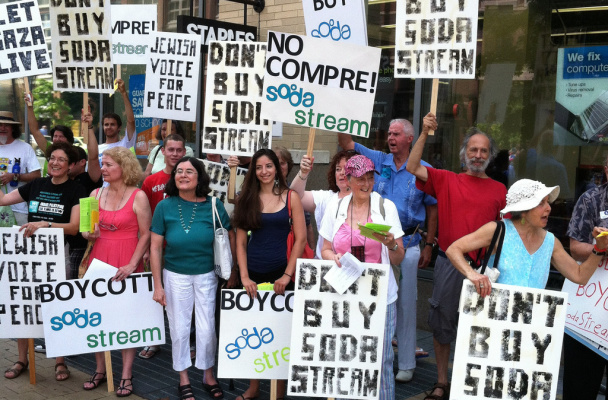
Since my previous post on the SodaStream boycott, I’ve received a number of questions regarding which specific campaign/s to support. While there have been a number of great local actions around the country, I’m happy to announce that a new interfaith coalition has just launched a national boycott effort that includes a petition as well as a spoof ad contest. I hope you will join me in signing on to this important campaign.

For more information on SodaStream, here is an excellent point by point response to the claims made by the company, courtesy of Stop SodaStream – Italy:

1. “SodaStream is headquartered in Tel Aviv, Israel, and manufactures its products in 12 production plants distributed in many countries, including factories in China (2), Germany, Sweden, New Zealand, Australia, South Africa, Netherlands, the US and two in Israel, one of which is Mishor Adumim … “

Even if there were hundreds of “production facilities” all over the world, it would not change the fact that the factory in Mishor Adumim is built on land stolen from the Palestinians and thus violates human rights and international law.

In any event, Sodastream’s annual report clearly demonstrates that the factory in Mishor Adumim is also the company’s main production facilities:

  • At 15,256 m2, the plant is four times larger than the headquarters in Tel Aviv, and eight times that of the other Israeli plant at Ashkelon, which produces only flavors for soft drinks.
  • The plant in China produces only “certain components”.
  • The “production facilities” in Germany, Sweden, New Zealand, Australia, South Africa, the Netherlands and the USA are mere sales and marketing offices and refill stations for CO2 cylinders.

Source: Sodastream International Ltd. Annual Report for the Fiscal Year Ended December 31, 2010, “Manufacturing and Production,” p. 37 and “Facilities,” p. 40.

2. “… where approximately 160 Palestinians receive full social and health services in accordance with, and exceeding, Israeli law, including pension contributions and insurance. Labor law in Israel requires an employer to pay wages and contributions 4 times higher than those required by the Palestinian Authority. If you consider that, on average, each employee is responsible for 10 Palestinian dependents, considering the rate of unemployment in the Palestinian Authority (estimated at 30%), the company provides food and shelter to 1,600 people. In addition, SodaStream also provides benefits that include: daily hot meals, clothing, transportation and overtime pay for up to 200% as required by Israeli law. “

The fact that a company such as SodaStream, which profits from the Israeli occupation regime, considers itself a benefactor of the Palestinians is downright bizarre. Even if working conditions for the Palestinians at the Mishor Adumim factory were as described (something that has been proven false in the past by the Israeli organization Kav LaOved), the fact remains that, as subjects an occupation regime, these workers do not enjoy civil rights (including the right of workers to organize) and are under constant threat of having their permits to work in the settlement revoked by the company at any moment.

Palestinian workers often have no choice but to work in the settlements, with high unemployment rates that are a direct result of the Israeli occupation. The 2011 United Nations Conference on Trade and Development report explicitly links the decline in Palestinian agricultural and industrial sectors and the dire humanitarian conditions with Israeli government policies, in particular the confiscation of land and natural resources, restrictions on movement of people and goods, and isolation from international markets. Only a colonial mindset could claim to provide jobs to the very same people whose land and freedom have been stolen.

Sources:
– Kav LaOved, “Palestinian Workers in Israeli West Bank Settlements – 2009”; “Employees at Soda Club fired without wages (follow up report)”
Report on UNCTAD assistance to the Palestinian people: Developments in the economy of the occupied Palestinian territory

3. “Among the 700 employees at the Mishor Adumim factory are Jews, Palestinians, Christians, Russians, Ethiopians, Bedouins, and Americans. In SodaStream’s view, this is a splendid example of peaceful coexistence that will lead to economic prosperity on which everyone benefits. The company regularly celebrates the holidays of all and has fostered cultural exchange.”

To speak of “peaceful coexistence” between people who do not have equal rights and equal social, economic and political opportunities is absurd. Among Sodastream employees, there is a marked difference between the conditions of the occupiers and those who suffer under occupation. For example, just as in Apartheid South Africa the black majority was allowed to enter areas reserved for whites only in order to work, so do the Palestinians depend on the occupying power for work permits.

Furthermore, the Jahalin Bedouin, who had already been driven from their lands in the Negev in the 1950s, were then expelled from the very area where the Sodastream has its factory.

Sources:
– Kav LaOved, “Palestinian Workers in Israeli West Bank Settlements – 2009”;
– Human Rights Watch, Separate and Unequal, “Jahalin Bedouin and Ma’ale Adumim”

4. “As you know, Sodastream recently decided not to expand the factory at Mishor Adumim, but rather to build one inside the Green Line. The construction is already underway, as decided by the Board of Directors.”

Committing to not to expand an illegal activity, which according to the company website, Sodastream has been carrying out since 1996, counts for very little. The fact remains that the main production facilities are located in an illegal Israeli settlement in violation of international law.

Source: Sodastream web site, History of the Sodastream Group

5. “SodaStream does not currently benefit from low rents and could rent other facilities in the uncontested territories of Israel for much less. The same applies to incentives, the company enjoys the same tax incentives as any other industrial area of Israel, regardless of whether it is located in the disputed territories or not.”

Sodastream’s annual report lists among its “risk factors” the possibility, due to negative publicity and boycotts, of having “to transfer a significant portion of manufacturing activities to a location outside of the West Bank” that would “limit certain of the tax benefits for which we are currently eligible”.

In fact, according to the web site for the Mishor Adomim Industrial Park, it is designated as “Development Zone ‘A'”, which enjoys the highest tax incentives from the Israeli state.

And finally, the Palestinian territories are occupied, not “disputed”, as recognized by the International Court of Justice, the International Committee of the Red Cross and the Conference of High Contracting Parties to the Fourth Geneva Convention, among others.

Sources:
Sodastream International Ltd. Annual Report for the Fiscal Year Ended December 31, 2010, “Risks related to our Location in Israel,” p. 17
– Adumim Industrial Park, Business Benefits
– International Court of Justice: Legal Consequences of the Construction of a Wall in the Occupied Palestinian Territory; International Committee of the Red Cross; Conference of High Contracting Parties to the Fourth Geneva Convention: Declaration,

6. “With regards to Coop Sweden, yes it is true that on July 19 they decided to suspend sales of these products, however it is also true that, after a brief investigation, they then decided to put them back on the shelves.”

Swedish activists inform us that COOP Sweden claims to have the results of an investigation that justify, in their view, the marketing of Sodastream products. COOP Sweden has refused, however, to share the report with the Swedish activists. If Sodastream would like to provide us with the report, we would be happy to comment on it.

7. “SodaStream is also under tight control by the Office for Environmental Protection of Israel, leading to surprise inspections, and the company adheres to the highest environmental standards.”

It is well known that Israeli and international companies consider Israeli laws on environmental protection inapplicable with regard to factories in the occupied West Bank. According to 2009 report by the Israeli organization B’Tselem, Israel does not enforce environmental laws in the settlements and industrial areas in the occupied West Bank.

As for surprise inspections, according to Bloomberg Businessweek and the Corporate Watch website, the Sodastream Factory in Mishor Adumim is “the most heavily protected in the area, with multilevel electric fencing protecting its perimeters and cameras monitoring everything going on outside of them.”

Sources:
– B’Tselem, “Foul Play: Neglect of wastewater treatment in the West Bank
– Corporate Watch, “Occupation Industries: The Israeli industrial zones
– Bloomberg Businessweek, “EU Eyes Exports from Israeli Settlements

8. “Following the publication of false reports, the company also decided to host visits and inspections, in particular social audits, including the internationally accepted BSCI (Business Social Compliance Initiative) audit, with the conclusion that they no corrective actions are necessary.”

Clearly, an auditing organization that certifies a factory located in the occupied Palestinian territories has no credibility whatsoever.

The Stop Sodastream campaign will continue to challenge the deceptions of Sodastream, organizing initiatives to reveal the truth that the company wants to hides and promoting a boycott of its products.
Why I’m Boycotting SodaStream

boycott_sodastream_smaller

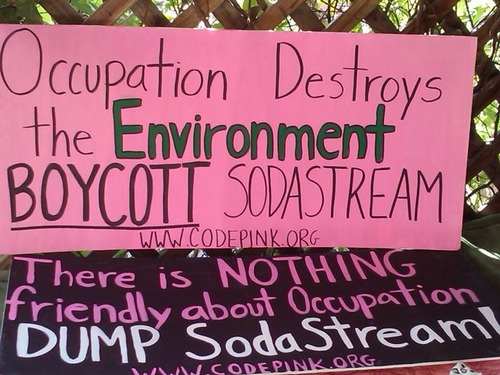
Israel’s settlement juggernaut continues at full speed, creating apartheid conditions on the occupied West Bank while making a mockery of any hope of a two state solution. Since no nation or institution seems willing to hold Israel accountable, it seems to me the least any concerned citizen can do is to refuse to patronize companies that directly profit from this brutal and unjust occupation.

At the moment, Exhibit A is SodaStream – a company that produces home carbonating devices. Promoting its product as eco-friendly, SodaStream is sold in 39 countries in 35,000 stores worldwide, including Macy’s, Bed Bath and Beyond, Bloomingdale’s, Sears, and Kmart.

It is also manufactured in the Israeli settlement of Mishor Adumim.

A bit of history: Mishor Adumim is the industrial park section of Ma’aleh Adumim, the largest settlement in the West Bank.  The land for both of these settlements originally belonged to the Palestinian towns of Abu Dis, Azarya, Atur, Issauya, Han El Akhmar, Anata and Nebbi Mussa, but was expropriated by Israel in the 1970s.  Today, Ma’aleh and Mishor Adumim are a key part of the Israeli government’s plan to create Jewish facts on the ground around Arab East Jerusalem.

The SodaStream boycott is a particularly instructive action since the company actively promotes itself as an environmentally concerned enterprise. This is a tactic known as “greenwashing” – a cynical attempt to hide behind liberal environmental values in order to divert attention away from egregious violations of human rights. On this subject, I was profoundly saddened to read a post today by Rabbi Jason Miller, who sang the environmental praises of SodaStream and encouraged folks support Israel (and celebrate the Jewish festival of Tu B’shvat) by buying their product.

And what about the fact that the company says its product is “Made in Israel”, yet is based in the West Bank? By way of answer, Rabbi Miller approvingly quoted the company CEO Daniel Birnbaum, who he claims is “a strong proponent of human rights”:

(Birnbaum) said that thanks to SodaStream thousands of local Palestinians in Mishor Adumim have good paying jobs. Those workers, he explains, would not be able to support their families without their jobs in SodaStream’s manufacturing plant.

Wow. My jaw nearly hit the floor when I read that one. I’m not sure that resorting to a colonial “white man’s burden” argument is the surest way to defend entrepreneurial activity in occupied territory.

It’s also patently untrue. I strongly recommend this report by “Who Profits” for an important and in-depth expose of SodaStream, including the manner in which it exploits Palestinian laborers who come from the villages surrounding Mishor Adumim.

Jordan Ash, writing in the Twin Cities Daily Planet has also recently addressed this issue:

As with the Maquiladoras along the U.S.-Mexican border, the high unemployment rate means that many Palestinians are forced to try to earn a living through jobs in the settlements, despite the low pay and harsh working conditions.

Palestinian workers in the settlements do not enjoy the full protection of Israeli labor laws.   They must get special permits and security clearance just to be able to enter these factories.   Involvement in a labor dispute constitutes a security risk and can result in the loss of not only a worker’s current job but their ability to work in settlements in the future.   Thus, many Palestinian workers do not demand their legal employment rights due to fear of losing their work permit.

At the SodaStream factory, when workers protested that they were being paid less than half of the minimum wage and were forced to work 12 hour days, they were fired. On another occasion, when workers who were fired and were still owed a month’s wages went to the factory to request their pay, SodaStream had them removed from the factory and banned from the entire industrial park.

As with all business in the illegal settlements, SodaStream pays taxes to Israel, not to the Palestinian Authority.  The municipal taxes that SodaStream pays are used exclusively to support the growth and development of the settlement through things such as roads, education, and sewage treatment.

While I certainly don’t have any illusions that this boycott will bring the Israeli economy to their knees, I do believe it provides us with the means to take a public moral stand against the injustices Israel is committing in the occupied West Bank – and to stand in solidarity with those whose lives are impacted by this oppression.

It is a particularly timely action since the company has spent $3.8 million on a 30-second spot during next month’s Super Bowl. Apparently the commercial advocates “setting the bubbles free”. Those concerned with human rights should know that freedom for real, living breathing human beings is what is truly at stake here.

Naftali Bennett and the Politics of Jewish Supremacy

By all accounts, Bibi Netanyahu will be the winner of the upcoming elections on January 22 – after which he will proceed to form the most right-wing/ultra-nationalist coalition in Israeli history. The only question that remains is by what degree.

Among new political figures on the scene, Naftali Bennett, the leader of the HaBayit HaYehudi (“Jewish Home”) party seems to be garnering the most attention. Even as Bibi’s Likud-Beiteinu party drops in the polls, HaBayit HaYehudi (a restructured version of the old National Religious Party) is growing in popularity – and will almost certainly become an important player in a new coalition.

If you’ve never heard of Bennett, you will soon. He’s the son of American immigrants, a successful hi-tech businessman, Bibi’s former chief of staff (they’ve since had a high profile falling out) and the former head of the West Bank settlers’ Yesha Council. Bennett raised some major dust last month when he told a television interviewer that he would personally refuse orders to evacuate settlements or outposts in the West Bank while on reserve army duty.  He also is on record as advocating the annexation of Area C of the West Bank. Under his plan, Palestinians already living there would be given the choice to accept Israeli citizenship or leave.

While he was roundly criticized from many political quarters for his remarks about army service, his party has become the most popular Israeli party with young Israelis under the age of 30. Clearly, Bennett and his views represent Israel’s future – one that seems to be skewing further and further away from democracy and ever closer to apartheid policies.

Take a look at HaBayit Hayehudi’s English language campaign video ad at the top of this post. As Don Futterman recently observed in Open Zion, it’s a canny attempt to gloss over the more odious aspects of Bennett’s ideology with a legit and cheerful veneer designed specifically to appeal to American immigrants to Israel:

This ad, which is part of a campaign to create different and more positive associations with the name HaBayit HaYehudi (the Jewish Home), is an invitation, not a polemic. It mentions buzzwords—Jewish values and Zionist ideals—and one issue from the party’s platform—Jewish education—but does not harp on any of them. You wouldn’t guess that HaBayit HaYehudi has any connection to the national religious right in Israel, and you might even miss the single reference to West Bank settlements (“I live in Samaria”). You certainly wouldn’t suspect that Bennett has promised he would go to jail rather than evacuate a settlement.

Watching the video, I was also struck that it made repeated references to the importance of Israel’s Jewish character without explicitly explaining why this should in any way be considered a political issue:

If you want to bring Jewish values and Zionist ideals to Israel, then the Bayit Yedudi is your home…If you believe that every Israeli child deserves a quality Jewish education, the Bayit Yehudi is your home.

While on the surface, remarks such as this sound perfectly innocuous, they mask a profoundly troubling agenda.  What about the Palestinians citizens of Israel who do not adhere to “Jewish values” or “Zionist ideals?”  It’s certainly sounds noble to say that Israeli child deserves a quality Jewish education, but what about the considerable percentage of Israeli children who don’t happen to be Jewish? The answer, of course, is not too difficult to understand. These Israeli citizens simply don’t fit in the xenophobic ideology advocated by Naftali Bennett and HaBayit HaYedudi.

In a recent post for +972 mag, Noam Sheizaf makes a perfectly reasonable argument – but given Israel’s current reality it would likely strike many as radical in the extreme. Pointing out that in 64 years of Israel’s existence, no government has ever included one of the Arab parties in a coalition, Sheizaf concludes:

Cooperation between Palestinian and Jews is by far the greatest, most important challenge in this country. Every element of Israeli life – from the education system to zoning plans – is constructed to promote ethnic separation, with politics being just the tip of the iceberg…Therefore, the ability to create joint structures and partnerships is the single most important element that would determine the chances of survival and the quality of life for the entire society.

The necessary conclusion for me is that it is simply forbidden to vote for parties which are not shared by Palestinians and Jews, or for ones that preserve the policy of separation between Palestinians and Jews. There are no perfect parties, but this should be the basic condition, just as an American shouldn’t vote for a party that doesn’t accept black people.

Alas, voices like Sheizaf’s are but a whisper in the Israeli wilderness. According to the latest polls, Arab-Jewish parties will garner only a small sliver of votes in the upcoming election.  When it comes to the Israeli electorate, the ideology of Jewish supremacy is clearly the order of the day.

For comparison purposes, take a look, below, at this campaign video ad for the Da’am Workers Party – one of the few Arab-Jewish parties of which Sheizaf spoke.  I’d say their values provide a powerful contrast to ethnic exclusivism of HaBayit Hayehudi:

(This) movement is our hope, everyone’s hope that here will arise, in the State of Israel, for the first time in history a political, social, economic alternative, sane, human, fair, that knows how to be part of the region where it’s located. For 64 years we’ve lived in a ghetto. The time has come to get out of the ghetto! Israel has to stop isolating itself…We say no! We’ll bring down the wall of Occupation, the wall of racism, and the wall of violence. We want to be free in our land indeed, and our land is the entire world, and this world needs one unique answer, it needs a revolution!

Time for Visions Beyond the Two State Solution

beyond-the-two-state-solution-a-jewish-political-essayI’ve been pointing out for some time now that Israel has been increasingly building settlements in Area C of the West Bank, while evicting Palestinians from their homes there and moving them to far reaching sections of Areas A and B. The intention? To eventually annex Area C to Israel and warehouse the Palestinian population of the West Bank in disconnected, isolated, bantustans.

Now it’s come to this: Israeli coalition leaders are unabashedly bandying about this plan in public:

From a recent article in the Jerusalem Post:

Israeli annexation of the West Bank’s Area C – where all settlements are located – received public support from two high-ranking Likud politicians on Tuesday evening, Public Diplomacy Minister Yuli Edelstein and MK Ze’ev Elkin.

“Lack of Israeli sovereignty over Area C means the continuation of the status quo,” said Edelstein, as he spoke about an area of the country that is now under Israeli military control. “It strengthens the international community’s demand for a withdrawal to the pre-1967 lines.”

But Edelstein and Elkin cautioned that annexation was a process that should happen slowly, not immediately.

Together with the Netanyahu government’s stated intention to build in the critical West Bank territory of E-1, it is clearer than ever that the conventional liberal Zionist notion of a two-state solution is a dead anachronism. It’s even worse, actually: as long as we cling to a two-state paradigm, Israel will be given free reign to entrench this injustice in perpetuity.

I’ve also come to believe that its high time for those who are interested in a truly just peace between Israelis and Palestinians to come forth with some new creative thinking that might provide alternatives to an obsolete two-state model. In this regard, I was happy to learn that “Beyond the Two State Solution: A Jewish Political Essay” by the great Israeli academic Yehouda Shenhav, has finally been published in English. Shenhav has long been providing precisely the kind of innovative thinking that I believe is so very lacking in political circles – and I’m delighted his work on this subject will now find a wider audience.

Using post-colonial political and critical theory, Shenhav challenges many of the fundamental paradigms and assumptions that have delineated the Israeli political “left” and “right,” while suggesting new and exciting models that might well help us to envision a better future for Palestinians and Jews in the land.

Here’s an excerpt, from his Introduction:

I am deeply concerned with the violation of the political rights of the Palestinians, but no less so with the future political rights of the Jews themselves. I believe that the combination of a persistent foundational state of emergency and blatantly racist legislation – which grows restrictive and bare-faced day by day – poses a threat not only to Palestinians, but to Jews in the Middle East. For this reason, I wish to unpack the Jewish-Israeli discourse on the conflict, to highlight the dangerous political zones within which it roams, and offer an alternative political vision in which the rights of both Jews and Palestinians are intertwined and co-determined…

In particular, I argue that the so-called “two-state solution” in the form proposed by the Israeli liberal left no only is unrealistic but in essence is based on false assumptions that sustain and reinforce the non-democratic Israeli regime and mask the essence of the conflict. Instead, I offer a different vision for political thought, which is not based on state terror or Jewish supremacy.

Shenhav is a well known thinker in Israel, but less familiar to American audiences. Whether or not you agree with his ideas, I hope you will at least be open to this sort of new thinking. I personally find it liberating – I do believe that these kinds of outside the box ideas serve to provide us with a ray of hope along what is otherwise a very dark road…