In early August, a powerful letter with the title “The Elephant in the Room” was posted online. Signed by hundreds of academics, clergy, and other public figures from Israel/Palestine and abroad, the statement openly criticized American Jews for “(paying) insufficient attention to the elephant in the room: Israel’s long-standing occupation.” It went on to list a litany of Israeli crimes against Palestinians, including “constant violence,” “ethnic cleansing” and “Jewish supremacism. Then came the money quote:
Without equal rights for all, whether in one state, two states, or in some other political framework, there is always a danger of dictatorship. There cannot be democracy for Jews in Israel as long as Palestinians live under a regime of apartheid, as Israeli legal experts have described it.
Since its publication, the Elephant letter has garnered well over 2,000 signatures. It has also gained global media attention as something of a game changer, not least because of the large number of prominent public figures who have signed onto it. Indeed, when I scrolled through the list, I noticed the names of numerous liberal Zionists and rabbinic colleagues whom I never dreamed would ever publicly associate Israel with apartheid and Jewish supremacism.
The statement has, of course, been thoroughly excoriated by the usual suspects in the Israel advocacy world. There are also Palestinians and members of the Palestine solidarity community who believe the letter doesn’t go far enough. After all, it centers its concern on “democracy for Jews in Israel.” It emphasizes injustice in the Occupied Territories rather than Israel proper. It doesn’t mention the Nakba or the Palestinian Right of Return. And while it criticizes Israeli apartheid and Jewish Supremacy, none of its four goals explicitly call for the dismantling of these structural injustices.
While I share these criticisms, I chose to sign the letter nonetheless. In the end, beyond whatever issues I might have with the specific wording of the letter, I believed it was a watershed statement. When it comes to US support for Israel/Palestine, the voice of the American Jewish community is very important – and it was no small thing that such a large number of Jewish communal figures saw fit to sign a public statement condemning Israeli apartheid. For me, the calculus was simple: I could opt out, or I could add to their number.
I often like to say that when it comes to Jews working for justice in Israel/Palestine, there is both an “inside game” and an “outside game.” Naturally, as the rabbi of an anti-Zionist synagogue, I make no bones about the fact that I play the outside game. Among other things, that means that the concept of solidarity is central. As a Jewish ally in the struggle for Palestinian liberation, I know I must first and foremost be accountable to Palestinians.
But as someone who worked inside the organized Jewish community for many years, I respect the critical importance of the inside game as well. While I have thoroughly broken with the Zionist party line, I understand that it is extremely significant when more and more liberal Zionists take these kinds of public stands. By naming Israeli apartheid out loud, they put a deeper crack in the wall of Israeli impunity. They make the conventional Zionist narrative all the more untenable. And by so doing, I believe, it helps bring a future of real and genuine justice in Israel/Palestine that much closer to reality.
Movements are stronger and more successful when organizers and activists understand that everyone has a role to play. Even when we don’t ideologically agree on the specifics, our movements will only grow when more people see fit to participate in the struggle. We know from history that oppressive regimes cannot last long when broad based movements rise up to call out oppression for what it really and truly is.
So may the movement continue to grow this coming new year. May the cracks in the wall continue to widen. And may we witness liberation and justice for all who live in the land, speedily in our day.
While the US Congress is undoubtedly a horrid dysfunctional mess of an institution, there have been occasional examples of genuine hope and even inspiration. This past week provided us with one of those examples.
Many of you, I’m sure, have been following the upheaval that occurred when Washington Rep. Pramila Jaypal called Israel “a racist state” at the Netroots Nation conference. After the wrath of the Israel lobby and her Israel-supporting congressional colleagues inevitably rained down upon her, Jaypal walked back her statement. Shortly after, a Republican congressperson cynically introduced a non-binding House resolutionthatexpressed unconditional support for Israel and condemned antisemitism. Of course, it passed overwhelmingly.
While all this was boilerplate Israel politics on Capitol Hill, nine Democratic representatives had the courage tovote no on the resolution: Alexandria Ocasio-Coretz and Jamaal Bowman of New York, Cori Bush of Missouri, Andre Carson of Indiana, Summer Lee of Pennsylvania, Ilhan Omar of Minnesota, Ayanna Pressley of Massachusetts, Delia Ramirez of Illinois and Rashida Tlaib of Michigan.
And speaking of courage, Tlaib went on to say this on the House floor:
Israel is an apartheid state. To assert otherwise, Mr. Speaker, in the face of this body of evidence, is an attempt to deny the reality and an attempt to normalize violence of apartheid. Don’t forget: This body, this Congress, supported the South African apartheid regime, and it was bipartisan as well.
And if this wasn’t enough, all of this occurred before a US visit from Israeli Prime Minister Isaac Herzog. When Herzog address a joint session of Congress, his speech was openly boycotted by Ocasio-Cortez, Bowman, Omar, Bush and Tlaib.
While some will undoubtedly say that we are only talking about a small number of congresspeople here, it is still utterly unprecedented. Some might well recall that back in 2015, 58 members of Congress similarly skipped a speech by Prime Minister Netanyahu. That protest, however, was largely an issue of political protocol – it was a Democratic response to the refusal of Congressional Republicans to alert the Obama White House of their invitation to Netanyahu to address Congress. By contrast, this boycott was an unabashed protest against Israeli racism and apartheid.
Of course, Jaypal was absolutely correct in referring to Israel as a racist state – a fact that was pointed out in several mainstream media op-eds following her comment. It was also noted that many Israelis and Israeli organizations have regularly referred to Israel in this manner as well. Apropos of Tlaib’s comment, I can’t help but recall when it was considered politically beyond the pale to criticize South African apartheid on the Hill. To be sure, naming this term out loud was an important part of what eventually resulted in the passage of the Anti-Apartheid Act of 1986 (vetoed by President Reagan, but overridden largely due to the leadership of the Black Congressional Caucus).
Fast forward to 2023: did any of us ever expect we would live to see the day that a Palestinian American congressperson would call Israel an apartheid state on the House floor? Or that another congressperson (Ilhan Omar) would publicly state:
There is no way in hell I am attending the joint session address from a President…during the deadliest year for Palestinians in the West Bank in history, immediately following Israel’s largest incursion into the occupied West Bank in two decades, one that flattened city blocks, and killed at least a dozen people.
Yes, we did indeed witness genuine political courage in Washington DC this week. Please join me inthanking these congresspeople for their fearless stand against Israeli apartheid.
For many, Gillo Pontecorvo’s “The Battle of Algiers” (1966) remains one of the truly great movies of modern times – and arguably the greatest anti-colonial film ever made. So much has been written about its audacious pseudo-documentary style and its radical ideological pedagogy – and well as the ways it has provided a kind of real life template for colonial powers and liberation movements throughout history. For me, this latter point has particular resonance and relevance in the wake of Israel’s latest military “counter-terrorism” operation in Jenin.
I use the word “latest,” because this recent assault was precisely that – the latest of a continuum of Israeli military incursions into the Jenin refugee camp on the pretense of rooting out Palestinian “terrorists” and “militants.” Jenin – a camp composed of refugees who were ethnically cleansed from their homes in 1948 – has long been a center of Palestinian resistance by groups such as the PLO, the Al Aqsa Martyrs Brigades, Hamas and Palestinian Islamic Jihad (PIJ), among others. Despite a long litany of Israeli operations to crush them, however, Palestinian resistance groups have inevitably continued to regroup and thrive throughout the years.
This dynamic was incisively described in a recent New York Times op-ed by Tareq Baconi, “The Tale of Two Invasions,” in which he compared Israel’s recent assault on Jenin to its 2002 Jenin assault led by then Prime Minister Ariel Sharon. Baconi powerfully concludes:
Residents of the Jenin camp, some of whom had fled from their homes in what is now Israel in 1948, are refugees once again. And some of the toddlers who were in the camp in 2002 are now the young men of the Palestinian resistance. As the history of other struggles against apartheid and colonial violence have taught us, today’s children will no doubt take up arms to resist such domination in the future, until these structures of control are dismantled.
After reading Baconi’s article, I immediately flashed on a memory from Israel’s 2002 invasion of Jenin (in which, according to Human Rights Watch, 52 Palestinians were killed, at least 22 of whom were civilians, including children, physically disabled, and elderly people). I well recall reading at the time that Israeli commander, Col. Moshe “Chico” Tamir, believed that “The Battle of Algiers” was “a valuable source of information” for his soldiers who were fighting against PIJ in the Jenin casbah. It was also noted that PIJ leader Iyad Sawalhe was hunted down and killed much in the same manner as in the conclusion of the film, when the Algerian rebel leader Ali La Pointe is killed by the French military.
Much of the power of “The Battle of Algiers” derives from its complex portrayal of the military mentality and tactics of the French in Algeria. In one of its most famous scenes, the French commander Col. Mathieu offers a long monologue at at press conference in which he calmly and rationally presents the colonial case for what amounts to the torture and oppression of the Algerian people. When he concludes, he offers this final rhetorical argument: “Do you think France should stay in Algeria? If you do, you have to accept the necessary consequences.”
This colonial rationale, of course, is often made in a myriad of ways by the state of Israel and its defenders – and it goes a long way in explaining why Israel continues to stage brutal assaults upon Jenin, Gaza and other sites of Palestinian resistance. In essence: “Do you believe a Jewish state must continue to exist? If so, you have to accept the necessary consequences.”
Every time I watch “The Battle of Algiers,” I’m always moved by the dramatic finale, which portrays the killing of Ali La Pointe then abruptly jump cuts five years later to the liberation of the resistance and end of French colonial rule in Algeria. The message is all too clear: colonial powers may win the battles, but they will inevitably be defeated in the end.
So too in Jenin: Israel’s regular assaults may succeed in quashing the latest leaders of the Palestinian resistance, but it will never destroy the Palestinian people’s will to resist. As Baconi so aptly put it: “today’s children will no doubt take up arms to resist such domination in the future, until these structures of control are dismantled.”
People carry their belongings on the street after the Israeli army’s withdrawal from the Jenin camp in the Israeli-occupied West Bank on July 5, 2023 [Ammar Awad/Reuters]
Israel’s military assault on Jenin may have receded from the headlines for most of the world, but it remains all too tragically present for the people of Jenin. The countthis time: twelve Palestinians killed – including five children – and more than 100 injured. The Israeli government has said the raid is now officially “over.” But of course, Israel’s immiseration of the Palestinian people is so far from being over.
In the wake of this most recent operation, most of the mainstream media has, as ever, analyzed events using tired “war on terror” tropes. The New York Times, offeredthis all-too-familiar analysis:
As Israeli forces hunted for wanted men, weapons and explosives in the Palestinian refugee camp in Jenin this week, after using aerial drones to blow up what they described as terrorist hubs there, the city was living up to its reputation as a center of militant defiance in the occupied West Bank.
The US State Department did its part to promote this age-old narrative as well, issuing boiler plate talking points: “We recognize the very real security challenges facing Israel and the Palestinian Authority, and condemn terrorist groups planning and carrying out attacks against civilians.”
If you want to know the actual truth behind Israel’s actions in Jenin, however, it’s not too difficult to discern – just listen to the Israeli government itself. Israel’s National Security Minister Itamar Ben-Gvir, for instance, had this to saylast month during a press conference at a West Bank settlement:
The Land of Israel must be settled and at the same time as the settlement of the Land a military operation must be launched. [We must] demolish buildings, eliminate terrorists, not one or two, but tens and hundreds, and if necessary even thousands, because at the end of the day, this is the only way we will hold on here, strengthen control and restore security to the residents, and above all we will fulfill our great mission. The Land of Israel is for the people of Israel, we are backing you, run to the hills, settle down. We love you.
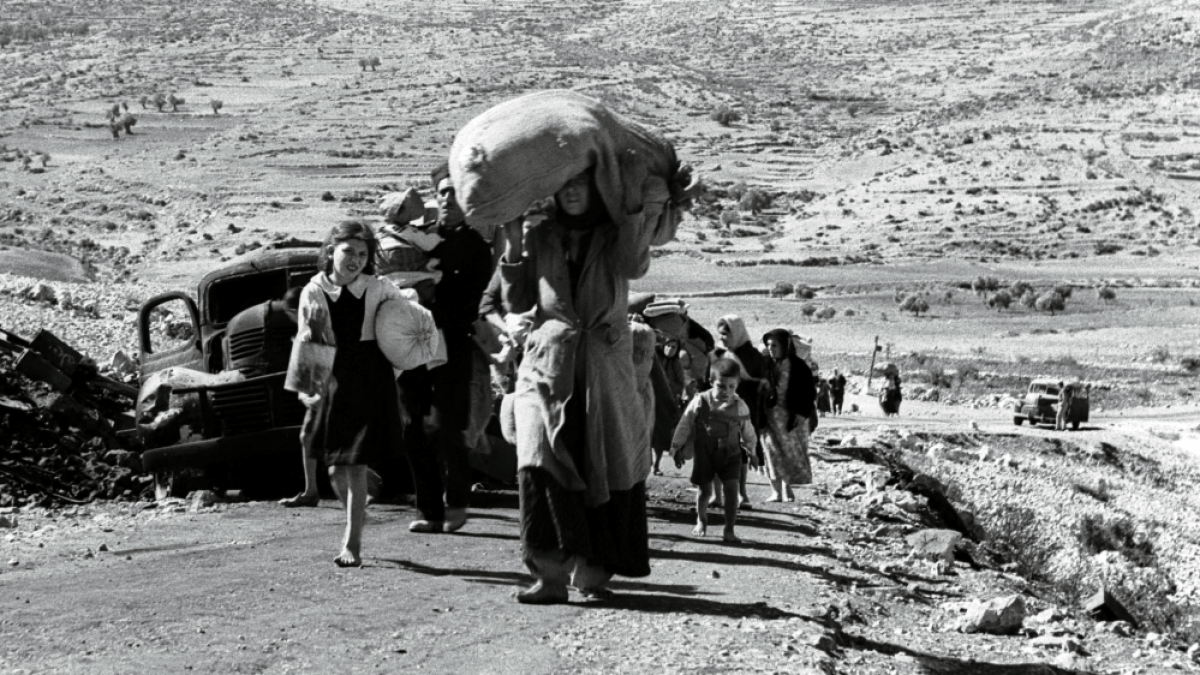
Make no mistake: Israel’s assault on Jenin is about the ethnic cleansing of Palestinians in service of widespread Jewish settlement. We are witnessing nothing short of an ongoing Nakba – the continuation of a story that began seventy-five years ago and shows no sign of stopping.
In fact, news reports of events in Jenin evoked chillingly familiar parallels to 1948. The operation led to the mass displacements of residents – as many as 3,000 of the camp’s roughly 17,000 residents sought shelter in schools and other public buildings, or with families elsewhere. Numerous Palestinian officials reported that Israel had threatened and forced camp residents to evacuate their homes. Jenin’s mayor, Nidal al-Obaidicommented, “What’s happening is like an earthquake. It reminds us of the days of Nakba.”
There is, of course, one way Israel can be stopped. Peter Beinart spelled it out plainly in an MSNBC op-edyesterday:
Ultimately, preventing another Nakba requires telling Israeli leaders that another effort at mass expulsion would bring a dramatic U.S. response: a halt to arms sales, condemnation at the United Nations, support for prosecutions at the International Criminal Court. It requires telling Israel that America’s support is not, as President Joe Biden continues to insist, “unbreakable.” Mass ethnic cleansing would break it.
To this, I would add: liberal Zionists in the American Jewish community needs to give up their illusions that the latest events in Jenin are a product of aberrant Israeli ministers who are “threatening the democracy” of an otherwise noble national project. We are not witnessing the death of a dream – we are witnessing the logical consequences of a colonial movement that seeks to establish a state on the backs of another people.
If there is anything new now, it is that Israel has government leaders who are willing to say as much out loud. When will we take them as their word? And when will we hold them accountable?
To that end, I’ll close with the words from a recently released statementby the Jewish Voice for Peace Rabbinical Council:
There is no hiding from the horror of what Jenin has endured. We must act. We must hold Jewish communities and government officials accountable for allowing the attacks to continue. Each day a Jewish person takes action to resist Israeli occupation, we affirm what the Torah requires: To protest within our households, our cities and our world until the occupation is ended, the right of return is restored and Palestinians can live peacefully in their land.
Click hereto write to your member of Congress and demand they “condemn the Israeli government’s invasion of Jenin and take steps to end US complicity in Israeli apartheid.”
On the surface, the Book of Ruth, the Biblical story traditionally read on the Jewish festival of Shavuot (which began last evening), appears to be a simple parable about two women struggling to survive in the wake of a devastating famine. If we dig deeper, however, we’ll find that Ruth is actually a profound and radical story that explores themes of isolation and connection, dispossession and return, emptiness and plenitude, exile and redemption.
As a Jew who views solidarity with the Palestinian struggle for liberation to be a sacred obligation, I find that these themes to be particularly resonant. As we celebrate Shavuot this year, for instance, we are receiving tragic reportsthat the Israeli military has forcibly transferred the Palestinian residents of the Ein Samiya village, including 78 children (whose school was targeted for demolition). This latest act of political dispossession is only the latest in alarger Israeli program of ethnic cleansingthat dates back to the establishment of the state in 1948.
Amidst this ongoing reality of Palestinian exile, I’d like to suggest four themes from the Book of Ruth that call out to me with special urgency this Shavuot:
One: the story of Ruth tells the story of Naomi, a childless Israelite widow and her Moabite daughter in law Ruth, who return to Naomi’s home in Bethlehem, in the hopes of finding safety and security. As unmarried women, they are radically marginalized, forced to use the power they have at their disposal to survive in a world that has symstemically disempowered them. Those of us who stand in solidarity with Palestinians – indeed, all who are oppressed – would do well to heed the moral imperative at the heart of this story.
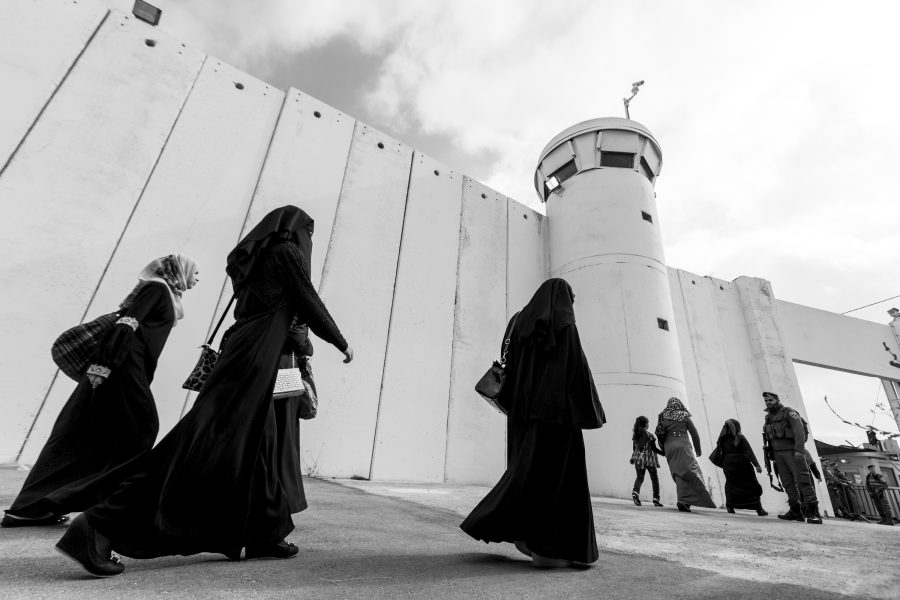
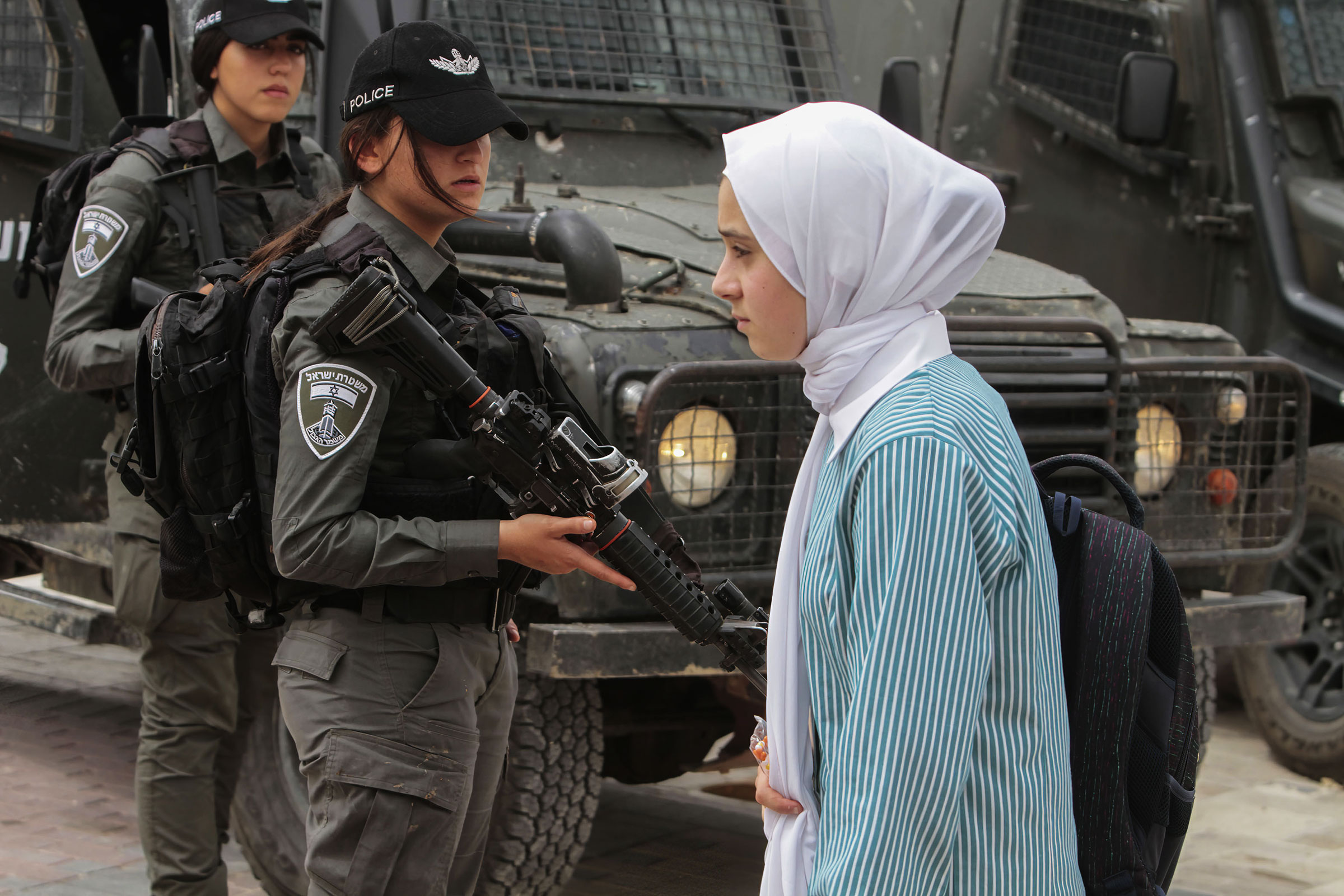
Two: as the story opens, Naomi migrates with her husband and two sons to the land of Moab. She later crosses back with her daughter-in-law when she receives word that the famine has lifted in her home country. In its way, the Book of Ruth portrays a world in which migration was a natural social phenomenon; when border-crossing was an accepted and necessary part of life. Today, this very land is strewn with militarized borders, checkpoints and refugee camps – and Palestinians are routinely denied the most basic right of human mobility. The Book of Ruth thus calls to us with a striking vision: a land and a world in which borders pose no barrier to those seeking a better future for themselves and their families.
Third: the driving center of the Book of Ruth is the deep and loyal relationship between an Israelite woman and her Moabite daughter-in-law. Those who are familiar with the Hebrew Bible will not help but note that the Moabite nation is typically portrayed as the arch enemy of the Israelite people. In this story, however, these national allegiances and historical enmities are nowhere to be found. Instead we are left with this simple, sacred message: the ultimate path to redemption is not to be found through power and violence – but rather through mutual love and solidarity.
And finally, the Book of Ruth opens in amidst a devastating famine in Bethlehem and ends with the reaping of a new harvest and the promise of an abundant future for Ruth, Naomi, their family and descendents. This vision of abundance: in which there is more than enough for all who dwell on the land, is indeed at the heart of the Palestinian struggle for liberation: one that envisions a future of equity, justice and peace for all who live between the river and the sea.
Back in 2009, when I was beginning to struggle openly with my relationship to Israel and Zionism, I wrote a blog post entitled “Why I Didn’t Celebrate Yom Ha’atzmaut.” Here’s how it began:
I’ve decided not to celebrate Yom Ha’atzmaut today. I don’t think I can celebrate this holiday any more.
That doesn’t mean I’m not acknowledging the anniversary of Israel’s independence – only that I can no longer view this milestone as a day for unabashed celebration. I’ve come to believe that for me, Yom Ha’atzmaut is more appropriately observed as an occasion for reckoning and honest soul searching.
As a Jew, as someone who has identified with Israel for his entire life, it is profoundly painful to me to admit the honest truth of this day: that Israel’s founding is inextricably bound up with its dispossession of the indigenous inhabitants of the land. In the end, Yom Ha’atzmaut and what the Palestinian people refer to as the Nakba are two inseparable sides of the same coin. And I simply cannot separate these two realities any more.
In the fourteen years since writing these words, I haven’t wavered on this essential conviction. I still don’t consider the founding of a Jewish state on the backs of another people to be a day to celebrate.
A rabbi whose work I’ve often admired recently tweeted, “What if you knew your heart was big enough to hold the joy of Yom HaAtzmaut and the bitter anguish of the Nakba?” I must respectfully disagree. I reject the implication that those of us who refuse to celebrate Yom Ha’atzmaut with joy are somehow being “small hearted.” There are increasing numbers of Jews who refuse to celebrate Yom Ha’atzmaut out of genuine and deep seated moral conviction. We understand all too well that the the “national liberation” of Jewish statehood was accomplished through the ethnic cleansing of another people – a Nakba that is still very much ongoing. Intentionally or not, those who celebrate this selective form of liberation are, in a very real sense, normalizing dispossession. And it is not small hearted to affirm this.
As I see it, the question on whether or not to celebrate Yom Ha’atzmaut is not a question of holding complex, contrary emotions at the same time. Rather, it is a question of solidarity. As Marek Edelman, the anti-Zionist leader of the Warsaw ghetto uprising famously put it, “To be a Jew means always being with the oppressed and never the oppressors.“ Perhaps this is the real question: “What if you knew your heart was strong enough to stand down a celebration of dispossession – particularly when this dispossession is actually occurring in real time?”
As with the fourth of July in the US, these kinds of national holidays give us the opportunity to interrogate our histories and think honestly and seriously about their legacies. To this end, I’d like to suggest that the Jewish community find new ways to commemorate the occasion of Israel’s founding (see for instance, my 2018 prayer “A Jewish Prayer for Nakba Day.”) I am not suggesting for a moment that we should appropriate Nakba Day and “make it about ourselves.” It should go without saying that Nakba Day rightly belongs to the Palestinian people. But at the same time, I do think it provides the Jewish community with the opportunity to acknowledge the truth of the Nakba in a world where Nakba denial continues to run rampant.
As a Jew, I believe that the Nakba…is the most important ethical and spiritual issue facing the Jewish people in our time. Our people will be judged, and we will judge ourselves, by whether we will treat others differently when we have power over them. Will we mistreat others in the same way we were mistreated, or will we follow the ethical imperative of our tradition to treat everyone as an individual created in the image of God deserving of equality, compassion and love? This is a moral question on which the future of Judaism and the Jewish people rests in our time.
…We must ask ourselves what is the cost that Palestinians should pay for our safety? We simply must create a different reality where both peoples thrive, not one at the cost of the other…The first step of teshuvah is hoda’a/acknowledgement. The very first step is to challenge the denial by acknowledging the truth of what was done, no matter how painful that acknowledgement may be.
As I wrote in 2009, just because I’m not celebrating on Yom Ha’atzmaut with joy, it doesn’t mean I’m not acknowledging the anniversary of Israel’s establishment. Rather, I’m taking this opportunity – as a Jew and a person of conscience – to stand in solidarity with the Palestinian people, to acknowledge the truth of their historic and ongoing dispossession, and to affirm a different reality: “where both peoples thrive – not one at the cost of another.”
May we all have the strength of heart to make it so.
Today marks the seventy eighth anniversary of a public Shabbat service held in liberated Dachau. While it’s not a particularly well-known story, it deserves to be commemorated and widely retold, not least because it illuminates the powerful ways that prayer has historically served as a form of resistance.
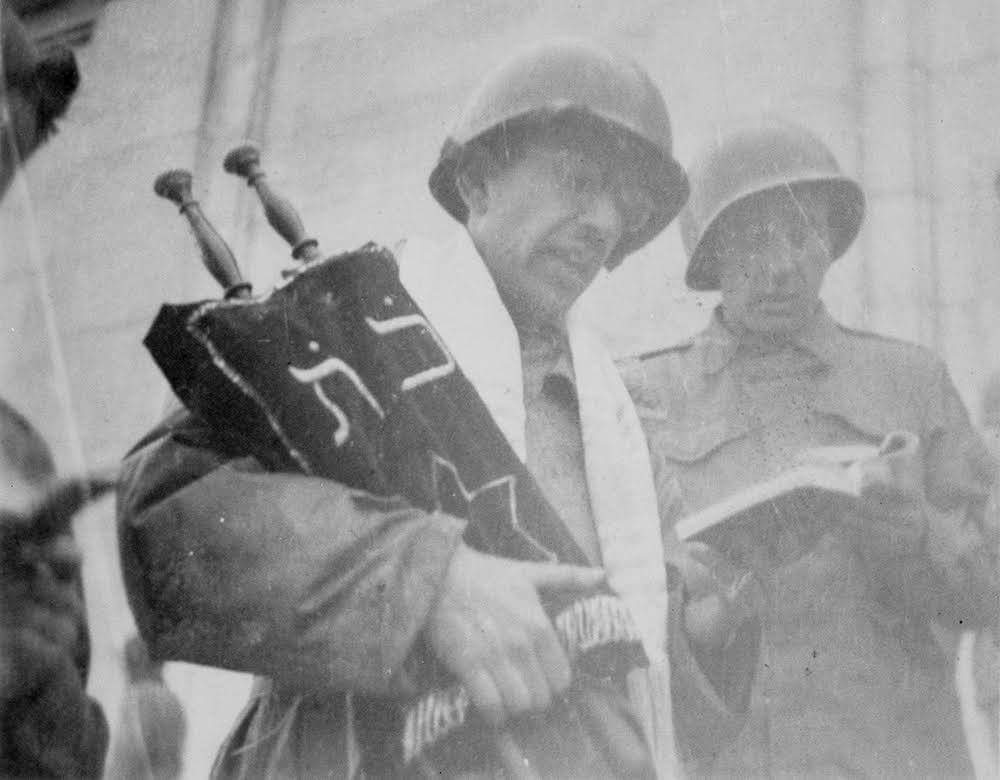
The service was led by Rabbi David Max Eichhorn, a Jewish chaplain in the US Army’s XV Corps. Rabbi Eichhorn wrote extensively about this – and many other of his remarkable wartime experiences – in letters that were compiled in (the highly recommended) book, “The GI’s Rabbi.” While Eichhorn experienced a number of well-known historical events during the war, for me, the most indelible moments in the book come from his witness to the liberation of Dachau: from his description of the army’s numbing discovery of masses of naked, emaciated bodies, to the acts of revenge committed by ex-prisoners against their former captors, to his moving description of courageous non-Jews who “had saved Jewish lives at the risk of their own.”
Eichhorn’s most memorable recollections of the liberation of Dachau involve his role in the Shabbat service he led on May 5, 1945. One day before, on Friday afternoon, after leading a service in the women’s barracks, a lieutenant colonel approached him with tears in his eyes. It was the famed Hollywood film director George Stevens, who was in charge of the Signal Corps unit that had been taking official army footage of Dachau. (Stevens’ movie “D-Day to Berlin” is among the films made by five Hollywood directors who were embedded in Europe to document the war effort – a project powerfully recollected in the book and documentary “Five Came Back” – also highly recommended.)
Eichhorn and Stevens made arrangements for Stevens to film the camp-wide service that was scheduled to take place the next day in the main square of the Dachau compound. When Eichhorn arrived the next morning, however, he discovered that no preparations had been made. He was subsequently informed that Polish non-Jewish inmates had threatened to break up the service by force if was held in the main square. As a result, the service was moved to the camp laundry, which only accommodated a fraction of Jews who desired to attend. As Eichhorn recalls it:
While the service was in progress, in a jam-packed room with hundreds of others crowded around the open doors and windows, Colonel Stevens came in, elbowed his way to my side and demanded to know why the service was not being held in the square. His cameras and crews were ready for action and he wanted the event to go on as scheduled…After hearing the “inside story,” he exploded in anger. “I did not give up my good job in the movie business in Hollywood,” he bellowed, “to risk my life in combat for months and months, in order to free the world from the threat of Fascism and then stand idly by while the very victims of Fascism seek to perpetuate its evils.” …He took me to the Camp Commandant, and with a loudness of voice and much banging on the table, George Stevens repeated his anti-Fascistic sentiments.
…And so, thanks to the decent instincts of an American movie director, the camp-wide service was held in the main square. It was attended by every Jewish male and female whose health permitted. As promised, every nationality was represented by flag and delegation. There were an estimated two thousand Jews and non-Jews at the service. And ringing the outer rim of the service with faces turned away from the platform was the American military “guard of honor.” They were prepared to deal with a situation which did not develop. No untoward incident of any kind marred the service.
(from “The GI’s Rabbi: World War II Letters of David Max Eichhorn,” pp. 185-186.)
When I first watched it on YouTube, I found that the very familiar words of these prayers had a powerful new resonance. It was essentially an abbreviated Torah service, with other added prayers relevant to the occasion. It began with a prayer known as the Shehechianu – a blessing of gratitude for having been kept alive long enough to celebrate a sacred moment or season. He followed with Birkat Hagomel – a blessing traditionally recited by someone who has recovered from a serious illness or has otherwise survived a traumatic, potentially life-threatening episode. While I have been part of countless services that have included these blessings, it is indescribably moving to witness them recited by thousands of Jews recently liberated from a death camp. I had a similar response to the recitation of El Male Rachimim – the prayer for the dead – a prayer that has become a staple at Holocaust remembrance services.
In the end, however, it seems to me that the very act of holding the service was itself an act of resistance. I was most moved by the sight of the Torah scroll – the most indelible symbol of Jewish spiritual survival – being held aloft before the liberated of Dachau. It is, in its way, an iconic and redemptive image – one that speaks not only to this historical moment, but to our collective responsibility to a liberative future.
As Rabbi Eichhorn so aptly put it to his “congregation” that day:
What message of comfort and strength can I bring you from your fellow Jews? What can I say that will compare in depth or intensity to that which you have suffered and overcome? Full well do I know and humbly do I confess the emptiness of mere words in this hour of mingled sadness and joy. Words will not being the dead back to life nor right the wrongs of the past ten years. This is not a time for words, you will say, and rightfully so. This is a time for deeds, deeds of justice, deeds of love … Justice will be done.
On Passover, when we gather at the seder table to tell the story of the Exodus, we are reminded by the haggadah (the seder text) that merely telling the story is not enough. We are asked to not only relate but to interrogate this sacred narrative, to contemplate its meaning and to discuss the questions it raises for us. Most importantly, we must connect the lessons of the Exodus story to liberation struggles “in every generation.”
This year, many have inevitably been making connections between the Passover story and the recent anti-government protests that have unfolded in Israel since January. In a widely read sermon last February, for instance, Rabbi Sharon Brous compared the protests to the “great birth story” of the Exodus. In a recent New York Timesop-ed, Bret Stephens wrote that the protests were “as close to a revolution as the modern state of Israel has ever seen.” One Jewish leader commented to the press that he plans to read from the Israeli Declaration of Independence at his seder, particularly the passage that promises the “complete equality of social and political rights to all its inhabitants.”
On the surface, this framing might seem to make sense: Since late last year, thousands of Israelis have regularly been filling the streets to protest draconian policies proposed by the newly elected far right government of six-term Prime Minister Benjamin Netanyahu. The protests have largely focused on the “threat to democracy” posed by the government’s plans to drastically curtail the power of the judiciary. The demonstrations seem to have succeeded: late last month Prime Minister Netanyahu announced that he would seek a compromise with his political opponents in order to “avoid civil war.”
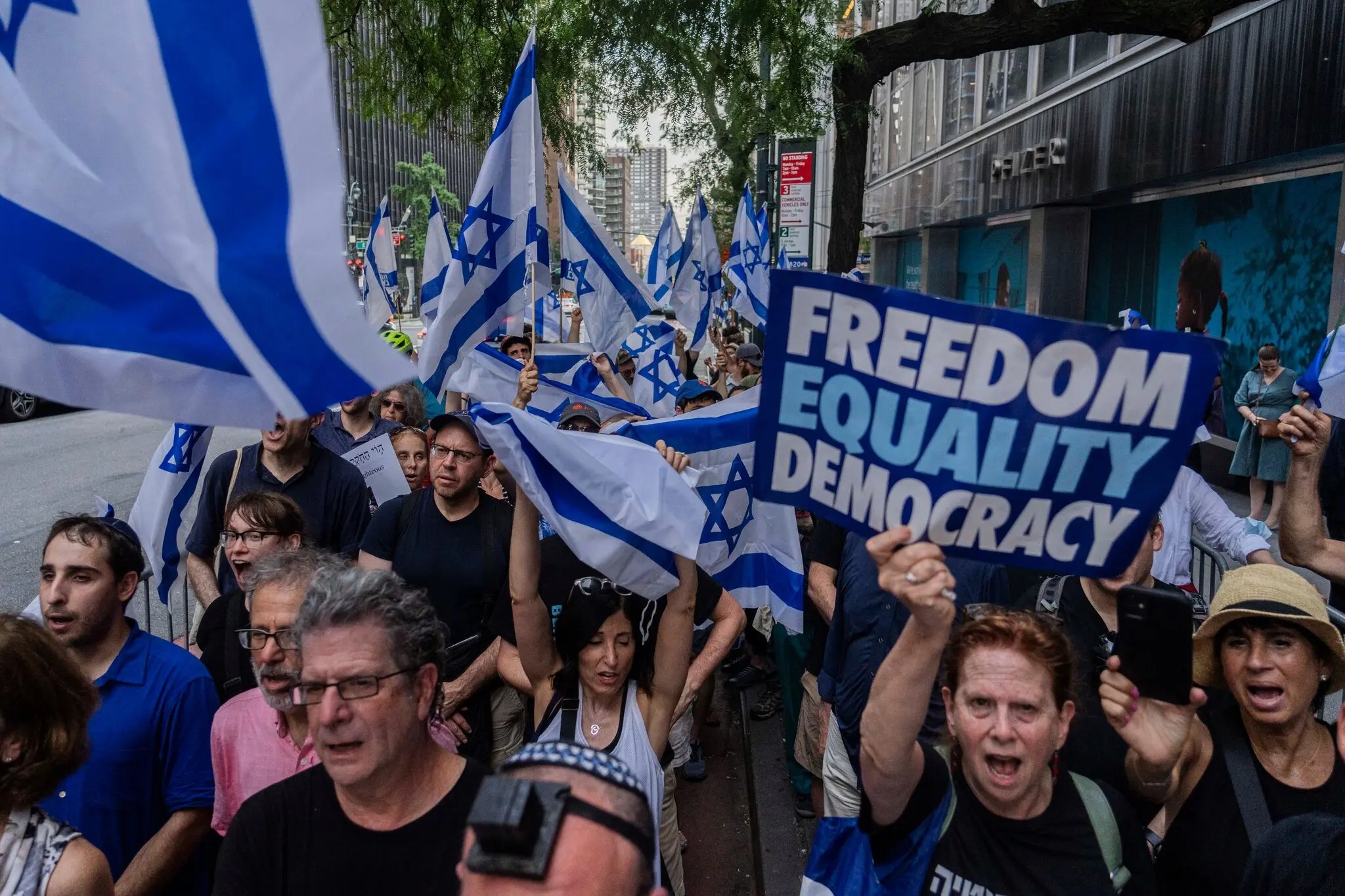
While this certainly seems like a “power to the people moment,” it’s worth asking: who exactly are the “people” who have taken back the “power?” Though it was not widely noted by the mainstream media, the protests were largely organized and attended by centrist and liberal Israeli Jews — Palestinians were notably absent. Indeed, it was difficult to ignore the sea of Israeli flags at these demonstrations, along with the drumbeat messaging over “saving Israeli democracy.” By the end, it had become clear that these protests were less about equal rights for Jewish Israelis and Palestinians alike than a desire to reclaim the patriotic Zionist mantle from a newly elected far right government.
In other words, before we’re tempted to connect the Israeli demonstrations to the festival of Passover, it’s worth investigating how we tell the story of liberation, who tells it, who we include, and who we leave out.
These questions are not, in fact, unique to this year. It is common for Zionists to refer to Zionism — the movement to build a political Jewish nation-state — as “the national liberation movement of the Jewish people.” Many might find this to be a curious use of the term, as it is typically used in regard to movements that struggle for liberation against colonial oppression — notsettler colonial movements themselves. Such rhetoric belies the origins of an ideology inspired by 19th-century European nationalism and a movement that actively sought to transplant European Jews in historic Palestine.
However, even Zionists who view Jewish nation-statehood in liberative terms must ultimately admit that from the beginning, Zionism focused exclusively on Jewish liberation — and that this liberation most certainly did not extend to Palestinians. Quite the contrary, of course. As a nation-state whose identity was predicated on a demographic majority of Jews in the land, Palestinians were, through their very existence, viewed as an obstacle to Jewish liberation.
Israel’s Declaration of Independence makes it clear that this nation was created first and foremost for Jews. The 10 paragraph-long preamble essentially reads as a Jewish history lesson, ending with the line, “This right is the natural right of the Jewish people to be masters of their own fate, like all other nations, in their own sovereign State.” There is only one paragraph that pertains to the rights of non-Jews:
THE STATE OF ISRAEL will be open for Jewish immigration and for the Ingathering of the Exiles; it will foster the development of the country for the benefit of all its inhabitants; it will be based on freedom, justice and peace as envisaged by the prophets of Israel; it will ensure complete equality of social and political rights to all its inhabitants irrespective of religion, race or sex; it will guarantee freedom of religion, conscience, language, education and culture; it will safeguard the Holy Places of all religions; and it will be faithful to the principles of the Charter of the United Nations.
Note that the Declaration “ensures” social, political and religious — but not national — rights to its Palestinian citizens. This language is quite intentional: Israel considered Jews throughout the diaspora to be part of the “Jewish nation,” granting any Jew who immigrated to the state from anywhere in the world instant citizenship through its Law of Return. Conversely, the over 700,000 Palestinians refugees who were forcibly displaced from their homes and forbidden to return were decidedly not included as part of the newly established nation.
To this day, Israel has maintained a careful distinction between “nationals” and “citizens.” As non-Jews, Palestinians in Israel can be citizens, but they are not nationals, thus depriving them of rights and privileges enjoyed by Israeli Jews. As a result, to this day, there are more than 60 laws that discriminate against Palestinian citizens of Israel directly or indirectly, impacting virtually every aspect of their lives, including housing, employment, education, health care, and who they can marry.
The status of Palestinian citizens was compromised yet further in 2018 with Israel’s passage of the so-called Nation-State Law, which determined that “the right to exercise national self-determination” in Israel is “unique to the Jewish people,” established Hebrew as Israel’s official language, and established “Jewish settlement as a national value,” mandating that the state “will labor to encourage and promote its establishment and development.” According to Adalah:
This law – which has distinct apartheid characteristics – guarantees the ethnic-religious character of Israel as exclusively Jewish and entrenches the privileges enjoyed by Jewish citizens, while simultaneously anchoring discrimination against Palestinian citizens and legitimizing exclusion, racism, and systemic inequality.
Of course, the injustices facing the almost 3,000,000 Palestinians who live under military occupation in the West Bank — and the over 2,000,000 who live under a crushing blockade in Gaza — are dramatically worse than those experienced by Palestinian citizens of Israel. But it would be a mistake to draw a fundamental distinction between these different Palestinian populations. As the Israeli human rights organization B’Tselem puts it in its 2021 report, Israel maintains “a regime of Jewish supremacy from the Jordan River to the Mediterranean Sea.” Put simply, as a Jewish nation-state, Israel systemically denies basic civil and human rights to all non-Jews who live under its control.
It’s interesting to note that the “selective liberation” story we tell about Israel is not dissimilar from the story we tell about the establishment and history of another notable settler colonial state — namely, the United States. Indeed, I’m often struck that we typically use the term “American Revolution” to refer to what was essentially a political-economic secession by colonists from the British empire, whose nation was built on the genocide of Native peoples, enabled by the stolen labor of Black slaves.
Here too, it’s critical to interrogate how we tell the story of this national liberation, who tells it, who we include, and who we leave out. It has often been observed that the opening words to the American Constitution, “We the People,” is a radical misnomer as the founders originally defined “we” to be limited to white, property-owning males. This inherent inequity was already being openly challenged not long after the founding of the state. As Frederick Douglass famously declared in his 1852 speech, “What to a Slave is the Fourth of July:”
The rich inheritance of justice, liberty, prosperity and independence bequeathed by your fathers, is shared by you, not me. The sunlight that brought light and healing to you, has brought stripes and death to me. This Fourth of July is yours, not mine. You may rejoice, I must mourn.
When it comes to this legacy of American structural injustice, one can draw a direct line from Douglass to the words of Malcolm X, from his 1964 speech “The Ballot or the Bullet”:
No, I’m not an American. I’m one of the 22 million Black people who are the victims of Americanism. One of the 22 million Black people who are the victims of democracy, nothing but disguised hypocrisy. So, I’m not standing here speaking to you as an American, or a patriot, or a flag-saluter, or a flag-waver — no, not I. I’m speaking as a victim of this American system. And I see America through the eyes of the victim. I don’t see any American dream; I see an American nightmare.
At the same time, however, there remains a uniquely American tension between the “American nightmare” of Malcolm X and the “American Dream” referred to by Dr. Martin Luther King Jr. in his “I Have a Dream” speech, where he famously challenged the United States to be true to its stated intention to form a more perfect union: “I have a dream that one day this nation will rise up and live out the true meaning of its creed: We hold these truths to be self-evident, that all men are created equal.”
More recently, Nikole Hannah-Jones, author of the “1619 Project” has observed that “the United States is a nation founded on both an ideal and a lie.” Still, she concluded:
Despite being violently denied the freedom and justice promised to all, Black Americans believed fervently in the American creed. Through centuries of Black resistance and protest, we have helped the country live up to its founding ideals. And not only for ourselves — Black rights struggles paved the way for every other rights struggle, including women’s and gay rights, immigrant and disability rights.
Of course, we are currently witnessing a white supremacist backlash against those who seek to challenge the legacy — and reality — of American structural racism. As ever, Americans are struggling openly over how inclusive, extensive and complete our liberation will be. It is a tension that has been ongoing since the very founding of this country — it is at its core, a quintessentially American struggle.
In Israel, however, the struggle for democracy is far more complicated. As a Jewish state, Israeli democracy can only truly extend to its Jewish citizens. Unlike the U.S., where those who advocate equal rights for all can still be described as “believing fervently in the American creed,” those who call for one state with full citizenship for all are routinely accused of antisemitism, seeking nothing less than “the destruction of the Jewish state.”
Another important difference: unlike the U.S., Israel does not have a Constitution that, theoretically at least, ensures equal rights for its citizens. Noting Israel’s early, aborted attempts at creating a Constitution, journalist Joshua Leifer has recently commented:
America’s Constitution begins, “We the People.” One of the things that’s very striking when you read the drafts of the Israeli constitution that were written in 1950 is that the proposed version of Israel’s constitution began with “the Jewish people.” The ethnos was imagined as the demos from the beginning.
Like many Americans, I believe it is my responsibility to challenge my country to, as MLK put it, “live out the true meaning of its creed.” Among other things, this means actively supporting anti-racist struggles in the U.S. that demand full and equal rights for all itscitizens. As an American Jew living in the age of Zionism, I can demand nothing less for all who live between the river and the sea.
As Aurora Levins Morales concludes in her classic poem “Red Sea:”
This time that country is what we promise each other, our rage pressed cheek to cheek until tears flood the space between, until there are no enemies left, because this time no one will be left to drown and all of us must be chosen. This time it’s all of us or none.
This Passover, it is clearer than ever before that we need a new Jewish liberation story: one that is inseparable with the vision of liberation for all.
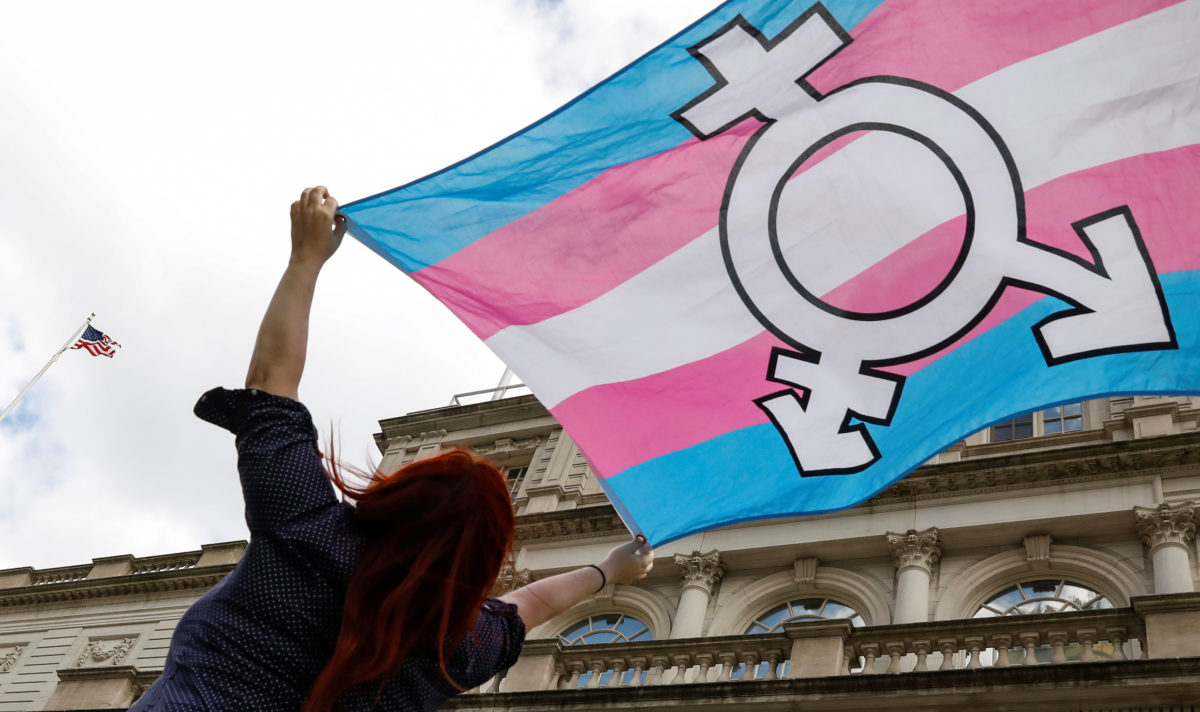
This year, the Passover seder supplement I’ve composed for Tzedek Chicago highlights the rise of anti-trans hate legislation throughout the US. In addition to the reading, the supplement contains action components to help you participate in the resistance movement to the growing threat to the well-being of trans, non-binary, and gender non-conforming people.
As it concludes:
May the bitterness of this maror awaken us to resist and turn back all legislated hate directed toward trans, non-binary, and gender non-conforming people. Let us redouble our resolve to build a society that recognizes the tzelem elohim – the divine image – in all people – and a world that cherishes each and every one of us for all of who we are.
Here are a few more Passover resources that I’ve developed over the years – feel free to print out, share and use at your seders this week:
For the past several days, Israeli politicians and military leaders have been publicly condemning last Sunday’s settler rampage in the West Bank village of Huwara. While the pogrom was well underway, in fact. Netanyahu publicly assumed the posture of the reasonable, measured moderate, pronouncing to the settlers, “Don’t take the law into your hands. I ask that you allow the IDF and security forces to do their work.” More recently, a top Israeli general said in an interview that the military had predicted the settler attack, but that they “didn’t predict a pogrom.”
It was indeed ironic that during the attack, Netanyahu beseeched the settler community to “let the IDF and security forces do their work” since the IDF and security forces had already done their work all too well. Israeli journalist Orly Noy reported that when the attack commenced, “the Israeli army shut down the two entrances to Huwara and allowed the settler mob to enter the town by foot, doing nothing to prevent the ensuing atrocity.” Noy added that “settlers were seen handing out food to the soldiers stationed at the town’s entrances, which the soldiers gladly took and warmly thanked them for.”
So don’t be fooled by the hand-wringing. The notion that one of the most powerful militaries in the world was unable to control a civilian mob is nonsense. Despite official protestations to the contrary, this was state-endorsed violence, full stop.
In this regard, it bears a chilling resemblance to the horrific 1982 massacres in the Sabra and Shatila refugee camps. Another Israeli reporter, Gideon Levy, aptly made this connection in a recent Ha’aretz op-ed:
Turning a blind eye in this way conjures up forgotten memories. The IDF also turned a blind eye in 1982 at the Palestinian refugee camps of Sabra and Chatila in Lebanon, making it possible for Lebanese Phalangist militias to commit the terrible massacres there. There was no massacre at Hawara, not yet, but no one could have known in advance how things would turn out. If the rioters had also wanted to massacre the population, no one would have stood in their way on Sunday. No one stopped the Phalangists at Sabra and no one stopped the Phalangists at Hawara.
Indeed, when these kinds of events occur, we must never lose sight of the face that they occur within a context of constant state violence. These are not isolated “vigilante actions,” nor do they constitute a “cycle of violence.” Yes, the pogrom occurred in retaliation for the murder of two Israeli settlers – but we cannot forget that it also occurred within the context of a brutal military occupation in which the Israeli military has routinely been killing Palestinians on an almost daily basis.
It’s also critical to note that military violence against Palestinians in the West Bank has dramatically increased over the past few months – just last week at least 11 Palestinians were killed and more than 100 injured in an Israeli military raid on Jenin – and that observers have long been warning of a resurgent Palestinian uprising in response. But of course, none of this is new. Israel’s military oppression of West Bank Palestinians has been normalized and routinized for decades. If there is anything new now, it is that there are now Israeli politicians who are ready to proudly display their hated of Palestinians out loud, as Zvika Fogel, chairman of the Knesset’s National Security Committee did when he proclaimed on Monday, “A closed, burnt Huwara — that’s what I want to see…We need burning villages when the IDF doesn’t act.”
In the wake of the Huwara rampage, I’ve read some debate as to whether or not it should accurately be referred to as a “pogrom.” To my mind, most of these analyses miss the central point entirely. Yes, the pogroms waged against Jewish communities of Eastern Europe were carried out by local non-Jewish populations, but they were typically fanned and encouraged “with government and police encouragement.” Historically speaking, pogroms have generally been carried out by local actors, as a pretext for larger government designs.
When it comes to Jewish pogroms against Palestinian communities, some of the worst violence has historically occurred during the holiday of Purim. I’ve written about this sickening phenomenon before; Jewish pogroms against Palestinians have become an annual inevitability in Israel, when extremists have used the violence at the end of the Book of Esther as a pretense to terrorize and brutalize Palestinian communities. In particular, the settlers’ Purim parade in Hebron has become an annual tradition for the unleashing of anti-Palestinian pogroms.
As Purim eve arrives this Monday evening, I have no doubt that Palestinians in Hebron and throughout the occupied territories are bracing for more rounds of horrid, tragic violence. I fervently hope and pray that this will not be the case – and I hesitate to indulge in alarmism – but given the tenor of the current moment, I genuinely fear that Purim is arriving at the worst possible time.
Whatever may happen this year, I hope we will not be fooled by the hand-wringing protestations of hypocritical politicians, that we will summon the courage to call out state-sponsored violence when we see it, and that we are prepared to demand in no uncertain terms that the true perpetrators are held accountable.