Category Archives: Israel

They are Young, Jewish, Proud: Will We Let Them In?

“How do we reach Jewish young people?” has long been one of the central mantras of the organized Jewish community, as those of us who work as Jewish professionals can surely attest. But while we wring our hands over at the state of the Jewish future, a remarkable new generation of Jews has been knocking insistently at our door.

Case in point: Almost one year ago, five young Jews disrupted the keynote speech by Israeli Prime Minister Benjamin Netanyahu at the Jewish Federation General Assembly in New Orleans. One by one, at five different points during the speech, the activists stood on their chairs, unfurled banners and shouted out in turn:

Young Jews say the settlements delegitimize Israel!
Young Jews say the Occupation delegitimizes Israel!
Young Jews say the siege of Gaza delegitimizes Israel!
Young Jews say the loyalty oath delegitimizes Israel!
Young Jews say silencing dissent delegitimizes Israel!

With each successive interruption the shouts from the crowd grew louder and angrier. As security attempted to safely walk them out, one protester was put in a choke hold by a convention attendee and wrestled to the floor. Another conventioneer grabbed a banner and tore it in half with his teeth.

At the very same moment, “Young, Jewish, Proud” launched its website, featuring the “Young Jewish Declaration” — an astonishing statement of purpose that seemed to come directly from the collective heart, mind and gut of this newly formed youth movement:

We exist. We are everywhere. We speak and love and dream in every language…

We remember how to build our homes, and our holiness, out of time and thin air, and so do not need other people’s land to do so…

We refuse to have our histories distorted or erased, or appropriated by a corporate war machine. We will not call this liberation…

We commit ourselves to peace. We will stand up with honest bodies, to offer honest bread…

We are young Jews, and we get to decide what that means.

Predictably, the Jewish establishment wasted no time in excoriating the protesters. Some chided them condescendingly for their “misguided” behavior. Others angrily criticized them for “aiding the enemy.”

As for me, I watched these events unfold with genuine hope for our Jewish future.

After all, weren’t these young people claiming and proclaiming their Jewishness in classic Jewish fashion? Like young Abraham destroying his father’s icons, they stood up to the hypocrisy and corruption of their elders. In the heart of the the largest gathering of American Jewish leaders, these proud young Jews called out their community on its most sacred of sacred cows: namely, the unquestioning, unconditional support of the state of Israel.

In all honesty, I can’t say I’ve ever witnessed as authentic an act of young Jewish self-expression as I did that afternoon at the New Orleans General Assembly.

Yes, as a professional Jew, I’ve participated in the “how can we inspire young people?” conversation more times than I care to admit. I’ve watched a myriad of Jewish community-sponsored initiatives come and go. And invariably, all of them focused on what we believed was best for Jewish young people.

But while the Jewish establishment has been excellent at creating and funding expensive projects, we seem to be chronically incapable of actually listening. We love to tell young people how we think they should express their Jewishness, but rarely do we stop long enough to really, truly learn what drives and inspires them.

Taglit-Birthright Israel, the Jewish establishment’s signature youth initiative, is the most obvious case in point. For well over a decade, we have invested literally hundreds of millions of dollars in providing free, all-expense-paid trips to Israel. The essential goal of these trips, as Birthright’s Marketing Director puts it plainly, is to make Israel “an integral part of every Jew’s identity.”

It’s well known that Birthright was born in response to growing reports that American Jewish young people were becoming increasingly disconnected to the state of Israel. But by rushing to address this issue through a massive multimillion dollar community initiative, we successfully avoided asking the deeper questions.

Could it be that we were afraid to know the answers?

Could it be that young people are becoming disenchanted with Israel because they are becoming increasingly troubled by its treatment of Palestinians? Could it be that growing numbers of young Jews regard Israel more as an oppressive colonial project than a source of Jewish pride? Could it be that in the 21st century world, the identities of young Jews are tied less to Jewish ethno-nationalism than to a more universal vision of liberation?

“Young, Jewish, Proud” is decidedly not the product of a Jewish communal initiative. On the contrary it is a grass-roots, self-organized effort of young Jews who seek to express their Jewish identity in a time-honored Jewish manner: by speaking truth to power, by advocating unabashedly for peace, justice and liberation, by standing up to oppression, racism and persecution in Israel/Palestine and throughout the world. They simply aren’t buying what the Jewish establishment has been selling them. They are finding their own voices.

We are young Jews, and we get to decide what that means…

I am well aware that it is not easy for a Jewish community so thoroughly focused on Zionism to hear it challenged in such a fundamental way. But aren’t these young Jews doing precisely what they were raised to do?  They are taking a good, educated look around them, thinking critically about what they see and are taking a stand for what they believe in as Jews.  Are we really prepared to disown them because their conclusions make us uncomfortable?

In the Torah portion for the first day of Rosh Hashanah, we read that when God saves the life of young Ishmael in the wilderness, “God heeded the cries of the boy where he is” (Genesis 21:17). In other words, God was able to find Ishmael by truly listening to him. Not where God wanted him to be or where God thought he should be, but where he was.

This New Year, I fervently hope our community can do the same with our newest adult generation. These young people certainly have every reason to be disenchanted with the organized Jewish community, but for some reason they refuse to go away. They’re here, and they’re knocking loudly at our door.

Do we, the gatekeepers of the Jewish community, have the vision, the faith and the courage to open it up and let them in?
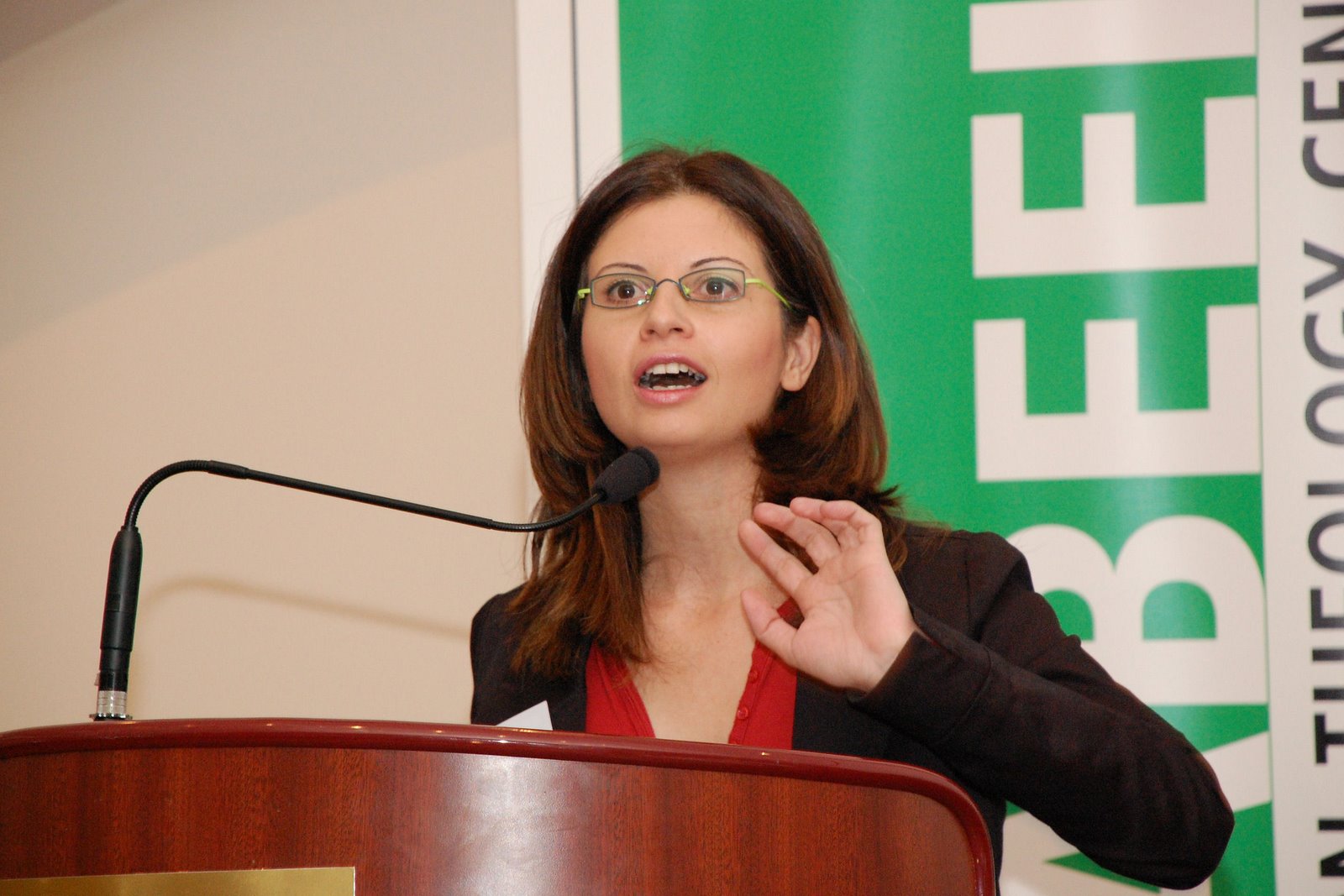
Palestinians to Obama: “We Have Listened and You Have Failed”

I was prepared to write extensively about Obama’s shameful speech at the UN General Assembly yesterday, but this post by Palestinian analyst/activist Abir Kopty (above) says everything I wanted to say and more.

I’ll just add that I genuinely believe that after last night, the US has utterly abdicated any meaningful role as a peace arbiter between Israel and Palestine. Where this political leadership will come from remains to be seen.

And meanwhile, the oppression continues…

We listened to you when you talked about Israel’s citizens who have been killed by rockets fired at their houses, and that other children are taught to hate Israeli children. Do you not think that Israeli children hear what is said by rabbis who preach hate about Arabs? And we listened about Jewish suffering. No doubt Jewish people have suffered Mr. Obama, but let us put things in order: Jewish people are not the victims here. The Israeli state is not the victim; it is the occupier and the oppressor which continues to deny Palestinians living in their homeland and in exile ‘their universal right to live in freedom and dignity’.

When you fail to mention Palestinian suffer under occupation, when you fail to consider Palestinian children as equal human beings who deserve a better future, who are also entitled to human rights, you might win elections, but you lose your integrity, and you make it clear to everyone why the ‘so called peace process’ should be out of your hands…

We listened to you when you talked about the Arab Spring with such a passion. We listened with much suspicion, as America was very happy with the leaders of those countries who ruled for decades, and did not care then for Egyptian, Tunisian, Libyan, Syrian, Yemeni and Bahraini aspirations for freedom and dignity. And we know that you won’t leave those nations alone.

We listened to you and we did not understand why Palestinian freedom and dignity can wait? The only thing your speech made clear is that you do not dare to speak honestly.

I strongly encourage you to read her full post – please click here.

Rabbi Eric Yoffie: “I Prefer to Live With Jews”

Rabbi Eric Yoffie is the outgoing President of the Union for Reform Judaism, arguably the most important Reform Jewish leader in the country. In a recent blog post for the Jerusalem Post, he made the following point in defense of a two-state solution in Israel/Palestine:

I care about humankind, but I love my own group a bit more. I am more comfortable with them. I care more about them, just as I care more about my family than other families. Without a two-state solution, Israel will not longer be a state for my group; it will be a bi-national state without a clear Jewish identity. That is not the kind of place where I, or most Israeli Jews, will want to live.

So there you are. This is where the rubber hits the road. Is the best case we can make for liberal Zionism: that when push comes to shove, Jews prefer to live with Jews?

I think we all owe a very real debt to Rabbi Yoffie. In trying to make a dramatic pedagogical point, he has just shone a very bright light on the dark underbelly of this entire project.

This is abject tribalism, pure and simple. And if it truly is the essence of liberal Zionism, then count me out.

Understanding the Palestinian UN Initiative: A Conference Call with Josh Ruebner

How can we understand the PA’s initiative to declare statehood at the UN? How should US and the international community respond?  Will it advance the prospects for justice and peace in Israel/Palestine?

To explore these timely issues, Ta’anit Tzedek – Jewish Fast for Gaza is sponsoring a phone conference with Josh Ruebner, National Advocacy Director of the US Campaign to End the Israeli Occupation on Thursday, September 22 at 12 pm (EST)

Ruebner is a former Analyst in Middle East Affairs at Congressional Research Service, a federal government agency providing Members of Congress with policy analysis. His analysis and commentary on US policy toward the Middle East appear frequently in media such as NBC, ABC Nightline, CSPAN, Al Jazeera, USA Today, Los Angeles Times, Huffington Post, Middle East Report, and more.

The US Campaign to End the Israeli Occupation is a national coalition of nearly 350 organizations working to end US support for Israel’s illegal 43-year military occupation of the Palestinian West Bank, East Jerusalem, and Gaza Strip, and to change U.S. policy toward Israel/ Palestine to support human rights, international law, and equality.

Call-in info:

  • Call in number: 1-800-920-7487
  • Code: 92247763#

Participants in the call are encouraged to read one or more of the following articles:

Please join the call!

Palestinian Statehood: The US Fails the Leadership Test Again

I don’t have a position on whether or not it is a good thing for the PA to seek membership status for Palestine at the UN. That is for the Palestinians to determine – and I know there are a variety of Palestinian opinions both pro and con on this issue.

But I do believe this: the Obama Administration is being highly disingenuous in its attempts to block this declaration by claiming a Palestinian state can only achieved through peace negotiations.

On this one I’m in full agreement with former AJC Executive Director Henry Siegman, who offered this analysis yesterday:

(Is) there anyone who witnessed the frenzied applause that greeted Prime Minister Benjamin Netanyahu’s most recent speech before the U.S. Congress in which he left no doubt about his government’s intentions for East Jerusalem and for the West Bank, or heard President Obama’s assurances to AIPAC’s conventioneers that the ties that bind the U.S. to Israel are forever “unbreakable,” who still believes that the U.S. will ever exert the kind of pressure on Israel that will finally change its cost/benefit calculations with regard to its colonial project?

Two years ago, Obama stood at a podium in Cairo University and said the following:

America will not turn our backs on the legitimate Palestinian aspiration for dignity, opportunity, and a state of their own…

The only resolution is for the aspirations of both sides to be met through two states, where Israelis and Palestinians each live in peace and security…

The United States does not accept the legitimacy of continued Israeli settlements.  This construction violates previous agreements and undermines efforts to achieve peace.  It is time for these settlements to stop…

And now here we are. The Obama administration has done everything it can to undermine its own publicly articulated goals. It continues to support Israel unconditionally as it settles the West Bank with impunity. Last February it cast the sole veto vote on a UN Security Council resolution that condemned the settlements. Now it is poised to publicly oppose Palestinians formal membership at the UN – the very body by which Israel itself became a state.

No, I’m not personally taking a stand on this because I don’t presume to preach to Palestinians what I think is in their best interest. But as an American citizen, I can’t accept my government’s claim that it is in any way committed to this so-called “peace process.”  Until the Obama administration is truly ready to be an honest and effective broker, it could at the very least refrain from smacking Palestinians down when they seek recourse through other means.

And when it comes to the larger implications of a US veto, I’ll say this: whatever good will Obama might have engendered after Cairo is now on the verge of being completely and utterly squandered. You know things are looking dire when a former Saudi Ambassador to the US writes in the NY Times:

The United States must support the Palestinian bid for statehood at the United Nations this month or risk losing the little credibility it has in the Arab world. If it does not, American influence will decline further, Israeli security will be undermined and Iran will be empowered, increasing the chances of another war in the region.

When one of your only allies left in the Arab world makes a public statement such as this, I’d say its time to pay heed.

IDF: “We Don’t Do Ghandi Very Well”

Ni'lin, 12/4/09. Photo by Yotam Ronen/Activestills

If you read my last post and are somewhat dubious at the suggestion that the IDF is looking for a “pretext” to deal violently with nonviolent Palestinian demonstrators, please read this new post on the website of Ni’lin village (the site of weekly nonviolent demonstrations):

A new U.S. diplomatic cable out of the American embassy in Tel Aviv from February 2010 reveals that Israelis at that time were becoming increasingly frustrated with non-violent demonstrations by Palestinians in the West Bank, specially in Ni’lin and Bil’in.

The cable — released recently by WikiLeaks — notes that one Israeli military official “warned that the IDF will start to be more assertive in how it deals with these demonstrations, even demonstrations that appear peaceful…”

Less violent demonstrations are likely to stymie the IDF.  As (Ministry of Defense Political-Military affairs) chief Amos Gilad told (US government) interlocutors recently, “we don’t do Gandhi very well.”

Click here for the full article.

IDF and Settlers Prepare for a West Bank “Bloodbath”

There are increasingly chilling signs that September will be a very tragic month for Palestinians in the Occupied West Bank.

Last month, Ha’aretz reported that Israel is concerned about “the possibility of confrontations” with Palestinians following the expected vote in favor of Palestinian statehood at the UN General Assembly. So concerned, apparently, that the IDF is now training West Bank settlers and creating “readiness squads” in anticipation of any Palestinian demonstrations.

But as veteran Israeli peace activist Uri Avnery pointed out in a recent article, there is every reason to believe that these measures are not simply “defensive precautions” but rather preparations for a fait accomplis by the IDF and the settlers (between whom all distinctions have now become irrevocably blurred) :

In the next few weeks, the Palestinians will ask the UN to recognize the State of Palestine. They have already mustered a large majority in the General Assembly. After that, according to the official assessment of our army, all hell will break loose. Multitudes of Palestinians will rise, attack the “Separation” Wall, storm the settlements, confront the army, create chaos.

“The Palestinian Authority is planning a bloodbath,” Avigdor Lieberman cheerfully asserted. And when Lieberman predicts violence, it would be unwise to ignore him.

For months now, our army has been preparing for just such an eventuality. This week it announced that it is training the settlers, too, and telling them exactly when they are allowed to shoot to kill. Thus it confirms what we all know: that there is no clear distinction between the army and the settlers – many settlers are officers in the army, and many officers live in settlements. “The army defends all Israelis, wherever they are,” is the official line.

One of the scenarios the army is preparing for, it was stated, is for Palestinians shooting at soldiers and settlers “from inside the mass demonstrations”. That is an ominous statement. I have been at hundreds of demonstrations and never witnessed anyone shooting “from inside the demonstration”. Such a person would have to be insanely irresponsible, since he would expose all the people around him to deadly retaliation. But it is a handy pretext for shooting at non-violent protesters.

The settlers are, not surprisingly, taking their own “precautions” as well. Reuters has reported that settlers are receiving trained attack dogs from the “Civilian Dog Handlers Battalion of Judea and Samaria” (above) and just yesterday, Mondoweiss shared this chilling post from the French JDL website:

The JDL is organizing 19 to 25 September, a trip solidarity with our Israeli brothers living on the land of our ancestors Judea and Samaria.

This trip is for militants with military experience: The aim of this expedition is to lend a hand to our brothers face the aggression Palestinian occupants and thus enhance the security features of Jewish cities in Judea and Samaria.

Please keep these developments in mind as we watch events unfolding in the West Bank during the coming weeks. And let us pray for peace.

Coming Soon: Martin Luther King Jr. in Palestine

Last March, Academy Award nominated documentary director Connie Field went to Palestine with Clayborne Carson, director of the Martin Luther King, Jr. Institute, to film Carson’s play about King performed by the Palestinian National Theater and an African-American gospel choir.  Along the way, Field documented the accompanying cultural exchange between the two peoples – and the growing consciousness of the African-American choir members as they bore witness to the harsh realities of Palestinian life in the occupied West Bank.

I’ve long believed that the growing nonviolent movement in Palestine is reminiscent of the American civil rights movement in so many ways – and I’ll wager this film certainly has the potential to drive this point home in a powerful way. (Click above to see the trailer and you’ll see what I mean.)

Field and her production company, Clarity Films, are seeking donations via Kickstarter in order to complete the film. Click here if you’d like to contribute. You can also learn more about this worthy project through their Facebook page.

Eilat Attack Aftermath: Gazans Pay the Price Again

Since I wrote about last week’s Eilat/Gaza violence, I’ve read several news articles that report on increasing evidence that the Eilat attackers actually came from Egypt/Sinai and not Gaza.

From a +972 post by Yossi Gurvitz last week:

Yesterday evening the Egyptian newspaper Al Masry Al Youm reported that Egyptian security forces have identified three of the dead attackers. Egypt has a strong interest to claim the attackers were Gazans, since this would lessen its responsibility for the attacks; nevertheless, they say at least two of the attackers were known terrorists in the Sinai Peninsula. As far as I could find out, the rest of the bodies are in the hands of the IDF – which, again, does not reveal their identity.

This story has also been covered extensively by blogger Richard Silverstein at Tikun Olam, and more recently, by Amira Hass, writing for Ha’aretz. (Most of the mainstream media has, not surprisingly, long since moved on from this one.)

For an astute analysis of this whole tragic mess, I highly recommend Paul Woodward’s piece in War in Context:

As for those who have an interest in evidence, rather than taking comfort in deeply ingrained prejudice, the evidence suggests that the men who attacked Israelis yesterday and Egyptians today are in conflict with both states. More than likely, this has much less to do with Gaza or the Palestinian national cause than it has with the aspirations of radical groups based in the Sinai.

Those responsible for maintaining Israel’s security quickly claimed they knew exactly who was behind yesterday’s attacks in Eilat and duly dispatched the Israeli air force to rain down missiles on Gaza. No one explained why, if Israeli intelligence was so good, they had not prevented the attacks. Even so, the domestically perceived legitimacy of a security state depends less on its ability to thwart terrorism than its willingness to make a timely show of force. Indeed, the occasional tragedy has obvious political utility. The attacks in Eilat serve to remind Israelis that the state created as a safe haven for Jews can only remain safe so long as everyone remains afraid.

In the meantime, Israel’s assault against Gaza still continues. According to the Palestinian Center for Human Rights:

In the early morning of Thursday, 25 August 2011, two Palestinian civilians were killed and 25 others, including 11 children and 7 women, were wounded as Israeli warplanes bombarded a sports club in a densely-populated area in the northern Gaza Strip town of Beit Lahia. The attack resulted extensive damages to dozens of neighboring houses and facilities. On Wednesday, 24 August 2011, an elderly farmer and a worker were killed and four civilians were wounded, while three other persons are missing inside a tunnel at the Egyptian border due to an Israeli air strike against the tunnels.

It is looking increasingly likely that this latest violence has more to do with Israel-Egypt relations than Gaza. Is anyone asking why, then, is it largely Gazans who are paying the price?

Tragedy in Eilat and Gaza: How Should We Respond?

In the wake of yesterday’s tragic violence in Eilat and Gaza, I commend to you this wise and rational-minded statement from Jewish Voice for Peace.

I would only add that I frankly think it’s remarkable, given Israel’s oppressive policies toward the people of Gaza, that we haven’t seen even more attacks such as this.  To be sure, these kinds of incidents do not exist in a vacuum. History has shown us again and again that when people are oppressed, they tend to resist – often violently.

And when it comes to the history of Gaza, this resistance – followed by overwhelming Israeli military retaliation – has been ongoing since 1948.

As Moshe Dayan said during a funeral of an Israeli killed by a Gazan in 1956:

Do not today besmirch the murderers with accusations. Who are we that we should bewail their mighty hatred of us?  For eight years they sit in refugee camps in Gaza, and opposite their gaze we appropriate for ourselves as our own portion the land and the villages in which they and their fathers dwelled.

This we know: that in order that the hope to destroy us should die we have to be armed and ready, morning and night. We are a generation of settlement, and without a steel helmet and the barrel of a cannon we cannot plant a tree and build a house.

Dayan, to his credit, understood the true source of Palestinians’ frustration and rage. But I think he was tragically wrong in his belief that Israeli machine guns and bomb shelters would be able to keep their rage at bay – or that their military power would ultimately keep Israelis safe. Yesterday’s incident in Eilat is but the latest proof of this sad reality. It didn’t work then, and it’s still not working now.

While I do not in any way condone Palestinian violence against Israelis, I do understand its source.  And until these root causes are fundamentally addressed, I fear we’ll only continue to hear more tragic news such as this.